The purpose of this blog is the creation of an open, international, independent and free forum, where every UFO-researcher can publish the results of his/her research. The languagues, used for this blog, are Dutch, English and French.You can find the articles of a collegue by selecting his category. Each author stays resposable for the continue of his articles. As blogmaster I have the right to refuse an addition or an article, when it attacks other collegues or UFO-groupes.
Druk op onderstaande knop om te reageren in mijn forum
Zoeken in blog
Deze blog is opgedragen aan mijn overleden echtgenote Lucienne.
In 2012 verloor ze haar moedige strijd tegen kanker!
In 2011 startte ik deze blog, omdat ik niet mocht stoppen met mijn UFO-onderzoek.
BEDANKT!!!
Een interessant adres?
UFO'S of UAP'S, ASTRONOMIE, RUIMTEVAART, ARCHEOLOGIE, OUDHEIDKUNDE, SF-SNUFJES EN ANDERE ESOTERISCHE WETENSCHAPPEN - DE ALLERLAATSTE NIEUWTJES
UFO's of UAP'S in België en de rest van de wereld Ontdek de Fascinerende Wereld van UFO's en UAP's: Jouw Bron voor Onthullende Informatie!
Ben jij ook gefascineerd door het onbekende? Wil je meer weten over UFO's en UAP's, niet alleen in België, maar over de hele wereld? Dan ben je op de juiste plek!
België: Het Kloppend Hart van UFO-onderzoek
In België is BUFON (Belgisch UFO-Netwerk) dé autoriteit op het gebied van UFO-onderzoek. Voor betrouwbare en objectieve informatie over deze intrigerende fenomenen, bezoek je zeker onze Facebook-pagina en deze blog. Maar dat is nog niet alles! Ontdek ook het Belgisch UFO-meldpunt en Caelestia, twee organisaties die diepgaand onderzoek verrichten, al zijn ze soms kritisch of sceptisch.
Nederland: Een Schat aan Informatie
Voor onze Nederlandse buren is er de schitterende website www.ufowijzer.nl, beheerd door Paul Harmans. Deze site biedt een schat aan informatie en artikelen die je niet wilt missen!
Internationaal: MUFON - De Wereldwijde Autoriteit
Neem ook een kijkje bij MUFON (Mutual UFO Network Inc.), een gerenommeerde Amerikaanse UFO-vereniging met afdelingen in de VS en wereldwijd. MUFON is toegewijd aan de wetenschappelijke en analytische studie van het UFO-fenomeen, en hun maandelijkse tijdschrift, The MUFON UFO-Journal, is een must-read voor elke UFO-enthousiasteling. Bezoek hun website op www.mufon.com voor meer informatie.
Samenwerking en Toekomstvisie
Sinds 1 februari 2020 is Pieter niet alleen ex-president van BUFON, maar ook de voormalige nationale directeur van MUFON in Vlaanderen en Nederland. Dit creëert een sterke samenwerking met de Franse MUFON Reseau MUFON/EUROP, wat ons in staat stelt om nog meer waardevolle inzichten te delen.
Let op: Nepprofielen en Nieuwe Groeperingen
Pas op voor een nieuwe groepering die zich ook BUFON noemt, maar geen enkele connectie heeft met onze gevestigde organisatie. Hoewel zij de naam geregistreerd hebben, kunnen ze het rijke verleden en de expertise van onze groep niet evenaren. We wensen hen veel succes, maar we blijven de autoriteit in UFO-onderzoek!
Blijf Op De Hoogte!
Wil jij de laatste nieuwtjes over UFO's, ruimtevaart, archeologie, en meer? Volg ons dan en duik samen met ons in de fascinerende wereld van het onbekende! Sluit je aan bij de gemeenschap van nieuwsgierige geesten die net als jij verlangen naar antwoorden en avonturen in de sterren!
Heb je vragen of wil je meer weten? Aarzel dan niet om contact met ons op te nemen! Samen ontrafelen we het mysterie van de lucht en daarbuiten.
25-03-2026
Alien Structure Found On Mars Near NASA Rover! Proof Of An 1 Foot Tall Intelligent Species, UFO Sightings Daily
Alien Structure Found On Mars Near NASA Rover! Proof Of An 1 Foot Tall Intelligent Species, UFO Sightings Daily
Now sure...you see a hole in a very thin walled rock, but the truth about it goes much deeper than that. You see its a doorway into a hand built structure, like an adobe walled building, but not like houses you see on Earth, because this is Mars and they have to make due with the materials at hand, and soft clay like material is much easier to use to make walls, ceilings, rooms, doorways, etc. It's not like they have the option to use wood from trees, because I don't see any trees. They had one choice and they built these small structures, which falls into the area of the tiny 12 inch statues that me and many other UFO researchers have found in NASA photos. The proof is right there in the NASA archives.
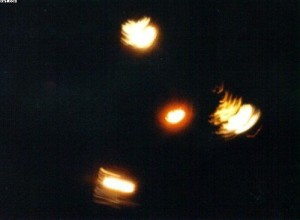
This report was sent into me today at UFO Sightings Daily and the persons security cam caught a fleet of UFOs heading home late at night. The footage at first looks to be a single craft but in reality its three or more. One of the craft seen in the screenshot is clearly a disk shaped craft, but these aliens are smart and know if they flare up the disks they will of course be mistaken for meteors. Its an old trick, but its been effective for aliens for thousands of years...until today. This video is 100% proof that UFOs exist.
What is happening in space that is causing so many meteorites to strike Earth and explode?
What is happening in space that is causing so many meteorites to strike Earth and explode?
Fireball sightings across the United States—and around the world have surged dramatically since the beginning of March, a period with no known major meteor streams. In several cases, fragments have reportedly crashed through rooftops in places like Germany, Ohio, and Texas, often accompanied by powerful sonic booms.
According to a commenter on Godlike Productions who reviewed recent data, as many as 7,663 fireballs have been recorded in just the past 30 days, compared to a total of only 297 between 2016 and 2025.
Early on, NASA suggested that some of these objects might be debris from Comet 31/ATLAS. However, that claim appears to have been walked back. Around the same time, NASA also shut down its public Near-Earth Object (NEO) comet tracking interface, raising further questions.
Despite the speculation, NASA maintains that there is nothing unusual happening.
According to Spaceweather: “Spring is fireball season,” explains Bill Cooke of NASA’s Meteoroid Environment Office. “For reasons we don’t fully understand, the rate of bright meteors increases by as much as 30% in the weeks around the vernal equinox.” He adds that this pattern has been observed for more than 30 years, and that meteorite debris that actually reach the ground, also become more frequent during this time, which contradict the verified data of the commenter on Godlike Productions; 7,663 fireballs have been recorded in just the past 30 days, compared to a total of only 297 between 2016 and 2025.
Interestingly, not all recent events share the same origin. The fireballs observed over Texas and Ohio, for example, followed completely different trajectories, indicating they did not come from a single source.
If any of these meteorites were truly interstellar, such as potential fragments from 31/ATLAS, it would explain NASA's interest in recovering them. Such could, in theory, contain the building blocks of life, or even more complex organic signatures, though that remains speculative.
For now, the surge of fireballs continues across the globe with more reports of fireball sightings coming in, worldwide and although the official explanations point to a routine seasonal uptick, the numbers tell a different story. This isn’t just a typical “spring fireball season”, something unusual appears to be happening in space.
In the video below, Stefan Burns takes a closer look at the recent spike in sightings and examines whether these meteorites could be linked to 31/ATLAS or not.
On March 21, 2025, President Trump announced that Boeing had won the contract to build the United States Air Force's Next Generation Air Dominance fighter, designated the F-47. It was the first time a new American air superiority fighter had been awarded since the F-22 Raptor over three decades earlier. The announcement ended a competition that had been running since at least 2015, survived a near-cancellation, and produced classified experimental aircraft that flew for years before the public ever heard about them.
This article covers what is publicly known about the F-47 as of early 2026, drawn from official Air Force statements, congressional budget documents, and credible defense reporting. Much about the aircraft remains classified, and where information is uncertain, that uncertainty is noted.
How NGAD Got to the F-47
The program traces back to a 2014 Defense Advanced Research Projects Agency study called the Air Dominance Initiative. According to Aviation Week, that study concluded a single aircraft would not be enough for future air superiority. The future required a "family of systems" centered on a crewed fighter but supported by networked drones, advanced sensors, and new weapons.
In 2015, DARPA began funding full-scale X-plane demonstrators under a classified program worth roughly one billion dollars. Boeing and Lockheed Martin each built and flew experimental aircraft. Boeing's demonstrator first flew in 2019; Lockheed's followed in 2022, as confirmed by Air Force Chief of Staff General David Allvin after the contract award.
The public first learned about these demonstrators in September 2020, when Air Force acquisition executive Will Roper told reporters that a full-scale NGAD flight demonstrator had "broken records." He provided almost no details, but the disclosure signaled the program was far more mature than anyone outside the Pentagon had realized.
The Budget Crisis and Redesign
By 2024, NGAD was in trouble. Then-Secretary of the Air Force Frank Kendall paused the program, telling Defense News that the Air Force "just didn't have enough money" to afford both the sixth-generation fighter and its other modernization priorities. Estimates at the time placed the per-unit cost near $300 million, roughly three times the cost of an F-35.
Kendall ordered a cost reduction study. Options reportedly included a smaller airframe, fewer engines, reduced range, and offloading some capabilities to unmanned platforms. The study concluded that NGAD remained necessary but needed to be redesigned for affordability. That redesign shaped the final competition.
Why Boeing Won
The selection surprised much of the defense world. Lockheed Martin had built every Western stealth fighter in production: the F-22 and the F-35. Boeing had not built a new fighter since the F/A-18E/F Super Hornet entered service in 1999.
According to Air & Space Forces Magazine, the Air Force selected Boeing based on "best overall value." Several factors appear to have contributed.
Digital maturity: Boeing reportedly built a comprehensive digital twin of the F-47 before the prototype existed, allowing engineers to analyze radar signature, maintainability, and manufacturing processes entirely in software.
X-plane heritage: Boeing's DARPA-funded demonstrator had been flying since 2019, giving the company years of real flight data to refine its design before the formal competition began.
Industrial base diversification:As the Washington Post noted at the time, awarding the F-47 to Boeing "diversifies the production of U.S. military jets," reducing the Pentagon's dependence on a single stealth fighter manufacturer.
The contract is worth at least $20 billion for engineering and manufacturing development, according to Breaking Defense, with potential lifetime production orders valued in the hundreds of billions. Northrop Grumman, the only other company that might have competed, dropped out in 2023.
What We Know About the Aircraft
The F-47 is classified. The Air Force released a single artist rendering alongside the March 2025 announcement, but no photographs of the actual aircraft have been made public. The Air Force has, however, disclosed a handful of specific performance parameters through official statements and budget documents.
Artist rendering of the F-47 released by the U.S. Air Force in March 2025. The design shows a tailless, blended wing-body configuration consistent with analyst descriptions of "bomber-like" stealth shaping. (U.S. Air Force image)
Range and Speed
In May 2025, General Allvin confirmed that the F-47 will have a combat radius exceeding 1,000 nautical miles and a top speed above Mach 2, as reported by The War Zone. The combat radius is nearly double the F-22's estimated 590-nautical-mile range and substantially greater than the F-35A's roughly 600 nautical miles.
That range reflects the geography of a potential Pacific conflict. A fighter with 1,000-plus nautical miles of combat radius can reach contested areas around Taiwan or the South China Sea from bases in Guam or Japan without tanker support, or at least with tankers positioned much farther from threat zones. The F-22, by contrast, requires extensive tanker support for Pacific operations, and those tankers are themselves vulnerable to long-range Chinese missiles.
Stealth
The Air Force has described the F-47 as featuring "all-aspect, broadband low-observability," meaning reduced radar and infrared signatures from every angle and across multiple radar frequency bands. Some defense analysts have described the F-47's stealth shaping as "bomber-like," according to the National Security Journal, suggesting a design that prioritizes signature reduction over traditional fighter agility.
Propulsion
The F-47 is expected to use a next-generation adaptive cycle engine from the NGAP program. Both General Electric (XA102) and Pratt & Whitney (XA103) are building prototypes, according to congressional budget documents. These "three-stream" engines can switch between high-thrust combat mode and high-efficiency cruise mode, promising roughly 30 percent more range and double the cooling capacity compared to current engines.
The cooling capacity is not a minor detail. Sixth-generation fighters generate enormous heat from their sensors, computers, and electronic warfare systems. Managing that heat without degrading performance or creating a detectable infrared signature is a defining engineering challenge of this generation. Budget documents released in July 2025 revealed the NGAP program has slipped more than two years due to supply chain challenges, per Breaking Defense.
Sensors, AI, and Weapons
Specific sensor details are classified, but the F-47 is expected to carry a significantly more capable suite than any existing fighter. It will fuse electro-optical, infrared, synthetic aperture radar, and signals intelligence data into a single tactical picture, an evolution of the sensor fusion architecture pioneered on the F-35.
AI is central to the design. The aircraft will use edge computing for predictive threat modeling, processing sensor data and recommending tactical decisions faster than a human pilot could manage alone. This capability becomes essential when the F-47 operates as a command node for multiple autonomous wingmen.
No weapons loadout has been officially confirmed. Based on current Air Force procurement programs, analysts expect the F-47 to carry the AIM-260 Joint Advanced Tactical Missile (replacing the AIM-120 AMRAAM), the AIM-174B for long-range engagements, and potentially the AGM-158D JASSM-XR cruise missile for strike missions. All weapons would be carried internally to preserve stealth.
Collaborative Combat Aircraft: The Drone Wingmen
The F-47 is not designed to fight alone. It will operate with Collaborative Combat Aircraft, autonomous drones that fly alongside the crewed fighter as "loyal wingmen." The Air Force envisions each F-47 controlling two or more CCAs that handle sensor coverage, weapons delivery, electronic warfare, or decoy missions.
Two CCA designs are in development. According to Air & Space Forces Magazine, the General Atomics YFQ-42A completed its first flight in August 2025, and the Anduril YFQ-44A (called "Fury") followed on October 31, 2025, flying semi-autonomously. Both are fighter-sized unmanned combat aircraft with internal weapons bays.
The Department of Defense has allocated $8.9 billion between 2025 and 2029 for CCA development, according to budget documents. The Air Force plans to buy more than 1,000 CCAs, roughly two for each F-47 and each F-35A in the fleet.
A flight of four F-47s with eight CCAs creates a twelve-platform formation sharing sensor data and distributing weapons. The CCAs can be sent into the most dangerous threat environments first, absorbing risk that would otherwise fall on crewed aircraft. If a CCA is lost, the cost is measured in dollars, not in pilots. The concept also builds on the broader shift toward autonomous systems that has accelerated from drone warfare lessons in Ukraine and other recent conflicts.
The Cost Problem
Estimated unit costs near $300 million make the F-47 one of the most expensive fighters ever built, roughly three times the cost of an F-35, according to multiple congressional analyses. The Air Force plans to buy approximately 185 aircraft, a fleet size that invites comparison to the F-22, which was capped at 187.
The pattern is familiar. The F-22 was originally planned for 750 aircraft before being cut to 187. The B-2 Spirit was designed for 132 bombers before being cut to 21. Some analysts have warned of a "math death spiral," per 19FortyFive, where rising costs lead to reduced orders, which further increase per-unit costs.
Congressional reaction has been mixed. The FY2025 NDAA cut $30.9 million from the NGAD budget, and the Senate Appropriations Committee recommended redirecting $557.1 million toward the CCA program, as reported by The Aviationist. But the One Big Beautiful Bill Act passed in July 2025 provided $400 million specifically to accelerate F-47 production.
The Air Force's counterargument: if each F-47 operates with two affordable CCAs, the cost per combat-relevant platform drops considerably. One F-47 with two CCAs might cost the same as two or three F-35s while providing more capability. Whether that math holds will determine the program's long-term viability.
The Name: P-47 Thunderbolt and the 47th President
Air Force officials said the "47" honors the P-47 Thunderbolt, one of the most produced American fighters of World War II. The P-47 was a massive, rugged aircraft that excelled at both air combat and ground attack across every theater. After the Air Force became an independent service in 1947, the Thunderbolt was redesignated the F-47, making the modern designation a direct echo of that lineage.
The number also coincides with the founding year of the Air Force as an independent service in 1947, and with the number of the sitting president. Some defense outlets have reported that internal Air Force emails obtained through FOIA requests suggest the historical justification may have been developed after the designation was selected rather than before it, though the Air Force has not commented on this claim.
The Global Sixth-Generation Race
The F-47 does not exist in isolation. At least four other sixth-generation programs are underway, and the competitive dynamics between them are shaping force structure decisions across multiple continents.
Timeline and What Comes Next
The program is moving faster than most expected. According to Air & Space Forces Magazine, the Air Force confirmed within months of the March 2025 award that the first F-47 was already in production and on track for first flight in 2028. Operational capability is targeted for 2029, with initial fielding in the early 2030s.
That timeline is aggressive by historical standards. The F-22 took 14 years from contract award to initial operational capability. The F-35 took even longer. The F-47 aims to compress that schedule through years of X-plane testing, digital engineering, and a deliberate decision to begin manufacturing before all design work is complete.
The War Zone has reported that the Air Force is considering building the program in increments, with multiple versions of the F-47 produced over time, each incorporating new technologies as they mature. This approach, inspired by the "Century Series" fighters of the 1950s and 1960s, would avoid locking the fleet into a single design for decades.
The Real Question
The F-47 is arguably the most ambitious fighter program the Air Force has undertaken since the F-22. It combines stealth, range, speed, AI, and unmanned teaming in a package designed to maintain American air superiority through the 2060s and beyond.
But ambition and execution are not the same thing. The program faces escalating costs, potential schedule delays, congressional scrutiny, and the tension between building the best possible weapon and building enough of them to matter. The F-22's production was cut short not because the aircraft failed but because it was too expensive to buy in the numbers the Air Force needed. The F-47 could face the same fate.
What is clear is that the United States, China, and several allied nations have all concluded that sixth-generation air power is necessary. The investments are too large to be hedged. The F-47 is America's answer. Whether it becomes another F-22, a brilliant aircraft built in insufficient numbers, or something genuinely transformational will depend on decisions that have not yet been made, in a threat environment that is still evolving.
Key Takeaways
Boeing won a $20+ billion contract to build America's first sixth-generation fighter, beating Lockheed Martin in a decision the Air Force called "best overall value."
1,000+ nautical mile combat radius is nearly double the F-22's range, designed specifically for Pacific operations where tanker vulnerability is a critical concern.
Each F-47 will command 2+ autonomous drones. The Air Force plans to buy over 1,000 CCAs that share sensors, weapons, and risk with the crewed fighter
~$300 million per aircraft with a planned fleet of 185, facing the same cost pressures that cut the F-22 from 750 to 187.
China's J-36 may reach operational status first, but the Air Force believes the F-47 will be the superior system.
First flight targeted for 2028, operational by 2029, with fielding in the early 2030s.
NASA Astronaut's Bizarre Space Station Photo Reveals Orbiting Potato Experiment
NASA Astronaut's Bizarre Space Station Photo Reveals Orbiting Potato Experiment
NASA Astronaut's Space Station Photo Shows Orbiting Potato
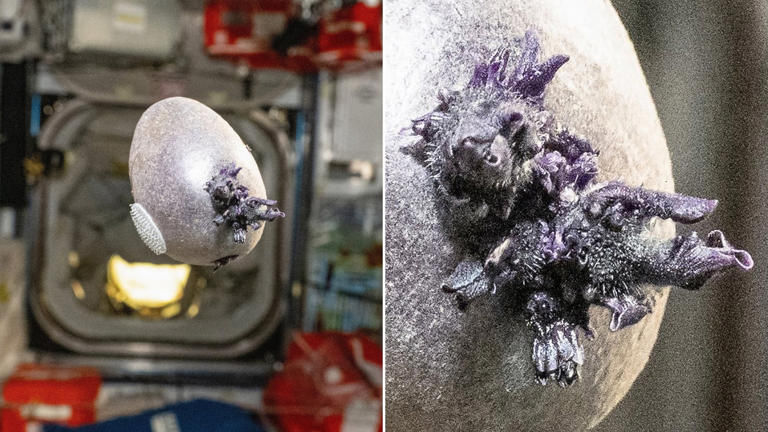
A NASA astronaut has captured and shared a truly extraordinary photograph from aboard the International Space Station, depicting what initially appeared to be a bizarre, tentacled organism growing in the microgravity environment. The image, taken by veteran astronaut Don Pettit during Expedition 72, sparked widespread curiosity and humorous reactions across social media platforms before its mundane explanation was revealed.
The Mysterious Space Object
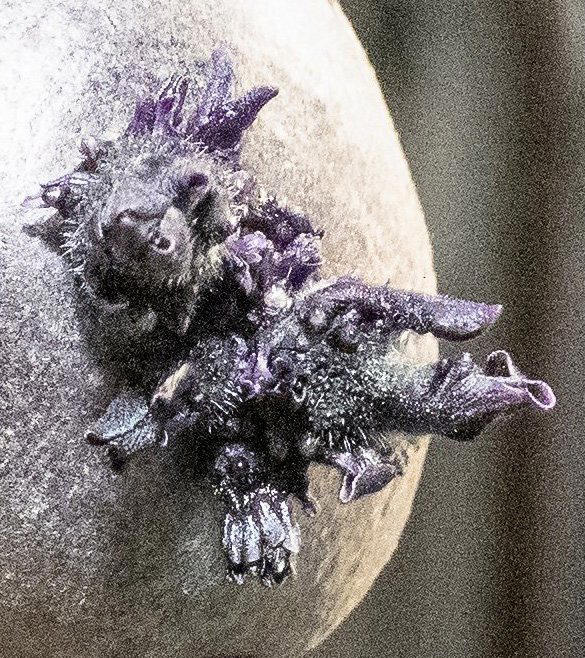
Don Pettit snapped the intriguing photograph during his mission, which spanned from 23 September 2024 to 18 April 2025. The unusual object bore a striking resemblance to an egg, with dark, root-like tentacles erupting vigorously from its base, creating an alien-like appearance that captivated viewers. The photograph quickly gained viral attention, amassing nearly 100,000 views and generating a flood of imaginative responses from the online community.
Astronaut Don Pettit shared the photo on his X account
(Picture: SWNS)
Social Media Reactions
Responding to the astronaut's post on X, formerly known as Twitter, users expressed both alarm and amusement at the strange sight. One concerned individual exclaimed, 'Kill it with fire!!!' while another commented, 'Bro I genuinely thought this was some kind of egg hatching.' A third user made a cinematic reference, joking, 'Looks like a mimic hatching out of an egg,' alluding to the 2017 science fiction film Prey. Other humorous remarks included suggestions for a 'zero-g fryer' and observations about the Velcro docking adapter visible in the image.
The Earthly Explanation
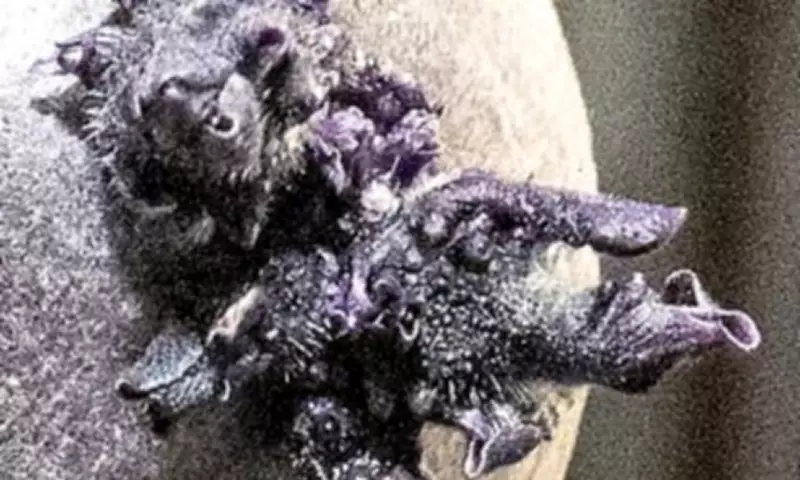
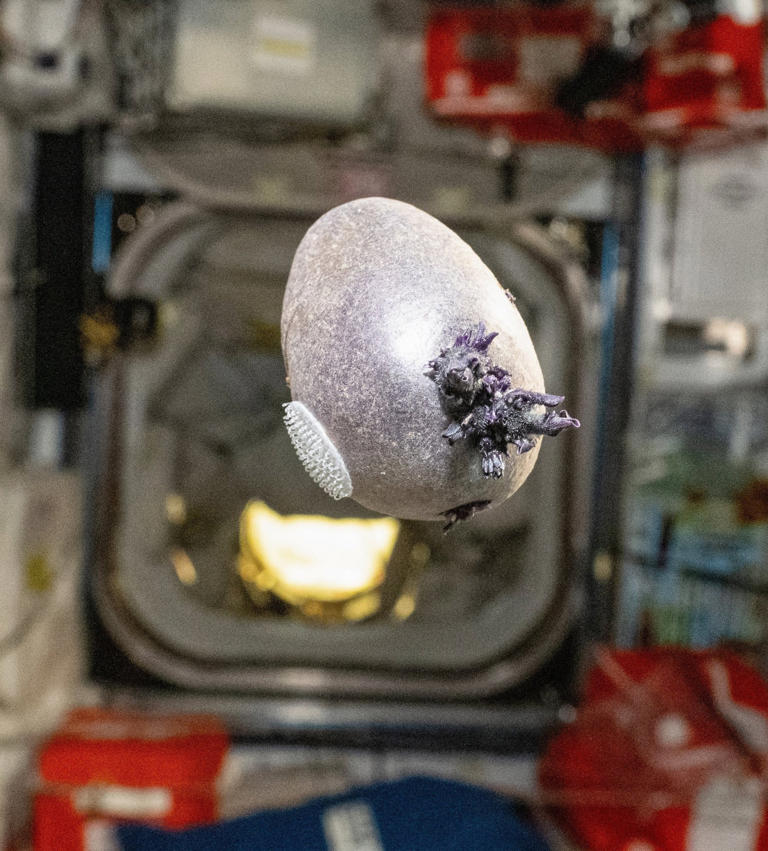
Despite its otherworldly appearance, the object had a remarkably ordinary explanation. Astronaut Pettit clarified that the mysterious entity was, in fact, a potato—specifically an early purple potato he had brought to the ISS for personal agricultural experiments. Dubbed 'Spudnik-1,' the potato was part of Pettit's off-duty space gardening activities, anchored in an improvised grow light terrarium using a spot of hook Velcro.
In his detailed explanation on X, Pettit emphasized the scientific rationale behind choosing potatoes for space cultivation. 'Potatoes are one of the most efficient plants based on edible nutrition to total plant mass, including roots,' he stated. The astronaut noted that potatoes' significance for future space exploration had been recognized in Andy Weir's book and subsequent film The Martian, prompting him to begin practical research aboard the ISS now.
The purple roots disgusted many online
(Picture: SWNS)
Space Versus Earth Cultivation
When questioned by a fan about how space-grown potatoes compare to their terrestrial counterparts, Pettit provided fascinating insights into microgravity agriculture. He explained that in the absence of gravity, the potato's roots grew in all directions rather than following their typical downward pattern. Additionally, he observed that all plants he has cultivated in space, including this potato, have demonstrated significantly slower growth rates compared to Earth-based cultivation.
Broader Context of Space Agriculture
This potato experiment represents just one facet of ongoing agricultural research aboard the International Space Station. To date, astronauts have successfully cultivated a diverse array of fruits, vegetables, and even flowers in the unique microgravity environment. NASA has articulated ambitious plans for expanding space agriculture, with teams at Kennedy Space Center envisioning future cultivation of tomatoes, peppers, berries, certain beans, and other antioxidant-rich foods.
These agricultural endeavors serve multiple purposes beyond nutritional supplementation. NASA has highlighted that antioxidant-rich foods could provide crew members with additional protection against space radiation—a significant concern for long-duration missions. The research aligns with broader preparations for future lunar and Martian exploration, where sustainable food production will be essential for crew survival and mission success.
Some online thought the potato roots looked like an alien
(Picture: SWNS)
The International Space Station: A Research Platform
The International Space Station serves as a $100 billion science and engineering laboratory orbiting approximately 250 miles above Earth. Continuously occupied since November 2000, the ISS has hosted 244 individuals from 19 countries, including eight private citizens. Research conducted aboard the station leverages unique conditions such as microgravity and specialized atmospheric composition to advance fields including human research, space medicine, life sciences, physical sciences, astronomy, and meteorology.
NASA allocates approximately $3 billion annually to the ISS program, with additional funding provided by international partners including the European Space Agency, Russian space agency, Japanese space agency JAXA, and the Canadian Space Agency. As the station approaches potential structural limitations beyond 2025, various nations and private entities are planning successor orbital platforms and lunar orbiting stations to continue advancing space research and exploration.
Don Pettit snapped the photo during Expedition 72, which took place from 23 September 2024 until 18 April 2025.
The unusual object almost looks like an egg, with black tentacles erupting from the base.
Responding to the astronaut on X (formerly Twitter), one user said: 'Kill it with fire!!!'
Another wrote: 'Bro I genuinely thought this was some kind of egg hatching.'
And one joked: 'Looks like a mimic hatching out of an egg,' in reference to the 2017 film, Prey.
While the object undeniably looks strange, there's actually a rather mundane explanation – it's a potato.
'Spudnik–1, an orbiting potato on @Space_Station!' Mr Pettit explained.
A NASA astronaut has shared a photo of a bizarre tentacled object growing on the International Space Station (ISS)
On X, Mr Pettit explained how the potato ended up on the ISS.
'I flew potatoes on Expedition 72 for my space garden, an activity I did in my off–duty time,' he said.
'This is an early purple potato, complete with spot of hook Velcro to anchor it in my improvised grow light terrarium.'
'Potatoes are one of the most efficient plants based on edible nutrition to total plant mass (including roots).
'Recognized by Andy Weir in his book/movie "The Martian," potatoes will have a place in future exploration of space.
'So I thought it good to get started now!'
In response to the photo, one fan asked Mr Pettit how it compared to growing potatoes on Earth.
The astronaut responded: 'The roots would grow in all directions absent gravity, and all plants I have ever grown in space have grown far slower than they would have on Earth.'
The unusual object almost looks like an egg, with black tentacles erupting from the base
Don Pettit snapped the photo during Expedition 72, which took place from 23 September 2024 until 18 April 2025
His post has garnered huge interest, with almost 100,000 views at the time of writing.
'someone needs to figure out a zero–g fryer asap,' one X user joked.
And one quipped: 'I hope you brought actual fertiliser this time,' in reference to The Martian, in which the lead character is forced to grow potatoes in his own waste.
To date, astronauts have grown a huge range of fruits, vegetables, and even flowers on the ISS.
'Our team at Kennedy Space Center envisions planting more produce in the future, such as tomatoes and peppers,' NASA explained.
'Foods like berries, certain beans and other antioxidant–rich foods would have the added benefit of providing some space radiation protection for crew members who eat them.'
The International Space Station (ISS) is a $100 billion (£80 billion) science and engineering laboratory that orbits 250 miles (400 km) above Earth.
It has been permanently staffed by rotating crews of astronauts and cosmonauts since November 2000.
Crews have come mainly from the US and Russia, but the Japanese space agency JAXA and European space agency ESA have also sent astronauts.
The International Space Station has been continuously occupied for more than 20 years and has been expended with multiple new modules added and upgrades to systems
Research conducted aboard the ISS often requires one or more of the unusual conditions present in low Earth orbit, such as low-gravity or oxygen.
ISS studies have investigated human research, space medicine, life sciences, physical sciences, astronomy and meteorology.
The US space agency, NASA, spends about $3 billion (£2.4 billion) a year on the space station program, with the remaining funding coming from international partners, including Europe, Russia and Japan.
So far 244 individuals from 19 countries have visited the station, and among them eight private citizens who spent up to $50 million for their visit.
There is an ongoing debate about the future of the station beyond 2025, when it is thought some of the original structure will reach 'end of life'.
Russia, a major partner in the station, plans to launch its own orbital platform around then, with Axiom Space, a private firm, planning to send its own modules for purely commercial use to the station at the same time.
NASA, ESA, JAXA and the Canadian Space Agency (CSA) are working together to build a space station in orbit around the moon, and Russia and China are working on a similar project, that would also include a base on the surface.
NASA has revealed plans to build a $20billion (£14.9billion) permanent base on the moon.
New chief Jared Isaacman, who joined the agency in December, has announced a 'focus shift', prioritising a lunar habitat that allows for 'long–duration human presence'.
He said NASA will spend the next seven years constructing the station at the moon's south pole over dozens of missions.
Artist impressions of the base feature futuristic rovers, communication devices, solar panels, habitat modules and launch pads on the moon's surface.
The station will represent the next step towards 'achieving the near–impossible', he said, and will 'ensure American leadership in space'.
'There will be an evolutionary path to building humanity's first permanent surface outpost beyond Earth, and we will take the world along with us,' Mr Isaacman told a conference at NASA headquarters in Washington.
'This time the goal is not flags and footprints,' he added.
'This time the goal is to stay.'
Artist impressions of the moon base feature futuristic rovers, communication devices, solar panels, habitat modules and launch pads on the lunar surface
Building the moon base will take place over three phases, NASA said.
The first involves a shift from infrequent missions to a 'repeatable' approach that increases the tempo of lunar activity.
Phase two will see a move towards semi–habitable infrastructure involving rovers and other forms of transportation.
Finally, for phase three, NASA 'will deliver heavier infrastructure needed for a continuous human foothold on the moon'.
This will include multi–purpose habitats created by the Italian Space Agency and lunar utility vehicles from the Canadian Space Agency.
The 'habitation module' will be three metres wide and six metres long (10 feet by 20 feet) with a mass of around 15 tonnes.
It will have wheels, allowing it to be easily moved across the moon's surface. It is also completely self–sufficient, providing power and heat for inhabitants.
The module has currently been designed to be able to support two astronauts for between seven and 30 days – or a larger crew for short periods in case of an emergency.
The Italian Space Agency's habitation module will safely host astronauts during their missions, support surface operations, enable scientific research experiments both with and without the presence of a human crew, and have the capability to move on the surface (artist's impression)
A concept image of a pressurised rover on the surface of the Moon. The rover will boast robotics, cameras, sensors and scientific instruments, acting as a 'mobile laboratory' for exploration activities
Solar array systems will help power exploration of the Moon. Pictured: An illustration of the device, which can deploy up to 32 feet high
Where will the astronauts live?
Visitors to the moon would be stationed in a 'habitation module' currently being built by the Italian Space Agency
They are three metres wide and six metres long with a mass of 15 tonnes
Five main substations control the inner atmosphere, temperature and humidity, with an in–built water and waste management system
The module will have wheels, allowing it to be easily moved across the moon's surface.
It is also completely self–sufficient, providing power and heat
The module has currently been designed to be able to support two astronauts for between seven and 30 days – or a larger crew for short periods in case of an emergency
NASA said its moon base plans also include a pressurised rover, which has been designed by the Japan Aerospace Exploration Agency (JAXA).
This is a mobile habitat that can allow astronauts to explore much further than current moonwalks allow, supporting two crew members as it traverses across the lunar surface.
The rover will boast robotics, cameras, sensors and scientific instruments, acting as a 'mobile laboratory' for exploration activities.
'The objective is clear: build the foundation for an enduring lunar base and take the next step towards Mars,' Mr Isaacman wrote on X.
In a nod to the race against China to build a permanent base on the moon, Mr Isaacman said: 'The clock is running in this great‑power competition, and success or failure will be measured in months, not years.'
He added that 'building a base will seem pale in comparison to what we will be capable of accomplishing in the years ahead'.
NASA has also announced that in order to focus on the moon base project, it would be suspending plans to create Lunar Gateway – its lunar orbital space station.
'The agency intends to pause Gateway in its current form and shift focus to infrastructure that enables sustained surface operations,' Mr Isaacman said.
NASA said lunar utility vehicles from the Canadian Space Agency (pictured) will also be needed
NASA Administrator Jared Isaacman, who joined the agency last year, said focus needs to 'shift' towards establishing a permanent base on the moon
The Gateway orbital lunar station was meant to serve both as a point of transfer for astronauts headed to the Moon as well as a platform for research.
The suspension of the initiative isn't entirely surprising – some had criticised it as financially wasteful or a distraction from other lunar ambitions.
Putting it on hold will allow for the redirection of efforts and resources towards the construction of the base near the strategic south lunar pole, Mr Isaacman explained, which was already a goal.
Last month, NASA said it was reshuffling its Artemis programme that has suffered multiple delays in recent years, as it aims to ensure Americans can return to the Moon's surface by 2028.
That goal remains unchanged, but the US space agency is shifting its flight lineup to include a test mission before an eventual lunar landing to improve launch 'muscle memory'.
That strategic revision came amid repeated delays to the Artemis 2 mission, which was originally due to take off as early as February, but is now targeting early April. It is meant to see the first flyby of the Moon in more than half a century.
Launch date: NASA initially identifiedthree possible launch windows for Artemis II: From February 6 to February 11, from March 6 to March 11, and from April 1 to April 6. The space agency is now targeting the April window.
Mission objective:To complete a lunar flyby, passing the 'dark side' of the moon and test systems for a future lunar landing.
Total distance to travel: 620,000 miles (one million km)
Mission duration: 10 days
Estimated total cost: $44billion (£32.5billion)
- NASA Space Launch System rocket: $23.8billion (£17.6billion)
An amateur archaeologist claims to have uncovered the ruins of an ancient city that once thrived off the coast ofLouisiana roughly 12,000 years ago.
Retired architect George Gelé said he has found clues that 'hundreds of buildings' are buried beneath the waters near the Chandeleur Islands, a chain of uninhabited barrier islands about 50 miles east of New Orleans in the Gulf of America.
For nearly five decades, he has captured underwater sonar images that he believes reveal the remnants of major structures, including what he describes as a 280-foot-tall pyramid rising from the seafloor.
Gelé claimed the pyramid emits a surge of electromagnetic energy that has caused boat compasses to spin wildly as vessels passed overhead.
Dubbed the city of Crescentis, Gelé told local station WWL-TV that the submerged formations, located roughly 30 feet below the water and buried beneath an additional 100 feet of sediment, appear to be 'geographically related to the Great Pyramid of Giza' in Egypt.
While his findings have not been published in peer-reviewed scientific journals, Gelé argued the site may date back to the end of the last Ice Age, when rising seas about 11,700 years ago submerged vast coastal landscapes.
The foundation of his theory rests on mysterious granite mounds discovered beneath Chandeleur Sound, a material not naturally found in Louisiana, which he believes were deliberately transported and assembled.
'Somebody floated a billion stones down the Mississippi River and assembled them outside what would later become New Orleans,' Gelé said, after more than five decades studying the site.
Retired architect George Gelé said he has found clues that 'hundreds of buildings' are buried beneath the waters off the coast of Louisiana
He claims the city was located near the Chandeleur Islands, a chain of uninhabited barrier islands about 50 miles east of New Orleans in the Gulf of America
Gelé has personally funded and conducted more than 40 underwater research expeditions in the area since 1974.
While he officially revealed his discoveries to the world in March 2022, his interview on WWL-TV has resurfaced.
During the interview, local shrimper Ricky Robin, who took Gelé to the site multiple times, claimed that the compass on his boat spun completely around near the area where the tip of the pyramids was suspected.
'Everything will go out on your boat. All your electronics like you were in the Bermuda Triangle,' said Robin.
He added that other local fishermen have shared stories about catching strange, square rocks in their nets.
'I thought right away it was pieces of the pyramid because it was right around where that compass spun,' Robin said.
While the idea of a lost city is captivating, several scientists have offered more conventional explanations for the mysterious underwater mounds.
Gelé himself explored alternative explanations for the granite masses during a 2014 presentation, including the possibility that the stones came from a construction dump or debris left behind by multiple shipwrecks.
For nearly five decades, he has captured underwater sonar images that he believes reveal the remnants of major structures. He has also collected granite pieces that he believes once formed the now underwater city
However, he noted that construction debris only appears on the top surface of the mounds, and granite blocks are expensive construction materials, and would not be discarded so easily.
A separate study conducted by Texas A&M University in the late 1980s also concluded that the underwater granite likely originated from shipwreck activity, or from piles of ballast stones discarded from vessels, WWL-TV reported.
Historians believe the stones may have been dumped from Spanish or French ships to lighten their loads as they approached shallow waters on routes leading to New Orleans.
Local newspaper The Advocate later examined the mystery in 2011, speaking with LSU archaeology professor Rob Mann, who offered another explanation for the unusual formations.
He suggested the granite could be remnants of an effort to build an artificial reef in the 1940s, created by dumping construction materials into the water.
'I think simply searching underwater at this point won't give us any more answers,' Mann told the newspaper.
Gelé has personally funded and conducted more than 40 underwater research expeditions in the area since 1974. Pictured are granite pieces he pulled from the waterse
'When the historical archive work is done, looking at records and newspapers, that's when we will know what it is.'
The publication also interviewed the state's archaeologist at the time, who agreed that the formations appeared to be the result of large barge loads of stone being dumped at the site.
'But why and why there?' he said. 'Those are questions that need to be answered.'
Nearly 60 years ago, three Americans made history as the first humans to ever break free of Earth's orbit on their way toward the moon.
And when they passed behind the moon to the side Earth never sees, Apollo 8 astronauts Frank Borman, Jim Lovell (who died in August) and William Anders became the first humans in space to lose sight of their home world.
A crew of four astronauts will hitch a ride to orbit on an Orion capsule. Built by Lockheed Martin, the Orion vehicle will be perched atop NASA's 322-foot Space Launch System rocket, built by Boeing and Northrop Grumman.
Artemis II: NASA set to launch moon mission | FOX 10 Phoenix
While no moon landing is in store for the astronauts, the mission will serve a vital role in testing the systems and hardware on the spacecraft needed for future expeditions to the lunar surface.
Apollo 8 was 1st to send astronauts around the moon and back
The impending mission will not only represent NASA's first human moon mission since the Apollo era ended in 1972, but the first since that era really began with a similar mission in 1968.
Lifting off Dec. 21, 1968, from the Kennedy Space Center, the Apollo 8 mission sent three NASA astronauts on a six-day trip orbiting the moon before making a landing Dec. 27 in the Pacific Ocean.
As a prelude to a lunar landing, the flight was an important step in testing the flight trajectory and operations before astronauts stepped foot on the moon's surface.
The mission also made history in many ways.
The crew became the first humans to orbit the moon and the first to see the Earth rising on the lunar horizon in an event known as an Earthrise. Apollo 8 was also the first crewed launch for NASA's iconic Saturn V rocket, which at 363 feet tall remains to this day of the largest rockets ever made.
The Apollo 8 crew is seen inside the gondola during centrifuge training Nov. 1, 1968. Left to right are astronauts William A. Anders, lunar module pilot, James A. Lovell Jr., command module pilot; and Frank Borman, commander.
The Apollo 8 Crew included James Lovell, Command Module (CM) pilot; William Anders, Lunar Module (LM) pilot; and Frank Borman, commander. The first crewed Apollo mission launched Dec. 21, 1968 aboard the Saturn V rocket, with the crew returning Dec. 27 safely to Earth.
The Apollo 8 crew stands in front of the Apollo space vehicle as it leaves the Kennedy Space Center's Vehicle Assembly Building on its way to Launch Complex 39A. The Saturn V stack and its mobile launch tower are atop a huge crawler-transporter. The Apollo 8 crew consisted of (left to right) astronauts Frank Borman, commander; James A. Lovell Jr., command module pilot; and William A. Anders, lunar module pilot.
Traveling in the Orion capsule, the astronauts will venture up to 6,000 miles beyond the far side of the moon – the farthest humans have ever ventured in space, according to NASA. As a result, the astronauts will see the entire disk of the moon, including areas near the north and south poles.
The planned trajectory for the four-day return journey will use Earth's gravity to naturally pull Orion back home after flying by the moon, negating the need for propulsion or much fuel.
The crew of Artemis II (from left: Mission Specialist Jeremy Hansen, Mission Specialist Christina Koch, Pilot Victor Glover and Commander Reid Wiseman) answer questions at a press conference as their Space Launch System rocket is transported to Pad 39B January 17, 2026. Artemis II is tentatively scheduled to launch on a mission to th Moon in early February. Craig Bailey/FLORIDA TODAY via USA TODAY NETWORK
NASA astronaut Victor Glover, the pilot from Pomona, California, who flew to space in 2020 on a SpaceX mission to the space station.
NASA astronaut Christina Koch, a mission specialist from Grand Rapids, Michigan, who holds several space agency records and who flew in 2019 on a Soyuz ISS mission.
Canadian Space Agency astronaut Jeremy Hansen, another mission specialist who will fly to space for the first time.
Both Apollo 8, Artemis 2 missions to precede a moon landing
Like Apollo 8 before it, Artemis 2 is meant to precede a moon landing attempt in the years ahead.
In the case of Apollo 8, two more missions came before astronauts Neil Armstrong and Buzz Aldrin became the first humans to step foot on the moon in July 1969 during Apollo 11. That included Apollo 9 in March 1969 – during which two astronauts piloted a lunar module in Earth orbit – and Apollo 10 later in May, which was another moon-orbiting mission.
NASA had originally planned for a moon landing mission to follow Artemis 2 before leaders at the space agency announced an overhaul to the program at the end of February.
Before a moon landing is now attempted during Artemis 4 in 2028, astronauts in the Orion capsule are due to meet and dock in Earth orbit with at least one of the lunar landers being developed by Jeff Bezos' Blue Origin and Elon Musk's SpaceX. That new mission, targeted for 2027, is known as Artemis 3.
Eric Lagatta is the Space Connect reporter for the USA TODAY Network. Reach him at elagatta@usatodayco.com
Theorieën over wat er gebeurt na onze dood De angst voor de dood heeft vaak te maken met het onbekende. Wat gebeurt er na onze dood? Gaan we naar de hemel, reïncarneren we of resetten we ons in een simulatie? Hindoeïstische, Rastafariaanse of boeddhistische theorieën proberen allemaal uit te leggen wat er daarna komt. Om de verschillende theorieën over de dood te verkennen, zijn hier 30 filosofieën over het hiernamaals!
De simulatie theorie Heb je ooit het gevoel dat alles in ons leven al vaststaat? Wat als zelfs de dood volgens een vooraf geschreven script verloopt? Volgens de simulatietheorie zijn onze levens gewoon cijfers in een videogame van een hogere entiteit. Iets wat lijkt op het concept van de filmreeks 'The Matrix'.
De boeddhistische theorie Boeddhisten omarmen het concept van reïncarnatie na de dood. Na de dood kan iemand opnieuw geboren worden in verschillende rijken, zoals die van goden, halfgoden, mensen, dieren of geesten.
De parallelle universumtheorie Het idee van parallelle universums is in talloze sciencefictionfilms en stripboeken afgebeeld, wat de vraag oproept hoe aannemelijk het is. Volgens deze theorie gaat ons bestaan door na de dood, maar dan in een ander deel van ruimte en tijd binnen hetzelfde universum dat we eerder bewoonden.
De theorie van het nooit eindigende leven De theorie van het nooit eindigende leven is zeker een van de meest unieke op de lijst. Volgens deze theorie, wanneer je sterft, word je meteen opnieuw geboren in je eigen leven, zonder enige herinnering aan het leven dat je net had geleefd.
De Rastafari-theorie Rastafari geloven dat het leven eeuwig is. Alleen degenen die deugdzaamheid afwijzen, sterven echt. Daarom worden begrafenissen in hun cultuur eigenlijk niet gevierd.
De Azteekse theorie In het geloofssysteem van de oude Azteken waren er drie aparte paden voor het hiernamaals: de zon, Mictlan en Tlalocan. Het hiernamaals dat iemand ervoer, hing af van de omstandigheden van de dood. Gewone soldaten en vrouwen die tijdens de bevalling stierven, zouden veranderen in kolibries die het pad van de zon volgden. Degenen die door minder eervolle oorzaken stierven, belandden in Mictlan. En mensen die door verdrinking omkwamen, gingen naar Tlalocan.
Plato's theorie Plato was ervan overtuigd dat onze kennis beperkt is door de fysieke wereld. Hij vond dat we na de dood op een meer vervullende reis gaan, waar onze ziel haar ware bestaan kan ontdekken. Volgens zijn theorie biedt de dood dus een kans om dat te verkennen.
De onzekere theorie Ons begrip van de dood is beperkt tot de fenomenen die het fysieke lichaam ervaart. De dubbelzinnige theorie erkent deze harde waarheid, maar laat ruimte voor discussie over de overige aspecten.
De mormoonse theorie De Kerk van de Heiligen der Laatste Dagen gelooft dat overledene Mormonen die goed en rechtschapen zijn, goden worden. Daarentegen worden ongelovigen in het hiernamaals veroordeeld.
De Egyptische farao-theorie Mummificatie was cruciaal voor de oude Egyptische farao's, omdat zij geloofden dat de dood niet permanent was en zij hun lichamen wilden behouden voor het hiernamaals.
De droomtheorie Wat als alles maar een droom was? De droomtheorie beweert dat wanneer we sterven, we gewoon wakker worden uit een ontzettend verwarrende, levendige en lange droom. Knijp eens in jezelf.
De paranormale theorie Dit concept vormt doorgaans de basis van vele horrorfilms. Voorstanders van het bovennatuurlijke beweren dat onze zielen na de dood op aarde blijven hangen. Daarnaast wordt vaak aangenomen dat communicatie met deze geesten op verschillende manieren mogelijk is.
De bevroren hoofdtheorie Er zijn mensen die geloven dat ze hun behoud voor de toekomst kunnen garanderen door na hun overlijden cryonisch bewaard te worden. Zo stellen ze zich een bestaansvorm voor die extreem koud is, maar toch potentieel levend kan blijven.
De egocentrische theorie Als je denkt dat alles om jou draait, dan is de egocentrische theorie over de dood misschien wel iets voor jou. Volgens deze theorie begint het universum wanneer jij geboren wordt en stopt het op het moment dat jij sterft.
De 'Stranger Things'-theorie Als je de populaire Netflix-serie Stranger Things kent, dan ben je waarschijnlijk bekend met het concept van de Upside Down. De serie suggereert dat er een alternatieve dimensie bestaat binnen ons universum, waar mensen vast kunnen komen te zitten in een soort tussenwereld tussen leven en dood.
De hindoeïstische theorie Het hindoeïsme gelooft ook in reïncarnatie, waarbij iemands toekomstige status of vorm in het volgende leven wordt bepaald door hun daden in het huidige leven.
De solipsistische theorie Bestaat er iets buiten onze eigen gedachten dat echt is? Het concept van solipsisme geldt zowel voor het leven als de dood. De enige onbetwistbare realiteit is wat een individu waarneemt en ervaart. Hierdoor is het mogelijk dat, wanneer een individu sterft, alles om hen heen ook ophoudt te bestaan.
De excretietheorie Volgens de excretietheorie stelt het universum een gigantisch brein binnen een menselijk lichaam voor, en zijn individuen vergelijkbaar met cellen. Net zoals een cel wordt verwijderd wanneer deze afsterft in een menselijk lichaam, zouden mensen uiteindelijk een soortgelijk lot kunnen ondergaan.
De nihilistische theorie Het nihilisme stelt dat alle waarden betekenisloos en zonder fundament zijn. Vanuit een echt nihilistisch perspectief op de dood en het hiernamaals betekent dit dat er helemaal niets is na de dood, omdat het leven zelf al leegte bevat.
De ''Beetlejuice'-theorie De populaire komediefilm Beetlejuice uit 1988 van Tim Burton vertelt het verhaal van een overleden stel dat hun oude huis en de nieuwe bewoners achtervolgt. Om te ontsnappen aan deze tussenwereld, moeten ze de hulp inroepen van een onconventionele exorcist. Zie jij het hiernamaals als iets dat lijkt op deze eigenzinnige film?
De christelijke theorie Volgens het christelijk geloof bestaan zowel de hemel als de hel. Degenen die een deugdzaam en eerlijk leven leiden, worden beloond met toegang tot het paradijselijke rijk van de hemel. Daarentegen zijn degenen die zich schuldig maken aan zonden en morele misstappen voorbestemd voor de hel.
De meerdere werelden-theorie De veelwerelden-theorie stelt dat onze dood alleen plaatsvindt binnen dit ene, bestaande universum. Daarbuiten wachten talloze alternatieve universums op onze overgang.
De pessimistische theorie Misschien is deze discussie zinloos, omdat we eigenlijk al dood zijn? Dat is in ieder geval wat de pessimistische theorie veronderstelt.
De illusietheorie Volgens de illusietheorie is de wereld vooral een product van onze geest en geen concrete realiteit, wat suggereert dat alles in feite een illusie is. Vanuit dit perspectief is de dood een door mensen bedacht concept, en zelfs nadat we fysiek ophouden te bestaan, blijft een essentie van ons bestaan voortbestaan.
De kosmische theorie Volgens de kosmische theorie is ons bewustzijn verbonden met het universum in plaats van met ons individuele lichaam. Wanneer we sterven, herenigt ons bewustzijn zich met de kosmos.
De niveautheorie Volgens de niveautheorie gaan mensen na de dood over naar een nieuwe fase van bestaan, wat suggereert dat mens-zijn slechts het begin is binnen het grotere geheel.
De 'The Good Place'-theorie De populaire tv-serie The Good Place introduceert een fascinerend concept van het hiernamaals. Het verhaal draait om personages die, door een speling van het lot, in de hemel belanden, liefkozend The Good Place genoemd. Met eindeloze hoeveelheden frozen yogurt, gepersonaliseerde woningen en de kans om je zielsverwant te ontmoeten, doet deze idyllische versie van het hiernamaals kijkers verlangen naar een wereld waarin dit echt zou kunnen bestaan.
De boomhypothese Heb je ooit gehoord van het concept van de Levensboom? Sommige mensen omarmen dit idee door ervoor te kiezen hun stoffelijke resten te laten begraven in een boomcapsule. Op deze manier worden hun lichamen teruggegeven aan de aarde, met de overtuiging dat ze in een volgend bestaan kunnen transformeren tot een bloeiende boom.
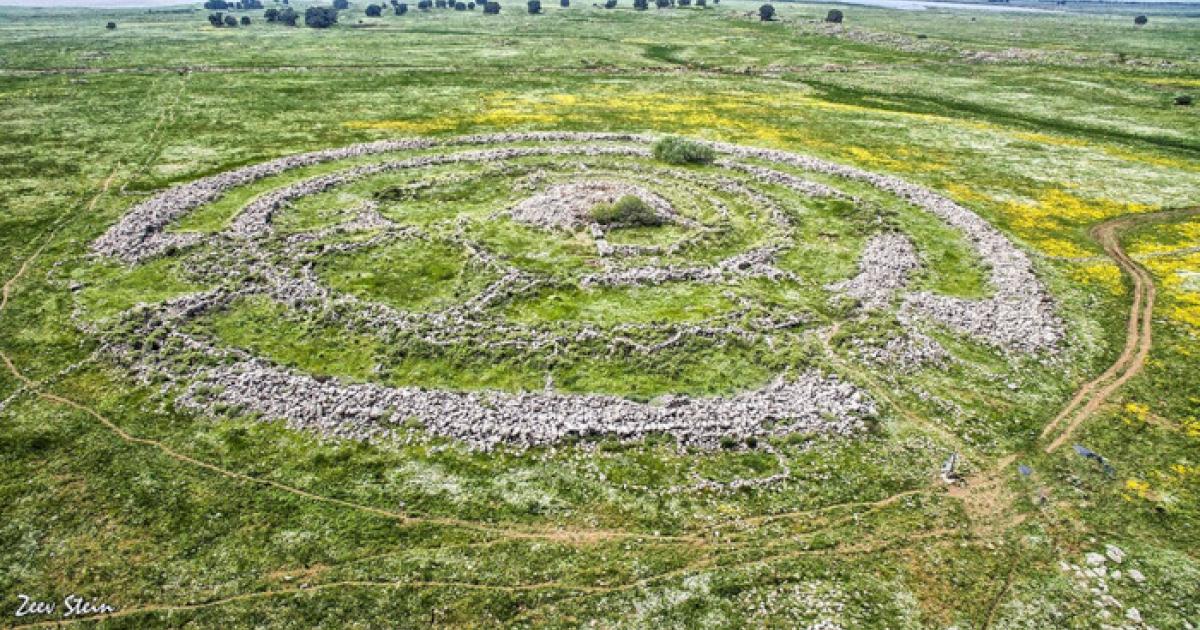
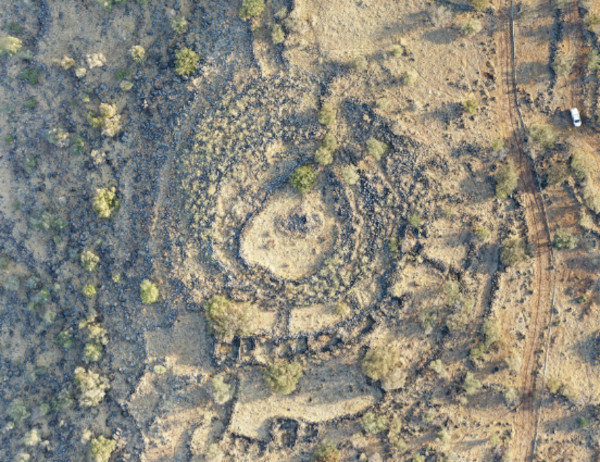
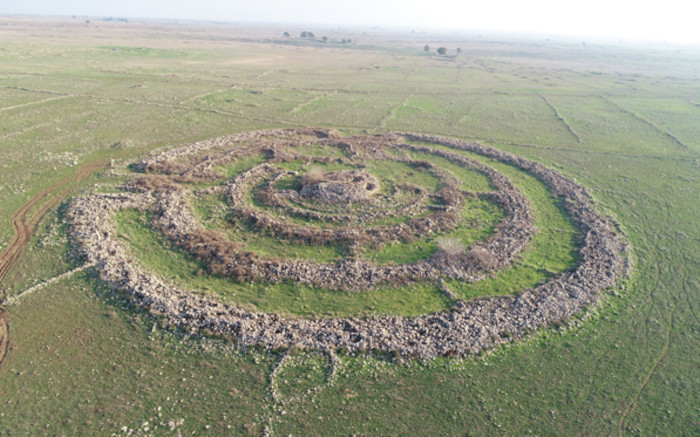
A recent archaeological investigation has offered a substantive reassessment of Rujm el-Hiri, a large protohistoric stone complex in the Golan Heights frequently characterized as the "Israeli Stonehenge." Rather than interpreting the site as a unique and isolated monument, a new study proposes that it constitutes the most elaborate expression of a broader regional tradition of circular stone-built architecture, and that dozens of similar structures have been hiding in plain sight for decades.
Published in PLOS One, the research conducted by Michal Birkenfeld, Olga Khabarova, Lev V. Eppelbaum, and Uri Berger documents over 30 large circular basalt structures within a 25-kilometer radius of Rujm el-Hiri, including 28 previously unrecorded examples. The authors attribute the prior absence of these features in the archaeological record primarily to methodological constraints associated with conventional ground-based survey techniques. Employing an integrated methodological framework, combining high-resolution satellite imagery, artificial intelligence, geophysical modeling, and spatial analysis, the study identifies a consistent architectural typology across the region.
The newly discovered structures are characterized by substantial outer walls constructed from basalt fieldstones, typically arranged in concentric configurations and, in many cases, interconnected by radial or orthogonal internal divisions. These recurring design elements indicate a shared constructional logic and suggest a coherent cultural or technological tradition during the protohistoric period.
Rujm el-Hiri itself, first identified in 1968 through aerial reconnaissance, comprises a central cairn encircled by multiple concentric stone rings, with an overall diameter exceeding 150 meters and containing roughly 40,000 tons of stone.
Its function has long been debated, with hypotheses ranging from funerary and ceremonial uses to defensive or astronomical purposes. However, the lack of definitive stratified material and associated settlement evidence has historically limited interpretative certainty. The present study challenges the longstanding assumption of the site's isolation by demonstrating the existence of a dense and previously under-recognized distribution of analogous structures across the basalt plateaus of the Golan Heights and adjacent regions.
"Gilgal Refaim is, of course, a very well-known site, and it was always considered to be a very unique site in the area," said lead researcher Michal Birkenfeld. "Most [of the sites we discovered] were not as elaborate and were of different sizes and levels of preservation, but they still have the same type of logic," he added.
(Photograph by Y. Shmidov and A. Wiegmann/PLoS ONE)
AI and Satellite Imagery Uncover the Past
Analysis of multi-temporal satellite datasets spanning from 2004 to 2024 enabled the identification of these features, many of which remain poorly preserved, partially dismantled, or obscured by subsequent land-use activities. Researchers processed archives from multiple satellite platforms, including Google Earth Pro and CNES/Airbus and applied AI techniques to reduce interference from shadows and seasonal vegetation, enabling the identification of features that had remained invisible in conventional surveys. The newly identified circles range from approximately 50 to 250 feet in diameter, and while smaller and more degraded than Rujm el-Hiri, they share the same fundamental architectural logic.
The clusters highlight repeated occupation or a long-standing use of particular locations. There is a non-random variation of structures found in spaces where most are located on gently sloping terrain or on high plateau sites, and those near seasonal water sources. The common proximity of such monuments with dolmens, tumuli, and field-wall networks tells that these were part of a large cultural landscape and may have played different roles in ritual, territory, and socio-economic affairs. Intriguingly, similar-looking sites have also been noted farther afield in Galilee and Lebanon, suggesting the tradition may have extended well beyond the immediate Golan region.
Reassessing Astronomical Alignments
The study further revisits long-standing hypotheses concerning astronomical alignments at the site. Emerging geophysical and palaeomagnetic evidence indicates that the region has experienced gradual yet measurable tectonic rotation over millennial timescales. As a result, the current orientation of architectural elements is unlikely to reflect their original spatial configuration, introducing significant uncertainty into earlier claims of deliberate celestial alignment and necessitating a more cautious interpretative approach. A previous 2025 study co-authored by Birkenfeld had already weakened the astronomical observatory theory, calculating an average rotational movement of 8 to 15 millimeters per year - meaning the stones have likely shifted several meters from their original positions.
A central contribution of the research lies in its methodological advancement, particularly in demonstrating the analytical potential of remote sensing for archaeological prospection. Through the integration of multi-temporal, high-resolution satellite imagery, the study successfully identifies subtle and degraded features that have remained undetected in traditional ground surveys. This approach not only substantially expands the regional archaeological dataset but also prompts a critical reassessment of existing interpretative models shaped by incomplete or biased observational records. "If this is not a unique structure, I find more leverage in the idea that this was an area to get together," Birkenfeld said.
The authors argue that Rujm el-Hiri should no longer be interpreted as an anomalous or isolated construction, but rather as a key locus within a broader, previously under-recognized architectural tradition in the protohistoric southern Levant. Within this framework, large circular stone structures are understood as integral components of a complex cultural landscape, likely embedded in the social organization, economic strategies, and symbolic practices of agro-pastoral communities during the Chalcolithic and Early Bronze Age periods. Further research is required to establish a more robust chronological framework and to clarify the functional diversity of these monuments, but the study marks a substantive conceptual shift in how scholars understand protohistoric landscape use and spatial organization.
Top image: Aerial view of the ancient Rujm el-Hiri megalithic monument in the Golan Heights.
It was 1862, and the American Egyptologist Edwin Smith had just made a fascinating discovery in Luxor, Egypt, the site of ancient Thebes.
This was no archaeological mystery unearthed from the country’s time-worn sands, however. Instead, Smith’s acquisition came from an Egyptian dealer, Mustafa Agha, who sold him an unusual papyrus that seemed to describe medical practices from Egypt’s Second Intermediate Period.
Smith kept the papyrus until his death in 1906, largely unaware of its contents, as his understanding of hieratic was limited and he was unable to translate it. After Smith’s passing, many of the items in his collection, including the mysterious papyrus, were given to the New York Historical Society by his daughter, where they quietly remained for several more years.
It wasn’t until 1920 that the ancient treatise came to the attention of the classical archaeologist and Egyptologist Caroline Ransom Williams, who brought it to the attention of noted archaeologist James Henry Breasted.
“The papyrus is probably the most valuable one owned by the Society,” Williams wrote to Breasted at the time, “and I am ready to waive my interest in it, in the hope that it may be published sooner and better than I could do it.” Recognized as the first chair in Egyptology and Oriental History in the United States at the University of Chicago, Breasted was immediately fascinated by the ancient text and set to work deciphering it.
One decade later, Breasted had finally completed the task of interpreting the obscure ancient document in its entirety, a translation of which was published in 1930. The result was a fundamental shift in our understanding of the ancient history of medical science and its early beginnings, revealing evidence for advanced medical knowledge in ancient Egypt as much as 1000 years before what scholars had commonly accepted at the time.
The Edwin Smith Papyrus: Obscure Origins and a Cliffhanger Ending
The document, known today as the Edwin Smith Papyrus, was cut into one-column pages at some point in the last century. It features Egyptian hieratic written in ink of two different colors: most of the text is black, while some portions with addenda to the primary document appear in red.
Egyptologist Edwin Smith, who is credited with discovering the papyrus in 1862
(Public Domain).
Little is known about the author of the papyrus, although scholars agree that the version that exists today is likely the work of a single scholar, and probably also represents a copy of an even older manuscript from Egypt’s Old Kingdom.
Several clues point to this possibility: despite the document’s physical age, scholars note the inclusion of archaic forms of Egyptian words and grammar, suggesting the papyrus is a copy of a much earlier document. Equally tantalizing is that the document ends in mid-sentence, suggesting that, in addition to being a copy, the surviving version is an incomplete work.
From Ancient Magic to Medical Science
Most intriguing of all is the information the document contains. Outlined in an illustrated survey of 48 case histories, the Edwin Smith Papyrus presents a remarkable ancient Egyptian perspective on various injuries and their treatments. Each case details a different region of the body and/or a specific organ and discusses each injury systematically, even including references to the original doctor’s notes on ailments “which I will treat,” suggesting a physician logging their diagnoses of conditions afflicting their patients.
From descriptions of human anatomy to treatments for bleeding, curing infections, and closing wounds, the medical knowledge outlined in the papyrus is remarkably advanced for the period in which it is believed to have originated. Additionally, discussions of medicines featured in the document reveal a level of understanding that exceeds that previously known to have existed at the time by a significant margin, even going beyond medicinal knowledge first recorded by the Greek physician Hippocrates, close to 1000 years later.
Perhaps most significant of all, the document’s precocious discussion of medical knowledge marks a significant shift away from the use of spells and incantations, which are widely believed to have been commonly used for the treatment of a variety of ailments during Egypt’s Old Kingdom. Although the Edwin Smith Papyrus does still contain some references to magic—there are eight magic spells that appear on its “verso” (back left-hand) side—it is believed that these magical references may have represented a sort of “last effort” in cases where all forms of medical treatment had proven ineffective.
This is significant, since the Edwin Smith Papyrus could represent more than just an example of ancient Egyptian medical knowledge that was well ahead of its time: it marks a fundamental shift away from traditional magical beliefs toward practical diagnosis and treatment, making it a record of one of the earliest major medical science advancements in the ancient Egyptian world.
A Textbook by the First Doctor?
Given the advanced knowledge detailed in the papyrus, one accepted theory about the document’s purpose is that it served as an early textbook, likely the result of examinations of battlefield injuries.
Considering the information the papyrus contains, James Henry Breasted even went so far as to speculate that the enigmatic document might have been authored by none other than Imhotep, the Egyptian architect and early physician believed to have created the first step pyramid built at Saqqara, at the direction of the third-dynasty pharaoh Djoser.
Given his noted role as a high priest and Old Kingdom physician, Imhotep is often considered one of history’s earliest known doctors, making him a good fit for the kind of medical knowledge found in the Edwin Smith papyrus. Still, there is no direct evidence linking the Old Kingdom scholar with the papyrus or its contents, and Breasted noted in his evaluation of the text that such connections were purely speculative on his part.
Fundamentally, while much of the document remains a mystery, the translation of the surviving version offers a rare glimpse into the surprisingly advanced medical knowledge that existed in ancient Egypt. Today, it represents just one of the many examples of advanced knowledge in Egypt’s Old Kingdom, which, over time, has gradually helped reshape our understanding of the ancient world.
Micah Hanks is the Editor-in-Chief and Co-Founder of The Debrief. A longtime reporter on science, defense, and technology with a focus on space and astronomy, he can be reached atmicah@thedebrief.org. Follow him on X @MicahHanks, and at micahhanks.com.
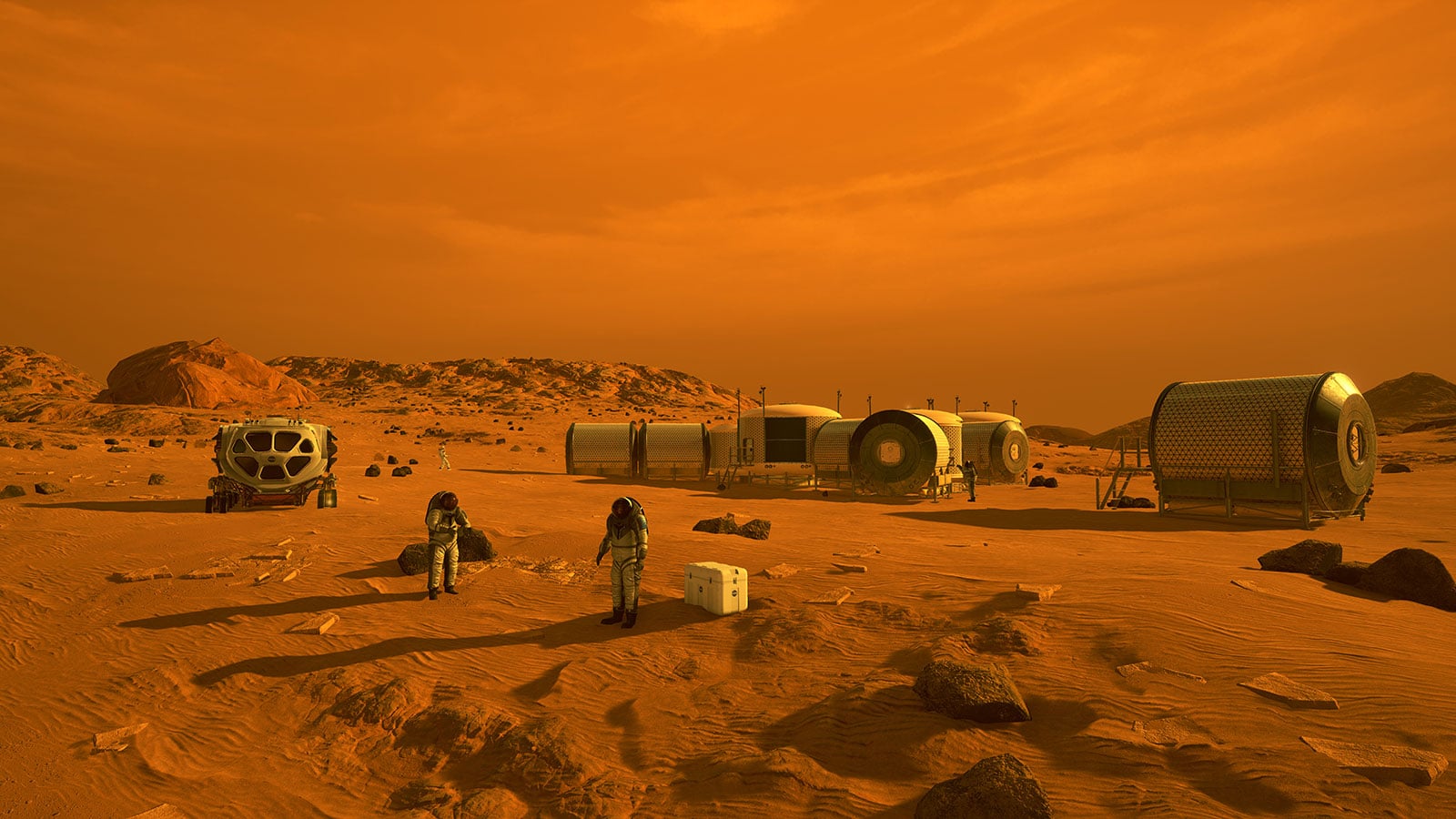
Astronauts working outside a habitat on the surface of Mars. Credit: NASA
NASA and the China National Space Agency (CNSA) plan to send astronauts to Mars as early as the next decade. Naturally, this ambitious goal requires a great deal of planning, research, and the anticipation and preparation for all potential challenges in advance. Among them, astronaut health and safety are paramount. In addition to the hazards associated with the long transit times - radiation and the effects of long periods in microgravity - there's the issue of Mars itself. Aside from exposure to elevated radiation levels, Martian gravity is about 38% of Earth's.
This has the potential to lead to long-term health risks. An international team of researchers is currently studying how Martian gravity will affect a key aspect of human health: skeletal muscle. This muscle, which is the most abundant tissue in the human body (accounting for more than 40% of total body mass), is essential to movement and metabolic health. What's more, this tissue is especially sensitive, and lower gravity could potentially result in the substantial loss of muscle strength, size, and performance. It is therefore important to determine how this muscle tissue will fare in the Martian environment.
The research team was composed of scientists from the Institute of Medicine at the University of Tsukuba, Tohoku Medical Megabank Organization, the Advanced Research Center for Innovations in Next-GEneration Medicine (INGEM), the Beth Israel Deaconess Medical Center, the Brigham and Women’s Hospital, the Japan Aerospace Exploration Agency's (JAXA) Space Environment Utilization Center, and multiple universities. The results of their research appeared in the journal Science Advances
*Experiments aboard the International Space Station with mice showed that muscle atrophy can be mitigated and prevented in lower gravity.
Credit: NASA/ESA–T. Pesquet*
For their experiment, the team studied how lower gravity affected skeletal muscle tissue in 24 mice sent to JAXA's Kibo experimental module. These mice were then placed in a JAXA-developed centrifuge device called the Multiple Artificial-gravity Research System (MARS), where they were subjected to four different levels of gravity - microgravity, 0.33 g, 0.67 g, and 1 g - over a 28-day period. The mice were subjected to pre-flight testing before launch at NASA's Kennedy Space Center, where they were returned for post-flight sampling.
These samples were then examined by scientists at the Metabolism and Muscle Biology Lab in the Department of Nutrition at the University of Rhode Island (URI). As Professor Marie Mortreux, who leads the MMBL, attested in a Rhoby Today news story:
While we can simulate spaceflight on Earth in humans, it’s extremely complicated and costly. We have centrifuges that can be used to temporarily expose humans to certain gravity levels, but it is not homogeneous nor constant. We used gravity levels that were equally separated, to have a better picture of the dose-response of each system to gravity. The test group that was exposed to 0.33g was extremely close to Martian gravity (0.38g). Our findings for that group can be translated into actions to enable Mars exploration.
Mortreux and her team analyzed the weight, strength, and movement of the mice once they were returned to NASA's Kennedy Space Center. Their analysis showed that 0.33 g mitigated spaceflight-induced muscle atrophy, with full prevention at 0.67 g. They also measured the mice's forelimb grip strength using Electrical impedance myography (EIM), which showed that 0.67 g was sufficient to maintain muscle performance.
*The research team at Kennedy Space Center confirming the protocol and timing prior to receiving animals for post-flight sampling.
Credit: URI*
Their results collectively demonstrated that 0.67 g is a critical threshold for mitigating muscle atrophy caused by prolonged spaceflight. In addition, an analysis of the mice's blood plasma identified 11 metabolites that showed gravity-dependent changes, suggesting they could serve as potential biomarkers to monitor physiological adaptations in astronauts. This work builds on previous research she performed with Professor Mary Bouxsein (a co-author on the study) at Harvard Medical School.
Whereas Dr. Bouxsein developed the ground-based mouse model of partial gravity in the early 2010s, Montreux developed the rat model of partial gravity at Harvard. As such, the two are well-acquainted with the impact that different gravity levels have on musculoskeletal tissues.
"Since this mission aimed to assess gravity as a continuum, we were perfectly positioned to see if our ground-based results had similar outcomes when reduced mechanical loading was applied in orbit," said Montreux. "Working with an international team was challenging and exciting. I think my experience working in Italy, France, and the United States prepared me for those big-scale collaborations."
One takeaway from this study is that future missions to Mars will need to be mindful of mitigating skeletal muscle loss during the long transit between Earth and Mars. For astronauts to maintain mobility, muscle strength, and carry out regular science operations. The same holds true for their physical health upon returning to Earth.
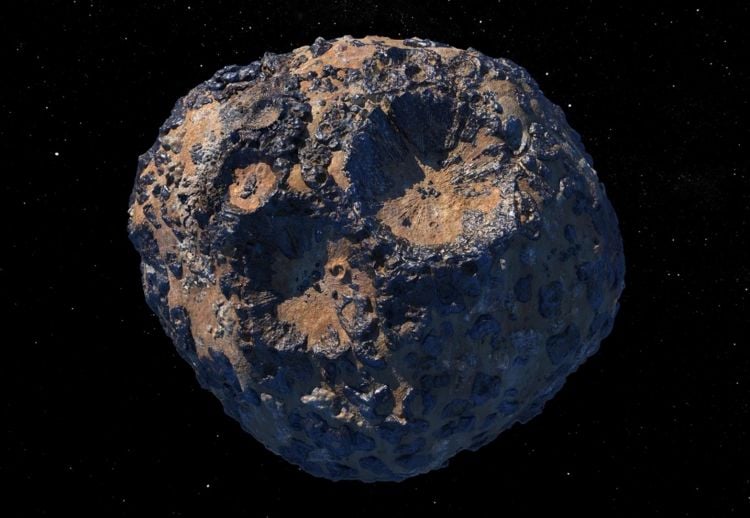
Artist's illustration of asteroid 16 Psyche. (Credit: Maxar/ASU/P.Rubin/NASA/JPL-Caltech)
When we think of asteroids, we almost immediately think of giant rocks bouncing around like the iconic chase scene in Empire Strikes Back, and we often hear how they are remnants from the birth of the solar system. While the asteroids that comprise the Main Asteroid Belt of our solar system are not only spread far apart from each other, they are also not all made of rock. One asteroid approximately the size of the State of Massachusetts called 16 Psyche is made of metal, which planetary scientists hypothesize could be the remnants of a protoplanet’s core that didn’t build into a full-fledged planet. But how did such a unique asteroid form?
Now, an international team of scientists might be one step closer to answering that conundrum, as they attempted to ascertain how a large impact in the north polar region of 16 Psyche might have formed. The findings from this incredible study were recently published in the Journal of Geophysical Research: Planets and could help scientists gain insight into planetary formation and evolution, specifically during the early days of the solar system.
Using computer models, the researchers conducted 3-D simulations of impacts near the north polar regions of 16 Psyche and how these impacts could influence the interior characteristics of the large asteroid, specifically the distribution of metal within the asteroid. The team used 3-D models since the images from ground-based telescopes have provided limited data and NASA’s Psyche spacecraft, which launched in October 2023, isn’t slated to arrive at 16 Psyche until August 2029.
The researchers considered 16 Psyche’s physical shape into their models, noting that 16 Psyche is shaped like a potato while having a large impact basin near its north pole. Additionally, they also considered 16 Psyche’s interior structure, including whether it consists of one type of material throughout, or a homogenous model, and whether it’s layered with an iron core and volcanic rock on the outside. Finally, the team considered the asteroid’s interior porosity, or empty space, and how this played a role in impact crater formation, specifically what’s known as the crater’s depth-diameter ratio, or how deep the crater is compared to how wide it is.
In the end, the researchers developed several hypotheses regarding the interior of 16 Psyche, which they note they will confirm once the Psyche spacecraft arrives at the asteroid.
"One of our main findings was that the porosity – the amount of empty space inside the asteroid – plays a significant role in how these craters form," said Namya Baijal, who is a PhD Candidate at the University of Arizona’s Lunar and Planetary Laboratory and lead author of the study. "Porosity is often ignored because it's difficult to include in models, but our simulations show it can strongly affect the impact process and shape of craters left behind."
As noted, NASA’s Psyche spacecraft is slated to arrive at 16 Psyche in 2029, whose primary mission goals include determining if 16 Psyche is indeed a metal core remnant of a planetesimal, or an early planetary body. Through this, scientists hope to gain insight into how planets form, as this will be the first time in history that we can directly explore the interior on a planetary body. For context, while the distance from the Earth’s surface to its center is approximately 6,300 kilometers (4,000 miles), we’ve only drilled 12.26 kilometers (7.6 miles) into the Earth, or approximately 0.2 percent to the center of the Earth.
Part of accomplishing this primary goal will be to ascertain the interior composition of 16 Psyche, specifically regarding whether it’s layered or comprised of one mixture. The researchers in this study hypothesized that the 16 Psyche’s interior could play a role in crater morphology, specifically regarding its depth-diameter ratio. For example, they note that a stronger interior of the impact crater target sight would result in preserving large amounts of the impactor, whereas a weaker interior would result in preserving small amounts of the impactor.
Better understanding 16 Psyche and its origins will not only enable scientists to gain greater understanding of how planets throughout the solar system form and evolve, but also planets beyond the solar system. This could, in turn, help scientists understand both where and how to search for life beyond Earth.
What new insight will researchers make into asteroid 16 Psyche, including from the en route Psyche spacecraft? Only time will tell, and this is why we science!
Artist's illustration of asteroid 16 Psyche. (Credit: Maxar/ASU/P.Rubin/NASA/JPL-Caltech)
When we think of asteroids, we almost immediately think of giant rocks bouncing around like the iconic chase scene in Empire Strikes Back, and we often hear how they are remnants from the birth of the solar system. While the asteroids that comprise the Main Asteroid Belt of our solar system are not only spread far apart from each other, they are also not all made of rock. One asteroid approximately the size of the State of Massachusetts called 16 Psyche is made of metal, which planetary scientists hypothesize could be the remnants of a protoplanet’s core that didn’t build into a full-fledged planet. But how did such a unique asteroid form?
Now, an international team of scientists might be one step closer to answering that conundrum, as they attempted to ascertain how a large impact in the north polar region of 16 Psyche might have formed. The findings from this incredible study were recently published in the Journal of Geophysical Research: Planets and could help scientists gain insight into planetary formation and evolution, specifically during the early days of the solar system.
Using computer models, the researchers conducted 3-D simulations of impacts near the north polar regions of 16 Psyche and how these impacts could influence the interior characteristics of the large asteroid, specifically the distribution of metal within the asteroid. The team used 3-D models since the images from ground-based telescopes have provided limited data and NASA’s Psyche spacecraft, which launched in October 2023, isn’t slated to arrive at 16 Psyche until August 2029.
The researchers considered 16 Psyche’s physical shape into their models, noting that 16 Psyche is shaped like a potato while having a large impact basin near its north pole. Additionally, they also considered 16 Psyche’s interior structure, including whether it consists of one type of material throughout, or a homogenous model, and whether it’s layered with an iron core and volcanic rock on the outside. Finally, the team considered the asteroid’s interior porosity, or empty space, and how this played a role in impact crater formation, specifically what’s known as the crater’s depth-diameter ratio, or how deep the crater is compared to how wide it is.
In the end, the researchers developed several hypotheses regarding the interior of 16 Psyche, which they note they will confirm once the Psyche spacecraft arrives at the asteroid.
"One of our main findings was that the porosity – the amount of empty space inside the asteroid – plays a significant role in how these craters form," said Namya Baijal, who is a PhD Candidate at the University of Arizona’s Lunar and Planetary Laboratory and lead author of the study. "Porosity is often ignored because it's difficult to include in models, but our simulations show it can strongly affect the impact process and shape of craters left behind."
As noted, NASA’s Psyche spacecraft is slated to arrive at 16 Psyche in 2029, whose primary mission goals include determining if 16 Psyche is indeed a metal core remnant of a planetesimal, or an early planetary body. Through this, scientists hope to gain insight into how planets form, as this will be the first time in history that we can directly explore the interior on a planetary body. For context, while the distance from the Earth’s surface to its center is approximately 6,300 kilometers (4,000 miles), we’ve only drilled 12.26 kilometers (7.6 miles) into the Earth, or approximately 0.2 percent to the center of the Earth.
Part of accomplishing this primary goal will be to ascertain the interior composition of 16 Psyche, specifically regarding whether it’s layered or comprised of one mixture. The researchers in this study hypothesized that the 16 Psyche’s interior could play a role in crater morphology, specifically regarding its depth-diameter ratio. For example, they note that a stronger interior of the impact crater target sight would result in preserving large amounts of the impactor, whereas a weaker interior would result in preserving small amounts of the impactor.
Better understanding 16 Psyche and its origins will not only enable scientists to gain greater understanding of how planets throughout the solar system form and evolve, but also planets beyond the solar system. This could, in turn, help scientists understand both where and how to search for life beyond Earth.
What new insight will researchers make into asteroid 16 Psyche, including from the en route Psyche spacecraft? Only time will tell, and this is why we science!
Hey guys, Scott here… and yeah, you already know what I’ve been doing—digging deep through the NASA Mars rover archives again. It’s what I do. And today… I found something that honestly shocked me.
This discovery connects human history directly to Mars.
I came across what appears to be an ancient sculpture—partly embedded into a collapsed wall structure on the Martian surface. And when I enhanced it, the details became clear. This isn’t random rock. This is art. Intentional. Designed.
The figure matches Bastet, the Egyptian goddess—daughter of Ra, the sun god. Same exact form we see in ancient Egypt: the head of a cat, body of a woman. Even more interesting… she appears to be holding something in her hands—just like nearly every Bastet statue found here on Earth.
That’s not coincidence.
This is the missing link.
What we’re looking at is evidence that the so-called “ancient Egyptian gods” didn’t originate on Earth. They came from Mars. Advanced beings—what many would call ancient aliens—who had the technology to travel between planets. When Mars began to die, they left… and came here, to Earth, the nearest habitable world.
And they brought their culture, their knowledge… and themselves.
This isn’t mythology anymore. This is physical evidence.
And you better believe… this is exactly the kind of truth governments don’t want getting out.
0
1
2
3
4
5
- Gemiddelde waardering: 0/5 - (0 Stemmen) Categorie:Ruins, strange artifacts on other planets, moons, ed ( Fr, EN, NL )
UAP at Skinningrove Beach, England March 16, 2026, Alien base found! Wow! UFO Sightings Daily.
UAP at Skinningrove Beach, England March 16, 2026, Alien base found! Wow! UFO Sightings Daily.
Date of sighting: March 16, 2026
Location of sighting: Skinningrove Beach, England
Source: NUFORC
This UFO looks rectangular in shape. When I added contrast to make the details stand out, it was clear this was no ordinary craft. This object is coming from an underwater alien base below the floor of the ocean in the area. It's rare but not unheard of to catch such craft leaving and entering the ocean. Fantastic raw footage. Undeniable proof that intelligent aliens share this planet with us.
Scott C. Waring - UFO Sightings Daily
Eyewitness states:
Lights on object, Emitted beams The orange bright light kept appearing and disappearing for 3 minutes. It was over the sea it was striking as it was bright and large in shape, we assumed it was an helicopter, but it disappeared and reappeared repeatedly.
UFO over Moreno, California USA March 9, 2026 UAP paranormal sighting news.
UFO over Moreno, California USA March 9, 2026 UAP paranormal sighting news.
Date of sighting: March 9, 2026
Location of sighting: Moreno Valley, California, USA
Source: NUFORC
This glowing red light was seen over California this week. It's a very energetic UFO and its lit up to be seen. Disclosure is getting close, meaning humanity will learn the truth in an instant. This UFO is just part of the agenda to get humans use to seeing them in the sky, get our reactions to measure how ready we really are and to gently nudge into our daily lives, until one day...they will land and make themselves known.
Scott C. Waring - UFO Sightings Daily
Eyewitness states:
Observing the sky and saw four bright objects in the sky. They all went into the same direction before fizzing out I saw four objects in the sky at once. Each one was a bright red color. After zooming in with the camera, there was no shape to it from what I could see. They looked as though they were coming in my direction and then they turned left in the sky and disappeared. Once those disappeared two more appeared one by one and did the same as the others. The last one appeared like it was a launch. It was round in shape and it had a tail behind it and then it started to look like the rest.
Humanoid robots are serving up meals and entertaining customers at a McDonald's in Shanghai – and they even wear the famous uniform.
The machines, supplied by Chinese firm Keenon Robotics, have been deployed as part of a trial and hint at a future where bots handle routine tasks at fast food restaurants.
In videos posted online, diners can be seen interacting with cyborgs dressed in the iconic red and yellow uniforms behind counters.
One humanoid, wearing a black uniform with the word 'chef', greets members of the public as they arrive.
Others make the famous 'M' sign synonymous with the brand and showcase some dancing moves.
Meanwhile, children can be seen chasing other robots disguised as cute animals as they deliver food and clean floors around the restaurant.
'Watch the robot squad suit up and enjoy the McDonald's party!' Keenon Robotics wrote online. 'Our humanoid series are leading the squad and hitting the streets.
'It's a showcase of how service automation is becoming a seamless part of global dining, and how technology brings more smiles to every mealtime.'
In the video, one robot can be seen touching its thumb and index finger together to make an 'okay' sign at a customer
In the video, one robot can be seen touching its thumb and index finger together to make an 'okay' sign at a customer.
A smaller, cube-shaped 'cleaning' bot features a touchscreen and has been designed to look as if it is wearing a tie.
Jon Banner, the executive vice president of McDonald's, explained the robots were there for a 'temporary greeting'.
'Just to be clear – the robots were part of the grand opening of the Shanghai Science and Technology Museum restaurant,' he wrote on social media.
'The robots were requested by the museum to draw attention. Mission accomplished!'
He added that the robots 'were not involved in any service or operational functions'.
While the machines were part of a trial – and were only around for about five days – some people believe it won't be long until they're rolled out more widely.
'Shanghai is the test market,' one person wrote on X. 'If the unit economics work the rollout does not stay in China.'
The machines, supplied by Chinese firm Keenon Robotics, have been deployed as part of a trial and hint at a future where bots handle routine tasks at fast food restaurants
Keenon Robotics Dinerbot
The 'Dinerbot' has been designed to deliver food while displaying adverts on its large screen.
It comes with open-access trays to allow diners to easily pick up their food.
It features a six-wheel shock-absorbing chassis to prevent spillage during sudden stops.
The screen can be programmed to display different animal faces including a cat, bunny and deer.
Meanwhile, a range of voices can be picked from.
Another said that this is the 'real future', adding: 'Humanoid robots greeting customers and delivery bots bringing your food – automate the kitchen a bit more and boom, McDonald's stores basically run themselves with zero staff.'
However, others warned the robots would be 'destroyed' if rolled out elsewhere.
According to Keenon Robotics, its 'Dinerbot T10' boasts 3D vision for 'safer obstacle avoidance in complex environments'.
It comes with open-access trays to allow diners to easily pick up their food, and features a six-wheel shock-absorbing chassis to prevent spillage during sudden stops.
Its screen can be programmed to display different animal faces, including a cat, bunny and deer, while a range of voices can be picked from.
Meanwhile, their 'Kleenbot C40' features a triple-brush system for separating dry and wet spillages. It has been designed to 'easily handle crowds and irregular obstacles', and can pick up objects including hair, paper scraps, dust, coffee and juice.
While the Keenon website does not list prices, these models retail for around £11,500 to £16,000 online.
Their recently-released 'XMAN-R1' humanoid was designed specifically to interact with people – but appears to come with a $100,000 price tag online.
A small cube-shaped 'cleaning' bot features a touchscreen and has been designed to look as if it is wearing a tie (left). Meanwhile, children can be seen chasing a 'Dinerbot' disguised as a cute animal as it delivers food around the restaurant
Their recently-released 'XMAN-R1' humanoid was designed specifically to interact with people – but appears to come with a $100,000 price tag online
Last week, the shocking moment a dancing robot went berserk at a restaurant was caught on camera.
Customers at the Haidilao hotpot restaurant in San Jose, California, were enjoying their meals when a humanoid started showing off some moves.
While performing a dance routine, involving waving its arms and shaking its hips, the robot suddenly slams its hands down on a table.
This sends chopsticks and bright yellow sauce flying into the air, while staff race over to try and turn it off.
But the humanoid continues to dance throughout the altercation – which saw three employees wrestle with the robot and try to drag it away by the scruff of its neck.
A mysterious humming noise has been reported in neighborhoods across several US states, rattling homes and leaving residents struggling to sleep.
The latest reports come from Vineland, New Jersey, where locals say the sound began after construction started on a massive 2.5-million-square-foot data center, though officials have not confirmed a direct link.
Residents say the constant noise is disrupting daily life. 'That is not construction, and that monstrosity is only partially built,' Scott Montgomery told ABC 6. 'It is infringing on our peace of mind and our tranquility.'
Similar complaints have surfaced in parts of Virginia, home to hundreds of data centers, and in Connecticut earlier this year, though officials in those areas have yet to identify a confirmed source.
Experts noted that data centers can produce continuous low-frequency humming caused by powerful cooling systems and electrical equipment operating around the clock.
Thousands of servers generate intense heat, requiring large fans and chillers that can produce noise levels between 55 and 85 decibels, often described as a low-pitched roar capable of traveling long distances.
'It's not even fully built yet. That's the scary part,' Montgomery added.
'If it sounds like this now, what's it going to be like when everything's up and running?'
The latest reports come from Vineland, New Jersey, where locals say the sound began after construction started on a massive 2.5-million-square-foot data center
Cumberland County Department of Health has acknowledged the noise concerns in the New Jersey town, noting it does not play a role in planning, zoning, or approving construction projects.
The agency added that it will investigate the construction site to determine if it is the source of the noise.
'If our inspectors find that noise levels are higher than those allowed under the code, we follow the enforcement guidelines under which a penalty may be issued if compliance is not obtained within a certain timeframe,' the agency shared on Facebook.
'While the Cumberland County Department of Health does not have the legal authority to shut down a facility, we do work collaboratively with those involved to resolve any confirmed violations of the Noise Control Act.'
The 2.4 million-square-foot data center is being built on South Lincoln Avenue and is owned by the company Data One.
In a statement, the company said the facility is complying with local regulations.
'Our site is operating in full compliance with Vineland City noise ordinance limits,' the company said. 'We will continue deploying sound reduction measures to minimize any impact on our neighbors.'
While authorities have yet to blame the data center for the noise, locals are sure it is the source.
The 2.4 million-square-foot data center is being built on South Lincoln Avenue and is owned by the company Data One
One local shared on social media: 'I live about two miles away, and it's definitely there. Sounds like a huge engine idling all the time.'
Montgomery, who lives about a half a mile from the facility, said: 'It keeps you up at night, as you can hear it coming through the house.'
Another local, Theresa Lewis, expressed the same concern, saying that even when her doors and windows are closed, she still hears a constant humming.
'It's like someone is using some type of machinery around my house,' Lewis told ABC 6.
Montgomery posted a video of the noise on social media. In the recording, a humming sound can be heard.
'We're afraid it's even going to get worse, so it's just maddening to listen to this all the time. It's hard to fall asleep at night,' he said.
Similar reports from Connecticut surfaced earlier this year, but locals said they have been bothered by a humming noise since 2020.
A persistent low-frequency hum has disrupted life in West Haven, with residents describing the sound as both mysterious and, at times, unbearable.
Similar reports from Connecticut surfaced earlier this year, but locals said they have been bothered by a humming noise since 2020
After collecting more than 140 signatures on a petition, residents persuaded city leaders to approve $16,000 to hire an independent acoustic firm to investigate the source, which many believe may be linked to nearby industrial activity.
'For years, our community has been plagued by a constant or intermittent humming noise and low-frequency vibrations affecting multiple areas of town,' the petition notes. 'This disturbing phenomenon occurs at all hours, disrupting our ability to sleep, concentrate and enjoy life to its fullest.
'Many residents have reported increased levels of stress, anxiety and physical discomfort due to this incessant noise and vibration.'
While Connecticut authorities have yet to confirm the source, there are several data centers near West Haven, primarily in nearby New Haven, Wallingford, and the surrounding southern Connecticut area.
Lumen New Haven Data Center is about three to five miles from West Haven, while Fibertech Networks is about four miles away, and Cloudsmart Data Center and ChimeNet Data Center are up to 20 miles from the town.
West Haven Commissioner of Human Services John Carrano shared that the City Council approved a $16,000 budget to hire a third-party acoustics firm to pinpoint the source of the 24/7 noise
Similar humming complaints have emerged across parts of Virginia, where hundreds of large data centers operate around the clock.
Residents have described hearing a deep, low-frequency buzz, sometimes accompanied by vibrations, fueling speculation about whether expanding data center infrastructure could be contributing to the unexplained noise.
Dale Brown from Great Oak told WUSA9: 'We're about 700 feet from the data center right here. It's just really, really loud.'
Residents living near the Amazon Web Services data center in Manassas and nearby facilities report both a persistent hum and low rumbling sounds that have sparked ongoing complaints.
Local Roger Yackel said: 'These data centers are loud, noisy beasts and they are being built too close to residential areas. That's not something that we should have to live with.'
John Lyver, a retired NASA analyst, has begun tracking noise coming from data centers near his neighborhood.
'I'm finding that the noise is far worse than anybody ever figured it was going to be,' he said.
Beste bezoeker, Heb je zelf al ooit een vreemde waarneming gedaan, laat dit dan even weten via email aan Frederick Delaere opwww.ufomeldpunt.be. Deze onderzoekers behandelen jouw melding in volledige anonimiteit en met alle respect voor jouw privacy. Ze zijn kritisch, objectief maar open minded aangelegd en zullen jou steeds een verklaring geven voor jouw waarneming! DUS AARZEL NIET, ALS JE EEN ANTWOORD OP JOUW VRAGEN WENST, CONTACTEER FREDERICK. BIJ VOORBAAT DANK...
Druk op onderstaande knop om je bestand , jouw artikel naar mij te verzenden. INDIEN HET DE MOEITE WAARD IS, PLAATS IK HET OP DE BLOG ONDER DIVERSEN MET JOUW NAAM...
Druk op onderstaande knop om een berichtje achter te laten in mijn gastenboek
Alvast bedankt voor al jouw bezoekjes en jouw reacties. Nog een prettige dag verder!!!
Over mijzelf
Ik ben Pieter, en gebruik soms ook wel de schuilnaam Peter2011.
Ik ben een man en woon in Linter (België) en mijn beroep is Ik ben op rust..
Ik ben geboren op 18/10/1950 en ben nu dus 75 jaar jong.
Mijn hobby's zijn: Ufologie en andere esoterische onderwerpen.
Op deze blog vind je onder artikels, werk van mezelf. Mijn dank gaat ook naar André, Ingrid, Oliver, Paul, Vincent, Georges Filer en MUFON voor de bijdragen voor de verschillende categorieën...
Veel leesplezier en geef je mening over deze blog.