In 1783, they amused King Louis XVI and Queen Marie Antoinette by sending their balloon Aerostat Réveillon, with a crew of a sheep, a duck and a rooster, on a short journey across the French countryside.
Only 50 or so years later, we were visualising a time of unlimited flight, with Edgar Allan Poe sending the hero of The Unparalleled Adventure of One Hans Pfaall (1835) to the Moon in a balloon.
 Yan' Dargent's illustration of 'The Unparalleled Adventure of One Hans Pfaall'.
Credit: Yan' Dargent
Yan' Dargent's illustration of 'The Unparalleled Adventure of One Hans Pfaall'.
Credit: Yan' Dargent
Then, in the second half of the 19th century, science fiction’s favoured method of spaceflight changed, thanks to the development of more powerful artillery.
Howitzer guns were reaching the point where they could fire shells of over 1,000kg (2,200lb) for many kilometres – so in Jules Verne’s From the Earth to the Moon (1868), the astronauts were launched from a giant cannon.
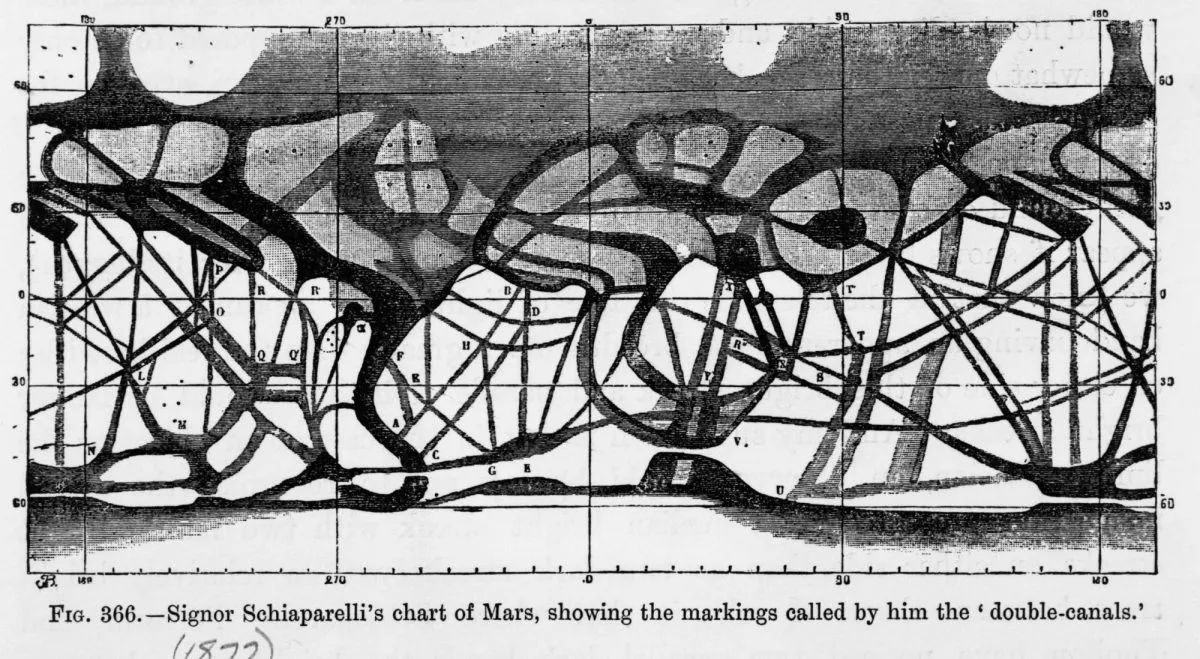 Signor Giovanni Schiaparelli's (1835-1910), chart of Mars showing the "double canals".
Credit: Bettmann / Contributor / Getty Images
Signor Giovanni Schiaparelli's (1835-1910), chart of Mars showing the "double canals".
Credit: Bettmann / Contributor / Getty Images
From canals to invasions
Around the same time, imagination and prediction combined with rather flimsy scientific argument in the writings of Camille Flammarion.
The French astronomer, author and conspiracy theorist speculated on the existence of extraterrestrial life in La Pluralité des Mondes Habités (1862).
Fifteen years later, in 1877, such beliefs appeared vindicated when Italian astronomer Giovanni Schiaparelli reported a network of ‘canali’ on the surface of Mars.
The word actually just means ‘channels’, but was duly mistranslated as ‘canals’ – fuelling speculation that Mars might be inhabited by aliens.
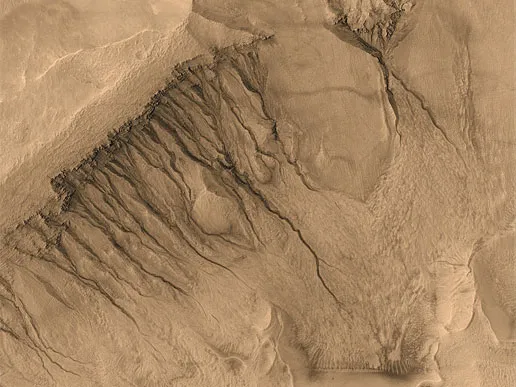 Gullies and channels on Mars.
Credit: NASA
Gullies and channels on Mars.
Credit: NASA
Yet, at the time, there was no immediate interest in extraterrestrials visiting Earth.
When the Mexican astronomer José Bonilla not only saw but actually photographed strange objects (now thought to have been comet fragments) moving across the Sun in 1883, there was no speculation about these being visiting spaceships.
Even Flammarion, who published a report of Bonilla’s sightings in French magazine L’Astronomie, was sceptical, believing the objects to be birds, insects or even dust in front of the telescope. Humans were just not ready for visits from aliens… but we were getting there.
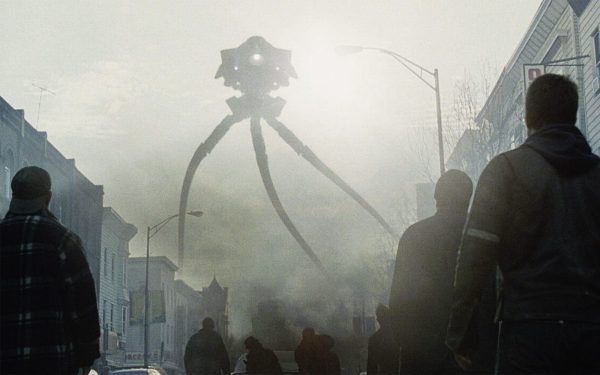
In the mid-1890s, HG Wells put two ideas together – artillery-propelled spacecraft and intelligent life on Mars – to write the greatest science-fiction story of the era, The War of the Worlds.
Its publication coincided with the airship wave of 1896–97, when numerous sightings were made of unidentified airships cruising the skies over the USA.
Most reports appeared in small-town newspapers, such as the Yates Center Farmer’s Advocate or the Table Rock Argus, with vague mentions of “anonymous but reliable” witnesses.
 Illustration of Martians attacking from a 1906 edition of The War of the Worlds by H.G. Wells.
Credit: Bettmann / Getty Images
Illustration of Martians attacking from a 1906 edition of The War of the Worlds by H.G. Wells.
Credit: Bettmann / Getty Images
Speculation regarding the origin and construction of these airships, however, tended to centre not on aliens but on the concept of the ‘mad scientist’.
This reflected the sci-fi tropes of the day, including Jules Verne’s submarine Nautilus, the invention of the genius Captain Nemo, and HG Wells’s time machine, the work of one inventor-scientist.
There was a single, isolated and rather tongue-in-cheek report of contact with aliens during this period: 1897’s Aurora UFO Incident.
The Dallas Morning News carried the story of an airship with a single crew member, a pilot who was “not of this world”.
The story’s authenticity has been debated, but the fact that the paper did not make it their lead story, affording it only a six-paragraph summary, is perhaps the most damning criticism.
What the Aurora story does show is that people were now aware of the possibility of the existence of extraterrestrial life.
 The original newspaper report on the Aurora UFO incident in 1897. By S. E. Haydon(Life time: fl. 1897)
Public Domain, Wikipedia
The original newspaper report on the Aurora UFO incident in 1897. By S. E. Haydon(Life time: fl. 1897)
Public Domain, Wikipedia
Moving on to the early 20th century, 1919 saw the publication of The Book of the Damned by Charles Fort.
From 1906, Fort collected accounts of anomalies, a task that would take up most of his life.
His 1919 book detailed phenomena as diverse as objects falling from the sky, mythological creatures, spontaneous combustions and, of course, UFO sightings.
It is a difficult read, once described as “negotiating a literary assault course, but worth the bumpy ride”.
No doubt if Fort had not catalogued these anomalies, somebody else would have – but it was Fort’s research that would feed our interest in the unexplained 40 years later.

Early unexplained sightings
Curiously, the period around 1930 to 1940 then saw a drop in reported UFO sightings, despite it being a golden period for science fiction, with the arrival of magazines such as Amazing Stories.
The magazine’s striking front covers reflect the vision of the time, with spaceships that were generally envisaged as metal versions of airships.
However, the 1929 cover of Science Wonder Stories featured a saucer-shaped craft that might well have influenced later UFO sightings.
Then unexplained phenomena, mostly in the form of moving lights, became common during the Second World War.
With more aircraft flying under all weather extremes, and with nervous crews continually searching the sky for danger, there were too many sightings to be ignored.
This marked the start of a period of official investigations, leading to Project Blue Book, the code name for the US Air Force’s study into UFO reports. Started in 1952, it would not be terminated until 1969.
 Credit: Ray Massey / Getty Images
The 'flying saucer' is born
The world of unexplained flying objects changed forever on 24 June 1947, when Kenneth Arnold, a businessman and aviator, reported seeing a group of “bat-like aircraft flying in formation at high speeds” near Mount Rainier in Washington State.
He didn’t describe them as saucer-shaped, but his remark that they were “moving like a saucer would if skipped across water” is widely believed to have been the origin of the term ‘flying saucers’.
There followed a burst of UFO sightings over the next year, and on 8 July, the Roswell Daily Record led with the story ‘RAAF Captures Flying Saucer’.
It was a dramatic headline, but that original story in a small local newspaper quickly faded from memory after the military identified the debris as nothing more than pieces of a weather balloon.
After that, Roswell would, for the time being, be forgotten.
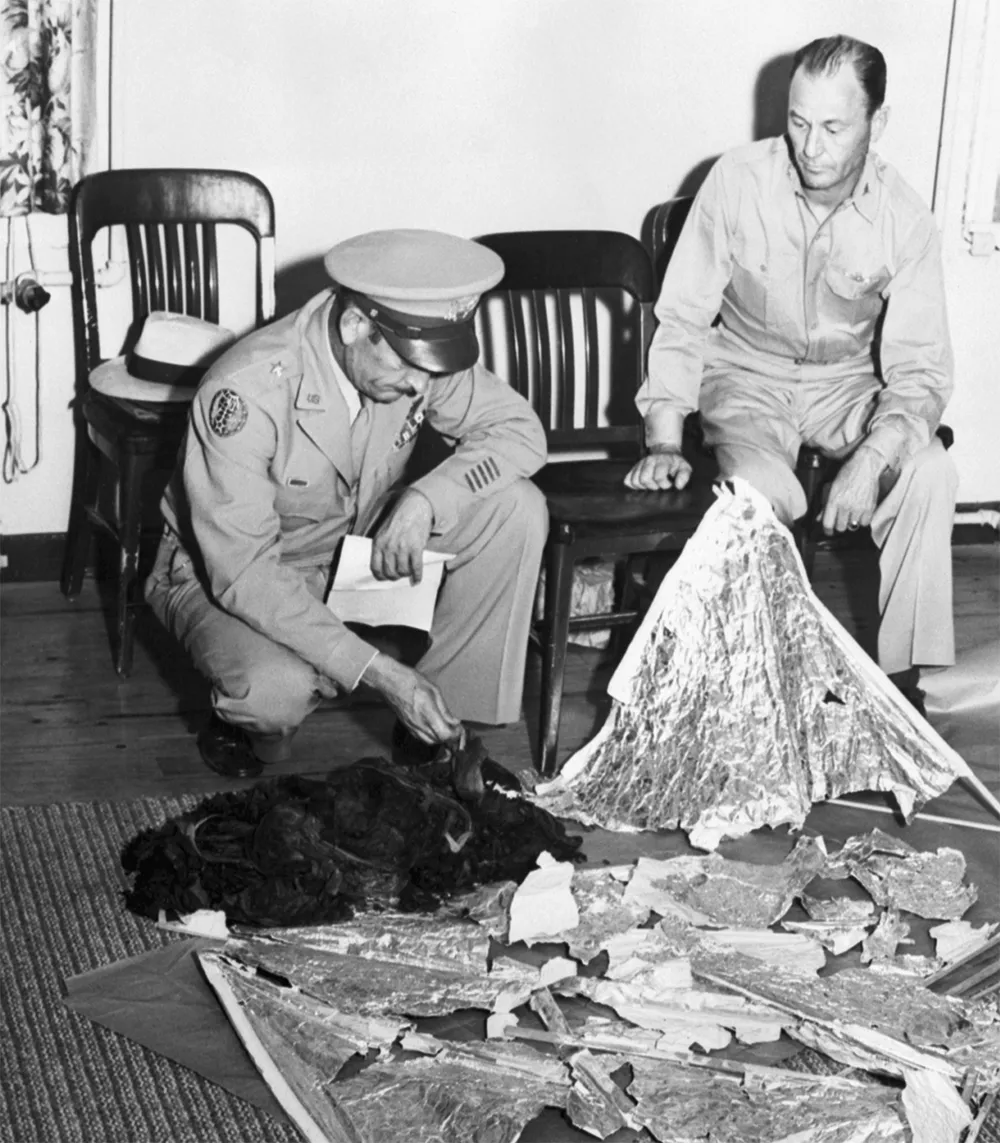 At Fort Worth Army Air Field on 8 July 1947, Brigadier General Roger M Ramey (left) and Colonel Thomas J Dubose, identify metallic fragments found at Roswell as pieces of a weather balloon.
Credit: Bettmann / Getty Images
At Fort Worth Army Air Field on 8 July 1947, Brigadier General Roger M Ramey (left) and Colonel Thomas J Dubose, identify metallic fragments found at Roswell as pieces of a weather balloon.
Credit: Bettmann / Getty Images
In 1950, newspaper reporter Edward Van Winkle Jones wrote an article for the Miami Herald on “strange events”, in which he included the story of the disappearance of Flight 19.
In December 1945, a flight of five Avenger torpedo bombers had become disorientated, run out of fuel and ditched into the sea.
Matters got worse when a large flying boat sent out to search for the downed planes was also lost, most likely due to an in-flight explosion.
Neither incident caused any immediate excitement; it had just been a bad day for the US Navy.
Jones’s article offered no explanation for the losses, and there was not a UFO in sight; his theme was that not everything in our world could be explained.
But then in 1962, Allan W Eckert, a successful author of children’s novels, wrote ‘The Mystery of the Lost Patrol’ for the American Legion Magazine – marking the start of Flight 19 as a UFO legend.
The four-page article, with dramatic drawings of a shocked pilot staring at some unseen horror, was followed by a series of interviews in which pilots assured readers that sightings of unexplained flying objects happened all the time.
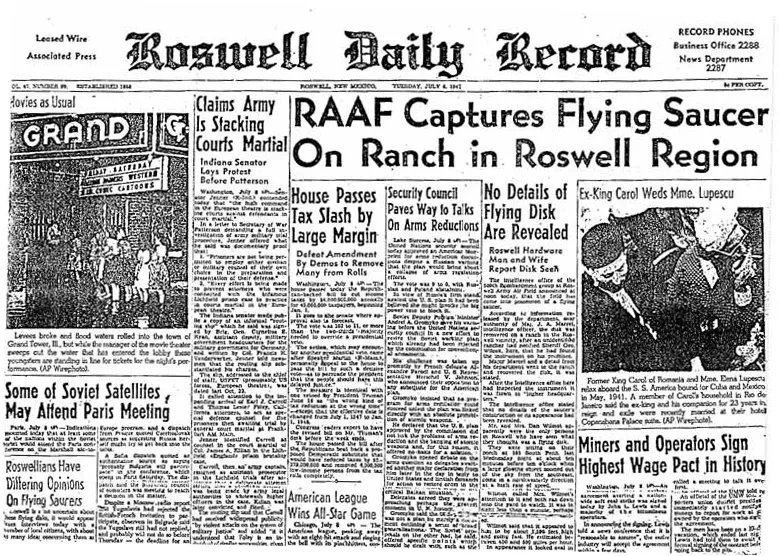 The front page of the Roswell Daily Record from 9 July 1947.
Credit: Roswell Daily Record
The front page of the Roswell Daily Record from 9 July 1947.
Credit: Roswell Daily Record
Magazines fan the flames
There were, of course, those who stepped forward to offer the opposite argument.
The Times, for example, carried a story from the US Office of Naval Research that linked UFO sightings to the testing of a new series of military balloons.
Despite the occasional voice of reason, the fascination with UFOs – as they were now known, thanks to Project Blue Book director Captain Edward J Ruppelt – remained undiminished.
In an age before there was a television in every house, two forces drove this phenomenon.
The first was magazines, which in those days could be found in every doctor’s and dentist’s waiting room.
Magazines thrived on photographs, and with more and more people owning cameras, pictures of UFOs were bound to appear.
They were generally a pretty poor collection, but as UFO excitement spread, Life magazine reprinted the so-called ‘McMinnville UFO’ photographs, taken on a farm in Oregon in 1950.
Given the blessing of Life, these and other UFO images were printed in newspapers around the world.
 One of the McMinnville UFO photographs.
Credit: Paul Trent / Wiki Commons
One of the McMinnville UFO photographs.
Credit: Paul Trent / Wiki Commons
As several hoaxes were exposed, more serious magazines began to shy away from UFO stories;
the gap was filled by the National Enquirer.
The magazine had always specialised in sensation and scandal, but in 1967, its owners – wanting to gain access to the supermarkets – switched from sex to UFOs.
Headlines such as ‘Crippled UFO Orbiting Earth’ and ‘Kidnapped by a UFO’ now boomed out at every American family doing their weekly shopping.
In addition to magazines, this was the golden age of clubs and societies, with everyone from model-railway builders to ukulele players forming clubs to meet and discuss their passions.
Despite communication being largely by post, these societies had a remarkable ability to grow and expand.
In 1953, Denis Plunkett, a civil servant from Bristol, UK, answered an advertisement from the Connecticut, USA-based International Flying Saucer Bureau and was invited to found the British branch of what was becoming an international organisation.
At its height, the British Flying Saucer Bureau had 1,500 members and in a busy week might receive 30 reports of unusual objects in the sky.
By the 1950s, the French future Nobel Prize in Literature winner Annie Ernaux could note that conversations around a French village dinner table centred on Algeria, memories of the last war, and whether flying saucers were real.
 Credit: KTSDesign/SCIENCEPHOTOLIBRARY/Getty
Cover-ups and conspiracies
The interest in UFOs attracted a huge number of authors, with Donald Keyhoe’s The Flying Saucers Are Real and Frank Scully’s Behind the Flying Saucers (both 1950) giving birth to the great age of UFO conspiracy theories.
Why did aliens only visit now? Well, the answer clearly was that we had recently developed atomic weapons.
Others argued that no, we had always been under scrutiny, and Erich von Däniken took UFO publishing in this direction with Chariots of the Gods? (1968).
It was during this period that stories about both Roswell and Flight 19 began to resurface.
Charles Berlitz wrote The Bermuda Triangle in 1974. Playing fast and loose with the facts, it sold nearly 20 million copies, cementing Flight 19’s place in UFO legend.
The story would, of course, inspire the brilliant opening scene of Close Encounters.
Roswell was largely forgotten about until 1978, when the National Enquirer reprinted the original story, and Jesse Marcel, who had led the initial investigation, was interviewed by UFO ‘expert’ Stanton Friedman.
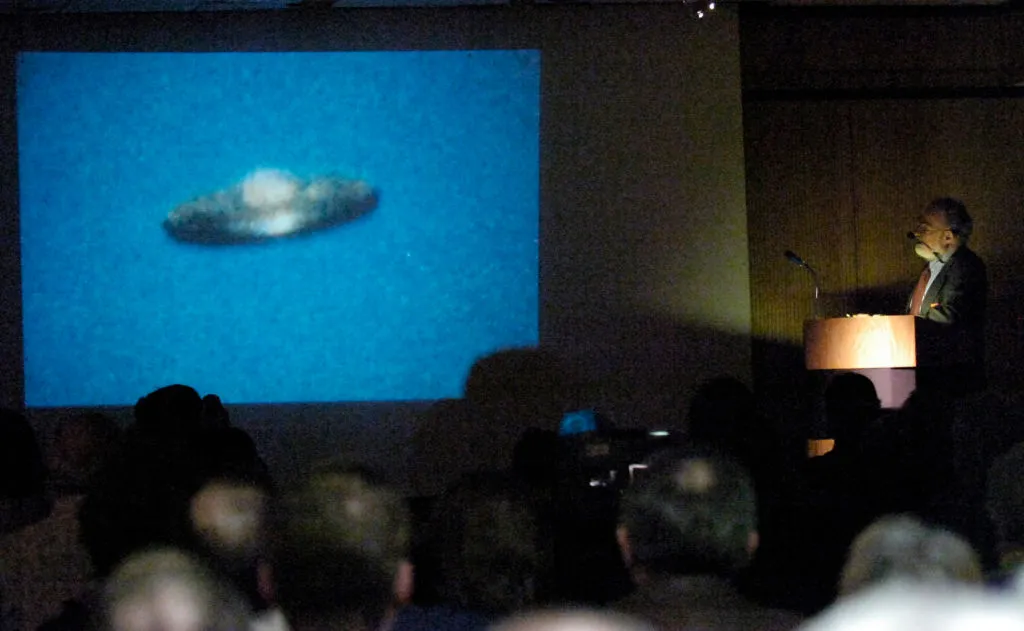 Nuclear physicist Stanton T. Friedman giving a talk about UFOs in 2007.
Photo By Krissy Krummenacker/MediaNews Group/Reading Eagle via Getty Images
Nuclear physicist Stanton T. Friedman giving a talk about UFOs in 2007.
Photo By Krissy Krummenacker/MediaNews Group/Reading Eagle via Getty Images
When Marcel said he believed Roswell debris to have been extraterrestrial, Roswell became the centre of the UFO world, changing the nature of UFOlogy.
UFOs were no longer about advanced alien scouts spying out Earth for an invasion that was coming any day.
It was about a previous contact – perhaps involving a crashed spaceship – being covered up by the government.
In the shadow of the Kennedy assassination and Watergate, government cover-ups were something everybody could believe in.
Charles Berlitz, looking for a follow-up to his Bermuda Triangle success, jumped on the bandwagon with The Roswell Incident (1980).
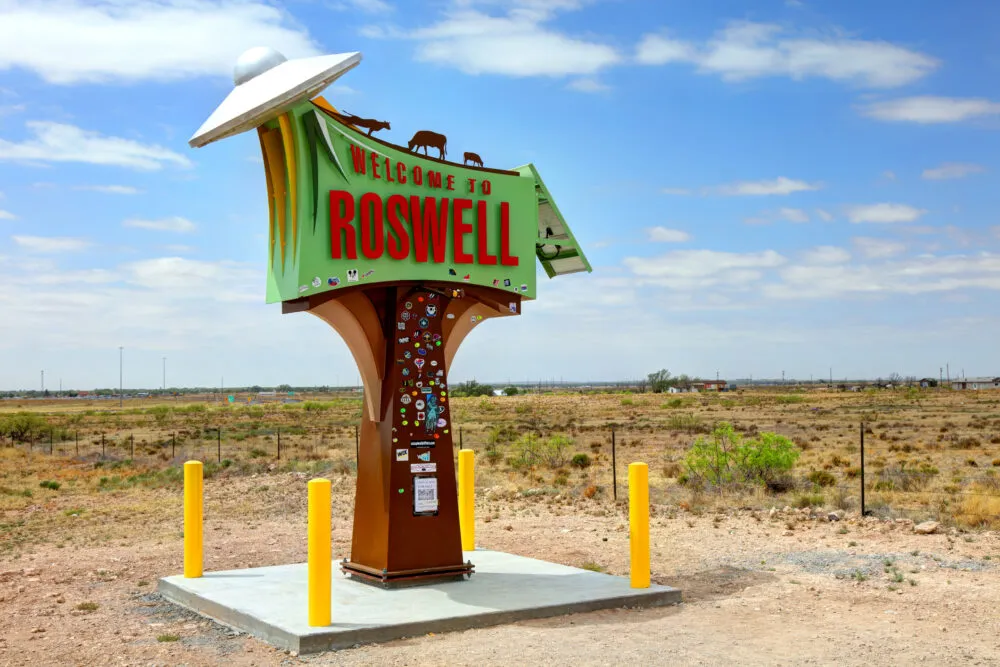 Roswell, New Mexico has fully embraced its credentials as the most famous city in UFO folklore.
Credit: Denis Tangney Jr / Getty Images
Roswell, New Mexico has fully embraced its credentials as the most famous city in UFO folklore.
Credit: Denis Tangney Jr / Getty Images
The saucer craze fades
Yet UFO excitement was reaching its peak. Back in 1950, it seemed as if the aliens would be arriving any day, but by 1980, we had grown tired of waiting.
A public that watched the USS Enterprise boldly going where no one had gone before was finding
the pictures of UFOs from the 1950s embarrassingly amateurish.
The debris from Roswell looked far more like the balloon that the military had said it was than it did a crashed spaceship.
Stories of alien abductions, or self-proclaimed UFO contactee George Adamski claiming to have hitched a lift around the Solar System, didn’t help.
Douglas Adams nicely mocked it all in The Hitchhiker’s Guide to the Galaxy (1979) with his description of ‘Teasers’: bored rich kids that “land right by some poor unsuspecting soul whom no one’s ever going to believe and then strut up and down in front of him wearing silly antennas on their head and making beep beep noises”.
In 2001, the British Flying Saucer Bureau closed after 50 years of chronicling supposed UFO activities.
Nobody was coming to meetings in cold church halls any more; people were staring down at their computer screens rather than up at the sky.
 Image of comet 3I/ATLAS over Egypt's Black Desert, captured by Osama Faithi, 29 November 2025, 03:00 local time
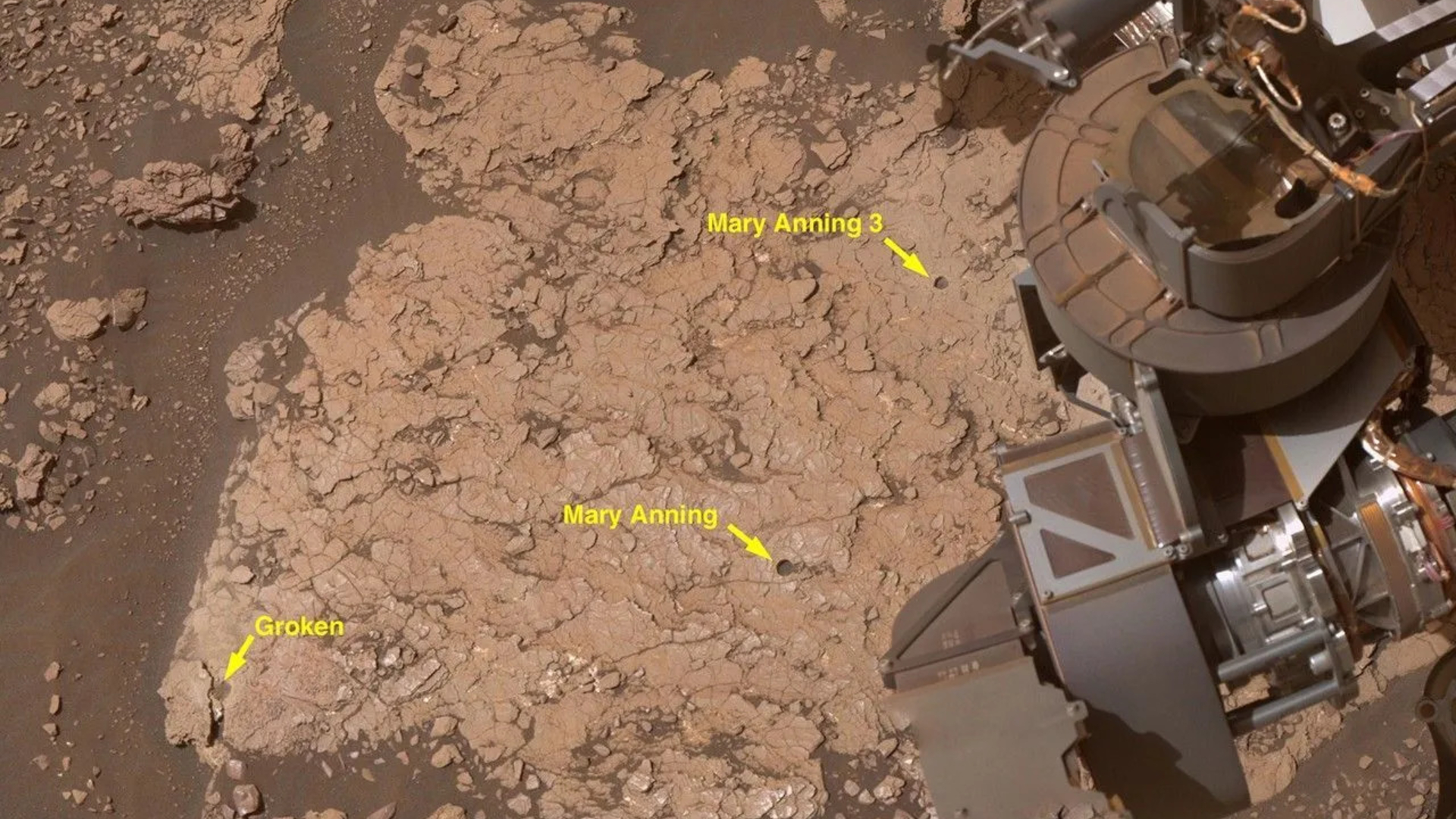
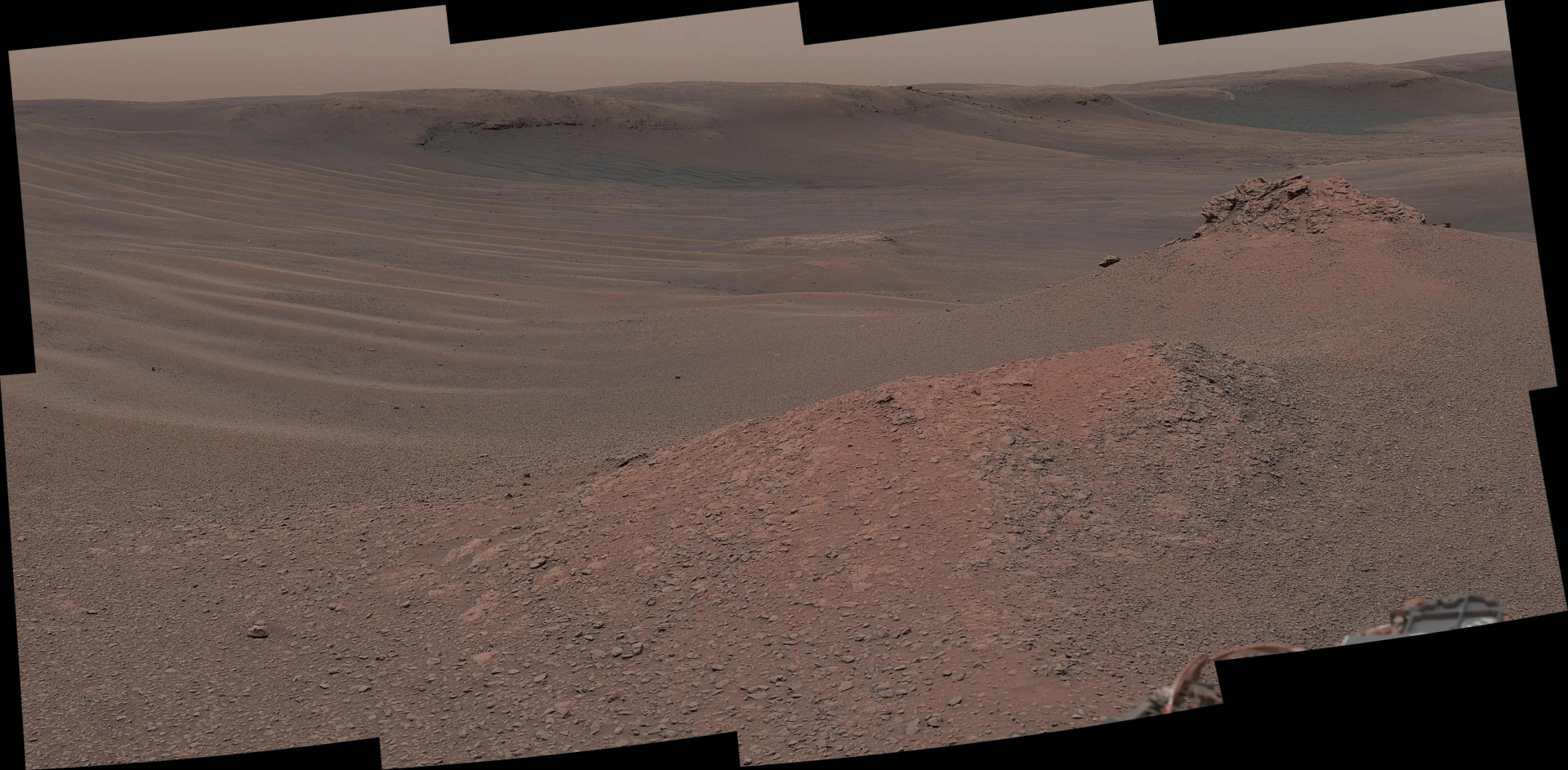
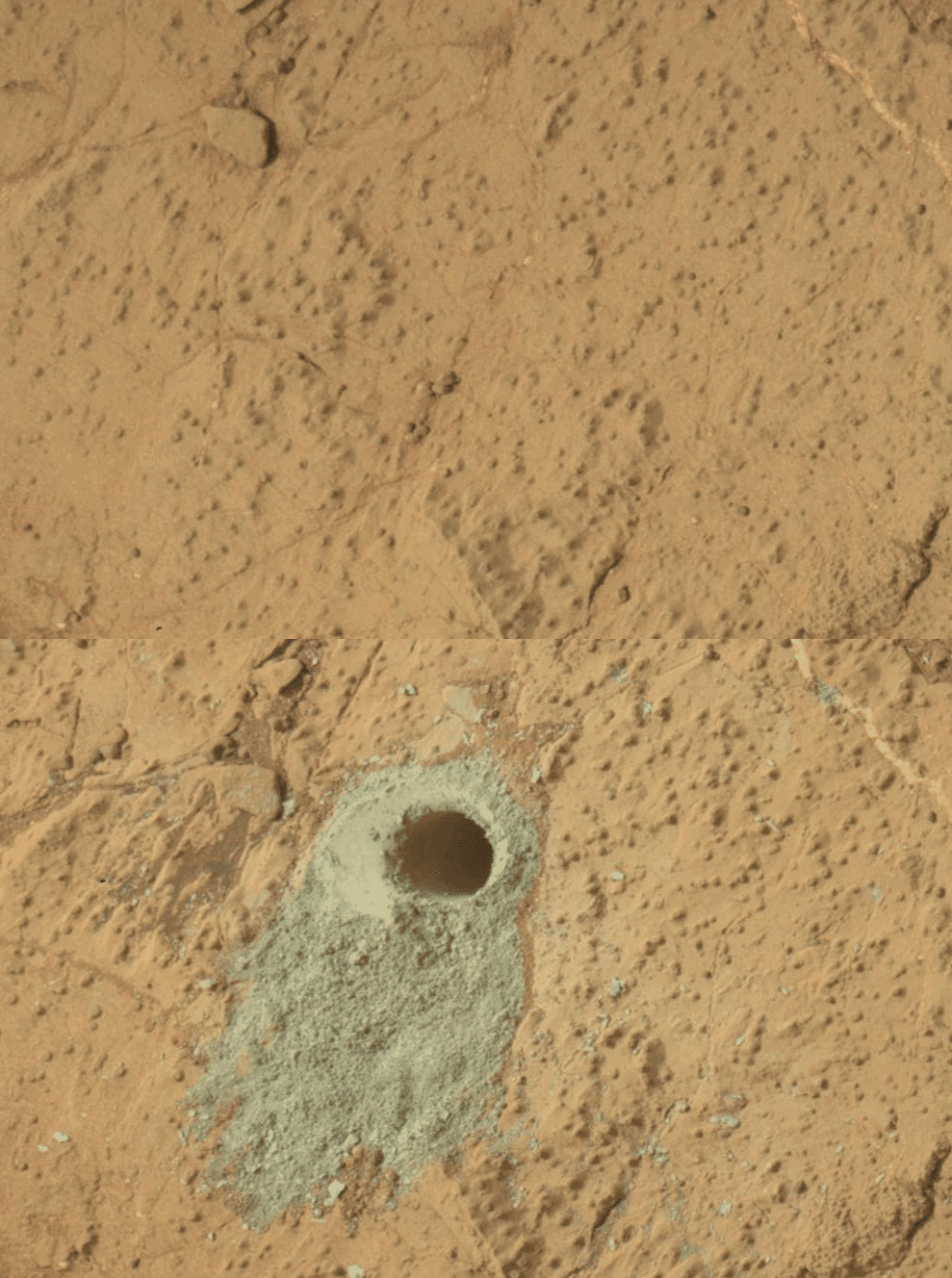
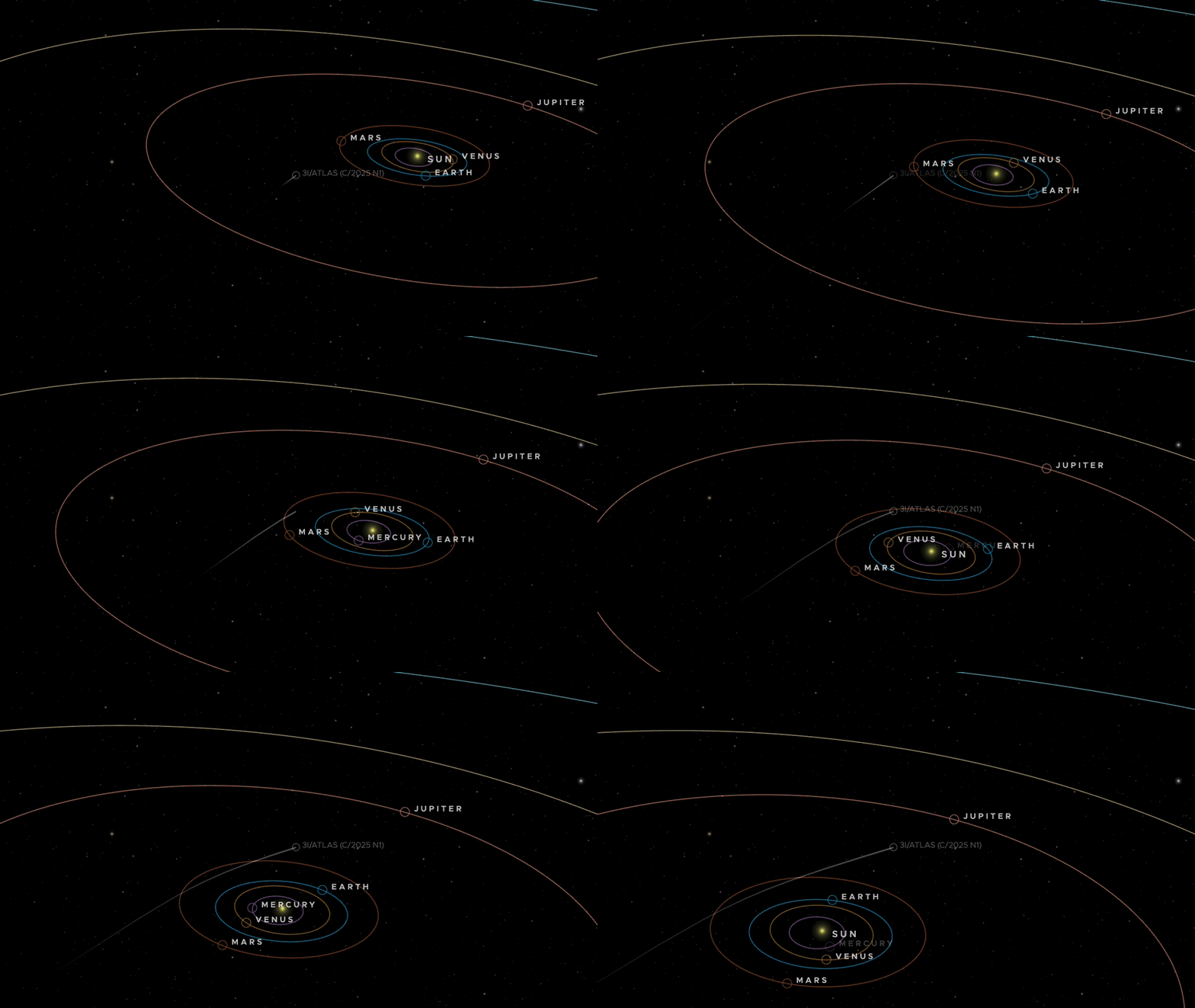
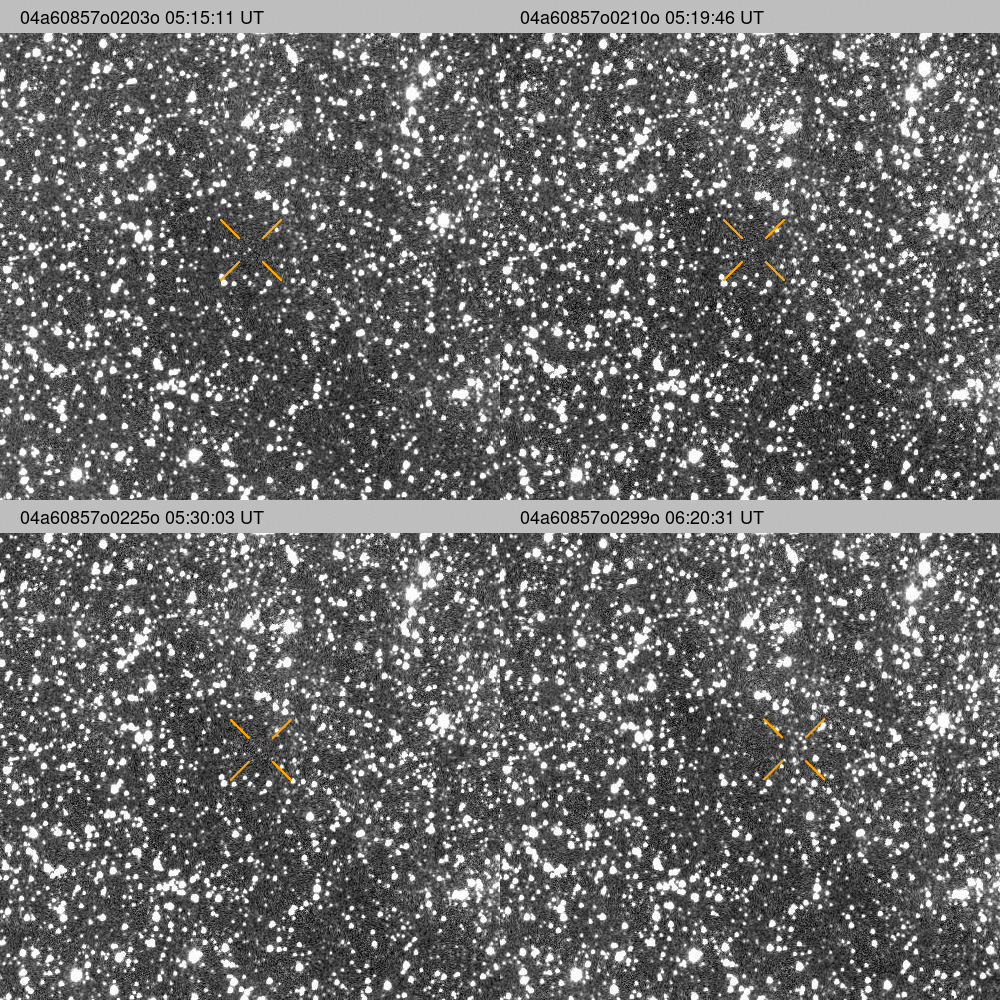
Humans are still interested in UFOs, including a few ‘wow’ moments on the internet, such as pictures of statue-like rocks on Mars or, most recently, the fly-by of interstellar comet 3I/ATLAS.
And just as 19th‑century imaginations were fired by balloons and airships, 3I/ATLAS theories fit within our modern sense of what might be possible – hence several sci‑fi writers suggesting the idea of adapting asteroids as vessels for space travel.
So yes, we are still willing to believe in intelligent life on other worlds.
The movies may have moved on from UFOs landing in farm fields to the loud ‘here we are’ of Independence Day-style invasions, but until alien spaceships actually hover over the White House, UFOs can no longer command our ever-more fickle attention as they did in the 1950s.




 Mars and back in just 153 days! Scientists have found a SHORTCUT that could dramatically cut the time it takes to reach the Red Planet








































![Image of a UAP captured by a U.S. Navy pilot in the cockpit of a fighter jet [Credit: U.S. Navy]](https://www.flyingmag.com/wp-content/uploads/sites/2/2023/10/7201780.jpg)
![An unmanned aerial system is observed during Naval exercises off the U.S. East Coast in early 2022. The object in this image was first classified as an unidentified anomalous phenomena before being reclassified as a UAS based on additional information and data from other UAP sightings. [Credit: Department of Defense]](https://www.flyingmag.com/wp-content/uploads/sites/2/2023/11/220517NXX9990001.jpg)