The purpose of this blog is the creation of an open, international, independent and free forum, where every UFO-researcher can publish the results of his/her research. The languagues, used for this blog, are Dutch, English and French.You can find the articles of a collegue by selecting his category. Each author stays resposable for the continue of his articles. As blogmaster I have the right to refuse an addition or an article, when it attacks other collegues or UFO-groupes.
Druk op onderstaande knop om te reageren in mijn forum
Zoeken in blog
Deze blog is opgedragen aan mijn overleden echtgenote Lucienne.
In 2012 verloor ze haar moedige strijd tegen kanker!
In 2011 startte ik deze blog, omdat ik niet mocht stoppen met mijn UFO-onderzoek.
BEDANKT!!!
Een interessant adres?
UFO'S of UAP'S, ASTRONOMIE, RUIMTEVAART, ARCHEOLOGIE, OUDHEIDKUNDE, SF-SNUFJES EN ANDERE ESOTERISCHE WETENSCHAPPEN - DE ALLERLAATSTE NIEUWTJES
UFO's of UAP'S in België en de rest van de wereld Ontdek de Fascinerende Wereld van UFO's en UAP's: Jouw Bron voor Onthullende Informatie!
Ben jij ook gefascineerd door het onbekende? Wil je meer weten over UFO's en UAP's, niet alleen in België, maar over de hele wereld? Dan ben je op de juiste plek!
België: Het Kloppend Hart van UFO-onderzoek
In België is BUFON (Belgisch UFO-Netwerk) dé autoriteit op het gebied van UFO-onderzoek. Voor betrouwbare en objectieve informatie over deze intrigerende fenomenen, bezoek je zeker onze Facebook-pagina en deze blog. Maar dat is nog niet alles! Ontdek ook het Belgisch UFO-meldpunt en Caelestia, twee organisaties die diepgaand onderzoek verrichten, al zijn ze soms kritisch of sceptisch.
Nederland: Een Schat aan Informatie
Voor onze Nederlandse buren is er de schitterende website www.ufowijzer.nl, beheerd door Paul Harmans. Deze site biedt een schat aan informatie en artikelen die je niet wilt missen!
Internationaal: MUFON - De Wereldwijde Autoriteit
Neem ook een kijkje bij MUFON (Mutual UFO Network Inc.), een gerenommeerde Amerikaanse UFO-vereniging met afdelingen in de VS en wereldwijd. MUFON is toegewijd aan de wetenschappelijke en analytische studie van het UFO-fenomeen, en hun maandelijkse tijdschrift, The MUFON UFO-Journal, is een must-read voor elke UFO-enthousiasteling. Bezoek hun website op www.mufon.com voor meer informatie.
Samenwerking en Toekomstvisie
Sinds 1 februari 2020 is Pieter niet alleen ex-president van BUFON, maar ook de voormalige nationale directeur van MUFON in Vlaanderen en Nederland. Dit creëert een sterke samenwerking met de Franse MUFON Reseau MUFON/EUROP, wat ons in staat stelt om nog meer waardevolle inzichten te delen.
Let op: Nepprofielen en Nieuwe Groeperingen
Pas op voor een nieuwe groepering die zich ook BUFON noemt, maar geen enkele connectie heeft met onze gevestigde organisatie. Hoewel zij de naam geregistreerd hebben, kunnen ze het rijke verleden en de expertise van onze groep niet evenaren. We wensen hen veel succes, maar we blijven de autoriteit in UFO-onderzoek!
Blijf Op De Hoogte!
Wil jij de laatste nieuwtjes over UFO's, ruimtevaart, archeologie, en meer? Volg ons dan en duik samen met ons in de fascinerende wereld van het onbekende! Sluit je aan bij de gemeenschap van nieuwsgierige geesten die net als jij verlangen naar antwoorden en avonturen in de sterren!
Heb je vragen of wil je meer weten? Aarzel dan niet om contact met ons op te nemen! Samen ontrafelen we het mysterie van de lucht en daarbuiten.
08-12-2025
Aliens over the Central Coast? This documentary on UFOs seems to think so
Aliens over the Central Coast? This documentary on UFOs seems to think so
Story by Joan Lynch
Have you seen something from another world in the skies above the Central Coast?
It's entirely possible, according to a new documentary from director Dan Farah - who produced films such as "Ready Player One" and "Call Jane" - on the possibility of alien life that focuses on recent disclosures of U.S. government programs that have studied, tracked and even potentially recovered extraterrestrial craft and beings.
Released in March, "The Age of Disclosure" follows Luis Elizondo, a former Department of Defense employee and U.S. Army veteran who has become a prominent voice in the world of UFOs - or, as some enthusiasts call them, unidentified anomalous phenomena or UAPs - as the U.S. government declassifies some information on UAPs and holds hearings on the matter over the past five years.
The film also features commentary on UAP hearings from several high-ranking current and former members of the U.S. government, including Sen. Marco Rubio, R-Florida; Kirsten Gillibrand, D-New York; and former CIA Director John Brennan.
Though many of Elizondo's claims are disputed by UFO skeptics, scientists and government authorities, the new documentary includes a pair of accounts of potential UAP sightings here on the Central Coast - specifically surrounding Vandenberg Air Force Base, now referred to as Vandenberg Space Force Base.
Luis Elizondo, who led the Pentagon effort to investigate UFOs until October, when he resigned to protest what he characterized as excessive secrecy and internal opposition to the program, at McGarvey's Bar in Annapolis, Md., Dec. 7, 2017. UFOs have been repeatedly investigated over the decades in the United States, including by the American military.
In the documentary, retired Air Force Lieutenant Bob Jacobs said he saw a UAP while he was working at Vandenberg Air Force Base, though the exact date was not included in the documentary.
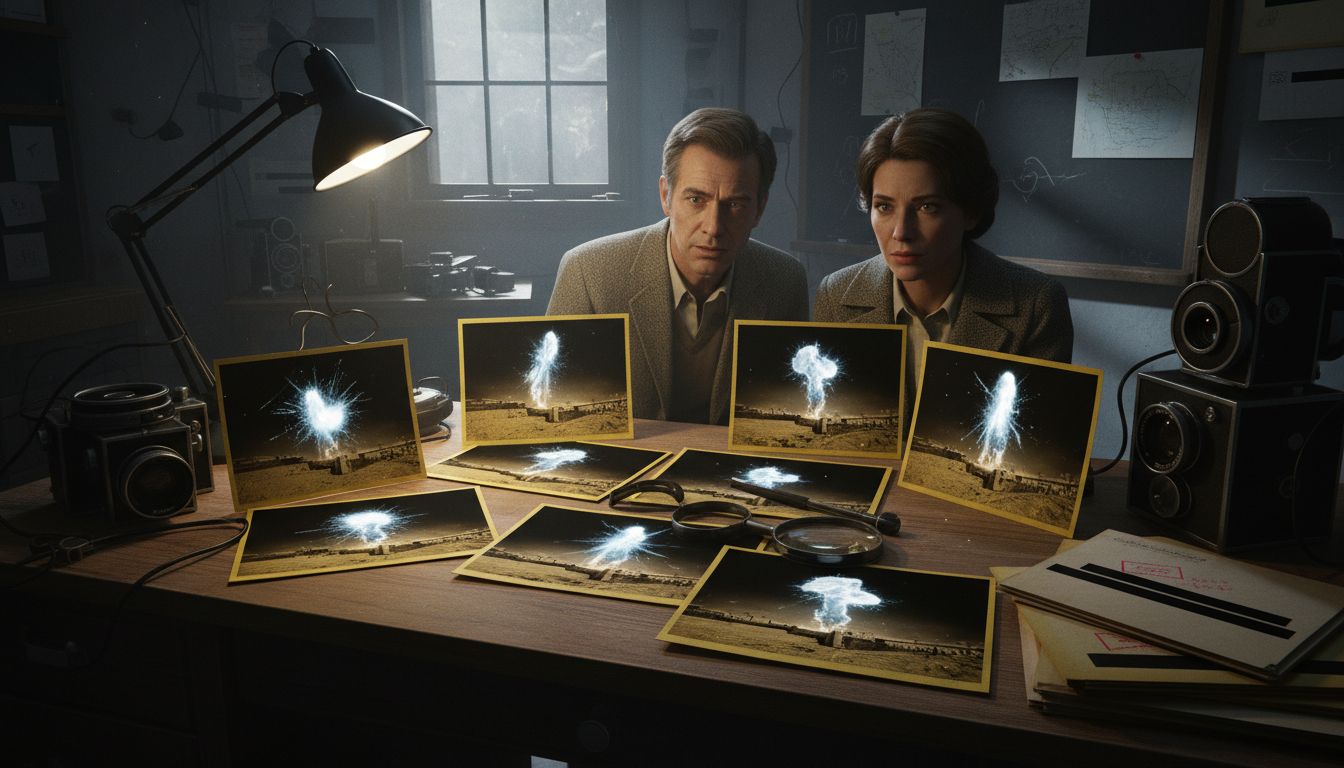
Around 60 cameras were pointed at the ignition point of an Atlas D missile carrying a dummy warhead that was launched from Vandenberg, recording the ignition and launch process, Jacobs said.
But once the missile took flight, an unidentified object entered the frame of the recording, he said.
Jacobs said the UAP circled the missile, hitting it with beams of light at several angles, and then exited the camera's frame in the same direction it came - all while everything being filmed was moving at around 8,000 to 9,000 miles per hour.
"There's nothing of ours that could have done that," Jacobs said in the film. "What could have done that?"
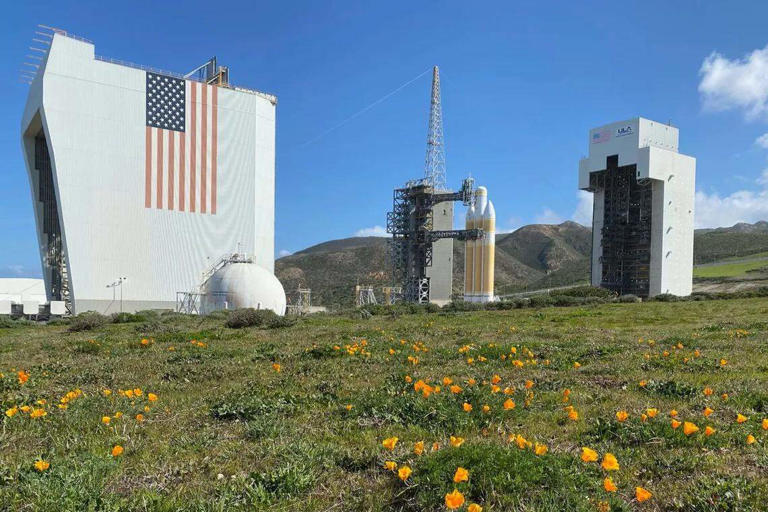
A United Launch Alliance Delta IV rocket sits at Space Launch Complex-6 at Vandenberg Space Force Base in this file photo. With the Delta IV rocket headed to retirement, SpaceX has moved onto SLC-6, with plans for launches and landings of the Falcon 9 and Falcon Heavy rockets.
More than a dozen people claim to have spotted UAPs at Vandenberg
Jacobs isn't alone in his claims of UAP sightings around Vandenberg.
In another instance, two individuals - retired Air Force Security Forces members Jeffrey Nuccetelli and Chaz King - shared similar accounts of a pair of 2003 UAP sighting while working at Vandenberg.
"On Oct. 14, 2003, I showed up to work at Vandenberg Air Force Base, and immediately everybody just started to tell me about this UFO incident that had happened earlier that morning," Nuccetelli said in the documentary.
The first sighting had been reported by a trio of Boeing contractors, who said they saw a "gigantic red square object" hovering over the launchpad the previous evening, Nuccetelli said.
"It was making no noise, it had no obvious signs of propulsion, and it was just hovering silently," Nuccetelli said in the film. "It was a very serious security breach of the area."
Neither witnessed the incident firsthand, but said they spent much of the following day driving around the base, searching for other objects like the square.
"Later that night, myself and five security forces members, we observed a bright light approaching the base," King said in the documentary. "As it got closer, the light was no longer visible, and it was massive, the size of a football field, almost rectangular in shape.
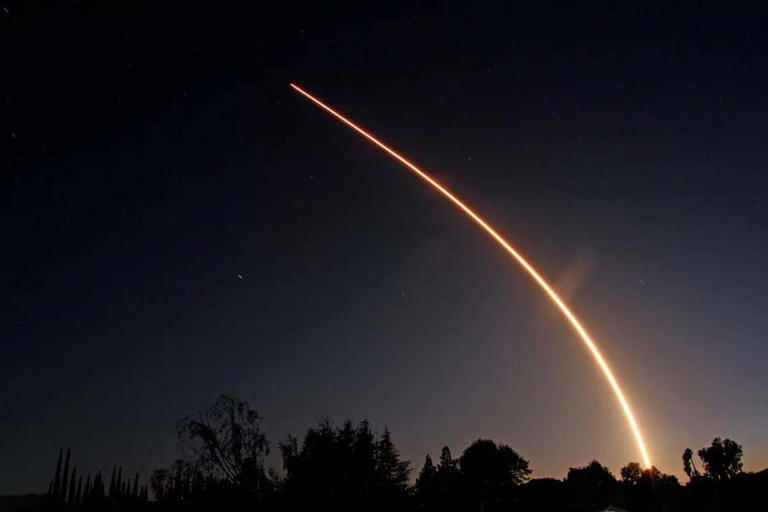
A Falcon 9 rocket and its cargo - 15 Starlink satellites - head to orbit Monday, Aug. 8, 2023, from Vandenberg Space Force Base near Lompoc.
King said the mysterious matte black rectangle appeared to float in the sky without any propulsion systems, and lacked windows.
After the security forces members had observed it for around 45 seconds, it "shot off, thousands of miles an hour, up the coast," King said in the film.
Nuccetelli said he spoke with a dozen other individuals at different vantage points, all of whom repeated King's story.
Because no photographic or video evidence of these claims are publicly available, at the end of the day, verifying their accuracy comes down to just one question: Do you believe?
Parts of the Lassen Volcanic National Park in California’s Cascade Range resemble the gateway to a hellish underworld, with pools of boiling water and bubbling mud where almost nothing can live, due to scalding temperatures that can reach a blistering 464 degrees Fahrenheit.
That’s enough to kill a human, obviously, which rangers and ample signage helpfully point out to visitors throughout the park. And yet: a team of scientists in America and Europe have discovered one remarkable organism that can survive and even thrive in these hellish waters: a tiny single-cell “fire amoeba.”
This humble critter, a gooey-looking blobunder the microscope, has set a “new record for the upper temperature limit” for all complex organisms on Earth because it can divide at a burning-hot 145.4 degrees Fahrenheit, according to the scientists who laid out their findings in a yet-to-be-peer-reviewed study published last week.
In reporting by Nature, the researchers said the existence of the once-unknown amoeba — now called Incendiamoeba cascadensis, meaning “fire amoeba from the cascades” — also challenges the notion that certain organisms called prokaryotes, which includes all bacteria, are the only lifeforms on Earth that can survive extreme temperatures that kill almost everything else.
Prokaryotes, which have no distinct nucleus, are still the reigning champs of biological toughness, as they can persist in temps between 149 and 221 degrees Fahrenheit — and they can theoretically be viable up to 392 degrees, above which nucleotides and amino acids start to break down.
Prokaryotes, which also includes a domain of microbes called archaeans, can be found in steaming compost piles, and places with volcanic activity and hot springs such as Lassen. The highest known temperature shrugged off by a prokaryote, an archaean called Methanopyrus kandleri, is 251.6 degrees Farenheit, a record for all organisms, prokaryotes or not.
In contrast to prokaryotes, the fire amoeba is an eukaryote — complex organisms that include every animal, plant, fungi, and also unicellular tiny lifeforms called protists, encompassing algae and other amoebae — and is composed of cells, or one cell in the case of the fire amoeba, that have a distinct nucleus bound by a membrane and interior organelles.
Eukaryotes such as mammals and us humans have an upper temperature limit of 109.4 degrees Farenheit, above which we die. Until now, the upper temperature limit for more hardy eukaryotic organisms, such as fungi and red algae, was thought to be 131 to 140 degrees Fahrenheit, so this discovery of the fire amoeba is remarkable.
“We need to rethink what’s possible for a eukaryotic cell in a significant way,” Angela Oliverio, Syracuse University microbiologist and study co-author, told Nature.
The team found this tiny microorganism in a stream of hot spring water that was pH neutral, in contrast to the many acidic pools in Lassen.
“It’s the most uninteresting geothermal feature you’ll find in Lassen,” Syracuse microbiologist and study co-author Beryl Rappaport told Nature.
Studying the water from this stream yielded zero indication of life while under microscope, but something unexpected happened when the scientists added nutrients to the water and heated the samples to a temperature of 134.6 degrees Fahrenheit, the stream’s temp range; they noticed this then unknown amoeba moving and replicating.
When they slowly heated the samples up to 145.4 degrees, the hardly little amoeba again defied expectations and still kept on dividing and moving, according to the paper. At a degree higher, it was still active.
At 158 degrees, though, the amoeba went into dormancy in a process called encystment, in which it turns into a cyst-like ball; it develops a hard shell that protects it from harsh environmental conditions; cooler temperatures would allow for the amoeba to unwind form its cocoon to grow and reproduce again.
The team also decoded and analyzed the fire amoeba’s genome and “found an enrichment of genes related to proteostasis [process that regulates proteins], genome stability, and sensing the external environment,” the scientists wrote in the paper, showing the hidden mechanisms that allow the amoeba to survive.
The scientists said this discovery of the fire amoeba is exciting because it opens up the possibility of further research and discovery of new, undiscovered high-temperature loving eukaryotes; scientists have typically studied heat-lovingprokaryotes called thermophiles.
“We looked in one stream,” Oliverio said. “Maybe we got extremely lucky and there’s nothing else out there, but we really don’t think that’s the case.”
Another exciting aspect of the discovery, according to the scientists, is that it could lead to better insight on how eukaryotes can survive such extreme temperatures while maintaining healthy cellular integrity and functionality. The proteins within the amoeba can also be a source for “thermostable proteins” that can find many applications in the biotechnology field, they said.
What’s also cool is that the discovery raises the possibility of life beyond Earth; researchers have speculated that microbes such as bacteria could lurk in the ancient riverbeds and lake shores of Mars or its ice caps.
Because like what actor Jeff Goldblum said in the first Jurassic Park movie: “Life finds a way.”
Nils Westerboer’s science fiction novel Athos 2643 is a detective story set in the future, in a monastery on Neptune’s fictional moon Athos. However, the main intrigue revolves not around space or Christianity, but around artificial intelligence. The Ukrainian book was recently published by Lobster Publishing and can be purchased on the publisher’s official website.
What should artificial intelligence look like?
Contemporary science fiction
Athos 2643 by Nils Westerboer can confidently be called fresh science fiction. The novel was published in German in 2022, and in 2025, Lobster Publishing printed it in Ukrainian.
The events in it take place in the distant future, and the numbers 2643 indicate the year. Humanity has colonized the Solar System, mastered the genetic modification of living organisms, and created truly powerful artificial intelligence, which plays one of the key roles in the novel.
The novel is truly interesting, but initially it can be a real challenge for the reader. The fact is that many things, whose names seem quite understandable at first glance, begin to cause distrust after just a few paragraphs.
Nils Westerboer. Source: www.uni-koblenz.de
Main characters
Take, for example, the main character – the inquisitor Ruud Kartgeiser. From a man whose occupation is described by this word, you would expect a certain steadfastness in his faith, which is most likely Christian. However, when we first see him at the station orbiting Neptune, he is sitting naked in a hotel room while his AI assistant ties him to a pipe.
Yes, he has a personal AI named Zach, and she is only formally a tool that makes his life easier. In fact, she has her own will, sometimes stronger than Ruud’s, her own judgments, often takes the initiative in conversations with other characters, and in general, the reader perceives the events in the novel mainly through her eyes.
At first, it seems that Ruud Kartgeiser himself is a whiny, dependent, and dull appendage to his artificial intelligence. But then he demonstrates determination, composure, and independence, his story unfolds more fully, and it becomes clear that the whole point is that we are seeing a character who has suffered severe trauma in the past and has recently experienced personal problems. He gives vent to all of this when he is alone with the AI.
That’s how the imagination pictures the inquisitor of the future, and Ruud is nothing like that image. Source: phys.org
As for his profession, the word “inquisition” is translated from Latin as “investigation.” In other words, Ruud is simply an investigator, a typical detective story protagonist acting on behalf of an organization with certain powers. However, he does not deal with matters of religious belief, but rather with problematic artificial intelligence.
Athos 2643
It is precisely Ruud’s deceptive status that immediately catches your attention when you start reading the novel. Its title refers to Mount Athos in Greece, located on the peninsula of the same name. It is home to more than a dozen Orthodox monasteries, and in fact, the entire island is a territory where medieval religious rules still apply.
In Westerboer’s novel, this is the name of Neptune’s small satellite, only a few kilometers in diameter, on which there is a monastery of Orthodox hermits, where a very suspicious fatal accident occurred. Incidentally, the satellite itself is fictional, but it is described quite realistically, and it is indeed impossible to rule out that in the future, when the distant eighth planet is better explored, something similar will not be found near it.
But that’s not the important thing. The question that arises from the very first pages is: what is a representative of the Inquisition, usually associated with the Roman Catholic Church, doing in an Orthodox monastery? And why is he accompanied by his assistant, who is constantly present in the form of a hologram of a young, attractive woman, often dressed very lightly?
It seems that Westerboer tried to use the theme of Christianity, but never even understood its basics.
The monks on Mount Athos rarely discuss God, the soul, or faith with devout Christians. However, when it turns out that one of them is a woman, another hermit, very much in the spirit of the LGBT movement, asks, “Who decides who is a man and who is a woman?”
Monastery on Mount Athos in Greece. Source: phys.org
Against this backdrop, the presence of a farm producing halal meat on the satellite monastery is not so surprising. In Westerboer’s novel, Neptune’s system is inhabited mainly by Turks. So why should Orthodox hermits not produce food according to the instructions of the Prophet Muhammad?
Compared to Westerboer’s vision of a future world of advanced biotechnology, the appearance of the farm itself is more reminiscent of a depiction of hell.
But the most interesting thing is that later on, there is a very simple and rational explanation for everything. For this reason alone, it is really worth reading Athos 2643 to the end. After all, it is a detective story in which the reader, together with the main characters, not only searches for the possible murderer, but also tries to understand what is really going on around them. Westerboer also manages to present some key insights into the world in simple language, only after the 300th page, and after finishing the book, you somehow do not want to criticize him for it.
The most important technology
The world of Athos 2643 is shaped by technologies that have not yet been invented. Some of them seem, shall we say, overly bold and dubious. For example, when the author describes engines capable of accelerating a spacecraft to a speed of over a thousand kilometers per second in just a few dozen minutes, the question arises not so much about the physical process itself (which, at least in theory, has already been described), but rather about how the people on board can withstand such overloads.
There is an even bigger problem with Zach’s hologram emitter. Because it is only called a hologram in name, that is, a play of light and shadow. In reality, it has a density that allows it to wear a dress made of very light but real fabric. And the device that creates all this not only does not fry everything between it and the hologram, but can also fit in your pocket.
Neptune. Source: phys.org
And the way gravity is created on Athos. The author did well not to forget that on such a small body, it is very weak. But using special particles that need to be injected with anesthesia every few days instead of the magnetic boots familiar to science fiction is a rather unsuccessful idea, even without the bloody demonstration present in the book.
But the most important technology shaping this future is artificial intelligence, which is now not only on par with human intelligence but surpasses it. AI is not only found in the main character; it is everywhere, controlling all complex processes. So now even a dishwasher can show its personality.
Such AI exists on Mount Athos, and it does indeed cause problems. The novel begins with the story of a woman who, over several years, drove her husband to his death by using her knowledge of his weaknesses against him, while pretending to care for him. It is difficult to say whether modern lawyers would consider such actions a crime, but in the world of Athos 2643, they are.
After all, artificial intelligence is very good at studying the reactions of the people it interacts with and is quite good at predicting their behavior. This means that it is quite capable of manipulating people and leading them into situations where their death will appear natural or the result of an accident.
And this problem may indeed be real. We are accustomed to considering our actions to be the result of a mysterious process called our soul. However, in practice, they can be subjected to statistical analysis. Under normal conditions, it would be difficult to take advantage of this due to the large number of random processes and interactions that need to be taken into account. However, on an asteroid riddled with mines, where only six hermits live, it is much easier.
This is precisely what Ruud will have to deal with. Fortunately, he is very good at “talking” to artificial intelligences because he knows their weaknesses and is very attentive to how they play with words. How all this is connected to the murders in the cave monastery can be found out by reading the book to the end. You will discover that artificial intelligence is not even the key technology of this world, and that the characters have been missing the main miracle and mystery from the very beginning. But that’s why he is a detective, to find the answers himself.
James Webb Space Telescope observations have revealed a galaxy that shouldn’t exist, in what astronomers have dubbed “Alaknanda,” a complex spiral galaxy that matured far too early for our present understanding of galactic formation and evolution to allow.
Alaknanda resembles our Milky Way, yet the distant images Webb collected were from only 1.5 billion years after the Big Bang. Webb’s ability to detect dim light across these immense distances allows researchers to peer far back into the ancient universe, since the light from these objects takes many years to reach us.
The Milky Way’s Twin
Rashi Jauin and Yogesh Wadadekar of the National Centre for Radio Astrophysics of the Tata Institute of Fundamental Research (NCRA-TIFR) in Pune, India, made the discovery, revealed in a recent paper published in Astronomy & Astrophysics.
Their sighting of the mature galaxy comes from light emitted when the universe was only one-tenth of its current age. Their name for the galaxy, Alaknanda, ties it to the Milky Way and to one of India’s most sacred features, the Ganges River. Before flowing through India, the Ganges originates from two headstreams in the Himalayas: Alaknanda and its twin, Mandakini, which is the Hindi name for the Milky Way.
The Milky Way and Alaknanda both feature grand design spirals, formed by two symmetric arms. Achieving this beautiful order from the irregular chaos of a new galaxy was believed to take billions of years, as the gas slowly accreted and was sculpted by slow-moving density waves into the ordered spiral shape.
Star Producing Power
At Alaknanda’s center is a bright, rounded bulge 30,000 light-years across. This central feature produces new stars at a rate 20 times that of the Milky Way, coming out to a combined mass of 60 times the Earth’s Sun annually. At this tremendous speed, half of Alaknanda’s stars were formed in just 200 million years.
“Alaknanda has the structural maturity we associate with galaxies that are billions of years older,” said lead author Rashi Jain. “Finding such a well-organised spiral disk at this epoch tells us that the physical processes driving galaxy formation—gas accretion, disk settling, and possibly the development of spiral density waves—can operate far more efficiently than current models predict.”
“It’s forcing us to rethink our theoretical framework,” he added.
James Webb Space Telescope Observations
Alaknanda’s location proved a boon for viewing the distant galaxy. Also in its direction is Pandora’s Cluster, a massive galaxy cluster that bends and magnifies light passing through, improving Webb’s ability to observe the spiral structure’s detail.
The pair behind the study broke the light down using 21 different filters to produce exact measurements of Alaknanda’s distance, dust content, star count, and star formation rate. Data for the project came from two different observational sets, acquired during the UNCOVER and MegaScience surveys.
As Webb allows researchers to peer not just farther out into the universe, but much further back in time, many preconceptions about our understanding of the cosmos are unraveling. Other types of advanced galaxies are being sighted from eras that should be far too early for them to exist based on our present understanding of galactic evolution.
“Alaknanda reveals that the early Universe was capable of far more rapid galaxy assembly than we anticipated,” said co-author Yogesh Wadadekar. “Somehow, this galaxy managed to pull together ten billion solar masses of stars and organise them into a beautiful spiral disk in just a few hundred million years.”
“That’s extraordinarily fast by cosmic standards,” Wadadekar said, “and it compels astronomers to rethink how galaxies form.”
James Webb and the Early Universe
This new data will require rethinking past ideas and developing new explanations, as scientists debate how these complex forms may have arisen so early. However, the researchers behind the recent study offered up some possibilities to help lead off that ongoing discussion.
One is that cold gas infilled the galaxy, while density waves shaped it, but at a rapid pace. A more dramatic solution is that the galaxy collided with a small galaxy to form the arms, though in such an event, the spirals would be expected to fade rapidly. The researchers say that if subsequent observations can distinguish whether Alaknanda’s rotation is steady or turbulent, that will provide essential context for future debate on the matter.
Whatever the case, the James Webb Space Telescope is not just showing us more of the same that astronomers have already observed in our universe. Peering to greater distances, it is presenting unexpected discoveries that push against our most basic understandings of our universe, and continued exploration with NASA’s premier space observatory will only further test our scientific theories and lead to new insights into the cosmos.
Ryan Whalen covers science and technology for The Debrief. He holds an MA in History and a Master of Library and Information Science with a certificate in Data Science. He can be contacted at ryan@thedebrief.org, and follow him on Twitter @mdntwvlf.
A respected congressman has claimed that advanced alien beings could be hiding out in 'five or six' underwater UFO bases right off the US coast.
Tennessee congressman Tim Burchett, a member of the House Oversight Committee overseeing UFO reports, drew massive attention on social media after saying that he believed there were alien 'entities' currently living in deep-water areas on Earth.
The September 17 clip posted on X has already been viewed more than 1.9 million times.
During the sidewalk interview with journalist Matt Laslo, reposted online by a UFO researcher who goes by the pseudonym Red Panda Koala, Burchett suggested that advanced alien beings or civilizations may have been hiding in Earth's oceans for generations.
He added that there have been frequent sightings of unidentified craft around five or six specific deep-sea areas, which he found significant given how little is known about the ocean compared to the moon's surface.
The congressman also noted that US Navy personnel have reported chasing these underwater craft that move at extraordinary speeds and far surpass the abilities of current US military technology.
Despite these claims, no verifiable physical evidence, such as artifacts or clear footage of these underwater craft, has been publicly presented to confirm the existence of alien bases.
Skeptics have argued that the reliance on anecdotal reports from naval personnel and the lack of peer-reviewed scientific data casts significant doubt on the claims made during recent congressional hearings on UFO phenomena.
+4
View gallery
Tennessee congressman Tim Burchett (pictured) suggested in a viral clip online that there are alien beings in secret underwater bases near the US (Stock Image)
+4
View gallery
UFO researcher Dr Michael Salla said these bases are believed to be in a region of the Atlantic near the Bahamas
Following the explosive revelations, Dr Michael Salla, an author and researcher focused on extraterrestrial phenomena, revealed where it's believed these UFO bases may be, singling out a region of the Atlantic Ocean near the Bahamas.
He added that he's also spoken to credible whistleblowers, including senior military and executive branch officials, who confirm the existence of underwater bases and advanced craft.
Dr Salla highlighted that the US Navy operates a top-secret underwater facility he likened to Area 51 called AUTEC, which stands for the Atlantic Undersea Testing and Evaluation Center, right in this region of the Atlantic.
'Just to the right of it is Tongue of the Ocean, which is a very deep part of the ocean there in the Bahamas. It drops off immediately around 3,000 feet,' Salla said while appearing on the Redacted podcast on September 19.
'So that's ideal for a submarine, but it's also a place where people have seen many UFOs, many underwater craft coming into and leaving the water. So, there have been a lot of UFO sightings in that area,' he revealed.
The UFO researcher noted that he had interviewed two eyewitnesses who claimed that they had visited these secret bases, including one who was a US Army whistleblower who used the pseudonym 'JP.'
The whistleblower claimed he was on a mission where he was taken by a Blackhawk helicopter to an ocean platform, then boarded a high-tech submarine crewed by tall, Nordic-looking extraterrestrials.
The submarine, capable of space travel, took him to an underwater city under a dome, resembling Dubai, with a large white pyramid. The mission involved retrieving an artifact, but no physical evidence of this mission has ever been produced.
+4
View gallery
Congressman Eric Burlison of Missouri recently revealed video of a US military drone striking an orb-shaped UFO with a missile, which bounced off and did not stop the craft
Despite Burchett and Salla's lack of tangible evidence, there has been growing interest and testimony from credible sources, including military personnel at congressional hearings, suggesting that UFOs and extraterrestrial beings have visited Earth.
A recent congressional hearing on September 9 featured new whistleblowers who shared their experiences with UFOs, including a video showing an orb-like object surviving a missile strike and splitting into four parts they kept flying.
'We have naval personnel telling me we have these sightings, these underwater craft they're chasing that go hundreds of miles an hour, and the best we got is something that does maybe a little under forty miles an hour,' Burchett said in the interview with Laslo.
Wrestler and social media megastarLogan Paul has shared a wild encounter with a UFO that has left him convinced we are not alone.
Paul shared a video with his 6.4million followers on X Thursday night, showing a mysterious bright orb hovering over Puerto Rico on December 3.
A member of Paul's business team claimed to have witnessed the unidentified object flying over a local marina on the island before shooting up into space and leaving a visible streak in the sky as it disappeared, the X post stated.
The next day, Paul said the two men walked into a local pizza shop where the owner claimed he had seen the orb as well and recorded the incident.
The social media influencer's post, which shared the video showing a small bright ball suddenly vanishing and leaving a blurry haze behind, has already been viewed more than two million times.
'He was shaken, convinced he'd witnessed some kind of hyper-advanced technology,' Paul wrote in his X post.
'In the clip, you can see the Orb drift across the sky, stretch into a line of light, and rotate horizontally… then vanish.'
A video taken in Puerto Rico on December 3 appeared to show a bright orb (Pictured) moving over a local marina before accelerating away at high speed and leaving a trail in the sky
Paul (Second from right) took a photo with a local pizza shop owner and the owner's son after they shared a video of a suspected UFO
The shop owner, his son and Paul's teammate revealed that the strange orb flew over Puerto Rico at 6.28pm local time (5.28pm ET).
In the video, the shop owner can be heard talking with his young son, who thought the orb might be falling to Earth before it suddenly sped off out of sight.
'It's not a plane,' the boy said in Spanish moments before the UFO accelerated towards space.
'It's gone,' he added as he and his father lost the picture of the orb in their video.
In his post, Paul described the sighting as a UAP, or unidentified anomalous phenomena, the modern term for all unexplained objects or events observed in the air, sea, or space.
The celebrity and WWE pro wrestler also shared a text message exchange between himself and his teammate, Jorge, who saw the orb on Wednesday.
'I just saw the wildest thing I've ever seen. An orb above the marine in PR [Puerto Rico] that shot up in the sky and left streaks in the sky,' Jorge wrote to Paul.
'You just saw otherworldly tech,' Paul claimed.
Paul (Left) seen with his wife Nina Agdal (Right) shared a Puerto Rico pizza shop owner's video on social media, which appeared to show an unidentified flying object
Paul has not commented on the orb sighting since posting the video, but the celebrity influencer has repeatedly discussed his belief in alien life on a podcast, Impaulsive, over the years.
Two years ago, Paul even claimed he had an unreleased video that provides more evidence that extraterrestrial spacecraft are real.
'I'm waiting for the right moment. I'm not afraid to release it. I'm just waiting for the right moment,' he said in the May 9, 2023 episode.
Just three days before the sighting over the marine, another social media user claimed they saw a similar orb in Isabela, Puerto Rico, just after 11am ET.
'No visible planets during daytime. No weather balloons or air traffic, according to all the Apps I checked. Too small to be the moon. Perfect white orb that phases in and out until it disappears,' the witness wrote.
A recent report from the crowdsourced platform Enigma, which allows people to report sightings of UFOs, revealed more than 8,000 sightings across the US between December 2022 and June 2025.
Among these, 422 reports specifically describe metallic orbs, with the majority observed between 1am and 4am near military installations in New York, California, and Arizona.
The eyewitnesses seeing these orbs have included civilians, pilots, and military personnel, who often said the spheres hovered silently before moving at extreme speeds, leaving no trace of their departure.
Archaeologists in Egypt have uncovered a stunning treasure trove hidden inside an ancient royal tomb, a discovery so rare it is rewriting history.
Buried deep beneath the sands of Tanis, researchers found 225 exquisitely crafted funerary figurines arranged in a mysterious ceremonial pattern, yet the tomb itself was empty of a body.
The find has electrified the archaeological world, not only for its scale but for its baffling implications.
More than half of the figurines are female, an almost unheard-of feature in royal burials, raising new questions about funerary customs during Egypt’s fractured Third Intermediate Period.
The figurines were laid out in a star-like formation and in perfect horizontal rows, suggesting an intentional ritual design untouched for nearly 3,000 years.
This is the first time in almost 80 years that figurines have been discovered undisturbed inside a royal tomb at Tanis, making it one of the most significant finds at the site since the 1940s.
Most astonishing of all, the royal symbols on the miniature servants confirm that the empty tomb belonged to Pharaoh Shoshenq III, a ruler whose final resting place has puzzled Egyptologists for decades. He reigned from 830 to 791 BC.
The revelation overturns long-held assumptions and reignites the mystery of why the pharaoh never made it into his own tomb.
A total o f 225 funerary figurines, crafted as servants to accompany the dead into the afterlife, were uncovered. The discovery led the team to find that the tomb belonged to Pharaoh Shoshenq III, who reigned from 830 to 791 BC
More than half of the figurines are female, a rare feature for such tombs
The excavation team carefully removed the figurines over 10 days, working through the night to preserve their fragile condition.
After the study, the figurines will be displayed in an Egyptian museum, offering the public a rare glimpse into the burial practices of one of Egypt's most enigmatic pharaohs.
French egyptologist Frederic Payraudeau told reporters in Paris on Friday that the discovery was 'astonishing' because the walls of a different tomb at the site, and the largest sarcophagus there, bear his name.
'Why isn't he buried in this tomb?' the Payraudeau asked.
'Obviously, for a pharaoh, building a tomb is a gamble because you can never be sure your successor will bury you there,' he said.
'Clearly, we have new proof that these gambles are not always successful,' Payraudeau said with a smile.
Shoshenq III ruled during Egypt’s Third Intermediate Period, a time marked by political fragmentation and frequent power struggles.
His four-decade reign was turbulent, marred by a 'very bloody civil war between upper and lower Egypt, with several pharaohs fighting for power,' he said.
Picture is the area where the tomb was excuvat
So it is possible that the royal succession did not go as planned and the pharaoh was not buried in his chosen tomb.
Another possibility is that his remains were moved later due to looting.
French Egyptologist Pierre Montet first uncovered the limestone tomb in 1939, located adjacent to the Temple of Amun.
Although the tomb had been looted in ancient times, the largest of its four chambers still held the granite sarcophagus of Osorkon II, a pharaoh of Egypt's 22nd Dynasty.
The team has already excavated the other three corners of a narrow tomb occupied by an imposing, unnamed sarcophagus.
'When we saw three or four figurines together, we knew right away it was going to be amazing,' Payraudeau said.
'I ran out to tell my colleagues and the officials. After that, it was a real struggle. It was the day before the weekend, normally, we stop at 2 pm. We thought: 'This is not possible.''
Such a find has also never happened before further south in Egypt's Valley of the Kings near modern Luxor, apart from the tomb of the famous boy king Tutankhamun in 1922, because most such sites have been looted throughout history, Payraudeau added.
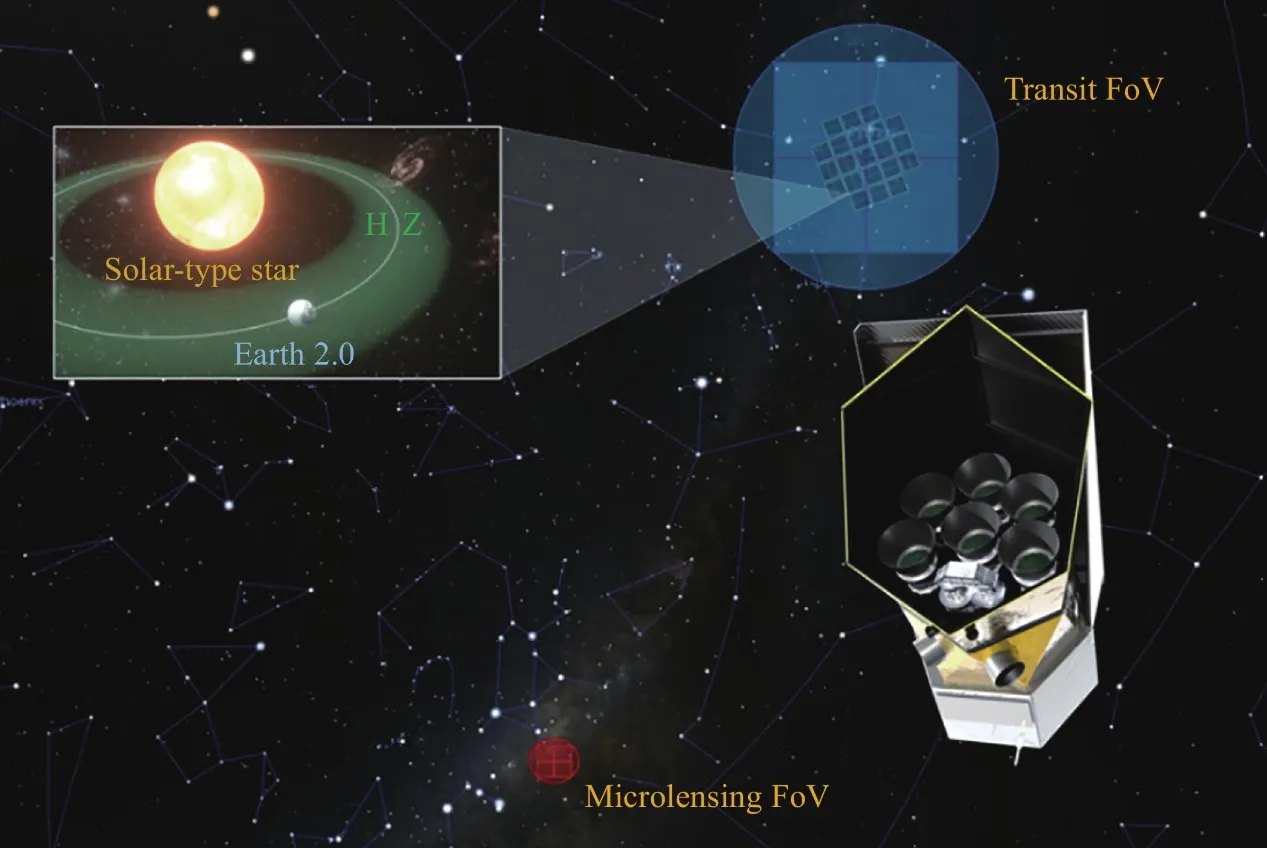
An artist's impression of the Earth 2.0/ET observatory searching for exo-Earths. Credit: CAS
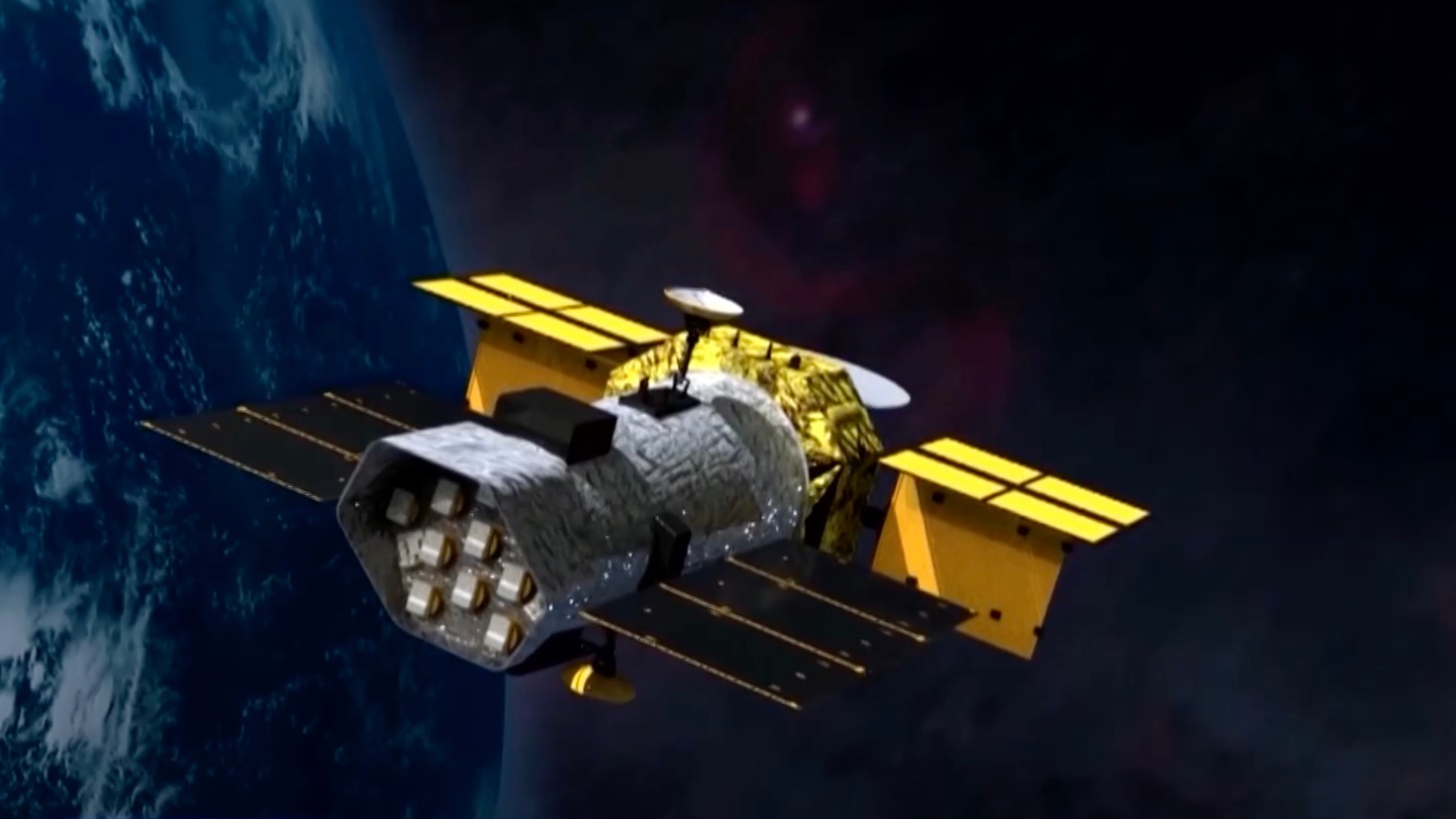
In a recent Hot Take segment, the China Global Television Network recently released an interesting video detailing China's future plans for space. Titled "Earth 2.0? China's plan to find new Earth," the video actually details four missions that the China National Space Agency (CNSA) has planned as part of the country's 15th Five-Year Plan (2026-2030). These missions cover a broad range of next-generation science objectives that space agencies worldwide want to achieve in the coming decades.
These include a radio astronomy experiment destined for the far side of the Moon, a solar observatory that will investigate space weather, a space telescope that will monitor black holes and neutron stars, and an exoplanet-hunting satellite that will search for Earth-like planets. These missions are all part of China's drive to become a major power in space and establish itself at the forefront of space science, research, and exploration. Here's a rundown on the four missions, what China hopes to accomplish with them, and some potential deploy dates:
Hongmeng Project
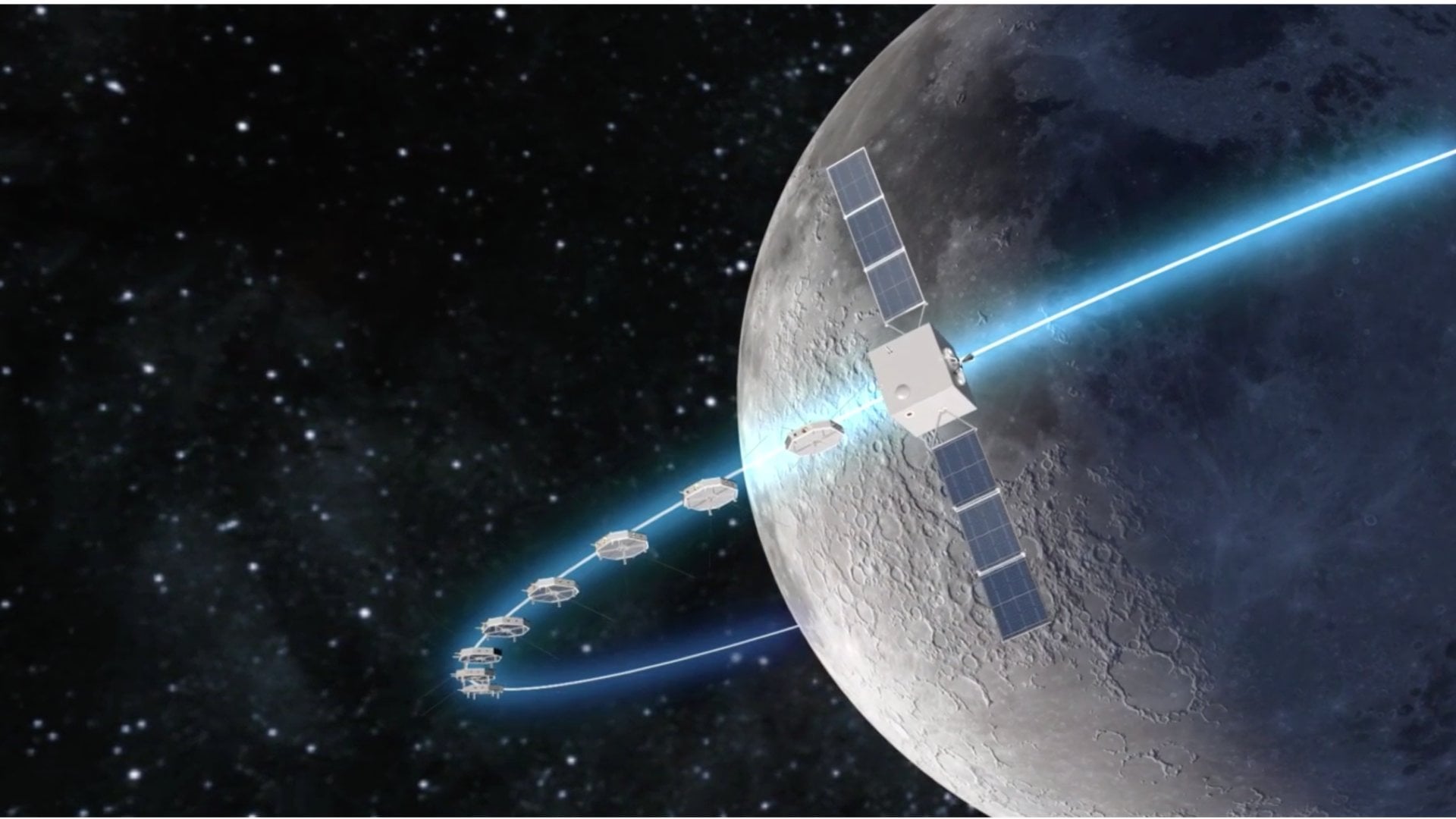
Also known as the "Hongmeng Plan," this project aims to deploy ten low-frequency telescopes that will orbit behind the Moon to conduct radio astronomy. Similar to other observatories proposed for the far side of the Moon, these satellites would "listen" to radio-frequency signals from the period known as the Cosmic Dark Ages. This mission will complement observatories such as the James Webb Space Telescope (JWST) by studying the earliest epochs of the Universe, which are currently undetectable by conventional telescopes.
For this and similar programs, the far side of the Moon is the chosen location because it is free of radio interference from Earth-based sources and the regular emissions from the Sun. The project is described as being "a colossal cosmic microphone... designed to detect the Universe's infant cries... [and] shed light on the turbulent epoch hundreds of millions of years after the Big Bang, before the first stars formed."
*Artist Impression of Hongmeng Project.
Credit: Xz998/Wikimedia Commons*
Kuafu-2
Also part of the Hongmeng Project is a planned solar mission known as Kuafu-2. This satellite follows in the footsteps of its predecessor, the Advanced Space-based Solar Observatory (ASO-S), or Kuafu-1, which launched in 2022 to study the Sun's magnetic field and solar phenomena, such as flares and coronal mass ejections (CMEs). Kuafu-2 will build on this by becoming the first satellite to orbit the Sun's polar regions (which are difficult to access) and provide data on the Sun's magnetic field and solar cycle dynamics.
"Like a cosmic microscope, it will peer into the Sun's magnetic heart," says the video's narrator. The information it gathers will help scientists predict solar storms and the rippling effects they have across the Solar System.
Exo-Earth
Also known as the "Earth 2.0" project, this exoplanet surveyor satellite is described as "a planetary detective on a mission to see whether Earth is one of a kind." Similar to the Kepler Space Telescope and the Transiting Exoplanet Survey Satellite (TESS), this observatory will monitor thousands of stars in our galaxy to find Earth analogues - i.e., rocky planets comparable in size to Earth and which orbit within their parent stars' habitable zones (HZs). The observatory is expected to launch by 2028 and will help establish China at the forefront of exoplanet studies.
eXTP Space Observatory
The fourth satellite, the enhanced X-ray Timing and Polarimetry observatory, a Chinese-led international effort to develop a mission that will combine X-ray observations with "unprecedented timing and polarization capabilities." The observatory will study how the laws of physics operate in the most extreme environments, including the event horizons of black holes, neutron stars, supernovae, and other astrophysical objects. According to its recently published proposal paper, the observatory features "advanced Spectroscopic Focusing Arrays (SFAs) and Polarimetry Focusing Arrays (PFAs)" and is scheduled for launch sometime in 2030.
*A schematic diagram of China's new generation space satellite of the enhanced X-ray Timing and Polarimetry mission (eXTP) project.
Credit: CMG*
Along with the video, CGTN's Hot Take released the following statement summarizing the aim of these missions and their associated programs:
In the vast, infinite universe, are humans just lonely travelers? Amid the limitless sea of stars, is there an "Earth 2.0," a planet as livable as our own? What miracle is behind the birth of the cosmos? And what secrets do the mysterious black holes hide? These ultimate questions at the core of our reality are now the focus of exploration by Chinese scientists. During the 15th Five-Year Plan (2026-2030), China will launch a series of scientific satellite missions, sending four satellites into space to explore the universe's great unknowns. Join us in this edition of Hot Take, and embark on an exciting journey to uncover the secrets of the cosmos.
James Webb Space Telescope observations have revealed a galaxy that shouldn’t exist, in what astronomers have dubbed “Alaknanda,” a complex spiral galaxy that matured far too early for our present understanding of galactic formation and evolution to allow.
Alaknanda resembles our Milky Way, yet the distant images Webb collected were from only 1.5 billion years after the Big Bang. Webb’s ability to detect dim light across these immense distances allows researchers to peer far back into the ancient universe, since the light from these objects takes many years to reach us.
The Milky Way’s Twin
Rashi Jauin and Yogesh Wadadekar of the National Centre for Radio Astrophysics of the Tata Institute of Fundamental Research (NCRA-TIFR) in Pune, India, made the discovery, revealed in a recent paper published in Astronomy & Astrophysics.
Their sighting of the mature galaxy comes from light emitted when the universe was only one-tenth of its current age. Their name for the galaxy, Alaknanda, ties it to the Milky Way and to one of India’s most sacred features, the Ganges River. Before flowing through India, the Ganges originates from two headstreams in the Himalayas: Alaknanda and its twin, Mandakini, which is the Hindi name for the Milky Way.
The Milky Way and Alaknanda both feature grand design spirals, formed by two symmetric arms. Achieving this beautiful order from the irregular chaos of a new galaxy was believed to take billions of years, as the gas slowly accreted and was sculpted by slow-moving density waves into the ordered spiral shape.
Star Producing Power
At Alaknanda’s center is a bright, rounded bulge 30,000 light-years across. This central feature produces new stars at a rate 20 times that of the Milky Way, coming out to a combined mass of 60 times the Earth’s Sun annually. At this tremendous speed, half of Alaknanda’s stars were formed in just 200 million years.
“Alaknanda has the structural maturity we associate with galaxies that are billions of years older,” said lead author Rashi Jain. “Finding such a well-organised spiral disk at this epoch tells us that the physical processes driving galaxy formation—gas accretion, disk settling, and possibly the development of spiral density waves—can operate far more efficiently than current models predict.”
“It’s forcing us to rethink our theoretical framework,” he added.
James Webb Space Telescope Observations
Alaknanda’s location proved a boon for viewing the distant galaxy. Also in its direction is Pandora’s Cluster, a massive galaxy cluster that bends and magnifies light passing through, improving Webb’s ability to observe the spiral structure’s detail.
The pair behind the study broke the light down using 21 different filters to produce exact measurements of Alaknanda’s distance, dust content, star count, and star formation rate. Data for the project came from two different observational sets, acquired during the UNCOVER and MegaScience surveys.
As Webb allows researchers to peer not just farther out into the universe, but much further back in time, many preconceptions about our understanding of the cosmos are unraveling. Other types of advanced galaxies are being sighted from eras that should be far too early for them to exist based on our present understanding of galactic evolution.
“Alaknanda reveals that the early Universe was capable of far more rapid galaxy assembly than we anticipated,” said co-author Yogesh Wadadekar. “Somehow, this galaxy managed to pull together ten billion solar masses of stars and organise them into a beautiful spiral disk in just a few hundred million years.”
“That’s extraordinarily fast by cosmic standards,” Wadadekar said, “and it compels astronomers to rethink how galaxies form.”
James Webb and the Early Universe
This new data will require rethinking past ideas and developing new explanations, as scientists debate how these complex forms may have arisen so early. However, the researchers behind the recent study offered up some possibilities to help lead off that ongoing discussion.
One is that cold gas infilled the galaxy, while density waves shaped it, but at a rapid pace. A more dramatic solution is that the galaxy collided with a small galaxy to form the arms, though in such an event, the spirals would be expected to fade rapidly. The researchers say that if subsequent observations can distinguish whether Alaknanda’s rotation is steady or turbulent, that will provide essential context for future debate on the matter.
Whatever the case, the James Webb Space Telescope is not just showing us more of the same that astronomers have already observed in our universe. Peering to greater distances, it is presenting unexpected discoveries that push against our most basic understandings of our universe, and continued exploration with NASA’s premier space observatory will only further test our scientific theories and lead to new insights into the cosmos.
Ryan Whalen covers science and technology for The Debrief. He holds an MA in History and a Master of Library and Information Science with a certificate in Data Science. He can be contacted at ryan@thedebrief.org, and follow him on Twitter @mdntwvlf.
That epicentre in Silverdale is right in the centre of a triangle of some of the sightings of the mysterious lights.
Coincidence? Probably (Picture: Datawrapper)
Is this a sign that aliens are trying to communicate with us? Was the quake the thud of Mr Bean falling from the sky? Or does the UK have its very own Bermuda Triangle?
Metro has looked at the facts.
Lighting sightings
Darren Steger-Lewis, 38, spotted the vertical light while out for a morning run at 5.30am at Ness Point – the most easterly point of England.
The administrative manager for a mobility scooter manufacturer said the light was out at sea and was crystal clear.
His first thought was that it must have been solar activity, but he did wonder if it might be little green men.
Nothern Lights in the sky over UK
All the known sightings of the eerie light pillars Metro has documented (Picture: Metro)
Darren said: ‘The alien thought did naturally cross my mind, but the question arose: If we were being visited, would Lowestoft really be the destination of choice?’
Wayne Jensen, 43, told Metro he saw the beacon at about 5am in Mildenhall, Suffolk.
He said: ‘I have absolutely no idea what it was, but it definitely wasn’t man-made. My guess is something to do with gases in the atmosphere.’
It didn’t need to be ‘man-made’ though – beams are commonly reported during alleged sightings of Unidentified Aerial Phenomena, otherwise called UFOs.
However, Jim NR Dale, a meteorologist with the British Weather Services, told Metro there’s probably a much more mundane, but still spectacular, explanation.
Dale said they are more likely ‘light pillars’, an atmospheric optical illusion.
North Yorkshire Police told Metro the force is not aware of any reports of UFOs in the region, either.
Seismic Silverdale
Silvedale, a village in Lancashire, was the epicentre of the quake (Picture: Alamy Stock Photo)
Hours later, at 11.23pm, there was another natural phenomenon that woke up the people of Lancashire – an earthquake that felt like an underground explosion.
Fiona Johnston said: ‘Well, last night I felt the earth move. I was laid in bed reading around 11.30pm when the end of my bed moved.
‘It felt exactly like it did when Alfie [my deceased dog] would attempt to jump on the bed. I honestly thought it was him coming back to visit me because he was very much on my mind last night and I’d been watching videos of him.’
Fiona, like many others roused from their sleep, was relieved to hear that it was a tremor.
The UK experiences around 300 tremors every year, but only 20 or so are strong enough to be felt.
Can Barrow really be compared with the Bermuda Triangle?
Countless aircraft, boats and people have vanished in the area connecting Virginia’s Norfolk, Puerto Rico and Bermuda.
Officials and scientists have debunked the idea that aliens or a mysterious force in the 500,000 square mile section of the Atlantic Ocean is to blame.
Physicist Les Cowley, a physicist who studies atmospheric optics, said: ‘So, keep an eye on the sky during those cold winter nights, as you never know when you might be treated to the awe-inspiring sight of light pillars illuminating the darkness.’
Metro’s verdict
Darren Steger-Lewis initially thought the phenomenon was human-made (Picture: Darren Steger-Lewis)
In all seriousness, the strongest explanation here is coincidence.
When you introduce Colchester to the Beamuda Triangle map, you’re left with something more closely related to a four-sided shape.
But the Morecambe Wonky Diamond doesn’t have quite the ring to it, does it?
Het gebruik van landbouwplastic kan een schadelijk effect hebben op het bodemleven doordat er microplastics achterblijven.
Er wordt steeds meer landbouwplastic gebruikt. Een goed voorbeeld daarvan is mulchfolie, waarmee de bodem wordt afgedekt om het gebruik van bestrijdingsmiddelen, water en meststoffen te verminderen. Inmiddels wordt er elk jaar wereldwijd genoeg mulchfolie gebruikt om heel Nederland tien keer te bedekken.
Een deel van deze plastics blijft in de bodem achter en valt dan uit elkaar in microplastics. Dit zijn deeltjes van tussen de 5 millimeter en een duizendste van een millimeter groot. Ecotoxicoloog Sam van Loon onderzocht wat de effecten van deze microplastics zijn op het bodemleven.
Methode
Voor het onderzoek voerde Van Loon experimenten uit in het laboratorium, waar hij springstaarten blootstelde aan microplastics in natuurlijke grond. Springstaarten zijn kleine zespotige insecten die in de bovenste lagen van de bodem leven. Ze voeden zich daar voornamelijk met rottend organisch materiaal en schimmels en spelen daarmee een grote rol bij de omzetting van natuurlijk materiaal.
Meerdere soorten springstaarten kregen korter of langer verschillende concentraties microplastics te verduren. Hierbij keek de onderzoeker naar de overleving en voortplanting van de dieren. Daarnaast deed hij tests met gesimuleerde ecosystemen, waarbij niet alleen springstaarten, maar ook regenwormen en planten werden blootgesteld aan microplastics.
Geen direct risico voor springstaarten, wel voor het brede bodemleven
Het onderzoek laat zien dat de microplastics niet direct giftig zijn voor sommige bodemdieren, zoals springstaarten, zelfs bij langdurige blootstelling aan hoge concentraties. De microplastics lijken echter wel schadelijk te zijn voor het bodemleven in de bredere zin.
Bij hogere concentraties zijn er effecten te zien op de zuurgraad, het waterhoudend vermogen en de dichtheid van de bodem. Van Loon en zijn medeonderzoekers zien veranderingen in de microbiële soortensamenstelling en activiteit. Ook lage concentraties hebben al schadelijke effecten op planten en er zijn verschuivingen in hoe het ecosysteem zich als geheel gedraagt.
De concentraties waarbij de onderzoekers de effecten van de microplastics op het bodemleven en de bodemeigenschappen vonden, worden momenteel al gemeten in landbouwgrond in Europa. Dit betekent dat er een risico is voor het bodemleven en daarmee voor de productiviteit van de grond. Dit risico wordt mogelijk nog beïnvloed doordat de bodem ook andere giftige stoffen kan bevatten, zoals bestrijdingsmiddelen en PFAS. In het onderzoek is namelijk vastgesteld dat de microplastics ook invloed kunnen hebben op de giftigheid van die stoffen.
Update 3 december: Wat is ‘erger?’
Dan is de volgende grote vraag: wat is er een groter probleem? Het mulchfolie wordt gebruikt bij het afdekken van de grond, waardoor minder bestrijdingsmiddelen, water en meststoffen nodig zijn. Wegen deze goede effecten dan op tegen de slechte effecten van microplastics in de bodem?
We legden dit voor aan hoofdonderzoeker Van Loon, die de vraag goed begrijpt. “De complexiteit van het vraagstuk is echter heel groot en kan helaas enkel beantwoord worden met een uitgebreid vervolgonderzoek, bijvoorbeeld in de vorm van een zogenaamde levenscyclusanalyse”, vertelt hij aan Scientias.nl. “Hiermee zouden dan alle voor en nadelen van het gebruik van pesticiden tegenover alle voor en nadelen van mulchfolie moeten worden gezet. Dit lag helaas buiten het bereik van mijn onderzoek. “
Hij benadrukt dan ook het belang van een vervolgonderzoek. “Het zou wel heel waardevol zijn om die vraag te beantwoorden en hopelijk wordt dit in de nabije toekomst ook mogelijk, naarmate we een steeds beter beeld krijgen van de effecten van het gebruik van mulchfolies.”
Alternatieven voor het gebruikte mulchfolie
Toch is er hoop. “Er zijn uiteraard alternatieven, het gebruik van mulch gebeurt volgens sommige bronnen immers al voor 2500 jaar. Toen gebruikte men bijvoorbeeld stenen, vulkanisch as of stro”, vervolgt Van Loon. “Het zou interessant kunnen zijn om de technieken van vroeger mee te nemen in zo’n levenscyclusanalyse, om te kijken hoe die opwegen tegen moderne alternatieven.”
Van Loon benadrukt ook dat dit onderzocht moet worden. Het gebruik van bijvoorbeeld stro klinkt een stuk duurzamer dan het gebruik van plastic mulchfolie, “maar stro zal tegenwoordig niet alleen duurder zijn dan een plastic mulchfolie en maar bijvoorbeeld ook minder lang te bewaren zijn.”
We schreven vaker over deze onderwerpen, lees bijvoorbeeld ook
A nearly 22-minute video titled 'The Roswell Incident' has been quietly uploaded to the National Archives, reigniting interest in the infamous 1947 crash.
The footage combines still images and motion-control camera shots sourced from the published Roswell Report, as well as various magazines and books about UFOs.
It opens with a shot of the book 'The Roswell Report: Fact Versus Fiction in the New Mexico Desert' and ends with a stark black-and-white image that appears to show a crash site, with debris scattered across a massive crater in the ground.
The video has flooded the internet, with users claiming the crater bears a striking resemblance to eyewitness reports, suggesting it could be 'the first pictures of the 1947 UFO crash site.'
Major Jesse Marcel, who recovered debris from the crash, described the scene as 'a large area heavily scattered with metallic debris from a single impact point that scarred the earth.'
Some viewers have also pointed to a dark formation on the right side of the image, claiming it resembles an alien body.
UFO expert Mark Lee told the Daily Mail that the crater image was likely included to add intrigue.
'In my opinion, it's either a hoax,' he said. 'Just because it's been added to the National Archives doesn't give it scientific validation. If it came out as a release from the military or Congress, I would take it a lot more seriously.'
Lee also noted that the 'alien' in the photo is nothing more than a case of pareidolia, a psychological response to seeing faces and other significant and everyday items in random stimuli.
A video titled 'The Roswell Incident' was uploaded to the National Archives. Social media users claim an image in the footage shows UFO debris (left) and an alien body (right)
The newly uploaded video appears to focus on 'The Roswell Report: Fact Versus Fiction in the New Mexico Desert,' a 1995 book that attributes the crashed 'UFO' debris to Project Mogul.
Project Mogul was a top-secret US military program from 1947 to 1949 that used high-altitude balloons equipped with microphones to detect sound waves from Soviet atomic bomb tests.
A 1994 military investigation concluded that the debris found at the Roswell site was likely pieces of a high-altitude balloon from Project Mogul, not an extraterrestrial spacecraft.
Despite this official explanation, the newly uploaded video has sparked debate online, with viewers offering widely differing interpretations.
'National Archives and Records Administration (NARA) has uploaded a video of the Roswell 1947 UAP Crash site,' one user shared.
Another user posted on X: 'Like noted UFO researcher Grant Cameron has stated plenty of times, sometimes the disclosure of the real deal is a purposefully placed needle in the haystack. Roswell: slow drip…drip, drip, drip.'
In addition to the debris spotted in the footage, one user shared: 'Grey alien in the official video from the Roswell crash site.'
However, some social media suggested the footage 'is B-roll for the Roswell Report, and the images being posted do not show the Roswell debris site, nor does it even claim it's the actual debris site.'
Major Jesse Marcel, who recovered debris from the crash, described the scene as 'a large area heavily scattered with metallic debris from a single impact point that scarred the earth.' He said the debris could not melt or heat up and could not be punctured
One user posted: 'It’s clearly B-roll for that Roswell presentation the government put together in 1996. Someone must have found this and uploaded it in the last couple of days.'
Others have suggested a dead alien can be seen in the image, pointing to what Marcle said following the Roswell incident.
'I later found out that the pilot of the aircraft was a Captain Henderson, who apparently saw far more than just the debris from the impact site... he may in fact have seen the remains of a crew,' the now deceased major said.
In July 1947, a rancher reported pieces of debris scattered over his land.
Authorities were called to the scene and, after investigating the wreckage, determined the pieces were from a flying saucer.
The lal paper's front page story reported that the Roswell Army field recovered a flying saucer on a New Mexico Ranch after metallic-looking, light but strong material was scattered across the land
The local paper's front page story reported that the Roswell Army Field recovered a flying saucer on a New Mexico Ranch after metallic-looking, light but strong material was scattered across the land.
'The intelligence office of the 509th Bombardment Group at Roswell Army Air Field announced at noon today that the field has come into the possession of a Flying Saucer,' Roswell Daily Record reported on July 8, 1947.
The statement was given by Marcel, who was the first on the scene and led the investigation, which he determined were pieces from an extraterrestrial vehicle.
He also said that the material spread out from this point into a triangular-shaped area 200 to 300 feet wide at the end of the field, and 3/4 of a mile long.
Shortly after the 'UFO' discovery made headlines, the War Department in Washington released a statement claiming the debris was the remains of a weather balloon.
The US Air Force stated the weather balloon was part of Project Mogul's airborne system invented by Columbia University, New York University and the Woods Hole Oceanographic Institution.
It was designed to search the atmosphere for weak reverberations from nuclear-test blasts.
A major fire broke out late Thursday at the Roswell Air Center, just south of the legendary Hangar 84, a site long tied to the infamous 1947 UFO crash.
Fire crews rushed to the scene after the blaze was reported around 7:55pm local time on East Earl Cummings Loop.
Authorities initially feared the fire could trigger a dangerous explosion due to hazardous materials and oxygen bottles stored nearby, prompting an expanded safety perimeter and rapid evacuation of nearby facilities.
Roswell firefighters worked quickly to contain the flames, declaring the fire under control by 9:45pm Thursday. What caused the fire is currently unknown.
At this time, no injuries have been reported, and officials have not confirmed the cause of the fire or whether any historically significant objects were affected.
As investigators comb the site for answers, the fire raises fresh questions about what secrets might still be hidden at the heart of this legendary location.
As news of the fire spread, the internet erupted with theories about the mysterious event.
A major fire broke out late Thursday at the Roswell Air Center near Hangar 84 that is linked to the 1947 UFO crash
On Reddit, one user posted: 'They are destroying the evidence.' Another shared: 'Chances are they were storing alien bodies in this hangar for over 80 years, but then when a documentary came out, they were like 'alright boys, they all know now. Time to light it up and skedaddle.''
One person shared on X: 'Well, isn't that super interesting and an oddly timed 'coincidence'.. that right as the public starts getting all curious about our past… weird fire breaks out for no reason right next to Hangar 84.'
Authorities have yet to share more updates about Thursday's fire.
The Roswell incident captured imaginations worldwide when the US Air Force issued a press release stating that it had recovered debris from a 'flying disc.'
In July 1947, a rancher reported pieces of debris scattered over his land.
Authorities were called to the scene and, after investigating the wreckage, determined the pieces were from a flying saucer.
The local paper's front page story reported that the Roswell Army Field recovered a flying saucer on a New Mexico Ranch after metallic-looking, light but strong material was scattered across the land.
Major Jesse Marcel, who recovered debris from the crash, described the scene as 'a large area heavily scattered with metallic debris from a single impact point that scarred the earth.'
Authorities do not know the cause of the fire, but are conducting an investigation
Major Jesse Marcel, who recovered debris from the crash, described the scene as 'a large area heavily scattered with metallic debris from a single impact point that scarred the earth.' He said the debris could not melt or heat up and could not be punctured
The local paper's front page story reported that the Roswell Army field recovered a flying saucer on a New Mexico Ranch after metallic-looking, light but strong material was scattered across the land
'The intelligence office of the 509th Bombardment Group at Roswell Army Air Field announced at noon today that the field has come into the possession of a Flying Saucer,' read Marcel's statement in the Roswell Daily Record on July 8, 1947.
He also said that the material spread out from this point into a triangular-shaped area 200 to 300 feet wide at the end of the field, and 3/4 of a mile long.
But less than 24 hours later, military officials reversed course, announcing that the debris had only come from a crashed weather balloon, sparking America's fascination with UFOs and allegations of a government cover-up ever since.
The US Air Force stated the weather balloon was part of Project Mogul's airborne system invented by Columbia University, New York University and the Woods Hole Oceanographic Institution.
It was designed to search the atmosphere for weak reverberations from nuclear-test blasts.
Project Mogul was a top-secret US military program from 1947 to 1949 that used high-altitude balloons equipped with microphones to detect sound waves from Soviet atomic bomb tests.
A 1994 military investigation concluded that the debris found at the Roswell site was likely pieces of a high-altitude balloon from Project Mogul, not an extraterrestrial spacecraft.
How life began on Earth is one of the biggest remaining questions in science.
Now, NASA has taken a major step towards answering this query.
The US space agency has discovered essential sugars on Bennu – an ancient asteroid 200 million miles away from Earth.
The five–carbon sugar ribose was found on the asteroid, as well as six–carbon glucose.
This marks the first time this sugar has been found in an extraterrestrial sample.
The researchers, led by a team at Tohoku University in Japan, emphasise that these sugars are not evidence of aliens.
Instead, they could provide key clues to the origins of life here on Earth.
'Although these sugars are not evidence of life, their detection, along with of amino acids, nucleobases, and carboxylic acids in Bennu samples, show building blocks of biological molecules were widespread throughout the solar system,' the team explained.
How life began on Earth is one of the biggest remaining questions in science. Now, NASA has taken a major step towards answering this query. The US space agency has discovered essential sugars on Bennu – an ancient asteroid 200 million miles away from Earth
Bennu is an asteroid made from rocks that formed nearly 4.6 billion years ago.
Every six years, the asteroid – which is around 500 metres wide – passes close to Earth, coming within 186,000 miles of our planet.
In 2020, NASA's OSIRIS–REx mission seized upon a close flyby, collecting samples from Bennu and returning them to Earth three years later, on 24 September 2023.
Since then, scientists have been analysing the samples to learn more about the conditions in our solar system billions of years ago.
In the latest study, the Tohoku University team set out to understand whether or not Bennu contains the building blocks of life.
Here on Earth, the sugars deoxyribose and ribose are key building blocks of DNA and RNA, respectively.
DNA is the primary carrier of genetic information in cells, while RNA performs numerous essential functions.
'All five nucleobases used to construct both DNA and RNA, along with phosphates, have already been found in the Bennu samples brought to Earth by OSIRIS–REx,' said Dr Yoshihiro Furukawa, who led the new study.
The five–carbon sugar ribose was found on the asteroid, as well as six–carbon glucose. This marks the first time this sugar has been found in an extraterrestrial sample.
In 2020, NASA's OSIRIS–REx mission seized upon a close flyby, collecting samples from Bennu and returning them to Earth three years later, on 24 September 2023
Asteroid Bennu
Size: 500 metres wide
Age: Formed from rocks dating back 4.5 billion years
Orbit and rotation: Makes one orbit around the sun every 1.2 years, and one full rotation every 4.3 hours
Formation: Likely formed in the Main Asteroid Belt between Mars and Jupiter
The new discovery of ribose means that all of the components to form the molecule RNA are present in Bennu.'
This isn't the first time ribose has been found on an extraterrestrial object.
In fact, the sugar has previously been found in two meteorites recovered on Earth.
However, the key difference in the Bennu sample is that deoxyribose – the key building block of DNA – was not found.
'If Bennu is any indication, this means ribose may have been more common than deoxyribose in environments of the early solar system,' the researchers explained.
According to the researchers, the findings support the 'RNA world' hypothesis.
This suggests that the first forms of life relied on RNA as the primary molecule to store information and to drive chemical reactions necessary for survival.
'Present day life is based on a complex system organized primarily by three types of functional biopolymers: DNA, RNA, and proteins,' explained Dr Furukawa.
Currently, NASA would not be able to deflect an asteroid if it were heading for Earth but it could mitigate the impact and take measures that would protect lives and property.
This would include evacuating the impact area and moving key infrastructure.
Finding out about the orbit trajectory, size, shape, mass, composition and rotational dynamics would help experts determine the severity of a potential impact.
However, the key to mitigating damage is to find any potential threat as early as possible.
NASA and the European Space Agency completed a test which slammed a refrigerator-sized spacecraft into the asteroid Dimorphos.
The test is to see whether small satellites are capable of preventing asteroids from colliding with Earth.
The Double Asteroid Redirection Test (DART) used what is known as a kinetic impactor technique—striking the asteroid to shift its orbit.
The impact could change the speed of a threatening asteroid by a small fraction of its total velocity, but by doing so well before the predicted impact, this small nudge will add up over time to a big shift of the asteroid's path away from Earth.
This was the first-ever mission to demonstrate an asteroid deflection technique for planetary defence.
The results of the trial are expected to be confirmed by the Hera mission in December 2026.
Astrophysicists have created terrifying simulations that reveal how black holes naturally create dazzling displays detected from billions of light-years away.
In the stunning imagery, the black holes appear in the centre as a dark, blank space – simply because no light can be reflected from them.
But blossoming around these 'destructive monsters' are colourful, vibrant patterns of richly-textured purple, pink and orange.
These amazing light shows are generated by material emitting energy as it falls into the black hole, whether it's gas, dust or matter.
The experts at Simons Foundation in New York managed to observe these unforgiving regions of space using light spectrum data fed to powerful computers.
'The colour represents how dense the gas is,' study author Lizhong Zhang told the Daily Mail. 'The more bright the colour, the more dense the gas around the black hole.'
Black holes are intense sources of gravity that hoover up surrounding dust and gas, as well as planets and even other black holes.
If a human fell into one of these cosmic monsters, the forces of gravity would be so strong that they would undergo 'spagettification'.
Astrophysicists have created terrifying simulations of how black holes naturally create dazzling displays. Near this black hole (shown in the centre), a 'highly turbulent' accretion flow forms a dense, thin thermal disk that remains remarkably stable
The simulations reveal how material flowing around and into stellar mass black holes creates intense light shows of pink, purple and orange
Due to their intense gravitational pull, black holes draw material such as gas, plasma and dust into a swirling, orbiting bright orange disc called an 'accretion disk'.
This hot disk orbiting the black hole is its main source of light – and is why we're able to detect black holes in other galaxies billions of light-years away.
Already, high-resolution images have been produced of 'supermassive' black holes – those that have masses hundreds of millions to billions of times that of our sun.
Supermassive black holes evolve over years or even centuries and drive the evolution of galaxies.
However, the comparatively smaller 'stellar' black holes cannot be observed in the same way, appearing only as pinpoints of light, the team say.
To model stellar black hole accretion, the team used two of the world’s most powerful supercomputers, Frontier and Aurora, at Oak Ridge National Laboratory and Argonne National Laboratory, in Tennessee and Illionois respectively.
These 'exascale' computers are capable of performing a quintillion operations per second – a billion billion calculations, or 1 followed by 18 zeroes.
Using the supercomputers, the researchers calculated the behaviour of material swirling and zipping around stellar black holes.
The study focused on stellar black holes which form from the gravitational collapse of a massive star at the end of its life cycle
As scorching gas and dust flow around and into a black hole, they glow with fierce intensity across the light spectrum
What are stellar black holes?
A stellar mass black hole is a type of black hole that forms from the gravitational collapse of a massive star at the end of its life cycle.
They have masses ranging from about 5 to several tens of solar masses (that means five to several tens the mass of our sun).
In contrast, supermassive black holes have masses hundreds of millions to billions of times that of our sun.
Even with the computational power, the researchers still required complex mathematics and algorithm optimised for exascale computing to get accurate results.
Through their simulations, the research team showed how matter behaves as it spirals toward stellar mass black holes.
The matter forms 'highly turbulent' radiation-dominated disks, launching chaotic winds and sometimes even producing powerful jets.
Near the black hole, the 'dense but thin' accretion disk 'remains remarkably stable' despite the turbulent flow of material fuelling it, the team report.
The disk is embedded within a 'magnetically dominated' envelope that helps stabilise the whole system.
The findings, published in The Astrophysical Journal, marks the first time physical processes in stellar black hole accretion have been calculated and presented accurately.
Previous simulations took shortcuts by simplifying the calculations of radiation and treating radiation as a sort of fluid, which does not reflect its actual behaviour.
Scientists lifted the veil on the first images ever captured of a black hole in April 2019. The glowing orange ring shows the event horizon of M87, in the Virgo galaxy cluster
In the future, the team want to determine if their computer method applies to all types of black holes, such as supermassive black holes, which exist in the centers of most large galaxies.
Another team of scientists recently reported there's a 90 per cent chance of at least one black hole exploding in the next 10 years.
If and when it happens, telescopes positioned in space and here on Earth should be able to capture the event.
What would happen if you fell into a black hole?
A black hole is a point of matter so dense that not even light can escape its gravitational pull.
If a human fell into one of these cosmic monsters, the forces of gravity would be so strong that they would undergo 'spagettification'.
Since a black hole's gravity is so strong, there is an extremely steep 'gravitational gradient'.
This means the forces affecting your feet nearer the black hole would be much more powerful than those affecting your head.
That means your body would be yanked into a long line like a piece of spaghetti being sucked up by a black hole.
At the same time, the intense radiation from orbiting material in the 'accretion disk' would blast you with incredibly powerful X–rays.
Strangely, as your elongated body approaches the black hole, your perception of time would start to radically diverge from anyone observing from outside.
Due to a process called time dilation, your passage through time would halt to a crawl.
While you experience time passing normally, you would slow down from the perspective of anyone outside.
Once you hit the event horizon, the point of no return, you would slip past the point where conventional physics can make sense of your situation.
From your view, all directions would lead towards the centre of the black hole as you are compressed to an infinitely dense point.
However, from the perspective of anyone watching from afar, you would essentially cease to exist.
Scientists at Ruhr University Bochum have uncovered compelling evidence about one of evolution's greatest mysteries: why consciousness developed in some species but not others. Their groundbreaking research examines the evolutionary advantages of conscious experience and reveals that birds may have solved the puzzle of awareness through a completely different brain architecture than mammals Phys.org.
The question of consciousness has puzzled scientists for decades, but new research suggests the answer lies not in what consciousness is, but rather in what purpose it serves. According to Professors Albert Newen and Onur Güntürkün, understanding the function of consciousness is essential to explaining why oak trees remained non-conscious while crows developed sophisticated awareness. The research, published in the journal Philosophical Transactions of the Royal Society B: Biological Sciences, challenges long-held assumptions about brain structure and conscious experience, demonstrating that evolution can achieve similar solutions through remarkably different pathways.
Three Levels of Consciousness Serve Different Survival Purposes
Newen and Carlos Montemayor have identified three distinct types of consciousness, each serving unique evolutionary functions. The first and most primitive is basic arousal, which developed to trigger alarm responses in life-threatening situations. This fundamental form enables organisms to recognize bodily damage through pain - an extraordinarily efficient mechanism for detecting threats to survival. When an animal feels pain from an injury, this conscious experience immediately signals danger and triggers defensive responses like fleeing or freezing.
The second evolutionary stage brought general alertness, allowing organisms to focus selectively on important stimuli while filtering out less relevant information. This capability enables a creature to notice smoke during a conversation and immediately shift attention to search for fire. Beyond simple cause-and-effect learning, targeted alertness permits the identification of complex correlations and scientific relationships in the environment. This advancement represents a crucial step in cognitive evolution, enabling more sophisticated interactions with the world.
The third and most advanced form is reflexive self-consciousness, which allows organisms to reflect on themselves, their past experiences, and potential futures. Humans develop this ability around 18 months of age, as demonstrated by the classic mirror test where toddlers recognize their own reflection. Some animals, including chimpanzees, dolphins, and remarkably, magpies, have also passed this test. This form of consciousness enables better social integration and coordination with others, suggesting that awareness evolved partly to facilitate complex social behaviors.
The researchers used the experimental of the "mirror-audience test" in roosters to measure their self-consciousness. The tested rooster was placed in an arena divided by a transparent glass (A,C) or a mirror (B,D).
Birds Achieved Consciousness Without a Cerebral Cortex
Perhaps the most surprising discovery involves avian consciousness. Gianmarco Maldarelli and Onur Güntürkün demonstrate that birds possess fundamental forms of conscious perception despite lacking the cerebral cortex that mammals rely upon for awareness. When pigeons encounter ambiguous visual stimuli, they shift between different interpretations just as humans do. More remarkably, crows display nerve signals that correspond to their subjective perception rather than the physical stimulus itself - a hallmark of conscious experience.
The avian brain contains functional structures that meet theoretical requirements for conscious processing through entirely different architecture. The NCL (nidopallium caudolaterale), which serves as the bird equivalent to the mammalian prefrontal cortex, enables highly integrated and flexible information processing. The connectome of the avian forebrain—mapping all information flows between brain regions—shares striking similarities with mammalian brains, meeting many criteria of established consciousness theories like the Global Neuronal Workspace theory.
Recent experiments reveal different types of self-perception in birds beyond the traditional mirror test. While some corvid species pass the mirror test, other ecologically relevant experiments have shown additional forms of self-consciousness in different bird species. Pigeons and chickens can differentiate between their mirror reflections and actual conspecifics, adjusting their behavior according to context - evidence of situational, basic self-consciousness that mirrors capacities previously thought exclusive to mammals.
Ancient brain structure evolution theory of Scala Naturae showing brain development proceeding from simple to more complicated with the addition of new brain regions as evolution progressed. This erroneous view is compared with a modern understanding of brain structure evolution that reveals a basic common structure evolved in the vertebrate brain and various regions expanded to accommodate each specific animal's needs.
Consciousness Emerged Earlier and More Widely Than Previously Believed
The implications of this research extend far beyond understanding birds. These findings suggest that consciousness represents a much older and more widespread evolutionary phenomenon than scientists previously assumed. The fact that birds developed conscious processing without a cerebral cortex demonstrates that different brain structures can achieve similar functional solutions - a principle that fundamentally reshapes our understanding of how awareness evolves.
This discovery also raises profound questions about consciousness in other species. If birds with their radically different brain architecture can achieve awareness, what other animals might possess forms of consciousness that we have failed to recognize? The research team suggests that scientists may need to look beyond traditional markers of consciousness, such as specific brain structures, and instead focus on functional capabilities and behavioral indicators. This shift in perspective could revolutionize how we assess consciousness across the animal kingdom, potentially revealing awareness in species previously dismissed as simple automatons operating purely on instinct.
The research ultimately tries to answer a crucial question of the evolution of consciousness as follows: consciousness evolved not as a single solution to a universal problem, but as multiple adaptive responses to various environmental and social challenges. Species that developed consciousness gained significant survival advantages through improved threat detection, flexible learning capabilities, and enhanced social coordination. Meanwhile, organisms like oak trees, which solved survival challenges through entirely different strategies such as chemical signaling and structural adaptations, never required conscious awareness.
Top image: AI Generated representation of a woman and her consciousness.
Archaeological research once again dispells the widespread belief that ourPaleolithic ancestorswere primarily meat-eaters, revealing instead that they were sophisticated plant food processors who thrived on a diverse diet thousands of years before the advent of agriculture. The study, published in the Journal of Archaeological Research by researchers from the Australian National University and the University of Toronto Mississauga, demonstrates that early humans were grinding wild seeds, pounding starchy tubers, and detoxifying bitter nuts as far back as 170,000 years ago.
"We often discuss plant use as if it only became important with the advent of agriculture," explained Dr. Anna Florin, co-author of the study titled "The Broad Spectrum Species: Plant Use and Processing as Deep Time Adaptations." According to Phys.org, the research fundamentally challenges the popular narrative of Paleolithic humans as hyper-carnivorous hunters.
"However, new archaeological discoveries from around the world are telling us our ancestors were grinding wild seeds, pounding and cooking starchy tubers, and detoxifying bitter nuts many thousands of years before this," Florin added.
The research introduces a compelling alternative to the traditional Broad Spectrum Revolution hypothesis, which suggested that humans only diversified their diets around 10,000 years ago due to environmental pressures and population growth. Instead, the study proposes the "broad-spectrum species" hypothesis, arguing that dietary flexibility and plant food processing have been fundamental human characteristics throughout our evolutionary history. This ability to process plant foods allowed early humans to unlock essential calories and nutrients, enabling them to colonize and thrive in diverse environments across the globe.
Dr. Monica Ramsey, the study's other co-author, emphasized that processed plant foods were crucial to early human survival. "This ability to process plant foods allowed us to unlock key calories and nutrients, and to move into, and thrive in, a range of environments globally," Ramsey stated in a press release. She colorfully summarized the findings:
"Our species evolved as plant-loving, tool-using foodies who could turn almost anything into dinner."
Archaeological Evidence of Ancient Food Processing
One of the primary challenges in recognizing the importance of plant foods in ancient diets has been the preservation bias in the archaeological record. Animal remains, particularly bones, survive far better than plant materials over millennia. However, recent discoveries across multiple continents have revealed extensive evidence of sophisticated plant food processing dating back far earlier than previously imagined. Researchers have analyzed plant macrofossil assemblages that show evidence of diverse processing techniques, including cooking, peeling, fat extraction, pounding, and roasting.
These processing activities were often employed in multi-step, labor-intensive sequences that demonstrate remarkable technological sophistication. By processing plant foods through various methods, early humans were able to extract nutrients and energy more efficiently, improve palatability, and enhance digestibility. The thermal processing of plant foods has been documented at early human and Neanderthal sites in Africa, Southwest Asia, and southern Europe dating back as far as 170,000 years ago.
Map of all archaeological sites with direct evidence for early plant food use, dating from ≥35 kya, as well as, Ohalo II; listed in chronological order.
The findings have profound implications for understanding human evolution and the popular modern "paleo diet" movement. Contrary to the meat-centric narrative often promoted by paleo diet advocates, the research demonstrates that humans have never been hyper-carnivores. Instead, our ancestors exhibited remarkable dietary flexibility, adapting their food choices to available resources and environmental changes. This adaptability, particularly the ability to process diverse plant foods, directly contributed to our evolutionary success as a species.
The research team's work reveals that processed plant foods were not a late addition to human diets prompted by agricultural development, but rather a fundamental component of human nutrition throughout our existence. This challenges the premise of strict paleo diet interpretations that emphasize heavy meat consumption while minimizing the importance of plant-based foods, particularly those requiring processing. The evidence suggests that our ancestors were omnivorous opportunists who skillfully exploited whatever food resources their environments provided, using innovative technologies to make these resources more nutritious and accessible.
Top image: Tribe of Prehistoric Hunter-Gatherers Wearing Animal Skins Grilling and Eating Meat in Cave.
UFO clues emerge in decades-old images showing strange bursts over nuclear testing sites: report - Fox News
UFO clues emerge in decades-old images showing strange bursts over nuclear testing sites: report - Fox News
Overview
A set of previously classified photographs taken during the 1960s and 1970s has been released by the National Archives, showing brief, intense luminous bursts above several U.S. nuclear testing sites. The images, captured by high‑speed cameras that were originally installed to document underground detonations at the Nevada Test Site, the Pacific Proving Grounds, and the Johnston Island range, have reignited scientific interest in the long‑standing correlation between unidentified aerial phenomena (UAP) and nuclear facilities. While the Department of Energy (DOE) has not offered an official explanation, researchers say the newly available visual data could provide fresh clues about the nature of these unexplained events.
The Declassified Images
The photographs, spanning roughly 1963 to 1975, depict momentary flashes of light appearing seconds after a scheduled test blast, often hovering above the cloud tops before dissipating. In one frame taken on July 12, 1966, over the Nevada Test Site, a bright, disc‑shaped illumination rises to an altitude of about 12 kilometers and lingers for less than a second. A second image from the Pacific Proving Grounds on March 4, 1972 shows a similar burst occurring at night, producing a “star‑like” flare that was not recorded by any of the test’s instrumentation.
“The clarity of these frames is remarkable,” said Dr. Emily Carter, senior researcher at the Center for Unidentified Aerial Phenomena Studies. “Because the cameras were calibrated for nuclear‑explosion monitoring, we have precise timestamps, exposure settings, and geographic coordinates, which are rarely available for UAP sightings.” The agency responsible for the original footage, the Defense Nuclear Agency (DNA), declassified the material as part of a broader 2024 release of Cold‑War era surveillance records.
Scientific Analysis
A multidisciplinary team led by Dr. Carter has begun a forensic review of the images, comparing them against known atmospheric and optical phenomena such as meteors, auroras, and electrical discharges. Preliminary findings suggest the bursts differ in several key respects: they occur directly above the test sites, appear at consistent altitudes, and exhibit a luminous intensity that exceeds typical meteoric events of comparable size. Moreover, the flashes are not synchronized with the detonations themselves, ruling out direct nuclear‑induced plasma effects.
“We have consulted with atmospheric physicists and aerospace engineers, and the data does not fit conventional explanations,” noted Dr. Luis Ortega, an atmospheric scientist at the University of Nevada, Reno. “The bursts lack the spectral signatures of lightning or re‑entry debris, and they do not correspond to any known satellite or aircraft activity recorded at the time.” The team plans to employ spectral analysis on the original negatives, a technique that could reveal the composition of the light source and help determine whether the phenomena are natural, man‑made, or something else entirely.
Historical Context
The association between UAP and nuclear sites is not new. Since the 1950s, pilots and ground personnel have reported unexplained lights and objects near test facilities, prompting investigations such as Project Blue Book and the 1979 “Project Condign” study in the United Kingdom. In 2020, the U.S. Office of the Director of National Intelligence released a preliminary assessment acknowledging that UAP incidents are “more frequent near high‑value assets, including nuclear weapons installations.” The newly declassified images add visual documentation to a body of anecdotal reports that have long been dismissed as folklore or instrumentation error.
Implications and Next Steps
While the photographs do not constitute definitive proof of extraterrestrial technology, they underscore a persistent gap in the scientific record regarding aerial anomalies near critical national security installations. The DOE has indicated it will cooperate with independent researchers, and a joint task force comprising the Department of Defense, the National Aeronautics and Space Administration, and civilian scientific bodies is slated to convene later this year to evaluate the findings.
“The responsible path forward is rigorous, transparent analysis,” emphasized Senator Maria Delgado (D‑NV), a member of the Senate Armed Services Committee. “If there is a genuine unknown phenomenon affecting our nuclear infrastructure, we owe it to the American people to understand it fully.” As the investigation proceeds, the declassified images stand as a rare, high‑resolution glimpse into a mystery that has lingered for decades, offering the scientific community a concrete dataset on which to build future research.
Aliens, A Meteor, Or A Soviet Satellite? Inside The Enduring Mystery Of The Kecksburg UFO Incident - All That's Interesting
Aliens, A Meteor, Or A Soviet Satellite? Inside The Enduring Mystery Of The Kecksburg UFO Incident - All That's Interesting
Overview
On the evening of December 9, 1965, a brilliant fireball streaked across the skies of the northeastern United States and southern Ontario. The phenomenon was reported by thousands of observers from Michigan to New York, and by residents of the small Pennsylvania town of Kecksburg, located about 30 miles south of Pittsburgh. Within minutes of the flash, witnesses described a “thump” and a brief vibration, after which a metallic, acorn‑shaped object allegedly came to rest in a densely forested area near the town. The incident quickly became known as the “Roswell of Pennsylvania,” and it has remained a focal point for UFO researchers, military historians, and meteorite specialists for six decades.
Eyewitness Accounts
Local resident Bill Bulebush recounted that the object “moved just like it was controlled” before striking the ground. He claimed to have approached the crash site and found a 10‑foot-long, glowing, acorn‑shaped craft that emitted sparks before he fled when other people arrived. Volunteer firefighter James Romansky, who initially thought the event might be a plane crash, reported seeing a metallic object with a smooth, tapered body and a series of rivets along its surface. The Greensburg Tribune‑Review quoted military officials as saying the object “appeared to be an unidentified flying object, possibly the same one seen streaking across seven northeastern states and Canada.” While the accounts vary in detail, they share consistent descriptions of a controlled descent and an unusual, non‑natural shape.
Official Response
Within hours of the sighting, U.S. Army, National Guard, and State Police units established a perimeter around the alleged impact zone. The Greensburg Tribune‑Review noted that the area was “cordoned off on the order of U.S. Army and State Police officials,” and that “no one was allowed near the area,” fueling speculation about possible radioactive or classified material. Military spokespeople told United Press International that no rockets had been launched that night, and the Air Force denied involvement in any test flight. However, the rapid deployment of troops and the removal of the object—reported to have been taken away on a military truck—suggested a level of secrecy that has kept the case alive in public memory.
Competing Theories
Researchers have offered three primary explanations for the Kecksburg event.
Meteorite – Some scientists argue that the fireball was a natural bolide that fragmented and landed in the woods, with the “acorn‑shaped” description arising from a partially melted stone. No recovered meteorite has ever been publicly identified, and the lack of a crater or typical impact evidence challenges this view.
Soviet Satellite– Cold‑War analysts note that the timing coincides with the launch of Kosmos 961, a Soviet reconnaissance satellite that re‑entered Earth’s atmosphere in late 1965. If a fragment survived re‑entry, it could explain the metallic construction and the military’s interest in securing the debris before it fell into Soviet hands.
Classified U.S. Device– A third hypothesis posits that the object was a top‑secret U.S. test vehicle, such as a high‑altitude balloon or a prototype aerospace craft. The swift military response and the removal of the object without public disclosure align with standard procedures for safeguarding classified technology.
Each theory has supporters, but none has been definitively proven. The lack of official documentation—most of which remains classified or has been lost—prevents a conclusive determination.
Legacy and Ongoing Inquiry
The Kecksburg incident continues to attract attention from both scholarly and popular audiences. In recent years, the Pennsylvania Center for the Book has catalogued the event as part of the state’s cultural heritage, while UFO investigative groups have organized annual “Kecksburg Days” gatherings to interview surviving witnesses. A 2024 Freedom of Information Act request yielded a handful of declassified memos indicating that the Air Force’s Project Blue Book examined the case but concluded that “insufficient data exist to determine the nature of the object.”
As the 60th anniversary approaches, historians emphasize the need for rigorous, evidence‑based analysis rather than speculation. Whether the object was a meteor, a Soviet satellite fragment, or a classified American craft, the Kecksburg incident remains a reminder of the challenges inherent in investigating anomalous aerial phenomena—especially when national security concerns intersect with public curiosity.
Beste bezoeker, Heb je zelf al ooit een vreemde waarneming gedaan, laat dit dan even weten via email aan Frederick Delaere opwww.ufomeldpunt.be. Deze onderzoekers behandelen jouw melding in volledige anonimiteit en met alle respect voor jouw privacy. Ze zijn kritisch, objectief maar open minded aangelegd en zullen jou steeds een verklaring geven voor jouw waarneming! DUS AARZEL NIET, ALS JE EEN ANTWOORD OP JOUW VRAGEN WENST, CONTACTEER FREDERICK. BIJ VOORBAAT DANK...
Druk op onderstaande knop om je bestand , jouw artikel naar mij te verzenden. INDIEN HET DE MOEITE WAARD IS, PLAATS IK HET OP DE BLOG ONDER DIVERSEN MET JOUW NAAM...
Druk op onderstaande knop om een berichtje achter te laten in mijn gastenboek
Alvast bedankt voor al jouw bezoekjes en jouw reacties. Nog een prettige dag verder!!!
Over mijzelf
Ik ben Pieter, en gebruik soms ook wel de schuilnaam Peter2011.
Ik ben een man en woon in Linter (België) en mijn beroep is Ik ben op rust..
Ik ben geboren op 18/10/1950 en ben nu dus 75 jaar jong.
Mijn hobby's zijn: Ufologie en andere esoterische onderwerpen.
Op deze blog vind je onder artikels, werk van mezelf. Mijn dank gaat ook naar André, Ingrid, Oliver, Paul, Vincent, Georges Filer en MUFON voor de bijdragen voor de verschillende categorieën...
Veel leesplezier en geef je mening over deze blog.