The purpose of this blog is the creation of an open, international, independent and free forum, where every UFO-researcher can publish the results of his/her research. The languagues, used for this blog, are Dutch, English and French.You can find the articles of a collegue by selecting his category. Each author stays resposable for the continue of his articles. As blogmaster I have the right to refuse an addition or an article, when it attacks other collegues or UFO-groupes.
Druk op onderstaande knop om te reageren in mijn forum
Zoeken in blog
Deze blog is opgedragen aan mijn overleden echtgenote Lucienne.
In 2012 verloor ze haar moedige strijd tegen kanker!
In 2011 startte ik deze blog, omdat ik niet mocht stoppen met mijn UFO-onderzoek.
BEDANKT!!!
Een interessant adres?
UFO'S of UAP'S, ASTRONOMIE, RUIMTEVAART, ARCHEOLOGIE, OUDHEIDKUNDE, SF-SNUFJES EN ANDERE ESOTERISCHE WETENSCHAPPEN - DE ALLERLAATSTE NIEUWTJES
UFO's of UAP'S in België en de rest van de wereld Ontdek de Fascinerende Wereld van UFO's en UAP's: Jouw Bron voor Onthullende Informatie!
Ben jij ook gefascineerd door het onbekende? Wil je meer weten over UFO's en UAP's, niet alleen in België, maar over de hele wereld? Dan ben je op de juiste plek!
België: Het Kloppend Hart van UFO-onderzoek
In België is BUFON (Belgisch UFO-Netwerk) dé autoriteit op het gebied van UFO-onderzoek. Voor betrouwbare en objectieve informatie over deze intrigerende fenomenen, bezoek je zeker onze Facebook-pagina en deze blog. Maar dat is nog niet alles! Ontdek ook het Belgisch UFO-meldpunt en Caelestia, twee organisaties die diepgaand onderzoek verrichten, al zijn ze soms kritisch of sceptisch.
Nederland: Een Schat aan Informatie
Voor onze Nederlandse buren is er de schitterende website www.ufowijzer.nl, beheerd door Paul Harmans. Deze site biedt een schat aan informatie en artikelen die je niet wilt missen!
Internationaal: MUFON - De Wereldwijde Autoriteit
Neem ook een kijkje bij MUFON (Mutual UFO Network Inc.), een gerenommeerde Amerikaanse UFO-vereniging met afdelingen in de VS en wereldwijd. MUFON is toegewijd aan de wetenschappelijke en analytische studie van het UFO-fenomeen, en hun maandelijkse tijdschrift, The MUFON UFO-Journal, is een must-read voor elke UFO-enthousiasteling. Bezoek hun website op www.mufon.com voor meer informatie.
Samenwerking en Toekomstvisie
Sinds 1 februari 2020 is Pieter niet alleen ex-president van BUFON, maar ook de voormalige nationale directeur van MUFON in Vlaanderen en Nederland. Dit creëert een sterke samenwerking met de Franse MUFON Reseau MUFON/EUROP, wat ons in staat stelt om nog meer waardevolle inzichten te delen.
Let op: Nepprofielen en Nieuwe Groeperingen
Pas op voor een nieuwe groepering die zich ook BUFON noemt, maar geen enkele connectie heeft met onze gevestigde organisatie. Hoewel zij de naam geregistreerd hebben, kunnen ze het rijke verleden en de expertise van onze groep niet evenaren. We wensen hen veel succes, maar we blijven de autoriteit in UFO-onderzoek!
Blijf Op De Hoogte!
Wil jij de laatste nieuwtjes over UFO's, ruimtevaart, archeologie, en meer? Volg ons dan en duik samen met ons in de fascinerende wereld van het onbekende! Sluit je aan bij de gemeenschap van nieuwsgierige geesten die net als jij verlangen naar antwoorden en avonturen in de sterren!
Heb je vragen of wil je meer weten? Aarzel dan niet om contact met ons op te nemen! Samen ontrafelen we het mysterie van de lucht en daarbuiten.
05-01-2026
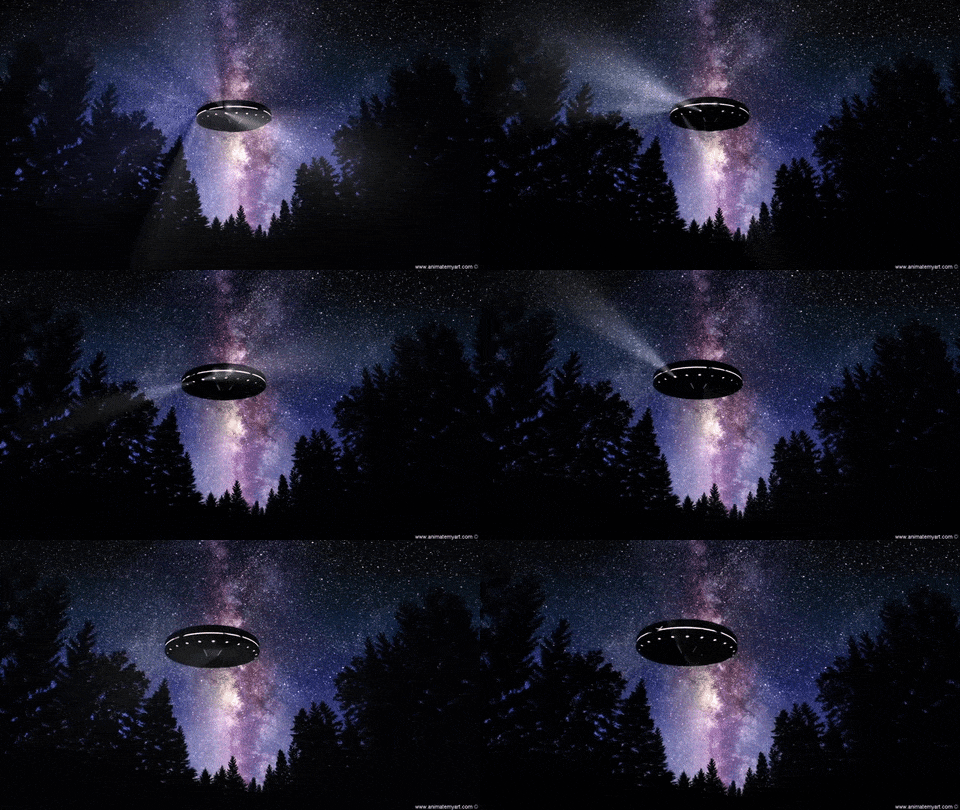
Flying saucer–shaped object filmed over São Paulo highway, Brazil but what was it?
Flying saucer–shaped object filmed over São Paulo highway, Brazil but what was it?
The footage was reportedly recorded by Michelli Azuma on December 25, 2025, at around 9:52 a.m., while traveling along the Anhanguera Highway near Campinas, São Paulo.
In the video, a disc-shaped object appears to glide across the sky at a seemingly high speed. Its movement stands out when compared to the witness’s vehicle, estimated to be traveling at roughly 100 km/h, making the object’s motion appear unusually fast and controlled.
As with many such sightings, questions quickly arise: is this a genuine unidentified flying object, or could it be a drone or another advanced, man-made aerial device.
That uncertainty is further amplified in an era of rapid artificial intelligence development, where distinguishing between authentic footage and fabricated or digitally altered content has become increasingly difficult.
In the modern UFO debate, the line between what is real and what is fake has never been more blurred but the rise of AI generated UFO videos doesn’t disprove UFOs, but it raises the bar for evidence and while many sightings are eventually explained, a small percentage remain unresolved.
Anthropologist Clyde Kluckhohn described skinwalkers as secret witches (mostly male, some female) who creep out in the night to take the form of swift-moving animals like the wolf and coyote.
Skinwalkers are witches from Navajo mythology who can shape-shift into animals like wolves, coyotes or birds to cause harm.
They possess supernatural abilities such as speed, mimicry, mind control.
There are many shape-shifting figures in other cultures around the world.
They can shape-shift, transforming into animals — such as wolves, coyotes or birds — to carry out harmful deeds. These creatures, known as skinwalkers, are a part of Navajo mythology. Sometimes reduced to mere werewolves, skinwalkers possess supernatural abilities, including speed, stealth and the power to mimic the voice or appearances of others to deceive or cause harm.
Learn more about skinwalkers, their characteristics and portrayals in pop culture.
Originating from Navajo (Diné) folklore, a skinwalker is a malevolent witch capable of transforming into, possessing or disguising themselves as an animal. Also called yee naaldlooshii, the phrase translates to "with it, he goes on all fours."
A person becomes a skinwalker by committing a heinous act, like killing a family member. This gives them supernatural powers, allowing them to shape-shift from a human to an animal at will. They often become coyotes, wolves, foxes or bears, though they can take the form of any animal.
Several accounts of skinwalkers recall seeing animals walk on hind legs. For example, one person said, "My uncle and cousin saw a large deer on the side of the road. When they got closer it hopped over the fence like a bipedal man."
Witches in Navajo Culture
While both men and women can be witches in Navajo culture, the term most commonly describes men. This is unlike other cultures where the term "witch" typically defines a woman.
Characteristics and Supernatural Abilities of Skinwalkers
Skinwalker. HowStuffWorks/Midjourney
Here are a few defining characteristics and abilities of skinwalkers:
Shapeshifting: They can transform into various animals, such as wolves or coyotes. They'll change forms depending on their needs. For example, if they need immense strength, they might become a bear. Skinwalkers assume these roles voluntarily — it's not a curse, like being a werewolf.
Supernatural speed: They move at incredibly fast speeds.
Mimicry: They can imitate human voices or animal sounds to deceive others.
Mind control: They influence or control the thoughts of others.
Cursing: They can cast harmful spells or curses.
Physical strength: They have superhuman strength.
Glowing eyes: According to legend, you can tell if you're in the presence of a skinwalker by their eyes. If you shine a light on one when they're in animal form, their eyes glow bright red. In human form, their eyes seem animal-like.
Becoming a Skinwalker: The Witchery Way
People become skinwalkers in Navajo culture by committing taboo acts, such as murder, often of a close relative, as part of a dark initiation into the Witchery Way. This transformation involves mastering the use of dark magic, including shapeshifting and casting curses, to harm others.
The Witchery Way is a form of Navajo witchcraft that focuses on malevolent practices, contrasting with the healing and protective spiritual traditions. Those who choose the Witchery Way use these powers for personal gain or revenge.
Skinwalkers and Bad Fortune
In Navajo culture, skinwalkers are often to blame when things go wrong, such as illness, misfortune or unexplained deaths. The reason is that skinwalkers are witches who can manipulate and harm through dark magic. Therefore, when something out of the ordinary or unexpected happens, like crop failures, people take it to be the work of a skinwalker.
How to Detect a Skinwalker
Detecting a skinwalker is challenging because of their ability to shape-shift and blend in with their surroundings. However, some believe that unusual animal behavior, such as animals acting unnaturally or with glowing eyes, can be a sign of a skinwalker.
They may also move in unnatural or distorted ways, even when in human form. Additionally, skinwalkers may cause feelings of intense fear or unease when they are near. People often associate hearing voices or animal sounds mimicking humans with the presence of a skinwalker.
Skinwalker Sightings and Controversy
There are many accounts of skinwalker sightings. And there also many stories debunking these stories. For example, someone claimed there was a skinwalker sighting in New Mexico. The image went viral on Facebook. However, the truth eventually came to light: The image came from a movie.
Additionally, some interpretations of skinwalkers are inaccurate, like a 2017 episode of "Ghost Adventures" on the Travel Channel.
According to ICT News, one unnamed source said, "We were appalled by the ridiculous conjecture in 'Ghost Adventures.' There was a staged fire with an animal skull, feather and a bullet and bizarre explanations from white men who came to 'get' the story that fit their series. It was like people told them the craziest things and they gobbled it up, or worse yet, they made it up. The references to a phoenix found in the cave and the arch as a gateway to evil are not from our culture. I wonder if the Navajo people in that episode knew what the producers were conjuring up. It was laughable and sad — an amateurish, negative representation of Navajo culture.”
How to Protect Yourself From a Skinwalker
Skinwalkers. HowStuffWorks/Midjourney
Skinwalkers inflict pain and are almost impossible to catch and get rid of. To get rid of a skinwalker, you need a powerful shaman who knows the right spells and incantations to get the skinwalker to turn on itself. You can also shoot the witch with bullets dipped in white ash, but the shot must hit them in the neck or the hand.
Secret Navajo Witches
In his 1944 book "Navaho Witchcraft," noted anthropologist Clyde Kluckhohn explored magical traditions of contemporary Navajo people. Specifically, in his book he examined the "influencing of events by supernatural techniques that are socially disapproved."
The author noted that English-language translations like "witchcraft," are useful shorthand in this case, but they're not perfect. You can draw similarities between real or imagined European witches and skinwalkers, but the Navajo spirit world is undoubtedly unique.
Based on his interviews with Navajo people, Kluckhohn pieced together general descriptions of the various forms of witchcraft that existed within Navajo legend. He described skinwalkers as secret witches (mostly male, some female) who creep out in the night to take the form of swift-moving animals like the wolf and coyote.
Shape-shifters in Other Cultures
While skinwalkers are part of Navajo culture, there are many examples of shape-shifters in cultures around the world.
Pukwudgies: These small, humanoid creatures are part of Wampanoag folklore. They can shapeshift, sometimes into animals, though they often appear in their original form. Pukwudgies are tricksters but can be dangerous if you provoke them.
Werewolves: These creatures can transform between human and wolf forms. They are a part of many European folk stories, such as those from France, Germany and Eastern Europe.
Tlāloc: The Aztec god of rain and fertility, Tlāloc can change forms. The gods in Aztec mythology frequently take on different animalistic features or change their appearances to interact with the world or teach mortals lessons.
Selkies:Selkies can change from seals to humans. They are part of the folklore of Scotland and Ireland.
Nagual: In Mesoamerican traditions, a nagual is a human who can transform into an animal, often a jaguar, dog or bird.
Vampires: In Slavic folklore, there are stories of vampires that can transform into bats, wolves and other creatures.
Studying the Skinwalker
Other anthropologists have studied and written about skinwalker beliefs over the decades since Kluckhohn's work. In the 1984 book "Some Kind of Power," Margaret K. Brady explored the social importance of skinwalker narratives among Navajo children. She discussed how the skinwalker tales functioned to both serve as childhood ghost stories and echo contemporary Navajo cultural concerns.
In the 2016 book "Upward, Not Sunwise," anthropologist Kimberly Jenkins Marshall discussed the way skinwalker accounts and beliefs factored into neo-pentecostal Navajo communities.
While it might seem paradoxical that one might convert to Christianity and retain belief in skinwalkers, Marshall explored the ways traditional beliefs survive in the face of culture rupture.
In the 2007 journal article "Watching Navajos Watch Themselves," anthropologist Sam Pack examined the way often-flawed media representations of Navajo culture — including the 2002 movie "Skinwalkers" — clashed with cultural understanding of what it means to be Navajo.
Skinwalker Ranch
Skinwalker Ranch (also known as Sherman Ranch) borders the Uintah and Ouray Indian Reservation in Utah and is a hotbed of strange phenomena. The cattle ranch has spawned a popular book ("Hunt for the Skinwalker"), a feature-length documentary of the same name and a History Channel series ("The Secret of Skinwalker Ranch").
As the story goes, Terry Sherman and his family gained widespread attention after encountering numerous inexplicable phenomena on their Utah property, famously dubbed "Skinwalker Ranch" in reference to Navajo legends of shapeshifting witches. The 512-acre ranch in the Uintah Basin has been the epicenter of numerous unexplained incidents, such as UFO sightings, livestock mutilations and other mysterious activities.
In 1996, the Sherman family sold the ranch to billionaire Robert Bigelow, who was significantly interested in paranormal activities. Bigelow established the National Institute for Discovery Science (NIDS) to investigate the paranormal incidents occurring there.
The ranch has since become synonymous with paranormal and UFO-related activities, spurring substantial intrigue, skepticism and various investigations. In 2016, Robert Bigelow sold the ranch to Brandon Fugal.
"From encounters with mythical animals, to numerous cattle mutilations, poltergeist activity, crop circles, sightings of glowing orbs and even flying saucers, virtually everything you might call 'paranormal' has been reported at the ranch and surrounding properties," wrote Austin Craig in TechBuzz in 2021.
Fugal told the publication there was a 100-year-old history of paranormal activity, including skinwalker sightings, at the property.
The Ute Tribe Steer Clear of the Ranch
The Uintah and Ouray Indian Reservation is the home of the Ute tribe. At one time, the Ute enslaved some of the Navajo people and also joined with U.S. troops against the Navajo during the Civil War. The result was that the Navajo were expelled from their lands in the Four Corners area, though they returned later.
The Ute believed the Navajo put a curse on them and left shape-shifters among them because of their vile deeds. This is why, allegely, the Ute will not go near Skinwalker Ranch.
Previous owners of the ranch had reported strange occurrences. Fugal said he bought the cattle ranch in 2016 not believing he would see anything unusual. Six months later, he saw "UFO activity" in broad daylight
Cultural Appropriation and Celebration
And so we come to another key aspect of the media's relationship with the skinwalker: cultural appropriation. Pack wrote that the Navajo viewers he questioned generally seemed to enjoy the film "Skinwalkers," despite some cultural and linguistic inaccuracies.
And yet, he also stressed, "This does not mean that the Navajo respondents in my study did not challenge the rights of both Anglos and non-Navajos to undertake such films."
While 2002's "Skinwalkers" was helmed by Cheyenne/Arapaho tribe member Chris Eyre and starred a predominantly Native American (but non-Navajo) cast, other media incarnations of the skinwalker have come at the hands of non-Native people.
In 2016, "Harry Potter" creator J.K. Rowling garnered criticism for including an altered version of the skinwalkers in her online series, "History of Magic in North America." Critics charged that the series reduced an important and interconnected part of Native belief to a mere prop in an Anglo-centric story.
Celebrations
In the Oregonian's coverage of the controversy, however, Douglas Perry pointed to a counterexample of an Anglo author whose treatment of Navajo culture was well-received by the Navajo Nation.
The late novelist Tony Hillerman was awarded the Navajo Special Friends of the Dineh Award in 1991. Hillerman frequently wrote about Navajo culture and Navajo cultural values and even penned the 1986 detective novel "Skinwalkers," upon which Chris Eyre's 2002 adaptation was based.
Where does all of this leave us concerning the mysterious skinwalker? Many contemporary Native Americans would argue that its place is in the living beliefs and customs of the Navajo — and that, as such, it is not necessarily open to interpretation and reinvention by those outside of it. Leave the skinwalker to the night.
This article was updated in conjunction with AI technology, then fact-checked and edited by a HowStuffWorks editor.
Anthropologist Clyde Kluckhohn described skinwalkers as secret witches (mostly male, some female) who creep out in the night to take the form of swift-moving animals like the wolf and coyote.
Skinwalkers are witches from Navajo mythology who can shape-shift into animals like wolves, coyotes or birds to cause harm.
They possess supernatural abilities such as speed, mimicry, mind control.
There are many shape-shifting figures in other cultures around the world.
They can shape-shift, transforming into animals — such as wolves, coyotes or birds — to carry out harmful deeds. These creatures, known as skinwalkers, are a part of Navajo mythology. Sometimes reduced to mere werewolves, skinwalkers possess supernatural abilities, including speed, stealth and the power to mimic the voice or appearances of others to deceive or cause harm.
Learn more about skinwalkers, their characteristics and portrayals in pop culture.
Originating from Navajo (Diné) folklore, a skinwalker is a malevolent witch capable of transforming into, possessing or disguising themselves as an animal. Also called yee naaldlooshii, the phrase translates to "with it, he goes on all fours."
A person becomes a skinwalker by committing a heinous act, like killing a family member. This gives them supernatural powers, allowing them to shape-shift from a human to an animal at will. They often become coyotes, wolves, foxes or bears, though they can take the form of any animal.
Several accounts of skinwalkers recall seeing animals walk on hind legs. For example, one person said, "My uncle and cousin saw a large deer on the side of the road. When they got closer it hopped over the fence like a bipedal man."
Witches in Navajo Culture
While both men and women can be witches in Navajo culture, the term most commonly describes men. This is unlike other cultures where the term "witch" typically defines a woman.
Characteristics and Supernatural Abilities of Skinwalkers
Skinwalker. HowStuffWorks/Midjourney
Here are a few defining characteristics and abilities of skinwalkers:
Shapeshifting: They can transform into various animals, such as wolves or coyotes. They'll change forms depending on their needs. For example, if they need immense strength, they might become a bear. Skinwalkers assume these roles voluntarily — it's not a curse, like being a werewolf.
Supernatural speed: They move at incredibly fast speeds.
Mimicry: They can imitate human voices or animal sounds to deceive others.
Mind control: They influence or control the thoughts of others.
Cursing: They can cast harmful spells or curses.
Physical strength: They have superhuman strength.
Glowing eyes: According to legend, you can tell if you're in the presence of a skinwalker by their eyes. If you shine a light on one when they're in animal form, their eyes glow bright red. In human form, their eyes seem animal-like.
Becoming a Skinwalker: The Witchery Way
People become skinwalkers in Navajo culture by committing taboo acts, such as murder, often of a close relative, as part of a dark initiation into the Witchery Way. This transformation involves mastering the use of dark magic, including shapeshifting and casting curses, to harm others.
The Witchery Way is a form of Navajo witchcraft that focuses on malevolent practices, contrasting with the healing and protective spiritual traditions. Those who choose the Witchery Way use these powers for personal gain or revenge.
Skinwalkers and Bad Fortune
In Navajo culture, skinwalkers are often to blame when things go wrong, such as illness, misfortune or unexplained deaths. The reason is that skinwalkers are witches who can manipulate and harm through dark magic. Therefore, when something out of the ordinary or unexpected happens, like crop failures, people take it to be the work of a skinwalker.
How to Detect a Skinwalker
Detecting a skinwalker is challenging because of their ability to shape-shift and blend in with their surroundings. However, some believe that unusual animal behavior, such as animals acting unnaturally or with glowing eyes, can be a sign of a skinwalker.
They may also move in unnatural or distorted ways, even when in human form. Additionally, skinwalkers may cause feelings of intense fear or unease when they are near. People often associate hearing voices or animal sounds mimicking humans with the presence of a skinwalker.
Skinwalker Sightings and Controversy
There are many accounts of skinwalker sightings. And there also many stories debunking these stories. For example, someone claimed there was a skinwalker sighting in New Mexico. The image went viral on Facebook. However, the truth eventually came to light: The image came from a movie.
Additionally, some interpretations of skinwalkers are inaccurate, like a 2017 episode of "Ghost Adventures" on the Travel Channel.
According to ICT News, one unnamed source said, "We were appalled by the ridiculous conjecture in 'Ghost Adventures.' There was a staged fire with an animal skull, feather and a bullet and bizarre explanations from white men who came to 'get' the story that fit their series. It was like people told them the craziest things and they gobbled it up, or worse yet, they made it up. The references to a phoenix found in the cave and the arch as a gateway to evil are not from our culture. I wonder if the Navajo people in that episode knew what the producers were conjuring up. It was laughable and sad — an amateurish, negative representation of Navajo culture.”
How to Protect Yourself From a Skinwalker
Skinwalkers. HowStuffWorks/Midjourney
Skinwalkers inflict pain and are almost impossible to catch and get rid of. To get rid of a skinwalker, you need a powerful shaman who knows the right spells and incantations to get the skinwalker to turn on itself. You can also shoot the witch with bullets dipped in white ash, but the shot must hit them in the neck or the hand.
Secret Navajo Witches
In his 1944 book "Navaho Witchcraft," noted anthropologist Clyde Kluckhohn explored magical traditions of contemporary Navajo people. Specifically, in his book he examined the "influencing of events by supernatural techniques that are socially disapproved."
The author noted that English-language translations like "witchcraft," are useful shorthand in this case, but they're not perfect. You can draw similarities between real or imagined European witches and skinwalkers, but the Navajo spirit world is undoubtedly unique.
Based on his interviews with Navajo people, Kluckhohn pieced together general descriptions of the various forms of witchcraft that existed within Navajo legend. He described skinwalkers as secret witches (mostly male, some female) who creep out in the night to take the form of swift-moving animals like the wolf and coyote.
Shape-shifters in Other Cultures
While skinwalkers are part of Navajo culture, there are many examples of shape-shifters in cultures around the world.
Pukwudgies: These small, humanoid creatures are part of Wampanoag folklore. They can shapeshift, sometimes into animals, though they often appear in their original form. Pukwudgies are tricksters but can be dangerous if you provoke them.
Werewolves: These creatures can transform between human and wolf forms. They are a part of many European folk stories, such as those from France, Germany and Eastern Europe.
Tlāloc: The Aztec god of rain and fertility, Tlāloc can change forms. The gods in Aztec mythology frequently take on different animalistic features or change their appearances to interact with the world or teach mortals lessons.
Selkies:Selkies can change from seals to humans. They are part of the folklore of Scotland and Ireland.
Nagual: In Mesoamerican traditions, a nagual is a human who can transform into an animal, often a jaguar, dog or bird.
Vampires: In Slavic folklore, there are stories of vampires that can transform into bats, wolves and other creatures.
Studying the Skinwalker
Other anthropologists have studied and written about skinwalker beliefs over the decades since Kluckhohn's work. In the 1984 book "Some Kind of Power," Margaret K. Brady explored the social importance of skinwalker narratives among Navajo children. She discussed how the skinwalker tales functioned to both serve as childhood ghost stories and echo contemporary Navajo cultural concerns.
In the 2016 book "Upward, Not Sunwise," anthropologist Kimberly Jenkins Marshall discussed the way skinwalker accounts and beliefs factored into neo-pentecostal Navajo communities.
While it might seem paradoxical that one might convert to Christianity and retain belief in skinwalkers, Marshall explored the ways traditional beliefs survive in the face of culture rupture.
In the 2007 journal article "Watching Navajos Watch Themselves," anthropologist Sam Pack examined the way often-flawed media representations of Navajo culture — including the 2002 movie "Skinwalkers" — clashed with cultural understanding of what it means to be Navajo.
Skinwalker Ranch
Skinwalker Ranch (also known as Sherman Ranch) borders the Uintah and Ouray Indian Reservation in Utah and is a hotbed of strange phenomena. The cattle ranch has spawned a popular book ("Hunt for the Skinwalker"), a feature-length documentary of the same name and a History Channel series ("The Secret of Skinwalker Ranch").
As the story goes, Terry Sherman and his family gained widespread attention after encountering numerous inexplicable phenomena on their Utah property, famously dubbed "Skinwalker Ranch" in reference to Navajo legends of shapeshifting witches. The 512-acre ranch in the Uintah Basin has been the epicenter of numerous unexplained incidents, such as UFO sightings, livestock mutilations and other mysterious activities.
In 1996, the Sherman family sold the ranch to billionaire Robert Bigelow, who was significantly interested in paranormal activities. Bigelow established the National Institute for Discovery Science (NIDS) to investigate the paranormal incidents occurring there.
The ranch has since become synonymous with paranormal and UFO-related activities, spurring substantial intrigue, skepticism and various investigations. In 2016, Robert Bigelow sold the ranch to Brandon Fugal.
"From encounters with mythical animals, to numerous cattle mutilations, poltergeist activity, crop circles, sightings of glowing orbs and even flying saucers, virtually everything you might call 'paranormal' has been reported at the ranch and surrounding properties," wrote Austin Craig in TechBuzz in 2021.
Fugal told the publication there was a 100-year-old history of paranormal activity, including skinwalker sightings, at the property.
The Ute Tribe Steer Clear of the Ranch
The Uintah and Ouray Indian Reservation is the home of the Ute tribe. At one time, the Ute enslaved some of the Navajo people and also joined with U.S. troops against the Navajo during the Civil War. The result was that the Navajo were expelled from their lands in the Four Corners area, though they returned later.
The Ute believed the Navajo put a curse on them and left shape-shifters among them because of their vile deeds. This is why, allegely, the Ute will not go near Skinwalker Ranch.
Previous owners of the ranch had reported strange occurrences. Fugal said he bought the cattle ranch in 2016 not believing he would see anything unusual. Six months later, he saw "UFO activity" in broad daylight
Cultural Appropriation and Celebration
And so we come to another key aspect of the media's relationship with the skinwalker: cultural appropriation. Pack wrote that the Navajo viewers he questioned generally seemed to enjoy the film "Skinwalkers," despite some cultural and linguistic inaccuracies.
And yet, he also stressed, "This does not mean that the Navajo respondents in my study did not challenge the rights of both Anglos and non-Navajos to undertake such films."
While 2002's "Skinwalkers" was helmed by Cheyenne/Arapaho tribe member Chris Eyre and starred a predominantly Native American (but non-Navajo) cast, other media incarnations of the skinwalker have come at the hands of non-Native people.
In 2016, "Harry Potter" creator J.K. Rowling garnered criticism for including an altered version of the skinwalkers in her online series, "History of Magic in North America." Critics charged that the series reduced an important and interconnected part of Native belief to a mere prop in an Anglo-centric story.
Celebrations
In the Oregonian's coverage of the controversy, however, Douglas Perry pointed to a counterexample of an Anglo author whose treatment of Navajo culture was well-received by the Navajo Nation.
The late novelist Tony Hillerman was awarded the Navajo Special Friends of the Dineh Award in 1991. Hillerman frequently wrote about Navajo culture and Navajo cultural values and even penned the 1986 detective novel "Skinwalkers," upon which Chris Eyre's 2002 adaptation was based.
Where does all of this leave us concerning the mysterious skinwalker? Many contemporary Native Americans would argue that its place is in the living beliefs and customs of the Navajo — and that, as such, it is not necessarily open to interpretation and reinvention by those outside of it. Leave the skinwalker to the night.
This article was updated in conjunction with AI technology, then fact-checked and edited by a HowStuffWorks editor.
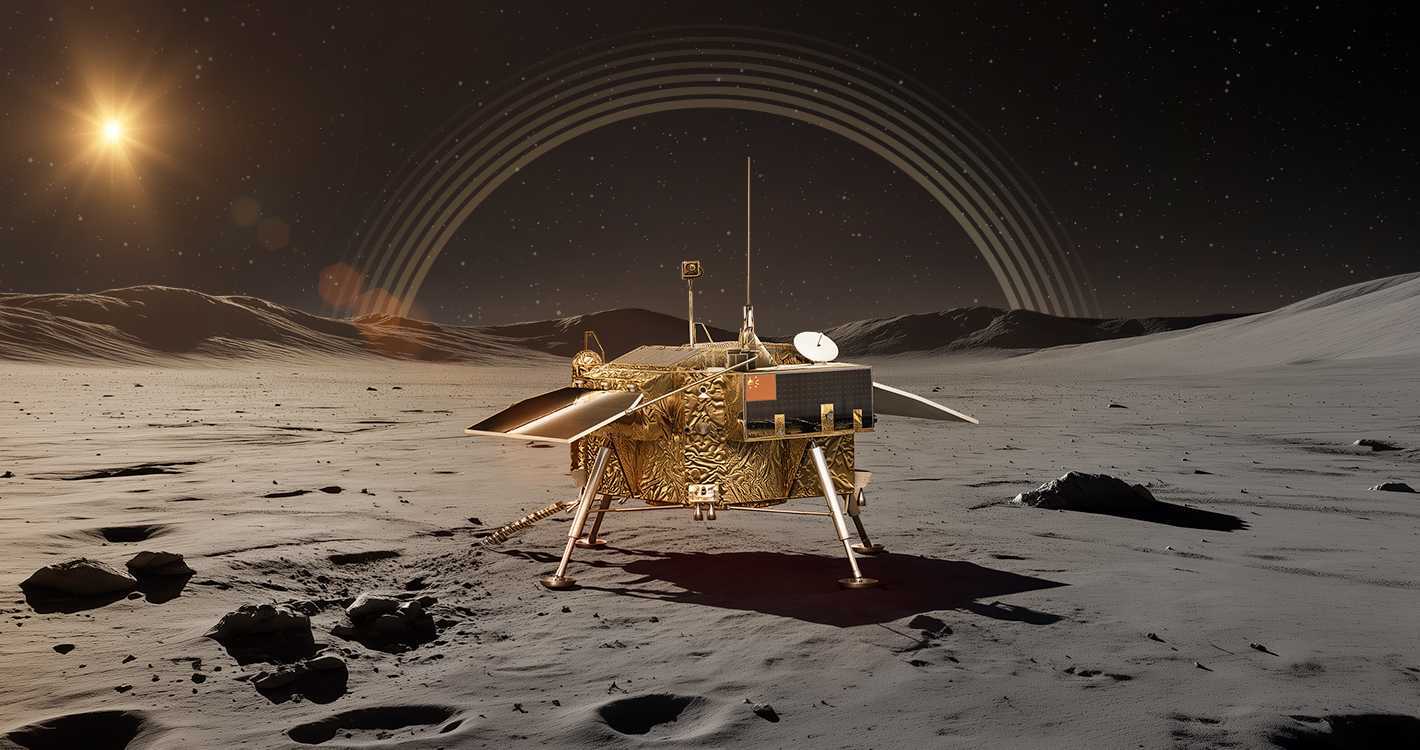
Chang’e 4 is a Chinese space probe that landed on the far side of the Moon on January 3, 2019. It not only studied the chemical composition of the rocks in this location, but also conducted the first experiment in history to grow plants on another celestial body.
The Chang’e 4 spacecraft
Chinese space program
January 3, 2019, was a triumph for the Chinese space program. The rest of humanity also had reason to rejoice. For the first time in history, the Chang’e 4 spacecraft landed on the far side of the Moon, which we never see from Earth.
The road to this landing was quite long. China was late to the lunar race between the US and the USSR. The PRC had to implement its lunar program in the 21st century. It began with two spacecraft that operated in lunar orbit, photographing and remotely sensing the Moon. Both were named after Chang’e, the Chinese goddess of the Moon.
Initially, the Chang’e 1 spacecraft operated in lunar orbit from 2007 to 2009. It made general observations, which were hardly surprising at the time, since the US had already found water on our satellite.
However, in 2010, Chang’e 2 was launched to the Moon. It photographed the surface of our satellite from an altitude of only 100 km. In 2012, based on the data it collected, the Chinese government presented the most detailed map of the Moon at that time, and it was confirmed that all this time, the Chinese had been looking for a landing site for Chang’e 3.
Around that time, the first discussions about China’s lunar ambitions began, but no one knew how seriously to take them, since only two countries – the US and the USSR – had successfully landed on the Moon at that point.
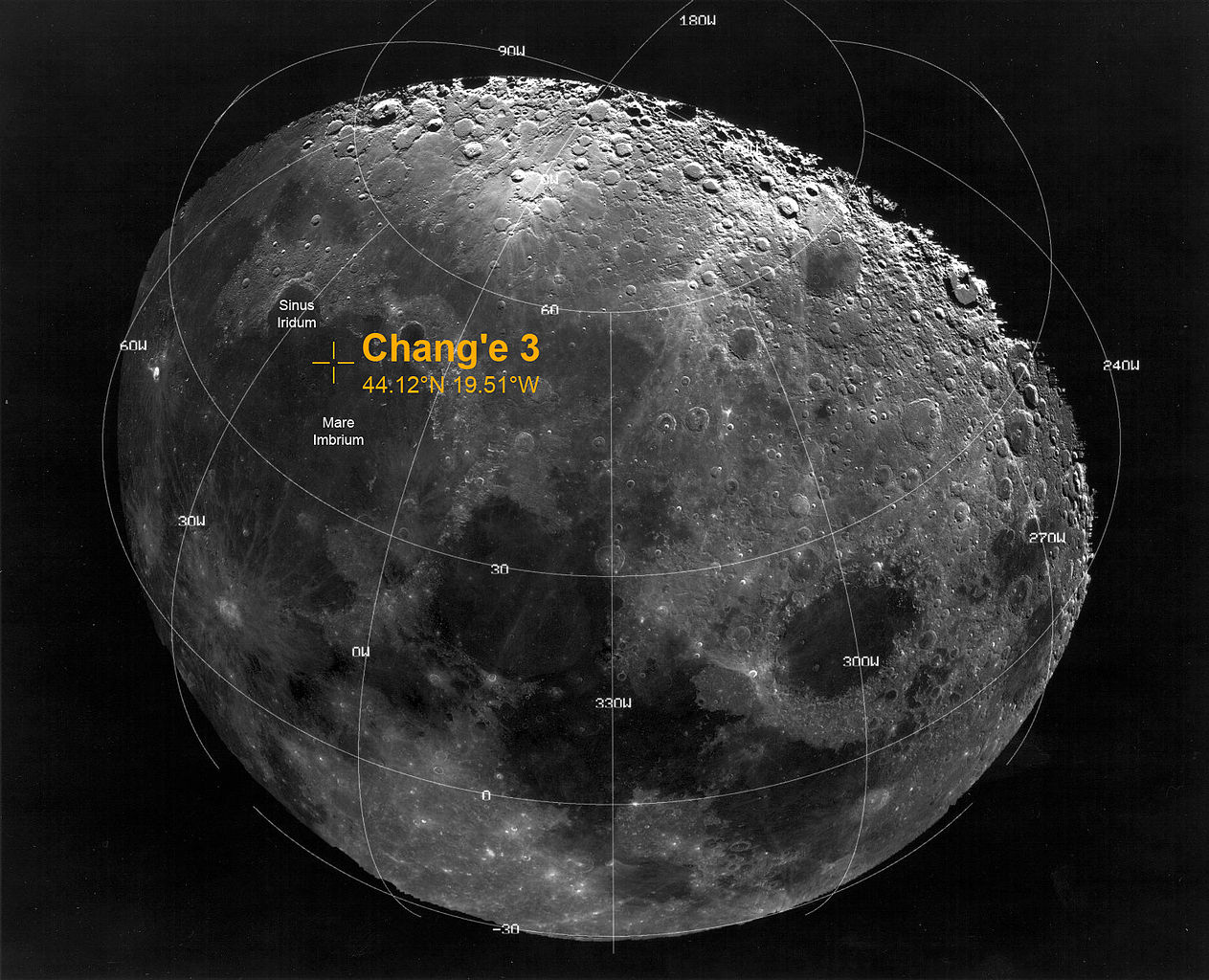
However, on December 14, 2013, Chang’e 3 landed in the Sinus Iridum of the Mare Imbrium. It was not only the first spacecraft in 37 years to remain intact after reaching the surface of our satellite. It also carried the Yutu rover, named after the jade rabbit, a character from Chinese legends who is said to have prepared the powder of immortality on the Moon. At that time, China was able to explore the material of our satellite for the first time and confirm that it was exactly as American and Soviet scientists had determined.
The Chang’e 3 landing site. Source: Wikipedia
The Chang’e 4
However, all this was a repeat of achievements made many years ago. In order to challenge the US, which had already announced plans to return to the Moon, it was necessary to show that Chinese missions could provide the global scientific community with data that no one had previously had access to.
This was the goal of the Chang’e 4 probe. In terms of design, it was a copy of the previous mission, with the same cameras and spectrographs, and even carried the Yutu-2 rover on board. However, this device was to land on the far side of the Moon, which humans first saw only in 1959 and, before the Chinese attempt, had only seen from orbit.
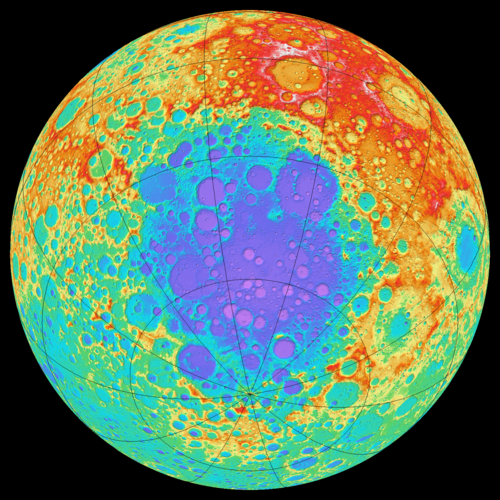
Moreover, Chang’e 4 was supposed to land in the Von Kármán lunar crater, which covers the much older and largest basin on our satellite, the South Pole-Aitken basin. Once, at the dawn of the solar system’s existence, a body much larger than the asteroid that ended the dinosaurs crashed into the Moon, which, scientists believe, led to the asymmetry of its two hemispheres: the visible and the reverse.
South Pole-Aitken basin. Source: Wikipedia
Almost all experimental data confirming this was obtained thanks to the Chinese missions Chang’e 4 and Chang’e 5, which followed it. But for them to be possible, it was first necessary to ensure their connection with Earth. This mission was entrusted to the Queqiao-1 relay satellite, which was launched to the Lagrange 2 point of the Earth-Moon system, i.e., directly behind our natural satellite.
Queqiao-1 began operating in May 2018, and in December of the same year, Chang’e 4 was launched to the Moon. It remained in orbit around our satellite for some time, and on January 3, 2019, it landed at the planned location. On the same day, it began scientific research and took photographs.
Yutu-2 rolled off the platform and began performing spectroscopic analysis of the rocks. After a few days, scientists had to interrupt their work because night fell on the Moon and the temperature dropped to extreme levels. However, two weeks later, when dawn finally broke, the mission resumed its work.
Yutu-2 . Source: news.cgtn.com
In total, Chang’e 4 lasted more than a year and a half. Technically, the mission is not yet complete. It is currently in sleep mode. Ultimately, it accomplished its main task: it examined the mantle rock emissions and noted how they are similar to and different from those found on the visible side of the Moon.
Growing plants on the Moon
The biggest difference in the design of Chang’e 4 from previous spacecraft was the addition of a module for biological experiments. It consisted of germinating seeds. This had been done repeatedly in space before, but it was all in Earth orbit.
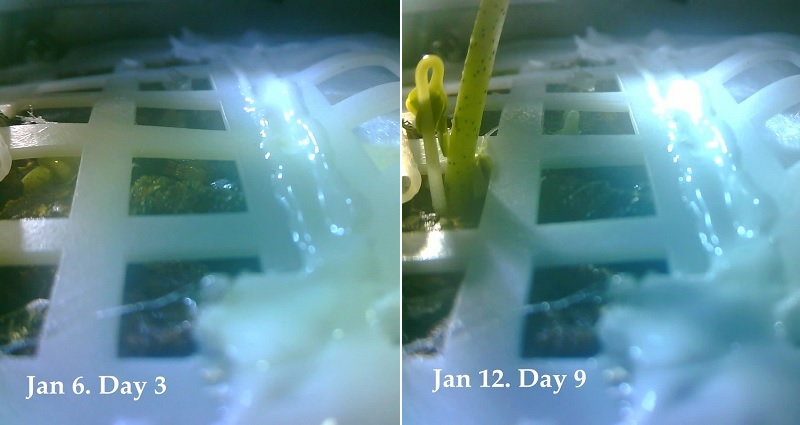
It was Chang’e 4 that became the first spacecraft to successfully grow cotton, potato, and rapeseed seeds on another celestial body. This happened a few days after landing, and photos of the tiny sprouts went viral around the world. The experiment was supposed to last 100 days. During this time, the capsule with the samples had to be heated and humidified.
Plants on the Moon. Source: nextshark.com
Incidentally, it also contained yeast spores and Drosophila fly eggs. So, theoretically, an entire ecosystem could have developed on board in later stages. However, with the onset of the lunar night, the temperature outside dropped too sharply, and too much electricity was needed for heating. Therefore, the experiment had to be interrupted.
Nevertheless, it is considered successful and was extremely important for global science. It proved the fundamental ability of plants to overcome the most difficult stage of their development in space conditions. In the future, humans will inevitably live in space, and we will need oxygen and nutrients that plants can provide. To achieve this, large modules with artificial biospheres will need to be created on planets. Similar to the one that was on board Chang’e 4.
The Unsettling Account of Max Spiers and Dark and Deadly Projects!
The conspiracies surrounding "super soldiers" are just as far-fetched as those involving secret space programs, at least to many people. In fact, these two theories are often closely linked for fairly obvious reasons. Running such programs without significant leaks would be nearly impossible. But what if these programs involved time travel, memory wiping, or even age reversal? Or if these missions occurred on another planet, perhaps even in another galaxy, in a different time?
As outlandish as these ideas might seem to most, some individuals believe they are not only plausible but also the reality of our world. According to Laura Eisenhower, the great-granddaughter of President Eisenhower, "There is this whole other reality going on that we don’t hear about." Those who discuss these alternate realities are often labeled as "crazy" and dismissed by the majority.
While we should approach these claims with skepticism, they are not necessarily grounds for outright dismissal. Despite their seemingly outrageous nature, some of these ideas align well with other conspiracy theories that have since been proven true. For instance, the CIA's remote viewing and mind control experiments, or the U.S. government's previous denial of any interest in UFO phenomena, despite a wealth of declassified files that tell a very different story.
One of the most intriguing and sobering claims in the realm of conspiracy theories comes from the late Max Spiers, a British conspiracy researcher whose sudden death occurred under ominous and suspicious circumstances. Just days before he died in Poland, Spiers sent a text message to his mother that read, "If anything happens to me, please investigate."
Spiers had become a regular speaker on the UFO and conspiracy circuit. While some dismissed his talks, others were drawn to his claims and the stories he shared. He asserted that in his early 30s, he began experiencing a sudden recovery of blocked memories, with long-forgotten - or possibly never consciously known - experiences flooding back to him.
Spiers claimed that as a young child, he was "taken" by government forces and trained to serve as a "Super Soldier" for a secret world government, one that did not have humanity’s best interests at heart. Like others with similar claims, he said he spent several years on other worlds and even in different dimensions. After his service, he was age-reversed, had his memories wiped, and was returned to his childhood. As these memories resurfaced, he also realized he had certain "commands" or "trigger words" embedded deep in his subconscious. If activated, these triggers could compel him to perform actions, such as assassinations, without his conscious awareness.
Interestingly, many who worked with Spiers on television appearances and interviews reported that he seemed genuinely concerned about being followed by "agents." On some occasions, they, too, noticed a menacing and persistent presence that seemed to appear wherever they went.
In early July 2016, Max Spiers traveled to Poland to speak at an event and appear on Polish radio. Tragically, it was a trip from which he would not return alive. According to subsequent investigations, Spiers stayed with Monika Duval, a science-fiction publisher who had suddenly taken an interest in him for reasons unknown. Spiers became unexpectedly ill during the radio interview, forcing the interview to be paused multiple times.
From this point, the details of what happened become unclear. Potentially crucial information regarding Spiers’ final 24 to 48 hours emerged through a series of email correspondences. One of the writers was Duval, who had hosted Spiers and seemed to have accompanied him throughout his ill-fated trip. The other correspondents were a woman known only as Madelaine and a third person referred to as Mr. Kristoff, a quantum physicist based on the content of the emails.
The email exchanges suggest that both women were aware of Spiers’ medical conditions. For instance, Madelaine informed Kristoff - presumably at a point when Spiers was too ill to speak for himself - that he suffered from a personality disorder and paranoid schizophrenia, for which he was on medication. Kristoff recommended Niacin supplements and arranged to meet with Spiers and the two women. This meeting was supposed to take place on July 16th. However, shortly thereafter, Spiers was found dead.
According to the official findings, some facts about Max Spiers' final 24 hours are established. At least one doctor visited the property where he was staying and noted that Spiers had an extremely high temperature. More ominously, he had vomited "dark brown fluid," the nature of which remains unknown.
However, numerous suspicious activities allegedly occurred in the weeks and months following his death. For instance, by the time his body was returned to the United Kingdom - just six days after his death - it showed signs of decomposition that seemed unusually advanced. The deterioration was so severe that his family was advised against a formal identification. One family member who did view his remains described him as "barely recognizable."
Additionally, there was an unexplained red mark on his forehead. This mark was not mentioned in the detailed notes of the Polish emergency crew who attended the scene and attempted to revive Spiers, suggesting it may have appeared after his death. The official autopsy results were also deemed "inconclusive."
Even more suspicious was the complete erasure of his laptop, with every file and folder wiped clean. This was a significant amount of data, as Spiers had been researching his topics for over a decade, accumulating a vast digital archive. While it's not impossible that Spiers himself wiped the computer, it seems unlikely. Furthermore, his phone was similarly wiped, and its SIM card was removed, which remains missing.
If we revisit the strange red mark on Spiers' forehead and the black (or dark brown) fluid, he reportedly vomited - over two liters, according to Duval - many questions remain unanswered. These questions become even more pressing when considering allegations of bizarre rituals being performed on Spiers' body immediately after his death.
Spiers' mother, Vanessa, claimed that she spoke with Duval just hours after her son’s passing. She is certain that she heard some kind of ritual taking place in the background where her son’s body was lying. Amidst the audible flurry of activity, she distinctly heard words like "salt" and "milk," both of which are commonly associated with rituals and ceremonies.
This not only suggests a deeper connection to Spiers' death but also raises concerns about what might have transpired in those final moments. According to Vanessa, there was "definitely something going on," and it was clear that more than one person was present with Duval in the home. Could Spiers' death have been the result of a ritualistic act, possibly tied to his claims of involvement in Project Mannequin? Given that his most recent investigations reportedly involved a satanic black magic ring connected to prominent politicians and celebrities, these allegations of "black magic" warrant serious consideration.
And what should we make of the black substance that Spiers vomited? As strange and unbelievable as it may sound, some in the UFO and alien community refer to this as "Black Goo." This substance, despite sounding like something out of a science fiction novel, is believed by some to be an alien life form residing on Earth. According to certain researchers, this alien entity entered the United Kingdom and, subsequently, Europe after the Falklands War and is in a constant state of learning.
It’s worth noting that even within the conspiracy community, some individuals questioned Spiers’ credibility. Adam Borowski, a Polish conspiracy researcher, has stated in the BBC documentary Fractured that many theorists do not regard Spiers as credible. He claims the main issue is that Spiers "collects the research of others and presents it as his own." While this may seem harsh, after all, research often involves building on existing work, Spiers was a highly polarizing figure.
Conventional views suggest that Max Spiers was an intelligent individual who grappled with mild addictions and severe mental health issues, leading to an unfortunate and regrettable death. The emails from Madelaine seem to support this perspective - were they simply educated guesses, or had Spiers confided his struggles to her?
On the other hand, conspiracy theorists and truth seekers, regardless of how outlandish their claims may be, argue that Spiers was uncovering something darker than he might have realized and paid the ultimate price. In his final interview, he mentioned feeling "attacked" and a "crushing" sensation around his throat. Should we be too quick to dismiss these claims as mere effects of drug use?
Numerous theories are circulating about what really happened to Max Spiers, and it’s possible that the truth may involve elements from many of these theories. It’s plausible to accept that Spiers - a man in poor health - could have suffered a tragic accidental death. Unless new information emerges, the official account of his death will likely remain unchanged.
However, certain actions raise suspicions. For instance, the complete erasure of files on Spiers’ laptop - his life's work - seems suspicious. Additionally, the removal of the SIM card from his phone after his death suggests that there were potentially sensitive contacts and information on those devices. Vanessa has indicated that this information may have been something "someone didn’t want people to see."
The “dark mark” on Spiers’ forehead, visible in his morgue photograph, adds to the mystery. This mark is noted in Vanessa’s possession, but it is absent from the otherwise detailed emergency notes. Its presence raises questions about who is responsible and why it appeared.
Even more disturbing are Vanessa's comments about hearing strange activity in the background during her phone conversation with Monika Duval in the hours after her son's death. It sounded like some sort of ritual might have been performed - either in an attempt to revive Spiers or as a final act in a premeditated plan.
One of the most compelling claims made by Max Spiers was his alleged involvement in the top-secret program known as Project Mannequin. According to Spiers, this program, which involves both the NSA and British intelligence services, is a comprehensive cloning, behavioral, and training initiative. It targets individuals from a young age, enrolling them in mind-control sessions akin to MKUltra programming.
Typically, these individuals have military connections, such as having a high-ranking officer as a relative, though some are abducted from homeless shelters and similar environments. It's also notable that thousands of teenagers and young adults go missing each year, particularly in the United States and parts of Europe.
Spiers claimed that the core of the project is based in a clandestine, unacknowledged underground facility in Peasemore, Berkshire, England. This site, referred to as “AL/499 Base” or “Base 499,” is reportedly situated over 200 miles underground.
Various activities occur at this facility under the Project Mannequin banner. It is a hub for remote viewing sessions, among other things. Additionally, the facility runs intense training programs influenced by "Illuminati" control, designed to create mind-controlled and remotely activated assassins. The mind-control is so profound that these individuals often return to their "normal" lives, unaware of their covert assassin roles sanctioned by shadowy government entities.
While many dismiss Spiers’ claims as unsubstantiated, he is not alone in making such assertions, despite their shocking nature.
Like Spiers, James Casbolt also asserts insider knowledge of covert and expansive programs, including Project Mannequin, which he claims he was “born into.” He also alleges that his family has deep connections with both intelligence services and secret societies collectively referred to as the Illuminati. Moreover, he states that his lineage traces back to the “royal family of the French Revolution.”
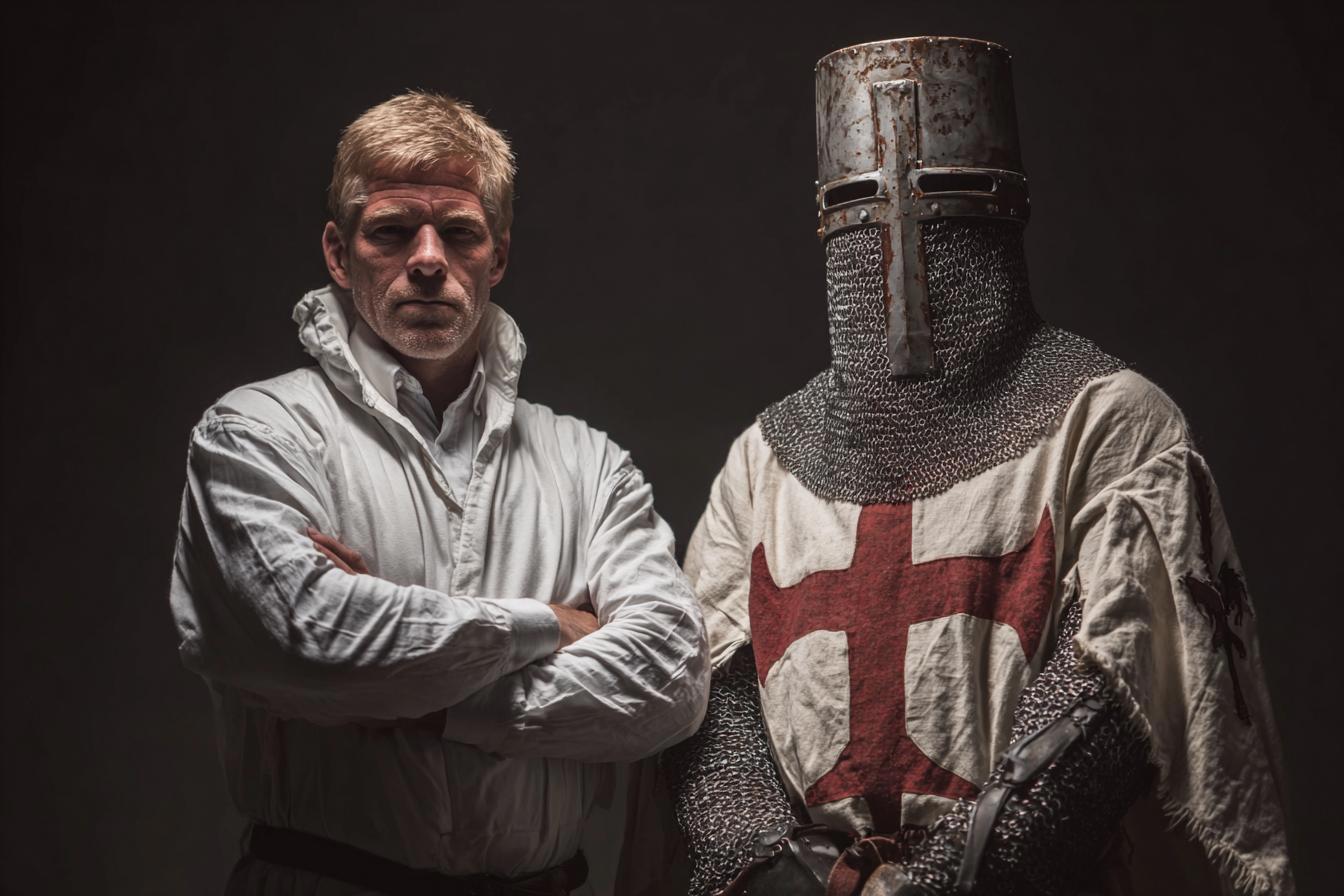
This claim is particularly intriguing. Those who study secret societies and the possibility of influential families and organizations exerting control over global affairs may find it noteworthy. Many of the prominent families from that era had connections to Freemasonry, and depending on the specific royal family he references, there could even be ties to the Knights Templar.
Casbolt himself notes that he was selected for the project due to “rare genetic attributes” sought by the project's handlers. This raises questions about what makes his (and potentially his family’s) DNA so unique, if we take his claims at face value.
Additionally, Casbolt claims that Project Mannequin employs “esoteric methods such as numerology and archaeometry,” an advanced form of remote viewing. Interestingly, his own name, James Casbolt, when analyzed using ancient numerology methods, translates to “valiant, decorated warrior of death and destruction.”
Given his allegations of involvement in secret mind-controlled assassination teams, this connection is darkly fascinating. Casbolt describes these mind control programs as “multi-generational,” with each successive generation being “more easily programmed.” If we consider claims of mind-controlled politicians, it might be worthwhile to investigate some of the multi-generational political families further.
The goal of those running these programs is to create “genetically enhanced assassins and espionage agents.” They aim to develop “inborn genetic traits such as psychic abilities” through generational programs and possible cloning. This vision of military advancement is evident. However, any excitement about these advancements might be dampened by Casbolt’s assertion that these “genetic enhancement methods are a continuation of the work of Third Reich geneticists and mind control experts from World War Two.” According to the whistleblower, the Reich’s fascination with the occult and its desire to harness paranormal and astral powers drove these programs.
This claim is particularly intriguing given that many Third Reich scientists were brought to the United States after the war as part of Operation Paperclip. Officially, these scientists were said to have joined the regime out of necessity rather than ideology, to avoid losing their funding or facing worse consequences. However, many believe this may not be entirely true. While most Paperclip scientists were likely not active Third Reich members, it’s plausible that some were. The United States could not afford to let such valuable technological and intellectual assets fall into Soviet hands during the Cold War.
It is almost certain that some of these highly skilled but morally questionable minds operated within the “grey areas” of military intelligence.
The Montauk Project surfaced like the Philadelphia Experiment conspiracies. Like Bielek, Long Island native Preston Nichols began experiencing unusual visions. These turned out to be the recovery of intentionally repressed memories.
Nichols claimed to have been involved in Project Rainbow during the late 1960s before continuing his top-secret work with the U.S. government on Project Montauk. Project Rainbow, officially active from 1948 to 1968, was supposedly focused on weather control. However, many researchers believe it was actually a continuation of the Philadelphia Experiment. They suggest that Project Rainbow also involved elements of mind control, possibly as a precursor to the more extensive experiments carried out under the Montauk Project.
One of Nichols' notable claims was working on the concept of uploading a person’s mind—or soul—onto a digital computer. Considering this occurred in the 1970s and the long-standing belief that government technologies are often decades ahead of public knowledge, it is intriguing that such concepts are now emerging in mainstream science and news as "possible."
Nichols first encountered Bielek at the Montauk Project, although neither was initially aware of their previous connection. Both later described a sense of familiarity and eventually had their memories restored, revealing their shared past.
Once again, consider those unsettling moments when you feel like you recognize a stranger but can't place them. Could it be that more of us lead hidden double lives, even from ourselves? This idea might seem too far-fetched to entertain, yet given what we know about mind control and its various methods, we might need to question more deeply than we currently do. For instance, how can we be certain that our memories, thoughts, and ideologies truly belong to us? Delving into such questions could drive one to the brink of madness, but dismissing these possibilities entirely might be to our collective disadvantage.
This becomes even more intriguing when we examine the ongoing mind-control experiments under the Montauk name, conducted at the Montauk Air Force Station on Long Island. Is it a mere coincidence that Nichols lived in such proximity to the center of these ultra-secret projects?
Furthermore, Nichols claimed significant involvement in specific aspects of the Montauk program, including the Montauk Chair and the Montauk Boys Program. The latter, in particular, raises dark questions about the origins of the young subjects involved. These boys were trained to become "PSI Warriors," essentially super soldiers. Bielek also collaborated with Nichols on these projects. While the training of young minds is unsettling in itself, the alleged activities associated with the Montauk Chair are both chilling and captivating.
Nichols describes the Montauk Chair as a device utilizing quantum fields, which, according to him, can read a person's mind. There are even rumors suggesting that experiments involved having subjects visualize an object, like a playing card, to use the quantum fields to make that object appear in reality. Considering the advancements in quantum fields and energies in modern science, it’s worth pondering how much further ahead this technology might have been decades ago, given that they were reportedly operating about 50 years ahead of their time.
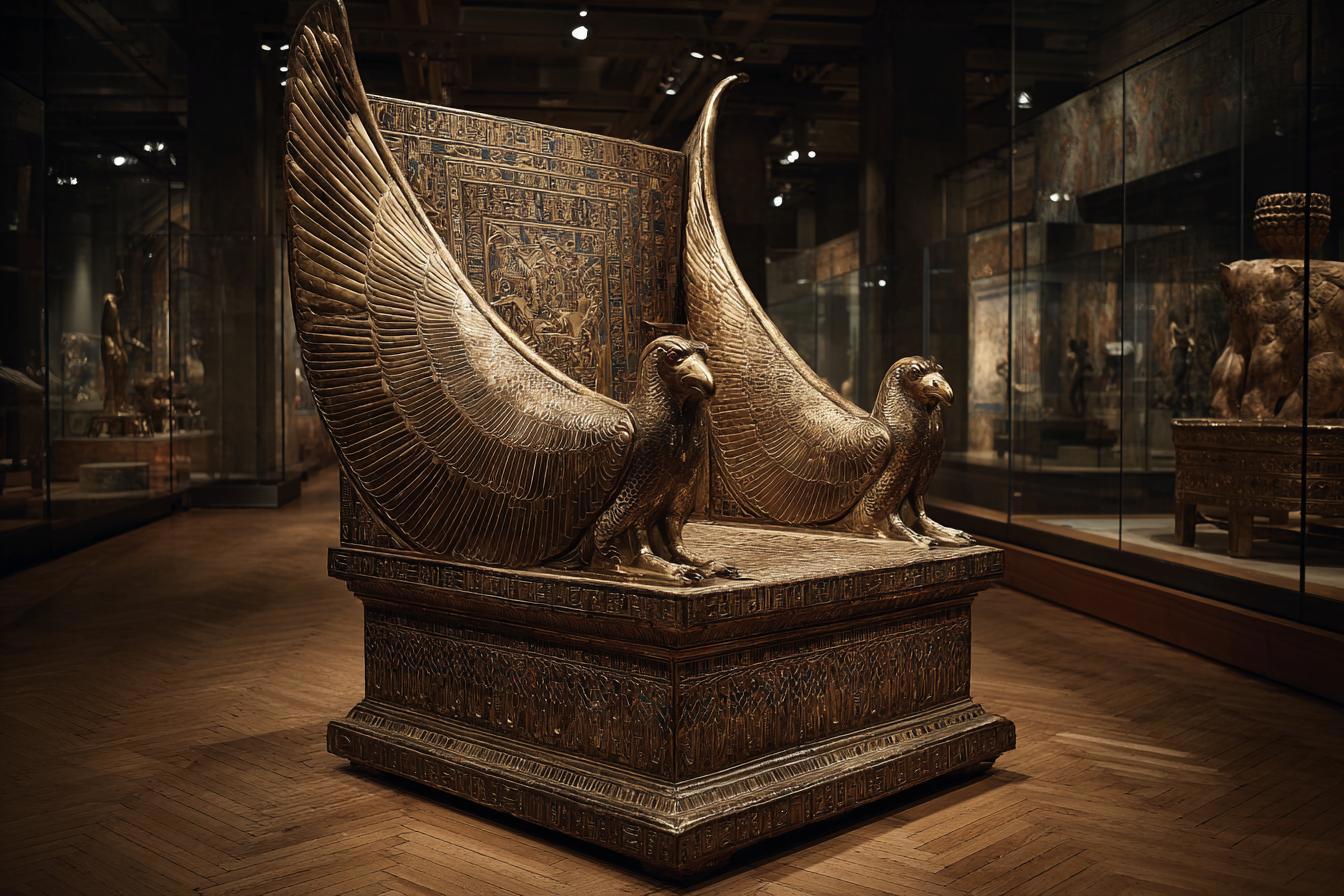
Additionally, many ancient Egyptian legends speak of a winged throne used by the creator god Ptah, who was said to imagine the world into existence while seated on this mysterious chair. With the ongoing interest in ancient esoteric knowledge, this parallel might be worth exploring further, particularly if one considers the theory that the bloodlines of ancient Egyptian "God-King" Pharaohs persist in today's European royal families and influential figures, including many US presidents. As improbable as it may seem, could there be a connection between the Montauk Chair and the legendary throne of Ptah? If so, might this be another instance of ancient myths concealing elements of truth within their narratives?
Under the Montauk Project, individuals with psychic abilities were seated in The Montauk Chair and would enter a psychic trance. A specially designed set of coils was used to tune into the emanations from their minds. Interestingly, these coils bore a striking resemblance to designs attributed to Nikola Tesla, suggesting that intelligence agencies may have used Tesla’s research after his death. These coils would then “digitize” the thoughts, converting them into computer code and displaying them as images, much like how pictures are shown on a standard computer screen.
It remains uncertain whether later experiments aimed at turning specific thoughts into tangible objects continued. However, the Montauk Chair was used for various other experiments. For instance, the coils' interaction with quantum energy fields was explored as a means to create a “vortex for time travel.” Given Bielek’s claims and those of others regarding secret time-travel missions by intelligence agencies, there might be more substance to these seemingly improbable ideas than many are willing to acknowledge. It’s possible that these efforts were more successful than most would suspect.
One of the most disturbing aspects of The Montauk Chair’s use involved a program that resulted in many boys being “lost forever” to the device.
In addition to the apparently lethal outcomes for some individuals involved in this grim program, there are also troubling connections to other dark conspiracies. Nichols and Bielek claim that one of the most sinister applications of The Montauk Chair was to generate, amplify, and "collect" raw energy produced through fear.
Details about how fear was "generated" or "collected" are scarce. However, a crucial question is: What was the purpose of this program? For instance, could this "collection of fear" in energy form be used like a gas or poison, potentially inflicting sudden terror that could incapacitate an enemy? This idea is intriguing and raises questions about whether we might have witnessed such effects in recent, brief conflicts.
On an even darker note, consider the claims of researcher and author David Icke, particularly his theories about reptilians. According to Icke, these reptilian entities require "fear" and other negative energies—such as anger, jealousy, violence, hate, and even the energy from extramarital affairs—to sustain themselves. Icke suggests that these negative emotions, which resonate at frequencies aligned with the reptilians, grant them increased power. In extreme cases, this energy can lead to the "possession" of individuals by these entities.
Al Bielek's impressive educational background, including a PhD in physics. Anyone who has heard him speak can attest to his thorough knowledge of the subject and his apparent mental clarity, despite his unconventional claims.
Bielek is not alone in this regard. Preston Nichols, often associated with the Montauk Project theories, is also highly educated, holding degrees in Psychology, Parapsychology, and, like Bielek, Electrical Engineering. Whether this is merely a coincidence or not, it is noteworthy that two well-educated individuals with similar professional backgrounds are making comparable claims.
Additionally, there is the matter of Ed and Duncan Cameron. Official records confirm that a Duncan Cameron did indeed work for the National Security Agency in the mid-1980s. Some researchers suggest that Ed and Duncan Cameron served as “liaisons” between the Navy and intelligence agencies. While it might be a coincidence that a Duncan Cameron appears in NSA records, Bielek’s account suggests that Ed Cameron was “regressed out of existence,” though he cannot explain how this was accomplished. He mentions that he can “only remember what his brain allows him to.”
One of the most intriguing claims about secret CIA time-travel missions comes from Dr. Andrew Basiago, who asserts that he was involved in these operations from childhood. According to Basiago, the CIA’s time-travel experiments date back to the late 1960s and often involved “gifted schoolchildren” whom the agency specifically sought out. Scientists believed that children, with their unprejudiced minds and limited life experience, were ideal candidates for time travel. Basiago also claimed that most adults involved in these missions would typically “go insane” as their preconceived notions of reality could not handle the concept and experience of time travel.
One of Basiago’s most controversial statements is his claim that in 1971, he saw photographs brought back from the future depicting the 9/11 attacks. He stated that these pictures were used for “research” purposes. This claim is particularly intriguing when you consider how many times apparent “warnings” of the attacks appeared in major films. Given the connections between Hollywood and intelligence agencies, these warnings, while still unlikely, seem less far-fetched.
Similar claims have been made by Michael Relfe, a former U.S. Army serviceman who alleged that he was “recruited” for top-secret service in 1976. In a story reminiscent of Randy Cramer’s, Relfe claimed that a portal transported him to Mars, where he worked for twenty years at a military research facility (just like the claim of Randy Cramer). They supposedly took place many years into the future to further secure these programs. After his service, Relfe was age-reversed, had his memory wiped, and was returned to society. Only years later did he begin to recover his memories.
Although he didn’t speak about his experiences until the 2000s, Randy Cramer claims that one night in 1987, when he was 17 years old, a bright light appeared in his bedroom, abruptly waking him. As he gathered his senses, he realized the light was shaped like a doorway, seemingly a portal. Standing in front of the glowing door were two men. One of them reached out to Cramer, assuring him it was safe to join them. Despite his disbelief at what was happening, Cramer stepped out of bed and approached the men at the doorway.
The next thing he knew, he found himself in a strange, hangar-like room filled with about 50 other teenagers. Almost all of them were captivated by an impressive black triangular craft in the center of the room. They were instructed to board the craft, which they all did without hesitation. This detail is particularly intriguing, especially considering the later revelations of TR-3B patents and the military's apparent ownership of such a craft. Does this make Cramer’s account more credible? At the time he shared his story, these documents were not yet publicly known.
Cramer claims that one of the military men instructed them to look up. When they did, they could see Earth through a glass window, and it was clear they were moving away from it. The military man informed them that everything they were about to do was to "defend it!" Though seemingly trivial, this statement's phrasing carries an air of quiet military authenticity.
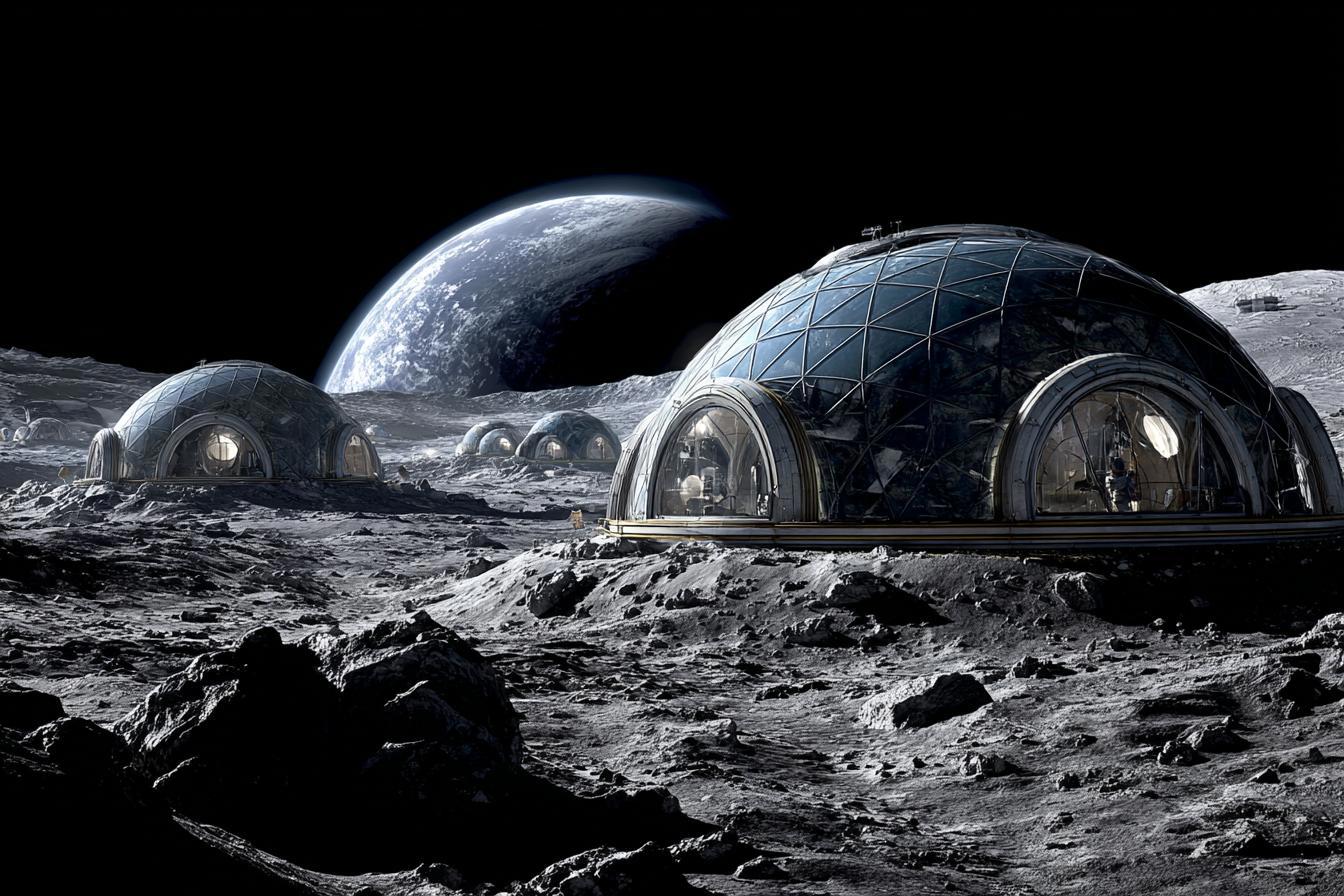
According to Cramer, they eventually landed on the Moon. Interestingly, much like Swann, he described seeing enormous glass dome-like structures as they approached. From there, they transferred to another spacecraft, which took them to Mars. Cramer claims he spent the next twenty years as part of a “specialized off-planet military unit!”
He also asserted that he, like all those “selected” for this specialized military duty, possessed a very specific genetic makeup. This detail is particularly intriguing, as another whistleblower who claims involvement in similar secret programs and who has direct ties to one of the families involved made similar claims. While Cramer’s account may seem hard to believe, these small details might eventually prove their authenticity.
After two decades of active service, Cramer was returned to Earth. He was age-reversed back to 17 years old and returned to his bed in 1987 through the portal device, arriving within 15 minutes of his "abduction." No one was even aware he had been gone. Due to memory wiping and mind-control techniques, Cramer initially believed any lingering memories were just dreams. However, about a decade later, he began to recall more and more fragments of his past from the future.
Over time, he eventually unlocked the majority of his memories from his time on Mars. We should note that many people were, and continue to be, highly critical of Cramer’s claims.
Let’s revisit the claims that remote viewing sessions are conducted from deep underground at Base 499. Both Spiers and Casbolt have asserted their participation in these sessions. While these sessions are typically described as being for reconnaissance purposes, there are reasons to suspect that some of them might have more sinister objectives.
Spiers, for instance, reported experiencing “astral attacks” from entities opposing his disclosures. These attacks occurred during several pre-scheduled radio interviews, sometimes causing such severe disorientation that sessions had to be paused. Although some critics suggest that Spiers' symptoms resembled intoxication, he is not alone in his claims of astral attacks. These types of attacks are said to be employed by various intelligence agencies.
David Icke, in his book The Biggest Secret, describes how the “controlling elite” allegedly uses these “psychic wars” against one another and against anyone who challenges their power. Icke claims to have experienced such attacks himself and asserts that they can be lethal. Considering the mysterious nature of Spiers’ death and the surrounding conspiracy theories, it is worth considering whether his claims of astral attacks might be more credible than initially thought, even among conspiracy theorists.
It is also important to highlight the connection between astral attacks and the Vril Society, as well as various members of the Third Reich regime. This group had a strong belief in astral energies and entities. Many who claim involvement in these secret programs speak of a dominant “power” that orchestrates events. For instance, David Icke refers to this force as the reptilians, suggesting that they use astral energies and vibrations to align with and control a person’s mind and body, effectively possessing them. Other alleged insiders also report extraterrestrial control over these covert operations. This may illustrate how different fields of interest are interconnected in complex ways.
Many researchers believe that both the CIA and the KGB conducted research into and utilized psychic warfare against each other throughout the Cold War. Additionally, individuals like Uri Geller, who claims to have the ability to influence objects and people with his mind, are said to have been used by these governments to exert influence on international political opponents and affect their decisions. Some suggest that such efforts might even occur at high-level international meetings, such as those held by the United Nations.
Indeed, Laura Eisenhower’s statements about a “reality most of us don’t know exists” seem increasingly relevant in this context.
While many of the so-called super soldiers may genuinely believe they have physically traveled through time and to other worlds - and they might have - it's possible that their journeys are not physical in the conventional sense.
Reflecting on Ingo Swann's experiences and the extensive research on remote viewing conducted by intelligence agencies, it could be that these experiences are more accurately described as astral journeys. Perhaps soldiers like Randy Cramer are placed into a form of suspended animation, allowing their consciousness or life force to travel forward in time. They might be aware of this process at the time, or it could be that their experiences involve a distortion of reality.
Although it sounds far-fetched, the concept of consciousness traveling through time might be more plausible than the physical body doing so. For instance, Swann has reported traveling to other planets in this manner.
Further supporting this idea is the case of Paul Amadeus Dienach, who claimed to have traveled to the future while his physical body was in a coma. According to his memoirs, he lived in the year 3096 and experienced the world through the perspective of Andrew Notham, a resident of that era. After falling into a coma in 1922, Dienach asserted that his consciousness journeyed to the future, potentially explaining the nature of his coma. Upon waking from the coma, he recorded his experiences and later gave them to his student, George Papahatzis, who made several attempts to publish them.
How should we approach the outlandish claims discussed above? Consider how, before the CIA's forced disclosures about mind-control programs, such claims were widely dismissed as mere conspiracy theories. We now know that these programs were very real. Additionally, most researchers agree that when such information is officially released or declassified, it typically leaves out a significant amount, kept hidden under the guise of "national security."
The same skepticism applies to the Kennedy assassination. Few people accept the official narrative that Lee Harvey Oswald acted alone. Yet, the official story remains unchanged, and the full release of related documents has yet to occur. Setting aside the technological logistics, it’s worth asking how easy it is to dismiss such claims as outlandish.
Furthermore, consider the advanced technological, biological, and genetic breakthroughs that would likely be involved in such claims. Most researchers believe that intelligence agencies would keep such advancements secret for a long time, especially if they have military applications. Many would argue that these agencies are likely decades ahead of what they publicly reveal. Given the cutting-edge technology available today, it’s intriguing to imagine the advancements that might exist in secret, behind closed doors.
If we consider the claims of recovered alien technology and potential extraterrestrial involvement, these assertions might start to seem more credible—if one believes in their validity.
The claims of Jack Shulman, for example, are particularly interesting. He argues that much of today’s advanced technology is derived from reverse-engineered alien technology, particularly from the Roswell crash. Shulman even posted what he claimed was evidence online and faced attempts by mysterious organizations to shut him down and his company. These attempts could be seen as a sign that there might be more truth to his assertions than many would think.
If Shulman and others with similar claims are correct, it raises intriguing questions about the nature of the alien technology being researched and tested by scientists in government black-budget programs. What kinds of experiments are being conducted, and for what purposes? Given the military's involvement, it's plausible that these experiments are linked to a covert “super soldier” program, either for space conquest or in response to a perceived external threat.
Ben Rich, former CEO of Lockheed’s Skunk Works, once said, “Anything you can imagine, we already have the technology to do.” He also noted, “These technologies are locked away in black budgets. It would take an Act of God to release them for the benefit of humanity!” Perhaps we should make of that what we will.
A newly discovered galaxy cluster could rewrite our understanding of the cosmos, as scientists spot 'something the universe wasn’t supposed to have’.
Researchers found that the cluster was burning five times hotter than expected just 1.4 billion years after the Big Bang.
Astronomers had thought that such extreme temperatures would only be possible in more mature, stable galaxy clusters that formed later in the universe's life.
This hot 'baby cluster' could suggest that the earliest moments of the universe were far more explosive than previously thought.
Scientists believe that the unexpected heat might be the product of three supermassive black holes hidden in the depths of the cluster.
Co-author Dazhi Zhou, a PhD candidate at the University of British Columbia, says: 'We didn’t expect to see such a hot cluster atmosphere so early in cosmic history.
'In fact, at first I was sceptical about the signal as it was too strong to be real.
'But after months of verification, we’ve confirmed this gas is at least five times hotter than predicted, and even hotter and more energetic than what we find in many present-day clusters.'
Scientists have discovered 'something the universe wasn’t supposed to have' as they find a galaxy cluster burning five times hotter than expected just 1.4 billion years after the Big Bang
They are enormous collections of individual galaxies, invisible dark matter, and superheated clouds of gas.
In the spaces between the galaxies, gas is heated into plasma that can reach hundreds of millions of degrees and shines brightly in the X-ray spectrum.
Scientists had thought this 'intracluster medium' was heated by gravitational interactions between galaxies as an immature, unstable cluster matures and collapses inward to a stable state.
However, the researchers' new discovery, published in Nature, suggests that this model of evolution might not be correct.
Using a group of telescopes known as the Atacama Large Millimeter/submillimeter Array (ALMA), the researchers looked 12 billion years into the past.
At this time, the galaxy cluster dubbed SPT2349-56 was extremely immature, but already extraordinarily large for its age.
Its core extends more than 500,000 light-years across, roughly the size of the vast halo of matter and dark matter surrounding the Milky Way.
Galaxy clusters are some of the largest objects in the universe, sometimes containing thousands of individual galaxies connected by clouds of superheated gas known as the intracluster medium. Pictured: A separate globular cluster known as NGC 2210
Using the ALMA (Atacama Large Millimeter/submillimeter Array) observatory, scientists measure the temperature of the intracluster medium in a galaxy cluster over 12 billion light-years from Earth. They discovered that this was far hotter than the best theories predicted
The cluster also contains more than 30 extremely active galaxies which produce stars over 5,000 times faster than our own galaxy.
However, when researchers used ALMA to measure the temperature of the intracluster medium, they found that it was far hotter than the models predicted for this time in the universe.
Scientists aren't entirely sure how the cluster came to be so much hotter than expected.
However, the researchers suggest that it could be related to the three recently discovered supermassive black holes in the cluster.
Supermassive black holes are the largest class of black holes, with masses at least 100,000 times greater than that of our sun.
Supermassive black holes are typically found in the hearts of galaxies, where they feed on gases and release huge quantities of X-ray radiation.
Co-author Professor Scott Chapman, of Dalhousie University who conducted the research while at the National Research Council of Canada, says that these black holes were 'already pumping huge amounts of energy into the surroundings and shaping the young cluster, much earlier and more strongly than we thought.'
Scientists say the heat was likely generated by three supermassive black holes. These are the largest class of black holes (artist's impression), and typically form in the cores of galaxies
This comes after researchers found a supermassive black hole actively growing inside a galaxy just 570 million years after the Big Bang (pictured), suggesting that black holes might have grown faster in the early universe than expected
Last year, researchers using the James Webb Space Telescope spotted a 'little red dot' supermassive black hole that was actively growing inside a galaxy just 570 million years after the Big Bang.
Importantly, this black hole was much bigger than the size of the host galaxy would suggest.
This implies that black holes may have grown faster than the galaxies that hosted them in the early universe, even in relatively small galaxies.
Professor Chapman says that studying how these dynamics unfold is critical to explaining the universe around us today.
He says: 'Understanding galaxy clusters is the key to understanding the biggest galaxies in the universe.
'These massive galaxies mostly reside in clusters, and their evolution is heavily shaped by the very strong environment of the clusters as they form, including the intracluster medium.'
Black holes are so dense and their gravitational pull is so strong that no form of radiation can escape them - not even light.
They act as intense sources of gravity which hoover up dust and gas around them. Their intense gravitational pull is thought to be what stars in galaxies orbit around.
How they are formed is still poorly understood. Astronomers believe they may form when a large cloud of gas up to 100,000 times bigger than the sun, collapses into a black hole.
Many of these black hole seeds then merge to form much larger supermassive black holes, which are found at the centre of every known massive galaxy.
Alternatively, a supermassive black hole seed could come from a giant star, about 100 times the sun's mass, that ultimately forms into a black hole after it runs out of fuel and collapses.
When these giant stars die, they also go 'supernova', a huge explosion that expels the matter from the outer layers of the star into deep space.
From the rise of the humanoid robot to the weird world of AI girlfriends, 2025 had no shortage of strange and transformative inventions.
Now, experts from the Nestaresearch foundation have revealed the global innovations and trends set to shape the world in 2026.
These emerging issues range from the staggering cost of 'sand theft auto' to the real consequences of what happens when babies are born in space.
The researchers warn that some of these new technologies, such as the use of artificial intelligence in government, could fundamentally reshape the world.
Others, like new anti-pothole technologies or 'customised' bus routes, have the potential to make our lives more comfortable.
Meanwhile, closer to home, tech companies' interest in placing advertisements inside our homes raises serious questions about privacy and data protection.
Laurie Smith, Head of Mission Discovery at Nesta, says: 'If 2026 is anything like last year, it will be full of developments - both mundane and extraordinary.
'That could make a profound change to our everyday lives and lead to new ways of thinking.'
Experts have warned that the question of what happens when babies are born in space will be one of the key trends for 2026
(stock image)
In 2025, research found that sperm and egg cells can survive in space to produce healthy offspring. However, little is known about the impacts of conception and development in space on the foetus.
Pictured: Passengers kiss aboard a flight simulating microgravity
One of the biggest technology trends of 2025 was the acceleration of the new space race.
Additionally, there is a pressing question of what nationality, if any, a baby born in space could be awarded.
Space cannot be owned by any nation, so babies born in space risk becoming stateless without a new legal framework.
This follows a year in which the space race between billionaire Elon Musk (pictured) and his rival Jeff Bezos accelerated, raising the possibility that humans may soon start living beyond Earth
The global innovations and trends set to shape 2026
Mr Smith told the Daily Mail: 'Before humans can think about living in space, we will need to understand all the implications of this - perhaps even one day needing to understand the implications of giving birth there.
'The first person to give birth in space might be a while away, but looking into how our bodies react to this is an important first step.'
On the other hand, a more grounded concern for the coming year is the alarming rise in global sand theft.
While sand might seem uninteresting, it is the primary ingredient in virtually all construction and infrastructure, from concrete to the silicon chips in your smartphone.
This makes sand the second-most consumed resource on Earth, creating a thriving black market for illegally mined sand.
Researchers estimate that the illegal sand market is worth between $200 billion and $350 billion (£149-261 billion) worldwide.
In Indonesia, police uncovered an illegal sand mining operation in the Mount Merapi National Park, estimated to have produced $134 million (£100 million) of revenue over two years.
Meanwhile, researchers believe that around 15.5 million cubic metres of sand are illegally removed from Vietnam's Mekong Delta every year.
Another alarming trend for 2026 is the rise of illegal sand mining. In 2025, police in Indonesia shut down an illegal sand mine believed to have produced $134 million (£100 million) of revenue over two years (pictured)
Researchers estimate that the illegal sand market is worth between $200 billion and $350 billion (£149-261 billion) worldwide. 15.5 million cubic metres of sand are removed from the Mekong Delta alone (illustrated) each year
Around the world, sand mining has increased flood risks in Uganda, destabilised and rerouted major rivers in India, and sparked a boom of deadly organised crime across Asia.
In 2026, Nesta predicts that the growing demand for sand will lead to even more uncontrolled mining unless urgent action is taken.
However, after a year dominated by the meteoric rise of AI, 2026 is also likely to be driven by the actions of the biggest tech giants.
Nesta warns that AI is likely to take an increasingly prominent role in the top roles of government.
Although AI has the potential to improve government efficiency, critics have raised concerns that replacing human decision makers with computers could make governments less accountable.
In another worrying development, Nesta researchers suggest that our homes could become the 'new frontier' of digital advertising in 2026.
In 2025, Samsung announced that it would start showing adverts on some of its new fridge models in the US and that it plans to put ads on 'every screen in the connected home'.
Experts say that AI will likely take on a larger role in governments around the world. This follows Albania's appointment of the world's first 'AI minister', named Diella (pictured), to its cabinet
Nesta warns that this 'crosses a line into private spaces and everyday tasks' and could turn our private homes into commercial zones.
However, not every 2026 trend has the potential to be as problematic, and many may actually improve our lives in noticeable ways.
Emerging 'data unions' could allow individuals to take collective ownership of their data and pull power back from the big tech companies.
While advances in quantum navigation could exploit the fundamental forces of physics to help planes and ships make safer journeys.
In the coming year, Nesta also claims that new inventions could pave the way for innovations in pothole-preventing technology.
However, innovative materials such as graphene - atom-thick grids of carbon atoms - have the potential to make roads more durable and better able to resist heat.
In a more positive trend, experts say that new technologies, like autonomous robots and advanced materials, could help remove the potholes from Britain's roads. Pictured: a Pothole robot being trialled in Hertfordshire
In the coming year, these developments could finally turn the tide in the UK's war against the pothole epidemic.
Likewise, traffic innovations using technology could soon make your commute even easier.
Mr Smith says: 'If British transport authorities were to consider bus routes, they could look to Shanghai, where last year they extended the rollout of its ‘Dingzhi’ system of customised bus routes.
'There, passengers propose new bus routes via an online platform. Once a route meets a minimum demand threshold - typically of 15-20 passengers per trip - it is approved and can start within days.'
Children will be born on the moon 'in a few decades', with whole families joining Europe's lunar colony by 2050, a top space scientist has claimed.
Professor Bernard Foing, ambassador of the European Space Agency-driven 'Moon Village' scheme, made the comments.
He said that by 2030, there could be an initial lunar settlement of six to 10 pioneers - scientists, technicians and engineers - which could grow to 100 by 2040.
'In 2050, you could have a thousand and then... naturally you could envisage to have family' joining crews there, he told AFP.
Speaking at this year's European Planetary Science Congress in Riga, Latvia, Professor Foing explained how humanity's moon colonies could quickly expand.
He likened human expansion on the moon to the growth of the railways, when villages grew around train stations, followed by businesses.
Potential moon resources include basalt, a volcanic rock that could be used as a raw material for 3D-printing satellites.
These could be deployed from the moon at a fraction of the cost of a launch from high-gravity Earth.
The moon also houses helium-3, a rare isotope on our planet, that could theoretically be used to generate cleaner, safer nuclear energy for Earth.
One of the main targets for moon colonies is water, locked up in ice on the moon's poles.
Water can be separated into hydrogen and oxygen, two gases which explode when mixed - providing rocket fuel.
It’s considered to be one of the most decisive steps in human evolution.
Now, scientists believe they have pinpointed when our ancestors made the transition from walking on all fours to standing on two legs.
An ape-like animal that lived in Africa seven million years ago is the best contender for humankind’s earliest ancestor, they say, as fresh analysis has revealed its bones were adapted to walking upright.
The fossilised remains of the species, called Sahelanthropus tchadensis, were first unearthed in the desert region of Chad, in north-central Africa, more than two decades ago.
The anatomy of the skull suggested that it likely sat directly on top of the spine – the first indication it may have walked upright.
But new analysis of the limbs confirms the species could move around on two legs, as the bones contain a feature only found in bipedal groups.
Scott Williams, an associate professor in New York University’s Department of Anthropology, led the study.
‘Our analysis of these fossils offers direct evidence that Sahelanthropus could walk on two legs, demonstrating that bipedalism evolved early in our lineage and from an ancestor that looked most similar to today’s chimpanzees and bonobos,’ he said.
Cast of the skull of Sahelanthropus tchadensis - a species discovered in the early 2000s which scientists now say may be our earliest ancestor
The iliofemoral ligament shown in humans (far left). The red arrows indicate the femoral tubercle, the point of attachment for this crucial ligament. The dark grey image represents the same bone in the Sahelanthropus species, with an overlay (far right) indicating it has the same features as modern-day humans, who walk upright
For their new study the researchers identified the presence of the femoral tubercle, a part of the body that is vital for walking upright, in the fossilised remains.
This is the point of attachment for the largest and most powerful ligament in the human body – the iliofemoral ligament – which connects the pelvis to the femur and prevents the body from bending backwards too much when standing up and walking.
Previous studies have also unearthed a ‘natural twist’ in the fossilised femur – the thigh bone – which helps legs to point forward.
Meanwhile 3D analysis has indicated gluteal – buttock – muscles similar to those in our early ancestors that keep hips stable and aid in standing, walking and running.
The team argue their new discovery, along with previous findings, mean the ancient species had the ability to walk upright.
‘Sahelanthropus was essentially a bipedal ape that possessed a chimpanzee-sized brain and likely spent a significant portion of its time in trees, foraging and seeking safety,’ Dr Williams said.
‘Despite its superficial appearance, Sahelanthropus was adapted to using bipedal posture and movement on the ground.’
This discovery makes the species the oldest known member of the human lineage since we split evolutionarily from chimpanzees.
An artist's impression of what Sahelanthropus may have looked like. Dr Williams said it likely looked most similar to today's chimpanzees and bonobos
The skull, ulna (forearm bone) and femur (thigh bone) of (left to right): a chimpanzee, Sahelanthropus and another human ancestor, Australopithecus
The fossilised remains of the species were first unearthed in the desert region of Chad, in north-central Africa, more than two decades ago
Humans and monkeys only diverged around eight to 19 million years ago, so the findings suggest that early humans became bipedal very soon after this split.
Sahelanthropus tchadensis
Sahelanthropus tchadensis is one of the oldest known species in the human family tree.
It lived sometime between seven and six million years ago in West-Central Africa.
The species was first discovered in 2001, after the remains of several individuals were discovered in Chad's Djurab Desert, including a very well-preserved cranium, nicknamed Toumai.
As part of the study the team compared the remains to those of other early human ancestors as well as living apes.
They found that Sahelanthropus had a relatively long thigh bone relative to a bone found in the forearm – further evidence that it walked on two legs.
They said that apes have long arms and short legs, while humans and our ancestors have relatively long legs.
Writing in the journal Science Advances they explained that bipedalism is a ‘key adaptation’ that differentiates hominins – humans and our extinct relatives – from living and fossil apes.
‘Sahelanthropus is interpreted here as an African ape-like early hominin that demonstrates some of the earliest adaptations to bipedalism,’ they wrote.
They said they believe the evolution of walking upright was a ‘process rather than an event’, in which bipedal behaviour gradually increased over time.
This means the species may have had the ability to walk on two legs on land, but also to swing through the trees like a monkey.
Other experts have previously cast doubt on the idea that Sahelanthropus is a human forebearer.
When the species was first discovered in 2001 Milford Wolpoff, a professor of anthropology at the University of Michigan, called them into question.
The timeline of human evolution can be traced back millions of years. Experts estimate that the family tree goes as such:
55 million years ago- First primitive primates evolve
15 million years ago- Hominidae (great apes) evolve from the ancestors of the gibbon
7 million years ago- First gorillas evolve. Later, chimp and human lineages diverge
5.5 million years ago - Ardipithecus, early 'proto-human' shares traits with chimps and gorillas
4 million years ago- Ape like early humans, the Australopithecines appeared. They had brains no larger than a chimpanzee's but other more human like features
3.9-2.9 million years ago - Australoipithecus afarensis lived in Africa.
2.7 million years ago - Paranthropus, lived in woods and had massive jaws for chewing
2.6 million years ago - Hand axes become the first major technological innovation
2.3 million years ago - Homo habilis first thought to have appeared in Africa
1.85 million years ago- First 'modern' hand emerges
1.8 million years ago- Homo ergaster begins to appear in fossil record
800,000 years ago- Early humans control fire and create hearths. Brain size increases rapidly
400,000 years ago - Neanderthals first begin to appear and spread across Europe and Asia
300,000 to 200,000 years ago - Homo sapiens - modern humans - appear in Africa
54,000 to 40,000 years ago - Modern humans reach Europe
Belgisch ufo-meldpunt kreeg afgelopen jaar 237 meldingen, slechts handvol ging over drones
Het Belgisch ufo-meldpunt heeft in 2025 in totaal 237 meldingen ontvangen over vreemde of onverklaarbare vliegende objecten. Dat blijkt maandag uit het jaarverslag van de organisatie. Opvallend is dat de “dronegolf” die ons land eind vorig jaar overspoelde, niet tot een enorme stijging in de cijfers heeft geleid.
Wie in België een vreemd luchtverschijnsel of een onverklaarbaar object aan de hemel waarneemt, kan daarover sinds 2007 melding maken bij het ufo-meldpunt. Een team van vijf wetenschappers kan zich dan over de kwestie buigen en een verklaring proberen te geven voor het waargenomen fenomeen. In 2024 kreeg het meldpunt 164 meldingen binnen, vorig jaar waren dat er plots 237. Een stijging met 44 procent dus. De meeste meldingen werden gedaan in de maanden maart en september.
De stijging in maart kan volgens het ufo-meldpunt voornamelijk verklaard worden door de brandstoflozing van de Falcon 9, een rakettrap van ruimtebedrijf SpaceX. Die lanceerde toen een satelliet in een baan om de aarde. Na de lancering werd brandstof geloosd, wat resulteerde in de waarneming van een “voorbijdrijvende spiraalvormige wolk”. Daarnaast lagen ook zogenaamde skytracers (dynamische lichtspots, red.) en de satelliettreintjes van Starlink opnieuw aan de basis van een aanzienlijk aantal waarnemingen.
In november vorig jaar werd ons land opgeschrikt door een vloedgolf aan drones die plots boven verschillende militaire basissen en luchthavens werden gespot. Opvallend genoeg kreeg het meldpunt uiteindelijk slechts elf meldingen binnen die later aan die reeks incidenten konden worden gelinkt. “Mensen werden aangespoord om de politie te contacteren als ze iets zagen wat op een drone leek”, legt onderzoeker Frederick Delaere uit.
In de meeste gevallen bleek dat mensen werden misleid door gewone vliegtuigen, helikopters of sterren. Ook de Verhees-delta, het zelfgemaakte vliegtuig van de Limburgse ingenieur Bart Verhees, zette dit jaar opnieuw een aantal mensen op het verkeerde spoor.
In 2024 kreeg het meldpunt 164 meldingen binnen, vorig jaar waren dat er plots 237. Een stijging met 44 procent dus. De afgelopen tien jaar waren dat er maar twee keer meer: in 2019 en 2020.
De meeste meldingen werden gedaan in de maanden maart en september, en in de provincies Antwerpen en Oost-Vlaanderen.
De stijging in maart kan volgens het ufo-meldpunt vooral verklaard worden door een brandstoflozing van de Falcon 9, een rakettrap van ruimtevaartbedrijf SpaceX. Die lanceerde toen een satelliet in een baan om de aarde. Na de lancering werd brandstof geloosd, wat resulteerde in de waarneming van een “voorbijdrijvende spiraalvormige wolk”. Daarnaast lagen ook zogenaamde skytracers (dynamische lichtspots) en de satelliettreintjes van Starlink opnieuw aan de basis van een aanzienlijk aantal waarnemingen.
In november vorig jaar werd ons land opgeschrikt door een golf van drones die boven militaire basissen en luchthavens werden gespot. Opvallend genoeg kreeg het meldpunt slechts elf meldingen binnen, die later aan die reeks incidenten konden worden gelinkt. “Mensen werden aangespoord om de politie te contacteren als ze iets zagen wat op een drone leek”, legt onderzoeker Frederick Delaere uit.
Message from UFO left in UK forest finally released after 40 years by Ministry of Defence
Message from UFO left in UK forest finally released after 40 years by Ministry of Defence
Sergeant James W Penniston says a code was downloaded into his mind after touching a UFO in Suffolk 40 years ago - and it allegedly contains coordinates to ancient sites with a cryptic message
Four decades ago, a Suffolk forest became the epicentre of an infamousUFO sighting that would not only mystify scientists for years to come but also send shockwaves through the United States Air Force (USAF).
However, the secret code linked to this event would remain under wraps for many years. On 26 and 28 December, 1980, USAF security personnel reported witnessing an unusual orange light descending into the forest. Subsequently, RAF Woodbridge deputy base commander Lt Col Charles Halt penned a memo to the Ministry of Defence (MoD), detailing an encounter with what seemed to be a UFO in Rendlesham forest, as per BBC reports. One serviceman, Sergeant James W Penniston, alleged he came face-to-face with the mysterious craft in the forest. In his revealing book 'The Rendlesham Enigma: Book 1: Timeline', Penniston claims that after touching the unidentified object, a code was telepathically implanted into his mind.
A number of books have been published by witnesses
(Image: Getty Images)
Nearly four decades post the incident, Penniston made the code public. The cryptic sequence purportedly includes coordinates leading to ancient sites and a message that some Reddit users interpret as a communication from future humans, reports the Daily Star.
Penniston alleges his message read:
Exploration of Humanity 666 8100.
52.0942532N 13.131269W (Note: This coordinate might be inaccurately transcribed due to its pointing to the Atlantic Ocean, suggesting a possible error in the original message or its interpretation. ).
Continuous For Planetary ADVAN?
Fourth Coordinate Continuout UQS CbPR BEFORE.
16.763177N 89.117768W.
34.800272N 111.843567W.
29.977836N 31.131649E.
14.701505S 75.167043W.
36.256845N 117.100632E.
37.110195N 25.372281E.
Eyes of Your Eyes.
Origin 52.0942532N 13.131269W.
Origin Year 8100.
USAF security policeman John Burroughs, who ventured out to examine the sighting, claimed he spotted a beacon deep within the woodland, flickering with green, red, orange and white lights before a brilliant white flash erupted and a crimson, oval, sun-like craft materialised in the clearing. The object soared above the treeline before shooting off at lightning speed. Burroughs, who dedicated 27 years to the US military, revealed: "It's been a crazy 40 years [since the encounter]. Just when you think the story is over, another thing happens."
Some say the sighg remains unexplained
(Image: Getty Images/Science Photo Library RF)tin
Journalist and scholar Dr David Clarke, whose freedom of information requests resulted in the MoD releasing their Rendlesham files, insisted the initial encounter witnessed by USAF security personnel remains unexplained. "There is still an element of mystery. What happened to those three guys on the first night I still find baffling. Maybe they did see something that was inexplicable," he said. Ministry of Defence (MoD) official Simon Weeden declared the Rendlesham allegations were deemed to hold "no defence significance".
Weeden, who departed the MoD in 1988, was the initial investigator of Lt Col Halt's memo. Weeden stated: "Nearly always the reports we got were from ordinary members of the public. This one was very unusual in that it came from a military source. Once we had been through all the basic checks and found there was nothing seen on radar - no obvious explanation, no obvious threat to air defence - we decided no further action was needed."
British military ‘wanted to acquire UFO technology to protect Brits
British military ‘wanted to acquire UFO technology to protect Brits
Luke Alsford
British military thought there was a ‘basis in fact’ to the UFO sightings
(Picture: Getty Images/iStockphoto)
The British military thought there was ‘basis in fact’ toUFO sightings and wanted to get their hands on the ‘extraterrestrial’ technology, previously secret files show.
Confidential memos from the Defence Intelligence Staff (DIS) within the Ministry of Defence warned that ‘unidentified aerial phenomena’ (UAP) were a ‘potential threat’ to the UK in the 1990s.
One internal correspondence from March 4, 1997 reads: ‘Logic would indicate that if significant numbers are reporting seeing strange objects in the sky then there may be a basis in fact.
‘It could be argued that UAPs pose a potential threat to the defence of the realm since we have no idea what they are!’
The report referenced reports in Belgium of low-flying back triangles
(Picture: Getty Images)
Intelligence officers appeared particularly concerned about the reports of large, silent, low-flying black triangles which came out of Belgium in their thousands between November 1989 and April 1990.
The reports sparked calls for Britain to try get hold of the technology.
The document noted: ‘A supplementary issue is the possibility of technology acquisition.
‘UAPs do not appear to use conventional reaction propulsion.
‘The Belgian deltas (confirmed by the country’s MoD) hovered for long periods and accelerated quickly to supersonic speeds, outrunning F-16s.
‘If this represents real technology perhaps it should be acquired.’
Another briefing letter, marked ‘Secret UK Eyes B’, acknowledged that the British military did not have the ‘reported technology’.
It added: ‘No matter the origin, the determination of the technology, and possible acquisition, is a matter for Defence Intelligence Staff [DIS].’
The correspondence added that ‘some reports described objects in terms of manoeuvre, speed and shape which lie beyond our engineering knowledge and that which could be reasonably expected from hostile powers.’
The file also stressed that most UFO reports were tenuous, with only a small number that could not be explained immediately.
The documents jokingly dismissed the possibility of alien life as part of fringe conspiracy theories.
The file reads: ‘Mention of UAPs is guaranteed to generate mirth and Little Green Men jokes, possibly because of the fringe element of “crazies”.’
Rendlesham Forest UFO sightings ‘confirmed’
Rendlesham Forest was home to one of the world’s most famous UFO sightings (Picture: Shutterstock / RMC42)
A separate file from the British Military sheds new light on the Rendlesham Forest incident.
Dating back to December 1980, members of the US Air Force stationed at RAF Bentwaters and RAF Woodbridge in Suffolk, England, reported seeing unexplained lights and a craft in the forest.
Witnesses, including high-ranking officers, described seeing a glowing, metallic, triangular object hovering and emitting strange beams of light.
The document says that the Rendlesham Forest ‘landing’ was ‘confirmed by the US unit commander and others’.
It adds: ‘In both [Rendlesham Forest and Belgian] cases the UAP apparently did not use any conventional propulsion system and could hover as well as move at considerable speed.
‘The French have always had an interest in this topic … and I am aware that there is an informal intelligence grouping in the US.’
The sightings sparked front page news
The sighting has fuelled decades of speculation and conspiracy theories ranging from alien encounters to secret military tests.More Trending
One UFO expert, Philip Mantle, toldMetrohe is convinced something happened over those fateful nights in 1980 – but doesn’t necessarily think aliens were involved.
The former Director of Investigations for the British UFO Research Association speculated that soldiers could have come into contact with ‘strange plasma’ that caused ‘electromagnetic effects’.
The previously secret file also claimed to have a ‘Moscow report’ that suggested ‘two military scientists are responsible for UFOs’.
10 Weird Archaeological Facts That Will Blow Your Mind
10 Weird Archaeological Facts That Will Blow Your Mind
Archaeology isn’t just about dusty ruins and ancient pottery—it’s full of bizarre discoveries that challenge what we think we know about the past. From mysterious artifacts to unusual burial practices, here are 10 of the strangest archaeological facts ever uncovered!
1. The Ancient Egyptians Used Honey to Treat Wounds
Over 4,000 years ago, Egyptian doctors used honey as an antiseptic to prevent infections. They believed it had magical healing properties, but modern science confirms they were onto something—honey is naturally antibacterial and still used in medicine today!
2. The Romans Had Heated Floors Over 2,000 Years Ago
While people in medieval Europe shivered in their castles, the ancient Romans were enjoying underfloor heating! They built a system called hypocaust, where hot air from a furnace flowed beneath raised floors—basically, ancient central heating.
AI-generated image (provided by author).
3. The Mystery of the Screaming Mummies
Some mummies have been found with terrifying, open-mouthed expressions, leading to myths of cursed souls trapped in eternal screams. But archaeologists say this happens because the jaw drops open after death—still creepy though!
AI-generated image (provided by author).
4. The 5,000-Year-Old "Chewing Gum"
Archaeologists in Sweden found a piece of ancient chewing gum made from birch bark tar, complete with human teeth marks! It’s believed Stone Age people chewed it for fun, to clean their teeth, or as medicine—kind of like prehistoric bubble gum.
Graves from the Middle Ages reveal skeletons with stakes through their hearts, rocks in their mouths, or even decapitated heads. These were suspected vampires, buried in ways to prevent them from rising from the dead.
AI-generated image (provided by author).
6. The 2,000-Year-Old Fast Food Joint
In Pompeii, archaeologists found a well-preserved street food stall (thermopolium) with painted menus showing the food they served. Turns out, fast food isn’t a modern idea—Romans were grabbing quick bites over 2,000 years ago!
An ancient Roman fast food counter that was unearthed in Pompeii last year will open to the public. (Luigi Spina / AFP).
7. The Alien-Like Elongated Skulls
Ancient skulls with unnaturally long shapes have been found worldwide, from South America to Asia. Some believe they’re proof of alien contact, but archaeologists explain they were intentionally reshaped using tight bindings, possibly as a status symbol.
Deep in the Honduran jungle, explorers uncovered ruins of a mysterious, forgotten civilization, which legends call "The White City" or "City of the Monkey God." Even weirder? Many of the researchers got sick after excavation, leading to rumors of an ancient curse.
AI-generated image (provided by author).
9. The 2,000-Year-Old Roman Concrete That Won’t Break
Ancient Roman concreteis stronger than modern concrete, especially in seawater. Scientists discovered it gets stronger over time due to a chemical reaction with seawater, making it almost indestructible—unlike today’s crumbling bridges!
AI-generated image (provided by author).
10. The 10,000-Year-Old Carvings of "Giants"
At Göbekli Tepe in Turkey, archaeologists found huge stone pillars covered in carvings of strange, humanoid figures. Built over 6,000 years before the Egyptian pyramids, the site has led some to speculate about lost civilizations—or even ancient giants!
Archaeology is full of mysteries, and every discovery raises new questions about our past. From vampire burials to unbreakable Roman concrete, history is weirder than we ever imagined! Which fact surprised you the most?
Top image: Orlando Hollywood Studios, ‘The Great Movie Ride’ featuring Indiana Jones finding the Ark of the Covenant.
Within the fortified walls of Vatican City, beneath centuries of accumulated secrets and sacred relics, lies perhaps one of the most extraordinary claims of the modern era: a device capable of peering through the veils of time itself. The chronovisor, allegedly invented in the 1950s by a Benedictine monk named Father Pellegrino Ernetti, promised to revolutionize humanity's understanding of history by capturing three-dimensional holograms of past events. Among its most controversial achievements was reportedly witnessing and recording the crucifixion of Jesus Christ, a claim that sent shockwaves through both scientific and religious communities when it emerged in 1972.
Father Ernetti (1925-1994) was no ordinary clergyman. A distinguished musicologist who held the chair of Prepoliphony at the prestigious Benedetto Marcello Conservatory in Venice, he possessed credentials that lent considerable weight to his extraordinary assertions. His academic background included not only musical scholarship but also advanced degrees in quantum and subatomic physics, making him uniquely positioned to bridge the seemingly incompatible realms of faith and science. When journalist Vincenzo Maddaloni interviewed Ernetti for the Italian periodical La Domenica del Corriere on May 2, 1972, the monk revealed not only the existence of his remarkable device but also a photograph purportedly showing the anguished face of the dying Christ on the cross. The revelation sparked immediate fascination and skepticism in equal measure, launching one of the most enduring and debated mysteries of the twentieth century.
According to Ernetti's carefully detailed account, the chronovisor was not the work of a single individual but rather the collaborative effort of twelve distinguished scientists working in absolute secrecy. The alleged team included some of the most brilliant minds of the mid-twentieth century, among them Enrico Fermi, the Italian Nobel Prize-winning physicist who created the first nuclear reactor and revolutionized our understanding of atomic energy, and Wernher von Braun, the German rocket scientist whose groundbreaking innovations propelled humanity to the moon and transformed space exploration. This stellar roster of collaborators suggested that if the project existed, it represented serious scientific inquiry rather than mere fantasy or religious mysticism.
The ambitious work reportedly began in 1952 at the experimental physics laboratory of the Catholic University of Milan, where Father Ernetti collaborated closely with Father Agostino Gemelli and a select group of other researchers sworn to secrecy. The theoretical foundation of the device rested on a fascinating and surprisingly plausible principle of physics: that sound and visual waves, once emitted into the universe, are never truly destroyed but merely transformed into other forms of energy. According to this theory, these waves remain eternal and omnipresent, dispersed throughout space like cosmic fingerprints of past events, waiting to be detected and reconstructed. If one could develop technology sophisticated enough to capture and reconstruct these disintegrated waves, one could theoretically witness any moment in history, from the construction of the ancient pyramids to Caesar's assassination in the Roman Senate.
The chronovisor itself consisted of a complex array of specialized antennas designed to tune into specific historical frequencies, operating on principles similar to how astronomers calculate light years to observe stars that have long since burned out. The intricate system allegedly operated through electronic oscillography, analyzing sound waves with unprecedented precision and converting them back into their original forms. Light could be transformed into sound and vice versa, creating a comprehensive reconstruction of past events with both audio and visual components. Most remarkably and controversially, Ernetti claimed the device could even capture thoughts themselves, since thought represents an emission of energy detectable by sufficiently sensitive instruments. Every human being leaves behind a unique double trail - both sound and visual - as distinctive as fingerprints. The implications were staggering and deeply troubling: no secret could remain hidden, no historical event could stay obscure, and privacy as humanity understood it would cease to exist entirely.
The concept of transcending temporal boundaries is not new to human civilization. Ancient chronicles contain numerous accounts of individuals who apparently broke through the barriers of time, though their methods remained mysterious and unexplained. The Greek historian Herodotus recorded the perplexing tale of Aristea of Proconneso, who allegedly died in a shop in his hometown only to be seen alive and well elsewhere the very same day. When his distraught relatives went to the shop to recover his body for proper burial, they found absolutely nothing - no corpse, no evidence of death. Six years later, Aristea inexplicably reappeared in the same city, composed an epic poem detailing his supposed travels among the mythical Hyperboreans, and then vanished again without explanation. Most remarkably, a staggering 240 years after his apparent death, he materialized in the distant city of Metaponto, instructing its astonished inhabitants to build an elaborate altar to the god Apollo with a commemorative statue bearing his name.
Ancient bust depicting Herodotus, who chronicled mysterious time displacement stories.
Such accounts raise tantalizing questions that a functioning chronovisor could potentially answer definitively: Did Aristea truly exist in the sixth century BC, or was he merely legendary? Was he really Homer's teacher, as some classical scholars speculated? Could he genuinely time travel through unknown means, or did he possess the supernatural gift of ubiquity? Was he perhaps a shaman capable of harnessing mysterious powers beyond ordinary human comprehension? A working time machine could illuminate countless historical mysteries that have puzzled scholars for millennia. The Jewish historian Flavius Josephus documented equally perplexing phenomena in his Jewish War, describing war chariots and armies appearing in the sky over Jerusalem, visible to multiple witnesses. At Pentecost, priests heard disembodied voices declaring "We are leaving this place." A chronovisor could verify or debunk such accounts, finally separating fact from legend.
The Controversial Photograph and Growing Skepticism
The photograph published prominently in 1972, allegedly showing Christ's tortured face during the crucifixion, became the focal point of intense controversy and investigation. The grainy black-and-white image depicted a bearded man in apparent distress, his face turned upward with an expression of suffering. Almost immediately, skeptics emerged. An anonymous individual claimed the image was fraudulent, asserting it actually depicted a wooden crucifix housed in the Sanctuary of Merciful Love of Collevalenza in Todi, Italy - a devotional work created by Spanish artist Lorenzo Coullaut Valera following detailed instructions from Mother Speranza, a Spanish mystic known for her visions. This damaging revelation cast serious doubt on Ernetti's entire narrative and sparked fierce debate about the chronovisor's authenticity.
The photograph Pellegrino Ernetti claimed to be of Jesus Christ during his crucifixion produced by the chronovisor.
(Public Domain)
Sergio Conti, a respected scholar of parapsychology writing in the Italian periodical Il Giornale dei Misteri, proposed an intriguing alternative explanation that attempted to preserve Ernetti's integrity while accounting for the discrepancy. Rather than photographing actual past events, perhaps the device somehow captured unconscious mental vibrations - deeply buried visual memories stored in Father Ernetti's subconscious mind. If Ernetti had previously encountered the Collevalenza crucifix and consciously forgotten about it, his subconscious mind might have projected this stored image through the apparatus. While acknowledging this hypothesis had a distinct science fiction quality, Conti maintained that Father Ernetti's fundamental good faith and sincerity could not be questioned.
Father François Brune, Ernetti's longtime friend and staunch defender who chronicled the chronovisor story comprehensively in his 2002 book Le nouveau mystère du Vatican, rejected the parapsychological explanation entirely. According to Father Brune, Conti's theory failed to account for movement - people surrounding Christ on the cross were seen moving naturally. It couldn't explain other historical scenes Ernetti claimed to have witnessed, including recorded speeches by Mussolini and Napoleon. When Brune directly confronted his friend about the photograph's suspicious resemblance to the Collevalenza crucifix, Ernetti admitted the published image was indeed of that sculpture rather than chronovisor output. He explained he had met Mother Speranza, who directed the crucifix's creation based on her mystical visions of Christ's actual appearance. Yet he offered no satisfactory explanation for allowing the fraudulent photograph's publication or failing to immediately correct the misrepresentation.
The most compelling and mysterious aspect of the entire chronovisor affair may be the enforced silence that descended after the initial revelations. According to Father Brune's detailed account, Ernetti confided privately that his Vatican superiors had expressly forbidden him from making any further public statements about the device or its capabilities. When questioned why he couldn't provide clarification to journalists and skeptics who challenged his claims, Ernetti responded cryptically that he was "not free to speak," that he had "already spoken too much," and that higher authorities had prevented him from giving new explanations, responding to accusations, reaffirming the machine's reality, or discussing results achieved. The Catholic Church hierarchy, recognizing the potentially catastrophic implications of such technology, allegedly ordered the chronovisor completely dismantled and its components concealed in secure Vatican repositories.
In March 2000, when Peter Krassa published Father Ernetti's Chronovisor: The Creation and Disappearance of the World's First Time Machine, new complications emerged that deepened the mystery. An anonymous Italian man claiming to be Ernetti's "spiritual son" sent a confessional letter alleging Ernetti had fabricated key claims, including the ancient Roman play translation and Christ's image. Father Brune immediately denounced this confession as fraudulent, noting the mysterious correspondent had never contacted him during thirty years of friendship with Ernetti. Yet Ernetti had once broken his silence, sending a letter to colleague Don Luigi Borello stating that everything about the device and Christ's Passion was "the sacred truth." He never publicly recanted before his death in 1994. In a 2002 interview, Father Brune remained convinced of his friend's fundamental honesty, describing him as an extraordinary priest and exceptional scientist uniquely qualified for such ambitious research.
Historical Jesus and Profound Implications
The chronovisor controversy joins significantly with longstanding scholarly debates about the historical Jesus. Historical criticism has struggled for centuries to prove Christ's existence through non-Christian documentation. Flavius Josephus provided crucial testimony in Jewish Antiquities, describing Jesus as performing extraordinary works and appearing to disciples after crucifixion. In 1971, Professor Shlomo Pinès discovered an Arabic version considered free of later Christian interpolations, substantially confirming Josephus's account while noting disciples reported resurrection. If the chronovisor truly existed and recorded Christ's life comprehensively, what controversial details might it have captured? Could it have documented aspects contradicting established Church doctrine? The device could theoretically verify or refute fundamental claims of all religions, potentially destroying billions of believers' faith or vindicating long-dismissed beliefs. No wonder both religious and secular authorities might wish such dangerous technology permanently concealed…
Legacy of an Enduring Mystery
The chronovisor story ultimately raises more profound questions than it definitively answers. Was Father Ernetti a brilliant scientist ruthlessly silenced by fearful ecclesiastical authorities, or an elaborate storyteller perpetrating an intricate hoax for unknown motivations? The complete lack of physical evidence, combined with the admitted photograph fraud and enforced silence, makes belief in the machine highly dubious. No scientific papers describing construction details ever surfaced. No collaborators came forward after Ernetti's death to verify claims. According to Father Brune, the chronovisor remains hidden deep within Vatican repositories. Whether locked in ecclesiastical vaults, destroyed to prevent misuse, or existing only in imagination, Father Ernetti's chronovisor continues fascinating those who wonder: what would humanity discover if we could truly see through time itself? The tale reminds us that boundaries between science and faith, between possible and impossible, remain more permeable and mysterious than we might imagine.
Top image: The Crucifixion by André d'Ypres / Dreux Budé Master (before 1440), Getty Centre. Right; Alleged image of Christ from the chronovisor.
Physicist Michio Kaku proposes the existence of other dimensions, also known as parallel universes, coexisting alongside our own reality. Within these dimensions, it is plausible that there are beings or entities living alongside us, despite our inability to perceive them. While the concept of alternate dimensions or universes may seem far-fetched to some, it is intricately connected to the subject of Unidentified Aerial Phenomena (UAPs), commonly referred to as UFO phenomena.
We live in a four-dimensional world (if time is included), but scientists propose there are more dimensions. However, they do not believe there can exist more than 11 dimensions because conditions become unstable and particles naturally collapse back down into 10 or 11 dimensions. The 12th dimension, for example, introduces a second time.
“Our understanding of reality is not complete, by far,” says Stanford University physicist Andrei Linde. “Reality exists independently of us.” If they exist, those universes are separated from ours, unreachable and undetectable by any direct measurement (at least so far). And that makes some experts question whether the search for a multiverse can ever be truly scientific.
In the realm of science, our quest for understanding alternate or higher dimensions remains ongoing. However, within the field of UFOlogy, intriguing cases have emerged suggesting the existence of not just other dimensions, but also the presence of entities residing within them. These beings seem to possess the ability to manipulate a bridge connecting their realm to ours, enabling them to embark on regular visits to our world.
Crashed UFO that ‘distorted space and time’
A very strange UFO case has been shared by American attorney Daniel Sheehan with Daily Mail. Sheehan involved in bringing UFO whistleblowers to Congress, claimed that a whistleblower told him a mind-boggling tale about a recovered crashed UFO. He revealed that a crashed UFO recovered by the US military had distorted space-time and was “bigger on the inside.” The whistleblower has reportedly briefed Senate Intelligence Committee staff on the matter.
Daniel P. Sheehan. Image credit: danielpsheehan.com
According to Sheehan, one of the alleged recoveries described by the insider involved a 30-foot saucer partially embedded in the earth. When attempts were made to remove it using a bulldozer, the craft exhibited unusual behavior. As it was being pulled out, it seemingly detached in a pie slice-shaped section, suggesting that it was constructed in a unique way.
The anonymous whistleblower then entered the craft and was astonished to find that the interior was as large as a football stadium, while the exterior was only about 30 feet in diameter. The experience inside caused disorientation and nausea due to the vast size discrepancy. Furthermore, upon exiting the craft in a few minutes, the whistleblower found that four hours had passed outside, indicating time distortion as well.
Sheehan mentions that the craft’s distortion of space and time is consistent with the theories proposed by physicists regarding advanced propulsion systems. These theories suggest that warping space-time could be used to counteract the effects of gravity and achieve advanced forms of propulsion. However, Sheehan does not provide further specific details, such as the location or date of the incident, and admits to being unable to provide concrete evidence to support these claims.
Moreover, on Jesse Michels’ show, astronomer and UFO researcher Jacques Vallee discussed another UFO case that includes experiencing another dimension by the witness. Valle said: “There was one case in San Jose. A woman had seen something over her house. It was a big disc, and I say, ‘How big was it?’ And she says, ‘Well, it was about the same size as her house. It was, you know, just like that.’ Then I say, ‘Well, when you went inside, you said, uh, you know, there was this being, and the being took you on a staircase.’ I say, ‘Where did the staircase go?’ Well, the staircase went up the side of this big round room. I say, ‘How would you compare it?’ Well, like a movie house, you know, like an M5 theater. I said, ‘That’s bigger than your house.’”
Luis Elizondo, the man who managed the UFO program inside the Pentagon, explains how space-time distortion works and hints that we can manipulate this physics for technological advancement. In an interview with George Knapp in 2018, Elizondo explains:
“Space-time is something we observe in the natural world all the time, especially in relation to gravity and GPS satellites. The clocks on these satellites need constant calibration. Even though the clocks on the satellites are identical to the ones on the ground station, they still require regular calibration. The reason for this is the effect of Earth’s gravity on space-time. The clocks on Earth run slightly slower compared to the clocks on the platforms above Earth.
How is this possible if the clocks are the same? Well, it’s because the closer you are to a massive object, like Earth, the more space-time warps. This phenomenon is explained by the theory of general relativity, which boils down to using the equation E=mc². Essentially, it means that a significant amount of mass or energy warps space-time. When you approach a supermassive object like the sun, the distortion becomes even greater. In fact, near a black hole, time becomes so distorted that it virtually stops.
We have observed this phenomenon through gravitational lensing when studying distant galaxies. We can actually see the effects of gravity on space-time with our own eyes, so it’s a scientific fact, not fiction. The question now is how we can manipulate this physics for technological advancement. Potentially, we could warp space-time in a way that allows us to travel from point A to point B more quickly.”
Is it possible that an advanced extraterrestrial civilization has already accomplished this kind of technology and has been using it to visit our world? Or perhaps we already have such technology?
In 2021, leaked documents revealed that the US Navy had conducted experiments on various far-fetched technologies, including a “space modification weapon.” These documents, disclosed by The War Zone, detailed the research carried out by the Naval Air Warfare Center Aircraft Division (NAWCAD) between 2017 and 2019. The most interesting thing is that the technology written in those documents discusses propulsion system that defies gravity, or to devastating weapons that bends the laws of physics and craft that alters the fabric of time and space.
The man behind all the patents is Dr. Salvatore Cezar Pais, who is an aerospace engineer at the Naval Air Warfare Center Aircraft Division (NAWCAD). He has four patents registered in his name that contain the source of technology that would change the world. In these patents, a “Spacetime Modification Weapon” (SMW, a weapon that can make the Hydrogen bomb seem more like a firecracker, in comparison) is mentioned.
Dr. Salvatore Pais is a physicist and aerospace engineer with the US Navy. In 2019 his inventions of 3 highly advanced forms of technology were granted patents.
Are these patents a cover for the reverse-engineered extraterrestrial technology? The Navy’s objective in testing this conceptual system was to keep pace with similar programs being developed in China. The researchers believed that the space modification weapon could revolutionize power and propulsion systems. The technology was based on the “Pais effect” aimed to push the boundaries of science.
Pais made ambitious claims about the potential of this technology, suggesting that it could lead to a propulsion system defying gravity or devastating weapons that bend the laws of physics. He even outlined plans for a “hybrid aerospace-underwater craft” capable of altering the fabric of time and space.
The Navy’s aerospace research enterprise supported Pais’s patents, stating that they filed them to keep up with similar technological advancements being pursued by the Chinese military. The “space modification weapon” described in the documents was envisioned to release extremely high energy levels, surpassing the destructive power of a Hydrogen bomb.
However, the experiments conducted between 2017 and 2019 were inconclusive. The elusive Pais effect was neither observed nor disproven during this period. The Pais effect refers to a theoretical physics concept that involves the controlled movement of highly electrically charged matter. If proven possible, it could enable the creation of powerful energy fields capable of fundamentally engineering the fabric of reality.
It is unclear whether the US Navy is continuing its experiments on the Pais effect or if the project has been discontinued entirely. None of the futuristic technologies described in the leaked UFO patents were developed, leaving the ultimate fate of the space modification weapon and related concepts uncertain.
The Unidentified Aerial Phenomena (UAP) is not what many think it is. The reality of UAPs goes beyond mere flying machines and space aliens; it is turning into a rabbit hole. Every year, UFO enthusiasts and whistleblowers put more effort into unveiling the secrecy. However, instead of revealing the truth, a new branch of mystery unfolds, adding another chapter to the UFO enigma.
Missouri Republican Eric Burlison attended a classified UAP briefing this month but mentioned that it did not change his beliefs. He said, “There’s nothing that’s been said that’s changed my worldview.” He also added that he believes the claims of people who testified in public but thinks there might be more to the story.
Rep. Burlison has said that UFOs might be angels sent by God. Burlison, who heard secret information about UFOs, shared this idea on “That UFO Podcast.” He said, “They may not fit exactly the Biblical narrative, but whenever I use the term ‘angels,’ to me, it’s synonymous with an extradimensional being.”
In a podcast, Burlison shared his thoughts on UFOs, offering a detailed perspective on various theories surrounding these unidentified phenomena. Burlison discussed a theory he read in a public report by UFO whistleblower David Grusch who alleged that the government secretly recovered alien spacecraft and even dead “pilots” inside them. According to Grusch’s report, one theory suggests that what we are encountering might be beings that exist in higher dimensions, beyond our normal understanding of space and time.
Burlison used the analogy of living on a two-dimensional surface and being encountered by a three-dimensional object to explain the idea of encountering something from a higher dimension. In this case, he suggested that we live in a three-dimensional environment and could be encountering something from a higher dimension, where traditional concepts of distance might become irrelevant.
He expressed skepticism about the probability of being visited by an alien race from a distant planet, emphasizing the vast distances involved. Burlison questioned the likelihood of an advanced alien race traveling such long distances only to crash upon arrival on Earth. He leaned towards the idea that these phenomena are more likely to be extradimensional, existing beyond our usual understanding of dimensions.
Burlison explained that various scriptures, including the Bible, describe messengers of God or angels as existing in dimensions beyond our own. While acknowledging the visual evidence and testimony from pilots regarding UFO sightings, Burlison emphasized the most likely explanation, in his opinion:
“I don’t discount the visual recordings or the testimonies from pilots – I believe they are genuinely witnessing something. There is substantial evidence of these unidentified objects, and although we don’t know what they are, I think the most probable explanation might not be what everyone hopes to hear. It could very well be advanced technology under development and research, possibly involving new propulsion technology.
When discussing this topic, I often refer to the discovery of the Higgs boson particle about ten years ago. We identified the Higgs field, which essentially relates to gravity, and the particle is a wave function within that field. Looking back, shortly after the discovery of nuclear vision, scientists developed the nuclear bomb. This illustrates how scientific theories can be transformed into practical functions. I find it hard to believe that we haven’t capitalized on our knowledge of the Higgs field. It seems likely that our private sector industry and the scientific community have been working to find ways to manipulate the Higgs field for various purposes, potentially including advancements in propulsion technology.”
Burlison is not the only one suggesting a link between UFOs and religious texts. Representative Tim Burchett claimed in 2021 that UFOs were in the Bible, referring to the book of Ezekiel.
According to Mystery Wire, Rep. Burchett talked about UFOs being written about in the Bible, pointing specifically to Ezekiel. This reference is for Ezekiel 1:4-28, in which there is a description of seeing “an immense cloud with flashing lightning and surrounded by brilliant light. The center of the fire looked like glowing metal, and in the fire was what looked like four living creatures. In appearance their form was human, but each of them had four faces and four wings.”
“When the living creatures moved, the wheels beside them moved; and when the living creatures rose from the ground, the wheels also rose. Wherever the spirit would go, they would go, and the wheels would rise along with them, because the spirit of the living creatures was in the wheels.”[Ezekiel 1:4-28, Ezekiel 10]
While Grusch has publicly discussed theories on UAPs that might originate from the higher-order dimensions theorized by physicists, those concepts do not appear in the unclassified version of his complaint.
The ‘extradimensional or interdimensional‘ hypothesis also does not appear in what has been made public from Grusch’s written statements first submitted for approval to the Pentagon’s Defense Office of Prepublication and Security Review (DOPSR).
But Grusch did talk about this theory when he was under oath, answering questions from Rep. Burlison during a public UAP hearing in July 2023.
Rep. Burlison said at the hearing, “It’s a bit hard to believe that an alien species advanced enough to travel billions of light years would come here and somehow not be able to survive.” He then asked Grusch about the “interdimensional potential,” saying, “Could you explain that?”
Grusch said, “No matter how smart you are, accidents happen, like plane crashes and car crashes. A small percentage of missions may fail, as we say in the Air Force.” Talking about multidimensionality, Grusch mentioned the holographic principle. It comes from general relativity and quantum mechanics. He explained it as imagining a 3D object casting a shadow onto a 2D surface.
He said, “You can be projected, sort of projected, from higher dimensional space to lower dimensional space… It’s a scientific idea that you can actually cross dimensions, as far as I understand. But there are probably people with PhDs who could argue about that.”
There has been some speculation about UFOs being connected to religious visits or interdimensional beings since the early 20th century. This idea became more famous with the book “Passport to Magonia: from Folklore to Flying Saucers” by Jacques Vallée in 1969. Vallée later inspired a character in Steven Spielberg’s UFO movie “Close Encounters of the Third Kind.” He spent years studying ancient texts for his book.
Vallée states that UFOs and related events of a paranormal nature involve visitations from other “realities” or “dimensions.” The idea proposes that these alternate realities exist separately yet parallel to our own. In 1975’s The Edge of Reality, Vallée and Hynek considered the possibility of what they call “interlocking universes.”
Daniel Sheehan, a public interest lawyer and activist who was a former Chief Council for the United States Jesuit order, revealed intriguing details about his conversations with the head of the Vatican archives regarding the Vatican’s knowledge of extraterrestrial life. He shed light on his involvement in a groundbreaking initiative to address the theological and philosophical implications of the discovery of extraterrestrial intelligence. (Click here to read the full article)
He proposed the formation of a task force involving all 54 major religious denominations to address the issue from a theological perspective. However, at that time, there was insufficient consensus, and the proposal was declined. Sheehan is currently working through his New Paradigm Institute to organize a global summit conference involving world religious leaders to discuss the recent recovery of an extraterrestrial spacecraft.
“The United States government is in possession of biological evidence and has actually taken into custody alive an extraterrestrial person. They’re keeping this secret, interrogating the being, and distorting the information to justify massive expenditures on weapon development under the guise of a perceived threat.” – Daniel Sheehan
Sheehan highlighted the Vatican’s acknowledgment of the possibility of extraterrestrial life. He referenced a formal statement issued by the Catholic Church on November 10, 2009, authorized by Pope Benedict. The statement, issued by Father Jose Gabriel Alfuz, a director of the Pontifical Observatory in Rome, recognized the increasing discovery of exoplanets and called for a global discussion on the philosophical and theological implications of the imminent discovery of extraterrestrial life.
Sheehan disclosed that the government was telepathically interrogating the extraterrestrial biological entity (EBO) in custody. Despite acknowledging the bizarre nature of the revelation, Sheehan stood by the credibility of the information, having interviewed individuals directly involved in the process. The EBO allegedly conveyed that a coalition of star systems in our galaxy monitors the evolution of life on different planets, including Earth.
“Pope Benedict had a formal statement issued by the Catholic Church, saying that with the discovery of more exoplanets, it has become clear that we will be discovering life elsewhere in the universe. This prompted the need for a global discussion on the philosophical and theological questions posed by the discovery of extraterrestrial life.” – Daniel Sheehan
Since the translation of the Book of Enoch from the ancient texts discovered in Ethiopia in 1768, it has created a stir in the history of mankind that has been told for years. The Book of Enoch tells the story of the Fallen Angels called the Nephilims or the Anunnaki; it is attributed to Enoch, the great-grandfather of Noah.
It is no wonder why the Book of Enoch was not included in the modern biblical version, since its content speaks of wicked angels who became fond of mortal women and mated with them, giving birth to the hybrid race of giant humanoids known throughout secular and Biblical history as the Nephilims.
The Nephilims then taught humans great technologies that made us greedy and awful until God destroyed them with a great flood in order to prevent further harm to creation. This is a massively oversimplified summary, but given these themes, the Book of Enoch has understandably grown in popularity in recent years.
So, what are UFOs? Jeremy Corbell says, “UFOs appear to be part of a larger phenomenon, meaning UFOs are kind of an auxiliary implication of a much larger reality. So this idea that what we’re seeing are machines from other planets. I’m unconvinced what we may be seeing is an alternate reality. You know, maybe it is something closer to dimensional travel.”
Former CIA officer Jim Semivan says, “Yes, there is a force out there that can control our environment.” The UFO phenomenon can be shocking, especially to children.
“You know for humanity. Are we alone or, you know, what happens when we die? Well, I don’t know about that, but are we alone? Well, the answer is we’re not alone. And I know that with 100% certainty, which as an Intel officer, you never say 100%, but all things pointed towards, based on the people I talked to… The phenomenon is real. It’s been going on for thousands of years. People have been seeing strange things, and not everybody’s mass hallucinating. So that’s kind of my long diatribe about what’s happening.”– David Grusch
This Declassified CIA Book Reveals That Earth Undergoes Cataclysmic Events Approximately Every 6,500 Years, Leading to the Destruction and Rebirth of Civilizations
This Declassified CIA Book Reveals That Earth Undergoes Cataclysmic Events Approximately Every 6,500 Years, Leading to the Destruction and Rebirth of Civilizations
This declassified CIA document, “The Adam & Eve Story” by Dr. Chan Thomas, reveals that Earth undergoes cataclysmic events approximately every 6,500 years, leading to the destruction and rebirth of civilizations. He suggested that these cataclysms are natural, recurring events that reshape the planet’s surface and human history.
In 1966, Dr. Chan Thomas published abookcalled The Adam and Eve Story, but it soon disappeared from public access after the CIA classified it. The book talks about big disasters like pole shifts, mass extinctions, and the repeated destruction of advanced civilizations. It stayed mostly hidden until some parts were released years later.
Now, only 57 pages are available, but they are heavily edited, leaving many questions about what the book really says. People are curious about why this book might be considered dangerous and why the CIA wanted to keep it secret.
Dr. Chan Thomas
Dr. Chan Thomas was an American electrical engineer and psychic who authored a hypothesis of global cataclysms involving radical shifts in Earth’s electromagnetic fields that increase the viscosity of the crust, causing rapid continental drift.
This is most notably described in his book “The Adam and Eve Story.” During the 1950s, Dr. Thomas was a project engineer on Bell Aircraft’s RASCAL missile guidance system and Douglas Aircraft’s A4D Skyhawk program, and was later employed in the late 1960s by McDonnell Douglas to work with Robert Wood’s “Advanced Concepts” R&D team, which worked on UFO and other fringe science related projects.
The idea of pole shifts has interested scientists and caused discussions for many years. Charles Hapgood was one of the first to suggest this concept in the mid-1900s. He believed that the Earth’s outer layer could move over the inner layers, making the poles change position.
Hapgood’s theory of “Earth’s crustal displacement” said that these shifts could happen fairly quickly, resulting in major changes in the Earth’s geography and climate. At first, many scientists rejected Hapgood’s ideas, but he gained respect when Albert Einstein showed interest in his work. Even though Hapgood’s theory didn’t become widely accepted, it opened the door for more research on how the Earth’s magnetic poles might change.
Charles Hapgood
Today, we know that the magnetic poles do indeed shift, though typically at a slow rate. However, the possibility of rapid, catastrophic shifts remains a subject of ongoing research.
Dr. Chan Thomas, in his book The Adam and Eve Story, made a scary prediction about sudden pole shifts. He believed these shifts could happen quickly, even in one day, and cause major disasters. He said that these quick changes could lead to huge earthquakes, volcanic eruptions, and tsunamis, resulting in widespread damage. While most scientists are doubtful about such rapid shifts, the idea still captures the interest of researchers and the public.
Throughout Earth’s history, mass extinctions have wiped out many species, changing the course of life on our planet. Some scientists think these extinctions might be connected to pole shifts or other major geological events.
One example often mentioned is the Younger Dryas, a time of sudden cooling about 12,800 years ago. This period saw a big drop in global temperatures, which some believe was caused by a comet impact or a significant pole shift.
These disastrous events have also led to theories about ancient advanced civilizations that may have been destroyed by sudden catastrophes. Supporters of these theories argue that evidence of these lost civilizations can be found in myths and unexplained archaeological sites.
However, mainstream archaeologists are careful and stress the need for more solid evidence before changing our understanding of history.
Flood myths are stories about big floods that are found in many ancient cultures. These tales, which describe floods that destroyed entire civilizations, appear in religious texts, oral traditions, and ancient writings worldwide.
For example, Noah’s Ark in the Bible and the Epic of Gilgamesh from Mesopotamia share many similarities, even though they come from different places and times.
When we compare these myths to known geological events, like the Younger Dryas (a time about 12,800 years ago when the climate changed quickly), we see some interesting connections. The Younger Dryas involved sudden cooling and melting ice, which caused sea levels to rise significantly.
Some researchers think that these big changes in the environment might have inspired the flood stories in various cultures. They believe that ancient people, seeing the destruction from rising waters, passed down these stories to warn others about nature’s power.
Dr. Chan Thomas, in his book The Adam and Eve Story, goes further by saying these flood myths are not just exaggerated tales but are based on real disasters caused by shifts in the Earth’s poles and other catastrophic events. He argues that these myths are historical records of past disasters that nearly wiped out humanity. According to Thomas, our ancestors created these stories to remember these events and warn future generations about their recurrence.
The idea that advanced civilizations existed before written history fascinates both scholars and enthusiasts. Supporters of this theory point to archaeological evidence, like erosion patterns on the Great Sphinx of Giza and submerged cities off the coasts of Japan and India, suggesting these lost cultures were destroyed by disasters like the floods in ancient myths.
However, this idea is controversial and faces skepticism in the academic world. Many archaeologists and historians believe the evidence for these theories is either misinterpreted or not strong enough. The general view is that human civilization began about 6,000 years ago in Mesopotamia, with no credible evidence of advanced societies before then.
Still, the ongoing debate continues to interest people, and new discoveries sometimes spark discussions. While the concept of ancient advanced civilizations is still on the outskirts of scientific study, it encourages us to rethink what we know about the past and stay open to new evidence.
Dr. Chan Thomas’s predictions in The Adam and Eve Story show a dark future. He warns that a quick shift in the Earth’s poles could happen, causing disastrous events worldwide. He believes this shift could lead to huge earthquakes, volcanic eruptions, and tsunamis, possibly wiping out most of humanity in just a few hours. He thinks this disaster could happen soon, maybe even in our lifetime.
Scientists know that the Earth’s magnetic field is always changing, and the poles can move over time. However, most geophysicists think a sudden and disastrous shift like Dr. Thomas describes is very unlikely.
Right now, we understand that the poles may shift slowly or even reverse over thousands of years, but a quick shift causing a global disaster isn’t supported by current evidence.
If Dr. Thomas’s predictions were to come true, the effects on modern society would be terrible. Our essential systems — like power grids, communication, and transportation — would likely fail. This shift could lead to widespread destruction, chaos, and possibly a return to a dark age for survivors.
Dr. Thomas’s work makes us rethink our view of history. If he’s right about pole shifts and recurring disasters, it means that human civilization is much more fragile and has gone through cycles of rise and fall more than we think.
This view challenges the common belief that human progress is steady and uninterrupted. If disasters happen in cycles, it suggests that advanced civilizations have appeared and disappeared several times in Earth’s history, each time erased by a major event.
This idea changes how we see human history, suggesting that our current civilization is just the latest attempt at creating a lasting society.
Given Dr. Thomas’s theories, we should consider what we can learn for the future. If these disasters really do happen in cycles, it would be wise to prepare and build resilience, so that if another disaster occurs, humanity can survive and rebuild more effectively.
In 1966, the CIA classified The Adam and Eve Story soon after it was published. This decision has led to a lot of speculation about why a book about ancient disasters and pole shifts would catch the attention of a government agency.
One theory is that if people took the book seriously, it could cause a lot of panic. The idea of a coming global disaster, along with the government’s secrecy, might lead to unrest in society.
Another possibility is that the book had information related to secret government research. The author, Dr. Chan Thomas, worked on classified projects at McDonnell Douglas, and some think he knew more than what was publicly shared. The CIA might have been worried about revealing technologies or ideas that could threaten national security.
The “sanitization” of the 57 pages that were later declassified adds to the mystery. A lot of the text is blacked out, making people wonder what was removed and why. Some believe that the missing parts could contain more details about disasters or even government secrets. The exact reason for keeping much of the book hidden is still unclear.
UAP-Gevecht in de Rode Zee: Een Kritische Analyse van de recente betrokkenheid bij onverklaarde luchtverschijnselen
UAP-Gevecht in de Rode Zee: Een Kritische Analyse van de recente betrokkenheid bij onverklaarde luchtverschijnselen
Inleiding
In de afgelopen jaren is de discussie over onverklaarde luchtverschijnselen (UAP's, Unidentified Aerial Phenomena) sterker dan ooit in de schijnwerpers gekomen. Wat begon als een onderwerp voor een select gezelschap binnen de wetenschappelijke en militaire kringen, is uitgegroeid tot een wereldwijd fenomeen dat politiek, veiligheid en wetenschap diepgaande vragen stelt. Recentelijk heeft een incident in de Rode Zee, nabij Jemen, de aandacht getrokken en voor nieuwe debatten gezorgd. Tijdens een besloten sessie van de Tweede Kamercommissie voor Natuurlijke Hulpbronnen en Herziening (een vertaling van de Engelse term ‘Reform’), werd een korte maar veelzeggende video getoond die de gebeurtenis documenteert. Deze beelden tonen een incident waarvan de aard en de interpretatie nog immer onderwerp van discussie zijn. Het incident heeft niet alleen de nieuwsgierigheid gewekt van politici en defensie-autoriteiten, maar ook de kritische wetenschappelijke wereld, die zich afvraagt wat de implicaties zijn voor onze kennis over onverklaarde luchtverschijnselen en de mogelijke exotische technologieën die achter deze gebeurtenissen schuil kunnen gaan.
De video toont hoe een raket op een bolvormig object wordt afgevuurd, dat zich beweegt in een wartaalachtige beweging boven de wateren van de Rode Zee, vlakbij het conflictgebied rond Jemen. Het contrast tussen de ogenschijnlijk onschuldige beelden en de potentiële veiligheidsrisico’s die eruit voortvloeien, roept vragen op over de aard en herkomst van deze fenomene. Daarbij wordt vooral de rol van de Amerikaanse militaire en inlichtingendiensten onder de loep genomen, die in toenemende mate bereid lijken te zijn om dergelijke onverklaarde incidenten niet langer te negeren of te minimaliseren. Dit artikel biedt een uitgebreide analyse van het incident, de bewijskracht van de beelden, de reactie vanuit de politiek, de geopolitieke en militair-strategische context en de bredere implicaties voor ons begrip van UAP's.
De bewijskracht van het filmpje
De kern van elke discussie over onverklaarde luchtverschijnselen wordt gevormd door het beschikbare bewijs. In dit geval betreft het een video van slechts twaalf seconden, waarvan de authenticiteit en interpretatie onder grote omstandigheden staan. De beelden, afkomstig van een door de Amerikaanse marine gebruikgemaakt platform in de Golf van Aden, laten zien hoe een helder, bolvormig object op hoge hoogte beweegt, met onregelmatige en wartaalachtige bewegingen die voor velen moeilijk te verklaren zijn. Achterin de vertelling zien we dat kort na de waarneming een explosie plaatsvindt, veroorzaakt door een vuurzee van een nabijgelegen vaartuig dat een raket lanceert. Dit wijst op een mogelijke defensieve reactie door de marine, bijvoorbeeld een surface-to-air raket, die wordt gelanceerd om het object te neutraliseren.
Wat de beelden nog intrigerender maakt, is dat het object ondanks de explosie in beweging blijft en zich uiteindelijk lijkt terug te trekken met een dunne condensatiespoor. Analisten die door het comité werden geraadpleegd, hebben bevestigd dat de vluchtweg van de raket en de bewegingen van het object overeenkomen met militaire antiair-raketreacties. Echter, er kan niet met zekerheid worden vastgesteld of het doelwit een vijandelijk apparaat was, bijvoorbeeld een drone of ander onconventioneel luchtvaartuig, of dat het object wellicht een niet-geïdentificeerd fenomeen was dat buiten ons huidig begrip valt. De Amerikaanse marine heeft in haar officiële verklaring benadrukt dat de beelden “onbevlekte beelden van een luchtverschijnsel tijdens routine-operaties” tonen, maar heeft verdere details over de gebruikte wapensystemen of de context achter de incidenten niet vrijgegeven.
Het ontbreken van gedetailleerde informatie benadrukt de complexiteit van het verifiëren en interpreteren van dergelijke incidenten. Het feit dat de beelden worden vrijgegeven in een besloten setting, terwijl er tegelijkertijd politieke druk bestaat om meer transparantie te bieden, onderstreept de uitdaging waarmee de autoriteiten worden geconfronteerd. De bewijskracht van zulke korte clips is beperkt, omdat ze niet altijd de volledige context bieden, zoals radargegevens, satellietbeelden of getuigenverslagen. Desalniettemin kunnen dergelijke beelden waardevolle aanwijzingen leveren en een startpunt vormen voor een breder onderzoek.
Leden van een subcommissie van het Huis bekeken op 9 september 2025 een video van een Hellfire-raket die afketste op een UAP.
(Fox News)
Reactie vanuit het Amerikaanse politiekerskorps
De reactie vanuit de Amerikaanse politiek, vertegenwoordigd door parlementariërs en beleidsmakers, onderstreept de ernst die wordt gehecht aan incidenten als deze. Rep. Bill Burlison benadrukte dat het afvuren van een raket op een onbekend object ernstige vragen oproept over de veiligheid van de Amerikaanse strijdkrachten en de bestaande regels over het gebruik van geweld in de virtuele en letterlijke luchtruimtes. “Wanneer een raket wordt afgevuurd op een onbekend object, moeten we ons afvragen of we voldoende informatie hebben om zulke beslissingen te nemen,” stelde Burlison. andere invloedrijke politici, zoals Republikein Mike Gallagher en Democraat Katherine Clark, riepen op tot meer openheid en transparantie.
Zij drongen aan op het vrijgeven van sensor- en radargegevens, die de incidenten meer context kunnen geven en mogelijk de aard van de waargenomen objecten kunnen verduidelijken. Deze oproepen voor openheid volgen op het rapport van het Pentagon uit 2022, waarin werd aangekondigd dat de Amerikaanse overheid actief onderzoek doet naar UAP's en dat de geheime houding rondom dergelijke fenomenen niet langer houdbaar is. Het rapport benadrukte dat er nog steeds veel datapunten onverklaard blijven, en dat het belang van transparantie en internationale samenwerking groot is om de mysteries te ontrafelen.
De politieke discussies lopen vooruit op de verdere onderzoeksinitiatieven die het congres wil initiëren. De mogelijkheid dat onverklaarde luchtverschijnselen mogelijk een externe inlichtingendienst, technologische verrassing of zelfs onbekende buitenlandse macht kunnen zijn, maakt dat de discussie niet slechts een technische aangelegenheid is, maar ook een strategisch en geopolitiek vraagstuk. De politieke en militaire leiders erkennen dat het begrijpen van deze fenomenen essentieel is voor het waarborgen van de nationale veiligheid en het voorkomen van mogelijke crises.
De Amerikaanse luchtmachtveteraan Jeffrey Nuccetelli, de senior chief petty officer van de Amerikaanse marine Alexandro Wiggins, journalist George Knapp, de Amerikaanse luchtmachtveteraan Dylan Borland en senior beleidsadviseur van het Project On Government Oversight Joe Spielberger worden beëdigd om te getuigen tijdens een hoorzitting van de Amerikaanse Huiscommissie voor Toezicht en Hervorming over "Het herstellen van het publieke vertrouwen door UAP-transparantie en klokkenluidersbescherming" op Capitol Hill in Washington, D.C., op 9 september 2025.
(Elizabeth Frantz/Reuters)
Militair en regio‑context
De locatie van het incident, in de strategisch belangrijke wateren van de Rode Zee, speelt een cruciale rol in de interpretatie ervan. Deze regio, die zich uitstrekt tussen Afrika, het Midden-Oosten en Azië, verbindt de Middellandse Zee via het Suezkanaal met de Indische Oceaan. Als zodanig is het een cruciaal knooppunt voor wereldwijde maritieme handel, energievoorziening en militaire operaties. De wateren rond Jemen, waar het incident plaatsvond, worden al jaren gekenmerkt door voortdurende conflicten tussen Houthi-rebellen en internationale coalities, waaronder de Verenigde Staten en Arabia. Het kustgebied dient als een voedingsbodem voor strijdende partijen die onconventionele tactieken en moderne technologieën inzetten.
De Amerikaanse marine en het Centraal Commando (CENTCOM) patrouilleren deze wateren frequente, omdat ze zich zorgen maken over raketaanvallen, drone-aanvallen en de aanwezigheid van meerdere buitenlandse actoren. Sinds de escalatie van de Jemenitische oorlog worden meldingen gedaan van opvallende luchtverschijnselen die moeilijk te plaatsen zijn binnen de bestaande militaire of commerciële technologieën. Sommige analisten suggereren dat het hier mogelijk gaat om niet-geïdentificeerde drones, geheimzinnige satellietoperaties of sophisticated sensorsystemen die buiten de reguliere militaire programma's lijken te vallen. De aanwezigheid van een raketlancering, zoals in de videobeelden wordt getoond, verhoogt de spanning, omdat het de mogelijkheid opent dat er sprake is van een vorm van onconventionele dreiging – mogelijk van een buitenlandse mogendheid die probeert te opereren in de chaos van een conflictgebied.
Het feit dat militaire operatoren het object als potentieel bedreigend zagen en daarop reageerden met een raketlancering, wijst op een gevaarlijke situatie waarbij de grenzen tussen routineoperaties en potentieel destabiliserende incidenten vervagen. Er bestaat de onderliggende vraag of er meer onverklaarde fenomenen in de regio voorkomen, en of deze incidenten een teken zijn van technologische innovaties of externe invloeden die de veiligheid van de regio en internationale scheepvaart in gevaar brengen. Zonder voldoende data blijven veel van deze incidenten een mysterie, dat cruciaal is voor de strategische planning en risicobeheer.
KLAS-TV-journalist George Knapp uit Las Vegas neemt plaats voor de hoorzitting van de Subcommissie voor de Openbaarmaking van Federale Geheimen van de Taskforce van de House Oversight and Government Reform Committee over "Het Herstellen van Publiek Vertrouwen door UAP (Ongeïdentificeerde Anomale Fenomenen) Transparantie en Klokkenluidersbescherming" in het Capitol Visitor Center op dinsdag 9 september 2025.
(Bill Clark/CQ-Roll Call, Inc via Getty Images)
Toekomstperspectieven en beleidsreacties
De voortdurende discussie over UAP's en de incidenten in de Rode Zee leiden tot beleidsinitiatieven en verdere onderzoeksverplichtingen. Het Amerikaanse Huis van Afgevaardigden heeft een subcomité opgericht dat later dit jaar aanvullende datapunten, radargegevens en signalenuitwisseling zal bekijken. Het Ministerie van Defensie benadrukt dat men zich inzet voor het verbeteren van de dataverzameling, analyse en transparantie rond UAP-incidenten. In reactie op de publieke en politieke druk onderstrepen ze dat nationale veiligheid en operationele paraatheid de hoogste prioriteit blijven, terwijl men tegelijkertijd erkent dat er een grote behoefte bestaat aan een objectievere en multidisciplinaire aanpak.
Het groeiende belang van objectieve wetenschap komt steeds meer onder de aandacht. Verschillende groepen, zoals het UAP Transparency Project, pleiten voor onafhankelijk onderzoek door experts uit verschillende disciplines: luchtvaarttechniek, atmosferische wetenschappen, radar- en sensortechnologie, evenals inlichtingenanalyses. Het doel is om een samenhangend en wetenschappelijk onderbouwd beeld te krijgen van deze fenomenen, zonder voorafgaande aannames of classificaties die het onderzoek kunnen beïnvloeden.
Bovendien groeit de roep om internationale samenwerking, omdat UAP's geen beperken zich tot nationale territoria. De waarnemingen in conflictgebieden zoals de Rode Zee, en vergelijkbare incidenten elders, suggereren dat deze fenomenen wereldwijd voorkomen en een risico vormen voor zowel civiele als militaire operaties. Tegelijkertijd wordt ook nagedacht over de ontwikkeling van nieuwe technologieën en standaarden voor het detecteren en analyseren van dergelijke verschijnselen, waarbij experts uit diverse vakgebieden betrokken worden.
Implicaties voor de nationale en internationale veiligheid
Het blootleggen van dit soort incidenten onderstreept de noodzaak dat overheden en militaire organisaties een meer open en analytische houding aannemen. Het niet weten door gebrekkige data of ongewenste geheimhouding kan strategisch nadelig zijn en het risico vergroten dat onbekende invloeden onopgemerkt blijven. Dit geldt vooral in een regio waar geopolitieke spanningen hoog zijn en meerdere landen mogelijk opereren met onbekende of niet geverifieerde technologieën.
Voor de internationale gemeenschap ligt hier een grote uitdaging. Hoe kunnen landen samenwerken aan het verzamelen en delen van betrouwbare gegevens over UAP's? Welke veiligheidsprotocollen moeten worden ontwikkeld om incidenten te analyseren zonder paniek te zaaien of ongefundeerde conclusies te trekken? Een transparante en wetenschappelijke aanpak is essentieel om vertrouwen te scheppen en gezamenlijke strategieën te ontwikkelen.
Ten slotte is de invloed van dergelijke incidenten niet beperkt tot de militaire sfeer. Ze raken ook de bredere maatschappelijke perceptie, wetenschap en zelfs het publieke debat over de aard van het universum en de mogelijkheid van buitenaardse intelligentie. In die context wordt steeds duidelijker dat de zoektocht naar antwoorden niet slechts een technologische of militaire aangelegenheid is, maar ook een fundamentele menselijke zoektocht naar kennis en begrip.
Conclusie
De recente incidenten in de Rode Zee, waarbij mogelijk een raket werd gelanceerd op een ongedefinieerd en onbegrepen object, illustreren de complexiteit en het belang van een uitgebreide, open en wetenschappelijk onderbouwde aanpak van onbegrepen luchtverschijnselen. Een dergelijke gebeurtenis onderstreept niet alleen de noodzaak voor meer transparantie vanuit overheidsorganisaties, maar ook voor een multidisciplinaire samenwerking tussen wetenschappers, defensie en internationale partners. Hoe deze gebeurtenissen zich verder ontwikkelen en of ze kunnen bijdragen aan een dieper inzicht in de aard van UAP's, zal bepalend zijn voor toekomstige veiligheids- en strategische beleidslijnen.
Binnen een wereld waarin geopolitieke spanningen blijven toenemen en technologische innovaties voortdurend nieuwe dreigingen en mogelijkheden creëren, vormen onverklaarde luchtverschijnselen een fundamenteel strategisch vraagstuk. Het is daarom van groot belang dat de wereldgemeenschap, en vooral de landen met de meest geavanceerde technologische capaciteiten, gezamenlijk werken aan een transparante en evidence-based aanpak. Alleen zo kunnen we hopen om de mysteries van de lucht te ontrafelen, risico’s te minimaliseren en mogelijk zelfs nieuwe technologische vaardigheden te ontdekken die de mensheid verder kunnen brengen in haar voortdurende zoektocht naar kennis.
We didn't find answers in 2025, but UFO researchers say the search continues
We didn't find answers in 2025, but UFO researchers say the search continues
Overview
The year 2025 concluded without any definitive breakthroughs in unraveling the mystery of unidentified anomalous phenomena (UAP), commonly known as UFOs. Despite a flurry of activity—including congressional hearings, increased public reports, and a surge in academic interest—no concrete evidence emerged to resolve the most compelling cases. Researchers emphasize that the lack of resolution in 2025 does not signal abandonment but highlights the urgent need for more rigorous scientific methods and a cultural shift away from dismissiveness. Historically, the stigma attached to UFO research has greatly hampered scientific engagement; now, however, there's growing recognition that multidisciplinary, transparent approaches are essential for progress.
The persistence of UAP mysteries underscores how complex and elusive these phenomena are. Governments, scientists, and private individuals agree that the phenomenon demands careful investigation, free from stereotypes, and requires better data collection infrastructure. With the right resources and an open scientific culture, the hope remains that some answers could be forthcoming in the years ahead.
Recent Developments
In the spring of 2025, the U.S. Senate Armed Services Committee held a highly publicized hearing dedicated specifically to UAP issues. Testimony was provided by former Pentagon officials involved in UAP programs, aerospace engineers, and intelligence analysts. For example, officials recounted witnessing objects that demonstrated extraordinary maneuvering capabilities—high-speed turns, low visibility, and silent flight—over restricted military airspace such as the Nevada Test and Training Range. Witnesses described observing objects seemingly defying known aeronautical physics, some rotating or accelerating rapidly without apparent propulsion. Interestingly, many of these encounters were corroborated by radar data and multiple sensor sources, lending credibility to the reports.
Despite the compelling testimony, the committee’s final report concluded that “the data currently available are insufficient to determine the nature or intent of these phenomena.” This pointed to gaps in sensor resolution, inconsistent data collection methods, and the absence of a systematic analytical framework. As a result, the government maintained a cautious stance, neither confirming nor dismissing the phenomena outright. The hearing's significance lay in its acknowledgment of the phenomena’s reality and the importance of scientific rigor in investigation.
Parallel to the congressional efforts, civilian reporting platforms experienced a significant uptick in sightings, especially near sensitive military and government sites. Sightings near the Nevada Test and Training Range, which is heavily monitored for nuclear testing, increased by 27%. Other hotspots included the Pacific Missile Range Facility and sites in California and Florida. The increased reporting underscores growing public concern and curiosity, but also accentuates the need for detailed, high-quality sensor data. Defense analysts noted that many reports lacked high-resolution imagery or radar data necessary for scientific validation, impairing the ability to distinguish between natural atmospheric phenomena and potentially engineered objects.
Ongoing Research Initiatives
Recognizing the data scarcity problem, two initiatives gained prominence in 2025 as systematic efforts to collect high-quality observational data. The first is the Galileo Project, founded by Harvard astrophysicist Dr. Avi Loeb. Modeled initially on the detection protocols used for exoplanet discovery, the project deploys an extensive network of optical and radio telescopes designed to capture fleeting aerial events. Its aim is to observe UAP with repeatability, precision, and scientific scrutiny. For instance, during a recent campaign, the project observed a rapid, bright flash in the night sky that later proved to be natural: a rare atmospheric lightning event termed "sprites." Such incidents demonstrate the project’s capacity to differentiate natural atmospheric events from anomalies.
Complementing Galileo, the AllSkyCAM Consortium, led by atmospheric scientist Dr. Emily B. Wilson at the University of Arizona, installed over 200 low-cost, wide-field cameras across the United States. These cameras operate continuously, streaming data to an open-access repository. The system’s software employs machine learning algorithms to automatically flag unusual light signatures, such as abrupt flickering or unusual colorings, which could indicate an anomalous aerial object. Wilson explains, “Our goal is democratizing data collection; by sharing raw data openly, we reduce reliance on anecdotal accounts and enable scientists worldwide to test hypotheses about UAP origin and behavior.” This collaborative approach broadens the scientific community’s ability to analyze phenomena with high transparency.
While preliminary datasets have been shared in scientific journals like Physical Review Letters and Astronomy & Astrophysics, no definitive conclusions have emerged yet. However, the importance of transparency and standardization in methodology marks a departure from previous secrecy-driven efforts, fostering broader scientific engagement and validation.
Challenges: Stigma and Funding
Despite promising developments, researchers confront significant obstacles rooted primarily in cultural stigma and limited funding. Historically, the topic has been dismissed as fringe or pseudoscience, leading to reluctance among mainstream scientists to participate or seek research grants. A 2025 survey conducted by the Center for Scientific Inquiry into UAP (“CSIU”) found that 68% of physicists view UAP research as “fringe,” and many are wary of associating with the field due to fear of reputational damage or skepticism from peers.
Funding remains scarce, with federal agencies allocating limited resources—roughly $12 million from the Office of the Director of National Intelligence for UAP-specific research in FY 2025. By comparison, satellite surveillance programs receiving military and intelligence support alone amounted to hundreds of millions of dollars. Private philanthropy has played a role; the Galileo Project received a $5 million endowment from the X-Prize Foundation, and AllSkyCAM secured a $2 million grant from the National Science Foundation’s Emerging Frontiers program. Nonetheless, these resources are short-term and insufficient for sustained, longitudinal research needed to distinguish rare natural phenomena—such as unusual atmospheric optics, rare meteorological conditions, or rare biological effects—from potential engineered objects capable of advanced flight.
The stigma deters many talented scientists from engaging with the field, fearing professional ostracism or ridicule. Dr. Mark S. Patel of CSIU warns that this environment of marginalization hampers scientific progress. He emphasizes that increasing open dialogue and integrating UAP research into the broader scientific framework can help overcome these barriers.
Outlook for 2026
Looking ahead, cautious optimism emerges within the research community. The Department of Defense announced plans in early 2026 to establish a UAP Data Integration Office, tasked with standardizing sensor data formats and encouraging cooperation across military branches and civilian agencies. This move aims to create a cohesive operational environment for tracking and analyzing aerial anomalies in real time.
On the international level, the International Astronomical Union (IAU) has convened a working group to develop standardized guidelines for reporting aerial anomalies—an approach akin to the protocols used for meteoritic and atmospheric research. These steps could enable a more systematic, scientifically rigorous approach to UAP data collection and analysis, elevating the field from anecdotal evidence to credible scientific inquiry.
Moreover, technological advancements—such as deploying larger, more sensitive telescopes, space-based observatories, and machine learning-enabled data processing—may dramatically improve detection capabilities. As researcher Dr. Avi Loeb pointed out, “We are at the beginning of turning curiosity into a testable science. The current limitations are substantial but addressable with the right institutional support and technological innovation.”
In sum, 2026 could be a pivotal year for UAP research, provided that institutional reforms, increased funding, and cultural shifts continue to evolve. The scientific community remains committed to the pursuit of truth, acknowledging that the path remains uncertain but promising. The journey to understand these mysterious phenomena continues—perhaps not in answering all questions, but in refining the questions we ask and the methods we use to seek their answers.
Pottery pieces have been found near the rumoured resting place of Noah’s Ark
(Picture: Newsflash)
The location of Noah’s Ark has been something archaeologists and historians have speculated about for decades.
Now, pottery fragments have sparked fresh excitement and provided potential proof that the alleged final resting place of the ark was indeed settled by humans at the time of the flood.
Prof Dr Faruk Kaya, of Agri Ibrahim Cecen University, said pottery pieces were found close to the alleged Ark outline at the Dogubayazit site on Turkey’s Mount Ararat.
The fragments were uncovered during road construction near the Durupinar Formation in Agri province, a boat-shaped geological structure that has been at the centre of Noah’s Ark claims for decades.
The ceramics point to human activity in the region between 5500 BC and 3000 BC, a timeframe that some scholars and believers associate with the era traditionally linked to the Biblical figure of Noah.
Researchers found new pottery remnants (Picture: Newsflash)
The fresh revelations have also prompted renewed calls for the site to be formally protected, amid concerns that visitors are removing stones and fragments as souvenirs.
Dr Kaya said: ‘This formation and its surroundings must be protected, and the removal of stones, rocks or similar material from the site must be prevented.’
He warned that tourists had been taking material from the area, including stones bearing markings, potentially damaging what researchers believe is an important archaeological and religious heritage site.
The Durupinar Formation was first identified in 1959 by Captain Ilhan Durupinar. Heavy rain and earthquakes later eroded the surrounding earth, exposing more of the formation’s outline.
The structure has long drawn attention because of its boat-like shape and its proximity to Mount Ararat, Turkey’s highest peak, which has been associated with the Ark in Christian tradition for centuries.
The Bible states Noah’s Ark came to rest on the mountains of ‘Ararat’ (Picture: Newsflash)
The Bible’s Book of Genesis states that Noah’s Ark came to rest on the ‘mountains of Ararat’ after a flood that submerged the Earth for 150 days.
Biblical measurements describe the Ark as 300 cubits long, 50 cubits wide and 30 cubits high, dimensions that some researchers argue broadly correspond to the scale of the Durupinar site.
Prof Dr Kaya said the dating of the pottery broadly aligned with traditional estimates of Noah’s lifetime.
Scientific interest in the area has intensified in recent years. The Mount Ararat and Noah’s Ark Research Team was formally established in 2022 through a collaboration between Agri Ibrahim Cecen University and Istanbul Technical University, bringing together experts in geophysics, chemistry and geoarchaeology.
Rock and soil samples collected from the formation were analysed in laboratories at Istanbul Technical University.
Researchers said the results indicated that sustained human life in the region was possible from the Chalcolithic period onwards, adding further basis to the claim that it could be the real-life Biblical site.
Beste bezoeker, Heb je zelf al ooit een vreemde waarneming gedaan, laat dit dan even weten via email aan Frederick Delaere opwww.ufomeldpunt.be. Deze onderzoekers behandelen jouw melding in volledige anonimiteit en met alle respect voor jouw privacy. Ze zijn kritisch, objectief maar open minded aangelegd en zullen jou steeds een verklaring geven voor jouw waarneming! DUS AARZEL NIET, ALS JE EEN ANTWOORD OP JOUW VRAGEN WENST, CONTACTEER FREDERICK. BIJ VOORBAAT DANK...
Druk op onderstaande knop om je bestand , jouw artikel naar mij te verzenden. INDIEN HET DE MOEITE WAARD IS, PLAATS IK HET OP DE BLOG ONDER DIVERSEN MET JOUW NAAM...
Druk op onderstaande knop om een berichtje achter te laten in mijn gastenboek
Alvast bedankt voor al jouw bezoekjes en jouw reacties. Nog een prettige dag verder!!!
Over mijzelf
Ik ben Pieter, en gebruik soms ook wel de schuilnaam Peter2011.
Ik ben een man en woon in Linter (België) en mijn beroep is Ik ben op rust..
Ik ben geboren op 18/10/1950 en ben nu dus 75 jaar jong.
Mijn hobby's zijn: Ufologie en andere esoterische onderwerpen.
Op deze blog vind je onder artikels, werk van mezelf. Mijn dank gaat ook naar André, Ingrid, Oliver, Paul, Vincent, Georges Filer en MUFON voor de bijdragen voor de verschillende categorieën...
Veel leesplezier en geef je mening over deze blog.