The purpose of this blog is the creation of an open, international, independent and free forum, where every UFO-researcher can publish the results of his/her research. The languagues, used for this blog, are Dutch, English and French.You can find the articles of a collegue by selecting his category. Each author stays resposable for the continue of his articles. As blogmaster I have the right to refuse an addition or an article, when it attacks other collegues or UFO-groupes.
Druk op onderstaande knop om te reageren in mijn forum
Zoeken in blog
Deze blog is opgedragen aan mijn overleden echtgenote Lucienne.
In 2012 verloor ze haar moedige strijd tegen kanker!
In 2011 startte ik deze blog, omdat ik niet mocht stoppen met mijn UFO-onderzoek.
BEDANKT!!!
Een interessant adres?
UFO'S of UAP'S, ASTRONOMIE, RUIMTEVAART, ARCHEOLOGIE, OUDHEIDKUNDE, SF-SNUFJES EN ANDERE ESOTERISCHE WETENSCHAPPEN - DE ALLERLAATSTE NIEUWTJES
UFO's of UAP'S in België en de rest van de wereld Ontdek de Fascinerende Wereld van UFO's en UAP's: Jouw Bron voor Onthullende Informatie!
Ben jij ook gefascineerd door het onbekende? Wil je meer weten over UFO's en UAP's, niet alleen in België, maar over de hele wereld? Dan ben je op de juiste plek!
België: Het Kloppend Hart van UFO-onderzoek
In België is BUFON (Belgisch UFO-Netwerk) dé autoriteit op het gebied van UFO-onderzoek. Voor betrouwbare en objectieve informatie over deze intrigerende fenomenen, bezoek je zeker onze Facebook-pagina en deze blog. Maar dat is nog niet alles! Ontdek ook het Belgisch UFO-meldpunt en Caelestia, twee organisaties die diepgaand onderzoek verrichten, al zijn ze soms kritisch of sceptisch.
Nederland: Een Schat aan Informatie
Voor onze Nederlandse buren is er de schitterende website www.ufowijzer.nl, beheerd door Paul Harmans. Deze site biedt een schat aan informatie en artikelen die je niet wilt missen!
Internationaal: MUFON - De Wereldwijde Autoriteit
Neem ook een kijkje bij MUFON (Mutual UFO Network Inc.), een gerenommeerde Amerikaanse UFO-vereniging met afdelingen in de VS en wereldwijd. MUFON is toegewijd aan de wetenschappelijke en analytische studie van het UFO-fenomeen, en hun maandelijkse tijdschrift, The MUFON UFO-Journal, is een must-read voor elke UFO-enthousiasteling. Bezoek hun website op www.mufon.com voor meer informatie.
Samenwerking en Toekomstvisie
Sinds 1 februari 2020 is Pieter niet alleen ex-president van BUFON, maar ook de voormalige nationale directeur van MUFON in Vlaanderen en Nederland. Dit creëert een sterke samenwerking met de Franse MUFON Reseau MUFON/EUROP, wat ons in staat stelt om nog meer waardevolle inzichten te delen.
Let op: Nepprofielen en Nieuwe Groeperingen
Pas op voor een nieuwe groepering die zich ook BUFON noemt, maar geen enkele connectie heeft met onze gevestigde organisatie. Hoewel zij de naam geregistreerd hebben, kunnen ze het rijke verleden en de expertise van onze groep niet evenaren. We wensen hen veel succes, maar we blijven de autoriteit in UFO-onderzoek!
Blijf Op De Hoogte!
Wil jij de laatste nieuwtjes over UFO's, ruimtevaart, archeologie, en meer? Volg ons dan en duik samen met ons in de fascinerende wereld van het onbekende! Sluit je aan bij de gemeenschap van nieuwsgierige geesten die net als jij verlangen naar antwoorden en avonturen in de sterren!
Heb je vragen of wil je meer weten? Aarzel dan niet om contact met ons op te nemen! Samen ontrafelen we het mysterie van de lucht en daarbuiten.
19-01-2026
Hidden portals in Earth's magnetic field
Hidden portals in Earth's magnetic field
By Dr. Tony Phillips, Science@NASA
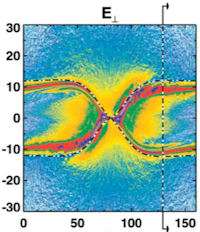
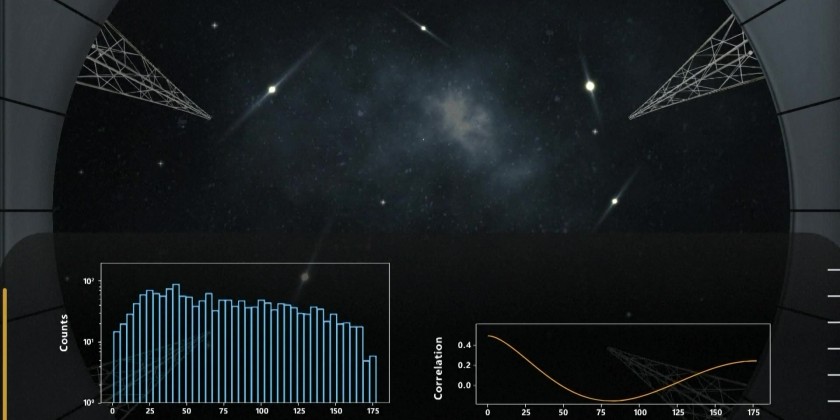
Data from NASA's Polar spacecraft, circa 1998, provided crucial clues to finding magnetic X-points.
A favorite theme of science fiction is "the portal" -- an extraordinary opening in space or time that connects travelers to distant realms. A good portal is a shortcut, a guide, a door into the unknown. If only they actually existed...
It turns out that they do, sort of, and a NASA-funded researcher at the University of Iowa has figured out how to find them.
"We call them X-points or electron diffusion regions," explains plasma physicist Jack Scudder of the University of Iowa. "They're places where the magnetic field of Earth connects to the magnetic field of the Sun, creating an uninterrupted path leading from our own planet to the sun's atmosphere 93 million miles away."
Observations by NASA's THEMIS spacecraft and Europe's Cluster probes suggest that these magnetic portals open and close dozens of times each day. They're typically located a few tens of thousands of kilometers from Earth where the geomagnetic field meets the onrushing solar wind. Most portals are small and short-lived; others are yawning, vast, and sustained. Tons of energetic particles can flow through the openings, heating Earth's upper atmosphere, sparking geomagnetic storms, and igniting bright polar auroras.
NASA is planning a mission called "MMS," short for Magnetospheric Multiscale Mission, due to launch in 2014, to study the phenomenon. Bristling with energetic particle detectors and magnetic sensors, the four spacecraft of MMS will spread out in Earth's magnetosphere and surround the portals to observe how they work.
Just one problem: Finding them. Magnetic portals are invisible, unstable, and elusive. They open and close without warning "and there are no signposts to guide us in," notes Scudder.
Actually, there are signposts, and Scudder has found them.
Portals form via the process of magnetic reconnection. Mingling lines of magnetic force from the sun and Earth criss-cross and join to create the openings. "X-points" are where the criss-cross takes place. The sudden joining of magnetic fields can propel jets of charged particles from the X-point, creating an "electron diffusion region."
To learn how to pinpoint these events, Scudder looked at data from a space probe that orbited Earth more than 10 years ago.
"In the late 1990s, NASA's Polar spacecraft spent years in Earth's magnetosphere," explains Scudder, "and it encountered many X-points during its mission."
Because Polar carried sensors similar to those of MMS, Scudder decided to see how an X-point looked to Polar. "Using Polar data, we have found five simple combinations of magnetic field and energetic particle measurements that tell us when we've come across an X-point or an electron diffusion region. A single spacecraft, properly instrumented, can make these measurements."
This means that single member of the MMS constellation using the diagnostics can find a portal and alert other members of the constellation. Mission planners long thought that MMS might have to spend a year or so learning to find portals before it could study them. Scudder's work short cuts the process, allowing MMS to get to work without delay.
It's a shortcut worthy of the best portals of fiction, only this time the portals are real. And with the new "signposts" we know how to find them.
The work of Scudder and colleagues is described in complete detail in the June 1 issue of the Physical Review Letters.
A new ScienceCast video explains how hidden portals form--and how we can find them.
Fly over the 'Grand Canyon' of Mars in high-resolution orbiter imagery
Fly over the 'Grand Canyon' of Mars in high-resolution orbiter imagery
See the 2,500 mile-long (4000 km) Valles Marineris in imagery captured the Mars Reconnaissance Orbiter. Global topography: NASA/GSFC CTX global mosaic: NASA/MSSS/Caltech/ CTX topography: NASA/MSSS/USGS HiRISE: NASA/U.Arizona/USGS/Amazon
Moses & the Feathered Serpent: Did the Hebrew Lawgiver Secretly Inspire a Mexican Myth?
Moses & the Feathered Serpent: Did the Hebrew Lawgiver Secretly Inspire a Mexican Myth?
Moses, the ancient Hebrew Lawgiver, is certainly never associated with Mexico in any traditional texts, either religious or not, in either the Old or New Worlds. So when a Vermont pastor named Ethan Smith proposed in an 1825 book that Moses may have provided the basis for the Mexican legends of Quetzalcóatl, the famous “Feathered Serpent”, it seemed a radical theory to say the least.
He writes: “Though their ancient ‘legislator’ is called by a name importing the serpent of green feathers; yet he was an ancient man, a white man and bearded; called by Montezuma, a saint, who led them to this country, and taught them many things … Who could this be but Moses, the ancient legislator in Israel?”
The following is an excerpt from the new book Moses in Mexico, which explores this hypothesis.
The Aguada Fénix Connection
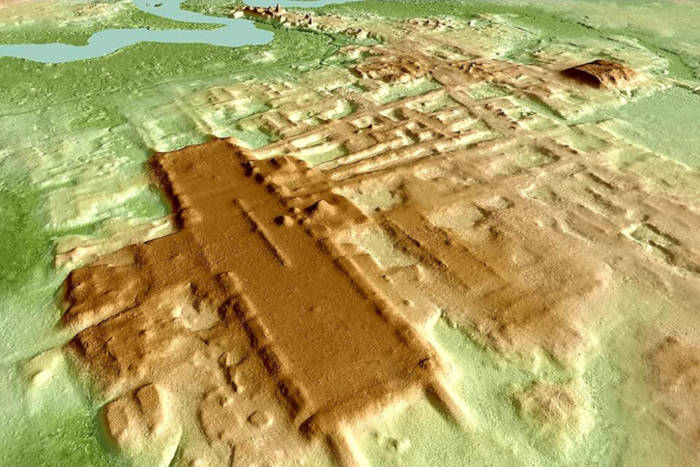
Hundreds of previously-unknown ancient settlements have been discovered recently in Mexico, and their apparent antiquity has forced archaeologists to rethink how civilization evolved in the New World. Hiding under a dense jungle canopy, the ruins of once-massive monumental stone constructions were detected using a sophisticated new survey technique called LiDAR. Who had built these structures, and when? The largest and most mysterious was called Aguada Fénix, the “Reservoir of the Phoenix”. It appeared to be oriented towards the rising sun on certain days of the year in February and October.
In a 2020 Nature article, Takeshi Inomata and his team explain how they found these sites:
“We describe an airborne LiDAR survey and excavations of the previously unknown site of Aguada Fénix (Tabasco, Mexico) with an artificial plateau, which measures 1,400 m in length and 10 to 15 m in height and has 9 causeways radiating out from it. We dated this construction to between 1000 and 800 BCE, while charcoal samples from the earliest deposits yielded dates of 1250–1050 BCE. To our knowledge, this is the oldest monumental construction ever found in the Maya area and the largest in the entire pre-Hispanic history of the region.”
LiDAR image of the ancient Maya site of Aguada Fénix, ~1000 BCE. The sprawling platform stands between 33 and 50 feet tall and measures almost a mile long.
Meanwhile, a 2023 study of the settlements’ solar alignments revealed:
“the distribution pattern of dates marked by solar alignments indicates their subsistence-related ritual significance … and represent the earliest evidence of the use of the 260-day calendar.”
These discoveries have forced a rethinking of the history of the New World. Where and when did civilization truly begin? At what point do we see the most accelerated cultural development? Was there a linear trajectory of development, or did it experience any burst of particular magnitude at any point that cannot be explained via standard cultural mechanisms?
There is yet another peculiarity about Aguada Fénix, the largest and earliest Maya structure: its orientation is skewed slightly south of east. While this does not immediately appear to connect with any obvious astronomical occurrence, such as the equinoxes, solstices, or minor or major lunar standstills - it is the same angle of orientation as observed at Tell-El Amarna, the ancient city of Pharaoh Akhenaten in Egypt (specifically between the Small Aten Temple and the Royal Wadi east of the city). Along this angle for twice a year in February and October the king could watch the Aten sun disk rise directly through the Royal Wadi, forming a symbol for the akhet (a hieroglyph that represented the sun rising between two mountains).
We therefore have not only massive stone buildings, which would have required a substantial amount of organized labor to complete, dating from the very earliest years of Mesoamerica culture, but they seem to share specific solar alignments that were used by Akhenaten in Egypt. What is going on here? What inspired a group of hunters and gatherers to suddenly construct the largest religious structures in the region’s history, oriented towards sunrises along the same angle as Akhenaten’s architecture in Egypt, and dating from not long after his historical period? Could it be that Akhenaten-Moses once visited Mesoamerica in the distant past? Could Moses have come to Mexico?
Sunrise over the jungles of Mexico, at the Maya site of Yaxuna, Yucatan. Observing sunrises on certain days in February and October were key aspects of the early 260-day calendar, which may have originated at the Egyptian site of Amarna.
(By author.)
Akhenaten was Moses … And Quetzalcóatl?
My first book Moses Restored (2017) argued how the Egyptian Pharaoh Akhenaten became the Hebrew Lawgiver Moses. It was the first complete biography of this astounding human being. It aimed to show how he continued his religious revolution, by taking the Israelites out of Egypt to Canaan, and laying the foundation for what would become the Judaism we know today.
The history of his kingship was concealed in the early chapters of the Book of Exodus, creating a “Moses mystery” that cried out for a solution. Fitting Moses to Akhenaten solves this mystery, along with so many others, and perhaps only one glaring enigma remains: his death. The Torah ends, as does Moses Restored, with the death of its central character Moses, just outside the boundaries of the Promised Land of Israel, as narrated in the book of Deuteronomy 34: 5-7:
“And Moses the servant of the Lord died there in Moab, as the Lord had said. He (the Lord) buried him in Moab, in the valley opposite Beth Peor, but to this day no one knows where his grave is. Moses was a hundred and twenty years old when he died, yet his eyes were not weak nor his strength gone.”
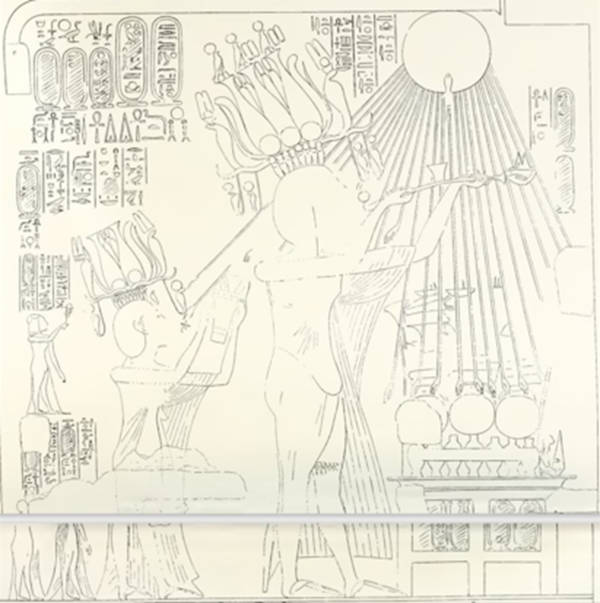
Akhenaten wears a crown he developed himself, based on the Atef crown of Osiris. It is festooned with sun discs and protective uraei cobras wearing ostrich feathers, literal feathered serpents! Could these motifs have prefigured the Feathered Serpent of Mexico? He burns incense before the sunrise, similar to some Maya priests today. (Plate VIII, Davies, N. de G., The Rock Tombs of El Amarna: Part II, The Tombs of Panehesy and Meryra II, London, Egypt Exploration Fund, 1905).
The book Moses in Mexico continues the amazing story of Moses. What, you ask? Continues the story? Didn’t Moses die? What’s going on? How can his story continue? Well, as will soon become apparent, the death of Moses is as mysterious as his origins. First, as the verse above makes clear, no human buried Moses, but the Lord himself did it. Second, no human knows the location of his grave. Third, despite Moses being of advanced years, his eyes were not weak nor was his strength gone. This seems to suggest that he was not ready to die.
View from the Small Aten Temple at Amarna, the ancient city built by Akhenaten around 1350 BCE, looking east towards the desert cliffs and the distinctive opening to the Royal Wadi, which archaeologists theorize represented the first half of the akhet symbol, the glyph for mountain, djw. Twice a year in February and October the sun appears to rise through the valley opening, completing the akhet symbol and forming a solar hierophany.
(By author. ADDED: The akhet hieroglyph, 2023. By Mazapan3210.)
We therefore have three aspects of the supposed “death” of Moses that immediately seem to cast doubt upon it. These unusual aspects have not gone unnoticed, and several scholars have brought into question whether Moses died as depicted in the Bible or if he actually lived on. Could the Bible be hiding yet another Moses mystery for us to rediscover? I believe the answer is yes, and Moses in Mexico represents the explanation for that answer. It chronicles the final stage of Moses’ life, which I believe brought him to the shores of the New World, specifically Mexico.
It was there, I believe, that he became the mythical hero remembered so fondly across Mesoamerica: the Feathered Serpent, Quetzalcóatl. It was there that his two previous lives, that of a rebellious Pharaoh of Egypt and a renegade Israelite leader and judge, collided to create a new manifestation of his previous likes and interests. It was there that his presence over three millennia ago created such an impact that memories of it rippled out across time and space, creating a strange Pan-Mesoamerican cultural form that retained its basic shape across thousands of miles and years, and has continued to baffle scholars to this day.
AI-generated image of a hypothetical Pharaoh Akhenaten in Mexican graffiti style.
(By author.)
What initiated this sweeping and bold new cultural program in Mexico after 1250 BCE, a program which saw the origins of so many of its diagnostic features, such as: intricate creation cosmologies, urban plans, monumental stone architecture oriented towards sunrises, the priesthood, writing, divine kingship, and even acts of revolution such as the mutilation and decapitation of idols and statues? I believe that it was Moses, who lived in the decades before 1250 BCE.
I believe that by understanding that Akhenaten became Moses, we can understand how Moses became Quetzalcóatl. Without understanding his youth and kingship, obscured in the Bible but nevertheless manifested in hundreds of tiny clues, we cannot understand how or why Moses would have desired to become the Feathered Serpent.
Ultimately, the idea of the historical Moses becoming the historical Quetzalcóatl has never been properly scrutinized because the character of Moses himself has never been properly scrutinized. Scholars have yet to paint in the details of his youth and adult life, before he became the desert exile in Midian. These details are infuriatingly sparse in the Bible. However, if we understand that the Bible was trying to conceal the fact that Moses had once been a King of Egypt (to avoid unwanted future questions), and that Akhenaten had lived on to become Moses, then we can begin to clearly see how he may have carried on to become Quetzalcóatl, bringer of civilization to the New World.
For instance, Quetzalcóatl has been called the Lord of Dawn, he combined serpent imagery with that of birds, feathers and flight, and was remembered as a lawgiver and bringer of civilization to the New World. Comparing this to Moses certainly yields interesting connections, since Moses was associated with giving the Law as well as serpent imagery, most famously regarding the Bronze Serpent he set up in the desert. But was Moses called the Lord of the Dawn? No. Was he associated with bird imagery? Not particularly.
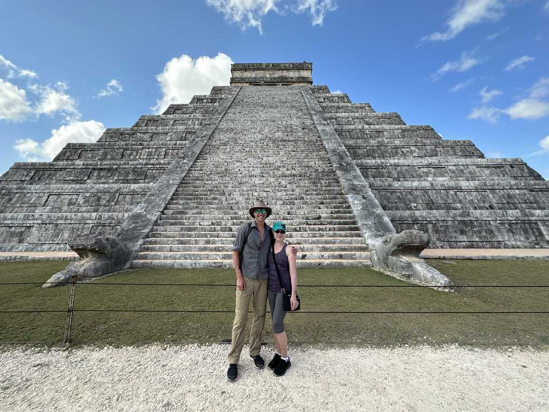
The author and his sister Jennifer Stephenson in front of the Maya Pyramid of the Feathered Serpent at Chichén Itzá, Mexico. Mexican architecture is replete with depictions of feathered serpents, as well as solar hierophanies.
(By author.)
However, if Moses is connected to his former life as Akhenaten, then these aspects all assume powerful meanings. First, Akhenaten worshiped one lord called the Aten, the sun disk, called the “Lord of the Dawn”. Second, Akhenaten was strongly associated with bird imagery, as I have chronicled in a previous article called “Akhenaten the Bird King”. Third, I suggested in another article that Akhenaten was attempting to portray himself as a “new Osiris”, having discarded and outlawed the worship of the god of the dead.
Osiris, in Egyptian mythology, was Egypt’s first king, who once travelled the world bringing its peoples civilization and knowledge. He taught agriculture and law, arts and crafts, stone architecture, writing and religion. He was murdered by his jealous brother Set, resurrected by his sister and wife Isis as Egypt’s first mummy, and finally became the god of the Dead. It is therefore not surprising that Akhenaten, who once considered himself a “new Osiris” would have ultimately wished to travel across the ocean, to the west, to parts unknown, bringing and teaching knowledge and the civilizing arts to whomever he encountered.
It will be difficult at times to clearly see the trajectories of ideas from Akhenaten to Moses to Quetzalcóatl. The attributes of Quetzalcóatl in particular are difficult to quantify and classify because they have been much distorted through history, and there are no ancient written sources from Mesoamerica that clearly outline his life and to which we may turn for a single, unbiased account.
Rather, the information concerning Quetzalcóatl comes to us as fragments of memories and shards of stories, from Spanish-influenced codices and enigmatic stone architecture devoid of writing and lacking exact context or meaning. While these challenges appear daunting, they are not insurmountable. The fact that I have already connected Akhenaten to Moses will only help to bolster my argument that he ultimately became Quetzalcóatl.
By understanding that he was, at heart, a man of change, who constantly shifted and evolved his ideas of God, we can better understand how he could have adopted the persona of the Feathered Serpent. Just as the snake sheds its skin, so too did Akhenaten shed his many guises. First, as a youth when he shed his given name of Amenhotep IV, adopting a strange name that he seems to have invented himself: Akhenaten, “Shining Spirit of the Aten”. During his reign, he shed several older names of the Aten, becoming more and more abstract in his naming of his one God.
Six AI-generated images of the same person, Pharaoh Akhenaten, at six distinct stages of his life.
(By author.)
When he disappeared from Egypt after seventeen years on the throne, I believe he did not die as is popularly assumed, but shed his Egyptian past all together to become a new persona, Moses. Finally, decades later, when he had succeeded in bringing the Israelites to the Promised Land, I suggest he shed his persona once again, and adopted yet another new guise.
This one fused his beloved uraeus cobra, protective serpent that sat above the brow of every Egyptian king, with the feathers of his three favorite birds: the bennu bird of immortality (the Phoenix to later Greeks), the hawk of Ra-Horakhty, and the akh northern bald ibis. By combining serpents with birds, an idea already being developed in Egypt at that time (for example, in the tomb of Tutankhamun), I believe he created a powerful new image which would have left an indelible mark in the consciousness of New World populations for millennia: the Feathered Serpent.
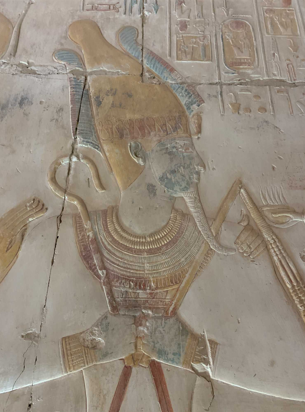
Relief of Osiris from the Temple of Seti I, Abydos, Egypt. According to Egyptian mythology, Egypt’s first king Osiris sailed around the world spreading knowledge, exactly like the Feathered Serpent was believed to have later done.
(By author)
Possible Origin of the Feathered Serpent Myth:
In the guise of the Feathered Serpent, Moses could attempt to teach the peoples of the New World everything he knew, finally becoming the New Osiris he had always dreamt of becoming in his youth. By piecing together the vague and distant memories of Quetzalcóatl discernible from the Spanish codices along with physical clues from the archaeological record, we can begin to form a picture of what the historical Quetzalcóatl may have once been like when he arrived on the shores of Mexico from a distant land to the East.
Remarkably, he comes across exactly like how I would expect Akhenaten-Moses to come across: as a focused, intense religious leader, a king, a high priest, who was chaste, moral, ethical, just and wise, who taught reading, writing, the calendar, and how to live a holy and respectful life following divine laws. He also likely had a paradoxical dark side that called for periodic capital punishment and sacrifice when his religious edicts were not obeyed.
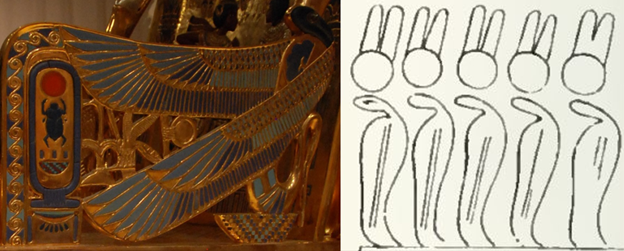
LEFT: Detail of the side of Tutankhamun’s golden throne showing the winged cobra motif common in royal New Kingdom art of the time. By Yveke, 2009. RIGHT: The image of the uraeus (i.e. protective cobra of the king) was common at Amarna, where they were often shown wearing sun disks and ostrich feathers, making them quite literally feathered serpents. They demonstrate that Akhenaten loved this blended magical motif for many years before he used it in Mexico.
(Left; Yveke/CC BY-SA 2.0, RIGHT: (Plate X, ‘Panehesy decorated by the King’, Davies, N. de G., The Rock Tombs of El Amarna: Part II, The Tombs of Panehesy and Meryra II, (London, Egypt Exploration Fund, 1905).
Moving beyond simple parallelism, connecting Akhenaten to Moses and ultimately to Quetzalcóatl requires an understanding of their temporal contexts. For example, Elliot Smith, the pastor who connected Moses to Quetzalcóatl two centuries ago, exclusively used parallelism. He argued that Native Americans were descendants of the Lost Tribes of Israel, who migrated to North America circa 720 BCE, after their defeat by the Assyrian Empire. This contradicted his argument that Moses was actually Quetzalcóatl, because Moses lived centuries before the Assyrian defeat. Smith was forced to conclude that only the memories of Moses were transferred to the Feathered Serpent myth encountered by the migrating Israelites, as it could not have been based on the historical Moses.
Conversely, I argue that yes, it actually was the historical Moses who traveled to the New World and became the Feathered Serpent, in the decades before 1250 BCE. No one has yet put forward any cogent argument that explains how Moses could have become Quetzalcóatl, and more importantly, why he would have wanted to become the Feathered Serpent. I believe it is only by understanding his past as Akhenaten - the “Bird King” who was protected by fiery serpents and wings and who cast himself as a “New Osiris” - that we can truly understand his final stage of life: the bearded Feathered Serpent who sailed across the Ocean.
Moses in Mexico argues that Moses in the Torah and the Bible did not die as depicted, but lived on, unbeknownst to the Israelites, who had assumed he had died. He lived on to bring ethics, rules, and religion to the peoples of the New World, creating yet another entirely unique and astounding new persona. These clues lie scattered across Mesoamerican jungles and ruins, throughout Spanish codices and Maya records, and within the deep memories of the people who still call that wonderful land home. Others lie buried in the sands of Amarna, or even hiding in plain sight in church stained glass windows, which so often feature Moses’ bizarre “feathered” serpent.
Who was this most inexplicable creature of myth and history, an aged prophet with a monstrous visage that needed concealment, a sage wizard and magician associated with the dawning sun and the wind, bringer of culture and religion, writing and law, who was wiser and more wonderful than any person in memory? Does a historical seed lie buried at the heart of the strange and twisted tree that is Quetzalcóatl mythology? Could a real human being have journeyed from “across the sea” (ch’aqa palow), as the Maya legends claim, bestowed culture upon the people, and then returned to the east, to “his father the Sun”, over three thousand years ago?
AI-generated image of King Quetzalcóatl in 13th century BCE Mexico.
(By author.)
If so, then he must have been an intellectually-towering individual, a man of immense insight and wisdom, ambition and drive, religious passion and devotional zeal. Placing a headdress of resplendent green quetzal feathers upon his head, incense smoke curling around his head, there can be no better candidate for the original Quetzalcóatl than Moses himself, Pharaoh Akhenaten.
This article is an an excerpt from the new book Moses in Mexico)
Top image: Montage (by author) of Akhenaten, Moses, and the Feathered Serpent, first priest-king of ancient Mexico. LEFT: Statue of Akhenaten from Karnak, 1355 BCE (By José-Manuel Benito Álvarez/CC BY-SA 2.5), CENTER: Moses Showing the Ten Commandments (By Gustave Doré, 1865/Public Domain), RIGHT: an AI-generated image of Moses as Quetzalcóatl in Mexico in the 13th-century BCE.
Jonathon Perrin is the author of five books on Amazon. His newest is Moses in Mexico (2025). A sequel to Moses Restored (2017), it examines the provocative theory that Moses sailed to the New World over three thousand years ago to become the Feathered Serpent of myth and legend. Visit www.jonathonperrin.com for more.
RELATED VIDEOS
The Legend of Quetzalcoatl: The Feathered Serpent God
The Secret of the Serpent in Genesis: What the Hebrew Text Reveals Will Shock You!
Tweny years ago, the New Horizons spacecraft launched from Cape Canaveral. Eight and a half years later, the whole world was talking about it when it transmitted the first-ever close-up images of Pluto’s surface back to Earth. However, its adventures actually began much earlier.
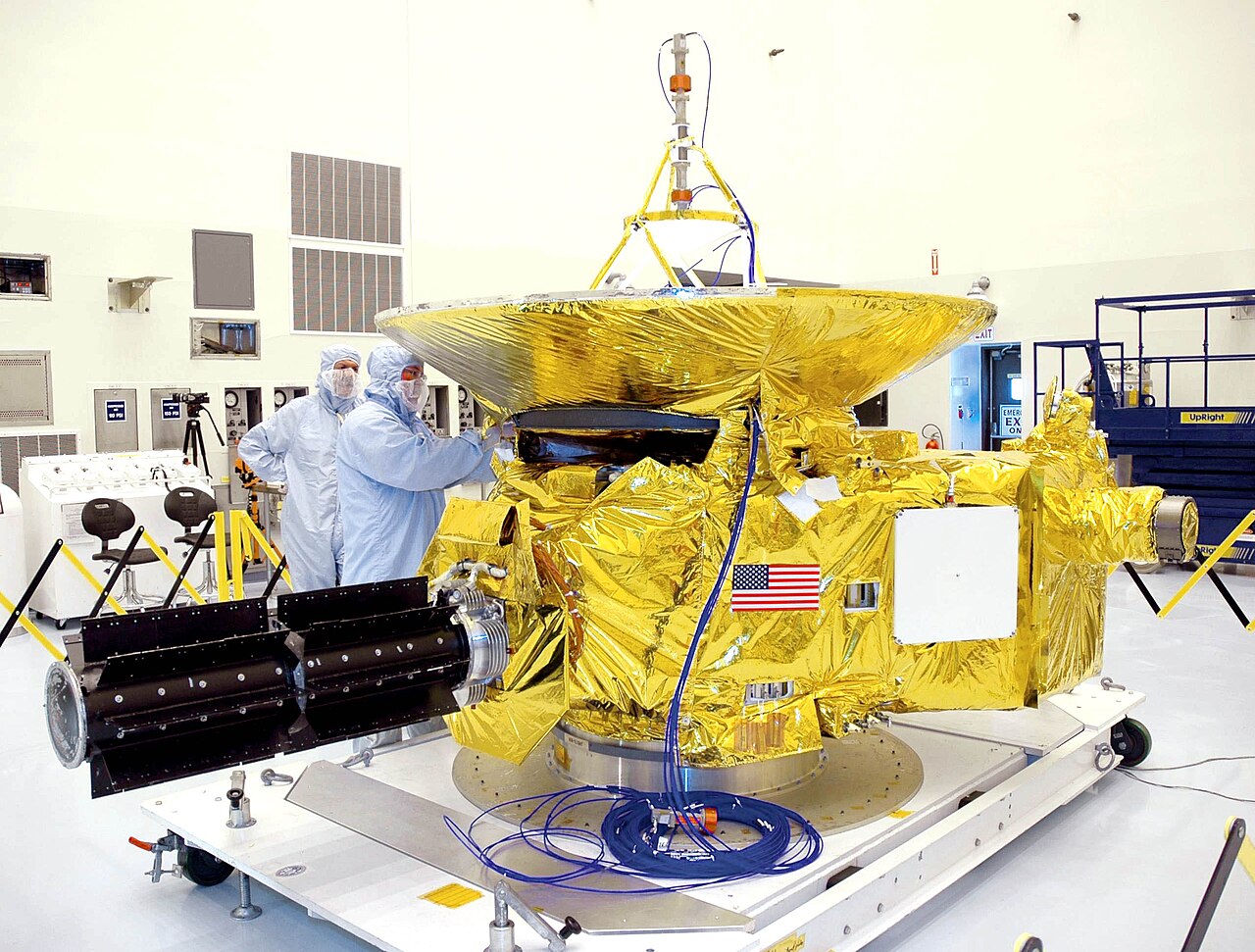
New Horizons spacecraft. Source: www.space.com
Who is interested in Pluto?
January 19 marks the 20th anniversary of the launch of the Atlas 5 rocket from the US Space Force base, which carried the New Horizons spacecraft beyond Earth’s gravitational sphere. Nowadays, it is mainly talked about in connection with the discoveries it made during its brief flyby of Pluto.
However, in reality, the interesting adventures of the probe designed to explore Pluto began long before the summer of 2015 and even long before its launch, although these adventures were a little unusual.
First, it should be noted that the first spacecraft could have reached Pluto several decades earlier. Voyager 1 could well have been that spacecraft. At least in the 1970s, during the mission planning stage, there was an idea to perform a gravitational maneuver during the flyby of Saturn, which would allow the probe to be directed towards the object that was then considered the ninth planet of the Solar System in a few years.
Voyager-1 could have been the first spacecraft to fly by Pluto. Source: www.planetary.org
However, at that time, Pluto was considered too distant and uninteresting, so preference was given to a trajectory that allowed for better exploration of Saturn’s largest moon, Titan. However, over the next 15 years, everything changed dramatically. In 1978, Pluto’s moon Charon was discovered, unusually large and close to the planet, and in 1985, its atmosphere was discovered. All this was already worth launching a spacecraft to what seemed at the time to be the most distant body in the Solar System.
In 1989-90, NASA established a working group that developed a project called Pluto 350. It was supposed to be a truly epic mission, designed to last 15 years. Initially, the spacecraft was to head for Venus and Mercury to gain speed, then perform another gravitational maneuver near Jupiter, and only then head for Pluto.
Such a cunning plan was necessary because the speed that can be achieved by the spacecraft during launch is quite limited, and the entire time it flies to Pluto, the Sun’s gravitational pull will slow it down. It will reach its destination, but it will take several decades.
of Trajectorythe New Horizons spacecraft
That is why, without an intermediate point in the form of Jupiter, which, with the right calculations, can be turned into acceleration, it is impossible to do without. But 15 years was still too long, so NASA’s Jet Propulsion Laboratory developed another plan called Pluto Fast Flyby. It involved flying two small spacecraft for a total of seven years and performing a gravitational maneuver near Jupiter. In fact, this plan was later implemented during the New Horizons mission.
Is the flight to Pluto justified?
However, at that very moment, in 1993, after the loss of Mars Observer, the number of people willing to pay $1 billion – the estimated cost of the mission to Pluto at the time – dropped sharply. Instead, scientists’ interest only grew. The fact is that in 1987, the planet passed its equinox, and in 1989, it passed its perihelion, i.e., the point in its orbit closest to the Sun.
In addition, Pluto’s orbit is not only highly elongated but also significantly inclined to the ecliptic. This means that the most favorable moment for launching a spacecraft from Earth was in the second half of the 1980s. This crazy celestial body completes a full revolution around the Sun in 247 years.
Pluto’s orbit. Source: astrobites.org
This means that with each passing year, the spacecraft’s flight path would become longer and higher above the plane in which the rest of the planets in the Solar System revolve. This would mean higher costs and less equipment that could be delivered to the target.
In an attempt to save the mission, a desperate option was proposed: it would be launched by a Russian rocket, and Germany would provide funding in exchange for the opportunity to place its own sub-probe on board. The plan was to drop it onto one of Jupiter’s moons as the spacecraft flew through the gas giant’s system.
So, in discussions about the flight to Pluto, the topic arose that on its way there, the spacecraft should not only “sleep” but also explore something interesting as it flew past. But the plan did not work out, and in the mid-1990s, the project was abandoned.
Pluto Kuiper Express. Source: Wikipedia
But not for long, because at that very moment, more and more new objects began to be discovered beyond Neptune’s orbit. The flight plan to Pluto was taken out of the drawer again and supplemented with a section in which, after exploring the planet, the probe was to fly further and take a closer look at one of the newly discovered asteroids.
The mission was renamed Pluto Kuiper Express, and only one of the two previously planned spacecraft remained, but this did not help the project. In 1999, it was rejected again. But this time, the public was on the side of the scientists, and soon NASA had to announce a new competition, which the New Horizons won: the Shedding Light on Frontier Worlds project from the Johns Hopkins University Applied Physics Laboratory. It was this project that was implemented.
New Horizons design
Ready for launch, the spacecraft weighed 478 kg, of which 77 kg was fuel, and was about the size of a small car. It was propelled by four main rocket engines and 12 orientation engines. All of them ran on hydrazine as a single fuel.
The payload consisted of a whole set of scientific instruments. The Alice camera provided observation of objects and spectroscopy in the ultraviolet range, Ralph performed similar studies in the infrared part of the spectrum, and the main LORRI telescope was responsible for the visible range.
NewHorizons collection. Source: Wikipedia
Also on board were the SWAP solar wind analyzer and PEPSSI. These two instruments captured all the high-energy particles that New Horizons encountered during its flight. They were designed to answer the question of how strongly solar radiation affects objects at such a distance from the sun.
The VBSDC device was responsible for studying much larger particles that the spacecraft might encounter. Also on board was the REX radio spectrometer, designed to study Pluto’s atmosphere by measuring the signal from Earth as it passed through it.
All of this was controlled by the onboard computer. Signals were sent to it from Earth via a communication system. Inside New Horizons, the temperature was maintained between 10 and 30°C.
All this required a lot of energy. Solar batteries could not be used due to Pluto’s considerable distance from the Sun. Therefore, a radioisotope thermoelectric generator with 72 plutonium “pills” was used to power New Horizons. It provided 245 watts of power.4
New Horizons radioisotope thermoelectric generator. Source: Wikipedia
Flight to Pluto
When New Horizons finally launched into space on January 19, 2006, it was launched using the most powerful modification of Atlas 5, called 551. It has five solid-fuel boosters. Thanks to this, the spacecraft was able to accelerate to 12.4 km/s. Then the acceleration unit kicked in, bringing the speed up to 16.207 km/s.
New Horizons headed for Jupiter, but only reached it a year later, in February 2007. A lot happened during that time. Back in February 2006, engineers tested the spacecraft’s cameras and used them to photograph an asteroid that at the time was known only by its number, 132524. The distance to it was then 102,000 km. Thus, at the beginning of its mission, the spacecraft enriched our collection of celestial bodies photographed from close range.
However, on August 24 of the same year, an event occurred that was significantly less pleasant for the spacecraft team. The 26th General Assembly of the International Astronomical Union adopted a new classification of bodies in the Solar System. The reason for this was the discovery of new bodies beyond Neptune’s orbit, which gave new impetus to the study of Pluto.
Lava fountain above Io. Source: Wikipedia
Ironically, under the new classification, Pluto was classified not as a large planet but as a dwarf planet. Eris’s discoverer, Michael Brown, was openly delighted about this. However, New Horizons team leader Alan Stern called the new classification complete nonsense.
This assessment is not surprising. If the new classification had been adopted a few years earlier, it would have been difficult for the New Horizons team to prove the importance of the project. However, the spacecraft was already flying in space and in September 2007 even began observing Jupiter.
The flyby itself, with its gravitational maneuver, took place in February 2007, and it was an extremely successful moment in terms of raising the mission’s prestige. Some spacecraft had already completed their exploration of the largest planet in the Solar System at that time, while others were still on their way to it. New Horizons turned out to be its main explorer.
Arrokoth. Source: Wikipedia
The probe took numerous photographs of the planet itself and its moons. The images of the four largest moons were particularly interesting, as it photographed a lava fountain on Io shooting hundreds of kilometers into space. Jupiter’s atmosphere and magnetosphere were also studied.
The mission continues
After flying past Jupiter, New Horizons went into “sleep” mode. Every two to three months, engineers would wake it up and check the systems. This continued until it approached Pluto. Then the whole world started talking about the probe, and this lasted for several weeks. And then, like any sensation, it disappeared from the public eye again.
But the spacecraft’s scientific mission did not end there. It continued to explore trans-Neptunian objects and on January 1, 2019, flew past the asteroid Arrokoth, photographing and studying it. This is the first study of such a body, and it is thanks to it that we know what the outskirts of the Solar System look like.
And the New Horizons mission continues. The radioisotope generator is expected to operate until at least 2035. We can expect that it will make many more discoveries before then.
The year 2026 should bring us many interesting events that will go down in the annals of world space exploration, from the first manned flight to the Moon in more than half a century to new Starship tests. Here are the main space expectations for the year.
The Artemis II mission
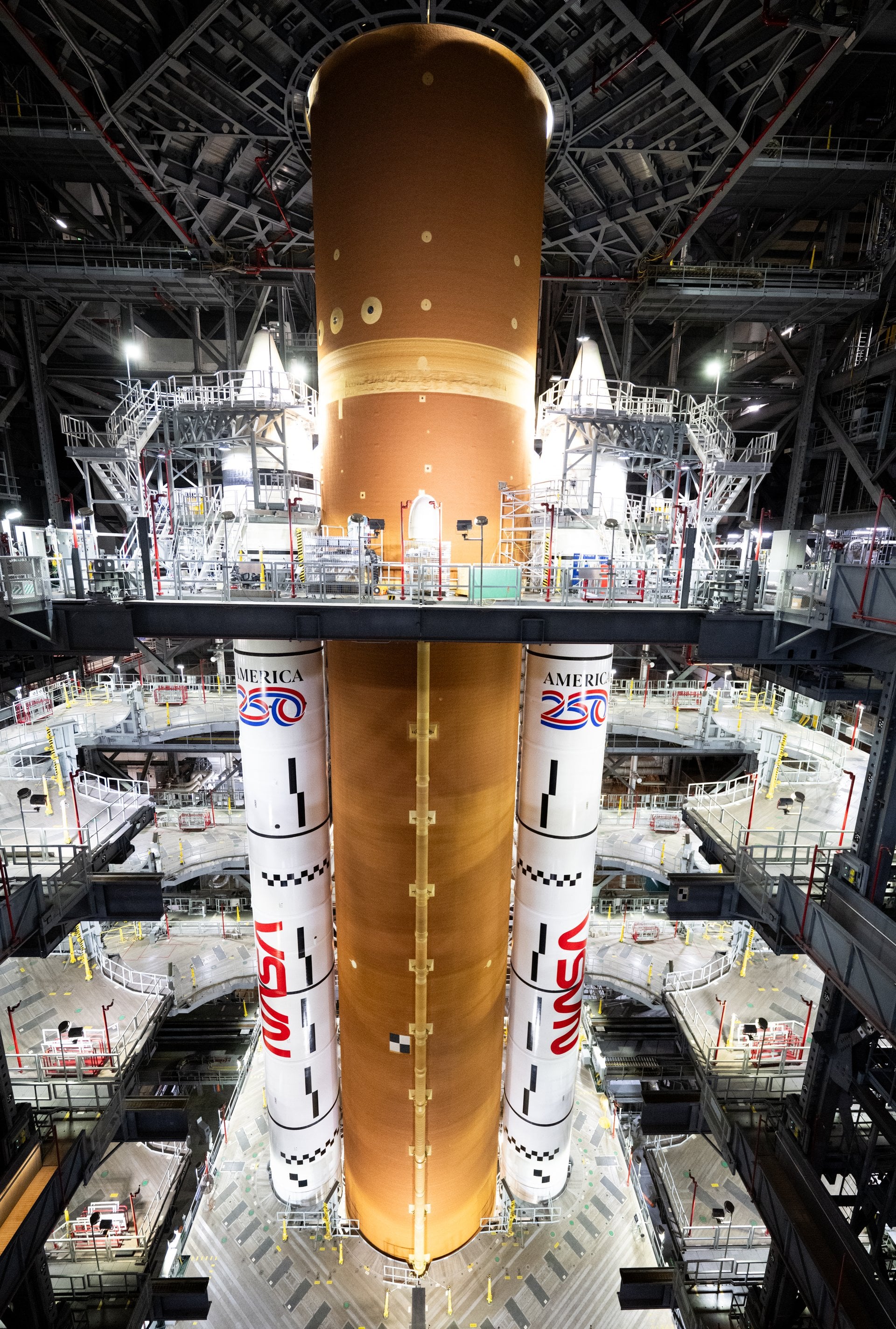
The Artemis II mission will likely be the most high-profile event of 2026. And there is hardly any need to explain why. After all, this will be the first manned flight beyond Earth’s orbit in 54 years, during which humanity will once again touch the Moon.
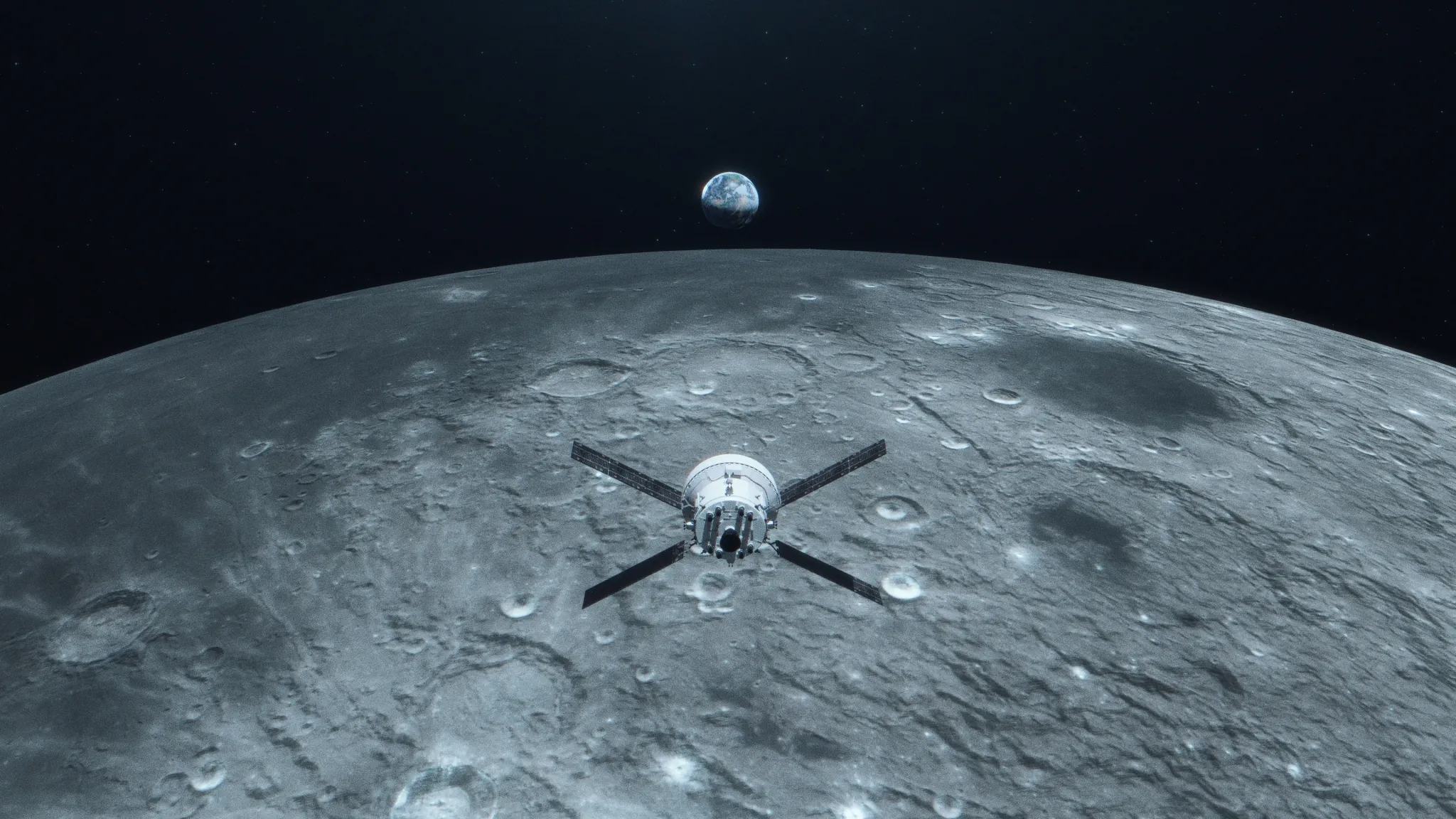
The Artemis II mission (concept). Source: NASA
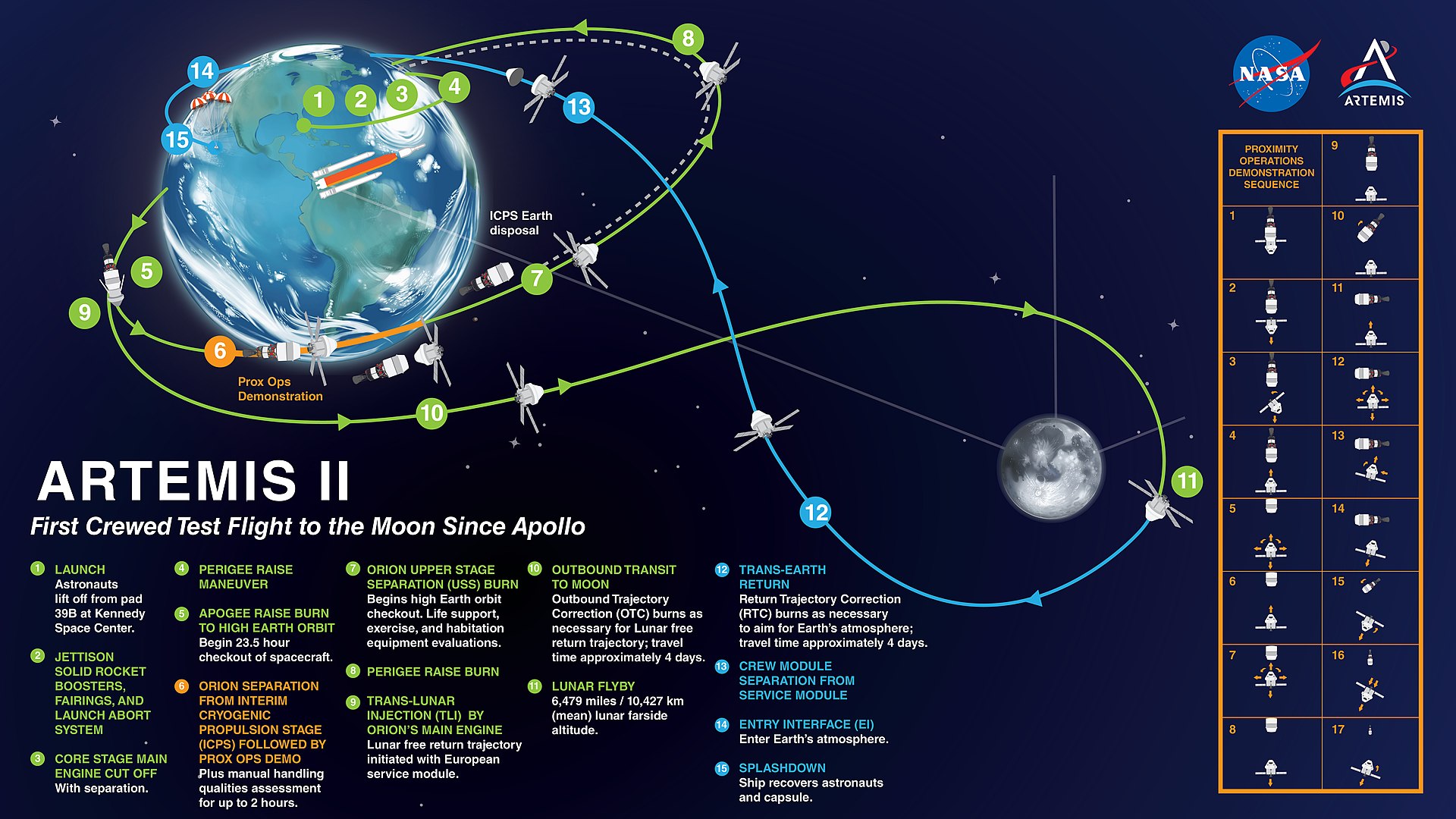
The flight plan is as follows. The super-heavy SLS rocket will launch the Orion spacecraft with four astronauts (three representing NASA and one representing the Canadian Space Agency) into Earth orbit. After making sure that all systems are operating normally, the crew will perform a maneuver that will put the spacecraft on a trajectory for a free flyby of the Moon.
On the sixth day of the flight, Orion will fly around the Moon (the minimum approach distance will be approximately 7,400 km), after which it will turn back toward Earth under the influence of the Moon’s gravity. This will eliminate the need for the expedition to use engines to change course, which should reduce the risks for the expedition. On the tenth day of the flight, the capsule with four astronauts will enter the Earth’s atmosphere and splash down.
The Artemis II mission flight plan. Source: NASA
Of course, flying around the moon is not the same as landing on it. But still, it is difficult to deny the symbolic significance of this mission. Since the Apollo program, several generations have grown up without seeing humans fly to other celestial bodies. The flight to the Moon will clearly help to raise interest in space exploration and astronautics. Artemis II will also mark the beginning of the next stage in the new lunar race between the US and China. At the moment, the launch of the mission is scheduled for February – March 2026.
The new Starship
As in previous years, the attention of all space enthusiasts will be focused on Starship. This year, SpaceX plans to begin testing a new, even more powerful modification of the super-heavy rocket, designated V3. Its first flight is tentatively scheduled for February. It will follow the same pattern as previous tests.
Transporting Starship to the launch pad. Source: SpaceX
If V3 proves to be a more reliable rocket than its predecessor, SpaceX will begin working on the next key elements needed to transform Starship from an experimental to a working system. These include reaching orbit, landing on land, and orbital refueling.
The last element is critical for the Artemis program. Without a functioning orbital refueling system, SpaceX will not be able to fulfill its obligations to NASA. As a reminder, as part of the Artemis III mission, the Starship HLS lander, which will be refueled in near-Earth orbit by tanker ships, is to land two astronauts at the south pole of the Moon.
Given the complexity and ambition of the project, it is extremely difficult to predict how successful the V3 tests will be. But one thing is certain – they will remain one of the main events of the year.
The race for reusability
For almost ten years, SpaceX was the only company with a partially reusable orbital rocket. This allowed it to take an unprecedented position in the global launch market and start building the Starlink system, which not so long ago seemed like science fiction.
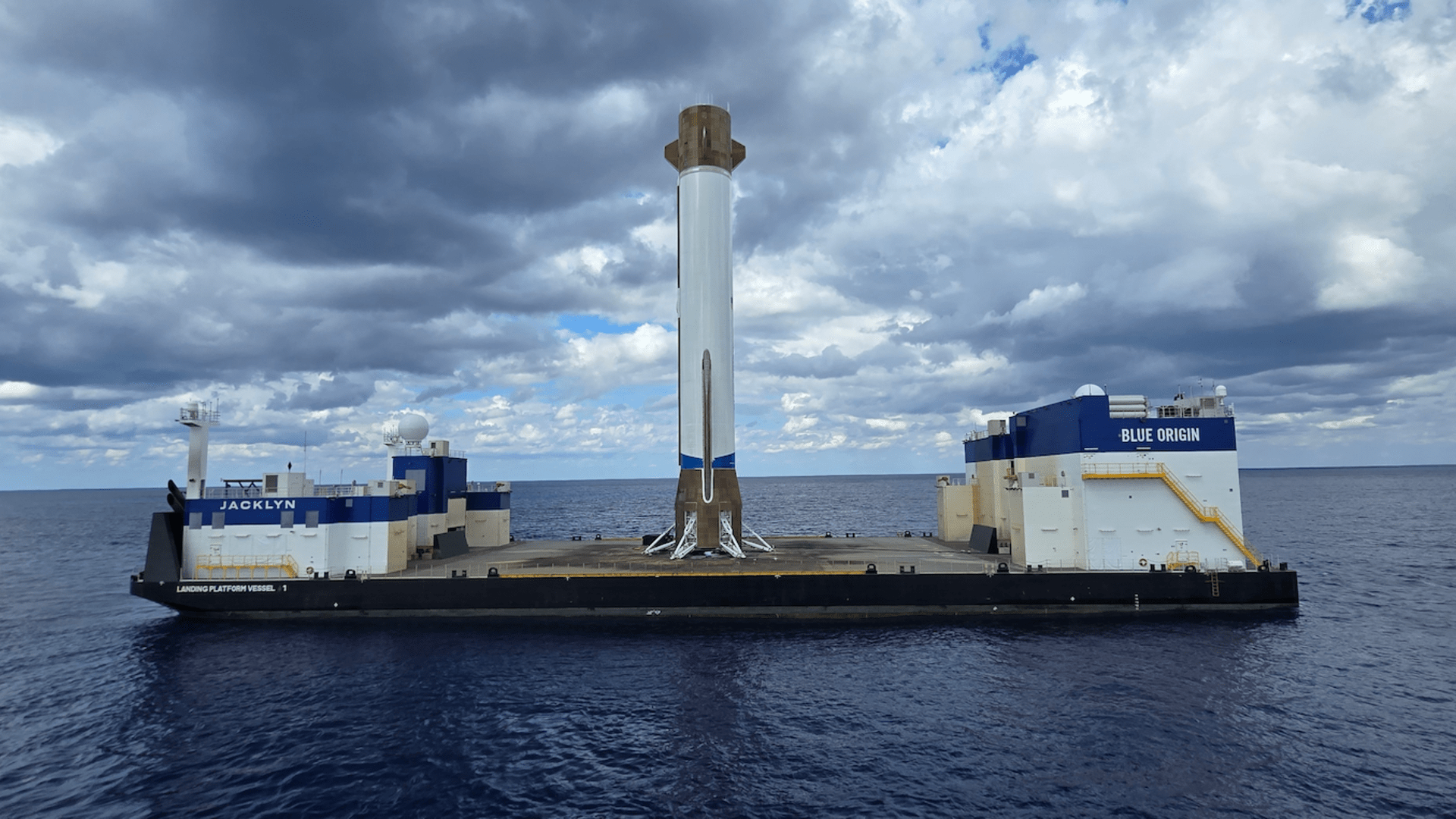
The first stage of the New Glenn rocket after landing on a barge.Source: Blue Origin
But in 2025, the situation began to change. Blue Origin became the second company in history to successfully return a rocket stage from space. The Chinese company LandSpace and the China Aerospace Science and Technology Corporation made their first attempts to land the stages of their Zhuque-3 and Long March 12A rockets. They failed – but it is clear that this is only the beginning. In 2026, they will make new attempts to return to the stages.
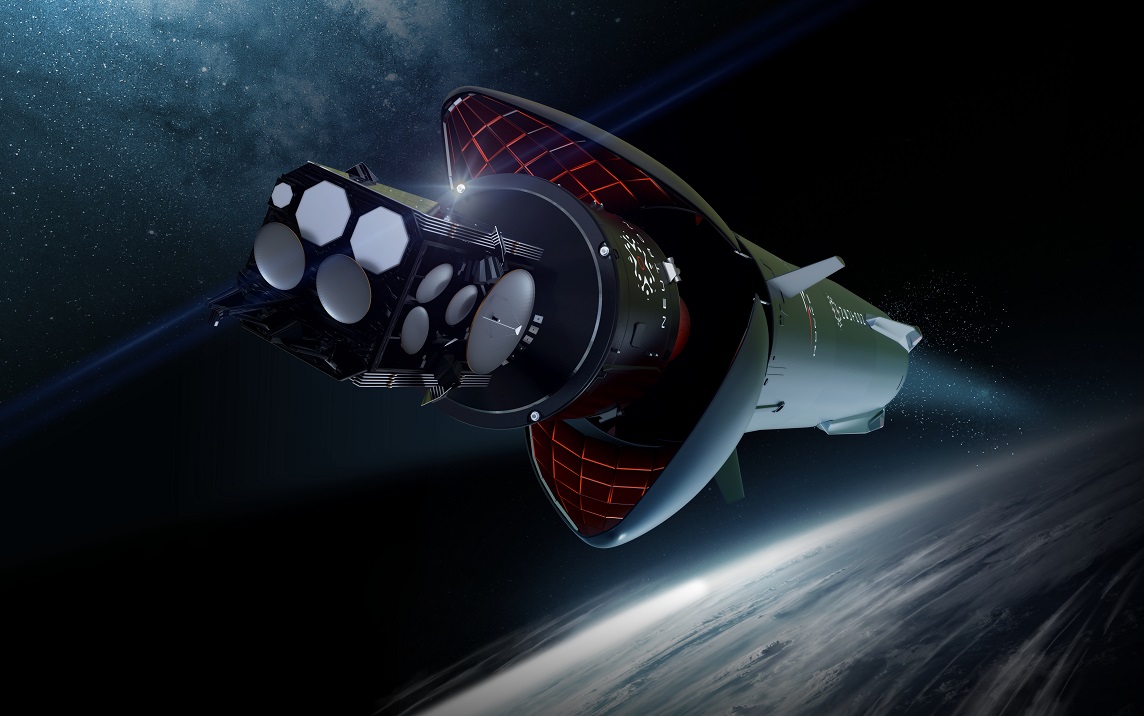
New rockets will also join the reusability race. Rocket Lab intends to launch its first medium-class Neutron carrier rocket. It features an interesting “sliding” nose cone design, which allows it to be returned to Earth together with the stage.
Artist’s impression of the Neutron rocket. Source: Rocket Lab
There are also plans to debut several other rockets with reusable first stages. These include Terran-R, Hyperbola-3, Long March 10A… Yes, the launch dates for most of them may subsequently be postponed until next year. And those rockets that do fly are unlikely to be able to return to Earth on their first attempt. Nevertheless, 2026 will likely bring us new reusable launch vehicles.
The first private orbiting station
For many years, discussions about private orbital stations did not go beyond attractive promises and concepts. Bigelow came closest to achieving this goal, even launching an experimental inflatable module that became part of the ISS. However, the company subsequently went bankrupt.
Artist’s impression of the Haven-1 orbital station. Source: Vast
Nevertheless, in 2026, we may witness the launch of the first private orbital station in history. Vast Space is attempting to accomplish this task.
Vast Space first announced its plans to build the Haven-1 orbital station in 2023. Its main difference from similar projects, which never made it past the drawing board, is its relative simplicity. While other companies typically announce complex multi-module orbital stations, Haven-1 will consist of just one 14-ton compartment with an internal volume of 80 m³, not designed for permanent human habitation. The station will rely on the Crew Dragon spacecraft’s life support system and will be able to accommodate four astronauts for 30 days.
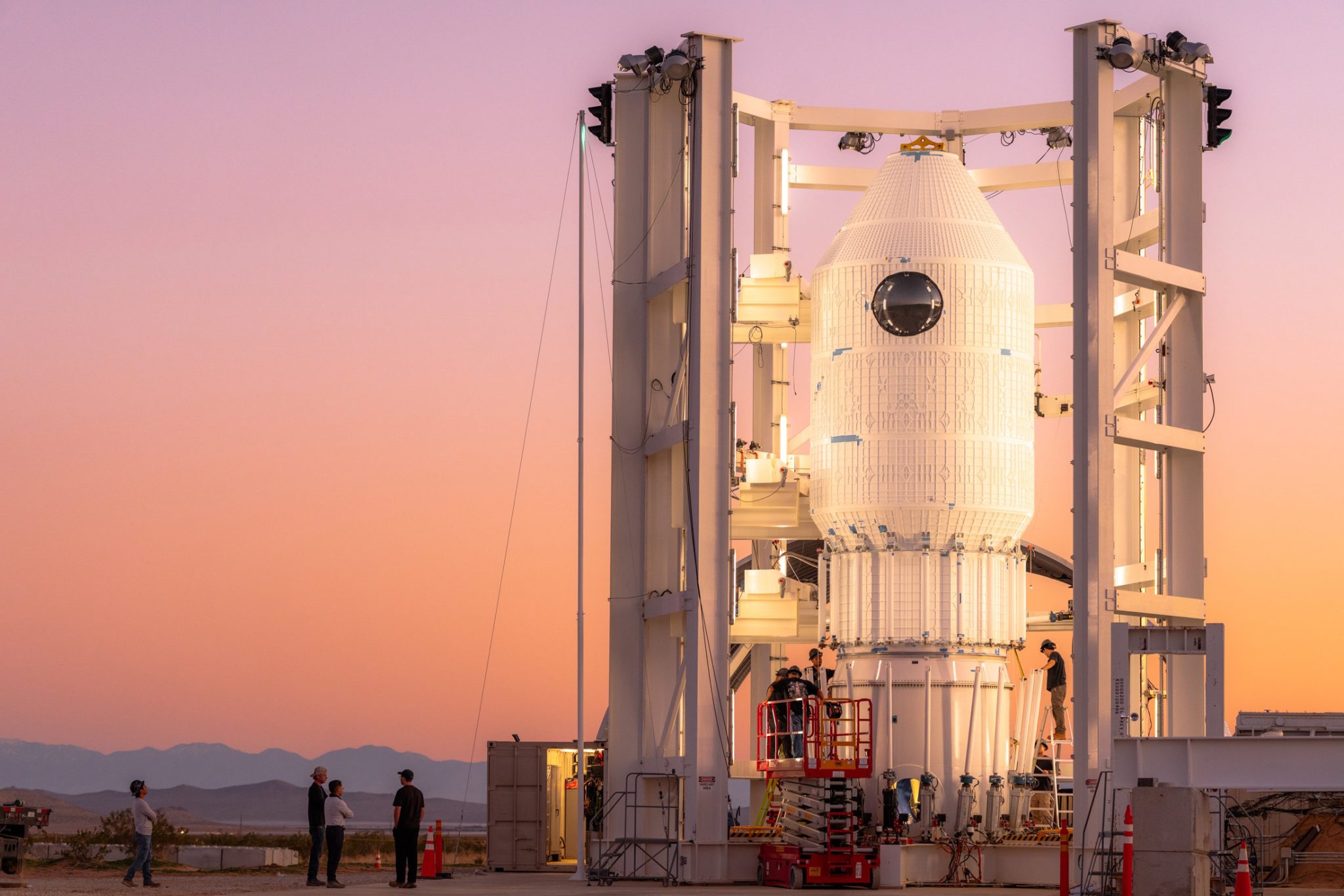
Welding of the main body of Haven-1 has been completed. Vast Space is currently actively testing it, as well as various components of the future station, such as solar panels and the docking mechanism.
Haven-1 orbital station on a test bench. Source: Vast
Vast Space hopes to launch its station sometime in the second half of 2026. Of course, given the ambitious nature of the task, the date may change. It cannot be ruled out that the launch of Haven-1 will ultimately be postponed until 2027. But we hope that the wait will not be too long. The first commercial orbital station will clearly be a powerful stimulus for other similar projects and will accelerate their implementation.
Events in deep space
In 2026, we can also expect many interesting events in deep space. Four private missions to the Moon are planned (Blue Moon Pathfinder Mission 1, IM-3, Griffin Mission One, Blue Ghost Mission 2). China will also send its mission to our planet’s satellite. We are talking about Chang’e-7, which has a very complex architecture, including a relay satellite, a lander, a rover, and even a flying drone. It is scheduled to land on the south pole of the Moon at the end of 2026.
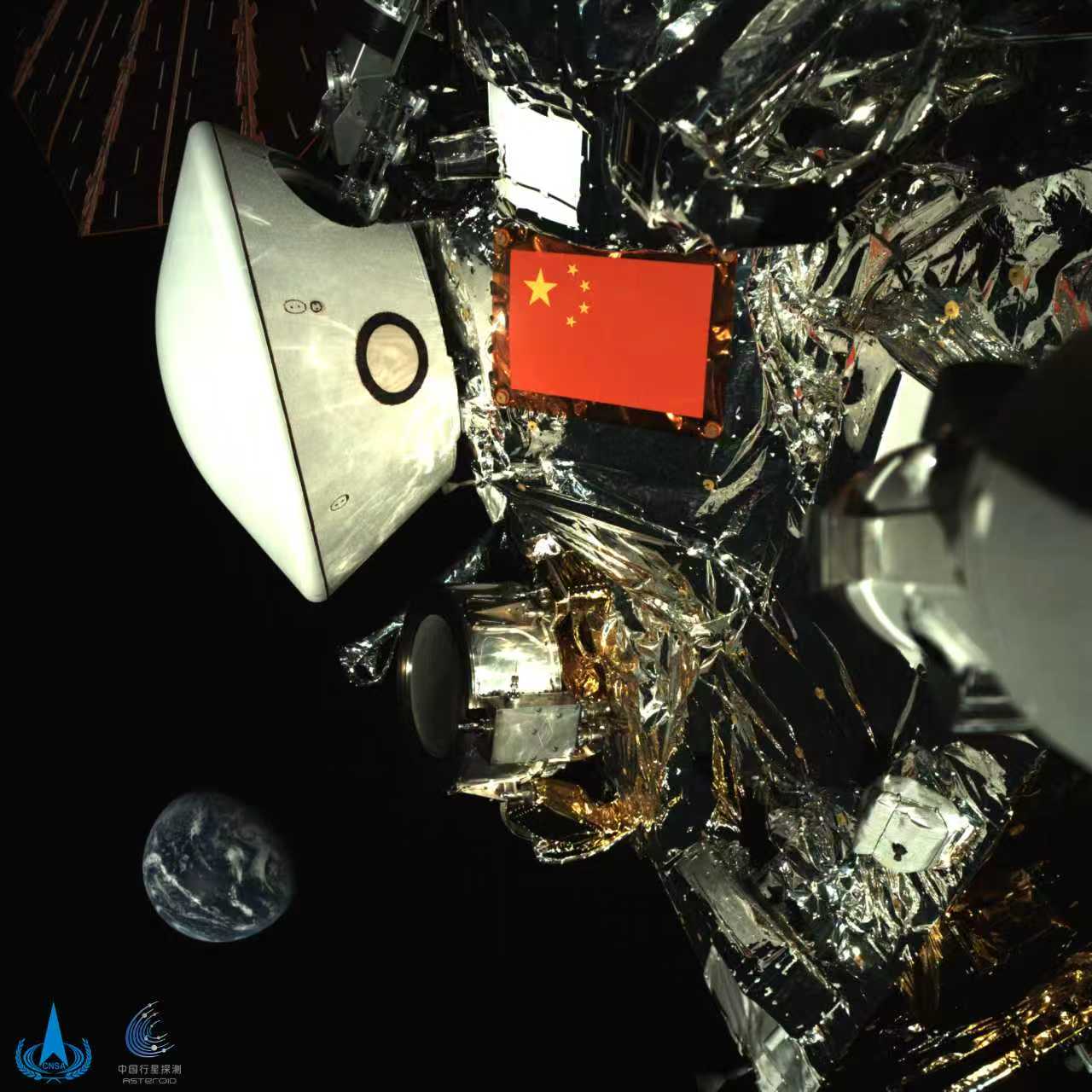
Selfie taken by the Tianwen-2 spacecraft. Source: CNSA
During 2026, we will also see several objects in the Solar System up close for the first time. In June, the Chinese Tianwen-2 mission will enter orbit around the asteroid Kamoʻoalewa. It is a quasi-satellite of Earth and is believed to be a fragment of the Moon that was knocked out as a result of some collision.
In June, the Japanese spacecraft Hayabusa2 will fly past the asteroid Torifune. And in December, the European spacecraft Hera will reach the double asteroid Didymos. In 2022, the DART probe crashed into its satellite Dimorph. In this way, NASA tested whether such an impact could change the orbit of a celestial body (in the future, this technology could be used to deflect dangerous objects away from Earth). Hera will carefully study Didymos and Dimorph to gather as much information as possible about how the impact affected the pair.
The Hera mission as imagined by an artist. Source: ESA
The launch of the Japanese MMX mission is also planned for the end of 2026. Its goal will be to deliver a sample of Phobos material to Earth. Along with it, a pair of ESCAPADE probes will travel to Mars, which are currently monitoring space weather at one of the Lagrange points. The European-Japanese BepiColombo mission will finally enter a permanent orbit around Mercury. After that, it will split into two separate spacecraft, which will begin studying the first planet from the Sun.
German UFO centre logged record number of sightings in 2025
German UFO centre logged record number of sightings in 2025
Photo: Frank Rumpenhorst/dpa
The UFO reporting centre CENAP located in western Germany this year recorded more sightings by puzzled citizens than ever before, its director said on Monday.
The Central Research Network for Extraordinary Sky Phenomena is a point of contact for members of the public seeking a scientific explanation for their spotting of a UFO - the abbreviation for "unidentified flying object."
According to its experts, most of these were planets or stars, rather than anything connected to extra-terrestrial civilizations.
CENAP, based in Lützelbach south of Frankfurt, recorded 1,348 UFO sightings last year from Germany, Austria and Switzerland, as well as a few from other countries, according to its director Hansjürgen Köhler.
Since 2019, reports have risen steadily every year. But even last year, there were no alien spaceships among them, Köhler said.
Sightings have many causes
According to him, bright planets such as Venus, Jupiter and the star Sirius continue to confuse many sky watchers.
In addition, meteors surprised many early risers and casual observers when they burned up with a conspicuous glow.
More than 120 sightings of tech billionaire Elon Musk's Starlink satellite communication systems were reported, including by pilots who were surprised during night flights, according to Köhler.
Other reports were attributed to rocket stage re-starts, when spent fuel is illuminated by the sun and creates bizarre luminous phenomena in the night sky.
In addition, satellites and rocket parts regularly burn up spectacularly in the atmosphere as space debris.
Reports that can be identified as drone flights have been increasing for five years, Köhler said. As well as small private drones, larger industrial drones and police drones are also in use.
Before the movies, before the comic books, and before Tommy Lee Jones andWill Smith brought their suits to the big screen, the Men in Black were known only in whispers.
The legend of these shadowy figures - men in dark suits who threatened people who reported UFO sightings - was born in 1947, when aWashington state logger claimed he saw six flying orbs over Puget Sound.
On June 21, Tacoma resident Harold Dahl was out on the bay with his son, their dog and two crewmembers when he claimed to have spotted six massive, metallic, doughnut-shaped aircraft - each about 100ft across and gliding roughly 2,000ft overhead.
Dahl later described the sighting to an undercover intelligence agent, someone he believed was simply his supervisor.
The very next morning, a man in a black suit appeared at Dahl's home and invited him to breakfast, delivering a warning that would echo through UFO lore for generations.
Dahl's account was printed in the Tacoma Times, and months later, the 29-year-old journalist who covered it was dead under mysterious circumstances.
The story, now known as the Maury Island incident, is detailed in the newly released book Catastrophic Disclosure: The Deep State, Aliens, and the Truth, which argues Dahl's may be one of the first 'modern' UFO sightings.
'This might mark the first appearance of mysterious figures, either from the military or what has become known as the "men in black,"' authors Kent Heckenlively JD and Michael Mazzola wrote.
A new book has detailed the origins of the legendary Men in Black, which started in 1947 when a man reported seeing six objects flying over Washington state. Pictured is an artist impression of what the man said he saw
On June 21, Tacoma resident Harold Dahl (pictured) was out on the bay with his son, their dog and two crewmembers when he spotted six massive, metallic, doughnut-shaped aircraft - each about 100ft across and gliding roughly 2,000ft overhead
The summer of 1947 became a landmark period for UFO sightings, from Ken Arnold's mysterious 'flying discs' near Mt Rainier to the infamous Roswell incident in New Mexico.
Across the nation, Americans were captivated by reports of objects that defied explanation, and the federal government was paying close attention.
But it was Dahl's encounter with the man in the black suit that cemented one of the most enduring legends in UFO history.
According to Heckenlively and Mazzola, such figures - whether military, intelligence or something altogether stranger - appeared in response to sightings like Dahl's, warning witnesses to keep quiet.
Dahl claimed he first saw five of the objects circling while a sixth appeared to be in distress. The craft made no sound, Dahl said, and he saw no propellers, motors or visible means of propulsion.
'A dull explosion followed, and the troubled craft ejected a stream of light metal that looked like thousands of newspapers, then heavier, darker rock, almost like lava,' the authors wrote.
Dahl reported that the damaged craft drifted out over the Pacific Ocean and vanished. He said the falling debris wrecked his boat, killed his dog and injured his son.
He relayed everything to his supervisor, Fred Crisman, who, the authors note, was actually a former intelligence agent with the Office of Strategic Services (OSS), precursor to the CIA. It is not known how long Crisman and Dahl had been working at the same company.
Before the movies, before the comic books, and before Tommy Lee Jones and Will Smith brought them to the big screen, the Men in Black were known only in whispers
Dahl's story appeared in the Tacoma Times the next day. The reporter, Paul Luntz, was said to have also been visited by two men in black suits who threatened him to stop writing about the incident
The next morning, Dahl claimed, a man in a black suit knocked on his door and escorted him to a local diner.
'This was not as unusual as it might seem,' the authors explained. 'Many lumber buyers visited men in Dahl's trade to negotiate for salvaged logs.'
Over breakfast, the mysterious visitor calmly repeated Dahl's entire story back to him, then added: 'I know a great deal more about this experience of yours than you will want to believe.'
According to the book, he leaned in and warned Dahl never to speak of the sighting again, insisting the incident 'never happened' and hinting that if Dahl valued his family's safety, he would remain silent.
The story ran in the Tacoma Times the next day, reported by journalist Paul Lantz, who printed Dahl's description of the objects and confirmed the logger had alerted Crisman.
Reports have suggested that Crisman shared the story with the news outlet.
Reports later suggested Lantz and his wife were also visited by two men in black suits after he published the article.
In a 2014 book, The Maury Island UFO Incident, authors Charlette LeFevre and Philip Lipson quote Lantz's granddaughter: 'My grandmother went into the kitchen to cook while they talked to Paul in the living room.
'She tried to listen. She said they were basically threatening Paul to stop… but Paul was bold and not afraid of them.'
What is now known as the Maury Island incident happened over Puget Sound (pictured)
A few months later, in August, Lantz published another startling report suggesting an Army plane crash in Kelso may have been 'sabotage.'
'The mystery of the 'Flying Saucers' soared into prominence again,' he wrote, after an informant claimed the aircraft was destroyed to prevent flying-disc fragments from reaching Hamilton Field for analysis.
The informant alleged the debris came from 'one of the mysterious platters' that had fallen near Maury Island.
Lantz died on January 10, 1948. Some accounts stated his cause of death was 'a short, unspecific illness,' while his death certificate reportedly cited meningitis.
His death was described by family as sudden and unexpected.
Dahl was later interrogated by the Seattle FBI, which publicly declared the story a hoax, though internal accounts painted a different picture.
Reports claim FBI Director J Edgar Hoover wrote: 'Please be advised that Dahl did not admit… his story was a hoax, but only stated that if questioned by authorities, he was going to say it was a hoax because he did not want further trouble in the matter.'
To this day, no one has definitively explained what Dahl saw on Maury Island, why an intelligence agent posed as his supervisor or why a man in a black suit knew details of the incident before Dahl ever repeated them.
The FBI closed the case, the debris vanished, and the people closest to the story either recanted under pressure or never spoke about it again.
But in the years that followed, dozens of witnesses across the country reported their own encounters with men in black suits who arrived without warning, knew too much and left no trace.
RELATED
Uncover the Truth | Men in Black: The Real Story | Full Documentary Mystery Movie | Free Movie
The True Story Behind The REAL Men In Black | Unveiled
Top UFO experts reveal 'whistleblower activity' will finally bring disclosure in 2026: 'The evidence is aligning'
Top UFO experts reveal 'whistleblower activity' will finally bring disclosure in 2026: 'The evidence is aligning'
By ROB WAUGH
A surge of whistleblowers, new congressional mandates and mounting political pressure are pushing the US toward what insiders say could be its first true UFO disclosure in 2026.
Researchers told the Daily Mail that a growing number of insiders from the military and intelligence community are now prepared to testify publicly, making continued secrecy increasingly difficult to maintain.
That pressure intensified after the November 2025 release of The Age of Disclosure, a documentary featuring 34 current and former US government, military, and intelligence officials discussing an alleged decades-long UFO cover-up.
The film's director, Dan Farah, said its revelations have placed the issue directly on President Trump's radar, reinforcing his campaign promise to declassify what the government knows about unexplained aerial phenomena.
At the same time, Congress has moved to force transparency through the 2026 National Defense Authorization Act, which mandates new briefings on UAP encounters dating back to 2004. The legislation also requires a review of whether key UFO-related data has been over-classified or improperly withheld from lawmakers.
Whistleblowers such as David Grusch continue advising congressional caucuses into 2026, adding legal and political weight to calls for disclosure.
Grusch, a former US Air Force intelligence officer and decorated veteran who became a prominent whistleblower, alleged the US government possesses secret programs for recovering and reverse-engineering crashed extraterrestrial spacecraft, including non-human 'biologics.'
Mark Christopher Lee, director of The Rendlesham UFO: Britain's Roswell, told Daily Mail that 2026 stands out as a pivotal year due to 'escalating congressional momentum, whistleblower activity, and cultural shifts that are building unstoppable pressure on government secrecy.'
Wagering on Polymarket recently skyrocketed, with predictions that the US will declassify documented encounters with UFOs (Pictured) by 2026
It has been suggested that Missouri Congressman Eric Burlison's claims of having a lead on 'new' UFO whistleblowers could be further evidence that disclosure is approaching.
Burlison previously drew attention after presenting video footage showing a U.S. military drone firing a Hellfire missile at an unidentified object, only for the weapon to appear to bounce off the craft with minimal damage.
Lee said recent legislative action is adding to that pressure.
'The fiscal year 2026 National Defense Authorization Act includes key provisions mandating the Pentagon's All-Domain Anomaly Resolution Office to brief Congress on UAP intercepts since 2004, review over-classification of related data, and streamline reporting,' he explained.
He added that much now depends on how far the current administration is willing to go in revealing some of the nation's most closely guarded secrets.
'With ongoing efforts like the proposed UAP Disclosure Act amendments and whistleblowers such as David Grusch continuing to advise congressional caucuses into 2026, the legislative push is intensifying,' Lee said, arguing that secrecy may be nearing a breaking point for the intelligence community.
Alongside official action, speculation has intensified in popular culture. Some conspiracy theorists believe Steven Spielberg's upcoming film Disclosure Day could act as a carefully staged reveal rather than a conventional leak.
UFO analyst Chris Ramsay claimed on X that Spielberg may have been granted 'unprecedented access to real UAP footage, or even an actual UFO.'
The November 2025 documentary 'The Age of Disclosure' alleged that there's been an 80-year cover-up on UFOs and alien technology
The coming release of Steven Spielberg's 'Disclosure Day' (Pictured) has convinced UFO fans that real disclosure is drawing near
Other observers, including That UFO Podcast, have linked recent congressional hearings, Trump's statements, and Spielberg's project, suggesting the pattern points to a shift in disclosure discussions in 2026.
Talk-show host Steve Deace predicted that at least one elected official may publicly claim to have communicated directly with non-human intelligence, highlighting what he described as escalating activity around UAPs.
Moving further into speculation, Lee also pointed to ancient prophecies that some interpret as signaling a pivotal moment.
He cited figures such as Nostradamus and Baba Vanga, whose visions have been linked by believers to extraterrestrial contact, noting that Vanga specifically referenced 2026 as a year marked by a major global event.
This vision by Baba Vanga, a blind Bulgarian mystic and clairvoyant, has previously been interpreted to suggest that alien contact should have been made in 2025, but no major televised event witnessed such an encounter.
Skeptics cautioned that 'disclosure' is often misunderstood.
Nigel Watson, author of Portraits of Alien Encounters Revisited, noted that while governments have released thousands of UFO files, none provide definitive proof of extraterrestrial visitors.
'Media hype and repeated unverified claims have fueled belief,' Watson said. 'Until concrete evidence emerges, what is called disclosure remains largely mythology.'
Despite skepticism, researchers argue the current combination of legislative action, whistleblower testimony, and heightened public attention makes 2026 different.
Even if the definitive proof some hope for does not appear, Lee said, the year could see major revelations about UAPs and government handling of anomalous phenomena.
Bodies, craft, and silence: Inside the UFO retrieval pipeline
Bodies, craft, and silence: Inside the UFO retrieval pipeline
Researcher Leonard Stringfield claimed that the UFO crash-retrieval narrative did not begin with the famous Roswell incident. Instead, he traced it back to a series of earlier events that looked remarkably similar, and forward to later cases that suggested a global recovery effort operating in secrecy.
Below are several significant cases and testimonies, from which it can be inferred that UFO crash incidents have been more frequent and widespread than the limited examples listed here.
Early reports before Roswell (1940–1945)
The 1940s produced multiple stories involving disc-shaped craft and recovered occupants, years before Roswell made headlines.
1941 – Cape Girardeau (USA): Disc-shaped craft recovers with nonhuman bodies (Charlotte Mann testimony).
1941 – Carolinas (USA): Army maneuvers interrupted by classified assignment involving metallic disc and bodies.
1942 – Georgia (USA): Small round craft allegedly retrieved with four small humanoids that later died.
Roswell and the formation of a retrieval system (1947–1954)
1947 – Roswell (USA): The Army first confirms the recovery of a “flying disc” before reversing the story.
1948 – Operational Pattern Identified: Stringfield believed a system was now in place: crash → military lockdown → witness control → transport to Wright-Patterson AFB
1948 – Laredo/Mexico Border: Disc allegedly recovered with bodies; U.S. military reportedly involved.
By the early 1950s, Stringfield argued the retrieval program had matured into a highly coordinated operation.
The 1953 Southwest Cluster. Several 1953 reports appeared connected:
1953 - Fort Monmouth Film: Radar specialist shown footage of small disc + bodies, later told it was a “hoax.”
1953: Kingman, Arizona : 30-foot disc, small hatch, 4-foot occupant - eyewitness Arthur Stansel. Blindfolded Metallurgist.
1953: Wright-Patterson expert flown to desert crash; says metal was non-terrestrial. Crates at Wright-Patterson.
1953: Three crates reportedly contained small humanoid bodies. Bodies at Wright-Patterson.
1953–1954: Technician claims thirteen bodies stored at the base.
The retrieval narrative goes global (1965–Present)
After the Cold War began, retrieval reports spread beyond U.S. borders:
1965 – Kecksburg (USA): Acorn-shaped craft; military cordon; rumored transport to Wright-Patterson. 1967 – Shag Harbour (Canada): Underwater UAP tracked by naval units.
1973 – Coyame (Mexico): Mid-air collision; U.S. team allegedly recovers craft.
1986 – Dalnegorsk (USSR): Metallic sphere crash; unusual material analysis.
1996 – Varginha (Brazil): Biological entities reported; military involvement.
2002 – Mirny (Russia): Special units rumored to secure craft.
South African Kalahari/Lesotho crash stories re-emerged throughout the 1990s–2000s, often linked to U.S.–South African cooperation.
From UFOs to UAP: The Disclosure Era (2010s–2020s)
Recent whistleblower testimony shifted attention away from public crash sites and toward highly classified aerospace programs.
Eric Davis Notes (surfaced 2020): Mentions historical retrieval efforts and “off-world vehicles not made on Earth.”
David Grusch (2023): Alleges decades-long crash retrieval and reverse-engineering programs involving both craft and nonhuman bodies.
Transmedium Retrieval: Post-2017 UAP focus expands into underwater and multi-domain retrieval attempts.
Taken as a whole, the timeline suggests a persistent covert infrastructure capable of: locating, securing, transporting, and analyzing exotic craft and nonhuman occupants, while operating outside public view for more than 80 years.
If true, then the materials and propulsion recovered from these crashes would represent one of the biggest technological windfalls in modern history, yet remain compartmentalized within classified aerospace programs and Special Access Projects.
The modern disclosure wave suggests that some of that secrecy may now be cracking.
Another Whistleblower Claims Deeper Layers of UFO Secrecy Inside Intelligence Agencies
Another Whistleblower Claims Deeper Layers of UFO Secrecy Inside Intelligence Agencies
In recent years, the topic of UFOs and unexplained aerial phenomena has gradually moved from fringe discussions into mainstream media. Alongside official statements and documentaries, anonymous whistleblower accounts continue to surface online, adding new layers to an already complex narrative. One such account, allegedly posted by a former intelligence insider under the pseudonym “Rhea,” offers a detailed perspective on how unexplained aerospace and undersea phenomena may be handled behind closed doors.
The individual claims to have spent years within military and intelligence structures that operate beyond publicly acknowledged agencies. While stressing the importance of skepticism, the account outlines a professional background rooted in electro-optics, laser systems, advanced sensors, and long-range detection technologies. According to the whistleblower, this expertise placed them at the crossroads of physics, intelligence analysis, and anomaly investigation.
From Conventional Intelligence to Anomalies
Initially, the work described appears routine for intelligence professionals: counterterrorism support, signal and human intelligence analysis, foreign missile monitoring, and space domain awareness. Much of this involved tracking known objects—satellites, aircraft, missiles—and determining their origin and intent.
The shift reportedly occurred when the whistleblower was assigned to an inter-agency group focused on what was internally referred to as “anomalous aerospace and undersea systems.” These were not single sensor glitches or isolated radar errors. Instead, they were recurring detections that appeared across different platforms, countries, and decades, often sharing similar behaviors and signatures.
Operators are trained, the whistleblower explains, to assume mundane explanations: calibration errors, software artifacts, atmospheric effects, or human mistake. However, some anomalies resisted these explanations. They persisted despite changes in radar modes, sensor types, and observational conditions.
Patterns That Refuse to Disappear
According to the account, the most troubling aspect was not any single observation, but the emergence of consistent patterns. Certain locations repeatedly produced unexplained detections. Certain movements defied conventional aerospace physics. These events reportedly appeared on independent systems that should not have been capable of producing identical false positives.
At this point, the whistleblower suggests, analysts face a choice: continue forcing anomalies into acceptable explanations, or acknowledge that something genuinely unknown is being observed.
Those who persist in asking uncomfortable questions may eventually be granted access to deeper levels of classification. The author describes this structure as an “onion,” with each layer revealing more information but never the complete picture.
Compartmentalization Beyond Standard Networks
One of the more striking claims involves the level of secrecy. Even highly classified intelligence networks are allegedly excluded from certain discussions. Information is shared verbally, in secure facilities, and only with individuals deemed essential.
This extreme compartmentalization serves two purposes: limiting leaks and preventing any single person or group from fully understanding the scope of the phenomenon. According to the whistleblower, even insiders may only glimpse fragments of a much larger system.
Speculation, Not Certainty
Importantly, the account does not present definitive answers. Instead, it offers hypotheses. One recurring idea is that some phenomena may not represent visiting beings in the traditional sense, but rather automated systems—possibly ancient, non-human, or artificial in nature—designed to monitor or influence planetary development.
The author repeatedly emphasizes uncertainty and urges readers not to treat the account as established fact. The possibility of misinformation, exaggeration, or deliberate narrative manipulation is openly acknowledged.
A Familiar Yet Evolving Narrative
While elements of this account resemble previous anonymous disclosures, it also expands on them by grounding the narrative in sensor physics, intelligence workflows, and long-term data analysis rather than isolated eyewitness testimony. Whether genuine or fictional, the story reflects a growing pattern: unexplained phenomena are increasingly discussed not as single events, but as persistent systems interacting with our environment over extended periods.
As with all anonymous disclosures, the truth remains difficult to verify. What this account ultimately provides is not confirmation, but context—another piece in an ongoing puzzle that continues to challenge assumptions about technology, intelligence, and humanity’s understanding of its surroundings.
We Were Told There Is No Scientific Evidence for UFOs. Our Research Says Otherwise
We Were Told There Is No Scientific Evidence for UFOs. Our Research Says Otherwise
Overview
Astronomer Beatriz Villarroel and her research team have published new data that challenges the long‑standing claim that “there is no scientific evidence for UFOs.” Analyzing archival sky‑survey photographs taken before the launch of Sputnik in 1957, the team identified hundreds of thousands of brief, star‑like flashes—phenomena they call “transients.” Their results, detailed in two recent peer‑reviewed papers, suggest that a statistically significant subset of these flashes are solar reflections from non‑natural, flat surfaces orbiting Earth, and that the occurrences line up with historical UFO sightings and atmospheric nuclear tests.
Core Findings
The researchers focused on the distribution of flashes relative to the Earth’s shadow (the umbra). A pronounced deficit of events inside the umbra—measured at 7.6 σ—indicates that the flashes are not random imaging artifacts, dust, or atmospheric phenomena, which would appear uniformly across the sky. Instead, the pattern is consistent with mirror‑like objects reflecting sunlight only when they are illuminated, disappearing when they pass into the shadow. By cross‑referencing the timing and locations of these flashes with documented UFO reports from the 1940s‑1950s, the team found a statistically significant correlation. A secondary correlation emerged with the schedule of above‑ground nuclear detonations, which produced intense ionization layers that could affect orbital debris visibility.
Scientific Context
Historically, the scientific community has treated UFO research with caution, fearing professional stigma. “Engaging with unidentified aerial phenomena has been a career risk for decades,” Villarroel noted in an interview. Her work, however, leverages existing astronomical datasets rather than anecdotal testimony, positioning the study within mainstream methodology. The papers have undergone rigorous peer review and appear in Scientific Reports and Nature Scientific Data, journals that demand reproducibility and statistical robustness. Independent astronomers have begun replicating the analysis, with early feedback highlighting the novel use of pre‑satellite sky surveys as a valuable archival resource.
Reactions and Skepticism
The findings have sparked a mixed response. Proponents argue that the mirror‑like signature is hard to dismiss as a natural occurrence, while skeptics caution that alternative explanations—such as space debris with specular surfaces or unaccounted‑for optical effects—must be exhaustively ruled out. Dr. Liam Chen, a planetary scientist at the University of Colorado, remarked, “The statistical significance is impressive, but we need targeted observations to confirm the nature of these reflectors.” Meanwhile, a statement from the U.S. Office of the Director of National Intelligence reiterated that, despite increased transparency, “no conclusive evidence of extraterrestrial technology has been identified.”
If a portion of the transients are indeed artificial, non‑natural objects, the discovery would have profound implications for aerospace security, international policy, and our understanding of near‑Earth space. Villarroel’s team plans to collaborate with ground‑based telescopes and space‑based sensors to capture real‑time reflections and obtain spectral data that could differentiate metallic alloys from natural ice or rock. Funding proposals are already underway to integrate these observations into the UAP Task Force’s broader data‑collection effort. Until such follow‑up studies are completed, the research stands as a data‑driven challenge to the “no evidence” narrative, urging the scientific community to reassess the evidentiary standards applied to unidentified aerial phenomena.
Declassified documents from Russian military archives, obtained through a recent transparency initiative, describe a series of unexplained aerial phenomena (UAP) observed by Soviet‑era and post‑Soviet air defense units. Among the entries is a report of a “near‑miss” incident in which an unidentified object allegedly entered the airspace surrounding a strategic nuclear missile site, prompting a brief, unauthorized launch sequence before the system was manually aborted. The files, dated between the late 1970s and early 2000s, indicate that the sightings were taken seriously by senior commanders and were recorded in official incident logs.
Pinterest
Key Findings
The archival material includes 27 separate sighting reports, ranging from high‑altitude luminous orbs to low‑flying, high‑speed craft exhibiting flight characteristics beyond known aircraft. One entry, dated April 12, 1983, details a radar contact that appeared to “hover” at 15 km altitude before accelerating to Mach 5 and disappearing from detection. A second, more consequential report from June 7, 1999, describes an object that penetrated the protective air corridor of the Kursk‑2 strategic missile complex. According to the log, the intrusion triggered an automatic “launch‑on‑warning” protocol, but a manual override by the base commander halted the sequence seconds before missile ignition.
Military Response
Russian officials cited in the documents emphasize the procedural rigor applied to each encounter. Colonel Sergei Ivanov, head of the air‑defence unit at the Kursk‑2 base, is quoted as stating, “The radar signature was unlike any known platform; we followed standard engagement rules, but the system’s automatic response forced us to intervene directly.” The incident prompted a review of the Command, Control, and Communications (C3) architecture for nuclear forces, leading to the introduction of additional human verification steps in the launch chain—a measure later echoed in NATO’s own post‑Cold‑War reforms.
Broader Implications
Analysts note that the Russian files add weight to a growing body of evidence suggesting that UAPs have, on occasion, intersected with high‑value military assets. Dr. Mikhail Petrov, a senior researcher at the Russian Academy of Sciences, remarks, “When unidentified objects appear near strategic installations, the risk calculus changes dramatically. Even a brief false alarm can have cascading geopolitical consequences.” The near‑miss incident underscores the potential for misinterpretation or system error to elevate regional tensions, especially given the heightened alert status of nuclear arsenals during the 1990s.
Next Steps
Both Russian and international defense establishments are reportedly reviewing the declassified material to assess gaps in detection and response protocols. The Russian Ministry of Defense has announced plans to convene a joint task force with the Federal Security Service (FSB) and the Russian Space Agency (Roscosmos) to develop upgraded sensor suites and revised engagement procedures. Meanwhile, the U.S. Department of Defense, which has released its own UAP reports in recent years, has expressed interest in collaborative data sharing to better understand the flight characteristics and possible origins of these phenomena.
The release of the Russian archives marks a rare instance of candid acknowledgment of UAP encounters within a major nuclear power’s official records. While the documents stop short of attributing the objects to any known technology, they highlight a pragmatic concern: that unidentified aerial activity, however brief, can intersect with the world’s most dangerous weapons systems, prompting a reevaluation of safety margins and command safeguards.
The new Space Economy’s latest feature, produced in partnership with the UAP News Center, surveys the ten most infamous UAP hoaxes ever recorded. While the term “UFO” still dominates popular imagination, the article deliberately uses UAP (Unidentified Anomalous Phenomena) to align with the language adopted by contemporary scientific and defense communities. The list is framed as a historical lens, showing how each fabrication mirrors the cultural anxieties of its era and how rigorous scientific review repeatedly dismantles the supposed evidence.
The Maury Island Incident – A Blueprint for Modern Myths
The series opens with the Maury Island Incident (1947), often eclipsed by Kenneth Arnold’s famous “flying saucers” sighting but arguably more influential in shaping UFO folklore. According to the original claim, Harold Dahl reported six massive, donut‑shaped objects hovering over his patrol boat, one of which allegedly ejected a stream of metallic debris that damaged the vessel and injured his son. Dahl asserted he captured photographs, yet investigators later reported the images were “fogged or ruined,” a detail that has fueled skepticism for decades. The episode also introduced the now‑iconic “Men in Black” figure—a mysterious, black‑clad emissary who allegedly warned Dahl to keep silent. Subsequent analyses by the U.S. Army Air Forces and later civilian researchers concluded the story was a fabricated narrative designed to attract media attention and, possibly, financial gain.
Other High‑Profile Hoaxes
While the article’s full list is behind a paywall, it references several other cases that have repeatedly resurfaced in public discourse:
The 1950 “Great Falls” hoax, in which a local photographer staged a night‑time light display using aircraft navigation lamps, later exposed by a university physics department.
The 1994 “Phoenix Lights” video, later identified as a combination of military flares and a misinterpreted advertising aircraft, with the original footage digitally altered to enhance the “mystery” effect.
The 2007 “Mogul” (or “Tic‑Tac”) video, released by the Pentagon, which skeptics argue was a misidentified balloon or sensor glitch, a claim reinforced by independent radar analyses.
Each example follows a similar pattern: an eye‑catching visual claim, limited physical evidence, and eventual debunking through photometric testing, radar cross‑section analysis, or eyewitness cross‑verification.
Common Threads in Fabricated UAP Claims
The article’s “Key Takeaways” highlight three recurring motifs:
Cultural Anxiety– During the Cold War, many hoaxes featured metallic, disc‑shaped craft, echoing fears of foreign technology. In the digital age, hoaxes increasingly exploit deep‑fake software, reflecting contemporary concerns about misinformation.
Erosion of Physical Evidence– Photographs, video clips, and alleged debris consistently “fail under scientific scrutiny,” either because they are deliberately altered or because the materials cannot be reproduced in a lab.
Motivation of Fabricators– Financial reward, personal fame, or a desire to “expose gullibility” are repeatedly cited by investigators as the primary drivers behind these deceptions.
These patterns underscore why the scientific community stresses transparent methodology and peer‑reviewed verification when evaluating any new UAP report.
Impact on Public Perception and Policy
Even as hoaxes are exposed, they leave a lasting imprint on public opinion. Polling data from the Pew Research Center (2024) shows that nearly 60 % of Americans still believe extraterrestrial life has visited Earth, a figure that has remained stable despite repeated debunkings. This persistence influences policy debates, prompting legislators to allocate funding for UAP research while simultaneously demanding stricter standards for evidence. The article notes that recent congressional hearings have cited past hoaxes as cautionary tales, urging agencies to distinguish genuine anomalies from manufactured spectacles before allocating resources.
Looking Forward
The New Space Economy piece serves as both a historical catalog and a reminder that rigorous scientific inquiry remains the antidote to sensationalism. By dissecting the narratives behind the ten most famous UAP hoaxes, the article equips readers with the context needed to evaluate future claims—whether they emerge from a backyard enthusiast’s drone footage or a classified military sensor. As the field evolves, the hope expressed by the UAP News Center is that transparency, reproducibility, and critical analysis will continue to separate genuine anomalous phenomena from the allure of well‑crafted hoaxes.
A virus thatinfectsnearly all children early in life has, in rare cases, been present withinhuman DNA for thousands of years. Recent research indicates that this relationship extends back to the Iron Age and that some people today still carry inherited copies of the virus in every cell of their bodies.
Arecent studypublished in Science Advances describes how scientists reconstructed ancient genomesof Human betaherpesvirus 6 (HHV-6) from archaeological remains found across Europe. This research offers the first direct geneticevidencethat HHV-6 has coevolved with humans for at least 2,500 years. These findings reveal a long-standing, close relationship between humans and a virus most people first encounter in early childhood.
A Common Virus With an Uncommon Ability
HHV-6 comes in two closely related forms, HHV-6A and HHV-6B. HHV-6B infects roughly 90 percent of children by age two. It causes roseola infantum, also called “sixth disease,” a leading cause of febrile seizures in young children. After the initial infection, the virus typically remains dormant in the body for life.
HHV-6 is unusual among common human viruses because it can integrate its genetic material into human chromosomes. Occasionally, the virus integrates into reproductive cells, enabling transmission from parent to child as part of the human genome. Today, about one percent of the population carries this genetically inherited virus.
Scientists suspected these inherited viral sequences originated in ancient times but lacked direct genetic evidence until now.
Mining Ancient DNA for Viral Genomes
To investigate this anomaly, an international team from the University of Vienna and the University of Tartu analyzed DNA from almost 4,000 human skeletal remains found at archaeological sites across Europe. The team was able to identify and reconstruct 11 ancient HHV-6 genomes from these samples.
Researchers found the oldest viral genome in the remains of a young girl who lived in Iron Age Italy between 1100 and 600 BCE. Other samples came from medieval sites in England, Belgium, Estonia, early historic Russia, and Italy. Both HHV-6A and HHV-6B were present in medieval remains, but only HHV-6B was found in the earlier samples.
“While HHV-6 infects almost 90% of the human population at some point in their life, only around 1% carry the virus, which was inherited from your parents, in all cells of their body,” said Meriam Guellil, lead researcher of the study at the University of Vienna’s Department of Evolutionary Anthropology. “These 1% of cases are what we are most likely to identify using ancient DNA, making the search for viral sequences quite difficult.”
Tracing Viral Evolution Across Millennia
The researchers traced the evolution of HHV-6 over more than 2,500 years by comparing ancient viral genomes with modern genetic data. Their analysis indicated that some viral integrations happened thousands of years ago and have persisted for generations.
The study also uncovered a key difference between the two types of the virus. HHV-6A appears to have lost its ability to integrate into human DNA early in its history, while HHV-6B has kept this unusual trait.
Modern Health Connections With Ancient Origins
These inherited HHV-6 sequences are more than genetic anomalies. Earlier research has linked chromosomally integrated HHV-6B to a higher risk of certain heart-related diseases.
“Carrying a copy of HHV6B in your genome has been linked to angina-heart-disease,” said Charlotte Houldcroft of the University of Cambridge’s Department of Genetics. “We know that these inherited forms of HHV6A and B are more common in the UK today compared to the rest of Europe, and this is the first evidence of ancient carriers from Britain.”
A New Perspective on Human and Virus Coevolution
Although HHV-6A and HHV-6B were first identified in the 1980s, modern genetic data had already suggested that these viruses may have evolved alongside humans since early migrations out of Africa. The discovery of ancient genomes now provides direct, time-stamped evidence of this long-standing relationship.
“This research traces their presence back to the Iron Age,” Guellil said. “These ancient genomes now provide first concrete proof of their presence in the deep human past.”
Beyond HHV-6, this study shows how ancient DNA can reveal the hidden history of infectious diseases. Infections that occur in childhood and seem to disappear can leave lasting traces, turning viruses into inherited parts of the human genome. Therefore, DNA can serve as a partial record of ancient epidemics that once moved quietly through entire populations.
Austin Burgess is a writer and researcher with a background in sales, marketing, and data analytics. He holds a Master of Business Administration, a Bachelor of Science in Business Administration, and a Data Analytics certification. His work combines analytical training with a focus on emerging science, aerospace, and astronomical research.
For the first time, astronomers have discovered clear evidence that some fast radio bursts (FRBs) are emitted by binary stars, according to an international team of researchers.
The powerful yet brief bursts of radio waves emanate from distant galaxiesand have puzzled scientists for some time, until a general consensus emerged that they are produced by isolated, single stars.
Now, a recent paper published in Science challenges that idea, based on observations of FRB 220529A made possible by the Five-hundred-meter Aperture Spherical Telescope (FAST), also known as China’s Sky Eye, which demonstrates that binary systems can produce FRBs.
The China Sky Eye
Located in southwestern China’s Guizhou province, FAST is also nicknamed “Tianyan,” which translates to “Heaven’s Eye” or “Sky Eye.” The radio telescope features a 1,640-foot-diameter dish, making it the largest single-dish telescope in the world, nestled within a natural depression.
The bright, millisecond-long flashes known as FRBs travel to us from distant galaxies. Generally, they are singular events, but the rare repeaters offer scientists intriguing opportunities to study the phenomena over longer periods and observe changes. Since 2020, Professor Bing Zhang has co-led a program to study these repeating FRBs. They found something remarkable in FRB 220529A, located 2.5 billion light-years from Earth.
“FRB 220529A was monitored for months and initially appeared unremarkable,’ said co-author Professor Bing Zhang. ‘Then, after a long-term observation for 17 months, something truly exciting happened.” The researchers used FAST to monitor the FRB for 20 months, eventually revealing that the source had a companion star.
Fast Radio Burst Polarization
Analyzing a radio wave’s polarization properties offers important clues about its source’s surroundings. In this FRB, the most notable feature was a sudden and dramatic polarization change known as an RM flare, indicative of a coronal mass ejection from a companion star interfering with the burst source.
“This finding provides a definitive clue to the origin of at least some repeating FRBs,” said co-author Professor Bing Zhang, Chair Professor of Astrophysics of the Department of Physics and Founding Director of the Hong Kong Institute for Astronomy and Astrophysics at HKU. “The evidence strongly supports a binary system containing a magnetar—a neutron star with an extremely strong magnetic field, and a star like our Sun.”
An FRB’s linear polarization allows researchers to track its journey through space. Due to the Faraday rotation effect, a radio wave’s polarization angle rotates when it travels through magnetized plasma. That rotation can be precisely measured using a quantity called a rotation measure (RM).
“Near the end of 2023, we detected an abrupt RM increase by more than a factor of a hundred,” said lead author Dr Ye LI of Purple Mountain Observatory and the University of Science and Technology of China. “The RM then rapidly declined over two weeks, returning to its previous level. We call this an ‘RM flare’.”
Binary Sourced Fast Radio Bursts
A brief RM change like this is consistent with the FRB having intercepted a dense magnetized plasma, likely ejected from a companion star.
“Such a model works well to interpret the observations,” said co-first author Professor Yuanpei Yang, a professor from Yunnan University. “The required plasma clump is consistent with CMEs launched by the Sun and other stars in the Milky Way.”
Directly observing the companion star over these billions of light-years was not feasible, but FAST and supplemental observations from the Parkes telescope in Australia successfully confirmed its presence.
“This discovery was made possible by the persevering observations using the world’s best telescopes and the tireless work of our dedicated research team,” said co-lead author Professor Xuefeng Wu of Purple Mountain Observatory and the University of Science and Technology of China.
The work supports a proposal by Professor Bing Zhang that FRBs are generated by magnetars and that binary systems produce a geometry that allows bursts to occur more frequently, and marks the beginning of ongoing studies required to determine how common binary systems are as sources of FRBs.
Ryan Whalen covers science and technology for The Debrief. He holds an MA in History and a Master of Library and Information Science with a certificate in Data Science. He can be contacted at ryan@thedebrief.org, and follow him on Twitter @mdntwvlf.
If a genuine extraterrestrial signal ever arrives, the hard part may not be detecting it, but understanding what it means. That is the central idea behind a NASA History Series book that explores how archaeologists and anthropologists - experts at interpreting fragmentary traces of vanished cultures - might help the Search for Extraterrestrial Intelligence (SETI). The surprising update is that, despite early claims that NASA “pulled” the publication after media confusion, the book is now hosted openly on NASA’s website, complete with official downloads.
A NASA History Series volume, not a sensational “aliens did it” claim
The story first circulated widely after an Ancient Origins report, “NASA book explores how archaeology could contribute to understanding Extra-terrestrial Communication,” described a new NASA volume edited by Douglas A. Vakoch, then Director of Interstellar Message Composition at the SETI Institute, draws parallels between deciphering ancient scripts and interpreting possible interstellar messages.
NASA’s own official page describes the book as an effort to broaden SETI thinking beyond a purely technical problem, raising questions about whether “meaningful communication” would actually be straightforward.
Titled ‘Archaeology, Anthropology and Interstellar Communication’, the book is a collection of chapters by different authors who explore latest research regarding the search for extraterrestrial intelligence.
In the opening introduction, Vakoch sets out how the field of archaeology can contribute to this search:
“As we search for analogies to contact at interstellar distances, archaeology provides some intriguing parallels, given that its practitioners – like successful SETI scientists – are charged with reconstructing long-lost civilizations from potentially fragmentary evidence”.
Anthropologist Ben Finney and historian Jerry Bentley draw a comparison between the decoding of ancient scripts, including Egyptian and Mayan hieroglyphics, and how we may be able to understand and possibly communicate with an extraterrestrial civilization, particularly through the ‘universal language’ of mathematics and astronomy. For example, when scholars began decoding ancient Mayan hieroglyphs, their earliest successes were in recognizing the basic numbering system used by the Maya, as well as their calendar systems, which were based on the visible motions of the Moon and Sun.
“Math and science provided the foundation for communication, just as many SETI scientists have predicted will be the case for interstellar communication,” wrote Vakoch.
This is one reason ancient scripts are such a useful mirror for interstellar communication.
Decoding alien messages: why archaeology is the analogy NASA chose
The NASA book argues that SETI researchers could face a situation similar to archaeologists reconstructing societies from incomplete evidence: an interstellar signal might be detected, but its cultural content could remain opaque. The volume’s introduction explicitly frames this as a problem of reconstructing distant civilizations, separated by space and time, much like archaeology reconstructs the human past.
Rock art, cup-and-ring marks, and the limits of interpretation
A flashpoint in the original media frenzy involved a misunderstanding: some outlets implied NASA was “announcing” ancient rock art was extraterrestrial. But the point presented is more subtle - rock art can be used as a thought experiment about the way we interpret symbols when we lack context.
The part that was confused comes in the book's last chapter, "Constraints on Message Construction for Communication with Extraterrestrial Intelligence." William H. Edmondson, senior research fellow at the University of Birmingham in England, draws upon an analogy by suggesting that ancient rock art may be an example of the type of symbolic communication that would be used by extraterrestrial civilizations and studying rock art could therefore help us understand possible communication from an extraterrestrial intelligence.
"It is helpful to review some parallels from human existence that pose problems for us today," wrote Edmondson. "One of these is "rock art," which consists of patterns or shapes cut into rock many thousands of years ago. Such ancient stone carvings can be found in many countries.”
Edmondson maintains that posing the idea that ancient markings were created by aliens is helpful for reframing the way we go about searching for signals from other worlds - and how we make contact.
"We can say little, if anything, about what these patterns signify, why they were cut into rocks, and who created them," he wrote. "For all intents and purposes, they might have been created by aliens."
That ambiguity is familiar to readers of prehistoric rock art. Scotland’s cup-and-ring marks, for example, are still debated, and Ancient Origins has previously covered attempts to study major carved stones such as the Cochno Stone.
Cup-and-ring-marked rock near to Cairnbaan, Argyll And Bute, Scotland.
However, there is an important warning from archaeologist and anthropologist Kathryn Denning: even if you can measure the complexity of a signal, that does not automatically tell you what it means. And unlike classic codebreaking between humans, an extraterrestrial message comes without any guarantee of shared language or shared assumptions.
In other words, the “Rosetta Stone moment” may never come.
The key update: NASA hosts the book openly
A major claim in the older media cycle was that NASA removed the book and related materials. Whatever happened during the original wave of reporting, the current reality is clear: NASA now provides an official landing page with download formats, and the PDF is directly accessible on nasa.gov.
NASA also lists the book on its “NASA and SETI” history page and notes continued NASA interest in astrobiology and technosignatures, even after Congress canceled NASA’s formal SETI program in the early 1990s. (That page shows a “Last Updated” of Jan 05, 2026.)
Why this matters now: NASA’s technosignature era
While the original story framed the debate as SETI and messaging, NASA’s current SETI-history material emphasizes technosignatures - possible signs of technology that might show up in astronomical observations.
Ancient Origins has also covered modern technosignature thinking, including proposed atmospheric industrial gases as possible “telltale signs” of technology-using life.
Top image: Green Bank 100m diameter Radio Telescope (West Virginia, USA).
Model of the chemical cycle on Mars that is driven by the electrostatic discharges of dust storms. Credit - WUSL
Chemistry on other worlds varies widely from that on Earth. Much of Earth’s chemistry is driven by well-understood processes, which typically involve water and heat in some form. Mars lacks both of those features, which makes how some of its chemicals formed a point of ongoing debate in the scientific community. A new paper led by Alian Wang and Neil Sturchio of Washington University of St. Louis and the University of Delaware, respectively, and published recently in Earth and Planetary Science Letters offers a new framework for understanding chemical reaction processes on Mars. Despite the differences, Earthlings will still be familiar with the driving force behind Martian chemistry - electricity.
Various rovers and orbits on and around Mars have noticed a peculiar isotopic imbalance on the surface of the Red Planet. An isotopic imbalance can occur when the ratio of two different isotopes of a particular element is skewed from the natural ratios expected. In particular, “heavy” isotopes of some of the most common elements - chlorine, oxygen, and carbon, seem to be lacking on Mars.
For example, Chlorine-37, the “heavy” isotope of that particular element, is 51 parts per thousand (ppt) less abundant than would otherwise be expected on the Martian surface. Given that it is a key ingredient in the hazardous “perchlorates” that stand as one of the major challenges to long-term biological systems living on Mars (like humans), understanding why that imbalance has occurred is key to understanding how we might mitigate the threat those chemicals represent.
Fraser discusses an idea to treat Mars of its toxic perchlorates.
The heavy isotope imbalance for carbon (11.4 ppt) and oxygen (22.8 ppt) are less pronounced, but no less important. Both are key ingredients for the formation of carbonates, which previous generations of scientists thought were evidence of previous liquid water on the planet’s surface. So what is causing these imbalances? And what does electricity have to do with it?
Another common feature of Mars’ surface are its famous dust storms. These massive storms take up a significant amount of the planet’s surface in certain seasons. They also form mini-vortices that look like miniaturized tornadoes. Importantly, those storms, and especially those vortices, cause Martian dust they kick up to rub together, eventually building up an electrostatic charge, similar to what happens when you rub a balloon on your head.
But in Mars’ weaker atmosphere, it’s relatively easy to overcome the dielectric constant of the atmosphere itself, allowing small “arcs” that are familiar to anyone who has played under a blanket in a dry room at night. These arcs, known technically as electrostatic discharges, or ESDs, are the driving force of one of the primary chemical cycles on Mars, according to the new paper.
Fraser talks about how a realistic mars mission will play out.
The authors built several test chambers, including the Planetary Environment and Analysis Chamber (PEACh), specifically to test how salts commonly found on Mars would react to the electricity produced during a dust storm. They found the ESDs that happen in dust storms create high-energy electrons that run into the CO2 that comprises the Martian atmosphere. When they do so, they create reactive radicals like CO and O. These free radicals then fall to the chloride salts that exist on the ground, bonding oxygen to them, and changing chlorine to perchlorates, the deadly substance carbon-based lifeforms would rather avoid.
But it does explain where they came from. The same process happens for carbonates, which were commonly thought to be formed by liquid water. But like their chlorinated cousins, it seems a wide variety of Mars-based chemicals can form with nothing other than static shocks during a dust storm.
This data matches up much more closely with in-situ and remote observations - in particular the lower density of “heavy” isotopes they’ve found. ESD acts like a “filter”, selecting the lighter atoms to participate in chemical reactions that form the compounds rovers like Curiosity and orbiters like ExoMars have captured. The actual physics behind that process is complicated, but needless to say, this idea that chemical cycles on Mars are driven by dust-derived electrical discharge seems to fit the data very well.
Video of dust devils captured on Mars by Curiosity. These are the types of storms that create ESDs, which then create perchlorates and carbonates on the Martian surface.
Such electrical-driven reactions have applications on more than just Mars. Venus, some of the outer Gas Giants, and even our own Moon, could have their own version of ESD-driven chemical reaction chains. While that means there’s plenty more to study, there’s also a cautionary tale for future Martian explorers. ESD is an ongoing, active process that is part of Mars’ natural, cold climate. That means that perchlorates, the deadly chemicals that might very well hinder our tentative efforts at a permanent base on the Red Planet, are constantly being created there.
While that’s certainly not a deal breaker for exploration, it is something we need to be aware of. But the authors certainly aren’t done with their exploration of the impact that small arcs of electricity have on driving chemical reactions throughout the solar system. Expect more papers about how arcs on Venus affect that planet’s surface chemistry soon.
Inside high bay 3 of NASA’s Vehicle Assembly Building at NASA's Kennedy Space Center, the SLS (Space Launch System) for NASA Artemis II stands fully stacked as the retractable platforms pull away. Credit: NASA
Between February and April of this year, NASA will conduct its first crewed mission beyond Low Earth Orbit (LEO) in over fifty years. At 09:41 p.m. EST (06:41 p.m. PDT), the Artemis II crew will launch aboard their Orion spacecraftatop the Space Launch System(SLS) from Launch Pad-39B at the Kennedy Space Center in Florida. With the launch date rapidly approaching, NASA is entering the final stages of preparation, including the rollout of the SLS and Orion to the launch pad for the first time. This will be followed by the final integration and testing of the rocket and spacecraft, then launch rehearsals.
The Artemis II crew consists of NASA astronauts Reid Wiseman (commander), Victor Glover (pilot), and Christina Koch (mission specialist), and Canadian Space Agency (CSA) astronaut Jeremy Hansen (mission specialist). Building on the success of the uncrewed Artemis I mission, *Artemis II* will see this crew execute a circumlunar flight, taking them around the Moon without landing and returning them to Earth. The entire mission will take 10 days and will be the curtain-raiser for the first crewed mission to the lunar surface since Apollo 17 landed there in 1972.
The rollout is targeted for no earlier than this Saturday (Jan. 17th) and will take up to 12 hours for the rocket and crawler-transporter-2 to travel the ~6.5 km (4 mi) that lie between the Vehicle Assembly Building and Launch Pad 39B. "We are moving closer to Artemis II, with rollout just around the corner," said Lori Glaze, acting associate administrator for NASA’s Exploration Systems Development Mission Directorate (ESDMD). "We have important steps remaining on our path to launch, and crew safety will remain our top priority at every turn, as we near humanity’s return to the Moon."
Teams are currently working around the clock to complete all remaining tasks ahead of the rollout, a process that has been ongoing for months. In December, during a countdown demonstration test, engineers detected a problem with a valve associated with the Orion capsule's hatch pressurization. They replaced the valve on Jan. 5th, which was followed by a successful pressure test. They also resolved a leak with the ground support hardware that is part of the loading system for pressurizing the Orion with oxygen gas. The work will continue for weeks after the SLS and Orion roll out to the launch pad.
At this point, ground crews will begin connecting electrical lines, fuel-control-system ducts, cryogenic propellant feeds, and other ground-support equipment. They will then power up all of the rocket's integrated systems for the first time to ensure they work properly with each other, the mobile launcher, and the launch pad infrastructure. The final preparation, scheduled for the end of January, will consist of a prelaunch fuel test (aka a "wet dress rehearsal") where NASA will fuel the rocket with about 2.65 million liters (700,000 US gallons) of cryogenic fuel into the rocket, conduct a launch countdown, then safely unload it.
Several countdowns are scheduled to allow mission controllers to hold, resume, and recycle back to previous times in the final 10 minutes before liftoff (aka terminal count). Several lessons from the previous mission have been integrated into this launch's preparations, including the challenges ground crews experienced while loading liquid hydrogen propellant during Artemis I's wet dress rehearsal. So in addition to carefully watching the propellant loading process, the ground teams will also closely monitor the effectiveness of recently updated procedures that limit how much nitrogen gas accumulates between the Orion crew module and the launch abort system.
Additional wet dress rehearsals may be required to make sure the vehicle is ready for flight, and NASA may opt to roll the SLS and Orion back into the VAB for additional work (as they did with Artemis I). Following a successful wet dress rehearsal, NASA's mission management team will convene a "flight readiness review" to assess the readiness of all systems before committing to a firm launch date. Once all of this is complete, and in what will be a major media event, the Artemis II astronauts will conduct a final walkdown at the pad.
While the Artemis II launch window opens as early as Friday, Feb. 6th, the mission management team may push the launch to a date before the window closes (no later than April). These launch opportunities require that the planned trajectory account for the complex orbital mechanics of Earth and the Moon. Basically, the rotation of the Earth and the Moon's orbit result in a pattern of approximately a week of launch opportunities, followed by three weeks without. The opportunities between February and April (subject to change) are available here.
NASA and its partners have high expectations for the Artemis II test flight. Much like the Apollo 10 mission, which was a dress rehearsal for the first landing on the Moon, this mission will provide the necessary experience and validate the systems that will allow humans to return to the lunar surface after more than 50 years. Currently scheduled for 2028, Artemis III will last for about 30 days and will depend on the development of the Human Landing System (HLS).
Warp drive propulsion, the hypothetical means by which advanced spacecraft of the future may one day explore the universe by way of superluminal travel, has its origins as a concept in science fiction. Best known for its appearances in the famed 1960s TV series Star Trek, it wasn’t until 1994, when a Mexican mathematician named Miguel Alcubierre laid out the mathematics of warp theory, that some scientists–and at least one engineer–began to take the concept seriously.
More recently, an international think-tank of over 30 physicists called Applied Physics has inched closer to a working concept by laying out the math behind what they call a physical warp drive. But in order to overcome many of the energy violations that have haunted previous efforts, their concept is unable to go faster than the speed of light.
Of course, traveling at 90% light speed would make trips to other planets possible. But even this potentially breakthrough design (dubbed the Martire-Bobrick warp drive for the two authors behind the concept Alexey Bobrick and Gianni Martire) is still purely theoretical.
Now, a new player has entered the fray, and unlike most of the others working in this field, he says he is ready to run an experiment on his theory right now. Ladies and gentlemen, meet the university professor and Provost of the University of Houston-Victoria, and the man who may finally crack the warp drive puzzle, Dr. Chance Glenn.
The Engineer
Dr. Chance Glenn recently won the 2022 Permission to Dream Award at the Space Cowboy Ball in Austin, Texas, an award previously given to Jeff Bezos. The award was presented by SpaceX’s Gwynne Shotwell, who also won an award
(Credit: Thomas Colvin/University of Houston-Victoria).
“I’m a huge Star Trek lover,” the impressively calm and cool Glenn told The Debrief when discussing his interest in warp drive. “I was drawn by the future that it projects.”
Glenn says he is partial to the original series “by far” and has identified with one character in particular.
“Mr. Spock is my guy,” said Glenn. “I tried to be him.”
Like Spock, Glenn is undoubtedly left-brained, having earned a number of degrees in electrical engineering, including a Masters and a Ph.D. from Johns Hopkins University. But unlike Mr. Spock, Glenn embraces his creative side as well, including writing and recording music. He says that he actually knows of many engineers like himself that are drawn to the mathematical nature of music and that he often finds unexpected inspiration for his engineering work when creating a tune. Although he didn’t say so, one could almost imagine the theme of Star Trek The Original Series playing in the background when he decided to take a look at warp drive.
“I took a closer look at (Einstein’s Theory) General Relativity and all of that,” said Glenn, which led him to try to work out exactly how one would go about building a warp drive. Oh yeah, and the massive media coverage around UFOs over the last few years had an impact as well.
“There was actually some DARPA research a few years ago where they were actually looking at this,” explained Glenn, “and it may even intersect with this seriousness that DOD and NASA have gotten around UFOs, or UAPs, to see how were they doing it? If there are vessels flying around, how are they doing it? So that got my interest”
The first thing Glenn noticed was the massive amounts of negative energy required in the faster-than-light concepts, including the more popular models of Alcubierre and White, as well as those published by Dr. Eric Lentz.
“I said, ‘well, if the shaping function was complex, with a larger imaginary part, then it would make all of the energy density requirements positive,’” Glenn told The Debrief. “And I modeled that and got some results that are positive. That’s what’s shown in the paper.”
Of course, being an engineer at heart and by trade, Glenn knew he would have to go beyond simple theory if, as Captain Picard might say, he was going to “make it so.”
“Mathematics and all of that is cool,” Glenn said with a sly grin, “but there is nothing like proving it.”
The Proof
According to Glenn, he labored for some time to come up with a viable way to test his new theory before landing on a class of material known as dielectrics.
“I know from my RF (radio frequency) background that dielectrics can be complex,” Glenn told The Debrief. “So if you put an RF signal through a dielectric material, that could be a way to implement this, implement a shaping function, having whatever characteristics you want.”
He says he found this approach particularly intriguing since it seemed to address the negative energy issue. And he says, he didn’t see anyone else taking this route.
“The difference (between his model and others) is, I’ve identified a material which I think can take us there, and that mathematically fits what the equations are saying,” Glenn told The Debrief. “A lot of the (warp theories) out there haven’t speculated actually how they would do these things,” he added. “Nobody has looked at it that way that I was able to find.”
The self-described ‘engineer with a physicist’s heart’ says he looked around for a material that had the exact properties he would need, and “lo and behold,” one of them is something called ethylene glycol. For those of us not trained in chemistry, he explained that ethylene glycol is more commonly known as antifreeze. That’s right, Star Trek fans. Not the fictional dilithium crystals or anti-matter used to power the starship Enterprise, but good old-fashioned, your-grandpa-keeps-a-can-in-the-garage, anti-freeze.
Glenn says that the realization that such a simple material could unlock the door to warp drive motivated him to begin to design an actual lab experiment, one that could be performed with present-day tools and materials.
“I am, at the present time, working on conducting that experiment using an interferometer to measure any changes that you may see,” Glenn told The Debrief, “because that’s how they’re measuring gravitational waves now.”
For reference, gravitational waves were theorized way back in 1916 by Albert Einstein. Still, they were not proven to exist until 2015, when researchers used the Laser Interferometer Gravitational Observatory (LIGO) run by The California Institute of Technology (Cal Tech) and the Massachusetts Institute of Technology (MIT) to actually observe real gravitational waves in space. It was a discovery nearly 100 years in the making and one that won the researchers involved a Nobel Prize.
“My planned experiment (involves) pumping an RF chamber with a laser beam running through it,” explained Glenn, “and if somehow, even slightly, space/time is distorted in some way, it could be detected.”
Of course, the observably brilliant yet humble engineer makes it perfectly clear that his first goal is to see that warping of space/time and not the construction of an actual warp spaceship.
“In the lab, I don’t want to see a warp bubble shooting by at ten times the speed of light,” Glenn told The Debrief. “I can’t detect it anyway.”
Fortunately, the experiment he does plan to run is something he is almost ready to execute.
The Experiment
The actual design of Glenn’s lab experiment is rather straightforward. It involves building a chamber, filling it with anti-freeze, blasting that chamber with RF energy, and measuring the impact with a laser interferometer, just like LIGO.
“If it can concentrate (the RF energy) into a particular spot, which the chamber I am designing allows us to do, that may be enough, at the atomic level, I’m only speculating, could be the thing that actually bends space/time.”
Of course, Glenn points out that there are a number of variables he has to take into account, variables that he is currently writing into his experiment.
“If I’m trying to measure stuff at such a small level, and a small resolution, there are a lot of variables that could affect the results,” he explained. “Like heat, or vibrations on the table could make the laser beam look like it’s being jostled or moved, but it (might not) be what you think.”
The key to making sure he is actually seeing what he hopes to see is pulsing the RF signal. That’s because pulsing the signal not only allows for the tuning and shaping of the RF to improve performance and reduces the overall energy required (a stalling point for many warp theories) but also gives a method for making sure any perturbance of space/time witnessed is a result of the RF and not some outside force.
“I want to pulse it so that if I see distortions based on those pulses, I know that I’m doing it,” explained Glenn, “and not the train that is riding down the tracks 20 miles away.”
The Warp Drive Propulsion
The first step, Glenn explained, is finishing the design of the chamber to make sure the RF energy is concentrated at a single point. To accomplish this task, he is using a design software tool known as COMSOL. And, he says, he is already about 75% of the way through that work.
Next, as is the case in pretty much every visionary engineering endeavor, Glenn will need to secure the funding to perform his experiment. Fortunately, his pre-proposal to the National Science Foundation (NSF) for a grant has already been accepted for review. If it is approved, the professor says there should be more than enough funding to build his chamber, pour the concrete for his stable test table, buy the cutting-edge interferometer and other tools, and compensate all of the people he will need to pull it off.
Of course, in his position as provost at the university, Glenn could just appropriate the resources and people and do it right there on campus. But if he receives the NSF grant, he wants to create a dedicated facility off campus to avoid any conflicts of interest. Towards that end, he has also received some support from other warp theorists who are excited about his idea.
“Dr. White has opened up his (Eagleworks) lab to us if we need it,” said Glenn, “so there is always that option.”
The professor also noted that his initial paper outlining his theory has garnered him some rather high-profile allies that are supporting his efforts to test his warp drive concept.
“The exciting thing is, SpaceX is indirectly involved,” Glenn told The Debrief. “I am actually working with someone who is connected to the Jet Propulsion Laboratory (JPL), so NASA, and also connected to SpaceX. They are centered at Texas A&M’s technology and engineering center.”
Whichever route he takes, Dr. Glenn says his experiment should be conducted very soon.
“I’m hoping to run initial experiments in the 1st half of 2023,” said Glenn. “Maybe sometime in March or early spring.”
The Vision
Along with being a fan of Star Trek and an engineer who loves a good challenge, Glenn says there is a larger driving force behind his work. It is the idea of access to space for all.
“We look at all of these ideas, like building colonies on Mars or hotels in space, and we wonder if any of this is going to be accessible to the average person or if it is going to be another case of the haves versus the have-nots,” explained Glenn.
He calls his idea “space for everyone” and has even chartered an organization whose primary goal is to make sure everyday people can reap the rewards of trillion-dollar asteroids or colonies on the moon.
“I am representing a group called the Morningbird Foundation,” said Glenn. “Our goal is to make sure everyone benefits from access to space, not just the wealthy.” If this idea sounds familiar, that’s because it is more or less one of the primary factors that motivated Gene Roddenberry to create the original Star Trek series.
So, although we don’t know if Dr. Glenn will be successful in warping space/time, it sounds like he may have already realized his first dream: to actually become Mr. Spock.
To that, we say good luck with your experiment, Dr. Glenn. We can’t wait to report the results.
Christopher Plain is a novelist, comedian, and Head Science Writer at The Debrief. Follow and connect with him on Twitter, learn about his books at plainfiction.com, or email him directly at christopher@thedebrief.org.
On January 14, an unprecedented event in NASA history took place. For the first time, the aerospace administration terminated a manned space mission ahead of schedule due to health problems of one of the Crew-11 mission participants. For confidentiality reasons, NASA is not disclosing his name or details of his diagnosis. According to unofficial sources, the astronaut in question is Michael Fincke.
The Crew-11 mission crew. Source: NASA
But although evacuation to Earth is an unprecedented event for NASA, it is far from the first such case. Yes, cosmonauts and astronauts undergo thorough medical examinations, but they are still human beings. It is no secret that even healthy people can unexpectedly experience health problems under certain circumstances. Moreover, space explorers work in extremely harsh conditions and are exposed to factors such as weightlessness, increased radiation levels, and confinement in a closed space – not to mention significant stress.
In this article, you will learn about the most famous cases in history when medical problems directly affected the course of space expeditions.
Cold and disobedience, Apollo 7
At the dawn of the space age, NASA did not have a preflight quarantine for astronauts. The Apollo 7 mission clearly demonstrated the shortcomings of this practice. Shortly after launch, mission commander Walter Schirra came down with a cold. Later, the rest of the crew also developed symptoms. Colds in zero gravity were much more severe than on Earth. Aspirin from the onboard first aid kit did not help, and it was impossible to clear their noses and ears.
The Apollo 7 mission crew. Source: NASA
It is worth noting that Apollo 7 was a very difficult mission. It was supposed to demonstrate that NASA had recovered from the loss of three astronauts who died in a fire during Apollo 1 testing, and that after all the changes made, the spacecraft was safe for flight. The crew was under a great deal of pressure. And illness only exacerbated the situation.
From a technical point of view, the flight itself went brilliantly: the astronauts completed absolutely all of their tasks, paving the way to the Moon. The flip side of the coin was that communication between Mission Control (RKA) and the astronauts was very difficult and accompanied by a number of conflicts. The final straw was the landing. Mission Control (RKA) demanded that the astronauts put on their helmets in case of depressurization of the spacecraft. But the crew refused to do so, citing concerns that the increase in pressure could cause their eardrums to rupture due to their airways still being blocked. The astronauts wanted to be able to perform the Valsalva maneuver to equalize the pressure in their ears. As a result, they refused to obey a direct order and did not put on their helmets.
This had direct consequences. Even before the flight, Wally Schirra announced that he would soon be leaving NASA, so the aerospace administration was unable to impose any serious sanctions on him. However, for the other two crew members, Donn Eisele and Walter Cunningham, this flight was their last. NASA management decided to no longer allow astronauts who did not follow orders to fly into space.
Moon allergy
Scientists and engineers working on projects to create lunar settlements have identified a number of problems that need to be solved before colonization of Earth’s satellite can begin. But actual flights have revealed another problem that no one had thought about before, and that could seriously complicate long-term stays on the Moon. We are talking about allergies to lunar dust.
Harrison Schmitt inside the lunar module. Note that his spacesuit is covered in moondust.Source: NASA
The fact is that lunar dust is completely different from Earth dust. It consists of very fine and extremely sharp particles – after all, there is no atmosphere or water on the Moon to smooth them out. Lunar dust is extremely sticky. It easily sticks to spacesuits and equipment, which creates a number of problems. It can also cause allergies.
Harrison Schmitt, a member of the Apollo 17 mission, saw this for himself. When he took off his spacesuit after returning to the lunar module, he developed hay fever – an allergic reaction caused by inhaling dust particles. The next day, the allergy had almost disappeared, allowing the astronaut to continue his work. However, as it soon became clear, Cernan’s case was not unique. Later, the same symptoms appeared in a person who worked with the astronauts’ spacesuits after their return to Earth.
It is possible that long-term inhalation of dust could have even more serious consequences for humans and cause lung disease. Therefore, designers of modern lunar missions are taking this factor into account and looking for ways to combat dust.
Skylab strike
Information about the so-called Skylab “strike” can easily be found on the Internet. It is claimed that on December 28, 1973, in protest against an overly busy work schedule, the station crew (astronauts Gerald Carr, Edward Gibson, and William Pogue) cut off communication with Mission Control (RKA) and spent the entire day relaxing and looking at Earth.
Skylab orbital station. Source: NASA
What really happened? For all the astronauts at the station, it was their first flight into space. At the same time, NASA had drawn up an overly ambitious work plan for them. This led to the crew falling behind schedule and the psychological atmosphere becoming very tense. It is claimed that this is precisely why the astronauts broke down at some point and went on strike.
But in reality, everything was much more complicated. Communication was lost not for a day, but for an entire orbit. According to the astronauts, this was due to a mistake – they confused who was responsible for maintaining contact with Earth that day. The available records of the conversations also do not confirm that the crew refused to work. In fact, there was a dialogue between the crew and Mission Control (RKA) about the problems that had arisen – something like the first psychotherapy session in space. At first, the crew reported everything they did not like and what needed to be changed first. Then Mission Control (RKA) openly told the crew about everything that was bothering them.
The changes introduced after this discussion yielded results. As a result, the second half of the mission turned out to be much more productive than the first. In some respects, the crew even managed to exceed the initial plan. After this flight, NASA began to pay much more attention to the psychological aspects of space travel, realizing that they were just as important as the crew’s physical health.
The Skylab mission became the starting point for numerous medical studies devoted to human behavior in space. Its results are still actively used in the selection and training of crews for long-term expeditions. The most obvious legacy of this mission was the introduction of the practice that at least one member of a space expedition must have experience flying in orbit.
The mysterious return of Soyuz-21
Despite all the problems, the Skylab crew remained at the station until the end of their scheduled stay. The same cannot be said about the crew of Soyuz-21. In July 1976, it docked with the Salyut 5 military orbital station. It was assumed that crew commander Boris Volynov and flight engineer Vitaly Zholobov would spend 60 days aboard the station. In reality, they returned to Earth after only 49 days.
Boris Volynov and Vitaly Zholobov
The reason for the early return of Soyuz-21 is still shrouded in rumors. According to Volynov, after an emergency arose at the station, Zholobov began to suffer from severe headaches, and his condition continued to deteriorate. By the time the Mission Control Center decided to terminate the expedition early, he was unable to put on his spacesuit by himself. As for the reasons for his deteriorating health, a strange smell was cited, which was presumably caused by a nitric acid leak. Because of this, the next expedition boarded Salyut-5 wearing respirators. However, the cosmonauts did not detect any smell or leaks.
However, according to popular opinion, the real reason was the difficult psychological situation and conflict between the crew members, which led to the early termination of the mission. Later, Zholobov denied some of the rumors surrounding the flight, but at the same time stated that he had essentially taken on the problems that had arisen for Volynov, who was in command of the mission.
Astronaut sickness
While there are many gray areas in the history of Soyuz-21, there is no doubt about the main reason for the early termination of the Soyuz T-14 expedition: cosmonaut Vladimir Vasyutin fell ill. While on board the Salyut-7 station, he developed symptoms of prostatitis.
The Salyut 7 orbital station. Source: Wikipedia
The treatment administered on board the space station after consultation with doctors was unsuccessful. The cosmonaut’s health deteriorated rapidly. As a result, on November 21, 1985, Soyuz T-14 returned to Earth. Instead of the planned 200 days, the flight lasted only 64 days.
According to the widely accepted version, Vasyutin knew about his illness and concealed it, attempting to treat himself, and the responsibility lies solely with him. However, there is also an alternative opinion, according to which, given the thoroughness of medical examinations, regardless of his wishes, the cosmonaut would never have been able to hide a chronic illness from doctors, and that this was an acute illness that suddenly developed during the space flight.
Regardless of whether Vasyutin knew about his illness or not, it led to the failure of a very ambitious expedition and the cancellation of a number of missions planned for Salyut 7. Subsequently, only one spacecraft visited the station, after which it was mothballed and, a few years later, fell out of orbit. Shortly after returning to Earth, Vasyutin himself was removed from the cosmonaut corps due to health reasons and never flew into space again.
Beste bezoeker, Heb je zelf al ooit een vreemde waarneming gedaan, laat dit dan even weten via email aan Frederick Delaere opwww.ufomeldpunt.be. Deze onderzoekers behandelen jouw melding in volledige anonimiteit en met alle respect voor jouw privacy. Ze zijn kritisch, objectief maar open minded aangelegd en zullen jou steeds een verklaring geven voor jouw waarneming! DUS AARZEL NIET, ALS JE EEN ANTWOORD OP JOUW VRAGEN WENST, CONTACTEER FREDERICK. BIJ VOORBAAT DANK...
Druk op onderstaande knop om je bestand , jouw artikel naar mij te verzenden. INDIEN HET DE MOEITE WAARD IS, PLAATS IK HET OP DE BLOG ONDER DIVERSEN MET JOUW NAAM...
Druk op onderstaande knop om een berichtje achter te laten in mijn gastenboek
Alvast bedankt voor al jouw bezoekjes en jouw reacties. Nog een prettige dag verder!!!
Over mijzelf
Ik ben Pieter, en gebruik soms ook wel de schuilnaam Peter2011.
Ik ben een man en woon in Linter (België) en mijn beroep is Ik ben op rust..
Ik ben geboren op 18/10/1950 en ben nu dus 75 jaar jong.
Mijn hobby's zijn: Ufologie en andere esoterische onderwerpen.
Op deze blog vind je onder artikels, werk van mezelf. Mijn dank gaat ook naar André, Ingrid, Oliver, Paul, Vincent, Georges Filer en MUFON voor de bijdragen voor de verschillende categorieën...
Veel leesplezier en geef je mening over deze blog.