The purpose of this blog is the creation of an open, international, independent and free forum, where every UFO-researcher can publish the results of his/her research. The languagues, used for this blog, are Dutch, English and French.You can find the articles of a collegue by selecting his category. Each author stays resposable for the continue of his articles. As blogmaster I have the right to refuse an addition or an article, when it attacks other collegues or UFO-groupes.
Druk op onderstaande knop om te reageren in mijn forum
Zoeken in blog
Deze blog is opgedragen aan mijn overleden echtgenote Lucienne.
In 2012 verloor ze haar moedige strijd tegen kanker!
In 2011 startte ik deze blog, omdat ik niet mocht stoppen met mijn UFO-onderzoek.
BEDANKT!!!
Een interessant adres?
UFO'S of UAP'S, ASTRONOMIE, RUIMTEVAART, ARCHEOLOGIE, OUDHEIDKUNDE, SF-SNUFJES EN ANDERE ESOTERISCHE WETENSCHAPPEN - DE ALLERLAATSTE NIEUWTJES
UFO's of UAP'S in België en de rest van de wereld Ontdek de Fascinerende Wereld van UFO's en UAP's: Jouw Bron voor Onthullende Informatie!
Ben jij ook gefascineerd door het onbekende? Wil je meer weten over UFO's en UAP's, niet alleen in België, maar over de hele wereld? Dan ben je op de juiste plek!
België: Het Kloppend Hart van UFO-onderzoek
In België is BUFON (Belgisch UFO-Netwerk) dé autoriteit op het gebied van UFO-onderzoek. Voor betrouwbare en objectieve informatie over deze intrigerende fenomenen, bezoek je zeker onze Facebook-pagina en deze blog. Maar dat is nog niet alles! Ontdek ook het Belgisch UFO-meldpunt en Caelestia, twee organisaties die diepgaand onderzoek verrichten, al zijn ze soms kritisch of sceptisch.
Nederland: Een Schat aan Informatie
Voor onze Nederlandse buren is er de schitterende website www.ufowijzer.nl, beheerd door Paul Harmans. Deze site biedt een schat aan informatie en artikelen die je niet wilt missen!
Internationaal: MUFON - De Wereldwijde Autoriteit
Neem ook een kijkje bij MUFON (Mutual UFO Network Inc.), een gerenommeerde Amerikaanse UFO-vereniging met afdelingen in de VS en wereldwijd. MUFON is toegewijd aan de wetenschappelijke en analytische studie van het UFO-fenomeen, en hun maandelijkse tijdschrift, The MUFON UFO-Journal, is een must-read voor elke UFO-enthousiasteling. Bezoek hun website op www.mufon.com voor meer informatie.
Samenwerking en Toekomstvisie
Sinds 1 februari 2020 is Pieter niet alleen ex-president van BUFON, maar ook de voormalige nationale directeur van MUFON in Vlaanderen en Nederland. Dit creëert een sterke samenwerking met de Franse MUFON Reseau MUFON/EUROP, wat ons in staat stelt om nog meer waardevolle inzichten te delen.
Let op: Nepprofielen en Nieuwe Groeperingen
Pas op voor een nieuwe groepering die zich ook BUFON noemt, maar geen enkele connectie heeft met onze gevestigde organisatie. Hoewel zij de naam geregistreerd hebben, kunnen ze het rijke verleden en de expertise van onze groep niet evenaren. We wensen hen veel succes, maar we blijven de autoriteit in UFO-onderzoek!
Blijf Op De Hoogte!
Wil jij de laatste nieuwtjes over UFO's, ruimtevaart, archeologie, en meer? Volg ons dan en duik samen met ons in de fascinerende wereld van het onbekende! Sluit je aan bij de gemeenschap van nieuwsgierige geesten die net als jij verlangen naar antwoorden en avonturen in de sterren!
Heb je vragen of wil je meer weten? Aarzel dan niet om contact met ons op te nemen! Samen ontrafelen we het mysterie van de lucht en daarbuiten.
09-02-2026
Ross Coulthart Q&A: Bob Lazar, secret UAP crash site and the moon
Ross Coulthart Q&A: Bob Lazar, secret UAP crash site and the moon
Overview
In a recent NewsNation interview, investigative journalist Ross Coulthart fielded viewer questions about Unidentified Aerial Phenomena (UAP), alleged government secrecy, and the prospects for public disclosure. Appearing with producer Meagan Medick, Coulthart referenced recent congressional hearings, statements from Representative Eric Burlison, and a range of individuals who have been linked to a purported “legacy retrieval” program that dates back decades. While he refrained from revealing classified details, Coulthart offered a concise summary of the current state of UAP investigations and the obstacles that continue to impede full transparency.
The “Massive Craft” Claim
The interview opened with a clip of Rep. Eric Burlison describing a “non‑human craft” so large that a building had been constructed around it to conceal its presence in a foreign nation. Coulthart confirmed that he has been aware of the site for several years but declined to name the country, citing national‑security concerns and the safety of personnel. He emphasized that the existence of such a structure, if verified, would represent a “significant data point” for any credible UAP assessment, yet he cautioned that public confirmation remains impossible without official declassification.
Whistleblowers and Congressional Dynamics
Coulthart addressed recent reports of a high‑level whistleblower from the alleged legacy program preparing to testify before Congress. He noted that several potential witnesses have contacted him, but he criticized the oversight committees for being “paralyzed by leadership,” a phrase he attributed to the reluctance of committee chairs to pursue aggressive inquiries. “Good people in Congress are asking hard questions, but the process is being throttled,” Coulthart said, underscoring the need for stronger whistle‑blower protections, especially for private‑sector contractors who may hold critical evidence.
Identified “Gatekeepers”
During the discussion, Coulthart validated the names recently circulated by UAP researcher “UAP Gerb,” naming former Air Force Special Investigations executive and Northrop Grumman vice‑president Terry Phillips as a “key gatekeeper” to the legacy program. He also referenced Lee Russ, Randall Walden, and Henry Wang as individuals with possible knowledge of retrieval activities. While Coulthart stopped short of providing documentary proof, he described these figures as “people who have been repeatedly mentioned in classified briefings and internal memos,” suggesting a network of officials who have overseen the handling of recovered material.
NASA, Lunar Anomalies, and Disclosure Outlook
The conversation shifted to upcoming lunar missions and the work of physicist Dr. Manali Derakhshani, who has published analyses of anomalous structures observed on the Moon’s surface. Coulthart expressed measured skepticism about NASA’s willingness to disclose all findings, referencing late astronaut Edgar Mitchell’s claim that Apollo flights were occasionally followed by “non‑human craft.” He framed the potential for a “soft disclosure” as contingent on whether forthcoming missions can gather independent data that corroborates terrestrial UAP reports, noting that “without clear, peer‑reviewed evidence, the public narrative will remain speculative.”
Conclusion
Coulthart’s interview paints a picture of an ongoing tension between congressional investigators seeking accountability and a military‑industrial complex that appears intent on preserving secrecy. He characterized the Pentagon’s stance as “mendacious” and highlighted the lack of robust whistle‑blower safeguards as the primary barrier to comprehensive disclosure. While acknowledging that credible evidence of non‑human technology is increasingly difficult to suppress, Coulthart urged a cautious, evidence‑based approach, emphasizing that **“the
Chinese automotive company XPeng made a big splash last year with its Terminator-like humanoid robot, dubbed Iron. The bipedal robot — which features certain eyebrow-raising design choices — was seen sauntering across the stage with an impressively lifelike “catwalk” gait.
But the company may have flown a little too close to the Sun. During a similar tech demo at a mall in Shenzhen, China, over the weekend, the robot once again ambled across a marbled floor in front of an eager crowd — only to suddenly start twisting its back in an unnatural way before falling over and faceplanting with an audible thud.
Footage circulating online shows someone break Iron’s fall. It eventually took three individuals to drag the 154-pound, five-foot-eight humanoid robot away from the prying eyes of the curious crowd. Some audience members can be heard chuckling to themselves as the robot is carried away.
Many netizens joked that it was the ultimate proof that Xpeng’s robot is not, in fact, a human in a costume, as some suspected when its human-like gait was first revealed.
The damage appears to have been done. As the South China Morning Post reports, footage of Xpeng’s fumble circulated widely on Chinese social media networks, eventually forcing cofounder and CEO He Xiaopeng to address the situation on Weibo.
“It reminds me of how all toddlers learn to walk,” he wrote in the post, as quoted by the SCMP. “After a fall, they will stand firm; the next step is to begin running, and to keep running.”
The company was clearly rattled by all of the negative press coverage. During the next day of Xpeng’s marketing campaign, the robot was strapped to a frame, per the newspaper.
Xpeng is far from alone in struggling to keep its bipedal robots on two feet. We’ve seen plenty of other humanoid robots by manufacturers stumble as well. Case in point, one recent viral video appears to show a human teleoperator taking off their headset, causing the Tesla Optimus robot they were controlling to reel back and collapse.
Other companies have made major strides in keeping their robots upright. Researchers have managed to teach Chinese manufacturer Unitree’s popular G1 robot to be extremely resilient, allowing it to survive a lot of abuse, from a direct dropkick to being jerked around by a chain around its neck.
Most recently, Unitree had one of its G1 robots map out the Winter Olympics logo by trekking 130,000 steps across a snowy, frozen landscape in Altay prefecture in northern China, as temperatures sank to -52 degrees Fahrenheit.
Xpeng is hoping to kick off “large-scale mass production” of its Iron robot before the end of the year — stability be damned, apparently.
Non-biological sources cannot fully explain the abundance of organic compounds in the sample studied by the Curiosity rover. This is stated in an article published on February 4 in the journal Astrobiology.
Selfie taken by the Curiosity rover. Source: NASA/JPL-Caltech/MSSS
In March 2025, scientists reported finding small amounts of decane, undecane, and dodecane in a rock sample analyzed by the Curiosity rover. These were the largest organic compounds ever found on Mars. Researchers have hypothesized that they may be fragments of fatty acids preserved in ancient clay shale in Gale Crater. On Earth, fatty acids are mainly produced by living organisms, although they can also be formed as a result of geological processes.
According to Curiosity, it was impossible to determine whether the molecules found were produced by living organisms. Therefore, scientists conducted a study in which they evaluated known non-biological sources of these organic molecules, such as meteorites that fell on the surface of Mars.
In their report, the researchers stated that the non-biological sources they examined cannot fully explain the abundance of organic compounds. Therefore, it is reasonable to assume that they could have been formed by living organisms.
To reach this conclusion, scientists combined the results of radiation experiments, mathematical modeling, and data from Curiosity. As a result, they “rewound time” by approximately 80 million years — the period during which the rock could have been exposed on the surface of Mars. This made it possible to estimate how much organic material could have been present before it was destroyed by prolonged exposure to cosmic radiation: much more than could have been produced by typical non-biological effects.
According to the research team, further studies are needed to better understand how quickly organic molecules decompose under Martian conditions. After that, it will be possible to draw any conclusions about the absence or presence of life on the Red Planet.
Scientists from the University of Trento have proven for the first time the existence of an empty lava tube beneath the surface of Venus. The discovery was made thanks to analysis of radar data from the Magellan mission.
Lava tube on Venus (concept). Source: RSLab, University of Trento
Volcanic activity is not unique to Earth: traces of it have been found on Mars and the Moon. These includelava tubes— natural subsurface channels formed by the uneven cooling of lava, when the solidified crust conceals the liquid flow, leaving voids after the source has been depleted.
Since Venus’ surface and geology are largely shaped by volcanic processes, it is logical to assume that lava tubes must also exist there. However, finding them is a very difficult task. Since the tubes are formed underground, they usually remain hidden and can only be detected if part of their arch collapses, creating a pit visible on the planet’s surface. In the case of Venus, the situation is further complicated by the fact that the planet’s surface is always hidden by thick clouds. Therefore, scientists can only rely on radar data.
To solve this problem, a team of researchers from the University of Trento turned to archival data from the Magellan mission: between 1990 and 1992, it used radar to compile the most detailed map of Venus’ surface to date. Using the visualization technology they developed, the scientists analyzed radar images showing signs of local surface collapses.
Radar map of the surface of Venus with a pit marked on it, caused by a collapse of the dome. Source: Nature Communications, DOI: 10.1038/s41467-026-68643-6
The analysis revealed the existence of a large underground channel in the Nyx Mons region, named after the Greek goddess of the night. Scientists interpreted the structure as a possible lava tube with an estimated diameter of about one kilometer, a vault thickness of at least 150 meters, and a depth of at least 375 meters.
The lava tube that has been discovered appears to be wider and taller than those observed on Earth or predicted for Mars. It is at the upper end of the range that scientists had predicted (and in one case actually observed) on the Moon. This is not surprising, since Venus has lower gravity and a denser atmosphere than Earth. This promotes the rapid formation of a thick insulating crust immediately after the lava flows out of the vent.
According to scientists, analysis of the morphology and elevation of the surrounding terrain, as well as the presence of other pits similar to the one under investigation, confirm the hypothesis that subsurface channels on Venus may extend for at least 45 kilometers. New, higher-resolution images and subsurface radar data will be needed to verify this and identify additional lava tubes. They are expected to be obtained by the Envision and Veritas missions, which are scheduled to launch in the next decade.
A massive subsurface structure has been discovered on Venus, according to astronomers relying on radar data analysis.
The large underground feature is believed to be a remnant of ancient volcanic activity that once proliferated on the nearby planet. In the past, similar evidence of ancient lava tubes has been discovered on both the Mars, and even on Earth’s moon.
The findings, reported by astronomers with the University of Trento in the journal Nature Communications, say their discoveries are shedding new light on the geology that shaped Venus through volcanic activity over time.
Lorenzo Bruzzone, who coordinated the recent research, said that this represents the first opportunity astronomers have had to glimpse such processes occurring beneath Venus’s surface.
“Our knowledge of Venus is still limited, and until now we have never had the opportunity to directly observe processes occurring beneath the surface of Earth’s twin planet,” Bruzzone said in a statement. “The identification of a volcanic cavity is therefore of particular importance, as it allows us to validate theories that for many years have only hypothesized their existence.”
A full professor of Telecommunications and head of the Remote Sensing Laboratory at the Department of Information Engineering and Computer Science of the University of Trento, Bruzzone says the discoveries he and his colleagues have made contribute significantly to our understanding of “the processes that have shaped Venus’s evolution and opens new perspectives for the study of the planet.”
Extraterrestrial Lava Tubes
One of the major hurdles to making such discoveries is the difficulty of locating subsurface features on planets other than Earth. Naturally, lava tubes and other hollow structures located beneath a planet’s surface remain invisible to not only the eye, but also a range of remote detection capabilities.
However, there are instances in which such features can be revealed. If thin portions of a planet or moon’s surface located above subsurface cavities caves in, it can sometimes reveal the empty conduit below. Such conditions have led to several discoveries of what are referred to as “skylights” on the lunar surface, indicating the lava tubes below.
However, unlike the lunar surface, which can be readily observed in the absence of weather around Earth’s natural satellite, Venus is shrouded in clouds that make observing its surface extremely challenging.
Radar, on the other hand, offers a useful approach toward collecting data about the lunar surface. For a two-year-period beginning in 1990, observations of Venus were made using a Synthetic Aperture Radar (SAR) system aboard NASA’s Magellan spacecraft, which the space agency used to map the surface of Venus.
The decades-old SAR analysis of Venus, Bruzzone said, revealed evidence of areas where similar surface collapses to the lunar “skylights” could be discerned with the help of a novel imaging technique he and his colleagues employed.
“Our analyses revealed the existence of a large subsurface conduit in the region of Nyx Mons,” Bruzzone said. “We interpret the structure as a possible lava tube (pyroduct), with an estimated diameter of approximately one kilometer, a roof thickness of at least 150 meters and an empty void deep of no less than 375 meters.”
Intriguingly, the Venusian lava tube Bruzzone and colleagues discovered is wider and taller than those found on Earth, the Moon, or Mars, and “analysis of the morphology and elevation of the surrounding terrain, together with the presence of other pits similar to the one studied, supports the hypothesis that the subsurface conduits may extend for at least 45 kilometers.”
Bruzzone adds that the team’s imaging technique could help to soon reveal similar features beneath the surface of Venus during future missions, and potentially on other planets as well.
“The results of this study are therefore very important for future missions to Venus, such as the European Space Agency’s Envision and NASA’s Veritas,” Bruzzone said.
“Both spacecraft will carry advanced radar systems capable of capturing higher-resolution images, allowing scientists to study small surface pits in greater detail.”
The team’s recent study, “Radar-based observation of a lava tube on Venus,” was published in Nature Communications.
Micah Hanks is the Editor-in-Chief and Co-Founder of The Debrief. A longtime reporter on science, defense, and technology with a focus on space and astronomy, he can be reached atmicah@thedebrief.org. Follow him on X @MicahHanks, and at micahhanks.com.
A bizarre-looking series of features on the Moon, captured in NASA imagery, appears to resemble the pathway of an enormous serpent slithering across the lunar surface.
At a glance, the peculiar “sinuous” feature could easily leave one with the impression that some large object had tumbled along the lunar landscape, leaving a long path of disturbances behind it.
Originally captured by cameras aboard the Lunar Reconnaissance Orbiter (LRO) in 2020, the snakey surface feature was discovered near Gruithuisen K crater at lunar coordinates 34.5°N, 43.5°W and initially prompted questions among scientists about what might have caused it.
“What is this strange feature consisting of ridges and elliptical and curved pits?” remarked Megan Henriksen, a project manager with Intuitive Machines and part of the team with NASA’s LRO Camera Science Operations Center in Phoenix, Arizona, in a posting on October 6, 2023.
Above: The unusual series of features observed in LROC imagery located near Gruithuisen K crater (Image Credit: NASA/GSFC/Arizona State University).
However, according to NASA officials, the solution to this oddball lunar discovery has nothing to do with mysterious surface activity and instead involves the Moon’s unique geology and subsurface features.
Answers Emerge from Below
The most likely explanation for the mysterious serpentine surface feature at Gruithuisen K involves ancient lunar volcanic activity.
Ancient eruptions of basaltic lava on the Moon have given rise to the formation of lava tubes, many of which have already been documented in various places on the Moon’s surface. As flowing lava cools and crusts, it provides insulation for the lava within, which eventually passes through once the primary eruption event subsides, leaving these long, tubular formations that gradually become buried over time—processes that are also well-characterized here on Earth.
Most evidence for the presence of lava tubes on the Moon appears in the form of what are known as “skylights,” which are areas above these ancient subsurface tunnels that collapse either due to the forces of gravity, or sometimes with the aid of seismic events, or even a well-placed meteor impact on the lunar surface.
In the case of the snaking surface features found near Gruithuisen K, lunar scientists believe that a lava tube located a short distance beneath the Moon’s surface resulted in an unusual “chain” of depressions as a series of collapses occurred along the tube over time.
“The large irregularly shaped crater-like formation at the upper left of the image is potentially the source vent for the lava flow,” Henriksen noted in 2023. “If there are lava tubes at Gruithuisen K, they could be as wide as 500 meters!”
Establishing lunar bases within lava caves could also provide protection for astronauts in the coming decades. For instance, these caves could provide thermal insulation against the wide temperature fluctuations that occur there, in addition to shielding lunar scientists from the harmful effects of cosmic radiation.
Lunar outposts positioned within these caves may also help protect against meteorite impacts that have scoured the Moon’s surface, resulting in its characteristic pockmarked appearance.
So altogether, subsurface lava tubes on the Moon like those at Gruithuisen K are more than just a novelty for lunar enthusiasts: in the future, they may also be able to offer shelter to astronauts conducting long-term studies there, in addition to helping reveal important details about the Moon’s geology and volcanic history.
Micah Hanks is the Editor-in-Chief and Co-Founder of The Debrief. A longtime reporter on science, defense, and technology with a focus on space and astronomy, he can be reached atmicah@thedebrief.org. Follow him on X @MicahHanks, and at micahhanks.com.
For centuries, the Garden of Eden has been a symbol of paradise in the Bible, a lush, perfect world where Adam and Eve once walked.
Many have dismissed it as a myth, but now, resurfaced satellite images have suggested that the story may have a very real geographical basis.
A series of orbital scans has revealed an ancient, now-dry riverbed in Saudi Arabia that some scholars believe aligns with the biblical description of Eden's main river, the Pishon.
The Book of Genesis describes Eden as a paradise watered by a single river that split into four: Pishon, Gihon, Tigris, and Euphrates.
While the Tigris and Euphrates are well-known rivers in modern-day Iraq, the Pishon and Gihon have long been lost to history, until now.
The dry riverbed, called Wadi al-Batin, stretches from the western highlands of Hejaz near Medina northeast to the northern Persian Gulf near Kuwait.
Its winding course corresponds closely with the biblical description of the Pishon, which Genesis states 'compasseth the whole land of Havilah, where there is gold; and the gold of that land is good: there is bdellium and the onyx stone.'
Modern satellite imagery spotted Wadi al-Batin's delta near the Gulf, with dunes and depressions marking the river's former grandeur.
Complementing this, Iran's Karun River, a twisting waterway flowing through the Zagros Mountains, may correspond to the Gihon. The Hebrew word 'sabab,' meaning to circle or twist, aptly describes the Karun's meanders.
Many have dismissed the Garden of Eden as a myth, but now, resurfaced satellite images have suggested that the story may have a very real geographical basis
The Garden of Eden (Pictured) was described in the Book of Genesis as a paradise where the first humans, Adam and Eve, once walked before committing the first sin
Historically, the river ran through the Kassite territory, identified by some scholars as the land of Cush mentioned in Genesis.
The discovery of Wadi al-Batin as a potential Eden riverbed dates back to the early 1990s, when Boston University geologist Farouk El-Baz analyzed radar images from NASA's Space Shuttle Endeavor.
However, the images were revisited on Patheos this month, reigniting attention to what had been lost for thousands of years.
The data revealed a fossilized river up to three miles wide, active during a wetter Holocene era before drying between 2000 and 3500 BC due to climate shifts.
'These satellite images give us a window into landscapes that have vanished over millennia,' said Dr El-Baz.
'We can now trace rivers that once shaped human settlement and perhaps even inspired ancient biblical narratives.'
The alignment of these rivers with biblical text is striking, as together with the Tigris and Euphrates, Wadi al-Batin and the Karun would have converged into the Persian Gulf, forming a fertile cradle of civilization.
A series of orbital scans has revealed an ancient, now-dry riverbed in Saudi Arabia that some scholars believe aligns with the biblical description of Eden's main river, the Pishon
Complementing this, Iran's Karun River, a twisting waterway flowing through the Zagros Mountains, may correspond to the Gihon
James A Sauer, a biblical archaeologist who analyzed the satellite data, said that the dry riverbed’s features best match the biblical description of the Pishon, though he stops short of declaring this proof of Eden itself.
However, according to archaeologist Juris Zarins, satellite imagery showing ancient riverbeds near the Persian Gulf corresponds with descriptions from Genesis, suggesting the Eden narrative may reflect real ancient geography even if its spiritual elements remain interpretive.
Environmental data has also supported this theory, showing Arabia's arid transformation after the last Ice Age and rising sea levels that may have submerged parts of Eden's delta.
Not all scholars agree, however. Some argue the land of Cush may refer to regions in Africa, connecting the Gihon to the Nile instead.
Others cautioned that biblical texts blend spiritual allegory with historical memory, making precise mapping speculative.
Despite these debates, the discovery has reignited interest in the geography of Genesis.
Satellite maps of the Fertile Crescent, including Wadi al-Batin's path, reveal a landscape that once supported early human settlements.
This area is where the Tigris and Euphrates rivers merge to form the Shatt al-Arab, which then flows into the Persian Gulf
The ancient rivers' courses align with archaeological evidence of early farming communities and trade networks, providing a tantalizing glimpse of a pre-flood world described in biblical texts.
There have been many theories about where the Garden of Eden was located, with a recent suggestion putting it in Africa.
Mahmood Jawaid, a chemical engineer based in Texas, argued Eden was actually in Bahir Dar, a fertile region in northwestern Ethiopia near the southern end of Lake Tana, where the Blue Nile begins.
Jawaid based his research on a careful reading of both the Bible and the Quran, analyzing descriptions of Adam and Eve, the rivers and the garden itself.
The 2025 study, which has not been peer-reviewed, noted the Blue Nile could correspond to the Biblical Gihon, and Lake Tana's outflows divide into multiple waterways, potentially forming the four rivers described in Genesis.
Early human evolution also played a role in this theory, proposing that Adam may have evolved from Homo habilis or a late form of Australopithecus in the East African Rift Valley near Olduvai Gorge, a region considered a cradle of humanity.
From there, Adam and Eve could have been 'placed' in the highlands of Bahir Dar, a paradise at a higher elevation, before descending, what the Quran describes as 'habata,' to settle in the Rift Valley.
This is because the region sits about 6,000 feet above sea level, boasting lush vegetation, abundant wildlife and the flowing Blue Nile, features that align with both the Biblical description of Eden's rivers and the Quranic concept of a garden on Earth.
RELATED VIDEOS
The Garden of Eden Found? NASA Satellite Images Reveal the Truth
Maak kennis met deze 'Blob' Deze blob heeft geen hersenen, ogen of mond, laat staan armen of benen. Wat nog verrassender is dan zijn 720 geslachten – wetenschappers beschouwen dit wezen als een intelligent wezen.
Geen dier en ook geen plant Maar wat is dit voor wezen? Is het een dier, een plant of een schimmel? Volgens dr. Bruno David, de directeur van het Parijse MNHN (Muséum national d'histoire naturelle), is er geen duidelijk antwoord. Aan Reuters liet dr. David weten: "We weten zeker dat het geen plant is, maar we [weten] niet echt of het een dier of een schimmel is."
Physarum polycephalum Taxonomen hebben de blob, samen met 900 andere verwanten, ingedeeld als 'Physarum polycephalum' in het koninkrijk van de protozoa. Het is een slijmzwam die officieel bekend staat als een plasmodium.
Unieke wezens Deze minibeestjes lijken echter niet op conventionele schimmels. Plasmodia zijn uniek omdat, zoals beschreven in het tijdschrift Forbes, "...elke individuele cel vele kernen bevat (de meeste dierlijke cellen hebben slechts één kern)".
Afgebeeld: theatrale poster voor de film 'The Blob', 1958.
Maak je geen zorgen, deze blob is ongevaarlijk Physarum polycephalum heeft zijn bijnaam 'Blob' misschien te danken aan de horrorfilm 'The Blob' uit 1958, waarin een buitenaards wezen met de naam Blob alles op zijn pad verorberde, maar gelukkig voedt de echte 'Blob' zich alleen met schimmels en bacteriën.
Geen hersenen en toch intelligent? Studies hebben aangetoond dat het organisme de kortste route in een doolhof kan vinden en eerder bezochte gebieden markeert met het spoor van zijn slijm – en dat alles zonder hersenen.
Deze 'omelet' kan dingen leren zonder dat hij neuronen heeft Audrey Dussutour, Frans specialist in dierengedrag, is coauteur van een studie over de blob. Daaruit blijkt dat dit eencellige organisme lijkt op een 'anamorfe omelet' en dat het in staat is om dingen te leren ondanks dat het geen neuronen heeft.
Overdracht van verworven kennis Volgens de onderzoekers kunnen de protozoën zelfs verworven kennis doorgeven. Wanneer men twee blobs bij elkaar brengt, draagt het ene organisme zijn kennis over op het andere.
Heeft het echt 720 geslachten? De voortplanting van de blob is niet zoals bij veel andere wezens, waarbij de eicel en de zaadcel samensmelten. Blob brengt informatie rechtstreeks over van een donorcel naar een ontvangende cel, wat op 720 verschillende manieren kan gebeuren. "Praten over geslacht is dus een beetje onnauwkeurig," zo verduidelijkt onderzoekster Audrey Dussutour.
Afgebeeld: Scherm in Parc Zoologique de Paris 2019 dat een vergrote afbeelding geeft van een Physarum polycephalum.
Blob werd voor het eerst tentoongesteld in Parc Zoologique de Paris In 2019 kreeg het mysterieuze wezen een sterrenrol in het Parc Zoologique de Paris. Hier ontdekten de verzorgers van 'Blob' ook dat het van havermout houdt en zich verplaatst om het te kunnen vinden... met een snelheid van vier centimeter per uur.
Blob op zoek naar voedsel Ook Marlène Itan, die de blob verzorgde, ondervond hoe creatief de protozoa kunnen zijn bij het zoeken naar voedsel. "De hele tafel hier lag vol. De blob was namelijk uit de petrischalen ontsnapt omdat hij alle schimmels en eiwitten in de havermout had verteerd. Hij doolde door de schaal en ging toen daarbuiten verder op zoek naar voedsel", vertelde ze aan het Duitse mediakanaal Deutschlandfunk.
Superorganisme Deze slijmzwam kan zijn volume elke dag verdubbelen en groeien tot enkele vierkante meters. Als je 'Blob' doormidden snijdt, is de cel binnen twee minuten weer functioneel. Geen wonder dat dit wezen al bijna een miljard jaar bestaat en dat het de wetenschappers fascineert.
"Dit schepsel behoort tot de mysteries van de natuur" "Dit schepsel is een van de mysteries van de natuur," vertelde dr. Bruno David, directeur van het MNHN aan Reuters.
Een ander bizar wezen De blob is echter niet het enige fantastische wezen dat wetenschappers bestuderen. Het volgende vreemde wezen kan zelfs onder de meest erbarmelijke omstandigheden overleven.
De legendarische beerdiertjes Het zijn echte overlevers die de extreemste temperaturen kunnen weerstaan, maar ook radioactieve straling, zuurstofgebrek of droogte. Zouden de beerdiertjes echter echt onverwoestbaar zijn?
Waar kun je ze vinden? Ze leven in vochtig mos of in de diepzee, op Antarctica, in het regenwoud of in de achtertuin. Eigenlijk overal, maar het is nog steeds bijzonder moeilijk om ze te vinden...
Piepkleine wezens De reden is eenvoudig: ze zijn slechts tussen de 100 en 1500 micron groot. En ondanks hun naam hebben ze niets gemeen met beren. Ze worden beerdiertjes of tardigrada genoemd omdat hun trage bewegingen doen denken aan die van beren. Deze laatste, de wetenschappelijke naam, laat zich vertalen als 'trage stappen'.
Ze overleven tot 151 °C Een onderzoek uit 2006 toonde aan dat inactieve beerdiertjes minstens een half uur een temperatuur van 151 °C kunnen overleven.
Je kunt ze ook invriezen "Ik vermoed dat ze tientallen jaren in bevroren toestand kunnen overleven", verklaarde zoöloog en bioloog Georg Mayer (foto) van het biologisch instituut van de Universiteit Leipzig in 2013. Samen met zijn collega's identificeerde hij eerder onbekende elementen van het zenuwstelsel bij de dieren.
Maar ze hebben een zwakke plek! Maar ze houden duidelijk niet van langdurige warmte. Dat blijkt uit een studie (gepubliceerd in wetenschappelijke rapporten) van de bioloog Ricardo Neves van de Universiteit van Kopenhagen.
Het huiveringwekkende resultaat Het resultaat: 50% van de dieren die gedurende 24 uur aan een temperatuur van 37,1 °C werden blootgesteld, overleefden het niet.
De opwarming van de aarde is ook voor hen een gevaar Dit betekent dat zelfs deze dieren, die bekend staan als overlevers, te lijden kunnen krijgen van klimaatverandering en opwarming van de aarde.
Maar misschien zijn ze intussen de maan aan het bevolken In 2019 stortte een Israëlisch ruimtevaartuig neer op het maanoppervlak. Bij de crash kwamen ook tal van beerdiertjes vrij. Wie weet leven zij nu op de maan...
Top 10: De beste verticale startende gevechtsvliegtuigen
Top 10: De beste verticale startende gevechtsvliegtuigen
Start- en landingsbanen zijn ongewenste locaties voor militaire vliegtuigen: ze kunnen er kwetsbaar zijn. Een dek van een vliegdekschip is moeilijk om op te landen.
Het is dan ook niet verwonderlijk dat ontwerpers grote inspanningen hebben gedaan om VTOL-vliegtuigen (vertical take-off-and-landing) te maken die kunnen werken als helikopters. Maar het is buitengewoon moeilijk om ze te maken. Slechts drie van deze toestellen zijn daadwerkelijk operationeel geworden. Laten we eens kijken:
10: VFW VAK 191B
VFW VAK 191B
Dit zogenaamde supersonische vliegtuig gebruikte een Rolls-Royce/MAN Turbo RB.193 en twee liftjets. Het vliegtuig had een intern wapencompartiment.
Toen de vraag van de NAVO voor het vliegtuig werd geschrapt, vloog de VAK-191 verder voor onderzoeksdoeleinden als onderdeel van een ambitieus Amerikaans-West-Duits gevechtsvliegtuigproject. Toen ook dit project werd stopgezet, werd de VAK-191 in 1972 door de West-Duitse regering geschrapt.
De beste eigenschap van de VAK 191B was het eenvoudig te implementeren voortstuwingssysteem. De slechtste eigenschappen waren het zware gewicht en de kleine vleugel. Hierdoor waren landingen moeilijk en was de manoeuvreerbaarheid zeer slecht.
9: ‘The Pentagon Easychair’ Ryan X-13 Vertijet
‘The Pentagon Easychair’ Ryan X-13 Vertijet
Een manier om verticaal te starten en te landen was de "staartzitter". Dit vliegtuig had een Rolls-Royce Avon-turbojetmotor.
In een poging om het vliegtuig te promoten, stak de X-13 ooit de Potomac River over en landde hij bij het Pentagon, maar het had niet veel zin omdat het Amerikaanse leger besloot dat het de capaciteit op dat moment niet nodig had.
8:Lockheed XV-4 Hummingbird
Lockheed XV-4 Hummingbird
De verticale lift kwam van stuwkracht die naar beneden werd gericht door meerdere straalpijpen, maar de opgewekte stuwkracht was veel minder dan verwacht, wat misschien de reden was waarom het concept van verticaal naar slechts kort opstijgen werd verplaatst.
Verticaal opstijgen werd verkregen door de motorstroom door meerdere straalpijpen naar beneden te leiden, aangevuld met een stroom koude lucht. Al deze apparatuur leidde tot een zwaar gewicht en een vrij lage topsnelheid van 834 km/u.
Bovendien stortten beide Hummingbird-prototypes neer, waarbij de testpiloot om het leven kwam, en het vliegtuig werd geannuleerd.
7: Yakovlev Yak-38 ‘Forger’
Yakovlev Yak-38 ‘Forger’
De Yak-38, het equivalent van de Britse Sea Harrier, maar met een hogere maximumsnelheid, diende van 1976 tot 1991 voor de Sovjetmarine en deed dienst in de Sovjet-Afghaanse oorlog. Het legde de basis voor de snelle, wendbare en indrukwekkendere Yakovlev Yak-41.
Het was uitgerust met een automatische schietstoel die de piloot in bepaalde omstandigheden uit het vliegtuig kon lanceren, een benadering die later werd overgenomen door het huidige F-35B stealth-gevechtsvliegtuig.
6: Ryan XV-5A Vertifan
Ryan XV-5A Vertifan
De parmantige kleine Ryan XV-5A werd gebouwd om te voldoen aan de behoefte van het Amerikaanse leger om onderzoek te doen naar technologieën die nodig waren voor een luchtondersteuningsvliegtuig en redding op het slagveld. Het ontwerp verschilde qua straalmotoren niet veel van dat van de F-35B. Het systeem was echter complex in gebruik.
Het toestel was moeilijk te besturen, hanteerde slecht bij lage snelheden en had last van slechte acceleratie. Helaas stortte dit vliegtuigproject meerdere keren neer, waarbij verschillende testpiloten omkwamen.
5: EWR VJ 101
EWR VJ 101
Heinkel en Messerschmitt werkten samen met Bölkow om dit zesmotorige monster te produceren. In tegenstelling tot andere vliegtuigen met kleine jets, heeft dit toestel geen grotere hoofdmotor, dus het is alarmerend om te bedenken wat er zou gebeuren in het geval van een motorstoring.
Het had een besturingssysteem met zes motoren in straalvlucht, geïntegreerd in de gashendel. De verticale hoek werd geregeld door de stuwkracht te richten van twee in de neus gemonteerde liftmotoren en de vier aan de vleugeluiteinden gemonteerde motoren. Het aandrijf- en besturingssysteem werkte en het bereikte een snelheid van 1408 km/u, wat een indrukwekkende prestatie was.
4: Dornier Do 31
Dornier Do 31
De Duitsers, in een razernij van innovatie, ontwikkelden en vlogen met twee potentieel supersonische VTOL snelle jets en zelfs een groot VTOL transport, de Do 31. Maar ze namen ze niet in dienst.
Als productievliegtuig was de Do 31 bedoeld als tactische, logistieke ondersteuning voor de snelle jets zoals de Starfighter.
Deze rol kon echter prima vervuld worden door de Fiat G.222, nu ontwikkeld tot het C-27 Spartan transportvliegtuig, voor veel minder geld. De Dornier Do 31 was een indrukwekkend antwoord op een vraag die eigenlijk niet gesteld had moeten worden.
3: Yakovlev Yak-141/41/43/201 series
Yakovlev Yak-141/41/43/201 series
De beste eigenschap van de Yak-141 was zijn draaibare achterste stuwstraalpijp en indrukwekkende maximumsnelheid van 1729 km/u, veel sneller dan de Harrier. De slechtste eigenschap was het gebruik van naverbranding voor verticale vluchten, wat resulteerde in oorverdovend lawaai en de mogelijkheid dat sterk verhitte lucht in de luchtinlaten gezogen werd, wat motorproblemen veroorzaakte.
Het programma werd in 1991 stopgezet door de ineenstorting van de Sovjet-Unie, maar het had indrukwekkend kunnen zijn. De Yak-141, hoe indrukwekkend hij ook was, was slechts gepland als opstapje naar het formidabele Yak-43 gevechtsvliegtuig, dat nooit werd gemaakt.
2: Lockheed Martin F-35B Lightning II
Lockheed Martin F-35B Lightning II
De F-35B is de STOVL-variant van de F-35 stealthjagerfamilie en is een indrukwekkend staaltje techniek. De F-35B was de eerste supersonische straaljager die in gebruik werd genomen: een zeer indrukwekkende prestatie na meer dan vijftig jaar van mislukte pogingen door enkele van 's werelds grootste ontwerpers.
De F-35B Lightning II werd gebruikt door het Amerikaanse Marine Corps, Italië, het Verenigd Koninkrijk en besteld door Japan, Singapore en Zuid-Korea. De SVOTL-systemen nemen echter veel gewicht in beslag en daardoor heeft de F-35B het kortste bereik van alle vliegtuigen in de F-35 familie.
1: Harrier
De Harrier
De Harrier was het eerste operationele Short Take-Off/Vertical Landing gevechtsvliegtuig. De sleutel tot het succes van de Harrier was de eenvoud van het aandrijvingsconcept.
De stuwkracht van de motor wordt gestuurd door vier beweegbare straalpijpen. In tegenstelling tot concurrerende concepten hoefden de vleugel en de motor niet gedraaid te worden voor een verticale vlucht, en was het vliegtuig niet afhankelijk van extra liftmotoren (die een gewichtslast vormden tijdens de voorwaartse vlucht) of een speciaal landingsplatform.
De Harrier van de eerste generatie kwam op 1 april 1969 in dienst bij de RAF. De laatste gebruiker was de Indiase marine (op de foto), die het toestel in de vorm van een Sea Harrier tot 2016 in dienst had. In Britse en Amerikaanse dienst werd de Harrier vanaf de jaren 1980 vervangen door de grotere en geavanceerdere Anglo-Amerikaanse Harrier II. De Harrier II doet ook dienst in Italië en Spanje.
De Invloed van Hollywood en Media op Onze Perceptie van UFO’s en Aliëns: Een Kritische Analyse
De Invloed van Hollywood en Media op Onze Perceptie van UFO’s en Aliëns: Een Kritische Analyse
De fascinatie met buitenaardse levensvormen en UFO’s is al decennia lang een prominent onderdeel van onze cultuur. Of het nu via films, series, boeken of nieuwsberichten is, wij lijken collectief gefascineerd door de mogelijkheid dat we niet alleen zijn in het universum. Maar vragen we ons af: zijn de films en televisieprogramma’s slechts entertainment, of dienen ze ook als een soort “drip-feed” om ons bewustzijn te manipuleren en te vormen? In dit artikel onderzoeken we de ware aard van deze mysterieuze connectie, de rol van Hollywood en de media in onze perceptie van buitenaardse wezens, en de invloed hiervan op ons collectieve bewustzijn. We pakken daarbij relevante punten aan, zoals de vermeende “drip-feed”, de invloed van bekende figuren zoals Reagan en Spielberg, de relatie tussen fictie en feiten, en de meer sinistere theorieën die in omloop zijn.
Veel Hollywood-celebriteiten beweren UFO-ontmoetingen te hebben gehad
1. Zijn Films Echt “Drip-Feed” Voorinformatie Over UFO’s en Aliëns?
Het idee dat Hollywood en de media bewust of onbewust ons informatie over UFO’s en aliens geleidelijk onthullen, wordt vaak aangeduid als de “drip-feed”. Deze theorie suggereert dat geheimen over buitenaardse wezens en overheidsblokkades stukje bij beetje worden blootgelegd via fictiefilms, serieplots en documentaire-achtige shows. Het doel hiervan zou kunnen zijn om de publieke opinie te manipuleren, desensibiliseren of voorbereiden op een mogelijk ‘complot’ of nieuwe werkelijkheid.
Aan de ene kant is er overtuigend bewijs dat bepaalde films en series, zoals Close Encounters of the Third Kind, The X-Files en Project Blue Book, elementen bevatten die niet alleen vermaak bieden, maar ook verborgen boodschappen, symboliek en suggestieve informatie. Aan de andere kant kunnen we niet volledig uitsluiten dat deze media ook gewoon inspelen op onze collectieve angsten en nieuwsgierigheid, en dat ze slechts inspelen op het menselijke verlangen om het onverklaarbare te begrijpen. Het blijft dus moeilijk om te bepalen of deze ‘drip-feed’ strategisch wordt ingezet of dat het meer een onbewuste samenloop is van culturele interesses.
Hoe echt zouden UFO- en alienfilms op een dag kunnen blijken te zijn?
2. De Reagan-Spielberg Commentaren en Hun Betekenis
Een veelbesproken moment is de relatie tussen de toenmalige president Ronald Reagan en filmmaker Steven Spielberg. Reagan, die in de jaren ’80 herhaaldelijk zijn interesse uitte in buitenaardse bedreigingen en samenwerkingen, sprak over het idee van UFO’s als een mogelijk invoer voor nationale eenwording. Spielberg, een prominent filmmaker met een grote interesse in buitenaardse verhalen, heeft ook meerdere keer gesproken over de potentie dat films zoals Close Encounters en E.T. en eventueel allegorieën bevatten over echte buitenaardse contacten.
Deze opmerkingen leiden tot de vraag of de officiële tendens om buitenaardse verhalen te combineren met diplomatieke en militaire boodschappen, mogelijk onder de impuls van politieke en militaire ambities. Of is het gewoon een creatieve uitlaatklep en een manier om onze angsten te verwerken? Het verband is complex en kan variëren van niet-inhoudelijke communicatie tot bewuste signalen richting de publieke opinie.
3. Doet Fictie de Feiten Veranderen of Doen Feiten Fictie Beïnvloeden?
Een centrale vraag in deze discussie is of fictie de realiteit vervormt of dat de realiteit juist de basis vormt voor de verhalen. Films en series zoals The X-Files en Independence Day worden vaak gezien als voorbeelden van hoe fictie feiten kan beïnvloeden en zelfs creëren. Aan de andere kant kunnen echte waarnemingen, zoals die in Project Blue Book en getuigenverklaringen over close encounters, de basis vormen voor de verhalen die Hollywood op hun beurt weer uitvergroten.
Zijn de verhaallijnen van UFO-films dichter bij de waarheid dan we misschien denken?
Deze wisselwerking leidt tot een soort feedback-loop: feiten worden geïnterpreteerd en soms gewijzigd tot ‘fictieve’ verhalen, die op hun beurt nieuwe ‘feiten’ kunnen creëren in de publieke perceptie. Het resultaat: een ingewikkeld web waarin de grens tussen werkelijkheid en fictie vervaagt, en waarin ons begrip van de waarheid wordt aangetast door verhalen die op het eerste gezicht puur verzonnen lijken.
4. Hebben de meeste mensen meer te verliezen dan te winnen door UFO-waarnemingen te melden?
Veel getuigen en onderzoekers stellen dat het openbaar maken van UFO-sightings niet zonder risico is. Overheidsinstanties en militaire systemen zijn vaak terughoudend om informatie openbaar te maken uit angst voor paniek, verlies van geloofwaardigheid of politieke destabilisatie. Ook kunnen getuigen het slachtoffer worden van ridicule, of zelfs bedreigingen en intimidatie.
Zou beroemdheden echt over UFO's praten als ze niet echt waren?
Bovendien kan het ‘out’ brengen van een waarneming complicaties veroorzaken: het kan relaties schaden, carrières bedreigen en de geloofwaardigheid van de bronnen ondermijnen. Dus ondanks de overtuiging dat de waarheid vrij moet zijn, lijkt de realiteit te zijn dat velen ervoor kiezen om stil te blijven, uit angst voor de gevolgen – een zelfbeperkende cyclus waarin het behoud van het eigen imago en veiligheid vaak prevaleert.
5. Een zichzelf in stand houdende, verwarde cyclus
De combinatie van officiële stilzwijgen, wilde geruchten, geheime onderzoeken en de publieke nieuwsgierigheid creëert een zichzelf versterkend cyclisch systeem. Media behandelen elke vermeende UFO-waarneming als een potentieel bewijsstuk voor een groter complot, en dit voedt op zijn beurt de geloofwaardigheid van “conspiracy theories”. Vervolgens worden deze theorieën weer afgedekt door officiële verklaringen, die vaak niets meer dan verwarring en twijfel zaaien.
Waarom zijn er zoveel waarnemingen in de omgeving van Los Angeles?
Dit voortdurende cycle zorgt ervoor dat het publiek vaak niet meer weet wat echt is en wat niet, en dat de grens tussen feit en fictie nog verder vervaagt. Het beïnvloedt bovendien het collectieve bewustzijn en creëert een permanente achtergrondruis van onzekerheid en wantrouwen.
6. De verontrustende, zij het schokkende, theorie over een valse "FLAG"aanval door aliens
Eén van de meest sinistere theorieën in de wereld van UFO’s en buitenaardsen is de zogenaamde ‘False Flag’-aanval. Volgens deze gedachtegang zou een geheime machtsstructuur een nep-invasie organiseren – mogelijk met behulp van hologrammen, CGI, of echte buitenaardse actoren – om vervolgens de wereld te laten geloven dat we worden aangevallen door aliens. Het doel hiervan zou kunnen zijn om wereldwijde controle uit te oefenen, het stoppen van burgerlijke vrijheden, of het veroorzaken van chaos.
De korte video hieronder bekijkt de theorie van een valse vlag buitenaardse invasie wat nader.
Hoewel deze theorie ver weg lijkt van bewijs, wordt hij niet zelden besproken door onderzoekers en theoriëenverzamelaars. Het geeft de onderliggende angst weer dat overheden en geheime genootschappen mogelijk kwaadaardige plannen smeden die de wereld herscheppen op een eveneens ongekende schaal.
7. Is Televisie de Brenger Van Het Sprookje-Theorie?
Televisie heeft een enorme invloed op onze perceptie en overtuigingen over buitenaardse wezens. Shows zoals The X-Files en Project Blue Book hebben niet alleen entertainment geboden, maar bijgedragen aan het collectieve geloof in UFO-conspiraties en geheime geheime informatie. Ze vormen een soort moderne folklore, gecombineerd met een ‘sprookje’ die de twijfel aan officiële verklaringen verder voedt.
7.1 The X-Files – Perfect voor de Kritische Tijden Van Einde Eeuw
Als een van de meest invloedrijke series rond UFO’s en conspiracies, heeft The X-Files onze cultuur gevormd. Het liet zien dat de waarheid vaak verborgen ligt onder de oppervlakte en dat er een wereld van geheime agentschappen en buitenaardse wezens kan bestaan, net onder onze neus.
7.2 Een Voorloper Voor De Conspiracy Era
De serie zette de toon voor latere complot-theorievorming en zette vragen bij veel kijkers op scherp over de legitimiteit van overheidsinformatie. De ‘geheimen achter de schermen’ werden een kernonderdeel van de ‘moderne mythe’ rondom buitenaardse invasies.
7.3 Project Blue Book en De Populariteit Van UFO Conspiracies
Dit voormalige militaire onderzoekssysteem werd gebruikt als inspiratie voor veel verhalen, en toont de groeiende populariteit van UFO-conspiraties in de publieke verbeelding.
7.4 Minder Bekende, Maar Belangrijke Shows
Andere series, zoals Dark Skies en The Outer Limits, dragen bij aan de collectieve onderbewuste perceptie dat er veel meer gaande is dan wij weten. Ze blijven vaak aarzelend in hun benadering, maar dragen bij aan de mythevorming.
8. Real-Life Accounts in Cinema
Naast fictie spelen echte waarnemingen en abducties een belangrijke rol in films die proberen de grens tussen feit en fictie te overbruggen.
8.1 Intruders en Academic Research
Deze film markeert de verschuiving van pure entertainment naar het serieus behandelen van buitenaardse ervaringen, waaronder getuigenissen van abducties en communicatie.
8.2 Belangrijke Waarnemingen en Abducties
Verhalen zoals die van Betty en Barney Hill en de vele andere bevindingen krijgen na verloop van tijd steeds meer aandacht, mede doordat ze worden verwerkt in films en documentaires.
8.3 Roswell – The Biggest Cover-Up?
De gebeurtenis in Roswell blijft een van de meest besproken en controversiële gevallen. Het wordt vaak gezien als het startpunt voor de moderne UFO-conspiratie en de uiteindelijke ‘cover-up’ theorieën.
9. Close Encounters Of The Third Kind
Deze film biedt een vrij poëtisch en hoopvol beeld van contact met buitenaardsen, en laat zien dat dergelijke ontmoetingen mogelijk vredevol kunnen verlopen. Het beeld dat Spielberg schetst, blijft een van de meest romantische en humane representaties van het onderwerp.
10. E.T. – Is Het Gebaseerd op De “Werkelijkheid” Van Roswell?
Hoewel E.T. vooral kindersentiment en avontuur uitstraalt, worden sommige interpretaties gesuggereerd dat de film subtiel verwijst naar de mogelijkheid dat buitenaardse wezens al op aarde zijn en dat er onderdrukte kennis bestaat over hun aanwezigheid.
11. Independence Day
Deze blockbuster brengt de angst voor een invasie in het universele bewustzijn, terwijl het tegelijkertijd een verhaal vertelt over menselijkheid en weerstand. Het laat zien hoe Hollywood de idee van een ‘buitenaardse oorlog’ als een mogelijk scenario presenteert.
12. Extraterrestrial – Een Kaakslag of Een Serieuze Analyse?
Deze film onderzoekt de complexiteit van buitenaardse ontmoetingen en stelt kritische vragen over de aard en motieven van de buitenaardse wezens, en biedt daarmee een meer genuanceerde kijk.
13. Bizarre Conspiraties en Verborgen Geschiedenis
Veel theorieën suggereren dat er een oude geschiedenis is waarin buitenaardse wezens een rol spelen. Denk aan het oude Egypte, de bouw van de piramides, en de suggesties dat oude beschavingen contact hadden met buitenaardse intelligente wezens.
13.1 De Oude Astronauten Theorie
Deze hypothese stelt dat oude beschavingen contact hadden met buitenaardse wezens die hen hebben geholpen bij grote architectonische en technologische verwezenlijkingen.
13.2 Cowboys en Aliëns – Wild West en UFO Sightings
De iconografie van cowboys en wilde westen-verhalen wordt soms gekoppeld aan UFO-waarnemingen en mysterieuze beschrijvingen van buitenaardse ontmoetingen in die tijd.
14. Horror, UFO’s en Aliëns – Een Verweven Genre
Het horror- en thriller-genre behandelt vaak de angst voor het onbekende en het buitenaardse, en creëert een zenuwslopende sfeer rondom deze fenomenen.
14.1 Down-To-Earth Overwegingen
Door verhalen en theorieën over expliciete samenzweringen en buitenaardse bedreigingen, worden vaak angsten aangezet die onze samenleving beïnvloeden.
14.2 The Fourth Kind – Controversieel Maar Mogelijk Accuraat?
Deze film probeert een directe link te leggen tussen echte getuigenissen en verhaalelementen en wordt door sommige onderzoekers als een bijna documentaire-achtige weergave gezien.
15. Films Over Mars – Een Blik Op De Nabije Toekomst?
Recente films schetsen een toekomst waarin mensheid Mars koloniseert en contact heeft met buitenaardse bewoners. Deze verbeeldingen vormen een imaginaire brug naar mogelijke toekomstige realiteiten. Hoewel ze fictie zijn, kunnen dergelijke verhalen ons ook voorbereiden op wat nog zou kunnen komen. Ze laten zien hoe technologie, maatschappij en wetenschap zich mogelijk ontwikkelen. Door deze films wordt ons een idee gegeven over de uitdagingen en kansen van interplanetaire reizen. Ze spelen een belangrijke rol in het stimuleren van interesse en fantasie over onze plek in het universum, en mogelijkerwijs in toekomstige kolonisatieprojecten.
16. Een Kans Voor Subtiele, Down-to-Earth Messages
Films en series gebruiken science fiction vaak om subtiele boodschappen over te brengen. Ze behandelen actuele maatschappelijke thema’s zoals milieuproblemen, technologische ontwikkelingen en existentiële vragen. Door de verhalende vorm kunnen deze boodschappen gemakkelijk blijven hangen bij de kijker. Ze bieden een veilige manier om over complexe of controversiële onderwerpen te reflecteren zonder directe confrontatie. Bijvoorbeeld, verhalen over robots en AI wijzen op ethische dilemma’s. Dit maakt dat science fiction niet alleen entertainment is, maar ook een middel om bewustwording en kritisch denken over belangrijke thema’s te stimuleren, zonder expliciet te zijn.
17. Meer Dan Alleen Science Fiction
Verhalen over buitenaardse wezens beïnvloeden meer dan alleen entertainment; ze beïnvloeden filosofie, religie en onze wereldbeschouwing. Ze nodigen uit tot reflectie over onze eigen plek en betekenis in het universum. Deze verhalen zetten ons aan het denken over immensiteit en ons bestaan. Ze kunnen leiden tot nieuwe religieuze ideeën of wereldbeelden. Daarnaast bieden ze een raamwerk voor het overwegen van de mogelijkheid van leven buiten onze planeet. Het onderzoeken van buitenaards leven helpt om onze overtuigingen en overtuigingskaders te herzien en uit te breiden.
18. “Het is geen Samenzwering! Het Is Gezond Verstand!”
Voorstanders benadrukken dat bewijs voor buitenaards contact steeds sterker wordt en niet langer als theorie kan worden afgedaan. Ze stellen dat er genoeg waarnemingen en(constant) incidenten zijn die duiden op het bestaan van buitenaardse betrokkenheid. Sommigen geloven dat overheden en instanties bewust informatie achterhouden, terwijl anderen denken dat de bewijslast simpelweg te sterk is om nog te ontkennen. Deze groep verdedigt het idee dat buitenaardse ontmoetingen serieuze en bewijsbare verschijnselen zijn. Het leidt tot controverse over de kwaliteit en interpretatie van het bewijs dat wordt aangevoerd.
Kunnen beroemdheden het doelwit zijn van ontmoetingen?
19. Een Paniek Doorgevoede Bevolking Is Gemakkelijk Te Beheersen
Sommige theorieën suggereren dat overheden inspelen op de angst en onzekerheid rondom UFO’s om controle te krijgen. Door paniek te creëren of te onderhouden, kunnen machthebbers de bevolking manipuleren en hun eigen doelen ondersteunen. Angst kan immers leiden tot acceptatie van maatregelen die anders afkeurend zouden worden bekeken. Het gebruik van buitenaardse onderwerpen als controle-instrument wordt door critici gezien als een manier om mensen te beïnvloeden. De angst voor het onbekende wordt zo ingezet om gedrag te sturen en macht te versterken.
20. Een Complexe Situatie Om Te Overwegen
De situatie rondom UFO’s en buitenaards contact is niet zwart-wit. Er kunnen echte waarnemingen zijn, geheime militaire projecten en propagandamiddelen in het spel. Deze complexe mix maakt dat het moeilijk is om duidelijkheid te krijgen. Mogelijk verschuilt zich achter sommige gebeurtenissen geen buitenaards element, maar louter menselijke of technologische verklaringen. Aan de andere kant kunnen er daadwerkelijk onverklaarbare verschijnselen zijn. Deze nuance vraagt om een kritische en genuanceerde benadering van alle informatie en claims.
21. Verantwoordelijkheid Voor Onszelf
Het is belangrijk om niet alles klakkeloos te geloven en kritisch te blijven kijken naar informatie over buitenaards contact. We hebben de verantwoordelijkheid om betrouwbare bronnen te zoeken en niet te snel conclusies te trekken. Bewustzijn en kritische analyse helpen ons om niet gemanipuleerd te worden door onjuiste informatie of propaganda. Door zelf onderzoek te doen, kunnen we een genuanceerder beeld vormen. Verantwoordelijkheid nemen betekent ook dat we openstaan voor verschillende perspectieven en zelf nadenken over de bronnen en motieven achter informatie.
22. Onze Oude Vriend, Disinformatie
Disinformatie is geen nieuw fenomeen en speelt al decennia een grote rol in het debat over UFO’s en buitenaards contact. Het doel is vaak om de werkelijkheid te vertroebelen, verwarring te zaaien en twijfels te zaaien. Hierdoor wordt het moeilijk om betrouwbare feiten van verzinsels te onderscheiden. Over de jaren heen zijn veel geruchten en valse geruchten verspreid, soms bewust, soms onbedoeld. Het herkennen en doorprikken van disinformatie is essentieel voor iedereen die zich wil verdiepen in deze complexe onderwerp
23. Expert meningen, Aliëns, en Hollywood
Veel onderzoekers en wetenschappers wijzen op de invloed van Hollywood en media op onze perceptie van buitenaards leven. Films en series vormen vaak eenzijdige of onnauwkeurige beelden die onze verwachtingen kunnen vervormen. Soms worden niet-bewezen theorieën en ideeën zonder kritische beoordeling gepresenteerd, waardoor een vertekend beeld ontstaat. Hollywood speelt een grote rol in het vormgeven van de publieke visie op alien encounters. Het is daarom belangrijk om dergelijke representaties kritisch te bekijken en niet alles voor waar aan te nemen, zodat we een realistisch beeld behouden van de werkelijke mogelijkheden..
Bekijk de video hieronder. Het bekijkt wat dieper enkele van de complotten die rond UFO's en Hollywood draaien.
Conclusie
De relatie tussen Hollywood, media en onze perceptie van UFO’s en aliens is complex en gelaagd. Films en series vormen een spiegel, een propaganda-instrument, en soms zelfs poort naar de werkelijkheid in één. Ze kunnen onbewust of bewust worden gebruikt om informatie te ‘drip-feed’, angst te stimuleren, of onze collectieve verbeeldingskracht te stimuleren.
Hoe we ook denken over buitenaardse wezens, één ding is zeker: onze fascinatie weerspiegelt meer dan alleen wetenschap; het is een diepgeworteld onderdeel van onze cultuur, onze angsten, en onze zoektocht naar betekenis. Het is belangrijk dat wij, als bewuste kijkers en samenleving, kritisch blijven nadenken, en de waarheid altijd met een korreltje zout nemen.
AI Neanderthal Images Still Lag Behind Archaeology
AI Neanderthal Images Still Lag Behind Archaeology
It is impressive how Generative AI can conjure a “day in the life” image of a Neanderthal in seconds. But a new study suggests those scenes often come with a dash of built-in time travel. Researchers comparing AI-created Neanderthal images and narratives to a century of scholarly writing found the outputs repeatedly echoed outdated ideas, missed key nuances in modern research, and reproduced familiar biases, concludes their study published in Advances in Archaeological Practice.
The work, led by anthropologist Matthew Magnani (University of Maine) and computational anthropologist Jon Clindaniel (University of Chicago), is being framed as a warning for anyone using AI to “illustrate” prehistory - whether in classrooms, museums, social media, or popular articles. As the University of Maine summary puts it, accuracy often depends on whether the systems can access up-to-date sources in the first place.
What the Researchers Tested (and Why Neanderthals)
To probe the gap between AI “common knowledge” and archaeology, the team prompted DALL‑E 3 to generate hundreds of images and used the ChatGPT API (GPT‑3.5) to produce narrative descriptions of daily Neanderthal life. Some prompts were plain; others explicitly asked for “expert” knowledge. They ran each prompt 100 times to build large samples they could analyze systematically.
Neanderthals were an ideal test case precisely because their public image has swung dramatically over the last 150+ years - from brutish cavemen to complex humans with varied behaviors - and because debates about their lives remain active in the literature. The study then compared AI outputs to a large corpus of published Neanderthal scholarship using multimodal computational methods (including CLIP embeddings), asking: how close is the AI’s “past” to what researchers actually write?
The Biggest Gaps: Outdated Bodies, Anachronistic Tech, Missing People
One key finding is AI imagery often defaulted to Neanderthals with exaggeratedly archaic features - heavy body hair, stooped postures, and faces that resemble early 20th‑century portrayals more than the range suggested by modern research. The images also frequently centered heavily muscled males while sidelining women and children, a pattern the authors interpret as a sign that older, gendered narratives still dominate the training “memory” these systems draw from.
More jarring were the technological mashups. The University of Maine write-up notes AI scenes inserting things like “basketry, thatched roofs and ladders, glass and metal” into Neanderthal contexts - objects and materials that don’t belong in that timeframe.
Text outputs came off as less flamboyantly wrong, but still tended to flatten variation and sophistication. In the Maine summary, the researchers report that roughly half of the AI narration failed to align with scholarly knowledge, rising above 80% for one prompt.
Why It Happens: The “Access Problem” Behind AI History
A key argument in the paper is that currently generative AI doesn’t just reflect bias in society, it reflects what’s easiest to ingest. Scholarly publishing paywalls and copyright constraints shape what’s digitally accessible, and that can skew the “average” knowledge AI systems absorb toward older, more available material. In their analysis, the authors found ChatGPT’s Neanderthal text most closely resembled scholarship from around the early 1960s, while DALL‑E’s imagery aligned more with the late 1980s/early 1990s - hardly the cutting edge of 2020s archaeology.
Magnani put it bluntly in the university release: “It’s consequential to understand how the quick answers we receive relate to state-of-the-art and contemporary scientific knowledge.”
With that said, Geberative AI is improving at a rapid rate, it surely won't be long before this modern tool catches up with the past.
A filmmaker behind a documentary allegedly exposing an “80-year global cover-up” of extraterrestrial existence claimed that the US government is part of a “secret Cold War race” to reverse engineer alien technology.
“Every single person I interviewed made it very clear that it was no longer a question of whether this was a real situation. It’s a very real situation,” Farah told the outlet.
Dan Farah previously produced “Ready Player One.”
Nox News
"The Age of Disclosure” director Dan Farah told Fox News that his documentary will cover an “80-year global cover-up.”The Age Of Disclosure/Youtube
Farah claimed that a majority of those within the US government, including Congress and the president, “have been kept out of the loop” while other powers that be ran a secret race to “reverse engineer technology of non-human origins,” all in competition with “adversarial nations” like Russia and China.
“In the last few years, senior members of Congress, senior members of the administration — thanks to whistle-blowers — have found out what’s been going on, and they are now in pursuit of the truth for themselves and for the American people,” Farah told the network.
Farah told the outlet that each person he interviewed over the three years spent making the film — including a whopping 34 senior members of the US government, military and intelligence community — all had “direct knowledge of this issue” with “extreme credibility.”
Some even appear in the trailer, including Rubio, who alludes to mystery entities entering “airspace over restricted nuclear facilities,” and former Defense Intelligence Agency senior executive Jay Stratton.
Numerous US government officials, including Secretary of State Marco Rubio, are set to appear in the documentary.The Age Of Disclosure/Youtube
“The first country that cracks the code on this technology will be the leader for years to come,” Stratton warns in the trailer.
Farah echoed Stratton’s alarm and asserted that joking about the power and source of UAPs, or Unidentified Anomalous Phenomena, is “the equivalent of laughing at a terroristic threat.”
“The fear here is that if another nation wins this race, it could really change the lay of the land in terms of power,” Farah told the outlet.
Farah additionally called the new-age UAP race “the Manhattan Project on steroids.”
The United States’ secret testing and production of nuclear weapons during World War II was codenamed the Manhattan Project.
Farah claimed that multiple “adversarial” countries are vying for control over alien technology.
The Age Of Disclosure/Youtube
“The Age of Disclosure” is set to be released in select theaters on Nov. 21.The Age Of Disclosure
Farah tried to end on a bright note, though, and suggested that President Trump may likely be the first commander-in-chief to speak openly about the phenomena and alleged decades-long coverup.
“I think it’s only a matter of time at this point before we have a sitting president step to the microphone and have the biggest moment a leader can possibly have, which is telling all of humanity that we’re not alone in the universe and that the United States intends to lead the way,” Farah told the outlet.
The documentary is set for a cinematic release in select theaters in New York, Washington DC, and Los Angeles on Nov. 21. It will also be available for purchase or rent on Amazon Prime the same day.
“The Age of Disclosure” premiered at the film festival SXSW in March.
A popular UFO-reporting app has recorded thousands of sightings of Unidentified Submersible Objects (USOs) near US waterways — phenomena which high-ranking US Navy officials warn could pose a threat to national security.
A video accompanying one of the reports sent to UFO logging app Enigma showed mysterious green lights moving beneath the surface of the ocean.Enigma
Enigma, which touts itself as the “largest queryable historical sighting database for global UFO sightings,” claims it has received reports on over 30,000 Unidentified Flying Objects and Unidentified Anomalous Phenomena since launching in late 2022.
But the sightings haven’t been limited to the skies, with reports also coming in about strange objects rising from the depths of the sea, or plunging into the water without so much as a splash.
Pentagon-reviewed footage has documented instances of unidentified craft diving into or emerging from the water without damaging the vessel or even making a splash, prompting alarm from some officials.
Jeremy Corbell/Weaponized Podcast
As of August, Enigma has also logged more than 9,000 mysterious sightings within 10 miles of US shorelines or major bodies of water — 500 of them within 5 miles — with more than 150 of the reports describing objects hovering above or descending into waterways, according to Marine Technology News.
The US states with the most reported USO sightings were California (389) and Florida (306) — both among the top three US states with the most ocean coastline. One of the most bizarre reports includes phone camera video of unexplained green lights traveling beneath the surface of the ocean.
Thousands of reports of Unidentified Submersible Objects (USOs) — the aquatic equivalent of a UFO — have been logged along US shorelines in recent years.Enigma
The app has released maps plotting out the reported sightings, represented as clusters of orange dots running up and down the east and west coasts.
UFO sightings are nothing new, and are often dismissed as crackpottery by much of the scientific community or relegated to the stuff of science fiction, but retired Navy Rear Admiral Tim Gallaudet warns UFOs with the ability to go from air to sea without crashing or even creating a splash could have “world-changing” ramifications.
“The fact that unidentified objects with unexplainable characteristics are entering US water space and the DOD is not raising a giant red flag is a sign that the government is not sharing all it knows about all-domain anomalous phenomena,” Gallaudet wrote in a March 2024 report.
Alarm bells were raised in July 2019, when the USS Omaha recorded a UFO/UAP that vanished into the ocean without a trace after buzzing a Navy fleet off the coast of San Diego. Video of the incident was verified by the Pentagon, displaying capabilities Gallaudet said “jeopardizes U.S. maritime security, which is already weakened by our relative ignorance about the global ocean.”
In his 29-page report for UFO-focused think tank the Sol Foundation, Gallaudet said there’s a documented pattern of similar phenomena being reported.
“Pilots, credible observers and calibrated military instrumentation have recorded objects accelerating at rates and crossing the air–sea interface in ways not possible for anything made by humans,” he wrote.
Landmark UFO documents smuggled out of Russia 30 years ago — and just publicly revealed — show the Soviets investigated thousands of reports of extraterrestrial craft and encounters with aliens.
Legendary reporter George Knapp, 73, quietly released on Jan. 16 documents he smuggled out of Russia in 1993 under the nose of the KGB after the fall of the USSR in 1991.
The translated documents reveal the shocking extent to which the USSR and the post-Soviet Russian Federation probed the persistent phenomenon — despite the communist government officially deeming UFOs a concoction of war-mongering "American imperialists" in 1953.
The USSR commissioned several studies of UFOs beginning with the "Network-AN" program in 1979, continuing with "Galaxy-MD" from 1981-1985, "Pluton 7" in 1989 and 1990, and the continuing "Thread 3" program.
A photo-negative of the “jellyfish” UFO that was witnessed by hundreds on Feb. 13, 1989 above the city of Nalchik.
The 1993 report claimed UFO sightings and interactions "increased greatly" after 1978.
The document included many narratives of purported UFO abductees and witnesses which the government deemed credible enough to warrant further investigation, including these:
On Feb. 13,1989, hundreds of people witnessed a massive 450-foot wide jellyfish-shaped UFO flying 300 feet above the ground in the city of Nalchik, between the Black Sea and the Caspian Sea. A massive red light was seen descending over the city, then splitting into equidistant green lights. After 10 minutes, the lights merged and ascended into the sky. Ninety minutes later, the massive UFO descended on the city with a smaller, more agile craft also swarming before disappearing into the night sky. Among the witnesses were military members, local airport staff and astronomers.
Anatoly Malishev, 18, claimed he was brought onboard a craft on July 21, 1975, and flown to the home planet of the alien pilots. Malishev was sketching the sunset in the woods of the village of Blagoveshenka in the same Kabardino-Balkarian region when he saw what looked like a meteor falling from the sky. A silver disc appeared and three humanoids, including one woman with chestnut colored hair, emerged. Their planet was three light years away, and had no star but was illuminated from within. "They fastened detectors to my hands and legs, and put on my head something like a crown." Their conclusion after the examination: "very strong nerves; mental faculties below the average." The Russian investigator said he continued contact with Malishev for years and described him as "honest, kind, sympathetic" with no desire to indulge in "fantasy."
Earthlings allegedly came into contact with a race of giant aliens on June 27, 1979, in Derzhavinsk, Kazakhstan. A group of pioneers, including many children, were traveling from Berezka when they stopped to camp near a mound. One group of boys, escorted by an adult, chased a flash on the edge of a forest and came upon 10-foot-tall, black, slender aliens with shining pink eyes. The next day, a girl and her teacher saw one of the giants sitting in a chair near the campsite. Nearly a year after the incident, investigators spoke to the children and reported they all had the same recollection of events.
The documents drew no definitive conclusion on UFOs other than to say they warranted further study.
"By releasing these documents now, George Knapp is expanding the public record, showing not only how seriously Russia confronted the UFO phenomenon," investigative journalist and Knapp's "Weaponized" podcast partner Jeremy Corbell told The Post.
Comment: George tells the story of acquiring the archives:
A cache of previously classified Russian intelligence files, reportedly stolen from a government server and provided to the New York Post, reveals that the Russian government has been conducting a systematic investigation of unidentified aerial phenomena (UAP) and alleged alien‑abduction claims for more than ten years. The documents, which are internally labeled as “UFO‑INTEL,” cover a range of topics from civilian sight‑spotting reports to scientific analyses of high‑altitude sensor data. Their existence suggests a sustained, state‑level effort to assess the potential national‑security implications of what many in the scientific community and defense establishment still describe as a “high‑level unknown.”
Key Findings from the Documents
The papers, dated between 2012 and 2024, reveal a multi‑layered approach to UAP scrutiny. The earliest files show the Russian Ministry of Defence’s “A‑Group” receiving civilian reports from the civilian aviation network and from citizens’ mobile‑phone footage. By 2016, the documents indicate a shift toward joint collaboration with the Russian Academy of Sciences, where physic‑chemists and astrophysics researchers were tasked with analyzing sensor‑fusion data from satellite and radar sensors.
A 2019 memorandum, signed by the head of the Main Directorate of the General Staff, authorized a “target‑group” dedicated to “possible non‑human biological interactions,” which included investigations of alleged abduction narratives recorded in the Siberian and Ural regions. The group’s final 2022 summary concluded that while many reports could be explained by atmospheric optics or equipment malfunction, a small fraction remained “unexplained and potentially significant.”
The documents also contain internal communications describing the creation of a secure database (coded “K‑UFO‑NET”) intended to store raw sensor recordings and human‑witness testimony. The database’s design mirrors that of the United States’ UAP‑Centric Defense (UCD) repository, suggesting that Russian analysts were aware of, and perhaps seeking to counter‑propagate, the same international discourse on UAP.
International Context
The revelation of a Russian UAP program parallels several open‑government efforts in other capitals. The U.S. Department of Defense’s 2023 “UAP‑Report” and the 2024 formation of the Office of the Director of National Intelligence’s UAP‑Center both acknowledge that governments worldwide are treating unidentified aerial phenomena as a potential risk to national‑defence and air‑traffic safety.
European countries, especially France’s CNES‑GEO‑UAP group, have also admitted to maintaining “a small but dedicated” research team for decades. The Russian documents thus provide a rare glimpse into how a major world‑power’s intelligence community has internally coordinated its UAP research, filling a gap in the public record that has hitherto been largely based on speculation and official silence.
Expert Commentary
“While the existence of these files is not entirely surprising—most governments have some form of UAP monitoring—the level of detail in the Russian case is noteworthy,” said Dr. Elena Smirnova, a senior researcher at the Center for Strategic and International Studies (CSIS) who studies defense‑intelligence coordination. “What is more significant is the explicit acknowledgement of possible ‘non‑human biological interactions.’ That phrasing, which mirrors language used in U.S. defense documents, indicates an emerging consensus that the unknown could have more than just physical‑flight implications.”
The New York Post’s investigative team, which obtained the files through an anonymous source, cautioned that the documents represent internal hypotheses rather than definitive proof of extraterrestrial activity. “The Russian analysts themselves repeatedly cautioned against drawing conclusions from limited data,” the Post’s editor‑in‑chief noted in an accompanying editorial.
Implications for Future Research
If the documents are authentic, they underscore a broader, global convergence of government‑sponsored UAP research. The existence of a coordinated Russian database may eventually lead to international data‑exchange channels, especially as the 2025 International UAP Consortium (IUC) – a proposed collaborative forum among the U.S., Russia, China, France, and the United Kingdom – seeks to standardize reporting protocols.
In the meantime, the public’s appetite for transparency remains high. The World Government UAP Transparency Initiative, launched by the United Nations in late 2024, now has a new candidate for participant‑state documentation. As governments continue to parse the thin line between national‑security concerns and scientific curiosity, the stolen Russian files provide a rare, unfiltered view of a world‑government’s internal calculations regarding what may—or may not—be a non‑human presence in our skies.
Bottom line:The leaked Russian intelligence files confirm a decade‑long, coordinated national effort to investigate unidentified aerial phenomena and alleged alien‑abduction claims. While the records do not prove the existence of extraterrestrials, they highlight a growing consensus across world powers that the unknown deserves systematic, scientific scrutiny—and that the world’s governments are now, more than ever, looking upward with a mixture of caution and curiosity.
UFO News Round-up! Crazy New UFO Sighting and More!
UFO News Round-up! Crazy New UFO Sighting and More!
Overview
The latest episode of Cosmic Road examined a cluster of developments that have kept the UFO/UAP community on alert. Host Jack presented a series of clips and interviews that ranged from a new green‑light fireball sighting to legislative moves in Washington, while also touching on a paranormal report from a hospice in England. The program’s breadth underscores a growing convergence of scientific curiosity, political pressure, and public fascination with unidentified aerial phenomena.
Legislative Momentum for Whistleblower Protections
Representative Robert Garcia (D‑CA) outlined the status of a bipartisan bill aimed at strengthening protections for UFO whistleblowers. “We need a safe channel for anyone who comes forward with credible information,” Garcia told the audience, adding that the measure has attracted support from both parties. The legislation, still pending committee review, would formalize reporting procedures within the Department of Defense and shield informants from retaliation. Analysts note that such a framework could yield a surge in disclosed sightings, echoing similar reforms enacted for other national‑security whistleblowers.
Rumors of a Trump‑Era Disclosure
The episode also featured Lara Trump, who addressed circulating speculation that former President Donald Trump has prepared a “UFO disclosure speech.” While she stopped short of confirming the document’s existence, Lara recounted a recent conversation in which her husband Eric Trump asked the former president about unidentified aerial phenomena. “His answer was cautiously vague, which makes me think there’s classified material we haven’t seen,” she said. No official statement from the Trump organization has corroborated the claim, and experts caution that private anecdotes should be weighed against verifiable evidence.
Access to Reverse‑Engineering Sites
Republican Representative Eric Burlison (R‑MO) claimed that the White House is now assisting his request to tour locations where the Department of Defense allegedly reverse‑engineers recovered UFO technology. Burlison described the sites as housing “exotic materials, possible craft, and even biologics” and said the administration has “backed my outreach to the DoD” to secure visits. While the Pentagon has previously acknowledged limited investigations into anomalous aerospace objects, it has not publicly confirmed any active reverse‑engineering programs. The claim, therefore, remains unverified but adds pressure on officials to increase transparency.
Notable Sightings and Paranormal Reports
Two separate visual phenomena were highlighted. First, an infrared recording captured in Long Beach, California, in October 2017 showed a large, elongated object—described as a “mothership”—releasing smaller orbs that formed a triangular pattern before aligning vertically. Journalist George Knapp noted that the footage, taken with a modified Canon SX60, revealed wavelengths invisible to the naked eye, prompting calls for independent scientific analysis. Second, broadcaster Kevin O’Sullivan reported a series of apparitions at the Priscilla Bacon Lodge hospice in Norfolk, England, where staff and patients claimed to see a young girl in a red dress. The incident led the facility’s chaplain to request an exorcist from the Diocese of Norwich, illustrating how UFO and paranormal narratives often intersect with local cultural responses.
Outlook
Jack concluded the program with a light‑hearted viral clip of a chimpanzee reunited with a dog, juxtaposing the gravity of the preceding topics with a reminder of everyday wonder. He emphasized that the “grassroots UFO disclosure” movement—driven by citizen reports, legislative advocacy, and investigative journalism—appears to be gaining traction. As lawmakers push for clearer reporting channels and the public continues to document anomalous events, the pressure on federal agencies to provide substantive answers is likely to intensify, marking a potential shift from secrecy toward systematic transparency.
Plenty of asteroids can survive their fiery plunge through the Earth’s atmosphere. If they’re big enough, they can prove incredibly destructive, like the 60-foot Chelyabinsk meteor that exploded over the southern Ural region in Russia in 2013, releasing a blastequivalent to 30 timesthe energy of the atomic bomb that was dropped on Hiroshima.
And in case an even larger space rock were to ever threaten humanity, we’d have to get creative to keep it from colliding with our planet. Crashing a spacecraft into it like a pool ball to redirect its path — just like NASA did with its proof of concept Double Asteroid Redirection Test (DART) mission in 2022— may not always be on the table, given the many uncertainties involved.
In a new paper published in the journal Nature Communications, an international team of researchers — including scientists from CERN and the University of Oxford — revisited the idea of blowing up an incoming asteroid with a nuclear warhead.
There are intuitive concerns. What if the asteroid shattered, turning a cosmic sniper shot into a shotgun blast of debris raining down over our planet?
But the team used CERN’s Super Proton Synchrotron (SPS) to study how asteroid materials react to different levels of physical stress, including large-scale simulations of nuclear deflection, and found that the space rocks are surprisingly resilient.
“Planetary defense represents a scientific challenge,” said Karl-Georg Schlesinger, cofounder of nuclear deflection startup Outer Solar System Company (OuSoCo), which partnered with the scientists, in a statement. “The world must be able to execute a nuclear deflection mission with high confidence, yet cannot conduct a real-world test in advance.”
In an experiment, the team exposed samples of a metal-rich meteorite to 27 short but intense pulses of a proton beam at CERN’s HiRadMat facility. Afterward, the team moved the meteorite to the ISIS Neutron and Muon Source at the Rutherford Appleton Laboratory in the UK to analyze changes to its internal structure at a microscopic level.
To their surprise, the “material became stronger, exhibiting an increase in yield strength, and displayed a self-stabilizing damping behavior,” explained OuSoCo cofounder Melanie Bochmann.
The finding could have major implications for how we approach future asteroid redirection efforts.
“Our experiments indicate that — at least for metal-rich asteroid material — a larger device than previously thought can be used without catastrophically breaking the asteroid,” Bochmann said. “This keeps open an emergency option for situations involving very large objects or very short warning times, where non-nuclear methods are insufficient and where current models might assume fragmentation would limit the usable device size.”
Fortunately, the researchers could soon have far more data to go by. Both NASA and the European Space Agency are planning to study Apophis, an enormous asteroid somewhere between 1,000 and 1,500 feet in width, which is expected to come eerily close to the Earth — closer than many geosynchronous satellites at just 20,000 miles — to Earth in April 2029.
“As a next step, we plan to study more complex and rocky asteroid materials,” the researchers said in a statement. “One example is a class of meteorites called pallasites, which consist of a metal matrix similar to the meteorite material we have already studied, with up to centimeter-sized magnesium-rich crystals embedded inside.”
The upcoming research could have fascinating implications outside of asteroid redirection as well.
“Because these objects are thought to originate from the core–mantle boundary of early planetesimals,” they added, “such experiments could also provide valuable insights into planetary formation processes.”
The largest life-form on land 400 million years ago was one that scientists can’t explain
The largest life-form on land 400 million years ago was one that scientists can’t explain
<i>Neil Hanna via CNN Newsource</i><br/>From right
By Katie Hunt, CNN
(CNN) — Some 400 million years ago, long before dinosaurs or even trees had evolved, an enigmatic organismtowered over the landscape like a prehistoric monolith.
Now, new research makes the case that the ancient life form is not a plant, animal or fungi and instead may be a completely unknown form of multicellular life.
“What we can say, based on all of those new analyses, is that it’s so different from any modern group we have,” said Corentin Loron, a palaeontologist at Edinburgh University and a co-lead author of the research, which published in the journal Science Advances last month.
First identified 160 years ago, the fossils — known as Prototaxites — measure up to 30 feet (around 9 meters) tall and have long defied easy classification.
In the 19th century, scientists initially thought Prototaxites wasthe rotten trunk of a conifer. Subsequent study, however, revealed it was composed of interwoven tubes, rather than the block-like cells that make up plant tissue.
Other scientists argued that it was a lichen-like mass, a symbiotic association between a fungus and algae. In recent years, some researchers thought the organism more closely resembled a fungus, in part because it didn’t appear to produce energy through photosynthesis.
The new research focused on three Prototaxites fossils unearthed in the Rhynie chert, a prehistoric land ecosystem near Aberdeen, Scotland. The Rhynie chert is home to the best-preserved examples of the earliest plants, fungi and fauna that colonized land 400 million years ago, during a period known as the early Devonian. The site was once an ancient hot spring like Yellowstone.
The exceptional preservation of the fossils embedded in the rock at the Rhynie chert allows scientists, with the right tools, to detect the chemical signatures of long-vanished molecules, known as fossilization products.
“We are able to still have signatures that inform us about the original composition of those fossils, meaning it’s not overcooked, it’s not overly transformed by the geology,” Loron explained.
A 410 million year-old Protaxities fossil, discovered in Rhynie, Aberdeenshire, Scotland. - Neil Hanna
Unanswered questions
The new analysis by Loron and his colleagues suggests that the biomarkers in Prototaxites fossils were chemically distinct from those of fossilized fungi found at the site and preserved in similar conditions. Fungi fossils preserved in the chert contained compounds from the breakdown of chitin and glucan, key structural molecules in fungi. Prototaxites, however, lacked these biomarkers.
“If Prototaxites was fungi, we would have expected it to follow the same trend as the fungi because they are next to each other in the same burial conditions,” Loron said.
Other structural features — such as a complex branching pattern within dark spherical spots in the fossil that could have carried out a gas, nutrient, water, or served another exchange function — were distinct from all known fungi, whether living or extinct, the researchers noted in the study. Based on these results, it is too early to shoehorn Prototaxites into a specific category, according to the team.
Different species of Prototaxites might have varied in size, but the largest would have really towered over the landscape at a time when plants were less than 1 meter tall, said Kevin Boyce, a professor of Earth and planetary sciences at Stanford University. His work on Prototaxites fossils has shown that the ancient organisms didn’t use photosynthesis to produce energy from light like plants, but likely consumed carbon sources in the environment — just as some living fungi live off decomposing organic matter.
From right, researchers Sandy Hetherington, Corentin Loron and Laura Cooper, who led the new study, at the Museum of Scotland's National Museums Collection Centre with some Prototaxites fossils. - Neil Hanna
“People have compared it to specific fungi or algae in the past, and they were doing their best with the information they had at the time, but we now have a much better handle on the overall tree of life and Prototaxites is too old for those comparisons to be valid,” Boyce, who wasn’t involved in the study, said in an email.
“You can compare it to mushrooms, but mushrooms just aren’t that old,” he added. “That doesn’t mean Prototaxites is or isn’t a fungus (or anything else), just that its form would have evolved independently from the mushrooms and other complex multicellular examples amongst fungi that we have now.”
Marc-André Selosse, a professor at the Natural History Museum in Paris, said the authors of the new study conducted “wonderful analyses” but noted the research only examined one of 25 known species of Prototaxites. Selosse, who also didn’t take part in the work, said he thought it was still possible that the organism functioned in a lichen-like way.
“The sampling is not encompassing the diversity of Prototaxites species,” Selosse said. “So for me, it doesn’t make it as a finished story.”
Loron said there is still much that is unknown about Prototaxites. For example, it’s not clear how Prototaxites were anchored to the ground or whether the organism, which is thought to have grown slowly, was upright for its whole lifespan. His team is planning follow-up studies on fossilized tubular organisms similar to Prototaxites to further the research.
“Sometimes it’s scary to not know what something is, but it’s also scientifically exciting,” Loron said.
Graancirkels verklaard: wetenschap en speculatie In de jaren tachtig en negentig doken overal ter wereld graancirkels op, wat angst en intriges over hun oorsprong veroorzaakte. Deze cryptische patronen lijken de afgelopen jaren echter verdwenen.Laten we de geschiedenis, feiten en theorieën verkennen over dit mysterieuze fenomeen dat een milieukunstvorm inspireerde. Klik door de galerij om aan de slag te gaan.
Australië In de jaren 1960 waren er talrijke UFO-waarnemingen in Queensland, Australië. Mensen beweerden cirkels te hebben ontdekt in moerasriet en rietvelden. Eén zo'n voorval deed zich voor in 1966 toen een aanzienlijke cirkel werd gevonden in het riet van een moeras in Tully, Queensland.
Antipodees Vergelijkbare vindplaatsen zijn gedocumenteerd in verschillende delen van Australië, zoals Tooligie Hill in South Australia in 1971 en Navarre in Victoria in september 1972.
Lange geschiedenis De oorsprong van graancirkels gaat echter veel verder terug. In 1678 werd van een groep cirkels die in Hertfordshire waren ontdekt, gedacht dat ze het werk van de duivel waren, omdat het onmogelijk leek dat een mens ze had kunnen maken;
Graancirkels In de jaren 1980 was er een aanzienlijke toename van het aantal gerapporteerde cirkels, wat leidde tot de popularisering van de term "graancirkels".
Theorieën Er werden verschillende verklaringen voor hun ontstaan geopperd. Sommigen geloofden dat UFO's verantwoordelijk waren, terwijl anderen een onbekende vorm van energie, mogelijk paranormaal, voorstelden als de schepper.
Locatie Verder onderzoek wees uit dat graancirkels in het Verenigd Koninkrijk niet willekeurig verspreid waren. Ze verschenen vaak in de buurt van wegen, bewoonde gebieden en oriëntatiepunten zoals de historische steencirkels van Stonehenge en Avebury.
Operatie Merel In 1990 begon een team wetenschappers, de zelfbenoemde "cerealogisten", aan een onderzoek om het mysterie rond deze formaties te ontrafelen. Ze sloegen een kamp op op een heuvel in Wiltshire, uitgerust met detectoren voor warmte, licht en geluid. Hun doel was om elk bewijs vast te leggen van een UFO of een buitenaardse entiteit die verantwoordelijk was voor het maken van de graancirkels.
Resultaat Operatie Blackbird omvatte samenwerking met de BBC en er werd in het gebied gepatrouilleerd door functionarissen van het Ministerie van Defensie. In de tweede nacht registreerde de bewakingsapparatuur knipperende oranje lichten in het aangrenzende veld. De volgende ochtend werden twee grote cirkels met parallelle lijnen ertussen ontdekt.
Bewijs Tijdens het onderzoek van de cirkels werden een bordspel en een houten kruisbeeld ontdekt in het midden van één ervan. Onderzoeker Colin Andrews accepteerde de mogelijkheid dat de knipperende oranje lichten waarschijnlijk werden veroorzaakt door de warmtehandtekening van een hoaxer.
Niet grappig? Colin Andrews informeerde de pers dat hun onderzoek was gehinderd door een grap, wat een tegenslag veroorzaakte. Hij benadrukte de ernst van hun werk en benadrukte dat de grap van korte duur was.
Ondermijnd De personen achter de onderbreking van Operatie Blackbird werden niet geïdentificeerd, maar hun acties beschadigden de reputatie van de "cerealogen".
Samenzwering? Volgens berichten hebben samenzweringstheoretici gesuggereerd dat het leger het bedrog heeft uitgevoerd om de onderzoekers minder geloofwaardig te maken.
In 1991 schokten Doug Bower en Dave Chorley de wereld toen ze beweerden dat zij degenen waren achter de graancirkels, beginnend in 1978. Ze lieten het proces zien van het creëren van een graancirkel met behulp van basisgereedschap zoals een houten plank, een touw en een baseballpet met een lus van draad om een rechte lijn aan te houden.
Verantwoordelijkheid Bower en Chorley verklaarden naar verluidt dat ze beïnvloed waren door de gebeurtenissen in Australië in de jaren 1960. Ze namen de eer op zich voor alle graancirkels in Groot-Brittannië vóór 1987 en voor meer dan 200 graancirkels van 1978 tot 1991.
Nieuwe golf De onthulling van de cirkels van Bower en Chorley in de jaren 1990 leidde tot een toename van het aantal graancirkels. In 2009 meldde het tijdschrift Smithsonian dat deze geometrische ontwerpen in de loop der jaren groter en ingewikkelder zijn geworden. Anonieme cirkelmakers hebben met hun creaties New Age toeristen aangetrokken.
Wereldwijd Volgens de publicatie zijn er sindsdien wereldwijd op verschillende locaties graancirkels waargenomen. In Zuid-Engeland, waar de meeste activiteit plaatsvindt, richten de cirkelmakers zich op koolzaad-, gerst- en tarwevelden.
Magnetrons Er zijn echter sceptici die betwijfelen of graancirkels uitsluitend door mensen zijn gemaakt. Physics World onthult dat biofysici opgezwollen stengels hebben geïnterpreteerd als bewijs dat de gewassen werden blootgesteld aan microgolven toen de cirkels werden gevormd. Deze ontdekking heeft geleid tot gepatenteerde methoden om de groei van gewassen te versnellen.
Debat Na de bekentenis van Bower en Chorley ontstond er een gepassioneerde discussie tussen degenen die geloofden dat mensen verantwoordelijk waren en degenen die beweerden dat hun bekentenis niet elke cirkel kon verklaren.
Onderzoek Studies gepubliceerd in 1999 en 2001 vonden bewijs van straling op gewassen in graancirkelformaties, wat een raadsel is voor degenen die de cirkels toeschrijven aan door mensen gemaakte houten plankontwerpen.
Prozaïsche waarheid Andere incidenten hebben eenvoudiger verklaringen. In 2002 maakten mensen melding van graancirkels in de buurt van Pike Lake in Saskatchewan, Canada. Later werd echter bevestigd dat deze formaties in feite mesthopen waren die door een nabijgelegen boer waren weggegooid.
Uitleg? Ook de cirkels die in de jaren 1960 in Australië werden waargenomen, zouden kunnen worden toegeschreven aan wallaby's die opium consumeerden. Volgens rapporten betraden deze buideldieren papavervelden die voor medicinale doeleinden werden gecultiveerd, consumeerden ze overmatige hoeveelheden van de gewassen en bewogen ze zich vervolgens in cirkelvormige patronen.
GERELATEERDE VIDEO'S
Crop Circles From The Air 2022 Season UK | Documentary 4K
'The E.T. of Varginha': 30-year mystery of 'alien' spotted by three girls, a military 'cover-up' and a doctor only now coming forward to describe 'creature brought into his hospital'
'The E.T. of Varginha': 30-year mystery of 'alien' spotted by three girls, a military 'cover-up' and a doctor only now coming forward to describe 'creature brought into his hospital'
Thirty years ago in a quiet municipality of southernBrazil, three girls came face to face with an alien-like creature that would haunt them for decades.
They described it as having a heart-shaped face, big red eyes, three horns on its forehead and a shiny brown body, crouched beside a wall in a vacant lot in the city of Varginha.
Terrified, the girls fled and told their mother they had seen the devil.
That encounter on January 20, 1996, launched the mystery of the ‘E.T. of Varginha,’ a case that remains unsolved until this day.
Now, the story is once again under the spotlight after new testimonies have come to light, including that of a doctor who claims he encountered a non-human creature in his hospital.
At the time, one of the witnesses, Liliane Silva, said: ‘It had arms and legs, like a human being, but also had three horns.’
The girls’ account quickly spread across Brazil, becoming a national sensation and earning the nickname ‘the E.T. of Varginha.’
In the days following the sighting, local lawyer and ufologist Ubirajara Rodrigues interviewed the girls.
A statue of the E.T. of Varginha
The girls described a creature with a heart-shaped face, big red eyes, three horns on its forehead and a shiny brown body
The alien-like creature was reportedly crouched beside a wall in a vacant lot in Varginha
After hearing their account, he told them: ‘You didn’t see a demon or an ape, you saw an extraterrestrial,’ Silva recalled years later in a documentary released to mark the anniversary.
In the weeks that followed, ufologists began collecting anonymous testimonies from people claiming to be members of the military.
They alleged that the creature had been captured alive, taken to a hospital and later transferred to the Três Corações barracks before being moved to a secret laboratory in Campinas.
One soldier claimed the being ‘barely had a nose, its eyes were very red, and its mouth was small.’
Residents also reported seeing a UFO flying over the area before landing.
As the story escalated, the Brazilian Army launched an official investigation.
Investigators questioned soldiers, commanders, firefighters and ufologists who had published books on the case. They also examined the movement logs of military vehicles during the relevant days.
The result was a two-volume investigation totaling 600 pages declaring the story false and blaming the media for spreading lies.
‘The military personnel cited by the press did not participate in any operation transporting any type of cargo. The media are mistaken, publicizing untrue events,’ the report stated.
The official explanation suggested the girls had misinterpreted what they saw during a violent summer storm, which included heavy rain and hail.
Investigators proposed the figure may have been Luís Antônio de Paula, known locally as Mudinho, a man with mental disabilities who walked crouched through the city.
Investigators proposed the alien-like figure may have been Luís Antônio de Paula, a man with mental disabilities who walked crouched through the city
The three women (then girls) who allegedly saw a nonhuman being give their testimony in the Moment of Contact documentary
The witnesses have rejected that explanation ever since. ‘We had known Mudinho since we were children; he was always crouching low,’ said Valquiria Silva, ‘Without a doubt, it wasn’t him.’
Silva was speaking in a new documentary released by Globo featuring fresh testimonies, including that of neurologist Italo Venturelli, who claims he encountered a nonhuman being in a Varginha hospital in 1996.
‘It was like a child, neither green nor brown, as they said. What I saw was white, with a teardrop-shaped skull and lilac eyes. I looked at it, it looked at me, it looked out the window and back at me,’ Venturelli said.
He explained that fear of ridicule kept him silent for decades, but a serious illness that nearly killed him prompted him to speak publicly.
‘It was completely different from a human. It was very calm, it seemed like an angel,’ he said.
Further testimony was recounted this week at a press conference in Washington organized by investigative filmmaker James Fox.
Fox directed the film 'Moment of Contact' about the Varginha incident, where he interviewed several star witnesses.
Italo Venturelli, (pictured) claims he encountered a nonhuman being in a Varginha hospital in 1996
Carlos de Sousa, a Brazilian man who said he witnessed the crash, told a press conference he initially thought the object was a blimp
The director presented written and video testimony from people who say they encountered a nonhuman biological entity after what they describe as a UFO crash in January 1996.
Witnesses claimed a cigar-shaped object in distress crashed into a field near Varginha.
Carlos de Sousa, a Brazilian man who said he witnessed the crash, told the conference he initially thought the object was a blimp.
He described seeing debris scattered around part of the craft and noticing a strong smell of ammonia and rotten eggs.
According to de Sousa, army vehicles arrived shortly afterward and soldiers ordered him away at gunpoint.
He said that after leaving the scene, men in suits approached him in an unmarked car and demonstrated knowledge of his personal details before telling him he never saw anything.
Journalist Nyei Nadeia claimed he experienced a similar situation when attempting to investigate the incident.
He said he was blocked by soldiers and described hearing people running through the woods shouting ‘surround it’ and ‘it’s smooth,’ and was warned he could be arrested if he continued asking questions.
The girls mother claimed four men allegedly offered money if the family would say the girls had seen an animal or a sick person
The witnesses drew the creature they had seen crouching beside a wall in Varginha
The mother of Liliane and Valquiria Silva also spoke via video message at the conference, saying she found a footprint in the grass with three long toes and noticed a lingering smell.
Luiza Helena de Silva described a visit from four men dressed in black who allegedly offered money if the family would say the girls had seen an animal or a sick person.
The conference also featured testimony from individuals claiming military involvement.
One man, whose identity was concealed, said he helped transport an extraterrestrial from a hospital before handing it over to other soldiers.
A medical examiner who worked in Varginha at the time described performing an autopsy on a young soldier who died unexpectedly from what appeared to be a severe infection.
A pathologist involved said the bacterium was highly aggressive and unusual. In a written statement for the event, he claimed the bacterium does not commonly infect humans, although it is found on Earth.
Venturelli also spoke at the conference, where he expanded on his testimony. He claimed he sensed that the creature in the hospital was thankful for the care and wanted to leave.
The neurosurgeon described having the impression that the being was very intelligent, with a strong sense of understanding and compassion in its gaze.
The neurosurgeon described having the impression that the being was very intelligent
Venturelli, who claims he saw the alien-like creature, comforts another witness, Carlos de Sousa, at the conference after sharing their testimonies
Retired Colonel Fred Clausen told the conference that in his work as a fighter pilot in 1980, he encountered a UFO, but the military confiscated footage from his gun camera.
He said he believes a US cargo plane secretly flew into Brazil in January 1996 and departed with ‘unusual cargo,’ calling on anyone with knowledge of such a mission to come forward.
The Pentagon has denied any evidence linking unidentified aerial phenomena to extraterrestrial life.
Brazilian authorities have never officially endorsed the extraterrestrial claims.
Varginha’s City Council said it has never commented on the military investigation, according to El Pais.
However, the city’s current mayor, Leonardo Ciacci, revealed in the Globo documentary that when he managed a local bakery in 1996, the hospital allegedly involved refused its daily bread delivery on the day of the incident.
As the mystery continues, citizens of Varginha have embraced their alien story.
Once known solely for being a major coffee-producing area, the city is now a tourist attraction, with people flocking to see statues of the 'E.T. of Varginha' as well as a water tower designed as a UFO.
From time to time, ice ages occur on Earth, during which the appearance of our planet changes significantly. During these periods, large areas of land are covered with a layer of ice that does not melt even in summer. Scientists do not know all the reasons behind this phenomenon, but they have long been aware of its mechanisms and have several good theories that could explain everything.
What causes ice ages?
Ice on Earth
One of the main features of Earth as a planet in the Solar System is that it changes its appearance significantly as it revolves around our star. In regions where winter prevails at a given moment, water turns into snow and ice, covering vast areas of the surface. This is especially noticeable in the temperate zone of the Northern Hemisphere, as this is where the largest land masses are concentrated.
Earth is not unique in this regard, as Mars experiences the same changes, albeit on a smaller scale. There are areas of land on Earth that are permanently covered with ice regardless of the season, but this mainly applies to Antarctica, Greenland, and some high-altitude regions. However, there were times in the past when snow and ice covered a much larger area throughout the year.
We know them as the Ice Age. This term usually refers to the part of the Pleistocene epoch that began 2.53 million years ago and continues to this day. However, it is neither the only such event in the history of the Earth, nor the longest or the most extensive, but it is the best known to the general public and the best studied by scientists.
Earth during winter in the Northern Hemisphere. Source: phys.org
It is interesting to note that the idea of a period in our planet’s past when even modern Central Europe had a climate similar to that of northern Siberia today is relatively new. Even in the days of Galileo and Copernicus, no one suspected such a thing. It all began in the 17th century, when researchers turned their attention to so-called erratic boulders – large boulders found far from their parent rock, sometimes in the middle of a forest.
People already knew back then that such boulders often remain on the slopes of the Alps in spring after the ice has receded far into the mountains. But similar stones were found even deep in the valleys, where the ice did not reach in winter.
Subsequently, such rounded boulders began to be found not only in the Alps but also in Scandinavia, and the idea arose that once upon a time the whole continent was covered with ice. Later, the same conclusion was made about most of Europe in general. In the second half of the 19th century, the idea of the Ice Age as part of Earth’s past gained widespread recognition.
Erratic stone. Source: Wikipedia
What was the last ice age like?
It should be noted that the idea of the last ice age as a period when the Earth froze 2.5 million years ago and then melted almost instantly 10,000 years ago is, in principle, incorrect.
Yes, the climate did become much colder. Glaciers covered Belarus, Scandinavia, and Scotland, but further south, in the place of modern-day London and Paris, there was tundra. This meant that snow lay on the ground for most of the year, but it melted for a few summer months, and then the land was covered with cold-resistant vegetation. Where the climate was slightly wetter and warmer, there were taiga – cold coniferous forests. Roughly the same picture was observed in North America.
Further south, where the warm Mediterranean now stretches, there was a temperate climate, and beyond that were warm and even hot countries. Yes, the average temperature on the planet was significantly lower than it is now, but in tropical and equatorial zones, this effect was not very pronounced. In many regions, precipitation was significantly higher than it is today, although its distribution remained roughly the same as it is now.
Climate during the last glacial maximum. Source: Wikipedia
At the same time, the entire picture described above refers to the peaks of glaciation, which during the Quaternary period were not constant but were interrupted by interglacial periods. These periods lasted up to several tens of thousands of years, during which the climate was remarkably similar to what it is now. The ice fields retreated to the poles, and the former tundra turned into mixed forests and steppes.
In general, it is worth noting that the Quaternary glaciation has not yet come to an end. The climate that currently prevails on Earth is just another interglacial period. It is quite possible that in a few tens of thousands of years, the glaciers will begin to advance again.
Feedback system
But why is this happening, and why are scientists sure that this is not the end of the ice age, but just a break in it? The answer to this question is pretty complicated, not least because the Quaternary glaciation is not the first in Earth’s history; we know way less about the past ones, and there is no guarantee that they had the same root causes.
Europe during the last glacial maximum. Source: Wikipedia
However, scientists have a fairly good understanding of the mechanisms that control the course of such an event once it has begun. Direct and reverse feedback mechanisms begin to operate.
Water ice is a material with high heat capacity for heating and melting. No wonder it is used to cool drinks. For a cubic kilometer of ice to melt, it must absorb a huge amount of energy from the surrounding land, water, and air.
In addition, ice has a high albedo. To see this for yourself, just step outside on a sunny winter day. Therefore, even a fraction of a percent increase in the area of glaciers on our planet is enough to significantly increase the amount of solar energy reflected into space. At the same time, the part that remains in the atmosphere and hydrosphere is absorbed by the same ice.
This creates conditions for the formation of even more ice. As a result, the area of glaciers grows from year to year: slowly at first, and then faster and faster as the process of their expansion accelerates.
Isotopic composition of the atmosphere over the last 140,000 years. Source: Wikipedia
Why, then, do glaciers not cover the entire Earth, and why does the cold era eventually come to an end? Because, in addition to direct mechanisms, there is also a reverse mechanism at work. Greenhouse gases are present in the Earth’s atmosphere. The strongest of these are carbon dioxide (carbonic acid gas) and water vapor. The former is constantly replenished by volcanoes and forest fires, the latter by evaporation from the surface of the oceans.
Carbon dioxide is absorbed by plants and certain types of rock, while water vapor is converted into precipitation. In the early stages of glaciation, the amount of the former remains unchanged, while the amount of the latter actually decreases due to the overall drop in global temperatures.
But as glaciers spread, temperature fluctuations in the atmosphere decrease, winds weaken, and precipitation decreases. The cold and dry climate prevents plants from growing, and they begin to absorb less carbon dioxide. And volcanoes have no intention of ceasing their activity.
The melting of ice consumes a huge amount of energy. Source: www.livescience.com
At some point, the content of carbon dioxide, followed by water vapor, in the atmosphere begins to increase, and now they demonstrate a positive correlation. The more there is, the faster it accumulates. The albedo and heat capacity of glaciers become weaker than those of relatively warm and humid air, and they begin to melt faster than they form. Therefore, their area shrinks quite quickly, the planet’s albedo decreases, and an interglacial period begins.
These assumptions are consistent with geological data. Temperature and chemical composition of the air leave many traces in rocks and fossilized trees. It is easy to construct graphs of these traces and see how this works.
Milankovitch cycles
But what is the root cause of these changes, the impetus that causes glaciers to cross the threshold beyond which the above-described processes begin? There is no exact answer to this question, but the most plausible explanation is the observation made by Serbian astronomer Milutin Milankovitchin the 1940s.
Precession of the Earth’s orbit. Source: Wikipedia
The shape of Earth’s orbit can change over time from almost perfectly circular to slightly elliptical. This is due to the influence of other planets, which is described by complex dependencies. At the same time, the axis of rotation of our planet undergoes precession, i.e., a very slow change in its orientation and orbit, i.e., the direction in which it is tilted relative to the Sun.
As a result, over tens of thousands of years, the relative positions of the Earth’s aphelion – the farthest point in its orbit – and the moment of maximum inclination of one of the poles toward the sun change. We call the latter phenomenon the solstice, and depending on which hemisphere we are in, it can be winter or summer.
But it is not only this time that changes, but also the distance between the Earth and the Sun at the moment of aphelion. Milankovitch drew attention to how small the angle at which the sun’s rays fall on the polar regions of our planet becomes. Could it be that at some point it becomes so small that most of them are simply reflected by the atmosphere, and the amount of heat received by polar glaciers becomes minimal, creating conditions for a sharp increase in their amount?
Milankovitch compared graphs of changes in the angle of incidence of rays and temperatures on Earth over the last two million years and saw that they were extremely similar. We still do not know whether the cycles named after the Serbian scientist are only the “trigger” for glaciations or whether they control them all the time, but no one doubts that they played an important role in this process. And it is precisely the repeatability of the Milankovitch cycles that gives us confidence that the last glaciation was not actually the last.
Earth temperature fluctuations from the Mesozoic era to the present day. Source: phys.org
Past ice ages
The combination of Milankovitch cycles and the mechanisms of direct and reverse feedback between ice and the atmosphere provides a good explanation for the last ice age. However, if we look at the entire history of our planet, many more questions arise.
This is because the fluctuations that can be more or less confidently explained by them arose about 35 million years ago. And within these last millions of years, the change of eras did not always occur. Before that, for hundreds of millions of years, the Earth had a warm and stable climate.
And if all this does not seem strange enough to you, there were other ice ages before that, which were followed by equally long warm periods. And the most severe glaciation in Earth’s history, known as Snowball Earth, occurred during the Proterozoic eon. More precisely, there were two of them: the Stertian, 717–660 million years ago, and the Marionian, 650–635 million years ago.
Snowball Earth. Source: Wikipedia
Unfortunately, due to the remoteness of these events, we know nothing about any short-lived interglacial periods that may have existed within them. However, the fact that the glaciers reached the equator at that time suggests that the simple and understandable mechanisms described above did not work or did not work properly.
This is very surprising because the heat capacity and albedo of ice could not have changed during this time. Moreover, there is little convincing evidence that our planet’s orbit has also changed.
Movement of continents
There are many ideas about possible additional mechanisms of glaciation. The most convincing among them is the hypothesis that the degree of influence of Milankovitch cycles and climatic feedback mechanisms is largely determined by the location of the continents.
The Earth in the Mesozoic era. Source: Wikipedia
The fact is that continents act as heat and cold concentrators. Ice melts faster at sea than on land. Just look at Greenland and Antarctica, where most of the ice is concentrated. At the same time, the hottest deserts are located in the interior of the continental masses of Eurasia and Africa.
The continents themselves move very slowly along with the continental plates, compressing and forming bridges between them. That is, if all the land were gathered into a single mass stretching from pole to pole and blocking all ocean currents, it would be the ideal moment for the onset of an ice age. On the other hand, if there are several small continents scattered across the tropical and temperate zones of both hemispheres, and both poles and the equator remain free, ocean currents balance the climate across the planet.
Of course, these are two extreme ideal scenarios, which are extremely difficult to achieve given the chaotic movement of lithospheric plates. But the closer the actual position of the continental plates is to one or the other scenario, the greater the chance that the influence of Milankovitch cycles will or will not be felt. At least, data on the last few million years of our planet’s history can be well explained by this pattern, including the last 35 million years, during which we have had a giant refrigerator at the South Pole in the form of Antarctica.
Antarctica. Source: Wikipedia
The formation of mountains
There is another factor related to the movement of tectonic plates that may influence the likelihood of the onset of an ice age. When pieces of the lithosphere collide, it can happen relatively quietly, or it can be accompanied by the formation of massive mountain ranges. The last 65 million years, which we call the Cenozoic era, have been just such an epoch.
The fact is that when lithospheric plates collide, rocks that were previously hidden underground and had no contact with the atmosphere come to the surface. And the most chemically active components of the latter are carbon dioxide and water vapor.
That is, when active hill formation occurs, it should lead to the absorption of greenhouse gases. At least that is how it should happen in theory, but it is still unclear whether the volume of rock released from under the Earth is sufficient to significantly affect the composition of the atmosphere.
The Alpine belt is a mountain range that formed during the Cenozoic era. Source: Wikipedia
Astronomical reasons
Finally, when discussing the root causes that can trigger glaciation processes, it is impossible not to mention purely astronomical reasons. The first thing that comes to mind is the change in the Earth’s orbit over long periods of time. This idea is extremely logical and can explain everything without introducing additional entities.
The only problem is that all generally accepted models show that planetary orbits, except for a short period immediately after their formation, remained stable. Some studies suggest that the Earth’s orbit could indeed have changed more than is commonly believed under the influence of Jupiter and Saturn, but these assumptions remain unconfirmed.
However, one event that could have truly influenced glaciation is that the Sun may have been several tens of percent less bright than it is now during the first billion years of its existence. This is quite normal for stars similar to it.
Luminosity, radius, and temperature of the Sun. Source: Wikipedia
And a weak Sun is perfect for explaining why glaciation in the Proterozoic was so extensive. But it cannot be the only and exhaustive explanation for all such processes.
There are other, much more exotic assumptions about the causes of glaciation related to space. For example, the Sun encountered a shock wave from a supernova on its way, and that gas and dust somehow affected the amount of heat our planet received. However, such assumptions remain marginal.
Global warming
The onset of an ice age is caused by several very diverse factors. And here a logical question arises: how does human economic activity affect these processes? First of all, this concerns the emission of large amounts of greenhouse gases by our industry and transport.
Change in average temperature on Earth over the last 140 years. Source: Wikipedia
This fact is usually presented in a negative light. But is it possible that this process could actually delay the onset of a new ice age in the future? If so, then it should be viewed as positive.
In fact, there is no definite answer to this question. The same applies to the question of what role natural processes of transition from glaciation to interglaciation, which are not yet complete, play in global warming.
Scientists can only speculate that the increase in greenhouse gases in the atmosphere may reduce the impact of Milankovitch cycles on the climate, as was the case during warm periods. However, we will only find out about this in a few thousand years.
Beste bezoeker, Heb je zelf al ooit een vreemde waarneming gedaan, laat dit dan even weten via email aan Frederick Delaere opwww.ufomeldpunt.be. Deze onderzoekers behandelen jouw melding in volledige anonimiteit en met alle respect voor jouw privacy. Ze zijn kritisch, objectief maar open minded aangelegd en zullen jou steeds een verklaring geven voor jouw waarneming! DUS AARZEL NIET, ALS JE EEN ANTWOORD OP JOUW VRAGEN WENST, CONTACTEER FREDERICK. BIJ VOORBAAT DANK...
Druk op onderstaande knop om je bestand , jouw artikel naar mij te verzenden. INDIEN HET DE MOEITE WAARD IS, PLAATS IK HET OP DE BLOG ONDER DIVERSEN MET JOUW NAAM...
Druk op onderstaande knop om een berichtje achter te laten in mijn gastenboek
Alvast bedankt voor al jouw bezoekjes en jouw reacties. Nog een prettige dag verder!!!
Over mijzelf
Ik ben Pieter, en gebruik soms ook wel de schuilnaam Peter2011.
Ik ben een man en woon in Linter (België) en mijn beroep is Ik ben op rust..
Ik ben geboren op 18/10/1950 en ben nu dus 75 jaar jong.
Mijn hobby's zijn: Ufologie en andere esoterische onderwerpen.
Op deze blog vind je onder artikels, werk van mezelf. Mijn dank gaat ook naar André, Ingrid, Oliver, Paul, Vincent, Georges Filer en MUFON voor de bijdragen voor de verschillende categorieën...
Veel leesplezier en geef je mening over deze blog.





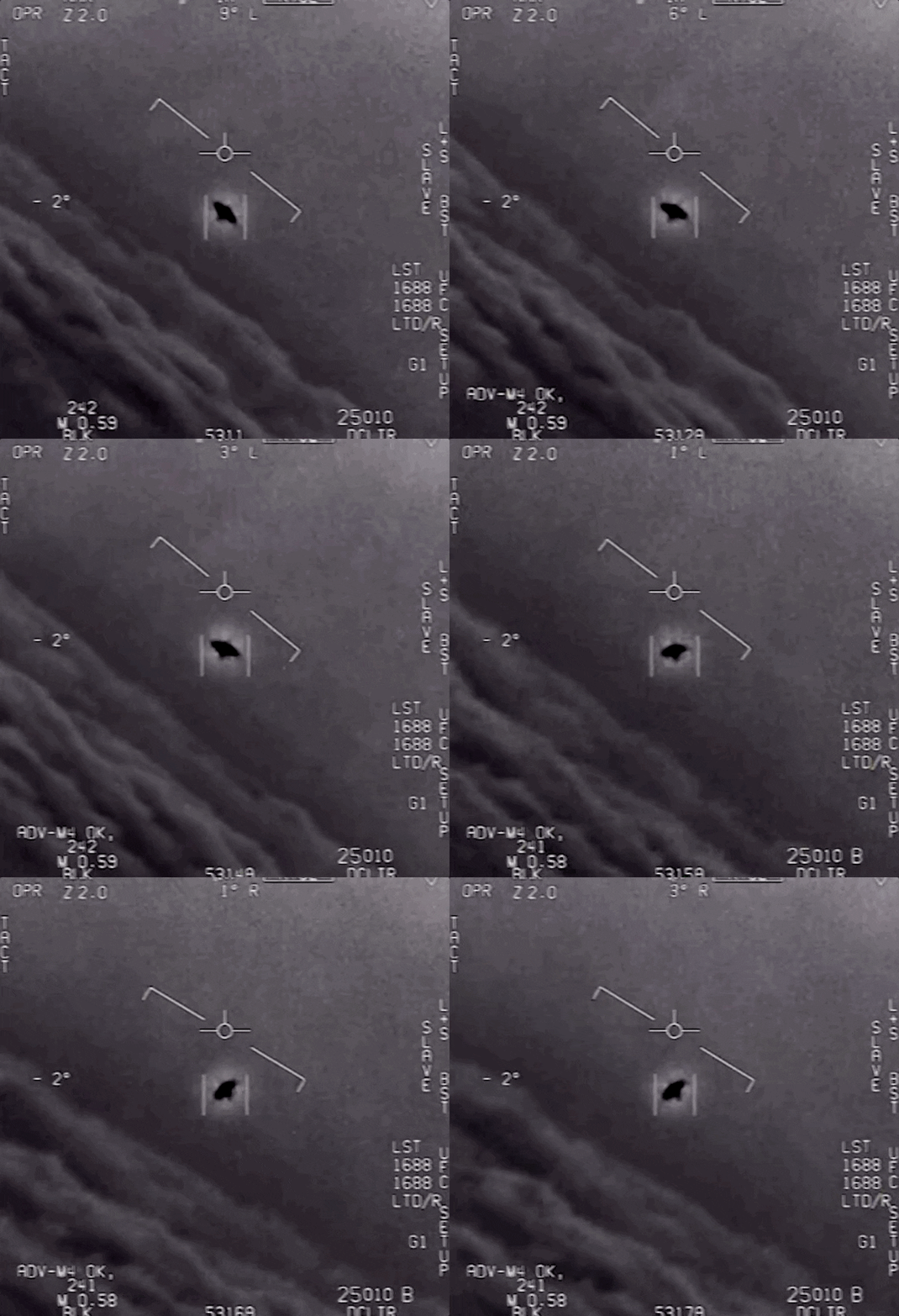





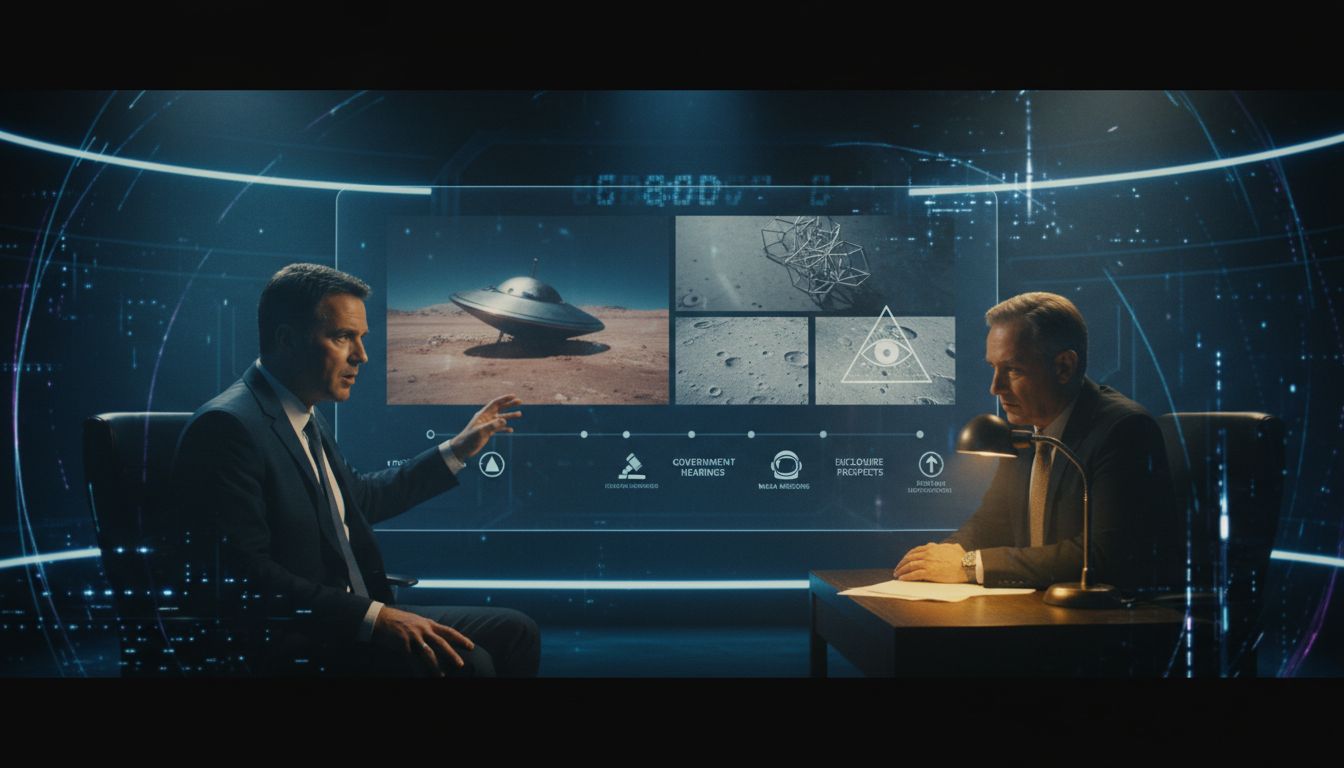

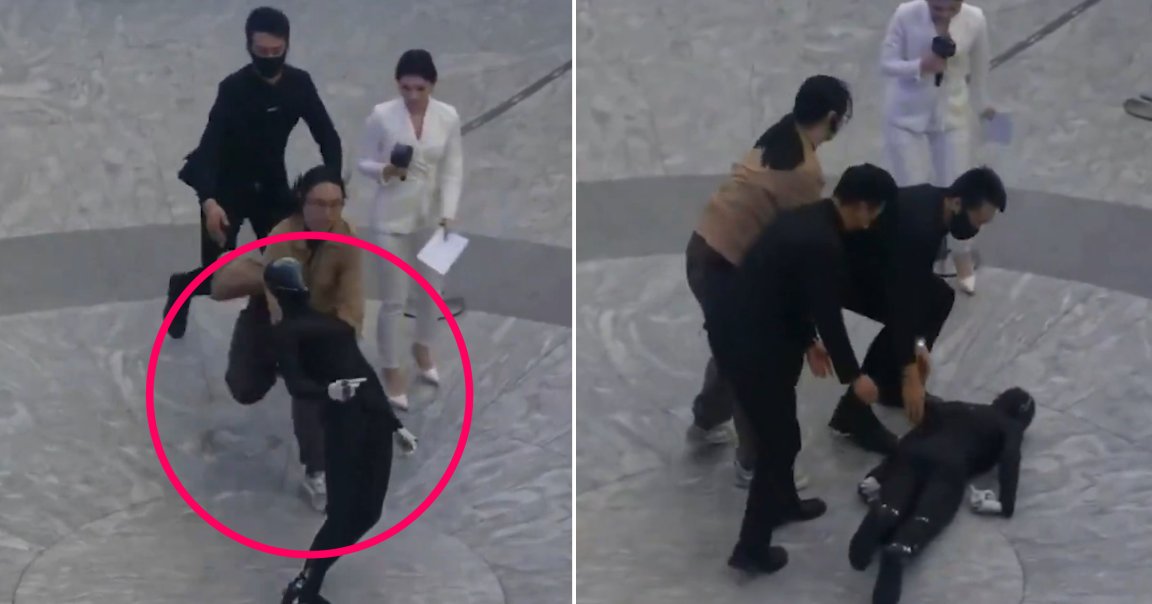


![located near Gruithuisen K crater. NAC controlled mosaic containing images M1173350480L/R, M1173357586L/R [NASA/GSFC/Arizona State University].](https://thedebrief.b-cdn.net/wp-content/uploads/2026/02/sinuous-lava-tubes-on-the-Moon.jpg)


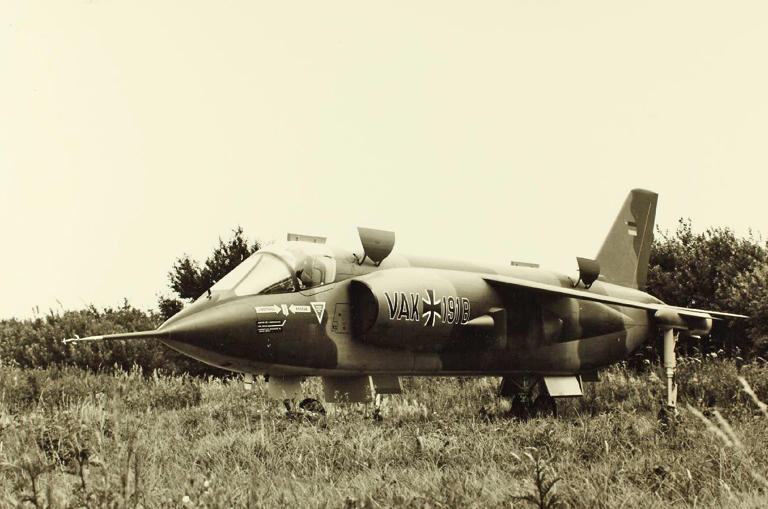
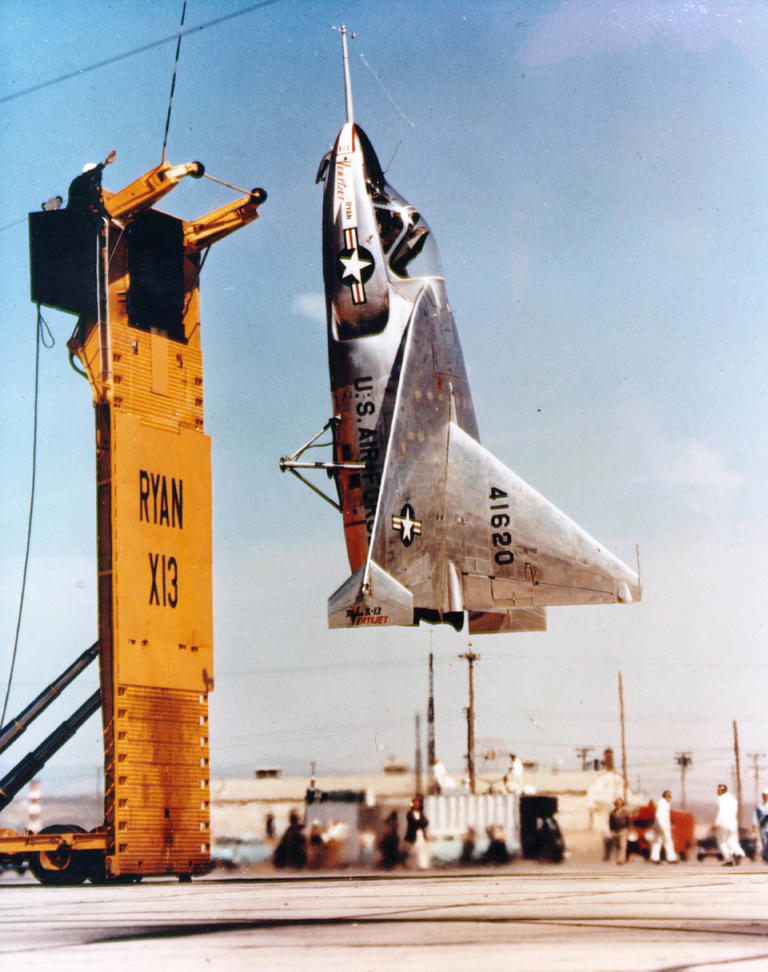


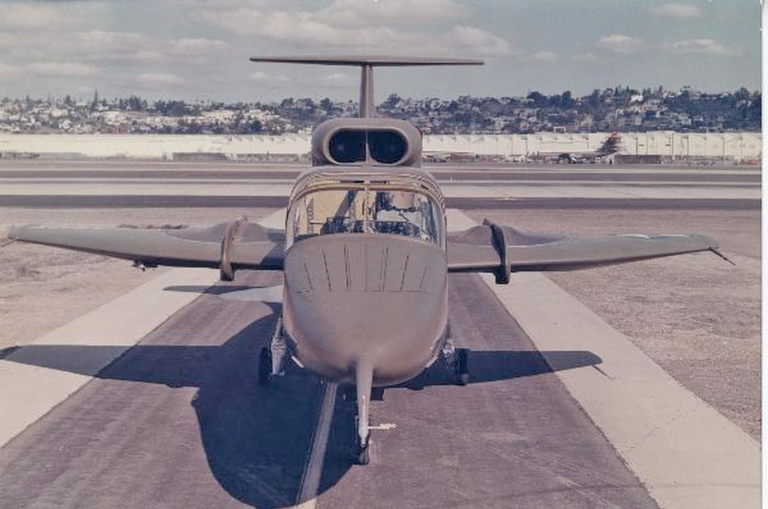
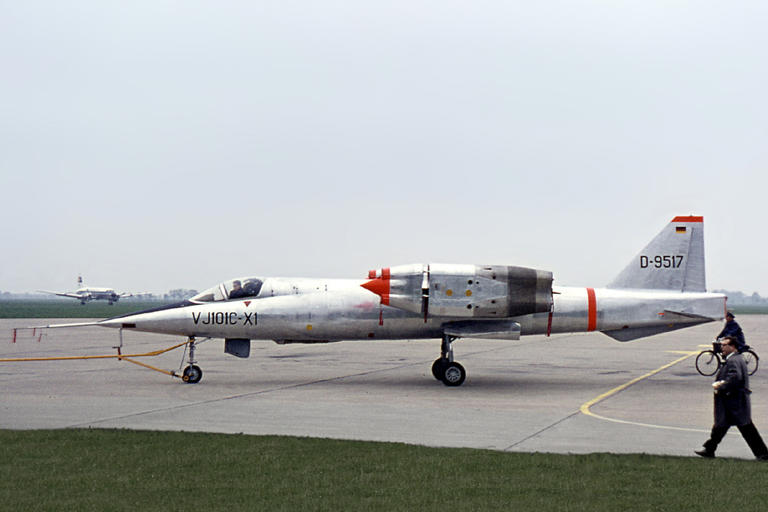
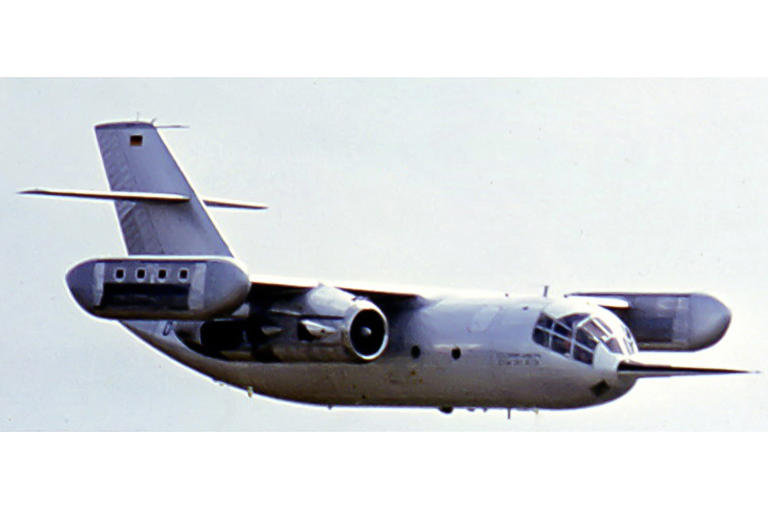
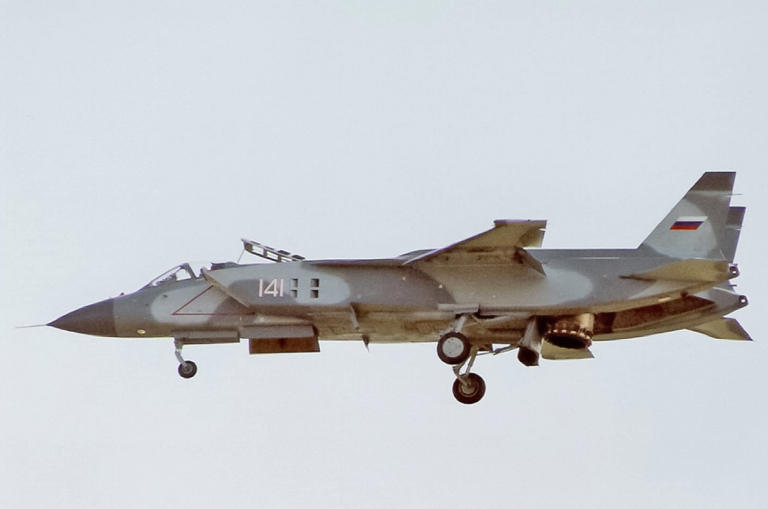
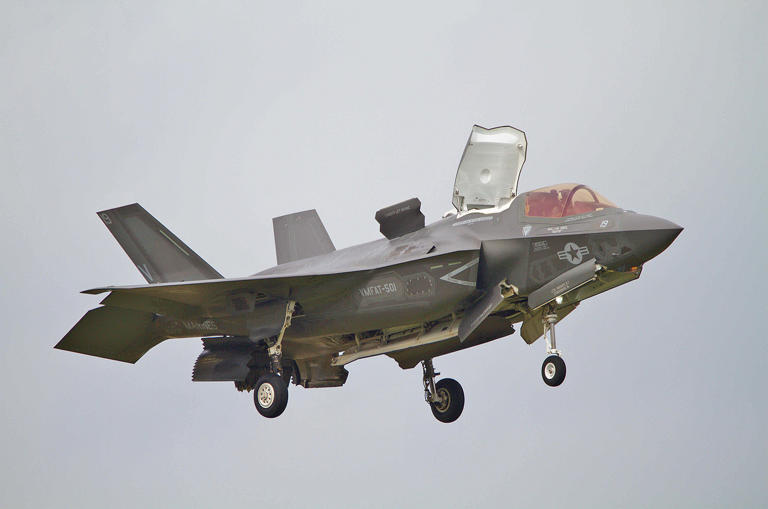
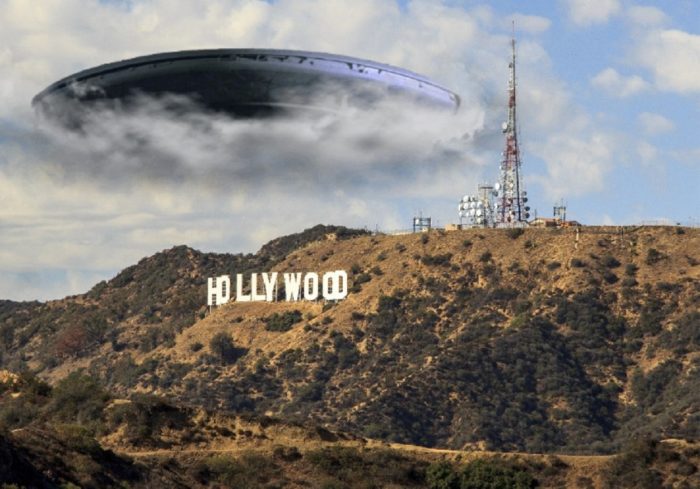




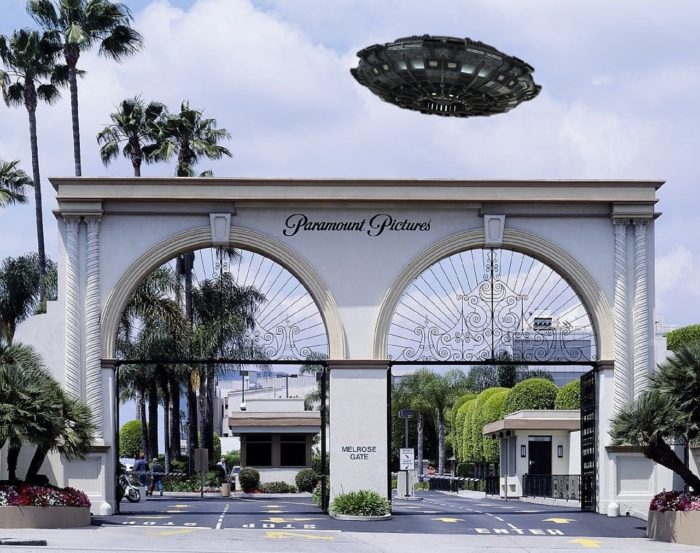




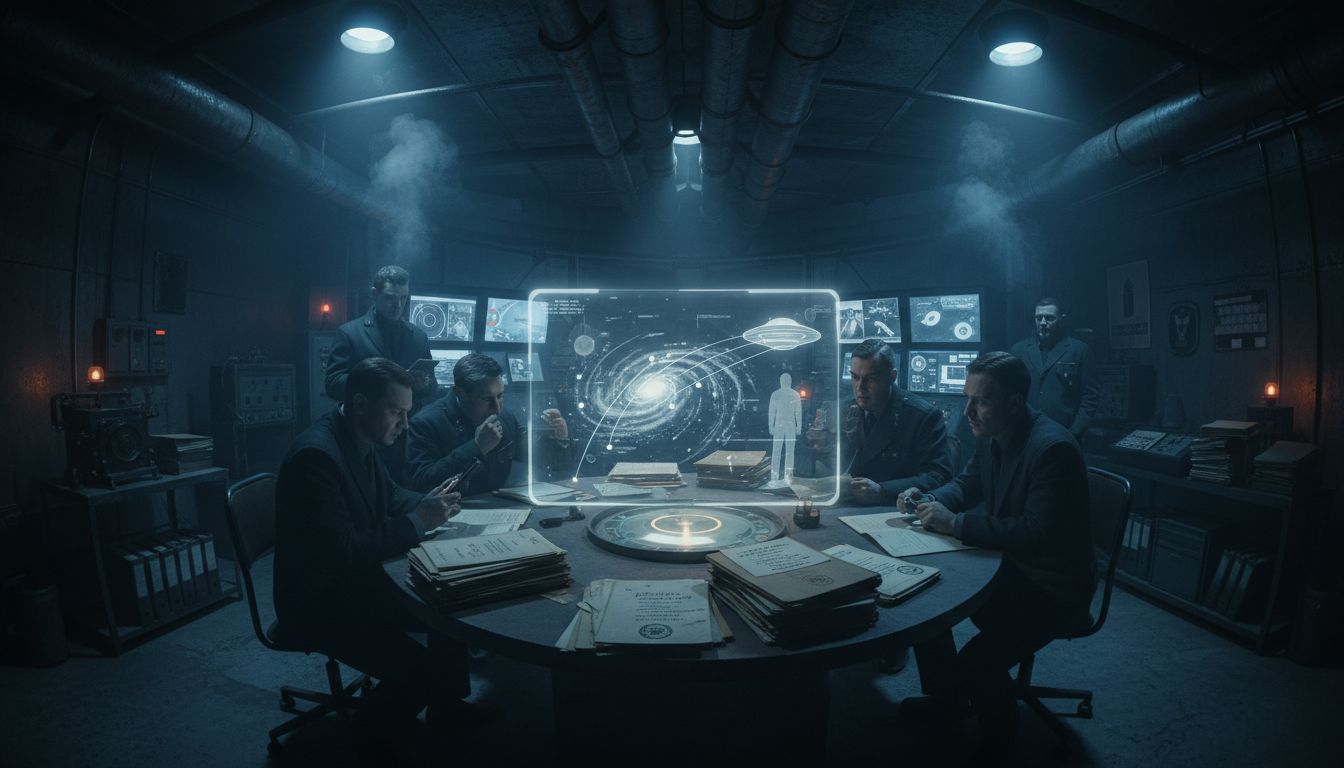




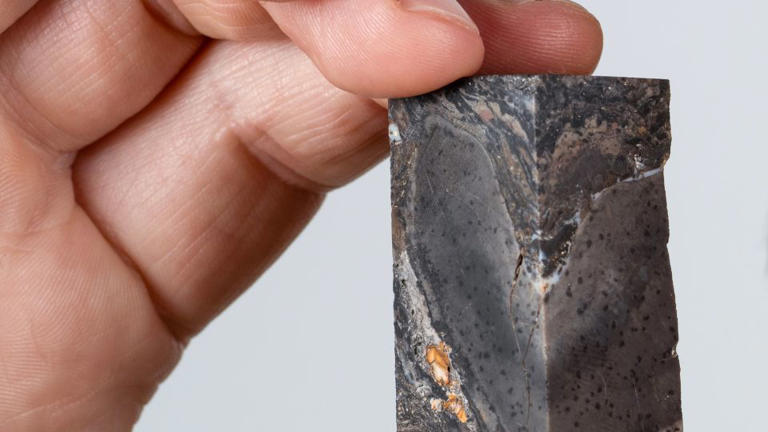


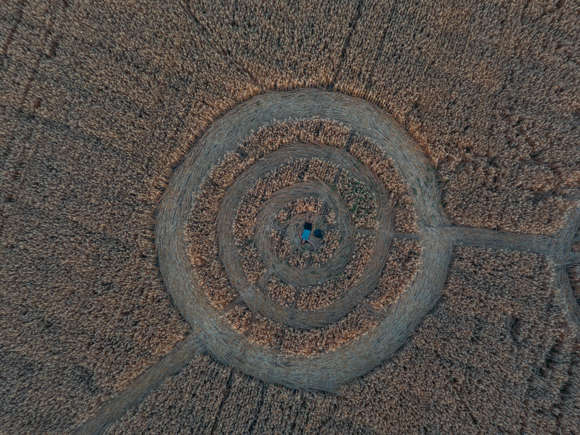
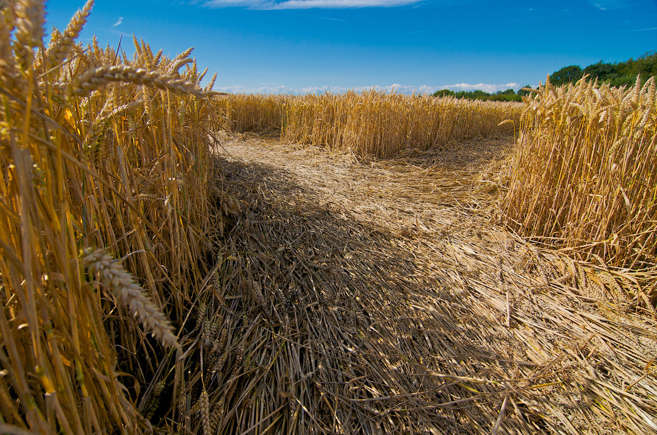








Comment: George tells the story of acquiring the archives:
RELATED VIDEOS