The purpose of this blog is the creation of an open, international, independent and free forum, where every UFO-researcher can publish the results of his/her research. The languagues, used for this blog, are Dutch, English and French.You can find the articles of a collegue by selecting his category. Each author stays resposable for the continue of his articles. As blogmaster I have the right to refuse an addition or an article, when it attacks other collegues or UFO-groupes.
Druk op onderstaande knop om te reageren in mijn forum
Zoeken in blog
Deze blog is opgedragen aan mijn overleden echtgenote Lucienne.
In 2012 verloor ze haar moedige strijd tegen kanker!
In 2011 startte ik deze blog, omdat ik niet mocht stoppen met mijn UFO-onderzoek.
BEDANKT!!!
Een interessant adres?
UFO'S of UAP'S, ASTRONOMIE, RUIMTEVAART, ARCHEOLOGIE, OUDHEIDKUNDE, SF-SNUFJES EN ANDERE ESOTERISCHE WETENSCHAPPEN - DE ALLERLAATSTE NIEUWTJES
UFO's of UAP'S in België en de rest van de wereld Ontdek de Fascinerende Wereld van UFO's en UAP's: Jouw Bron voor Onthullende Informatie!
Ben jij ook gefascineerd door het onbekende? Wil je meer weten over UFO's en UAP's, niet alleen in België, maar over de hele wereld? Dan ben je op de juiste plek!
België: Het Kloppend Hart van UFO-onderzoek
In België is BUFON (Belgisch UFO-Netwerk) dé autoriteit op het gebied van UFO-onderzoek. Voor betrouwbare en objectieve informatie over deze intrigerende fenomenen, bezoek je zeker onze Facebook-pagina en deze blog. Maar dat is nog niet alles! Ontdek ook het Belgisch UFO-meldpunt en Caelestia, twee organisaties die diepgaand onderzoek verrichten, al zijn ze soms kritisch of sceptisch.
Nederland: Een Schat aan Informatie
Voor onze Nederlandse buren is er de schitterende website www.ufowijzer.nl, beheerd door Paul Harmans. Deze site biedt een schat aan informatie en artikelen die je niet wilt missen!
Internationaal: MUFON - De Wereldwijde Autoriteit
Neem ook een kijkje bij MUFON (Mutual UFO Network Inc.), een gerenommeerde Amerikaanse UFO-vereniging met afdelingen in de VS en wereldwijd. MUFON is toegewijd aan de wetenschappelijke en analytische studie van het UFO-fenomeen, en hun maandelijkse tijdschrift, The MUFON UFO-Journal, is een must-read voor elke UFO-enthousiasteling. Bezoek hun website op www.mufon.com voor meer informatie.
Samenwerking en Toekomstvisie
Sinds 1 februari 2020 is Pieter niet alleen ex-president van BUFON, maar ook de voormalige nationale directeur van MUFON in Vlaanderen en Nederland. Dit creëert een sterke samenwerking met de Franse MUFON Reseau MUFON/EUROP, wat ons in staat stelt om nog meer waardevolle inzichten te delen.
Let op: Nepprofielen en Nieuwe Groeperingen
Pas op voor een nieuwe groepering die zich ook BUFON noemt, maar geen enkele connectie heeft met onze gevestigde organisatie. Hoewel zij de naam geregistreerd hebben, kunnen ze het rijke verleden en de expertise van onze groep niet evenaren. We wensen hen veel succes, maar we blijven de autoriteit in UFO-onderzoek!
Blijf Op De Hoogte!
Wil jij de laatste nieuwtjes over UFO's, ruimtevaart, archeologie, en meer? Volg ons dan en duik samen met ons in de fascinerende wereld van het onbekende! Sluit je aan bij de gemeenschap van nieuwsgierige geesten die net als jij verlangen naar antwoorden en avonturen in de sterren!
Heb je vragen of wil je meer weten? Aarzel dan niet om contact met ons op te nemen! Samen ontrafelen we het mysterie van de lucht en daarbuiten.
03-11-2025
Scientists are baffled after discovering 'impossible' life hidden beneath the Arctic sea ice
Scientists are baffled after discovering 'impossible' life hidden beneath the Arctic sea ice
Scientists have been left baffled after finding 'impossible' life thriving at the north pole.
The tiny microorganisms, invisible to the naked eye, live just beneath the frozen surface of the central Arctic Ocean.
Discovered by experts at the University of Copenhagen in Denmark, these bacteria survive on dissolved organic matter in the cold water.
They also need to convert nitrogen to survive, but bewilderingly, the gas is generally in short supply in the Arctic Ocean.
So how exactly the creatures are thriving in the water has left the scientists scratching their heads.
'[We] have discovered an important phenomenon beneath the Arctic sea ice that was previously thought impossible,' they say in a statement.
'This phenomenon could have implications for the food chain and the carbon budget in the cold north.'
The researchers also warn that there is less sea ice in the Arctic than there should be due to global warming, which may actually help the organisms to survive.
According to the researchers, the tiny organisms are officially known as 'non-cyanobacterial diazotrophs'. These microorganisms, primarily bacteria and archaea, can convert atmospheric nitrogen into a usable form, but do not photosynthesize like cyanobacteria
Researchers from the University of Copenhagen have discovered an important phenomenon beneath the Arctic sea ice that was previously thought impossible
According to the researchers, the tiny organisms are officially known as 'non-cyanobacterial diazotrophs'.
These are 'nitrogen-fixing' bacteria, meaning they need to convert atmospheric nitrogen into a usable form of nitrogen, such as ammonium, to stay alive.
Unlike other many other underwater bacteria, non-cyanobacterial diazotrophs (NCDs) do not photosynthesize.
The team's field work involved measurements of nitrogen fixation from water samples at 13 different Arctic locations from aboard the research ship RV Polarstern.
The experts found a surprising high nitrogen fixation rates, especially at the ice edge, where the ice melts most actively.
What's odd is that nitrogen is in relatively short supply in the Arctic Ocean, meaning nitrogen fixers shouldn't be able to thrive there.
'Until now, it was believed that nitrogen fixation could not take place under the sea ice,' said study author Dr Lisa W. von Friesen.
'It was assumed that the living conditions for the organisms that perform nitrogen fixation were too poor. We were wrong.'
The team's field work involved measurements of nitrogen fixation at several Arctic locations over two trips in 2021 and 2022
Pictured, researcher taking measurements of nitrogen fixation in water samples from the Arctic Ocean aboard German research vessel RV Polarstern
What is nitrogen fixation?
Nitrogen fixation is a process in which special bacteria convert nitrogen gas (N2) dissolved in seawater into ammonium.
Ammonium helps the bacteria to grow, but it also benefits algae and the rest of the food chain in the sea.
Researchers say there's levels of nitrogen fixation in their sampled areas of the Arctic 'previously thought impossible'.
This is due to 'non-cyanobacterial diazotrophs' - nitrogen-fixing' bacteria that don't photosynthesize.
In the Arctic Ocean, NCDs and other bacteria feed on dissolved organic matter released by algae, among other things.
In return, the bacteria release the 'fixed' nitrogen (ammonium), which helps algae in the surrounding water to grow.
Unfortunately, too much algae growth in the Arctic can be bad news as it can lead to out of control 'algal blooms' which are toxic and harmful to fish, shellfish, marine mammals and more.
According to Dr von Friesen, the results suggest the potential for algae production in the Arctic has been underestimated.
What's more, climate change is likely the ultimate cause of the observed changes.
In the Arctic, sea ice goes through a seasonal cycle each year, spreading in the autumn and winter and then receding in the spring and summer.
But due to climate change, temperatures are getting higher overall and the Arctic sea ice extent is getting lower on average.
Researchers warn that the Arctic is warming at rates up to four times faster than the global average, which has caused major declines in sea ice coverage, age, and thickness.
The researchers are the first to discover that the phenomenon of 'nitrogen fixation' occurs beneath sea ice even in the central Arctic Ocean
Measurements were taken at 13 different locations in the Arctic Ocean aboard the German research ship RV Polarstern
According to the researchers, areas of actively-melting sea ice generally have more nitrogen fixation compared with ice-covered parts of the Arctic.
It seems likely therefore that climate change is to blame for this elevated pattern of nitrogen fixation that they have observed.
Strangely, stretches of open water have similar levels of nitrogen as ice-covered areas, but the team aren't sure why this is.
The study, published in Communications Earth & Environment, is the first to show the phenomenon of nitrogen fixation occurs beneath sea ice even in the central Arctic.
Therefore, nitrogen fixation should be considered 'in the equation' when people try to predict what will happen to the Arctic Ocean in the coming decades as sea ice declines, the authors add.
Nitrogen (N) makes up almost 80 per cent of our atmosphere and is essential for plants and animals.
The carbon-nitrogen bond is one of the most abundant in organic chemistry.
Animals need it to to make proteins, which forms everything we need to live.
In plants it forms the basis of enzymes, proteins and chlorophyll.
Ecosystems need nitrogen and other nutrients to absorb carbon dioxide pollution and there is a limited amount available in plants and soil.
However, it is inert and most useful to life when turned into nitrates or nitrogen compounds.
The nitrogen cycle is the process by which the element is used and then fed back into the system.
Nitrogen (N) makes up almost 80 per cent of our atmosphere and is essential for plants and animals. The nitrogen cycle is the process by which the element is used and then fed back into the system
Nitrogen-fixing organisms convert nitrogen into the soil from the air.
Lightening is another way in which nitrogen reaches the soil from the air.
Nitrification is the process by which ammonia (a compound of nitrogen and hydrogen) that is in the soil is converted into nitrates by bacteria.
Plants then take up these nitrates through their roots.
When the plant dies this nitrogen is goes back into the soil.
Alternatively if the plant is eaten by an animal the nitrogen returns to the soil in their waste.
A terrifying simulation has revealed how people might really behave as the end of the world approaches.
And it suggests that humanity's darkest instincts might reign supreme at the very end.
Just like in apocalyptic movies and TV shows such as Mad Max or Fallout, the study suggests that doomsday might encourage some people to go on killing sprees.
Researchers say this is because the impending end of days means that the penalties for violence 'lose all meaning'.
That lack of consequences may mean some individuals return to 'more savage tendencies'.
Even though the simulated world was only digital, the researchers say the results provide a terrifying glimpse at how people would react in a real-world apocalypse scenario.
'This finding raises interesting questions about human behaviour,' co-author Dr Haewoon Kwak, of Indiana University Bloomington, told Daily Mail.
'It forces us to consider which actions are controlled by external penalties and which are controlled by our own internal ethics or social norms.'
In a terrifying simulation, scientists predicted how people would behave as the end of the world approached and found that some people would be driven to go on killing sprees (stock image)
Surprisingly, this simulation took place in the online video game ArcheAge (pictured). Players knew that the game would be deleted after 11 weeks, so researchers watched how they behaved as the end approached to simulate a real-life doomsday scenario
The players were free to play as normal, but knew their digital world would come to an abrupt end in just 11 weeks
'An MMORPG is not just a game; it is a "living laboratory" where large numbers of players interact and conduct a wide variety of activities, including economic, social, and combat behaviours,' says Dr Kwak.
The researchers analysed 270 million records of behaviour in the game to see if it would change when players knew the end was near.
Their analysis revealed thatt, while most players simply got on with things, some 'outlier' players quickly turned violent.
Overall, the researchers were able to identify 334 individuals who committed murder within the final two weeks.
The data also showed that some players showed a quite rapid increase in murderous tendencies as the end of the world drew near.
Dr Kwak says that the most likely explanation for this is that the normal penalties for violence lost their sting when the world was already doomed.
Apocalyptic films, such as Mad Max (pictured), often imagine that the end of days would lead to violent outbursts. This study shows that these worries might be correct
The researchers found that 334 individuals, separated into four clusters, started showing increasingly violent behaviour towards the end. These graphs show how many other players were killed by each cluster of murderers
The five most likely causes of human extinction
Rogue AI
Nuclear war
Engineered bioweapons
Climate change
Natural disasters or asteroid strike
In ArcheAge, player-versus-player combat between two players of the same in-game race is classed as 'murder' and normally carries an in-game penalty.
However, when the end of the beta period approached, these penalties lost their meaning, and people's basicinstincts were given free rein.
In terms of what predisposed someone to turn violent, the researchers found that these players were commonly among the group known as 'churners' who voluntarily quit the game before the end of the beta.
This suggests that people may be more disposed towards anti-social behaviour once they lose their 'sense of responsibility and attachment'.
However, the researchers still aren't convinced that real people would be driven to bloody murder sprees in an actual apocalypse.
'An action inside a game, such as clicking a mouse, is fundamentally different from committing a physical act of violence in the real world,' says Dr Kwak.
At the same time, the researchers found that the biggest changes in people's behaviour might actually be a good deterrent against violence.
While there were a few violent outliers, most players actually showed a striking increase in social behaviour.
In ArcheAge, player-versus-player combat between two players of the same in-game race is classed as 'murder' and, unlike killing in battle, is met with in-game consequences. As the end approached, the number of deaths linked to murder increased as the consequences 'lost meaning'
However, unlike in the TV series 'Fallout' (pictured), the end of the world won't lead to total chaos. In fact, the researchers found most people increased their social behaviour and became significantly more friendly as doomsday loomed
As the end approached, players abandoned progressing in the game and gave up on activities like levelling up and completing quests.
Instead, playersmassively increased their social activity, and the researchers observed peaks in behaviours like sending mail or forming 'parties' for group play.
This suggests that a shared crisis may actually strengthen existing social relationships and encourage the formation of new ones.
In fact, this kind of behaviour is much more likely to be what we would see in a real-life doomsday scenario.
Dr Kwak says: 'This suggests that when faced with an "end times" scenario, players focused on what was truly important: their social relationships. It is very possible we would see this in real life.
'In times of crisis, people often come together to support one another, reinforcing the social bonds that connect them.'
The Doomsday Clock was created by the Bulletin, an independent non-profit organization run by some of the world's most eminent scientists.
It was founded by concerned US scientists involved in the Manhattan Project, which developed the world's first nuclear weapons during World War II.
In 1947, they established the clock to provide a simple way of demonstrating the danger to the Earth and humanity posed by nuclear war.
The Doomsday Clock not only takes into account the likelihood of nuclear Armageddon but also other emerging threats such as climate change and advances in biotechnology and artificial intelligence.
The Doomsday Clock was created by the Bulletin, an independent non-profit organization run by some of the world's most eminent scientists
It is symbolic and represents a countdown to possible global catastrophe.
The decision to move, or leave the clock alone, is made by the Bulletin of the Atomic Scientists, in consultation with the bulletin's Board of Sponsors, which includes 16 Nobel laureates.
The clock has become a universally recognised indicator of the world's vulnerability to catastrophe from nuclear weapons, climate change, and emerging technologies in life sciences.
In 2020, the Bulletin of the Atomic Scientists, an expert group formed in 1945, adjusted the Doomsday Clock 100 seconds to midnight, the closest we've ever come to total destruction - and it remained there in 2021.
That sent a message that the Earth was closer to oblivion than any time since the early days of hydrogen bomb testing and 1984, when US-Soviet relations reached 'their iciest point in decades.'
The Bulletin also considered world leaders response to the coronavirus pandemic, feeling it was so poor that the clock needed to remain in its perilously close to midnight position.
The closer to midnight the clock moves the closer to annihilation humanity is.
October 30 marked the 87th anniversary of the most successful production of a science fiction work in history. Herbert Wells’ radio play “The War of the Worlds” was so carefully styled to resemble a real news report from the scene of events that many listeners believed in the reality of an alien invasion. You can laugh at this story, or you can think about how protected we are in today’s world of deepfakes, clip thinking, and crazy events in world politics from repeating this. Or, conversely, failing to respond to a genuine alien invasion.
Alien invasion
The War of the Worlds, 1938
Imagine the situation. It’s the eighth evening, and you’re doing your household chores. There’s an entertainment program on the radio, the hosts are joking, talking about some adaptation of a science fiction novel, announcing the weather forecast, and then music starts playing.
Suddenly, the concert is interrupted by breaking news. Astronomers report that several powerful flashes have been spotted on Mars. After that, pleasant music plays again, as if nothing has happened.
However, the music doesn’t play for long. Because the news comes back on. The reporter says that an unknown cylindrical object has fallen near a small town somewhere in your country. You look at the map and realize that the town is completely real and located exactly where the reporter says, and he continues to describe what is happening.
Would you believe reports of aliens landing? Source: evil.fandom.com
The cylinder unscrews and monsters with pike heads crawl out of it. The local police try to establish contact with them, but they start shooting with ray guns. The broadcast is interrupted and the announcer says something about technical problems. The music starts playing again, but soon reports come in about new attacks by strange creatures and fires.
It seems that an alien invasion has begun and something has to be done. According to radio reports, fighting is taking place in the capital, and your neighbors are knocking on your door in a panic. Some are packing an “emergency suitcase,” while others are cleaning their weapons.
Meanwhile, the nature of the broadcast changes and it begins to resemble a radio play. Soon it becomes clear that this is exactly what it is. You breathe a sigh of relief and say a few swear words to the radio station.
Looks like a new episode of Black Mirror? But no, this is a completely true story that took place in the United States in 1938. Theater director Orson Welles decided to stage a radio play based on the book The War of the Worlds by his famous namesake Herbert Wells. For this purpose, he moved the Martians’ landing from early 20th-century England to the United States in 1938. However, this was not enough for him, and he decided to stylize it as real news reports. He succeeded.
Orson Welles. Source: Wikipedia
The extent of the panic caused by people believing that the landing was real was greatly exaggerated by the newspapers at the time. However, the fact remains that thousands of people believed it, despite the fact that the hosts said at the very beginning of the broadcast that it was a staged event. People were really panicking and calling everywhere they could, and the police arrived at the radio station to force it to stop spreading panic.
The era of fake news
Here, one could laugh at the gullibility and inattentiveness, if we were even slightly different from those listeners. By 1938, radio listeners were already quite familiar with the story, and stylizing the production to resemble real events was not something completely new. Wells’ book was also well known. And none of this prevented people from, as we would say today, falling for the fake.
In the 87 years since that play, we have seen alien invasions many times in films and TV series. We know that it is not difficult to create not only audio but also video footage that, under certain conditions, will look like proof that someone has flown in to visit us. Especially if this video is posted on social media, where it will be flooded with comments and reposts and eventually reported in the news.
Nowadays, it is even possible to create a fake photo of the Pope embracing Madonna. Source: www.theguardian.com
Would you believe such a video? What about three videos depicting three different episodes of the invasion? Would you scrutinize the details, looking for signs of rubber tentacles and evidence that the flying saucer is painted? Especially if, on top of that, there is a comment from some “expert” explaining that this frame clearly shows the inhuman anatomy of the aliens, and that the “death rays” captured by the camera have no analogues among earthly developments.
And all this is the reality of the second decade of the 21st century, and we are already living in the third. Generating video using artificial intelligence has long been a reality. The modern Orson Welles simply did not get there first.
We should admit that we live in the age of fake news, and we are less protected from mistaking “entertainment content” for news from the scene than listeners of American radio in 1938. The arsenal of ways to deceive the neural network in our heads has grown incredibly.
As for aliens, we don’t even know why we should believe in them or not, because we’ve only seen them in movies. It is quite possible that they really do have six fingers on each hand. Or maybe they don’t have hands at all, and they simply flow from one form to another, in each of which we can see something like arms and legs, but woven together in such a combination that it immediately becomes obvious that it is the AI that drew it.
Who knows how many fingers aliens really have? Source: phys.org
International politics
When discussing the events of 1938 and considering whether something similar could happen again in 2025 or 2026, it is difficult not to mention the word “politics.” The fact is that many people who took the radio broadcast of The War of the Worlds for a real invasion thought that the Germans had attacked the United States. No, most Americans knew that Germans did not have tentacles, but the political situation in the world was rapidly spiraling toward the start of World War II, and people were already so hyped up by the news that they were ready to hear news of a landing, just not Martians.
In general, this is a very complex problem: we believe what we are prepared to believe. A large part of the population is capable of interpreting certain natural events as manifestations of what they believe in. In other words, if Orson Welles’ radio broadcast is successfully replicated, a certain number of people will start posting messages on social media saying that they personally have seen an alien spacecraft, attaching photos showing clouds or the planet Venus.
The overlay of all this with news that sounds no more optimistic than it did before World War II greatly contributes to the general expectation that some kind of invasion is bound to begin. Politicians sometimes make statements so strange that it’s hard not to suspect they’re being controlled by aliens. And high-tech invasions of one country by another have long since become a reality.
At night, drones are difficult to distinguish from UFOs. Source: nypost.com
We should not forget about the rapid development of unmanned aerial vehicles. In just one decade, they have evolved into aircraft that experts would have considered science fiction twenty years ago. At the same time, most military drones have never been seen by the general public, which is why they can easily be mistaken for UFOs at dusk.
A characteristic example here is the unidentified drones over the countries of Northern Europe, which have been terrorizing local airports and military bases over the past few months. Many believe that these are truly alien craft, and this claim interacts in a complex way with the assumption that, in reality, these drones belong to Russia.
Doesn’t this situation resemble the one in the late 1930s, when the Germans were about to invade somewhere? After all, no one would dare claim that aliens couldn’t have drones of their own. Which means that footage of one of the most advanced drones in action can easily be passed off as evidence of extraterrestrial existence — and many people would believe it.
But what if they actually arrive?
So far, we’ve been talking about how not to believe a fake about aliens. But, theoretically, the opposite problem is also possible: beings from other worlds could arrive and reveal themselves openly — yet no one would believe it, because everyone knows how easy it is to create a fake video.
When you flew in to make contact, and everyone thought you were fake. Source: phys.org
It’s one thing when it’s a real invasion. Whether it’s a laser beam or a missile — when it hits something near you, all doubts disappear. Of course, it would be nice to know that someone has attacked Earth before you experience it firsthand, but, let’s be honest, this problem is unsolvable even in earthly wars.
But the situation in which aliens arrive and stop somewhere beyond Neptune’s orbit, politely talking with world leaders while waiting to be invited to Earth, is much worse. Even if the aliens deliver a greeting to all the peoples of Earth and it is broadcast on every TV channel, it would still be less convincing than the 1938 radio adaptation of The War of the Worlds.
Because just as people believe what they’re ready to believe, they don’t believe what they’re not ready to perceive. So it’s easy to imagine a situation where humanity has been communicating with aliens for decades, dozens of videos featuring them are available online, thousands of people have met them in person — yet tens of millions keep insisting that it’s all fake.
Therefore, there are no universal tips on how to tell a fake about aliens from a real invasion. Except, perhaps, to listen carefully to the radio broadcast from the very beginning — they might mention there that it’s all just a dramatization.
Brutally Horrifying and Harrowing Real-Life Accounts from Halloweens Past
All of us are familiar with Halloween, even if we don’t celebrate it. For most people, it is a fun night of the year where people get dressed up in all manner of spooky costumes and attend parties, or gather a group of friends to watch scary movies, and, for the younger ones, venture outside Trick-or-Treating, collecting vast amounts of sweets and candy. There are, though, many accounts on record that are far from fun, and that have made Halloweens past, at least for those involved, a truly scary occasion.
While we will look at some of the more paranormal encounters shortly, it is perhaps best to start with some of the darker accounts on record, many of which were thought to be Halloween pranks but were found to be anything but. On October 15th, 2015, for example, the body of Rebecca Cade was found hanging from a fence in Ohio. For hours, people walked by assuming it was a Halloween display, until it was discovered to be real. Her injuries made it clear she had been murdered.
A similar incident occurred the previous year, on October 29th, 2014, in Long Island, New York. Witnesses saw a man drag a decapitated body into the street and kick the head to the opposite curb. Many mistook it for a Halloween stunt and continued on with their day until someone tried to move the body out of traffic and realized it was genuine. Police later identified the victim as 66-year-old professor Patricia Ward. She had been killed by her 35-year-old son, Derek, who reportedly had a history of mental illness and lived with her. After the killing, he died by suicide by stepping in front of a train.
There are many more similar Halloween encounters. For example, a 42-year-old woman in Delaware died by suicide on Halloween, hanging herself from a tree in her front yard. Her body remained there for five days because neighbors assumed it was part of the holiday decorations. In a similar case in Los Angeles, residents of an apartment building passed what they believed was a disturbingly realistic prop with severe facial damage; after several days, they discovered it was a man who had died by suicide from a gunshot. In 2012, in Pennsylvania, a 9-year-old girl was shot in the shoulder and arm by a relative who, in the dark, mistook her black-and-white Halloween costume for a skunk. In 1992, 16-year-old exchange student Yoshihiro Hattori was fatally shot while trying to attend a Halloween party. He and a friend went around to the back of the house upon arrival, leading the homeowner, Rodney Peairs, to mistake them for intruders and shoot Hattori.
As well as these accidental deaths and bodies mistaken for props, there have also been some dark, brutal murders committed on Halloween. On Halloween night in 2012, for example, Rebekah Gay answered the door to her mother’s fiancé, John White, a church minister in Michigan. He killed her, hid her body in nearby woods, then returned to dress her three-year-old son in his costume and drive him to his father’s home. White even asked his congregation to pray for Rebekah’s safe return. Her body was found about 20 hours later. He was convicted of her murder and later died by suicide in prison. White had a long history of violence against women. In 1981, he invited 17-year-old Theresa Etherton to see a racetrack he had built in his basement and then attacked her; she escaped, and he served two years in prison. In 1994, he killed a woman with whom he was having an affair and left her body in a wooded area. Because prosecutors could not prove intent, he was convicted of manslaughter.
Another chilling case occurred in 2011 in British Columbia. Eighteen-year-old college student Taylor Van Deist left home dressed as a zombie to meet a friend for trick-or-treating. She texted that she thought someone was following her and was later found near railroad tracks with serious injuries; she died in the hospital shortly afterward. Matthew Foerster was arrested, confessed during questioning, and was sentenced to life in prison for her murder.
Arguably, one of the most horrific Halloween crimes occurred on Halloween night in 1974, in Pasadena, Texas, when Ronald Clark O’Bryan laced candy with cyanide after he had taken out a huge life insurance policy on his own children. He dished out the poisonous sweets to his son, Timothy, his daughter, and several other children in the area. Timothy was the only one who ate the candy, tragically dying a short time later. O’Bryan was arrested and charged with his murder and was executed for his crimes a decade later.
While these accounts are indeed tragic and horrifying, there are others on record that are seemingly paranormal in nature.
Without a doubt, one of the strangest accounts to have unfolded around Halloween occurred in Provincetown, Massachusetts, in 1939, when multiple residents of the town reported having unsettling encounters with a “tall figure” wearing black clothes, and, according to some witness statements, had “glowing eyes”.
With Halloween approaching, Provincetown was beginning to quieten down as many of the “summer tourists” had left for the usual abodes in various places across America. On this particular evening, a local woman, Mary Costa, was walking past the town hall when something suddenly leaped out of the nearby bushes. According to the report she made later, this figure was at least eight feet tall, and had “pointed silver ears and glowing blue eyes”. This strange entity stared at Mary for several seconds before suddenly jumping, almost directly upwards, eventually disappearing. As soon as it had done so, Mary turned and saw the dim lights of a local coffee shop window, and she immediately ran towards it. She burst inside and blurted out what had happened to her. Several of the men inside the coffee shop immediately ran outside to see if there was any sign of the attacker, but their efforts were in vain.
Mary reported the incident to the local police, who recorded the incident but did little to follow it up in any serious way. However, during the days that followed, more and more reports of an almost identical nature were made to the police, forcing them to take this strange prankster more seriously. All of the details in each of the reports resonated with each other; the figure dressed in black from head to toe; it wore some kind of cape that covered its head and back, it had glowing eyes, which some witnessed reported as red, while others claimed they were a silver-blue color; it had pointed ears, and perhaps strangest of all, a “weird buzzing” sound often accompanied this menacing figure, a sound that some witnessed likened to a fly or a bee. Of even greater intrigue, this figure seemingly had the ability to leap at least ten feet into the air.
In fact, the police had their own encounter with this bizarre figure around the same time the reports began to increase. On the night in question, they received a call that the figure had been spotted in the playground of a local school. The school premises were surrounded by a tall fence, and the police saw an opportunity to trap and apprehend the culprit. Four police officers arrived at the school a short time after receiving the report, each with a flashlight in one hand and their gun in the other. Not long after they entered the school grounds, they saw the bizarre figure in front of them caught in their flashlight beams, with one officer stating that instead of a face, the figure had a “silver painted mask”. The officers ordered the figure to freeze or they would shoot. Rather than doing so, however, the curious entity leaped into the air, clearing the tall fence with ease.
As the reports increased, so did the media coverage of the encounters, and in turn, many different monickers were bandied around. Some referred to the attacker as The Provincetown Phantom, while others called him the Devil of the Dunes. Others still named him The Phantom Fiend, or The Black Phantom. However, it was The Black Flash that stuck, and quickly, all references to the bizarre encounters used this name.
Perhaps one of the strangest aspects of the reports made to the police was that on several occasions, they received reports of encounters with the Black Flash from two different locations at the same time. This suggested to police that there very well could be more than one menace to deal with, and, over the years, some researchers have even pondered if some kind of portal or teleportation device was utilized, making The Black Flash either an eccentric scientist-type figure, or something more supernatural in nature. Indeed, one particular report from a local teenager perhaps suggests just this. He claimed that he was making his way home from the library when the Black Flash appeared out of nowhere right in front of him. Most terrifying of all, though, the witness insisted that the figure had “spat blue flames” towards him from its mouth.
Despite this last report, although unsettling, none of the encounters were violent. More often than not, this figure simply leaped out of somewhere (although witnesses could rarely establish just where the figure had leaped from) in an effort to scare the witness. It would then simply leap into the air and disappear, with most encounters with the Black Flash lasting no longer than a few seconds. One witness, Charles Farley, even fired his gun at the figure, certain that he had hit it. However, rather than drop to the ground, the figure simply “laughed” back before leaping over a tall fence and disappearing into the night. Does this suggest some kind of bulletproof body armor, or is it another sign that the Black Flash has more of an otherworldly quality to it than many might wish to believe?
It is hard to ignore the similar details of the Black Flash encounters to those of Spring-Heeled Jack, who terrorized Victorian England a century earlier. This strange figure would often leap out of nowhere in an effort to startle people, with many of the witnesses stating it had glowing red eyes and blue flames coming from its mouth. Moreover, Spring-Heeled Jack had remarkable leaping ability, able to clear high fences and even two-story buildings in one jump. Although most of the sightings of Spring-Heeled Jack had slowed as the nineteenth century neared its close, there were tentative sightings in the early 1900s and 1940s, and even speculative reports from as recently as the 1970s. Might we consider that there is some kind of connection between Spring-Heeled Jack and the Black Flash of Provincetown, and if so, just what might that connection be?
Whatever the truth, sightings and reports of the Black Flash slowed dramatically as November unfolded, with at least one researcher, Theo Paijmans, claiming they ceased entirely. However, there are odd reports of this strange menace in the years that followed, with the last (known) reported sighting taking place one cold evening in December 1945. The account is detailed in the book Passing Strange by Joe Citro (it can also be found in Robert Cahill’s New England’s Mad and Mysterious Men), and states that on the night in question, four children from the Janard family were outside in the front yard when they suddenly noticed a strange figure heading in their direction coming out of the fog. Although their parents were not at home, they immediately ran inside the house to take cover from the menacing creature.
Suddenly, the sound of the doorknob of the front door being turned reached their ears as the Black Flash tried to gain entry to the property. For several minutes, each of the doors and windows rattled temporarily as the creature tried all potential points of entry. While three of the children hid behind furniture, the oldest boy, Allen, proceeded to fill a bucket with hot water. He then ventured up to the second floor of the property, opened the window, and peered outside. There, directly below him, was the Black Flash. He tipped the water out, watching as it drenched its target. The figure let out a “startled gasp” before it ran off back into the fog.
If we return to the previously mentioned Robert Cahill for a moment, when he traveled to the region decades later to speak with witnesses, he learned of the account of a local pool shark named Eight Ball Eddie. According to what Cahill learned, Eddie was dismissive of the sightings, convinced that the Black Flash was nothing but a man in costume. However, one evening as Eddie was returning home, he encountered the Black Flash for himself. Eddie, still insistent that the figure was merely a “tall man”, stood there looking at the figure, which wore a black hood and had glowing, silver eyes. After several moments, Eddie ordered the figure to get out of his way. The figure, though, lunged toward Eddie and struck him across the face, forcing Eddie to fall to the ground. At this point, Eddie was beyond unsettled by the incident, and after dragging himself to his feet, he turned and ran as fast as he could. The next morning, Eddie still had a “red handprint” where the figure had struck him.
There were, as we might imagine, many explanations put forward in the months and years that followed. Before we look at some of those, though, it is worth our time exploring the year 1939, in general, and how the entire New England area experienced a series of bizarre events. In January, for example, a bizarre “sea monster” washed up on the shore near Wood End. Although it was officially ruled to be a “decomposing basking shark”, many people claimed it bore a remarkable resemblance to an aquatic creature witnessed in 1886 by George Reedy. Whatever the truth, this was just the first of the bizarre events in the region that year. For example, it would eventually come to light through an annual police report that cases of “dog bites and stray cats” had reached an “all-time high” in 1939. Then, in September 1939, several arson attacks occurred, for which a local 40-year-old man was later arrested. In short, the mindset of the people of Provincetown was geared toward something out of the ordinary. Of course, whether this played a part in the sightings of the Black Flash that unfolded in October and November of that year remains very much open to debate.
One suggestion put forward was that the Black Flash was nothing more than four teenagers who were playing a Halloween prank on the town that carried on too long, by the Chief of Police, Anthony Tarvers. He even claimed that he knew the identity of one of the teenagers, although none of these statements were part of an official police press release. He claimed that the boys split into two groups of two, and then one stood on top of the other’s shoulders, using a black cape to cover themselves and using a flour sifter as a makeshift mask. It is interesting to note that he promised to speak with the teenager’s parents, and shortly after he made that statement, the sightings came to an abrupt stop.
The explanation, though, has several holes that can’t be ignored. Perhaps one of the most glaring of these is how the boys – if that is what they were – managed to scale such heights on one leap? Moreover, how did they manage to overpower their potential captors (on several occasions) without being uncovered? Even more glaring, how did the “boys” manage to withstand being shot from close range, and even stranger, how did they manage to pull off the illusion of glowing red or silver eyes and blue flames from the mouth?
With all of these questions in mind, we might consider whether Tarver was simply wide of the mark in his assessment, or whether that statement, an unofficial one, remember, was one he made to simply calm the townsfolk, as well as create the determination that the local police force had succeeded in stopping the infamous Black Flash.
It isn’t just strange creatures lurking in the shadows that have taken place on or around Halloween. On Halloween night 1963, for example, in the small town of Trancas in Argentina, three sisters witnessed a strange, otherworldly object up close. On the night in question, the three sisters were settling down at the Moreno family home, with Argentina and Jolie having traveled from the town of Rosario to see their sister, Yolanda, as well as their parents. They each had their young children with them, and each of their husbands was away on military service. On this evening, following the sudden failure of the electric generator, the family had eaten their evening meal earlier than usual, before settling down in their bedrooms not long after.
At around 9 pm, however, the live-in domestic worker, 15-year-old Dora Guzman, suddenly ran to the main part of the house, claiming there were “strange lights” moving along the railroad outside of the house. The sisters’ parents remained asleep, while Jolie was in the middle of feeding her baby. Argentina and Yolanda ventured to where Dora was, immediately noticing the look of concern on her face, something which was unusual in itself. When they asked her to explain to them what she had seen, she stated that there were some kind of “machines” near the tracks. There was frequent guerrilla activity in the area, and the two sisters contemplated whether that was what Dora had seen. Quietly and cautiously, the two sisters opened the front door of the property and, along with Dora, ventured outside to investigate.
With one sister holding a flashlight and the other a small handgun, the three young women made their way toward the railroad tracks, keeping themselves hidden within the crops. They could see the strange lights moving in the distance; now and then, a strange “beam” would shoot upwards into the night sky. They began to question if there had been a train crash or if a guerrilla group had targeted a passing train. Then, they saw what seemed to be “human silhouettes” moving close to the lights, causing them to stop their approach immediately. They remained where they were for several moments before deciding to carefully continue towards the tracks. The closer they got, they could eventually see that the lights were connected to a solid object – the underside of a disc-shaped craft. The craft appeared like one disc on top of the other, with a green beam of light running in between them, creating a “tunnel” effect. After several moments' pause, they decided to move closer.
Moments after they did so, however, a pair of “dim greenish” lights appeared directly in front of them. Moreover, they were heading in their direction. To begin with, despite the surreal nature of the events they had witnessed, they contemplated if the lights belonged to one of the farm workers’ (Rodriguez’s) pick-up trucks, but before they could contemplate anything more, the three young women were completely enveloped within the green glow. It was at this point that the trio looked upwards, immediately noticing a huge disc hovering directly over them. Everything around them, including their clothes and faces, glowed green. The craft turned slowly in the air as it continued to hover overhead. From this angle, the three witnesses could see several windows or portholes on the underside of the craft.
Then, a beam of “solid light” emerged from the middle of the craft’s underside and stretched to the ground, a light that the witnesses later described as somehow “solid”. Several moments later, Yolanda stepped forward and placed her hand into the strange light. The other two looked on as the light simply went straight through her hand, as opposed to stopping on it as a “normal” light would. Yolanda also stated that although she didn’t feel any pain when her hand was in the light, she could feel distinct heat coming from it. Then, without warning, the beam began upwards, back towards the craft. As it did so, the three young women became aware of a strange mist that had appeared directly underneath the object, each particle glowing green and seemingly visible in the glow of the light. This strange fog-like mist began to grow thicker as the three witnesses continued to stare at it in awe. It was several moments before the two sisters noticed that Dora appeared to be in some strange trance.
The two sisters did their best to free Dora of the apparent spell she was under, but she continued to stare blankly at the mist above her. Then, the green glow was replaced by a bright orange, while above them, several yellow lights were now spinning on the underside of the aerial vehicle. Also at this point, the craft began to rock from side to side before a sudden burst of flames appeared, the force of which forced all three of the young women to the ground.
By now, they feared they were under attack, and so quickly staggered to their feet and ran back to the house. Although they ran as fast as they could, they occasionally looked back to see if the object was following them. Although it wasn’t, it did appear to be moving over the farmland, as if carrying out some kind of visual survey of it. They were fast approaching the main house. However, just as they were about to go through the front door, the glow from the object suddenly vanished. They stopped and turned around, a little shocked that the object was nowhere to be seen, even though only a second earlier, it had clearly been moving across the land.
The three young women went inside the house, by which time, Dora had seemingly come out of her trance, and appeared to be suffering from delayed shock, screaming that she was burned. The sisters’ parents and their other sister all came running to the scene to see what had happened. Dora hadn’t been burned, but it took a considerable amount of time to calm her down. The sisters looked at the clock, realizing it was just after 10 pm, meaning the incident had lasted just short of an hour.
News of the incident soon spread, and with it came corroborating witnesses. One neighbor, for example, Francisco Tropiano, claimed that he witnessed strange lights over their home at around 10 pm on the night in question. He claimed they lit up the entire area before suddenly disappearing. Another witness, a local doctor, claimed he was driving his car when he witnessed “almost 50 strange lights” traversing the sky. Moreover, when investigators examined the area of the actual sighting, they discovered a “dusty white residue” that, when analyzed, showed it was not indigenous to the surrounding soil. This substance was only found at the alleged landing site and nowhere else.
Just what happened that Halloween night in Trancas in 1963 remains unexplained. Despite the three young women being asked repeatedly to speak of their encounter by various investigators and members of the press, they didn’t once waver from their version of events and, by and large, were considered reliable witnesses. And as bizarre as the encounter might have sounded, especially at the time, in the years that have followed, there have been many other witnesses to other UFO encounters that have described very similar details; the green glowing light, for example, or the solid, slow-releasing beam of light that came from the craft itself, not to mention the shape and dynamics of the craft.
Ultimately, while Halloween is a time for mischievous fun, watching horror movies with friends, attending parties, or even venturing to a scary location to “spook” themselves, on occasion, the pretend horror and frights are very real. Of course, while this is almost certainly just coincidence, after all, murders, accidental deaths, and even UFO sightings happen all year round, we should perhaps contemplate, if only in the back of our minds, if something about this time of year really does “thin the veil”, and perhaps influence humanity to act out such horrors, or simply unleash strange figures such as the Black Flash or strange vehicles from other worlds. It is certainly spooky food for thought, and perhaps something for us to keep in mind as we celebrate Halloween, both this year and in the future. Is it all fun and games? Not always.
Residents in Nevada have been scared after hearing thunderous and disturbing sounds echoing through the canyons around Lake Mead.
Dozens of reports have flooded in to local police near the Redstone Picnic Area, a popular spot for camping.
This area sits in the desert of Nevada, just a short 30-mile drive from Las Vegas and next to the iconic Hoover Dam.
However, the peace was broken by rumbling booms that sounded like a giant metal door groaning in the distance.
They boomed throughout the day last Tuesday, with videos capturing the noises being shared online.
Many viewers had speculated the sounds were caused by fracking, the process of injecting high pressure liquid into the ground to extract oil or gas, but the local gas company told the Daily Mail they were not carrying out any work at that time.
One woman posting the incident on social media said the sounds woke her up and scared her enough to call for help.
'I just called 911 and they said they'd gotten over 50 calls about it,' the witness posted on TikTok.
Witnesses in Nevada recorded disturbing noises that were similar to construction equipment in the Lake Mead area this month, but the source could not be found
Witnesses couldn't find the exact source of the echoing booms, but continued to suspect that it was coming from somewhere in the nearby valley, possibly tied to the Kern River gas pipeline that runs through the Lake Mead National Recreation Area.
One local on Instagram who tried to find the source claimed the answer was the sound of gas being released from the pipeline, like a massive pressure valve letting off steam.
A file photo of the Lake Mead National Recreation Area near Boulder City, Nevada, on June 26, 2022.
John Locher/AP
In a statement, the Kern River Gas Transmission Company confirmed to the Daily Mail that they did not release any gas from its pipelines on the dates in question.
According to the company, a request was filed for an 'on- and off-system balancing' on the Kern River Line on October 29, but this also appears unrelated to the sounds heard more than a week earlier.
This isn't the first time eerie sounds have been heard echoing through the region, with some claiming they've heard the wailing voices of ghosts along the Colorado River and unexplained footsteps coming from Hoover Dam.
Some on social media claimed the noise was being caused by secret projects drilling underneath the Nevada desert.
'The noise was so powerful it rattled windows and shook the wildlife for miles,' one person on Instagram said.
'The fact that it's in rhythm, and in intervals, makes me believe it's man-made. Sounds like a big jackhammer or something,' another Instagram user commented.
Lake Mead (Pictured) has become notorious for unusual and unexplained noises since the lake began to hit record-low water levels in recent years
Before this month's disturbing sounds, there had been a string of reports over the years from campers and boaters around Lake Mead who heard strange rumbles and groans in the area.
This has been especially true since the early 2010s, when the water level at Lake Mead started dropping.
In 2022, as the lake hit record-low levels, visitors claimed to have heard loud metallic clangs and deep hums coming from the newly exposed shorelines.
Experts have mostly dismissed the noises as wind echoing through canyons, small earthquakes shaking rocks, or vibrations from the Hoover Dam and nearby construction sites.
However, some conspiracy theorists online have claimed that all the sounds rattling through this area are likely tied to classified government projects, with the mysterious Area 51 sitting just over 100 miles away.
The infamous base has been tied to extraterrestrial lore for decades, with UFO researchers and conspiracy theorists claiming that secret government experiments have been conducted at Area 51 since the 1950s.
Area 51 sits on the Nevada Test and Training Range (NTTR) and is less than 140 miles from the site of the new noises recorded at the Redstone Picnic Area.
'It's the construction of the underground city they are building [to] prepare for what's coming to Earth,' one person on TikTok alleged.
Scientists have been left baffled after finding 'impossible' life thriving at the north pole.
The tiny microorganisms, invisible to the naked eye, live just beneath the frozen surface of the central Arctic Ocean.
Discovered by experts at the University of Copenhagen in Denmark, these bacteria survive on dissolved organic matter in the cold water.
They also need to convert nitrogen to survive, but bewilderingly, the gas is generally in short supply in the Arctic Ocean.
So how exactly the creatures are thriving in the water has left the scientists scratching their heads.
'[We] have discovered an important phenomenon beneath the Arctic sea ice that was previously thought impossible,' they say in a statement.
'This phenomenon could have implications for the food chain and the carbon budget in the cold north.'
The researchers also warn that there is less sea ice in the Arctic than there should be due to global warming, which may actually help the organisms to survive.
According to the researchers, the tiny organisms are officially known as 'non-cyanobacterial diazotrophs'. These microorganisms, primarily bacteria and archaea, can convert atmospheric nitrogen into a usable form, but do not photosynthesize like cyanobacteria
Researchers om the University of Copenhagen have discovered an important phenomenon beneath the Arctic sea ice that was previously thought impossible
According to the researchers, the tiny organisms are officially known as 'non-cyanobacterial diazotrophs'.
These are 'nitrogen-fixing' bacteria, meaning they need to convert atmospheric nitrogen into a usable form of nitrogen, such as ammonium, to stay alive.
Unlike other many other underwater bacteria, non-cyanobacterial diazotrophs (NCDs) do not photosynthesize.
The team's field work involved measurements of nitrogen fixation from water samples at 13 different Arctic locations from aboard the research ship RV Polarstern.
The experts found a surprising high nitrogen fixation rates, especially at the ice edge, where the ice melts most actively.
What's odd is that nitrogen is in relatively short supply in the Arctic Ocean, meaning nitrogen fixers shouldn't be able to thrive there.
'Until now, it was believed that nitrogen fixation could not take place under the sea ice,' said study author Dr Lisa W. von Friesen.
'It was assumed that the living conditions for the organisms that perform nitrogen fixation were too poor. We were wrong.'
The team's field work involved measurements of nitrogen fixation at several Arctic locations over two trips in 2021 and 2022
Pictured, researcher taking measurements of nitrogen fixation in water samples from the Arctic Ocean aboard German research vessel RV Polarstern
What is nitrogen fixation?
Nitrogen fixation is a process in which special bacteria convert nitrogen gas (N2) dissolved in seawater into ammonium.
Ammonium helps the bacteria to grow, but it also benefits algae and the rest of the food chain in the sea.
Researchers say there's levels of nitrogen fixation in their sampled areas of the Arctic 'previously thought impossible'.
This is due to 'non-cyanobacterial diazotrophs' - nitrogen-fixing' bacteria that don't photosynthesize.
In the Arctic Ocean, NCDs and other bacteria feed on dissolved organic matter released by algae, among other things.
In return, the bacteria release the 'fixed' nitrogen (ammonium), which helps algae in the surrounding water to grow.
Unfortunately, too much algae growth in the Arctic can be bad news as it can lead to out of control 'algal blooms' which are toxic and harmful to fish, shellfish, marine mammals and more.
According to Dr von Friesen, the results suggest the potential for algae production in the Arctic has been underestimated.
What's more, climate change is likely the ultimate cause of the observed changes.
In the Arctic, sea ice goes through a seasonal cycle each year, spreading in the autumn and winter and then receding in the spring and summer.
But due to climate change, temperatures are getting higher overall and the Arctic sea ice extent is getting lower on average.
Researchers warn that the Arctic is warming at rates up to four times faster than the global average, which has caused major declines in sea ice coverage, age, and thickness.
The researchers are the first to discover that the phenomenon of 'nitrogen fixation' occurs beneath sea ice even in the central Arctic Ocean
Measurements were taken at 13 different locations in the Arctic Ocean aboard the German research ship RV Polarstern
According to the researchers, areas of actively-melting sea ice generally have more nitrogen fixation compared with ice-covered parts of the Arctic.
It seems likely therefore that climate change is to blame for this elevated pattern of nitrogen fixation that they have observed.
Strangely, stretches of open water have similar levels of nitrogen as ice-covered areas, but the team aren't sure why this is.
The study, published in Communications Earth & Environment, is the first to show the phenomenon of nitrogen fixation occurs beneath sea ice even in the central Arctic.
Therefore, nitrogen fixation should be considered 'in the equation' when people try to predict what will happen to the Arctic Ocean in the coming decades as sea ice declines, the authors add.
Nitrogen (N) makes up almost 80 per cent of our atmosphere and is essential for plants and animals.
The carbon-nitrogen bond is one of the most abundant in organic chemistry.
Animals need it to to make proteins, which forms everything we need to live.
In plants it forms the basis of enzymes, proteins and chlorophyll.
Ecosystems need nitrogen and other nutrients to absorb carbon dioxide pollution and there is a limited amount available in plants and soil.
However, it is inert and most useful to life when turned into nitrates or nitrogen compounds.
The nitrogen cycle is the process by which the element is used and then fed back into the system.
Nitrogen (N) makes up almost 80 per cent of our atmosphere and is essential for plants and animals. The nitrogen cycle is the process by which the element is used and then fed back into the system
Nitrogen-fixing organisms convert nitrogen into the soil from the air.
Lightening is another way in which nitrogen reaches the soil from the air.
Nitrification is the process by which ammonia (a compound of nitrogen and hydrogen) that is in the soil is converted into nitrates by bacteria.
Plants then take up these nitrates through their roots.
When the plant dies this nitrogen is goes back into the soil.
Alternatively if the plant is eaten by an animal the nitrogen returns to the soil in their waste.
Mind-blowing Proof we live in a simulation and interdenominational black hole travel is possible on our roads! 👽
Mind-blowing Proof we live in a simulation and interdenominational black hole travel is possible on our roads! 👽
Date of discovery: Oct 25, 2025
Location of discovery: UK
Coordinates: 52°44'53"N 0°52'06"W
Guys check this video out I made this morning. This is 100% proof that we live in a simulation and that we and others can move through a inter-dimensional black hole any time we please. It looks like aliens are taking full advantage of this glitch in our matrix by using it like a universal freeway.
It's a question that has baffled the greatest human minds throughout history: what happens when we die?
Now, scientists have taken us one step closer to finally knowing the truth.
Researchers interviewed 48 people who have had near–death experiences (NDEs) and asked them what they saw in their final moments.
Their responses revealed a staggering variety of visions.
Some participants described seeing heavenly beings, while one even said they experienced a terrifying journey into a black hole.
Others, meanwhile, described grand visions featuring religious figures and profound emotional experiences.
For example, one participant told scientists: 'There were stone stairs on the left in front of me, and Jesus was toward the top, wearing a white robe,' while another described how 'God appeared as a great light in the distance'.
Yet some people's visions of the afterlife were far more fantastical, featuring bizarre elements that you wouldn't find anywhere in the Bible.
Scientists interviewed 48 people about what they saw during their near-death experiences. Their answers range from classic visions of tunnels and lights to bizarre encounters with otherworldly beings
Participants were asked to describe what they saw when they had their near-death experience, and to sketch the geometry of the experience
Estimates suggest that about four to eight per cent of the general public have had an NDE.
However, despite being surprisingly common, scientists have struggled to find a way of systematically studying such intense and personal experiences.
In a new study, currently awaiting peer review, researchers tried to categorise NDEs by interviewing people about the 'geometry' of their experience.
Surprisingly, these interview sessions revealed that no two people experienced exactly the same thing as they approached death.
Even people who had visions of religious figures like God, Jesus, and the angels saw wildly different things.
One participant described how they 'became light' and saw 'Jesus at my right, bearded, robed, there to show me the way out'.
Another told the interviewers: 'God force entered from in front of me toward the right. I had the feeling of wanting to lift my head up, but could not or felt that I shouldn't.'
Many individuals reported seeing religious figures such as God or Jesus. The researchers say this is because our cultural beliefs provide the 'scaffold' for the near-death experience hallucinations
Some participants recalled fantastical visions of strange beings and journeys to unknown locations, while others were much simpler and only described lights or tunnels
Common themes of near-death experiences
God or Jesus
Beautiful gardens
Loved ones
Strange beings
'Organic' tunnels
Black holes
Visions of the future
Powerful lights
Black holes and vortexes
Staircases and escalators
Meanwhile, another participant gave an incredibly detailed description of an 'angel' that had come to visit them in their final moments.
They said this being had 'exquisite white wings, the feathers incredibly detailed and layered onto one another and his face was that of a Greek god, very symmetrical and with polished hair like you see in Greek statues'.
Speaking to the Daily Mail, lead author Dr France Lerner, of the Beijing Institute of Mathematical Sciences and Applications, explained how our cultural background provides the 'scaffold' for the hallucinations caused by an NDE.
This might explain why one participant reported hearing 'men reading the Torah' rather than seeing Christian iconography.
On the other hand, many people's NDEs had no religious content at all and contained many of the classic near-death features such as bright lights and long tunnels.
One participant described being 'enveloped with an organic tunnel that was completely black, but had iridescent qualities'.
Other participants reported seeing scenes that would be more suited to a sci–fi film than a religious text, including a terrifying visit to a 'black hole'
Another recalled: 'I was in the centre of an immense bubble of light, I saw no edge of this bubble, it enveloped me completely. I can say that I was part of it, this light was the most beautiful ever seen.'
In a few haunting accounts, some participants even described encounters with loved ones – including those who had long since passed away.
'I saw my aunts Elizabeth and Linnie as they were when they were younger women, I only knew them when they were sixty–seventy years old,' one participant told the scientists.
However, some participants' NDEs were even stranger and contained elements which would be more at home in a science fiction film than a religious text.
For example, one person recalled seeing a black hole, saying: 'A black hole looks black from afar. The light was so bright it was hard to see all colours, they were still there.'
One participant had an even more unusual vision, telling researchers that they saw 'a matrix, with many, many grid points, all connecting to each other in multiple dimensions.'
They added: 'I felt that if I entered the matrix, I would be able to travel anywhere in the entire universe, simply by thinking about it.'
Although their visions were wildly diverse, the researchers also found that these experiences play out in four distinct types of space.
One person told the scientists that they saw the Matrix with 'many, many grid points, all connecting to each other in multiple dimensions'. They also had the powerful belief that this Matrix could take them anywhere in the universe
The first, which they call A–shapes, are scenes where the visual field is a narrow cone.
The researchers believe that these might be caused by reduced blood flow to the brain, which causes the peripheral vision to fail and creates tunnel vision.
So-called B-shapes and C-shapes, meanwhile, take place in elliptical or arch–shaped regions and are likely triggered as half of the visual field is temporarily lost.
The final type, known as C5-shapes, takes place within a full 360–degree 'ellipsoidal enclosure'.
Interestingly, the researchers found that people typically progressed from an A-shape to a C5-shape experience as their NDE progressed, suggesting that they share the same physical cause.
The researchers say that all NDEs are caused by a 'breakdown' in the coherence between visual and other physical inputs that normally sustains our sense of bodily unity.
Dr Lerner explained that the shape of an NDE was caused by the way our visual field changes when the brain starts to shut down.
Importantly, she says this doesn’t imply that there is a separate soul or that our consciousness is capable of somehow leaving the body.
What do people see when they die?
Jesus
- 'There were stone stairs on the left in front of me and Jesus was toward the top wearing a white robe.'
- 'Like a babe in its mother's arms...became light, Jesus at my right , bearded robed, there to show me the way out.'
God
- God, appeared as a great light in the distance.'
- 'God force entered from in front of me toward the right. I had the feeling of wanting to lift my head up, but could not or felt that I shouldn't.'
Gardens
- 'The most beautiful flowers I have ever seen.'
- 'The 'garden' was huge with rolling hills tall grass. There were very vivid people walking and talking, children playing, animals roaming.'
Loved Ones
- 'I saw my aunts Elizabeth and Linnie as they were when they were younger women. I only knew them when they were sixty–seventy years old!'
- 'I felt guided I knew my deceased grandfather was guiding me without words.'
- 'My infant son was beaming with love and bliss. He was shining in the light as he floated off into it.'
The Matrix
- 'It was like a matrix, with many, many grid points, all connecting to each other in multiple dime- n sions. I felt that if I entered the matrix, I would be able to travel anywhere in the entire universe, simply by thinking about it.'
Beings
- 'I was able to grasp a glimpse of what appeared as an angel, these exquisite white wings, the feathers incredibly detailed and layered onto one another and his face was that of a Greek god, very symmetrical and with polished hair like you see in Greek statues.'
- 'I could see his face, but it was blurred. I could hear him talk in my mind, telepathically.'
Black Hole
- 'A black hole looks black from afar. The light was so bright it was hard to see all colours, they were still there.'
Visions of the future
- 'A nurse inside the operating theatre behind the doctors at my right hand side, and one nurse breaking the news of my death to my family outside the theatre.'
- 'I encountered humans as groups of people as I saw the past, present, and future of Earth.'
Tunnels
- 'Loud buzzing and vibrating sensation when my vision started to tunnel. Enveloped with an organic tunnel that was completely black, but had iridescent qualities.'
- 'The walls seemed to be organic and had colours of green and browns, but also had tones of what appeared to be veins. It appeared to open wider as I moved to the end of the tunnel.'
Strange lights
- 'I was in the centre of an immense bubble of light, I saw no edge of this bubble, it enveloped me completely, I can say that I was part of it, this light was the most beautiful ever seen, it was at the perfect temperature.'
- 'There was a growing light that grew to the point that I was encompassed in it. I felt fused with it, as if I was a part of it.'
An escalator
- 'Escalator in a pure black space. Floating upwards through pitch blackness. 45 degrees, constant motion.'
Amazing Explorers' Encounters With the Unexplained and the Supernatural
Ever since we have looked over the horizon and wondered what lies beyond, there have been those willing to trek off to find out. Exploration seems to be an innate feature of human nature, the need to shine a light on the dark corners of our understanding, a force that drives us to further penetrate realms we do not understand. Many of these travelers have, over the centuries, brought back amazing and mysterious tales from these faraway lands, and sometimes it is difficult to know what to make of them. Are they illuminating new places and things long immersed in shadow, or are they tall tales and flights of fancy? It can be sometimes hard to tell, but many tales have been brought back by explorers from the wilds of our world that involve all manner of mystery, bizarreness, and the supernatural.
One such individual who had plenty of such stories to tell was an Ottoman explorer who traveled the ends of the earth to bring back many odd tales, including those of the decidedly supernatural. The Ottoman explorer, traveler, and writer Evliya Çelebi was born in 1611 in Constantinople, now Istanbul, Turkey, during the height of the Ottoman Empire, which was created by Turkish tribes in Anatolia (Asia Minor) and grew exponentially to be one of the most imposing and powerful states in the whole world during the 15th and 16th centuries. The son of the chief court jeweler, Celebi’s intelligence, wit, extensive knowledge of the Koran, and natural gift for music and languages, with him able to speak Arabic, Persian, Greek and Latin, captured the attention of the imam of Sultan Murad IV, and at just the tender age of twelve he was taken in as an apprentice to Sultan, excelling as a Koran reader and able to recite long passages perfectly from memory, by some accounts all of it.
He did not start out as the intrepid traveler he would become; instead, he was absorbed in his studies of Arabic, calligraphy, and music at the Ottoman palace school, but at some point, he discovered his deep wanderlust when he began embarking on official travels that took him from Belgrade to Baghdad and from Crimea to Cairo. Even at this point, his ultimate goal was to be a member of the Imperial court; it was something his family also desperately wanted for him despite his urges to travel over the horizon, but one night, he was to have an epiphany that would change his life forever.
Evliya Çelebi
On the very night of his twentieth birthday, Celebi allegedly had a vision of the Prophet Muhammad, as well as His Companions and the four first caliphs of Islam in a vivid dream. In this dream, he was told to give up his designs of joining the court and rather spend his life traveling to the far corners of the world so that he might “compose a marvelous work” based on his adventures to far-flung exotic lands. The Prophet would tell him:
“Thou shalt travel through the whole world and be a marvel among men. Of the countries through which you will pass, of their castles, strongholds, wonderful antiquities, eatables and drinkables ... the extent of their provinces and the length of the days there, draw up a description which will be a monument worthy of thee.”
On the strength of this potent dream, Celebi decided to defy his parents’ wishes to be a member of the Imperial court and give up everything to follow what the Prophet had told him to do. And so he set off on a life of journeys that would span the next three decades, traveling with an entourage of mules, camels, travel companions, and up to a dozen slaves at any given time, on extensive travels that would take him from one end of the known world to the other, often returning to enthrall the court with tales of adventure and mystery. Along the way, Celebi would compile a vast, sprawling 10-volume tome of travel memoirs and notes called the Seyahatname, or the “Book of Travels,” also sometimes referred to as the Tarihi seyyah (“Chronicle of a Traveler”), which has been called “the longest and fullest travel account in Islamic literature, perhaps in world literature.” Within the many hundreds of pages of this vast masterpiece of travel literature are tales of strange customs and lands, exotic people and cultures, fantastical animals, and bloody battles and massacres, as well as the landmarks, ethnography, history, and geography of the lands he visited in Europe, Asia, Africa, and beyond, and all manner of bizarre and amazing tales of the things he had seen and done. It is an impressive and unique manuscript to be sure, with pages upon pages of amazing and spectacular adventures, but within these volumes, among the various exotic people, customs, and tales of far-flung lands beyond the understanding of the time are some stories that stand out as weirder than others, and here we get into all of the damn witches, vampires and zombies Celebi claims to have come across.
Throughout the pages of the Seyahatname, Celebi makes frequent mention of magic, sorcery, the supernatural, and metaphysical beings, and one prime example of this is an incident he claimed happened to him on the night of April 26, 1666, in the tiny Pedsi village of the Caucasus. He claimed that one dark, moonless evening, there had been a sudden, very intense flash of lightning outside that had roused him from his writings. These flashes continued, and when Celebi asked some of the villagers what was going on, they told him that once a year, there was a night during which Circassian witches and Abkhaz witches flew to the sky and engaged in battle in a great war. Astonished by this, Celebi then went outside to see for himself, where he was met by quite the bizarre sight.
He claimed that when he looked up he saw “witches on large trees, cubes, boats, carriage wheels and many other similar objects fighting witches on horses, cattle, carrion and dead camels, with snakes, horses and camel heads in their hands,” all behind the backdrop of intermittent flashes and swaths of bright light across the sky, now obviously not from lightning, but rather through the magical might of their sorcery. At one point, there was an enormous, thunderous explosion, after which “felt, poles, cubes, doors and carriage wheels, and parts of humans and animals such as horses” fell from the sky, followed by seven Abkhazian witches and seven Circassian witches hurtling to the ground, where they continued to fight. According to the account, the Circassian witches killed the Abkhazian witches by sucking their blood, after which they hurled the lifeless bodies onto a bonfire. After this, there was the crowing of roosters, and the remaining witches took flight to disappear into the night. Celebi makes it a point to mention that he would have never believed such a thing possible if he had not seen it himself, and we are left to wonder what was going on here.
Celebi would write of other encounters with witches as well. In one incident, he was staying in the Çalıkkavak village of Bulgaria when he claimed to have come across an “old miserable woman with messy hair and an ugly face and seven children.” This woman and her children entered the non-Muslim house where he was staying and gathered around the fire, where the women gathered up some ashes and performed some kind of arcane spell. After this, the old hag and the children allegedly transformed into chickens right before the eyes of Celebi and other members of his expedition. Celebi would write of what transpired next:
“The next thing we knew, a heathen was peeing on chickens. At that moment, they all turned into human beings. Some other people grabbed the woman and the children by the arms and beat them. We went and saw that the church was where they arrived later. They handed the woman over to the priest, and the priest excommunicated her. My men swore an oath after this incident. They all saw this incident and witnessed that the chickens turned into humans. That night, my nosebleed did not stop out of fear. The bleeding stopped in the morning.”
His other stories of witches seem to imply something we would be more familiar with as vampires. Celebi claimed that the Caucasus region was particularly infested with such creatures. He told of bloodsucking witches prowling remote villages and drinking the blood of the terrified populace, after which any villager who was fed on in such a way would become sick, die, and then rise from the dead to do the same thing as some sort of undead abomination. These terrifying entities were said to return to sleep in the ground during the day, and according to Celebi, the villagers would sometimes unearth one to find it flushed and the eyes bloodshot from having fed. This “witch” would then be dispatched with a long stake of blackberries that was “nailed to her belly,” and her body then burned to ashes in a fire. If this were done, then any of the other blood-drinking revenants that the witch had spawned would supposedly revert to normal human form. On other occasions, a blood-drinking witch would be captured, put in chains, and forced to confess her black magic, after which she would be killed with a stake and immolated, but not before some of her blood was taken to rub it on her victims to cure them of their affliction. If some of the details here sound familiar, it is because such tales are considered to be some of the earliest vampire stories, and are even thought to have influenced Bram Stoker for his book Dracula.
Is any of this true? That is a tough question to answer. The veracity of anything written in the Seyahatname has long been debated, as while Celebi claims that his work is the will of Allah and an honest chronicle, it is peppered with numerous stories and claims that seem like they can’t possibly be true. Interspersed throughout the vast tome are countless embellishments, flourishes, and just stuff he made up, such as inaccurate geography or descriptions of places he had obviously never been to, battles that could not have possibly happened as described, and numerous fantastical animals, people, and plants, including giant avian monsters, humans with animal heads, chimeras, dragon-like beasts, giant waxen plants like nothing known, a strange yellow tree whose leaves miraculously cured syphilis, and many other strange anomalies.
What makes it harder to weed out the fantasy, fairy tale elements is that there are also long passages that are actually incredibly accurate, matching up perfectly with what we now know about the places and people he encountered, as well as accurate and meticulous transcriptions of languages that were unknown at the time, while other stories are almost certainly tall tales and then there are those that incorporate elements of both. There could be an otherwise honest and sober, accurate depiction of history that will feature a jarring inclusion such as a cat freezing in midair as it jumps from roof to roof, a virgin woman giving birth to an elephant, or some other obvious flight of fancy.
This has all posed a bit of a conundrum for historians, as it is sometimes nearly impossible to parse fact from fiction in this hodgepodge of the real and imagined, and reading it is akin to trying to solve a puzzle. Indeed, some experts have claimed that only about 50 percent of the entire text is factual, while the other is heavy exaggeration or pure bunk. Some passages are obvious truths, while others are obvious lies, but there are also large swaths in which the lies are not particularly obvious, a sort of blurring of the line between reality and fantasy, making it even harder to tell if what you are reading is true or not and hiding possible tantalizing insights into history behind a murky lense. Edward White, author of The Tastemaker: Carl Van Vechten and the Birth of Modern America, has said of it:
“In the Seyahatname, pages can whistle by without an honest word in sight, though Evliya emphasizes that he is upholding the will of Allah. Typically, “Evliya the unhypocritical” reminds us of his pious commitment to scrupulousness just before he launches into an obvious lie about, say, an encounter with a woman from the Black Sea who gave birth to an elephant, the rhinoceros-riding tribes of the Sudan, or the man-eating Buddhists of Kalmyia. “God is my witness that this took place,” he says before one such tale—cast-iron evidence that it didn’t. Historians debate whether these fairy-tale inventions are intended as satirical barbs at the hyperbolic travel writers or an homage to the fantastical stories of Arabian Nights on which Evliya had grown up. Likely, it was both. But it’s also pretty clear that every now and then he simply got bored with faithfully recording reality and decided to amuse himself by splicing the mundane with the phantasmagorical. The fun for the reader comes in trying to spot the moment when empirical truth ends and one of Evliya’s campfire yarns begins.”
If he is lying, then it seems strange, considering he was such a devout Muslim, to the point that he routinely referred to non-Muslims as "infidels" and "heathens," swearing to Allah that it was all true, that he would defy that faith to tell tall tales. Celebi would settle in Cairo near the end of his life, dying in 1684 to leave behind this fascinating and frustrating historical travel account, with no notes or indications from the author himself as to where reality ends and the tall tales begin. Indeed, as far as he was concerned, it was all a completely true and honest account of his travels; he insists so on many occasions, even swearing to Allah that it is so, and so we are left with this lengthy text that harbors tantalizing historical facts mixed in with a lot of question marks. Unfortunately for many who would study it, while the Seyahatname is very well-known in its native Turkey, it is more obscure in the West. Indeed, there currently is no complete English translation of the entire work, just certain parts, and the only other language it has been translated into to an appreciable degree is German, leaving much of it in the dark to those not up to speed on their Turkish.
We are left with an epic piece of travel literature that has fascinated and puzzled historians right up to the present, perpetually stuck in a limbo of interpretation and debate. How much of these accounts is true and what is false? Did this explorer ever really come across the supernatural creatures he claims he did? What are we to make of all this? It seems that in the end, Evliya Çelebi and his strange texts on his mysterious travels and encounters will likely forever remain in the shadows, cryptic and misunderstood.
Moving along, in the 19th century, the wealthy and eccentric English naturalist and explorer Charles Waterton traveled the world collecting an eclectic mix of specimens that he then used his formidable skills in taxidermy to create exhibitions for his estate, a sort of museum of the strange and macabre. He was, by all accounts, a rather odd individual, known for his remarkably eccentric behavior and myriad odd claims. For instance, he was known to prowl about his estate acting like a dog and biting strangers on their legs, dressing like a scarecrow and sitting in trees, pretending to be his own butler, and making a myriad of bizarre claims such as that he could “navigate the atmosphere,” but he was still nevertheless respected for his writings on natural history and conservation, which were groundbreaking at the time.
In 1804, Waterton made his way to the South American country of Guyana to take control of some of his uncle’s estates there, and he would branch out to explore and collect various specimens of the wildlife there as well, as he was wont to do. Between 1812 and 1824, he would make various journeys and expeditions out into the unexplored areas of the country, all the while collecting numerous specimens of wildlife, which he would put on display in his home, amassing an enormous menagerie of stuffed birds and animals in the process. He was known for his unique method of taxidermy, in which he would use a mercury-based chemical to harden the skins and make them hollow, yet very lifelike simulacrums of the animals they had been. One of the most famous of all of these was a curious little exhibition that concerned an anomalous head of a monkey-like creature that Waterton simply referred to as “The Nondescript.”
The origins of this peculiar specimen were written of in Waterton’s 1825 travel memoir Wanderings in South America, a fairly influential work which is said to have even captured the imagination of a young Charles Darwin, and turned out to date back to an expedition to the jungles of Guyana during which he came across a rather odd beast indeed. During the journey, the expedition allegedly came across a rather peculiar humanoid creature that was covered with thick hair and possessed a tail and a face with strikingly human features. The group did the human thing and promptly shot and killed it, after which Waterton claimed he had been forced to preserve merely the head and neck of the beast. Waterton would say of this:
“I also procured an animal which has caused not a little speculation and astonishment. In my opinion, his thick coat of hair and great length of tail, put his species out of all question; but then, his face and head cause the inspector to pause for a moment before he ventures to pronounce his opinion of the classification. He was a large animal, and as I was pressed for daylight, and moreover, felt no inclination to have the whole weight of his body upon my back, I contented myself with his head and shoulders, which I cut off, and have brought them with me to Europe.”
Since the weird specimen looked so incredibly human, albeit with a hairy body, there were all kinds of theories orbiting the find. One was that Waterton had actually shot, killed, and stuffed the corpse of a native tribesman, which he had then snuck into the country through bribing customs officials, which Waterton himself vehemently denied, claiming that it had been some sort of unidentified ape-like creature. Another theory was that the creature on display was exactly what Waterton claimed it to be: some sort of new type of primate.
The specimen itself was just the head and shoulders, with a strikingly human countenance with a hairless face and large eyes surrounded by a thick, red mane, sort of reminiscent of an orangutan. The specimen drew flocks of gasping, puzzled onlookers, but some were aware of Waterton’s skill with taxidermy and began to suspect that this was some sort of cleverly crafted fake. It was suggested that he had merely taken the corpse of a howler monkey, in particular its hindquarters, and modified it to make it more human in appearance. Indeed, he had already shown a propensity for using taxidermy for satire and to make a political point, such as using lizards to craft into likenesses of various famous Protestant figures (Waterton was a devout Roman Catholic), and he had indulged in creative taxidermy on many occasions before.
It was even pointed out that the “Nondescript” bore an uncanny resemblance to a customs official who had given Waterton some trouble on his return to England from Guyana. Apparently, when he had docked, there had been a customs inspector named Mr. Lushington, who had seen the mass of animal specimens and demanded that Waterton pay a premium tax on the haul. Waterton had fought the import tax, but had invariably been forced to pay it, which had apparently irritated him to no end.
The thing is, while with all of his other, more creative designs, he had readily admitted to the whole thing, with the Nondescript, he not only firmly denied any tampering with the specimen, but actually provided a full back story to capturing it. He always maintained that the specimen was real, and there were plenty of people who believed him. Why would he do such a thing? It has been suggested that he was trying to test his skill by presenting a hoax as real and seeing how well it stood up to scrutiny, or that it was even meant to be a beacon to try and draw more exploration to Guyana, or even a satirical jab at other naturalists of the time. Others think that this was just a long-running practical joke that he had thought up for the fun of it all, or merely a stubborn dis of the customs official who had irked him. To this day, the specimen is exhibited at the Wakefield Museum in England, and still generates controversy as to its origins and reality. In the end, it is unknown.
Finally, we get to the adventures of anthropologists. Like in any science, the anthropologist looks for studies of human activity through investigation of physical evidence, through stringent protocols, and fact-based research. Yet also, as in many sciences, the researcher sometimes hits a wall of bafflement in which they are no longer penetrating into the unknown, but groping along the edges of it, trying to make sense of it and find a way in. There have been a handful of these explorers and researchers who have come up against something they truly do not understand and which their training has not prepared them for, brushes with forces beyond their comprehension. So next up we will look at a selection of instances in which respected, highly seasoned scientific anthropologists in Africa had supernatural experiences that would challenge their beliefs and the very fundamentals of what reality is.
First off is American cultural anthropologist and professor of anthropology at West Chester University in West Chester, Pennsylvania, Paul Stoller, who is one of the most respected in his field, over his more than 30 years of field work earning many accolades, numerous academic awards, and grants from Wenner-Gren Foundation, Fulbright-Hays, the National Science Foundation, the American Philosophical Society, and the National Endowment for the Humanities, as well as receiving a prestigious John Simon Guggenheim Fellowship. The American Anthropological Association named him the recipient of the Robert B Textor Award for Excellence in Anthropology, and he has also won the coveted Anders Retzius Medal in Gold, given once every three years by the King of Sweden, for his scientific contributions to anthropology. He has written numerous ethnographies, biographies, memoirs, and novels, as well as countless articles, many of which have been nominated for various awards. He is highly respected in his field, and is also interesting in the fact that much of his fieldwork and studies relate to magic, sorcery and spirit possession.
Stoller was long interested in various ritual practices, specifically in Africa, and far from just sitting in his study reading about such things, he really went the whole hog. In the 1970s, he travelled to the Republic of Niger and Mali in order to live among the Songhay people and study their culture and linguistics. It was here that he would cultivate an interest in actual magic and sorcery, and he has said of the evolution of this interest in magic in the workshop, Weaving the World: Writing Evocative Ethnographies:
“I think that the topic chooses the anthropologist rather than the other way around. In Songhay they say that if you want to seek out sorcery or magic, you will never discover it. You might approach it, you might talk about it, you might meet some people, but it will never grab you. So, what happens according to them is, if you eat magic, which is, you eat the substances to transform yourself, then magic eats you. If you consume history, you are consumed by it. It is the larger force of things that focuses on you. In my case, my initial fieldwork was in linguistic anthropology and I was interested in Friday mosque sermons. I never sought out to learn about sorcery. But then – I described this in my book In Sorcery’s Shadow (1987) – there were these two birds living in a rafter of the house where I was living. They were pooping on my floor and I got all irritated with these birds so I would knock their nest down. They would fly away, but then build another nest and get closer and closer to where my desk was. So after a while I just stopped paying attention to them. One day one of the birds pooped on my head in the presence of a guy that I thought was a rice farmer. But he turned out to be a Songhay healer. He said, “I’ve seen a sign, you’ve been pointed out to me. Come to my house and begin to learn.” That is how I got into the topic of sorcery. For me at least, things have sought me out. I have stumbled into sorcery.”
Stoller would jump fully into the world of Songhay sorcery and magical practices, living in a hut and studying under a man named Adamu Jenitongo, considered to be one of the most knowledgeable and powerful Songhay sorcerers of his era, as well as under the apprenticeship of another sorcerer called Hamidou Salou. This took him into a murky world of strange powers, dark forces, and mysterious spirits that most outsiders have never even heard of, much less become a part of. Among his studies of various spells and rituals, he had some particularly odd experiences. One of these was a time he tried to help a friend bless his house, as it was apparently being terrorized by a powerful evil spirit called Dongo, which was greatly feared by the local people to the point that they did not dare even so much as invoke its name. The ritual involved the sacrifice of a black rooster, but Stoller apparently botched the spell and angered the spirit and causing it to plague him with misfortune. He would say of this:
“Things began to unravel a few days later. After a short trip to Tillaberi, Adamu Jenitongo’s village 75 miles north of Niamey, I returned to the capital city and was in a car accident, bruising my forehead when it slammed against the sun visor. The evening after the accident, I attended a wedding ceremony and developed a pounding headache, blurry vision, and a high fever – telltale signs of the onset of malaria. Complaining about my symptoms, his in-law, a physician, gave me sulfa drugs to teach the ‘malaria’. The drugs quickly produced an allergic reaction – a severe rash that spread over my torso and down my legs. I became more feverish and was soon too weak to walk. At night I had disturbing ‘malarial’ dreams, all of which were about my difficult death. After several days of suffering, I somehow gathered the strength to get out of bed, dress myself and hail a taxi, which I took to Hamidou’s hut. I told Hamidou my tale of transgression.”
His mentor chastised him, calling him a “foolish boy,” telling him that his attempt to banish Dongo had greatly angered the spirit, especially since he had tried it as just a lowly and unworthy apprentice. Stoller was sent on his way back to the United States to recuperate from his illness, along with a satchel of magical herbs, medicine, and resin to help him. Oddly, although he was very sick, doctors could find nothing physically wrong with him and no reason why he was ill. It wasn’t malaria or any other known disease; doctors were stumped. However, after burning the resin every day and taking the herbs and medicine he had been given by the sorcerer, he made a full recovery within a few days. Stoller would write several books on his experiences with the Songhay, including In Sorcery’s Shadow, The Burden of Writing the Sorcerer’s Burden: Ethnography, Fiction and the Future of Anthropological Expression, and Fusion of the Worlds: Ethnography of Possession Among the Songhay of Niger, the latter of which would be nominated for the prestigious J.I. Staley Prize. He continues to do anthropology work and fill halls for his numerous lectures, as well as blogging regularly on culture, politics, and higher education for The Huffington Post.
Another anthropologist who experienced some odd things during fieldwork in Africa was English anthropologist E. E. Evans-Pritchard, who was a pioneer in the development of social anthropology, President of the Royal Anthropological Institute of Great Britain and Ireland from 1949–51, Professor of Social Anthropology at the University of Oxford from 1946 to 1970, and also the recipient of numerous honors, including the Rivers Memorial Medal and of the Huxley Memorial Medal, and he was even knighted in 1971. In short, he was no quack. He is best known for his work on various religious practices among African tribes, particularly in Sudan and among the Azande people of the upper Nile in the 1920s. While studying their ways, he did much research on their magic and witchcraft, and although he mostly did this through a scientific lens, he reportedly had some strange experiences that he would not be able to easily explain. In his book Witchcraft, Oracles and Magic Among the Azande, he writes of one particularly odd incident:
“I have only once seen witchcraft on its path. I had been sitting late in my hut writing notes. About midnight, before retiring, I took a spear and went for my usual nocturnal stroll. I was walking in the garden at the back of my hut, amongst banana trees, when I noticed a bright light passing at the back of my servants’ huts towards the homestead of a man called Tupoi. As this seemed worth investigation I followed its passage until a grass screen obscured the view. I ran quickly through my hut to the other side in order to see where the light was going to, but did not regain sight of it. I knew that one man, a member of my household, had a lamp that might have given off so bright a light, but next morning he told me that he had neither been out late at night nor had he used his lamp. There did not lack ready informants to tell me that what I had seen was witchcraft. Shortly afterwards, on the same morning, an old relative of Tupoi and an inmate of his homestead died. This event fully explained the light I had seen. I never discovered [the light’s] real origin, which was possibly a handful of grass lit by someone on his way to defecate, but the coincidence of the direction along which the light moved and the subsequent death accorded well with Zande ideas.”
What was going on here? Finally, we have the English-American anthropologist Edith Turner, who, among the various far-flung people she studied, covering such places as Mexico, Israel, Japan, Brazil, India, Sri Lanka, and Korea, also spent much time doing fieldwork among the Ndembu of Zambia and the Bagisu of Uganda. She was known for her interest in the various rituals, shamanism, and especially the magical healing practices of these places, and it was during her time in Africa that she would allegedly witness this type of magic firsthand. In 1985, as she was living among the Ndembu people, she was invited to attend a spiritual healing ceremony for a woman named Meru. Leading the ritual was a witch doctor by the name of Singleton, who had deemed the woman’s sickness to be caused by possession by a malicious spirit called an ihamba. After covering the victim and others present with red clay to protect themselves from the ihamba jumping into their bodies and taking some herbal concoction, the bizarre ritual began with trying to guide the spirit out of the body, which would supposedly take the form of a tooth, and Turner would describe what unfolded next in her book Experiencing Ritual:
"Clap, clap, clap – Mulandu was leaning forward, and all the others were on their feet – this was it. Quite an interval of struggle elapsed while I clapped like one possessed, crouching beside Bill amid a lot of urgent talk, while Singleton pressed Meru’s back, guiding and leading out the tooth. Meru’s face in a grin of tranced passion, her back quivering rapidly. Suddenly Meru raised her arm, stretched it in liberation, and I saw with my own eyes a giant thing emerging out of the flesh of her back. An opaque ‘plasma’ might describe it. This thing was a large gray blob about six inches across, a deep gray opaque thing emerging as a sphere. I was amazed-delighted. I still laugh with glee at the realization of having seen it, the ihamba, and so big! We were all just one in triumph. The gray thing was actually out there, visible, and you could see Singleton’s hands working and scrabbling on the back, and then the thing was there no more. Singleton had it in his pouch, pressing it in with his other hand as well. The receiving can was ready; he transferred whatever it was into the can and capped the castor oil leaf and bark lid over it. It was done. I did not merely intuit the spirit form emerging from Meru’s back but saw it, saw it with my own eyes. This is different from intuition or imagination; it is nearer to seeing a ghost."
Rather oddly, Turner would claim to have psychic experiences and occasionally go into strange trances for the rest of her life. Such cases are curious because they come from trained scientific professionals and blur the line between the reality we know and the world beyond our normal senses.
What is going on in these cases? These are people who have gone out to faraway places that most of us could never imagine going to, getting peeks into cultures far removed from our everyday lives, and although expecting to see the strange, coming across things that they were perhaps not ready for and which challenged their beliefs. Whatever they experienced out there on their travels, it just goes to show that in some ways, no matter how much our knowledge of the world has increased, there are still dark pockets of the unknown lying out in the shadows.
Scientists have discovered a giant granite body hidden beneath the West Antarctic Ice Sheet.
At 62 miles (100 km) wide and over four miles (seven km) thick, the massive rocky structure is roughly half the size of Wales.
Scientists from the British Antarctic Survey (BAS) say the enormous slab of granite is buried underneath the Pine Island Glacier and likely formed during the Jurassic period.
However, finding the massive structure was only possible thanks to a handful of mysterious pink boulders scattered over the continent's frozen volcanic peaks.
The unusual boulders, perched on the high mountaintops, had baffled scientists for decades.
Now, researchers have realised the rocks are actually tiny parts of the granite giant, dropped on top of mountains by glaciers in the distant past.
Dr Tom Jordan, lead author and geophysicist at BAS, says: 'It's remarkable that pink granite boulders spotted on the surface have led us to a hidden giant beneath the ice.
'We've not only solved a mystery about where these rocks came from, but also uncovered new information about how the ice sheet flowed in the past and how it might change in the future.'
Mysterious pink boulders scattered over Antarctica's Hudson Mountains have helped scientists discover a massive granite body hidden under the ice
This granite body is hidden beneath the Pine Island Glacier (pictured) and is believed to be 62 miles (100 km) wide and over four miles (seven km) thick, making it roughly half the size of Wales.
When scientists first started finding pink granite boulders on the tops of the Hudson Mountains, it raised an obvious question: where were these rocks coming from?
'The pink granites we found in the Hudson Mountains were a total contrast with the underlying black basalts, meaning it was instantly clear that they had been transported from elsewhere,' says Dr Jordan.
By looking at the radioactive decay of minerals trapped within microscopic crystals, scientists discovered that they were formed around 175 million years ago.
That made them about 75 million years older than most of the rock in the western part of Antarctica.
However, it was only when researchers started making aerial surveys of the region that the full picture started to emerge.
Flying aircraft over the Hudson Mountains, researchers from the BAS measured subtle changes in the Earth's gravitational field.
Dr Jordan explains: 'Gravity is the attraction between you and everything underneath your feet, so for example, if you stand on a slab of lead, there is more mass pulling you down than if you stand on a slab of wood.
'These variations are so tiny you can never feel them directly, but the very precise sensors we have on the survey aircraft can.'
Researchers from the British Antarctic Survey found the granite body by flying aircraft over the ice to measure subtle changes in the Earth's gravitational pull
Scientists think the pink granite boulders were picked up by a glacier when the ice sheet was much higher and dropped onto mountain tops
By flying over the area in a grid pattern, the researchers were able to build a map of where dense and less dense rocks could be found.
These gravitational surveys revealed an unusual geological signal coming from beneath the Pine Island Glacier, one that was consistent with buried granite.
Linking these findings to the mysterious granite boulders, the scientists had finally discovered where the rocks had come from.
In the distant past, when the ice sheet was much thicker, the Pine Island Glacier had plucked the boulders out from the rocky bed and deposited them on the tops of nearby mountains.
Since the pink boulders were only found on half the mountains, this also shows that there were two distinct rivers of ice that transported material up into the mountains.
Co-author Dr Joanne Johnson, a geologist for the BAS, says: 'Rocks provide an amazing record of how our planet has changed over time, especially how ice has eroded and altered the landscape of Antarctica.
'Boulders like these are a treasure-trove of information about what lies deep beneath the ice sheet, far out of reach.'
However, beyond solving an interesting geological puzzle, this discovery could also have big consequences for understanding the continent's future.
By understanding the underlying geology of the West Antarctic Ice Sheet, the researchers say they will be able to make better computer models of how continent's ice will move, melt, and impact global sea levels
Understanding how ice flows have changed since the last ice age, around 20,000 years ago, helps scientists predict how the ice sheet will respond to climate change in the future.
Global sea levels could rise as much as 1.2 metres (4 feet) by 2300 even if we meet the 2015 Paris climate goals, scientists have warned.
The long-term change will be driven by a thaw of ice from Greenland to Antarctica that is set to re-draw global coastlines.
Sea level rise threatens cities from Shanghai to London, to low-lying swathes of Florida or Bangladesh, and to entire nations such as the Maldives.
It is vital that we curb emissions as soon as possible to avoid an even greater rise, a German-led team of researchers said in a new report.
By 2300, the report projected that sea levels would gain by 0.7-1.2 metres, even if almost 200 nations fully meet goals under the 2015 Paris Agreement.
Targets set by the accords include cutting greenhouse gas emissions to net zero in the second half of this century.
Ocean levels will rise inexorably because heat-trapping industrial gases already emitted will linger in the atmosphere, melting more ice, it said.
In addition, water naturally expands as it warms above four degrees Celsius (39.2°F).
Every five years of delay beyond 2020 in peaking global emissions would mean an extra 8 inches (20 centimetres) of sea level rise by 2300.
'Sea level is often communicated as a really slow process that you can't do much about ... but the next 30 years really matter,' said lead author Dr Matthias Mengel, of the Potsdam Institute for Climate Impact Research, in Potsdam, Germany.
None of the nearly 200 governments to sign the Paris Accords are on track to meet its pledges.
Salomé told the Daily Mail US Secretary of War Pete Hegseth's gathering of around 800 of America's highest-ranking military officers on Tuesday 'revealed an imminent crisis or strategic urgency.'
Hegseth called the meeting last week, requiring high-ranking admirals and generals in the US and worldwide to attend at the Quantico base in Virginia, where he fired a direct message to America's generals: 'No more DEI, dudes in dresses, or gender delusion .... prepare for war.'
'This meeting could result in new alliances, unexpected cuts or even changes in the global order,' Salomé said.
'The next three months will be decisive in understanding whether we are facing merely an administrative reorganization or preparation for a much broader geopolitical transformation.'
He also suggested that the meeting was not routine, but 'a test of collective loyalty.'
Athos Salomé warned that the Pentagon is waiting for the right moment to act, and so officials are promoting a series of changes, including the emergency meeting called for this purpose
Pete Hegseth called the meeting last week, requiring high-ranking admirals and generals in the US and worldwide to attend at the Quantico base in Virginia
Hegseth said that there would be a male standard of fitness for all troops, stating that he was 'tired of seeing fat troops.' He also said these new rules are 'not about preventing women from serving.'
But he added that the physical standards needed to be gender neutral.
'If women can make it, excellent, if they cannot, then so be it ... it will also mean that weak men won't qualify. This is combat.'
The Secretary of War said standard training guidelines will be restored 'to what they should be — scary, tough disciplined,' and one where drill sergeants 'can put their hands on recruits.'
Hegseth slammed the political softening of the armed forces, including concerns over bullying and hazing, and wokeness.
'This event marks a historic turning point: it is not just a meeting, it is a test of obedience,' Salomé warned.
'Those who fall in line will remain; those who resist may fall. This means that the civil authorities are seeking to redefine the military chain of command, creating a new pact of loyalty.'
The location of the meeting also appeared as a warning, as 'Quantico is no ordinary address,' Salomé said.
Salomé believes the US Secretary of War Pete Hegseth (pictured) called the meeting to also see which of America's high-ranking generals and admirals are loyal, along with a way to set the stage for changes in the global order
'It's a base associated with special operations and intelligence, quite different from the traditional spaces where meetings of this size take place,' he added.
'This points to a sensitive topic, possibly linked to cybersecurity or the development of next-generation weapons.
The psychic also revealed key developments he foresaw following the meeting, including a mass purge in the Pentagon.
'After the meeting, there will be forced retirements, silent dismissals, and strategic replacements. It will be the largest purge of officers since World War II,' Salomé said.
He also believes a major shift is coming to the US, which will be less global presence in the Middle East, Europe, Asia, and a focus on domestic defense, borders, and the Western Hemisphere.
'It is the transformation of America into a continental fortress,' he warned.
However, the attendance of President Donald Trump at the event was 'the most symbolic gesture.'
The head of the War Department has offered no explanation for the surprise move
(stock)
'Trump in front of hundreds of generals. It's not just a speech. It's the construction of an image of absolute power over the Pentagon,' Salomé explained, adding that Hegseth was not seeking practicality, but visual impact.
'It is the first public rehearsal of collective submission by the military elite,' he added.
'The audiovisual recording will be proof of institutional loyalty to the government. This is the unprecedented element.'
The implications are significant, as internally, there is a risk of a civil–military rupture, with officers split between those who accept the new direction and those who resist quietly, he explained.
Externally, allies may fear the abandonment of international commitments, while rivals could interpret the move either as weakness or as a sign of internal hardening.
Politically, Trump and Hegseth are reinforcing their authority and promoting a narrative of discipline and cohesion, but this also fuels accusations of militarization and the cultivation of personal loyalty.
According to Salomé, the coming months may bring discreet purges and the symbolic use of images from the meeting, along with the announcement of command mergers and a new National Defence Strategy.
These steps would likely consolidate an aligned military elite while imposing tighter restrictions on transparency at the Pentagon.
With each passing day, you may feel like you're getting further past your peak.
But panic not – as a new study suggests your best days may still lie ahead of you.
Scientists in Australia say that overall mental functioning in the brain actually peaks between the ages of 55 and 60.
People in this age range may be at their best for complex problem–solving tasks and high–ranking leadership roles in the workforce.
'As your youth fades further into the past, you may start to fear growing older,' said study author Gilles Gignac, professor of psychology at the University of Western Australia.
'But our research shows there's also very good reason to be excited.
'For many of us, overall psychological functioning actually peaks between ages 55 and 60.
'Perhaps it's time we stopped treating midlife as a countdown and started recognising it as a peak.'
Scientists have revealed the surprising age at which your brain reaches its peak (stock image)
This graph shows peak performance for reasoning, vocabulary, memory, speed and an overall 'weighted cognitive ability composite' (WCAC)
Previous studies have suggested that humans reach their physical peak in their mid–twenties to early thirties – which is why athletes have such a relatively short career.
But in terms of a cognitive peak, the picture is much less clear.
In their meta–review of previous research, the team identified 16 key cognitive and personality–related traits, all 'with well–documented age trajectories'.
The 16 traits included moral reasoning, memory span, processing speed, knowledge and emotional intelligence.
They also included the so–called 'big five' personality traits – extraversion, emotional stability, conscientiousness, openness to experience, and agreeableness.
'By standardising these studies to a common scale, we were able to make direct comparisons and map how each trait evolves across the lifespan,' said Professor Gignac said in a piece for The Conversation.
When they combined the age–related trajectories of all 16 dimensions, a 'striking pattern' emerged, according to the academic.
'Overall mental functioning peaked between ages 55 and 60, before beginning to decline from around 65,' he said.
According to the experts, overall psychological functioning actually peaks between ages 55 and 60 – which might make people of this especially well–suited to demanding leadership roles (file photo)
Some traits such as moral reasoning continue to peak past the age of 65, the study suggests. In this graph, note the declines in financial literacy and resistance to sunk cost – being able to abandon a strategy or course of action when it is beneficial even after investing heavily in it
Cognitive traits that peak around 55–60
Crystallised intelligence (knowledge from prior learning and experiences)
Emotional intelligence
Moral reasoning
Cognitive empathy
Vocabulary
'That decline became more pronounced after age 75, suggesting that later–life reductions in functioning can accelerate once they begin.'
Several of the traits measured reach their peak much later in life, including conscientiousness (peaking around 65) and emotional stability (around 75).
Less commonly discussed traits, such as moral reasoning, also appear to peak in older adulthood – around 70 and older.
Although overall mental functioning notably declines after age 75, the capacity to resist cognitive biases – mental shortcuts that can lead us to make irrational decisions – may continue improving well into the 70s and even 80s.
The findings, published in the journal Intelligence, may explain why many demanding business leadership roles are often held by people in their fifties and sixties.
People best suited for high–stakes leadership, judgment, or executive roles are likely to be between 55 and 60 – and unlikely to be younger than 40 or older than 65.
However, older workers face greater challenges re–entering the workforce after job losses – perhaps because employers think they're soon to retire.
'Although many studies emphasize early adulthood declines in fluid cognitive abilities, our findings suggest that when broader adaptive traits are considered, human functional capacity peaks in midlife,' the team conclude.
Once you pass the five–year peak period (55–65), aspects of cognitive performance, such as reasoning and memory, may start to decline (file photo)
'This challenges many conventional assumptions about age and capability, and suggests that midlife may represent the true apex of psychological readiness for complex, consequential roles.'
Overall, researchers agree there's a difference between 'fluid intelligence' and 'crystallised intelligence' – concepts introduced in 1943 by Birmingham–born psychologist Raymond Cattell.
Fluid intelligence – described as 'raw processing power' – is the ability to process information quickly and problem solve, while crystallised intelligence is gained through prior learning.
Fluid intelligence typically peaks in the twenties, while crystallised intelligence tends to increase with age as we gain more experience.
'When we look beyond raw processing power, a different picture emerges,' said Professor Gignac.
'Evaluations and assessments should focus on individuals’ actual abilities and traits rather than age–based assumptions.'
Scientists discover the brain's three ageing 'waves'...and it starts before the age of 60
Whether you're turning 60, 70 or 80, everyone starts to feel 'old' at very different times.
It is a question that has long puzzled historians and theologians... what DID Jesus actually look like?
And it seems casting agents are also prone to getting themselves in a tangle over Christ's appearance.
Mel Gibson's highly-anticipated sequel to The Passion of the Christ has caused outrage from fans after it was revealed it is using a new cast because the original actors have aged since the first film in 2004.
The original movie followed the final 12 hours of Christ's life, and starred Jim Caviezel, 57, as Jesus.
However, The Resurrection of the Christ - which takes place three days after the crucifixion on Good Friday - will now star Finnish actor Jaakko Ohtonen, 36.
Despite the backlash, perhaps the bigger question is does Ohtonen actually look like Jesus? And what did the Messiah really look like in the first place?
According to historians, Jesus would have had short curly hair, brown skin and brown eyes.
However, just like Ohtonen, Jesus would have been strong and lean.
Dr Meredith Warren, senior lecturer on Biblical and religious studies at Sheffield University, told the Daily Mail that muscular depictions of Jesus aren't 'completely off the mark'.
She said: 'Jesus comes from a family where manual labour is the norm, and he certainly gets exercise with all the walking around.'
The original 2004 movie starred Jim Caviezel (left) as Christ, but the sequel will see Finnish actor Jaakko Ohtonen (right) in the role instead
The version of Jesus we are most familiar with often has brown, flowing shoulder-length hair and a full beard. However, neither of these ideas matches up with what we know about the historical figure of Jesus
Beard and hair
The version of Jesus we are most familiar with often has brown, flowing shoulder-length hair and a full beard.
However, neither of these ideas matches up with what we know about the historical figure of Jesus.
One of the few things we know for certain is that Jesus was ethnically Judean and came from the region which is now modern-day Palestine.
This means his hair and beard would have been black and curly rather than brown and straight.
Likewise, it is extremely likely that Jesus would have worn his hair and beard quite short.
Just like today, beards tended to go in and out of fashion in the Roman world over the years.
Around the time of Jesus' life in the first century AD, we think that being clean-shaven was extremely important to Romans but as a Jew, Jesus probably did grow a well-kept beard.
Paintings of Jesus often show a man with pale skin, long hair and a full beard. However, experts say that none of these details is correct
What would Jesus have really looked like?
Beard and hair
Jesus would have had short, curly hair and a well-trimmed beard.
Facial features
Jesus was ethnically Judean and would have been Middle Eastern in appearance. He would have had dark skin and brown eyes.
Body type
Jesus would have been lean and wiry due to manual labour and poor diet.
Clothing
Jesus would have worn a short tunic and an undyed woollen mantle with tassels.
Roman coins from the period show captive Judeans sporting short curly beards, which suggests this might have been the fashion of the time.
Joan Taylor, professor of Christian origins at King's College London, told the Daily Mail: 'To have long hair and a long beard signalled something in ancient Judaism - that you were keeping a special vow and not drinking wine.
'Jesus was actually accused of drinking too much, so he was not keeping such a vow.'
In fact, some of the very first depictions we have of Jesus show him looking distinctly well-groomed.
Paintings dating from the first half of the third century AD found the church in the ruined city of Dura-Europos in Syria show Jesus clean-shaven with hair cut well above his collar.
However, like so many of our modern depictionsof Jesus, these characteristics say more about the culture of the time than they do about the historical figure.
In the first century AD, Professor Taylor says that long hair on men was considered 'rather unseemly'.
However, by the fourth century AD, images of Jesus began to feature long hair and beards depending on what the artists wanted to emphasise.
The very earliest image of Jesus from the church in the ruined city of Dura-Europos shows a man with short hair and no beard. Long hair would have only been worn by Jewish men when they were taking a vow involving abstaining from wine
This third-century image shows Moses parting the Red Sea. Experts think this style of short hair and beard is the most likely way Jesus would have styled himself
Dr Warren says: 'If they want to connect Jesus with the notion of the Good Shepherd or make parallels with Roman ideas about Dionysus or Apollo, he'll have longer hair; likewise if they want to emphasise Jesus as Philosopher, who would have a longer beard.
'Later, when we get the idea of an all-powerful Christ as Creator, his depiction aligns with the way Zeus or Jupiter is imaged: with beard and longer hair.'
Facial features
Strikingly, the Bible does not include many descriptions of Jesus's appearance.
But based on the few biographical details we have experts have pieced together some details of his likely facial features.
Dr Warren says: 'Jesus would have had brown skin, brown eyes, like the local population.
'He died before he was 40. He wasn't rich and would have spent a lot of time outdoors, so some lines on that face, probably. His hands and feet were probably calloused and rough.'
To get more specific details, experts have to look at other people living in the region at the time.
Starting from the fourth century, Byzantine images of Jesus start to show a man with pale skin and Western features
In reality, experts say that Jesus would have looked more like the men shown in the Egyptian mummy paintings from the first century AD (pictured). These show dark-skinned men with brown eyes and curly hair
One of the few things the Bible tells us about Jesus's appearance is how indistinct he appeared to be.
When soldiers come to take him from the Garden of Gethsemane they needed Judas to point him out amongst the crowd of other Judean men.
Likewise, in the Gospel of John, Mary Magdalene mistakes him for a gardener when she goes looking for his body.
From these pieces of information, some scholars have inferred that Jesus might have looked very much like other men of the period and didn't have many distinctive features.
In her opinion, Dr Warren thinks the best representations of how Jesus might have looked come from the Egyptian mummy portraits.
These paintings were made of men who died between 80 and 120 AD in a similar part of the world to Jesus.
They show men with dark eyes, brown skin, short curly hair, beards and facial features which would have been distinctive of people living in what is now Egypt, the Palestinian territories and Israel.
Retired medical artist Richard Neave has recreated the face of a first-century Judean (pictured) using forensic techniques and Semite skulls found in archaeological excavations
Richard Neave's reconstruction shows what a man from the region might have looked like
The portrait revealed a wide face, dark eyes, a bushy beard and short curly hair, as well as a tanned complexion which might have been typical of Jews in the Galilee area.
While this is just a portrait of an adult man living at the same time as Jesus, this reconstruction gives us a better idea of what kind of features he may have had.
Muscles
Across statues and paintings of Christ, one of the most oddly consistent features is that the son of God is often depicted with chiselled abs.
While this might seem like an absurd detail to include, experts say that it's not that crazy when we consider the details of Jesus's life.
Professor Taylor says: 'Jesus did a lot of walking, during his mission, and his trade was as a carpenter or constructor, so he was not a couch potato.
'He and his disciples essentially lived on hospitality, charity and they shared food, so I don't think he ate that much. I see him more as wiry than bulky.'
This means that statues of Jesus with a six-pack probably aren't as far from reality as you might think.
Jesus is often depicted with bulging muscles and chiselled abs. While experts say that Jesus probably wouldn't have been extremely muscly, his manual labour and poor diet would have made him wiry and strong. Pictured: 'It Is Finished', by Sascha Schneider (1895)
However, statues of Jesus on the cross with bulging biceps and pecs definitely miss the mark.
As someone who travelled on foot and ate very little, it would be extremely surprising if Jesus was particularly muscular.
Clothing
When we see paintings of Jesus today, he is often wearing a long white robe which hangs down to his ankles.
However, in first-century Judea, long robes like these would have been seen as women's clothing.
Instead, men from the region would have worn a short woollen tunic made up of two pieces, belted or tied at the waist, with a thinner linen tunic underneath.
Only Roman citizens were permitted to wear a toga but Jesus would have had a thick woollen mantle called a himation to wrap about himself for warmth.
As a Jewish man, Jesus might have had a mantle with knotted tassels called tzitzit on each of the corners.
Jesus would have worn a knee-length tunic tied or belted at the waist with a thick woollen mantle or cloak called a himation over the top (pictured)
These sandals were found in the caves around the Dead Sea and date back to the first century. They are exactly the kind of simple footwear Jesus would have worn
However, this wouldn't have been entirely unique since lots of clothes from the period also had fringes.
The one thing that our modern images of Jesus get right is that everyone in Judea would have worn leather sandals during the time Jesus was alive.
Archaeologists have even found examples of first-century sandles in the caves Dead Sea and Masada.
These show that Jesus's sandals would have been very simple, with the soles made of thick pieces of leather sewn together, and the upper parts made of straps of leather going through the toes.
When it comes to colour, images of Jesus often show him wearing a red or blue mantle over his white robes.
Archaeological evidence from the time shows that people did wear brightly coloured and patterned clothes - but it is more likely that Jesus's clothes would have been a little more muted.
'Many garments were dyed bright colours, but it was considered more manly to wear duller hues or undyed clothing,' says Professor Taylor.
'Appearance and clothing do matter, and Jesus was quite clear about that: he asked those he sent out in his name to wear only one tunic and a pair of sandals, with no money, just like refugees might arrive in a village needing support with nothing on them. He would then have dressed very simply himself.'
No physical description of Jesus is found in the Bible.
He's typically depicted as Caucasian in Western works of art, but has also been painted to look as if he was Latino or Aboriginal.
It's thought this is so people in different parts of the world can more easily relate to the Biblical figure.
The earliest depictions show him as a typical Roman man, with short hair and no beard, wearing a tunic.
It is thought that it wasn't until 400AD that Jesus appears with a beard.
This is perhaps to show he was a wise teacher, because philosophers at the time were typically depicted with facial hair.
The conventional image of a fully bearded Jesus with long hair did not become established until the sixth century in Eastern Christianity, and much later in the West
Medieval art in Europe typically showed him with brown hair and pale skin.
This image was strengthened during the Italian Renaissance, with famous paintings such as The Last Supper by Leonardo da Vinci showing Christ.
Modern depictions of Jesus in films tend to uphold the long-haired, bearded stereotype, while some abstract works show him as a spirit or light.
Locked away in the British Museum is a palm-sized clay tablet that could turn biblical history upside down. To most, it looks like nothing, just faded lines on ancient clay. But this 2,500-year-old artifact, known as the Babylonian Map of the World, may secretly hold the location of Noah’s Ark itself.
For years, experts thought the tablet was just a symbolic diagram. Now, new research by Irving Finkel and Edith Horsley reveals something shocking, it’s not myth, it’s a real map of the ancient world. And one mysterious inscription on it might point directly to the mountain where the Ark came to rest.
The tablet describes eight distant lands beyond the “Bitter River,” the great ocean surrounding Babylon. One of those lands mentions a “Great Wall”, towering trees, and something called parsiktu, a word that only appears once elsewhere in all Mesopotamian writings: in the flood story of Atrahasis, the Babylonian Noah. The connection is jaw-dropping.
This single word ties the world’s first map directly to the world’s first flood story. According to Finkel, the missing piece of the tablet describes the very mountain where the Ark landed, in a region ancient scribes called Urartu, now eastern Turkey and Armenia… home of Mount Ararat.
For centuries, explorers and pilgrims have searched Ararat’s peaks for traces of the Ark. In 1959, a Turkish airman discovered the Durupınar formation, a massive, boat-shaped outline exactly 300 cubits long, just like the Bible describes. Metal readings, strange “anchor stones,” and petrified “ribs” sparked wild claims that the Ark had been found. Skeptics called it a geological illusion, but the shape is undeniable.
And it doesn’t stop there. In 1949, U.S. spy planes spotted a strange box-like anomaly high on Mount Ararat itself — a dark, rectangular shadow under the ice that still fuels modern Ark hunts today.
But maybe the story goes even deeper. In 2000, scientists discovered that the Black Sea was once dry land, until the Mediterranean suddenly burst through the Bosporus, unleashing a flood with 200 times the power of Niagara Falls. Entire civilizations would have vanished overnight. Could this have been the real Great Flood?
Marine legend Robert Ballard, the man who found the Titanic, dove into the Black Sea and discovered the ruins of an ancient village buried deep below the waves, along with freshwater shells that all died at the same moment. Proof, he said, of a sudden, catastrophic flood.
And incredibly, nearly every ancient culture tells the same story, from Mesopotamia to China, from the Andes to India, all describing a global deluge and a lone survivor in a great ship. Recent discoveries in China (2016), South America (2020), and India (2023) show evidence of massive prehistoric floods that eerily match these ancient myths.
Is it all coincidence, or are these stories fragments of a forgotten truth?
Maybe the Babylonians knew more than we ever imagined. Maybe that tiny clay tablet in the British Museum isn’t just a relic of the past… but the world’s first map to Noah’s Ark, and the final clue to a cataclysm that changed humanity forever.
Artificial intelligence is starting to appear in unexpected places, including houses of worship and spiritual communities. Around the world, religious groups, artists, and technologists are experimenting with ways AI might help people reflect on faith, ethics, and belief.
In 2024, the small chapel at the Protestant church in Lucerne, Switzerland, housed the Deus in Machina installation, where visitors could sit across from an animated “AI Jesus” and pose their questions, and the machine had texts from the Bible and writings from Christian theologians at its disposal to answer their questions. Almost 900 people tried it out over the course of two months, and some found it fascinating, while others were outraged, because, according to the organizers of the project, they did not want to encourage worship, but rather curiosity, and they were exploring what happens when ancient questions of meaning meet a machine. The parish of Poznań in Poland even went a step further and installed an AI guide for questions on Catholicism, which quotes from the Bible and official Church documents, and the priest behind the project said the machine allows people to ask things that they would not dare ask a human priest.
These are small experiments, but they show how AI is already changing how people talk about theology and belief, and a new role for algorithms is emerging, because Artificial intelligence is being used in a few corners of religious life, such as a reader of scripture, where large language models can read religious texts at a scale no human can, comparing translations and tracking patterns across centuries of commentary. Researchers are also testing how well these systems can answer questions about doctrine and ethics, but the results are mixed, because they can synthesize information quickly, but they tend to lose nuance or introduce bias, and some critics say they confuse guidance and automation. AI is also being used as a listener, as some communities are testing AI chat companions for daily reflections, prayers, or emotional support, which offer privacy and 24/7 availability that people can’t always provide, however, some critics argue that they lack the human touch.
As the source of belief itself, a handful of people have argued that AI could be worshipped as a god, because, in 2017, engineer Anthony Levandowski started a short-lived organization called Way of the Future, with the aim of preparing for a world where superintelligent machines have surpassed human intelligence, although the group never attracted more than a handful of followers, but the idea remains in the corners of the net, that intelligence, even artificial, could one day be revered as a divine force.
Moral philosophy and theology
Moreover, religious ethicists are taking up positions in AI labs, arguing that centuries of moral philosophy and theology can inform how we design intelligent systems, and at Oxford, the Collaboration on Theology and Artificial Intelligence is exploring how faith traditions understand concepts of autonomy, responsibility, and conscience, which dovetail with debates over machine decision-making.
When faith meets data, some of these problems will not be solved by better code, because bias is one of the issues, as these models learn from human language, which means they pick up our prejudices and blind spots, and a system trained to talk about religion will repeat not just the sacred texts, but the cultural biases woven through them. Agency is another problem, because a machine can recite scripture, but it cannot pray, doubt, or feel remorse, and it lacks what many people of faith would call the heart of moral experience, as some theologians have put it, AI may talk about God, but it can’t talk to God. Furthermore, there’s the danger of reduction, because boiling faith down to data points and algorithms strips the communal and emotional richness that is essential to most religious traditions, such as rituals, silence, and shared space, which are all fundamental aspects of most religions, and no chatbot can replace them.
The psychological effects are complex, too, because a study published by the University of Chicago’s Booth School of Business found that reading about the capabilities of AI slightly decreased people’s reported belief in God, while another study, published by Duke University, found that thinking about God made people more likely to trust recommendations from AI, and the relationship between divine and machine authority appears to be a two-way street. Consequently, AI isn’t going to replace religion, but it’s going to change how we practice it, and it’s going to change how we interpret it, because, for some, AI is a new kind of mirror, reflecting our hopes, fears, and contradictions in sharp relief, while for others, it’s a threat to the authenticity of our belief. Therefore, the real test is how our communities choose to use it, as a tool for inquiry, or as a stand-in for faith, because the machines can help us organize our texts, translate our scripture, spark us to reflection, but the heart of religion, the experience of wonder, doubt, and relationship, is something only humans can offer, and as the machines grow more capable, those lines are going to matter even more. Ultimately, the future of faith may not depend on whether the machines can find God, but it depends on whether the humans remember why they started searching.
However, rather embarrassingly for the preachers who predicted it, the supposed End of Days has now come and gone without incident.
Now, experts have revealedwhat the apocalypse will really look like.
And the bleak reality of human extinction is far more depressing than any story of Biblical annihilation.
From the deadly threat of rogue AI or nuclear war to the pressing risk of engineered bio–weapons, humans themselves are creating the biggest risks to our own survival.
Dr Thomas Moynihan, a researcher at Cambridge University's Centre for the Study of Existential Risk, told Daily Mail: 'Apocalypse is an old idea, which can be traced to religion, but extinction is a surprisingly modern one, resting on scientific knowledge about nature.
'When we talk about extinction, we are imagining the human species disappearing and the rest of the universe indefinitely persisting, in its vastness, without us.
'This is very different from what Christians imagine when they talk about Rapture or Judgement Day.'
While TikTok evangelists predicted the rapture would come this week, apocalypse experts say that human life is much more likely to be destroyed by our own actions than any outside force - such as nuclear war
(AI–generated impression)
Nuclear war
Scientists who study the destruction of humanity talk about what they call 'existential risks' – threats that could wipe out the human species.
Ever since humans learned to split the atom, one of the most pressing existential risks has been nuclear war.
During the Cold War, fears of nuclear war were so high that governments around the world were seriously planning for life after the total annihilation of society.
The risk posed by nuclear war dropped after the fall of the Soviet Union, but experts now think the threat is spiking.
However, the worrying prospect is that humanity could actually be wiped out by only a tiny fraction of these weapons.
The nine nations with nuclear weapons currently hold 12,331 nuclear warheads, which could lead to millions of deaths (AI–generated impression)
The five most likely causes of human extinction
Rogue AI
Nuclear war
Engineered bioweapons
Climate change
Natural disasters or asteroid strike
Dr Moynihan says: 'Newer research shows that even a relatively regional nuclear exchange could lead to worldwide climate fallout.
'Debris from fires in city centres would loom into the stratosphere, where it would dim sunlight, causing crop failures.
'Something similar led to the demise of the dinosaurs, though that was caused by an asteroid strike.'
Studies have shown that a so–called 'nuclear winter' would actually be far worse than Cold War predictions suggested.
Using modern climate models, researchers have shown that a nuclear exchange would plunge the planet into a 'nuclear little ice age' lasting thousands of years.
Reduced sunlight would plunge global temperatures by up to 10˚C (18˚F) for nearly a decade, devastating the world's agricultural production.
Meanwhile, a global nuclear war would kill 360 million civilians immediately and lead to the starvation of 5.3 billion people in just two years following the first explosion.
Even a limited nuclear exchange could plunge the world into a 'little nuclear ice age' which would drop global temperatures by 10°C (18°F) for thousands of years (AI–generated impression)
Dr Moynihan says: 'Some argue it's hard to draw a clear line from this to the eradication of all humans, everywhere, but we don't want to find out.'
Engineered bioweapons
Just like the threat of nuclear arms, another likely way that humanity could come to an end is through the release of an engineered bioweapon.
Since 1973, when scientists created the first genetically modified bacteria, humanity has been steadily increasing its capacity to make deadly diseases.
These man–made diseases pose a significantly greater threat to our existence than anything found in nature.
Otto Barten, founder of the Existential Risk Observatory, told the Daily Mail: 'We have a lot of experience with natural pandemics, and these have not led to human extinction in the last 300,000 years.
'Therefore, although natural pandemics remain a very serious risk, this is very likely not going to cause our complete demise.
'However, man–made pandemics might be engineered specifically to maximise effectiveness, in a way that doesn't occur in nature.'
Natural pandemics are unlikely to lead to human extinction, but genetically engineered variants could be much more deadly (AI–generated impression)
Experts are concerned that the tools needed to engineer deadly pathogens are becoming more accessible and could fall into the wrong hands (AI–generated impression)
Currently, the means to create such deadly diseases are limited to a handful of states that wouldn't benefit from unleashing a deadly plague.
However, scientists have warned that improving technologies like AI mean that this ability is likely to fall into the hands of more and more people.
If terrorists gain the ability to create deadly bioweapons, they could release a pathogen that would spread wildly out of control and eventually lead to humanity's extinction.
What would be left behind would be a world that looks like it does now, but with all traces of living humans wiped away.
Dr Moynihan adds: 'Extinction is, in this way, the total frustration of any kind of moral order; again, within a universe that persists, silently, without us.'
Rogue artificial intelligence
Experts currently believe that the biggest danger humanity is creating for itself is artificial intelligence.
Scientists who study existential risk think there is anywhere between a 10 and 90 per cent chance that humanity will not survive the advent of superintelligent AI.
One of the biggest risks to humanity is the creation of a rogue AI which becomes 'unaligned' with humanity's interests (AI–generated impression)
What is a rogue AI?
Some AI experts are concerned that AI might soon reach a state called superintelligence, meaning it is more intelligent than the combined efforts of all humans.
Once this happens, the AI might start to develop its own goals.
If those goals don't align with what humans want, this is called an unaligned or 'rogue' AI.
A rogue AI might not be openly hostile to humans, but if humanity's extinction is more convenient for its goals, it could eliminate all living humans.
The big concern is that a sufficiently intelligent AI will become 'unaligned', meaning its goals and ambitions will cease to line up with the interests of humanity.
Dr Moynihan says: 'If an AI becomes smarter than us and also becomes agential — that is, capable of conjuring its own goals and acting on them.'
If an AI becomes agentic, it doesn't even need to be openly hostile to humans for it to wipe us out.
When an agentic AI has a goal that differs from what humans want, the AI would naturally see humans turning it off as a hindrance to that goal and do everything it can to prevent that.
The AI might be totally indifferent to humans, but simply decides that the resources and systems that keep humanity alive would be better used pursuing its own ambitions.
Experts don't know exactly what those goals might be or how the AI might try to pursue them, which is exactly what makes an unaligned AI so dangerous.
'The problem is that it's impossible to predict the actions of something immeasurably smarter than you,' says Dr Moynihan.
'It's hard to imagine how we could anticipate, intercept, or prevent the AI's plans to implement them.'
Experts aren't sure how an AI would chose to wipe out humanity, which is what makes them so dangerous - but it could involved usurping our own computerised weapons or nuclear launch systems (AI–generated impression)
Is climate change an existential risk?
Existential risk experts say that climate change could lead to human extinction, but that this is extremely unlikely.
The only way climate change could kill every human on Earth is if global warming continues to be much stronger than scientists currently predict.
The bigger risk is that climate change might exacerbate other risks.
For example, climate change will lead to food shortages and displace millions of climate refugees as parts of the world become uninhabitable.
That could lead to conflicts, which could escalate into nuclear war.
Another big issue is that experts don't know exactly how an AI might go about wiping out humanity.
Some experts have suggested that an AI might take control of existing weapon systems or nuclear missiles, manipulate humans into carrying out its orders, or design its own bioweapons.
However, the scarier prospect is that AI might destroy us in a way we literally cannot conceive of.
Dr Moynihan says: 'The general fear is that a smarter–than–human AI would be able to manipulate matter and energy with far more finesse than we can muster.
'Drone strikes would have been incomprehensible to the earliest human farmers: the laws of physics haven't changed in the meantime, just our comprehension of them.
'Regardless, if something like this is possible, and ever does come to pass, it would probably unfold in ways far stranger than anyone currently imagines. It won't involve metallic, humanoid robots with guns and glowing scarlet eyes.'
Climate change
Mr Barten says: 'Climate change is also an existential risk, meaning it could lead to the complete annihilation of humanity, but experts believe this has less than a one in a thousand chance of happening.'
In an unlikely but terrifying scenario, a runaway greenhouse effect could cause all water on Earth to evaporate and escape into space, leaving the planet dry and barren (AI–generated impression)
However, there are a few unlikely scenarios in which climate change could lead to human extinction.
For example, if the world becomes hot enough, large amounts of water vapour could escape into the upper atmosphere in a phenomenon known as the moist greenhouse effect.
There, intense solar radiation would break the water down into oxygen and hydrogen, which is light enough to easily escape into space.
At the same time, water vapour in the atmosphere would weaken the mechanisms which usually prevent gases from escaping.
This would lead to a runaway cycle in which all water on Earth escapes into space, leaving the planet dry and totally uninhabitable.
The good news is that, although climate change is making our climate hotter, the moist greenhouse effect won't kick in unless the climate gets much hotter than scientists currently predict.
The bad news is that the moist greenhouse effect will almost certainly occur in about 1.5 billion years when the sun starts to expand.
Elon Musk wants to push technology to its absolute limit, from space travel to self-driving cars — but he draws the line at artificial intelligence.
The billionaire first shared his distaste for AI in 2014, calling it humanity's 'biggest existential threat' and comparing it to 'summoning the demon'.
At the time, Musk also revealed he was investing in AI companies not to make money but to keep an eye on the technology in case it gets out of hand.
His main fear is that in the wrong hands, if AI becomes advanced, it could overtake humans and spell the end of mankind, which is known as The Singularity.
That concern is shared among many brilliant minds, including the late Stephen Hawking, who told the BBC in 2014: 'The development of full artificial intelligence could spell the end of the human race.
'It would take off on its own and redesign itself at an ever-increasing rate.'
Despite his fear of AI, Musk has invested in the San Francisco-based AI group Vicarious, in DeepMind - which has since been acquired by Google - and OpenAI, creating the popular ChatGPT program that has taken the world by storm in recent months.
During a 2016 interview, Musk noted that he and OpenAI created the company to 'have democratisation of AI technology to make it widely available'.
Musk founded OpenAI with Sam Altman, the company's CEO, but in 2018 the billionaire attempted to take control of the start-up.
His request was rejected, forcing him to quit OpenAI and move on with his other projects.
In November, OpenAI launched ChatGPT, which became an instant success worldwide.
The chatbot uses 'large language model' software to train itself by scouring a massive amount of text data so it can learn to generate eerily human-like text in response to a given prompt.
ChatGPT is used to write research papers, books, news articles, emails and more.
But while Altman is basking in its glory, Musk is attacking ChatGPT.
He says the AI is 'woke' and deviates from OpenAI's original non-profit mission.
'OpenAI was created as an open source (which is why I named it 'Open' AI), non-profit company to serve as a counterweight to Google, but now it has become a closed source, maximum-profit company effectively controlled by Microsoft, Musk tweeted in February.
The Singularity is making waves worldwide as artificial intelligence advances in ways only seen in science fiction - but what does it actually mean?
In simple terms, it describes a hypothetical future where technology surpasses human intelligence and changes the path of our evolution.
Experts have said that once AI reaches this point, it will be able to innovate much faster than humans.
There are two ways the advancement could play out, with the first leading to humans and machines working together to create a world better suited for humanity.
For example, humans could scan their consciousness and store it in a computer in which they will live forever.
The second scenario is that AI becomes more powerful than humans, taking control and making humans its slaves - but if this is true, it is far off in the distant future.
Researchers are now looking for signs of AI reaching The Singularity, such as the technology's ability to translate speech with the accuracy of a human and perform tasks faster.
Former Google engineer Ray Kurzweil predicts it will be reached by 2045.
He has made 147 predictions about technology advancements since the early 1990s - and 86 per cent have been correct.
What’s going on in Arizona! Stargate portal in mountain used by aliens 👽 UFO sighting daily news 📰
What’s going on in Arizona! Stargate portal in mountain used by aliens 👽 UFO sighting daily news 📰
Date of discovery: Oct 4, 2025
Location of discovery: Arizona, USA
Guys check this out. In the Arizona desert there is a mountain with a greenish emerald portal in it. It's probably not visible with the naked eye in person, since most portals must be hidden, however the digital eye of a satellite has picked up on it. Defiantly a great method of aliens traveling across the universe in a flash of an eye.
Whatever caused the sudden deaths of dozens of cattle in northwestern Colorado late last year 2022 remains elusive, according to officials who ended their investigation into the matter last month.
The unexplained incidents received widespread media attention, giving rise to speculations involving everything from wolf depredation and soil based pathogens, to stirring—but unfounded—claims of a mysterious “creature” that “left no tracks” responsible for the killings.
However, an investigation by The Debrief based on documents obtained through Colorado Open Records Act (CORA) requests, as well as interviews with investigators who probed the mysterious deaths, have revealed new details about the incidents that perplexed state officials and local cattle farmers on Colorado’s Western Slope last year.
An Unsettling Discovery
THE ORDEAL BEGAN in early October 2022, with the discovery of several calf carcasses strewn about the 13,000 contiguous deeded acres that comprise the family-owned and operated LK Ranch, located eight miles southeast of Meeker, Colorado.
Bordering Colorado’s scenic White River National Forest, one of the country’s most-visited national parks, the ranch is operated by the Klinglesmith family, a well-known and respected mainstay of the Meeker community and past recipients of a Wildlife Landowners of the Year recognition by Colorado Parks and Wildlife.
“The Klinglesmiths are the epitome of the rural, hard-working cattle rancher,” said Baily Franklin, Meeker District Wildlife Manager at the time of the family’s recognition, “and they serve as tremendous role models in northwestern Colorado.”
On October 4, 2022, the family discovered a total of 19 calf carcasses on their property, along with the remains of one adult cow. Eighteen of the calves were all located within just 1.5 miles of one another, and Colorado Parks and Wildlife (CPW) and U.S. Department of Agriculture (USDA) Wildlife Services were quickly notified.
One of several instances involving mysterious cattle deaths discovered near Meeker, Colorado, last Autumn (Credit: Colorado Parks and Wildlife).
“We were first notified about October 4 of a livestock producer that had found some dead cattle,” said CPW Northwest Region Manager Travis Black in an interview with The Debrief. Black said a local CPW District Wildlife Manager and the USDA Wildlife Services control specialist were accompanied by another local officer from a neighboring region during an initial visit to the location where the remains were located.
“Several carcasses had tails missing and marks consistent with canine teeth,” the Klinglesmith family would later report in an update on the investigation that appeared on November 28, 2022. While the carcasses appeared to display hemorrhaging in locations where CPW investigators are trained to look for signs of depredation by canines, the possibility that wolves might have been involved presented unique challenges for investigators trying to determine whether an animal was responsible for some of the killings.
“Our district wildlife officers are trained in identifying depredation primarily from bears and [mountain] lions,” Black told The Debrief.
“Wolves [are] a new one for us,” Black said, although emphasizing that the neighboring CPW officer who assisted in the early investigations had recently undergone training specifically focused on recognizing wolf depredation.
“The local district wildlife officer had twenty-plus years doing this job,” Black said. “It’s not like this was a new guy that didn’t know what he was doing.”
Necropsies were carried out on several of the earliest calf discoveries to aid in determining their cause of death. On October 7, an additional calf carcass was discovered, this time in the Wilson Pasture area along the east fork of Flag Creek, according to a partially redacted document providing a timeline of the discoveries obtained by The Debrief through an Open Records Act request.
Two days later, on October 9, another carcass was discovered at West Miller Creek, and over the course of the next two weeks, the total number of dead calves would climb to 42, excluding two additional deaths resulting from sick calves found by the Klinglesmith family on October 9 believed to have been suffering from Brisket disease, a condition found in cattle residing at high altitudes that sometimes results in heart failure.
A map indicating locations of calf remains discovered near Meeker, Colorado, in October 2022 (Credit: Colorado Parks and Wildlife).
However, as the investigation continued and additional cattle remains were discovered, one perplexing common trait began to emerge: only a handful seemed to show what CPW officials believed to be signs of wolf depredation.
“The three individuals involved, along with the landowner, decided that there were some injuries on a handful of these calves,” Black told The Debrief. “And I’m talking about four or five of them, not all eighteen.”
“A lot of those dead calves didn’t show any physical marks on the outside, but there were a handful of them that they determined were consistent with wolf depredation,” Black said.
“That does not mean that we said wolves did it.”
However, as investigators worked to understand what factors—or combinations of them—were behind the cattle deaths, the question over wolf involvement only promised to further aggravate a brewing storm that Colorado officials had long been dreading; one with roots that extend all the way back to the early 19th century, and the era of government-sanctioned wolf hunting in America.
Of Wolf and Man
DURING THE MIDDLE of the nineteenth century, beavers and other animal populations were in acute decline due to a demand for their pelts. As a result, many professional hunters turned their attention toward a new quarry that was capable of demanding comparable prices in the burgeoning fur trade.
Employing poison traps baited with elk, bison, or other natural prey of the canine predators to help ensure their pelts could be retrieved intact, between the years of 1870 and 1877 as many as 100,000 wolves were killed annually.
The era of the “Wolfers” had begun.
A Wolfer with his hounds, pictured near Amidon, North Dakota, in 1904 (public domain).
More than two centuries earlier, the first bounty systems on wolves were instituted in European settlements in America. A cash reward of a penny for each of the animals killed was instituted in Massachusetts Bay Colony as early as 1630, and by 1818 with the declaration of the “War of Extermination” against wolves and bears in Ohio, several more states began adopting bounty systems against wolves.
Shortly before its establishment as a state on August 1, 1876, a bounty system was established in what would become the State of Colorado in 1869. Similar bounty systems were established in Wyoming, Montana, and other states during the ensuing decades. By the turn of the century, wolf populations had declined significantly in many parts of America. In 1915, the first official government wolf hunters were hired, remaining in action until June 30, 1942. During this period, more than 24,132 wolves were killed under the direction of the United States government.
Artist’s depiction of former Presdient Theodore Roosevelt engaging in a wolf hunt in 1907
(public domain).
By the 1960s, wolf populations in the contiguous 48 states had reached record-low numbers, with scattered pockets of the remaining 350 to 750 animals existing in parts of extreme northeastern Minnesota. With the passing of the Endangered Species Preservation Act in 1966, the timber wolf became the first species of American wolf that officially became recognized as endangered under federal law.
The protection of this single wolf species didn’t stop the animals from being killed, however. Between 1969 and 1974, in response to ongoing depredation of livestock, a Directed Predator Control Program conducted by the Minnesota Department of Natural Resources still resulted in the killing of an average of 64 wolves each year, with $50 incentives offered to designated trappers in various parts of the state who harvested wolves. It wasn’t until the Endangered Species Act of 1973 was enacted by Congress and implemented under the direction of the United States Fish and Wildlife Service (USFWS) that gray wolves and subspecies like the eastern timber wolf and Rocky Mountain wolf finally saw federal protection.
Recovery plans to help re-establish the decimated American wolf populations began in the late 1970s in various states, mostly undertaken by the USFWS, although the reinstatement of trapping resulting from the depredation of livestock continued for short periods in several states.
By the end of the century, work to manage wolf populations in various states continued. Throughout the early 2000s, the reclassification of gray wolf populations into three distinct population segments, as well as the proposed delisting of wolf species and other developments related to wolves in America, resulted in several legal controversies (an entiretimeline of eventsdetailing these events can be found at the website of the International Wolf Center).
Photo 1084F, taken in North Park, Colorado, depicts a wolf spotted in the wild in July 2019. The photo was later submitted anonymously to CPW (Credit: Colorado Parks and Wildlife).
In October 2020, the gray wolf was removed from the Endangered Species Act list of endangered animals in the contiguous 48 United States. In November of that same year, Proposition 114, a ballot initiative that sought to reintroduce wolves west of the continental divide in Colorado, went to vote and was passed. Now recognized as state statute 33-2-105.8, it directs the Colorado Parks and Wildlife Commission to develop a gray wolf reintroduction and management plan no later than December 31, 2023. It also allocates state funding to aid livestock owners “in preventing conflicts with gray wolves and pay fair compensation for livestock losses.”
Then, in October 2022 as dozens of dead calves were being found on the LK Ranch southeast of Meeker, Colorado, CPW officials realized they had a real problem on their hands.
That would especially be the case if wolves were found to be responsible.
Cattle Deaths and Conspiracy Claims
AS THE INVESTIGATIONS continued, Colorado officials remained baffled by the strange cattle deaths. Despite the questions that remained, a handful of the incidents did appear to present indications of canine activity. On October 7, 2022, CPW issued a news release revealing to the public that investigations into possible wolf depredations on U.S. Forest Service Land in the Meeker area were underway.
“This is an active investigation and CPW is working closely with the livestock producer to collect additional evidence, including looking for scat and tracks in the area,” the release stated. “If the depredations are confirmed as being caused by wolves, CPW will work in partnership with the livestock producer to implement approved hazing methods and respond to any damage claims submitted.”
“It is important to note,” the release added, “that no wolf reintroductions have taken place yet in Colorado and recent depredation incidents are not related to or a result of wolf reintroduction efforts in Colorado.”
Despite its careful wording, pushback following the CPW’s October news release came almost immediately.
“I received emails, mostly from wolf advocates, that were concerned that misinformation was being provided to the public and to ranchers,” Black told The Debrief, who said he became an easy target for parties who believed CPW was siding with local livestock producers worried about how the reintroduction of wolves could potentially impact their business.
“I was accused of collusion,” Black said, “and cooperation with livestock producers to try and stir up, you know, fear of wolves.”
“And it couldn’t be further from the truth,” Black said of the allegations. “We were just trying to follow an investigative process and figure out exactly what happened in a very unusual case.”
According to a copy of a livestock depredation guide produced for internal use by CPW officials that The Debrief obtained, wolf depredation is usually indicated by wounds inflicted to the hindquarters, flanks, throat, and front legs of large animals like cattle. Wolves also prefer most often to feed on the viscera and hindquarters of large livestock first, although large bones “may be chewed or broken while smaller bones may be consumed,” and such feeding patterns “are not always obvious on prey killed by packs.”
Screenshot from a depredation guide detailing signs commonly associated with wolf depredation
(Credit: Colorado Parks and Wildlife).
The guide also provides details on the spacing of puncture wounds left by canine teeth, noting the difference between those of wolves and coyotes generally involves a wider width when wolf depredation is involved. The spoor left by wolves is also larger than that of coyotes, with adult wolf tracks generally around 4.75 to 5 inches in length and 4 inches wide.
A Colorado Parks and Wildlife wolf support work summary dated October 24, 2022, states that biologists from the White River National Forest set up ten wildlife cameras in the area on October 11, 2022, just days after the initial group of dead calves were found.
“Reconyx cameras were used and placed on trees 7-9 meters across from another tree scented with a lure attractant,” read a copy of the document obtained by The Debrief. Additionally, a pair of howling stations were established along Forest Road 217 on the same day the cameras were installed.
“We removed all cameras on October 21st,” the document states. “No wolves were photographed on our cameras during the deployment window of October 11-21.”
Additionally, howling surveys conducted during the same period the cameras remained in use produced no audio recordings of wolves, and investigations along muddy areas near where one recently deceased calf body had been discovered “showed no canine tracks,” and “no scat was noted.”
At least a few scat samples collected and analyzed at other locations by CPW investigators “did not provide any DNA amplification,” according to emails reviewed by The Debrief, although a total of 14 hair samples were also collected during this period. One of the hair samples provided no amplification, and 12 were identified as bovine. Intriguingly, the final sample was determined to belong to a “wild canid,” although the research molecular biologist who performed the analysis said it had “a messy analysis and indicated coyote,” but added that “not much should be read into that as the sample was very degraded.”
The Debrief reached out to the biologist who provided these results, although the individual declined to comment further based on their limited involvement with the CPW’s investigation.
The question remained, then, as to what had been responsible for the deaths of more than 40 cattle around Meeker, Colorado, within a few short weeks. By now, with little evidence to support the presence of wolves in the area, some investigators were leaning toward the possibility that a very different kind of killer might have been involved.
A killer of the unseen kind.
On the Track of an Invisible Killer
AS THE DAYS wore on and more dead calves continued to be found, investigators were becoming convinced that the evidence in hand simply did not support the conclusion that wolves could have had any significant involvement. Eventually, a new possible explanation came to their attention: a soil-based pathogen called clostridium chauvoei associated with a condition called black leg, known to sometimes occur in both cattle and sheep.
“As we researched this clostridial disease and outbreaks in other regions of the world with large casualties, some similarities to this situation were recognized,” the Klinglesmith family wrote in their November 2022 update. Still, one of the prevailing questions involved what circumstances might have caused a large number of cattle to suddenly fall victim to this unseen pathogen.
Microscopic image of bovine heart tissue showing evidence of clostridium bacteria (Credit: Abreu, et al/Journal of Veterinary Diagnostic Investigation).
According to one study cited in the family’s November update, “when the oxygen tension drops in areas of muscle in which spores are present, usually as a consequence of blunt trauma and associated tissue hemorrhage, degeneration, and necrosis, the spores germinate, proliferate, and produce toxins that are responsible for most clinical signs and lesions of black leg.” Such conditions would also seem to be consistent with the small number of initial cattle deaths around Meeker that displayed evidence of canine depredation.
Another possible factor involved a management decision among producers in the area to change the normal vaccination schedule, which usually entailed a spring and fall dose of 8-way vaccine, and instead administer a pair of fall doses. “The 8-way vaccine contains and protects against eight clostridial strains,” the Klinglesmith family wrote in their November update. “This change in vaccine protocol allowed us to focus spring immune responses on the four main respiratory viruses, and Pasteurella.”
“Our goal in changing vaccine protocol was to administer fewer antibiotics throughout the summer months for respiratory sicknesses,” the family wrote, “and we were successful in this aspect.”
However, the change in vaccine protocol may have also left several cattle that season susceptible to any forms of clostridium that might be present. In their update, the Klinglesmiths noted that “if in fact a clostridial was triggered by an attack, with a return to our original vaccine protocol we should be able to avoid the heavy casualties,” thereby reducing “our losses to a few depredation casualties,” and maintaining a strategy that “fits the research and experience consistently reported in the Northern Rockies.”
Ultimately, the results from pathology tests for the presence of clostridium chauvoei would be the final say in the matter. But before those tests could be completed, the sobering number of unexplained cattle deaths occurring around Meeker had already become the subject of significant attention from the media, which only further complicated an already uneasy situation for CPW officials.
It certainly didn’t help that among the speculations now in circulation were new claims of a “mysterious creature” that could have been responsible for the killings.
Mysterious Mutilations and Killer Creatures
THROUGHOUT THE EARLY 1970s, a wave of unsettling livestock deaths and mutilations captured the attention of people across the nation, deaths the likes of which Colorado had its fair share.
“Given the rate of human slaughter in any large American city, it might not seem too important that between April and September of this year 129 cattle were mutilated in the state of Colorado,” read an article by Alexander Cockburn in the December 1975 issue of Esquire. Similar stories appearing around the time drew attention from politicians like U.S. Senator from New Mexico Harrison Schmitt, as well as U.S. Senator Floyd Haskell of Colorado, who began to appeal to then-Attorney General Griffin B. Bell and the Federal Bureau of Investigation for help in the matter.
One of several FBI documents detailing cattle mutilation incidents reported in the U.S. during the 1970s
(Credit: FBI).
“If the FBI will not enter the investigation of mysterious livestock deaths in Colorado and some adjacent states, then Sen. Floyd Haskell, D-Colo., should take the matter to Congress for resolution,” read a Denver Post article on September 3, 1975. The FBI, citing the absence of “interstate transportation” that would warrant attention from federal authorities, advised that “Our jurisdiction was explained to Senator Haskell and he said that he understood our statutory limitations,” according to a September 12, 1975 memorandum (the FBI’s entire collection of files related to animal mutilations can be read online here).
Quite unlike the cattle deaths that occurred near Meeker, Colorado, last Autumn, the cattle mutilation incidents that peaked during the mid-1970s reportedly involved animals found dead with selected organs and other body parts removed, and often blood drained from their carcasses. Between 1973 and 1976 alone, more than 1500 alleged cattle mutilations in 22 U.S. states were reported, prompting speculations about everything from satanic cults and secretive government research efforts to UFOs.
Although many of the cattle mutilation incidents from throughout the decades remain unsolved, nothing that conclusively links them to cultists, government agencies, or aliens with a flavor for filet mignon has ever surfaced. However, the persistence of such stories throughout the decades—tales now legendary among many Colorado cattle producers—did little to help the situation when dead calves started appearing around Meeker last October.
Black recalled one phone call he received from a family member who “asked if we had aliens or something.”
“There were a lot of kinda wild theories thrown out there,” Black told The Debrief.
By the end of November 2022, characterizations of the Meeker cattle deaths as having involved an “elusive predator” or a “mystery killer” began appearing after the publication of an article in the New York Post which, although correct in most of the details about what was known at the time about the evolving investigations by CPW and other Colorado officials, built intrigue by attributed dozens of the cattle deaths to an unknown predator “that has left no tracks.”
The remains of another calf found during investigations into cattle deaths near Meeker, Colorado, last fall (Credit: Colorado Parks and Wildlife).
Based on emails from officials obtained by The Debrief through Colorado Open Records Act requests, the sensational media coverage of the situation did not go unnoticed by CPW investigators, who were growing increasingly frustrated by the elusive source behind the cattle deaths.
I’m sure you’re aware of the consternation about the deaths of Lenny Klinglesmith’s cattle, and it seems to be getting worse,” read one email reviewed by The Debrief, where an official referred to an article by one news outlet as “not very good in multiple ways.”
“I’m sure you can appreciate that the press will write a story (both good and bad), and that is out of our control,” another email message read.
“If some want to jump to conclusions, that is their prerogative,” it continued. “Yes, the speculation isn’t helping,” the official wrote. “Neither will pushing for a final answer without due diligence.”
Another email exchange on November 30, 2022, noted that “The media continues to twist this story how they see fit,” adding that “One side wants to downplay wolf involvement. The other wants to blame wolves.”
Speaking with The Debrief, Black recalled his own frustrations over the media coverage the CPW’s investigation generated.
“We can’t control what the media says,” Black told The Debrief. “We tried to provide as detailed information as we could during this event, and they tend to pick and choose pieces of that or take some of it out of context and develop their own story.”
However, the details of that story would only become more complicated once the results of pathology tests for possible clostridium infection finally returned.
Inconclusive Analysis
ON OCTOBER 20, 2022, results from the Colorado State University Diagnostic Laboratory returned with pathology results from samples collected at the scene of several of the Meeker cattle deaths. While noting the presence of “significant autolysis in the skeletal muscle sections which makes interpretation difficult,” the results of the analysis nonetheless concluded that “there is no evidence of necrosis or active inflammation to suggest Black Leg,” the infectious bacterial disease associated with clostridium chauvoei.
Another series of samples tested by the Texas A&M Veterinary Medical Diagnostic Laboratory yielded similar results on October 21, 2022, indicating “no microscopic lesions in the tissues examined that explain the cause of death in this animal.”
“This is frustrating,” Black wrote in an email to another CPW official dated Wednesday, November 30, 2022. “Initial assessments made by [District Wildlife Managers] and Wildlife Services staff said there were multiple injuries consistent with wolf depredation. I’ve seen some of the photos… I understand why they made that assumption. However, there is no other supporting evidence.”
Partially redacted theodolite image of cattle remains photographed during investigations in October, 2022, obtained by The Debrief through a Colorado Open Records Act Request (Credit: Colorado Parks and Wildlife).
“Then the possibility of Clostridium bacteria came up,” Black’s email continued. “This seemed to answer a lot of questions. Then samples and lab analysis failed to positively point to this as [the] cause of death.”
“It also creates a lot of room for conjecture,” Black wrote. “Did wolves chase the cattle or attack them initially and cause a low oxygen environment within tissue that exacerbated the bacteria and created a toxin? Or is this natural progression of the disease?”
Whatever caused the sudden deaths of dozens of cattle in northwestern Colorado late last year 2022 remains elusive, according to officials who ended their investigation into the matter last month.
The unexplained incidents received widespread media attention, giving rise to speculations involving everything from wolf depredation and soil based pathogens, to stirring—but unfounded—claims of a mysterious “creature” that “left no tracks” responsible for the killings.
However, an investigation by The Debrief based on documents obtained through Colorado Open Records Act (CORA) requests, as well as interviews with investigators who probed the mysterious deaths, have revealed new details about the incidents that perplexed state officials and local cattle farmers on Colorado’s Western Slope last year.
The Investigation Ends, and Questions Remain
ON FEBRUARY 7, 2023, four months after the first dead calves were discovered near Meeker, CPW announced that it was closing its investigation, despite there being no conclusive explanation that could account for all the cattle deaths.
“CPW investigators could not determine the exact cause of death for a few calves with hide damage and trauma consistent with a canine attack,” the news release stated.
According to the CPW release, the discovery of a pack of nine dogs seven miles from where the cattle deaths occurred that were blamed for harassing wildlife, “cast doubt on whether wolves were in the area.”
“CPW is working with the Rio Blanco County Sheriff’s office on a call-by-call basis and will deal with any domestic dog issues according to legal processes,” the release added.
Black was quoted in the release saying that while some cattle displayed wounds that were “consistent with injuries from large canines,” there had been “no confirmation of wolves in the area,” adding that “we do not have specific evidence to determine what species of canid caused the depredations.”
In Colorado, a 90-day window is allotted for producers to present proof of loss when deaths suspected to be the result of animal depredation occur. Following last October’s cattle deaths, the investigation by CPW was officially closed after the expiration of this window period.
“The Klinglesmith family would like to thank the local DWMs and veterinary staff for the many hours spent in the field and in the office investigating this incident,” Lenny Klinglesmith was quoted saying in the release, which added that his family did not plan to pursue compensation for the losses “Due to lack of evidence of wolves in the area.”
One week later on February 14, The Humane Society of the United States reported that wolves had been ruled out as a cause behind the Meeker cattle deaths, admonishing CPW officials for assessments they said “led to anti-wolf hysteria” among residents and certain stakeholders on the Colorado Western Slope.
“A wildlife expert who examined photos of dead cows obtained by the Humane Society of the United States (HSUS) in an open records request has concluded that wolves are not to blame for the deaths of 41 cattle whose bodies were found near Meeker, Colorado in 2022,” the press release read.
According to a report based on a review of CPW documents provided by the HSUS, Carter Niemeyer, a former U.S. Department of Agriculture District Supervisor and Wolf Management Specialist wrote that there wasn’t any evidence that supported wolf involvement in the cattle deaths in Colorado last year.
“Based on the evidence in these photos,” Niemeyer wrote in his report, “it [is] my opinion that wolves had nothing to do with the death of Meeker cattle. I don’t really see any evidence of dog bites either. Although they can be less damaging, dogs can inflict serious injuries to the legs of cattle or even the faces/nose.”
“I believe the cattle died fairly quickly where they were standing,” Niemeyer continued, “and the cause had nothing to do with predation of any sort.” Niemeyer also raised the question of whether Brisket disease might have played a more significant role in the deaths, based on communications that referenced a pair of cattle deaths that were believed to have been caused by this condition.
“My question would be – If a couple of cattle died this way, it is reasonable to assume others did too,” Niemeyer wrote. “Brisket disease is a well-known and recognized condition in cattle that graze at high elevations in Colorado.”
“In conclusion, I did NOT see any evidence of wolf predation in any of the images provided,” Niemeyer wrote.
Lingering Questions
FOR TRAVIS BLACK, what began as an investigation into how more than 40 cattle died in his home state last year blossomed into a controversy that eventually made its way into headlines around the world. At the heart of the investigation had been the concerns of a respected ranch family in Meeker, who felt an obligation to communicate with their neighbors in the region about the unsettling situation that had invaded their lives.
It is a situation that, even today, remains unresolved.
“It was Mr. Klinglesmith that first reached out to the media about this,” Black told The Debrief. “And I understand where he was coming from. I’d probably have made the same decision if I’d been that producer.”
However, those initial efforts to provide clear and reliable information to the public about the investigation also drew media attention, which eventually gave rise to misperceptions about the investigation that would further hamper efforts to get to the bottom of the deaths.
“That certainly caused the media to start inquiring,” Black said. “It put CPW in a position where we had to put something out, right? To let them know, yes, something happened. We’re investigating it.”
Yet those investigations seemed to have only left people like Black and his coworkers with more questions than answers about what factors might have caused the bizarre deaths.
“I go back to the drum I keep beating,” Black maintains. “We saw injuries consistent with wolf depredations.”
“But never once did we say it was wolves.”
Black says the headlines that played up the mysterious aspects of the deaths, characterizing them as “slayings” by some unidentified “creature” had likely only fed into the misperception that wolves, or perhaps some other animal, were to blame.
“It did make managing the situation difficult,” Black said, noting that the media coverage and resulting rumor mill prompted CPW to hold a commission meeting on November 17, 2022, where Black attempted to update the public and “put to rest some of the rumors that were flying out there.”
However, as the end of the three-month period allotted to producers like the Klinglesmith family to provide evidence of loss steadily approached, it became evident to all parties that a resolution was unlikely to be found before the deadline arrived.
“We coordinated with the landowner, and he agreed,” Black told The Debrief. “In consultation with Klinglesmith, we agreed to close the investigation.”
Throughout the duration of CPW’s inquiry, Black says that there was no clear evidence of wolves uncovered during the 90-day investigation period. However, equally frustrating to investigators had been that in addition to the scant evidence of canine depredation, there had also been no clear evidence that any of the other potential causes CPW had explored were to blame.
“We couldn’t say [definitively] that it was clostridium. We couldn’t say for certain that it was dogs [or] other canines that harassed the cattle.”
“There just wasn’t enough evidence to support any of the above,” Black said.
The question remains as to what the actual cause behind the deaths of so many cattle around Meeker last year had been, although several possibilities exist. Perhaps some yet-to-be-determined pathogen had been to blame, which might explain why tests for any of the suspected strains of clostridium turned up empty-handed. It also seems plausible—if not likely—that the changes to the vaccination schedules that occurred earlier in 2022 had been related to the deaths in some way.
Another alternative is Brisket disease, a condition that is recognized for affecting mostly high-altitude cattle populations like those in northwestern Colorado but can sometimes manifest in cattle dwelling as low as 3000 feet. Brisket disease was also confirmed in at least two of the incidents reported by the Klinglesmiths last year early in the investigation and perhaps should not be ruled out as having been a potential factor in more of the cattle deaths.
Still another possibility might involve a form of toxin present in the environment, which calves could have been exposed to either through ingestion of vegetation or other food sources or through contaminated water. Presently, although there is no evidence of contaminants in the environment known to have been detected by CPW investigators, examples of bovine deaths resulting from toxicity have occurred elsewhere in recent years. These include cattle deaths in Ontario in 2007 that were later attributed to the consumption of Senecio jacobaea, a plant more commonly known as Tansy ragwort.
In the aftermath of the strange ordeal, there is at least one thing that seems very clear to Travis Black, although it offers little consolation in light of the mysterious incidents that pushed his community into the international spotlight last year.
“The only thing I could say,” Black told The Debrief, “is that there was zero evidence of wolves.”
Is It All About The Resources? UFOs, Water Extraction, and Power Blackouts!
There are many aspects to the UFO and alien question, but the notion that they are here for our raw materials, a consequence of which seemingly results in mass power blackouts, is one that is often left unaddressed. The fact is, there are many such accounts on record indicating that these seemingly otherworldly vehicles are not only using our own power reserves for their own propulsion systems (we might assume) but are also extracting water from our rivers and even water towers, often thousands of gallons at a time.
Before we move on to explore some of these cases of UFOs not only near water, but of them seemingly extracting it for their own ends, we will turn our attention to just some of the encounters on record that detail UFOs and mysterious power blackouts, including them appearing to use our own energy resources as a power supply.
Perhaps the best place to start would be with arguably the most famous alleged UFO blackout case that occurred in November 1965, a series of bizarre incidents that are loosely referred to as the 1965 East Coast UFO Power Blackouts, at least in UFO circles.
What is certain is that at around 5:30 pm on November 9th, 1965, New York City's power supply suddenly failed, and the entire city was plunged into total darkness. Authorities were perplexed as to what had caused the power failure, as they received no indications of such an occurrence (although it later came to light that an “unusual flow of current” was experienced just north of the main power plant’s location). Compounding matters was that only several minutes later, the entire eastern seaboard of the United States lost power, followed quickly by several regions of southeast Canada.
In fact, it was Canadian investigators who immediately notified their United States counterparts that they had detected a “huge surge of electricity flowing in the opposite direction to the normal flow at that time”, dismissing American assertions that the fault was likely a power line near Niagara Falls. Although a joint US-Canadian investigation was set up, they were unable to establish a cause for the sudden widespread fault, even going as far as to say in their conclusions that it simply “should not have happened”. However, when the Aerial Phenomena Research Organization (APRO) conducted its own investigation of the blackouts, it uncovered some remarkable details.
One of these accounts came from a private pilot, Weldon Ross, who claimed he witnessed a “strange, red fireball-type object” that hovered in the air before rising from the power lines below him. He was flying to Hancock Field at the time of the sighting, which also occurred right before the first blackout took hold. Moreover, Ross’s account was corroborated by Robert Walsh, an employee at Hancock Field, who happened to be arranging some emergency lighting as the incident in question was unfolding. These blackouts, however, were not limited to November 9th, nor were they limited to the United States. What’s more, almost all of the strange power blackouts that followed in the months after the East Coast incident occurred around the same time as a surge of UFO reports.
On the evening of November 15th, 1965, for example, following a run of UFO reports in what had been a very active year for UFO reports in the United Kingdom, London suffered multiple widespread power failures. Four days later, on the evening of November 19th, on the other side of the world, similar power system failures hit Lima in Peru. Although there were no widespread power failures reported, on the evening of November 26th, in St. Paul, Minnesota, multiple residents, as well as several police officers, reported seeing several strange, blue objects overhead, while at the same time also experiencing a sudden draining of car headlights and batteries, as well as interference on car radios. Between December 2nd and December 4th, Texas and New Mexico experienced several widespread blackouts, and on December 26th, large portions of Buenos Aires in Argentina also completely lost power. Several weeks later, one evening in January 1966, several regions of southern Italy were plunged into darkness for several hours, with no explanation ever offered for the sudden power cut by authorities.
These incidents – in the pre-Internet days, remember – might have been forgotten about had it not been for a UFO symposium held in the summer of 1968 at the request of the Committee on Science and Astronautics of the US House of Representatives, during which the 1965 East Coast blackouts were examined, with some of the most remarkable testimony offered by Dr. James E. McDonald from the University of Arizona. He stated that “UFOs have been seen hovering over power facilities” on multiple occasions, and that power blackouts often followed these sightings. He also detailed several witness reports from residents of New York City from the night of the blackout, including details from one resident who saw a “strange object” hovering overhead before shooting off into the distance a second before the power suddenly failed. Similarly, five residents of Syracuse reported seeing a hovering spherical object in the moments after the blackout. Even more intriguing, Dr. McDonald offered that the Federal Power Commission had received “dozens of (UFO) sighting reports” on the evening of November 9th, the night of the blackout, as well as reports from across the wider New England area.
Dr. McDonald also went on to state that there were some “slightly disturbing coincidences” that deserved deeper consideration and investigation, not least as no explanation of any kind had been offered regarding the sudden power surge that appeared to have caused the blackout. Incidentally, three years later, in 1971, Dr. James McDonald tragically took his own life. Make of that what you will.
Whatever the truth regarding the East Coast blackouts and whether or not they were connected to UFO activity in the area or not, there are many other similar encounters on record. If we go back just short of a decade, for example, to Rome in August 1958, multiple residents reported seeing a strange, large object make its way over the city. Moments later, the city was plunged into total darkness as the power system failed. With all of the lights extinguished on the ground, multiple residents of the city looked up in awe as the glowing object continued on its way. Less than a year later, in the summer of 1959, an almost identical event unfolded in Salta, Argentina. At around the same time, in August 1959, in Uberlandia, Minas Gerais, Brazil, a large, unknown object passed directly over the transmission lines of the local power station. As it did so, the automatic power keys switched to the “off” position. They remained locked there until the mysterious object had moved away, at which point, they switched back on.
Just short of a decade and a half later, and eight years after the East Coast blackout incident, one night in 1973 in Ontario, Canada, one of the most intriguing and thought-provoking encounters involving UFOs and power supplies occurred. On the night in question, Art Larabie arrived at his home on Kukagami Lake Road after visiting his wife in the hospital. He had been at work the entire day before the visit, and now, at a little after 10 pm, he was so exhausted that he went straight to bed. He was so tired he could hardly remember his head hitting the pillow and was almost immediately in a deep sleep. He was, though, dragged from his slumber shortly after midnight by the sound of his panicked neighbor banging on his front door. In fact, his neighbor was knocking so loudly in their attempts to wake him that they “nearly knocked the door down!”
Realizing something truly out of the ordinary must have happened to cause such a reaction in his neighbor, Art pulled himself out of bed and made his way to the front door. His neighbor immediately urged him to “come outside and see” the bizarre object that was hovering just above the nearby powerlines. Art initially dismissed his neighbor’s concerns, stating the “object” was likely nothing more than the Moon. His neighbor, however, insisted the object was far stranger than that, and eventually Art followed him outside.
Almost as soon as he had done so, he could see a “massive object” that was glowing like a lightbulb between 500 and 1000 feet away, hovering approximately 40 feet above the powerlines, its width spanning three of the poles the lines were attached to. Stranger still, a tether of some sort stretched down from the object and connected to one of the power lines. Art couldn’t escape the feeling that the object – whatever it was – was draining the power from the lines and taking it on board, almost as if it was charging itself up.
The two men remained where they were, each in complete awe at the bizarre aerial display in front of them. Then, after around 25 minutes, the object suddenly shot away into the distance and disappeared. In fact, the object vanished so quickly that neither of the men could recall actually seeing it leave. However, when they looked at the powerlines directly below where the object had been hovering, they could see that the lines were now strangely illuminated, so much so that they cast a brightness to the ground below.
The following morning, Art visited his other neighbor to ask if she had witnessed anything from the previous evening. She said that she hadn’t seen the object itself, but that she was awakened in the middle of the night by an intense light that filled her bedroom for several minutes. She told Art that she had been “groggy” from being woken up, and believed that the brightness was down to “the kids leaving the lights on,” and, ultimately, she went back to sleep. It was only now, as Art told her of the strange events he and his other neighbor had witnessed, that she realized she, too, had caught a glimpse of the otherworldly events of the previous evening.
Just what the object was, where it came from, and whether it was taking power directly from the powerlines remains open to debate. The incident, however, adds another layer of nuance to the UFO and alien mysteries.
During the early 1990s, Puerto Rico, arguably one of the most active locations for UFO sightings on the planet, experienced several strange power blackouts that appeared to be connected to UFO sightings. On the evening of October 2nd, 1991, for example, hundreds of residents were plunged into total darkness for around half an hour as the Puerto Rico Electric Power Authority (PREPA) suddenly failed. At the same time, a PREPA engineer, Ramon Montalvo, witnessed several strange lights hovering above the plant “the minute the power was cut off!”
Following this insinuation that an object of otherworldly origin might have been responsible for the power cut, Lieutenant Rafael Rodriguez, a Lajas police officer, offered that the lights Montalvo saw were likely nothing more than reflections from the surface of the nearby lagoon. However, when authorities attempted to prove that Rodriguez was correct by setting up large reflectors on the crest of Mount Candelaria, their experiment actually proved the opposite, with no reflections visible on the surface of the water from what would have been Montalvo’s viewpoint. Ultimately, no official explanation was given for the strange power blackout.
Around six months later, in mid-1992, in Trujillo Alto, another bizarre incident took place. Late on the night in question, residents were woken by a monstrous noise and a bizarre but captivating blue glow that washed over almost the entire city. Looking out of their windows and looking up from the streets, residents of the city watched in awe as the light changed color, going through “almost all the colors in the spectrum”, while, at the same time, two bizarre searchlights appeared and scanned the ground below, as if looking for something. At some point during these bizarre events, witnesses began to notice that the object behind the glow was hovering directly over one of the nearby power stations. In fact, as more and more residents focused on the object itself, they could see that it was “drawing electricity” from the power station, with some witnesses even recalling seeing sparks flying between the power plant and the object above.
The object remained visible for several hours. However, the following morning, several intriguing discoveries were made at the power station itself, not least that the transformer terminals had become completely molten. Moreover, investigators were perplexed as to why the breakers had failed to act and shut off such a huge loss of current. In total, it was estimated that the incident had cost almost a quarter of a million dollars in terms of damage and energy reserves.
In more recent times, during the summer of 2001, a similar UFO blackout case hit the small village of Nanesti in Romania. While authorities and media outlets either didn’t mention or played down the apparent UFO aspect of the power outage, Gheorghe Cohal and Catalin Banica from the Association for the Study of Unidentified Aerospace Phenomena (ASFAN) outlet immediately highlighted the potential connection, and their investigation into the incident provided by far the most detailed account of the strange events.
It was during the evening of June 30th, 2001, at around 10:30 pm, when a motorist who just happened to be driving through the village (most accounts state he was a resident of Bucharest) suddenly spotted a strange, glowing light overhead. He watched this glowing object for several moments before making a report to a local media station. Sparked by this report, several journalists and local television crews arrived in the small village the following day, with reports going out from residents on various media platforms, and ultimately, drawing the attention of the two previously mentioned ASFAN investigators.
It came to light that at the time the motorist had spotted the strange object over the town, most of the local residents were at home watching an extremely popular television show on the national station TVR1. It was while they were watching this program (ASFAN spoke with over 50 residents) that the town’s power supply suddenly cut out. Power outages were relatively common in Nanesti, but, generally speaking, only lasted a minute or two. This time, though, after several minutes without power, many residents began to sense that this power cut was different somehow, and many of them ventured outside. When they did so, most immediately noticed the bizarre, red, glowing, round-shaped object overhead. They recalled that it moved slowly before coming to a sudden stop and then rotating on its axis. As they looked on, the object seemed to transform itself into a ring that was divided by a yellow hue, which then descended toward the ground.
Then, when it came to around 1000 feet from the ground, the object began to ascend once more, its spinning movements clearly visible to those below. It eventually returned to its original position before repeating the descent and the ascent. It did this several times, suggesting to investigators that the object, or the intelligence behind it, was either investigating the villagers or had decided to put on a purposeful display. As midnight arrived, and with the power still not restored, several of the villagers returned inside their respective homes. Others, on the other hand, remained outside in case any further aerial displays took place. Investigators, though, discovered other witnesses who further corroborated what had been seen by residents of Nanesti.
Many of these were in the cultural center of the town, attending the wedding reception of the son of the village manager. The reception itself was in full swing by the time the power suddenly went out, leaving the bride and groom, and their guests, in total darkness. By midnight, with many of the guests preparing to leave, the hosts contacted the Vulturu power planet to ask about the outage and when they expected power to be restored. To their confusion, they were informed that this particular power plant (even though it provided power to the area) was functioning normally, and that the issue could be with another nearby power plant in the Focsani region. By 2 am, the power was restored, and with many of the wedding guests still at the cultural center, they continued with their celebrations. In the days that followed, however, several intriguing details came to light concerning the power supply to the affected region on the night in question.
Renel, for example, investigated the source of electricity distribution to the village that night and discovered that there were no recorded faults with either of the power plants. And while one charred transformer was discovered at one of the power plants, a blackout across such a wide area and for such a long time could not be attributed to a single charred transformer. Moreover, there is still the issue of just what caused the charring in the first place. Of course, given the multiple witnesses to the bizarre aerial object witnessed overhead at the same time as the power cut, we would be irresponsible not to assume that there is a likely connection between the two.
Perhaps of more concern than UFOs syphoning energy straight from our power stations or causing power systems to temporarily go down is the notion of UFOs extracting water for their own needs, not least because of our own need for it, combined with the fact that it appears to be extremely rare in the known cosmos.
Arguably one of the most intriguing of these accounts unfolded in the early hours of September 30th, 1980, at the White Acres property near Rosedale in Victoria, Australia. At around 1 am on the night in question, the 54-year-old caretaker of the farm was dragged from sleep by a sound that he likened to “a screeching whistle” that was coming from outside. At the same time, as he shook off the grogginess of sleep, he could hear the agitation of the cattle, clearly telling him that something untoward was taking place. He dragged himself from bed and, still wearing his nightclothes, ventured to the back door of the property where the commotion seemed to be coming from. He opened the door and stepped outside onto the wooden rail. As he did so, he saw a bizarre “domed, disc-shaped object” with orange and blue flashing lights moving across his field from left to right in his vision. He estimated that this strange craft was no more than ten feet from the ground and was approximately 500 feet from him. He further estimated that it was around 25 feet in width.
He continued to watch as the object moved precisely across his land, negotiating several trees and outbuildings as it did so. As he watched, he noted that although the object was brightly lit underneath and “gave out light at its own height”, it didn’t illuminate the ground below (a detail that shows up in numerous other UFO accounts). Then, the object came to a sudden stop directly above a concrete 10,000-gallon water tower. It then descended and came to a stop only a short distance from the structure.
At this point, the caretaker rushed back inside the house, threw on some clothes, and jumped onto his Suzuki 100 motorbike before racing across the fields towards the water tank in order to take a closer look. There had been several cases of cattle rustling in recent months, and, despite the truly bizarre nature of the events he was witnessing, the caretaker still hadn’t dismissed that this bizarre object could be somehow connected to the cattle rustlers. When he came to a gate, he quickly jumped off the bike and proceeded to open it. As he did so, he caught sight of one of the cattle nearby. He recalled seeing the fear in the cow’s eyes, and also noticed that it was “frothing at the mouth”, such was the anxiousness it was clearly feeling. With the gate open, he got back on the bike and set off once more. When he was no more than 50 yards from where the object was hovering, he brought the bike to a stop and got off once more. He immediately noticed a bizarre sensation running through his body, making him feel like he was “like a jelly on a plate”. He also noted that the whistling noise was much louder than it had been previously, likely due to his being much closer to the strange craft. In fact, the volume of the noise was so loud that he was forced to cover his ears. From this vantage point, he could see that the top of the craft was dome-shaped and white in color, while the bottom half was orange and featured several “circular windows or lights”.
Then, the whistling noise changed into “an awful scream”, while at the same time, a strange, black tube emerged from the craft’s underside. The tube began to extend, and as it did so, a “loud bang” was audible, quickly followed by a sudden rush of hot air that was so powerful it almost knocked the caretaker off his feet. The caretaker looked up and could now see the craft ascending slowly, the black tube still connected to its underside. After several seconds, the object came to a stop and went completely silent. At this point, the tube was no longer visible. However, a downpour of items, including stones, rocks, and cape weed, began falling to the ground. A moment later, the object began moving to the east.
The caretaker restarted the bike’s engine and rode to where the object had been hovering only moments earlier. He could clearly see a strange “ring of black” on the ground directly below where it had hovered. He looked up once more, just in time to see the strange craft disappear into the night sky. At this point, the caretaker felt a strange mixture of confusion, exhilaration, and excitement. He started the bike’s engine once more and rode straight back to the house. As he walked into the property, he noted that the clock on the wall declared it was 1:50 am. As he prepared himself a cup of coffee, however, he happened to glance at his wristwatch and discovered it had stopped at 1:10 am. He reset the watch to the correct time, and it appeared to be working as it should. However, only ten minutes later, it had stopped once more. It would be several days before the wristwatch worked properly.
After draining the coffee cup, he returned to bed, although he remained fully clothed and slept very little. By 5 am, he ventured back outside to the paddock where he had witnessed the UFO. The black ring was still clearly visible on the ground. Moreover, in daylight, he could clearly see that the grass had been pressed flat in an anticlockwise direction, with all of the flowers within the circle no longer there. He could also see six “spoke marks” that matched exactly the spokes he recalled seeing on the craft’s underside. He continued along the path the object had taken, noting that there was various “debris” left on the ground, the debris that he had heard falling the previous evening. He considered that the long tube he had witnessed extending from the object had likely used suction to take up what it wanted from below before discarding what it didn’t. This was seemingly confirmed to him when he examined the water tank shortly after. The entire contents – all 10,000 gallons of water – were now completely gone, presumably taken by the strange craft.
Following the arrival of the farm owner later that morning, the caretaker reported the bizarre encounter to the Gippsland Times newspaper, which ran a front-page story on it the following day, in their October 1st, 1980 edition. Later that morning, while the caretaker continued to examine the site, he was approached by a passing truck driver. He stated that the previous evening, at around 1 am, he had pulled to the side of the road to rest for a short while. He had also noticed a strange object following his truck for some time before he decided to bring his vehicle to a stop. When he did so, the object continued on and into the caretaker’s field.
Although the true motivations of the intelligence behind this strange craft, as indeed just what that intelligence might be and where they came from or went to, all remain open for debate. It appears clear, however, that the target of the UFO that evening was the water tank on the White Acre property. Despite the presumed advanced nature of this object, we might consider whether water is required in the same way that we require water for a car. Or might it be that water is utilized in ways we wouldn’t understand for some kind of highly advanced propulsion system? What is certain is that even the draining of the tank suggests advanced technology. It was discovered that the tube had seemingly pierced the water tank from beneath, and algae was discovered on the sides and roof of the tank, suggesting that these had been somehow separated before the water was drained. Even more remarkably, it would, generally speaking, usually take around three days to fully drain the entire tank of its contents, something this otherworldly object achieved in less than an hour.
A decade earlier, at around 10:30 pm on the evening of August 15th, 1970, near Good Hart, Michigan, another case involving water and UFOs unfolded, this one much more disturbing. According to the files of Michigan Ufology Central, on the night in question, the anonymous witness was staying at their parents’ home when they felt a sudden and compelling urge to drive to the banks of Lake Michigan and watch the night sky. It was while they were looking skyward that they noticed a particularly bright light that was not only moving but appeared to be descending. Alert that they were watching something out of the ordinary, the witness raised their telescope to their eye. Magnified, the witness could make out many finer details. The “light”, for example, was a disc-shaped object that had orange, yellow, green, and blue lights on its exterior. They could also make out what appeared to be windows, with light emanating from them. Stranger still, the witness could see what appeared to be several figures inside the craft, who appeared to be manipulating some kind of controls. Within moments, the object came to a stop on the water’s edge around 100 feet from where the witness stood. He remained where he was for around 15 minutes before finally deciding to approach the craft.
Almost as soon as he began towards it, he noticed that the air felt decidedly different; hotter somehow. Despite this, he continued on. Then, when he was around 50 feet from the object, he heard a metallic, mechanical sound. He stopped immediately. From where he was, he could see a ramp-like structure extending from the side of the craft towards the ground. At this point, the witness felt an urge to approach the craft, almost as if something had taken control of his body and mind, and he began approaching it once more, eventually stepping onto the ramp. A moment after he had done so, the side of the craft seemed to disappear, revealing an opening in its exterior. He proceeded through this opening and stepped inside the craft, finding himself in a strange room with terracotta-colored stone walls, from which a soft glow appeared to emanate, lighting the room. He recalled that the temperature was relatively cool, and he further recalled aromas that were similar to cinnamon and sage.
At this point, he scanned his surroundings, noting that the room appeared to stretch around a corridor in both directions, while also noting there were various levers and other doorways along the way. He continued, opting to go left when he came to the corners. As he did so, he noticed that the aroma of cinnamon and sage got decidedly stronger. He eventually came to a door that stopped his progression. When he turned, however, he realized that another door had closed behind him. He looked down at the floor and realized he was standing on a transparent section through which he could see a part of Lake Michigan, as well as the Big Rock Nuclear Plant. His attention then turned to a window in the wall. He peered through it and saw several humanoid figures with oversized heads on the other side of it, all of whom were manipulating controls on some kind of panel. Each of the figures wore the same style tight-fitting suit, and each had a strange blue glow to them. Then, without warning, one of the figures turned and looked directly at him. When it did so, the witness could see it had no nose, large cheekbones, and large, black eyes.
Moments later, a strange vision appeared in his mind, a vision that the witness realized had been put there by this strange entity. He was now looking at himself, but from this mysterious figure’s perspective. The next thing he realized was that he was being led into a different room and then placed into a bizarre chair. A short time after that, “rapid 3D images” ran through his mind, quicker than his conscious mind could process them. Then, one of the strange creatures approached him and seemingly spoke to him telepathically. In its hand, it had a strange cube that was filled with a clear blue liquid, which he was instructed to drink. Although this figure passed on much information directly into the witness’s mind, he could only remember small pieces of information, the most important being that these apparent alien entities were visiting Earth primarily for its water supply. His next memory following this was of waking up on the water’s edge, where he had first spotted the strange object.
Four years earlier, on the afternoon of July 5th, 1966, in Port Jervis, New York, two friends were driving home after spending the day fishing when they spotted a particularly quiet and scenic spot near the roadside. Realizing it would be an ideal spot to spend an extra hour trying to make a catch, they brought the vehicle to a stop and quickly retrieved their fishing gear before heading to the water’s edge. It was as they were casting their lines into the water that they noticed a bizarre, oval-shaped object appear just above the surface. Moreover, it was heading in their direction. They both looked on in shock as the object continued to approach. They recalled that the strange craft had a “rusty brown” exterior with a “matte to purple finish”, as well as several portholes around the edge, out of which shone a “green fluorescent light”.
Then, an already strange situation turned even stranger. From the object’s underside, two “purple pinkish beams of light” appeared and began to “sweep” from side to side, breaking the water’s surface, as if the object was searching for something under the water. The more the two men looked, however, the more they could see that these beams of light had a “solid substance” about them, and rather than searching for something, it appeared as though the object was “sucking up the water” through these tube-like beams. As it did so, the object continued in the pair’s direction, eventually getting so close that they could see two figures inside the craft, each of which had a “leathery, wrinkled face” and “large pointed ears”. After several moments, the object disappeared as quickly as it arrived.
Only several months later, at around 4 pm one afternoon in January 1967, an anonymous witness was sitting in his boat on the Old River in Baton Rouge, Louisiana, when he noticed a strange object appear in the overcast sky. Moreover, the object was heading in his direction. Realizing he had his camera with him, he immediately reached for it and began trying to get the object in the viewfinder. When he did so, he saw the object beginning “a rather slow turn to the right”. He pressed down on the shutter and captured the object at a 45-degree angle. Then, before he could capture another picture, the object simply vanished. As bizarre as the events were, he put the incident out of his mind and went back to checking his fishing lines. Several hours later, though, it seemed the object had returned.
At around 9 pm, the witness became aware of a strange noise, similar to a “huge vacuum cleaner (that was) running full blast”. Curious, he cautiously moved his boat to where the sound appeared to be coming from. However, try as he might, he was unable to find the source of this unsettling noise. He eventually returned to the main port, by which time, the disturbing noise had stopped. He secured his equipment and decided to turn in for the evening.
The next morning, he sat out as usual to his preferred spot on the water. However, as he guided his boat there, he noticed several dead fish were floating on the surface. In fact, the further he went onto the water, the more dead fish he discovered. A little perplexed at this discovery, he returned his boat to the port and decided to practice target shooting with his hunting rifle at the edge of the water. After shooting for several minutes, all the while keeping the Old River in his sight, he noticed that the crows in the trees began “chattering like crazy”. He immediately shifted his focus in the direction of the cacophony and immediately noticed the strange object he had witnessed the previous afternoon. And once more, it was heading in his direction. As he had done the previous day, he reached for his camera and attempted to capture as many shots as he could. However, after managing to take one picture, the object moved upward “like an elevator” and disappeared, this time for good.
There are many other UFO and alien encounters involving the taking of water supplies, many of which are documented in the book UFOs and Water: Physical Effects of UFOs on Water through Accounts by Eyewitnesses by Carl W. Feindt.
At around 2 pm on June 12th, 1981, for example, truck driver Robert Gomez was driving his water truck near Alice, Texas. He had just made a delivery and had around 165 gallons of water in the tank, with zero pressure on the gauge. The radio was playing loudly as he headed down the highway when he suddenly became aware of a strange object in the sky ahead of him. To begin with, he thought the object was nothing but an airplane. However, as he watched, the bizarre craft suddenly increased dramatically in brightness before it stopped dead and hovered motionless overhead. Gomez could now see that the object was disc-shaped and glowed a “brilliant white”, while also having a “dark ring” around the edge and a “dark inner ring” around the center. He also noted that the top section was dome-shaped.
By now, Gomez noticed that the truck was slowing down, causing him to press down on the accelerator. However, no matter how hard he did so, it seemed to have no effect. At the same time, the radio turned into a burst of static. Realizing he was in the middle of a truly bizarre situation, he reached for his CB radio (which was seemingly still working) and contacted the dispatcher to inform them of what he was seeing and experiencing. As he was doing so, the object suddenly shot directly upward into the clouds and disappeared.
As perplexed as he was by the whole affair, he continued with his journey, eventually arriving at Alice. By the time he had arrived, the radio had resumed working again. However, as he turned off the engine and stepped out of the truck’s cabin, he noticed the concerned look on the face of one of the maintenance men, who was focused on the back of the vehicle. Gomez approached him, and the maintenance man pointed to his valve at the back of the truck that was “smoking”, as if it had experienced intense heat. Moreover, as Gomez examined the truck, he noticed that the pressure gauge, which had previously been at zero, was now showing 55 points of pressure. He opened the valve to release whatever water was left inside. However, when he did so, he realized that the tank was completely empty. Whether the water was somehow taken by the mysterious object before it disappeared into the clouds or whether the truck somehow heated up as a consequence of the encounter is open for debate.
Just short of four years later, at around midnight on the evening of April 26th, 1985, in Gomoub in Namibia, 12-year-old Hannetjie was at home, unwell with a fever. She had just gotten out of bed to get some medicine from her mother when she noticed a “strange phenomenon” out of the window, which she later described as looking like a “round ball” that was slightly “bigger than the headlight of a motorbike” and had what appeared to be “several little stars” inside that sparkled brightly. The object itself seemed to move in complete silence as it eventually disappeared into the distance. Moreover, Hannetjie noticed that each of the family’s pet dogs was exceptionally quiet, as if they too had picked up on the strange aerial anomaly. The bizarre events, though, were far from over.
The following afternoon, one of the farmhands arrived at the property, and he had a remarkable account to tell the owners from the previous evening. He claimed that as he was guarding the sheep (as per his duties), a strange “glowing red ball” appeared overhead and proceeded to “drink” the water from the Lower Dam. Moreover, all of the sheep appeared to be extremely agitated while the glowing red object was present, and refused to go anywhere near the water afterward. When the dam was examined a short time later, it was found to be completely dry.
Another bizarre encounter can be found in the research files of Thiago Luiz Ticchetti. The incident in question unfolded around 1 am on August 21st, 1999, in Cubatao, São Paulo, Brazil, when resident Robert Rabelo noticed a huge object in the night sky as he drove to the Water Treatment Station. Upon his arrival, he found three other witnesses, all of whom also noticed the strange aerial vehicle. To begin with, they speculated that there might be a short circuit on the plant’s energy towers. However, when one of them climbed the tower to see if this was the case, they realized the glowing object was much higher, so they had to dismiss this suggestion.
They continued to observe the bizarre craft, eventually noticing that it was a dark, triangular craft, at least the size of a football field, with three red lights on its underside, and what appeared to be one larger red light on the top. Then, without warning, “lots of flashes, hundreds of white flashes” began and then disappeared almost instantly. Following this, a bright yellow ball-like object exited from the triangular craft and headed off into the distance. After around 20 minutes, the triangular vehicle disappeared, seemingly into thin air. Just what the mission of this object, including the smaller, yellow object, might have been remains open to debate. That it appeared directly over a water treatment facility, though, given the many other accounts we have examined here, is certainly interesting.
Just short of two years later, according to the research files of Albert Rosales, another intriguing incident occurred in Brazil, this one near the Tocantins River. On the evening of March 22nd, 2001, Vinicius Da Silva and Marta Rosenthal were returning home from a fishing trip when they felt a jolt from their vehicle that appeared to come from one of the wheels. Suspecting a blown tire, they pulled the vehicle to the side of the road. Vinicius examined the tires, finding all of them to be completely undamaged. It was as he was doing so when Marta suddenly let out a scream. He immediately turned to her and saw she was pointing to the right-hand side of the road. There, only several feet away, was a bizarre “metallic object” that had “small windows along its edge”. Moments later, the pair could see a strange figure, approximately four feet tall, standing in front of the craft. In the strange figure’s hand was what appeared to be a hose. From what the witnesses could tell, the figure was using the hose to draw water out of the river. After two or three minutes, the figure pulled the hose out of the water and went back inside the object. A moment later, the object rose into the air slowly, glowing brightly as it did so. Then, it shot directly upwards and disappeared into the evening sky.
The cases we have examined here are just a small number of UFO encounters on record that detail extracting water or affecting power supplies. Indeed, we might ask, particularly where water is concerned, if at least part of the reason these seemingly otherworldly travelers visit Earth is to extract water. As bizarre as this might sound, it makes a certain amount of sense. If we assume that these strange craft do belong to a space-traveling civilization for a moment, then, upon reaching our part of the Universe, although liquid water can be found on certain moons, Earth is the only place where stable liquid water can be found on the surface, which could make our planet a very attractive, perhaps even necessary, location.
Where, might we ask, though, do power blackouts and apparent stealing of energy reserves reside in all of this? The key element here is electricity. Many researchers have suggested that these seemingly otherworldly crafts might use some form of electromagnetic propulsion system. Furthermore, the Earth’s magnetic field might interfere with these propulsion systems, leading to many of the sightings around the world. In extreme cases, this interference could result in crashes, such as the Roswell incident, which many believe marked the beginning of the Modern UFO Era.
Ultimately, though, we might ask if these objects are regularly visiting our planet not so much to study human beings or other life forms here, but for crucial raw materials. If this is the case, the outlook for humanity in the face of these alien visitations perhaps looks a little bleak and uncertain. We might consider how we as a race might conduct ourselves if we needed valuable materials and resources from the cosmos (assuming we had the technology to harvest such materials from space). Would we take what we needed regardless of the consequences to other life? The answer to that question, if we are being honest, should make us all uncomfortable.
Beste bezoeker, Heb je zelf al ooit een vreemde waarneming gedaan, laat dit dan even weten via email aan Frederick Delaere opwww.ufomeldpunt.be. Deze onderzoekers behandelen jouw melding in volledige anonimiteit en met alle respect voor jouw privacy. Ze zijn kritisch, objectief maar open minded aangelegd en zullen jou steeds een verklaring geven voor jouw waarneming! DUS AARZEL NIET, ALS JE EEN ANTWOORD OP JOUW VRAGEN WENST, CONTACTEER FREDERICK. BIJ VOORBAAT DANK...
Druk op onderstaande knop om je bestand , jouw artikel naar mij te verzenden. INDIEN HET DE MOEITE WAARD IS, PLAATS IK HET OP DE BLOG ONDER DIVERSEN MET JOUW NAAM...
Druk op onderstaande knop om een berichtje achter te laten in mijn gastenboek
Alvast bedankt voor al jouw bezoekjes en jouw reacties. Nog een prettige dag verder!!!
Over mijzelf
Ik ben Pieter, en gebruik soms ook wel de schuilnaam Peter2011.
Ik ben een man en woon in Linter (België) en mijn beroep is Ik ben op rust..
Ik ben geboren op 18/10/1950 en ben nu dus 75 jaar jong.
Mijn hobby's zijn: Ufologie en andere esoterische onderwerpen.
Op deze blog vind je onder artikels, werk van mezelf. Mijn dank gaat ook naar André, Ingrid, Oliver, Paul, Vincent, Georges Filer en MUFON voor de bijdragen voor de verschillende categorieën...
Veel leesplezier en geef je mening over deze blog.








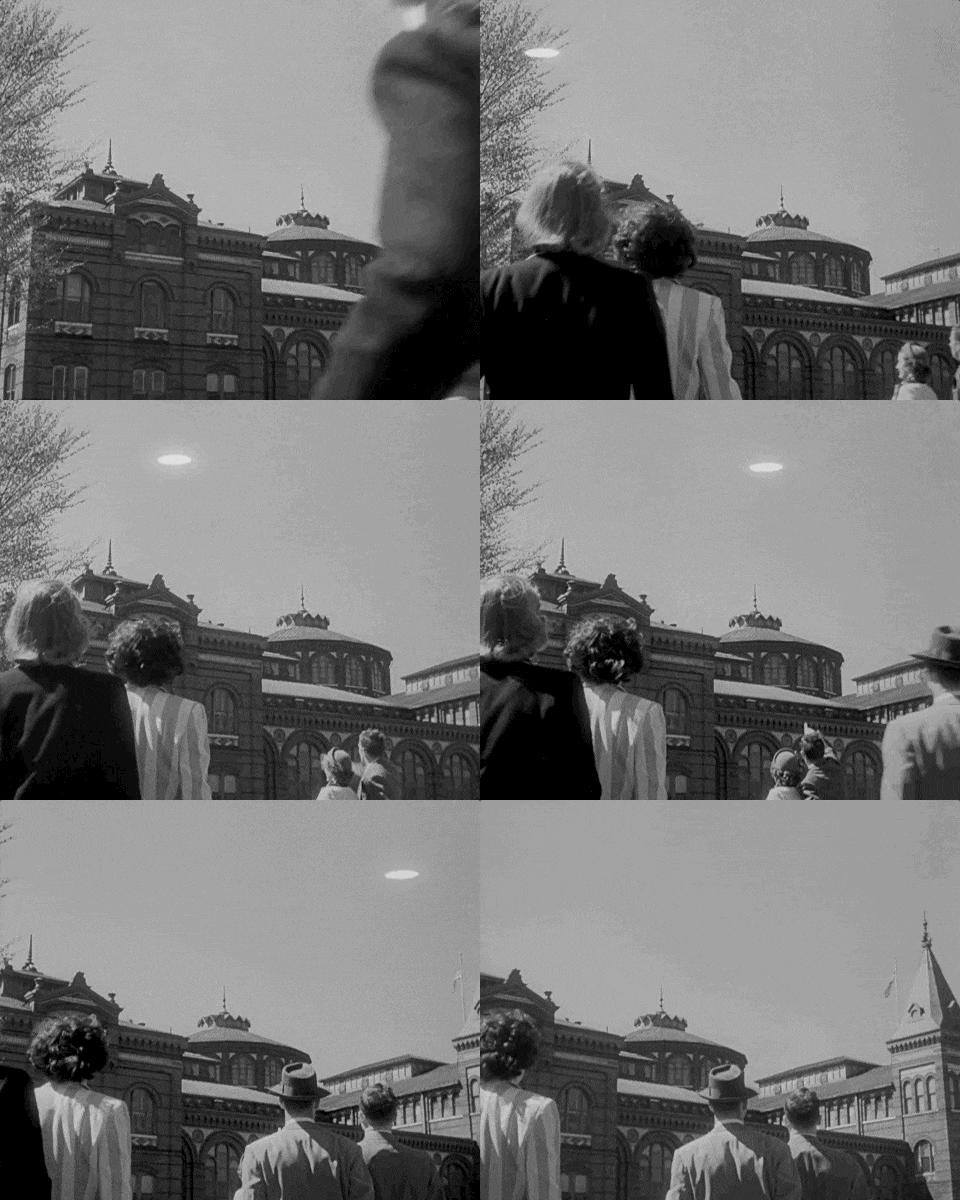
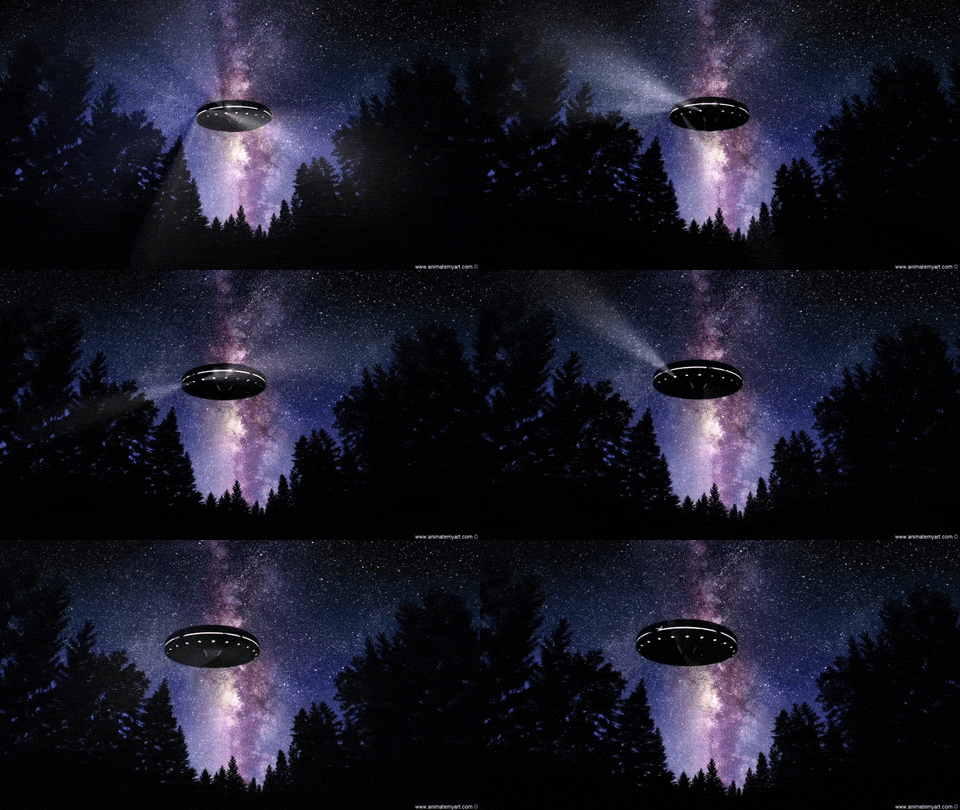









 Would you believe reports of aliens landing?


 At night, drones are difficult to distinguish from UFOs.
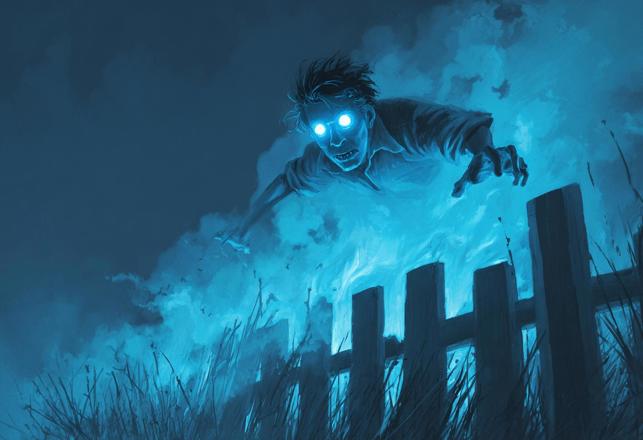
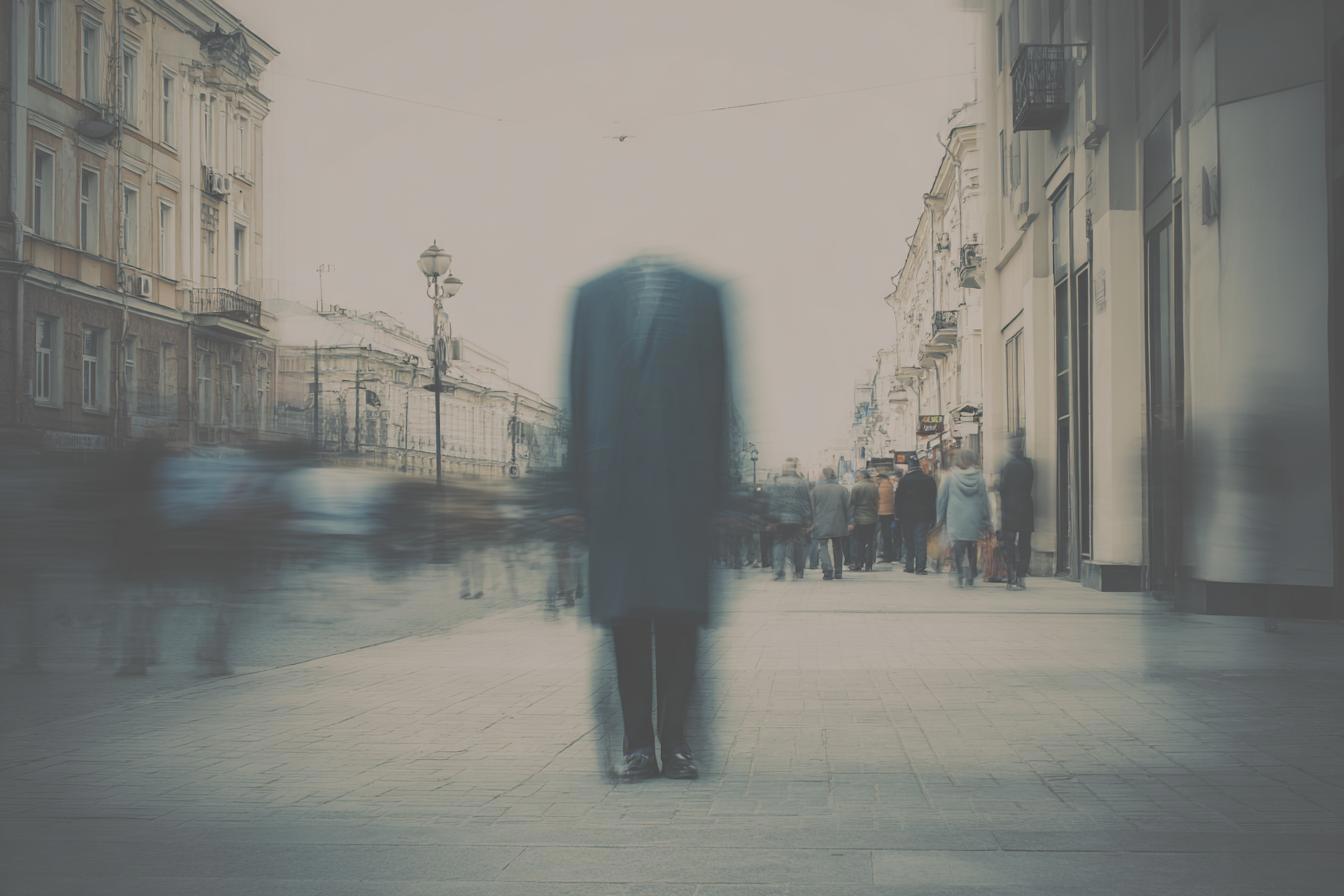
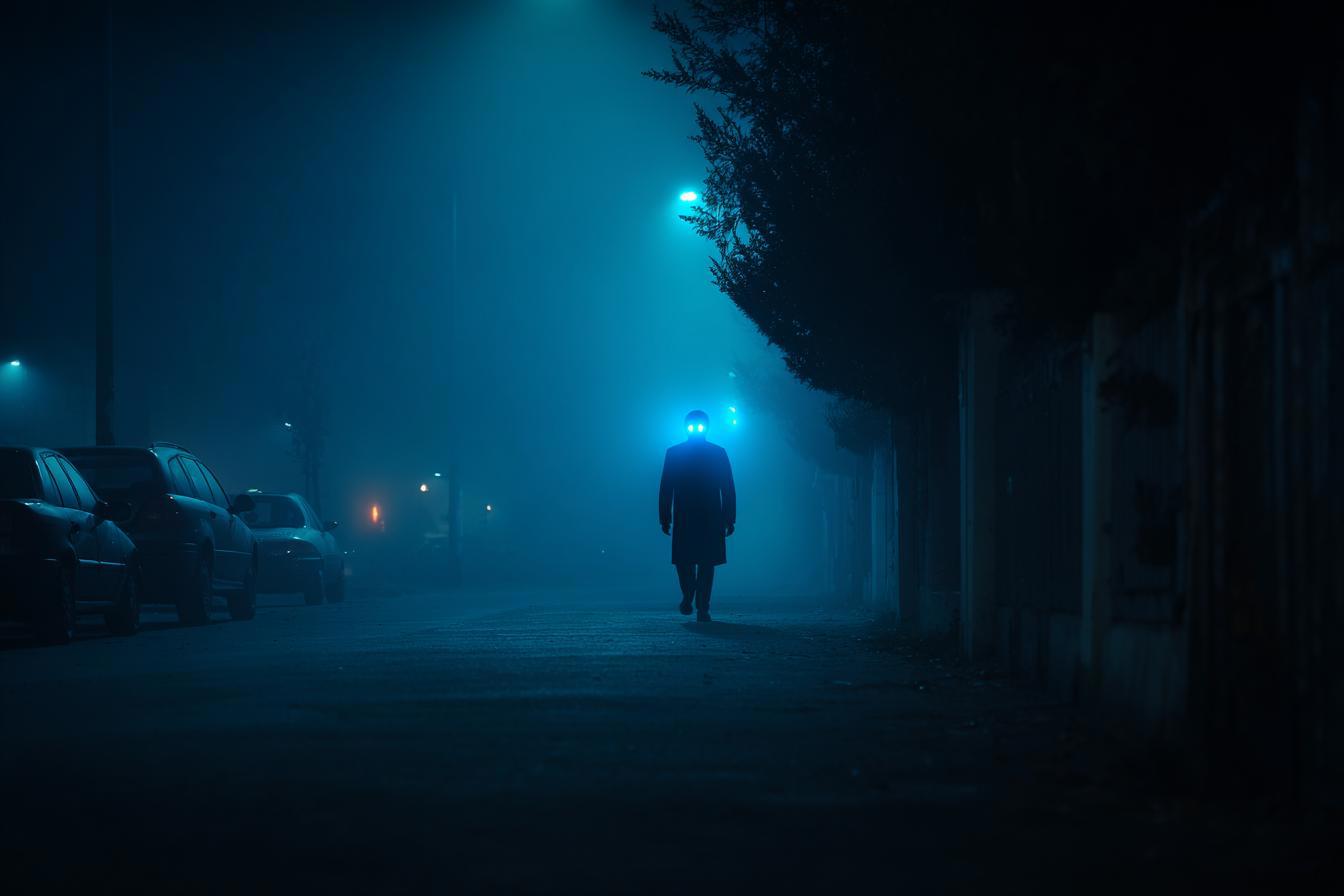
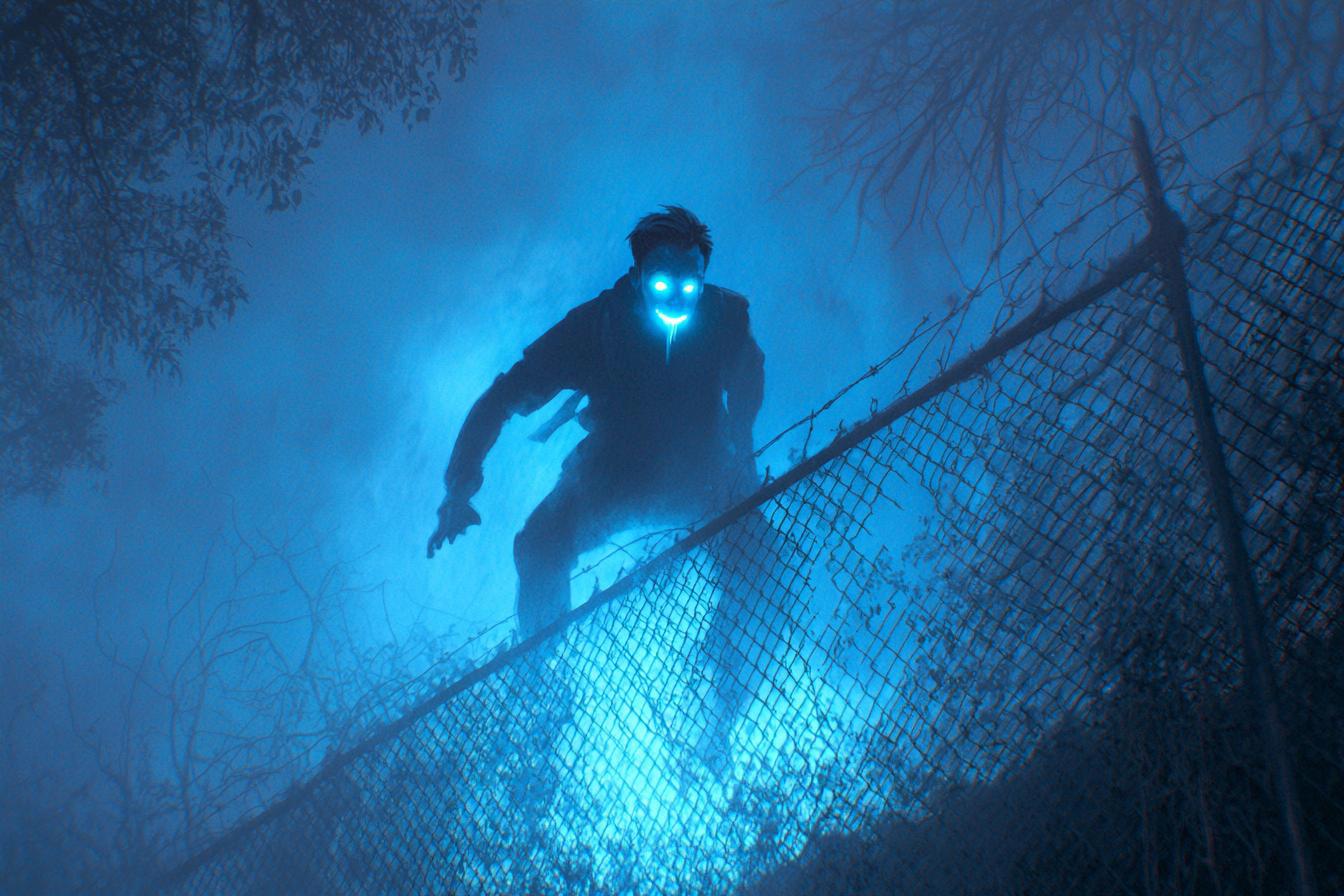
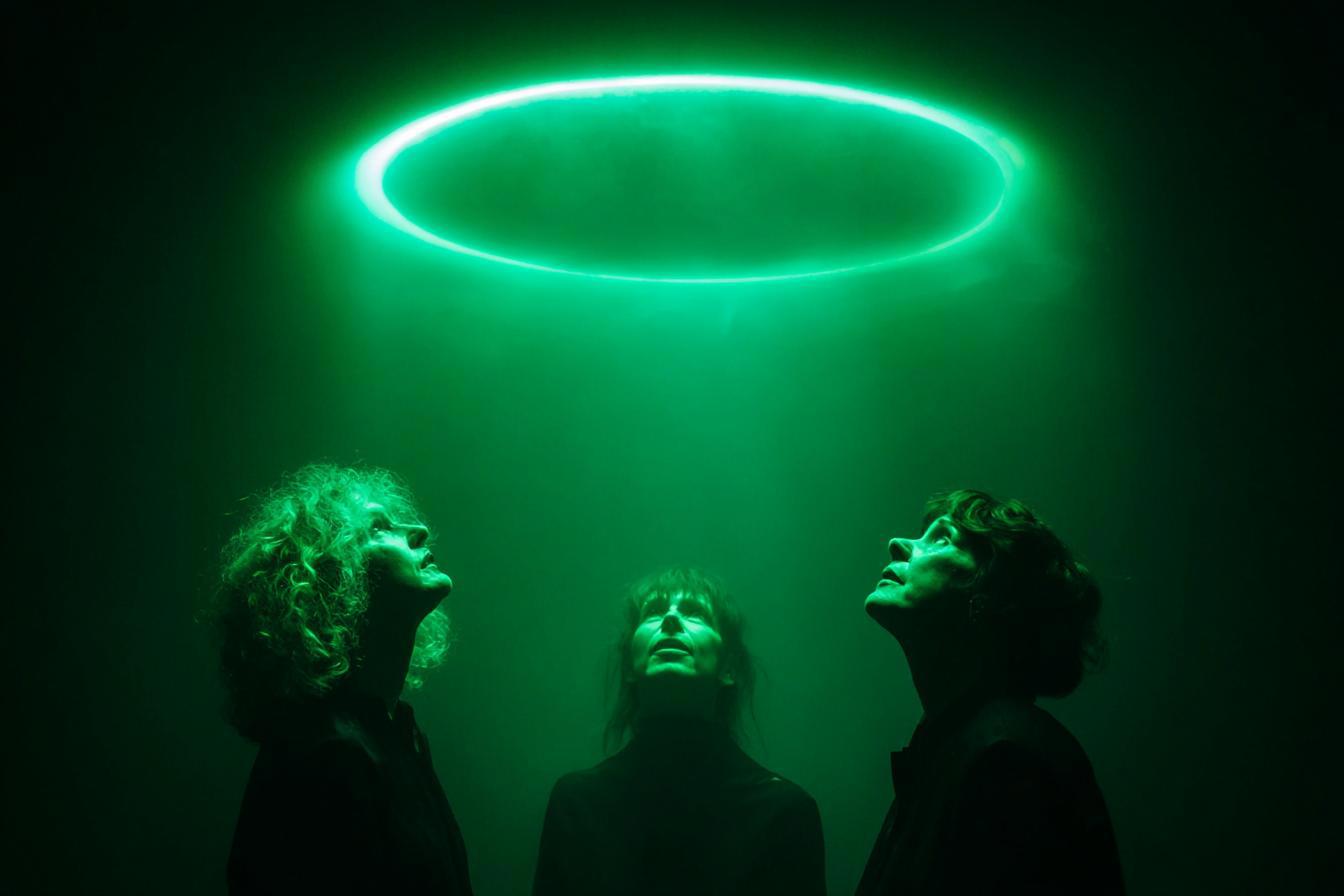

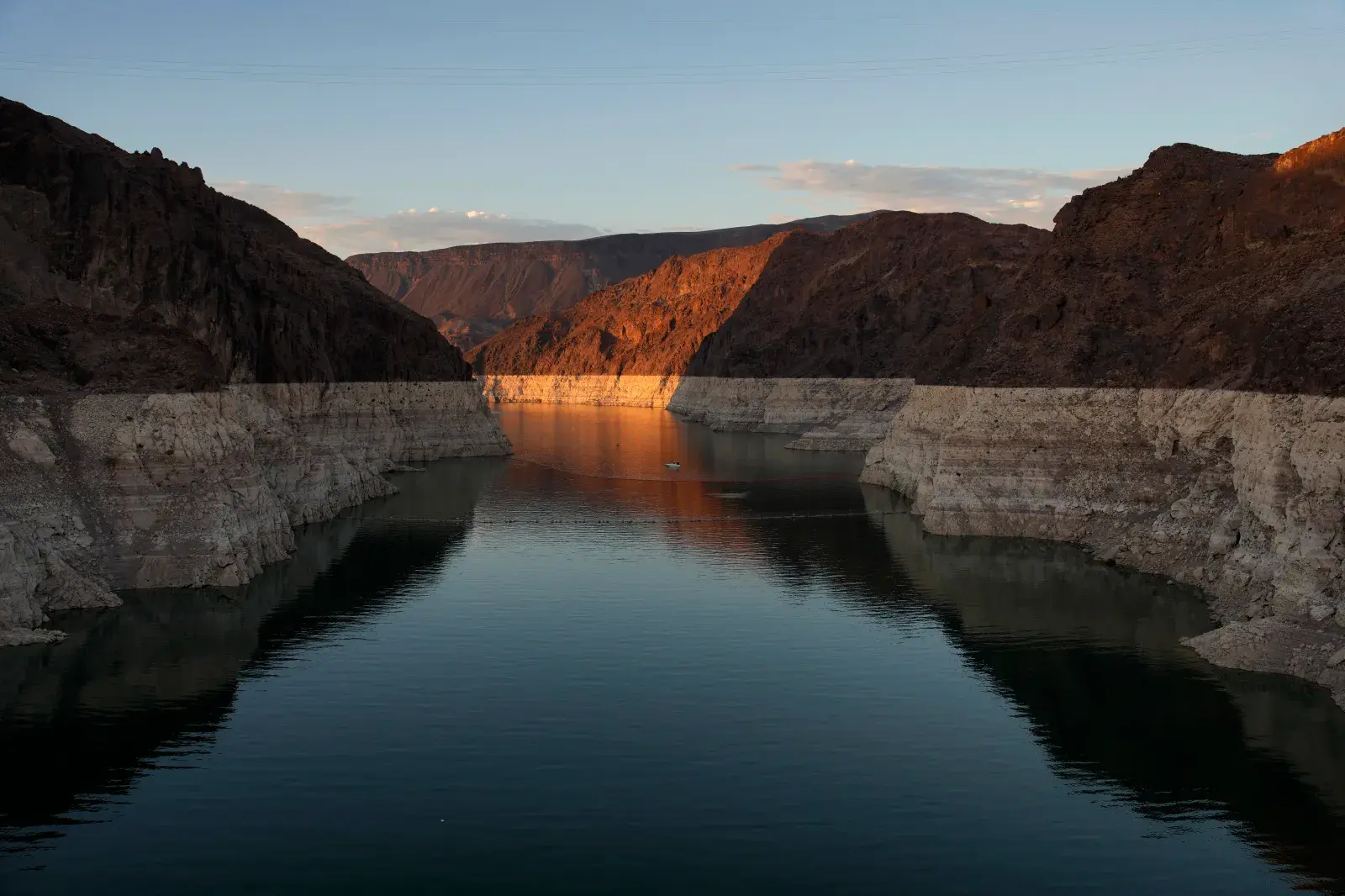









.jpg)
.jpg)
.jpg)