Romenu is een blog over gedichten, literatuur en kunst Maar Romenu is ook een professionele freelance vertaler Du-Ne en Ne-Du http://www.roumen-vertalingen.nl/
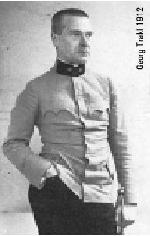
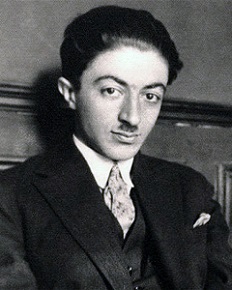
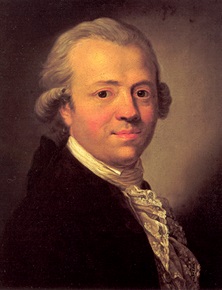
Georg Trakl werd op 3 februari 1887 in het conducteurshuis aan de Waagplatz 2 in Salzburg geboren. Zijn vader, Tobias Trakl, was een handelaar in ijzerwaren en zijn moeder, die ook psychische problemen had, was Maria Catharina Trakl, (meisjesnaam Halik). Voorts had hij nog drie broers en drie zussen. Margarethe (doorgaans Grethe genoemd) stond hem het naast, zelfs zodanig dat sommigen een incestueuze verhouding vermoeden. Zijn jeugd bracht hij door in Salzburg. Vervolgens bezocht hij van 1897 tot 1905 het humanistische gymnasium. Om toch een academische opleiding te kunnen volgen, werkte hij tot 1908 in de praktijk bij een apotheker. Sommigen vermoedden dat hij dit vooral deed om zichzelf opiaten te kunnen verschaffen. Bij het uitbreken van WO I werd Trakl als medicus naar het front in Galicië (heden ten dage in Oekraïne en Polen) gestuurd. Zijn gemoedsschommelingen leidden tot geregelde uitbraken van depressie, die verergerd werden door de afschuw die hij voelde voor de verzorging van de ernstig verwonde soldaten. De spanning en druk dreven hem ertoe een suïcidepoging te ondernemen, welke zijn kameraden nochtans verhinderden. Hij werd in een militair ziekenhuis opgenomen in Kraków, alwaar hij onder strikt toezicht geplaatst werd.Trakl verzonk daar in nog zwaardere depressies en schreef Ficker om advies. Ficker overtuigde hem ervan dat hij contact moest opnemen met Wittgenstein, die inderdaad op weg ging na Trakls bericht te hebben ontvangen. Op 4 november 1914, drie dagen voordat Wittgenstein aan zou komen, overleed hij echter aan een overdosis cocaïne
Paul Celan
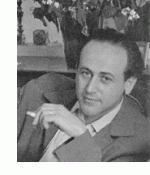
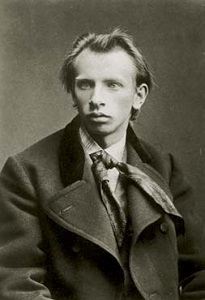
Paul Celan werd onder de naam Paul Antschel op 23 november 1920 geboren in Czernowitz, toentertijd de hoofdstad van de Roemeense Boekovina, nu behorend bij de Oekraïne. Paul Celans ouders waren Duitssprekende joden die hun zoon joods opvoedden en hem naar Duitse christelijke scholen stuurden. In 1942 werden Celans ouders door de Duitse bezetter naar een werkkamp gedeporteerd en daar vermoord. Hijzelf wist aanvankelijk onder te duiken, maar moest vanaf juli 1942 in een werkkamp dwangarbeid verrichten. Celan overleefde de oorlog. Via Boekarest en Wenen vestigde Celan zich in 1948 in Parijs. Daar was hij werkzaam als dichter, vertaler en doceerde hij aan de prestigieuze Ecole Normale Supérieure. Vermoedelijk op 20 april 1970 beëindigde hij zijn leven zelf door in de Seine te springen.
Gerard Reve
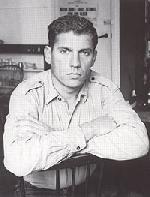
Gerard Reve over: Medearbeiders ”God is in de mensen, de dieren, de planten en alle dingen - in de schepping, die verlost moet worden of waaruit God verlost moet worden, door onze arbeid, aangezien wij medearbeiders van God zijn.” Openbaring ”Tja, waar berust elk godsbegrip op, elke vorm van religie? Op een openbaring, dat wil zeggen op een psychische ervaring van zulk een dwingende en onverbiddelijke kracht, dat de betrokkene het gevoel heeft, niet dat hij een gedachte of een visioen heeft, maar dat een gedachte gedachte of visioen hem bezit en overweldigt.”
Simon Vestdijk
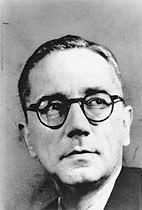
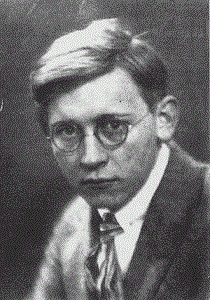
Simon Vestdijk (Harlingen, 17 oktober 1898 – Utrecht, 23 maart 1971) was een Nederlands romancier, dichter, essayist en vertaler. Zijn jeugd te Harlingen en Leeuwarden beschreef hij later in de Anton Wachter-cyclus. Van jongs af aan logeerde hij regelmatig bij zijn grootouders in Amsterdam, waar hij zich in 1917 aan de Universiteit van Amsterdam inschrijft als student in de medicijnen. Tijdens zijn studie die van 1917 tot 1927 duurde, leerde hij Jan Slauerhoff kennen.Tot 1932 is hij als arts in praktijken door heel Nederland werkzaam. In 1932 volgt zijn officiële schrijversdebuut met de uitgave van de bundel Verzen in De Vrije Bladen. Doorslaggevend voor Vestdijks uiteindelijke keuze voor de literatuur is zijn ontmoeting in 1932 met Eddy Du Perron en Menno ter Braak. Deze ontmoeting had tot resultaat dat hij redactielid werd van het tijdschrift Forum Kort daarop, in 1933, wordt zijn eerste novelle, De oubliette, uitgegeven. In hetzelfde jaar schrijft hij Kind tussen vier vrouwen, dat, eerst geweigerd door de uitgever, later de basis zal vormen voor de eerste drie delen van de Anton Wachter-romans. In 1951 ontvangt Vestdijk de P.C. Hooftprijs voor zijn in 1947 verschenen roman De vuuraanbidders. In 1957 wordt hij voor het eerst door het PEN-centrum voor Nederland voorgedragen voor de Nobelprijs voor de Literatuur, die hij echter nooit zal krijgen. Op 20 maart 1971 wordt hem de Prijs der Nederlandse Letteren toegekend, maar voor hij deze kan ontvangen overlijdt hij op 23 maart te Utrecht op 72-jarige leeftijd. Vestdijk was auteur van ca. 200 boeken. Vanwege deze enorme productie noemde de dichter Adriaan Roland Holst hem 'de man die sneller schrijft dan God kan lezen'. Andere belangrijke boeken van Simon Vestdijk zijn: "Kind van stad en land" (1936), "Meneer Visser's hellevaart" (1936), "Ierse nachten" (1946), "De toekomst de religie" (1947), "Pastorale 1943" (1948), "De koperen tuin" (1950), "Ivoren wachters" (1951), "Essays in duodecimo" (1952) en "Het genadeschot" (1964).
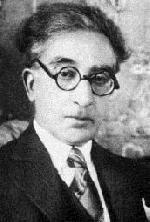
K.P. Kavafis K.P. Kavafis werd als kind van Griekse ouders, afkomstig uit Konstantinopel, geboren in 1863 in Alexandrië (tot vandaag een Griekse enclave) waar hij ook het grootste deel van zijn leven woonde en werkte. Twee jaar na de dood van zijn vader verhuist het gezin in 1872 naar Engeland om na een verblijf van vijf jaar naar Alexandrië terug te keren. Vanwege ongeregeldheden in Egypte vlucht het gezin in 1882 naar Konstantinopel, om na drie jaar opnieuw naar Alexandrië terug te gaan. In de jaren die volgen maakt Kavafis reizen naar Parijs, Londen en in 1901 zijn eerste reis naar Griekenland, in latere jaren gevolgd door nog enkele bezoeken. Op de dag van zijn zeventigste verjaardag, in 1933 sterft Kavafis in Alexandrië. De roem kwam voor Kavafis pas na zijn dood, dus postuum. Deels is dat toe te schrijven aan zijn eigen handelswijze. Hij was uiterst terughoudend met de publicatie van zijn gedichten, liet af en toe een enkel gedicht afdrukken in een literair tijdschrift, gaf in eigen beheer enkele bundels met een stuk of twintig gedichten uit en het merendeel van zijn poëzie schonk hij op losse bladen aan zijn beste vrienden.
Thomas Mann
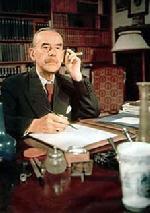
Thomas Mann, de jongere broer van Heinrich Mann, werd geboren op 6 juni 1875 in Lübeck. Hij was de tweede zoon van de graankoopman Thomas Johann Heinrich Mann welke later één van de senatoren van Lübreck werd. Zijn moeder Julia (geboren da Silva-Bruhns) was Duits-Braziliaans van Portugees Kreoolse afkomst. In 1894 debuteerde Thomas Mann met de novelle "Gefallen". Toen Thomas Mann met 21 jaar eindelijk volwassen was en hem dus geld van zijn vaders erfenis toestond - hij kreeg ongeveer 160 tot 180 goldmark per jaar - besloot hij dat hij genoeg had van al die scholen en instituties en werd onafhankelijk schrijver. Kenmerkend voor zijn stijl zijn de ironie, de fenomenale taalbeheersing en de minutieuze detailschildering. Manns reputatie in Duitsland was sterk wisselend. Met zijn eerste roman, Buddenbrooks (1901), had hij een enorm succes, maar door zijn sceptische houding tegenover Duitsland na de Eerste Wereldoorlog veranderde dit volledig. Stelde hij zich tot aan de jaren twintig apolitiek op (Betrachtungen eines Unpolitischen, 1918), meer en meer raakte hij bij het Politiek gebeuren betrokken. Zijn afkeer van het nationaal socialisme groeide, zijn waarschuwingen werden veelvuldiger en heftiger. In 1944 accepteerde hij het Amerikaanse staatsburgerschap. Tussen 1943 en 1947 schreef Mann Doktor Faustus (zie Faust), de roman van de 'Duitse ziel' in de gecamoufleerd geschilderde omstandigheden van de 20ste eeuw. In 1947 bezocht hij voor het eerst sinds de Oorlog Europa, twee jaar later pas Duitsland. In 1952 vertrok hij naar Zwitserland. Op 12 augustus 1955 stierf hij in Zürich. Twintig jaar na zijn dood, in aug. 1975, is zijn literaire nalatenschap geopend: dagboekaantekeningen van 15 maart 1933 tot 29 juli 1955, alsmede notities uit de jaren 1918 tot en met 1921.Belangrijke werken zijn: Der Zauberberg, Der Tod in Venedig, Dokter Faustus , Joseph und seine Brüder en Die Bekenntnisse des Hochstaplers Felix Krull.
Rainer Maria Rilke
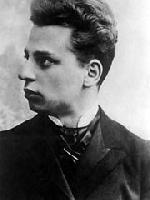
Rilke werd op 4 december 1875 geboren in Praag. Hij had al naam gemaakt als dichter met zijn bundels Das Stundenbuch en Das Buch der Bilder, toen hij de literaire wereld versteld deed staan en wereldfaam verwierf met de publicatie van zijn twee delen Neue Gedichte in 1907 en 1908. Hij verzamelde daarin het beste werk uit een van zijn vruchtbaarste periodes, die hij grotendeels doorbracht in Parijs. Rilke was daar diep onder de indruk gekomen van Rodin, bij wie hij een tijdlang in dienst was als particulier secretaris. Rodin, zei hij later, had hem leren kijken. Dit kijken kwam neer op intense concentratie, om het mysterie te kunnen zien ‘achter de schijnbare werkelijkheid'. Latere en rijpere werken als Duineser Elegien (1912-1923) en het ronduit schitterende Die Sonette an Orfeus (1924) illustreren Rilkes metafysische visie op het onzegbare, dat haar verwoording vindt in een hermetische muzikale taal. Op 29 december 1926 overlijdt Rilke in het sanatorium in Val-Mont aan de gevolgen van leukemie. Enkele dagen later wordt hij, overeenkomstig zijn wens, begraven op het kerkhof van Raron.
* * * * * * * * * * * * * * * *
Romenu
Over literatuur, gedichten, kunst en cultuur
20-02-2019
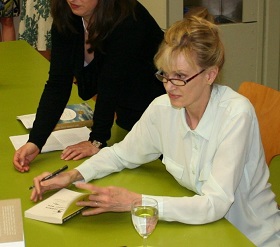
David Nolens, P. C. Boutens, Sally Rooney, Ellen Gilchrist, Julia Franck, Georges Bernanos, William Carleton, Cornelis Sweerts, Johann Heinrich Voß
“Nadat Jack de laatste hand had gelegd aan een campagne voor de push-upslip voor mannen, die een pronte bips beloofde, ging hij woedend over zoveel banaliteit de straat op. Dat hij zich had gespecialiseerd in dit soort campagnes en dat hij daar goed zijn geld mee verdiende, was hem een doorn in het oog. Hij was inmiddels midden dertig en wat had hij bereikt? Hij was partner in een succesvol reclamebureau. Hij woonde in een mooi en ruim appartement in het centrum van Brussel. Hij was vrijgezel en werd begeerd. Als hij zijn aandeel in het agentschap zou verkopen, zou hij op voorwaarde van een sobere levensstijl kunnen rentenieren. Dit korte lijstje was de mantra waarmee hij zich steeds weer het geluk aanpraatte. Een soort rationeel geluk, louter gebaseerd op de feiten van zijn comfort. Hoe hard hij ook nadacht, hij vond geen noemenswaardig probleem dat het geluk ondergroef. Maar de pushupslip had vreemd genoeg iets in hem losgemaakt. Hij had enkele dagen voordien zelf de push-upslip aangepast en er een hele dag in rondgelopen, om zich zo in zijn product in te leven. Sindsdien was er iets veranderd. Hij had het verschrikkelijke gevoel gehad dat hij als volwassen man een luier droeg. En dat gevoel had hij niet van zich af kunnen schudden, ook niet nadat hij de push-upslip had uitgedaan. Zelfs naakt werd hij nog de dikke met siliconen gevulde stof op zijn achterwerk gewaar. ’s Nachts droomde hij van zichzelf aIs baby en overdag leek het of elke volwassene hem spottend toegrijnsde. Vanuit die onmachtige woede ging hij, in een ruimte van mutsen, sjaals en bottines, de straat op. De eerste voorbijganger, een man met een zwart hoedje op zijn hoofd, gaf hij een klap in het gezicht, hard genoeg om zijn hand te voelen nagloeien, en vervolgens wandelde hij verder, zonder naar hem om te kijken. Hij had zijn schaatsmuts tot ver over zijn oren getrokken en zijn handen diep in zijn zakken gestoken. Maar tegelijk was hij verheugd over wat hij had gedaan en moest hij onwillekeurig denken aan al die meisjes, die eindeloze rij blanke wichtjes met purperen lipjes die dagelijks in hun arm krasten, om het gevoel te hebben dat ze leefden. Precies dat gevoel nam ook bij Jack de overhand, met dit verschil dat hij iemand anders en niet zichzelf pijn had gedaan. Er hingen donkere wolken boven de stad en het begon zacht te druppelen. De straatwandelaars gingen gehaaster lopen, maar de man vóór hem op het voetpad hield halt en draaide zich om, waarop Jack tegen hem aanbotste. Nog voor de man zich kon verontschuldigen, riep Jack: ‘Wat is dat toch met u?!’ Het was een deftige man, type kunstdocent. Eerst keek hij hem geschrokken aan, maar toen begon de man te lachen om Jacks absurde uitspraak en Jack besefte, alsof hij hem tot diep binnenin kon lezen, dat hij wist dat hij niet hem maar zichzelf had toegeroepen, dat hij eigenlijk had bedoeld: ‘Wat is dat toch met mij?!’
In 't huis van Smart, waar ik belandde Bij 't jammerlijkste dansjolijt, Zag 'k Zorg en Ouderdom en Spijt Dansen of zij 't van buiten kenden.
De Tamboerijn, bij naam Ellende, Gaf, hoog bevel, de stok respijt In 't huis van Smart, waar ik belandde Bij 't jammerlijkste dansjolijt.
In huilgezangen brak de bende Buiten muziek en maat en tijd - Verveeld, van angst mijzelve kwijt, Sliep 'k in, vóór het nog erger endde, In 't huis van Smart, waar ik belandde.
Uit: Strofen en andere verzen uit de nalatenschap van Andries de Hoghe
Tiende strofe (Fragment)
Die lichte god bemint de heimlijkheid van jonge menschenzielen, in het donker der teedre harten viert hij zijn geboorten; en, wreede zegen zijnen uitverkoornen, wijdt hij hun leven tot een zalige onrust, éen wrange jeugd van onvervuld verlangen, éen bloesem naar geluk. Verdwaasd en eenzaam dolen zij door dit ruchtig volk waar elk uit troeblen waan van zelfvergetelheid puurt de openbaring van zijn poovre zelf, en dan met loomer voet die leêge vondst te ontloopen zoekt in altijd schaamler schijn, tot nergens toevlucht blijft dan in den dood.. Maar zij gaan eenzaam, buiten elk verband. Door roep van liefdeloosheid en verwijt van zelfzucht dragen zij hun duistren schat, levend-albasten glansdoorschenen lijven van zulk een zuiversterke lieflijkheid als nimmer de armoê dezer wereld kan erkennen voor haar rijkst voldragen wonder. Ook duldt hun jeugd den blinden kommer niet dier goddlijk-zwangere verlorenheid, maar doet zich zelf het smartlijkst ongelijk: de wanhoop naar 't ontastbaar na geluk benijdt der anderen vreemdroode liefden, en strekt de hand naar den gereeden beker; maar de éene teug van overkruiden wijn prikkelt met duur van overwakkre ellende de moede wake van hun eeuwgen droom.
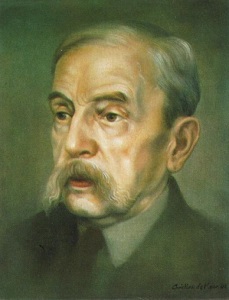
Pieter Cornelis Boutens (20 februari 1870 – 14 maart 1943) Portret door Chris de Moor, 1942
“After the first time they had sex, Marianne stayed the night in his house. He had never been with a girl who was a virgin before. In total he had only had sex a small number of times, and always with girls who went on to tell the whole school about it afterwards. He’d had to hear his actions repeated back to him later in the locker room: his errors, and, so much worse, his excruciating attempts at tenderness, performed in gigantic pantomime. With Marianne it was different, because everything was between them only, even awkward or difficult things. He could do or say anything he wanted with her and no one would ever find out. It gave him a vertiginous, light-headed feeling to think about it. When he touched her that night she was so wet, and she rolled her eyes back into her head and said: God, yes. And she was allowed to say it, no one would know. He was afraid he would come then just from touching her like that. In the hallway the next morning he kissed her goodbye and her mouth tasted alkaline, like toothpaste. Thanks, she said. Then she left, before he understood what he was being thanked for. He put the bedsheets in the washing machine and took fresh linen from the hot press. He was thinking about what a secretive, independent-minded person Marianne was, that she could come over to his house and let him have sex with her, and she felt no need to tell anyone about it. She just let things happen, like nothing meant anything to her. Lorraine got home that afternoon. Before she’d even put her keys on the table she said: Is that the washing machine? Connell nodded. She crouched down and looked through the round glass window into the drum, where his sheets were tossing around in the froth. I’m not going to ask, she said. What? She started to fill the kettle, while he leaned against the countertop. Why your bedclothes are in the wash, she said. I’m not asking. He rolled his eyes just for something to do with his face. You think the worst of everything, he said. She laughed, fixing the kettle into its cradle and hitting the switch. Excuse me, she said. I must be the most permissive mother of anyone in your school. As long as you’re using protection, you can do what you want.”
Uit:Falling Through Space.The Journals of Ellen Gilchrist
“This is my home. This is where I was born. This is the bayou that runs in my dreams, this is the bayou bank that taught me to love water, where I spent endless summer hours alone or with my cousins. This is where I learned to swim, where mud first oozed up between my toes. This is where I saw embryos inside the abdomens of minnows. This is where I believed that if I was vain and looked too long into the water I would turn into a flower. This is where I learned the legend of the greedy dog. There was an old dog on a raft and he had a bone in his teeth and he looked down into the water and saw a dog carrying a bone and he dropped the one he was holding to snatch the other dog's bone away and so lost both bones, the real and the imaginary. That's a new bridge. The one that was here when I was small had a beautiful elaborate scaffolding on top. I thought I must be a princess, of royal blood, to have such a bridge with such a magnificent top. To have such land with so many bugs and a bayou with so many fish and mussels and gars and maybe even alligators. This is the porch that at one time ran all the way around the house. My grandfather built this house and my mother came here when she was four years old. My brother was born in that front bedroom. I was born forty miles away in a hospital and only came here three days later. The ghost of Eli Nailor walks these halls. He was a black boy who was adopted by my great-great-grandmother when he was orphaned as a child. The woman I am named for raised him. He was the cook in this house all the days of his life and had a cabin beside the kitchen and the gardens and the henhouse and the chickenyard. This was a good life. There were never slaves here. The black people came here after the Civil War; they were free people from Natchez. Black people and white people lived and worked here in harmony. My grandfather thought of himself as an Englishman. He was tall and proud and brave and civilized. Here is where my Aunt Roberta raised angora rabbits during the Second World War and there is the chickenhouse where I spied on the Broad Jump Pit when my brother and my cousins were training for the Olympics. This is the richest land in the world. The topsoil goes thirteen to eighteen feet in some places. You could grow anything here.”
“Ich knie auf dem Parkett vor dem Sofa und beobachte Luise, wie sie schläft. Sie schläft sich den Rausch ihres Geburtstags aus. Draußen Zionskirchplatz ohne Verkehr, auch von der Kastanienallee höre ich wenig. Luise schmatzt im Schlaf, ganz leise, fast unhörbar. Ich streiche über den Saum des Chiffons, der rauh ihren Hals umschließt, rieche sie, ihren vertrauten Geruch, der mich an frischgeschnittenes Gras erinnert, ziehe die rotblonde Locke aus der Falte, die sich am Hals gebildet hat, und suche die glatte Haut ihrer Wangen ab – ob sich schon im entspannten Zustand eine Spur ihrer Grübchen entdecken läßt? –, ihre Haut ist von blassen Sommersprossen übersät. Ich liebe Luise. Und noch etwas: Sie ist meine Schwester. Es klingelt, sie regt sich nicht. Als ich aufstehe, knarrt das Parkett unter meinen nackten Füßen. Über der Lehne des Sofas hängt ihr schwarzes Lederbustier, ich nehme es, der warme Geruch steigt in meine Nase, ich ziehe es an. Meine Brüste haben Platz in den Schalen, beim Gehen stoßen sie vorn an das Leder. Draußen im Flur schlüpfe ich in ihre Schuhe: leichte altmodische Schuhe mit Absätzen, die laut sind und das Parkett zerkratzen, ich drücke auf den Summer und gehe in die Küche, wo über dem Stuhl mein Kleid hängt. Ich streife es über und bemerke, daß die langen Träger des Kleides viel von dem Bustier sehen lassen, aber es ist zu spät, etwas anderes zu suchen. Ich bleibe hinter der angelehnten Tür stehen und lausche in das Treppenhaus, bis ich die Schritte auf dem letzten Absatz höre. Ich öffne. »Was machst du hier?« frage ich Olek, fast möchte ich sagen: Sie empfängt noch nicht. »Zu Luise«, sagt er hastig, er möchte zu Luise, fährt sich durch die kurzen verklebten Haare, ich lasse ihn herein, und sein nackter Arm berührt meinen. »Sie schläft noch«, sage ich und lehne mich an den Rahmen der Küchentür. »Dann weck sie, es ist wichtig, ich muß sie sehen.« »Und warum warst du dann gestern nicht da?« »Bei ihrem Geburtstag? Sie hat mich ausgeladen.« Olek möchte an mir vorbei, ich suche die zufällige Berührung, aber er weicht aus und tritt in die Küche. Der Kragen seines T-Shirts ist etwas schmuddelig, die Sonne hat seinen Nacken gerötet. Ich schließe die Wohnungstür. Sein Blick fliegt über die benutzten Gläser, die überall auf den Fensterbrettern und Regalen stehen. Er dreht sich zu mir um, die Unruhe in seinen Augen amüsiert mich, ich muß an die zwei anderen Liebhaber denken, die gestern unter den Gästen waren und Luiseden Abend versüßt haben, bevor sie nacheinander gegangen sind. »Was ist es denn, was dich so aufregt?« frage ich mit leichtem Spott. »Der Hund, er wurde angefahren.« Olek sieht mich nicht an, ich erinnere mich, daß Luise ihm vor wenigen Tagen ihren Hund anvertraut hat, damit die Geburtstagsgäste nicht gestört würden. Er knetet seine Hände, und ich sehe die Adern an seinen Unterarmen hervortreten.“
« Mais enfin j’étais très fier d’avoir à leur parler d’autre chose que des problèmes de fractions, du droit civique, ou encore de ces abominables leçons de choses, qui ne sont en effet que des leçons de choses et rien de plus. L’homme à l’école des choses ! Et puis j’étais délivré de cette sorte de crainte presque maladive, que tout jeune prêtre éprouve, je pense, lorsque certains mots, certaines images lui viennent aux lèvres, d’une raillerie, d’une équivoque, qui brisant notre élan, fait que nous nous en tenons forcément à d’austères leçons doctrinales dans un vocabulaire si usé mais si sûr qu’il ne choque personne, ayant au moins le mérite de décourager les commentaires ironiques à force de vague et d’ennui. À nous entendre on croirait trop souvent que nous prêchons le Dieu des spiritualistes, l’Être suprême, je ne sais quoi, rien qui ressemble, en tout cas, à ce Seigneur que nous avons appris à connaître comme un merveilleux ami vivant, qui souffre de nos peines, s’émeut de nos joies, partagera notre agonie, nous recevra dans ses bras, sur son cœur. J’ai tout de suite senti la résistance des garçons, je me suis tu. Après tout, ce n’est pas leur faute, si à l’expérience précoce des bêtes – inévitable – s’ajoute maintenant celle du cinéma hebdomadaire. Quand leur bouche a pu l’articuler pour la première fois, le mot amour était déjà un mot ridicule, un mot souillé qu’ils auraient volontiers poursuivi en riant, à coups de pierres, comme ils font des crapauds. Mais les filles m’avaient donné quelque espoir, Séraphita Dumouchel surtout. C’est la meilleure élève du catéchisme, gaie, proprette, le regard un peu hardi, bien que pur. J’avais pris peu à peu l’habitude de la distinguer parmi ses camarades moins attentives, je l’interrogeais souvent, j’avais un peu l’air de parler pour elle. La semaine passée, comme je lui donnais à la sacristie son bon point hebdomadaire – une belle image – j’ai posé sans y penser les deux mains sur ses épaules et je lui ai dit : « As-tu hâte de recevoir le bon Jésus ? Est-ce que le temps te semble long ? – Non, m’a-t-elle répondu, pourquoi ? Ça viendra quand ça viendra. » J’étais interloqué, pas trop scandalisé d’ailleurs, car je sais la malice des enfants. J’ai repris : « Tu comprends, pourtant ? Tu m’écoutes si bien ! » Alors son petit visage s’est raidi et elle a répondu en me fixant : « C’est parce que vous avez de très beaux yeux. » Je n’ai pas bronché, naturellement, nous sommes sortis ensemble de la sacristie et toutes ses compagnes qui chuchotaient se sont tues brusquement, puis ont éclaté de rire. Évidemment, elles avaient combiné la chose entre elles. »
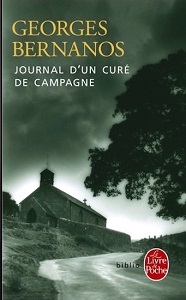
Georges Bernanos (20 februari 1888 – 5 juli 1948) Cover
“On the drawing-room stairs there lay what had once been a carpet, but so inseparable had been their connexion that the stairs were now worn through it, and it required a sharp eye to distinguish such fragments of it as remained from the colour of the dirty boards it covered and the dust that lay on both. On entering the kitchen Peety and his little girl found thir-teen or fourteen, in family labourers and servants of both sexes, seated at a long deal table, each with a large wooden noggin of buttermilk and a spoon of suitable dimensions, dig-ging as if for a wager into one or other of two immense wooden bowls of stirabout so thick and firm in consistency that, as the phrase goes, a man might dance on it. This however was not the only picture of such enjoyment that the kitchen afforded. Over beside the dresser was turned upon one side the huge pot in which the morning meal had been made, and at the bottom of which, inside of course, a spirit of rivalry equally vigorous and animated, but by no means so harmonious', was kept up by two dogs and a couple of pigs, which were squab-bling and whining and snarling among each other, whilst they tuned away at the scrapings or residuum that was left behind after the stirabout had been emptied out of it. The whole kitchen, in fact, had a strong and healthy smell of food—the dresser, a huge one, was covered with an immense quantity of pewter, wood, and doff; and it was only necessary to cast one's eye towards the chimney to perceive by the weighty masses of black hung beef and the huge sides and flitches of deep yellow bacon which lined it, that plenty and abundance, even to overflowing, predominated in the family. The " chimney brace" nrn!reqri Car out over the fireplace towards the floor, and under it on each side stretched two long nobs or chimney conisr seats, on which nearly a dozen persons could sit of a winter evening.”
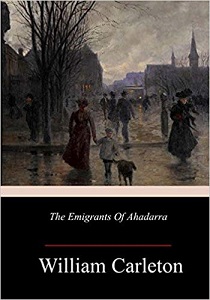
William Carleton (20 februari 1794 – 30 januari 1869) Cover
De Nederlandse dichter, liedtekstschrijver, toneelschrijver en boekhandelaar Cornelis Sweerts werd geboren in Amsterdam op 20 februari 1669. Zie ook alle tags voor Cornelis Sweerts op dit blog.
O welvernoegde zinnen
O welvernoegde zinnen, Gy baart een zaligheid, Die Minnaars niet beminnen, Wiens vryheid neder leit. Hoe vlieten uwe dagen, In zoete rust voorby Wyl haar de min doet klagen, Van smert en razerny, Ik wil gelyk de blinden, Myn vryheid aan geen kroon, Noch gulde ketens binden, Geen goud en blinkt zo schoon.
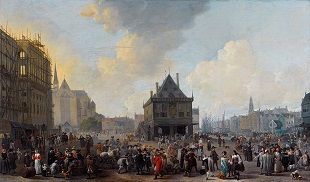
Cornelis Sweerts (20 februari 1669 – 23 maart 1749) Gezicht op de Dam met het stadhuis in aanbouw door Johannes Lingelbach, 1656
Willkommen im Grünen! Der Himmel ist blau, Und blumig die Au, Der Lenz ist erschienen! Er spiegelt sich hell Am luftigen Quell, Willkommen im Grünen! Willkommen im Grünen! Das Vögelein springt Auf Sproßen und singt: Der Lenz ist erschienen! Im säuselt der West Ums heimliche Nest, Willkommen im Grünen!
Stand und Würde
Der adliche Rat Mein Vater war ein Reichsbaron! Und Ihrer war, ich meine...?
Der bürgerliche Rat So niedrig, daß, mein Herr Baron, Ich glaube, wären Sie sein Sohn, Sie hüteten die Schweine.
Schlaue Liebe
Mein Weibchen traun verschenkt' ich nicht, Wär's auch erlaubt; denn Paulus spricht: Was Ihr verschenkt, Ihr lieben Brüder, Bekommt ihr doppelt wieder.
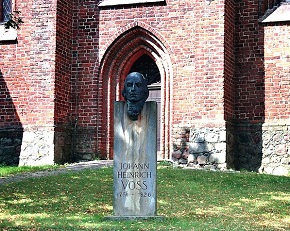
Johann Heinrich Voß (20 februari 1751 – 29 maart 1826) Monument in Penzlin
Tags:David Nolens, P. C. Boutens, Sally Rooney, Ellen Gilchrist, Julia Franck, Georges Bernanos, William Carleton, Cornelis Sweerts, Johann Heinrich Voß, Romenu
“A woman novelist, on the other hand, is in double trouble. If she writes imaginary stories, such soft stuff is made all the softer by her female identity, and if she writes about her own experience in a memoir of domestic life, about the trials of having and caring for babies and children, about bor-ing encounters with fellow parents at the daycare center or nursery school, about her peevish irritations and grievously lost independence, she may well vanish without a trace or be relegated to the ghetto that is woman's writing. Then again, she may not. The reception of fiction is fickle. If pub-lishers could recognize success in manuscript form, publishing would be a very different business. Because I write fiction and nonfiction and have an abiding interest in neurobiology and philosophy (still mostly male disciplines), I embody the masculine/feminine, serious/not-so-serious, hard/soft divide in my own work. When I publish a paper in a science journal or lecture at a confer-ence in the sciences, I find myself on male terrain, but when I publish a novel, I stay squarely in female land. The audiences at public events vary accordingly, from about 80 percent male in the sciences and philosophy to exactly the reverse at a literary reading or event. This gendered geography becomes the context for one's work and for its perception. Where exactly does competition come in? Undisguised competition in the form of verbal sparring, one-upmanship, and the blow-by-blow dismantling of a paper are common in the sciences and philosophy, and they are certainly not unheard of in the humanities. I once gave a lecture on trauma and literature at the Sorbonne in Paris, and the questions came hard and fast once I had finished speaking. I loved it. For one thing, in these worlds, knowledge counts. The more you know, the better off you are, and I revel in the lively combat of ideas that takes place in these sequestered but intense worlds of the intellect. Further, I have learned a lot from such robust encounters. I have had my mind changed by them. Fighting about ideas is fun, and if you really know your stuff, instant respect may be granted and offers to share papers and perhaps engage in an email dialogue soon follow.”
“It was there when he woke up. Presumably also when he slept. The blot. Standing alone at the back of the sparsely populated ferry to Kladow, mercifully sheltered behind safety glass against the chill of the lake at evening, Alexander Bruno could no longer deny the blot that had swollen in his vision and was with him always, the vacancy now deforming his view of the receding shore. It forced him to peer around its edges for glimpses of the mansions and biergartens, the strip of sand at the century-old lido, the tarpaulined sailboats. He’d come to Berlin, half the circumference of the world, two weeks ago, whether to elude his fate or to embrace it he couldn’t know. He’d been biding his time in Charlottenburg, breakfasting at the quiet cafés, watching the days grow steadily longer, overhearing more spoken English than he’d have preferred, running through his last funds. His tuxedo had remained in its hanging bag, his backgammon case latched. All the while the blot had been with him, unacknowledged. Bruno its carrier, its host. He’d passed through customs with the innocence of the accidental smuggler: Nothing to declare. It was only after having at last called the number provided him by Edgar Falk and consenting to visit the rich man’s house in Kladow, only upon his waking, this very day on which he’d dusted off tuxedo and backgammon case, that the blot had insisted he grant its existence. An old friend he’d never met but recognized nevertheless. Why get too fancy about it? He might be dying. Under the circumstances of Bruno’s dread, the slide of the S-Bahn through the endless roster of stations from Westend to Wannsee had seemed as long as his voyage from Singapore to Berlin. The German city, with its graffiti and construction sites, its desultory strips of parkland and naked pink water pipes, had its own sprawl and circumference. Berlin wended through time. On the S-Bahn toward Wannsee the tall girls in black leggings with bicycles and earbuds, so prevalent in Charlottenburg and Mitte, had thinned out, replaced by dour Prussian businessmen and staring grandmother types, slouching home with briefcases and shopping bags. By the time of the ferry there was little to defeat the irresistible illusion that the city was newly vanquished and carved into sectors, that the prevailing silence and gloom derived from remorse and privations not seventy years past but fresh as smoldering rubble.”
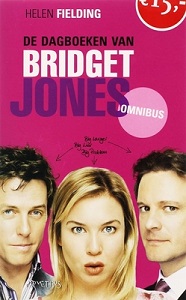
Uit: Bridget Jones' baby, de dagboeken (Vertaald door Titia Ram)
“Maandag 13 november 10.15 uur. Studio van Sit Up Britain. Net op mijn werk gearriveerd. Ik kan dit niet. Ik kan absoluut geen hele dag werken met de volgende dingen in mijn lijf: 1) Steeds groter wordende baby die gebakken aard-ppels, kaas, augurken en – ineens – wodka wil. 2) Volledig verward en gebroken hart. Waarom heeft Mark me die brief geschreven? Terwijl het er juist allemaal zo lieflijk aan toeging toen we in de auto terug van Grafton Underwood zaten? Waarom? Wat is er gebeurd? Waarom reageert hij niet op mijn sms’jes? Misschien vindt hij me echt een ordinaire slet en herinnert Daniel hem aan het deel van mij dat hij niet leuk vindt. Onder mijn bureau stiekem Tom gefacetimed. ‘Je bent niet ordinair en je bent geen slet,’ zei Tom op FaceTime. ‘Je bent een succesvolle nieuwsproducer en je leeft zo ongeveer als een non. Je moet even een spelletje Maar... tenminste doen. Weet je nog? Wat je hebt voorgedaan toen ik werd gekweld door Pretentieuze Jerome? Maar... tenminste? Maar... ik heb tenminste nog dit of dat. Voelt dat beter?’ ‘Ja! Ja!’ zei ik, en ik voelde me helemaal opgefleurd. ‘Dank je, Tom.’ Klikte FaceTime uit. FaceTime sprong weer tevoorschijn: Tom. ‘Bridge, dat je het even weet: je kunt beter geen mensen facetimen vanuit die hoek.’ Tom verdween en plopte vervolgens weer in beeld: ‘Ben ik een vreselijk mens?’ ‘Bridget, ga eens wat doen,’ zei Richard Finch, die langs mijn bureau kwam lopen en naar mijn borsten gluurde. Stuurde snel een sms naar Tom: ‘Nee, goed mens,’ waarna ik als een bezetene begon te typen en geconcentreerd naar het beeldscherm tuurde. Het leek net of ik heel hard aan het werk was.”
Uit: Tussen drie plagen (Vertaald door Frans van Nes en Jesse Niemeijer)
“Komt dat zien! Komt dat zien! Een mirakel zoals u nog nooit gezien hebt. Een mirakel dat u maar één keer in uw leven kunt aanschouwen!' Een knaap met wat dons op de kin, een kwajongen nog met zijn neus nat van het zweet en met felle grote ronde ogen, rukte een vuurrode hoed met een vergulde band van zijn warrige haardos. In één beweging veegde hij met zijn gerafelde mouw de zweetdruppels van zijn neus en liet hij zijn rood-gouden hoed een machtige boog door de blauwe lucht maken. `Ein ersam rad! Schiine frawn! Tichtig junkfer!3 Metselaars en schoenmakers! Haast u! Komt het zien!' Eigenlijk hoefde de heraut niet langer zo schril in drie talen te schreeuwen en met zijn hoed omhoog te wijzen. Want al het volk dat zich door de Grote Zeepoort in de richting van de Lijnbaansheuvel wurmde, staarde toch al met halftoegeknepen ogen naar de wolkeloze voorjaarshemel. Midden in de drom mensen die uit de Zeepoort stroomde, liep raadsheer Vegesack met rode wangen, die in zijn haast zijn waardigheid vergat, en zelfs zijn verlepte vrouw naast hem had blosjes op haar wangen. Er liepen nog meer raadsheren met hun vrouwen, kooplieden en winkeliers, ambachtslieden met bierbuiken en hun sproetige gezellen, opgewonden burgermeisjes en hun voorname moeders, flinke dienstmaagden, raadssoldaten in blauwe wambuizen en grijs werkvolk. En alle mensen staarden voortdurend omhoog, ze draaiden hun halzen naar links. Verder naar rechts denderde een troep matrozen uit Lbeck met zo veel geweld over een loopplank dat die ervan kraakte. Ook voor de matrozen was dit een eenmalig gebeuren. Aan de linkerkant haastte het volk uit Kalamaja zich in groepjes de Lijnbaansheuvel omhoog met een gigantische stofwolk op hun hielen. En toen het volk uit de poort ver genoeg over de brug over de gracht was om de puntgevels van de buitenste stadshuizen boven de stadsmuur te kunnen zien, zagen ze dat alle dakluiken openstonden en dat daarvandaan talloze wijd opengesperde ogen naar de hemel staarden. De knechten van één koopmanshuis waren zelfs met z'n drieën op een hijsbalk geklauterd en zaten daar op een rijtje als dorpsjongens op een hek. Ze keken zelf naar de lucht terwijl ze met hun benen boven de peilloze diepte schommelden; op ieder ander moment was het doodeng geweest om ze zo te zien zitten.”
“Ich war siebzehn, wir durften das Haus nicht verlassen wegen Ozonwarnung, Hitzefrei für Erwachsene, mir gefiel das immer, obwohl die Strahlung uns draußen nach fünf Minuten mit blauer Haut und Tränen in den Augen in die Knie gezwungen hätte. Den ganzen Tag rummachen bei geschlossenen Vorhängen und »University Challenge« streamen, eine Sendung, in der die besten Studenten britischer Eliteuniversitäten Fragen zu antiker Architektur oder dem Aufbau des endo plasmatischen Retikulums oder der Sonatenhauptsatzform beantworten müssen und die vor zehn Jahren abgesetzt wurde, alles wie immer, aber an diesen Tag erinnere ich mich besser als an andere. Mein Oberkörper liegt auf der Waschmaschine, Georg steht hinter mir, ich trage die horizontal gestreifte Strickjacke, in der Maria normalerweise den Müll wegbringt, und muss an das Blut und die Hautfetzen denken, die nach dem Scheren der Merinoschafe in ihrer Wolle hängen bleiben, daran, wie man Schafe ins Gesicht schlägt, um ihren Widerstand zu brechen. Maria hängt zu dem Zeitpunkt kiffend auf dem Sofa, die Tür steht offen. Ihr ist langweilig. Mir auch. Ihm auch, obwohl er kurz davor ist, zu kommen. Ich drehe mich um und schubse ihn weg, das ist weder Intuition noch ein klarsichtig gesteuerter Akt sexuellen Einfallsreichtums, einfach was Überlebenswichtiges, zu dem ich mich überwinden muss. Er stolpert über seine Hose, anthrazitgrau, die doppelt paspelierte Arschtaschen hat und ihm in den Kniekehlen hängt. Dann knallt er mit dem Hinterkopf an die Holzregale. Ich lege meine Hände um seinen Hals und meine Daumen auf die Stelle zwischen den Schlüsselbeinen, dorthin, wo die Kehle beginnt. Für zwei Sekunden ist er ohnmächtig. Ich knie auf seinen Oberschenkeln. Vielleicht habe ich ihn umgebracht. Als er die Augen wieder öffnet, sieht er mich genauso an wie früher, ganz früher, als ich ihm mit elf zum ersten Mal »Guten Tag« gesagt und an seinem Ausdruck festgestellt habe, dass er irgendwas interessant an mir findet. Ich ging nicht davon aus, dass er es mochte, keine Luft mehr zu kriegen. Ich habe das auch nie wieder gemacht. Also, ihn würgen. Wäre vergleichbar mit einem Stück Schwarzwälder Kirschtorte gewesen, von dem er seiner Tante irgendwann mal höflichkeitshalber gesagt hat, es würde ihm schmecken, und dann kriegt er das sein Leben lang bei jedem Besuch serviert. Es ging da nicht um die Abwandlung irgendeiner Routine, nur darum, dass Maria wegen uns den Fernseher ausmachen sollte. Sie machte ihn aus. Wir waren zufrieden.”
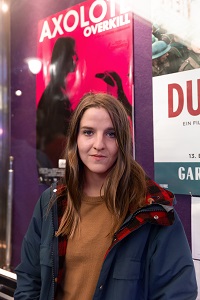
Helene Hegemann (Freiburg im Breisgau, 19 februari 1992)
Churchill hat uns nachgeholt wir sind legal, Großbritanniens Garantie meine Herkunft: von der anderen Seite, ich bin für keinen Feind eroberbar, ich bin der Weltschmerz auf dem Fels, ich bin, woraus ihr kommt, ich laufe über eure Autos ich bin der Spott, der Hohn, und hocke auf dem Fels, ich sehe die Schmuggler Flugzeuge starten und landen, das Geld das sich allein bewegt, ich bin euch Zumutung, das Wrack, das ihr streichelt ich sitze auf dem Fels und seh Besitz und hör die Kontinente driften.
1 Am Tag, an dem die ersten Blütenblätter der Lilien auf den Wohnzimmertisch fallen an einem Montag der Unruhe fliege ich an die Grenze Europas mit 520 km/h in 4000 Meter Höhe überquere ich um siebzehn Uhr fünfzehn in einem nicht fassbaren Zustand mit einer Erkältung, die eine Angst ist den 36. Breitengrad, die Sonne ballert
das Ende Europas, Europas Ende die Möwen mit ihren Möwenhirnen die Affen mit ihren Affenhirnen wissen nichts davon, wir sind die Minderheit die Lebenden, das Ende Europas ist da wo der Anfang Afrikas ist, dort draußen auf dem Wasser, in Sichtweite
“Robert schob ihm das Kissen unter den Kopf und deckte ihn zu. Dann ging er zur Tür. Ich kann ihm auch nicht helfen. Warum sollte ich dableiben. Irgendwo muß dieser verdammte Fahrstuhl gewesen sein. Suchen Sie jemand, hörte Robert hinter sich eine Stimme. Die grauhaarige Frau stand in der Wohnungstür und trocknete sich die Hände an einem Geschirrtuch ab. Ich wollte zu Herrn Werner. Von dort kommen Sie doch gerade, oder? Ich habe vielleicht das Schild übersehen. Vielleicht habe ich den Namen falsch gelesen. Die Frau schob das Geschirrtuch unter ihre Schürze. Was wollen Sie denn von Herrn Werner. Ich soll ihm was bringen, von seiner Schwester. Sie trat einen Schritt auf ihn zu. Was denn, eine Schwester hat der? Das kann doch nicht wahr sein. Das ist der Gipfel. Die sollte lieber mal selber kommen, statt jemanden herzuschicken. Ihr Bruder machts nicht mehr lange, das können Sie ihr sagen. Der ist schon jetzt nicht mehr ganz bei sich. Hier oben, meine ich. Den ganzen Tag marschiert er im Stechschritt durchs Zimmer. Oder er holt fremde Leute in die Wohnung. Jetzt hat er auch noch angefangen, nachts zu singen. Singen, was sage ich. Er krächzt. Und plötzlich stellt sich heraus, er hat eine Schwester. Sagen Sie ihr mal, sie soll … Robert drehte sich um und ging zurück.“
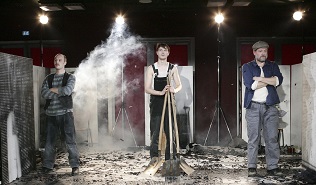
Thomas Brasch (19 februari 1945 – 3 november 2001) Scene uit een opvoering van het gelijknamige theaterstuk in Dessau, 2013
Uit: Léonid doit mourir (Vertaald door Raphaëlle Pache)
“Au vingt-sixième jour, le coeur se mit à battre. Le petit amas de cellules, accroché Dieu sait comment à la chair, palpitait déjà en continu, prêt à se décrocher d'un instant à l'autre pour être emporté par un flot de liquides dans le Tartare. Et voilà que le coeur, cette pompe puissante qui envoyait on ne savait trop quoi ni où pour le moment, rendait encore plus problématique le développement futur de l'embryon. Toutefois, ce n'était qu'un danger abstrait perçu de manière floue, d'autant que seul l'embryon avait connaissance de sa propre existence. Comment quelques centaines de cellules pouvaient-elle détenir cette information ? Pas moyen de l'expliquer de manière humaine, rationnel le. Pourtant, les opposants à l'avortement affirment que dès sa première seconde d'existence, le foetus est capable de pressentir très nettement l'approche de son exécution - son évacuation forcée de l'utérus -et qu'il en éprouve une souffrance insupportable. Mais comment est-ce possible sans matière grise, autrement dit sans vecteur de la pensée et par conséquent de la peur ? Voilà qui échappe à l'entendement. Pourtant les faits sont irréfutables : la souffrance éprouvée par le produit d'un accouplement récent est bel et bien insupportable, de même que le fruit de cet accouplement peut parfois s'avérer monstrueux, réduisant à néant la pâte divine dont l'homme est issu. Les sceptiques ne voient là que des sornettes, à quoi leurs adversaires - des femmes pour la plupart - exigent qu'on leur explique alors comment s'engendre la vie. C'est une question sans réponse, et tous comprennent qu'elle le restera jusqu'à la fin des temps, si bien qu'ennemies et partisans de l'avortement se séparent toujours fâchés à mort. Cela étant, les premières ont raison, même s'il y a parmi elles nombre de créatures extrêmement désagréables et même pas mères, virulentes jusqu'à rechercher le coup de poing et perdant souvent toute féminité dans la bagarre. Mais que va-t-on se soucier des apparences ? Le principal n'est-il pas de lutter pour une juste cause ? Donc au vingt-sixième jour, son coeur se mit à battre et naquit chez lui un semblant de pensée. Qui consistait en ceci : s'il y a une première pensée, il y en a une dernière. Ce premier raisonnement ne suscita pas d'émotion, parce qu'il entraîna aussitôt une deuxième pensée : nul ne sait si sa fin est proche ou lointaine, et si la dernière pensée n'est pas en fait le début d'un nouvel être doté d'une faculté de pensée alternative. »
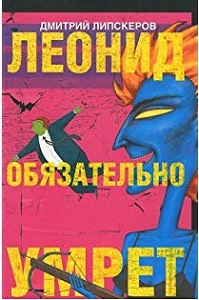
Dmitri Lipskerov (Moskou, 19 februari 1964) Cover Russische uitgave
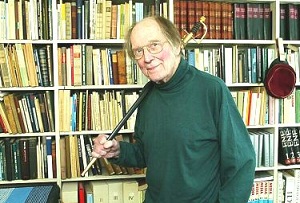
Tags:Michiel Stroink, Siri Hustvedt, Jonathan Lethem, Helen Fielding, Jaan Kross, Helene Hegemann, Björn Kuhligk, Thomas Brasch, Dmitri Lipskerov, Romenu
“I didn't always think this way. I'm an American born in 1984, and halfway through my life my country went to war abroad. For a combination of reasons not unusual among young men. I went too. After the initial bloom of romance around working in places where America was at war, hoping to get shot at without getting shot. I believed the best path was to channel local populations in writing and scrub my voice as much as possible from the pages. I've attempted that a few times, tried also to launch projects that move resources faster than words on a screen. But life splinters plans, and ten years into visiting these places and thinking about my own country it's clear to me that some other kind of reckoning is due. Since autumn of 2001, after nineteen men hijacked and crashed pas-senger jets into skyscrapers in New York, a military headquarters in Washington, D.C., and an open field bordered by conifers in Pennsylva-nia, America has been killing civilians in Afghanistan. For nearly as long, and in earlier wars, it has been killing them in Iraq. No one dis-putes this. The dispute is only over how many, why, and whether the why justifies the killing. Some say America is benevolent, a force for good. Others say it's a brutal empire. Many observe complexity, and many more are not interested in thinking about these questions at all. Like prayer, I'll state here at the beginning that America, Iraq, Afghanistan. and all the others represent incomprehensible multitudes and that the first step away from a person's name is the first step toward killing him without thinking too much about it. So I want to avoid the general. but I also know it to be pan of our minds, and a nec-essary element of progress. In terms of the specific: Endnotes provide sources and additional context, along with some ideas better separated from the rest of the book—but still important to it, and to me. Through-out, italicized quotations are taken from my notes and memory; direct quotations are taken from scenes and interviews I recorded in person. Some were beautiful, some awful. When I was daunted, I often looked to the natural world for comfort. Especially on beginning trips of uncer-tain outcome.' T began several trips like that in the tidy city of Erbil. Kurdistan. north-ern Iraq. Erbil's not at all like the frantic Hollywood movies about the Middle East. The airport is better than John F. Kennedy International. New York's main airport. The streets are dusty but otherwise clean, people hang out in malls. For a while, most foreign reporters covering the war in Iraq were based in Erbil. I stayed in the Classy Hotel. The name was funny in a way you never had to explain. There was a short pool in the basement in which I swam laps while a vastly obese Iraqi gentleman watched his son bob on inflat-able water wings. The lobby was a popular meeting place for contrac-tors, aid workers, and war profiteers. only a few hours' drive from the fighting by a good road across the Nineveh Plains. The best-known American newspapers kept correspondents in residence. I stayed on a discount rate, courtesy of a friend, a bureau chief at the time. I was grateful for the discount. Reporting was expensive and the eco-nomics of media were, and remain, uncertain. In fact, as I have been writing this book, the company that paid for it—Penguin Random House.”
“Inspecteur Mudde staat op wanneer het licht wordt. Aan het aanrecht drinkt hij een glas water terwijl hij door het keukenraam uitkijkt over de velden achter zijn huis. De polder, het riet, in de verte koeien. De lente is laat gekomen dit jaar en de koeien staan pas sinds een paar dagen in de wei. Hij loopt naar buiten en snuift in de tuin de ochtendlucht op. Na een kop koffie en het ontbijt stapt Mudde in de auto. Met Jochie – een bruine, acht jaar oude retriever – op de passagiersstoel rijdt hij naar het bos. Alle parkeervakken zijn leeg. Hij stapt uit en maakt het andere portier open, waarna Jochie naar buiten springt en wegrent. Mudde loopt achter hem aan. De zon schijnt door de lichtgroene blaadjes, het roffelen van een specht klinkt van ergens hoog tegen een boomstam en hij heeft zin om een heel eind te gaan wandelen. Hij is nog maar tien minuten op pad als zijn telefoon gaat. Bureau staat er op het schermpje. Hij zucht en neemt op. ‘Ja?’ ‘Ook goedemorgen, Mudde,’ zegt de wachtcommandant. ‘Ja ja. Zeg het maar.’ ‘We hebben een verdacht overlijden.’ ‘Godverde...’ Om hem heen alleen maar bomen en wind, uit de telefoon komen geluiden van het bureau: stemmen, overgaande telefoons, een dichtvallende deur. ‘Die schrijver die gisteravond nog op het nieuws was.’ ‘Welke schrijver?’ zegt Mudde. ‘Je hebt het nieuws niet gevolgd, dat hoor ik al.’ Gisteravond is Mudde naar bed gegaan toen het donker werd. Hij gaat met het lenteritme mee. Als het rustig is op zijn werk kan hij de dagelijkse dingen overlaten aan brigadier Kramer. ‘Kun je Peterse er niet op zetten?’ ‘Die is al bezig met die verkrachting.’
De stage ommegangen van Uw stille kracht hebben de torens van mijn trots ten val gebracht. en Uw trompetten voor het heilssignaal gestoken. hebben de muren van mijn ongeloof doorbroken. Nu lig ik weerloos voor U open en verwacht genadige bezetting door Uw liefdemacht.
De vogels
Vanochtend vroeg. het was maar nauwlijks licht – jij droomde nog. hoe lief was je gezicht hebben zingende vogels mij gewekt: je scheemrendd blanke lijf lag ongedekt. Er floten merels en er koerden duiven. ik zag de toppen van de bomen wuiven ... Zachtjes heb ik je op je mond gekust en toen je ontwaakte weer in slaap gesust.
Toen ik veel later opstond was het koor van vogelstemmen weer verstomd, maar 'k hoor vandaag voortdurend nog hun blije zingen: het legt een glanslicht over alle dingen.
Maarten Mourik (18 februari 1923 – 30 september 2002)
De brug heet daar en toen de tweede brug. Ik ben er gekomen langs het kolenspoor en klim de helling op. Ik moet terug. Beneden loopt het beekje vrolijk door.
De brug lijkt niet voor het verkeer gemaakt, al zie ik er een bord met wit en rood. Hier is een weg zichzelf ooit kwijtgeraakt: naar beide zijden loopt het brugdek dood.
Ik stap door borsthoog gras naar het plankier. Tussen mijn voeten door zie ik de rails. Een brug verbindt, maar dit hier is een kier.
Een stoomtrein komt voorbij en gilt luidkeels. Ik sta in wolken rook en stoom gehuld, bangblij van mijn afwezigheid vervuld.
Twijg
Mijn vader liet mij toen zijn wandelstok. Hij wist dat niet, mijn moeder gaf hem mij de avond van zijn dood. Hij liep weer vrij: de grote houten wijzer van een klok.
Begin april. Ik zie zijn stok daar staan, al twintig jaren, schuin tegen de muur, de schoorsteen: eerst nest, nu graf van vuur. Vlam van bloei en hout van gloed ontdaan.
Het voorjaar wacht in elke knop, geboeid. Voor woorden heeft de winter zich behoed, maar zich als sneeuw bewaren kon hij niet.
Begin van brand die uit de botten schiet; betekenis uit wit, die ik op slag vermoed; een stok wordt twijg in wat hier gloeit en groeit.
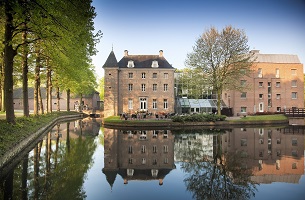
Huub Beurskens (Tegelen, 18 februari 1950) Château Holtmühle, Tegelen
“Sth, I know that woman. She used to live with a flock of birds on Lenox Avenue. Know her husband, too. He fell for an eighteen-year-old girl with one of those deepdown, spooky loves that made him so sad and happy he shot her just to keep the feeling going. When the woman, her name is Violet, went to the funeral to see the girl and to cut her dead face they threw her to the floor and out of the church. She ran, then, through all that snow, and when she got back to her apartment she took the birds from their cages and set them out the windows to freeze or fly, including the parrot that said, "I love you." The snow she ran through was so windswept she left no footprints in it, so for a time nobody knew exactly where on Lenox Avenue she lived. But, like me, they knew who she was, who she had to be, because they knew that her husband, Joe Trace, was the one who shot the girl. There was never anyone to prosecute him because nobody actually saw him do it, and the dead girl's aunt didn't want to throw money to helpless lawyers or laughing cops when she knew the expense wouldn't improve anything. Besides, she found out that the man who killed her niece cried all day and for him and for Violet that is as bad as jail. Regardless of the grief Violet caused, her name was brought up at the January meeting of the Salem Women's Club as someone needing assistance, but it was voted down because only prayer--not money--could help her now, because she had a more or less able husband (who needed to stop feeling sorry for himself), and because a man and his family on 134th Street had lost everything in a fire. The Club mobilized itself to come to the burnt-out family's aid and left Violet to figure out on her own what the matter was and how to fix it. She is awfully skinny, Violet; fifty, but still good looking when she broke up the funeral. You'd think that being thrown out the church would be the end of it--the shame and all--but it wasn't. Violet is mean enough and good looking enough to think that even without hips or youth she could punish Joe by getting herself a boyfriend and letting him visit in her own house. She thought it would dry his tears up and give her some satisfaction as well. It could have worked, I suppose, but the children of suicides are hard to please and quick to believe no one loves them because they are not really here.”
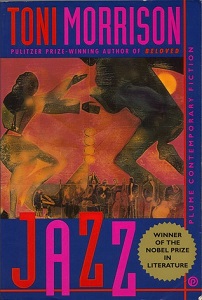
Toni Morrison (Lorain, 18 februari 1931) Cover
De Duitse dichteres en schrijfster Elke Erbwerd geboren op 18 februari 1938 in Scherbach in de Eifel. Zie ook alle tags voor Elke Erb op dit blog.
EIN ZAHMER KONJUNKTIV
Die Straßenbahn kommt nicht Hält nicht Schließt die Tür bevor du das Trittbrett erreichst.
Etwas ist kompliziert, nicht unkompliziert. Wäre es unkompliziert, könntest du ... Das Herz eine Katze
auf dem Sprung Ereignislos steht der Erlenstamm von oben bis unten.
Eine Straßenbahn kommt nicht Das sollte nicht sein
Allerhand Logiken Mit dem Rücken zu dir Mit Messer und Gabel vor sich
Gelegentlich miaut etwas Klappert Ohr du und Gegend.
Augen: Mary vom Lande weiß durch Jahrhunderte nicht, daß sie vom Land ist.
Kein Auf-Bau, kein Über-. Das Heimchen die Geige.
Wolke, wohin du gewolkt bist. Ein herrlicher Maitag - mir im Gemüte.
Augen: Robin von der Plantage ist nicht mehr Unter-, doch auch kein Einbau: Wies so geht macht sichs. Worte Architekturinfektion sieche Strukturelemente. Zivilisation blank - das „Wesen des Gartens“.
Die Absicht, den Moloch zu modeln (Problemannahme und -knete) verloren. Disteln geköpft.
Reeds is de zon in purperbrons gezonken en sleept na zich een laan van gloed, die 't landschap verwt in kleurenpracht en 't haantje van de toren fonklen doet.... Daarna, in 't nakend, fluistrend avondslomen, gewiegd door 't ruisen van het riet, weerklinkt uit malse, volle merelborste, het malse, volle merellied: het gallemt in de plecht'ge avondstand; met lieflijk stijgend geborrel, en 't schalt en 't schalt en 't zijpelt door de lucht, met rollend, orgelend gescharrel; en 't wijfje galmt hem tegen, guitig-lief, als helder tokkelende bronne. En samen gorgelen z'een lied, een lied van kalme, stille levenszonne....
Ontsnapping
De spijker van mijn lichaam is verroest. De suiker opgelost in vet en water. De spijker heb ik in mijn kist geslagen. Mijn kist met zeep en water opgepoetst.
Dies is van mij niet méér gebleven dan niets [maar met een majuscuul]. Of niets. Wat zit ik hier dan te beweren? Zoiets is radicaal òf ridicuul.
Welnee. Welnee. Gezelle zei het reeds: ‘Niets is een kouse voeteloos en zonder been d'r an’.
Wat dan? Zo'n Niets is zo maar niets. Het is het iets dat ons altijd nog juist ontsnappen kan.
Gaston Burssens (18 februari 1896 – 29 januari 1965) Portret door Jan Brussens, z.j.
“It was nighttime, the prisoners were lying down on the floor, pressed against each other. But, to my surprise, they were all awake. Total silence reigned over the unit. It was a strange scene. Contrary to all other times, there was no line at the bathroom door. Instead, a few prisoners had gathered round the radiator and they were taking turns climbing on top of it so that they could look out from the window set high in the wall. One of them was Iran, and another, Farzaneh. Both were monarchists. The rest belonged to various other groups. When I walked out of the bathroom, I saw Iran climb down from the radiator. She was shaking. Although we were not friends, she took me by the arm and whispered that the bodies of the executed prisoners had been laid out on one side of the courtyard. That night, starting at eleven o’clock, we had heard an earsplitting noise every few minutes. One of the prisoners had explained that they were building visitors’ rooms and that the noise was from the steel beams being dropped to the ground. Just then, we heard the noise again, and Iran, who was in shock, started to shake even more. I asked her, ‘What is this noise?’ she said. ‘Heavy machine gun fire.’ I didn’t know what a heavy machine gun was. I left the people who were again climbing up on the radiator and walked back to my room. I felt uneasy. That day, at about two in the afternoon, I had seen two girls leave the unit. They were very beautiful. They were wearing shoes and to avoid dirtying the pieces of carpeting on the floor, they moved toward the door on their knees. I had asked their names and ages. They looked like twins, seventeen at most, but they explained that they were actually aunt and niece. The image of their amiable faces had stayed in my mind. I had not seen them return. Now I was looking more carefully at the prisoners. They were silent and staring directly ahead. When I reached my room, Farideh, who managed the room across the hall, was standing in the doorway. I asked her, ‘What is going on?’ She said, ‘It’s heavy machine gun fire. Can’t you hear it?’ I asked, ‘What is heavy machine gun fire?’ She explained that when they carried out mass executions, they used heavy machine guns and this was the sound of the shower of bullets being fired. Then she said everyone was quiet so that they could hear the single shots; after each shower of bullets, a single shot was delivered to the head of each prisoner. The prisoners were counting the single shots. So far, they had counted more than ninety”.
kortstondig de kinderen die spelevaren op de vijver
schoorvoetend gaat het volk voorbij
een monitor toont iets afwijkends iemand zucht – kucht
twee vrouwen twijfelen over de aankoop van een bundel
'steek je hand onder een bladzijde en je schrikt je ziet de poriën in je huid
zó dun is het papier'
Kerkhof
Het stormt in de schaduwrijke nacht ik bezoek een joods kerkhof; sterren en stenen dit is mijn droomachtige dronken wat dan ook werkelijkheid en ik denk: te weinig plaats voor zoveel joden ook al zijn ze dood
Tegendraads
Slapend schik ik mij naar het lichaam van mijn inmiddels geliefde. Haar kin tussen mijn schouderbladen.
Overdag blijf ik tegendraads. Kerf ik mijn voorhoofd tot wijdvertakte webben als zij iets vraagt. Wellen mijn woorden op in haar ooghoeken. Schuif ik de nacht van mij af als een slecht boek.
Ik scheid wat van de wijn is en wat van mij schenk allengs minder van mijzelf in het glas. Ik slink tot een woedende kring op het tafelblad.
Uit: De blinde uil (Vertaald door Gert J.J. de Vries)
“Er bestaan bepaalde pijnen die als een traag, onzichtbaar woekerend kankergezwel de geest aanvreten. Dergelijke pijnen laten zich aan niemand duidelijk maken. Mensen zijn het gewend om deze ongelooflijke kwellingen af te doen als bizarre gedachtespinsels. Hoezeer je je ook inspant om daar duidelijkheid over te geven, mondeling of schriftelijk, je krijgt altijd de geijkte reacties of juist een persoonlijke verklaring te horen. Dikwijls zullen je klachten ook een ironische of spottende glimlach ontlokken. Het gaat hier immers om een kwaal waarvoor de mensheid nog geen behandeling of medicijn heeft ontwikkeld. Alleen de kunstmatige beneveling van alcohol, opium of soortgelijke roesmiddelen zou de pijn kunnen verlichten. Helaas werken dergelijke middelen slechts tijdelijk en zullen die de pijn na enige tijd eerder verscherpen dan verlichten. Zal iemand er ooit in slagen de geheimen te doorgronden van deze onaardse dimensie; van dit schimmige, comateuze rijk, van dit grensgebied tussen dromen en waken? Mijn verhaal beperkt zich tot de gebeurtenissen die ik persoonlijk heb ervaren en die mij zodanig hebben geschokt dat ze me altijd zullen bijblijven. De herinnering aan dit onheil zal de rest van mijn leven, tot mijn allerlaatste ademtocht, vergallen – met een intensiteit die elk menselijk begrip te boven gaat. ‘Vergallen,’ zei ik, maar eigenlijk bedoel ik dat ik het litteken ervan altijd gedragen heb en altijd zal blijven dragen. Ik zal een poging doen om mijn herinneringen op te schrijven; om dat op te schrijven waarvan ik meen dat het ter zake doet. Misschien slaag ik er dan in vat op de gebeurtenissen te krijgen. Of nee, om tenminste aan mijn twijfels een eind te maken en om mijn eigen herinneringen te kunnen geloven. Want of ik anderen al dan niet kan overtuigen, laat mij volstrekt onverschillig. Er is slechts één angst die me bezighoudt en dat is dat ik morgen zou sterven zonder mezelf te hebben gekend. In de loop van mijn leven heb ik gemerkt dat er een diepe kloof bestaat tussen mij en mijn medemensen.”
“The person who has just woken up: “Yeah?! Well, all the same, what beauty…!” Tuduk-tuk-tuk, tuduk-tuk-tuk… Two sailors took us, they wore white dress uniforms and really looked after their appearance. Both were short, one had a moustache that he really loved and obviously was very proud of, you couldn’t make it out immediately, but if you so desired, it wasn’t hard to count all the tiny hairs he had on his upper lip, and the other was, I for some reason recall, from Tambov, he was bowlegged and right about here he wore a medal “For faraway deployment.” They got out at every station and walked around the platform with an old cassette player, glancing to the sides, meaning – Are they looking at us or not? Aha…they’re looking! Very good! I was surprised at the time by how their sailor hats stayed on the back of their heads, it was obvious that they should have fallen off, but they stayed on, all the same…. Without any sense of idiotic metaphor, they hung like haloes…. I only found out later, how they stayed on… sailor hats. And that there’s no secret, they simply stay on, and that’s it. The sailors were entertaining…. We came up to them with questions about how it is, and they gladly told us how…: “Well, we went through La Pérouse Strait, then we went to Cam Ranh, we stopped there…, then we went to New Zealand and they didn’t let us come ashore, but in Australia they let us come ashore, but only the officers went and…” And I was thinking: “Geeeeee whiz… After all I studied English in school… Why?” Well, there were countries where they speak this language, there was Europe, well somewhere there… Paris, London, you know, Amsterdam, there were those, and leave it at all that. What’s it to me? They sometimes vaguely disturbed you in that they nevertheless kind of existed…, but they didn’t draw out any concrete desire. The world was huge, like in a book…. And these sailors had been, my God, in Australia, New Zealand…. And the same awaits me, just put me in that same uniform…. And little by little, already quickly, the train takes us to Vladivostok, and there is still a little left – and some sort of sea, some sort of countries…. Reluctance!!!! Because even though I didn’t know anything concrete, I suspected that, well, of course, it wasn’t quite that simple, Australia, New Zealand, and still some other place like that, the essential of what I didn’t want to know, of what I was afraid, of what I was very afraid and what would very soon come up… without fail….”
Yevgeni Grishkovetz (Kemerovo, 17 februari 1969) Cover
“Ergens in de wereld loopen schapen. Ze hebben genoeg ervan, op het plaatje te staan, waarop de zon achter hen onder gaat, en waarop de herder met zijn hond hen naar een schilderachtige schaapskooi drijft. ‘Keerende kudde’. ‘Naar huis’. ‘Als het avond wordt...’. Het zijn die wollige, sentimenteele mekkerdieren niet, die in massa optreden om de burger een lustschokje van ontroering te bezorgen. Het zijn ook de schapen niet, die alleen in verhalen en predikaties bestaan, de schapen met de ééne schaapstal, met de goede en de trouwelooze herder, met de wolf-in-een-vacht, de schapen van de arme herder, die niet tegen het rumoerige leven op kan. Het zijn de schapen van het groote, daverende land. De schapen, die met duizenden geboren worden en met tienduizenden geschoren. De vrije, gedreven, optrekkende schapen, die van een paard af gehoed en met prikkeldraad bedwongen worden. Ze zijn het eigendom van harde gelooide kerels, die hun heele bezit op pooten hebben loopen en die aan de radio luisteren naar de dagprijs van de wol. Op een dag, een blauwe of een grijze, dat speelt geen rol, verliezen zij hun vacht. Hun vacht die vet, lang en zacht is, en die de vage geur van de thijm en de harde grassen heeft, die zij vraten. Zij worden gebonden, getrapt en geschoren en ze gaan kaal en onaanzienlijk de prairie weer in. Hun wol gaat verder, die dwaalt en dwaalt, in pakken en in balen, die wordt schoon en wit, en tenslotte tot een onherkenbare draad. Dan is van Duin aan de beurt. Neen, niet van Duin, maar het werk dat hij bewaakt. Dat vangt de draden en de draden worden stukken goed. Roode en blauwe en grijze, en geruite en gestreepte met een graat als van gekookte snoek... Dan is het voorbij. Dan is het leven hem gepasseerd, en met de jassen, de mantels, de broeken en de doeken, die volgen, heeft hij al niets meer uit te staan. Die worden gedragen door menschen die hij niet kent en die hem er zeker niet dankbaar voor zijn dat hij de draad tot lappen maakte. Van Duin is er een beetje trotsch op, dat dat heele verhaal in de loop van de jaren in hem aan elkaar is gaan zitten. Hij koestert het in zich, en hij zegt tegen de dokter en tegen zijn vrienden: ‘Ik ben ook een beetje filosoof, op mijn manier natuurlijk’."
Oftentimes as I sleep, my soul is musing how down the ages, borne by change, wings beating, I cruised the starry depths, in thought un-fleeting, menhir, then wave, then tree, then bird, enthusing.
Via such diverse forms, each stepwise using, in human-kind I woke, heart anxious beating, a fledgling’s fall, from woman’s soul, world-meeting, my soul both suffering and love effusing.
Before I simply lived. Now love’s pained feeling gives me pause, to the top step I’ve been bidden, all changes rung; my final goal reached nearly:
Might godliness now lift the mask, revealing clearly what hence I’ve sensed, by smoke’s veil hidden, or must I perish now, drawn void-ward merely.
Vertaald door Václav ZJ Pinkava
Jaroslav Vrchlický (17 februari 1853 – 9 september 1912) Als student in 1874
“Davey Cantor, one of the boys who acted as a replacement if a first-stringer had to leave the game, was standing near the wire screen behind home plate. He was a short boy, with a round face, dark hair, owlish glasses, and a very Semitic nose. He watched me fix my glasses. “You’re looking good out there, Reuven,” he told me. “Thanks,” I said. “Everyone is looking real good.” “It’ll be a good game.” He stared at me through his glasses. “You think so?” he asked. “Sure, why not?” “You ever see them play, Reuven?” “No.” “They’re murderers.” “Sure,” I said. “No, really. They’re wild.” “You saw them play?” “Twice. They’re murderers.” “Everyone plays to win, Davey.” “They don’t only play to win. They play like it’s the first of the Ten Commandments.” I laughed. “That yeshiva?” I said. “Oh, come on, Davey.”
Chaim Potok (17 februari 1929 – 23 juli 2002)
De Chinese schrijverMo Yanwerd geboren op 17 februari 1955 in Gaomi in de provincie Shandong. Zie ook alle tags voor Mo Yanop dit blog.
Uit:Red Sorghum (Vertaald door Howard Goldblatt)
“The autumn winds are cold and bleak, the sun's rays intense. White clouds, full and round, float in the tile-blue sky, casting full round purple shadows onto the sorghum fields below. Over decades that seem but a moment in time, lines of scarlet figures shuttled among the sorghum stalks to weave a vast human tapestry. They killed, they looted, and they defended their country in a valiant, stirring ballet that makes us unfilial descendants who now occupy the land pale by comparison. Surrounded by progress, I feel a nagging sense of our species' regression. After leaving the village, the troops marched down a narrow dirt path, the tramping of their feet merging with the rustling of weeds. The heavy mist was strangely animated, kaleido-scopic. Tiny droplets of water pooled into large drops on Father's face, clumps of hair stuck to his forehead. He was used to the delicate peppermint aroma and the slightly sweet yet pungent odour of ripe sorghum wafting over from the sides of the path — nothing new there. But as they marched through the heavy mist, his nose detected a new, sickly-sweet odour, neither yellow nor red, blending with the smells of peppermint and sorghum to call up memories hidden deep in his soul. Six days later, the fifteenth day of the eighth month, the night of the Mid-Autumn Festival. A bright round moon climbed slowly in the sky above the solemn, silent sorghum fields, bathing the tassels in its light until they shimmered like mercury. Among the chiselled flecks of moonlight Father caught a whiff of the same sickly odour, far stronger than anything you might smell today. Commander Yu was leading him by the hand through the sorghum, where three hundred fellow villagers, heads pillowed on their arms, were strewn across the ground, their fresh blood turning the black earth into a sticky muck that made walking slow and difficult. The smell took their breath away. A pack of corpse-eating dogs sat in the field staring at Father and Commander Yu with glinting eyes. Commander Yu drew his pistol and fired — a pair of eyes was extinguished. Another shot, another pair of eyes gone. The howling dogs scattered, then sat on their haunches once they were out of range, setting up a deafening chorus of angry barks as they gazed greedily, longingly at the corpses. The odour grew stronger. 'Jap dogs!' Commander Yu screamed. 'Jap sons of bitches!' He emptied his pistol, scattering the dogs without a trace. 'Let's go, son,' he said. The two of them, one old and one young, threaded their way through the sorghum field, guided by the moon's rays.”
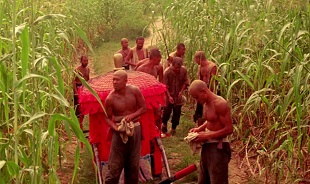
Mo Yan (Gaomi, 17 februari 1955) Scene uit de gelijknamige film uit 1987
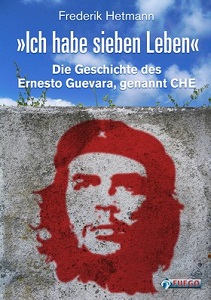
Uit:Ich habe sieben Leben. Die Geschichte des Ernesto Guevara, genannt Che
“Die Mutter, Celia de la Serna, wird als Mädchen »La Rebelda« genannt. Sie gilt als eine der schönsten und reichsten Erbinnen von Buenos Aires. Sie besitzt Tausende von Hektar Weideland und riesige Rinderherden. Sie ist mit 17 in Paris gewesen. Nach dem Tod ihrer Eltern hat sie einen Vormund und Anstandsdamen, wie sie die gesellschaftliche Konvention fordert, abgelehnt. Sie soll die erste Frau in Argentinien gewesen sein, die ein eigenes Bankkonto besaß. Sie trägt die Haare kurz geschnitten. Sie begeistert sich für marxistische Ideen. In Argentinien verdient man in den 20er Jahren unseres Jahrhunderts das große Geld mit Fleisch. Die Gauchos reiten. Das Lasso fliegt. Staubwolken und Gitarrengeklimper. Aber wie ist es wirklich? Celia will es wissen. Die Rinder werden in die Gasse getrieben. Am Ende der Gasse erwartet sie unverhofft der Tod: zwei Bolzen, die sich von der Seite her in den Schädel der Tiere bohren. Celia beobachtet den Mann, der mit einem Fingerdruck diesen Bolzen betätigt. Ein gutmütiges Indianergesicht grinst sie an. Die Kadaver treiben auf dem Fließband davon. Sie werden zerlegt, eingefroren oder in Dosen verpackt und nach Europa exportiert. Celia sieht die Männer mit Sägen und blutverschmierten Schürzen umhergehen. Sie spürt den leicht süßlichen Geschmack von Blut auf der Zunge. Am nächsten Tag erzählt man im Jockey Club, dem Treffpunkt der High Society von Buenos Aires, dass »La Rebelda« allein die Schlachthöfe besucht habe. Trotz, oder vielleicht gerade wegen solcher Launen, ist Celia umschwärmt von jungen Männern aus der Bohème und aus der Oberschicht. Zum Teufel mit diesen Gecken, die um sie schwänzeln und sich die Revolution als Operette vorstellen! Sie denkt an die Revolution als an eine große reinigende Kraft. Sie hasste die verhimmelnden Flirtworte blasierter Jünglinge, wenn sie allein mit einem von ihnen in der Nacht auf einer Terrasse steht und dazu schwere Colliers im Salon im Hintergrund klimpern ... Oder war es ein Kronleuchter?“
Frederik Hetmann (17 februari 1934 – 1 juni 2006) Cover
Tags:Shahrnush Parsipur, Willem Thies, Sadegh Hedayat, Yevgeni Grishkovetz, Albert Kuyle, Jaroslav Vrchlický, Chaim Potok, Mo Yan, Frederik Hetmann, Romenu
How astonishing it is that language can almost mean, and frightening that it does not quite. Love, we say, God, we say, Rome and Michiko, we write, and the words get it all wrong. We say bread and it means according to which nation. French has no word for home, and we have no word for strict pleasure. A people in northern India is dying out because their ancient tongue has no words for endearment. I dream of lost vocabularies that might express some of what we no longer can. Maybe the Etruscan texts would finally explain why the couples on their tombs are smiling. And maybe not. When the thousands of mysterious Sumerian tablets were translated, they seemed to be business records. But what if they are poems or psalms? My joy is the same as twelve Ethiopian goats standing silent in the morning light. O Lord, thou art slabs of salt and ingots of copper, as grand as ripe barley lithe under the wind's labor. Her breasts are six white oxen loaded with bolts of long-fibered Egyptian cotton. My love is a hundred pitchers of honey. Shiploads of thuya are what my body wants to say to your body. Giraffes are this desire in the dark. Perhaps the spiral Minoan script is not laguage but a map. What we feel most has no name but amber, archers, cinnamon, horses, and birds
In Dispraise Of Poetry
When the King of Siam disliked a courtier, he gave him a beautiful white elephant. The miracle beast deserved such ritual that to care for him properly meant ruin. Yet to care for him improperly was worse. It appears the gift could not be refused.
Jack Gilbert (17 februari 1925 – 13 november 2012)
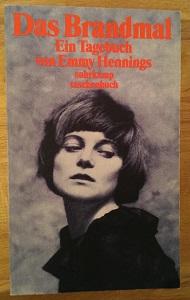
„Im Namen des Namenlosen will ich beginnen, obgleich ich mich so weit von ihm entfernt fühle. Gerade aus diesem Grunde: in seinem Namen. Das Namenlose ist die erste und letzte Ursache meines Daseins. Ich ahne es als die Ursache des Daseins aller Menschen. Das ist nur meine gläubige Vermutung, sonst nichts. Ich aber will über meine eigene Ursache sinnen, über mich, denn ich bin noch nicht über mich hinausgekommen. Ich sehe ja immer nur mit meinen eigenen Augen. Ich darf mich nicht darüber täuschen und sagen, ich sähe mit den allgemeinen Augen. Ich glaube nicht, daß jemand seine persönlichen Augen bei Lebzeiten auswechseln kann. Das Verlangen, alles umfassen zu wollen, ist eine Sucht, nur meine Sehnsucht, sonst nichts. In Wahrheit aber kann ich nichts mehr begreifen, nichts halten, nichts fassen. Es ist, als löse sich alles. Wie lange doch hat es gedauert, bis ich dahin gekommen bin, mir eines Tages einzugestehen: ich bin ein ungeordneter Mensch. Hat mich ein Fall, ein Zufall verführt zum Bekenntnis? Mein Gott ist kein Zufall. Die Ewigkeit kann ich nicht Zufall nennen. Und doch war mir, als sei der Zufall mein Schicksal geworden. Der Zufall kann wohl kein Grund zu einer Umwälzung sein. Es gibt so viele Zufälle. Ich bin eine Frau. Ich hebe die Kontrolle auf. Die Frage nach dem »Warum« und »Woher«. Ich gestehe nur das »Wie«. Wie war es? Jeder Anlaß war mir ein Abgrund, ich bin nicht erst heute gefallen. Erst heute merke ich, daß ich immer gefallen bin. Jetzt aber, da ich unten bin, – vielleicht kann ich nicht tiefer kommen –, sehe ich: ich bin gefallen. Meine Geburt war der Fall eines Engels, der von Gott abfiel, und jetzt suche ich wieder … Um die Gegenwart zu erhellen, gedenke ich der Vergangenheit. Die Erinnerung lebt in mir, nach Tagen, Monaten, Jahren, immer. So ist es und wird es sein. Die Tatsachen, wie man die sichtbaren Handlungen in der Welt nennt, sind belanglos geworden. Nur das geistige Erleben und Wiedererleben rollt weiter. Nur die empfindsame Illusion ist es. Denn wenn ich vollkommen erleben könnte, wäre ich da nicht bei der ersten Begegnung mit dem ersten Erlebnis geblieben? Zusammengebrochen? Das Leben hat mich wohl nur gestreift, berührt. Daß man das Leben überleben kann! Wie schmerzhaft und empfindsam bin ich jetzt stecken geblieben! Stecke ich im Leben? Was meine Augen gesehen haben, hat mir nicht so weh getan, als was mein Herz, oder was immer es sein mag, fühlt.“
Emmy Hennings (17 februari 1885 – 10 augustus 1948) Cover
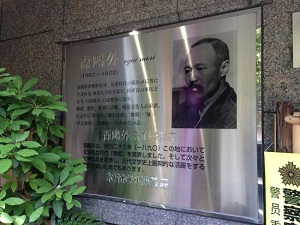
De Japanse schrijver Mori Ōgaiwerd geboren op 17 februari 1862 als Mori Rintaro in het dorpTsuwano in Iwami. Zie ook alle tags voor Mori Ōgaiop dit blog.
Uit: The Dancing Girl (vertaald door Richard Bowring)
“But it is so deeply engraved upon my heart that I fear this is impossible. And yet, as there is no one here this evening, and it will be some while before the cabin boy comes to turn off the light, I think I will try to record the outline of my story here. Thanks to a very strict education at home since childhood, my studies lacked nothing, despite the fact that I lost my father at an early age. When I studied at the school in my former fief, and in the preparatory course for the university in Tokyo, and later in the Faculty of Law, the name Ota Toyotaro was always at the top of the list. Thus, no doubt, I brought some comfort to my mother who had found in me, her only child, the strength to go through life. At nineteen I received my degree and was praised for having achieved greater honor than had any other student since the founding of the univer-sity. I joined a government department and spent three pleasant years in Tokyo with my mother, whom I called up from the country. Being especially high in the estimation of the head of my department, I was then given orders to travel to Europe and study matters connected with my particular section. Stirred by the thought that I now had the opportunity to make my name and raise my family fortunes, I was not unduly sorry to leave even my mother, although she was over fifty. So it was that I left home far behind and arrived in Berlin. I had the vague hope of accomplishing great feats and was used to work-ing hard under pressure. But suddenly here I was, standing in the middle of this most modern of European capitals. My eyes were dazzled by its bril-liance, my mind was dazed by the riot of color. To translate Unter den Lin-den as "under the Bodhi tree" would suggest a quiet secluded spot. But just come and see the groups of men and women sauntering along the pave-ments that line each side of that great thoroughfare as it runs, straight as a die, through the city. It was still in the days when Wilhelm I would come to his window and gaze down upon his capital. The tall, broad-shouldered officers in their colorful dress uniform, and the attractive girls, their hair made up in the Parisian style, were everywhere a delight to the eye. Car-riages ran silently on asphalt roads. Just visible in the clear sky between the towering buildings were fountains cascading with the sound of heavy rain. Looking into the distance, one could see the statue of the goddess on the vic-tory column. She seemed to be floating halfway to heaven from the midst of the green trees on the other side of the Brandenburg Gate. All these myriad sights were gathered so close at hand that it was quite bewildering for the newcomer.”
Mori Ōgai (17 februari 1862 – 9 juli 1922) Plaquette voor een hotel in Tokyo
A momentary indiscretion, And the vision of your fluttering lids Is burned forever in my mind Like a dark spot, edged in fire, For staring at the sun.
Now, wherever I look, I'm haunted by those flaring pupils, But it's only your afterimage, not you, Your sunspot eyes and nothing more.
Alone in my room, I stare At the ceiling and try to forget, But even when I sleep, I feel your phantom gaze, Doe-eyed and fluttering.
I know there are things in the night That call unwary dreamers to their doom. Still, I am drawn to you, To your eyes edged in fire, Though where they lead I do not know.
The viewless atoms of the air
The viewless atoms of the air Around me palpitate and burn, All heaven dissolves in gold, and earth Quivers with new-found joy. Floating on waves of harmony I hear A stir of kisses, and a sweep of wings; Mine eyelids close--"What pageant nears?" "'Tis Love that passes by!"
Vertaald door Walter Wykes
Gustavo Bécquer (17 februari 1836 – 22 december 1870) Daniel Migueláñez alsGustavo Bécquer in het theaterstuk 'El círculo de Hierro', Madrid, 2018
Nun erblühen schon die Weidenzweige Und der Mond war gestern rot umraucht Und im Wald die aufgetauten Steige Warten darauf, daß man sie gebraucht.
Dieses Licht! Wer fände leicht die Worte, So es zu benennen, wie es ist? Bergher kommts! Vom hochgelegnen Orte! Schön zu sehen, wie es abwärts fließt,
Wie das Wasser rinnt aus einer Quelle, Ihr vertrauend, stetig, ohne Hast, Bis im Tal die letzte finstre Stelle Hell wie Gold wird. Diese schämt sich fast.
Alt-neue Freudigkeit
Die Pappel steht. Man sieht es ihr nicht an, Daß sie den Frühling spürt, und wie er tut! Ein bißchen Grün ists, was sie zeigen kann. Unsichtbar steigt in ihr das junge Blut.
Die Wolke geht. Ihr sieht mans eher an, Daß sie es fühlt: nun rührt es sich mit Fleiß! Weiß weht sie hin. Man denkt an einen Schwan Auf blauem See – zerschmolzen ist sein Eis!
Es schmolz vor kurzem erst. Wer denkt noch dran? So schnell ist das Vergessen? O der Zeit! Nun streicht ein neuer Wind an uns heran. Ein neuer der? Alt–neue Freudigkeit,
Die kommt und geht! Und schau die Pappel an! Im Vorjahr war es mit ihr ebenso: Erst kahl im März! Dann laubig! Und ein Mann! Im grünen Kornhalm wispert schon das Stroh!
A bright sun and a loosened rein, A whip whose pealing sound Rings forth amid the forest trees As merrily forth we bound As merrily forth we bound, my boys, And, by the dawn's pale light, Speed fearless on our horses true From morn till starry night.
"Oh! for a tame and quiet herd," I hear some crawler cry; But give to me the mountain mob With the flash of their tameless eye With the flash of their tameless eye, my boys, As down the rugged spur Dash the wild children of the woods, And the horse that mocks at fear.
There's mischief in you wide-horned steer, There's danger in you cow; Then mount, my merry horsemen all, The wild mob's bolting now The wild mob's bolting now, my boys, But 'twas never in their hides To show the way to the well-trained nags That are rattling by their sides.
Oh! 'tis jolly to follow the roving herd Through the long, long summer day, And camp at night by some lonely creek When dies the golden ray. Where the jackass laughs in the old gum tree, And our quart-pot tea we sip; The saddle was our childhood's home, Our heritage the whip.
Andrew Paterson (17 februari 1864 – 5 april 1941) Cover
“Perhaps the most intriguing White House denizens are the men and women who have worked beside presidents as their spokespersons or confidential advisers. More than anyone, they often shared the reflected glow of White House power. Not all of them were able to deal with it rationally or responsibly, though the vast majority have managed it. For many of them, the experience was more than a little harrowing--and in a few cases, fatal. I am thinking of one of my most heartbreaking White House memories--the death of my father's boyhood friend and press secretary, Charlie Ross. Charlie went through high school with Harry Truman and went on to become a top-ranked Washington, D.C., reporter for the St. Louis Post-Dispatch. When my father turned to him for help in 1945, Charlie gave up a comfortable salary and rational hours for the ordeal of a White House in which clocks and sensible schedules ceased to exist. Five exhausting years later, during the frantic early months of the Korean War, when newsmen besieged the White House twenty-four hours a day, Charlie Ross collapsed and died of a heart attack at his desk. A weeping Harry Truman said the country had lost a great public servant--and he had lost his best friend. That memory leads us to another cadre of White House inhabitants, although many presidents and their families might be reluctant to bestow that title on them: the men and women of the media. They, too, participate in the aura of the White House--to the point where they sometimes act as if they run the place. I had a vivid reminder of this mind-set when I came to the White House to talk with Hillary Clinton in 1994 about my book in progress, First Ladies. A badly misinformed White House policeman told me to enter the mansion through the press briefing room in the West Wing. The minute I stepped through the doorway, a half dozen reporters surrounded me. Why was I there? To advise Hillary on how to improve her performance as First Lady? What did I think of Hillary's latest hairstyle? Should she hold more press conferences ^ la Eleanor Roosevelt, or fewer ^ la Bess Truman (who held none at all)? I smiled sweetly and said "No comment" to these attempts to get me to put my foot in my mouth.”
Margaret Truman (17 februari 1924 – 29 januari 2008) Cover
“If she had been, well, a different sort of girl, Wexford wouldn't have paid so much attention. If she had been more like her friends. He hesitated about the phrase he used even in his own mind, for he liked to keep to his personal brand of political correctness in his thoughts as well as his speech. Not to be absurd about it, not to use ridiculous expressions like intellectually challenged, but not to be insensitive either and call a girl such as Lizzie Cromwell mentally handicapped or retarded. Besides, she wasn't either of those things, she could read and write, more or less, she had a certain measure of independence and went about on her own. In daylight, at any rate. But she wasn't fit just the same to be left alone after dark on a lonely road. Come to that, what girl was? So he thought she was dead. Murdered by someone. What he had seen of Colin Crowne he hadn't much liked, but he had no reason to suspect him of killing his stepdaughter. True, some years before he married Debbie Cromwell, Crowne had been convicted of assault on a man outside a pub, and he had another conviction for taking and driving away -- in other words, stealing -- a car. But what did all that amount to? Not much. It was more likely that someone had stopped and offered Lizzie a lift. "Would she accept a lift from a stranger?" Vine had asked Debbie Crowne. "Sometimes it's hard to make her like understand things," Lizzie's mother had said. "She'll sort of say yes and no and smile -- she smiles a lot, she's a happy kid -- but you don't know if it's like sunk in. Do you, Col?" "I've told her never talk to strangers," said Colin Crowne. "I've told her till I'm blue in the face, but what do I get? A smile and a nod and another smile, then she'll just say something else, something loony, like the sun's shining or what's for tea." "Not loony, Col," said the mother, obviously hurt. "You know what I mean." So when she had been gone three nights and it was the morning of the third day, Colin Crowne and the neighbors on either side of the Crownes on the Muriel Campden Estate started searching for Lizzie. Wexford had already talked to her friends and the driver of the bus she should have been on but hadn't been on, and Inspector Burden and Sergeant Vine had talked to dozens of motorists who used that road daily around about that time. When the rain became torrential, which happened at about four in the afternoon, they called off the search for that day, but they were set to begin again at first light. Taking DC Lynn Fancourt with him, Wexford went over to Puck Road for another talk with Colin and Debbie Crowne.”
Ruth Rendell (Londen, 17 februari 1930) Cover
De Russische dichter en schrijver Fjodor Sologoeb(eig. Fjodor Koezmitsj Teternikov) werd geboren in Sint-Petersburg op 17 februari 1863. Zie ook alle tags voor Fjodor Sologoebop dit blog.
The Sacred World's Unquestioned
The sacred world's unquestioned Pharaoh - I filled it with my spirit's breath And shall not ever have a hero Nor in the heavens nor on earth.
I'll hold in secret that I breed on My own sacramental light; And toil like slave, but for my freedom, I call for darkness, peace and night.
I Composed These Rhythmical Sounds
I composed these rhythmical sounds To make lesser the thrust of my soul, And to draw the heart's endless wounds, In the sea where the silver strings roll,
To make sound, like nightingales' ode, My poor dream's ever beautiful voice, And to force the song's smile from lips closed And blazed on by long sadness and loss.
Fjodor Sologoeb (17 februari 1863 – 5 december 1927)
« Il ne dira pas un mot de plus. Le voilà parti pour les champs sans tourner la tête car il sait que je vais me mettre en campagne. Je commence par examiner de près le bâton à bouillie qui est dressé dans le coin de l'âtre. Il a une queue pour le tenir et une tête (bout) pour remuer la pâte. Serait-ce lui ? Mais grand-père n'avait qu'à le prendre. Et d'ailleurs il n'y en a qu'un. Comment serait-il plus facile d'en trouver deux ? Je m'en vais dans l'appentis. Là, il y a des bêches, des pelles, des râteaux, des fourches, des pioches, tous emmanchés. Un manche n'a qu'un bout puisque l'autre est pris par le fer et l'outil. Mais un manche peut-il passer pour un bâton ? Je prends sur moi de répondre non. Dix minutes plus tard, je remonte le sentier qui borde le Champ du Recteur, je descends dans les prairies. Sur tous les talus, il y a des douzaines de rameaux qui attendent de devenir bâtons. Tenez, ces deux-là qui ont l'air d'êtres frères ou soeurs. Dans ma tête, je les vois coupés, mais ils ont quatre bouts à eux deux. Alors je reviens vers la maison pour regarder aller les choses. Je laisse le soleil tirer le jour derrière lui. Certes, je n'ai pas moins de courage qu'un autre. Les bâtons qui n'ont qu'un seul bout chacun, je suis prêt à franchir toutes les limites de mes six ans et demi pour mettre la main dessus. Mais je sais déjà que si je ne les trouve pas avant ce soir, grand-père les aura trouvés lui-même. Et j'éprouve un étrange plaisir à savourer mon échec en escomptant ma surprise quand le vieil homme m'apportera la « clé du château ». C'est ainsi qu'il appelle la solution des embrouilles qui nous cernent de toutes parts pendant tout le temps que nous avons les yeux ouverts. Lui, cette clé, il la trouve à tous les coups. Justement, le voilà qui revient du champ de Méot. A son pas, comme d'habitude, et le chapeau ramené sur les sourcils parce que le couchant, ce soir, est rouge-braise, trop rouge pour les yeux bleus qu'il a. Il manie un bâton qui lui sert, de temps à autre, à aider une jambe gauche devenue paresseuse à force d'aller. Un seul bâton, pas deux, sinon je jurerais qu'il a trouvé ce qui lui manquait. Car ce bâton n'est pas celui qu'il a pris pour partir. Des bâtons, grand-père en a plus de sept de sa fabrication, sans compter la canne du dimanche pour aller à la messe et qui a été achetée en magasin, s'il vous plaît. »
Pêr-Jakez Helias (17 februari 1914 – 13 augustus 1995)
„In seiner Lage schien ihm der kürzeste und bequemste Weg zum Glück und Ruhm die Wissenschaften zu sein; doch kaum hatte er ihren Zauber gekostet, als der heftigste Durst nach Wahrheit in seiner Seele entbrannte. Jeder, der diese Sirenen kennt, und ihnen ihren betrügrischen Gesang abgelernt hat, fühlt (wenn er die Wissenschaften nicht als Handwerk treibt) ohne mein Erinnern, daß ihm sein Zweck, diesen brennenden Durst zu stillen, entwischen mußte. Nach langem Herumtaumeln in diesem Labyrinthe waren seine Ernte: Zweifel, Unwille über die Kurzsichtigkeit des Menschen, Mißmut und Murren gegen den, der ihn geschaffen, das Licht zu ahnden, ohne die dicke Finsternis durchbrechen zu können. Noch wäre er glücklich gewesen, hätte er mit diesen Empfindungen allein zu kämpfen gehabt; da aber das Lesen der Weisen und Dichter tausend neue Bedürfnisse in seiner Seele erweckte, und seine nun beflügelte und zugekünstelte Einbildungskraft die reizenden Gegenstände des Genusses, die Ansehen und Gold allein verschaffen können, unablässig vor seine Augen zauberte, so rann sein Blut wie Feuer in seinen Adern, und seine übrigen Fähigkeiten wurden bald von diesem Gefühl allein verschlungen. Durch die merkwürdige Erfindung der Buchdruckerei glaubte er sich endlich, die Tore zum Reichtum, Ruhm und Genuß aufgesprengt zu haben. Er hatte sein ganzes Vermögen darauf gewandt, sie zur Vollkommenheit zu bringen, und trat nun vor die Menschen mit seiner Entdeckung; aber ihre Laulichkeit und Kälte überzeugten ihn bald, daß er, der größte Erfinder seines Jahrhunderts, mit seinem jungen Weibe und seinen Kindern Hungers sterben könnte, wenn er nichts anders zu treiben wüßte. Von dieser stolzen Hoffnung so tief herabgesunken, gedrückt von einer schweren Schuldenlast, die er sich durch leichtsinnige Lebensart, übertriebene Freigebigkeit, unvorsichtige Bürgschaften und Unterstützung falscher Freunde auf den Hals gezogen, warf er einen Blick auf die Menschen, sein Groll färbte ihn schwarz, sein häusliches Band, da er seine Familie nicht mehr zu erhalten wußte, ward ihm zur Last, und er fing für immer an zu glauben, daß die Gerechtigkeit nicht den Vorsitz bei der Austeilung des Glücks der Menschen habe. Er nagte an dem Gedanken: wie und woher es käme, daß der fähige Kopf und der edle Mann überall unterdrückt, vernachlässigt sei, im Elende schmachten während der Schelm und der Dummkopf reich, glücklich und angesehen wären. So leicht nun Weisen und Prediger diesen Zweifel zu heben wissen, so erbittert er gleichwohl, da sie nur zu dem Verstande reden, und das Gefühl durch die tägliche Erfahrung verwundet wird, das Herz des Stolzen, und schlägt den Sanftern nieder. Zu den erstern gehörte Faust. Von diesem Augenblick strebte sein gekränkter Geist, den verschlungenen Knäuel aufzuwickeln, über dessen Auflösung so viele Tausende die Ruhe und das Glück ihres Lebens umsonst verloren haben.“
Friedrich Maximilian Klinger (17 februari 1752 – 25 februari 1831)
De Australische dichteres, schrijfster, uitgeefster en suffragette Louisa Lawson werd geboren op 17 februari 1848 in Mudgee, New South Wales. Zie ook alle tags voor Louisa Lawsonop dit blog.
To A Bird
Bright little warbler of the air. The world to thee I ween is fair, And free thy life from shade of care, So gaily dost thou sing. While from thy happy throat are sent, Those floods of song in ravishment, Thou shamest me without intent, Sad mourner that I be. But birdie dear, didst thou but see The world as it appears to me ; Then 'pretty,' 'pretty,' might not be The burden of thy song. To one who knows not grief or care, I doubt me not the world is fair, And 'pretty,' 'pretty' everywhere As thou dost iterate. But oh ! could I like thee arise, And wing my way toward the skies ; Not here mid human miseries One moment would I dwell. But once released from bonds of clay, I'd upward soar till thy sweet lay Did in the distance melt away Amidst an awful space. I d pause not till through shining breach, I'd catch in song that seraphs teach, Notes only angel voices reach, Where my loved ones are gone. Ah, birdie ! were it thine to know, The grief that makes my sad tears flew, Thou couldst not sweetly warble so Thy little heart would break.
^
Louisa Lawson (17 februari 1848 – 12 augustus 1920)
Comme un tonnerre fuse un cri, Comme une vague et un défi : « Au Rhin, au Rhin, au Rhin all’mand ! Qui veut le garder maintenant? » Toi ma patrie, non, ne crains rien, Ferme se tient la garde au Rhin !
Le cri par la campagne va et court ; L’œil brille, car il fait le tour. Oui, l’Allemand fidèle et fort, Défend son saint pays d’abord. Toi ma patrie, non, ne crains rien, Ferme se tient la garde au Rhin !
Max Schneckenburger (17 februari 1819 – 3 mei 1849)
“…but the fall of Lucifer at once produced the one and pre-pared the other, convulsing and inverting the world which God had made. The rebel Seraph fell headlong from Heaven directly above the Western hemisphere, till then a continent, in whose midst was Eden ; and Earth, in the twofold horror of his sight and presence, underwent a two-fold change. First, to veil her face, she brought in upon herself the vast floods of the Eastern Sea-hemisphere, trans-ferring to their place all her dry land, save Eden, which thus was left insulated in mid-Ocean. And secondly, to escape his contact, as he sank and sank through her sur-face, through her bowels, till the middle of his colossal frame, having reached the centre of gravity, remained there fixed from the sheer physical impossibility of sinking any lower, she caused a vast mass of her internal substance to flee before his face ; and leaving eternally void the space it once had occupied to form the inverted pit-cone of Hell, she heaved it up directly under Eden, amid the new waste of waters, to form the towering mountain-cone on whose peak the Terrestrial Paradise should thenceforth to the end of Time sit far .above all elemental strife, and whose sides should, after the Redemption of Man, furnish the Purgatorial stair whereby his foot might aspire once more to tread, his eye to contemplate, his regained inheritance. Thus two Elements, Earth and Water, hemispherically divided, constitute the Sphere which forms the innermost and immoveable kernel of the Dantesque Universe. It is enveloped by the Sphere of Air, subject to the variations of heat and cold, rain and drought, wind and tempest, and reaching up to that particular point of the Western Mountain where the Ante-Purgatory ends, and the Gate of S. Peter admits holy but still imperfect souls to Purgatory proper, which being situated within the Sphere of Fire or 2Ether, is secure from atmospheric change. Beyond this highest elemental region lie the Nine Heavens, each alike a hollow revolving sphere, enclosing and enclosed. The First Heaven is of the Moon, the Second of Mercury, the Third of Venus, the Fourth of the Sun (in Dante's time regarded as a planet), the Fifth of Mars, the Sixth of Jupiter, the Seventh of Saturn, the Eighth of the Fixed Stars ; the Ninth is the Starless Crystalline Heaven or Primum Mobile, which, itself the most rapid of all in its revolutions, is the root of Time and Change throughout Creation, and the source and measure of the gradually slackening movement of all the Heavens within it. Without it is the Tenth Heaven, the motionless boundless Empyrean, the special dwelling-place of the Most High God, and the eternal home of His Saints.”
Maria Rossetti (17 februari 1827 – 24 november 1876) Portret door Constantin Daniel Rosenthal
I. Daaglijks om Hem heen gegroept, Volgen velen Jezus gangen, Die naar licht en troost verlangen, En wier hart om waarheid roept.
Daaglijks meerdert hun getal. Heden, op een berg geklommen, Overziet zijn oog de drommen, Die zijn taal verkwikken zal.
Maar, wanneer Hij nederziet Om en rond naar alle zijden, Merkt zijn oog des werelds blijden, Merkt het 's werelds rijken niet.
Wie in droefheid zit en weent, Wie het hoofd mistroostig bukte, Wie een last de schoudren drukte: Zulken ziet Hij hier vereend.
Armen in 't gehavend kleed; Zij, die dikmaals, in hun dagen, Dorst en honger moesten dragen, Of in 't hart een wrijtend leed.
Van des Heeren lief gelaat Blinkt een straal van troost hun tegen; 't Is een voorproef van den zegen, Waar hun smart in overgaat.
Hoort Hem, daar hij zalig prijst Allen, die gelaten treuren, En de hoofden opwaarts beuren, Daar Hij hun den hemel wijst.
Zalig, die in hongersnood En in dorst geloovig bleven; Boven ieder leed verheven, Wacht hun 't eeuwig levensbrood.
Zalig, wie, op 't slinksche pad, Zich geen rijkdom wou verwerven; Want hij zal dat betere erven, Dat hem God beschoren had.
En zoo leert de Heiland voort. Luistrende aan zijn voet gezeten, Heeft de schaar haar leed vergeten, En verzaadt zich aan zijn woord.
Nicolaas Beets (13 september 1814 – 13 maart 1903) Gezicht op Haarlem met de Bakenesserkerk door Petrus Gerardus Vertin en Charles Rochussen, ca. 1877-1878. Nicolaas Beets werd in Haarlem geboren.
The Country of Marriage (Wendell Berry), Ingmar Heytze, Elisabeth Eybers, Anil Ramdas
Dolce far niente – Bij een huwelijksverjaardag
Soul Mates door Gloria E Barreto-Rodriguez, 2009
The Country of Marriage
I. I dream of you walking at night along the streams of the country of my birth, warm blooms and the nightsongs of birds opening around you as you walk. You are holding in your body the dark seed of my sleep.
II. This comes after silence. Was it something I said that bound me to you, some mere promise or, worse, the fear of loneliness and death? A man lost in the woods in the dark, I stood still and said nothing. And then there rose in me, like the earth’s empowering brew rising in root and branch, the words of a dream of you I did not know I had dreamed. I was a wanderer who feels the solace of his native land under his feet again and moving in his blood. I went on, blind and faithful. Where I stepped my track was there to steady me. It was no abyss that lay before me, but only the level ground.
III. Sometimes our life reminds me of a forest in which there is a graceful clearing and in that opening a house, an orchard and garden, comfortable shades, and flowers red and yellow in the sun, a pattern made in the light for the light to return to. The forest is mostly dark, its ways to be made anew day after day, the dark richer than the light and more blessed, provided we stay brave enough to keep on going in.
IV. How many times have I come to you out of my head with joy, if ever a man was, for to approach you I have given up the light and all directions. I come to you lost, wholly trusting as a man who goes into the forest unarmed. It is as though I descend slowly earthward out of the air. I rest in peace in you, when I arrive at last.
V. Our bond is no little economy based on the exchange of my love and work for yours, so much for so much of an expendable fund. We don’t know what its limits are– that puts us in the dark. We are more together than we know, how else could we keep on discovering we are more together than we thought? You are the known way leading always to the unknown, and you are the known place to which the unknown is always leading me back. More blessed in you than I know, I possess nothing worthy to give you, nothing not belittled by my saying that I possess it. Even an hour of love is a moral predicament, a blessing a man may be hard up to be worthy of. He can only accept it, as a plant accepts from all the bounty of the light enough to live, and then accepts the dark, passing unencumbered back to the earth, as I have fallen tine and again from the great strength of my desire, helpless, into your arms.
VI. What I am learning to give you is my death to set you free of me, and me from myself into the dark and the new light. Like the water of a deep stream, love is always too much. We did not make it. Though we drink till we burst we cannot have it all, or want it all. In its abundance it survives our thirst. In the evening we come down to the shore to drink our fill, and sleep, while it flows through the regions of the dark. It does not hold us, except we keep returning to its rich waters thirsty. We enter, willing to die, into the commonwealth of its joy.
VII. I give you what is unbounded, passing from dark to dark, containing darkness: a night of rain, an early morning. I give you the life I have let live for the love of you: a clump of orange-blooming weeds beside the road, the young orchard waiting in the snow, our own life that we have planted in the ground, as I have planted mine in you. I give you my love for all beautiful and honest women that you gather to yourself again and again, and satisfy–and this poem, no more mine than any man’s who has loved a woman.
Wendell Berry (Henry County, 5 augustus 1934) Henry County Courthouse in New Castle, Kentucky
Mijn boeken zijn meer dan gebundeld papier zoveel meer dan een paar glazen inkt op dood hout
het zijn stemmen die nimmer de stilte doorbreken
ruisende werelden, plaatsen van rust
het zijn bomen die weer zijn begonnen te spreken
Testpiloot
Het tragische aan ruimtereizen is dat je nergens komt; een baan om de aarde, een vlag op de maan. Aan bestemmingen geen gebrek,
het is alleen zo groot en leeg dat groot en leeg de woorden niet meer zijn. Je reist te traag, je leeft te kort, je bent van stof en niet van licht.
Toch zit ze naast me op de bank, ze zoekt een man van buiten met een auto of een brommer, iedereen hierbinnen is gek.
Ze was op weg, er waren stemmen, vals en echt, de stad en andere drugs, ze stak het huis in brand omdat ze honger had. Ze werd gebruikt
als testpiloot. Het contact met de basis is verloren, ze reist verder door behandelkamers, heerlijk nieuwe werelden, haldol, fluanxol,clozapine.
Nocturne
De sterren zijn met veel, vanavond. Grote ogen in de nacht: een meisje zwiert haar rok tot bloemen op een dansfeest aan de gracht.
Een jongen wankelt door de stad. Zijn benen slepen uit de maat. De stoep ligt slordig langs de straat. Hij heeft zijn flessen leeggedacht.
Hij is zijn mooiste woorden kwijt en niemand die zijn pijn begrijpt; zij danst met sterren in het haar en hij - een slechte goochelaar die stram naar vallend herfstblad grijpt en briefjes post aan de oneindigheid.
Nou is sy dronk en pronkerig, 'n kelk wat om die stamper gloei, angsvallig voor die wind wegwiel, verwelkbaar na die son toe keer.
Sy moet nog regop word en dig, 'n boom wat vérgewortel groei, vir haar behoefte aan klorofiel én lug én aarde visenteer.
Girl
She is an incandescent cup tilting its pistil dizzily, wheeling before the wind and still turning its petals to the glare.
She must contrast and straighten up, a rooted and far-reaching tree that for its store of chlorophyll investigates both earth and air.
Nolensvolens
Südafrika, als ich dich verlassen mußte, nicht deiner Dummheit, sondern eignen Schmerzes wegen - mit einem Tonfall, der das Land meiner Herkunft verrät - wußte ich noch nicht, daß ich auch als Gast gelten würde auf dieser Party, wo sie dich traktieren mit amtlichem, monomanem Haß.
Vertaald door Arno Piechorowski
Elisabeth Eybers (16 februari 1915 – 1 december 2007) Impressies van Klerksdorp
De Surinaams-Nederlandse schrijver, columnist, essayist, programmamaker en presentator Anil Ramdas werd geboren in Paramaribo op 16 februari 1958. Zie ook alle tags voor Anil Randasop dit blog.
Uit: Badal
“Een paar weken later had hij het paar weer gezien, in dezelfde bus, in de andere richting. Ze zaten op een tweezits bank en hielden elkaars hand vast. S. belde. Badal had eerder op de dag zijn telefoon weer aangezet en zonder te kijken alle berichten met gemiste oproepen gewist. Bij een nieuw begin hoorden geen oude telefoontjes. Waar ben je in godsnaam en waarom was je telefoon al die tijd uitgeschakeld?' vroeg S. 'Ik ben in een Italiaans restaurant met een dove Turk. Hij heeft agliolio voor me gemaakt die nergens naar smaakt.' `En waar is dat restaurant?' 'In Zandvoort.' Waarom in Zandvoort?' `Omdat hier alleen white trash woont.' Dat was niet zomaar een waarneming, hij baseerde het op een mathematische theorie. Zwarte mensen hadden geen hond. Enkele creoolse jongens in de Bijlmer daargelaten - die liepen met een pitbull rond om de mensen banger te maken dan zijzelf voor de mensen waren. Blanke mensen uit de middenklasse die wel een hond hadden, lieten hun huisdieren netjes uit in parken waar ze niet aan de lijn hoefden. Een hondenplee, of een losloopgebied, zoals het officieel heette. Of ze ruimden de uitwerpselen keurig op met een zakje. Wie met een hondenpoepzakje of gewoon een boterhamzakje om de hand liep, gaf zijn maatschappelijke status weer. Mensen met tatoeages of een verwaarloosd gebit, mensen die 'Een beetje verliefd' van André Hazes meezongen, mensen die op de broodjesafdeling van de Hema in Zandvoort werkten, waardoor je lang op je bestelling moest wachten, mensen die eruitzagen alsof ze hun avonden halfdronken doorkwamen met sas 6 op de flatscreen tv die nog moest worden afbetaald, die mensen lieten hun hond overal uit, vooral op trottoirs met een versmalling, waardoor je er alleen als verspringer overheen kon. In Zandvoort waren er op alle trottoirs hoopjes poep, ondanks de gemeentelijke stoeptegels met een overduidelijke tekening en de overduidelijke tekst 'Honden in de Goot'. Ergo: hier woonde white trash. Dit kale, neonverlichte restaurant met kunsthouten tafels en sportverslagen op de achtergrond was voor die white trash bedoeld. Hij liet de agliolio staan om zich te concentreren op het telefoongesprek. `Sinds wanneer geef je zo om white trash,' vroeg S. `Sinds de laatste weken. Kijk, er is veel onderzoek gedaan naar allochtonen, vooral naar Marokkanen. Blanken worden neergezet als slachtoffers die hun mooie arbeidersbuurten in verval zien raken door toedoen van allochtonen. Maar naar white trash wordt niet gekeken.' 'En jij gaat naar ze kijken.' `Het is onontgonnen terrein zeg ik je, een goudmijn.' `Harry,' zei ze rustig, 'waar ben je morgenmiddag, rond twee uur? Geef me een adres.' Ze droeg een donkerblauwe rok en een rode bloes. Hij had zich gewassen, geschoren en gekamd. Zijn grijze hemd was schoon, maar zijn zwarte broek was aan een wasbeurt toe. Op zwart zie je geen vlekken, zei hij altijd. Op het verwarmde terras legde ze haar tas op een lege stoel, schikte haar haar en bestelde een cappuccino. Hij bestelde een 7-Up. Ze keek naar hem, en toen naar haar horloge. 'Ik ben gestopt,' zei hij. Hij keek nonchalant naar de voorbijgangers.”