Dolce far niente, William Saroyan, Sander Kok, Éric Zemmour, Wolfgang Hilbig

Dolce far niente
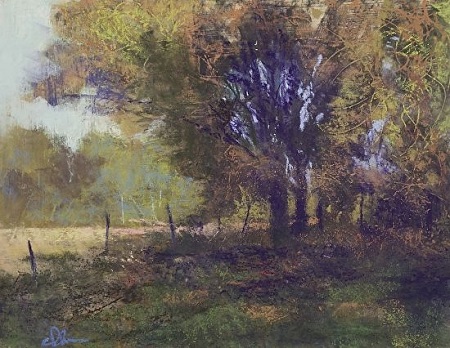
The End of Summer door Marjorie Laird, 1984
End of Summer
An agitation of the air,
A perturbation of the light
Admonished me the unloved year
Would turn on its hinge that night.
I stood in the disenchanted field
Amid the stubble and the stones,
Amazed, while a small worm lisped to me
The song of my marrow-bones.
Blue poured into summer blue,
A hawk broke from his cloudless tower,
The roof of the silo blazed, and I knew
That part of my life was over.
Already the iron door of the north
Clangs open: birds, leaves, snows
Order their populations forth,
And a cruel wind blows.

Stanley Kunitz (29 juli 1905 – 14 mei 2006)
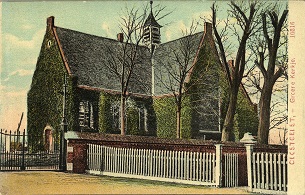
Worcester, Massachusetts, de geboorteplaats van Stanley Kunitz
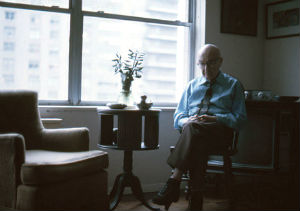
De Amerikaanse dichter en schrijver William Saroyan werdgeboren op 31 augustus 1908 in Fresno, Californië. Zie ook alle tags voor William Saroyan op dit blog.
Uit: Madness in the Family
“Going mad was a specialty of the family. Until a man had gone mad, it was understood that he was still a boy. If he never did, he was not the equal of those who had. Only a few reached the age of thirty unseized, and, over a period of a cen-tury, only two or three members of the family went the whole distance unseized. More than a few took the trip several times, after which they were considered wise men, or perhaps even holy men, as if they had made the pilgrimage to Jerusalem, as, in a sense, they had. With the women it was another matter, although most of them took the trip too; but with the help of the other women in the family, their journeying was fairly well con-cealed. Women on the trip tended to reject their children, their brothers and sisters, their parents, their parents' parents, and themselves. Their madness was justified and reasonable, which may have made its concealment a relatively simple mat-ter. The demands on women for diplomatic behavior were so severe and so taken for granted by the men that madness was upon the women practically all of the time. With the men the madness took several traditional forms, including a repudiation of God, or rather of Jesus and Christianity, since nothing but trouble had come of the Father, the Son, the Holy Ghost, and the Church. Another com-mon form of the madness was a total rejection of the human race, based upon ancient and contemporary evidence that the human race was criminal and contemptible. Oddly. however, this rejection stopped at the threshold of the madman himself, who, during the seizure, whether brief or prolonged, consid-ered himself alone to be the only hope of the human race. His wife was a stranger—some crazy man's daughter. His kids were tricks played on him by shabby genetics. His brothers and sisters were simpletons, his parents sleepwalkers. Yet another form of the madness was a conviction that all was in vain. all was corrupt, all was useless, all was hopeless. In Bitlis my father. Manak, was considered wise and worthy because he had made the trip to madness before he was twelve, which was uncommon. During the year of his rage. he went about his life and work pretty much the same a.5 (NM except that people avoided him, because anybody who looked him full in the face saw that he was on his way. and not receptive to small talk. But once the trip was over, there wasn't an easier man to have around. Difficult questions were put to him by the oldest men, which he answered immediately, with unmistakable appropriateness. In the most complicated dis-putes, he was called upon to pass judgment, and his decisions were instantly accepted by both sides. When the tribe packed up and came to America, first to New York, and then to California, the family madness con-tinued, but the form changed. Of course, this was to be ex-pected. since America was another kind of place entirely. The whole family hadn't one member buried here.”

William Saroyan (31 augustus 1908 – 18 mei 1981)
De Nederlandse schrijver Sander Kok (ook bekend fotomodel) werd geboren in Arnhem op 31 augustus 1981. Zie ook alle tags voor Sander Kok op dit blog.
Uit: Smeltende vrouw
“De relatie tussen hemzelf en zijn vrouw was gelijkwaardiger. Elke zaterdag zag hij vanuit het raam van zijn werkkamer de buurman naast diens blauwe sportwagen staan en hem liefdevol wassen en opwrijven. De auto blonk als een gepoetst sieraad, in het dak scheen de zon. Soms moest hij het schouwspel een keer missen, omdat hij een afspraak had en een enkele keer omdat hij zelf bezig was zijn Neeltje te wassen. Dat deed hij dagelijks op niet-vaststaande tijden, dus het kwam voor dat het toevallig samenviel met het tijdstip waarop Andriessen zijn sportwagen waste. Ieder het zijne, dacht hij dan. Andriessens lijf was breed en lang als van een basketballer. Heel anders dan zijn eigen lijf, dat je gerust ondermaats kon noemen. De man liep elke zaterdag op dezelfde wijze rond zijn auto: peinzend, soms met een vinger de lak bestrijkend, tot hem iets in het oog sprong en hij daarop zijn volle aandacht richtte. De neuroot. Altijd stond dat rood-zwart gestippelde emmertje sop aan de voorkant van de auto en lag de groen-geel gestreepte tuinslang als een krul er voorlangs. Altijd de blauwe overall. Soms, zoals nu, was het koud en droeg de buurman er een fleecetrui onder en wanten aan zijn handen. Het vroor en het warme water dampte van de auto, alsof deze gevuld was met geesten die door het dak ontsnapten. Het was bijna aandoenlijk hoe liefdevol zijn buurman wekelijks met grote en kleine halen zijn auto waste en opwreef en nooit te hard leek te willen drukken; en hoe hij steeds hetzelfde patroon volgde. Eerst waste hij de velgen en de lampen, dan de ruiten en de lak, waarna hij zijn emmertje sop over het dak kieperde en over de licht gebolde motorkap, waarvan Reukens vermoedde dat het Andriessens lievelingsonderdeel was, omdat hij er extra aandacht aan besteedde. Daarna spoelde hij hem langdurig af met water uit de tuinslang en wreef hij hem nog langduriger op met een geel of blauw vezeldoekje, dat soms tijdens de beurt vervanging nodig had omdat het niet meer voldeed. Hij kuste hem niet en talkpoeder liet hij achterwege. Reukens liep naar de badkamer om de emmer te halen. De mens kan andermans geluk zien, maar niet begrijpen, dacht hij.
Voor de klas is geen dag hetzelfde, had een collega beweerd op Reukens' eerste werkdag. Op het grijze gezicht van de man lag een prikkelbaar soort trots dat geen tegenspraak duldde. Reukens had niets gezegd. De man zijn trots duidde op angst dat zijn geloof aan het wankelen werd gebracht. Angst en trots liggen vlak naast elkaar, wist Reukens. Trots is een defensiemechanisme tegen angst, zoals angst misschien een defensiemechanisme is tegen een overdaad aan trots. Voor de klas staan was vermoeiend. Vijf dagen per week staarde hij in dezelfde dode ogen en bevocht de gedachte dat hij de wereld misschien beter van dienst kon zijn vanachter de glazen toonbank van een ijssalon of snackbar.”

Sander Kok (Arnhem, 31 augustus 1981)
De Franse schrijver en journalist Éric Zemmour werd geboren op 31 augustus 1958 in Montreuil-sous-Bois, vlakbij Parijs. Zie ook alle tags voor Éric Zemmour op dit blog.
Uit: Un quinquennat pour rien
« 17 novembre 2015
Bombarder Molenbeek
La guerre !, dit Hollande. La guerre !, dit Valls. La guerre dit Cazeneuve. Une guerre impitoyable, dit Hollande. Que nous allons gagner, dit Valls. Notre guerre, disent les médias. La guerre pour jouer au chef de guerre. La guerre pour appeler à l'unité nationale. La guerre pour remonter dans les sondages. La guerre. Quelques bombardements de plus ou de moins, dans une Syrie transformée en terrain vague. Une guerre française dans les fourgons de l'année américaine. Une guerre en Syrie qui s'ajoute à celle d'Irak et d'Afghanistan ou de Lybie qui ont aggravé le mal qu'elles étaient censées anni-hiler. Des guerres aux côtés de l'Arabie Saoudite, du Qatar, de la Turquie, qui ont fabriqué, équipé, financé la milice de Daech. Leur milice Comme ils avaient fabriqué, équipé, financé al-Qaida. Avec la bénédiction des services secrets de l'Oncle Sam. Nos alliés, nos amis, nos clients, qui partagent avec l'État islamique la même haine de l'Iran et la même conception rigoriste de l'islam. Daech applique le droit canonique du Moyen Âge, recon-nait l'imam de Bordeaux, Tareq Oubrou, grand ami d'Alain Juppé, et présenté comme l'incarnation d'un islam républicain en dépit de son appartenance à la confrérie des Frères musulmans. Mais l'islam, justement, n'a pas bougé depuis le Moyen Age. Il n'a pas été discuté, amendé, réformé, moder-nisé. Quand Daech cite des sourates du Coran pour légitimer ses actes sanglants, on peut dire que ce n'est pas le vrai islam. Mais c'est une vraie sourate dans le vrai Coran. La France est pour eux la quintessence du mal : à la fois pays des croisés, des blasphémateurs et des idolâtres. Comme au temps béni du califat où l'islam s'étendait de l'Inde à l'Espagne. Quand on prétend mener une guerre, il faut connaître l'ad-versaire pour le vaincre. François Hollande craint même de prononcer son nom I Parle de terroristes pour ne pas dire islamistes. Fustige Daech pour ne pas dire Etat islamique. Le gouvernement socialiste accepte de laisser en liberté sur notre territoire plus de dix mille terroristes potentiels, tous fichés par nos services de police sous la catégorie « S ». Ne pas les expul-ser. Ne pas les enfermer. Respect de l'État de droit. Pas d'amal-game. Le ministre de l'Intérieur Bernard Cazeneuve déclarait en 2014: « Ce n'est pas un délit de prôner le djihad. » Sa collègue de la place Vendôme prône une justice bienveillante évitant la prison qu'elle juge criminogène. Christiane Taubira a été entendue. lune' Mostefai, l'un des tueurs du Bataclan, avait été condamné à huit reprises mais jamais emprisonné. Au moins, ce n'est pas en prison qu'il s'est radicalisé. Au lieu de bombarder Raqqa, la France devrait bombarder Molenbeek. Raqqa en Syrie, Molenbeek en Belgique, d'où sont venus les commandos du vendredi 13. Mais les frontières entre pays européens ne servent plus à rien depuis les accords de Schengen."

Éric Zemmour (Montreuil-sous-Bois, 31 augustus 1958)
Cover
De Duitse dichter en schrijver Wolfgang Hilbig werd geboren in Meuselwitz op 31 augustus 1941. Zie ook alle tags voor Wolfgang Hilbich op dit blog.
Episode
im düstern kesselhaus im licht
rußiger lampen plötzlich auf dem brikettberg
saß ein grüner fasan
ein prächtiger clownsilbern und grün den leuchtend roten reif am hals mit
unverwandtem aug mit dem großen gelben schnabel aufmerksam
zielte er auf mich
so war er herrlicher und schöner
als ein surrealistischer regenschirm auf einer nähmaschine
wie er dort saß genau und furchtlos verirrt
auf seinem schwarzen gipfel
konversation fand nicht statt
ich bewegte mich und er flog davon durch die offene tür
doch von weit her den geruch der sonne den duft
seines farbigen gelächters ließ er hier in der nacht
und ich verwarf alle mühe das leben mythisch zu sehen
und als das kausale grinsen meines kopfes
von energie und frost gefressen in die nacht verschwand
glaubte ich nicht mehr an den untergang
der wahrnehmungen in der finsternis.
Episode
in het sombere ketelhuis in het licht
van beroete lampen op de brikettenberg plotseling
zat een groene fazant
een prachtige clown
zilver en groen de lichtend rode ring om zijn hals met
onafgewend oog met de grote gele snavel opmerkzaam
had hij het op mij gemunt
zo was hij heerlijker en schoner
dan een surrealistische paraplu op een naaimachine
zoals hij daar zat nauwkeurig en vreesloos verdwaald
op zijn zwarte bergtop
gesprek vond niet plaats
ik bewoog mij en hij vloog weg door de open deur
maar van verre de reuk van de zon de geur
van zijn kleurrijk gelach liet hij hier in de nacht
en alle moeite het leven mythisch te zien verwierp ik
en toen de causale grijns van mijn hoofd
door energie en vorst weggevreten in de nacht verdween
geloofde ik niet meer aan de ondergang
der waarnemingen in de duisternis.
Vertaald door Ad den Besten

Wolfgang Hilbig (31 augustus 1941 – 2 juni 2007)
Zie voor nog meer schrijvers van de 31e augustus ook mijn blog van 31 augustus 2017.