Naar de inhoud

Romenu

Over literatuur, gedichten, kunst en cultuur
seniorennet.beseniorennet.be

Berichten van 19 augustus 2017

Mies Bouhuys, Jonathan Coe, Li-Young Lee, Frederik Lucien De Laere, Louis Th. Lehmann, Ogden Nash, Frank McCourt
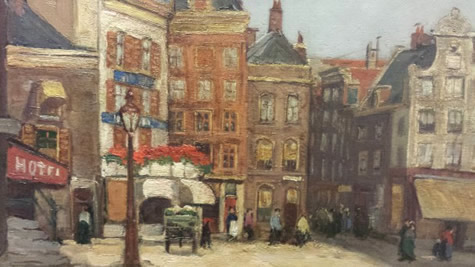
 

Dolce far niente


 2065716-0c3ac7cba1cb18c272e4aec513c4c8e3.jpg
Rembrandtplein door Agatha Zethraeus, ca. 1911


Amsterdam

De gids zegt: kijk! De gids zegt: look!
De gids zegt: regardez!
Hier schreef Spinoza aan een boek,
daar stroomt het IJ naar zee.
Maar daarom niet, maar daarom niet,
om wat een ander erin ziet,
blijf ik in Amsterdam.
Maar om de gekke geveltjes,
om al die groene grachten,
om al die lichte venstertjes,
blijf ik hier overnachten.

De gids zegt: Hier! De gids zegt: There!
De gids zegt: Eh voilà!
Hier woonde 't laatste huisje rechts
Rembrandt met Saskia.
Maar daarom niet, nee, daarom niet,
om wat een ander ervan ziet,
blijf ik in Amsterdam.
Maar om de scheve kamertjes
waar anderen niets om geven,
vol vrouwtjes en vol mannetjes,
blijf ik hier heel mijn leven.

De gids zegt: Dam! De gids zegt: Munt!
De gids zegt: Rembrandtplein.
Wij staan hier op een historisch punt,
waar u geweest moet zijn.
De gids zegt dit, de gids zegt dat.
Ik zeg alleen maar: gekke stad.
Alleen maar: Amsterdam.

 

 2065716-d6ad0fe77100c663c9539d07065b5eb2.jpg
Mies Bouhuys (10 januari 1927 – 30 juni 2008)
Weesp, de geboorteplaats van Mies Bouhuys


De Engelse schrijver Jonathan Coe werd geboren op 19 augustus 1961 in Birmingham. Zie ook mijn blog van 19 augustus 2010 en eveneens alle tags voor Jonathan Coe op dit blog.

Uit: Number 11

“They sat for a few moments in silence: each of them, once again, trying to wrestle as best they could with the conundrum of why their parents should have chosen to go away for half-term without them. Then, as soon as the cold started to bite, Nicholas jumped to his feet.
'Come on,' he said. 'Are we going to look at this cathedral before it gets dark?'
'It's a minster, not a cathedral,' said Rachel.
'Same difference. It'll just be a big old church, whatever you call it.'
He set off quickly, with Rachel running up behind him in an effort to keep pace, but before they had got very far along the path back to the main road, they were halted in their tracks by the sight of two people approaching them in the distance. One of them was in a wheelchair: it appeared to be an old, old woman, swaddled against the afternoon chill by layer upon layer of thick woollen blankets. Her features were scarcely visible: her head was bowed, drooping tiredly, and she was wearing a silk headscarf which screened most of her face from view. In fact, the longer the children looked at her, the more likely it appeared that she was fast asleep. Her chair was being trundled roughly along the path, meanwhile, by a young-looking man wearing motorcycle leathers and balancing something on his left forearm as he pushed. The something could not, at first, be identified: but as the figures came closer, it looked as though it might – however implausible this seemed – be some sort of bird; a suspicion which was then suddenly and dramatically confirmed when the creature spread its wings to an amazing width, and flapped them languidly, in black silhouette against the grey sky – looking, at that moment, more like some fantastical hybrid creature from mythology than any real bird Rachel could remember having seen before.
Nicholas did not move, and as Rachel stood beside him she clasped his hand, relishing his weak responsive grip, sensing the coldness of his bare hand even through the prickly thickness of her woollen mittens. Unsure what to do next, they watched as the man in leathers settled the wheelchair in place and then spoke a few words to the bird, which reacted by hopping obediently from his arm to one of the chair's handles. With both arms free now, the man busied himself making sure the old lady in his charge was warm and comfortable, adjusting her blankets and tucking them in around her ever more snugly. Then he turned his attention to the bird.“


2065716-195ae01d08b6a950cc8ba8a46f9ca86f.jpg
Jonathan Coe (Birmingham, 19 augustus 1961)


De Amerikaanse dichter Li-Young Lee werd geboren op 19 augustus 1957 in Jakarta, Indonesië. Zie ook mijn blog van 19 augustus 2010 en eveneens alle tags voor Li-Young Lee op dit blog.


For A New Citizen Of These United States

Forgive me for thinking I saw
the irregular postage stamp of death;
a black moth the size of my left
thumbnail is all I've trapped in the damask.
There is no need for alarm. And

there is no need for sadness, if
the rain at the window now reminds you
of nothing; not even of that
parlor, long like a nave, where cloud-shadow,
wing-shadow, where father-shadow
continually confused the light. In flight,
leaf-throng and, later, soldiers and
flags deepened those windows to submarine.

But you don't remember, I know,
so I won't mention that house where Chung hid,
Lin wizened, you languished, and Ming-
Ming hush-hushed us with small song. And since you
don't recall the missionary
bells chiming the hour, or those words whose sounds
alone exhaust the heart--garden,
heaven, amen--I'll mention none of it.

After all, it was just our life,
merely years in a book of years. It was
1960, and we stood with
the other families on a crowded
railroad platform. The trains came, then
the rains, and then we got separated.

And in the interval between
familiar faces, events occurred, which
one of us faithfully pencilled
in a day-book bound by a rubber band.

But birds, as you say, fly forward.
So I won't show you letters and the shawl
I've so meaninglessly preserved.
And I won't hum along, if you don't, when
our mothers sing Nights in Shanghai.
I won't, each Spring, each time I smell lilac,
recall my mother, patiently
stitching money inside my coat lining,
if you don't remember your mother
preparing for your own escape.

After all, it was only our
life, our life and its forgetting.


 2065716-22436cccc02f189a122dd320860f26fa.jpg
Li-Young Lee (Jakarta, 19 augustus 1957)


De Vlaamse dichter Frederik Lucien De Laere werd geboren in Brugge op 19 augustus 1971. Zie ook mijn blog van 19 augustus 2010 en eveneens alle tags voor Frederik Lucien De Laere op dit blog.


Drang

Hoe zij in elkaar klikken
en hun harten gelijk kloppen,
de vingertoppen tintelen
en de slinger heen en weer gaat
van lijden naar genot.

Hun leven staat op het spel.
Binnen de lichamen
voltrekt zich een rel,
van het gerommel van genen
gaan zij zweten en zweven.

Wanneer zij oog in oog staan
groeien de pupillen en trillen
de benen, bestaan zij
op de speed van de liefde.
Al van bij de eerste kus
was er die focus
maar ook de waan
van de eeuwigheid.


Circe

De rook is een raadsel.
Zo goed en zo kwaad het kan
duizelen de mannen in het dal
op zoek naar een antwoord.
Rond het huis
door een soort leeuwen benaderd,
vleierig, aanlokkelijk, zonder moorddrang.
Circe spreekt, met haar tong neemt zij hen
in de tang en laat hen zwijnen zijn,
hun eigenlijke ik met stijgende vraatzucht.
Wie haar ontwijkt wint haar hart,
zo Odysseus
die met Hermes’ hulp
de klucht met een wonderplant bestreed
en een eind aan het leed
van zijn mannen smeedde,
een club vol jubel en tranen.


 2065716-3800e10df8ddd54f5bcdfca2b238760e.jpg
Frederik Lucien De Laere (Brugge, 19 augustus 1971)


De Nederlandse schrijver, dichter en vertaler Louis Th. Lehmann werd geboren op 19 augustus 1920 in Rotterdam. Zie ook mijn blog van 19 augustus 2010 en eveneens alle tags voor Louis Th. Lehmann op dit blog.


Paarden

I
Het paard slaapt in fluweel
en beweegt als hij droomt
van ruiters.
Door zijn grote ogen
kijkt de dag naar binnen
en ziet niets.

Ik groet in zijn stal
het donkere paard
en breng hem in 't licht
als mijn schaduw.
Waarom en waarheen?
vraagt het paard.

Ik zeg tot het paard:
Ik ben koud,
maak mij warm.

Het paard hoort mij niet
en verwarmt mij.


II
Tussen het gele zolderlicht
en het gele stro
kijkt de schimmel mij aan
met fluwelen ogen
in een hoofd van glas.


III
Niemand heeft ooit een paard geschilderd,
wel tafels met staart
die roodrokken dragen.
Of in veldslagen
een beest dat verwilderd
bijt met zijn lippen
en niet als een paard
met zijn neus en zijn tanden.


 2065716-eab6fdae194b9220abf986e35b643a75.png
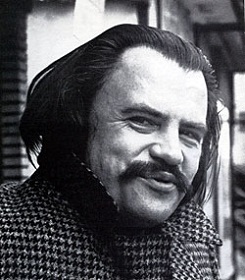
Louis Th. Lehmann (19 augustus 1920 – 23 december 2012)
Hier met vriendin Alida Beekhuis 


De Amerikaanse dichter Frederic Ogden Nash werd geboren in Rye, New York, op 19 augustus 1902. Zie ook mijn blog van 19 augustus 2010 en eveneens alle tags voor Ogden Nash op dit blog.


Summer Serenade

When the thunder stalks the sky,
When tickle-footed walks the fly,
When shirt is wet and throat is dry,
Look, my darling, thats July.

Through the grassy lawn be leather,
And prickly temper tug the tether,
Shall we postpone our love for weather?
If we must melt, lets melt together!


Reprise

Geniuses of countless nations
Have told their love for generations
Till all their memorable phrases
Are common as goldenrod or daisies.
Their girls have glimmered like the moon,
Or shimmered like a summer moon,
Stood like a lily, fled like a fawn,
Now the sunset, now the dawn,
Here the princess in the tower
There the sweet forbidden flower.
Darling, when I look at you
Every aged phrase is new,
And there are moments when it seems
I've married one of Shakespeare's dreams.


The Grackle

The grackle's voice is less than mellow,
His heart is black, his eye is yellow,
He bullies more attractive birds
With hoodlum deeds and vulgar words,
And should a human interfere,
Attacks that human in the rear.
I cannot help but deem the grackle
An ornithological debacle.


 2065716-60c7a19829ce0fb484aff1e405d594bb.jpeg
Ogden Nash (19 augustus 1902 – 19 mei 1971)
Cover


De Iers-Amerikaanse schrijver Frank McCourt werd geboren op 19 augustus 1930 in New York. Zie ook mijn blog van 19 augustus 2010 en eveneens alle tags voor Frank McCourt op dit blog.

Uit: Tis

“I'd sit on that deck chair and look into my head to see myself cycling around Limerick City and out into the country delivering telegrams. I'd see myself early in the morning riding along country roads with the mist rising in the fields and cows giving me the odd moo and dogs coming at me till I drove them away with rocks. I'd hear babies in farmhouses crying for their mothers and farmers whacking cows back to the fields after the milking.
And I'd start crying to myself on that deck chair with the gorgeous Atlantic all around me, New York ahead, city of my dreams where I'd have the golden tan, the dazzling white teeth. I'd wonder what in God's name was wrong with me that I should be missing Limerick already, city of gray miseries, the place where I dreamed of escape to New York. I'd hear my mother's warning, The devil you know is better than the devil you don't know.
There were to be fourteen passengers on the ship but one canceled and we had to sail with an unlucky number. The first night out the captain stood up at dinner and welcomed us. He laughed and said he wasn't superstitious over the number of passengers but since there was a priest among us wouldn't it be lovely if His Reverence would say a prayer to come between us and all harm. The priest was a plump little man, born in Ireland, but so long in his Los Angeles parish he had no trace of an Irish accent. When he got up to say a prayer and blessed himself four passengers kept their hands in their laps and that told me they were Protestants. My mother used to say you could spot Protestants a mile away by their reserved manner. The priest asked Our Lord to look down on us with pity and love, that whatever happened on these stormy seas we were ready to be enfolded forever in His Divine Bosom. An old Protestant reached for his wife's hand. She smiled and shook her head back at him and he smiled, too, as if to say, Don't worry.”

 2065716-8a9c9ab27d52166f6d35d03a86dd4053.jpg
Frank McCourt (19 augustus 1930 – 19 juli 2009)


Zie voor nog meer schrijvers van de 19e augustus ook mijn vorige blog van vandaag.

Geschreven door Romenu om 11:33 Reageer op dit bericht

Marion Pauw, John Dryden, Samuel Richardson, Jerzy Andrzejewski, James Gould Cozzens, Claude Gauvreau, Inigo de Mendoza

De Nederlandse schrijfster Marion Pauw werd geboren in Tasmanië op 19 augustus 1973. Zie ook alle tags voor Marion Pauw op dit blog.

Uit: Grijs gebied

“Vanuit een raam ergens in het midden, op tweehoog, vulde de lucht zich met kleur. Groene, gele, blauwe en paarse vlekjes die samen een bonte mengeling vormden. Het duurde even voordat Albert doorhad wat hij zag: tientallen felgekleurde vogels die naar buiten kwamen gevlogen, als in een Alfred Hitchcock-film. Luid krijsend bleven ze ter hoogte van het raam rondfladderen, alsof ze er nog niet aan toe waren om afscheid te nemen. Opeens schoten ze met z’n allen in een schuine lijn naar boven. Gefixeerd bleef Albert naar de vogels staren, bevroren in het moment. Pas toen ze achter de volgende flat waren verdwenen, besefte hij dat hij al die tijd was vergeten te ademen.
(...)

‘Er komen hier zoveel klanten, weet u. Veel vogelliefhebbers. Vogels zijn mijn specialiteit. mensen komen hier van heinde en verre voor mijn sierduiven, kanaries, parkieten, dwergpapegaaien, fazantjes, vinken, kwarteltjes…’
‘Ja, stop maar,’ zei Albert. ‘Maar misschien kunt u even nadenken over een bepaalde klant die hier gisteren is geweest. Zelf nogal een vreemde vogel, als u woordgrappen kunt waarderen.’
‘U bent niet de eerste die die grap maakt,’ zei de man verveeld."


 2065706-5b692ab6273c3f151e88085bec570b93.jpg
Marion Pauw (Tasmanië, 19 augustus 1973)


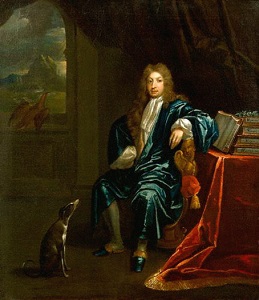
De Engelse toneelschrijver, dichter en criticus John Dryden werd geboren op 19 augustus 1631 in Aldwinkle (Northamptonshire). Zie ook mijn blog van 19 augustus 2010 en eveneens alle tags voor John Dryden op dit blog.


Happy The Man

Happy the man, and happy he alone,
He who can call today his own:
He who, secure within, can say,
Tomorrow do thy worst, for I have lived today.
Be fair or foul or rain or shine
The joys I have possessed, in spite of fate, are mine.
Not Heaven itself upon the past has power,
But what has been, has been, and I have had my hour.


Mankind

Men are but children of a larger growth;
Our appetites are apt to change as theirs,
And full as craving too, and full as vain;
And yet the soul, shut up in her dark room,
Viewing so clear abroad, at home sees nothing;
But, like a mole in earth, busy and blind,
Works all her folly up, and casts it outward
To the world's open view.


Life A Cheat

When I consider life, 'tis all a cheat;
Yet, fooled with hope, men favour the deceit;
Trust on, and think to-morrow will repay:
To-morrow's falser than the former day;
Lies worse; and while it says, we shall be blessed
With some new joys, cuts off what we possessed.
Strange cozenage! none would live past years again,
Yet all hope pleasure in what yet remain;
And, from the dregs of life, think to receive
What the first sprightly running could not give.
I'm tired with waiting for this chemic gold,
Which fools us young, and beggars us when old.


 2065706-caa10156f6b8f49992dce47bebc7cef0.jpg
John Dryden (19 augustus 1631 – 12 mei 1700) 
Portret door James Maubert, na 1700


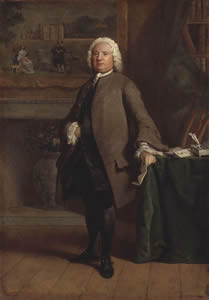
De Britse schrijver en drukker Samuel Richardson werd geboren op 19 augustus 1689 in Mackworth, Derbyshire. Zie ook alle tags voor Samuel Richardson op dit blog en ook mijn blog van 19 augustus 2009 en ook mijn blog van 19 augustus 2010

Uit: Pamela; or, Virtue Rewarded

„God bless him! and pray with me, my dear father and mother, for a blessing upon him, for he has given mourning and a year’s wages to all my lady’s servants; and I having no wages as yet, my lady having said she should do for me as I deserved, ordered the housekeeper to give me mourning with the rest; and gave me with his own hand four golden guineas, and some silver, which were in my old lady’s pocket when she died; and said, if I was a good girl, and faithful and diligent, he would be a friend to me, for his mother’s sake. And so I send you these four guineas for your comfort; for Providence will not let me want: And so you may pay some old debt with part, and keep the other part to comfort you both. If I get more, I am sure it is my duty, and it shall be my care, to love and cherish you both; for you have loved and cherished me, when I could do nothing for myself. I send them by John, our footman, who goes your way: but he does not know what he carries; because I seal them up in one of the little pill—boxes, which my lady had, wrapt close in paper, that they mayn’t chink; and be sure don’t open it before him.
I know, dear father and mother, I must give you both grief and pleasure; and so I will only say, Pray for your Pamela; who will ever be
Your most dutiful DAUGHTER.
I have been scared out of my senses; for just now, as I was folding up this letter in my late lady’s dressing—room, in comes my young master! Good sirs! how was I frightened! I went to hide the letter in my bosom; and he, seeing me tremble, said, smiling, To whom have you been writing, Pamela?–I said, in my confusion, Pray your honour forgive me!–Only to my father and mother. He said, Well then, let me see how you are come on in your writing! O how ashamed I was!–He took it, without saying more, and read it quite through, and then gave it me again;–and I said, Pray your honour forgive me!–Yet I know not for what: for he was always dutiful to his parents; and why should he be angry that I was so to mine? And indeed he was not angry; for he took me by the hand, and said, You are a good girl, Pamela, to be kind to your aged father and mother.”

 2065706-960c370a4576a99c12a2ae43f7d2c69e.jpg
Samuel Richardson (19 augustus 1689 – 4 juli 1761)
Portret door Joseph Highmore, 1750


De Poolse schrijver Jerzy Andrzejewski werd geboren in Warschau op 19 augustus 1909. Zie ook alle tags voor Jerzy Andrzeiewski op dit blog en ook mijn blog van 19 augustus 2009.

Uit: Holy Week (Vertaald door Oscar E. Swan)

“Jan Malecki had not seen Irena Lilien for quite some time. As late as the summer of 1941, they still had seen a good deal of each other. By that time, the Liliens had been driven out of their home in Smug; but the German occupation authorities were not yet taking harsher measures against the Jews, so the Liliens, having paid off the necessary people, had avoided confinement in the Warsaw Ghetto. They had even managed to rescue some of their things, and with this remainder of their belongings, still quite sizable and valuable, the entire family moved closer to Warsaw. The Liliens, who before the war had been people of means—and for several generations, at that—were possessed of such a deeply developed sense of security that, even in the new and critical situation in which they now found themselves, it did not occur to them to move to a different suburb. Zalesinek, where they rented an apartment, was located about a quarter of the way to Smug, and many people along the commuter line knew the Liliens, whether personaly or by sight. They had become so much a part of Polish culture and customs that they had no idea they might arouse suspicion by their outward appearance.”
Fortunately, the oldest generation of Liliens, the banker and his wife,did not travel to Warsaw. She, an immense, fat Jewish woman, had been incapacitated for a number of years and never left her wheelchair. Her husband, long ago having withdrawn from affairs at the bank, contented himself by sitting in the sun or, on rainy or cold days, by watching people play bridge. But his son Professor Lilien, his wife, and their daughter, Irena, still traveled to Warsaw as often as before. Mrs. Lilien attracted relatively little attention. Small, slender, and quiet, with irregular but pleasant features, she could pass for Aryan. It was much worse for the professor and Irena.
Irena went into Warsaw several times a week. She visited friends and acquaintances—and a desire to see Malecki occasioned other trips as well. She loved her social life and an atmosphere of fun; she liked to arrange meetings in the bars and cafés that were so fashionable during the war. Irena Lilien was very pretty: tall, dark-haired, and dark-complexioned. Her coarse, thick hair and eastern eyes, however, were strikingly Jewish. When Malecki explained that she ought to be more careful, Irena just laughed and said that the Germans knew nothing of such things.“


 2065706-a4a3ef6eca86098d3a3b5d1ff12497b7.jpg
Jerzy Andrzejewski (19 augustus 1909 – 19 april 1983)
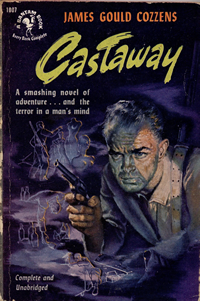
Cover


De Amerikaanse schrijver James Gould Cozzens werd geboren op 19 augustus 1903 in Chicago. Zie ook alle tags voor James Gould Cozzens op dit blog en ook mijn blog van 19 augustus 2009.

Uit: Castaway

“About his madmen Mr. Lecky was no more certain. He knew less than the little to be learned of the causes or even of the results of madness. Yet for practical purposes one can imagine all that is necessary. As long as maniacs walk like men, you must come close to them to penetrate so excellent a disguise. Once close, you have joined the true werewolf.
Pick for your companion a manic-depressive, afflicted by any of the various degrees of mania - chronic, acute, delirious. Usually more man than wolf, he will be instructive. His disorder lies in the very process of his thinking, rather than in the content of his thought.
He cannot wait a minute for the satisfaction of his fleeting desires or the fulfillment of his innumerable schemes. Nor can he, for two minutes, be certain of his intention or constant in any plan or agreement. Presently you may hear his failing made manifest in the crazy concatenation of his thinking aloud, which psychiatrists call "flight of ideas." Exhausted suddenly by this
riotous expense of speech and spirit, he may subside in an apathy dangerous and morose, which you will be well advised not to disturb.
Let the man you meet be, instead, a paretic. He has taken a secret departure from your world. He dwells amidst choicest, most dispendious superlatives. In his arm he has the strength to lift ten elephants. He is already two hundred years old. He is more than nine feet high; his chest is of iron, his right leg is silver, his incomparable head is one whole ruby. Husband of a thousand wives, he has begotten on them ten thousand children. Nothing is mean about him; his urine is white wine; his faeces are always soft gold. However, despite his splendor and his extraordinary attainments, he cannot successfully pronounce the words: electricity, Methodist Episcopal, organization, third cavalry brigade. Avoid them.
Infuriated by your demonstration of any accomplishment not his, he may suddenly kill you.”


 2065706-1f005bdc8493d534e4e13c9e2a4192f5.png
James Gould Cozzens (19 augustus 1903 – 9 augustus 1978)
Cover


De Canadese schrijver en dichter Claude Gauvreau werd geboren op 19 augustus 1925 in Montreal. Zie ook alle tags voor Claude Gauvreau op dit blog en ook mijn blog van 19 augustus 2009.


La censure

La censure? La censure! La censure, c'est la gargouille qui vomit
hideusement son plomb liquide sur la
chair vive de la poésie!

La censure, c'est l'hydre acéphale aux mille bras aveugles qui abat comme un
sacrifice sans défense
chaque érection de sensibilité délicate au moyen de ses moulinets vandales!

La censure, c'est le rasoir gigantesque rasant au niveau du médiocre toute
tête qui ose dépasser!

La censure, c'est la camisole de force imposée au vital!

La censure, c'est la défiguration imposée sur la grâce au moyen d'un sourcil
froncé saugrenu!

La censure, c'est le saccage du rythme!

La censure, c'est le crime à l'état pur!

La censure, c'est l'enfoncement du cerveau dans un moulin à viande dont il
surgit effilochement!

La censure, c'est la castration de tout ce qu'il y a de viril!

La censure, c'est la chasse obtuse à la fantaisie et à l'audace
illuminatrice!

La censure, c'est la ceinture de chasteté appliquée à tout con florissant!

La censure, c'est l'interdiction de la joie à poivre!

La censure, c'est le morose enlaidissant tout!

La censure, c'est l'abdication du rare et du fin!

La censure, c'est la maculation et le hachage en persil de l'unique toujours
gaillard!

La censure, c'est l'abdication de la liberté!

La censure, c'est le règne ignorantiste du totalitarisme intolérant envers
tout objet qui n'est pas
monstruosité rétractile!

La censure, c'est l'injure homicide à la loyauté des sens!

La censure, c'est le pet par dessus l'encens!

La censure, c'est la barbarie arrogante!

La censure, c'est le broiement du coeur palpitant dans un gros étau brutal!

Oui, mille fois oui, la censure c'est la négation de la pensée.


 2065706-f2aec717a85b078456f667170ff26d34.jpg
Claude Gauvreau (19 augustus 1925 – 7 juli 1971)


De Spaanse dichter en schrijver Iñigo López de Mendoza werd geboren op 19 augustus 1398 in Carrión de los Condes, Palencia. Zie ook alle tags voor Iñigo López de Mendoza. 

Uit: The prouerbes of the noble and woorthy souldier Sir Iames Lopez de Mendoza Marques of Santillana with the paraphrase of D. Peter Diaz of Toledo: wherin is contained whatsoeuer is necessarie to the leading of an honest and vertuous life. Translated out of Spanishe by Barnabe Googe.

“EVery wyse Oratour, as Tullie in his booke de Oratore teacheth, ought principally▪ in whatsoeuer matter he dealeth, to consider three things: That is, to make all those that shall eyther heare his speach, or reade his workes, to be well willing, vnderstanding, and mindefull. The speaker shall make his audience well willing, when he laboureth to obteyne their Page [unnumbered] fauour and good wil towardes him. For no man wil gladly geue eare to such a man, as he is afore euil perswaded of: he maketh his hearers to vnderstād, when he declareth the matter, that hee meaneth to entreate off, in shewing that it shal be profitable & com∣modious, he causeth them to be attentiue, or mindeful, when he mooueth or stirreth them vp by good meanes & inductions to be rea∣die to heare, not hauing their minds caried away with anie other matters. All these points hath this learned gentleman (folow∣ing this inscription) obserued in al his dis∣course. But especially in this first Prouerbe he hath obserued ye first, in making him that shal reade him, wel minded towardes him, procuring his fauour & goodwil, in calling him by ye name of his sōne & beloued. For as the Ciuil law sayth, we can name no man by a more sweet or better name, thē to call him our sonne. He maketh him to vnderstand, in shewing him howe to direct or order his life amōgst the people: he maketh him attētiue, in these wordes, where he saith, Geue eare. And the meaning and matter of this Pro∣uerbe, is the most sweet & gracious behaui∣our, that men of all degrees ought to vse in their conuersation.”


 2065706-a9def4f2e3fb0caf099865040dfaef09.jpg
Iñigo López de Mendoza (19 augustus 1398 – 25 maart 1458)
Gebaseerd op het potret door Jorge Inglés, 1455

Geschreven door Romenu om 11:31 Reageer op dit bericht

Meer van Romenu

↑ Terug naar de berichten