Naar de inhoud

Romenu

Over literatuur, gedichten, kunst en cultuur
seniorennet.beseniorennet.be

Berichten van 28 maart 2012

Russell Banks, Maksim Gorki, Marianne Fredriksson, Bohumil Hrabal
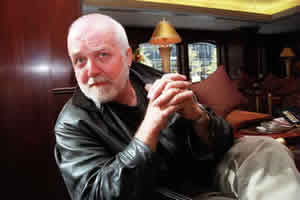
De Amerikaanse schrijver Russell Banks werd geboren op 28 maart 1940 in Newton, Massachusetts. Zie ook alle tags voor Russell Banks op dit blog.


Uit: Trailerpark


“Even her eyes, which happened to be pale blue, looked red, as if she smoked too much and slept too little, which, as it later turned out, happened to be true. Her body was a little strange, however, and people remarked on that. It was blocky and squareshaped, not exactly feminine and not exactly masculine, so that while she could almost pass for either man or woman, she was generally regarded as neither. Shewore mostly men's clothing, a long, dark blue, wool overcoat or else overalls and workshirts and ankle-high workboots, which again, except for the overcoat, was not all that unusual among certain women who worked outside a lot and didn't do much socializing. But with Flora, because of the shape of her body, or rather, its shapelessness, her clothing only contributed to what you might call the vagueness of her sexual identity. Privately, there was probably no vagueness at all, but publicly there was. People elbowed one another and winked and made not quite kindly remarks about her when she passed by them on the streets of Catamount or when she passed along the trailerpark road on her way to or from town. The story, which came from Marcelle Chagnon, who rented her the trailer and who therefore ought to know, was that Flora was retired military and lived off a small pension, and that made sense in one way, given people's prejudices about women in the military, and in another way too, because at that time Captain Dewey Knox (U.S. Army, ret.) was already living at number 6 and so people at the park had got used to the idea of someone living off a military pension instead of working for a living.”


 1123918-215fd296dd7d3e1813b0649262d2887f.jpg

Russell Banks (Newton, 28 maart 1940)


De Russische schrijver Maksim Gorki (pseudoniem van Aleksej Maksimovitsj Pesjkov) werd geboren in Nizjni Novgorod op 28 maart 1868. Zie ook alle tags voor Maksim Gorki op dit blog.


Uit: Das Glück


”Eines Tages ist mir das Glück so nahe gekommen, daß ich beinahe in seine weiche Umarmung geraten wäre.
Es geschah während eines Ausflugs. Eine große Gesellschaft von jungen Leuten war in einer heißen Sommernacht auf den Wiesen jenseits der Wolga bei den Sterlettfischern versammelt. Man aß die von den Fischern zubereitete Fischsuppe und trank, um ein offenes Feuer gelagert, Wodka und Bier. Man debattierte, wie die Welt am schnellsten und besten umzugestalten wäre, und ging schließlich, körperlich und geistig ermüdet, auf der abgemähten Wiese nach allen Richtungen auseinander, jeder, wohin es ihm beliebte.
Ich brach vom Lagerfeuer mit einem Mädchen auf, das mir klug und feinfühlend erschien.
Sie hatte angenehme dunkle Augen, aus ihren Reden klang stets eine einfache, verständliche Wahrheit. Das Mädchen sah alle Menschen freundlich an.
Wir schritten langsam Seite an Seite. Unter unseren Füßen knisterten zerbrechend die Grasstoppeln, und aus der über die Erde gestülpten kristallenen Himmelsschale ergoß sich die trunkene Feuchte des Mondlichts über uns.
Tief seufzend sagte das Mädchen: »Wie schön es ist! Wie in der afrikanischen Wüste, die Heuschober sind die Pyramiden. Und heiß ist es auch...«
Dann schlug sie vor, sich neben einem Heuschober niederzulassen, dessen runder Schatten schwer war wie am Tage. Die Grillen zirpten, während in der Ferne jemand mit trauriger Stimme fragte: »Ach, warum bist du mir nicht treu? «
Ich begann eifrig vom Leben zu sprechen, wie ich es kannte, und von allem, was ich unbegreiflich fand, da sank sie plötzlich mit einem leisen Aufschrei hintenüber.”


 1123918-8137917472d0e6f2514da7cfbaa5646c.jpg

Maksim Gorki (28 maart 1868 – 18 juni 1936)

Standbeeld in Moskou


De Zweedse schrijfster Marianne Fredriksson werd geboren in Göteborg op 28 maart 1927. Zie ook alle tags voor Marianne Fredriksson op dit blog.


Uit: Hanna's Daughters (Vertaald door Joan Tate)


I do it for my own sake, she thought. It makes no difference what I talk about to her.
She was wrong. Johanna did not understand the words, but she was aware of her daughter's torment and her own powerlessness. She did not remember it was her task to console the child who had always asked unreasonable questions. Still, the demand remained as well as the guilt over her inadequacy.
Her desire was to escape into silence, to close her eyes, but she couldn't, her heart thumping, the darkness behind her eyelids scarlet and painful. She started crying. Embarrassed, Anna tried to console her, there, there, wiping the old woman's cheeks.
When she was unable to halt Johanna's despair, Anna became frightened and rang for help. As usual, there was a delay, then the fair girl was standing in the doorway, a girl with young eyes but no depth in them. Anna saw contempt in those blue eyes, and for a moment Anna could see what the girl saw: an older woman, anxious and clumsy, by the side of the really old one.
"There, there," she said, too, but her voice was hard, as hard as the hand that ran over the old woman's head. And yet she succeeded. Johanna fell asleep so suddenly, it seemed unreal.
"We mustn't upset the patients," said the girl. "You must sit there quietly for a while. We'll come and change her and remake the bed in about ten minutes."
Anna slipped out to the terrace like a shamefaced dog, found her cigarettes, and drew the smoke deep down into her lungs. It calmed her and she could think. At first angry thoughts: damned bitch, hard as nails. Pretty, of course, and horribly young. Had Mother obeyed her out of fear? Was there a discipline here that the helpless old people sensed and gave in to?
Then came the self-reproach. The girl was only doing her job, everything she, Anna, ought to be doing, according to the laws of nature. But she couldn't, couldn't bring herself to, even if the time and place had existed.


 1123918-52fdab103e68ed78b490336d7564c4e8.jpg

Marianne Fredriksson (28 maart 1927 – 11 februari 2007)


De Tsjechische schrijver Bohumil Hrabal werd geboren in Brno-Židenice op 28 maart 1914. Zie ook alle tags voor Bohumil Hrabal op dit blog.


Uit: Ich dachte an die goldenen Zeiten (Vertaald door Susanna Roth)


„"[...] diese Schwangerschaft erschreckte mich so sehr, dass ich wie gelähmt von dieser ersten Liebe war, ich verging fast, wollte diese erste Liebe aber nicht mit einem Kind im Bauch erleben, ich schämte mich, brach zusammen [...] Aber meine erste Liebe ließ mich sitzen, und ich schämte mich und war entsetzt, damals zu Österreichs Zeiten war es eine Schande, als Ledige ein Kind zu haben, und dieses Kind hat im Grunde genommen mein Schicksal geteilt, denn diese Angst vor der Liebe, dieses Entsetzen, diese Erniedrigung, aus der ich mir nicht herauszuhelfen wusste, hat sich auf mein Kind übertragen, fast mein Leben lang ist meine erste Liebe auch meine Schuld geblieben, deshalb ist mein Sohn wegen seiner ersten Liebe zusammengebrochen, darum hat er sich im Zimmer eingeschlossen und seine ersten Verse getippt, nur so hat er ein wenig Ruhe gefunden, und seine ersten Verse, seine ersten Büchlein waren wie seine Liebe zu Georgine, er schämte sich dieser Verse, er errötete, wenn er sie schüchtern jemandem zeigte, genauso war es, wenn er jemandem sein Mädchen vorstellen sollte, mit dem er schon ein Jahr lang ging, und das Gleiche geschah, wenn er sie zu uns mitbrachte, vier Jahre ging er schon mit Georgine und schämte sich, nicht ihretwegen, er schämte sich für die Liebe zu ihr.”


1123918-a4ddc6e546247f0e2d0fe474a519e6f5.jpg
Bohumil Hrabal (28 maart 1914 – 3 februari 1997)
 

Geschreven door Romenu om 19:10 Reageer op dit bericht

Joost de Vries

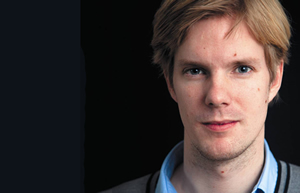
De Nederlandse schrijver Joost de Vries werd geboren op 28 maart 1983 in Alkmaar. Hij studeerde journalistiek en geschiedenis aan de Universiteit Utrecht. Vanaf het jaar 2005 schrijft hij voor De Groene Amsterdammen over literatuur en in 2007 versterkte hij de redeactie van het weekblad, waar hij werkte als kunstredacteur. Tegenwoordig schrijft hij ook nog voor De Gids en Tirade en heeft hij in nrc.next op dinsdag een eigen column. Zijn eerste boek en tot op heden enigste boek Clausewitz kwam in 2010 uit. Dit boek werd genomineerd voor de Selexyz Debuutprijs en ook ontving De Vries een C.C.S. Cronestipendium voor Clausewitz.


Uit: Clausewitz  (Vertaald door Liz Waters)


“My doctoral research was  still only a few months old when I happened upon a little  book in a flea market in the south of France and immediately decided to plagiarize it.

On the black dust jacket was written in small white letters Les politiques de FLF. Aside from that there was nothing on the front or the back. Quite why I’d picked it up I didn’t know, since although I’d been professionally engaged with the prose of Ferdynand LeFebvre for six months by then, I’d never heard anyone refer to him by anything so familiar as ‘FLF’. I quickly leafed through to the title page, where the subject was rendered more explicitly as Les politiques de Ferdynand LeFebvre.

Underneath was the name of the author: Pierre-Marc Brissot. It meant nothing to me, but given that I hadn’t yet taken proper hold of my research project, that might have been a bibliographical oversight on my part. The book seemed to have the same chapter breakdown as I was planning to use.I couldn’t see the name of a publisher, and the way the text was laid out, simply, soberly, led me to suspect it was a hobbyist’s project. I felt hotter and hotter. I did find a year of publication, 1989, and saw that Mr

Brissot had dedicated the text to the memory of his beloved wife Jeanette, 21 May 1921–14 May 1988. I could picture this Mr Brissot, an elderly, bald academic, slumped in a chair beside his dying wife’s hospital bed, his head full of the camouflaged political messages of Ferdynand LeFebvre.

When I noticed that the book had the very subtitle I was intending to give my dissertation, Sleuth on the steppe, a feeling crept over me of having slipped through a hole in time into a parallel universe where I had a firm grip on my own future. I paid (four euros) and took the book back with me to my parents’ holiday home.”


1359507-ebf6be69d78bcb94958b7a59f81f7d28.jpg 

Joost de Vries (Alkmaar, 28 maart 1983)

Geschreven door Romenu om 00:00 Reageer op dit bericht

Mario Vargas Llosa, Walter van den Broeck, Nelson Algren, Chrétien Breukers, Lauren Weisberger

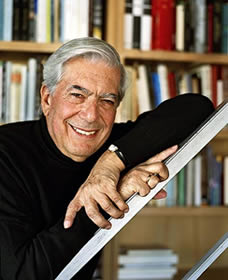
De Peruviaanse schrijver Mario Vargas Llosa werd geboren op 28 maart 1936 in Arequipa. Zie ook alle tags voor Mario Vargas Llosa op dit blog.


Uit: Conversation in the Cathedral (Vertaald door Gregory Rabassa)


„1975

Popeye Arévalo had spent the morning on the beach at Miraflores. You look toward the stairs in vain, the neighborhood girls tell him, Teté’s not coming. And as a matter of fact, Teté didn’t go swimming that morning. Defrauded, he went home before noon, but while he was going up the hill on Quebrada he could see Teté’s little nose, her curls, her small eyes, and he grew emotional: when are you going to notice me, when Teté? He reached home with his reddish hair still damp, his freckled face, burning from the sun. He found the senator waiting for him: come here, Freckle Face, they would have a little chat. They shut themselves up in the study and the senator, did he still want to study architecture? Yes, papa, of course he wanted to. Except that the entrance exam was so hard, a whole bunch took it and only a small few got in. But he’d grind and he’d probably get in. The senator was happy that he’d finished high school without failing any courses and since the end of the year he’d been like a mother to him, in January he’d increased his allowance from twenty to forty soles. But even then Popeye didn’t expect so much: well, Freckled Face, since it was hard to get into Architecture, it would be better not to take a chance this year, he could enrol in the prep course and study hard, and that way you’ll get in next year for sure: what did Freckled Face think? Wild, papa, Popeye’s face lighted up even more, his eyes glowed. He’d grind, he’d kill himself studying and the next year he’d get in for sure. Popeye had been afraid of a deadly summer, no swimming, no matinees, no parties, days and nights all soaked up in math, physics and chemistry, and in spite of so much sacrifice, I won’t get in and my vacation will be completely wasted.“


 1123925-77965f6204fa39569472ef3ac2dec6f8.jpg

Mario Vargas Llosa (Arequipa, 28 maart 1936)


De Vlaamse roman- en toneelschrijver Walter van den Broeck werd geboren in Olen op 28 maart 1941. Zie ook alle tags voor Walter van den Broeck op dit blog.


Uit: Brief aan Boudewijn

„Na onze derde ontmoeting-van-op-afstand, maakte ik nochtans de bedenking, dat het veel makkelijker moet zijn onze realiteit in uw voorstelling te doen doordringen, dan uw voorstelling in onze realiteit. Het was mij duidelijk geworden, dat niemand het terrein van uw voorstelling ècht had willen betreden, wellicht omdat iedereen had gevoeld dat betreden meteen ook vernietigen betekende. Het lijkt er dus op dat iedereen uw voorstelling in stand wil houden. Uit een infantiele refleks?

Het is waar, een koning schept rust, geeft de burger de illusie dat de wereld eenvoudig en overzichtelijk is. Door zijn loutere aanwezigheid verdeelt hij zijn rijk in twee stukken. Het ene is hem welgezind, het andere haat hem. En liever dan de echte, krankzinnigmakende kompleksiteit van deze wereld onder ogen te zien, houden wij vast aan een eenvoudig wereldbeeld waar alles en iedereen een duidelijke en vaste plaats lijkt te hebben.

Als men zijn vertrouwen heeft gesteld in de kreativiteit van een volk, zoals ik, dan moet men ook waardering opbrengen voor de afweerstrategieën waarvan het zich pleegt te bedienen, vind ik.

Veel moeilijker is het uw voorstelling door te doen dringen in onze realiteit. Wij doen immers alle mogelijke moeite om u op een dwaalspoor te brengen, om onze werkelijkheid voor u te verbergen. Ik weet waar ik het over heb; ik heb het zelf een paar keer met mijn eigen ogen gezien.

Voor u ergens op bezoek gaat, wordt uw reisweg door stads- en gemeentebesturen nauwkeurig bestudeerd. In ijltempo krijgen de wegen en de straten waarover u straks zult rijden een nieuw laagje tarmac.“


1123925-f6bf26f131d3122118c01709c30bfdbe.jpg
Walter van den Broeck (Olen, 28 maart 1941)


De Nederlandse dichter
Chrétien Breukers werd geboren op 28 maart 1965 in het Limburgse Leveroy.
Zie ook alle tags voor Chrétien Breukers op dit blog.


Begraaf mijn hart in Limburg


Begraaf mijn hart in Limburg. Zet mijn handen bij

aan de boorden van de Leveroyse beek.

Geef mijn voeten rust in de parochiekerk.

Leg mijn ledematen onder deze struik

en zegen ze met takken uit de palmentuin.


Mijn romp mag rusten bij de oude school. Laat

mijn hoofd voorover vallen van het hakblok

van de slager met zijn zwarte schort. Mijn milt

blijft eeuwig kloppen op het voetbalveld.

Mijn nieren worden opgediend met fijne saus.


Begraaf mijn hart in Limburg. Bak mijn lever in

een mengelmoes van ui, rozijn en kruiderij.

Draai van mijn darmen worst. Doe mijn prostaat aan

rovers van de hand. Vouw mijn geslacht sereen,

onzichtbaar, in de plooien van dit akkerland.


Doe mijn longen maar niet weg. Blaasbalgachtigen.

En laat ook strottenhoofd en stemband in dat

lege land hun riedel zingen. Laat ze kaddisj

zeggen voor mijn hart. Mijn hart dat ik bij leven

en uit vrije wil begroef, ver weg, in  Limburg.


Omweg via Winsum


Tamminga, ook ik verloor een zoon.

Toorn richting de hemel, die met zwijgen

werd beloond. Laagtij voor het zware hart.


Weten: niet méér dan ijdel wachten lijkt

dit leven, nu het moet geleefd. Mijn zoon

is droomschuim, rouwkruid, inkt op perkament.


Vaders tronen hoog, hoogmoedig, boven

eigen schepsels uit. De natuur verdraagt

dat niet en straft. Inktwaan, zangdrift,


en het leven in een leeg heelal.


1688662-2ca2fd10d773a3af8b03ea3559886625.jpg
Chrétien Breukers (Leveroy,  28 maart 1965)


De Amerikaanse schrijver Nelson Algren werd geboren op 28 maart 1909 in Detroit. Zie ook alle tags voor Nelson Algren op dit blog.


Uit: A Walk on the Wild Side


"He's just a pore lonesome wife-left feller," the more understanding said of Fitz Linkhorn, "losin' his old lady is what crazed him.

"That man is so contrary," the less understanding said, "if you throwed him in the river he'd float upstream."

For what had embittered him Fitz had no name. Yet he felt that every daybreak duped him into waking and every evening conned him into sleep. The feeling of having been cheated-of having been cheated- that was it. Nobody knew why or by whom.

But only that all was lost. Lost long ago, in some colder country. Lost anew by the generations since. He kept trying to wind his fingers about this feeling, at times like an ancestral hunger; again like some secret wound. It was there, if a man could get it out into the light, as palpable as the blood in his veins. Someone just behind him kept turning him against himself till his very strength was a weakness. Weaker men, full of worldly follies, did better than Linkhorn in the world. He saw with eyes enviously

slow-burning.

"I ain't a playin' the whore to no man," he would declare himself, though no one had so charged him.

Six-foot-one of slack-muscled shambler, he came of a shambling race. That gander-necked clan of which Calhoun and Jackson sprang. Jesse James' and Jeff Davis' people.

Lincoln's people. Forest solitaries spare and swart, left landless as ever in sandland and Hooverville now the time of the forests had passed.“


 1123925-765c87dfac15d3a5143f9422d0e9f83a.jpg

Nelson Algren (28 maart 1909 - 9 mei 1981)


De Amerikaanse schrijfster Lauren Weisberger werd geboren op 28 maart 1977 in Scranton, Pennsylvania. Zie ook alle tags voor Lauren Weisberger op dit blog.


Uit:The Devil Wears Prada


„The light ahead of me blessedly turned red and looked as though it might be a long one. The car jerked to a stop without hitting anyone or anything, and I breathed a sigh of relief. "I'm in the car right now, Miranda, and I should be at the garage in just a few minutes." I figured she was probably concerned that everything was going well, so I reassured her that there were no problems whatsoever and we should both arrive shortly in perfect condition.
"Whatever," she said brusquely, cutting me off midsentence. "I need you to pick up Madelaine and drop her off at the apartment before you come back to the office." Click. The phone went dead. I stared at it for a few seconds before I realized that she'd deliberately hung up because she had provided all of the details I could hope to receive. Madelaine. Who the hell was Madelaine? Where was she at the moment? Did she know I was to pick her up? Why was she going back to Miranda's apartment? And why on earth--considering Miranda had a full-time driver, housekeeper, and nanny--was I the one who had to do it?
Remembering that it was illegal to talk on a cell phone while driving in New York and figuring the last thing I needed at that moment was a run-in with the NYPD, I pulled into the bus lane and switched my flashers on. Breathe in, breathe out, I coached myself, even remembering to apply the parking brake before taking my foot off the regular one. It had been years since I'd driven a stick-shift car--five years, actually, since a high school boyfriend had volunteered his car up for a few lessons that I'd decidedly flunked--but Miranda hadn't seemed to consider that when she'd called me into her office an hour and a half earlier.“


 1123925-d61e9f2da73681ab6bf0d800fc906e22.jpg

Lauren Weisberger (Scranton, 28 maart 1977)


Zie voor nog meer schrijvers van de 28e maart ook mijn vorige blog van vandaag en eveneens mijn eerste blog van vandaag.

Geschreven door Romenu om 00:00 Reageer op dit bericht

Éric-Emmanuel Schmitt, Léon-Gontran Damas, Schack von Staffeldt, Arsène Houssaye, Martien Beversluis

De Franse schrijver en dramaturg Éric-Emmanuel Schmitt werd geboren op 28 maart 1960 in Lyon. Zie ook alle tags voor Éric-Emmanuel Schmitt op dit blog. 


Uit: Odette Toulemonde und andere Geschichten (Vertaald door Inés Köbel)


“Ruhig, Odette, ruhig.
In ihrer überschwenglichen, brennenden Ungeduld war ihr, als flöge sie auf und davon, weg aus Brüssel, aus seinen Straßenschluchten, hoch hinaus über die Dächer, hin zu den Tauben am Himmel. Jeder, der ihre zarte Gestalt den Mont des Arts hinabeilen sah, spürte, daß diese Frau, deren lockiges Haar eine Feder schmückte, etwas von einem Vogel hatte...
Bald schon sah sie ihn! Wirklich und wahrhaftig ... Ging auf ihn zu ... Berührte ihn – vielleicht –, wenn er ihr die Hand hinhielt ...
Ruhig, Odette, ruhig.
Sie war über Vierzig, und doch hüpfte ihr das Herz wie einem jungen Mädchen. Bei jedem Fußgängerüberweg, an dem sie auf dem Trottoir warten mußte, kribbelte es sie in den Beinen, und ihre Fersen drohten abzuheben, sie mußte sich beherrschen, um nicht über die Autos zu springen.
Als sie die Buchhandlung endlich erreichte, hatte sich dort bereits eine lange Warteschlange gebildet, und sie mußte sich, wie man ihr sagte, wohl fünfundvierzig Minuten gedulden, ehe sie vor ihm stehen würde.
Sie griff nach dem neuen Buch, aus dessen Exemplaren die Buchhändler eine Pyramide, prächtig wie ein Weihnachtsbaum, errichtet hatten, und begann mit den Frauen zu plaudern, die gemeinsam mit ihr anstanden. Alle waren sie Leserinnen von Balthazar Balsan, doch nicht eine war so eifrig, so leidenschaftlich und gut informiert wie Odette.
»Ich habe eben alles von ihm gelesen, alles, und alles hat mir gefallen«, entschuldigte sie sich für ihr Wissen.”


1123905-50e0fbbedf0b2e4c8c9eec050e0e1c4c.jpg 

Éric-Emmanuel Schmitt (Lyon, 28 maart 1960)


De Franstalige dichter uit Guyana Léon-Gontran Damas werd geboren op 28 maart 1912 in Cayenne. Zie ook alle tags voor Léon-Gontran Damas op dit blog.


DÉSIR D'ENFANT MALADE


d'avoir été
trop tôt sevré du lait pur
de la seule vraie tendresse
j'aurais donné
une pleine vie d'homme
pour te sentir
te sentir près
près de moi
de moi seul
seul
toujours près
de moi seul
toujours belle
comme tu sais
tu sais si bien
l'être toujours
après avoir pleuré


Je ne sais rien en vérité


Je ne sais rien en vérité
rien de plus triste
de plus odieux
de plus affreux
de plus lugubre au monde
que d’entendre l’amour
à longueur de journée
se répétant à messe basse

Il était une fois
une femme vint
une femme vint à passer
dont les bras étaient chargés de roses


1123905-6a781d89fc267a7c2b596dce093df229.jpg
Léon-Gontran Damas (28 maart 1912 – 22 januari 1978)

Portret door Fandja Donovan


De Deens-Duitse dichter Adolph Wilhelm Schack von Staffeldt werd geboren op 28 maart 1769 in Garz / Rügen. Zie ook alle tags voor Schack von Staffeldt op dit blog. 


Im Herbst (Fragment)


Traurig entfliehet der Sommer und lässt
dem verfolgenden Sturme auf unwilliger Flucht fallen
den welkenden Kranz; wie ein betagter Mann,
der nur sein Tagwerk bedenket und die Charis verschmäht,
waltet der keichende Herbst. Andere Zeiten sind da;
denn auf urkräftiges Leben draussen in Feld und Wald,
mitten auf reissendem Strom,
wo dass schnaubende Ross mit fliegender Mähne sich bäumte,
und der Luftkahn geschickt Brandung und Strudel entging,
folgt ein bedächtiges Thun und sinnige Rückkehr zum Heerde,
denn der Hausgott indess treu den Entfernten bewacht.
Heil ihm, welchem daheim im langsamen Flusse der Zeiten
dann sein eigenes Bild freundlich entstrahlet der Fluth,
dass er der Selbstbeschauung in reiner Demuth sich freue
und das Vergängliche sich ewig im Urbild bewahr'!


1123905-2c40a5b3c69a096f931e8b7303b3b51b.jpg 

Schack von Staffeldt (28 maart 1769 – 26 december 1826)


De Franse dichter, schrijver en criticus Arsène Houssaye werd geboren op 28 maart 1815 in Bruyères. Zie ook alle tags voor Arsène Houssaye op dit blog. 


L'aumône.

Chanson

C'est le soir, l'heure du poète,
Le laboureur quitte son champ,
La nature devient muette
Aux splendeurs du soleil couchant.

Là-bas, au pied de la colline,
Sur un lit mouflu de gazon,
S'arrête Rose l'orpheline,
Pour voir les feux de l'horizon.

C'est une fille de Bohème
Qui traîne son mauvais destin ;
Sa voix a la grâce suprême,
Quand elle a jeûné le matin !

Un chasseur, battant la pâture,
Vient à passer sur son chemin ;
Soudain la pauvre créature
Se lève en lui tendant la main.

Si blanche était la main de Rose !
Sentant ses lèvres s'embraser,
Le jeune chasseur y dépose
L'aumône du cœur : — un baiser.


1123905-8f7b92e5a6cb83e44ff2d43f72ab5f9d.jpg 

Arsène Houssaye (28 maart 1815 – 26 februari 1896)

Buste in Parijs 


De Nederlandse dichter en romanschrijver
Martien Beversluis werd geboren in Barendrecht op 28 maart 1894. Zie ook alle tags voor Martien Beversluis op dit blog


De Oorlogsidioot

(Shellshock)

Aan 't hooge huis, aan het trottoir,
wat afwaarts van den boulevard;
op 't zelfde plekje neergekromd,
daar, waar de zon maar zelden komt,
zit d'oorlogsidioot op wacht
en lacht, omdat men om hem lacht.

Zijn handen dwalen door de lucht,
als één die tast, wanneer hij vlucht.
Zijn oogen kijken als een kind,
dat ziet en nog geen namen vindt.
Hij grinnikt over alles wee.
De kindren om hem lachen mee.

Men wandelt langs hem als langs steen.
De wielen razen langs hem heen.
De stemmen van het leven gaan
hem al voorbij en niet meer aan.
Hem is geen vreugd meer en geen pijn.
Hij slaapt en hij moet wakker zijn.

Men ziet er naar, men hoort zijn stem.
Men kijkt verbaasd en vlucht van hem.
Hij heft den vinger en hij wijst.
Hij grijnst stompzinnig en hij krijscht.
De mist verhult hem grauw en grijs.
Hij wordt sliknat... hij is niet wijs.


1123905-80731d4bd9c50307874fc30a2fbcda87.jpg 

Martien Beversluis (28 maart 1894 – 18 februari 1966)


Geschreven door Romenu om 00:00 Reageer op dit bericht

Meer van Romenu

↑ Terug naar de berichten