Naar de inhoud

Romenu

Over literatuur, gedichten, kunst en cultuur
seniorennet.beseniorennet.be

Berichten van 31 oktober 2017

Halloween (Joel Benton)


Bij Halloween


 2087731-e566128e5b988cbd3050c885334ce808.jpg
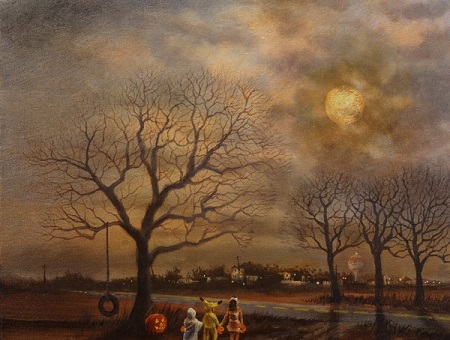
Trick-or-treat door Tom Shropshire, 2010


Halloween

Pixie, kobold, elf, and sprite
All are on their rounds to-night,—
In the wan moon’s silver ray
Thrives their helter-skelter play.

Fond of cellar, barn, or stack
True unto the almanac,
They present to credulous eyes
Strange hobgoblin mysteries.

Cabbage-stumps—straws wet with dew—
Apple-skins, and chestnuts too,
And a mirror for some lass
Show what wonders come to pass.

Doors they move, and gates they hide
Mischiefs that on moonbeams ride
Are their deeds,—and, by their spells,
Love records its oracles.

Don’t we all, of long ago
By the ruddy fireplace glow,
In the kitchen and the hall,
Those queer, coof-like pranks recall?

Every shadows were they then—
But to-night they come again;
Were we once more but sixteen
Precious would be Hallowe’en.


 2087731-85e98eb1976934f8a5a34a0917d36ae1.jpg
Joel Benton (29 mei 1832 – 15 september 1911)

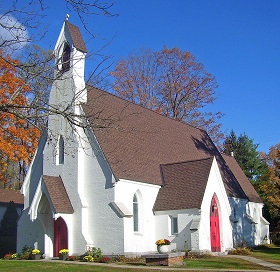
De St. Thomas' Episcopal Church in Amenia, de geboorteplaats van Joel Benton


Zie voor de schrijvers van de 31e oktober ook mijn twee vorige blogs van vandaag.

Geschreven door Romenu om 10:43 Reageer op dit bericht

Bij 500 jaar Reformatie, Johann Gottfried von Herder, Joseph Boyden, John Keats, Don Winslow, Bruce Bawer


Bij 500 jaar Reformatie


 2087730-1e9e9844b74b51fb1ae8384688d1a1a2.jpg
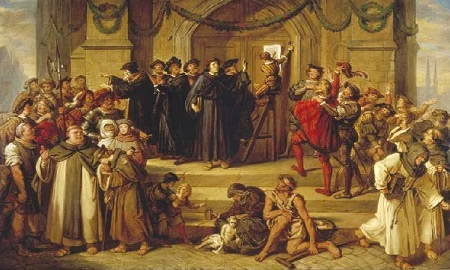
Luther spijkert de 95 stellingen aan de slotkerk in Wittenberg door Julius Hübner, 1865


Auf Luther’s Bild

Guter schwarzer Mönch, mit starkem Arme begannst Du
Auszufegen den Staub, der die Altäre verbarg;
Aber schnell entrissen Dir Andre das säubernde Werkzeug,
Lasen vom Staube das Gold, hingen den Besen sich auf.
Und nun steht der entgüldete Altar in ärgerem Staube
Ohne Säuberung; Gold können sie fegen nicht mehr.


 2087730-d54c505a13249ad99af218e45e62f168.jpg
Johann Gottfried von Herder (25 augustus 1744 – 18 december 1803)
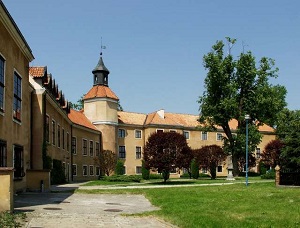
Het Johann Gottfried Herder Museum in Mohrungen (Nu Morąg, Polen)


De Canadese schrijver Joseph Boyden werd geboren op 31 oktober 1966 in Willowdale, Ontario. Zie ook mijn blog van 31 oktober 2010 en eveneens alle tags voor Joseph Boyden op dit blog.

Uit: Three Day Road

“There was a time before he left that he would have stared back, he and Elijah both, not intimidated by them.
What of Elijah? If they made a mistake about Nephew's death, maybe they made one about Elijah. I want to ask, but will wait until he is ready to speak.
We try to cross the road but an automobile honks like a goose and swerves around. I watch carefully and must wait a long time until I can judge that we can cross safely.
I lead Nephew down to the riverbank. I have left the canoe a good walk down the rocky shore. I tell him that it is best for him to wait while I go ahead and get it. He doesn't respond, just sits heavily on the bank. Quickly as I can, I make my way. I am silly to worry about leaving him alone for a few minutes. In the last years he has experienced more danger than anyone should experience in a hundred lives. But I worry anyway.
As I approach him in my canoe, I can see that he has his jacket off and is holding his thin arm in one hand. I get closer and see that he has stuck something into his arm, something he pulls out just as he looks up and sees me. His body has gone relaxed and his eyes look guilty for a moment, but as I get to where he is they are like the dark river in the sun.
I feel better once he is in the canoe and we are paddling away from the town. It smells the same as Moose Factory, the scent of burning wood not quite masking another decaying smell below it. He paddles for a while, but he is listless.
I tell Xavier to lie back on his pack and rest, that we are heading north and I have the current with me for once and it is easy going. He does not seem to hear me. I touch my paddle tip to his shoulder. He turns. I say it again and he watches my mouth intently. He lies back without speaking, and I paddle us back into the bush, looking every once in a while at his thin face in the sunlight, this face that has grown old too quickly. He sleeps, but his sleep is not restful. He twitches and his hands shake. He calls out and this wakes him up. He sits and dips his hand in the river, runs it across his face. His shirt is soaked through with sweat. He is very sick. Some fever is burning him up from the inside. I push down the river in silence.
I take my time, find it pleasant not to have to work constantly, not to fight the current. Only a couple of days ago I battled with every stroke until my arms were dead things and my lower back felt broken. Now paddling home I have the luxury of the current that runs north with me to the Great Salt Bay, to the place the ones who took my nephew call Hudson Bay. It cost me a week of hard work to make my way up the river, but with the wind and weather in my favour, the river is a three-day paddle home.”


 2087730-5bea0abd4ef6b1cb710675a0ad241d07.jpg
Joseph Boyden (Willowdale, 31 oktober 1966)


De Engelse dichter John Keats werd geboren op 31 oktober 1795 in Finsbury Pavement in Londen. Zie ook mijn blog van 31 oktober 2010 en eveneens alle tags voor John Keats op dit blog.


If by dull rhymes our English must be chain'd

If by dull rhymes our English must be chain'd,
And, like Andromeda, the Sonnet sweet
Fetter'd, in spite of pained loveliness;
Let us find out, if we must be constrain'd,
Sandals more interwoven and complete
To fit the naked foot of poesy;
Let us inspect the lyre, and weigh the stress
Of every chord, and see what may be gain'd
By ear industrious, and attention meet:
Misers of sound and syllable, no less
Than Midas of his coinage, let us be
Jealous of dead leaves in the bay wreath crown;
So, if we may not let the Muse be free,
She will be bound with garlands of her own.


On Visiting The Tomb Of Burns

The town, the churchyard, and the setting sun,
The clouds, the trees, the rounded hills all seem,
Though beautiful, cold- strange- as in a dream
I dreamed long ago, now new begun.
The short-liv'd, paly summer is but won
From winter's ague for one hour's gleam;
Through sapphire warm their stars do never beam:
All is cold Beauty; pain is never done.
For who has mind to relish, Minos-wise,
The real of Beauty, free from that dead hue
Sickly imagination and sick pride
Cast wan upon it? Burns! with honour due
I oft have honour'd thee. Great shadow, hide
Thy face; I sin against thy native skies.


The day is gone, and all its sweets are gone!

The day is gone, and all its sweets are gone!
Sweet voice, sweet lips, soft hand, and softer breast,
Warm breath, light whisper, tender semi-tone,
Bright eyes, accomplish’d shape, and lang’rous waist!
Faded the flower and all its budded charms,
Faded the sight of beauty from my eyes,
Faded the shape of beauty from my arms,
Faded the voice, warmth, whiteness, paradise –
Vanish’d unseasonably at shut of eve,
When the dusk holiday – or holinight
Of fragrant-curtain’d love begins to weave
The woof of darkness thick, for hid delight,
But, as I’ve read love’s missal through to-day,
He’ll let me sleep, seeing I fast and pray.


 2087730-1d7f37514660c8102cde87c15300bc1c.jpg
John Keats (31 oktober 1795 – 23 februari 1821) 
Borstbeeld in het Keats House,Hampstead, Noord Londen


De Amerikaanse schrijver Don Winslow werd geboren in New York op 31 oktober 1953. Zie ook alle tags voor Don Winslow op dit blog.

Uit: Germany (Vertaald door Conny Lösch)

„Kim ist verschwunden.« Charlie Sprague klang ein bisschen betrunken. Ich war den ganzen Tag mit Charlie zusammen draußen an der Biscayne Bay angeln gewesen und danach früh zu Bett gegangen. Sein Anruf riss mich aus einem Tiefschlaf, wie er einem nur nach einem Tag an der frischen Luft vergönnt ist — mit Bewegung und ein paar gut gekühlten Bieren zu viel. Ich war in mein Hotelzimmer zurückgekehrt, hatte kalt geduscht und war ins Bett gefallen. Sogar das Essen hatte ich mir gespart. Dann klingelte mein Telefon. Laut der Leuchtanzeige meiner Uhr war es 22:37. Ich war im Marriott in der Lejeune Road in Coral Gables, Florida, abgestiegen, einem stinkvornehmen Vorort von Miami. Charlie hatte mich eingeladen, bei ihm zu Hause zu übernachten, aber dabei wäre ich mir aufdringlich vorge-kommen, besonders so kurz vor den Feiertagen. Als ich sei-nen Vorschlag ablehnte, bot er mir an, mich in einer Suite im Sheraton unterzubringen. Geld war für Charlie kein Problem — er war ein milliar-denschwerer Bauunternehmer und verheiratet mit einer Schönheitskönigin, er besaß eine Jacht und eine Villa am Wasser, und manche Menschen behaupteten, für Charlie Sprague sei überhaupt nichts ein Problem. Auch das Angebot mit der Suite lehnte ich ab.
Ich begleiche meine Rechnungen gerne selbst und brau-che eigentlich nicht mehr als ein Bett und eine Dusche. Zu dem Treffen der Marines aus unserer alten Einheit war ich eigens aus Nebraska angereist. Charlie hatte die Idee gehabt, uns alle zusammenzutrom-meln, ein bisschen gemeinsam zu angeln, bei ein paar Bier Erinnerungen auszutauschen — jedenfalls die schönen. Er hatte erklärt, dass er bis zum Hals in Arbeit stecke, das größte Bauprojekt seines Lebens — es ging ums Ganze —, und jetzt brauche er einfach mal eine Pause zwischendurch. Ich war nicht sicher, was »das Ganze« in Charlies Fall um-fasste, und eigentlich bin ich auch kein Freund von Wieder-sehenstreffen oder sentimentalen Erinnerungen, aber was soll's? Semper Fi. Also packte ich meine Sachen in die 74er Corvette, die mein alter Herr liebevoll wieder hergerichtet und »Blue« getauft hatte.“


 2087730-c9ec24eedfb15d598655ffa907d91d17.jpg
Don Winslow (New York, 31 oktober 1953)


De Amerikaanse dichter, schrijver en literatuurcriticus Bruce Bawer werd geboren op 31 oktober 1956 in New York. Zie ook mijn blog van 31 oktober 2010 en eveneens alle tags voor Bruce Bawer op dit blog.

Uit: Gays in the Era of Trump (Artikel in Frontpage Magazine, februari 2017)

“Why are gays no longer the darlings of the left? Part of the reason is the mainstreaming of the academic concept known as intersection: if you're a gay white male, yes, you're gay, all right, but you're also the two worst things you can be in the eyes of the left: white and male. Which means that on balance, according to the leftist calculus, you're more privileged than you are oppressed. That's especially true, of course, now that same-sex marriage is the law of the land. Indeed, although the left celebrated the Supreme Court ruling in Obergefell v. Hodges well into the night, when the sun rose the next day gay people suddenly looked very unsexy. Is it mere coincidence that at almost the exact same moment when the gay-rights movement won its big victory, the transsexual movement appeared as if from out of nowhere to take its place on the progressive agenda? Suddenly we're being asked to memorize dozens of new pronouns to cover gender categories nobody had ever heard of a year or two ago. Only yesterday, gay marriage felt exotic; now being gay – just plain gay – feels downright square.
Some gays still think the left has their back. When Obama left office, gays flooded You Tube and Twitter with messages thanking him for gay marriage – which he'd had absolutely nothing to do with (and which he, like Hillary, had in fact opposed for most of his administration). On November 8, gay Americans, buying into the entirely baseless premise that Hillary gives a damn about them, voted overwhelmingly for her – a woman whose family foundation has banked millions from Oman, Yemen, and the United Arab Emirates, all of which imprison gays, and Saudi Arabia, which executes them. Meanwhile the same gay voters jeered at Trump, who in 2005 publicly congratulated Elton John and David Furnish on their marriage; who, according to one local, “changed...Palm Beach” by admitting gay couples as members of Mar-a-Lago; who actually waved a rainbow flag at one of his campaign rallies; who's been praised eloquently by one of the smartest gays in the country, billionaire entrepreneur Peter Thiel; who reacted with an un-Obama-like rage and candor to the jihadist massacre at the Pulse nightclub in Orlando; and who, upon accepting the Republican nomination, promised to “do everything in my power” to protect gay Americans “from the violence and oppression of a hateful foreign ideology.”


 2087730-5ea61057245c41a8dc93185c07ca526c.jpg
Bruce Bawer (New York, 31 oktober 1956)


Zie voor nog meer schrijvers van de 31e oktober ook mijn vorige blog van vandaag.

Geschreven door Romenu om 10:42 Reageer op dit bericht

Carlos Drummond de Andrade, Jean Améry, Nick Stone, Irina Denezhkina, Ernst Augustin

De Braziliaanse dichter Carlos Drummond de Andrade werd geboren op 31 oktober 1902 in Itabira, een klein dorpje in de staat Minas Gerais. Zie ook alle tags voorCarlos Drummond de Andrade op dit blog en ook mijn blog van 31 oktober 2010


Onder de douche beminnen

Onder de douche beminnen, zeep en kussen,
of in bad, beiden gekleed in water,
glibberende liefde, glippend, grijpend,
wijkend, water in de ogen, monden,
dansen, varen, duiken, regenen,
dat schuim op onze buiken, en de driehoek
van het schaamhaar wit - van water, sperma,
liefdes loop, of zijn wij bron geworden?


Vertaald door August Willemsen


In The Middle Of The Road

In the middle of the road there was a stone
there was a stone in the middle of the road
there was a stone
in the middle of the road there was a stone.

Never should I forget this event
in the life of my fatigued retinas.
Never should I forget that in the middle of the road
there was a stone
there was a stone in the middle of the road
in the middle of the road there was a stone.


The Word

I no longer want to consult
dictionaries in vain.
I only want the word
that will never be there
and that can't be invented.

One that would resume
and replace the world.

More sun than the sun,
in which we all could
live in communion,
mute,
savouring it.


Vertaald door Mariza Góes
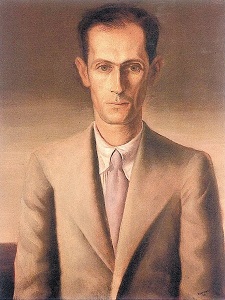
 

 2087726-c9d49e969b8e8488602e7ebddd123b9f.jpg
Carlos Drummond de Andrade (31 oktober 1902 – 17 augustus 1987)
Portret door Cândido Portinari, z.j.


De Oostenrijkse schrijver Jean Améry werd geboren op 31 oktober 1912 in Wenen. Zie ook mijn blog van 31 oktober 2010 en eveneens alle tags voor Jean Améry op dit blog.

Uit: Jenseits von Schuld und Sühne

„Als im Jahre 1964 in Frankfurt der große Auschwitz-Prozeß begann, schrieb ich den ersten Aufsatz im Zusammenhang mit meinen Erlebnissen im Dritten Reich, nach zwanzig Jahren Schweigens. Ich dachte zunächst nicht an eine Fortsetzung, wollte mir nur über ein Sonderproblem – die Situation des Intellektuellen im Konzentrationslager – klar werden. Als aber diese Arbeit verfaßt war, spürte ich, daß es unmöglich damit sein Bewenden haben dürfe. Auschwitz. Doch wie war ich dahin gelangt? Was war vorher geschehen, was sollte nachher kommen, wie stehe ich heute da?
Ich kann nicht sagen, daß ich in der Zeit der Stille die zwölf Jahre des deutschen und meines eigenen Schicksals vergessen oder »verdrängt« hätte. Ich hatte mich zwei Jahrzehnte lang auf der Suche nach der unverlierbaren Zeit befunden, nur, daß es mir schwer gewesen war, davon zu sprechen. Nun aber, da durch die Niederschrift des Essays über Auschwitz ein dumpfer Bann gebrochen schien, wollte plötzlich alles gesagt sein: so kam dieses Buch zustande. Dabei entdeckte ich, daß ich zwar manches bedacht, aber es viel zu wenig klar artikuliert hatte. Erst im Vollzug der Niederschrift entschleierte sich, was ich vorher in einer halbbewußten, an der Schwelle des sprachlichen Ausdrucks zögernden Denkträumerei undeutlich erschaut hatte.
Bald zwang sich auch die Methode auf. Hatte ich noch in den ersten Zeilen des Auschwitz-Aufsatzes geglaubt, ich könne behutsam und distanziert bleiben und dem Leser in distinguierter Objektivität gegenübertreten, mußte ich nun erfahren, daß es einfach unmöglich war. Wo das »Ich« durchaus hätte vermieden werden sollen, erwies es sich als der einzig brauchbare Ansatzpunkt. Eine nachdenklich-essayistische Arbeit hatte ich geplant. Eine durch Meditationen gebrochene, persönliche Konfession entstand. Auch sah ich sehr schnell ein, wie sinnlos es wäre, den vielen, teilweise ausgezeichneten dokumentarischen Werken, die zu meinem Themenkreis schon vorliegen, noch ein weiteres beizufügen. Bekennend und meditierend gelangte ich zu einer Untersuchung oder, wenn man will, zu einer Wesensbeschreibung der Opfer-Existenz.“

 

 2087726-662f8c2175450a8af8a619eb2aa23e11.jpg
Jean Améry (31 oktober 1912– 17 oktober 1978)
Cover


De Engelse schrijver Nick Stone werd geboren op 31 oktober 1966 in Cambridge. Zie ook mijn blog van 31 oktober 2009 en ook mijn blog van 31 oktober 2010 en eveneens alle tags voor Nick Stone op dit blog.

Uit: Voodoo Eyes

“Every morning, without fail, Eldon Bums took a cab from his home in Coconut Grove to the boxing gym he owned on 7th Avenue in Liberty City — Miami's roughest and most rundown neighbourhood, and no place for a sane man his age. Although the gym hadn't functioned as such in over eight years, Eldon had refused to sell or rent out the building, because it was there, within its four walls, that he still felt a little like his old self, communing with his memories, smiling at the ghosts of past triumphs, remembering the time when, as Deputy Chief of Police, he'd as good as run the city. Inside, the gym was an ongoing ruin. Every day it fell apart a little more. The concrete floor, once painted with intricate diagrams of numbered feet, lay buried under a coating of dust so thick it looked like rancid manna. And it just kept on coming. The air was cut with a steady snow of fine filth, sullying the thick slants of sunlight that poured through the windows. The heavy bags hung rigid from rust-stiffened chains and brackets. The gym's huge ring — once the biggest of its kind in Florida — stood in the centre, an ungainly heap of rotted oak and mildewed fabric. It had collapsed after an unattended leak in the roof opened up into a waterfall during a storm. Rain had soaked through the canvas and got into the wood. With time, heat and neglect, the structure had subsided as would an overwhelmed fighter, one leg at a time. It was now home to a colony of large brown rats, whose squeals and scuttlings had replaced the sounds of the gym; as had the distinct drone of the thousands of airborne insects that had found their way in through the ever-widening hole in the roof. Sometimes parrots, gulls and even pelicans got in too, but rarely found their way out; what the rats left of them added to the smell of militant decay about the place. The rats weren't scared of Eldon. They were used to his daily visits, this eighty-four-year-old man literally retracing his steps across the dirt, walking slowly, his head bowed because he could no longer hold it as high as he used to. They'd peer out at him from under the canvas, eyes glinting in the darkness, as if wondering whether today was the day he too would become like those stray birds. Eldon paid them no more mind than he did what was left of his gym. He went into his office, on the right, its door in the middle of a wall of mirrors. The mirrors were two-way, just like in police interrogation rooms. He sat down behind the desk and looked out at the gym. He didn't see it the way it was, but the way it used to be, back in the day, back in his day: a dozen fighters of all ages, skipping, sparring, spoedbagging, shadowboxing in front of the mirror, as oblivious to his presence now as they had been then.”

 

 2087726-5ee2402dbc968206568e6a213ab6174b.jpg
Nick Stone (Cambridge, 31 oktober 1966)


De Russische schrijfster Irina Denezhkina werd geboren op 31 oktober 1981 in Yekaterinburg. Zie ook alle tags voor Irina Denezhkina op dit blog en ook mijn blog van 31 oktober 2009 en ook mijn blog van 31 oktober 2010

Uit: Give Me: Songs for Lovers

“Denya took me home without speaking, flashed his hand by way of goodbye and went back the same way. I leapt into the entrance, noting for the hundredth time out of the corner of my eye the words "WU-TANG Clan" on the wall. "Ilya phoned," my mother informed me. "And how many more times do I have to tell you? It's night outside, and you're wandering around God knows where! Don't let me have to tell you again!" She was gradually limbering up, warming herself up with her own indignation. "No more of these Ilyas." I closed the door of the room and switched on the com-puter. While it was churning away I dialed the number. "Yes?" answered Lyapa. "Did you call?" "Yes." "I'm home." "That's good. Call me sometime. We've got a gig at Milk soon. I'll take you." "Okay." "Later?" "Later." I put the phone down. Oh sugar, Lyapa! How long can you carry on being such a dead fish? Or not dead, just not interested in me. How come? Most guys come running if I just throw them one of those lingering looks. But I keep on looking and looking at Lyapa and it's all just a waste of time. He sits there, smokes, looks the other way. At rehearsals they're all falling over each other to amuse me and he just drums away to himself, ignoring me. Once he cut his finger on a torn cymbal. There was blood pouring down onto his dark green shorts; he was sucking furiously at the cut, getting blood on the wall. The drums were streaked with it. I sat there, wondering if I should give him my handkerchief. Volkova was nudging me with her elbow—go on, give it to him. But . . . it didn't seem right somehow, I just couldn’t do it, I don't know why. He didn't look at me. I suppose he didn't want any handkerchiefs from me. They began screeching gleefully in the earphones: "Keep on lighting up, never take a break, have,* and hang out all night long. Do drink andfinny powders, tell that school so long." That's about Lyapa. True, he doesn't do drugs, but he drinks like a stallion and he's always lighting up; never takes a break, hangs out all day and all night when they have con-certs. Some day he'll be famous, and I'll be there pointing—look, that's my husband. He made a real effort at first to get my attention on the Net, sent me e-mails every day with "MISS YOU" in huge letters and heaps of exclamation marks.”
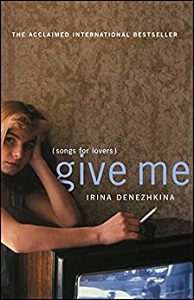
 

 2087726-3dade609bfb6267ee2055fbf3edc6ceb.jpg
Irina Denezhkina (Yekaterinburg, 31 oktober 1981)
Cover 


De Duitse schrijver Ernst Augustin werd geboren op 31 oktober 1927 in Hirschberg. Zie ook alle tags voor Ernst Augustin op dit blog en ook mijn blog van 31 oktober 2009 en ook mijn blog van 31 oktober 2010.

Uit: Robinsons blaues Haus

„In einer früheren, ferneren Version dieser Ge-schichte sagt Daniel Defoe, er habe eines der un-glaublichsten und abenteuerlichsten Leben gelebt. Ich sage: Ich auch.
Der Tod kommt in Gestalt eines freundlichen kleinen Herrn, der mir im Zug nach Grevesmüh-len gegenüber sitzt, und er kommt auch nicht sofort, vielmehr läßt er mir Zeit, meine Angele-genheiten zu regeln. Insbesondere dir, lieber Freund, ein beträchtliches Erbe zu hinterlassen. Ein in Ausmaßen und im Umfang geradezu ob-szönes Erbe, das ich dir vermache, vor allem eine Moral, mit der du, fürchte ich, am Ende ziemlich allein dastehen wirst. Lieber Freund. Als ich elf oder zwölf war, hatte mich mein Vater eines Tages beiseite genommen und ge-sagt: Du wirst es einmal schwer haben, mein Sohn, du wirst keine Freunde haben, du wirst entdecken, daß du allein bist, daß du dich auf einer Insel befindest — merke dir, mein Sohn — inmitten eines Ozeans von Menschen über Men-schen, die alle laut reden und alle etwas anderes meinen. Die ihre Seele daransetzen werden, dich von dieser Insel — so selig sie immer sein mag —zu vertreiben. Es sind sechs Milliarden, alle mit-einander, kannst du das verstehen? Ja. Vater. Nein, sagte er.
Ich erinnere mich an dieses Gespräch, das ich nicht verstand, das in dem mahagonifarbenen halbdunklen Arbeitszimmer meines Vaters statt-fand. Es ist immer halbdunkel dort gewesen, auf dem Schreibtisch brannte immer eine Bernstein-lampe, draußen fuhr die Straßenbahn. Es sind die Schatten, die mir im Gedächtnis geblieben sind, die tätowierten Köpfe der Maori an den Wänden, die Ledersessel von Mandel, der große Elefant aus dunklem Holz — sehr schwer, wenn ich mich gegen ihn lehnte.“
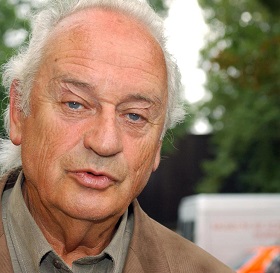
 

 2087726-e2015e7a68a65d91a47bbbdb5a5ce61b.jpg
Ernst Augustin (Hirschberg, 31 oktober 1927)

Geschreven door Romenu om 10:41 Reageer op dit bericht

Marijke Schermer

Onafhankelijk van geboortedata

De Nederlandse schrijfster Marijke Schermer werd geboren in Amsterdam in 1975. Zij groeide ‘grotendeels’ op in Groningen. In Arnhem studeerde ze aan de Toneelschool, aanvankelijk met de bedoeling om actrice te worden. Zij ging zich echter richten op het schrijven van toneelstukken en het regisseren van voorstellingen, ook van andere toneelauteurs. Ze had enige tijd een eigen theatergroep (Alaska) en ontving in 2009 voor haar toneelwerk de Charlotte Köhler-prijs, een aanmoedigingsprijs voor jong talent in de beeldende kunst en het theater. Schermer is artistiek directeur van het podium Oostblok in Amsterdam. Naast schrijven voor toneel begon zij ook proza te schrijven. Ze publiceerde enkele verhalen in het tijdschrift Tirade en in 2013 verscheen haar debuutroman “Mensen in de zon”, die goede kritieken kreeg. Haar tweede roman “Noodweer” (2016) haalde de longlist van de Vlaamse Fintro Literatuurprijs.

Uit: Noodweer

“Nemen we jouw auto?’
‘We zijn veel te laat.’
Haar man komt uit de keuken. Hij is lang, mager en zijn gezicht is uitgesproken knap. Hij heeft een zwierig pak aan. De pan in zijn handen en de theedoek over zijn schouder verraden toewijding. Hij zet de pan op tafel, werpt de lap terug in de richting van het aanrecht dat hij net niet haalt. Leo lacht met een hoog en helder stemmetje. Alicia, het buurmeisje dat oppast, knoopt Osip een slabbetje om. Ze is in een paar weken tijd van een androgyn kind in een kermisattractie veranderd. Haar wangen en lippen zijn rood geverfd, ze draagt idiote, veel te blote kleren. Emilia moet zich bedwingen haar niet ook over haar bol te aaien. Ze kussen de kinderen gedag.
‘Jij rijdt. We gaan het halen.’
Ze scheurt de oprijlaan af en draait de weg op. Het eerste deel van de rit voert over de dijk, door de glooiende rivierdelta, over een smalle tweebaansweg tussen de populieren. Er is een zakkend zomers zonnetje met weinig kracht en er staat een flinke wind. In de weilanden rechts van hen staan schapen. Even later, op de snelweg, kan ze echt hard rijden, iets wat ze graag doet. Ze praten niet veel. Door het raam waait een herinnering binnen aan lange tochten naar het zuiden, blote benen uit het raam, zingend. Vlak voor Amsterdam voeren ze een korte discussie over de beste route naar het Leidseplein.
‘Waarschijnlijk heb jij gelijk,’ zegt ze terwijl ze haar eigen idee ten uitvoer brengt. Ze gokt op een vrije plek, gokt goed en parkeert vlak bij het theater. Ze besluiten dat betalen precies de tijd kost die ze niet meer hebben. Ze rennen, steken over, worden rakelings gepasseerd door een fietser. Bruch roept dat ze de volgende keer een hotel moeten nemen; even worden ze gegrepen door de wens te worden opgeslokt door het leven in de stad, in plaats van straks en ongetwijfeld weer met haast, terug te moeten keren naar de stilte. Ze rennen de schouwburg in, de trap op naar de zaal, waar zij als laatsten arriveren voor de deuren rondom sluiten. Hij vouwt hun jassen in elkaar onder zijn stoel en knijpt haar in haar zij.”


 2090792-565fe15fece5e041462408dd6cb4f46b.jpg
Marijke Schermer (Amsterdam, 1975)

Geschreven door Romenu om 00:00 Reageer op dit bericht

Meer van Romenu

↑ Terug naar de berichten