Naar de inhoud

Romenu

Over literatuur, gedichten, kunst en cultuur
seniorennet.beseniorennet.be

Berichten van 19 februari 2011

Siri Hustvedt, Helen Fielding, Jaan Kross, Herbert Rosendorfer, Amy Tan
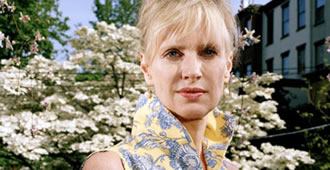
De Amerikaanse schrijfster en essayiste Siri Hustvedt werd geboren op 19 februari 1955 in Northfield, Minnesota. Zie ook mijn blog van 19 februari 2007 en ook mijn blog van 19 februari 2009 en ook mijn blog van 19 februari 2010.


Uit: Wat me lief was (Vertaald door Heleen ten Holt)


„Ieder incident speelde zich af volgens hetzelfde vaste patroon: eerste de treurige ontdekking, dan de woede van de getroffene, dan Marks terugkomst en heftige ontkenningen. Ja, hij was weggelopen, maar hij had niets slechts gedaan. Hij had rondgelopen in de stad. Dat was alles. Hij had behoefte om alleen te zijn. Hij had niet ’s nachts in Philips auto gereden. Als er een deuk achter het portier zat, had iemand anders de stationwagon zeker gestolen. Ja, hij was die nacht van huis weggelopen, maar hij had geen geld gestolen. Violet vergiste zich, waarschijnlijk had ze het uitgegeven of verkeerd geteld. Marks verontwaardigde ontkenningen waren vreemd irrationeel. Alleen als hij met een direct bewijs werd geconfronteerd, bekende hij schuld. Als je erop terugkijkt was alles wat Mark deed akelig voorspelbaar, maar we keken toentertijd geen van allen terug, en hoewel zijn gedrag volgens een cyclus verliep, waren we niet helderziend. We konden de dag van zijn rebellie niet voorspellen.
Mark was een raadsel dat op verschillende manieren kon worden uitgelegd. Het kwam me voor dat er twee manieren waren om zijn gedrag te begrijpen, die allebei een vorm van dualisme betroffen. De eerste was manicheïstisch. Marks dubbele leven was een slinger die tussen licht en donker heen en weer zwaait. Een deel van hem wilde echt zijn best doen. Hij hield van zijn ouders en zijn vrienden, maar hij werd met regelmatige tussenpozen overvallen door plotselinge impulsen, waar hij aan toegaf.“


 856373-d8ec5eb340d4e148716824d6948b30f3.jpg

Siri Hustvedt (Northfield, 19 februari 1955)


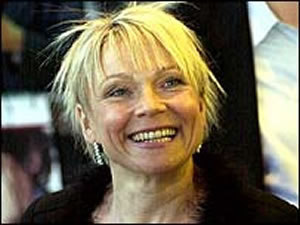
De Engelse schrijfster Helen Fielding werd geboren in Morley, Yorkshire op 19 februari 1958. Zie ook mijn blog van 19 februari 2009 en ook mijn blog van 19 februari 2010.


Uit: Bridget Jones's Diary


"Julie Enderby's got one. She says she never uses anything else."

"Who's Julie Enderby?"

"You know Julie, darling! Mavis Enderby's daughter. Julie! The one that's got that super-dooper job at Arthur Andersen ..."

"Mum ..."

"Always takes it on her trips ..."

"I don't want a little bag with wheels on."

"I'll tell you what. Why don't Jamie, Daddy and I all club together and get you a proper new big suitcase and a set of wheels?"

Exhausted, I held the phone away from my ear, puzzling about where the missionary luggage-Christmas-gift zeal had stemmed from. When I put the phone back she was saying: "... in actual fact, you can get them with a compartment with bottles for your bubble bath and things. The other thing I thought of was a shopping cart."

"Is there anything you'd like for Christmas?" I said desperately, blinking in the dazzling Bank Holiday sunlight.

"No, no," she said airily. "I've got everything I need. Now, darling," she suddenly hissed, "you will be coming to Geoffrey and Una's New Year's Day Turkey Curry Buffet this year, won't you?"

"Ah. Actually, I ..." I panicked wildly. What could I pretend to be doing? "... think I might have to work on New Year's Day."

"That doesn't matter. You can drive up after work. Oh, did I mention? Malcolm and Elaine Darcy are coming and bringing Mark with them. Do you remember Mark, darling? He's one of those top-notch barristers. Masses of money. Divorced. It doesn't start till eight."


 856373-532881282d1056afaf66319314769f61.jpg

Helen Fielding (Morley, 19 februari 1958)


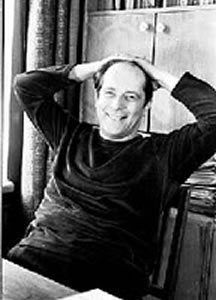
De Estlandse schrijver Jaan Kross werd geboren op 19 februari 1920 in Tallin. Zie ook mijn blog van 19 februari 2007 en ook mijn blog van 19 februari 2008 en ook mijn blog van 19 februari 2009 en ook mijn blog van 19 februari 2010.


Uit : Uncle (Vertaald door Eric Dickens)


« The chain led back to the spring of 1941, that is to say when the order had arrived in Tartu from a certain adviser to Herr Litzmann at the General Commission in Tallinn to swiftly pack together and transport, in part to Tallinn, in part to country manor houses, such-and-such valuable collections housed in the University Library. Those items most valuable from a German cultural (and, consequently, global cultural) point of view were to go to Tallinn, those of lesser importance to the stone cellars of suitable manor houses throughout the Province of Tartumaa.
The order to set to work the appropriate librarians plus those assistants they had come from the Vice-Chancellor of the university. Carpenters had begun (swearing as always) knocking together crates, heads of department (anxious as always) bustling about and directing operations, bibliographers (critical and whispering as always) making book inventories and packers-cum-bearers (sweating and sniffing as always) lugging piles of books and manuscripts down creaking flights of stairs. Each, of course, according to his nature. Perfunctorily and smoothly, assiduously and laboriously, thoughtlessly and twitteringly, inquisitively and mutteringly. Some hurried, others dawdled, some made sure the order was carried out to the letter while others again tried to find the easiest way of wriggling out of it. For there were two, even three attitudes for the order and as many reasons for carrying it out.

Some wished to do everything correctly. More rapidly or more slowly but above all, correctly. Others were indifferent to results as long as they got the mark notes and penni coins at the end of the day to pay for the items printed on their ration coupons. A third group which formed after much cursing and whispering among themselves, a group which grew even larger after the thin cigarettes and dishwater coffee of the lunch break, well, this third group began to hatch their own plans. Why should the most valuable items be packed in the first place? To save them from air raids? All well and good. But not only for that reason.“


 856373-d199ce70f48d597a0282fd19b5c58db7.jpg

Jaan Kross (19 februari 1920 – 27 december 2007)


De Duitse schrijver Herbert Rosendorfer werd op 19 februari 1934 in Gries geboren. Zie ook mijn blog van 19 februari 2007 en ook mijn blog van 19 februari 2008 en ook mijn blog van 19 februari 2009 en ook mijn blog van 19 februari 2010.


Uit: Briefe in die chinesische Vergangenheit


« Zweiter Brief

(Samstag, '3. Juli)

[…] Aber ich sage Dir: tausend Jahre sind mehr als vergangene Zeit. Tausend Jahre sind ein so gewaltiger Berg von Zeit, daß selbst die kühnsten Vögel phantastischer Gedanken ihn nicht zu überfliegen vermögen.

Tausend Jahre sind nicht »jetzt« und »damals«.

Tausend Jahre sind »hier« und »dort«. Ich werde beim »hier« bleiben.

Ich bin sehr glücklich, daß ich den Kontaktpunkt, an dem ich diesen Brief niederlegen werde, wiedergefunden habe. Es ist mir dank eines Mannes gelungen, der mir viel geholfen hat und noch hilft. Mehr von ihm berichte ich Dir demnächst. Anders als mit fremder Hilfe hätte ich den Kontaktpunkt nicht gefunden, denn unser K'ai-feng hat sich so vollständig geändert, daß ich meine, es müßte eine andere Stadt sein. Das hängt vielleicht damit zusammen, daß der Fluß seinen Lauf gewechselt hat; er fließt jetzt fast genau nach Norden.

Die Stadt ist unvorstellbar grüß geworden, und es ist nahezu unerträglich laut. Von keinem einzigen der Paläste, die uns für die Ewigkeit gebaut erscheinen, ist auch nur eine Spur noch vorhanden (soweit ich das bisher gesehen habe), von den einfachen Häusern ganz zu schweigen. Selbst die Hügel sind weg. Alles ist flach, dafür sind die Häuser aufgetürmt wie zackige Berge, und kaum ein Baum ragt über die Häuser hinaus. Du würdest nichts, aber auch gar nichts wieder-erkennen. Wie das alles zugegangen ist, kann ich mir nicht vorstellen. Ich traue unseren barbarischen Enkeln — ich kann Dir sagen: ein würdeloser, verrohter Haufen — zu, daß sie die Hügel abgetragen haben.

Selbst unser Himmel, scheint es mir, hat sich aus dem ständigen Dunst und Ruß in eine fernere Welt zurückgezogen. Es kommt mir fast vor, als wäre ich nicht nur zeitlich, sondern auch örtlich versetzt.

Ich sitze hier, während ich das schreibe, auf einem Stein. Der Lärm, der mich umtost, ist nicht übermä-

ßig; ein, zwei Li* weiter ist er viel schlimmer. Nicht weit von dem Stein muß das kleine Sommerhaus sein, wo ich Dich vor tausend Jahren und drei Tagen zum Abschied umarmt habe. »
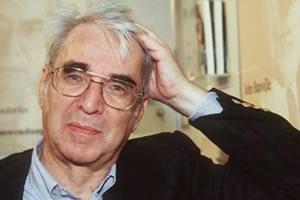


 856373-1419d31f3aac697ef58cd9d6a53864ee.jpg

Herbert Rosendorfer (Gries, 19 februari 1934)


De Amerikaanse schrijfster Amy Tan werd geboren in Oakland, Ohio, op 19 februari 1952. Zie ook mijn blog van 19 februari 2007 en ook mijn blog van 19 februari 2009 en ook mijn blog van 19 februari 2010.


Uit : A Brief History of My Shortened Life


« It was not my fault. If only the group had followed my original itinerary without changing it hither, thither, and yon, this debacle would never have happened. But such was not the case, and there you have it, I regret to say.

"Following the Buddha's Footsteps" is what I named the expedition. It was to have begun in the southwestern corner of China, in Yunnan Province, with vistas of the Himalayas and perpetual spring flowers, and then to have continued south on the famed Burma Road. This would allow us to trace the marvelous influence of various religious cultures on Buddhist art over a thousand years and a thousand miles—a fabulous journey into the past. As if that were not enough appeal, I would be both tour leader and personal docent, making the expedition a truly value-added opportunity. But in the wee hours of December 2nd, and just fourteen days before we were to leave on our expedition, a hideous thing happened . . . I died. There. I've finally said it, as unbelievable as it sounds. I can still see the tragic headline: "Socialite Butchered in Cult Slaying."

The article was quite long: two columns on the left-hand side of the front page, with a color photo of me covered with an antique textile, an exquisite one utterly ruined for future sale.

The report was a terrible thing to read: "The body of Bibi Chen, 63, retail maven, socialite, and board member of the Asian Art Museum, was found yesterday in the display window of her Union Square store, The Immortals, famed for its chinoiserie. . . ." That odious word—"chinoiserie"—so belittling in a precious way. The article continued with a rather nebulous description of the weapon: a small, rakelike object that had severed my throat, and a rope tightened around my neck, suggesting that someone had tried to strangle me after stabbing had failed. »



 856373-3d49989eb2324947de187b64f56bff99.jpg

Amy Tan (Oakland, 19 februari 1952)


Zie voor nog meer schrijvers van de 19e februari ook mijn vorige blog van vandaag en eveneens mijn eerste blog van vandaag.
Geschreven door Romenu om 18:55 Reageer op dit bericht

Dmitri Lipskerov, Thomas Brasch, Carson McCullers, Alfredo Bryce Echenique, Björn Kuhligk

De Russische schrijver Dmitri Lipskerov werd geboren op 19 februari 1964 in Moskou. Zie ook mijn blog van 19 februari 2007 en ook mijn blog van 19 februari 2008 en ook mijn blog van 19 februari 2009 en ook mijn blog van 19 februari 2010.


Uit: Le Dernier Rêve de la Raison


„Ilya disposait aussi d’un petit local supplémentaire, où l’on entreposait toutes sortes d’outils pour travailler les différentes espèces de poissons — des couteaux pour racler les écailles les plus résistantes, des crochets en fer forgé où l’on suspendait des poissons aux dimensions particulièrement imposantes, qui avaient été légèrement salés par le Tatare sur toute leur longueur, selon une recette unique, une recette qu’il avait inventée lui-même dans sa jeunesse, désormais bien lointaine, dans la Crimée couverte de pêchers, au bord de la mer Noire... Si l’on ouvrait le ventre d’un tel colosse avec une lame tranchante, les yeux du client enthousiasmé voyaient apparaître une chair d’un rouge très tendre, plutôt grasse, et de ce fait, d’un jaune translucide sur les bords, accrochée à de molles arêtes blanches. Il était rare, le client qui restait indifférent à un tel spectacle ; en général, il se mettait aussitôt à saliver et achetait un morceau de la délicatesse pour ses bambins, tout en se représentant la chair fine et tendre, étalée tel un drapeau rouge sur une tranche de pain de mie français enduite de beurre fondu. Au-delà, son imagination lui promettait une tasse de café crème et le mélange de sensations gustatives, sucrées et légèrement salées, si agréables pour commencer un dimanche ensoleillé.

Ilya le Tatare n’était pas propriétaire, même s’il travaillait dans une coopérative, mais il gérait son affaire en patron, prenait soin de son comptoir comme s’il lui avait appartenu, et le lavait à la fin du service au moyen d’un chiffon propre, veillant tout particulièrement à ce que l’odeur de poisson n’empire pas et n’effraie pas le client, le lendemain matin, en lui donnant l’impression que les

produits étaient avariés.“


 856371-f7d26e0382aaa0e0a628849356f2d99f.jpg

Dmitri Lipskerov (Moskou, 19 februari 1964)


De Duitse dichter en schrijver Thomas Brasch werd geboren in Westow,Yorkshire (Engeland) op 19 februari 1945. Zie ook mijn blog van 19 februari 2007 en ook mijn blog van 19 februari 2008.en ook mijn blog van 19 februari 2009 en ook mijn blog van 19 februari 2010.


WENN DIE SCHNELLEN WINDE WEHN

in den warmen Nächten

wollen wir aber die Trümmer gehn

in den warmen Nächten

Deine Hand inmeiner, Lisa

deine Haut anmeiner

schneller Lisa, schneller

uns sieht keiner


Wenn der weißeMond aufgeht

über den Ruinen

siehst Du wie die Nacht sich dreht

über den Ruinen

Deine Hand inmeiner, Lisa

Deine Haut anmeiner

weiter Lisa, weiter

uns sieht keiner


Wenn unsre Mäntel nicht mehr schwer

auf unsern Schultern liegen

wenn sie zwei Segel unterm Wind

werden wir fliegen

deine Hand in meiner, Lisa

deine Haut an meiner

höher Lisa, höher

uns sieht keiner


OFT BIST DU DER, DEN ICH LIEBE

oft bist Du der, den ich hasse

viel seltener jedoch.

Auch der bist Du, vor dem ich

mich fürchte.

Du bist der, der mich schlägt

du bist der, der mich streichelt

du bist der, der mir sagt, wer

ich bin

du bist der, der mir sagt, was

ich kann.

Du bist der, der schreit

und du bist der, der flüstert.

Alles bist du.

Aber nie wirst du der sein,

der immer hier bleibt.


 856371-1ec26ac847394dd6bca4f62514bebf50.jpg

Thomas Brasch (19 februari 1945 – 3 november 2001)

Hier met de actrice Katharina Thalbach


De Amerikaanse schrijfster Carson McCullers werd geboren als Lula Carson Smith 19 februari 1917 in Columbus, Georgia. Zie ook mijn blog van 19 februari 2007 en ook mijn blog van 19 februari 2009 en ook mijn blog van 19 februari 2010.


Uit: Ballad of the Sad Café


„First of all, love is a joint experience between two persons – but the fact that it is a joint experience does not mean that it is a similar experience to the two people involved. There are the lover and the beloved, but these two come from different countries. Often the beloved is only a stimulus for all the stored up love which has lain quiet within the lover for a long time hitherto. And somehow every lover knows this. He feels in his soul that his love is a solitary thing. He comes to know a new, strange loneliness and it is this knowledge which makes him suffer. So there is only one thing for the lover to do. He must house his love within himself the best he can; he must create for himself a whole new inward world, a world intense and strange, complete in himself. Let it be added here that this lover about whom we speak need not necessarily be a young man saving for a wedding ring – this lover can be man, woman, child, or indeed any human creature on this earth.

Now, the beloved can also be of any description. The most outlandish people can be the stimulus for love. A man may be a doddering great-grandfather and still love only a strange girl he saw in the streets of Cheehaw one afternoon two decades past. The preacher may love a fallen woman. The beloved may be treacherous, greasy-headed and given to evil habits. Yes, and the lover may see this as clearly as anyone else – but that does not affect the evolution of his love one whit. A most mediocre person can be the object of a love which is wild, extravagant and beautiful as the poison lilies of the swamp. A good man may be the stimulus for a love both violent and debased, or a jabbering madman may bring about in the soul of someone a tender and simple idyll. Therefore, the value and quality of any love is examined solely by the lover himself.“


856371-921089dde4c0798c0e4e25a7f6a714cc.jpg
Carson McCullers (19 februari 1917 - 29 september 1967)


De Peuaanse schrijver Alfredo Bryce Echenique werd op 19 februari 1939 in Lima geboren. Zie ook mijn blog van 19 februari 2009 en ook mijn blog van 19 februari 2010.


Uit: Le Verger de mon aimée (Vertaald door Jean-Marie Saint-Lu)


„Carlitos Alegre, qui ne remarquait jamais rien, ressentit tout à coup quelque chose de très fort et de très troublant, quelque chose d’irrépressible et d’explosif, et qui devint plus fort encore, quelque chose d’aussi violent qu’inexplicable, mais de tout à fait agréable, à vrai dire, quand en rentrant chez lui par cette chaude soirée d’été il vit des préparatifs de fête, à l’extérieur, sur la terrasse et dans le jardin. Cela faisait deux semaines qu’il préparait tous les jours son examen d’entrée à l’université au dernier étage d’une très vieille bâtisse à la façade humide et poussiéreuse, jaunâtre, sale, une maison de torchis promise à la démolition et située rue de la Amargura, où vivaient doña María Salinas, veuve Céspedes, ponctuellissime employée de la Poste centrale, et les trois enfants – deux garçons, des jumeaux, ah, et une fille aussi, bien sûr, une fille… – qu’elle avait eus de son défunt mari, César Céspedes, vaillant et talentueux dermatologue originaire du département de Chiclayo qui commençait à se faire un chemin dans la Lima des années 40 et en était à rêver de se faire construire une villa à San Isidro et tout, avec son cabinet sur le devant, bien entendu, prenez-en de la graine, les garçons, cette ascension professionnelle et sociale, c’est tout seul, tout seul et en partant de zéro que je suis en train de la réaliser, vous m’avez compris?, quand la mort le surprit, ou le ravit – comme avait dit quelqu’un lors de son enterrement multitudinaire et rhétorique à Puerto Eten, département de Chiclayo, sa ville natale –; cela avait obligé sa veuve à abandonner sa condition de maîtresse de maison satisfaite et pleine d’espérances pour se vouer corps et âme à la bonne éducation de ses enfants, à brader quasiment leur petite maison du district de Jesús María, et à se transformer en très résignée et très efficace fonctionnaire de l’État et en très correcte locataire aux yeux cernés du dernier étage de cette vieille bâtisse chaque jour un peu plus promise à la démolition de la rue de la Amargura, rue qui n’était déjà plus très cotée, et même pas dans la vieille Lima historique de Pizarre, non, même pas, mais dans la Lima archaïque, où le président don Manuel Prado Ugarteche – qui exerçait alors son second mandat – avait pourtant toujours sa résidence ornée d’un remarquable balcon liménien, parce qu’il vivait à Paris, évidemment, n’importe qui dans ces conditions, sauf quand il gouvernait le Pérou, [...]“


856371-09a71f4fdcce4fa9c0d8710ed834256f.jpg
Alfredo Bryce Echenique (Lima, 19 februari 1939)


De Duitse dichter en schrijver Björn Kuhligk werd geboren op 19 februari 1975 in Berlijn. Zie ook mijn blog van 19 februari 2009 en ook mijn blog van 19 februari 2010.


Sie macht am liebsten Pasta


Und morgens steht sie nackt
am Fenster, etwas Banales
etwas Göttliches, und sieht
die Gegenwart, wie die sich
unten auf der Straße bemüht


sie träumt auf russisch
und raucht filterlose Franzosen
gießt vorm Frühstück den Teppich
verleugnet Schulfreunde und hat
sich nie den Arm abgebunden


sie hat den falschen Freund
und selten Geld auf der Kante
den Tag, also genau diesen
den Tag, denkt sie manchmal
den hatte schon mal jemand


sie hat keine Fotos an den Wänden
und nach der Tagesschau
ein gewöhnliches Gesicht, sie denkt sich
einen Satz wie diesen oder jenen
etwas Banales, etwas Göttliches


am Wochenende sei sie, sagen
ihre Freunde, eine Mischung
aus Kneipentier und Partyknaller
manchmal, wenn sie tanzt, habe sie
Männer an den Beinen


am liebsten beendet sie ihre Sätze
mit: „Kannst du mir folgen?“
sie lacht nicht oft, doch manchmal
lächelt sie versteckt, am schönsten
redet sie, wenns regnet


856371-98a8c177c6e19b182f00b05f7138be89.jpg
Björn Kuhligk (Berlijn, 19 februari 1975)

Geschreven door Romenu om 18:48 Reageer op dit bericht

Kay Boyle, Wolfgang Fritz, Yuri Olesha, André Breton, Paul Zech, Mark Prager Lindo, Heinrich L. Wagner

De Amerikaanse dichteres en schrijfster Kay Boyle werd geboren op 19 februari 1902 in Saint Paul, Minnesota. ook mijn blog van 19 februari 2009 en ook mijn blog van 19 februari 2010.


Monody to the Sound of Zithers


I HAVE wanted other things more than lovers … 

I have desired peace, intimately to know 

The secret curves of deep-bosomed contentment, 

To learn by heart things beautiful and slow. 


Cities at night, and cloudful skies, I’ve wanted;         

And open cottage doors, old colors and smells a part; 

All dim things, layers of river-mist on river— 

To capture Beauty’s hands and lay them on my heart. 


I have wanted clean rain to kiss my eyelids, 

Sea-spray and silver foam to kiss my mouth.         

I have wanted strong winds to flay me with passion; 

And, to soothe me, tired winds from the south. 


These things have I wanted more than lovers … 

Jewels in my hands, and dew on morning grass— 

Familiar things, while lovers have been strangers.         

Friended thus, I have let nothing pass.


 856369-a6a9240ff3d5e23c17d34c3e8707f959.jpg

Kay Boyle (19 februari 1902 – 27 december 1992)


De Oostenrijkse schrijver Wolfgang Fritz werd geboren op 19. Februar 1947 in Innsbruck. Zie ook mijn blog van 19 februari 2009 en ook mijn blog van 19 februari 2010.


Uit: Eine ganz einfache Geschichte


„Es war da ein Jüngling mit Namen Peter Kaiser, der studierte die so trockene wie unzugängliche Rechtswissenschaft, und er war darin, nach dem Verlauf von vier Semestern, an einem Juniabend, so weit gediehen, daß ihn nur noch vierzehn Tage von seiner ersten Staatsprüfung trennten, worin er Kenntnisse unter Beweis zu stellen haben würde, deren meiste erst noch ihrer Aneignung harrten.

Nichtsdestotrotz glaubte er an diesem Abend, so gegen sechs, keine allzugroße Sünde zu begehen, wenn er seine durch intensives Skriptenbüffeln geschwächten Kräfte mit Hilfe eines Abendspazierganges wiederherzustellen suchte, wobei er, wie sich verstand, spätestens in zwei Stunden wieder an die Stätte seiner Pflicht zurückgekehrt sein wollte. Peter hauste zu seinem nicht geringen Leidwesen noch immer in der elterlichen Wohnung, welche sich am Alsergrund, in einer der Seitengassen der Währingerstraße befand. Seine beiden Eltern dienten im Rathaus als Beamte von subalternem Wirkungskreis. Daß ihr Sohn dereinst dortselbst, als Jurist, zu Macht und Ansehen gelangen würde, schien ihnen ausgemacht, obschon er ihnen wegen seiner allzu träumerischen, allzu wenig zielgerichteten Wesensart nicht wenige Sorgen bereitete.

Da erschien es nur als konsequent, wenn die gestrenge Mama die effiziente Ausnützung der entscheidenden vierzehn Tage höchstselbst überwachte; aber gegen einen Abendspaziergang nach einem ganzen Tag Fleiß wußte auch sie nichts einzuwenden. Später gelangte sie manchmal in ihrem nächtlichen Grübeln zu der Theorie, daß dies vielleicht ihr größer Fehler in dieser Sache, wenn nicht gar der größte Fehler in ihrem Leben gewesen sei, denn an diesem Abend zerrann die Frucht von einundzwanzig Jahren Mühe wie ein kunstvoll gebauter Schneemann an der Märzsonne, und das kam so: Peter eilte zielstrebig zur Fußgängerzone rund um den Stephansdom, denn hier, auf Graben und Kärntnerstraße, kommt der einsame Flanierer auf seine Rechnung.’


 856369-8be7ed7419480cf0858bb3f205e4e328.jpg

Wolfgang Fritz (Innsbruck, 19 februari 1947)


De Russische schrijver Yuri Olesha werd geboren op 19 februari 1899 in Elizavetgrad (nu Kirovohrad, Oekraïne). Zie ook mijn blog van 19 februari 2009 en ook mijn blog van 19 februari 2010.


Uit: The Cherry Seed


„The bird's not there anymore. It flew up through the crown of the tree. The flight is difficult. The bird flies, hitting the leaves.

Natasha treated us to cherries. By a childish habit, I kept one seed in my mouth. It rolled around in my mouth and was sucked clean. I took it out. It looked wooden.

I left the dacha with a cherry seed in my mouth.

I travel through the invisible country.

I return from the dacha to the city. The sun is setting. I'm heading east. I am traveling a double path. One path is accessible to the observation of everyone. A passerby sees a man walking along an empty, overgrown area. But what's going on with this peacefully walking man? He sees his shadow in front of himself. The shawdow moves along the ground, extending into the distance. It has long, colorless legs. I traverse the vacant lot. The shadow rises along a brick wall and suddenly loses its head. The passerby doesn't see this. Only I see it. I step into a corridor between two buildings. The corridor is endlessly high, filled with shade. Here the soil is claylike, pliable, like in a garden. Toward me, along the wall, moving to the side, runs a stray dog. We pass. I look behind. The threshhold behind is shining. There on the threshold, a solar flare momentarily covers over the dog. Then it runs off into the emptiness, and only now can I see its color--reddish.

All this happens in the invisible country, because in the country accessible to normal vision, something else is going on: a traveler meets a dog, the sun sets, the vacant lot turns green.“


856369-693a4873f9972d1d3b757bf6c4bb9e95.jpg
Yuri Olesha (19 februari 1899 – 10 mei 1960)


De Franse dichter en essayist André Breton werd geboren in Tinchebray in het departement Orne op 19 februari 1896. Zie ook mijn blog van 18 februari 2007 en ook mijn blog van 18 februari 2008. en ook mijn blog van 19 februari 2009 en ook mijn blog van 19 februari 2010.


Five Ways To Kill A Man


There are many cumbersome ways to kill a man.
You can make him carry a plank of wood
to the top of a hill and nail him to it. To do this
properly you require a crowd of people
wearing sandals, a cock that crows, a cloak
to dissect, a sponge, some vinegar and one
man to hammer the nails home.

Or you can take a length of steel,
shaped and chased in a traditional way,
and attempt to pierce the metal cage he wears.
But for this you need white horses,
English trees, men with bows and arrows,
at least two flags, a prince, and a
castle to hold your banquet in.

Dispensing with nobility, you may, if the wind
allows, blow gas at him. But then you need
a mile of mud sliced through with ditches,
not to mention black boots, bomb craters,
more mud, a plague of rats, a dozen songs
and some round hats made of steel.

In an age of aeroplanes, you may fly
miles above your victim and dispose of him by
pressing one small switch. All you then
require is an ocean to separate you, two
systems of government, a nation's scientists,
several factories, a psychopath and
land that no-one needs for several years.

These are, as I began, cumbersome ways
to kill a man. Simpler, direct, and much more neat
is to see that he is living somewhere in the middle
of the twentieth century, and leave him there.


856369-36d7e97a8cb1103d261bc4342c736048.jpg
André Breton (19 februari 1896 – 28 september 1966)


De Duitse dichter en schrijver Paul Zech werd geboren op 19 februari 1881 in Briesen. Zie ook mijn blog van 19 februari 2009 en ook mijn blog van 19 februari 2010.


Novembernacht

Für Leo Grein


Zwielicht macht alle Ebenen blank wie Silberseen

und überbrückt den schmalen Fluß,

der ganz ins Uferlose rückt.

Vertiefter Wolkenzug erdrückt

den seufzenden Verdruß

in den erloschenen Alleen.


Turmuhren gehen ihren Kreisgang ohne Zeiger.

Am Kreuzweg, wo der Weiser wie ein Galgen droht,

lärmt einer Krähe frostverschärfte Not:

Gebt Brot…

Der Wind ist aller Kümmernis Verschweiger.


856369-de65492c10bf67f978e76ef57140fe3c.jpg
Paul Zech (19 februari 1881 – 7 september 1946)


Zie voor onderstaande schrijvers ook mijn blog van 19 februari 2010.


De Nederlandse schrijver Mark Prager Lindo, beter bekend als Den Ouden Heer Smits werd geboren in Londen op 19 februari 1819. Zie ook mijn blog van 19 februari 2007 en ook mijn blog van 19 februari 2009.


De Duitse schrijver Heinrich Leopold Wagner werd geboren op 19 februari 1747 in Straatsburg. Zie ook mijn blog van 19 februari 2009.

Geschreven door Romenu om 18:43 Reageer op dit bericht

Meer van Romenu

↑ Terug naar de berichten