Naar de inhoud

Romenu

Over literatuur, gedichten, kunst en cultuur
seniorennet.beseniorennet.be

Berichten van 25 maart 2011

Flannery O'Connor, Jacques Bens, Jaime Sabines, Peter Van Straaten,Toni Cade Bambara
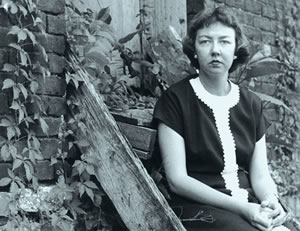
De Amerikaanse schrijfster Flannery O'Connor werd geboren op 25 maart 1925 in Savannah, Georgia. Zie ook mijn blog van 25 maart 2007 en ook mijn blog van 25 maart 2008 en ook mijn blog van 25 maart 2009 en ook mijn blog van 25 maart 2010.


Uit: Everything That Rises Must Converge


„HER DOCTOR had told Julian's mother that she must lose twenty pounds on account of her blood pressure, so on Wednesday nights Julian had to take her downtown on the bus for a reducing class at the Y. The reducing class was de-signed for working girls over fifty, who weighed from 165 to 200 pounds. His mother was one of the slimmer ones, but she said ladies did not tell their age or weight. She would not ride the buses by herself at night since they had been integrated, and because the reducing class was one of her few pleasures, necessary for her health, and free, she said Julian could at least put himself out to take her, considering all she did for him. Julian did not like to consider all she did for him, but every Wednesday night he braced himself and took her.

    She was almost ready to go, standing before the hall mirror, putting on her hat, while he, his hands behind him, ap-peared pinned to the door frame, waiting like Saint Sebastian for the arrows to begin piercing him. The hat was new and had cost her seven dollars and a half. She kept saying, “Maybe I shouldn't have paid that for it. No, I shouldn't have. I'll take it off and return it tomorrow. I shouldn't have bought it.”

    Julian raised his eyes to heaven. “Yes, you should have bought it,” he said. “Put it on and let's go.” It was a hideous hat A purple velvet flap came down on one side of it and mood up on the other; the rest of it was green and looked like a cushion with the stuffing out. He decided it was less comical than jaunty and pathetic. Everything that gave her pleasure was small and depressed him.

    She lifted the hat one more time and set it down slowly on top of her head. Two wings of gray hair protruded on either side of her florid face, but her eyes, sky-blue, were as innocent and untouched by experience as they must have been when she was ten. Were it not that she was a widow who had struggled fiercely to feed and clothe and put him through school and who was supporting him still, “until he got on his feet,” she might have been a little girl that he had to take to town. “It's all right, it's all right,” he said. “Let's go.” He opened door himself and started down the walk to get her going.“


 879499-9ca1c2204fad4cbafcf7cd492a120a3f.jpg

Flannery O'Connor (25 maart 1925 – 3 augustus 1964)


De Franse dichter en schrijver Jacques Bens werd geboren op 25 maart 1931 in Cadolive (Bouches-du-Rhône). Zie ook mijn blog van 25 maart 2007 en ook mijn blog van 25 maart 2008 en ook mijn blog van 25 maart 2009 en ook mijn blog van 25 maart 2010.


Sonnet


Madame, je vous donne un oiseau pour étrenne

Duquel on ne saurait estimer la valeur ;

S’il vous vient quelque ennui, maladie ou douleur,

Il vous rendra soudain à votre aise et bien saine.


Il n’est mal d’estomac, colique ni migraine

Qu’il ne puisse guérir, mais sur tout il a l’heur

Que contre l’accident de la pâle couleur

Il porte avecque soi la drogue souveraine.


Une dame le vit dans ma main, l’autre jour

Qui me dit que c’était un perroquet d’amour,

Et dès lors m’en offrit bon nombre de monnoie


Des autres perroquets il diffère pourtant :

Car eux fuient la cage, et lui, il l’aime tant

Qu’il n’y est jamais mis qu’il n’en pleure de joie.


Sur la ville de Paris


Rien n’égale Paris ; on le blâme, on le louë ;

L’un y suit son plaisir, l’autre son interest ;

Mal ou bien, tout s’y fait, vaste grand comme il est

On y vole, on y tuë, on y pend, on y rouë.


On s’y montre, on s’y cache, on y plaide, on y jouë ;

On y rit, on y pleure, on y meurt, on y naist :

Dans sa diversité tout amuse, tout plaist,

Jusques à son tumulte et jusques à sa bouë.


Mais il a ses défauts, comme il a ses appas,

Fatal au courtisan, le roy n’y venant pas ;

Avecque sûreté nul ne s’y peut conduire :


Trop loin de son salut pour être au rang des saints,

Par les occasions de pécher et de nuire,

Et pour vivre long-temps trop prés des médecins.


 879499-bb27d9f2fc6ff9f24b33823024cf9486.jpg

Jacques Bens (25 maart 1931 – 26 juli 2001)

Cadolive (Bouches-du-Rhône)


De Mexicaanse dichter en schrijver Jaime Sabines Gutiérrez werd geboren op 25 maart 1926 in Tuxtla Gutiérrez, Chiapas. Zie ook mijn blog van 25 maart 2007 en ook mijn blog van 25 maart 2008 en ook mijn blog van 25 maart 2009 en ook mijn blog van 25 maart 2010..


(Prose poem)

  I love you at ten in the morning, at eleven, and at twelve noon. I love
you with all my soul and with all my body, sometimes, on rainy afternoons.
But at two in the afternoon, or at three, when I begin to think of the two
of us, and you think of dinner or the daily chores, or the amusements you
lack, I begin to hate you silently, with the half of hate that I keep for
myself.
  Later I return to love you, when we lie down together and I see that
you're there for me, that in some way your knee and your belly speak to me,
that my hands convince me of it, and that there is no other place where I
can come and go more easily than your body. You come whole to my seeking,
and we two disappear in an instant, we plunge into the mouth of God, until I
tell you of my hunger or my dream.
  Every day I love you and hate you hopelessly. And there are days, there
are hours, in which I don't know you, in which you are another's--like the
other woman. Men worry me, I worry myself, my griefs distract me. I probably
don't think of you too much. You know that. Who could love you less than I,
my love?


Vertaald door Athena Kildegaard


879499-9d79ec6ed52056eb100ca84afc4e6963.jpg
Jaime Sabines (25 maart 1926 – 19 maart 1999)


De Nederlandse cartoonist en striptekenaar
Peter van Straaten werd geboren in Arnhem op 25 maart 1935. Zie ook mijn blog van 25 maart 2007 en ook mijn blog van 25 maart 2008 en ook mijn blog van 25 maart 2009 en ook mijn blog van 25 maart 2010.


 879499-d6e316fd1b41f58b2aea5f4008db0320.jpg

„Huh!.......macho!“


 879499-b34647f6b4d5f0d0ff1ff95f0dd8a700.jpg

Peter Van Straaten (Arnhem, 25 maart 1935)


De Amerikaanse schrijfster en sociale activiste Toni Cade Bambara werd als Miltona Mirkin Cade geboren op 25 maart 1939 in New York. Zie ook mijn blog van 25 maart 2009 en ook mijn blog van 25 maart 2010.


Uit: The Lesson


„Back in the days when everyone was old and stupid or young and foolish and me and Sugar were the only ones just right, this lady moved on our block with nappy hair and proper speech and no makeup. And quite naturally we laughed at her, laughed the way we did at the junk man who went about his business like he was some big-time president and his sorry-ass horse his secretary. And we kinda hated her too, hated the way we did the winos who cluttered up our parks and pissed on our handball walls and stank up our hallways and stairs so you couldn't halfway play hide-and-seek without a goddamn gas mask. Miss Moore was her name. The only woman on the block with no first name. And she was black as hell, cept for her feet, which were fish-white and spooky. And she was always planning these boring-ass things for us to do, us being my cousin, mostly, who lived on the block cause we all moved North the same time and to the same apartment then spread out gradual to breathe. And our parents would yank our heads into some kinda shape and crisp up our clothes so we'd be presentable for travel with Miss Moore, who always looked like she was going to church though she never did. Which is just one of the things the grownups talked about when they talked behind her back like a dog. But when she came calling with some sachet she'd sewed up or some gingerbread she'd made or some book, why then they'd all be too embarrassed to turn her down and we'd get handed over all spruced up. She'd been to college and said it was only right that she should take responsibility for the young ones' education, and she not even related by marriage or blood. So they'd go for it. Specially Aunt Gretchen. She was the main gofer in the family. You got some ole dumb shit foolishness you want somebody to go for, you send for Aunt Gretchen. She been screwed into the go-along for so long, it's a blood-deep natural thing with her. Which is how she got saddled with me and Sugar and Junior in the first place while our mothers were in a la-de-da apartment up the block having a good ole time.”


 879499-61f7ba9d8a161ed4f80a75a7f6c78857.jpg

Toni Cade Bambara (25 maart 1939 – 9 december 1995)


Zie voor nog meer schrijvers van de 25e maart ook mijn vorige blog van vandaag en eveneens mijn eerste blog van vandaag.
Geschreven door Romenu om 19:01 Reageer op dit bericht

Pol Hoste, Jacques Audiberti, Filip De Pillecyn, Evliya Çelebi, Anne Fanshawe

De Vlaamse schrijver Pol Hoste werd geboren in Lokeren op 25 maart 1947. Zie ook mijn blog van 25 maart 2007 en ook mijn blog van 25 maart 2008 en  en ook mijn blog van 25 maart 2009 en ook mijn blog van 25 maart 2010.


Uit: Caran d'Ache


Goud


Zo droomt het televisiemeisje. Een windhoos is een

kleurenscherm, een watervlak draagt haar herinnering.

Men koopt ogen, een revue. Parfum van glanspapier.

Als ze door haar foto glijdt, is ze uit zichzelf

verdwenen.


Mauve


Tot in de diepste punten ben ik dagelijks veranderd,

dat is niet sterven, dat is uitspuwen of inslikken.

Ik ga bijvoorbeeld naar mijn zus, vertel haar van

mijn was. Vroeger wist ik ook wel alles en nu zelfs

meer en meer. Maar als ze kijken ben ik nog altijd

dezelfde. Ik durf me niet verroeren want dan huil je,

dan huil je. Een man heeft zijn eigen leven.


 879494-5f2165b5f189c3691ecfefa24e947024.jpg

Pol Hoste (Lokeren, 25 maart 1947)


De Franse dichter en schrijver Jacques Audiberti werd geboren op 25 maart 1899 in Antibes. Zie ook mijn blog van 25 maart 2007 en en ook mijn blog van 25 maart 2009 en ook mijn blog van 25 maart 2010.


Uit: Le mal court


Nous sommes à la fin de la pièce. Convertie au Mal, Alarica destitue son père, Célestincic, pour prendre sa place sur le trône.

"...
Alarica : Jusqu'ici, elle n'aura servi, en fin de compte, ma vie, ma si pure, ma si droite vie, qu'à masquer le présent ouragan de ma férocité. Ma férocité se démasque. Tout le mal que je n'ai pas fait, je vais le faire d'un seul coup. La plaine s'ouvre. Que jaillisse la montagne des eaux noires ! Fernand !

F... : J'étais imbécile, avec mes gendarmes. Mes amis, il y a mieux à faire, mille fois mieux. Tenez. Vous avez plein de marécages, n'est-ce pas ?

Célestincic : Je vous interdis...

Alarica, vers Célestincic : Silence !

Le Maréchal : Laissez-le s'expliquer. C'est un occidentiste. Ils ont inventé la baïonnette triangulaire.

F... : Vos marécages, hé bien, qui nous empêche de planter dedans d'énormes tuyaux de fer blanc, je dis bien, de fer blanc, comme le fer blanc des gouttières, afin de rassembler toute l'eau dans une vallée et que, de là, elle se rende dans les fleuves !

Le Maréchal : C'est en tout point ce que je m'éreinte à préconiser depuis que nous avons ce royaume...

Célestincic : Vous avez l'audace d'approuver ce galvaudeux?

Le Maréchal : J'approuve le bon sens. Et je goûte le vent.

F... : Sur les marécages, le blé poussera. L'Angleterre n'en produit guère. J'y suis été. Elle nous en prendra quinze bateaux par an. Il nous faudrait un port. (Vers Alarica.) C'est bien dit?

Alarica : Je te soulève. Je t'inspire. Fais résonner ta voix forte. Mon homme, va ! „


 879494-950ffad8157d1da04fb5a409643eb027.jpg

Jacques Audiberti (25 maart 1899 – 10 juli 1965)


De Vlaamse schrijver  Filip De Pillecyn werd te Hamme aan de Durme geboren op 25 maart 1891. Zie ook mijn blog van 25 maart 2007 en en ook mijn blog van 25 maart 2009 en ook mijn blog van 25 maart 2010.


Uit: Blauwbaard


„Met drieën kwamen ze van heel ver.

Knapzak en zwaard en wat geblutst ijzergetuig wezen op hun stiel die was: te vechten en te sterven voor de genadige heren die hun soldij betaalden en hen aan de vreugden van een geplunderde stad lieten deelachtig worden. Zij hadden hun moeder vergeten en tienmaal van vaderland gewisseld. Nu zouden zij proberen de moeilijke levenswijze te leren: op eigen hand te werken en in vrede te leven.

Daar zongen nog vogels in de kanten hoe ver het seizoen ook naar de koude geschoven was. De wind streek over de valleien, de zon rustte op rosse bladerkronen. En zij stapten, dronken een teug aan de veldfles en spraken zonder te weten waarover.

Zij hadden een naam gehad zoals iedereen, maar die was achteruitgebleven bij de tijd toen zij nog een thuis hadden waar die naam werd uitgesproken. Thans was er van dit alles niets overgebleven dan de Lange, de Rosse en de Schele.

Hun riem stond nog stijf van de zware geldstukken die de laatste veldtocht had opgebracht. Het was een rijk ding geweest. Een vechten op 't gemakje en een smouspartij heel de zomer lang. Ze hadden haast evenveel speenvarkentjes gespiesd als mannen van de andere partij. En toen de veldtocht was afgelopen hadden lansknechten en paardenvolk ondereen hun hart opgehaald. Bloed en wijn hadden verbroederd en de hertog had zijn benden met gevloek uiteengejaagd.

Dat lag nu achter de rug en de streek werd veiliger. Hier waren ze niet langs geweest om de boeren te braden op hun hooizolder en de boerinnen in hun moedernaaktheid te laten galopperen. Het was hier arm en rustig en 's avonds stonden de lichten ver vaneen.“


 879494-ee07c20a94363b71b80086bab01f1c22.jpg

Filip De Pillecyn (25 maart 1891 – 7 augustus 1962)


De Turkse schrijver Evliya Çelebi werd geboren op 25 maart 1611 in Istanbul. Zie en ook mijn blog van 25 maart 2009 en ook mijn blog van 25 maart 2010.


Uit: Im Reiche des Goldenen Apfels. Des türkischen Weltenbummlers Evliya Çelebi denkwürdige Reise in das Giaurenland und in die Stadt und Festung Wien anno 1665. (Vertaald door Richard F. Kreutel)


„In Wien ist die Luft gar köstlich, denn es weht in dieser Stadt immerzu ein Zephyrhauch und ein Frühlingslüftchen, so dass sich dort alle Leute guter Gesundheit erfreuen. Die Männer, die ja dort in höchster Enthaltsamkeit und Askese leben, sind zwar mager, aber dabei rüstig und werden überaus alt und hochbetagt.

Diese Giauren tragen alle schwarz Röcke und fränkische Schuhe und auf den Köpfen verschiedenartige Hüte, an die sei Straußenfedern stecken. Infolge der köstlichen Luft ist bei allen Leuten in Wien die Haut weiß wie Kampfer und ihre wohlgeformten Glieder sind außerordentlich weich, so wie das Fleisch am Ohrläppchen.“

...

„Ebenso wie die Männer tragen dort die Frauen als Oberkleidung gesteppte Röcke ohne Ärmel [Anm. d. Red. gemeint sind Jacken]. Darunter aber ziehen sie Frauenröcke aus Brokat und Seide und Goldstoff... und mannigfachen anderen goldgewirkten und kostbaren Stoffen an, die aber nicht so eng und knapp sind wie die Rücke der Frauen im übrigen Giaurenland, sondern weit und reich, sodass sie ihnen ellenlang auf dem Boden nachschleifen wie die Schleppkleider der Mevlevi-Derwische. Unterhosen legen sie jedoch niemals an. ...


879494-31762ee573bde3a92d501e5cc9de0f30.jpg
Evliya Çelebi (25 maart 1611 – na 1683 op een van zijn reizen)


De Engelse schrijfster Lady Anne Fanshawe werd geboren op 25 maart 1625 in  Balls Park, bij Hertford. Zie en ook mijn blog van 25 maart 2009 en ook mijn blog van 25 maart 2010.


Uit: The Memoirs of Lady Fanshawe


„Ever keep the best qualified persons company, out of whom you will find advantage, and reserve some hours daily to examine yourself and fortune; for if you embark yourself in perpetual conversation or recreation, you will certainly shipwreck your mind and fortune. Remember the proverb--such as his company is, such is the man, and have glorious actions before your eyes, and think what shall be your portion in Heaven, as well as what you desire on earth.

Manage your fortune prudently, and forget not that you must give God an account hereafter, and upon all occasions.

Remember your father, whose true image, though I can never draw to the life, unless God will grant me that blessing in you; yet, because you were but ten months and ten days old when God took him out of this world, I will, for your advantage, show you him with all truth, and without partiality.

He was of the highest size of men, strong, and of the best proportion; his complexion sanguine, his skin exceedingly fair, his hair dark brown and very curling, but not very long; his eyes grey and penetrating, his nose high, his countenance gracious and wise, his motion good, his speech clear and distinct. He never used exercise but walking, and that generally with some book in his hand, which

oftentimes was poetry, in which he spent his idle hours; sometimes he would ride out to take the air, but his most delight was, to go only with me in a coach some miles, and there discourse of those things which then most pleased him, of what nature soever.

He was very obliging to all, and forward to serve his master, his country, and friend; cheerful in his conversation; his discourse ever pleasant, mixed with the sayings of wise men, and their histories

repeated as occasion offered, yet so reserved that he never showed the thought of his heart, in its greatest sense, but to myself only; and this I thank God with all my soul for, that he never discovered his trouble to me, but went from me with perfect cheerfulness and content; nor revealed he his joys and hopes but would say, that they were doubled by putting them in my breast. I never heard him hold a disputation in my life, but often he would speak against it, saying it was an uncharitable custom, which never turned to the advantage of either party.“


879494-25a4ae1c504af9e3b4b4e3acb134b8ad.jpg
Anne Fanshawe (25 maart 1625 - 1680)

Anne en John Fanshawe

Geschreven door Romenu om 18:52 Reageer op dit bericht

Antonio Fogazzaro, Daniel Schiebeler, Mary Webb, Erica Pedretti

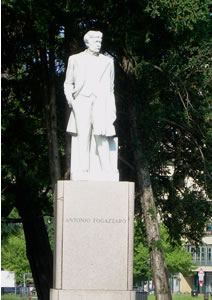
De Italiaanse schrijver Antonio Fogazzaro werd geboren op 25 maart 1842 in Vicenza. Zie en ook mijn blog van 25 maart 2009 en ook mijn blog van 25 maart 2010.


Uit: The Saint


"Well," said the girl, "I enjoy seeing Memling with Signor Carlino, playing classical music with him, discussing a Kempis with him, although this affection he has recently developed for a Kempis seems a

profanation, when you consider that he believes in nothing. _Je suis catholique autant qu'on peut l'etre lorsqu'on ne l'est pas_, but when I hear an unbeliever like your brother read a Kempis so feelingly, I very nearly lose my faith in Christianity as well. I like him for one other reason, dear, because he is your brother. But that is all! Oh! Jeanne Dessalle says such strange things sometimes--such strange things! I do not understand--I really do not understand. But _warte nur, du Raethsel_, as my governess used to say."

"What am I to wait for?"

Noemi threw her arm round her friend's neck, "I will drag your soul with so fine a net that it will bring beautiful great pearls to the surface, perhaps some sea-weed as well, and a little mud from the bottom, or even a very tiny _pioeuvre_." "You do not know me," answered Jeanne. "You are the only one of my friends who does not know me."

"Of course. You imagine that only those who adore you really know you? Indeed, this belief that everybody adores you is a craze of yours."

Jeanne made the little pouting grimace with which all her friends were familiar.

"What a foolish girl," she said; but at once softened the expression with a kiss and a half-sad, half-quizzical smile.

"Women, as I have always told you, do adore me. Do you mean to say that you do not?"

"_Mais point du tout_," exclaimed Noemi. Jeanne's eyes sparkled with mischief and kindness.

"In Italian we say: _Si, di tutto cuore_," she answered.“


 879488-6c62642d32ccb07e1b717511686f04e9.jpg

Antonio Fogazzaro (25 maart 1842 – 7 maart 1911)

Standbeeld op de Campo Marzio in Vicenza


De Duitse dichter en schrijver Daniel Schiebeler werd geboren op 25 maart 1741 in Hamburg. Zie en ook mijn blog van 25 maart 2009 en ook mijn blog van 25 maart 2010.


Ariadne und Theseus


Ich sing euch die Geschichte

Von Theseus Grausamkeit,

Von diesem Bösewichte

Kam Ariadnens Leid.

Den schönsten seidnen Faden

Gab ihm das gute Kind,

Der bracht’ ihn ohne Schaden

Aus Cretens Labyrinth.


Doch mehr noch, als ein Fädchen,

Gab sie dem theuren Mann.

Sie gab ihm was ein Mädchen

Nur immer geben kann.

Der Vater mag sich grämen,

Sie liebt den Theseus mehr,

Vergißt das Abschiednehmen

Und folgt ihm auf das Meer.


Schon neun und neunzig Schönen

Bracht’ er um Ruh’ und Wohl,

Durch Ariadnens Thränen

Ward bald das Hundert voll,

Weh, weh dem Wüteriche,

Ihr Fluthen schlingt ihn ein!

Er ließ die Minnigliche

Auf einem Fels allein.


Als nun der Tag sie weckte,

Ach, als sie nun die Hand

Nach ihrem Theseus streckte,

Und keinen Theseus fand,

Wie ward ihr da, ihr Sterne!

Sie rief in ihrem Gram

Den, welcher, einmal ferne,

So bald nicht wieder kam.


Sie fluchte dem Geschicke,

Zerriß das goldne Haar,

Das für des Frevlers Tücke

Nicht zu bestrafen war.

Sie schlägt bis zum Zerschmettern

Die weisse Brust, und schreckt

Das Heer von Liebesgöttern,

Das dort verborgen steckt.


Doch Bachus kommt, getragen

Von Fröhlichkeit und Scherz.

Er hemmt des Mädchens Klagen

Und tröstet ihren Schmerz.

O seht! ihr Blick wird heiter,

Der Gott war wohl gemacht,

Er siegt und nun ward weiter

An Theseus nicht gedacht.


Der Fabel folgt die Lehre,

So wie der Frau die Magd.

Ein Ding, bey meiner Ehre,

Das oft den Leser plagt.

Drum kurz, was ich erzählet,

Schließt diese Regel ein:

Wenn euch die Liebe quälet;

So heilet euch mit Wein.


 879488-0447f1c3dce30bce5810cf995b18e20f.jpg

Daniel Schiebeler (25 maart 1741 – 19 augustus 1771)

Ariadne und Theseus door Niccolo Bambini


De Engelse dichteres en schrijfster Mary Webb werd geboren als Gladys Mary Meredith in Leighton, Shropshire. Zie en ook mijn blog van 25 maart 2009 en ook mijn blog van 25 maart 2010.


Farewell to beauty

'Their being is to be perceived.'
- BERKELEY


Let fall your golden showers, laburnum tree!
Break the grey casket of your buds for me--
Soon I shall go where never gold is seen,
And who will be with you as I have been?


Quick with your silver notes, O silver bird!
Wistful, I listen for the song I heard
Many a day, but soon shall hear no more,
For summoning winds are out along the shore.


All things so early fade--swiftly pass over,
As autumn bees desert the withering clover.
Now, with the bee, I sing immortal June;
How soon both song and bee are gone--how soon!


Who'll watch the clover secretly unclose?
Finger the sycamore buds, afire with rose?
Trace the mauve veins of the anemone?
Know the peculiar scent of every tree?


Maybe the solemn hill, the enchanted plain
'Will be but arable and wild again,
Losing the purple bloom they wore for me--
The dreaming god I could so clearly see.


879488-aadcff8e42d854cf8f19b12161c3cce6.jpg
Mary Webb (25 maart 1881 – 8 oktober 1927)


De Zwitserse schrijfster en beeldhouwster Erica Pedretti werd geboren op 25 maart 1930 in Šternberk (Tsjechië). Zie ook mijn blog van 25 maart 2007.


Uit: Fremd genug


„Als ich vier war, verbrachte ich, wahrscheinlich durch Vermittlung einer Zürcher Tante, einer Cousine

meines Vaters, einige Wintermonate, aber vielleicht waren es doch nur ein paar Wochen, in einem Kinderheim auf der Rigi.

Auf dem Rigi, korrigierte mich mein Vater kopfschüttelnd, wenn ich von der Rigi erzählen wollte, der Rigi ist doch ein Berg, also männlich. Er sagte es so oft oder so energisch, daß auch ich seither

immer an den Rigi, männlich, denke.

Es war mein erstes Kinderheim. Wahrscheinlich war es viel besser als alle folgenden gräßlichen

Kinderheime, in die ich geschickt wurde, weil ich nicht aß und jämmerlich dünn war. Die für den

Vorschlag des Rigi-Kinderheims verantwortliche Zürcher Tante war eine ausgezeichnete Pädagogin

und zudem ein sehr lieber Mensch, wie ich mit meinen Geschwistern einige Jahre später feststellen

konnte, sicher hatte sie sich vorher erkundigt und die Eltern richtig beraten. Trotzdem fühlte ich mich, fast tausend Kilometer von zu Hause entfernt, unglücklich. Dagegen kam die offenbar großartige Landschaft nicht an, die bei den erwachsenen Besuchern, wenn sie in der alpinen Kulisse den Sonnenaufgang oder Sonnenuntergang bewunderten, begeisterte Ahs und Ohs auslöste.

Gegen mein Heimweh vermochte die Sonne nichts, dagegen half selbst der schönste Neuschnee

nicht, der vor der Haustür lag, zu dem man, anders als bei uns, gottlob keinen Berg hinaufsteigen

mußte.“


879488-725c14ba8f824f71a9aa75ff72de492c.jpg
Erica Pedretti (Šternberk 25 maart 1930)

Geschreven door Romenu om 18:46 Reageer op dit bericht

Meer van Romenu

↑ Terug naar de berichten