

Naar de inhoud

Romenu

Over literatuur, gedichten, kunst en cultuur
seniorennet.beseniorennet.be

Berichten van 17 maart 2011

Hafid Aggoune, Rense Sinkgraven, William Gibson, Siegfried Lenz, Urmuz
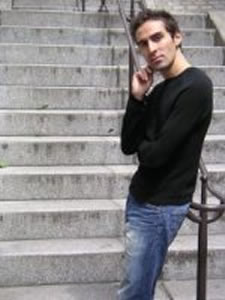
De Franse schrijver Hafid Aggoune werd geboren op 17 maart 1973 in Saint-Etienne. Zie ook mijn blog van 17 maart 2009 en ook mijn blog van 17 maart 2010.


Uit: Premières heures au paradis


„Je n’ai jamais été un enfant.

Dès la naissance, mon enfance s’est envolée ailleurs, à jamais éloignée de sa part sublime, orpheline.

Le temps a filé.

Longtemps, la vie m’a échappé. Elle me dépassait constamment. J’avais beau courir, m’interroger, me lancer dans toutes sortes de tentatives, je ne parvenais pas à la rejoindre à temps.

Toutes ces années, j’ai grandi seul, perdu au fond de moi-même, dans une tristesse silencieuse, prisonnier des rêves.

Lorsque l’amour a pris ton visage, l’illusion a duré un temps : cinq années de joies pures.

Je ne sais pas pourquoi certains hommes partent quand le plus beau arrive, mais je sais que le pire est de partir quand on aime l’autre plus que tout au monde, sans rien pouvoir éviter.

Souvent, je pense à ce que je n’ai pas su te dire, toutes ces choses de moi que je n’ai pas pu te donner. Maintenant, elles sont là, paroles jusque-là étouffées par le malheur. Apparues, elles demeurent présentes à la surface de cette personne qu’il me semble avoir trouvée aujourd’hui : Théophile Cannan. On dit qu’être acteur c’est n’être personne.

Notre histoire était aussi parfaite que cette journée particulière où je te quittai, et comme tu l’apprendras ici, en quelques mois ma vie a changé à un point que personne ne peut imaginer.

Ce beau jour de mai, j’ai ouvert la porte et je suis parti sous un ciel bleu. Les ténèbres envahissaient mon crâne. Des jours de silence ont suivi, un long purgatoire vers l’oubli, l’attente d’une délivrance définitive. Je ne savais pas si tu allais me comprendre, m’attendre, garder précieusement ce qui commençait de naître en toi.“


874240-cb88467f60cd7df701e403a706f5158d.jpg
Hafid Aggoune (
Saint-Etienne, 17 maart 1973)


De Nederlandse dichter Rense Sinkgraven werd op 17 maart 1965 geboren in het Friese Sint Jacobiparochie. Zie ook mijn blog van 17 maart 2009 en ook mijn blog van 17 maart 2010.


Geen God


Wij botsten, jij viel,
een vorm van gerechtigheid.
Onder de fiets lag je breekbaar
als een vader, wat weet jij nou?
Dat de aarde plat is, dat God
bestaat, de schepping prachtig is.
Wij vragen om genade.

Zeker zal de dood komen en dan?
Dan denk ik aan je ogen, je bruine
ogen, ik ben het vader.
Hoe je licht gebogen – loop
toch rechtop – naast me gaat
en me uitzwaait. Wees niet bang.
Wees niet bevreesd.


Wagon-Lits


De maan vangt wilde ganzen.
De nachttrein voert kadavers mee.
We stappen uit en vreten.

De botten afgekloven, tanden grif,
we malen scherp de pulp tot pap,
snuivende mormels aan de troggen.

De maan vangt wilde ganzen.
De nachttrein voert kadavers mee.
Stap in en zing.


 874240-4c10368621c2b6e6746d721fc10f937c.jpg

Rense Sinkgraven (Sint Jacobiparochie, 17 maart 1965)


De Amerikaanse schrijver William Ford Gibson werd geboren in Conway (South Carolina) op 17 maart 1948. Zie ook mijn blog van 17 maart 2008 en ook  mijn blog van 17 maart 2009 en ook mijn blog van 17 maart 2010.


Uit: Idoru


After Slitscan, Laney heard about another job from Rydell, the night security man at the Chateau. Rydell was a big quiet Tennessean with a sad shy grin, cheap sunglasses, and a walkie-talkie screwed permanently into one ear.
``Paragon-Asia Dataflow,'' Rydell said, around four in the morning, the two of them seated in a pair of huge old armchairs. Concrete beams overhead had been hand-painted to vaguely resemble blond oak. The chairs, like the rest of the furniture in the Chateau's lobby, were oversized to the extent that whoever sat in them seemed built to a smaller scale.
``Really?'' Laney asked, keeping up the pretense that someone like Rydell would know where he could still find work.
``Tokyo, Japan,'' Rydell said, and sucked iced latte through a plastic straw. ``Guy I met in San Francisco last year. Yamazaki. He's working for 'em. Says they need a serious netrunner.''
Netrunner. Laney, who liked to think of himself as a researcher, suppressed a sigh. ``Contract job?''
``Guess so. Didn't say.''
``I don't think I'd want to live in Tokyo.''
Rydell used his straw to stir the foam and ice remaining at the bottom of his tall plastic cup, as though he were hoping to find a secret prize. ``He didn't say you'd have to.'' He looked up. ``You ever been to Tokyo?''
``No.''
``Must be an interesting place, after that quake and all.'' The walkie-talkie ticked and whispered. ``I gotta go on out and check the gate by the bungalows now. Feel like coming?''


874240-417dab01d2fee32b046824838b9f7409.jpg
William Gibson (Conway, 17 maart 1948)


De Duitse schrijver Siegfried Lenz werd op 17 maart 1926 in Lyck, in de landstreek Masuren in Oostpruisen geboren. Zie ook mijn blog van 17 maart 2007 en ook mijn blog van 17 maart 2008 en ook mijn blog van 17 maart 2009 en ook mijn blog van 17 maart 2010.


Uit: Landesbühne


„Schau dir das an, Professor“, sagte mein Zellengenosse, „komm her und schau dir das an.“ Er stand am vergitterten Fenster, ein kahlköpfiger Mann, der Ohrringe trug, und zeigte hinab auf den Gefängnishof, wo das Tor geöffnet wurde und ein blauer Bus erschien. Über die Länge des Busses hin stand in Blockbuchstaben LANDESBÜHNE, zwei stilisierte Masken versprachen geheimnisvolles, jedenfalls unterhaltsames Spiel. „Ich hab’s gewußt“, sagte mein Zellengenosse, „die Landesbühne kommt wirklich.“ Dieser Mann, dem sie das zweite Bett in meiner Zelle zugewiesen hatten und der mit den Worten hereingekommen war: „Ich bin Hannes“, schien alles zu wissen. Als der Bus hielt und zuerst ein schottisch gekleideter Mann ausstieg, sagte er: „Der Intendant der Landesbühne, er heißt Prugel.“ Der Intendant ging mit beinahe beschwingtem Schritt auf die hagere Gestalt zu, die den Bus erwartet hatte, breitete andeutend die Arme aus, beließ es jedoch während der Begrüßung bei einem Händeschütteln, das länger als üblich dauerte, Karl Tauber, unser Direktor, wie immer in dunklem Anzug, schien nicht überrascht, daß sein Gast zunächst nur dastand und sich umsah, nachdenklich die vier ungleichen Gebäude musterte, aus denen das Gefängnis Isenbüttel bestand. Mit knappen Gesten erläuterte er offenbar Zweck und Eigenschaft der Gebäude, der Intendant nickte wiederholt, es blieb ihm wohl nichts zu fragen. Einmal fanden sie Grund zu kurzem Gelächter. „Die alten Säcke kennen sich bestimmt“, sagte Hannes. Auf seinem Gesicht lag ein Ausdruck von hinterhältigem Vergnügen; er imitierte die Sprechweise des Direktors, dies rollende R, das ihm bei etlichen Begegnungen aufgefallen war.


874240-4d80f3a5ad1e6085683a2bedea1f9be9.jpg
Siegfried Lenz (Lyck, 17 maart 1926)


De Roemeense schrijver en avantgardist Urmuz werd geboren op 17 maart 1883 in Curtea de Argeş. Zie ook mijn blog van 17 maart 2007 en ook mijn blog van 17 maart 2008 en ook mijn blog van 17 maart 2009 en ook mijn blog van 17 maart 2010.
 

Uit: ALGAZY & GRUMMER (Vertaald door Julian Semilian)


„Grummer, moreover, sports a beak of scented wood...

Reclusive and bilious, Grummer lounges the live long day sprawled under the counter, beak stabbing a gap in the floor board...

As you step into the store, a delicious aroma tickles your nostrils... You are welcomed, as you stride up the steps, by a trusty lad, who, instead of hair has, sticking out his head, strands of a green cottony thread; after which you are greeted with great warmth by Algazy and urged to settle on a foot stool.

Grummer spies and waits...Treacherous, with glance askance, unearthing at first his beak only, which he ostensibly douses upwards and downwards in a gully dug into the ledge of the counter, Grummer looms up lastly in full measure... Then, through all manner of manipulation, maneuvers Algazy into absconding the scene, at which time, fawningly, lures you artfully into a variety of verbal intercourse, notably touching on the subjects of sports and literature — until, suddenly, when whim strikes him, he wallops you twice with beak on the belly, impelling you to barrel out into the street, shrieking in agony.

Algazy, who is forever forced into discord and exchanges of words with the clients, on account of this inadmissible gimmick of Grummer's, scurries off after you, prevails upon you to return, and so as to regain your satisfaction, grants you the right — if you already acquired an object of value greater than 15 cents — to... sniff a whiff off of Grummer's beak, and, if you so consent, to squeeze him as hard as you can from an ashen rubber bubble screwed to his back, a bit above the butt, compelling him to bounce through the establishment without bending his knees, all along expelling incoherent grunts...“


 874240-acf9d78246e0a1e6b8ae1fa1bb7607f1.jpg

Urmuz (17 maart 1883 – 23 novemmber 1923)


Zie voor nog meer schrijvers van de 17e maart ook
mijn vorige blog van vandaag.
Geschreven door Romenu om 20:53 Reageer op dit bericht

Patrick Hamilton, Hans Wollschläger, Jean Ingelow, Karl Gutzkow, Ebenezer Elliott, Paul Green

De Engelse schrijver Patrick Hamilton werd geboren op 17 maart 1904 in Hassocks, Sussex. Zie ook mijn blog van 17 maart 2007 en ook mijn blog van 17 maart 2009 en ook mijn blog van 17 maart 2010.


Uit: Hangover Square


„They used to rag him until it at last became an accepted thing. "Old Bone" was said to be in one of his "dotty" moods. Mr. Thorne used to be sarcastic. "Or is this one of your-ah-delightfully convenient periods of amnesia, my dear Bone?" But even Mr. Thorne came to accept it. "Extra ordinary boy," he once heard Mr. Thorne say (not knowing that he was overheard), "I really believe it's perfectly genuine." And often, instead of making him look a fool in front of the class, he would stop, give him a curious, sympathetic look, and, telling him to sit down, would without any ironic comment ask the next boy to do what he had failed to do.

"Dead" moods-yes, all his life he had had "dead" moods, but in those days he had slowly slipped into and out of them-they had not been so frequent, so sudden, so dead, so completely dividing him from his other life. They did not arrive with this extraordinary "snap"-that had only been happening in the last year or so. At first he had been somewhat disturbed about it; had thought at moments of consulting a doctor even. But he had never done so, and now he knew he never would. He was well enough; the thing did not seriously inconvenience him; and there were too many other things to worry about-my God, there were too many other things to worry about!

And now he was walking along the cliff at Hunstanton, on Christmas afternoon, and the thing had happened again. He had had Christmas dinner with his aunt, and he had gone out, as he had told her, to "walk it off." He wore a light raincoat. He was thirty-four, and had a tall, strong, beefy, ungainly figure. He had a fresh, red complexion and a small moustache. His eyes were big and blue and sad and slightly bloodshot with beer and smoke. He looked as though he had been to an inferior public school and would be pleased to sell you a second-hand car. Just as certain people look unmistakably "horsey," bear the stamp of Newmarket, he bore the stamp of Great Portland Street. He made you think of road houses, and there are thousands of his sort frequenting the saloon bars of public-houses all over England. His full mouth was weak, however, rather than cruel. His name was George Harvey Bone.“


 874233-0478e44e0fa5c17f2d785678d82f4c1b.jpg

Patrick Hamilton (17 maart 1904 – 23 september 1962)


De Duitse schrijver, essayist, vertaler, uitgever, historicus, organist en muziekwetenschapper Hans Wollschläger werd geboren op 17 maart 1935 in Minden. Zie ook mijn blog van 17 maart 2007 en ook mijn blog van 17 maart 2008 en ook mijn blog van 17 maart 2009 en ook mijn blog van 17 maart 2010.


Uit: Leitfaden a priori. Karlheinz Deschners Kriminalgeschichte des Christentums


„Es ist ein Kreuz mit der Geschichte. Seit Olim wird sie aufgezeichnet, seit Cicero soll sie uns das Leben belehren, seit es die Ton- und Bildermedien gibt, kommt sie uns tagtäglich aus allen Landen frisch auf den Tisch, zum Greifen nahe: – was wird von ihr begriffen? Nicht viel mehr jedenfalls als einst und ehedem, in den vergleichsweise unterbelichteten Zeiten, so scheint es, denn sie selber ist nicht anders geworden und hat sich als Lebenslehrerin gegen sich selbst ersichtlich nicht bewährt. Immer noch dreht sich ihr Semper-idem im selben engen Zirkel; immer noch reißt sie die menschlichen Tat- Kräfte mit »Ideen« hin, deren einzige sichere Konsequenz von altersher Ruinen waren; immer neu noch kommt sie ihnen mit Kausal-Notwendigkeiten, deren einzige tod-sichere Folge Leichenberge sind; und über allem zieht, als ihr veritables Wappentier, der Pleitegeier der Vernunft seine gleichbleibenden Kreise. Nun ist das die biologische Not des Menschen selber, und ihre Linderung schreitet allenfalls in biologischen Epochen fort, nicht in geschichtlichen.

Aber ein gewisser Lernprozeß wäre ja auch da nicht utopisch zu erhoffen, wo die Herrschaft des Stammhirns und seiner primordialen Antriebe ungebrochen mächtig geblieben ist, zumal ein Lernen aus unablässig identisch sich wiederholenden Vorgängen, aus denen sogar die Küchenschabe lernt –: ist unsere Wahrnehmung vielleicht nicht gut versorgt, ist sie, bei doch inzwischen leidlicher Ausrüstung, in deren Anwendung »gestört«?

So also sehe Weltgeschichte aus der Nähe aus, notierte sich Robert Musil nach dem ersten Weltkrieg: »Man sieht nichts.«

Nichts – das hieß: eben Ruinen und Leichenberge nur; nichts – das meinte: nichts von grandioser Notwendigkeit, nichts von einer, sei’s auch nur kümmerlichen, welthistorischen Idee.“


 874233-f7133f5c0549b9b9ff939c37c1df678f.jpg

Hans Wollschläger (17 maart 1935 – 19 mei 2007)


De Engelse dichteres en schrijfster Jean Ingelow werd geboren op 17 maart 1820 in Boston, Lincolnshire. Zie ook mijn blog van 17 maart 2007 en ook mijn blog van 17 maart 2009 en ook mijn blog van 17 maart 2010.


Divided


I
An empty sky, a world of heather,
Purple of foxglove, yellow of broom;
We two among them wading together,
Shaking out honey, treading perfume.

Crowds of bees are giddy with clover,
Crowds of grasshoppers skip at our feet,
Crowds of larks at their matins hang over,
Thanking the Lord for a life so sweet.

Flusheth the rise with her purple favor,
Gloweth the cleft with her golden ring,
'Twixt the two brown butterflies waver,
Lightly settle, and sleepily swing.

We two walk till the purple dieth,
And short dry grass under foot is brown,
But one little streak at a distance lieth
Green like a ribbon to prank the down.


 874233-7ca974ae1512d83efd393b7d311abc74.jpg

Jean Ingelow (17 maart 1820 – 20 juli 1897)


De Duitse schrijver en journalist Karl Gutzkow werd geboren op 17 maart 1811 in Berlijn. Zie ook mijn blog van 17 maart 2009 en ook mijn blog van 17 maart 2010.


Sehnsucht

O könnt' ich jene Töne wiedergeben
Und jene purpurroten Farben malen
Von Abendglocken und von Abendstrahlen
Aus meiner Jugend erstem Liebeleben!

O könnt' ich wieder durch die Gärten schweben -
Die Abendnebel dampfen aus den Thalen
Und einen Bund, beglückt von süßen Qualen,
Umspinnen Elfen, die im Mondschein weben.

Ich höre manchmal wie aus weiter Ferne
Ein Glöcklein wieder mit bekanntem Schalle
Und märchenhafter glüh'n die Abendsterne -

Dann sag' ich wild, von innrer Kraft gedrungen:
Ich will euch wieder, ihr Erinnerungen!
Sie zucken wohl, doch bald verstummen alle.


874233-1d7d52e728d62cb91ddab2426781d766.jpg
Karl Gutzkow (17 maart 1811 – 16 december 1878)


De Engelse dichter Ebenezer Elliott werd geboren op 17 maart 1781 in Masborough, Yorkshire. Zie ook mijn blog van 17 maart 2009 en ook mijn blog van 17 maart 2010.


To Fanny Ann


As the flower bloweth,
As the stream floweth,
Daughter of beauty,
Do thou thy duty.
What, though the morrow
May dawn in sorrow?
Ev’n as light hasteth,
Darkness, too, wasteth:
Morn then discloses,
Raindrops on roses!
Daughter of beauty,
What, then, is duty?
Time says, “Death knoweth!”
Death says, “Time showeth!”


Epigram


Free Trade means work for beef, not bone;
It means that men are brothers;
That every man should have his own,
And nobody another’s.


 874233-45bfa5155b88c9a9512d4a33f745944b.jpg

Ebenezer Elliott (17 maart 1781 – 1 december 1849)


De Amerikaanse toneelschrijver Paul Green werd geboren op 17 maart 1894 in Lillington, North Carolina. Zie ook mijn blog van 17 maart 2007 en ook mijn blog van 17 maart 2009 en ook mijn blog van 17 maart 2010.


Uit: Oral History Interview with Paul Green, 1975


„JACQUELYN HALL:

You mentioned the rebellions that went on in the '30s, against the poverty and the whole sweep of industrialization by the working people, who gained this certain kind of self-consciousness and a certain kind of understanding of where they were and began to try to organize. There were many different kinds of things that happened in the '30s. Could you kind of talk about this … the Burlington Dynamite Case, for example? Some of the incidents of labor organization that you got personally involved in?

PAUL GREEN:

Well, in the South, the labor union, the trade union movement was slow and they never got started. Some of the reasons were that the people who came out of the Civil War depression and gradually awoke, like the Reynoldses, the Grays, the different people around and got the South started again. All around the South, the Carolinas, Georgia, a local fellow would get the idea and he would build him a little factory and then he would expand it. So, these were sort of landlords with a landlord's point of view and I know that down at Erwin, North Carolina right near where I was born, when I was a little boy, I would go by there with my father and we saw a lot of Negroes sawing and cutting down trees. We said, "What's happening?" and they said, "We are going to build a cotton factory." And the Dukes and Mr. Erwin, they changed the town's name, it was called Duke but it is now named Erwin, and that was early in the century. So, more local industry began to spring up everywhere and the people behind that, Mr. Erwin, was a good Episcopalian and he gave the money and helped build this Episcopal church down here, the new one and they were all, every darn one of them, good church members. Some of them taught Sunday School, like John D. Rockefeller, Sr. did. Each one of them also had that possessive point of view about his factory. He herded in these people, cheap labor. At Erwin, I used to go by and see these children at the noon hour come out of the factory all yellow. I tried to deal with it a little bit in that novel you just mentioned. Well, gradually, when the war came on, a lot of these mill people went to Europe and were treated with this doctrine and so on and saw some new things in the world and then the impact of the labor unions in the North and the Middle West began to seep in. Now and then, there would be a young man in the labor group here in the South who would speak out and later they began to rebel. Like at Burlington and Gastonia and all around.“


874233-0edbfb41f312b21586d3918fc55678a7.jpg
Paul Green (17 maart 1894 – 4 mei 1981)

Geschreven door Romenu om 20:53 Reageer op dit bericht

Meer van Romenu

↑ Terug naar de berichten