Naar de inhoud

Romenu

Over literatuur, gedichten, kunst en cultuur
seniorennet.beseniorennet.be

Berichten van 8 november 2011

Kazuo Ishiguro, Elfriede Brüning, Joshua Ferris, Detlef Opitz, Zinaida Gippius
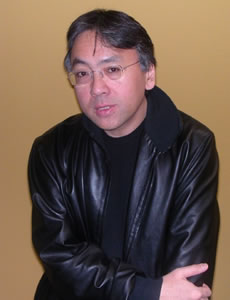
De Japanse schrijver Kazuo Ishiguro werd op 8 november 1954 geboren in Nagasaki. Zie ook mijn blog van 8 november 2010 en eveneens alle tags voor Kazuo Ishiguro op dit blog.


Uit: Nocturnes


„The morning I spotted Tony Gardner sitting among the tourists, spring was just arriving here in Venice. We’d completed our first full week outside in the piazza — a relief, let me tell you, after all those stuffy hours performing from the back of the cafe, getting in the way of customers wanting to use the staircase. There was quite a breeze that morning, and our brand-new marquee was flapping all around us, but we were all feeling a little bit brighter and fresher, and I guess it showed in our music.
But here I am talking like I’m a regular band member. Actually, I’m one of the ‘gypsies’, as the other musicians call us, one of the guys who move around the piazza, helping out whichever of the three cafe orchestras needs us. Mostly I play here at the Caffè Lavena, but on a busy afternoon, I might do a set with the Quadri boys, go over to the Florian, then back across the square to the Lavena. I get on fine with them all — and with the waiters too — and in any other city I’d have a regular position by now. But in this place, so obsessed with tradition and the past, everything’s upside down. Anywhere else, being a guitar player would go in a guy’s favour. But here? A guitar! The café won’t like it. Last autumn I got myself a vintage jazz model with an oval sound-hole, the kind of thing Django Reinhardt might have played, so there was no way anyone would mistake me for a rock-and-roller. That made things a little easier, but the cafe managers, they still don’t like it. The truth is, if you’re a guitarist, you can be Joe Pass, they still wouldn’t give you a regular job in thissquare.
There’s also, of course, the small matter of my not being Italian, never mind Venetian. It’s the same for that big Czech guy with the alto sax. We’re well liked, we’re needed by the other musicians, but we don’t quite fit the official bill. Just play and keep your mouth shut, that’s what the cafe managers always say. That way the tourists won’t know you’re not Italian. Wear your suit, sunglasses, keep the hair combed back, no one will know the difference, just don’t start talking.“


 1027884-f2a346330dfd71097dbe37d31f07d832.jpg

Kazuo Ishiguro (Nagasaki, 8 november 1954)


De Duitse schrijfster Elfriede Brüning werd geboren op 8 november 1910 in Berlijn. Zie ook mijn blog van 8 november 2010.


Uit: Damit Du weiterlebst


„Epilog
Als ich 1946 – vor fast vierzig Jahren – zum ersten Mal in das kleine Haus in Berlin-Borsigwalde zu Frau Frieda Coppi fuhr, lag es keineswegs in meiner Absicht, Stoff für ein Buch zu sammeln. Ich war damals als Redakteurin tätig. Die Zeitung, für die ich arbeitete, bereitete für den 12. September eine Ausgabe vor, in der aller derer gedacht werden sollte, die ihren Kampf gegen das Hitlerregime mit dem Leben bezahlt hatten. Vom damaligen Hauptausschuss OdF waren mir in diesem Zusammenhang Hans und Hilde Coppi genannt worden, Mitglieder der Widerstandsgruppe Schulze-Boysen, die auf ihrem Segelboot einen Geheimsender betrieben hatten. Hilde war hochschwanger, als sie verhaftet wurde, und brachte im Gefängnis ihr Kind zur Welt. Die Mutterschaft hatte sie vor der Todesstrafe nicht bewahren können. Die einzige „Gnade“, die ihr die nationalsozialistischen Henker gewährten, bestand in einem Aufschub der Urteilsvollstreckung bis zu jenem Tage, an dem die Nahrung der jungen Mutter für ihr Kind versiegt sein würde.


Hilde Coppi hat ihr Kind acht Monate lang nähren können. Am 5. August 1943 ging auch sie den Weg zum Schafott, den ihr Mann im Dezember 1942 vor ihr hatte antreten müssen.
Frieda Coppi wohnte 1946 noch in ihrer Laube; in derselben Laube, die die Nazis beschlagnahmt hatten und in die sie nach dem Zusammenbruch des Dritten Reiches vorübergehend wieder hatte einziehen können – bevor der kalte Krieg ihr den Verbleib in dem zum Westsektor gehörenden Stadtteil unmöglich machte und sie im demokratischen Teil Berlins Zuflucht suchte und bis zu ihrem Tode auch fand. In Borsigwalde hatten ihre Kinder während ihrer kurzen Ehe gelebt; dort waren sie an jenem unheilvollen Septembertag des Jahres 1942 verhaftet worden. Jetzt wohnte nur noch der Enkelsohn bei der alten Frau, der kleine Hans, der im Frauengefängnis in der Barnimstraße geboren war.“


1027884-5e4a21ea864a4899d2dd2248be3cf6f1.jpg
Elfriede Brüning (Berlijn, 8 november 1910)


De Amerikaanse schrijver Joshua Ferris werd op 8 november 1974 in Danville, Illinois geboren. Zie ook mijn blog van 8 november 2010.


 Uit:  Then We Came to the End


„We were fractious ans overpaid. Our mornings lacked promise. At least those of us who smoked had something to look forward to at ten-fifteen. Most of us liked most everyone, a few of us hated specific individuals, one or two people loved everyone and everything. Those who loved everyone were unanimously reviled. We loved free bagels in the morning. They happened all too infrequently. Our benefits were astonishing in comprehensiveness and quality of care. Sometimes we questioned whether they were worth it. We thought moving to India might be better, or going back to nursing school. Doing something with the handicapped or working with our hands. No one ever acted on these impulses, despite their daily, sometimes hourly contractions. Instead we met in conference rooms to discuss the issues of the day.

Ordinarily jobs came in and we completed them in a timely and professional manner. Sometimes fuckups did occur. Printing errors, transposed numbers.Our business was advertising and details were important. If the third number after the second hyphen in a client's toll-free number was a six instead of an eight, and if it went to print like that, and showed up in Time magazine, no one reading the ad could call now and order today. No matter they could go to the website, we still had to eat the price of the ad. Is this boring you yet? It bored us every day.Our boredom was ongoing, a collective boredom, and it would never die because we would never die.

Lynn Mason was dying. She was a partner in the agency. Dying? It was uncertain. She was in her early forties. Breast cancer. No one could identify exactly how everyone had come to know this fact.Was it a fact? Some people called it rumor. But in fact there was no such thing as rumor. There was fact, and there was what did not come up in conversation. Breast cancer was controllable if caught in the early stages but Lynn may have waited too long. The news of Lynn brought Frank Brizzolera to mind.“


 1027884-479b9c567fd2f6382f09f12f3ba7136e.jpg

Joshua Ferris (Danville, 8 november 1974)


De Duitse schrijver Detlef Opitz werd geboren op 8 november 1956 in Steinheidel-Erlabrunn. Zie ook mijn blog van 8 november 2008 en ook mijn blog van 8 november 2009 en ook mijn blog van 8 november 2010.


Uit: Der Büchermörder


›Nicht viel Gutes, leider‹, erwiderte der Fremde und blickte flüchtig nach der Thür hin, wo, in die Hüften gestützter Arme, die Magd weiterer Unterweisung harrte, ganz und gar vergäblich. - Weil die Capitalien in Hamburg schlecht stünden, so fuhr er bald fort, als nur erst die Vetterin endlich abgetreten war, weil derohalben dorten nichts mehr zu machen wär und dem Tüchtigen nur ein paar läppische Bagatellen noch über blieben, darum wolle er sich hier in Sachsen nach guter Gelegenheit versehen und erbitte sich des Hrn. Kaufmanns wohldeliberirten Rath, ob es etwa besser wäre, ein Landgut zu erwerben, oder ob man klüger tät in sächsischer Obligation.
Dieser Frage entband sich nun ein kleiner Plausch über das Leben im Allgemeinen und die Cameralien im Speciellen, der freilich schon frühzeitig in einen Monolog convertirte, in dessen Verlauf der an der offenen Flancke der Eitelkeit berührte Greis eher dem Ankauf von Werthpapiren das Wort zu reden schien, inweil er zu dessen Untermalung ein städtisches Papir auf hundert Reichsthaler unterm Schreibtisch hervorzog, um es per Exempel dem Fremden vorzuzeigen.
Aber noch inmittelst er das Papir dann wieder einschloß - sank er bewußtlos darnieder.


 1027884-5af56aede05277173dcb0f2c763e0a5d.jpg

Detlef Opitz (Steinheidel-Erlabrunn, 8 november 1956)


De Russische dichteres en schrijfster Zinaida Gippius werd geboren op 8 november 1869 in Beljov in de buurt van Tula. Zie ook mijn blog van 8 november 2008 en ook mijn blog van 8 november 2009 en ook mijn blog van 8 november 2010.


The Spiders


My world is like a chamber, narrow, –

It’s very low, very small.

In four its corners sit four fellows –

Four spiders, diligent in all.


They are all fat, adroit, and dirty, 

And always spin and spin the web…

And it is awful – their portly,

Monotonous and even step.


With four their webs, when they were ready,

They spun the immense one, at last. 

I watch their fat backs’ movement, steady,

In darkness of the stinking dust.                       


My eyes – under the webbing’s level:

It’s gray, and soft, and sticky, yet.

And they are glad with gladness, evil, --

Four spiders, fat.


 1027884-f0d4f04d4ece151e054384860ca200c6.jpg

Zinaida Gippius (8 november 1869 – 9 september 1945)

Hier met Dmitrij Merežkovskij


Zie voor nog meer schrijvers van de 8e november ook mijn vorige blog van vandaag.
Geschreven door Romenu om 19:15 Reageer op dit bericht

Peter Weiss, Martha Gellhorn, Margaret Mitchell, Bram Stoker, Carl-Henning Wijkmark

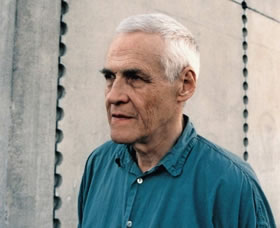
De Duitse schrijver Peter Weiss werd geboren op 8 november 1916 in Nowawes (het tegenwoordige Neubabelsberg) bij Berlijn. Zie ook mijn blog van 8 november 2006 en ook mijn blog van 8 november 2008 en ook mijn blog van 8 november 2010.


Uit: Die Ästhetik des Widerstands


„Der Frau mit den umschatteten Augen, rechts vorn, war anzusehn, dass sie in einem Kellerloch zu Hause war, dass ihre Kinder hungerten. Der Maler hatte ihre Dürftigkeit gekennzeichnet, er hatte die Arbeitshetze wiedergegeben, die unwürdigen Verhältnisse, unter denen die Arbeitenden sich wuschen und ihre Mahlzeit einnahmen, und doch weckte das Bild keine Empörung. Vielmehr gemahnte es an etwas Unabwendbares. Der arbeitende Mensch war Träger der Aktion, voller Sicherheit verrichtete er

seine Aufgaben, jeder Griff, jede Geste schien ihm selbstbewusste Größe zu verleihn, seine Leistungskraft aber, darauf wies mein Vater hin, war nur dazu angetan, unsichtbare Kassen und Tresore zu füllen. Bei allem Mitgefühl, das der Künstler für die soziale Lage der Arbeiter gespürt haben mochte, waren die Männer, mit ihren zerfurchten Gesichtern und den vor der Glut zusammengekniffnen Augen, ihren um die Werkzeuge geballten Fäusten, doch losgelöst worden

von den gesellschaftlichen Kenntnissen, Dokumentationen und Organisationen, die damals bereits Wirklichkeit besaßen. Als Laufjunge dienend bei Alfa Laval sah ich, wen Menzels Meisterschaft vors bewundernde Publikum gestellt hatte, den deutschen Arbeitsmann aus Bismarcks und Wilhelms Reich, unangefochten vom Kommunistischen Manifest, in seiner einzigen Befugnis, wacker und treu zu sein. Seine mit Glanzlichtern und fließenden Schatten versehne Gestalten waren Handlanger des Eisens. Diesem war etwas Elementares zu eigen. Mit seiner intensiven Glut war es mehr als Metall, es symbolisierte die Expansion des industriellen Imperialismus. Der Arbeiter war grade so viel wert, wie der Lohn, den er empfing. Hauptfigur des Werks, dessen Materialtreue die Freude des Fachmanns war, war nicht der Arbeitende, sondern die weißglühende sinterspritzende Luppe, die zur Akkumulation des Kapitals unter die Walztrommeln kam. Vielleicht hätte mich diese Lesart des Bilds noch nicht überzeugt, wenn ich das Gemälde im Museum nicht flankiert gesehn hätte von zwei andern Werken des Malers.“


 1027879-a7e74d714623dc30435e780f75e583a5.jpg

Peter Weiss (8 november 1916 - 10 mei 1982)


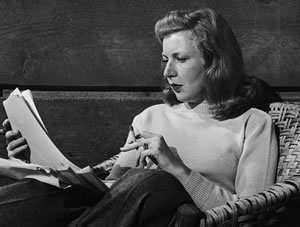
De Amerikaanse schrijfster en oorlogscorrespondente Martha Ellis Gellhorn werd geboren in St. Louis, Missouri op 8 november 1908. Zie ook mijn blog van 8 november 2008 en   ook mijn blog van 8 november 2010.


Uit: Is There a New Germany?


„These boys and girls were in their twenties; they had known no other form of government than "democracy." They had also grown up in an affluent society, though few of them were rich, but none was miserably poor as were the European students of my youth. I liked some of them very much, and thought some almost as detestable as their fathers had been in their brand-new brown uniforms in the pre-war universities.

In my opinion there is no New Germany, only another Germany. Germany needs a revolution which it has not had and shows no signs of having; not a bloody, old-fashioned revolution, with firing squads and prisons, ending in one more dictatorship, but an interior revolution of the mind, the conscience. Obedience is a German sin. Possibly the greatest German sin. Cruelty and bullying are the reverse side of this disciplined obedience. And Germans have been taught obedience systematically, as if it were the highest virtue, for as long as they have been taught anything. They are still so taught, beginning at Mom's knee and continuing through the universities. Twice their victors have imposed "democracy" on a people who never fought for it themselves. Democracy may not be the most perfect form of government (E. M. Forster was right in saying "Two Cheers for Democracy"), but it is the best we have yet found, because it implies that the citizen has private duties of conscience, judgment, and action. The citizen who says Yes to the state, no matter what, is a traitor to his country; but citizens have to learn how to say No and why to say No. Germans are still trained as before in their old authoritarian way; the young are not rebels either. At their best they are deeply troubled by their state and suspicious of it; at their worst they are indistinguishable from their ancestors -- the interests of the state come first -- and they are potentially dangerous sheep“.


 1027879-65c3114f4e058ae0e7644c48cabfe746.jpg

Martha Ellis Gellhorn (8 november 1908 - 16 februari 1998)


De Ameikaanse schrijfster
Margaret Mitchell werd geboren op 8 november 1900 in Atlanta, Georgia. Zie ook mijn blog van 8 november 2006 en ook mijn blog van 8 november 2008 en ook mijn blog van 8 november 2010.


Uit: Gone with the wind


“Now, what about the corn and the cotton, Pork?”

“De cawn? Lawd, Miss Scarlett, dey pasture dey hawses in de cawn an’ cah’ied off whut de hawses din’ eat or spile. An’ dey driv dey cannons an’ waggins ‘cross de cotton till it plum ruint, ‘cept a few acres over on de creek bottom dat dey din’ notice. But dat cotton ain’ wuth foolin’ wid, ‘cause ain’ but ‘bout three bales over dar.”

Three bales. Scarlett thought of the scores of bales Tara usually yielded and her head hurt worse. Three bales. That was little more than the shiftless Slatterys raised. To make matters worse, there was the question of taxes. The Confederate government took cotton for taxes in lieu of money, but three bales wouldn’t even cover the taxes. Little did it matter though, to her or the Confederacy, now that all the field hands had run away and there was no one to pick the cotton.

“Well, I won’t think of that either,” she told herself. “Taxes aren’t a woman’s job anyway. Pa ought to look after such things, but Pa — I won’t think of Pa now. The Confederacy can whistle for its taxes. What we need now is something to eat.”


1027879-cc89b52268c95f5e16542c0af187384b.jpg
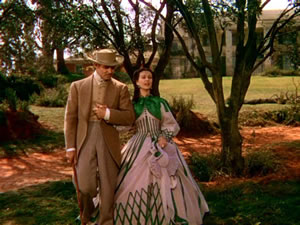
Scene uit de film 'Gone with the wind' uit 1939


“Pork, have any of you been to Twelve Oaks or the MacIntosh place to see if there’s anything left in the gardens there?”

“No, Ma’m! Us ain’ lef’ Tara. De Yankees mout git us.”

“I’ll send Dilcey over to MacIntosh. Perhaps she’ll find something there. And I’ll go to Twelve Oaks.”

“Who wid, chile?”

“By myself. Mammy must stay with the girls and Mr. Gerald can’t —”

Pork set up an outcry which she found infuriating. There might be Yankees or mean niggers at Twelve Oaks. She mustn’t go alone.

“That will be enough, Pork. Tell Dilcey to start immediately. And you and Prissy go bring in the sow and her litter,” she said briefly, turning on her heel.

Mammy’s old sunbonnet, faded but clean, hung on its peg on the back porch and Scarlett put it on her head, remembering, as from another world, the bonnet with the curling green plume which Rhett had brought her from Paris. She picked up a large split-oak basket and started down the back stairs, each step jouncing her head until her spine seemed to be trying to crash through the top of her skull.“


 1027879-d0bf8162caa152c4949c5207ed1401c4.jpg

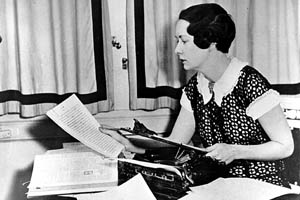
Margaret Mitchell (8 november 1900 – 16 augustus 1949)


 De Ierse schrijver Bram Stoker werd geboren op 8 november 1847 in Clontarf, een wijk van Dublin in Ierland. Zie ook mijn blog van 8 november 2006 en ook mijn blog van 8 november 2008 en ook mijn blog van 8 november 2010. 


Uit: Dracula


„At every station there were groups of people, sometimes crowds, and in all sorts of attire. Some of them were just like the peasants at home or those I saw coming through France and Germany, with short jackets, and round hats, and home-made trousers; but others were very picturesque.

The women looked pretty, except when you got near them, but they were very clumsy about the waist. They had all full white sleeves of some kind or other, and most of them had big belts with a lot of strips of something fluttering from them like the dresses in a ballet, but of course there were petticoats under them.

The strangest figures we saw were the Slovaks, who were more barbarian than the rest, with their big cow-boy hats, great baggy dirty-white trousers, white linen shirts, and enormous heavy leather belts, nearly a foot wide, all studded over with brass nails. They wore high boots, with their trousers tucked into them, and had long black hair and heavy black moustaches. They are very picturesque, but do not look prepossessing.


 1027879-6b2b7dd018210cfa80a72285e5e74d71.jpg

Christopher Lee als Dracula in de film uit 1958


On the stage they would be set down at once as some old Oriental band of brigands. They are, however, I am told, very harmless and rather wanting in natural self-assertion.

It was on the dark side of twilight when we got to Bistritz, which is a very interesting old place. Being practically on the frontier--for the Borgo Pass leads from it into Bukovina-- it has had a very stormy existence, and it certainly shows marks of it. Fifty years ago a series of great fires took place, which made terrible havoc on five separate occasions. At the very beginning of the seventeenth century it underwent a siege of three weeks and lost 13,000 people, the casualties of war proper being assisted by famine and disease.

Count Dracula had directed me to go to the Golden Krone Hotel, which I found, to my great delight, to be thoroughly old-fashioned, for of course I wanted to see all I could of the ways of the country.

I was evidently expected, for when I got near the door I faced a cheery-looking elderly woman in the usual peasant dress-- white undergarment with a long double apron, front, and back, of coloured stuff fitting almost too tight for modesty. When I came close she bowed and said, "The Herr Englishman?"


 1027879-f599f988b9d2309ee4cdfe486957cb86.jpg

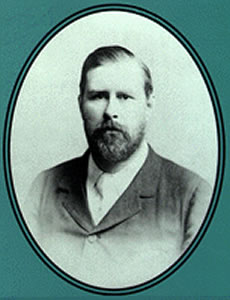
Bram Stoker (8 november 1847 – 20 april 1912)


Onafhankelijk van geboortedata:


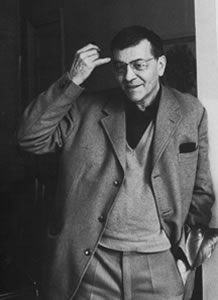
De Zweedse schrijver Carl-Henning Wijkmark werd geboren in 1934 in Stockholm  Hij studeerde filosofie in Lund en München en werkte als vertaler en als docent aan de universiteit van Stockholm en als cultureel journalist. Hij vertaalde o.a. Benjamin, Nietzsche en Lautreamont. Sinds 1970 werkt hij alleen als schrijver en heeft hij met zijn romans een belangrijke plaats veroverd in de Zweedse literatuur. Zijn debuut, 'De jagers op Karinhall' (1972), ging over het privéleven van Herman Göring, 'Laatste dagen' over de aanslag op president De Gaulle begin jaren zestig, en 'Da Capo' over het neerhalen van het IJzeren Gordijn.


Uit: Nahende Nacht (Vertaald door Paul Berf)


“In regelmäßigen Abständen gaben Birgit oder Angela mir eine Spritze, die mich schläfrig machte, solange ich wach lag, und hellwach in den Träumen, die sich einstellten, sobald ich einschlief. Doch schlief ich wirklich? Es war eher eine Art Dämmerzustand und die Träume waren unkontrollierte Fantasien, sehr deutlich und bevölkert von einem oder mehreren Menschen, die sich bewegten und sprachen. In meinen Träumen sind häufig Repliken vorgekommen, aber früher war es so, dass ich sie eher dachte als hörte; nun erklangen sie dagegen laut und deutlich, allerdings mit einem Hallen wie in einem Kellergewölbe, das individuelle Unterschiede auslöschte. Es war, als hörte man Roboter, was jedoch nicht verhinderte, dass die Menschen aus meiner Vergangenheit, die in diesen Träumen auftraten, realer wurden als jene, die mich in der Gegenwart umgaben. So war es zumindest zu Anfang meines Aufenthalts in Zimmer 5; es sollte sich im Laufe der Zeit ändern.
     Der große Segen der Spritze bestand natürlich darin, dass sie die Schmerzen kappte und längere Zeit völlig verschwinden ließ, und ich, der ich im Laufe eines Lebens in der Welt des Theater mehr als genug von Drogentratsch und Fixerhelden mitbekommen hatte, war jetzt ein dankbarer Morphinist. Dennoch möchte ich ausdrücklich meine neue Traumwelt erwähnen, weil sie zum positivsten gehörte, was ich in dieser späten Phase meines Lebens erfahren durfte, auch wenn sie mich nicht selten mit durchaus unangenehmen Szenen und drängenden Fragen konfrontierte. Zwar entwickelte ich mit der Zeit ein immer freundschaftlicheres Verhältnis zu meinen beiden Zimmergenossen und ein immer innigeres zu den Krankenschwestern, die ich bereits erwähnt habe, aber die Träume waren eine sicherere Zuflucht. Und weil ich eine Zuflucht so verzweifelt benötigte, wurden sie, wie gesagt, wirklicher als meine eigentliche Wirklichkeit.
     Denn es ließ sich nicht leugnen, dass sich meine Kameraden und ich in einer deathrow befanden - oder dem "Basislager", wie wir es nannten, weil uns das große Wagnis noch bevorstand. Ziel der Pflege an diesem Ort ist es, zu helfen und zu lindern, nicht zu heilen, und es gibt hier auch niemanden, der behaupten würde, einer von uns Patienten könne gerettet werden. Bekommen haben wir die Freundlichkeit und Fürsorglichkeit einiger Krankenschwestern in Form von schmerzlindernden Mitteln und hygienischer Assistenz, ansonsten jedoch nicht viel, was uns das Leben in dieser letzten Zeit erleichtert hätte. Das Essen schmeckte nach nichts, erinnerte an Plastik und wurde zu unserer Erleichterung durch den Tropf ersetzt, als die Verschlechterung unseres Zustands dies erforderlich machte”.


 1027879-280092620ce4ab4051d2b57084b0f16d.jpg

Carl-Henning Wijkmark (Stockholm,  1934)


Geschreven door Romenu om 19:14 Reageer op dit bericht

Meer van Romenu

↑ Terug naar de berichten