Naar de inhoud

Romenu

Over literatuur, gedichten, kunst en cultuur
seniorennet.beseniorennet.be

Berichten van 14 november 2015

Norbert Krapf, Astrid Lindgren, Jonathan van het Reve, René de Clercq, Chloe Aridjis, Peter Orner, P.J. O'Rourke, Karla Schneider
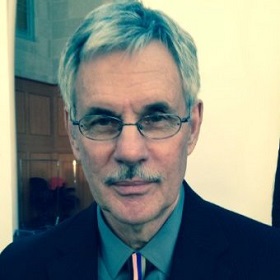
De Amerikaanse dichter, schrijver en vertaler Norbert Krapf werd geboren op 14 november1943 in Jasper, Indiana. Zie ook alle tags voor Norbert Krapf op dit blog.


Dogwoods and Redbuds for Rita

We come driving south
into the hills in the rain,
to settle you into the earth.

Dogwoods and redbuds for Rita,
white and pink in the woods
turning green with new leaves
unfurling everywhere sheath wet.

You suffered for so many years
the agony of trying to speak
we must send you off with
a gift of very few words,
our father’s baby sister,
last of ten children,
released at eighty-six.

We give you dogwoods and redbuds
in blossom and green leaves opening.
We give you gentle rain falling
on the rolling hills we love.

We give you dogwoods and redbuds
and rain falling on new leaves, Rita.

We form a choir of relatives
and sing thee to thy rest,

and sing thee to thy rest.


The Family Farm: for Wendell Berry

11.
Catalpa beans hang
dry as dead bones.
An old tractor stands
in the shed like
a sagging work horse
put out to pasture.
The hollyhocks and mums
no longer come up strong.
The silo wears stains
up and down its ribs,
the barn door
no longer closes,
and the coon hounds
have fallen asleep
forever beneath
the old walnut tree.


 1838911-335552fb266f3bddd6b7ac062618287e.jpg
Norbert Krapf (Jasper, 14 november1943)


De Zweedse schrijfster Astrid Lindgren werd als Astrid Ericsson geboren op 14 november 1907 en groeide op op de boerderij Näs in Vimmerby in Småland. Zie ook alle tags voor Astrid Lindgren op dit blog.

Uit: Pippi Langkous (Vertaald door Liesbeth Zuiderveen Borgesius-Wildschut en Saskia Ferwerd)

“Aan de rand van het stadje lag een tuin waarin alles maar raak groeide. In die tuin stond een oud huis en in dat huis woonde Pippi Langkous. Ze was negen jaar en ze woonde daar helemaal alleen. Zonder vader en zonder moeder. Dat was soms wel fijn, want er was niemand die tegen haar kon zeggen dat ze naar bed moest als ze juist zo veel plezier had. En niemand kon haar dwingen spruitjes te eten als ze toffees wilde hebben.
Vroeger had Pippi een vader gehad van wie ze erg veel hield. En ja, ze had natuurlijk ook een moeder gehad, maar dat was al zo lang geleden dat ze zich er niets meer van herinnerde. Haar moeder was gestorven toen Pippi nog maar héél klein was. Ze schreeuwde toen zo verschrikkelijk, dat niemand bij haar wiegje in de buurt kon blijven. Pippi geloofde vast dat haar moeder nu boven in de hemel was en door een gaatje naar haar kleine meisje keek. Vaak zwaaide ze even naar haar en zei dan: ‘Wees maar niet bang, ik red me wel!’
Haar vader was ze ook niet vergeten. Hij was scheepskapitein en Pippi had met hem meegevaren op zijn boot, totdat hij bij een storm overboord was gewaaid en in zee was verdwenen. Maar Pippi wist héél zeker dat hij op een dag terug zou komen. Ze geloofde helemaal niet dat hij verdronken was. Ze geloofde dat hij was aangespoeld op een eiland waar een heleboel negers woonden, en dat haar vader koning was geworden over al die negers en de hele dag rondliep met een gouden kroon op zijn hoofd.”
“Mijn vader is een negerkoning,’ zei Pippi altijd trots. ‘Er zijn echt niet veel kinderen die zo’n vader hebben, en zodra hij een boot kan bouwen, komt hij me halen en dan word ik negerprin- ses! Leuk, hè!’
Haar vader had dat oude huis in die tuin lang geleden ge- kocht. Hij had daar met Pippi willen gaan wonen als hij oud was en niet meer op zee kon varen. Maar toen hij dat ongeluk kreeg en zomaar ineens weg was, moest Pippi naar Villa Kakelbont – zo heette dat huis. Het stond gewoon op haar te wachten, gemeubileerd en wel.”


 1838911-4823e7569f2c09664869fcdd66033b7b.jpg
Astrid Lindgren (14 november 1907 - 28 januari 2002)
Scene uit de film uit 1969


De Nederlandse schrijver en columnist Jonathan van het Reve werd geboren op 14 november 1983 in Amsterdam. Zie ook alle tags voor Jonathan van het Reve op dit blog.

Uit: Domheid of islam? (Column, 2013)

“Een dergelijke stelligheid (‘dit heeft níéts met islam/christendom/etc. te maken’) zie je vaak wanneer het over extremisme gaat. Nu zullen deze jongens best naïef zijn, slecht geïnformeerd, op zoek naar avontuur, etcetera – dat zijn allemaal voorwaarden om tot zo’n actie over te gaan. Maar als ze dat nou zelf beweren, waarom zou de islam dan niet de reden zijn geweest om dit te gaan doen? Ja, er spelen allerlei dingen mee, maar waarom zou die ene factor dan opeens niet tellen?
De achterliggende redenering, als iemand al bereid is om hem uit te spreken, is vaak dezelfde, namelijk dat verreweg de meeste gelovigen geen vlieg kwaad doen – dus hoe kan geloof dan de oorzaak zijn? En daarbij: had deze jongen in een andere tijd niet een andere aanleiding gevonden om iets doms te doen?
Die argumenten zijn scheef. Ze tonen aan dat niet iedere gelovige doordraait en dat geloof niet de enige oorzaak van ellende is – maar dat werd helemaal nooit beweerd. Bovendien zou je, als je de redenering doorzet, ook alle góéde daden uit naam van een geloof moeten wegwimpelen als toeval: die waren anders misschien ook wel gebeurd, nietwaar?
Uiteindelijk komt het toch vaak neer op de overtuiging dat de extremist een ‘verkeerde’ interpretatie van het boek hanteert. Zulke theologische disputen zijn heel interessant, maar ook heel ingewikkeld: er zijn bibliotheken over volgeschreven. Hoe kan het dan zo evident zijn dat het geloof van die jongens niks met de ‘echte’ islam te maken heeft? En zelfs als Aharouay en Elforkani de enige correcte manier kennen om de Koran te interpreteren, en de ‘polderjihadisten’ de voorschriften inderdaad verkeerd hebben begrepen, dan nog: wiens schuld is het dan dat die teksten zo onduidelijk zijn?”


 1838911-b6cb6c6669770238cc74f92951eab605.jpg
Jonathan van het Reve (Amsterdam, 14 november 1983)


De Vlaamse schrijver, dichter, politiek activist en componist René Desiderius de Clercq werd geboren in Deerlijk op 14 november 1877. Zie ook mijn blog van 3 november 2010 en eveneens alle tags voor René de Clercq op dit blog.


Haat verwijdert mij van God

Haat verwijdert mij van God,
liefde voert mij nader.
Grauwt ellende door mijn lot,
laat mij liefde, Vader.

Valt de wereld van mij af,
waar de sterren blinken
laat mij in der liefde graf
in Uzelf verzinken.


Als heemlen blauw en heuvlen groen

Als heemlen blauw en heuvlen groen
en de aarde spruit uit pracht van bomen,
dan voel ik met zijn wilde zoen
de sterke zomer komen.

Dan staat mijn liefste voor de heg,
hoort blijde slag en tierelieren,
en al wat winters gooit ze weg
in lucht van eglantieren.

Om scherpe torens waait de wind,
vol hoog verlangen, wonder hopen.
Schouw op, mijn heerlijk zomerkind:
de grote zon bloeit open.


 1838911-7913dfdc3fcea98d822d7f0373b62795.jpg
René de Clercq (14 november 1877 - 12 juni 1932)
Portret door Geert Coucke


De Engels-Mexicaanse schrijfster Chloe Aridjis werd geboren in New York op 6 november 1971 (en dus niet op 14 november zoals eerder vermeld). Zie ook alle tags voor Chloe Aridjis op dit blog.

Uit: Book of Clouds

“We stayed at the demonstration until the candles burned down and the fuel in the lighters ran out and all the voices grew hoarse, until our watches read midnight and people gathered their things and began to leave. We followed our parents down the street, then down many more, in the direction that everyone seemed to be heading. There was no chance of finding a taxi, we would have to take the U-Bahn, so along with hordes of others we descended into Gleisdreieck station like a screaming eight-hundred-headed monster.
The frenzied crowds made it impossible to get within arm's reach of the ticket machines so when the next train pulled into the station we jumped on without having paid. It was one of those nights, we sensed, when anything was permitted. Hundreds of people were crammed into the carriage, it was impossible to even turn around, and with the heat my sweater began to feel like a straightjacket but there was barely enough room to remove it. After tugging on the zipper and successfully extracting one arm I noticed that my family was standing at the opposite end of the car; swept up in the confusion, we must have boarded through different doors and now dozens of bodies were between us, though it didn't really matter since I knew where to get off, and as if in some bizarre Cubist composition, all I saw were corners and fragments of their angled faces, my mother's lips, my father's nose, my sister's hair, and I remember thinking to myself how this amalgam would have been far more attractive, a composite being, cobbled together from random parts of each, rather than the complex six-person package to which I was bound for life.
The train continued its journey and I began to examine the passengers sitting and standing nearby. There was general mirth in the carriage and I began to feel as if I was in some kind of aviary, though one populated with less exotic species than those we had at home. Groups of large black and grey birds with blond tufts laughed and told jokes while scruffy brown birds with ruffled feathers waved bottles of beer."


 1838911-c67586cd65065ba02ebb1d763fea41a9.jpg
Chloe Aridjis (New York, 6 november 1971)


De Amerikaanse journalist en schrijver P.J. O'Rourke werd geboren op 14 november 1947 in Toledo, Ohio. Zie ook alle tags voor P.J. O'Rourke op dit blog.

Uit:Holidays in Hell

“I was having dinner…in London…when eventually he got, as the Europeans always do, to the part about “Your country’s never been invaded.” And so I said, “let me tell you who those bad guys are. They’re us. WE BE BAD. We’re the baddest-assed sons of bitches that ever jogged in Reeboks. We’re three-quarters grizzly bear and two-thirds car wreck and descended from a stock market crash on our mother’s side. You take your Germany, France, and Spain, roll them all together and it wouldn’t give us room to park our cars. We’re the big boys, Jack, the original, giant, economy-sized, new and improved butt kickers of all time. When we snort coke in Houston, people lose their hats in Cap d’Antibes. And we’ve got an American Express card credit limit higher than your piss-ant metric numbers go. You say our country’s never been invaded? You’re right, little buddy. Because I’d like to see the needle-dicked foreigners who’d have the guts to try. We drink napalm to get our hearts started in the morning. A rape and a mugging is our way of saying ‘Cheerio.’Hell can’t hold our sock-hops. We walk taller, talk louder, spit further, fuck longer and buy more things than you know the names of. I’d rather be a junkie in a New York City jail than king, queen, and jack of all Europeans. We eat little countries like this for breakfat and shit them out before lunch.”
Of course, this guy should have punched me. But this was EUrope. He just smiled his shabby, superior European smile. (God, don’t these people have dentists?)”


 1838911-353fa3b237ff7e405c67b90cc6361b0f.jpg
P.J. O'Rourke (Toledo, Ohio, 14 november 1947)


De Duitse schrijfster Karla Schneider werd op 14 november 1938 geboren in Dresden. Zie ook mijn blog van 14 november 2008 en ook mijn blog van 14 november 2009 en ook mijn blog van 14 november 2010.

Uit: Glückskind

„Frau Fortuna lächelte über die Klasse hin, als hätte sie einen großen Spaß vor. Sie begann zwischen den Tischen auf und ab zu spazieren.
Und sagte keinen Ton. Große grüne und türkisblaue Steinklumpen schlackerten an Schnüren auf ihrer Brust. Zehn oder zwanzig Gold-und Silberketten klirrten leise bei jedem ihrer Schritte. Prächtige Ohrgehänge machten Geräusche wie kleine Glöckchen. Und wenn Frau Fortuna die Hand hob, um einen Schüler oder eine Schülerin unterm Kinn zu berühren, klingelten massenhaft dünne Reifen ihren Arm hinauf und wieder herunter.
Die Schüler und Schülerinnen der 4a saßen da wie hypnotisierte Kaninchen. Sie ließen kein Auge von dieser sonderbaren Person, die zwischen den Tischreihen umherging. Unversehens pickte sie bald dieses, bald jenes Kind heraus und schaute ihm mit bohrendem Blick ins Gesicht.
Endlich begann Frau Fortuna zu sprechen.
"Was hast du für Wünsche im Leben?";, fragte sie Oswald;"Was möchtest du gern sein, wenn du groß bist?"
"Reich", sagte Oswald.
Frau Fortuna gab ihm einen leichten Klaps auf die Wange, als wollte sie sagen: Fein, fein. Sie griff in ihren Umhängebeutel und fischt etwas heraus. Das überreichte sie Oswald.
Alle reckten neugierig die Köpfe. Es war ein Portemonnaie. Oswald machte es sofort auf, aber es war leer.
"Später, später", sagte Frau Fortuna. "Heb es nur gut auf."Dazu lächelte sie verheißungsvoll.
"Und was erhoffst du dir vom Leben?", wandte sich Frau Fortuna jetzt an Graziella. »Was willst du später mal sein?"
Graziella kicherte."Prinzessin."
"Prinzessin von was?", wollte Frau Fortuna wissen.
"Das ist mir egal", sagte Graziella und knabberte sich ein Stück Daumennagel ab."


 1838911-4a0b093ea9706c7a4c69cc18de65eb90.jpg
Karla Schneider (Dresden, 14 november 1938)


Onafhankelijk van geboortedata:

De Amerikaanse schrijver Peter Orner werd in 1968 in Chicago geboren. Zie ook alle tags voor Peter Orner op dit blog.

Uit: The Second Coming of Mavala Shikongo

““Howdy,” I said.
“I see you are having some trouble with our gate.”
“A little.”
“In fact, you are unable to open it?”
“No, actually I can’t.”
“Of course not. You’re the volunteer?”
“Yes.”
“Volunteer of what?”
“Pardon?”
He wore large glasses. Behind them his eyes were tiny, distant, and his head seemed far too small for his body. Behind him, up the road, a group of boys in powder-blue shirts had gathered to watch us. Under a lone and scraggled tree, a bored cow gazed at me in that eerie, death-announcing way cows have of looking right through you.
“And your name might be?”
“Larry Kaplanski.”
He pumped my hand from the other side of the cattle gate.
“Pleasure, Mr. Kaplansk. So very good of you—”
“Kaplanski.”
His big head winced. He swatted a fly off his ear.
“And your qualifications, Mr. Kaplansk?”
“Qualifications?”
He took off his glasses and examined me. Without them his eyes got even smaller, receded into his head as if an invisible thumb had pushed them in like buttons."


 1838911-8e5d5008b46a315505419968feed73b6.jpg
Peter Orner (Chicago, 1968)


Zie voor nog meer schrijvers van de 14e november ook mijn vorige blog van vandaag.
Geschreven door Romenu om 15:34 Reageer op dit bericht

Jurga Ivanauskaitė, Fondane Benjamin, Eric Malpass, Taha Hussein, Aleardo Aleardi, Adam Oehlenschläger, Herbert Zand, Jakob Schaffner

De Litouwse schrijfster Jurga Ivanauskaitė werd geboren in Vilnius op 14 november 1961. Zie ook mijn blog van 14 november 2008 en ook mijn blog van 14 november 2009 en ook mijn blog van 14 november 2010.

Uit: The Red Dress (Vertaald door Kristina Sakalavičiūtė)

“Nora suddenly jumped up, locked the door and, throwing off the violet sweater and green skirt resolutely, grabbed the red dress and froze for an instant. Then, in a frenzy—as if someone were impatiently yelling at her to hurry—she began to dress, rushing, staggering, having difficulty getting into the sleeves. Getting into the fiery garb was not so simple, even though Nora was smaller than Elegija. The dress clung to her and outlined her body, emphasizing her breasts, pulling tight on her hips and thighs. It fell from her knees in tiny pleats, which spread on the floor like sharp tentacles. Nora looked at herself in the mirror, pulling back her black hair. It used to have a blue sheen, but now it became chestnut-colored because of the intensity of the red dress. She narrowed her eyes and smiled with satisfaction.
The inside of the dress was the opposite of its silky exterior. It was coarse and chafed her in a strange way. Nora thought it felt like a facial masque of egg whites and yeast that tightens on one's face. She began to walk around the room, a trifle dissatisfied that the dress restricted her steps. She imagined Salome floating across the stage—not shuffling like Cho-Cho-San. Fortunately, she had another costume for the dance scene.
Suddenly, somebody knocked at the door. Nora started and rushed to take off the dress. But it was so tight it seemed almost impossible to pull off—the dress kept catching on her shoulders.
"Yes, my shoulders really are broader than Elegija's," Nora uttered, wriggling, squirming and crying out. The dress did not yield.
Someone was now persistently knocking at the door.
"Hey, Nor, open the door," rang Vilija's deep voice."Stop fooling around."


 1838904-32f6b1e069ade621fdc9dcf053f15ef3.jpg
Jurga Ivanauskaitė (14 november 1961 - 17 februari 2007)


De Roemeens-Franse dichter, toneelschrijver, literair criticus, regisseur en vertaler Fondane Benjamin (eig. Benjamin Wechsler) werd geboren op 14 november 1898 in Iaşi. Zie ook alle tags voor Fondane Benjamin op dit blog.


Préface en prose (Fragment)

J'ai lu comme vous tous les journaux tous les bouquins,
et je n'ai rien compris au monde
et je n'ai rien compris à l'homme,
bien qu'il me soit souvent arrivé d'affirmer
le contraire.
Et quand la mort, la mort est venue, peut-être
ai-je prétendu savoir ce qu'elle était mais vrai,
je puis vous le dire à cette heure,
elle est entrée toute en mes yeux étonnés,
étonnés de si peu comprendre
avez-vous mieux compris que moi ?

Et pourtant, non !
je n'étais pas un homme comme vous.
Vous n'êtes pas nés sur les routes,
personne n'a jeté à l'égout vos petits
comme des chats encor sans yeux,
vous n'avez pas erré de cité en cité
traqués par les polices,
vous n'avez pas connu les désastres à l'aube,
les wagons de bestiaux
et le sanglot amer de 1'humiliation,
accusés d'un délit que vous n'avez pas fait,
d'un meurtre dont il manque encore le cadavre,
changeant de nom et de visage,
pour ne pas emporter un nom qu'on a hué
un visage qui avait servi à tout le monde
de crachoir !

Un jour viendra, sans doute, quand le poème lu
se trouvera devant vos yeux. Il ne demande
rien! Oubliez-le, oubliez-le ! Ce n'est
qu'un cri, qu'on ne peut pas mettre dans un poème
parfait, avais-je donc le temps de le finir ?
Mais quand vous foulerez ce bouquet d'orties
qui avait été moi, dans un autre siècle,
en une histoire qui vous sera périmée,
souvenez-vous seulement que j'étais innocent
et que, tout comme vous, mortels de ce jour-là,
j'avais eu, moi aussi, un visage marqué
par la colère, par la pitié et la joie,

un visage d'homme, tout simplement !


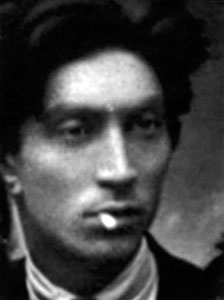
 1838904-2931cfaa114bd49252c98b2e654ab681.jpg
Fondane Benjamin (14 november 1898 - 2e of 03 oktober 1944)


De Engelse schrijver Eric Lawson Malpass werd geboren op 14 november 1910 in Derby. Zie ook alle tags voor Eric Malpass op dit blog en ook mijn blog van 14 november 2010.

Uit: The Return of the Moon Man

“It was cold that evening, and we were sitting by the fire, enjoying the Electric.
Grandfather was listening in; suddenly he jumps to his feet and shouts, 'Blasphemy.'
No one took much notice, for if the old man didn't jump up and shout 'Blasphemy' at least once of an evening Gran thought he was sickening and gave him a purge.
So Gran said dutifully, 'What is it, Mortimer?'
'Flying to the Moon, they are,' he cried.
'The space-ship has just left London. And they're dancing in the streets, and exploding fireworks in celebration. Sodom and ----'
But at that moment there was a noise as of a great wind passing over, and then a terrible crash as though someone had picked up all our milk chums and dropped them on the Dutch barn. We ran outside, and there, in the Ten Acre Field, a Thing was glinting in the frosty moonlight. Huge it was, like a great shining rocket.
Grandfather looked at it. 'Lost their way, maybe,' he said with malicious satisfaction.
Then he felt in his waistcoat pocket and took out a card and put it in my hand.       .
'Run you, Bronwen,' he said, 'and give them the business card of Uncle Space-Ship-Repairs Jones.'
But I was frightened, being but a little girl then, and clung to my mothers skirts. So Dai, my father, started up the tractor without a word, and rode off to fetch Uncle Space-Ship-Repairs Jones.
Down to the farm came the Moon Men, as the newspapers called them, their helmets bright in the moonlight, and soon Dai my father arrived. My uncle was sitting on the tractor with him, clutching a great spanner and grinning as pleased as Punch, and soon his banging and hammering came across the still air from Ten Acre."


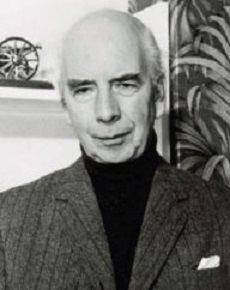
 1838904-0512955e5297c372d9b8249036aedef2.jpg
Eric Malpass (14 november 1910 - 16 oktober 1996)


De Egyptische schrijver Taha Hussein werd geboren in Al Minya in Egypte op 14 november 1889. Zie ook alle tags voor Taha Hussein op dit blog.

Uit: The Stream of Days (Vertaald door Hilary Wayment)

“When evening came El-Hagg Firuz sold his customers their supper : cheese, olives, milled sesame, or honey. To the more luxurious he supplied boxes of tunny or sardines. And to a few of them perhaps, as night approached, he sold things which have no name, and nothing to do with food, things spoken of in a whisper, yet passionately vied for.
The boy used to overhear these whisperings; sometimes he half understood, but as a rule the whole transaction was a mystery to him. As the days passed by and he grew older, he came to see through these subtle hints and ambiguities. What he learnt then obliged him to overhaul his standards of judgment, and to revise his valuation both of people and of things.
El-Hagg Firuz was a tall, jet-black fellow, and anything but talkative. But when he did speak he mumbled his words and lisped out his Arabic in a fashion which made an ineffaceable impression on the boy. He is always reminded of it by the story of Ziad and his pupil in El-Bayan wal-Tabyin. Ziad asked his pupil to say: ' 'We have been given a pony." Instead of which he repeated it so: "We have been given a bony." "Wretch!" said Ziad, annoyed. "If you can't say pony, say horse instead." Whereupon the boy replied: "We have been given an arse." Ziad, shocked, reverted to the "bony" as the lesser evil.
El-Hagg Firuz held a unique position in the neighbourhood and amongst the students especially. It was to him that they went when their money ran out towards the end of the month, or when their remittances were overdue. He it was who gave them food on credit, lent them a piastre or two from time to time, and helped them out in all kinds of emergencies. No wonder his name was as often on their lips as those of the most learned sheikhs of the Azhar.“


 1838904-7e28dc5eec1bc79ba8a0bccea1b00eb2.jpg
Taha Hussein (14 november 1889 – 28 oktober 1973)


De Italiaanse dichter Aleardo Aleardi werd geboren op 14 november 1812 in Verona. Zie ook alle tags voor Aleardo Aleardi op dit blog.


The Primal Histories (Fragment)

IN the deep circle of Siddim hast thou seen, 
Under the shining skies of Palestine, 
The sinister glitter of the Lake of Asphalt? 
Those coasts, strewn thick with ashes of damnation, 
Forever foe to every living thing,        
Where rings the cry of the lost wandering bird 
That on the shore of the perfidious sea 
Athirsting dies,—that watery sepulchre 
Of the five cities of iniquity, 
Where even the tempest, when its clouds hang low,       
Passes in silence, and the lightning dies,— 
If thou hast seen them, bitterly hath been 
Thy heart wrung with the misery and despair 
Of that dread vision!
                    Yet there is on earth 
A woe more desperate and miserable,—       
A spectacle wherein the wrath of God 
Avenges Him more terribly. It is 
A vain, weak people of faint-heart old men, 
That, for three hundred years of dull repose, 
Has lain perpetual dreamer, folded in       
The ragged purple of its ancestors, 
Stretching its limbs wide in its country’s sun, 
To warm them; drinking the soft airs of autumn 
Forgetful, on the fields where its forefathers 
Like lions fought! From overflowing hands,       
Strew we with hellebore and poppies thick 
The way.


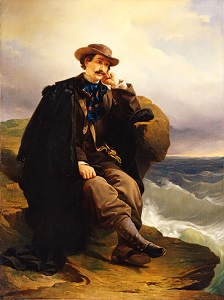
 1838904-097c104d6b27684e98822a5c0dfa365f.jpg
Aleardo Aleardi (14 november 1812 – 17 juli 1878)
Portret door Domenico Induno, rond 1850


De Deense dichter en schrijver Adam Gottlob Oehlenschläger werd geboren op 14 november 1779 in Vesterbro, Kopenhagen. Zie ook alle tags voor Adam Oehlenschläger op dit blog en ook mijn blog van 14 november 2009 en ook mijn blog van 14 november 2010.


Where are you now, you roses red

Where are you now, you roses red
From days of youth so blissful?
I keep your petals long since shed
In recollection’s missal.

And though each petal’s dull and grey,
Its shade like those departed,
I still recall the summer day
When crimson they all started.

In their silk weave I still can view
Each vein so finely fretted.
Once moistened by the morning dew,
Now by my tears it’s wetted.

 
Vertaald door John Irons


 1838904-95a7cc958fe6cd850560f8c2956190eb.jpg
Adam Oehlenschläger (14 november 1779 – 20 januari 1850)
Portret door Friedrich von Amerling, 1844


De Oostenrijkse dichter, schrijver, essayist en vertaler Herbert Zand werd geboren op 14 november 1923 in Knoppen. Zie ook alle tags voor Herbert Zand op dit blog en ook mijn blog van 14 november 2010 en ook mijn blog van 14 november 2008.


Ich nehme Abschied

Ich nehme Abschied von
den Strohhalmen, die ich
am Wegrand aufge/esen habe,
denn ich habe nicht mehr lange zu leben,
und auch das Stroh nicht,
von Menschenhand geschnittener Ha/m,
der Birnbaum und der Brunnen vorm Bauernhaus,
die Katzen nicht, die von Mähmaschinen zerfetzt
auf den Feldern liegen,
die Spinnen, die in den alten Scheunen verdorren
in Mittagsg/ut, die alten Holzrechen
in versiegenden Flüssen,
der Roggengeruch in verfallenden Mühlen.
Ich bin nur gekommen, um alles dies nochmals zu sehn,
davon zu sprechen auch, da doch niemand mehr spricht
vom Schönen wie vom Schrecklichen
und etwas Neues anhebt in unseren Köpfen,
das aber Welten freisetzt
von Bildern, die gebunden waren,
verborgen in Winkeln. Jetzt, da es nicht mehr
festgehalten wird in schwieligen Händen,
nicht mehr verdeckt von den Füssen, die darauf
standen, jetzt wird vieles sichtbar werden,
aber schnell auch vergehn, wenn niemand
es festhält.


 1838904-021f935ac27681298eed78ff6e91872b.jpg
Herbert Zand (14 november 1923 – 14 juli 1970)


De Zwitserse schrijver Jakob Schaffner werd geboren op 14 november 1875 in Basel. Zie ook alle tags voor Jakob Schaffner op dit blog en ook mijn blog van 14 november 2010 en mijn blog van 14 november 2008.

Uit: Johannes, Roman einer Jugend

„In diesem Moment verehrte ich auch ihn tief und voll unaussprechlichen Verständnisses. Ich sah ihm nach, bis er hinter Büschen und Bäumen verschwunden war; dann dachte ich an die Mutter, die ich im Haus wußte, und ich hatte die Regung, mit diesem Gefühl zu ihr zu gehen; doch gehorchte ich ihm nicht, sondern setzte meinen einsamen Umgang ganz im Geist des Vaters durch den zerstörten Garten fort. Damals mochte ich etwa drei Jahre alt sein.
Meine Mutter »sah« ich auf diese Weise zum erstenmal, als sie vor dem Haus auf dem Pflaster kniete und mit einem alten Messer das Unkraut zwischen den Steinen heraus jätete. Sie hatte eine blaue Schürze an; die Sonne schien ihr auf den schwarzen Scheitel, und ich wußte, daß sie ihre Arbeit ungern tat und unmutig war; sie hatte vorher einen Wortwechsel darum mit dem Vater gehabt. Meine sozusagen moralischen Dimensionen waren bisher einfach Länge und Breite gewesen – die Eltern und ich –; der kleine Auftritt nahm darin die erste Teilung vor, spaltete das Elternpaar in Vater und Mutter – Länge und Tiefe –, durch welche letztere mir der Blick in die dritte Dimension von Gut und Böse eröffnet wurde, der mir das Sein zum Dasein machte. Ich begriff ahnungsweise unter der frühesten Beunruhigung, deren ich mich erinnere, daß es auch wegstrebende und selbst widerstrebende Richtungen im Leben gibt, und die Mutter sah ich fortan unweigerlich in diesem Verhältnis. Das mag manchen wundern, aber auch das ist Begabung, und außerdem wird nach dem ersten Erlebnis dieser Art immer wieder etwas geschehen sein, was mich daran erinnerte und mich in dieser Anschauung bestärkte.
Eine sehr frühe Erinnerung sind die Sperlinge, die im Obergeschoß unseres Häuschens nisteten, einem Heuboden, der nach außen mit Holz verschlagen und sehr angenehm rot gestrichen war; in den Zwischenräumen zwischen den Brettern, die man für die Atmung des Heus gelassen hatte, hingen lebendig und unordentlich die Nester dieser Zigeunerbande an den Tag heraus.“


 1838904-d8a5409511fb0c25f8d58375d25548f8.jpg
Jakob Schaffner (14 november 1875 – 25 september 1944)
Rond 1920

Geschreven door Romenu om 15:32 Reageer op dit bericht

Meer van Romenu

↑ Terug naar de berichten