Naar de inhoud

Romenu

Over literatuur, gedichten, kunst en cultuur
seniorennet.beseniorennet.be

Berichten van 31 maart 2018

Litanie van een wachter bij het graf (Willem Jan Otten)


Bij Stille zaterdag


 2133936-c0e42e72a9b352ad7696492e66a8f4b8.jpg
De graflegging van Christus door Fra Bartolomeo, 1516


Litanie van een wachter bij het graf

Kan het bestaan, twee mannen vallend in één slaap ?
Hoe dan ook, het graf dat wij moesten bewaken,
dat was 's morgens leeg. Terstond vertelde mijn collega
mij zijn droom, die van begin tot eind exact de mijne was,
hetgeen ik hem, doodsbang ineens, verzwegen heb.
Nog steeds begrijp ik niet wat mij sindsdien bezielt.
Des nachts ben ik ontredderd als een motje om
een kaars, ach, roer mij aan en stel mij op mijn plaats,

een man die in zijn graf zijn windselen ontbindt,
zijn steen wegrolt, zijn wonden bloeden nog
maar kleuren aarde niet, de maan is vol en wit
maar schaduw werpt ze niet, de dode buigt zich
over ons en zegt met ongeveer mijn moeders stem:

dit is geen droom maar waken evenmin,
dit is wat wordt zolang je vreest
dat dit bestaat, dit zal bestaan
zodra je vreest dat dit niet kan.

Heb het niet onthouden wat hij zei,
wel weet ik dat in mijn droom mijn maat
tot op het laatst zijn ogen open had
dat hij de mijne zocht, en vond, en sliep,
ach, roer hem aan en stel hem op zijn plaats.


 2133936-173a6857d2995c652aa4b8f6e3b15c3c.jpg
Willem Jan Otten (Amsterdam, 4 oktober 1951)
Interieur van de Sint Franciscus Xaverius kerk (De Krijtberg) in Amsterdam, de geboorteplaats van Willem Jan Otten


Zie voor de schrijvers van de 31e maart ook mijn drie vorige blogs van vandaag.

Geschreven door Romenu om 11:10 Reageer op dit bericht

Stefan Hertmans, Octavio Paz, Asis Aynan, Martijn Teerlinck, Marga Minco, Enrique Vila-Matas

De Vlaamse dichter, schrijver en essayist Stefan Hertmans werd geboren in Gent op 31 maart 1951. Zie ook alle tags voor Stefan Hertmans op dit blog.

Uit:De bekeerlinge

“Het is vroeg in de ochtend, de eerste zonnestralen komen net bo-ven de heuvellam uit. Van bi) het raam waar ik uitkijk over de vallei, zie ik In de verte twee mensen naderen. Ik denk dat ze van de hoogten van Saint-Hubert komen, vanwaar je zowel de top van de Mont Ventoux als de vallei van Monteur kan zien; daarna moeten ze een tijd door het schrale eikenbos op de hoogvlakte lopen, waar de wolven zwerven. De befaamde Rocher du Cire - de steile, monumentale rots waar hoog en onbereikbaar de bijen zwermen en de steen in de zomerzon glimt van de honing die letterlijk van de rotswand druipt-staat er ongenaakbaar en desolaat bij, massiefverzonken in de ochtendnevel. Dat alles hebben de twee mensen gezien en ze zijn er zwijgend aan voorbij gegaan.
Het licht valt zijdelings op de nog minieme gestalten. Ze dalen moeizaam af van het punt waar tegenwoordig het landgoed La Plane als een waakhond boven de vallei ligt, langs de S-vormige weg die naar de linkeroever van de rivier leidt - voor hen is dat de rechterkant, want ze lopen stroomopwaarts. Ze verschijnen en verdwijnen naargelang ze tussen de bomen opdoemen of erach-ter schuilgaan. Daarna komen ze in open hellend grasland en da-len iets sneller at Daar kunnen ze de half afgewerkte toren zien opdoemen op de hoge rotsmuur, als een vertrouwenwekkend ba-ken. Nu de zon nog iets hoger rijst en de lagere vallei beschijnt, zien zij het dorp oplichten; omdat alle huizen gebouwd werden met natuursteen en in de schemer bijna niet te ontwaren zijn, lijkt het alsof het dorp zich als bij wonder losmaakt uit de rots-wand en vorm krijgt door het licht. Alsof iemand een groot gor-dijn wegtrekt en een slapend landschap zichtbaar wordt.
Het schemerblauw vervluchtigt sneL Geelgrijze tinten nemen de overhand. De laatste wolken worden door de warmte gefOhnd tot reusachtige, ijle keien in een paarse hemel; over de loop van de ri-vier ligt een witte sluier die zienderogen verdampt.”

 2133934-44201ba50eb39912453bb5e0e8150096.jpg
Stefan Hertmans (Gent, 31 maart 1951)
Cover


De Mexicaanse schrijver, dichter, en diplomaat Octavio Paz werd geboren op 31 maart 1914 in Mixcoac, tegenwoordig een deel van Mexico-stad. Zie ook alle tags voor Octavio Paz op dit blog.


In der Frühe sucht das Kommende seinen Namen

In der Frühe sucht das Kommende seinen Namen
Über den schläfrigen Stämmen funkelt das Licht
Berge galoppieren an die Ufer des Meeres
Die Sonne dringt sporenblitzend in die Fluten
Der Stein stürmt an und zerschmettert Strahlen
Es trotz das Meer und schwillt am Fuß des Horizonts
Verworrene Erde Einbruch von Skulptur
Die Welt erhebt ihre noch nackte Stirn
Ein Stein geschliffen und glatt um ein Lied drin einzugraben
Das Licht entfaltet seinen Fächer von Namen
Und ein Hymnus beginnt wie ein Baum
Und Wind ist da und schöne Namen im Wind


Vertaald door Fritz Vogelgsang


Auguren

Heute flog ein Adler
über mir dahin...
        Rubén Darío

Im Naturzustand, in Kapseln, geöffnet
Oder geschlossen, schon entseelt -
Elvira und Frau Sonne;
                                      In jeder Wiege
Eros und Milch: friedliche Verdauung
Ohne griechische Alpträume;
                                               Biblische
Balsame oder dialektische, Beruhigungsmittel
Gegen die Erosion, historische
Dekadenz, Kolonialkatastrophen,
Erdbeben, Indianer, Neger, Risse, Trockenheit,
Krisen, einsame Poeten, Selbst-
Kritik, Säuberungen, Schismen, Putsche, Sonnenfinsternisse;
Sport und Bildung für alle
Söhne des Nachbarn: alle
Friedhöfe dem Erdboden gleichgemacht;
                                                        Modisch
Gekleidete Flöhe in den Metropolen,
An den Stränden liebestolle Muscheln
Im Zeichen des Krebses;
                                   Ferien
Auf der Mondspitze;
                                     Gas, Amnesie,
Entblößungen, Verdampfungen,
Gnadenstöße und andere Mathematik
Der puritanischen Null;
                                  Moralische
Kalistenie, Lobotomien,
Schlafkur, Orgasmen per Telefon,
Tragbare Regenbögen...

Die Leere ruft eine
Menschenliebe aus die schmerzlos tötet.


Vertaald door Johannes Beilharz 


 2133934-b34180c11cf8d48efc153bb4edd34ea0.jpg
Octavio Paz (31 maart 1914 – 19 april 1998)


De Nederlandse schrijver Asis Aynan werd geboren in Haarlem op 31 maart 1980. Zie ook alle tags voor Asis Aynan op dit blog.

Uit:Kippenvel

“De laatste ochtend van februari. Ik stapte vanaf Rotterdam Centraal op de bus naar Brussel om aandacht te vragen voor de politieke en sociale misère in de Rif. De bus was beschikbaar gesteld door Europarlementariër Kati Piri, de sociaaldemocraat die naam maakte als rapporteur voor Turkije en sinds een jaar heeft de opstand in de Rif haar interesse. Het busstation baadde op de koude ochtend in het kristalheldere zonlicht. De gecharterde bus was een dubbeldekker, waar een grote stikker van het bedrijf Sunweb op was geplakt.
In de bus met twee verdiepingen kreeg ik van een stagiair Europese studies een flesje water en twee broodjes in een papieren zakje. Met mijn buurman ruilde ik een pistolet kaas voor een met brie. Op allebei zat raketsla.
In de Europese hoofdstad wandelde ik vanaf het parlement naar het Troonplein, het verzamelpunt van de protestmars naar het Europees Parlement. Op het Troonplein staat een immens bronzen beeld van Leopold II op een paard, dat tien jaar geleden met rode verf werd beklad, omdat Leopold II in zijn privéproject Congo zich als een bloeddorstige koning gedroeg.
Ik dacht aan de koningen van Marokko.
Het plein stroomde voller en voller. Toen ik net op kamers ging, had ik plezier in het schatten van mijn kooksel. Hoe duur zou deze chili con carne zijn in een restaurant? Nu schatte ik het aantal demonstranten. Onbetaalbaar.
De mars bewoog zich langzaam door de scherpe wind naar het parlement, waar Kati Piri een informatiebijeenkomst over de Rif organiseerde. Ze was duidelijk onder de indruk van de massale opkomst. De zaal had plaats voor vierhonderd zielen, het overgrote deel demonstreerde buiten verder in de Brusselse straten.”


2133934-c3e3c858fb1ffb231933dba474519521.jpg
Asis Aynan (Haarlem, 31 maart 1980)


De Vlaamse dichter en muzikant MartijnTeerlinck werd geboren op 31 maart 1987 in Lendelede. Zie ook alle tags voor Martijn Teerlinck op dit blog.


open

hier, terug in het mens-
vormige, ontmoeten wij elkaar: sneeuw en schaduw.

ook jij weet van de steen, zijn licht-
heid, zijn tekst. alles is al op-
geschreven. wat ons nog rest

is het onleerbare, het niet-woord en zijn
uitspraak.

ons zwaartepunt: langzaam breekt het en
verbindt ons. vrijgemaakt en onderweg.

alles waar wij weet van hebben
is het onbekend gemaakte.


kans

ondanks de tentloze stemband,
ontzenuwd en onsluitbaar,
blijft de kans op een schreeuw
nog in leven.

de tussenkomst van
de ongedachte verschijning,
van dat
waar adem plaats kan vinden:
het doorgangskamp
en zijn muren.

spreken is worstelen met licht,
de vertaling van een litteken,
een altijd nieuwe wond.

voor stilte en geluid
is geen enkele afstand
onoverbrugbaar


 2133934-11ffb1dbfb06d7bf1cdff01a1069b1a6.jpg
Martijn Teerlinck (31 maart 1987 – 10 december 2013)


De Nederlandse schrijfster en journaliste Marga Minco, pseudoniem van Sara Minco, werd geboren in Ginneken op 31 maart 1920. Zie ook alle tags voor Marga Minco op dit blog.

Uit: Het bittere kruid. Zes fragmenten uit een kleine kroniek

"Hier kan zoiets nooit gebeuren’, zei mijn vader, ‘hier is het iets anders’.
In het kantoortje van het kledingmagazijn van meneer Haas in de Catharinastraat hing een dichte tabakswalm. Verschillende gemeenteleden waren hier, als voor een vergadering, bij elkaar gekomen. De kleine meneer van Buren draaide heftig gesticulerend in zijn bureaustoel rond. Hij had een krakerige stem. Toen wij binnenkwamen, had hij het juist over een bijzondere dienst, die gehouden moest worden.
‘Daar ben ik het mee eens’, zei mijn vader.
‘Zou dat bidden wel helpen?’, vroeg de zoon van meneer Haas. Niemand scheen het gehoord te hebben, want men ging er niet op in. Ik kreeg spijt dat ik met mijn vader mee was gegaan. Ik begreep wel dat hij hier voorlopig niet weg zou kunnen. Daar ik er niets voor voelde in het rokerige vertrek te blijven zitten, ging ik de gang in naar de winkel. Er was niemand. Ik liep langs de toonbanken en rekken vol kledingstukken. Hier had ik als kind vaak met de kinderen van meneer Haas gespeeld. We verstopten ons achter de mantels en de dozen. We maakten ons mooi met de linten en de restjes stof uit het atelier en we speelden winkeltje als de zaak gesloten was. Er hing nog dezelfde geur, zoetig en droog, zoals nieuw goed ruikt. Ik dwaalde door de smalle gangen naar het atelier en het magazijn. Het leek of het zondag was. Niemand zou vandaag iets komen kopen ot zich een nieuwe mantel laten aanmeten. In een hoek van het atelier ging ik op een stapel dozen zitten wachten. Het was er vrij donker, omdat de luiken aan de buitenkant gesloten waren en er alleen licht uit de gang binnenviel. Tegen de muur hing een mantel. De rijgdraden zaten er nog in. Misschien werd hij nu niet meer afgehaald. Ik nam de mantel van het knaapje en trok hem aan. Voor de spiegel bekeek ik mezelf. De jas was veel te lang.
‘Wat doe je toch?’ Het was de stem van mijn vader.
‘O’, zei ik. Ik had hem niet aan horen komen. ‘Ik pas een jas aan’.
‘Het is nu geen tijd om aan een nieuwe jas te denken’, zei hij.
‘Ik wil hem ook niet hebben’, zei ik.
‘Ik heb je overal gezocht; ga je mee?’
Ik trok de mantel uit en hing hem weer op het knaapje. Buiten bemerkte ik dat ik lang in het donker had gezeten. Ik moest even wennen aan het felle zonlicht. Het was druk op straat. Er reden veel vreemde auto's en motoren voorbij. Een soldaat vroeg aan iemand die voor ons liep de weg naar het marktplein. Het werd hem met veel arm- en handgezwaai uitgelegd. De soldaat sloeg zijn hakken tegen elkaar, salueerde en liep in de richting die hem gewezen was. Er passeerden ons nu geregeld soldaten van de bezettingstroepen. We liepen er gewoon langs.”

 2133934-d5a9241ae720abf71151bb695c4e3d1d.JPG
Marga Minco (Ginneken, 31 maart 1920)
Cover


De Spaanse schrijver Enrique Vila-Matas werd geboren in Barcelona op 31 maart 1948. Zie ook alle tags voor Enrique Vila-Matas op dit blog.

Uit: Because She Never Asked (Vertaald door Valerie Miles)

“Nobody imitated Sophie Calle better than Rita Main. Rita liked being considered an artist, though she wasn't entirely sure she was one. Rita carried out a series of experiments with truth, which someone had baptized as wall novels; they stood as modest tributes to her beloved Sophie Calle, that "narrative artist" par excellence, who was so close to her in age that only a year separated them. The physical resemblance between the two women was remarkable. If Rita applied her makeup carefully, their faces could be nearly identical, although they were the least alike in height. Rita Maki was a couple inches taller than Sophie Calle (it amused her to tell her friends that Sophie was "tall and worldly," and she was just tall, not at all worldly). If only she were a little shorter, she would be the spitting image of Sophie Calle, who truly was, by the way, a world figure. So Rita's height did represent a bump in the road to an almost absolute likeness. No one could dare say, though, that Rita Main didn't try to imitate her beloved Sophie Calle in every possible way. For instance, she styled her hair and clothes after Sophie Calle, and she moved to the Malakoff quarter of Paris to be closer to her, where she secretly spied on this woman whose every detail she copied so carefully. Being in the same neighborhood, she was able to keep better tabs on her. Rita paid careful attention to even the slightest of Sophie Calle's physical fluctuations. She knew where she bought her clothes and food, and every once in a while, she'd follow her into the subway, or trail along behind her in a cab, identifying the people Sophie met outside the Malakoff quarter to know what lovers, friends both male or female, husband, or family she had. Rita dreamed of the day when Sophie Calle would finally realize that she existed and do her the honor of attending one of her exhibitions, held every now and then at an art gallery on Rue de Marseille, a space just below the second-floor apartment where Rita was born. Despite her move to the Malakoff quarter and the fact that she had a rather hermetic (or perhaps simply melancholic) temperament, Rita was esteemed on Rue de Marseille, and every once in a while the gallery showed her wall novels, a peculiar genre of art copied from Sophie Calle: real-life narratives of a novelistic bent told through images centered on the photographer herself and hung on gallery walls. Rita's relationship with men had always been strange and disconcerting. Her father, a secret millionaire of Mexican origin, died when she was twenty years old and left her a small fortune. Neither she nor anyone else had known he was salting money away for his only daughter. Everyone on Rue de Marseille imagined that soon she'd find herself a boyfriend.”


 2133934-4f460e059391cf51d6e6a17abd1fd103.jpg
Enrique Vila-Matas (Barcelona, 31 maart 1948)
Barcelona


Zie voor de schrijvers van de 31e maart ook mijn twee vorige blogs van vandaag.

Zie voor bovenstaande schrijvers ook mijn blog van 31 maart 2007 en ook mijn blog van 31 maart 2008 en eveneens mijn blog van 31 maart 2009.

Geschreven door Romenu om 11:09 Reageer op dit bericht

Rob Boudestein, Kornej Tsjoekovski, Andrew Lang, Nichita Stănescu, Hartmut Lange, Marge Piercy

De Nederlandse dichter Rob Boudestein werd geboren op 31 maart 1947 in Den Haag. Zie ook alle tags voor Rob Boudestein op dit blog.


Mont Ventoux

De Reus werd door Petrarca reeds bedwongen
en velen hebben het nadien gedaan.
Een zware klim, schreef hij, maar boze tongen

beweren dat hij daar nooit heeft gestaan;
de schepper van onsterfelijke zinnen
is enkel in de geest bergop gegaan.

Een renner hoeft daar niet aan te beginnen,
beestachtig afzien wordt van hem verwacht;
met metaforen valt geen rit te winnen.

Het snot voor ogen! En ontbreekt de macht,
neemt hij soms toevlucht tot het clandestiene.
Tom Simpson heeft die missie niet volbracht;

moraal en hitte sloopten zijn machine.
Wat ook niet hielp was de amfetamine.


 2133927-801048740e0943f859e16a46964bae62.jpg
Rob Boudestein (Den Haag, 31 maart 1947)


De Russische essayist, criticus en schrijver Kornej Ivanovitsj Tsjoekovski werd geboren in Sint-Petersburg op 31 maart 1882. Zie ook alle tags voor Kornej Tsjoekovski op dit blog.


Crocodile (Fragment)
(an old tale)

He jumped in the airplane
Flew like a hurricane
And never back did not look back,
And arrived boom
To the sidelines native,
On which is written: "Africa".

Jumped into the Nile
Crocodile,
Right in the mud
Hit,
Where lived his wife Crocodilia,
His detushek nurse-source of water.


II

Tells him the sad wife:
"I'm with the kids, it was so bad one:
Konoshenko Lelechenko strikes,
Leleseneca Konoshenko Tosic.
And Litoshenko today nasalis:
Drank a whole bottle of ink.
On my knees I put it
And without the sweet left him.
Kokosinski all night had a high fever:
Swallowed it by mistake samovar, -
Yes, thank you, our pharmacist Hippo
Put him with a frog on his stomach".

Sad miserable Crocodile
And tear his belly dropped:
"How are we without a samovar will live?
How samovar tea without going to drink?"

But here raspakhnulsya door,
At the door pokazalsa animals:
Hyenas, Boas, elephants,
And ostriches, wild boars,
And The Elephant,
Degolia,
Stopudovo merchant's wife,
And The Giraffe -
Important graph
Height of the Telegraph, -
All fellow friends,
All the relatives and godparents.
Well neighbor hug,
Well neighbor kiss:
"Give us gifts overseas,
Buy CA us Goodies unprecedented!"


 2133927-331d03ac58c5f4e584fa583fabce8871.JPG
Kornej Tsjoekovski (31 maart 1882 – 28 oktober 1969)
Portret door Igor Emmanuilovich Grabar, 1935


De Schotse dichter, schrijver en journalist Andrew Lang werd geboren op 31 maart 1844 in Selkirk. Zie ook alle tags voor Andrew Lang op dit blog.


Ballade Of Worldly Wealth

Money taketh town and wall,
Fort and ramp without a blow;
Money moves the merchants all,
While the tides shall ebb and flow;
Money maketh Evil show
Like the Good, and Truth like lies:
These alone can ne'er bestow
Youth, and health, and Paradise.

Money maketh festival,
Wine she buys, and beds can strow;
Round the necks of captains tall,
Money wins them chains to throw,
Marches soldiers to and fro,
Gaineth ladies with sweet eyes:
These alone can ne'er bestow
Youth, and health, and Paradise.

Money wins the priest his stall;
Money mitres buys, I trow,
Red hats for the Cardinal,
Abbeys for the novice low;
Money maketh sin as snow,
Place of penitence supplies:
These alone can ne'er bestow
Youth, and health, and Paradise.


 2133927-2e13b5bd48a947a92c6bd312e667cb5e.jpg
Andrew Lang (31 maart 1844 – 20 juli 1912)


De Roemeense dichter en essayist Nichita Stănescu werd geboren op 31 maart 1933 in Ploieşti. Zie ook alle tags voor Nichita Stănescu op dit blog.


Wirst nicht sterben, wirst nicht kommen

Wirst nicht sterben, wirst nicht kommen
Wird
’s nicht Sieben zwischen Sonnen
Wirst nicht, Fr
ühling, Winter sein,
Wirst nicht Fräulein, Weib, mein sein.

Auf dem Fond von Himmelblauen
Aus der Blauen meinem Aug.
Ein Kommet warst du, ein Planet,
Und Inzest warst du, zu zart.

Nur so können wir blind bleiben
Invalid von Worten, leidend.
Trinke mich als Trän
’ noch heute
Wenn du kannst, aus den Buchstaben.


Lachen, Weinen

Die Wimper mit den Zähnen, mit geschmeidigen Tränen,
Das Salz, kurz gefallen in das Essen
Der Beweis, dass ich nicht nur jetzt lebe
Sind alle meine Erinnerungen,
Und die Erinnerungen, Erinnerungen dessen.

Der Beweis dass ich ohne die Zeugen sehe
Sind meine Kindheit und die Jugendjahre
Die doppeln der Nichtsein dieser Sekunde
Mit ihrem Sein von irgendwann, daseiend.

Ah, das Lachen, das Weinen
Ah das Weinen das Lachen
Mich brechen noch wann ich sag
Der Sekunde von jetzt
Die sich in die von der morgen begrab
’ n
Ah das Weinen das Lachen
In dem Leib dieser kalten Dinge
In ihren t
ödlichen Zahn
Wie die Kronen
Noch nicht erfundener K
önige.


Vertaald door Luminita Soare


 2133927-e926ef6b5d31a41adf3437121cdae150.jpg
Nichita Stănescu (31 maart 1933 – 13 december 1983)
Portret door Paul Mecet, z.j.


De Duitse schrijver Hartmut Lange werd geboren op 31 maart 1937 in Berlijn. Zie ook alle tags voor Hartmut Lange op dit blog.

Uit: Das Konzert

“Nach dem Passahfest war es endlich soweit. Frau Altenschul hatte die letzten Vorbereitungen beendet, konnte also in der Sache nichts mehr tun.
»Die Halle ist zu groß«, sagte sie, »und wird man bis in die hinteren Plätze hinein auch alles hören!«
»Da können Sie beruhigt sein«, antwortete Liebermann. »Es ist in Ihrem Sinne und berechtigt Sie gewissermaßen zu einigem Stolz, daß unser Freund nun endgültig aus dem Kreis des Privaten herausgetreten ist und sich an eine Öffentlichkeit wendet, für die, wenn man den Voraussagen glauben darf, die Philharmonie keineswegs ausreichen wird.«
Das Ereignis, das Lewanski mit diesem Konzert in Szene setzen sollte, hatte sich bis nach Prag und London herumgesprochen. Obwohl Frau Altenschul sich jede Reklame verbeten hatte, wußte man doch: In Berlin, in jener Stadt, von der man kaum etwas Sensationelles erwartete, bereiteten sich ungeheure Dinge vor. Ein hochtalentierter, in jungen Jahren ermordeter Jude, hieß es, wolle sich seinem Schicksal widersetzen und die Laufbahn eines Pianisten, um die man ihn gebracht hatte, im Tode nachholen.
Es klang wie eine Botschaft, und so füllte sich am Vormittag schon, das Konzert sollte erst gegen einundzwanzig Uhr beginnen, die Kassenhalle der Philharmonie mit jenen, die darauf hofften, doch noch die Berechtigung für den Konzertabend zu bekommen. Aber es war aussichtslos, und man debattierte in dem nahen Cafe darüber, warum es nicht möglich sein sollte, das Konzert durch Lautsprecher zu übertragen.
Man sah überwiegend junge Leute, darunter Mädchen mit kahlgeschorenem Kopf, den sie beizubehalten wünschten, so lange, versicherten sie, bis man ihnen bewiesen hätte, daß diese Demütigung, die sie vor ihrem Tode empfangen mußten, rückgängig zu machen war. Sie waren skeptisch und wanderten unruhig hin und her.
Als die Lampen vor der Alten Philharmonie aufleuchteten, gingen einige zum Hintereingang, wo man Lewanskis Wagen erwartete, aber es zeigte sich niemand, obwohl das Konzert in einer Stunde beginnen sollte. In Lewanskis Garderobe residierte Frau Altenschul. Sie hatte sich Ruhe ausgebeten, aber dies erwies sich bei der allgemei-nen Aufregung als unmöglich. Ständig wurden irgendwelche Glückwünsche und vor allem Blumen hereingereicht, und wie sollte man den Enthusiasten, die nicht von ihrer Seite wichen, begreiflich machen, daß ihre Hochgestimmtheit den Pianisten, den man jeden Augenblick erwartete, würde stören müssen.“


 2133927-695e31bae29c6777bbc3a14a9cade2e5.jpg
Hartmut Lange (Berlijn, 31 maart 1937)


De Amerikaanse schrijfster en feministe Marge Piercy werd geboren op 31 maart 1936 in Detroit. Zie ook alle tags voor Marge Piercy op dit blog.


Made in Detroit

My first lessons were kisses and a hammer.
I was fed with mother's milk and rat poison.
I learned to walk on a tightrope over a pit
where snakes' warnings were my rattles.

The night I was born the sky burned red
over Detroit and sirens sharpened their knives.
The elms made tents of solace over grimy
streets and alley cats purred me to sleep.

I dived into books and their fables
dosed over my head and hid me.
Libraries were my cathedrals. librarians
my priests promising salvation.

I was formed by beating like a black
smiths sword, and my edge is still
sharp enough to cut both you and me.
I sought love in dark and dusty corners

and sometimes I even found it
however briefly. Every harsh, every
tender word entered my flesh and lives
there still, bacteria inside my gut.

I suckled Detroit's steel tits. When
I escaped to college I carried it with
me, shadow and voice, pressure
that hardened me to coal and flame.


 2133927-f68d6b77a7cb63a06c83bb3d10f44a48.jpg
Marge Piercy (Detroit, 31 maart 1936)
Cover


Zie voor de schrijvers van de 31e maart ook mijn vorige blog van vandaag.

Zie voor bovenstaande schrijvers ook mijn blog van 31 maart 2007 en ook mijn blog van 31 maart 2008 en eveneens mijn blog van 31 maart 2009.

Geschreven door Romenu om 11:05 Reageer op dit bericht

Angela Kreuz, Judith Rossner, Andrew Marvell, John Fowles, Edward FitzGerald, Robert Brasillach, Peter Motte

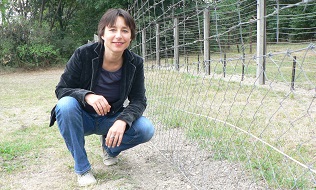
De Duitse dichteres en schrijfster Angela Kreuz werd geboren in Ingolstadt op 31 maart 1969. Zie ook alle tags voor Angela Kreuz op dit blog.

Uit:Straßenbahnträumer

„Jens trat ans Fenster und knöpfte sich das Hemd zu, ein bunt gemustertes, das zu keiner Krawatte passte. Jens trug keine Krawatten, nicht einmal bei seiner Firmung hatte er eine getragen, sie hingen im Schrank wie zur Zierde, ein zärtlich-ironischer Anachronismus.
Im zweiten Stock gegenüber brannte Licht, die Balkontüre stand halb offen. Eine Frau mit kurz geschnittenen, rötlichen Haaren saß am Schreibtisch. Sie trug ein orangefarbenes 70er-Jahre-Kleid und soweit er es erkennen konnte, keine Strümpfe; die nackten Beine übereinander geschlagen. Sie sah seiner Cousine verblüffend ähnlich. Bloß mit dem Unterschied, dass kein Mensch auf der Welt Lizzy dazu hätte bringen können, ein Kleid anzuziehen. Ihm wurde heiß. Es sah aus, als schriebe sie einen Brief, doch wer schreibt heute noch Briefe, obendrein mit einer großen weißen Feder. Alt war seine Nachbarin jedenfalls nicht, vielleicht Ende dreißig. Jens konnte sich nie merken, wie alt er selbst war, Mitte dreißig sagte er immer, wenn er gefragt wurde. Wie, Mitte dreißig? Er konnte die Fragerei nicht ausstehen, besonders von Frauen. Im Grunde genommen interessiert das niemanden, was sagt es schon aus, wie alt jemand ist. Wie lange er noch Mitte dreißig sagen könnte?
Seine Haare waren vom Duschen nass und tropften. Er hatte noch vor auszugehen, seine neuen Arbeitskollegen trafen sich im Murphy’s Law, eine gute Gelegenheit, Kontakte zu knüpfen. Socializing, wie ihn das nervte, er hatte keine Lust auf dieses seichte Gequatsche. Jens strich sich übers Kinn, rasieren sollte er sich auch noch, ein Dreitagebart war das nicht mehr. Eine Weile stand er unschlüssig herum und trat von einem Fuß auf den anderen. Wenigstens würde die Musik so laut sein, dass sich eine Unterhaltung ohnehin erübrigte.
Die Frau gegenüber blickte verträumt drein, das machte sie noch anziehender. Sie faltete ihren Brief zusammen, zögerte kurz und steckte ihn in ein Kuvert. Wem sie wohl schrieb? Unvermittelt lächelte sie – irgendetwas schien sie glücklich zu machen. Über der Häuserzeile leuchtete ein prächtiges Abendrot. Wenn die Anwohner der Gasse jetzt noch ihre Wäsche zum Trocknen raushängen würden, sähe es so aus wie in der Altstadt von Lissabon."
 

 2133922-49f9990217fc4acc408ff7cc655d4fd2.jpg
Angela Kreuz (Ingolstadt, 31 maart 1969)


De Amerikaanse schrijfster Judith Rossner werd geboren als Judith Perelman op 31 maart 1935 in New York. Zie ook alle tags voor Judith Rossner op dit blog.

Uit: Perfidia

“She did not love Wilkie's two remaining woman-artist tenants. She kicked them out and persuaded Wilkie to get financing to develop the place into the Sky Galleries, later usually shortened to the Sky. She dealt not only with the bankers, but with the architects, contractors and tenants. All this while she was pregnant. My mother was too angry and restless to sit in a classroom and absorb information, but she built the Sky into a major tourist trap because Wilkie let her use her brain. The new building was shaped like half a hexagon that went right to the outer edges of the property. In the center was a lovely courtyard with plants and flowers at the edges, benches in the middle. The stump of one huge tree they'd cut down had become a bench; part of its great trunk was now a table inside for the cash register. Some of the stores changed over the years but the art gallery was at the center and dominated. On its left, facing you as you entered the courtyard, was a store called Farolito, which carried pottery and a lot of Santa Fe souvenirs—chili-pepper key chains, Santa Fe T-shirts, postcards. My mother had a mug made up, sky blue with a big white cloud and Sky Gallery, in Santa Fe turquoise and fuchsia, printed on the cloud. They sold a fantastic number of those mugs over the years in both the gallery and Farolito. (At one point my mother had the mugs taken out of the gallery because she felt people who might have bought a painting were copping out and just buying the mug. Nothing much happened and after a few months, she brought the mugs back in.) Then there was a small jewelry store with a lot of good Navajo jewelry and other silver. To the right were Wilkie's Coffee Shop (my mother's idea, from his nickname; his given name was Philip Wilkerson) and the tiny place first occupied by Rahji Cohen, Photographer. When the buzz about the Sky began, artists looking for a gallery started to come by. She was very pregnant, by this time, but she must have tuned in to the social possibilities of running a gallery in a town full of artists who wanted their work shown. She told Wilkie she was going to manage the gallery and set out to learn what she needed to know. It wasn't much, beyond the size and shape of the artists she liked. The gallery had plenty of space. It was about fifteen feet deep and more than forty feet wide, with the space interrupted only by a couple of windows in the front and an entrance to the storage room at one end of the back.“


 2133922-49ee2204a23815d0e10157334e134a62.jpg
Judith Rossner (31 maart 1935 – 9 augustus 2005)


De Engelse dichter Andrew Marvell werd geboren in Winestead, Yorkshire op 31 maart 1621 in Londen. Zie ook alle tags voor Andrew Marvell op dit blog.


The Character Of Holland (Fragment)

'Tis probable Religion after this
Came next in order; which they could not miss.
How could the Dutch but be converted, when
Th' Apostles were so many Fishermen?
Besides the Waters of themselves did rise,
And, as their Land, so them did re-baptise.
Though Herring for their God few voices mist,
And Poor-John to have been th' Evangelist.
Faith, that could never Twins conceive before,
Never so fertile, spawn'd upon this shore:
More pregnant then their Marg'ret, that laid down
For Hans-in-Kelder of a whole Hans-Town.
Sure when Religion did it self imbark,
And from the east would Westward steer its Ark,
It struck, and splitting on this unknown ground,
Each one thence pillag'd the first piece he found:
Hence Amsterdam, Turk-Christian-Pagan-Jew,
Staple of Sects and Mint of Schisme grew;
That Bank of Conscience, where not one so strange
Opinion but finds Credit, and Exchange.
In vain for Catholicks our selves we bear;
The Universal Church is onely there.
Nor can Civility there want for Tillage,
Where wisely for their Court they chose a Village.
How fit a Title clothes their Governours,
Themselves the Hogs as all their Subjects Bores
Let it suffice to give their Country Fame
That it had one Civilis call'd by Name,
Some Fifteen hundred and more years ago,
But surely never any that was so.
See but their Mairmaids with their Tails of Fish,
Reeking at Church over the Chafing-Dish.
A vestal Turf enshrin'd in Earthen Ware
Fumes through the loop-holes of wooden Square.
Each to the Temple with these Altars tend,
But still does place it at her Western End:
While the fat steam of Female Sacrifice
Fills the Priests Nostrils and puts out his Eyes.
Or what a Spectacle the Skipper gross,
A Water-Hercules Butter-Coloss,
Tunn'd up with all their sev'ral Towns of Beer;
When Stagg'ring upon some Land, Snick and Sneer,
They try, like Statuaries, if they can,
Cut out each others Athos to a Man:
And carve in their large Bodies, where they please,
The Armes of the United Provinces.


 2133922-8428070754451437c5e466fd97e9ebbe.jpg
Andrew Marvell (31 maart 1621 - 16 augustus 1678)
Portret door Bartholomeus van der Helst, 1660


De Engelse schrijver en essayist John Fowles werd geboren in Leigh-on-Sea (Essex) op 31 maart 1926. Zie ook alle tags voor John Fowles op dit blog.

Uit: The Journals

“12 November
A self-searching night at the Podges1, with Faith.
Faith, a curious kind of extrovert, conversation-dominating, with the same strident rise in pitch (when she wishes to break in on top of anyone else) as M. Confidential, bold, tomboyish - revealing about her monastic father, whom she says worries her greatly at times.
Podge and Eileen are a perfect duo; in harmony or perfect discord.
During this evening (having felt ill all day, with a certain amount of pain) I keep very quiet and feel unable to assert myself in any way. Not particularly self-conscious and oversensitive but lacking more than lost colour. Two mes: ego, thinking with and at tangents from the others, full of the right words, curious ideas and so on; and the alter ego, not being able to break into the discussions.
An empty walk home with Faith, yawning myself and she whistling and singing. I feel a vague need to explain myself, and also to know what she is thinking. A wet, warm, windy night.
I can feel more concretely a philosophy of life on occasions like these. To be persuasive, to watch and analyse, externally; internally, to record and create. It is absolutely necessary to remain balanced; that is, never to become submerged completely - always to have the intention of creating beauty for others, however reduced this infusion into action and society becomes. Theoretically I want to become a core receiving prehensions, being moulded by them, yet remaining pointed in the one direction, towards creation of beauty. I can't pretend that this is a natural attitude; it leads to compression of feeling, to a dangerous bottling of the need to express, an overtense introversion. The advantages are 1. the forming-house for creation (although some kind of objectivity and self-criticism must be obtained), 2. that the final axion is one of external expression in fame through beauty created. It is creation which acts as a safety-valve, as well as being the ultimate purpose. The essentials are constant attention to practice of the means and a self-confident devotion to the end.
I think that this is the nearest I can get to self-fulfilment, considering, as I do now, that everything is purely relative, and that no beauty is immortal. I can see little point in immortal fame; yet can believe in the human illogic of doing good by the creation of beauty, even though it will only be temporarily existent. (Not forgetting the time-space question, when nothing that has existed can disappear.) Must strive after living glory; it is unnatural to push, but it is necessary."


 2133922-2fa31bb212ff5880bfc4522f7d0ebb05.jpg
John Fowles (31 maart 1926 - 5 november 2005)
Cover


De Engelse dichter, schrijver en vertaler Edward FitzGerald werd geboren in Woodbridge, Suffolk, op 31 maart 1809. Zie ook alle tags voor Edward FitzGerald op dit blog.

Uit: Rubaiyat of Omar Khayyam

VII

Come, fill the Cup, and in the Fire of Spring
The Winter Garment of Repentance fling:
The Bird of Time has but a little way
To fly--and Lo! the Bird is on the Wing.

VIII

And look--a thousand Blossoms with the Day
Woke--and a thousand scatter'd into Clay:
And this first Summer Month that brings the Rose
Shall take Jamsh{'y}d and Kaikobád away.

IX

But come with old Khayyám, and leave the Lot
Of Kaikobád and Kaikhosrú forgot:
Let Rustum lay about him as he will,
Or Hátim Tai cry Supper--heed them not.

X

With me along some Strip of Herbage strown
That just divides the desert from the sown,
Where name of Slave and Sultán scarce is known,
And pity Sultán Mahmúd on his Throne.


Vertaald door Edward FitzGerald


 2133922-d97b23c6b38dbd3d9e9a8e0cbf212beb.jpg
Edward FitzGerald (31 maart 1809 - 14 juni 1883)
Portret door Eva Rivett-Carnac naar een foto uit 1873


De Franse schrijver, dichter en journalist Robert Brasillach werd geboren in Perpignan op 31 maart 1909. Zie ook alle tags voor Robert Brasillach op dit blog.


Psaume II

VOUS avez fait le ciel pour Vous-même, Seigneur,
Et la terre d’ici pour lesenfants des hommes,
Et nous ne savons pas de plus réels bonheurs
Que les bonheurs cernés par le monde où nous sommes,

Nous voulons bien un jour célébrer vos louanges
Et nous unir aux chants de vos désincarnés,
Mais vos enfants, Seigneur, ils ne sont pas des anges,
Et c’est aux coeurs d’en bas que le coeur est lié.

Pardonnez-nous, Seigneur, de ne pas oser croire
Que le bonheur pour nous ait une couleur
Que la joie de la source où nos bouches vont boire
Et du feu où nos mains recueillent la chaleur.

Pardonnez-nous, Seigneur, dans nos prisons captives
De songer avant tout aux vieux trésors humains,
Et de nous retourner toujours vers l’autre rive
Et d’appeler hier plus encore que demain.

Pardonnez-nous, Seigneur, si nos âmes charnelles
Ne veulent pas quitter leur compagnon le corps,
Et si je ne puis pas, ô terre fraternelle,
Goûter de l’avenir, une autre forme encor.

Car les enfants préssés contre notre joue d’homme,
Les êtres qu’ont aimés nos coeurs d’adolescents
Demeurent à jamais devant ceux que nous sommes,
L’espoir et le regret les plus éblouissants.

Et nous ne pourrions pas, pétris de cette terre,
Rêver à quelque joie où ne nous suivaient pas
La peine et le plaisir, la nuit et la lumière
Qui brillaient sur le sol où marquèrent nos pas.


 2133922-d1448f5b943cd15a0c72d35c6ff92d06.jpg
Robert Brasillach (31 maart 1909 - 6 februari 1945)


Zie voor onderstaande schrijver ook mijn blog van 31 maart 2013.

De Vlaamse schrijver, vertaler en publicist Peter Motte werd geboren in Geraardsbergen op 31 maart 1966.


Zie voor bovenstaande schrijvers ook mijn blog van 31 maart 2007 en ook mijn blog van 31 maart 2008 en eveneens mijn blog van 31 maart 2009.

Geschreven door Romenu om 11:05 Reageer op dit bericht

Meer van Romenu

↑ Terug naar de berichten