

Naar de inhoud

Romenu

Over literatuur, gedichten, kunst en cultuur
seniorennet.beseniorennet.be

Berichten van 18 mei 2013

Markus Breidenich, Yi Mun-yol, W.G. Sebald, François Nourissier, Gunnar Gunnarsson
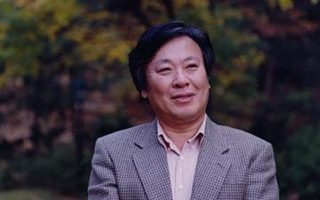
De Zuidkoreaanse schrijver Yi Mun-yol werd geboren op 18 mei 1948 in Yongyang. Zie ook alle tags voor Yi Mun-yol op dit blog.


Uit: Our Twisted Hero (Vertaald door Kevin O'Rourke)


“As soon as my mother brought me into the room, the teacher in charge came over to greet us. He too fell far short of my expectations. If we couldn't have a beautiful and kind female teacher, I thought at least we might have a soft-spoken, considerate, stylish male one. But the white rice-wine stain on the sleeve of his jacket told me he didn't measure up. His hair was tousled; he had not combed it much less put oil on it. It was very doubtful if he had washed his face that morning, and his physical attitude left grave doubts about whether he was actually listening to Mother. Frankly, it was indescribably disappointing that such a man was to be my new teacher. Perhaps already I had a premonition of the evil that was to unfold over the course of the next year.
That evil showed itself days later when I was being introduced to the class.
"This is the new transfer student, Han Pyongt'ae. I hope you get on well."
The teacher, having concluded this one line introduction, seated me in an empty chair in the back and went directly into classwork. When I thought of how considerate my Seoul teachers had been in invariably giving prolonged proud introductions to new students, almost to the point of embarrassment, I could not hold back my disappointment. He didn't have to give me a big buildup, but he could at least have told the other children about some of the things I had to my credit. It would have helped me begin to relate to the others and them to me.
There were a couple of things the teacher could have mentioned. First of all, there was my school work. I may not have been first very often, but I was in the first five in my class in an outstanding Seoul school. I was quietly proud of this; it had played no small part in ensuring good results in my relations not only with teachers but also with the other children. I was also very good at painting.
I was not good enough to sweep a national children's art contest, but I did get the top award in a number of contests at the Seoul level. I presume my mother stressed my marks and artistic ability several times, but the teacher ignored them completely. In some circumstances, my father's job, too, could havebeen a help. So what if he had suffered a setback in Seoul, even a bad one, bad enough to drive him from Seoul to here? He still ranked with the top few civil servants in this small town.”


1394339-2c7544ccac75d29796780d5c6059f0c2.jpg 

Yi Mun-yol (Yongyang, 18 mei 1948)


De Duitse dichter en schrijver Markus Breidenich werd geboren in Düren op 18 mei 1972. Zie ook alle tags voor Markus Breidenich op dit blog.


Im Herbarium


Wir hatten Blätter, aufgehängt zum Trocknen,

über uns. Den letzten Mückenstich in Kupfer schon


gepresst. Von Blütenträumen falscher Zwanziger

berieselt, in Bücher uns vergraben. Alte


Würmer, in erotischen Motiven. Reich

der Carnivoren: Venusfliegenfallen, schön:


Auf hadernhaltigem Papier der Druck der abge-

schlossenen Kapitel, waren wir. In Blei gesetzte


Namen, Spiegelschrift, der Rosen.


Fliegen


Aufeinander so fliegen. Bestäubtest du nicht

die Bücher meiner Regale? Die Narben. Narben

im Innern der Zimmer. Wachsen. Jetzt warte.

Warte auf Blütenkelche und blaue Himmel.


Dann findest du Honig in gläsernen Spendern.

Und weißt. Du weißt von den Körnerbrötchen.

Streichzarten Butterblumen so viel. Dem

Aufstrich der Rosen im Fenstereck. Dann


siehst du den Blättern das Grünzeug an. Das

über den Tischen wächst. Bis über die Dielen

Schatten wirft. Durch Scheiben die Sonne auf

Quittengelee. Fällt ein Tropfen mir ein


von Johannisbeersaft. Von dir ist der Nektar in

wabenförmigen Eiswürfelbechern. Der Tau

aller frisch gepressten Gräser. In Seiten von

Alben. Erinnerungsstücken. Von uns. Und


von dir ist das Summen der Boxen am Morgen.

Das strahlende Spiel auf den Flügeln. Komm.

Lass noch einmal uns kreisen und über den

Krümeln eine Fliege uns machen. Zu zweit.



1394339-3f038307544c02cea1975192e90347dd.jpg 

Markus Breidenich (Düren, 18 mei 1972)


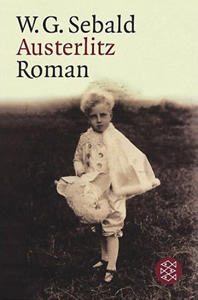
De Duitse schrijver W.G. Sebald werd geboren in Wertach (Allgäu) op 18 mei 1944. Zie ook alle tags voor W. G. Sebald op dit blog.


Uit: Austerlitz (Vertaald door Anthea Bell)


“It was several months after this meeting in Liege that I came upon Austerlitz, again entirely by chance, on the old Gallows Hill in Brussels, on the steps of the Palace of justice which, as he immediately told me, is the largest accumulation of stone blocks anywhere in Europe. The building of this singular architectural monstrosity, on which Austerlitz was planning to write a study at the time, began in the 1880s at the urging of the bourgeoisie of Brussels, over-hastily and before the details of the grandiose scheme submitted by a certain Joseph Poelaert had been properly worked out, as a result of which, said Austerlitz, this huge pile of over seven hundred thousand cubic meters contains corridors and stairways leading nowhere, and doorless rooms and halls where no one would ever set foot, empty spaces surrounded by walls and representing the innermost secret of all sanctioned authority.

Austerlitz went on to tell me that he himself, looking for a labyrinth used in the initiation ceremonies of the Freemasons, which he had heard was in either the basement or the attic story of the palace, had wandered for hours through this mountain range of stone, through forests of columns, past colossal statues, upstairs and downstairs, and no one ever asked him what he wanted.

During these wanderings, feeling tired or wishing to get his bearings from the sky, he had stopped at one of the windows set deep in the walls to look out over the leaden gray roofs of the palace, crammed together like pack ice, and down into ravines and shaft-like interior courtyards never penetrated by any ray of light.”


 1394339-650bb5da47c36f6f56c21479176af8d4.jpg

W.G. Sebald (18 mei 1944 – 14 december 2001)


De Franse schrijver
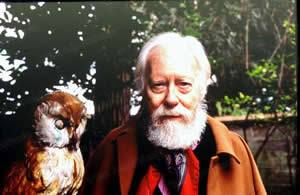
François Nourissier werd geboren op 18 mei 1927 in Parijs. Zie ook alle tags voor François Nourissier op dit blog.


Uit: Lettre à mon chien


« S’il est vrai qu’on a les chiens qu’on mérite, comme je suis fier de ta démence et de tes tendresses ! Dans cette vie de partout corsetée, colmatée, nourrie de labeurs et de décorations, tu es la fuite du cœur, la fissure par où s’insinuent les déraisons. Il y a trente ans je ne t’aurais pas méritée, justement, j’étais trop empêtré d’ordre et de calculs. Je croyais aux investissements. »
"Chaque matin à mon réveil, tu me rappelles - leçon sans prix - que la gravité est une grimace repoussante et que seules comptent les fêtes de la vie. Puissé-je m'en souvenir au jour de la grande peine de ton départ - si je suis là pour la souffrir."
(…)


"Chaque matin à mon réveil, tu me rappelles - leçon sans prix - que la gravité est une grimace repoussante et que seules comptent les fêtes de la vie. Puissé-je m'en souvenir au jour de la grande peine de ton départ - si je suis là pour la souffrir."


 1394339-e7c773927f04d0e85718d57bcb59d74e.jpg

François Nourissier (18 mei 1927 – 15 februari 2011)


De IJslandse dichter en schrijver Gunnar Gunnarsson werd geboren op 18 mei 1889 in Fljótsdalur. Zie ook alle tags voor Gunnar Gunnarsson op dit blog.


Uit: Father And Son (Vertaald door Peter Foote)


“Among the few words that passed between them, however, was one sentence that came up again and again--when old Snjolfur was talking to his son. His words were:

The point is to pay your debts to everybody, not owe anybody anything, trust in Providence.

In fact, father and son together preferred to live on the edge of starvation rather than buy anything for which they could not pay on the spot. And they tacked together bits of old sacking and patched

and patched them so as to cover their nakedness, unburdened by debt.

Most of their neighbours were in debt to some extent; some of them only repaid the factor at odd times, and they never repaid the whole amount. But as far as little Snjolfur knew, he and his father had

never owed a penny to anyone. Before his time, his father had been on the factor's books like everyone else, but that was not a thing he spoke much about and little Snjolfur knew nothing of those

dealings.

It was essential for the two of them to see they had supplies to last them through the winter, when for many days gales or heavy seas made fishing impossible. The fish that had to last them through the

winter was either dried or salted; what they felt they could spare was sold, so that there might be a little ready money in the house against the arrival of winter. There was rarely anything left, and

sometimes the cupboard was bare before the end of the winter; whatever was eatable had been eaten by the tune spring came on, and most often father and son knew what it was like to go hungry”.


1394339-6e306ae8dc4afdf07a2d82fd84104d4a.jpg 

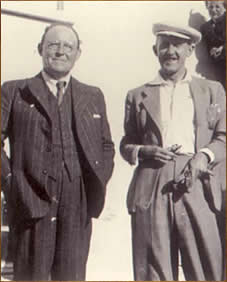
Gunnar Gunnarsson (18 mei 1889 – 21 november 1975)

Hier met collega schrijver Halldór Laxness (rechts) in 1947


Zie voor nog meer schrijvers van de 17e mei ook mijn vorige blog van vandaag.

Geschreven door Romenu om 14:48 Reageer op dit bericht

Ernst Wiechert, Omar Khayyam, Franziska zu Reventlow, Bertrand Russell, John Wilson

De Duitse dichter en schrijver Ernst Wiechert werd geboren op 18 mei 1887 in Kleinort bij Sensburg in Oostpruisen.(Tegenwoordig Polen). Zie ook alle tags voor Ernst Wiechert op dit blog.


Uit: Der Knecht Gottes Andreas Nyland


„Und als ich auf die alte Welt zurückblickte, erkannte ich. daß es eine fremde Welt war. Wie Andreas Nyland war ich durch die große Wandlung gegangen, und als der "Mann in der Öde" kehrte ich zu meinem Tagewerk zurück.
Aber jedes Tagewerk ist unerbittlich an die alte Welt gebunden, und sie läßt nicht zu. daß wir das Steuer nach dem Unendlichen drehen. Das Unendliche liegt immer nur im Reich des Geistes, und so entstand der "Knecht Gottes". Dieselbe Lampe leuchtete auf seine Blätter, die den "Totenwolf" beschienen hatte, aber die Achse des Lebens hatte sich schweigend gewendet, und der Haß stand im fallenden Hause.
Mit der Dumpfheit der Idee gebar sich die Dumpfheit des Charakters wie der Handlung, und dieselbe Unerbittlichkeit, die den Verfasser über stürzende Götter ins Abseitige und Einsame getrieben hatte, treibt den Knecht Gottes aus der Welt des Seienden in das Tal. wo Gott ihn begrub. Denn immer noch war mir, selten zum Vorteil, Erkennen gleich Bekennen, nur daß das Kunstwerk in ungeheurer Projektion an den Himmel des Begreifens schleudern muß, was im niedrigen Licht des Lebens eng und bescheiden aus dem Schatten sich hebt.
Unter der letzten Zeile dieses Buches stand "Kein Ende". Noch war die Furcht vor dem "Alles oder Nichts" zu überwinden, noch zögerte die Hand, den letzten Faden von der Spindel laufen zu lassen.
Nach Jahresfrist erst befreite der Mut zum Letzten den Schöpfer wie das Werk.
Gewiß, alles dieses ist schon geschrieben worden. Aber läßt sich nicht alle Kunst im Grunde auf ein paar ewige Dinge und Verhältnisse zurückführen, wie alle erschütternden Klänge von Gottes- und Menschenhand auf sieben Töne? Und ist unser Ringen mit dem Engel Gottes im Morgenrot eine zwecklose und leere Gebärde, weil Jakob mit ihm gerungen hat an der Furt des Jabbok?“


1394337-f75cf1bc522d8d9a5a01b4a0dd3f186c.jpg 

Ernst Wiechert (18 mei 1887 – 24 augustus 1950)


De Perzische dichter Omar Khayyám, of zoals zijn arabische naam luidt, al-Imâm Abu Hafs 'Omar ebn Ebrâhim al-Khayyâmi, werd geboren op 18 mei 1048 te Nishapur. Zie ook alle tags voor Omar Khayyám op dit blog.


Kwatrijnen


Met mijn begeerten strijd ik; wat te doen?
‘t Berouwt mij dat ‘k verloor; maar wat te doen?
Ofschoon Gij kwijtscheldt wat ik deed, de schande
Te weten, dat Gij ‘t weet, blijft; wat te doen?


Voor U draag ik gewillig elke smaad.
Breke ik mijn eed, zoo treff’ mij smart en haat.
En moest ik lijden tot den jongsten dag,
Het zou te kort zijn voor mijn euveldaad.


Geen zoete slok is hier door ons gedronken,
Of schielijk werd een bittre drank geschonken.
Geen bete broods werd in het zout gestipt,
Met zout gewreven rauw de wonden blonken.


Wees vrolijk, want wat baat het dat gij treurt.
Pluk snel uw oogenblik als ‘t open geurt.
Wees blij, dat hemels gunst niet eeuwig duurt,
Want anders kwam er nooit voor u een beurt.


Vertaald door Willem de Mérode


 1394337-64a1b41baf0820f95d8db1bed289fac8.jpg

Omar Khayyam (18 mei 1048 - 4 december 1131)

Beeld bij het mausoleum in Nishapur


De Duitse schrijfster Franziska (gravin) zu Reventlow werd geboren op 18 mei 1871 in Husum. Zie ook alle tags voor Franziska zu Reventlow op dit blog.


Uit: Ellen Olestjerne


„Die Freifrau Anna Juliane war eine schöne, stattliche Frau mit raschen, dunklen Augen und eiserner Tatkraft – von früh bis spät auf den Beinen, um überall nach dem Rechten zu sehen. Aber dabei hatte sie nichts Leichtes in ihrer Art, das Leben zu nehmen, es türmte sich alles vor ihr auf wie ein Berg, über den sie nie hinaussehen konnte – die Wirtschaft, der große Haushalt, die Kinder, tausend Dinge, die täglich zu tun und zu überlegen waren und ihr beständig im Kopf herumgingen. Seit ihre Älteste erwachsen war, hatte sie nun wenigstens jemand, mit dem sie das alles teilen und beraten konnte, während sie des Vormittags im Garten saßen, Wäsche ausbesserten oder Obst zum Einkochen schälten.

Wenn nur das Heu von den Strandwiesen hereinkäme, ehe es wieder Regen gab und alles zugrunde ging wie im vorigen Jahr – Gott weiß, der Vater hatte diesen Frühling schon genug Ärger gehabt; das durfte nicht noch dazu kommen. Wie lange würde sich Nevershuus überhaupt noch halten lassen, bei all den mißlichen Verhältnissen?

»Ach Mama«, sagte dann wohl Marianne in ihrer ruhigen Weise, »quäl' dich doch nicht darum, es hat ja noch Zeit bis zur Heuernte.«

Aber die Mutter war schon längst wieder bei anderen Gedanken – ob Marianne meinte, daß das neue Kindermädchen zuverlässig sei? Ellen und Detlev waren in letzter Zeit gar so unbändig, und sie hatte jetzt doch nur die beiden Kleinen zu hüten. Und wie würde es Erik nun wohl auf der Schule gehen – mit Kai wollte es ja immer noch nicht recht vorwärts, und vor allem war seine Gesundheit eine rechte Sorge. Ja, Sorgen überall, und Sorgen mußten ja sein. Es war ein Wort, das die Freifrau häufig gebrauchte, und wenn sie dabei angekommen war, konnte sie so aus tiefster Seele heraus seufzen. Dann fiel ihr plötzlich wieder ein, daß sie versäumt hatte, irgend etwas anzuordnen, und sie ging mit ihrem raschen Schritt ins Haus hinein, um es nachzuholen.“


1394337-800ef163710feeaf9cf3ae7961bce906.jpg
Franziska zu Reventlow (18 mei 1871 – 25 juli 1918)

Hier met haar zoon Rolf


De Britse filosoof, logicus, wiskundige en politiek activist Bertrand Arthur William Russell werd geboren in Trellech (Monmouthshire), Wales, op 18 mei 1872. Zie ook alle tags voor Bertrand Rusell op dit blog.


Uit: In Praise of Idleness


“But, I shall be told, the case is quite different when savings are invested in industrial enterprises. When such enterprises succeed, and produce something useful, this may be conceded. In these days, however, no one will deny that most enterprises fail. That means that a large amount of human labor, which might have been devoted to producing something that could be enjoyed, was expended on producing machines which, when produced, lay idle and did no good to anyone. The man who invests his savings in a concern that goes bankrupt is therefore injuring others as well as himself. If he spent his money, say, in giving parties for his friends, they (we may hope) would get pleasure, and so would all those upon whom he spent money, such as the butcher, the baker, and the bootlegger. But if he spends it (let us say) upon laying down rails for surface card in some place where surface cars turn out not to be wanted, he has diverted a mass of labor into channels where it gives pleasure to no one. Nevertheless, when he becomes poor through failure of his investment he will be regarded as a victim of undeserved misfortune, whereas the gay spendthrift, who has spent his money philanthropically, will be despised as a fool and a frivolous person.

All this is only preliminary. I want to say, in all seriousness, that a great deal of harm is being done in the modern world by belief in the virtuousness of work, and that the road to happiness and prosperity lies in an organized diminution of work.”


1394337-d893f9f482034ffa6e674df1068559f5.jpg 

Bertrand Russell (18 mei 1872 – 2 februari 1970)


De Schotse schrijver
John Wilson werd geboren in Paisley op 18 mei 1785. Zie ook alle tags voor John Wilson op dit blog.


Prayer to Sleep


O gentle Sleep, wilt thou lay thy head
For one little hour on thy lover's bed,
And none but the silent stars of night
Shall witness be to our delight!
Alas! 'tis said that the couch must be
Of the Eider-down that is spread for thee,
So, I in my sorrow must lie alone,
For mine, sweet Sleep! is a couch of stone.
Music to thee I know is dear;
Then, the saddest of music is ever here,
For Grief sits with me in my cell,
And she is a syren who singeth well.
But thou, glad Sleep! lovest gladsome airs,
And wilt only come to thy lover's prayers
When the bells of merriment are ringing,
And bliss with liquid voice is singing.
Fair Sleep! so long in thy beauty wooed,
No rival hast thou in my solitude;
Be mine, my Love! and we two will lie
Embraced for ever—or awake to die!
Dear Sleep! farewell!—hour, hour, hour, hour,
Will slowly bring on the gleam of morrow,
But thou art Joy's faithful paramour,
And lie wilt thou not in the arms of Sorrow.


1394337-b9627d29f471dc182e5334464f4d20e0.jpg 

John Wilson (18 mei 1785 - 3 april 1854)

Anoniem portret
Geschreven door Romenu om 14:44 Reageer op dit bericht

Meer van Romenu

↑ Terug naar de berichten