

Naar de inhoud

Romenu

Over literatuur, gedichten, kunst en cultuur
seniorennet.beseniorennet.be

Berichten van 28 september 2014

Philip Huff, Ellis Peters, Ben Greenman, Thijs Zonneveld, Prosper Mérimée
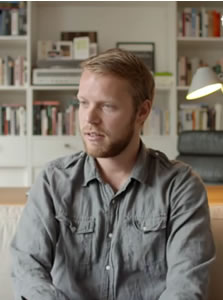
De Nederlandse schrijver Philip Huff werd geboren op 28 september 1984 in Zwolle. Zie ook alle tags voor Philip Huff op dit blog.

Uit: Boek van de doden

“De pijn van mijn bovenarm straalt nu ook uit naar mijn schouder. De huizen van de Vijzelgracht trekken aan ons voorbij. Hier en daar zijn nog lampen aan.
Mijn neus is een schoorsteen voor hete lucht, mijn borstkas de korf waarin de kolen gloeien. En mijn hart bonkt hoog en hard en hevig in mijn hals, op de vlucht voor de hitte.
De drugs zijn als een druppel inkt in een glas water en geven nu kleur aan mijn gedachten.
Op de Stadhouderskade zeg ik tegen de taxichauffeur: ‘Kunt u hier rechtsaf gaan?’
De lobby van het hotel op de Prinsengracht is hoog en groot en licht. Het is een van de weinige hotels waar ik niet met Victoria ben geweest. De liftschachten zijn van glas gemaakt; een zwart, metalen mechaniek schuift langzaam omhoog. In de stoelen van de lounge zitten vier mensen. Amerikanen, zo te horen. Ik heb moeite met de twintig stappen naar de receptie. Het is heel licht in mijn hoofd en ik heb het warm, mijn hart slaat zo snel dat het amper bloed rondpompt.
‘Goedenavond,’ zeg ik tegen de vrouw achter de balie. ‘Vannacht wilden wij de romantiek hoogtij laten vieren.’ Ik ben blij dat ik iets heb om tegenaan te leunen, want ik klink bijna buiten adem. Ik kijk kort over mijn schouder, naar Hannah, die nog bij de schuifdeuren naar een of andere foto staat te kijken. ‘Wat wij ons afvroegen,’ zeg ik, ‘is of u nog kamers heeft.’
De vrouw knikt. Ze draagt een zwart mantelpak. ‘Wilt u uitzicht op de binnentuin of op het water?’
Hannah komt naast mij staan.
‘Zeg het maar,’ zeg ik. ‘De tuin of het water?’
‘Het water,’ zegt ze, en ze lacht.”


 1658644-b2e2c9885090b00f7fca68c22ce1dc9d.jpg
Philip Huff (Zwolle, 28 september 1984)


De Engelse schrijfster Ellis Peters werd op 28 september 1913 als Edith Pargeter geboren in Horsehay. Zie ook ook mijn blog van 28 september 2010 en eveneens alle tags voor Ellis Peters op dit blog.

Uit: The Confession of Brother Haluin

“These December snows, which covered most of the west, did more than disrupt the lives of country people, starve some isolated hamlets, bury not a few hill shepherds with their flocks, and freeze all travel into enforced stillness; they overturned the fortunes of war, made sport of the preoccupations of princes, and sent history spinning off-course into the new year of 1143.
They also brought about a strange cycle of events in the abbey of Saint Peter and Saint Paul, at Shrewsbury.
In the five years that King Stephen and his cousin, the Empress Maud, had fought for the throne of England, fortune had swung between them like a pendulum many times, presenting the cup of victory to each in erratic turn, only to snatch it away again untasted, and offer it tantalizingly to the other contender. Now, in the white disguise of winter, it chose to turn probability topsy-turvy once again, and deliver the empress out of the king's mailed hands as by a miracle, just as his fist seemed closing securely on his prisoner, and his warfare triumphantly ending. Back to the beginning of the five-year struggle, and all to do again. But that was in Oxford, far away beyond the impassable snows, and some time would elapse before the news reached Shrewsbury.
What was happening in the abbey of Saint Peter and Saint Paul was no more than a small annoyance by comparison, or seemed so at first. An envoy from the bishop, lodged in one of the upper chambers of the guest hall, and already irritated and displeased at being halted here perforce until the roads were passable again, was unpleasantly awakened in the night by the sudden descent of a stream of icy water onto his head, and made very sure that everyone within range of his powerful voice should hear of it without delay.”


 1658644-76e34e2a398f50d1f7bbe5dc0f8716ba.jpg
Ellis Peters (28 september 1913 – 14 oktober 1995)


De Amerikaanse schrijver en uitgever Ben Greenman werd geboren op 28 september 1969 in Chicago. Zie ook mijn blog van 28 september 2010 en eveneens alle tags voor Ben Greenman op dit blog.

Uit: Marlon Brando's dreaming

“My intent after eating the lasagna was to march right into Taluwa's bedroom and look for the original bottle, after which I would replace it on the dresser where it belonged. But while I was still wiping the last drabs of tomato sauce from my neck, I suffered a dizzy spell that swiftly did away with any thought of ascending the stairs. My episodes, as Taluwa likes to call them, began about ten years ago as infrequent nuisances. Today, they are so common that I cannot often distinguish them from their absence. When they come upon me, my mind melts into a muddle. In The Island of Dr. Moreau, a film I consider to be my greatest accomplishment, I wrote much of my own dialogue, including the film's greatest line of dialogue, which also happens to be the greatest line of dialogue ever spoken in the history of cinema: "I have seen the devil in my microscope, and I have chained him." When Val Kilmer heard me speak that line for the first time, he fell to his knees. David Thewlis told me later that he thought that Val had simply tripped over one of the man-beast costumes, but I refuse to listen to jealous chatter. Were I to remake that film, and it is entirely possible that I might, I would rewrite the greatest line of dialogue ever spoken in the history of cinema to make it even greater. "I have seen the devil in my mind," I would say, "and I have claimed him." Let Thewlis tell me that any man who falls to his knees in the wake of that line is merely tripping over a half-lion's-head, half-man's-head mask!”


 1658644-829e6a909c351f5f0955156ffd2cf193.jpg
Ben Greenman (Chicago, 28 september 1969)


De Nederlandse schrijver, journalist en columnist Thijs Zonneveld werd geboren op 28 september 1980 in Sassenheim. Zie ook mijn blog van 28 september 2010 en eveneens alle tags voor Thijs Zonneveld op dit blog.

Uit: Bordopschootnostalgie (Column)

“De naam IJsbrand Chardon is een tijdmachine. Als ik 'm hoor word ik een jaartje of twintig à vijfentwintig terug in de tijd geslingerd. Zie ik mezelf ineens voor de tv zitten (bord op schoot uiteraard) met groene knieën van het voetballen. Knikkers in mijn ene broekzak, voetbalplaatjes ("Zestien Wout Holverda's voor één Marco van Basten?") in de andere.
Ruik ik de sigarenrook van mijn opa die 's morgens op de koffie is geweest. Hoor ik mezelf discussiëren met mijn broertje of die ene hockeyer nou Stefan Veen of Steef van Veen heette. (Ik weet het overigens nog steeds niet.)
Het commentaar van Hans Eijsvogel, de gebroeders Willemse en het woord bakkenist, de oude tune van Studio Sport (pwepwepweeepwepwe-pwepwepwepwepwe-p-pwe-pwe-pwe-pwe), de stiftjes van Dennis Bergkamp, de banaanschoten van Eric van der Luer ("Komt dat schóóóóót!") en jezelf afvragen waar de nek van Jozsef Kiprich is - het valt allemaal onder IJsbrandchardonbordopschootnostalgie.
Kapstok
Sport is een kapstok voor herinneringen. Vraag aan een willekeurige kerel op straat waar hij vier jaar geleden begin juli was en hij heeft geen enkel idee - vraag hem waar hij Nederland-Spanje heeft gekeken en hij weet het ineens. Dat we in de zomer van 1988 op vakantie gingen naar Frankrijk weet ik alleen nog omdat ik Steven Rooks in de bolletjestrui zie rijden op het mistige beeld van het tv'tje in de campingwinkel.”


 1658644-10ec75e1d7ac295ab5cd05fb1e7657bc.jpg
Thijs Zonneveld (Sassenheim, 28 september 1980)


De Franse schrijver, historicus en archeoloog Prosper Mérimée werd geboren in Parijs op 28 september 1803. Zie ook mijn blog van 28 september 2010 en eveneens alle tags voor Prosper Mérimée op dit blog.

Uit: Carmen (Vertaald door Lady Mary Loyd)

« I had hired a guide and a couple of horses at Cordova, and had started on my way with no luggage save a few shirts, and Caesar's Commentaries. As I wandered, one day, across the higher lands of the Cachena plain, worn with fatigue, parched with thirst, scorched by a burning sun, cursing Caesar and Pompey's sons alike, most heartily, my eye lighted, at some distance from the path I was following, on a little stretch of green sward dotted with reeds and rushes. That betokened the neighbourhood of some spring, and, indeed, as I drew nearer I perceived that what had looked like sward was a marsh, into which a stream, which seemed to issue from a narrow gorge between two high spurs of the Sierra di Cabra, ran and disappeared.
If I rode up that stream, I argued, I was likely to find cooler water, fewer leeches and frogs, and mayhap a little shade among the rocks.
At the mouth of the gorge, my horse neighed, and another horse, invisible to me, neighed back. Before I had advanced a hundred paces, the gorge suddenly widened, and I beheld a sort of natural amphitheatre, thoroughly shaded by the steep cliffs that lay all around it. It was impossible to imagine any more delightful halting place for a traveller. At the foot of the precipitous rocks, the stream bubbled upward and fell into a little basin, lined with sand that was as white as snow. Five or six splendid evergreen oaks, sheltered from the wind, and cooled by the spring, grew beside the pool, and shaded it with their thick foliage. And round about it a close and glossy turf offered the wanderer a better bed than he could have found in any hostelry for ten leagues round.
The honour of discovering this fair spot did not belong to me. A man was resting there already—sleeping, no doubt—before I reached it. Roused by the neighing of the horses, he had risen to his feet and had moved over to his mount, which had been taking advantage of its master's slumbers to make a hearty feed on the grass that grew around. He was an active young fellow, of middle height, but powerful in build, and proud and sullen-looking in expression. His complexion, which may once have been fine, had been tanned by the sun till it was darker than his hair. One of his hands grasped his horse's halter. In the other he held a brass blunderbuss.”


 1658644-8fc8302d4a71101db04d9c1efa7d10bc.jpg
Prosper Mérimée (28 september 1803 – 23 september 1870)
Janara Kellerman in de rol van Carmen” in Des Moines, 2007


Zie voor nog meer schrijvers van de 28e september ook mijn vorige blog van vandaag.

Geschreven door Romenu om 19:20 Reageer op dit bericht

Albert Vigoleis Thelen, Francis Turner Palgrave, Rudolf Baumbach, Noël Laflamme, Agnolo Firenzuola, Waclaw Berent

De Duitse schrijver en criticus Albert Vigoleis Thelen werd geboren in Süchteln op 28 september 1903. Zie ook mijn blog van 28 september 2010 en eveneens alle tags voorAlbert Vigoleis Thelen op dit blog.

Uit: Die Insel des zweiten Gesichts

„Vor einer anderen Fonda stand händeringend der Wirt und wehrte sich zweier Gäste, die ihm, wie es schien, zu Leibe gehen wollten. Ich trat als Führer dazwischen. Also endlich lasse ein Führer sich sehen! und was das wieder für eine namenlose Schweinerei sei - "bitte, kommen Sie mit!"
Die Fonda war nicht so hochromantisch wie die Taberne zum Schreibenden Cervantes, aber doch auch typisch spanisch, sogar echt mallorquinisch. Drei Dutzend Menschen blickten mir finster entgegen. Raubmord? Vergewaltigung?
"Herr Führer, sind Sie Deutscher?"
"Spanier, aber in Deutschland aufgewachsen." "Dann sind Sie ja mit unserer Sprache genügend vertraut, um zu wissen, was ein Saufraß ist. Das hier ist ein Saufraß, das gehört in den Trog."
Der Sprecher der Rotte zeigte auf seinen Teller, auf dem ein gerösteter Fisch lag, der sich vor Verzweiflung in den Schwanz biss, in der Sprache der feinen Küche: er war gekrollt. Ich kannte die Art, ein fades Essen, nur mit viel Zitrone zu genießen, freilich sehr nahrhaft, hochprozentiger Eiweißträger. Wenn in einer so kleinen Stadt und noch ohne rechtzeitige Anmeldung die Touristen zu Tausenden abgespeist werden mussten, griffen die Köche zu diesem Fisch, der sich in großen Mengen rasch und billig fangen lässt. Der Wirt konnte sich nicht verständlich machen, die Kellner blickten voll Verachtung auf die schimpfenden Fremden, die wie Sträflinge in den Hungerstreik getreten waren. Zu Hause fraß das Hering mit Sauerkraut. Ich musste handeln, heiliger Petrus, stehe deinem Vigoleis bei! Ich klopfte ans Glas und bat um Gehör:
Die Deutschen seien ein großes Volk, ein begabtes Volk, ein kluges Volk.“


 1658647-f5e58be7c3f3ebc1a4a77c64aeadfe58.jpg
Albert Vigoleis Thelen (28 september 1903 - 9 april 1989)


De Britse criticus en dichter Francis Turner Palgrave werd geboren op 28 september 1824 in Great Yarmouth. Zie ook mijn blog van 28 september 2010 en eveneens alle tags voorFrancis Turner Palgrave op dit blog.


Sidney At Zutphen

October 2: 1586

1
Where Guelderland outspreads
Her green wide water-meads
Laced by the silver of the parted Rhine;
Where round the horizon low
The waving millsails go,
And poplar avenues stretch their pillar'd line;
That morn a clinging mist uncurl'd
Its folds o'er South-Fen town, and blotted out the world.

2
There, as the gray dawn broke,
Cloked by that ghost-white cloke,
The fifty knights of England sat in steel;
Each man all ear, for eye
Could not his nearest spy;
And in the mirk's dim hiding heart they feel,
--Feel more than hear,--the signal sound
Of tramp and hoof and wheel, and guns that bruise the ground.


 1658633-5bc337b38e32d625daf574fc2d169625.jpg
Francis Turner Palgrave (28 september 1824 – 24 oktober 1897)
Sir Philip Sidney At The Battle Of Zutphen door Ron Embleton, z.j.


De Duitse dichter Rudolf Baumbach werd op 28 september 1840 geboren in Kranichfeld/Ilm. Baumbach groeide op in Meiningen. Zie ook mijn blog van 28 september 2010 en eveneens alle tags voorRudolf Baumbach op dit blog.


Sturmwind kam herangejagt

Sturmwind kam herangejagt
wild über Hügel und Heide.
"Neigt Euch!" rief die Erle verzagt.
"Beugt Euch!" rief die Weide.

Sturmwind rast durchs Baumgeäst,
Zweige knarren und knacken;
nur die Eiche steht trotzig fest,
beugt nicht Haupt und Nacken.

Singend sein wildes Siegeslied
weiter durch Wald und Wiese
zog der Sturm. - In Moos und Ried
lang der gestürzte Riese.

Und die Erle zur Weide sprach:
"Siehe, wir leben alle
und die Eiche, die starke brach,
Übermut kommt zu Falle."

Todwund sprach der gewaltige Baum:
"Will Euch das Leben nicht neiden.
Sterben muß ich; ich schaffe Raum
schmiegsamen Erlen und Weiden.

Wieget im Winde das grüne Haar
über der modernden Leiche!
Erlen und Weiden, ihr dauert, ich war,
aber ich war - die Eiche!"


 1658633-921c6293020dc256654ab5fee8309d89.jpg
Rudolf Baumbach (28 september 1840 – 21 september 1905)
Monument in Meiningen


De Canadese schrijver Noël Laflamme werd geboren op 28 september 1950 in Saint-Adrien-d'Irlande als vijfde van in totaal dertien kinderen. Zie ook alle tags voor Noël Laflamme op dit blog.

Uit: Sous la surface des choses

« Ce soir, Monsieur Belzile faisait donc sa promenade vespérale coutumière. Sans sa brave épouse, cela va sans dire. La rue est déserte. Le ciel, tout propre et tavelé d’étoiles, est présage de beau temps. Mais il faudrait plus, beaucoup plus qu’une soirée d’été parfaite pour rendre Monsieur Richard Belzile heureux. Il avançait, les mains derrière le dos, l’œil distrait, le sourcil perplexe, l’esprit enveloppé dans un vague à l’âme en voie de devenir sa seconde nature : où que j’aille, se disait-il, un sentiment défaitiste, déprimant, m’accompagne, tel un chien fidèle.
Il avait poussé un long soupir, puis levé un moment les yeux au ciel. La vue de cette immense coupole bleu sombre, toute riante d’étoiles, en principe propice au surgissement d’élans lyriques et de sentiments d’émerveillement, avait produit chez lui l’effet contraire : il y avait vu autant d’yeux malicieux qui le narguaient, qui se gaussaient de lui parce qu’il était demeuré dans l’illusion pendant de si longues années. Mais son envie de lancer à haute voix des imprécations contre ce ciel outrecuidant était morte à peine née : tel un vulgaire sac de pommes de terre, Monsieur Belzile avait disparu soudain de la surface de la terre. Un trou venait en effet de l’avaler tout d’une pièce. Par la faute d’un employé municipal qui aura négligemment omis de remettre en place le lourd opercule de fer d’une bouche d’égout. Monsieur Belzile n’avait eu que le temps d’émettre un bruit de gorge étouffé, un grognement de pourceau. Il gisait, pour lors, sans connaissance, au fond de l’excavation partiellement enténébrée. Jusqu’au moment où…”


 1658633-2f7c7c3f57075cd6e89102c532196989.jpg
Noël Laflamme (Saint-Adrien-d'Irlande, 28 september 1950)
Saint-Adrien-d'Irlande(Geen portret beschikbaar)


De Italiaanse dichter en schrijver Agnolo Firenzuola (eigenlijk Michelangelo Girolamo Giovannini) werd geboren op 28 september 1493 in Florence. Zie ook alle tags voor Agnolo Firenzuola op dit blog.

Uit: Of the Beauty of Women, Dialogue
 
“Now you must know that a fair yellow is a not very hot yellow nor very pale, but verging on tan with somewhat more lustre; and albeit not altogether like gold, yet often likened to it by poets ; since you know that they are wont to say (as Petrarca doth in many places) that a lady's hair is of fine gold, woven in a crown of bright and crisped gold : " Her golden hair fluttered in the wind ;" and you know that the true and right colour for hair is a fair yellow.
Tawny is of two degrees, one verging on yellow, and this is not for us ; the other much darker, which is called tan colour, and two brushfuls will be enough of that.
Of black I need give no description, since it is known to all, and that Florentine lady whom you made so welcome hath her full share of it. And the more dense and dark it is the finer it is.
Red is that fiery hue which we see in cochineal, in coral, in rubies, in the flower of the pomegranate, and the like ; and we find it more or less fiery, and more or less unmingled, as we see in the objects named.
Vermilion likewise is a kind of red, but less strong ; in short, it is the hue which resembles the cheek of fair Francolina di Palazzuolo when she is provoked, and this maiden seems to me to bear away the prize for bright carnations in these parts.”


 1658633-99391bf6ea9b2e29d7f2a7c482f7deea.jpg
Agnolo Firenzuola (28 september 1493 - 27 juni 1543)
Cover


De Poolse schrijver en vertaler Waclaw Berent werd geboren op 28 september 1873 in Warschau. Zie ook mijn blog van 28 september 2010.

Uit: Wintersaat (Nawoord)

„Das Buch verlangt vom Leser Einfühlung und Mitarbeit. Be­rents Sprache war schon 1910, als die Blütezeit des Jungen Polen mit seinen stilistischen Manierismen noch gar nicht lange zurücklag, vielen allzu barock und zu stilisiert. Ein Kritiker schlug gar vor, den Roman erst einmal ins “nor­male Polnisch” zu übersetzen, was sicherlich ungerecht war, weil die Sprache Berents, von Roman zu Roman anders, eine gewollte, auch symbolische Funktion zu erfüllen hat. Mehr noch erregte die Gemüter, daß sie hier ein geradezu apokalyptisch düsteres Gemälde der polnischen Gesell­schaft zu sehen bekamen, ohne darin eine positive Identifikationsfigur zu finden. Harten Umgang mit den nationalen Gefühlen hatte man — seit Słowacki (1809-1849), seit Wyspiański (1869 - 1907), zwei Namen, die im Zusammenhang mit WINTERSAAT am häufigsten fielen — zu akzeptieren gelernt. Berent aber, so hieß es, sei ein kaltblütiger Beobach­ter, der zu viel Galle aus seiner Feder fließen lasse. Das “Weichselland” litt seit mehr als einem Jahrhundert unter der Herrschaft des Zarenreiches, aber Berent ließ ausgerechnet einen russischen Oberst, der doch mit für die allge­meine Stagnation und für den “polnischen Friedhof” verant­wortlich war, den Verfall von Tatkraft und Lebensfreude in diesem Land beklagen. Der Gestalt des “guten Russen”, die durchaus ihre literarischen Vorläufer besaß, wurden hier Äußerungen in den Mund gelegt, die allgemein provozier­ten. Es gab aber doch Figuren, die in der Tradition der Romantik vertraut und positiv waren. Der alte Komie­rowski etwa wurde leicht als Held und als Vorbild empfun­den: Er ist bei Berent der symbolhaft stilisierte “alte Kämpe”, dessen Lebenslauf sämtliche Aufstände und Be­freiungskämpfe der Polen im 19. Jahrhundert erfaßt, das personifizierte “Gewissen der Nation”, das wie ein Gespenst der unbewältigten Romantik umherirrt, während sich alles ringsum dem positivistischen Aufbau (der “organischen Arbeit”) widmet oder der selbstvergessenen Genußsucht frönt.


1658633-4f315872c2ca993113600c1d23e454b6.jpg
Waclaw Berent (28 september 1873 - 19 of 22 november 1940)

Geschreven door Romenu om 19:17 Reageer op dit bericht

Robert Thomas

De Franse schrijver, regisseur en acteur Robert Thomas werd geboren op 28 september 1927 in Gap.
Thomas ontdekt op de leeftijd van 14 jaar zijn passie voor het moderne theater. Op zijn 18e verliet hij zijn familie en ging naar Parijs, waar hij als telegrafist en als figurant in meer dan 50 films in zijn levensonderhoud voorzag, maar daarnaast schreef hij ook toneelstukken, die echter niet uitgevoerd werden. Na zijn militaire dienst werkte hij in Rouen in het theater. Met zijn achtste stuk kwam het grote succes en de Prix du Quai des Orfèvres. Het was het detectivespel “Piège pour un homme seul” (1960), dat in hetTheater Bouffes-Parisiens furore maakte. Thomas is ook de auteur van het spel “Huit Femmes”, dat in 2002 door François Ozon als “8 femmes” voor de film werd bewerkt. De theaterman Robert Thomas was van 1970 tot zijn dood in 1989 tevens directeur van "Theater Eduard VII" in Parijs en hij regisseerde de films "La Bonne Soupe" (1963) en "Patate" (1964). In Nederland werd in het seizoen 1961/62.zijn stuk ”De duivel hale ze !” (Que le diable l'emporte!),vertaald door Paul Rodenko gespeeld.

Uit:Piège pour un homme seul

“La salle de séjour dans un chalet aux environs de Chamonix. Ameublement. rustique, etc. Une porte conduit à l'office, un petit escalier aux chambres. Au fond, grande baie avec terrasse et panorama alpestre. Un bel automne.
Fin d'après-midi. Soleil pourpre.
Un certain désordre règne dans la pièce. Daniel, enveloppé dans une robe de chambre, est allongé sur le grand divan et lit un magazine. Il se sert copieusement du whisky et boit entre les bouffées de sa cigarette.
Un bruit de voiture qui s'arrête et une portière qui claque.
Daniel se dresse d'un bond et va à la baie.
Apparaît le commissaire de police.
Daniel : Bonjour, monsieur le Commissaire... Entrez...
Le Commissaire : Je ne fais que passer, monsieur Corban.
Daniel : Alors ? Alors ?
Le Commissaire : Alors... rien !
Daniel : Comment rien ?
Le Commissaire : Aucune nouvelle.
Daniel : Vous faites 5 kilomètres de Chamonix à ici pour m'annoncer que vous n'avez pas fait d'enquête ?
Le Commissaire : J'ai fait un rapport. Il suit son cours.
Daniel : Il suit son cours. Je n'en ai rien à faire. Ce que je veux, ce sont des résultats. Avez-vous des nouvelles de ma femme ? Oui ou non ?
Le Commissaire : Je vous en prie, ne criez pas, Monsieur, ou je repars!"


 1781674-7ed197e8f1961449da079b0e6c56ec29.jpg
Robert Thomas (28 september 1927 - 3 januari 1989)

Geschreven door Romenu om 00:00 Reageer op dit bericht

Meer van Romenu

↑ Terug naar de berichten