

 E. E. Cummings, Péter Nádas, Katha Pollitt, Daniël Rovers
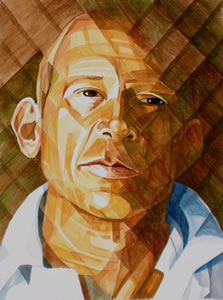
De Amerikaanse dichter en schrijver Edward Estlin Cummings werd geboren in Cambridge, Massachusetts op 14 oktober 1894. Zie ook mijn blog van 14 oktober 2008 en ook mijn blog van 14 oktober 2009 en ook mijn blog van 14 oktober 2010.
"Gay" is the captivating cognomen
"Gay" is the captivating cognomen of a Young Woman of cambridge,
mass.
to whom nobody seems to have mentioned ye olde freudian wish;
when i contemplate her uneyes safely ensconced in thick glass
you try if we are a gentleman not to think of(sh)
the world renowned investigator of paper sailors--argonauta argo
harmoniously being with his probably most brilliant pupil mated,
let us not deem it miraculous if their(so to speak)offspring has that largo
appearance of somebody who was hectocotyliferously propagated
when Miss G touched n.y. our skeleton stepped from his cupboard
gallantly offering to demonstrate the biggest best busiest city
and presently found himself rattling for that well known suburb
the bronx(enlivening an otherwise dead silence with harmless quips, out
of Briggs by Kitty)
arriving in an exhausted condition, i purchased two bags of lukewarm
peanuts
with the dime which her mama had generously provided(despite courte-
ous protestations)
and offering Miss Gay one(which she politely refused)set out gaily for
the hyenas
suppressing my frank qualms in deference to her not inobvious perturba-
tions
unhappily, the denizens of the zoo were that day inclined to be uncouthly
erotic
more particularly the primates--from which with dignity square feet
turned abruptly Miss Gay away:
"on the whole"(if you will permit a metaphor savouring slightly of the
demotic)
Miss Gay had nothing to say to the animals and the animals had nothing
to say to Miss Gay
during our return voyage, my pensive companion dimly remarlted some-
thing about "stuffed
fauna" being "very interesting" . . . we also discussed the possibility of
rain. . .
E distant proximity to a Y.W.c.a. she suddenly luffed
--thanking me; and(stating that she hoped we might "meet again
sometime")vanished, gunwale awash. I thereupon loosened my collar
and dove for the nearest l; surreptitiously cogitating
the dictum of a new england sculptor(well on in life)re the helen moller
dancers, whom he considered "elevating--that is, if dancing CAN be ele-
vating"
Miss(believe it or)Gay is a certain Young Woman unacquainted with the
libido
and pursuing a course of instruction at radcliffe college, cambridge, mass.
i try if you are a gentleman not to sense something un poco putrido
when we contemplate her uneyes safely ensconced in thick glass
E. E. Cummings (14 oktober 1894 - 3 september 1962)
Portret door John Bedford
De Hongaarse schrijver Péter Nádas werd geboren op 14 oktober 1942 in Boedapest. Zie ook mijn blog van 14 oktober 2008 en ook mijn blog van 14 oktober 2009 en ook mijn blog van 14 oktober 2010.
Uit: Parallel Stories (Vertaald door Imre Goldstein)
„They quietly blamed themselves, knowing that every word they now spoke was only making things worse, and that if it was so, it was better to be silent or to be blatantly conversational. Every word came to have a curious, sharp edge. Yet they were thinking about two different things and were genuinely not blaming the other. They could not mention what was preoccupying them, as they did not want to make things even worse. They were looking at each other. There was no trace of love or affection left in those faces. Motionless water. They both felt they had behaved scandalously in the last hours, their frivolity was scandalous and it made no sense to add to the scandal. Neither could account for the way they had behaved.
It is no wonder that each had scared off the other, pointlessly and unforgivably. They had talked too much, been too clever. Exposed themselves and betrayed the other they had loved.
What had made them so vulgar and shameless?
Yet, the people sitting and dancing around them had the impression that these two, sitting in the pool of light around the piano, had now irrevocably broken with each other. Inwardly they were examining the history of their relationship and savoured its scandalous nature.
Not only did they look at each other with indifference – accompanied by the sounds of the drums and the piano –, their entire emotional life underwent a change. Outside, in the wind, they had still felt the devastating power of their freedom, but indoors, under each other’s gaze they lost their independent personal existence.
They suffered no lapse of self-discipline, that was all right, they kept everything properly under control, but leaning over their neutralised gazes and indifferent expressions all the flavours and signals of their being were reserved for each other.“

Péter Nádas (Boedapest,14 oktober 1942)
De Amerikaanse dichteres, essayiste, critica en feministe Katha Pollitt werd geboren op 14 oktober 1949 in New York. Zie ook mijn blog van 14 oktober 2008 en ook mijn blog van 14 oktober 2009 en ook mijn blog van 14 oktober 2010.
Uit: Talk the Talk, Walk the SlutWalk
„And what do older feminists say? Frankly, I expected a lot more griping. Naturally, there was some, most vigorously from the antiporn scholar Gail Dines (Pornland), who sees SlutWalkers as man-pleasers embracing a false Girls Gone Wild “empowerment.” But mostly, feminists of all ages are cheering from the sidelines. Apparently feminists have a sense of humor after all and grasp the concepts of irony, parody and appropriation. Further proof that the evergreen narrative about feminist generation wars tends to fade away whenever feminists actually get out and do something.
Much of the media criticism of SlutWalk centers around the notion that its central purpose is to reclaim the word “slut.” I have my doubts that “slut” is ever going to be a compliment, since its history has always been negative and associated with uncleanness, whether literal or figurative (originally, a slut was a dirty kitchen maid). But who knows? Political struggles have affected language in unexpected ways before: “queer” and “gay,” once slang, are now standard; “black” used to be crude and “negro” and “colored” polite; “redneck,” once dismissive, is now a badge of pride; “kike” may be unredeemable, but there’s a Jewish magazine called Heeb. Maybe someday people will get it through their heads that sexually active females are not demons, morons, destroyers of men or fair game for rapists, and “slut” will either fade from the language or mean something else, like “woman who sleeps with people she wants to sleep with, and only those people.”

Katha Pollitt (New York,14 oktober 1949)
De Nederlandse schrijver Daniël Rovers werd geboren in Zelhem op 14 oktober 1975. Zie ook mijn blog van 14 oktober 2010.
Uit: Walter
“Het licht viel van boven op de gestuukte witte muur van de gang. Stappen tellen terwijl de druppels drogen met elke pas die je doet. De buitendeur klemde op de drempel, het hout kuchte waar het tegen steen werd gedrukt. Buitenlucht. Walter ademde in, hij rook het gras, een zweem kalverenmest, de wol van het grijze vest.
Het erf liep hij af tot aan de Hespelaar. Daar stond Bertus van Leijsen, met voor hem Bertus Junior, die de melkkar trok. Het beest liet de kop hangen, zijn tong droop uit zijn bek. De vacht van de hond was sleets geworden op de plekken waar de tuigriemen om zijn nek spanden. Junior kwijlde, Van Leijsen sprak: ‘Goeiemorge Walter, gaode gij zo vroeg al nar de kerk?’
Walter zette een hand in zijn zij en antwoordde: ‘De vroegmis vandaag, Van Leijsen.’
Van Leijsen haalde zijn neus op. ‘Jaja, nog efkes is ’t hard werke, mar dan kunde ’t er laoter ook goe van nemen.’
Waarvan zou hij het goed moeten nemen? Van Leijsen legde een hand op zijn schouder, als om hem in de aarde langs de rand van de weg te poten. ‘Ge wit wel wa da’k bedoel. Het goeie Roomse leven. Over een tien jaor is ’t al zover. Elken avend wijn uit Frankrijk drinken in de salon van de pastorie. En de bedienden die schenken ’t in vor zulliejen herder.’
Hij beaamde: ‘Dat is het goede leven, Van Leijsen.’
‘Da is ’t beste leven, jongen. Maar eerst op studie hé, en da zal nie gemakkelik zin. Da witte gij wel, hè?’
Dit wist Walter wel: dat Van Leijsen in de oorlog te veel aardappelschillen had gegeten en daarom ook de huid van een aardappel had gekregen, en dat hij in de zomer zijn zoon Krist, die er vier dagen over had gedaan om geboren te worden, aan een touw in de voortuin vastbond zodat het menneke niet de straat op kon.
Buurman Van Leijsen bleef aandringen op zijn aanwezigheid: ‘Een zoon aon ’t altaor en land aon d’Moerdaik, da is ’t beste wa d’r is.’ Hij knikte van ja, ja en nogmaals ja, haalde zijn neus op, verzamelde het slijm in zijn mond en tufte de fluim op de klinkers. Er zat groen en een zweem van roze in.
Walter deed een pas opzij, ging bijna op de voorpoot van Junior staan. De hond hapte naar het scheenbeen van zijn belager. Kaakgeklak. Uit de bek van het beest kwam putlucht zetten.”

Daniël Rovers (Zelhem, 14 oktober 1975)
Zie voor nog meer schrijvers van de 14e oktober ook mijn vorige blog van vandaag.


