Arnon Grunberg, Rob Schouten, Ruben van Gogh, Paul van Ostaijen, Hugo Ball, Danilo Kis, Sean O'Faolain, Ishmael Reed, Edna St. Vincent Millay
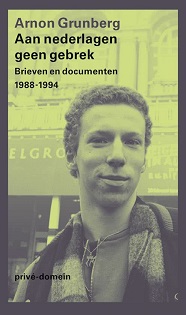
De Nederlandse schrijver Arnon Grunberg werd geboren in Amsterdam op 22 februari 1971. Zie ook alle tags voor Arnon Grunberg op dit blog.
Uit:Aan nederlagen geen gebrek
„Aan Jan Ritsema Amsterdam, 25 februari 1991
Geachte heer Jan Ritsema,
Ons gesprek van verleden week in Scheltema heeft mij met de neus op de feiten gedrukt, of was althans de katalysator daarvoor. Dat mijn tekstjes emotionele interrupties zouden zijn gaat nog niet ver genoeg, afscheidingen van een zieke zijn het. En was die ziekte nog maar iets verhevens, maar het is de meest triviale, banale ziekte die een mens zich kan indenken. Als tussen de mieren de handen waren, die mij langdurig zouden verdoven, die mij uiteen zouden rijten, geloof me, ik zou dat armzalige geploeter laten voor wat het is en tussen de mieren gaan wonen. Hierbij een kort tekstje van mij, niet naar jou gestuurd in enige functie of hoedanigheid. Meer om als wij elkaar weer eens ontmoeten in smoezelige cafés, braakliggende etablissementen, wij naast de belangrijke dingen van het leven 't een en ander de revue kunnen laten passeren. Intussen hoop ik dat de helse depressiviteit, die zo ik weet, ook jouw megalomane stemmingen met een satanisch genoegen afbreekt en doet omslaan in walging en nog eens walging, uit is gebleven.
Morgen reis ik weer af naar Rotterdam en 's avonds zal ik in café Scheltema Johanna ter Steegem treffen. Of ik daar dan werkelijk gewichtig moet doen over een of andere monoloog die ik nog moet gaan schrijven of bij gebrek aan iets beters Baudelaire zal citeren (dronken moet je zijn, dronken van de poëzie, het leven, de liefde, maar dronken moet je zijn) weet ik nog niet. Het zal wel weer bij een hoop grote woorden blijven.
Ik houd je op de hoogte, een groet en sterkte,
Arnon
Arnon Grunberg (Amsterdam, 22 februari 1971)
Cover
De Nederlandse schrijver, dichter, literatuurcriticus en columnist Rob Schouten werd geboren in Hilversum op 22 februari 1954. Zie ook alle tags voor Rob Schouten op dit blog.
Terra
Het is geen doen in deze wereld
hoe ze ook in het onaandoenlijke
als een vergeten kerstbal hangt.
Kom ook dansen bij ons, roept ze
vreemdsoortige verbinding toe
van ver over het uiterst denkbare.
Ontspannen is het bij ons onterechte,
wij hebben het rookalarm vernield,
stikken doe je maar in de buitenlucht.
Soms timmert iemand op een lessenaar.
Het is geen doen. We moeten zus.
Maar ze leeft in zichzelf verborgen:
gesteente, kijk, wat plukjes zeden.
Bewaard
Ter zelfmoord trok ik naar de spoordijk op,
kroonde mijn hoofd met rails, deed bielsen aan:
de aarde dreunt, de helling een vulkaan;
wat nu volgt, dacht ik, schrijf ik niet meer op.
Vlak voor mij trokken de rails weg, luchtop
de hemel in waarin ze niet bestaan;
de wind ging onderdrukt gemurmel aan
dat ik verstond. Ik kwam omhoog. Rob! Rob!
Was dat mijn moeder? - hoogst ontdaan stond zij
beneden aan de dijk, het avondmaal
weer in haar tas. Haar fiets beschrijft geen taal.
Dat dood mij zo verging berooide mij,
wat was er met het hiernamaals gedaan
dat men mij kende en terug zag gaan?
Het oog van de orkaan
Zo zondag dat de wind hier niet
over de pier blaast noch in 't park
de hond dolt is het mij te moede
en zulke taal ook drukt mij uit
als tube's laatste, allerlaatste...
Op straat stappen of ze mij halen:
geen jeugd, geen jacht, komt u maar mee!
maar nee, is het roerloze extase:
een stille gang, tikken zeg niks!
Hier rust lawaai van woede uit.

Rob Schouten (Hilversum, 22 februari 1954)
De Nederlandse dichter Ruben van Gogh werd geboren in Dokkum op 22 februari 1967. Zie ook alle tags voor Ruben van Gogh op dit blog.
In het heelal
In het heelal is altijd wat te doen.
Sterren planeten razen door elkaar
en moeten in banen worden geleid.
Melkwegstelsels in kaart gebracht
en onderhouden, clusters uiteen-
gerafeld. Altijd druk, altijd druk.
En dan die reizigers,
altijd hun geliefden kwijt, altijd weer.
Kosmische stormen trotserend
zweven zij die grote ruimte in
en vereenzamen.
Er valt gelukkig ook te lachen.
Lekker ineens verdwijnen
in zo'n sympathiek zwart gat:
eeuwig geborgen. Maar dan.....
Een twee drie supernova hoepla,
daar ben ik weer.
Daag.
Zintuiglijk vijfluik 1
de warme glans van je gezicht
weerkaatste in het avondlicht
- hoog van kleur en transparant
het oog wil ook wat, zei je.
ik ben al bijna bij je.
kijk me nu eens lekker dansen
in die ronding van je hand

Ruben van Gogh (Dokkum, 22 februari 1967)
De Vlaamse dichter en schrijver Paul van Ostaijen werd geboren in Antwerpen op 22 februari 1896. Zie ook alle tags voor Paul van Ostaijen op dit blog.
Vergelding
Ik ben gelukkig wijl ik mezelf 'n anders mens heb gevonden
die mij tot nog toe als een onbekende was;
hij heeft geleefd ver weg en komt nu ongeschonden
te voren in de Herfst, die voor mij als de schoonste Lente is.
Niet lang geleden
was een volmaakt sceptisch man te worden, mijn ideaal;
alle hartstocht vergeten,
het leven kalmpjes wegen en meten,
zijn enkel cerebraal,
en als een oud man, geheel bewust,
doden elke woeste levenslust.
Dikwijls heb ik tot mezelf gezegd:
Paul, je weet, het leven is niet goed, het is niet slecht,
het is slechts gewoon, gewoon door en door,
als het werk op je kantoor.
Je moet niet veel van het leven verwachten,
je moet ook niet naar dood-zijn trachten,
heel gewoon, zonder slag of stoot,
zonder dat je geleefd hebt, komt de dood.
Maar het leven heeft als 'n moeder, goed,
een hoorn van ik-weet-niet-wat-overvloed
over het hart van de verloren zoon
gestrooid, - zijn ondankbaarheid ten loon.
Ik ben zó blij, ik weet niet wat ik doen moet,
het is Herfst, en 't is mij of ik slechts kende
het eerste stralen van een nieuwe Lente
in een tere, gele gloed.
Ik zou willen lopen en elk mens
die voorbijkomt, door de lens
van mijn geluk doen kijken.
Ik ben zó blij, wijl het leven
mij ook gegeven
heeft de korte angst van 't pijnlijk wachten
op de welbeminde. En dag op dag
die 'k vroeger vlieden zag
in dorre eentonigheid, wordt tot een schaterlach:
zonnebundels van geluk.

Paul van Ostaijen (22 februari 1896 – 18 maart 1928)
Hier links met schilder Floris en beeldhouwer Oscar Jespers
De Duitse dichter en schrijver Hugo Ball werd geboren op 22 februari 1886 in Pirmasens. Zie ook alle tags voor Hugo Ball op dit blog.
Die Ersten
Die Ersten sinds, sie sind im besten Zug
Vom willenlosen Haufen sich zu lösen.
Erkennend eitel Schimmer, seichten Trug
Der großen Reden abgenützte Blößen,
Klangvolle Phrasen, ein vereinter Schwall
Der überflutet Erdehöhen und Täler,
Allüberall der gleiche Wiederhall,
Der gleiche Köder und der gleiche Wähler.
Wohl wächst der Massen Schrei nach Glück und Brot
Doch übertönt er nicht die Worte der Vertreter,
Es fallen Opfer tiefster Seelennot,
Die Masse fällt dein Zeichen der Verräter.
So lausch ich freudig, wenn mit wildem Schrei
Die Brust erfüllt von froher Zukunft ahnen
Sich einer ringt vom Heerdentaumel frei
Kraftvoll empor auf selbstgewollten Bahnen.
Kind und Traum
Kind und Traum und früher Garten
Wandeln wir durch lauter Licht.
Reifer Früchte runde Schatten
Malen sich auf dein Gesicht.
Wipfel neigen grün die Zweige
Tief in den erfüllten Grund.
Wanderselig, wundertrunken
Übt ein Vogel seinen Mund.
Sieh, es hat die schöne Sonne
Sich in deinem Haar verfangen,
Deiner Augen blaue Sterne
Sind schon in mein Lied gegangen.

Hugo Ball (22 februari 1886 – 14 september 1927)
Portret door Lon Parker, 2016
De Servische schrijver Danilo Kiš werd geboren op 22 febrari 1935 in Subotica. Zie ook alle tags voor Danilo Kiš op dit blog.
Uit: Hourglass (Vertaald door Ralph Manheim)
“I have wanted and still want to depart this life with specimens of people, flora and fauna, to lodge them all in my heart as in an ark, to shut them up behind my eyelids when they close for the last time. I wanted to smuggle this pure abstraction into nothingness, to sneak it across the threshold of that other abstraction, so crushing in its immensity: the threshold of nothingness. I have therefore tried to condense this abstraction, to condense it by force of will, faith, intelligence, madness, and love (self-love), to condense it so drastically that its specific weight will be such as to life it like a balloon and carry it beyond the reach of darkness and oblivion. If nothing else survives, perhaps my material herbarium or my notes or my letters will live on, and what are they but condensed, materialized idea; materialized life: a paltry, pathetic human victory over immense, eternal, divine nothingness. Or perhaps--if all else is drowned in the great flood--my madness and my dream will remain like a northern light and a distant echo. Perhaps someone will see that light or hear that distant echo, the shadow of a sound that was once, and will grasp the meaning of that light, that echo. Perhaps it will be my son who will someday publish my notes and my herbarium of Pannonian plants (unfinished and incomplete, like all things human). But anything that survives death is a paltry, pathetic victory over the eternity of nothingness--a proof of man's greatness and Yahweh's mercy. Non omnis moriar.”

Danilo Kiš (22 februari 1935 – 15 oktober 1989)
Cover
De Ierse schrijver Sean O'Faolain werd geboren op 22 februari 1900 in Cork. Zie ook alle tags voor Sean O'Faolain op dit blog.
Uit: The Selected Essays (The Modern Novel: A Catholic Point Of View)
“The purpose of this essay is to suggest that some of the basic problems of the modem novelist arise from the history of the novel over the last sixty years or so, and are concerned with the disappearance from the novel of the ethic which until then informed it. These problems may perhaps be seen in a clearer light by considering them from the point of view of the Catholic novelist, for the Catholic novelist sometimes feels more sharply than the non-Catholic the disabilities which the disappearance of that ethic has brought about, even as he also feels that it may yet be his task to replace the vanished ethic of the older novel, either by a fuller ethic of his own or by a purification of the remnants of values which still inform the novel — one might almost say in spite of itself. For the novel always has had, under whatever often disingenuous guise, some sense of moral and human values. So it has been from Fielding to Meredith.78 Sometimes, as in the case of Jane Austen, one wonders if there is not a destructive scepticism playing upon commonly accepted values, but the main run of the English novel has definitely established and preserved what Saintsbury called a tradition of "moral and intellectual health, of truth and honour, freedom and courtesy."79 It is patent in writers like Thackeray and Dickens and George Eliot; it is implicit in others like the Brontes; it is basic in the lesser writers like Lytton and Marryat. Then, late in the day in England, but as early as the 'sixties or 'seventies in France, a break occurred. The still popular idea of the licentious Frenchman was gathered largely from the novels of the French Restoration — from Eugene Sue, Paul de Kock, Dumas pere et fils, Flaubert, Balzac.a The dates are significant. Flaubert, for example, was sued for the alleged indecency of Madame Bovary in 1860, and that is the actual date of Adam Bede, a late date for Thackeray and Dickens, a middle date for Mrs. Gaskell.E Maupassant, Flaubert's literary son, contributed "Boule de Suif" to the Soirees de Medan, that manifesto of naturalism, to which Zola and Huysmans also contributed, in 1880 — at which date Tennyson was at his height. In that development of the novel, from realism to naturalism, which still rules the English novel, the old values were undermined. What produced this result need not concern us, though we may agree that nineteenth-century scientific research, the increasing complexity of the social atmosphere, and the rise of a sceptical democracy, had more to say to it than anything else. »

Sean O'Faolain (22 februari 1900 – 20 april 1991)
Cover
De Afro-Amerikaanse dichter, schrijver en essayist Ishmael Scott Reed werd geboren op 22 februari 1938 in Chattanooga, Tennessee. Zie ook alle tags voor Ishmael Reed op dit blog.
The Pope Replies to the Ayatollah Khomeini
My Dear Khomeini:
I read your fourteen thousand dollar
ad asking me why the Vatican waited
all of these years to send an envoy
to complain about conditions in Iran
You're right, we should have sent one
when the Shah was in power, look,
I'm in total agreement with you
Khomeini, that Christ, had he lived in
Iran under the Shah, would have led the
biggest damned revolt you ever saw
Believe me, Khomeini, I knew about
the Shah's decadence, his extravagance
his misdeeds, and how he lolled about
in luxury with Iran's loot
I knew about the trail of jewels which
led to his Dad's capture
but a fella has to eat and so when
David Rockefeller asked me to do something
how could I refuse?
You can afford to be holier than thou
What is it, 30 dollars per barrel these days?
You must be bathing in oil
While each day I suffer a new indignity
You know that rock record they made me
do? It's 300 on the Charts which is about
as low as you can get.
And I guess you read where I
had to call in all those Cardinals and
for the first time reveal the Vatican
budget?
I had to just about get down on my hands
and knees to get them to co-sign for a
loan
The Vatican jet has a mechanical problem
and the Rolls-Royce needs a new engine
The staff hasn't been paid in months
and the power company is threatening to
turn off the candles
To add to that, the building inspector
has listed us as having 30,000 code
violations
I'm telling you, Khomeini, that
so many people are leaving the church
I have this nightmare where I
wake up one day in Los Angeles and
I'm the only one left
Pretty soon we'll be one of those
cults you read about in the San
Francisco Chronicle
And so, Khomeini, I promise
you that when we pay off the
deficit, I won't send an envoy
I'll come visit you myself
I'd like to discuss this plan
that Patriarch Dimitrios, of
the Greek Orthodox Church, and I
just came up with
You know, we haven't spoken to
those fellows in 900 years but
when you are 20 million dollars
in the red
You'll talk to anybody

Ishmael Reed (Chattanooga, 22 februari 1938)
De Amerikaanse dichteres en schrijfster Edna St. Vincent Millay werd geboren op 22 februari 1892 in Rockland, Maine. Zie ook alle tags voor Edna St. Vincent Millay op dit blog.
Sonnet IX
I only know that every hour with you
Is torture to me, and that I would be
From your two piognant lovelinesses free!
Rainbows, green fire, white diamonds, the fierce blue
Of shimmering ice-bergs, or to be shot through
With lightning or a sword incessantly--
Such things have beauty, doubtless; but to me
Mist, shadow, silence--these are lovely, too.
There is no shelter in you anywhere;
Rhythmic intolerable, your burning rays
Trample upon me, withering my breath;
I will be gone, and rid of you, I swear:
To stand upon the peaks of Love always
Sonnet X
Still will I harvest beauty where it grows:
In coloured fungus and the spotted fog
Surprised on foods forgotten; in ditch and bog
Filmed brilliant with irregular rainbows
Of rust and oil, where half a city throws
Its empty tins; and in some spongy log
Whence headlong leaps the oozy emerald frog.
And a black pupil in the green scum shows.
Her the inhabiter of divers places
Surmising at all doors, I push them all.
Oh, you that fearful of a creaking hinge
Turn back forevermore with craven faces,
I tell you Beauty bears an ultrafringe
Unguessed of you upon her gossamer shawl!

Edna St. Vincent Millay (22 februari 1892 – 19 oktober 1950)
Cover
Zie voor nog meer schrijvers van de 22e februari ook mijn blog van 22 februari 2015 deel 1 en ook deel 2.
Zie voor bovenstaande schrijvers ook mijn blog van 22 februari 2007 en ook mijn blog van 22 februari 2008 en eveneens mijn blog van 22 februari 2009.