

Naar de inhoud

Romenu

Over literatuur, gedichten, kunst en cultuur
seniorennet.beseniorennet.be

Berichten van 23 december 2017

Robert Bly, Hans Tentije, Hans Kloos, Volker Jehle, Tim Fountain, Donna Tartt, Marcelin Pleynet, Norman Maclean, J.J.L. ten Kate
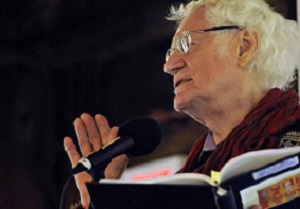
De Amerikaanse dichter en schrijver Robert Bly werd geboren op 23 december 1926 in Madison, Minnesota. Zie ook alle tags voor Robert Bly op dit blog.


Prayer for My Father

Your head is still
restless, rolling
east and west.
That body in you
insisting on living
is the old hawk
for whom the world
darkens.
If I am not
with you when you die,
that is just.

It is all right.
That part of you cleaned
my bones more
than once. But I
will meet you
in the young hawk
whom I see
inside both
you and me; he
will guide
you to the Lord of Night,
who will give you
the tenderness
you wanted here.


The Night Abraham Called to the Stars

Do you remember the night Abraham first saw
The stars?
He cried to Saturn: "You are my Lord!"
How happy he was! When he saw the Dawn Star,

He cried, ""You are my Lord!" How destroyed he was
When he watched them set. Friends, he is like us:
We take as our Lord the stars that go down.

We are faithful companions to the unfaithful stars.
We are diggers, like badgers; we love to feel
The dirt flying out from behind our back claws.

And no one can convince us that mud is not
Beautiful. It is our badger soul that thinks so.
We are ready to spend the rest of our life

Walking with muddy shoes in the wet fields.
We resemble exiles in the kingdom of the serpent.
We stand in the onion fields looking up at the night.

My heart is a calm potato by day, and a weeping
Abandoned woman by night. Friend, tell me what to do,
Since I am a man in love with the setting stars.


 2104418-d7b3751cb8753a1b0a03ef36d769253c.jpg
Robert Bly (Madison, 23 december 1926)


De Nederlandse dichter en schrijver Hans Tentije (pseudoniem van Johann Krämer) werd geboren in Beverwijk op 23 december 1944. Zie ook alle tags voor Hans Tentije op dit blog.


Van over zee

Een strijklicht dat zijn schaduwen uitstrekt
naar onbereikbaar geworden, al verwilderde plekken
om wat zich er ooit voltrokken heeft
en misschien nog steeds niet is gewist –

met de wolken wegdrijvende, weer te binnen
geschoten, willekeurige momenten, maar er is zoveel
horizon waarachter ze vervolgens
moeten verdwijnen, terwijl een afgelegen
landschap als dit ze zich zelfs
zou horen te herinneren

als het kijken eindelijk het vergeten inwilligt
zijn alle beelden teruggebracht
tot hun essentie, het onderhuidse waar elk woord, elk lied
immer uit voortgekomen is

in een van over zee, van over duinvalleien
en verstuivingen komend licht, dat alles verheldert
maar niets verklaart


Boedapest - Újpestri Rakpart

Zo'n late namiddag, licht van mist
en druilerig onder de bomen -

haar hand raakt wanneer zij afdaalt naar de rivier
de leuning niet, maar terloops toch
een enkel blad van de zich rond de spijlen
slingerende, welige klimop

misschien neuriet zij ondertussen iets
als 'Trauriger Sonntag', dat zigeunerstrijkjes vandaag de dag
dikwijls spelen in restaurants
aan de overkant en ruikt de tamme kastanjes
die gepoft worden in de buurt
van de Margarethabrug naar Pest

stilte omgeeft de lanen, de kaden, alsof het innigste
zich met een waas van verlangen
heeft verweven, met bruidssluier, deze
voile van verlatenheid

en waar het water snel en ongeneeslijk flets voorbijstroomt
treedt zij je tegemoet, maakt haar haren los
en balanceert op één voet dan om een enkelbandje
te verschikken voor zij haar wandeling
voortzet en daarna al gauw opgaat in het wit -

het besmettelijkste wit dat er is

 

 2104418-2bae036ef5bd81fda1451a237932de82.jpg
Hans Tentije (Beverwijk, 23 december 1944)


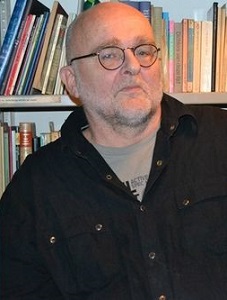
De Nederlandse dichter, schrijver en vertaler Hans Kloos werd geboren in Baarn op 23 december 1960. Zie ook alle tags voor Hans Kloos op dit blog.


Winter 93/94

Er staan een paar mannen
in de sneeuw te hakken
op het betonnen basketbalveldje
van de oude afgesneden wijk.

Geen kind te bekennen, alleen,
als een houweel zich in het zachte
rubber boort, de puffende schil
van een roodbruine basketbal.

Straks laat het nieuws ons
beelden zien van onderuitploffende
dikzakken - leedvermaak
in de sneeuw van Hartford, Connecticut.

Andere mannen scheppen de sneeuw
in groene kruiwagens die weer andere mannen
wegrijden naar een bestemming
buiten het bereik van de camera's.

Pernilla Wiberg, een Zweedse,
heeft zojuist op het nippertje verloren
bij het onderdeel reuzenslalom
in het Oostenrijkse Kitzbühel.

Wij kijken hier tv,
van het ene kanaal naar het andere
waarop de sneeuw voortruist
binnen het bereik van de camera's.

In groene kruiwagens smelt langzaam
de rode sneeuw en het bloed van 6 kinderen
getroffen door mortiergranaten
lost op in de smurrie van Sarajevo

- er staan een paar mannen
in de sneeuw te hakken
en de beelden in hun ogen
smelten niet
 

 2104418-bb75200ed61e28353b849635424f55ea.jpg
Hans Kloos (Baarn, 23 december 1960)


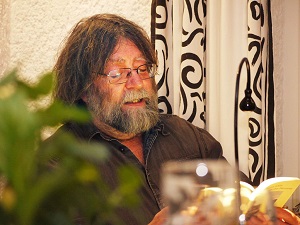
De Duitse schrijver, literatuurcriticus en redacteur Volker Jehle werd geboren op 23 december 1954 in Balingen. Zie ook alle tags voor Volker Jehle op dit blog.

Uit: Ulrike

„Tomek hätte sich vor Scham am liebsten verkrochen, der alte Mann aber habe nur Augen für die Deutsche gehabt, habe sein Zahnverhau in ein breites Lächeln gezwängt, die Hand auf die Reste des speckigen Unterhemds gepreßt und mit einem Gefühl, dem tief­sten, das er wohl aufbringen konnte, gesagt: „Heimweh“.
Breit grinsend habe er geradebrecht, wie sie nach dem Krieg rings um alle Häuser im Boden gestochert hätten – er habe die Länge der eisernen Stäbe genau angegeben –, die Ausbeute sei mickrig gewesen, Porzellan, vielleicht ein bißchen Zinn.
Wie schön die Gärten hier gewesen seien, welch wunderschöne Häuser man abgerissen und daß man die Allee aus Ebereschen abgehackt habe, um die Straße zu begradigen.
Er sei, man habe ihn kaum verstanden, hier zwangsangesiedelt worden, geboren sei er in der Nähe von Königsberg, im letzten Jahr habe er zum ersten Mal wieder sein Heimatdorf besucht. Wieder habe er seine Hand aufs Herz gepreßt, „Heimweh“ gesagt und sei in seine verlotterte Bruchbude zurückgeschlurft.
Eckart schließt die Augen.
Pause.
Alle Geschichten wiederholen sich. Wenn ich also wolle, werde er die ganze Sache einmal aufrollen, ungeschminkt, was bedeute: auch die eigenen Irrtümer und – teils bösen – Fehler einzuräumen, exemplarisch natürlich, drunter mache er’s nicht.
Da ich demnächst Zivi sei und da Zivis heutzutage offenbar anders seien, könne ihnen – er lächelt hinterhältig – ein leuchtendes Vorbild aus alten Tagen jedenfalls nicht schaden.
Allerdings bestehe er darauf, daß er schon damals nicht war, wie andere waren. Aber das könne er ja mir „zur Beurteilung anheimstellen“, wenn ich wolle. Dann krame er bis morgen abend das alte Zeug hervor.
Er legt die Fingerspitzen gegeneinander.
Pause.
Schätzungsweise sieben Abende müßten wir uns um die Ohren schlagen, dann sei ich getauft und konfirmiert.
Deshalb sollten wir am besten gleich beginnen, denn spätestens nächsten Sonntag – wieder lächelt er auf seine versteckte Art – gedenke er zu ruhen.“
 

 2104418-d5f6b9712ee66bf6db15125937c7904a.jpg
Volker Jehle (Balingen, 23 december 1954)


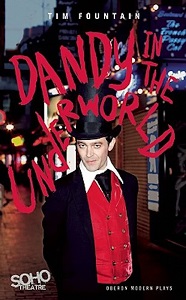
De Britse schrijver Tim Fountain werd geboren op 23 december 1967 in Dewsbury, West Yorkshire. Zie ook alle tags voor Tim Fountain op dit blog.

Uit: Dandy In The Underworld

« VOICE: (On machine) This is Sebaaaaastian Horsley, please leave me a message after the tone. VOICE: (On machine.) Basti it's John from Henry Oliver tailoring. You still owe me five thousand pounds. You're a cunt.
Sebastian emerges at the bedroom door in the half-light. He lounges against the frame in a silk dressing gown. He holds a glass of milk.
SEB: You didn't need to waste 10p to tell me that dear, I could have called you. He switches on a little light on his desk and picks up a small clock from his desk and holds it up to see it. Golly is that the time? Mind you, sleep has always been like death to me but without the long-term commitment. I once spent seventy-two hours asleep in my old flat in Shepherd Market. I was on Heroin at the time but still it was quite an achievement. I'd just read a book by a man called Ernest Becker who argued that everything we did in life was about distancing ourselves from our own inevitable death and that only if we admitted we were just doomed and defecating creatures could we begin to transcend our plight. So I did a crap in the middle of the room and caked it all over myself. I smeared man on my stomach and pig on the walls and then I put on Beethoven's Ninth and had a good wank. I can't say as it changed my outlook on life much, but to this day I can't buy lavatory paper, I have to send the cleaner out. I sympathise with the Chagga Tribe for whom the height of fashion is a tight fitting anal plug. They proclaim their superiority by pretending to not to need to defecate. It's tragic that even the Byron's amongst us have to hunker down like a baboon every morning.
Beat.
Speaking of shit, I better get mine together. I'm having lunch at Claridge's at one with a girl called Henrietta from my Austrian publishers. She's as flat chested as a pageboy but there's something about her that's eminently fuckable. I tried to get into her knickers last night — I brought her back here after dinner at the Groucho — and we stayed up 'til all hours discussing the lack of meaning of life — but she wasn't having it. Apparently she's monogamous and has a boyfriend in the Alps. It's difficult to decide which of the two facts is the most disturbing isn't it? Actually it's not."
 

 2104418-4329d7b161b9c34d65d757818e9e0298.jpg
Tim Fountain (Dewsbury, 23 december 1967)
Cover


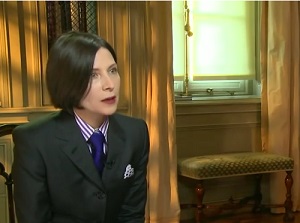
De Amerikaans schrijfster Donna Tartt werd geboren in Greenwood, Mississippi, op 23 december 1963. Zie ook alle tags voor Donna Tart op dit blog.

Uit:The Secret History

“The snow in the mountains was melting and Bunny had been dead for several weeks before we came to understand the gravity of our situation. He’d been dead for ten days before they found him, you know. It was one of the biggest manhunts in Vermont history—state troopers, the FBI, even an army helicopter; the college closed, the dye factory in Hampden shut down, people coming from New Hampshire, upstate New York, as far away as Boston.
 It is difficult to believe that Henry’s modest plan could have worked so well despite these unforeseen events. We hadn’t intended to hide the body where it couldn’t be found. In fact, we hadn’t hidden it at all but had simply left it where it fell in hopes that some luckless passer-by would stumble over it before anyone even noticed he was missing. This was a tale that told itself simply and well: the loose rocks, the body at the bottom of the ravine with a clean break in the neck, and the muddy skidmarks of dug-in heels pointing the way down; a hiking accident, no more, no less, and it might have been left at that, at quiet tears and a small funeral, had it not been for the snow that fell that night; it covered him without a trace, and ten days later, when the thaw finally came, the state troopers and the FBI and the searchers from the town all saw that they had been walking back and forth over his body until the snow above it was packed down like ice.
It is difficult to believe that such an uproar took place over an act for which I was partially responsible, even more difficult to believe I could have walked through it—the cameras, the uniforms, the black crowds sprinkled over Mount Cataract like ants in a sugar bowl—without incurring a blink of suspicion. But walking through it all was one thing; walking away, unfortunately, has proved to be quite another, and though once I thought I had left that ravine forever on an April afternoon long ago, now I am not so sure. Now the searchers have departed, and life has grown quiet around me, I have come to realize that while for years I might have imagined myself to be somewhere else, in reality I have been there all the time: up at the top by the muddy wheel-ruts in the new grass, where the sky is dark over the shivering apple blossoms and the first chill of the snow that will fall that night is already in the air.”
 

 2104418-876c3fe2626f9daf67308ce82652138d.jpg
Donna Tartt (Greenwood, 23 december 1963)


De Franse dichter, schrijver en essayist Marcelin Pleynet werd geboren op 23 december 1933 in Lyon. Zie ook alle tags voor Marcelin Pleynet op dit blog.


Dans la lumiere du jour

Je suis claire dit-elle.
Je suis claire comme les rumeurs de l'aube.
Je suis le miroir, je m'efface

— et dans la vallée un matin laiteux pousse des berges de la rivière jusqu'au seuil, jusqu'aux toits des maisons molles de sommeil

— à sa naissance le jour est partagé entre le bonheur de la prairie et la lumière tardive de l'étang

Je suis dit-elle, je suis dans la lumière du jour


Grande hazana!

L'arbre défait ses plis
et le noir de la nuit mange
les yeux d'une lune d'argile

Si la mort pénètre ici dans le cours des eaux la rivière est sans mémoire vers l'éclat gelé de la nuit
image du livre sans feuille où les terres s'assèchent
Là-bas où s'étonne encore l'herbe frileuse

Le feu que je nomme bleuit comme les bois déjà couverts d'encre
Une campagne sans souffle derrière l'aboi des sapins
accueille les dormeurs perdus dans un songe de sang
Plus loin
comme une fumée
l'eau rêve sur la terre défaite
 

 2104418-969dfe82d661a33238e963abad8260a6.jpg
Marcelin Pleynet (Lyon, 23 december 1933)
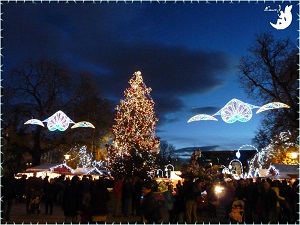
Marché de Noël de Lyon


De Amerikaanse schrijver Norman Fitzroy Maclean werd geboren op 23 december 1902 in Clarinda, Iowa. Zie ook alle tags voor Norman Maclean op dit blog.

Uit:A River Runs Through It

“Each of us, then, not only thought he was tough, he knew the other one had the same opinion of himself. Paul knew that I had already been foreman of forest-fire crews and that if he worked for me and drank on the job, as he did when he was reporting, I would tell him to go to camp, get his time slip, and keep on down the trail. I knew that there was about as much chance of his fighting fire as of his eating oatmeal.
We held in common one major theory about street fighting—if it looks like a fight is coming, get in the first punch. We both thought that most bastards aren’t so tough as they talk—even bastards who look as well as talk tough. If suddenly they feel a few teeth loose, they will rub their mouths, look at the blood on their hands, and offer to buy a drink for the house. “But even if they still feel like fighting,” as my brother said, “you are one big punch ahead when the fight starts.”
There is just one trouble with this theory—it is only statistically true. Every once in a while you run into some guy who likes to fight as much as you do and is better at it. If you start off by loosening a few of his teeth, he may try to kill you.
Every man sees in his relatives, and especially in his cousins, a series of grotesque caricatures of himself.
I suppose it was inevitable that my brother and I would get into one big fight which also would be the last one. When it came, given our theories about street fighting, it was like the Battle Hymn, terrible and swift. There are parts of it I did not see. I did not see our mother walk between us to try to stop us. She was short and wore glasses and, even with them on, did not have good vision. She had never seen a fight before or had any notion of how bad you can get hurt by becoming mixed up in one. Evidently, she just walked between her sons. The first I saw of her was the gray top of her head, the hair tied in a big knot with a big comb in it, but what was most noticeable was that her head was so close to Paul I couldn’t get a good punch at him. Then I didn’t see her anymore.”
 2104418-c3a9518d6dc0d7e52c9dbc672b80dd13.jpg
Norman Maclean (23 december 1902 – 2 augustus 1990)
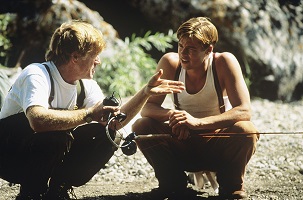
Robert Redford, regisseur van de gelijknamige film uit 1992 en Brad Pitt (Paul)


De Nederlandse dichter-dominee Jan Jakob Lodewijk ten Kate werd geboren op 23 december 1819 in Den Haag. Zie ook alle tags voor J.J.L. ten Kate op dit blog.


Voor een berijmd verhaal

Wilt gij een berijmd verhaal?
Neem een Ridder in het staal
En een Jonkvrouw in 't scharlaken.
Laat hen in een lange smart
Op een ijzren vaderhart
Langzaam trekken tot ze blaken.

Neem een heks of anderhalf
Met een dosis toverzalf
En een paddestoel of veertien.
Smeer ze op Hem en 't Maagdelijn,
Tot ze broer en zuster zijn,
En malkaêr niet willen weerzien.

Scheid ze dan in tranen af,
Giet een helft op 't Heilig graf,
De andere in een kloostercelletje.
Laat ze dampen tot een spook;
Dood daarna de vader ook:
En vouw ze om een ulevelletje!


Aan Jantje pedant

Gij,die uzelv' zo wijs gelooft,
Ei, let eens op die korenschoven!
De volle halm buigt needrig 't hoofd;
De lege steekt het trots naar boven.
 

 2104418-eaf4f10664938409b2a31ae4896cb449.jpg
J.J.L. ten Kate (23 december 1819 - 24 december 1889)
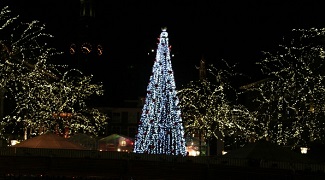
Den Haag, de Grote Markt in kerstsfeer


Zie voor nog meer schrijvers van de 23e december ook mijn vorige blog van vandaag.

Zie voor bovenstaande schrijvers ook mijn blog van 23 december 2008 en eveneens mijn blog van 23 december 2007 en mijn mijn blog van 23 december 2006.
Geschreven door Romenu om 12:10 Reageer op dit bericht

Giusepe di Lampedusa, Iván Mándy, Christa Winsloe, Albert Ehrenstein, Harry Shearer, Charles Sainte-Beuve, Mathilde Wesendonck, Martin Opitz

De Italiaanse schrijver Giuseppe Tomasi di Lampedusa werd geboren in Palermo op 23 december 1896. Zie ook alle tags voor Giuseppe Tomasi di Lampedusa op dit blog.

Uit: The Leopard (Vertaald door Archibald Colquhoun)

“Don Ciccio was still thundering on: "For you nobles it's different. You might be ungrateful about an extra estate, but we must be grateful for a bit of bread. It's different again for profiteers like Sedira with whom cheating is a law of nature. Small folk like us have to take things as they come. You know, Excellency, that my father, God rest his soul, was gamekeeper at the royal shoot of Sant' Onofrio back in Ferdinand IV's time, when the English were here? It was a hard life, but the green royal livery and the silver plaque conferred authority. Queen Isabella, the Spaniard, was Duchess of Calabria then, and it was she who had me study, made me what I am now, organist of the Mother Church, honoured by your Excellency's kindness; when my mother sent off a petition to Court in our years of greatest need, back came five gold ounces, sure as death, for they were fond of us there in Naples, they knew we were decent folk and faithful subjects; when the King came he used to clap my father on the shoulder. 'Don Liona,' he said, 'I wish we'd more like you, devoted to the throne and to my Person.' Then the officer in attendance used to hand out gold coin. Alms, they call it now, that truly royal generosity; and they call it that so as not to give any themselves; but it was just a reward for loyalty. And if those holy Kings and lovely Queens are looking down at us from heaven to-day, what'ld they say? °The son of Don Leonardo Tumeo betrayed us!' Luckily the truth is known in Paradise! Yes, Excellency, I know, people like you have told me, such things from royalty mean nothing, they're just part of the job. That may be true, in fact is true. But we got those five gold ounces, that's a fact, and they helped us through the winter. And now I could repay the debt my 'no' becomes a `yes'! I used to be a 'faithful subject', I've become a 'filthy Bourbonite'. Everyone's Savoyard nowadays! But I take `Savoyards' with coffee!" And he dipped an invisible biscuit between finger and thumb into an imaginary cup. Don Fabrizio had always liked Don Ciccio, partly because of the compassion inspired in him by all who from youth had thought of themselves as dedicated to the Arts, and in old age, realising they had no talent, still carried on the same activity at lower levels, pocketing withered dreams; and he was also touched by the dignity of his poverty. But now he also felt a kind of admiration for him, and deep down at the very bottom of his proud conscience a voice was asking if Don Ciccio had not perhaps behaved more nobly than the Prince of Salina. »


 2104411-66b6c3e431b5930489f1f1e95592f009.jpg
Giuseppe Tomasi di Lampedusa (23 december 1896 - 23 juli 1957)
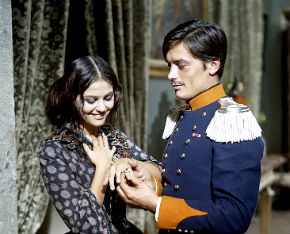
Claudia Cardinale en Alain Delon in de gelijknamige film van Luchino Visconti, 1963


De Hongaarse schrijver Iván Mándy werd geboren op 23 december 1918 in Boedapest. Zie ook alle tags voor Iván Mándy op dit blog.

Uit: The Watermelon Eaters (Vertaald door Albert Tezla)

“He was now surrounded by several persons acting as if they were snatching newspapers from under his arms. For an instant, his face rose above the crowd. "Let me go!" Then he disappeared from the door.
A woman with a bent back and wrapped in a shawl entered from the street.
"Why did you have to hit a blind man?"
"Beat it, old lady, beat it!"
She tottered at the door for an instant and then went out.
"Don't even mention Rudy Etlinger! That fortune hunter, that vulgar fortune hunter!" Ágnes's round, haughty shoulders jerked. "Shall I marry someone who is interested only in my money? But of course,
that makes no difference to you."
Her mother raised her sharp-featured face, seeming to look at the girl from an old picture frame.
"There are times when I simply don't understand you, Ágnes. You can say such terrible things. Etlinger is a distinguished lawyer, his name is on everybody's lips."
"Drop the subject!" Ágnes opened her mouth slightly and waved her hand. "Just to get married like you isn't really worth it."
"What do you mean 'like me'? Everybody knows your late lamented father courted me for years, and not for my money, absolutely not!"
They both were so remote from Károly that he didn't receive as much as a word or glance from them. So this was his sister, this sparkling, blonde, deeply suntanned girl. "A cute gal," a classmate had said.
One can feel the beach under her as she lolls about on the sand in the torrential sunlight, then gets up, and enters the water with slothful, slack strides. Their mother is watching her from a bench in the shade; she doesn't go into the water with her skinny, dry body. Now, what's all this about Etlinger, this whole conversation?
Downstairs shadows seemed to float past the door. A bearded fluff of hair stuck his shapeless, tuberous head inside just like a package.
"Of course, there's never a policeman around at a time like this," someone said."


 2104411-3d62379f82f10903c705bdee5c9e04bd.jpg
Iván Mándy (23 december 1918 – 26 oktober 1995)
Cover


De Duits- Hongaarse schrijfster en beeldend kunstenares Christa Winsloe werd geboren in Darmstadt op 23 december 1888. Zie ook alle tags voor Christa Winsloe op dit blog.

Uit:Das Mädchen Manuela (Vertaald door Ruth Baumgarten und Karsten Witte)

.« Fräulein von Bernburg verändert ihr Gesicht nicht, sondern sieht Lela weiter forschend an und sagt langsam und eindringlich: »Das darfst du dir nicht einreden. Alles, was hier geschieht, ist gut und richtig. Wenn du auch nicht weißt, warum manches so und nicht anders ist. Das wirst du erst mit der Zeit verstehen. Wenn du dich trotzig versperrst, wirst du dich hier nie einleben. Du mußt die Überzeugung haben, daß wir alle dein Bestes wollen und tun. Dann wird dir alles leicht.« »Ja, Fräulein von Bernburg.« Elisabeth von Bernburgs Hand gleitet von Manuelas Schulter an ihrem Arm herab. Sie hält das Kind fest, als wollte sie es wachrütteln. »Willst du’s versuchen?« Und Lela blickt auf zu dem gegen sie hingeneigten Gesicht, zu den dunklen Augen, die ergreifend in ihr Innerstes sehen. Da bricht in ihr ein Widerstand, und wie einen Schwur, so feierlich, sagt sie in diese gütigen Augen hinein: »Ja, Fräulein von Bernburg.« Seither war alles anders. Alles hatte Sinn. Alles war ein Dienst an ihr, Fräulein von Bernburg. Alles und jedes hatte Beziehung zu ihr, und der Tag lief nicht mehr nach der Glocke, sondern nach ihrem Ruf. Ihre Stimme war nicht immer gut, sie war oft hart und befehlend. Aber Manuela wußte, daß es richtig war, was befohlen wurde: Aufstehen, Anziehen, Beten, Lernen, Ausgehen, Warten, Essen, Schlafen. Fräulein von Bernburg war da, und man tat alles für sie …“


 2104411-e809af7099cdc0b43eaccfdf89625e60.jpg
Christa Winsloe (23 december 1888 - 10 juni 1944)
Affiche voor de film « Mädchen in Uniform » met Lilli Palmer en Romy Schneider. De film is gebasseerd op de roman „The Child Manuela“ van Winsloe


De Oostenrijkse expressionistische dichter en schrijver Albert Ehrenstein werd op 23 december 1886 in Wenen geboren. Zie ook alle tags voor Albert Ehrenstein op dit blog.

Uit: Zigeuner

„Im übrigen fertigte der Alte Ketten an, die er auf den Jahr- und Wochenmärkten in der Umgebung verkaufte. Aber der Richter des Ortes, der Schmied war und seinerseits den Wein aus den Kellern den Bauern stahl, sah diese zweifache Konkurrenz nur ungern. Auf ihn durfte Tonek nicht rechnen, wenn er am Kirchtag den bäurischen Musikanten mit der Baßgeige aushalf und bei der Teilung des Tanz- und Trinkgeldes zu kurz kam.
Das Weib des Tonek besaß nur eine Hand, die andere war in einer Häckselmaschine geblieben. Sie bekam für sie eine Schüssel Buchteln und zwei Vierkreuzerstücke Schmerzensgeld. Der Bauer, in dessen Scheuer das Unglück geschehen war, behauptete später, das Gericht habe der Diebin die Hand wegschlagen lassen. Das Gesetz, das ihr die Hand nahm, hätte er ja doch nicht verstanden: einmal in ihrem Leben hatte die Zigeunerin gearbeitet und da mußte sie eben zu kurz kommen.
Der alte Tonek besaß Kinder. Wovon die lebten, weiß ich nicht. Denn was die Kaldaunen anlangt, erstand dem Tonek wieder ein Konkurrent, als Jura Modliba vom Militär heimkehrte. Jura, der Hundefresser. Der aß die Nachgeburt seines Weibes. Ihm gaben die Bauern wenigstens noch hie und da Arbeit. Die zwei Zigeunerdirnen, als sie zwölf Jahre alt waren, stieß man vor die Brust, die Halbnackten schrien in ihren Fetzen: »Mammi!", so lange, bis sie das Offizierskorps der nächsten Garnison erhörte. Eine Weile humpelten sie noch mit Kinderskeletten auf dem Buckel umher, dann kam die Schwindsucht, dörrte sie und ließ sie ins Grab fallen. Ein brauner Knabe, der kleine Matjin ging dann noch kurze Zeit auf der hartherzigen Erde einher mit Fieberaugen, staubstarrenden Füßen im Leichenhemd: eines hungrigen Tages aß er etwas zuviel tote Frösche und starb wie sie.
Es ist selbstverständlich, daß die Zigeunerhütte das beste Objekt für Brandübungen war.
In einer Winternacht ward Feuer an die Hütte gelegt. Die Flamme fraß und fraß. Ein Feuerwehrtier brach in die Hütte und riß den schlaftrunkenen Tonek beim Haar, das schlafende Weib beim verstümmelten Arm aus dem Feuer. Das war ein Hauptspaß. Das Tier bekam die Lebensrettermedaille. Die Zigeuner wurden noch oft ausgeräuchert. Der Schaden bezifferte sich jedenfalls nur auf mehrere Gulden, aber - ich bin schuld. Ich habe das Majestätsgesuch geschrieben. Wenn ich schlafe, träume, dem Enterich ein Idealbild jenseits des Lebens erscheint, geht meine Hütte in Flammen auf und eine sündige Faust reißt mich, den schon Versenkten beim Haar aus dem Feuer. Ich habe gerade noch die Kraft »Waat! Waat!« zu schreien und die Schlechtigkeit der Welt bloßzulegen. Aber das hilft mir nicht. Die blutige Staubkruste an den Füßen des kleinen Matjin kann ich nicht wegdenken. Und wenn ich sterbe und man meinen Magen aufschneidet, wird man tote Frösche in ihm finden.“


 2104411-1e71bbee135f23e3c6bf9e52eb81d901.jpg
Albert Ehrenstein (23 december 1886 – 8 april 1950)
Portret door Oskar Kokoschka, 1914


De Amerikaanse schrijver en komische acteur Harry Shearer werd geboren op 23 december 1943 in Los Angeles. Zie ook alle tags voor Harry Shearer op dit blog.

Uit: Not Enough Indians

“Wowosa, Connecticut October 1996
Tony Silotta had seen a lot of slot machines in his time, but never more of them gathered in one place than here, on the seemingly endless gaming floor of the Wowosa Casino: quarter slots, dollar slots, nickel slots, penny slots(!), progressive slots, million-dollar-payout slots, slots with a highly stylized portrait of Chief Rock-ing Bear — patriarch of the Wowosa Nation — on them, slots that put on a New Year's Eve-level video display every time you hit "play," slots that beeped like cell phones with Tourette's. Tony turned to his wife, Serena, and muttered, "They've got half the slots in the goddamn civilized world in here." She nodded her dutiful assent, knowing how the fact, and the observation, pained her man. The Wowosa Casino was one of the wonders of the modern world, a huge temple of gambling that blared its neon presence from within the sanctuary of the heavily wooded Wowosa Reservation in the northern tip of Con-necticut. Tony and Serena were on a busman's holiday, up from visiting her parents on Long Island, taking their first look at this phenomenon that burst on the gambling scene five years earlier and already boasted a "drop" that was the envy of every official of the gaming industry, an industry of which Tony was an executive avatar. Pained? He was practically having a myocardial infarction from the fucking rage he was feeling, as Don Nightswim, a one-thirty-second Wowosan who until two years ago called himself an African American and sold discount women's shoes at the Payless in downtown Hartford, showed the Silottas around the third floor, entirely de-voted to roulette, as well as the blackjack wing, the craps pavilion, and the baccarat tower. Not that Tony was any stranger to excess in the cause of stoking the desire to wager. He had worked himself up from being Tony "Loose Slots" Silotta, pit boss at Del-monico's, an old-time two-bit slot parlor on blue-collar Fremont Street in downtown Las Vegas to a position as that city's visionary statesman, partly through his swarthy good looks — the shiny black hair, the blazing white teeth that showed in a slightly feral smile, the tan that made George Hamilton's look sickly — but mainly by raising enough money to build the most outrageously excessive new hotels in an era of outrageous excess.”


 2104411-fd68ff17100b0d92cd4c3bfcf513cb99.jpg
Harry Shearer (Los Angeles, 23 december 1943)


De Franse dichter, schrijver en criticus Charles Augustin Sainte-Beuve werd geboren op 23 december 1804 in Boulogne-sur-Mer. Zie ook alle tags voor Charles Sainte-Beuve op dit blog.

Uit: Derniers portraits littéraires (Pensées)

« La nature est admirable, on ne peut l’éluder. Depuis bien des jours, je sens en moi des mouvements tout nouveaux. Ce n’est plus seulement une femme que je désire, une femme belle et jeune, comme toutes celles que j’ai précédemment désirées. Celles-là plutôt me répugnent. Ce que je veux, c’est une femme toute jeune et toute naissante à la beauté ; je consulte mon rêve, je le presse, je le force à s’expliquer et à se définir : cette femme dont le fantôme agite l’approche de mon dernier printemps, est une toute jeune fille. Je la vois ; elle est dans sa fleur, elle a passé quinze ans à peine ; son front plein de fraîcheur se couronne d’une chevelure qui amoncelle ses ondes, et qui exhale des parfums que nul encore n’a respirés. Cette jeune fille a le velouté du premier fruit. Elle n’a pas seulement cette primeur de beauté; Si je me presse pour dire tout mon vœu, ses sentiments par leur naïveté répondent à la modestie et à la rougeur de l’apparence. Qu’en veux-je donc faire ? et si elle s’offrait à moi , cette aimable enfant, l’oserais-je toucher, et ai-je soif de la flétrir ? Je dirai tout oui, un baiser me plairait, un baiser plein de tendresse ; mais surtout la voir, la contempler, rafraîchir mes yeux, ma pensée, en les reposant sur ce jeune front, en laissant courir devant moi cette âme naïve ; parer cette belle enfant d’ornements simples où sa beauté se rehausserait encore, la promener les matins de printemps sous de frais ombrages et jouir de son jeune essor ; la voir heureuse : voilà ce qui me plairait surtout et ce qu’au fond mon cœur demande. Mais qu’est-ce ? tout d’un coup le voile se déchire, et je m’aperçois que ce que je désirais sous une forme équivoque est quelque chose de naturel et de pur, c’est un regret qui s’éveille, c’est de n’avoir pas à moi, comme je l’aurais pu, une fille de quinze ans qui ferait aujourd’hui la chaste joie d’un père et qui remplirait ce cœur de voluptés permises, au lieu des continuels égarements. Ma prévoyance, il y a quinze ans, n’y a point songé, ou j’ai résisté à la Nature qui tout bas me l’insinuait, et la Nature aujourd’hui me le rappelle.
Nos goûts vicieux et dépravés ne sont le plus souvent que des indications naturelles faussées et détournées de leur vrai sens."


 2104411-5a29c25e8d9ffeb55896cb064cf0785e.jpg
Charles Sainte-Beuve (23 december 1804 – 13 oktober 1869)
Borstbeeld in de Jardin du Luxembourg, Parijs


De Duitse dichteres en schrijfster Mathilde Wesendonck werd geboren als Agnes Luckemeyer op 23 december 1828 in Elberfeld. Zie ook alle tags voor Mathilde Wesendonck op dit blog.


Das Menschenherz gleicht einer Knospe

Das Menschenherz gleicht einer Knospe,
Erschlossen von des Lichtes Strahl; -
Und Blüthenkeimen, lenzentsprossen,
Sein Sehnen, Hoffen allzumal!

D'rum steht es vor dem kargen Leben,
Ein fordernd' und begehrlich' Kind, -
Und schlägt der Weisheit gold'ne Lehren,
Wie Kinder pflegen, in den Wind!

Und ob Erfahrung Stund' um Stunde
Sich heiser von "Entbehren" spricht: -
Es widerstrebt der schnöden Kunde
Mit jedem Pulsschlag, bis es bricht!

Ob Weise reden von "Verneinen",
Das Herz bejaht, so lang es schlägt; -
Und um des Busens herbstes Weinen
Es seinen Kranz voll Hoffen legt!

Ob bleiche Lippen, müde Waller
Auch singen des Entsagens Preis: -
Das Herz, es greift nach Wonn' und Schmerzen
Und pflückt des Lebens grünes Reis!

O Göttersitz der jungen Triebe,
Was thut's, ob Alles muß vergeh'n?
Der letzte Herzensschlag ist Liebe; -
Und Lieb' und Lenz mit ihm ersteh'n!


 2104411-36c856b151eac626811e438c3e7af85a.jpg
Mathilde Wesendonck (23 december 1828 – 31 augustus 1902)
Portret dioor Karl Ferdinand Sohn, 1850


De Duitse dichter Martin Opitz von Boberfeld werd geboren op 23 december 1597 in Bunzlau (Silezië). Zie ook alle tags voor Martin Opitzop dit blog.


Glückwündschungs-Lied

Die schöne Sonne steiget,
Die Lufft kriegt neue Zier,
Fast kein Geflügel schweiget,
Die Blumen scheinen für,
Die grünen Hügel lachen,
Die Saate gehet auff,
Wald, Wild und Feld erwachen,
Der Lentz kriegt seinen Lauff.

O Vatter, Herr der Erden,
Diß wird von dir gethan;
Laß doch uns auch froh werden,
Sieh’ uns auch wider an,
Daß deines Segens Wonne
Bald möge bey uns seyn,
Und deiner Gnaden Sonne
Uns gebe neuen Schein.

Laß’ uns doch nicht mehr wallen
In solcher Krieges-Last,
Verpflantz’ in Ruh’ vor allen
Die Aeste vom Piast,
Die Königlichen Aeste,
Die wider ihre Schuld
Ernähren frembde Gäste,
In Hoffnung und Gedult.

Halt ob dem lieben Helden
Georg-Rudolffen Hand,
Laß bald ihn hören melden:
Komm wider in dein Land;
Es müsse vor dir fliehen
Der Waffen schwere Last,
Das Feldt und Stätte blühen,
Die du zu Diensten hast.

Ihr, denen jetzt beliebet,
Zu trotzen auff die Macht,
Die euch der Krieg nur giebet,
Seyt wol darauff bedacht,
Daß Mars doch fort muß gehen;
Der Fürsten hoher Stand
Und sie doch bleiben stehen:
Gott hält ob ihnen Hand.


 2104411-502623e8dcb3eff4349a9a7b32fa554c.jpg
Martin Opitz (23 december 1597 – 20 augustus 1639)
Portret door Bartholomäus Strobel, 1636-1637


Zie voor bovenstaande schrijvers ook mijn blog van 23 december 2008 en eveneens mijn blog van 23 december 2007 en mijn mijn blog van 23 december 2006.

Geschreven door Romenu om 12:09 Reageer op dit bericht

Carol Ann Duffy

De Britse dichteres en toneelschrijfster Carol Ann Duffy werd geboren in een rooms-katholiek gezin in de Gorbals, een arm deel van Glasgow, op 23 december 1955. Het gezin verhuisde naar Stafford, Engeland, toen Duffy zes jaar oud was. Haar vader werkte voor English Electric. Hij was een vakbondsman en was in 1983 zonder succes kandidaat voor de Labour Party. Daarnaast leidde hij de Stafford Rangers-voetbalclub. Duffy volgde een opleiding aan de Saint Austin's RC Primary School in Stafford, de St. Joseph's Convent School (1967-1970) en de Stafford Girls High School (1970-1974). Daarna studeerde zij filosofie aan de University of Liverpool en behaalde een graad in 1977. In 1983 won zij de Poetry Competition. Zij werkte als poëzierecensent voor The Guardian van 1988-1989 en was redacteur van het poëzietijdschrift Ambit. In 1996 werd zij benoemd tot docent in poëzie aan de Manchester Metropolitan University, en werd later creatief directeur van de daaraan verbonden Writing School. In 1988 ontving zij de Somerset Maugham Award, in 1993 de Whitbread Award en de Forward Poetry Prize en in 2005 de T. S. Eliot Prize. Ook won zij verschillende keren de Scottish Arts Council Book Award. In mei 2009 werd zij benoemd tot Poet Laureate als opvolger van de teruggetreden Andrew Motion. Duffy is de eerste vrouwelijke Poet Laureate, de eerste Schotse, en eveneens de eerste openlijk biseksuele vrouw in die functie. Als toneelschrijfster produceerde zij werk dat onder meer werd opgevoerd in het Liverpool Playhouse en het Londense Almeida Theatre, waaronder Take My Husband (1982), Cavern of Dreams (1984), Little Women, Big Boys (1986), Loss (1986) en Casanova (2007).


The Light Gatherer

When you were small, your cupped palms
each held a candleworth under the skin, enough light to begin,
and as you grew,
light gathered in you, two clear raindrops
in your eyes,
warm pearls, shy,
in the lobes of your ears, even always
the light of a smile after your tears.
Your kissed feet glowed in my one hand,
or I'd enter a room to see the corner you played in
lit like a stage set,
the crown of your bowed head spotlit.
When language came, it glittered like a river,
silver, clever with fish,
and you slept
with the whole moon held in your arms for a night light
where I knelt watching.
Light gatherer. You fell from a star
into my lap, the soft lamp at the bedside
mirrored in you,
and now you shine like a snowgirl,
a buttercup under a chin, the wide blue yonder
you squeal at and fly in,
like a jewelled cave,
turquoise and diamond and gold, opening out
at the end of a tunnnel of years.


We Remember Your Childhood Well

Nobody hurt you. Nobody turned off the light and argued
with somebody else all night. The bad man on the moors
was only a movie you saw. Nobody locked the door.

Your questions were answered fully. No. That didn't occur.
You couldn't sing anyway, cared less. The moment's a blur, a Film Fun
laughing itself to death in the coal fire. Anyone's guess.

Nobody forced you. You wanted to go that day. Begged. You chose
the dress. Here are the pictures, look at you. Look at us all,
smiling and waving, younger. The whole thing is inside your head.

What you recall are impressions; we have the facts. We called the tune.
The secret police of your childhood were older and wiser than you, bigger
than you. Call back the sound of their voices. Boom. Boom. Boom.

Nobody sent you away. That was an extra holiday, with people
you seemed to like. They were firm, there was nothing to fear.
There was none but yourself to blame if it ended in tears.

What does it matter now? No, no, nobody left the skidmarks of sin
on your soul and laid you wide open for Hell. You were loved.
Always. We did what was best. We remember your childhood well.


 2120589-0ecadba02f477342de63e7e5e563216f.jpg
Carol Ann Duffy (Glasgow, 23 december 1955)

Geschreven door Romenu om 00:00 Reageer op dit bericht

Meer van Romenu

↑ Terug naar de berichten