

Naar de inhoud

Romenu

Over literatuur, gedichten, kunst en cultuur
seniorennet.beseniorennet.be

Berichten van 20 april 2013

Martinus Nijhoff, Jan Cremer, Jean Pierre Rawie, Sebastian Faulks, Jozef Deleu,Steve Erickson
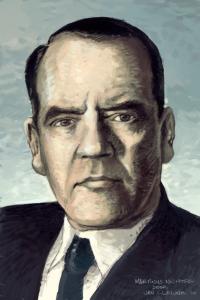
De Nederlandse dichter, toneelschrijver en essayist Martinus Nijhoff werd geboren in Den Haag op 20 april 1894. Zie ook alle tags voor Martinus Nijhoff op dit blog.


Het uur U (Fragment)


Het was zomerdag.

De doodstille straat lag

te blakeren in de zon.

Een man kwam de hoek om.

Er speelde in de verte op de stoep

een groep kinderen, maar die groep

betekende niet veel,

maakte, integendeel,

dat de straat nog verlatener scheen.

De zon had het rijk alleen.

Zelfs zij, wier tweede natuur

hen bestemde, hier, op dit uur,

te wandelen: de student,

de dame die niemand kent,

de leraar met pensioen,

waren van hun gewone doen

afgeweken vandaag;

men miste, miste hen vaag.

Sterker: de werkman die

nog tot een uur of drie

voor bomen in 't middenpad

de kuilen gegraven had,

had zijn schop laten staan

en was elders heen gegaan.

Maar vreemder, ja inderdaad

veel vreemder dan dat de straat

leeg was, was het feit

der volstrekte geluidloosheid,

en dat de stap van de man

die zojuist de hoek om kwam

de stilte liet als zij was,

ja, dat zijn gestrekte pas

naarmate hij verder liep

steeds dieper stilte schiep.


De jongen


Hij zat in nachtgoed voor het raam en liet
Willoos het hoofd hangen op het kozijn -
Hij zag den landweg langs de heuvels zijn
Kronkel wegtrekken naar het blauw verschiet.


Hij dacht weer aan den ouden vreemdeling
Die ‘s middags in het herbergtuintje sliep -
Zij stoeiden om hem heen, en iemand riep
Hem wakker, en hij zat dwaas in hun kring.


Zijn verre blik zwierf langs hun ogen weg.
Hij zei: – (zijn baard was om den glimlach grijs)
‘Jongens, het leven is een vreemde reis,
maar wellicht leert een mens wat onderweg.’


Toen was het of een deur hem open woei
En hij de verten van een landschap zag,
Hij zag zichzelf daar wand’len in een dag
Zwellend van zomer en van groenen groei.


De weg buigt om en men keert nooit terug -
Hij kon zijn hart als voor ‘t eerst horen slaan,
Hij heeft zijn schoenen zacht weer aangedaan
En sloop door ‘t tuinhek naar de kleine brug.


 1377751-9830bc034e9994a017ee5a3b6012dc1f.jpg

Martinus Nijhoff (20 april 1894 – 26 januari 1953)


De Nederlandse schrijver en beeldend kunstenaar Jan Cremer werd geboren in Enschede op 20 april 1940. Zie ook alle tags voor Jan Cremer op dit blog.


1377751-27777822f46b410e2edf40b68771d559.jpg 

Tulpen, 1998


Uit: Ik Jan Cremer


“Ik bietste een piek en ging dan naar het nachtcafé. Het binnenkomertje nam ik voor eigen rekening, maar ik werd altijd lazerus. Van het knobelen, pokeren en bamzaaien. De vrouw van de kastelein (hoe heette ze nou toch?), ontzag me want ze had een oogje op me. Ze had een paar vreselijke kanjers. Als ze haar b.h. losknoopte golfde het roze vlees eruit. Ze had tieten als vulkanen, ze hingen tot haar navel. Wat ’n vleesmassa! Haar tepels waren knalrood; al haar bloed vloeide in die punten die ook weer vulkanen waren. Als ze aan de bar een gebroken bierviltje onder m’n neus duwde betekende het dat ik de volgende middag langs moest komen. Om drie uur. En als dan de geraniums voor het raam stonden was de kust veilig en kon ik de trap op. Ze zat dan altijd toevallig in bad. Dan moest ik haar rug afboenen met een spons. ‘Harder, harder,’ kreunde ze. Of ik moest op haar rug krabben. ‘Kom er ook in!’ zei ze. Maar ik keek wel uit: het was een bad met een elektrische installatie. En ik zou niet de eerste zijn die vanwege een klein foutje of kortsluitinkje paarsblauw en verstijfd uit de kuip getild moest worden.”


 1377751-159bfaaa62880dca70c004856c20fefb.jpg

Jan Cremer (Enschede, 20 april 1940)

Met Karel Appel (links) in 1963 in Parijs


De Nederlandse dichter en vertaler
Jean Pierre Rawie werd geboren op 20 april 1951 in Scheveningen. Zie ook alle tags voor Jean Pierre Rawie op dit blog.


Ten leste


Ik weet niet welke weg je neemt;
de sterren gaan hun baan ten einde
en straks is mij het dichtstbijzijnde,
het langst gewetene weer vreemd.

Maar wat bestond aan zon en maan
en wisseling van de getijden,
het was alleen opdat wij beiden
elkander niet zouden ontgaan.

Wij worden nu nog slechts door tijd
en ruimte van elkaar gescheiden,
maar sta mij aan het eind terzijde
als ik de einder overschrijd.

Wij hebben alles nog te goed
wat ons het leven heeft ontnomen:
uit welke verten ook, wij komen
elkaar ten leste tegemoet.


Bezit


Waar ik mijn hart aan heb verpand
in mijn verspild verleden,
het ging voorbij, het hield geen stand,
het is als zand vergleden.

Ik heb mij steeds het meest gehecht
aan sterfelijke zaken,
aan dingen die ik nimmer echt
tot mijn bezit kon maken.

Maar alles wat zo dierbaar was
dat ik het heb verloren,
is mij sinds ik het kwijt ben pas
voorgoed gaan toebehoren.


 1377751-1d2d3fc874aa51f500cc9e678b9d9bb8.jpg

Jean Pierre Rawie (Scheveningen, 20 april 1951)


De Britse schrijver en journalist Sebastian Faulks werd geboren op 20 april 1953 in Newbury. Zie ook alle tags voor Sebastian Faulks op dit blog.


Uit: Engleby


„I 'd better explain. It's October, the beginning of my final year. I left off this story all of a sudden because I had to do some work for exams. They didn't go as well as I'd hoped, but that doesn't matter.

This does matter, though.

In the summer vacation, I worked in my father's old paper mill for four weeks to make money. The work was boring (I pushed a rubber-wheeled wagon round the factory floor), but it wasn't hard. At some time the union had agreed that in return for deferring a pay rise, the workforce would have a ten minute break each hour ? excluding lunch and tea and the official tea breaks of fifteen minutes and the five-minute two-hourly toilet breaks. You could roll all the minutes up, if you liked, and leave an hour early. As a casual, I wasn't officially in the union, but I followed their rules and got paid in cash in a crinkly grey envelope on Friday afternoon.

Jennifer was going to Ireland to make a film with some people from Trinity. The director was called Stewart Forres and there were maybe thirty or so people, cast and crew an a few hangers-on, girlfriends, boyfriends, going to a large old country house near Tipperary.”


 1377751-6f9f3bf6b09c91554cd0f60ca3c04982.jpg

Sebastian Faulks (Newbury, 20 april 1953)


De Vlaamse dichter en schrijver
Jozef Hugo Maria Deleu werd geboren in Roeselare op 20 april 1937. Zie ook alle tags voor Jozef Deleu op dit blog.


Zaterdagmiddag


1

Zaterdagmiddag

niets gaat boven de tuin

de zonen en de zon.


Zij praat

gehaast in de gebaren

lacht verlegen -

het is zo voorbij


het sprokkelen van zomer

voor de winter, de herinnering

voor morgen als ze

ver weg zijn.


De moeder de vrouw

tot in de kruin van de haren

aanwezig.


2

In het avondlicht

verzamelt zij

zichzelf


tot een gedicht

dat languit

in de schemer ligt.

De rimpels


ongeschminkt

het leven

onbelogen

wachtend


tot alles

zingt

van onvermogen.


 1377751-8ff41d35b3186579e09bfbdb0f298f36.jpg

Jozef Deleu (Roeselare, 20 april 1937)


De Amerikaanse schrijver, essayist en criticus Steven Michael Erickson werd geboren op 20 april 1950 in Los Angeles. Zie ook alle tags voor Steven Erickson op dit blog.


Uit: Zeroville


8.

Afterward, he makes his way farther west along Sunset before cutting up to Hollywood Boulevard. Where once was the Moulin Rouge nightclub at the corner of Vine is now a psychedelic club called the Kaleidoscope. Vikar really has no idea what a psychedelic club is. Along Hollywood Boulevard are shabby old jewelry shops, used bookstores, souvenir stands, porn theaters. He's startled there are no movie stars walking down the street. Still hungry from having sacrificed his French dip sandwich at Philippe's, he orders a chicken pot pie at Musso & Frank, where Billy Wilder used to lunch with Raymond Chandler while they were writing Double Indemnity, both drinking heavily because they couldn't stand each other.


 1377751-db3e390a79ac05a7269e81f723dbb293.jpg

Steve Erickson (Los Angeles, 20 april 1950)


Zie voor nog meer schrijves van de 20e april ook mijn vorige blog van vandaag.
Geschreven door Romenu om 14:08 Reageer op dit bericht

Arto Paasilinna, Michel Leiris, Emmanuel Bove, Henry de Montherlant, Charles Maurras

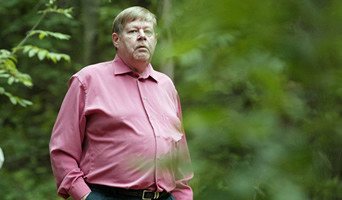
De Finse schrijver Arto Paasilinna werd geboren op 20 april 1942 in Kittilä in Lapland. Zie ook alle tags voor Arto Paasilinna op dit blog.


Uit: The Year of the Hare (Vertaald door Herbert Lomas)


“The journalist sat on the edge of the ditch, holding the hare in his lap, like an old woman with her knitting on her knees, lost in thought. The sound of the car engine faded away. The sun set.

The journalist put down the hare on the grass. For a moment he was afraid it would try to escape; but it huddled in the grass, and when he picked it up again, it showed no sign of fear at all. 'So here we are,' he said to the hare. 'Left.'

That was the situation: he was sitting alone in the forest, in his jacket, on a summer evening. No disputing it—he'd been abandoned.

What does one usually do in such a situation? Perhaps he should have responded to the photographer's shouts, he thought. Now maybe he ought to find his way back to the road, wait for the next car, hitch a ride, and think about getting to Heinola, or Helsinki, under his own steam. The idea was immensely unappealing. The journalist looked in his briefcase. There were a few banknotes, his press card, his health insurance card, a photograph of his wife, a few coins, a couple of condoms, a bunch of keys, an old May Day celebration badge. 

And also some pens, a notepad, a ring. The management had printed on the pad Kaarlo Vatanen, journalist. His health insurance card indicated that Kaarlo Vatanen had been born in 1942.

Vatanen got to his feet, gazed at the sunset's last redness through the trees, nodded to the hare. He looked toward the road but made no move that way. He picked up the hare off the grass, put it tenderly in the side pocket of his jacket, and left the clearing for the darkening forest.”


1377749-06c2b2498faec73b5ec5fc7dcaf621db.jpg 

Arto Paasilinna (Kittilä, 20 april 1942)


De Franse dichter, schrijver en etholoog Michel Leiris werd geboren in Parijs op 20 april 1901. Zie ook alle tags voor Michel Leiris op dit blog.


Pase de Pecho


Niveau des cuisses

Niveau des reins

Niveau de la poitrine

Degrés des côtes recourbées en loggias

Gradins des muscles

O niveaux

Pour quel spectacle

Le corps entasse-t-il ces strates

Sédiments taraudés

Coulées de laves successives

Creusées en plaza de toros


Halètement de la terre harassée de minéraux

La série de passes naturelles se termine

Par une passe de poitrine

Au ras du cœur


A hauteur de sanglots


Avare


M’alléger

Me dépouiller


Réduire mon bagage à l’essentiel


Abandonnant ma longue traîne de plumes

De plumages

De plumetis et de plumets


Devenir oiseau avare

Ivre du seul vol de ses ailes


 1377749-328052dbe52542f453d8e63c970846e4.jpg

Michel Leiris (20 april 1901 – 30 september 1990)
Portret door Man Ray


De Franse schrijver
Emmanuel Bove (eig. Emmanuel Bobovnikoff) werd geboren op 20 april 1898 in Parijs. Zie ookalle tags voor Emmanuel Bove op dit blog.


Uit: Pages de journal

“19 octobre 1936

Arrivé hier, vers cinq heures et demie, à Paris. C'était ma troisième sortie après maladie. Les deux premières avaient été d'une dizaine de minutes. Raymond est venu nous chercher en taxi. Fin d'après-midi radieuse d'automne. (Radieux signifie qui a des rayons de lumière.) Soleil sur la campagne. C'était merveilleux.

Le soleil n'avait pas de chaleur. Il n'y avait pas de vent. La journée semblait être sortie du temps, à un moment heureux, et y avoir laissé toutes ses imperfections quotidiennes. L'arrivée à Paris a été plus extraordinaire encore.

Les grandes avenues. Les lumières naissantes, les phares des autos sans force. Il y avait eu alerte contre les avions la veille et les becs de gaz étaient encore bleus. Toutes les couleurs dans le ciel.

Cela, c'est la description sèche. Je voudrais montre ces nuances extraordinaires. Il faut attendre l'inspiration. Une fin d'après-midi de printemps.

La vie renaît. Des parfums enivrants vous frôlent une seconde.

C'est la belle saison qui s'annonce. Ce n'était pas cela, hier, le 19 octobre et pourtant, c'est la même avidité en moi. Elle a pour cadre, pour but, autre chose : les richesses de l'hiver, les désirs, les secrets. Lu aujourd'hui le Carnet vert de Dabit, dans la N.R.F. Tristesse. Je pense à notre déjeuner à l'Hôtel du Nord. Quel garçon étrange et plein de charme, étrange parce qu'incompréhensible, insaisissable ! Pas de classes sociales. Dans la partie de son cerveau où s'élaborait son oeuvre, il n'y en avait pas. J'en suis certain. C'est peut-être cela qui donnait à tous ses gestes, à tous ses actes, cette aisance, cette absence complète de gêne. Il voyait tout du point de vue des sentiment.”


 1377749-2833a5513c49199fc6f393e49e58efed.jpg

Emmanuel Bove (20 april 1898 – 13 juli 1945)

Met dochtertje


De Franse schrijver
Henry de Montherlant werd geboren op 20 (en niet op 21) april 1896 in Parijs Zie ook alle tags voor Henry de Montherlant op dit blog.


Uit: La Reine morte


“Au milieu de ce tumulte, on apporte sur une civière Inès morte, pendant que des cloches sonnent. Le tumulte à l'instant s'apaise. En silence, tous s'écartent du cadavre du Roi étendu sur le sol, se massent du côté opposé de la scène autour de la litière, à l'exception de Dino del Moro qui, après un geste d'hésitation, est resté un genou en terre auprès du Roi. A ce moment apparaît don Pedro; il se jette contre la litière en sanglotant. Le lieutenant Martins entre à son tour, portant un coussin noir sur lequel repose la couronne royale. Pedro prend la couronne et la pose sur le ventre d'Inès. Puis il se tourne vers l'officier des gardes; celui-ci dégaine; tous les gardes font de même et présentent l'épée. Alors Pedro force par son regard l'assistance à s'agenouiller; le Prince de la Mer ne le fait qu'à regret. Pedro s'agenouille à nouveau, et, la tête sur le corps d'Inès, il sanglote. L'assistance commence à murmurer une prière. A l'extrême droite, le corps du roi Ferrante est resté étendu, sans personne auprès de lui, que le page andalou agenouillé à son côté. Le page se lève avec lenteur, regarde longuement le cadavre, passe avec lenteur vers la civière, hésite, se retourne pour regarder encore le Roi, puis, se décidant, va s'agenouiller avec les autres, lui aussi, auprès de la civière. Le cadavre du Roi reste seul.”


 1377749-30b07d58b926f3c7aed5d819dc63df10.jpg

Henry de Montherlant (20 april 1896 – 21 september 1972)


De Franse schrijver Charles Maurras werd geboren op 20 april 1868 in Martigues Zie ook alle tags voor Charles Maurras op dit blog.


Uit: Un sage voyageur


« Il ne serait pas difficile de déduire des cruautés et des immoralités de cette éducation les trois quarts des maux qui affligent la jeunesse contemporaine. C’est à elle autant qu’aux familles, aux maîtres et aux savants que M. de Coubertin a destiné cet album de croquis qu’il a pris sur le vif de l’autre côté de la Manche.

Je ne veux pas résumer cet album. Je le recommanderais de toutes mes forces, si cela était nécessaire. Peut-être une paire de niais s’accordera-t-elle à traiter l’auteur d’anglomane. Dans tous les cas, son style est très français, son observation également — profonde sous un air léger. Rien du pédant. Il y a des divisions, des séparations de chapitres pour le plaisir des yeux.

M. de Coubertin a nettement marqué les deux points par lesquels l’âme anglaise s’affirme dans la méthode d’éducation — esprit d’individualisme et tendance à s’associer : ces deux traits sont loin de s’exclure.

Qu’est-ce qui fait la personne humaine ? Est-ce un peu plus ou moins d’idées dans le cerveau? Mais ceci est à tout le monde, monnaie courante qu’on acquiert, qu’on perd, qu’on peut rattraper. L’homme vrai (non le pantin logique de Cousin et consorts), c’est une volonté recouverte de muscles élastiques et durs. Il faut qu’il soit capable de se poser devant les autres, de leur résister ou d’agir sur eux. Et quel est le but de la vie ? Les Anglais pensent que c’est l’action. Savoir en vue de pouvoir : la devise est née en France, mais eux s’y conformaient avant qu’on la formulât chez nous.”


1377749-74a55af3dbb10111319ef81d0c2a9135.jpg 

Charles Maurras (20 april 1868 – 16 november 1952)


Zie voor nog meer schrijvers van de 20e april ook mijn vorige blog van vandaag.

Geschreven door Romenu om 14:03 Reageer op dit bericht

Herman Bang, Henry Tuckerman, Aloysius Bertrand, Pietro Aretino, Dinah Craik

De Deense schrijver Herman Bang werd geboren op 20 april 1857 in Asserballe. Zie ook alle tags voor Herman Bang op dit blog.


Uit: Katinka (Vertaald door Tiina Nunnally)


“She stepped out of the train car, down onto the platform, and she allowed herself to be kissed by Bai, and Marie took her things, and she had only one thought: to get inside the house - inside.
      It seemed to her that Huus had to be inside, waiting.
      And she went on ahead and opened the door to the parlor whicb was waiting, clean and nice; to the bedroom; to the kitchen where everything shone; clean and - empty.
     "My God, how thin the mistress has become," began Marie, who was lugging the bags.
      And then she really got started, while Katinka, pale and tired, collapsed into a chair - about the whole area. About  what had been happening and what was being said. Over at the inn thev had had summer guests who came with bedsteads and everything, and at the parsonage there were visitors right up to the rafters.
      And Huus, who had left ... all of a sudden…
      "Well, I thought so ... Because he was down here on that last evening and it seemed to me just like he was going around saying goodbye to everything - he sat in the parlor alone - and out in the garden ... and out here on the steps with the doves.''
      "When did he leave?" asked Katinka.
      "It must be about two weeks ago."
      "Two weeks ...
      Katinka carmly got up and went out into the garden. She walked along the pathway, over to the roses, down to the elder tree. He had been here to say goodbye to her - at every spot, in every place. She had no tears. She felt almost a quiet solemnity.
      There was a happy shout out on the road. She heard Agnes's voice in the midst of a great chorus. She practically jumped up. She didn't want to see them there just now, Agnes rushed at her like a big dog to welcome her, so that she almost fell over; and the entire party from the parsonage came in for hot chocolate, and a table was set in the garden beneath the elder, and they all stayed untill the 8 o'clock train.
      The train reared off, and they were gone again - you could hear them talking noisily along the road. Peter, the station hand, had taken the milk cans away, and Katinka was sitting alone on the platform.”


1377747-d1995cf53a1433d566be1e7b97e8c462.jpg 

Herman Bang (20 april 1857 – 19 januari 1912)


De Amerikaanse dichter, schrijver, essayist en criticus Henry Theodore Tuckerman werd geboren op 20 april 1813 in Boston, Massachusetts. Zie ook alle tags voor Henry Tuckerman op dit blog.


Ode


Shroud the banner! rear the cross!

Consecrate a nation's loss;

Gaze on that majestic sleep;

Stand beside the bier to weep;

Lay the gentle son of toil

Proudly in his native soil;

Crowned with honor, to his rest

Bear the prophet of the West.


How cold the brow that yet doth wear

The impress of a nation's care;

How still the heart, whose every beat

Glowed with compassion's sacred heat;

Rigid the lips, whose patient smile

Duty's stern task would oft beguile;

Blood-quenched the pensive eye's soft light;

Nerveless the hand so loth to smite;

So meek in rule, it leads, though dead,

The people as in life it led.


O let his wise and guileless sway

Win every recreant today,

And sorrow's vast and holy wave

Blend all our hearts around his grave!

Let the faithful bondmen's tears,

Let the traitor's craven fears,

And the people's grief and pride,

Plead against the parricide!

Let us throng to pledge and pray

O'er the patriot martyr's clay;

Then, with solemn faith in right,

That made him victor in the fight,

Cling to the path he fearless trod,

Still radiant with the smile of God.


Shroud the banner! rear the cross!

Consecrate a nation's loss;

Gaze on that majestic sleep;

Stand beside the bier to weep;

Lay the gentle son of toil

Proudly in his native soil;

Crowned with honor, to his rest

Bear the prophet of the West.


1377747-b5ac4ca4b9fd7595790f2153446dca6d.jpg
Henry Tuckerman (20 april 1813 – 17 december 1871)
Portret door Daniel Huntington


De Franse dichter Aloysius Bertrand werd geboren op 20 april 1807 in Ceva, Piemont, Italië. Zie ook alle tags voor Aloysius Bertrand op dit blog.


Le soir sur l'eau


La noire gondole se glissait le long des palais de marbre,
comme un bravo qui court à quelque aventure de nuit, un
stylet et une lanterne sous sa cape.

Un cavalier et une dame y causaient d'amour : - " Les
orangers si parfumés, et vous si indifférente ! Ah !
signora, vous êtes une statue dans un jardin !

- Ce baiser est-il d'une statue, mon Georgio ? pourquoi
boudez-vous ? - Vous m'aimez donc ? - Il n'est pas au
ciel une étoile qui ne le sache et tu ne le sais pas ?

- Quel est ce bruit ? - Rien, sans doute le clapotement
des flots qui monte et descend une marche des escaliers
de la Giudecca.

- Au secours ! au secours ! - Ah ! mère du Sauveur, quel-
qu'un qui se noie ! - Écartez-vous ; il est confessé ",
dit un moine qui parut sur la terrasse.

Et la noire gondole força de rames, se glissant le long
des palais de marbre comme un bravo qui revient de quelque
aventure de nuit, un stylet et une lanterne sous sa cape.


1377747-c1d08beb5721f09801f9ff1f0bf40ae8.jpg 

Aloysius Bertrand (20 april 1807 – 29 april 1841)

Buste in Dijon 


De Italiaanse schrijver Pietro Aretino werd geboren in Arezzo op 20 april 1492. Zie ook alle tags voor Pietro Aretino op dit blog.


Narcissus


Narcissus was a very silly boy:

He looked into a pool and fell in love

With his own image; I am not above

Narcissus’ folly, as my glances toy

With what my lips would like well to enjoy:

Before the lancers come, with thrust and shove

Of amorous war, I, like a billing dove,

Survey the scene of bellicose employ.

For this is what I live for, if you’d know —

Dearest, the mystery is solved at last;

I’ll whisper it, before I turn to dust.

Lie still and listen till your blood runs slow,

Till flowers are withered, ecstasy is past;

And then, too late! you’ll know the answer: Lust.


Vertaald door Samuel Putnam


 1377747-dca0ca540884faf485d0e602f7d3da89.jpg

Pietro Aretino (20 april 1492 - 21 oktober 1556)


De Engelse dichteres en schrijfster
Dinah Maria Craik werd geboren op 20 april 1826 in Stoke-on-Trent. Zie ook alle tags voor Dinah Craik op dit blog.


A German Student’s Funeral Hymn


WITH steady march across the daisy meadow,
And by the churchyard wall we go;
But leave behind, beneath the linden shadow,
One, who no more will rise and go:
Farewell, our brother, here sleeping in dust,
Till thou shalt wake again, wake with the just.

Along the street where neighbor nods to neighbor,
Along the busy street we throng,
Once more to laugh, to live and love and labor,--
But he will be remembered long:
Sleep well, our brother, though sleeping in dust:
Shalt thou not rise again--rise with the just?

Farewell, true heart and kindly hand, left lying
Where wave the linden branches calm;
'T is his to live, and ours to wait for dying,
We win, while he has won, the palm;
Farewell, our brother! But one day, we trust,
Call--he will answer Thee, God of the just.


 1377747-21b5b5bff8c916247a5dea69680d4072.jpg

Dinah Craik (20 april 1826 - 12 oktober 1887)

Geschreven door Romenu om 13:59 Reageer op dit bericht

Meer van Romenu

↑ Terug naar de berichten