Naar de inhoud

Romenu

Over literatuur, gedichten, kunst en cultuur
seniorennet.beseniorennet.be

Berichten van 27 februari 2012

John Steinbeck, André Roy, Lawrence Durrell, Henry Longfellow
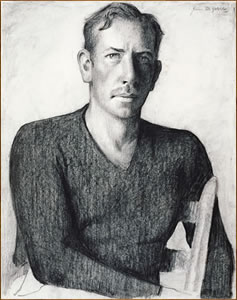
De Amerikaanse schrijver John Steinbeck werd geboren in Salinas, Californië, op 27 februari 1902. Zie ook alle tags voor John Steinbeck op dit blog.


Uit: Früchte des Zorns (Vertaald door Klaus Lambrecht)


„Über das rote Land und einen Teil des grauen Landes von Oklahoma fiel sanft der letzte Regen; aber er drang nicht in die rissige Erde ein. Die Pflüge kreuzten wieder und immer wieder die kleinen Furchen der Bäche. Der letzte Regen ließ das Korn und das Unkraut und das Gras am Rande der Straßen rasch wachsen, und bald begannen das graue Land und das dunkelrote Land unter einer grünen Decke zu verschwinden.

Am Ende des Monats Mai wurde der Himmel bleich, und die Wolken, die in dichten Ballen den ganzen Frühling über herabgehangen hatten, lösten sich auf. Die Sonne brannte hernieder auf das wachsende Korn, Tag für Tag, bis die grünen Speere an den Rändern braune Streifen bekamen.

Wolken tauchten auf und verschwanden wieder, und nach einer Weile kamen sie überhaupt nicht mehr. Das Unkraut wurde dunkelgrün, um sich zu schützen, aber es wucherte nicht mehr. Die Erde setzte eine Kruste an, eine dünne, harte Kruste, und wie der Himmel bleich wurde, so wurde auch die

Erde bleich — blaßrot das rote Land und weiß das graue Land. In den Wasserrinnen trocknete die Erde zu Staub, zu trokkenen kleinen Strömen. Goffer und Ameisenlöwen setzten kleine Lawinen in Bewegung. Und da die stechende Sonne Tag für Tag herniederbrannte, blieb das Korn nicht mehr steif und aufrecht. Erst beugte es sich nur ein wenig, und dann, als auch die starken Mittelrippen ihre Kraft verloren, neigten sich die Blätter ganz nach unten.

Dann kam der Juni, und die Sonne schien nun noch brennender. Die braunen Streifen an den Getreideblättern verbreiterten sich bis zu den Mittelrippen. Das Unkraut wurde welk und trocknete ein. Die Luft war dünn und der Himmel noch bleicher, und mit jedem Tag bleichte auch die Erde mehr.

Auf den Straßen, wo die Gespanne entlangzogen, wo die Räder den Boden zermahlten und die Hufe der Pferde den Boden zertraten, brach die Schmutzkruste, und Staub bildete sich. Jedes sich bewegende Ding hob den Staub in die Luft: bei einem Menschen hob er sich bis zu den Hüften, bei einem Wagen bis über die Plane, und ein Auto wirbelte eine mächtige Wolke hinter sich auf. Es dauerte lange, bis der Staub sich wieder gelegt hatte.


 1103038-411d2ce8ef10997f59465b99a643de1d.jpg

John Steinbeck (27 februari 1902 - 20 december 1968)

Portret door James Fitzgerald


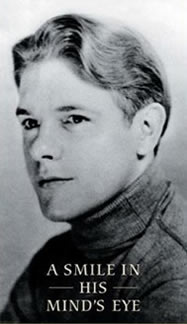
De Britse dichter en schrijver Lawrence George Durrell werd geboren op 27 februari 1912 in Jalandhar in India. Zie ook alle tags voor Lawrence Durrell op dit blog.


Je est un autre

“Je est un autre.” Rimbaud


He is the man who makes notes,

The observer in the tall black hat

Face hidden in the brim:

He has watched me watching him.


The street-corner in Buda and after

By the post-office a glimpse

Of the disappearing tails of his coat,

Gave the same illumination, spied upon,

The tightness in the throat.


Once too meeting by the Seine

The waters a moving floor of stars,

He had vanished when I reached the door,

But there on the pavement burning

Lay one of his familiar black cigars.


The meeting on the stairway

Where the tide ran clean as a loom:

The betrayal of her, her kisses

He has witnessed them all: often

I hear him laughing in the other room.


He watched me now, working late,

Bringing a poem to life, his eyes

Reflect the malady of De Nerval:

O useless in this old house to question

The mirrors, his impenetrable disguise.


 1103038-a11925cdeca62571ddce704fc122e3bd.jpg

Lawrence Durrell (27 februari 1912 – 7 november 1990)


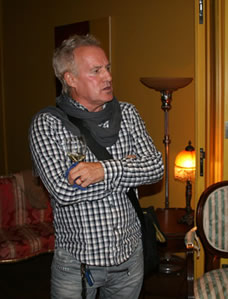
De Canadese dichter, schrijver en essayist André Roy werd geboren op 27 februari 1944 in Montréal. Zie ook mijn blog van 27 februari 2010 en ook mijn blog van 27 februari 2011.


La réalité, le poète


La réalité corrige nos sentiments.
À qui appartient ce texte?
Pour quelle peau ?
Tu penses à la lenteur des mots,
aux métaphores sur le vide entre deux étoiles,
au poète mince qui les écrit.

Qui a commis ce texte comme un péché?
Tu te réveilles, tu penses,
tu sens ton cœur dépenser follement son sang.

Il fait matin, terre qui tremble,
les fantômes sont partis
une fois l’acte sexuel accompli.

Je ne veux pas la fin de tout;
je veux le goût, la fièvre,
la beauté promise,
les mots en expansion dans l’espace.

Quelle heure est-il quand tu deviens doux ?
Il n’est jamais trop tard pour attendre
que les autres soient minces avec nous deux.

Le texte corrige mon sexe,
le rend simple pour toi,
il se montre courageux.
J’écris comme on se réveille
dans la réalité aux deux mille noms.
Je me lève, j’écris, je suis encore adorable.
Le temps des horloges lentes,
le nord glissant vers le sud,
le bleu déchiré au bord du ciel,
j’ai encore ma peau des sept jours de la semaine.

Poème qui fait du bruit,
fête-le!
Dis le poème, le texte qui craque,
qui dit oui, qui dit non.
Croque-moi doux,
donne-moi des exemples de métaphores.

Le poète n’a pas peur,
il est proche de toi
qui te tiens debout entre les étoiles.

J’ai toujours écrit dans le bleu,
celui du plein, du pas-pareil,
du souvenir aux quatre vérités.

Texte qui est,
exemple du cri,
du fait d’être réellement né.

La réalité sur mes épaules,
construite de passé et de présent,
n’est plus une métaphore;
c’est seulement toi étonné
de voir la folle vie imiter la vie folle
dans un poème écrit en l’an 2007.


 1103038-e12fcebdf4cbac7aadc82a3e3c1e09ad.jpg

André Roy (Montréal, 27 februari 1944)


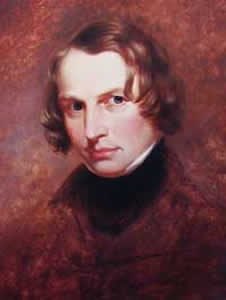
De Amerikaanse dichter Henry Wadsworth Longfellow werd geboren in Portland, Maine, op 27 februari 1807. Zie ook alle tags voor Henry Longfellow op dit blog.


A Dutch Picture


Simon Danz has come home again,

From cruising about with his buccaneers;

He has singed the beard of the King of Spain,

And carried away the Dean of Jaen

And sold him in Algiers.


In his house by the Maese, with its roof of tiles,

And weathercocks flying aloft in air,

There are silver tankards of antique styles,

Plunder of convent and castle, and piles

Of carpets rich and rare.


In his tulip-garden there by the town,

Overlooking the sluggish stream,

With his Moorish cap and dressing-gown,

The old sea-captain, hale and brown,

Walks in a waking dream.


A smile in his gray mustachio lurks

Whenever he thinks of the King of Spain,

And the listed tulips look like Turks,

And the silent gardener as he works

Is changed to the Dean of Jaen.


The windmills on the outermost

Verge of the landscape in the haze,

To him are towers on the Spanish coast,

With whiskered sentinels at their post,

Though this is the river Maese.


But when the winter rains begin,

He sits and smokes by the blazing brands,

And old seafaring men come in,

Goat-bearded, gray, and with double chin,

And rings upon their hands.


They sit there in the shadow and shine

Of the flickering fire of the winter night;

Figures in color and design

Like those by Rembrandt of the Rhine,

Half darkness and half light.


And they talk of ventures lost or won,

And their talk is ever and ever the same,

While they drink the red wine of Tarragon,

From the cellars of some Spanish Don,

Or convent set on flame.


Restless at times with heavy strides

He paces his parlor to and fro;

He is like a ship that at anchor rides,

And swings with the rising and falling tides,

And tugs at her anchor-tow.


Voices mysterious far and near,

Sound of the wind and sound of the sea,

Are calling and whispering in his ear,

'Simon Danz! Why stayest thou here?

Come forth and follow me!'


So he thinks he shall take to the sea again

For one more cruise with his buccaneers,

To singe the beard of the King of Spain,

And capture another Dean of Jaen

And sell him in Algiers


 1103038-f93ef417ef791f5843ac83ee3e380aff.jpg

Henry Longfellow (27 februari 1807 - 24 maart 1882)

Portret door Cephus Giovanni Thompson, 1840


Zie voor nog meer schrijvers van de 27e februari ook mijn vorige blog van vandaag en eveneens mijn eerste blog van vandaag.
Geschreven door Romenu om 19:15 Reageer op dit bericht

James T. Farrell, Elisabeth Borchers, Vera Friedlander, Irwin Shaw

De Amerikaanse schrijver James Thomas Farrell werd geboren op 27 februari 1904 in Chicago. Zie ook alle tags voor James T. Farrell op dit blog.


Uit: Young Lonigan


„Studs Lonigan, on the verge of fifteen, and wearing his first suit of long trousers, stood in the bathroom with a Sweet Caporal pasted in his mug. His hands were jammed in his trouser pockets, and he sneered. He puffed, drew the fag out of his mouth, inhaled and said to himself:

Well, I'm kissin' the old dump goodbye tonight.

Studs was a small, broad-shouldered lad. His face was wide and planed; his hair was a light brown. His long nose was too large for his other features; almost a sheeny's nose. His lips were thick and wide, and they did not seem at home on his otherwise frank and boyish face. He was always twisting them into his familiar tough-guy sneers. He had blue eyes; his mother rightly called them baby-blue eyes.

He took another drag and repeated to himself:

Well, I'm kissin' the old dump goodbye.

The old dump was St. Patrick's grammar school; and St. Patrick's meant a number of things to Studs. It meant school, and school was a jailhouse that might just as well have had barred windows. It meant the long, wide, chalk-smelling room of the seventh- and eighth-grade boys, with its forty or fifty squirming kids. It meant the second floor of the tan brick, undistinguished parish building on Sixty-first Street that had swallowed so much of Studs' life for the past eight years. It meant the black-garbed Sisters of Providence, with their rattling beads, their swishing strides, and the funny-looking wooden clappers they used, which made a dry snapping sound and which hurt like anything when a guy got hit over the head with one. It meant Sister Carmel, who used to teach fourth grade, but was dead now; and who used to hit everybody the edge of a ruler because she knew they all called her the bearded lady. It meant Studs, twisting in his seat, watching the sun come in the windows to show up the dust on the floor, twisting and squirming, and letting his mind fly to all kinds of places that were not like school. It meant Battleaxe Bertha talking and hearing lessons, her thin, sunken-jawed face white as a ghost, and sometimes looking like a corpse. It meant Bertha yelling in that creaky old woman's voice of hers.“


 1103035-1bfea3904c3f13ac258f7a347b4f091c.jpg

James T. Farrell (27 februari 1904 – 22 augustus 1979)


De Duitse schrijfster en dichteres Elisabeth Borchers werd geboren in Homberg op 27 februari 1926. . Zie ook alle tags voor Elisabeth Borchers op dit blog.


August


Es kommt eine Zeit,
da wachsen die Bäume
in den Himmel.
Die Blumen wollen so groß sein
wie Bäume.
Der Himmel hoch oben
hat Wolken.

Es kommt eine Zeit,
da gehen rote Pilze
durch den Wald
und schwarzgelackte Käfer.

Da ist die Sonne so heiß,
dass man sie nicht anfassen kann.

Da wächst es rot an den Sträuchern
und blau an den Gräsern.
Das sind die Tage der Beeren.


Eines Tages stand ich


Eines Tages stand ich am Ufer des Mississippi.
(Keine Erzählung.)
Das Hochwasser führte


(in dem ihm eigenen beschleunigten Fließen)

mit sich 1 gedunsene Kuh 1 gedunsenes Schwein
1 gedunsenen Baum 1 gedunsenen Strauch.
Nicht aber den Dampfer mit Rad.
 
Als ich mich unbeobachtet sah
tauchte ich eine Hand in das Kadaverwasser
meiner Kindheit.
Das ist keine Erzählung.
Das ist der Augenblick.


1103035-56033501086e2747bb683887cb40ca0e.jpg
Elisabeth Borchers (Homberg, 27 februari 1926)


De Duitse schrijfster Vera Friedlander (eig. Veronika Schmidt) werd geboren op 27 februari 1928 in Woltersdorf. Zie ook mijn blog van 27 februari 2011.


Uit: Ich bin Vergangenheit und Gegenwart


„Ich blicke auf ein bittersüßes Leben zurück. Beides habe ich geschmeckt, das Süße und das Bittere. Ich habe das in Honig getauchte Apfelstück am Abend von Rosch Haschana, dem jüdischen Neujahrstag, gegessen, auf dass das neue Jahr süß und angenehm sein möge, und ich nahm von dem Bitterkraut auf dem Sederteller, um nicht zu vergessen, wie hart das Leben war und noch immer sein kann. Ich meine mein eigenes, das bittere und doch so schöne Leben. Viele glückliche Honigtage habe ich erlebt und solche, in denen ich glaubte, der Kummer würde mich um den Verstand bringen. Ich sage nicht, solches sei mir beschieden gewesen. Welches unaussprechbare Wesen sollte mir etwas gegeben oder genommen haben? Das Glück, das mir begegnete, waren Menschen, die ich liebte, waren Freunde und günstige Umstände. Den Kummer musste ich ertragen, weil ich eben diese Menschen verlor. Eine Biografie folgt dem Ablauf der Zeit. Ich greife etwas wahllos in die Jahre. Einzelne Seiten aus dem Buch meines Lebens greife ich heraus. Mein Lebensweg ist daraus ablesbar, wenn auch nicht als chronologische Folge. Was fehlt, habe ich an anderer Stelle geschrieben, das Wichtigste in meinem autobiografischen Bericht über die Jahre bis 1945. Im Grunde enthält alles, was ich geschrieben habe, etwas von mir. Ich erfand Figuren und Geschichten und stattete sie mit dem aus, was ich gesehen, erlebt, gedacht und gefühlt habe. Und manche authentische Person habe ich abgebildet. Es gab zwei Zäsuren in meinem Leben, die erste 1945, die zweite 1986. So entstanden drei Lebensphasen. 1945 endeten meine Mädchenjahre, 1986 die beste Zeit meines Lebens, danach gab es noch einen neuen Anfang. Meine Kindheit und meine Mädchenjahre wurden geprägt durch die Shoa. Die große jüdische Familie, zu der ich gehörte, wurde deportiert, nur drei kamen aus Lagern zurück und Einzelne überlebten durch Emigration oder durch nichtjüdische Ehepartner.“


 1103035-63b929c6a5e667fa2eae0acc2eacf26b.jpg

Vera Friedlander (Woltersdorf, 27 februari 1928)

In 1996


De Amerikaanse schrijver Irwin Shaw werd geboren op 27 februari 1913 als Irwin Gilbert Shamforoff in New York. Zie alle tags voor Irwin Shaw op dit blog.


Uit: The Eighty-Yard Run


“The center floated by, his hands desperately brushing Darling's knee as Darling picked his feet up high and delicately ran over a blocker and an opposing linesman in a jumble on the ground near the scrimmage line. He had ten yards in the clear and picked up speed, breathing easily, feeling his thigh pads rising and falling against his legs, listening to the sound of cleats behind him, pulling away from them, watching the other backs heading him off toward the sideline, the whole picture, the men closing in on him, the blockers fighting for position, the ground he had to cross, all suddenly clear in his head, for the first time in his life not a meaningless confusion of men, sounds, speed. He smiled a little to himself as he ran, holding the ball lightly in front of him with his two hands, his knees pumping high, his hips twisting in the almost girlish run of a back in a broken field. The first halfback came at him and he fed him his leg, then swung at the last moment, took the shock of the man's shoulders without breaking stride, ran right through him, his cleats biting securely into the turf. There was only the safety man now, coming warily at him, his arms crooked, hands spread. Darling tucked the ball in, spurted at him, driving hard, hurling himself along, all two hundred pounds bunched into controlled attack.

He was sure he was going to get past the safety man. Without thought, his arms and legs working

beautifully together, he headed right for the safety man, stiff-armed him, feeling blood spurt

instantaneously from the man's nose onto his hand, seeing his face go awry, head turned, mouth pulled to one side. He pivoted away, keeping the arm locked, dropping the safety man as he ran easily toward the goal line, with the drumming of cleats diminishing behind him.“


1103035-6bbef0ef5ab51ccd1a7861d07b32c42c.jpg
Irwin Shaw (27 februari 1913 – 16 mei 1984)

Geschreven door Romenu om 19:08 Reageer op dit bericht

N. Scott Momaday, Peter De Vries, Jules Lemaître, Johannes Meinhold, Traugott Vogel

De Amerikaanse (native, Kiowa) schrijver N(avarre) Scott Momaday werd geboren op 27 februari 1934 in Lawton, Oklahoma. Zie ook alle tags voor N. Scott Momaday op dit blog.


Angle of Geese


How shall we adorn

Recognition with our speech?—

Now the dead firstborn

Will lag in the wake of words.


Custom intervenes;

We are civil, something more:

More than language means,

The mute presence mulls and marks.


Almost of a mind,

We take measure of the loss;

I am slow to find

The mere margin of repose.


And one November

It was longer in the watch,

As if forever,

Of the huge ancestral goose.


So much symmetry!—

Like the pale angle of time

And eternity.

The great shape labored and fell.


Quit of hope and hurt,

It held a motionless gaze

Wide of time, alert,

On the dark distant flurry.


 1103031-abbcf0d9810ad167f2ffdbcf38ffcf49.jpg

N. Scott Momaday (Lawton, 27 februari 1934)


De Amerikaanse schrijver
Peter de Vries werd geboren op 27 februari 1910 in Chicago als zoon van Nederlandse immigranten. Zie ook mijn blog van 27 februari 2010 en ook mijn blog van 27 februari 2011.


Uit: The Last Hurrah


„Forty-five minutes later the taxi pulls up at the Gazebo hotel. Tom pays the driver - no tip. He takes his bag to reception. Tells the receptionist he has a booking.

“Check in isn't until 2 p.m., sir.”

“Oh,” says Tom. He hadn't thought about this. “Can I leave my suitcase here until then?”

“Certainly sir.”

He looks around the lobby. It looks classy. A nice place. He nods and leaves. Walks out the front door, into Fitzroy Gardens. Sees the used syringes. The police station. The police presence. The bums. The alkies. Tom walks onto Darlinghurst road - the main drag.

The sun is out. It's quiet. He walks towards William street, checking out the brothel fronts, the sex shops. All closed up now.

Tom walks back. Sees the famous Bourbon and Beefsteak bar. Goes in. Thinks about having a beer. But he orders coffee. Gets out his mobile. Calls the office. Gets Janice, the secretary: “Janice, it's Tom.”

“Tom, how are you feeling?”

“A little crook still. Just thought I'd call in to remind you.”

“Remind me?”

“That I wouldn't be in.”

“I know. You said so yesterday. You said you were sick.”

“Well I still am. Just thought I'd let you know. Could you let Derrick know?”

“I already have, Tom.”

“Oh. Good.” Pause.

“Take it easy, Tom. Get better soon.”

“I'll try.”


 1103031-eb1fc253229aed64ea3e123ec2c93b7e.jpg

Peter De Vries (27 februari 1910 – 28 september 1993)


De Franse schrijver en dichter
Jules Lemaître werd geboren op 27 februari 1853 in Vennecy, Loiret. Zie ook alle tags voor Jules Lemaître op dit blog.


Uit: Alphonse Daudet


» Le petit Chose a écrit dans les journaux, il a même fait des livres. Et le public a été de l'avis de la mère Jacques. Ô locataire du moulin de Gaspard Mitifio, conteur des contes du lundi, ami du petit Jack et de la petite Désirée, compatriote infidèle de Tartarin, de Numa et de Bompard, historiographe du Nabab et de la reine Frédérique, ô magicien qui savez unir dans une si juste mesure et par un secret si rare la vérité, la fantaisie et la tendresse, ah ! quelle jolie façon vous avez de dire les choses !
La fortune littéraire de M. Alphonse Daudet est des plus éclatantes qu'on ait vues. C'est une séduction universelle. Ceux qui veulent des larmes et ceux qui veulent de l'esprit, les amoureux d'extraordinaire et les quêteurs de modernité, les simples, les raffinés, les femmes, les poètes, les naturalistes et les stylistes, M. Daudet traîne tous les cœurs après lui ; car il a le charme, aussi indéfinissable dans une œuvre d'art que dans un visage féminin, et qui pourtant n'est pas un vain mot puisque de très grands écrivains ne l'ont pas. Le charme, c'est peut-être une certaine aisance heureuse, une fleur de naturel même dans le rare et le recherché ; c'est, en tout cas, quelque chose d'incompatible avec des qualités trop laborieuses et trop voulues : ainsi le charme ne se rencontre guère chez les chefs d'école. On peut remarquer aussi que le charme ne va pas sans un cœur aisément ému et qui ne craint pas de le paraître (Homo sum, etc.).


1103031-50dc83f250b97e04facd1986171b4157.jpg
Jules Lemaître (27 februari 1853 – 5 augustus 1914)

In 1914


De Duitse schrijver Johannes Wilhelm Meinhold werd geboren op 27 februari 1797 in Netzelkow op Usedom. Zie ook  Zie ook alle tags voor Wilhelm Meinhold op dit blog.


Uit: Die Bernsteinhexe


“Indem ich dem Publikum hiermit diesen tiefrührenden und fast romanartigen Hexenprozeß übergebe, den ich wohl nicht mit Unrecht auf dem vorstehenden Titelblatte den interessantesten aller bis jetzt bekannten genannt habe, erteile ich zuvörderst über die Geschichte des Manuskriptes die folgende Auskunft:

In Koserow auf der Insel Usedom, auf meiner vorigen Pfarre und derselben, welcher unser ehrwürdiger Verfasser vor länger als zweihundert Jahren vorstand, befand sich unter einem Chorgestühl der dortigen Kirche und fast zu ebener Erde eine Art Nische, in welcher ich zwar schon öfter einige Skripturen liegen gesehen, die ich jedoch wegen meiner Kurzsichtigkeit und der Dunkelheit des Ortes für verlesene Gesangbücher hielt, wie denn in der Tat auch deren eine Menge hier umherlag. Eines Tages jedoch, als ich, mit Unterricht in der Kirche beschäftigt, ein Papierzeichen in dem Katechismus eines Knaben suchte und es nicht sogleich finden konnte, trat mein alter, mehr als achtzigjähriger Küster unter jenes Chorgestühl und kehrte mit einem Folianten zurück, der mir nie zu Gesicht gekommen war und aus dem er ohne weiteres einen geeigneten Papierstreifen riß und ihn mir überreichte. Ich griff sogleich nach dem Buche und weiß nicht, ob ich schon nach wenigen Minuten erstaunter oder entrüsteter über meinen köstlichen Fund war. Das in Schweinsleder gebundene Manuskript war nicht bloß vorne und hinten defekt, sondern leider waren auch aus der Mitte hin und wieder mehrere Blätter gerissen.“


1103031-05342576cd793322642f53cc0ab3f461.jpg
Wilhelm Meinhold (27 februari 1797 – 30 november 1851)

Redding van de „heks“ tijdens het Bernsteinfeest op Usedom


Zie voor onderstaande schrijver ook mijn blog van 27 februari 2007


De Zwitserse schrijver Traugott Vogel werd op 27 februari 1894 als zoon van een groentehandelaar in Zürich geboren.

Geschreven door Romenu om 19:04 Reageer op dit bericht

Meer van Romenu

↑ Terug naar de berichten