

 Richard Blanco, Elke Heidenreich, Chrystine Brouillet, Hans Kruppa, Douglas Hofstadter, Wilhelm Jensen, Demetrius Vikelas
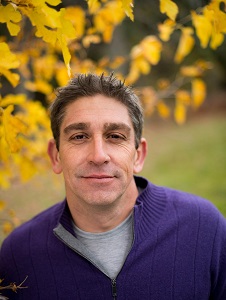
De Amerikaanse dichter Richard Blanco werd geboren op 15 februari 1968 in Madrid. Zie ook alle tags voor Richard Blanco op dit blog.
Mother Picking Produce
She scratches the oranges then smells the peel,
presses an avocado just enough to judge its ripeness,
polishes the Macintoshes searching for bruises.
She selects with hands that have thickened, fingers
that have swollen with history around the white gold
of a wedding ring she now wears as a widow.
Unlike the archived photos of young, slender digits
captive around black and white orange blossoms,
her spotted hands now reaching into the colors.
I see all the folklore of her childhood, the fields,
the fruit she once picked from the very tree,
the wiry roots she pulled out of the very ground.
And now, among the collapsed boxes of yucca,
through crumbling pyramids of golden mangos,
she moves with the same instinct and skill.
This is how she survives death and her son,
on these humble duties that will never change,
on those habits of living which keep a life a life.
She holds up red grapes to ask me what I think,
and what I think is this, a new poem about her-
the grapes look like dusty rubies in her hands,
what I say is this: they look sweet, very sweet.
Contemplations at the Virgin de la Caridad Cafetería, Inc.
Que será, el café of this holy, incorporated place,
the wild steam of scorched espresso cakes rising
like mirages from the aromatic waste, waving
over the coffee-glossed lips of these faces
assembled for a standing breakfast of nostalgia,
of tastes that swirl with the delicacy of memories
in these forty-cent cups of brown sugar histories,
in the swirling froth of café-con-leche, que será,
what have they seen that they cannot forget—
the broad-leaf waves of tabaco and plaintains
the clay dust of red and nameless mountains,
que será, that this morning I too am a speck;
I am the brilliant guitar of a tropical morning
speaking Spanish and ribboning through potions
of waist-high steam and green cane oceans,
que será, drums vanishing and returning,
the African gods that rule a rhythmic land
playing their music: bongó, bembé, conga;
que será, that cast the spells of this rumba,
this wild birthright, this tropical dance
with the palms of this exotic confusion;
que será, that I too should be a question,
que será, what have I seen, what do I know—
culture of café and loss, this place I call home.
Richard Blanco (Madrid, 15 februari 1968)
De Duitse schrijfster, critica en presentatrice Elke Heidenreich werd geboren op 15 februari 1943 in Korbach. Elke Heidenreich viert vandaag haar 70e verjaardag. Zie ook alle tags voor Elke Heidenreich op dit blog.
Uit:Alles kein Zufall
“Ich sitze im Speisesaal eines österreichischen Hotels. Zwei Tische weiter eine Frau, di immerzu lacht, laut, mit weit geöffnetem Mund, immer auf demselben dummen Ton, ein künstliches, ein freudloses Lachen. Es quält mich. Ich schreibe auf die Serviette: »Wenn Sie noch einmal lachen, bringe ich Sie um.« Ich würde ihr die Serviette gern durch den extrem blasierten Restaurant- oder Hotelchef zustellen lassen, der im Trachtenjankerl und mit Stechschritt von Tisch zu Tisch marschiert und schnarrt: »Gott!« oder »Zeit!«
Was meint er? Soll ich mir mehr Zeit für Gott nehmen? Hat Gott jetzt Zeit für mich?
Irgendwann versteh ich es, er meint »Grüß Gott!« und »Mahlzeit!«
Auf der Speisekarte stehen Breinwurst, Bohnschlotengulasch, Ganserl, Erdäpfelgnocchi, Sulzerl mit Kernöl, ich weiß nicht, was das ist und was davon ich essen könnte. Ein Schild mit Pudel drauf besagt: »Mein Platz ist am Boden!« Dürften Schäferhunde und Möpse auf die Tische und Bänke?
Der Nachtisch heißt »Mohr im Hemd« und ist eine Art warmer Schokoladenkuchen mit Sahne. Der Ober fragt: »War bei Ihnen der Schluss in Ordnung?« Was meint er? Mein Lebensende? Den Mohren?
Zwei alte Damen am Nebentisch: »Ich sa immer, es gibt Schmerzen, die man aushalten kann, weil man sie aushalten muss.«
Manche Restaurantbesuche kann man auch nur aushalten, weil man sie aushalten muss.“
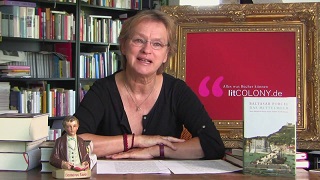
Elke Heidenreich (Korbach, 15 februari 1943)
De Canadese schrijfster Chrystine Brouillet werd geboren op 15 februari 1958 in Loretteville, Quebec. Zie ook alle tags voor Chrystine Brouillet op dit blog.
Uit: Les chevaux enchantés
« -- Réveille-toi, Arthur! On est arrivés!
-- Je ne dormais pas, a-t-il dit en bâillant. Je réfléchissais.
-- Ah? Tu ronfles quand tu réfléchis?
Il n'a pas répondu, s'affairant à récupérer nos bagages.
-- Tu n'oublies rien? a demandé mon ami Arthur.
-- Mais non!
-- Et ça?
Il me montrait mon chapeau. Je l'ai pris sans dire un mot. C'est vrai que j'étais un peu excitée à l'idée de passer quelques jours chez Élise. On allait à 1' école ensemble quand on était petites. Elle avait ensuite déménagé à la campagne, car son père élève des chevaux, mais on était restées amies.
Élise a de longs cheveux si blonds, si pâles, qu'ils paraissent blancs. Elle est plus grande que moi, même si on est presque du même âge, et elle adore mon chien Sherlock. Malheureusement, je n'ai pas pu l'emmener avec moi; c'est formellement interdit dans les autobus. Élise, elle, a un très vieux chien, Dagobert. Il dort tout le temps!
J'ai présenté Arthur à Mme Dugas, tandis que M. Dugas rangeait nos bagages dans le coffre de la voiture. Elise et ses parents habitent à vingt minutes de la gare. Leur maison est très jolie et, au loin, on distinguait les écuries.
-- On va pouvoir faire de l'équitation? a demandé Arthur.
-- Bien sûr! On prend une collation et on part ensuite en promenade.
J'ai mangé une tartine avec de la confiture de fraises des bois, puis je me suis changée dans notre chambre. Quand je suis redescendue, Arthur m'attendait. C'était la première fois qu'il était prêt avant moi! Il avait vraiment hâte de monter à cheval. »
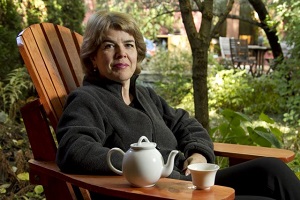
Chrystine Brouillet (Loretteville, 15 februari 1958)
De Duitse dichter en schrijver Hans Kruppa werd geboren op 15 februari 1952 in Marl. Zie ook alle tags voor Hans Kruppa op dit blog.
Das bist du
Wie klares Wasser.
Wie blauer Himmel.
Wie feiner weißer Sand
bist du.
Wie Muscheln am Strand.
Ein Schmetterling im Wind.
Wie ein Schweigen,
das alles umarmt -
so bist du.
Ein Freudenfeuer
in der Nacht der Welt,
ein Lächeln im Gesicht des Mondes.
Die wahre schöne Stille
abseits vom Lärm der Schauspieler -
das bist du.
Feuervögel
Als Feuervögel flogen wir
in das Land ohne Worte
und ohne Erinnerung,
wo jeder Augenblick
aus sich selbst entsteht
und nichts aufeinander aufbaut,
weil es keine Zeit gibt -
nur den Zauber,
der Träumen Wirklichkeit schenkt,
nur die berauschende Musik
ineinander versunkenen Lebens.
Als Feuervögel flogen wir
dem Himmel in die Arme
und kannten keine Grenzen.
Das war vor Tagen;
seitdem hat die Erde uns wieder.
Aber wer einmal so zusammenflog,
der will nichts andres mehr.
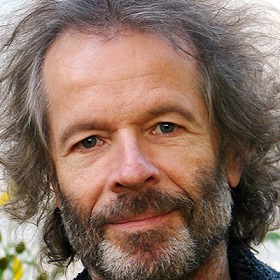
Hans Kruppa (Marl, 15 februari 1952)
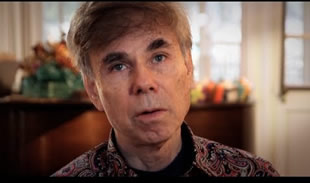
De Amerikaanse wetenschapper en schrijver Douglas Richard Hofstadter werd geboren op 15 februari 1945 in New York. Zie ook alle tags voor Douglas Hofstadter op dit blog.
Uit:On translators, traitors, and traders
“With this, we find ourselves square in the territory staked out by the celebrated and hugely negativistic Italian slogan Traduttore, traditore, which literally means “Translator, betrayer” or “Translator, traducer” – or then again, “Translator, traitor.” The irony residing in the final one of these three possibilities is that it beautifully undermines its own claim. The pithy slogan “Translator, traitor” shows very clearly that a translator need not be a betrayer or traitor, for it beautifully preserves the key quality that makes the original Italian phrase so memorable – namely, its catchiness, which is due to the fact that the two nouns inside it sound so much alike. There is no aspect of the phrase Traduttore, traditore that is missed by “Translator, traitor,” and so this English translation is a checkmate in response to the strong-seeming check tendered by the Italian opponent.
I am not in the least a believer in the extreme pessimism expressed by Traduttore, traditore (or its perfect English counterpart “Translator, traitor”), no matter how catchy this famous phrase may be and no matter how often it is repeated like a clever mantra by supposed literary sophisticates. I hear it as a cute sound bite rather than as a serious thesis about translation. In fact, I am far more inclined to believe in a rival (and also cute) sound bite – namely, “Translator, trader”....
(…)
A phrase-trader has to have an intuitive sense of where the pale is – what’s well within it, what’s well beyond it. But the pale is so ethereal, so elusive, so intangible, so impalpable – so pale – that no one can actually see it. The pale is something determined collectively by the masses that speak the language, and no one person can pinpoint it.“
Douglas Hofstadter (New York, 15 februari 1945)
De Duitse dichter en schrijver Wilhelm Jensen werd geboren op 15 februari 1837 in Heiligenhafen (Holstein). Zie ook alle tags voor Wilhelm Jensen op dit blog.
Siehst du mich an mit stillen Augen
Siehst du mich an mit stillen Augen,
Da überkommt's mich oft genug,
Als seien wir emporgestiegen
Aus einem alten Märchenbuch.
Und wie im Traum' schau' ich die Halle
Und schau' im Waldesdunkel tief
Die grüne Dämmrung, drin verzaubert
Uralt beschlossne Liebe schlief.
Und immer will es mich bedünken,
Als sei ich noch nicht ganz erwacht,
Als liege noch um meine Stirne
Ein Schleier jener Wundernacht.
Siehst du mich an mit stillen Augen,
Da fällt er mehr und mehr herab,
Und aus dem Herzen bricht es jubelnd,
Daß ich dich ganz zurücke hab'
Zwielicht weht über die Haide
Zwielicht weht über die Haide,
Im Schilfe murmelt der Wind;
Nun reiten wir zweibeide
Mit über die Haide geschwind.
Im flatternden Nebelkleide
Huscht tanzend das Elfengesind'
Seitab um die graue Weide
Und lacht und verblaßt und zerrinnt.
Doch uns, wie Fäden von Seide,
Umwogt das Gras und spinnt
Thautropfen wie Perlgeschmeide
Um dich, mein blondes Kind.
Mir ist, als rief's aus den Zweigen
Uns nach mit lachendem Mund,
Als kläng's wie Hochzeitsreigen
Fern über den Haidegrund -
Die Luft ist glockentönig,
Als trüg' auf nebelndem Roß
Der Wind uns zum Haidekönig
Auf deines Vaters Schloß.
Wilhelm Jensen (15 februari 1837 – 24 november 1911)
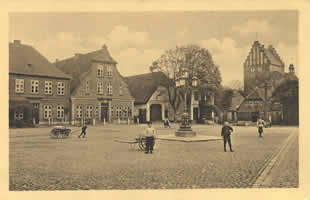
Heiligenhafen, de markt, op een ansichtkaart van rond 1900
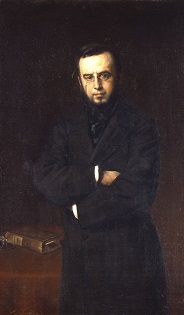
De Griekse schrijver en zakenman Demetrius Vikelas, ook bekend als Bikelas werd geboren in Ermoupoli op 15 februari 1835. Zie ook alle tags voor Demetrius Vikelas op dit blog.
Uit: The Plain Sister (Vertaald door L.E. Opdycke)
“He had almost reached the dockyard, which then marked the outskirts of Syra, and was still walking along the shore, when he saw his well-beloved Liakos in the distance coming from the town. A smile of satisfaction lighted his round face; he threw up both hands, in one of which was a stout cane, and raising his voice so as to be heard by his friend from afar, declaimed this line from the “Iliad”:
[Greek text] Who mayest thou be, of mortal men most brave?
The professor had a habit of quoting Homer on all occasions, and was reputed to know the whole “Iliad” and “Odyssey” by heart. He modestly disavowed this tribute to his learning, but without giving up the quotations that seemed to justify it. It is true ill-natured people said his verses were not always quite applicable; but the Hellenists of Syra did not confirm this slander, possibly because they were not competent to judge. Still, everybody used to smile when he raised his voice in the midst of a trivial conversation to roll forth majestically some sonorous hexameter from Homer.
When the two friends were near enough, Mr. Plateas stopped and effusively shook hands with his preserver.
“My dear friend, why didn’t you tell me you were going to walk to-day? We could have come out together, it’s time to go in now. Why did you start so late?”
“Yes, I am late; I expected to meet you farther on.” And Mr. Liakos added with a show of indifference, “Are there many people out to-day?”
“Very few. You know our Syrans; they’re content to saunter up and down their crowded square; it is only people of taste who enjoy themselves
[Greek Text] ... on the shore of the resounding sea.”
“And who were these men of taste to-day?” asked the judge, with a smile.”
Demetrius Vikelas (15 februari 1835 – 20 juli 1908)
Portret doorNikolaos Xydias Typaldos, ca. 1870
Zie voor nog meer schrijvers van de 15e februari ook mijn blog van 15 februari 2015 deel 1 en eveneens deel 2.
