Naar de inhoud

Romenu

Over literatuur, gedichten, kunst en cultuur
seniorennet.beseniorennet.be

Berichten van 7 oktober 2017

Simon Carmiggelt, Rachel Kushner, Thomas Keneally, Dirkje Kuik, Steven Erikson
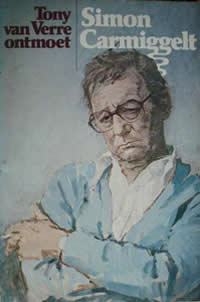
De Nederlandse schrijver en dichter Simon Carmiggelt werd geboren op 7 oktober 1913 in Den Haag. Zie ook mijn blog van 7 oktober 2010 en eveneens alle tags voor Simon Carmiggelt op dit blog.


Tekst voor een wijnkaart

O,drank, je hebt zoveel verpest.
Toch ben je in mijn dorstig leven
altijd die ene hoer gebleven,
die mij het diepste heeft gelest,

want hoe je me ook hebt geflest
door altijd (en ik kon het weten)
al je beloften te vergeten,
als je weer klaar lag voor de rest,

en hoe je m'ook hebt uitgemest
door alles wat je van me nam,
ik leefde als ik bij je kwam,
bij jou alleen. Dat weet je best.

Je grokstem en je valse streken,
de stomme platheid van je spreken
en van je bed de wulpse stank,

't was niets, als ik maar weg mocht zinken
in jou om steeds weer in te drinken
jouw zoete leugen-bitt're drank.


De schilder

Zijn vrees staat als een bevend spook
te kijk op zijn Picasso-doeken.
Steeds angst, op al die Talens-koeken.
En in de keuken staat ze ook.

Want deze vrouw, zo fel en kloek,
verdreef hem uit de luwe sferen
van landschap en van jutteperen,
te hoop gelopen op het doek.

O kalme jaren, toen hij dat nog deed:
de lichtvlek mikken op de vaas,
de gaatjes nadoen van de kaas.
Dat stille werk dat niemand leed.

Maar zij dreef blauwzuur in zijn coloriet.
Haar strengheid tormenteert zijn kwast,
en als zijn angst zich paars ontlast,
ageert hij tegen haar 'Kom eten, Piet.


Mijn zoontje

Mijn zoontje wil de sneeuw bewaren
en vlinders op zijn petje dragen.
Aan mij komt hij gewillig vragen,
hoe hij zijn dartel schip moet varen.

Vertrouwen glinstert in zijn oog
en maakt mij wel eens moedeloos.
Ik knijp zijn handje en ben boos
omdat ik hem zo vaak bedroog.

Ik weet dat eens het uur zal komen,
dat hij mijn ganse onmacht kent
en hoogstens glimlacht om de vent
die heldje speelde in zijn dromen.

Als dan mijn dag ten einde spoedt
en reeds verschemert naar de nacht,
is hij een man, die leeft en lacht.
Want alles gaat, zoals het moet.


 2079584-08e0c7c30c9e75e0720950e604caae16.jpg
Simon Carmiggelt (7 oktober 1913 – 30 november 1987)
Cover


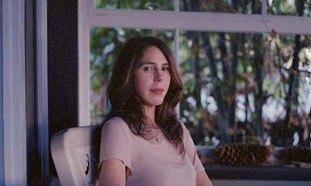
De Amerikaanse schrijfster Rachel Kushner werd geboren op 7 oktober 1968 in Eugene, Oregon en verhuisde naar San Francisco in 1979. Zie ook alle tags voor Rachel Kushner op dit blog.

Uit: Telex From Cuba

“There it was on the globe, a dashed line of darker blue on the lighter blue Atlantic. Words in faint italic script: Tropic of Cancer. The adults told her to stop asking what it was, as if the dull reply they gave would satisfy: “A latitude, in this case twenty-three and a half degrees.” She pictured daisy chains of seaweed stretching across the water toward a distant horizon. On the globe were different shades of blue wrapping around the continents in layers. But how could there be geographical zones in the sea, which belongs to no country? Divisions on a surface that is indifferent to rain, to borders, that can hold no object in place? She’d seen an old globe that had one ocean wrapping the Earth, called Ocean. In place of the North Pole was a region marked “Heaven.” In place of the South Pole, “Hell.”
She selected the color black from a list of topics and wrote her book report, despite feeling that reducing Treasure Island to various things colored black was unfaithful to the story, which was not about black, but perhaps how boys need fathers, and how sometimes children are more clever than adults and not prone to the same vices. The Jolly Roger was black, and there was Black Dog, who showed up mysteriously at the Admiral Benbow, demanding rum. There were black nights on the deserted island, creeping around in shadows amid yet more blackness: the black of danger. Also, the “black spots” that pirates handed out—a sort of threat. A death sentence, really. “Who tipped me the black spot?” asked Silver. This death sentence, a stain of wood ash on a leaf of paper. The leaf, torn from a Bible, which now had a hole cut into Revelation. And holes are black as well.
She’d read about Sargasso, a nomadic seaweed city, and hoped they would encounter some. Other things floated on the ocean as well: jetsam, which is what sailors toss overboard to lighten their load, and flotsam, things caught and pushed out to sea, such as coconuts, which rolled up on the shores of Europe in a time before anyone knew what lay to the west. Maybe coconuts still washed up, but they ­weren’t eerie and enchanting now that you could buy one at the store. In that earlier time, people displayed them as exotic charms. Or cut them open. A strange white fluid poured out, greasy and foul-smelling. Not poisonous, just spoiled from such a long and difficult journey, a fruit thousands of miles from its home under the green fronds of a palm tree."
 

 2079584-4ac761e80066cfb72d31e230c6450b0f.jpg
Rachel Kushner (Eugene, 7 oktober 1968)


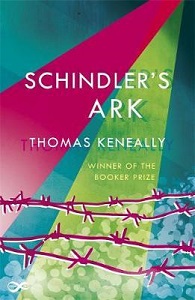
De Australische schrijver Thomas Keneally werd geboren op 7 oktober 1935 in Sydney. Zie ook mijn blog van 7 oktober 2010 en eveneens alle tags voor Thomas Keneally op dit blog.

Uit: Schindler's Ark

“The family Schindler was Catholic. So too was the family of young Amon Goeth, by this time also completing the Science Course and sitting for the Matura examinations in Vienna.
Oskar's mother, Louisa, practiced her faith with energy, her clothes redolent all Sunday of the incense burned in clouds at High Mass in the Church of St. Maurice. Hans Schindler was the sort of husband who drives a woman to religion. He liked cognac; he liked coffeehouses. A redolence of brandy-warm breath, good tobacco, and confirmed earthiness came from the direction of that good monarchist, Mr. Hans Schindler.
The family lived in a modern villa, set in its own gardens, across the city from the industrial section. There were two children, Oskar and his sister, Elfriede. But there are not witnesses left to the dynamics of that household, except in the most general terms. We know, for example, that it distressed Frau Schindler that her son, like his father, was a negligent Catholic.
But it cannot have been too bitter a household. From the little that Oskar would say of his childhood, there was no darkness there. Sunlight shines among the fir trees in the garden. There are ripe plums in the corner of those early summers. If he spends a part of some June morning at Mass, he does not bring back to the villa much of a sense of sin. He runs his father's car out into the sun in front of the garage and begins tinkering inside its motor. Or else he sits on a side step of the house, filing away at the carburetor of the motorcycle he is building.
Oskar had a few middle-class Jewish friends, whose parents also sent them to the German grammar school. These children were not village Ashkenazim—quirky, Yiddish-speaking, Orthodox—but multilingual and not-so-ritual sons of Jewish businessmen. Across the Hana Plain and in the Beskidy Hills, Sigmund Freud had been born of just such a Jewish family, and that not so long before Hans Schindler himself was born to solid German stock in Zwittau.
Oskar's later history seems to call out for some set piece in his childhood. The young Oskar should defend some bullied Jewish boy on the way home from school. It is a safe bet it didn't happen, and we are happier not knowing, since the event would seem too pat. Besides, one Jewish child saved from a bloody nose proves nothing. For Himmler himself would complain, in a speech to one of his Einsatzgruppen, that every German had a Jewish friend. " 'The Jewish people are'going to be annihilated,' says every Party member. 'Sure, it's in our program: elimination of the Jews, annihilation—we'll take care of it.' And then they all come trudging, eighty million worthy Germans, and each one has his one decent Jew. Sure, the others are swine, but this one is an A-One Jew."
 

 2079584-f2b975ff42634075b923f468348a58fd.jpg
Thomas Keneally (Sydney, 7 oktober 1935) 
Cover


De Nederlandse schrijfster en beeldend kunstenares Dirkje Kuik werd geboren in Utrecht op 7 oktober 1929. Zie ook mijn blog van 7 oktober 2010 en eveneens alle tags voor Dirkje Kuik op dit blog.


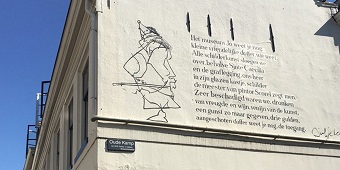
Het museum Jo, weet je nog.
kleine vriendelijke doffer, wie weet,
Alle schilderkunst sloegen we
over, behalve Sinte Caecilia
en de graflegging, ons heer
in zijn glazen kastje, schilder
de meester van pintor Scorel zegt men.
Zeer beschadigd waren we, dronken
van vreugde en wijn, venijn van de kunst,
een gunst zo maar gegeven, drie gulden,
aangeschoten doffer weet je nog,de toegang.
 

 2079584-5999e3ab24b9129054ec2976de1037cc.jpg
Dirkje Kuik (7 oktober 1929 – 18 maart 2008)
Bovenstaand gedicht aan Kuiks voormalige woonhuis aan de Oudekamp in Utrecht


De Canadese schrijver, archeoloog, antropoloog Steven Erikson (pseudoniem van Steve Rune Lundin) werd geboren in Toronto op 7 oktober 1959. Zie ook mijn blog van 7 oktober 2010 en eveneens alle tags voor Steven Erikson op dit blog.

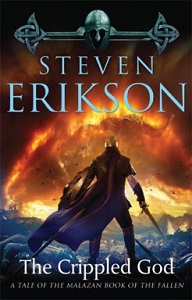
Uit:The Crippled God

“Cotillion drew two daggers.His gaze fell to the blades.
The blackened iron surfaces seemed to swirl, two pewter rivers oozing across pits and gouges, the edges ragged where armour and bone had slowed their thrusts. He studied the sickly sky’s lurid reflections for a moment longer, and then said, ‘I have no intention of explaining a damned thing.’ He looked up, eyes locking. ‘Do you understand me?’
The figure facing him was incapable of expression. The tatters of rotted sinew and strips of skin were motionless upon the bones of temple, cheek and jaw. The eyes held nothing, nothing at all.
Better, Cotillion decided, than jaded scepticism. Oh, how he was sick of that. ‘Tell me,’ he resumed, ‘what do you think you’re seeing here? Desperation? Panic? A failing of will, some inevitable decline crumbling to incompetence? Do you believe in failure, Edgewalker?’
The apparition remained silent for a time, and then spoke in a broken, rasping voice. ‘You cannot be so . . . audacious.’
‘I asked if you believed in failure. Because I don’t.’
‘Even should you succeed, Cotillion. Beyond all expectation, beyond, even, all desire. They will still speak of your failure.’
He sheathed his daggers. ‘And you know what they can do to themselves.’
The head cocked, strands of hair dangling and drifting. ‘Arrogance?’
‘Competence,’ Cotillion snapped in reply. ‘Doubt me at your peril.’
‘They will not believe you.’
‘I do not care, Edgewalker. This is what it is.’
When he set out, he was not surprised that the deathless guardian followed. We have done this before. Dust and ashes puffed with each step. The wind moaned as if trapped in a crypt. ‘Almost time, Edgewalker.’
‘I know. You cannot win.’
Cotillion paused, half turned. He smiled a ravaged smile. ‘That doesn’t mean I have to lose, does it?’
 

 2079584-db3e390a79ac05a7269e81f723dbb293.jpg
Steven Erikson (Toronto, 7 oktober 1959)


Zie voor nog meer schjrijvers van de 7e oktober ook mijn vorige blog van vandaag.
Geschreven door Romenu om 10:27 Reageer op dit bericht

Georg Hermann, James Whitcomb Riley, Wilhelm Müller, Sohrab Sepehri, Chigozie Obioma

De Duitse schrijver Georg Hermann (oorspronkelijk Georg Hermann Borchardt) werd op 7 oktober 1871 in Berlijn geboren. Zie ook alle tags voor Georg Hermann op dit blog.

Uit: Eine Zeit stirbt

„Doch das ist eine durchaus falsche Annahme gewesen. Weder blieb das Geld Geld. Noch die Ware Ware. Noch die Menschen Menschen. Der Staat hat nur die Zauberformel »Inflation« gemurmelt, hat nur seinen Zauberstab geschwungen: Hokus Pokus Trallala! Und alles ist anders geworden: das Geld ist kein Geld mehr. Die Ware Ersatzware. Und was aus den Menschen geworden ist, ist schwer zu sagen. Doch eines kann man mit Bestimmtheit feststellen: keine Menschen.
Genug davon. Nur soviel: die Siedlung hier ist damals, als man noch gar nicht ahnte, was werden würde, begonnen worden, und hat deshalb lange halbfertig gestanden, und ist endlich noch so gerade notdürftig aus allerhand unerprobten Surrogaten von Baumaterialien zusammengeleimt und unter Dach gebracht und dann ganz schnell bezogen worden.
Der Hauptvorzug dieser Ersatzstoffe besteht darin, daß sie durchweg vorzügliche Schalleiter sind.
Wenn z. B. jemand jetzt in der Nebenwohnung oder zwei Wohnungen weiter Klavier spielt und dazu singt, von der Oma ihrem kleinen Häuschen, das versoffen werden muß, oder wenn er auch nur seiner Frau ein Geheimnis anvertraut, hört man es fünfzehn Meter höher oder tiefer oder weiter, im Waschkeller und auf dem Trockenboden, im Schlafzimmer oder auf der Diele, genau so gut wie im Kleinviehstall. Jedes Ei, das dort gelegt wird, erleben alle Parteien ringsum. Und all das hört man dank der Vorzüglichkeit der neuen Baustoffe fast noch deutlicher und reiner und ohne Nebengeräusche als an Ort und Stelle selbst.
Die anderen Eigenschaften dieser Bausurrogate sind jedoch weniger angenehm. Sie machen es z. B., daß im Spätherbst und mehr noch im Vorfrühling die Wände schwitzen, als hätten sie Aspirin genommen. Daß im Winter kein Ofen, ganz gleich welcher Konstruktion, je ein Zimmer warm und mollig kriegt.“


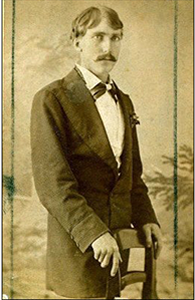
 2079579-7af29de07f53cf08d09bdbc2eeace4be.jpg
Georg Hermann (7 oktober 1871 - 19 november 1943)
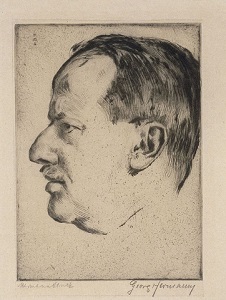
Portret doorHermann Struck, ca. 1920 – 1930


De Amerikaanse dichter en schrijver James Whitcomb Riley werd geboren op 7 oktober 1849 in Greenfield, Indiana. Zie ook mijn blog van 7 oktober 2010 en eveneens alle tags voor James Whitcomb Riley op dit blog.


Pan

This Pan is but an idle god, I guess,
Since all the fair midsummer of my dreams
He loiters listlessly by woody streams,
Soaking the lush glooms up with laziness;
Or drowsing while the maiden-winds caress
Him prankishly, and powder him with gleams
Of sifted sunshine. And he ever seems
Drugged with a joy unutterable-- unless
His low pipes whistle hints of it far out
Across the ripples to the dragon-fly
That like a wind-born blossom blown about,
Drops quiveringly down, as though to die--
Then lifts and wavers on, as if in doubt
Whether to fan his wings or fly without.


The Boy Lives On Our Farm

The boy lives on our Farm, he's not
Afeard o' horses none!
An' he can make 'em lope, er trot,
Er rack, er pace, er run.
Sometimes he drives two horses, when
He comes to town an' brings
A wagon-full o' 'taters nen,
An' roastin'-ears an' things.

Two horses is 'a team,' he says,
An' when you drive er hitch,
The right-un's a 'near-horse,' I guess
Er 'off'--I don't know which--
The Boy lives on our Farm, he told
Me, too, 'at he can see,
By lookin' at their teeth, how old
A horse is, to a T!

I'd be the gladdest boy alive
Ef I knowed much as that,
An' could stand up like him an' drive,
An' ist push back my hat,
Like he comes skallyhootin' through
Our alley, with one arm
A-wavin' Fare-ye-well! to you--
The Boy lives on our Farm!


 2079579-a35bd53fe93579cc2931a642bac04aa6.png
James Whitcomb Riley (7 oktober 1849 – 22 juli 1916)
Rond zijn 25e jaar


De Duitse, romantische dichter Wilhelm Müller werd geboren op 7 oktober 1794 in Dessau. Zie ook mijn blog van 7 oktober 2010 en eveneens alle tags voor Wilhelm Müller op dit blog.


Der stürmische Morgen

Wie hat der Sturm zerrissen
Des Himmels graues Kleid!
Die Wolkenfetzen flattern
Umher in mattem Streit.

Und rote Feuerflammen
Ziehn zwischen ihnen hin:
Das nenn ich einen Morgen
So recht nach meinem Sinn!

Mein Herz sieht an dem Himmel
Gemalt sein eignes Bild -
Es ist nichts als der Winter,
Der Winter kalt und wild!


Einsamkeit

Wie eine trübe Wolke
Durch heitre Lüfte geht,
Wenn in der Tanne Wipfel
Ein mattes Lüftchen weht:

So zieh' ich meine Straße
Dahin mit trägem Fuß,
Durch helles, frohes Leben
Einsam und ohne Gruß.

Ach, daß die Luft so ruhig!
Ach, daß die Welt so licht!
Als noch die Stürme tobten,
War ich so elend nicht.


Rast

Nun merk' ich erst, wie müd ich bin,
Da ich zur Ruh' mich lege;
Das Wandern hielt mich munter hin
Auf unwirthbarem Wege.

Die Füße frugen nicht nach Rast,
Es war zu kalt zum Stehen,
Der Rücken fühlte keine Last,
Der Sturm half fort mich wehen.

In eines Köhlers engem Haus
Hab' Obdach ich gefunden;
Doch meine Glieder ruhn nicht aus:
So brennen ihre Wunden.

Auch du, mein Herz, in Kampf und Sturm
So wild und so verwegen,
Fühlst in der Still' erst deinen Wurm
Mit heißem Stich sich regen!


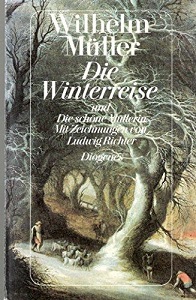
 2079579-4926047b153727a7838a5083aabad7b0.jpg
Wilhelm Müller (7 oktober 1794 – 1 oktober 1827)
Cover


De Iraanse dichter en schilder Sohrab Sepehri werd geboren op 7 oktober 1928 in Kashan. Zie ook alle tags voor Sohrab Sepehri op dit blog.


Oasis In A Moment

If you are coming to me,
I am beyond Oblivion.
Beyond Oblivion is a place
Where dandelions run into the veins of air,
Bringing news of a faraway blooming bush.
The sands bear the footprints of delicate horsemen
Mounting the hilltop of poppies.
Beyond Oblivion, the umbrella of desire is open.
As soon as thirst blows onto the root of a leaf
Rain sings songs of freshness.
One is lonely here.
Where an elm's shadow streams into eternity.

If you are coming to me
Approach gently, softly lest you crack
The fragile china of my solitude!


Vertaald door Ismail Salami


I don't know

I don't know why they say
the horse is a noble animal
and the dove is beautiful
and why no one keeps a vulture.
Why is the clover inferior to the red tulip?
We need to wash our eyes
and view things differently.
We should wash our words
Words should be wind
Words should be rain
We should close the umbrellas
And walk in the rain.


Vertaald door Pontia Fallahi


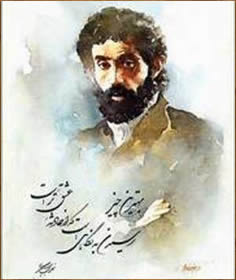
 2079579-bc438d47333ce7623249ffbe5577dcd5.jpg
Sohrab Sepehri (7 oktober 1928 - 21 april 1980)


Onafhankelijk van geboortedata

De Nigeriaanse schrijver Chigozie Obioma werd geboren in 1986 in Akure. Zie ook alle tags voor Chigozie Obioma op dit blog.

Uit: The Fishermen

“This word, once pronounced, often completed the message. He brought out two twenty-naira notes from the breast pocket of his coat and dropped them on our study table.
“For both of you,” he said, and left the room.
Obembe and I were still sitting in our bed trying to make sense of all that when we heard Mother speaking to him outside the house in a voice so loud it seemed he was already far away.
“Eme, remember you have growing boys back here,” she’d said.
“I’m telling you, oh.”
She was still speaking when Father started his Peugeot 504. At the sound of it, Obembe and I hurried from our room, but Father was already driving out of the gate. He was gone.
Whenever I think of our story, how that morning would mark the last time we’d live together, all of us, as the family we’d always been, I begin—even these two decades later—to wish he hadn’t left, that he had never received that transfer letter. Before that letter came, everything was in place: Father went to work every morning and Mother, who ran a fresh food store in the open market, tended to my five siblings and me who, like the children of most families in Akure, went to school. Everything followed its natural course. We gave little thought to past events. Time meant nothing back then.
The days came with clouds hanging in the sky filled with cupfuls of dust in the dry seasons, and the sun lasting into the night. It was as if a hand drew hazy pictures in the sky during the rainy seasons, when rain fell in deluges pulsating with spasms of thunderstorms for six uninterrupted months. Because things followed this known and structured pattern, no day was worthy of remembrance. All that mattered was the present and the foreseeable future.“


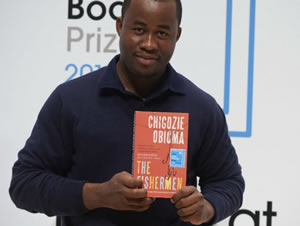
 2079579-3f84e376ae634d4206821436cf153957.jpg
Chigozie Obioma (Akure, 1986)

Geschreven door Romenu om 10:26 Reageer op dit bericht

Hendrik Groen


Onafhankelijk van geboortedata

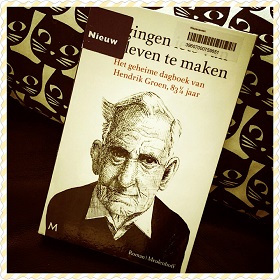
De Nederlandse schrijver Hendrik Groen (pseudoniem van Peter de Smet) werd geboren in Amsterdam-Noord in 1930. Hij is de auteur van het in 2014 verschenen boek "Pogingen iets van het leven te maken: Het geheime dagboek van Hendrik Groen, 83¼ jaar". Dat boek werd in 2016 bekroond met de Publieksprijs voor het Nederlandse Boek. Het vervolg "Zolang er Leven is: Het nieuwe geheime dagboek van Hendrik Groen, 85 jaar" verscheen in 2016. Jarenlang was onbekend wie er schuilging achter het pseudoniem. Dit leidde tot speculatie over wie het kon zijn. De namen Sylvia Witteman tot Arnon Grunberg werden genoemd. Zowel de Volkskrant als het NRC Handelsblad onthulden in 2016 vrijwel gelijktijdig dat het zou gaan om de toen 62-jarige Peter de Smet. De Smet heeft daarop gereageerd met de woorden dat 'hij niet zit te wachten op publiciteit' en 'geen zin in de heisa van bekendheid heeft'. "Pogingen iets van het leven te maken" won in 2016 de Publieksprijs voor het Nederlandse Boek. Deze prijs werd door de auteur niet persoonlijk opgehaald. In 2017 werden de boeken verfilmd en door Omroep Max als televisieserie "Het geheime dagboek van Hendrik Groen uitgezonden". De scenarioschrijver Martin van Waardenberg bevestigde wederom dat De Smet de man achter het pseudoniem is.

Uit: Pogingen iets van het leven te maken: het geheime dagboek van Hendrik Groen, 83 1/4 jaar

“Dinsdag 1 januari 2013
Ik hou ook het komend jaar niet van bejaarden. Dat geschuifel achter die rollators, dat misplaatste ongeduld, dat eeuwige klagen, die koekjes bij de thee, dat zuchten en steunen.
Ik ben zelf 83 1/4 jaar.
Woensdag 2 januari
Er was royaal poedersuiker gemorst. Om de tafel beter af te kunnen nemen met een vaatdoekje zette mevrouw Smit de schaal met appelflappen even op een stoel. Mevrouw Voorthuizen kwam aanlopen en ging met haar enorme reet midden in de schaal met flappen zitten zonder het zelfs maar te merken. Pas toen mevrouw Smit de schaal ging zoeken om hem terug te zetten kwam iemand op het idee onder mevrouw Voorthuizen te kijken. Toen die opstond plakten er drie appelflappen aan haar bloemetjesjurk. 'Ze passen mooi bij het motiefje,' zei Evert. Ik stikte haast van het lachen. Dit prachtige begin van het nieuwe jaar had moeten leiden tot algemene hilariteit maar gaf, in plaats daarvan, aanleiding tot drie kwartier gezemel over de schuldvraag. Ik werd van verschillende kanten boos aangekeken vanwege het feit dat ik het blijkbaar grappig had gevonden. En ik, ik mompelde excuses. In plaats van nog harder te lachen, mompelde ik excuses. Ik, Hendrikus Gerardus Groen, ben namelijk altijd correct, innemend, vriendelijk, beleefd en behulpzaam. Niet omdat ik dat ook allemaal ben maar omdat ik niets anders durf te zijn. Zelden zeg ik wat ik zeggen wil. Altijd kies ik voor de veilige weg. Mijn specialiteit: het sparen van kool én geit. Mijn ouders hadden een vooruitziende blik toen ze mij Hendrik noemden: veel braver zul je ze niet snel tegenkomen. 'Kent gij Hendrik niet, die altijd zoo beleefd zijnen hoed afneemt als hij voorbij gaat?' Dat ben ik. Ik word nog depressief van mezelf, dacht ik. Toen heb ik het besluit genomen om ook iets van de ware Hendrik Groen te laten horen: precies één jaar lang zal ik mijn ongecensureerde kijk geven op het leven in een bejaardenhuis in Amsterdam-Noord. Als ik voor het eind van het jaar doodga is dat overmacht. In dat geval zal ik mijn vriend Evert Duiker vragen om op mijn begrafenis een kleine bloemlezing te houden uit mijn dagboek. Als ik opgebaard lig in de kleine zaal van crematorium 'De Einder', netjes gewassen en gestreken, zal de ongemakkelijke stilte doorbroken worden door de raspende stem van Evert die enkele aardige passages zal voorlezen aan het onthutste publiek. Over één ding maak ik mij zorgen: stel dat Evert eerder doodgaat dan ik? Dat zou niet netjes zijn van hem, vooral omdat ik nóg meer ziektes en gezwellen heb dan hij. Op je beste vriend moet je kunnen rekenen. Ik zal het er met hem over hebben.”


 2092750-5b8a8612781a9c80417a156c606937c5.jpg
Hendrik Groen (Amsterdam-Noord, 1930)
Cover

Geschreven door Romenu om 00:00 Reageer op dit bericht

Meer van Romenu

↑ Terug naar de berichten