Naar de inhoud

Romenu

Over literatuur, gedichten, kunst en cultuur
seniorennet.beseniorennet.be

Berichten van 21 april 2013

Charlotte Brontë, Michael Mann, Patrick Rambaud, John Mortimer, Gerrit Wustmann
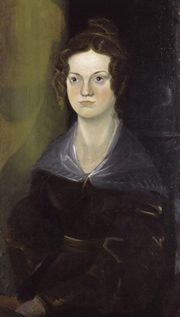
De Britse schrijfster Charlotte Brontë werd geboren in Thornton op 21 april 1816. Zie ook alle tags voor Charlotte Brontë op dit blog.


Uit: The Correspondence of Charlotte Brontë


“Charlotte's reply to Robert Southey
16 March 1837

Sir—… At the first perusal of your letter I felt only shame and regret that I had ever ventured to trouble you with my crude rhapsody; I felt a painful heat rise to my face when I thought of the quires of paper I had covered with what once gave me so much delight, but which now was only a source of confusion; but after I had thought a little, and read it again and again, the prospect seemed to clear. You do not forbid me to write. You only warn me against the folly of neglecting real duties for the sake of imaginative pleasures; of writing for the love of fame... You kindly allow me to write poetry for its own sake, provided I leave undone nothing which I ought to do, in order to pursue that single, absorbing, exquisite gratification. . .
Following my father's advice—who from my childhood has counselled me, just in the wise and friendly tone of your letter—I have endeavoured not only attentively to observe all the duties a woman ought to fulfill, but to feel deeply interested in them. I don't always succeed, for sometimes when I'm teaching or sewing I would rather be reading or writing; but I try to deny myself; and my father's approbation amply rewarded me for the privation. Once more allow me to thank you with sincere gratitude. I trust I shall never more feel ambitious to see my name in print; if the wish should rise, I'll look at Southey's letter, and suppress it.”


 1378374-39eac6577583c17c477b942373250461.jpg

Charlotte Brontë (21 april 1816 – 31 maart 1855)

Portret door haar broer Patrick Branwell Brontë


De Duitse literatuurwetenschapper en musicus
Michael Mann werd als jongste kind van Thomas en Katia Mann geboren op 21 april 1919 in München. Zie ook alle tags voor Michael Mann op dit blog.


Uit: Als Michael Mann geboren wurde: München 1919 (Lezing door Wolfgang Frühwald)


“Den Studenten Ernst Toller, der seit dem 8. April Vorsitzender des Zentralrats der bayerischen Arbeiter-, Bauern- und Soldatenräte war und wenig später (seit Juli 1919 in einer fünfjährigen Festungshaft) ein weltberühmter Dramatiker und Lyriker wurde, haben seine kommunistischen Gegner damals spöttisch, aber auch ein wenig mit Respekt, den „König von Südbayern“ genannt. Nicht  nur Thomas Mann mokierte sich über den „Schwabinger Kunst-Einschlag“ des von den Kommunisten „Scheinräterepublik“ genannten anarchistischen Räteregimes, in dem Gustav Landauer, die viel verleumdete, aber integre Führungsfigur des deutschen Anarchismus, als Volksbeauftragter für Volksaufklärung amtierte. So konnte es nicht ausbleiben, dass am 13. April, das heißt am Palmsonntag 1919, die Münchner Garnison gegen die von Toller geführte Räteregierung putschte. Einige ihrer führenden Mitglieder, darunter der Schriftsteller Erich Mühsam und der vermutlich geisteskranke Volksbeauftragte für Äußeres Franz Lipp, wurden verhaftet und nach Nordbayern entführt. Der Münchner Hauptbahnhof fiel in die Hand der Putschisten.

Im Gegenzug rissen nun die Kommunisten die Macht an sich, ihr Anführer Eugen Leviné leitete seit dem 14. April, an demrote Truppen den Bahnhof zurückeroberten, eine kommunistische Räteregierung. Kommandant der Roten Armee wurde Rudolf Eglhofer, ein Matrose, der schon am Aufstand der deutschen Flotte im November 1918 teilgenommen hatte. In Thomas Manns

Tagebuch ist an diesem 14. April die bürgerliche Innensicht der Münchner Wirren bewahrt: „Post und Läden geschlossen, das Telephon gesperrt, sodass wir Maßnahmen für den Fall überlegen, dass die Geburt einsetzt, Katias Mutter kam zu Fuß in großer Aufregung. Auch die Trambahnen gehen natürlich nicht. Am Bahnhof die Oberleitung zerstört. Kämpfe für den heutigen Tag wahrscheinlich.”


 1378374-8c2d74af6d03c6a7d4ba72f58c6a6dce.jpg

Michael Mann (21 april 1919 - 1 januari 1977)


De Franse schrijver
Patrick Rambaud werd geboren op 21 april 1946 in Parijs. Zie ook alle tags voor Patrick Rambaud op dit blog.


Uit Il neigeait


“Devant, ils entendaient jurer. Le capitaine lança son trognon de pomme que des bâtards efflanqués se disputèrent en jappant, puis, de la main gauche, avec un geste noble, il dirigea sa monture minuscule dans l'embouteillage.
La voiture bâchée d'une cantine, en travers sur la chaussée, perturbait le flux. Un poulet survivant, ficelé par les pattes au châssis, perdait ses plumes en se débattant ; une bande de conscrits sales le reluquait avec des yeux de rôtisseurs. La cantinière et son cocher se lamentaient. L'un des chevaux de trait s'était effondré d'un coup ; des voltigeurs aux uniformes déchirés avaient posé leurs armes par terre pour le détacher du brancard.
D'Herbigny s'approcha. La carcasse était maintenant dételée mais les soldats, malgré leur nombre et leurs efforts, n'arrivaient pas à la pousser sur le bas-côté.
- Faudrait deux percherons bien costauds, disait le cocher.
- Y'en a pas, disait un voltigeur.
- Il suffit d'une corde solide, avança d'Herbigny sur un ton d'évidence.
- Et après, mon capitaine ? S'ra toujours aussi pesant, l'animal.
- Foutre non ! Vous l'attachez par les paturons et vous vous y mettez à dix pour le haler.
- On n'est pas plus valides que les chevaux, répondit un jeune sergent à la mine pâle.
D'Herbigny se retroussa les moustaches, il se gratta l'aile du nez, qu'il avait long et fort. Il s'apprêtait à diriger l'opération de déblaiement quand une immense clameur l'en empêcha. Cela venait de tout là-bas, vers l'horizon, au virage de la route. La clameur persistait, s'installait, formidable et soutenue. La horde ralentie par l'accident de la cantine se figea. Les visages se tournaient ensemble vers le vacarme.”


 1378374-1969c733b04f897783fa4956d75d4799.jpg

Patrick Rambaud (Parijs, 21 april 1946)


De Engelse schrijver John Mortimer werd geboren op 21 april 1923 in Londen. Zie ook alle tags voor John Mortimer op dit blog.


Uit: Rumpole and the Brave New World


“Despite all this I did reasonably well in criminal law with the help of useful little text books such as Murder in a Nutshell and All You Need to Know About Offences Against the Person

I did learn one important lesson. I had become addicted to the college sherry and as a ridiculous and useless gesture I boasted that I could drink a tankard full of it. I did so and fell to the ground and found the religious character who shared my rooms kneeling beside me in silent prayer. Since then I have resolutely refused sherry.

Looking back on it I am grateful for Hilda's persistence. If we hadn't gone to the concert I would have missed an occasion which led, through a tangle of possibilities, to one of the most curious and unusual crimes in the Rumpole history.

So there I was, wondering why old Handel or his scriptwriter couldn't say a thing once and let it go at that. Every line in The Messiah seemed to be repeated again and again. I looked around the crowded auditorium and was curious to see so many children all below undergraduate age assembled. There was a certain amount of giggling and pinching between them, but on the whole they sat quietly until the music came to an end.

During the interval a woman came on to the stage and asked for further contributions to "Music in Oxford". "I've only got folding money." "Of course you'll give them folding money, a £10 note will be adequate," Hilda told me. So I pulled out my wallet and parted with the cash. I only tell you this because of what happened when we were leaving the hall.”


 1378374-80c66b52824d4834b87e0b321a415876.jpg

John Mortimer (21 april 1923 – 16 januari 2009)

De schrijver met de acteur Leo McKern als Rumpole (rechts)


Onafhankelijk van geboortedagen:


De Duitse dichter Gerrit Wustmann werd in 1982 in Keulen geboren. Hij studeere Oriëntalstiek, politicologie en geschiedenis in Keulen en Bonn. Sinds 2006 werkt hij als freelance journalist en redacteur voor gedrukte en online media. Hij behoort ook tot het creatieve kernteam van deonafhankelijke filmmaatschappij Skyroad Films. Sinds 2001 publiceert hij poëzie en proza ​​in literaire tijdschriften en bloemlezingen, waaronder De Deutsche Lyrikkalender en Versnetze en in internationale media. Zijn gedichten zijn vertaald in het Engels, Italiaans, Turks en Perzisch.
In 2011 verscheen “Beyoglu Blues”, het eerste deel van een driedelige tweetalige gedichtencyclus over Istanbul. Wustman is samensteller van de bloemlezing “Hier ist Iran! Persische Lyrik im deutsch­sprachigen Raum”, dat het eerste uitgebreide overzicht van het werk van Iraanse dichteressen in Duitse ballingschap biedt. Hij ontving de postpoetry.NRW Poëzieprijs 2012.


berlin II


der stuhl auf dem du sitzt
vor dem spiegel in dem
die vorhänge entlichtet sind
es ist ein leiser stuhl
er lässt deine haut
rascheln die lehnen streicheln
deine hände die
nicht wissen wohin
deinen händen
entgleiten die wörter setzen sich fest
in den rillen und nischen
bis irgendeiner
sie findet


yağmur


das stete rauschen des regens
in beyoğlu der nasse glanz
auf leeren straßen und katzen
die wie du in hauseingängen
sitzen im widerschein der lichter
in den fenstern in den augen
der nacht der nachtgesänge
der stadt in deiner stimme
yağmur in deinen augen


 1378374-10e4f121668a132a08016e05ff456222.jpg

Gerrit Wustmann (Keulen, 1982)


Zie voor nog meer schrijvers van de 21e
april ook
mijn vorige blog van vandaag.
Geschreven door Romenu om 18:51 Reageer op dit bericht

Peter Schneider, Meira Delmar, Alistair MacLean, Népomucène Lemercier, María Elena Cruz Varela

De Duitse schrijver Peter Schneider werd geboren in Lübeck op 21 april 1940. Zie ook alle tags voor Peter Schneider op dit blog.


Uit: Rebellion und Wahn


“Man habe so vieles unterschrieben und versucht, eine irgendwie noch mögliche Balance zu halten ... "Aber solche schönen Überraschungen", schloss er seine Geschichte, die er sichtlich nicht zum ersten Mal preisgab, "können einem passieren, wenn man Äpfel klaut!"

In das anschließende Schweigen habe ich hineingefragt: "Und wie viele Patienten haben Sie damals nicht gesundgeschrieben?"

Halblaut wies mein Vater mich zurecht: "Hast du eigentlich kein anderes Thema im Moment?"

Der Wahrheit am nächsten kommt wohl der Befund, dass wir, die Schüler des Berthold-Gymnasiums in Freiburg, über die "dunklen Jahre" wenig wussten und auch nicht viel darüber wissen wollten. Wir vermissten dieses Wissen nicht. Erst der Eichmannprozess in Jerusalem und der nachfolgende Auschwitzprozess in Frankfurt öffneten mir die Augen. Danach war die Welt nicht mehr dieselbe.

Im Frühjahr 1966 zogen L. und ich in einer Hinterhofwohnung in Schöneberg zusammen. Die Wohnung bestand aus zwei großen Zimmern ohne Küche und Bad. Wir bauten eine Dusche ein, die Küche blieb ein Provisorium. L. hatte ihren Job an der FU aufgegeben und eine Arbeit in einem Antiquitätengeschäft angenommen.

Eines Abends, als sie von der Arbeit zurückkam, fragte sie mich, ob ich etwas dagegen hätte, wenn sie die Einladung eines ihrer Kunden zum Abendessen annähme. Ich erfuhr, dass dieser Kunde, ein distinguierter Mann im Blazer und mit Schnallenschuhen, sich einige Minuten vor dem Schaufenster herumgedrückt und die englischen Möbel und wohl auch die Verkäuferin inspiziert hatte, bevor er sich entschloss, das Geschäft zu betreten. Dann allerdings habe er den halben Laden leergekauft und L. in seine Villa irgendwo am Wannsee eingeladen.

"Und deine Antwort?", fragte ich.

Sie zuckte die Schultern. Der Kunde entstamme natürlich einer anderen Welt, genauer gesagt sei er ein Kapitalistenschwein, aber er habe erstaunlich gute Manieren an den Tag gelegt, bilde sich nichts auf seinen Reichtum ein und sei überhaupt ganz anders, als man ihn sich vorstelle ...”


1378371-4a0b093ea9706c7a4c69cc18de65eb90.jpg 

Peter Schneider (Lübeck, 21 april 1940)


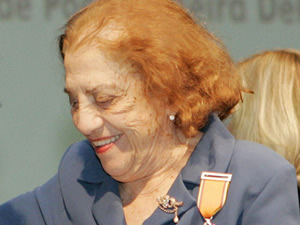
De Columbiaanse dichteres
Meira Delmar (eig. Olga Isabel Chams Eljach) werd geboren in Barranquilla op 21 april 1922. Zie ook alle tags voor Meira Delmar op dit blog.


Returnings


I want to go back to what once upon
a time we all called our house,
to go up the old staircase,
to open the doors, the windows.

I want to stay there for a while, a while
listening to that same rain –  
I never knew for certain
if it was water or music.

I want to go out on the balconies
where a girl leaned out
to see the swallows arrive
that came back in December.

Maybe I can still find it
my eyes fixed on that time,
with a flame of distances
burning on the small forehead.

I want to cross the tepid patio
of sun and roses and grasshoppers,
to touch the whitewashed walls,
the absent echo of the cages.

Perhaps the doves are still
flying around it,
to show me the way
fading in the shadows.

I want to know if what I look for
is in a dream or in my childhood.
For I am lost and I must find myself,
face and soul, in another place.


Vertaald door Nicolás Suescún


 1378371-1d5f651e7ce2ed13a08c3018cbab08e6.jpg

Meira Delmar (21 april 1922 - 18 maart 2009)


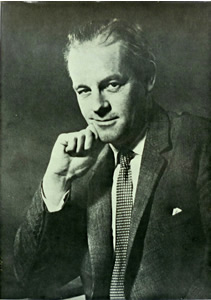
De Schotse schrijver Alistair Stuart MacLean werd geboren op 21 april 1922 in Glasgow. Zie ook alle tags voor Alistair MacLean op dit blog.


Uit: Island


“They are only shadows and echoes, the animals a child's hands make on the wall by lamplight, and the voices from the rain barrel; the cuttings from an old movie made in the black and white of long ago.

    I first became conscious of the boat in the same way and at almost the same time that I became aware of the people it supported. My earliest recollection of my father is a view from the floor of gigantic rubber boots and then of being suddenly elevated and having my face pressed against the stubble of his cheek, and of how it tasted of salt and of how he smelled of salt from his red-soled rubber boots to the shaggy whiteness of his hair.

    When I was very small, he took me for my first ride in the boat. I rode the half-mile from our house to the wharf on his shoulders and I remember the sound of his rubber boots galumphing along the gravel beach, the tune of the indecent little song he used to sing, and the odour of the salt.

    The floor of the boat was permeated with the same odour and in its constancy I was not aware of change. In the harbour we made our little circle and returned. He tied the boat by its painter, fastened the stern to its permanent anchor and lifted me high over his head to the solidity of the wharf. Then he climbed up the little iron ladder that led to the wharf's cap, placed me once more upon his shoulders and galumphed off again.

When we returned to the house everyone made a great fuss over my precocious excursion and asked, "How did you like the boat?" "Were you afraid in the boat?" "Did you cry in the boat?" They repeated "the boat" at the end of all their questions and I knew it must be very important to everyone.”


 1378371-32d20da7002edf7f9a52ef600de9c751.jpg

Alistair MacLean (21 april 1922 - 2 februari 1987)


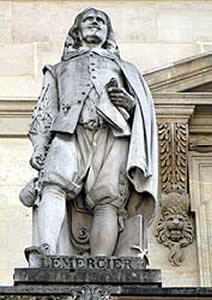
De Franse dichter en schrijver
Népomucène Lemercier werd geboren op 21 april 1771 in Parijs. Zie ook alle tags voor Népomucène Lemercier op dit blog.


Uit: Pinto, ou la Journée d'une conspiration


“LE DUC.

Alvare , eh bien ! où sont nos chasseurs ?

ALVARE.

Fort loin. Le bois est coupé de fondrières , de torrens, et je n'ai pu les atteindre.

MADAME DOLMAR.

Les insensés ! n'avoir pas seulement fait halte avec nous : c'est ce comte de Commines qui les pousse.

LE DUC

Quelle joyeuse vie on mène au château d'Almada ! Nulle langueur, nul moment perdu. Chasse, jeux, festins, fêtes, de bons amis, des femmes, et la vie d'Epicure — Vivent l'indépendance et la joie !

ALVARE.

La notre sera bientôt troublée.

MADAME DOLMAB.

Pourquoi ?

ALVARE.

Le duc part demain pour Madrid.

LE DUC.

Demain , oui ; je pars demain.

MADAME DOLMAR.

La duchesse ne devait-elle pas vous faire ici ses adieux?

LE DUC.

Je l'attends : le trajet qui sépare ce lieu de la ville n'est pas long , et je ne veux pas donner matière aux discours par ma présence à Lisbonne. Ma prudence confondra la malignité”.


1378371-64582d7ba826247a67a6f886c5d4f497.jpg 

Népomucène Lemercier (21 april 1771 – 7 juni 1840)

Standbeeld in Parijs


Onafhankelijk van geboortedagen:


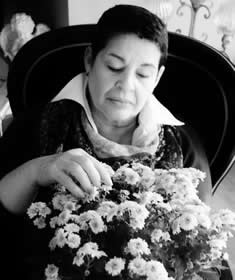
De Cubaanse dichteres María Elena Cruz Varela werd in 1953 geboren in Colón. Zie ook alle tags voor María Elena Cruz Varela op dit blog.


Testament


My mother has arrived sprinkling my threshold

with holy water. I see her act.


I smile still. It’s no use. I say. In silence. 


My mother, her hands. For more than three decades

they nested tenderness among my clothes.

Now they loosen my hair. Hurried. Now they want to save me.


It’s no use. I say. In silence.


Through here everyone passes by without staying.

Through here they are passing by;

my mother, tenacious witness to my agony.


My mother. The one who never read Miguel Hernandez.

The one who drank Vallejo in my verses.

Without knowing she was drinking. And she wants to speak to

                                                                             God.

To present him with a writ of Habeas Corpus

while she walks back and forth, her eyes everywhere

sprinkling my chastity with holy water.


It’s no use. I say. In silence.


Poor mother, my mother.

She breaks her fury against everything. Magnificent attack.

She knows there are no remedies to cure my wrongs.

But she prays. The drops she scatters in my bedroom

seem more like tears of rage. She wants to battle

all the demons. Strip me of evil.


And I let her. It’s no use. I say. In silence.


And she is talking to God as if to a neighbor:

she wants to convince him with a dim allegation

that proves my innocence. And I see her.


I am rising in my flight;


“There is, Madre, in the world a place called . . .”

I don’t remember. I am a prisoner who forgets.

In the end it’s all the same; she keeps rotating,

ties the little knots of the shawl where is exposed

her mad hopes. And I let her.


“There is, Madre, in the world a place . . .

Maybe there we may meet again.” 


Vertaald door Mairym Cruz-Bernal en Deborah Digges


1378371-1995b3e7289b55d123e5565bcb48b528.jpg
María Elena Cruz Varela (Colón, 1953)

Geschreven door Romenu om 18:45 Reageer op dit bericht

Meer van Romenu

↑ Terug naar de berichten