Naar de inhoud

Romenu

Over literatuur, gedichten, kunst en cultuur
seniorennet.beseniorennet.be

Berichten van 17 februari 2017

Shahrnush Parsipur, Willem Thies, Sadegh Hedayat, Yevgeni Grishkovetz, Albert Kuyle
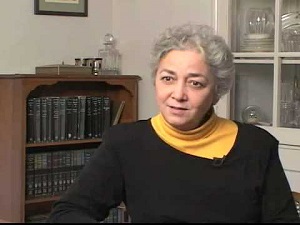
De Iraanse schrijfster Shahrnush Parsipur werd geboren op 17 februari 1946 in Teheran. Zie ook alle tags voor Shahrnush Parsipur op dit blog.

Uit: Frauen ohne Männer (Vertaald door Jutta Himmelreich)

„Der Garten, von Mauern aus Lehmstroh umgeben, saftig grün, lag jenseits des Dorfes, am Fluß, der das Grundstück begrenzte. Es war ein Kirschgarten, mit sauren und süßen Kirschen.
Auf dem Grundstück stand ein Wohngebäude, halb Land-, halb Stadthaus, mit drei Zimmern. Vor dem Haus befand sich ein Wasserbecken, voller Algen und Frösche. Rings um das Bassin war Kies gestreut, und unweit standen vereinzelte Weidenbäume. Nachmittags lag das dunkle Grün des Wassers mit dem hellen Grün der sich spiegelnden Weiden immer in lautlosem Wettstreit. Mahdokhtstimmte dasjedesmaltraurig,weilsieStreiterei überhaupt nicht mochte. Einfach und unkompliziert wie sie war,wünschte sie, alle und alles sollten sich miteinander vertragen, selbst die Myriaden von Grüntönen dieser Welt. So ruhige Farben, gewiß, und doch . . ., dachte sie.
Unter einem der Bäume stand, mit zweien ihrer vier Beine auf der Einfassung des Beckenrands, eine Bank, die auf dem glitschigen Untergrund jederzeit ins Wasser rutschen konnte. Auf dieser Bank saß Mahdokht und betrachtete das Wasser, die Spiegelbilder der Weiden in ihrem Streit, und das Blau des Himmels, das sich meist nachmittags machtvoll über diesem grünen Reigen erhob und Mahdokht wie der höchste Richter vorkam.
Wenn Mahdokht im Winter strickte oder erwog, Französisch zu lernen oder die Welt zu bereisen, dann deshalb, weil man in der Kälte gesunde Luft atmen konnte. Im Sommer hingegen war’s damit vorbei. Denn der Sommer war voller Rauch und Dunst und Staub, und es wimmelte von Autos und Menschen. Dazu diese großen, traurigen Fensterscheiben, die die stechende Sonne hereinließen.
Warum, zum Teufel, begreifen sie nicht, daß solche Fenster in unserem Land nichts taugen?
Das fragte sich Mahdokht und war auch deshalb schlecht gelaunt, weil sie der Einladung ihres älteren Bruders Huschang Khan notgedrungen gefolgt und hierher in den Garten gekommen war, wo ihr nun nichts anderes übrigblieb, als den Lärm der Kinder zuertragen,die den lieben langen Tag Geschrei machten, sich die Bäuche mit Kirschen vollschlugen, allabendlich Durchfall bekamen und nächtelang Joghurt aßen.
»Das ist Joghurt aus dem Dorf.«
»Ausgezeichnet, ja.«


 2009302-f1db50db728f9d50e9ce14a8dc4a7563.jpg
Shahrnush Parsipur (Teheran, 17 februari 1946)


De Nederlandse dichter Willem Thies werd geboren op 17 februari 1973 in Nijmegen. Zie ook alle tags voor Willem Thies op dit blog.


Cyclus

Ochtend: tegen de wind heft een vogel zijn vlucht op.

Middag: aan de voet van een praatzieke fontein
kwijt een klein dier.

Avond: de bomen op de kade dopen hun donkere
takken in het water
tot de volgende dag
de zon ze weer opdregt.


Buurtgenoten

Wat is dat voor muziek?

O, dat zijn buitenlanders. Vietnamese bootvluchtelingen.
Vader collaboreerde met de Amerikanen. Nu rookt hij
waterpijp in een rijtjeshuis, begiet plantjes
in de achtertuin, de godganse dag in zijn pyjama.

Wie had kunnen voorzien dat de Amerikanen
uitgerekend déze oorlog zouden verliezen?

De Iraniër op de hoek leert zijn
vierjarige dochter schaken. Volgens hem
is zij een wonderkind. De Iraniër, brildragend, is klein
en eigenwijs. Zijn vrouw wil al jaren van hem scheiden.

Daarnaast een oud-militair getrouwd met een alcoholiste:
beiden zijn niet opgewassen tegen het burgerbestaan.
Soms, in woede, ledigt hij haar flessen
in de gootsteen.

Tot slot, een jongen, alleen op zijn kamer,
jazzplaten draaiend.


 2009302-12efe9e762a3679e83395544e2e3810f.jpg
Willem Thies (Nijmegen, 17 februari 1973)


De Iraanse schrijver Sadegh Hedayat werd geboren op 17 februari 1903 in Teheran. Zie ook alle tags voor Sadegh Hedayat op dit blog.

Uit: The Silent Language of a Donkey at the Time of Death (Vertaald door Farzin Yazdanfar)

“Natural scientists do not see a big difference between themselves and us, and regard themselves as the head of the mammals. But Descartes, one of the well-known philosophers, thinks he has proven that animals are nothing but moving machines. In other words, with the advancement of technology, it is mechanically possible to build animals. In the pursuit of this vain idea, other philosophers have stood up against him. Among them Schopenhauer has defended us. He states that the basic principle of ethics is having mercy not only on our own kind but also on other animals and, to some extent, he has explained our feelings and intelligence in his book of ethics. Someone else has said that it is amusing to some mothers to see their kids cutting off a bird's head or wounding a dog or a cat in their games. This is the root of corruption and the basis of cruelty, oppression and crime. In fact, the injustice which is done to us is as a result of the unjust way some mothers educate their children.
Alas! We are speechless and this is the cause of our misery. Only Aristotle has found out the truth about our lives. He says: "Human beings are talking animals." It is because of human beings' ability to speak that we have fallen victim of the lust and capriciousness of a bunch of greedy and egotistic beasts. Why haven't people followed these philosophers? It is evident that human beings' intentions are based on their personal interests. This is especially true with mule drivers who are all followers of Descartes and treat us as if we were lifeless objects.
Having mercy on animals is essentially an idea which was developed in the Orient. Besides, all the prophets have forbidden cruelty towards animals. Learned men, wise men, writers who write about moral issues and even poets are all in agreement on the subject of animal rights. For instance, Hakim Ferdousi, may God rest his soul, says, "Don't torment an ant who bears a seed upon his back because the creature is alive and life is sweet to him."


 2009302-78cd66bb02f8ca451fae6bc9485460f0.jpg
Sadegh Hedayat (17 februari 1903 – 9 april 1951)


De Russische schrijver, regisseur en acteur Yevgeni Grishkovetz werd geboren op 17 februari 1969 in Kemerovo. Zie ook alle tags voor Yevgeni Grishkovetz op dit blog.

Uit:How I Ate the Dog

“There occur such moments in life, well, for example, you arrive home a little later than you promised, meaning you promised to come at nine, but you came at 11: You didn’t call, didn’t warn in advance, and, well, you come in, start to apologize, well, it’s no use…. And they tell you, “Oh, and of course you went drinking, you’re drunk.”  But you weren’t drinking, that is, not at all!  And you say, “No way, mom (or anyone else), God be with you, I didn’t have anything to drink…” and something to this effect.  And suddenly you have a thought, you clearly understand that you’re behaving yourself like you’re drunk, that is, the more you explain yourself, the more you become indignant, the more you appear to be drunk, moreover you already understand this, but all the same you can never do anything about it.  “Well, admit that you were drinking and  go to bed, why get worked up,” they say.  “But I wasn’t drinking, I wasn’t…” you grumble through your teeth, wave your hand and actually go to bed, and there’s nothing else to do about it. And no one to get mad at, since it’s exactly as if you’re drunk…
I say this so that it will be understood that I myself don’t understand the reasons why I’m going to tell all of this now; it seems that there are many reasons, but as soon as you name one of them, you understand that it’s not the right reason, or it’s not a fundamental reason, or whatever…. That is, we’ll consider that everything that I recount, I’m recounting without a reason, well, and you… you’re listening for the reason that you came to listen, or simply because there already isn’t anywhere else to go, or for some other reason of your own. I don’t know….”


 2009302-e928f7f069d8c30dc96ad8bbed2cb096.jpg
Yevgeni Grishkovetz (Kemerovo, 17 februari 1969)


De Nederlandse schrijver Albert Kuyle werd geboren in Utrecht op 17 februari 1904. Zie ook alle tags voor Albert Kuyle op dit blog.

Uit: Harten en Brood

“En daarom heb ik de dauw de dauw gelaten, en interesseerde mij het hakhout verder niet. Dauw, dauw, bij dauw hooren rozen en bij rozen gelukkige menschen. Maar als de dauw over de zwerver valt, die aan de wegberm ligt, is de dauw een natte ellende geworden en, opstaand, ziet de man rond naar een plaats waar de dauw niet komen kan. God gaf de dauw voor de kruiden, als een vochtige deken, die het moegebrande land dekt bij nacht. En hij gaf de dauw om speelsch in rond te gaan, met opgeschort kleed en met dansende voeten. Voor menschen, die begeeren hebben in spel en vroolijkheid.
Het is nu het uur, dat die keeren naar de stad. Ze zijn moegespeeld en moegekust en over de dijken gaat hun witte, lichte bewegen terug naar huis. Daar wacht het avondmaal onder de lage lampen, en in een glas tusschen de schalen zetten zij de ratelaars en de zwanenbloemen die ze meebrachten van de tocht. Het spel wordt zoeter en het groeit in de warme beslotenheid van het huis. In de oogen staat de middag nog en de warme overvloed van landen vol gras en bloemen. En zie, buiten, over de tuin die vol rozen staat, komt de dauw. Wit, wollig, een plas, een meer vol vergane zeilen, dat staag en voortdurend aanrolt over het land. Als het grint knerpt onder de jonge voeten haast zich de dauw nog dichter te komen naar het huis en de menschen. Een zee van jeugd, van nieuwheid, van parelmoer en berstend schuim. En over de haag geleund zien de blije menschen hoe land en wereld van zwevend water zijn overstroomd.
Maar er is nog een andere kant aan dit meer van witte blijdschap. En aan die andere kant liggen de kleine huisjes tegen het land. Honderd, duizend kleine huisjes, voor kleine menschen met een klein bestaan. Voor menschen die in de loop van een eeuw hun behoeften verkleind hebben tot de maat van hun huisjes, tot de kleinheid van de plaats die de wereld voor hen heeft. En dat is héél klein. Ze zitten op hun plaatsjes, onder hun duivenhokken en hun waschgoed, en ze rooken pijpen. Of ze lezen bij het laatste licht de groote letters van de krant."


 2009302-dd96d15db44ad7e0add8540a3413b8d4.jpg
Albert Kuyle (17 februari 1904 - 4 maart 1958)
Portret door Hendrik Wiegersma, 1925


Zie voor nog meer schrijvers van de 17e februari ook mijn vorige blog van vandaag.
Geschreven door Romenu om 18:22 Reageer op dit bericht

Chaim Potok, Mo Yan, Frederik Hetmann, Emmy Hennings, Mori Ōgai

De Amerikaanse schrijver Chaim Potok werd geboren in New York City op 17 februari 1929. Zie ook alle tags voor Chaim Potok op dit blog.

Uit: The Chosen

“On a Sunday afternoon in early June, the fifteen members of my team met with our gym instructor in the play yard of our school. It was a warm day, and the sun was bright on the asphalt floor of the yard. The gym instructor was a short, chunky man in his early thirties who taught in the mornings in a nearby public high school and supplemented his income by teaching in our yeshiva during the afternoons. He wore a white polo shirt, white pants, and white sweater, and from the awkward way the little black skullcap sat perched on his round, balding head, it was clearly apparent that he was not accustomed to wearing it with any sort of regularity. When he talked he frequently thumped his right fist into his left palm to emphasize a point. He walked on the balls of his feet, almost in imitation of a boxer’s ring stance, and he was fanatically addicted to professional baseball. He had nursed our softball team along for two years, and by a mixture of patience, luck, shrewd manipulations during some tight ball games, and hard, fist-thumping harangues calculated to shove us into a patriotic awareness of the importance of athletics and physical fitness for the war effort, he was able to mold our original team of fifteen awkward fumblers into the top team of our league. His name was Mr. Galanter, and all of us wondered why he was not off somewhere fighting in the war.
During my two years with the team, I had become quite adept at second base and had also developed a swift underhand pitch that would tempt a batter into a swing but would drop into a curve at the last moment and slide just below the flaying bat for a strike. Mr. Galanter always began a ball game by putting me at second base and would use me as a pitcher only in very tight moments, because, as he put it once, “My baseball philosophy is grounded on the defensive solidarity of the infield.”
That afternoon we were scheduled to play the winning team of another neighborhood league, a team with a reputation for wild, offensive slugging and poor fielding. Mr. Galanter said he was counting upon our infield to act as a solid defensive front. Throughout the warm-up period, with only our team in the yard, he kept thumping his right fist into his left palm and shouting at us to be a solid defensive front."


 2009295-32c8fb72be05528bb796a67a1292b9b2.jpg
Chaim Potok (17 februari 1929 – 23 juli 2002)


De Chinese schrijver Mo Yan werd geboren op 17 februari 1955 in Gaomi in de provincie Shandong. Zie ook alle tags voor Mo Yan op dit blog.

Uit: Shifu, You'll Do Anything for a Laugh (Vertaald door Howard Goldbaltt)

« A pair of police cars stormed up to the compound, sirens blaring. This threw such a scare into Ding Shikou, whose heart was racing, that all he could think of was getting the hell out of there; too bad he couldn't get his legs to follow orders. Finding it impossible to drive through the gate, the police parked their cars outside the compound and poured out of the cars; there were seven of them in all — four fat ones and three skinny ones. Armed with batons, handcuffs, walkie-talkies, pistols, bullets, tear gas, and a battery-powered bullhorn, the seven cops took a few unhurried steps, then stopped just outside the gate to form a cordon, as if to seal off the factory gate as an escape route. A closer look showed that they probably weren't going to seal off the factory, after all. One of the cops, who was getting along in years, raised the bullhorn to his mouth and ordered the workers to disperse, which they did. Like a wolf exposed in the field when sorghum stalks are cut down, the assistant manager for supply and marketing popped into view. He was sprawled on the ground, facedown, protecting his head with his hands, his rear end sticking up in the air, looking like a frightened ostrich. The cop handed his bullhorn to the man beside him and walked up to the cowering assistant manager; he reached down and took hold of the man's collar with his thumb and two fingers, as if to lift him to his feet, but the assistant manager looked as though he was trying to dig a hole for himself. His suit coat separated itself from him, forming a little tent. Now Ding could hear what he was shouting:
“Don't blame me, good people. I've just returned from Hainan Island, and I don't know a thing. You can't blame me for this… .”
Without letting go of the man's coat, the policeman nudged his leg with the tip of his shoe. “Get up,” he said, “right now!”


 2009295-b261ad5c44cea920653da7b45f9d2d1b.jpg
Mo Yan (Gaomi, 17 februari 1955)


De Duitse schrijver Frederik Hetmann (eig. Hans-Christian Kirsch) werd geboren op 17 februari 1934 in Breslau. Zie ook alle tags voor Frederik Hetmann op dit blog.

Uit: Traumklänge

„Nein“, antwortete Izaak überrascht, „das wusste ich nicht.“
Die Berührung der Hand war angenehm. Außer dem wehte eine kleine Brise eines Parfüms zu ihm herüber, das er gern roch.
„Was meinen Sie“, sagte die Stimme neben ihm weiter, „gibt es menschliches Leben auf einem anderen Stern?“
„Die Frage ist mir auch schon öfter gekommen,während ich hier saß“, gab Izaak zu.“
Heaven’s sake, endlich einmal ein Mann mit Fantasie“, sagte die Stimme lebhaft.
„Aber Sie haben meine Frage noch nicht beantwortet.“
Jemand in der Reihe hinter ihnen zischte: „Wenn Sie sich hier unterhalten wollen, verschwinden Sie doch nach draußen.“
„Wird gemacht“, sagte die weibliche Stimme resolut, und zu Izaak: „Kommen Sie!“
Die Frau neben ihm stand auf und bahnte sich an den Sitzenden vorbei den Weg zum Mittelgang. Izaak war erstaunt, aber er folgte ihr.
„Also, wie ist nun Ihre Meinung?“ insistierte sie, als sie draußen im Vorraum nebeneinander her gingen. Er betrachtete jetzt, da es heller war, die Frau sorgfältig von Kopf bis Fuß. Bis auf die Brille, die sie trug, fand er nichts an ihr auszusetzen. Er schätzte sie auf Ende zwanzig, Anfang dreißig. Sie trug kein Make-up. Sie war groß, eher schlank, hatte sehr lange gerade Beine. Das Gesicht war oval. Ihr Haar war kupferrot. Ein redhead!“


 2009295-474651e81295f2a2a1185fcebdac0b41.jpg
Frederik Hetmann (17 februari 1934 – 1 juni 2006)


De Duitse dichteres, schrijfster en caberetiere Emmy Hennings werd geboren op 17 februari 1885 in Flensburg. Zie ook alle tags voor Emmy Hennings op dit blog.


Twilight Song
for Hugo Ball

Octaves reel, and through the grey years -- echoes
as heaps of days collapse upon themselves.
I want only to be yours.
Within my tomb my blond hair grows;
in elderberry bushes live strange folk.
A pale curtain whispers “homicide.”
Two eyes range restless through the room,
inside our cupboards spirits hide.
Little fir trees are the children’s souls
and ancient oaks the souls of aged men
that whisper of miscarried lives.
The cliff-king sings an old, old tune.
I had no guard against the evil eye,
Though black men creep out of the water pail,
The picture book’s Red Riding Hood
Has me in thrall for once and for all time.


Ether Stanzas

Pardon! I must jump off this ball;
in Paris a beautiful festival reigns.
Crowds collect in the Gare de l'Est
where bright silk banners wave as well.
You won’t find me among them, though.
I’ve run off to this vast big room.
I mix myself in every dream,
a thousand looks and each I know.
A sick man lies in misery.
His last look hypnotizes me.
We long to go back to some lost summer day.
A black cross fills the room.


Vertaald door William Seaton


 2009295-bb0f087f59e44a06cccbccdb823b3c70.jpg
Emmy Hennings (17 februari 1885 – 10 augustus 1948)


De Japanse schrijver Mori Ōgai werd geboren op 17 februari 1862 als Mori Rintaro in het dorpTsuwano in Iwami. Zie ook alle tags voor Mori Ōgai op dit blog.

Uit: The Wild Geese (Vertaald door Kingo Ochiai en Sanford Goldstein)

“There was another route. He occasionally entered the university campus by the exit used by the patients of the hospital attached to the medical school because the Iron Gate was closed early. Going through the Red Gate, he would proceed along Hongo-dori until he came to a shop where people were standing and watching the antics of some men pounding millet. Then he would continue his walk by turning into the compound of Kanda Shrine. After crossing the Megane-bashi, which was still a novelty in those days, he would wander for a short while through a street with houses on only one side along the river. And on his way back he went into one of the narrow side streets on the western side of Onarimichi and then came up to the front of the Karatachi Temple. This was an alternate route. Okada seldom took any other.
On these trips Okada did little more than browse now and then in the second-hand bookstores. Today only two or three out of many still remain. On Onarimichi, the same shops, little changed from what they formerly were, continue to run their businesses. Yet almost all the stores on Hongo-dori have changed their locations and their proprietors.
On these walks Okada hardly ever turned right after leaving the Red Gate because most of the streets narrowed so much that it was annoying. Besides, only one second-hand bookshop could then be found along that way.
Okada stopped in such shops because, to use a term now in vogue, he had literary tastes. In those days the novels and plays of the new school had not yet been published; as for the lyric, neither the haiku of Shiki nor the waka of Tekkan had been created. So everyone read such magazines as the Kagetsu Shinshi , which printed the first translation of a Western novel. In his student days Okada read with interest the happenings of the new era written in the style of classical Chinese literature. This was the extent of his literary tastes.”


 2009295-39b2ab842bab1689b706f54fdcb03ba9.jpg
Mori Ōgai (17 februari 1862 – 9 juli 1922)


Zie voor nog meer schrijvers van de 17e februari ook mijn blog van 17 februari 2011 deel 2 en ook deel 3.


Geschreven door Romenu om 18:21 Reageer op dit bericht

Jack Gilbert

De Amerikaanse dichter Jack Gilbert werd geboren in Pittsburgh op 17 februari 1925. Na de middelbare school werkte hij als colporteur, ongedierteverdelger en staalarbeider. Zijn interesse voor poëzie en schrijven ontwikkelde hij aan de Universiteit van Pittsburgh, samen met zijn klasgenoot Gerald Stern. Gilbert kreeg met zijn eerste gedichtenbundel “Views of Jeopardy” in 1962 al spoedig erkenning en hij kreeg veel aandacht van de media. Toch trok hij zich terug uit zijn eerdere activiteiten in de poëzie scene van San Francisco poetry en vertrok naar Europa. Daar reisde hij van land naar land reisde en leefde van een Guggenheim Fellowship beurs. Bijna zijn gehele carrière na de publicatie van zijn eerste bundel is gekenmerkt door een, zoals hij in interviews heeft omschreven, zelf-opgelegd isolement. Sommigen zien hierin een spirituele zoektocht en zijn vervreemding van de hoofdstroom van de Amerikaanse cultuur. Anderen doen dit af als een langdurig verblijf als “professioneel gast des huizes” op kosten van welgestelde Amerikaanse literaire bewonderaars. Na het debuut verschenen nog maar een paar andere gedichtenbundels en dat met grote tussenpozen. Gilbert bleef echter schrijven. Tussen zijn boeken door leverde hij bij gelegenheid bijdragen aan The American Poetry Review, Genesis West, The Quarterly, Poetry, Ironwood, The Kenyon Review en The New Yorker. Zijn werk werd onderscheiden met een groot aantal prijzen en nominaties. Jack Gilbert is goed bevriend met de dichteres Linda Gregg, een van zijn vroegere studenten, met wie hij 6 jaar getrouwd was. Ook was hij getrouwd met Michiko Nogami, die het onderwerp vormt van veel van zijn gedichten. Gedurende de jaren vijftig van de 20e eeuw had Gilbert in San Francisco een langdurige relatie met de Beat dichteres Laura Ulewicz. Gilbert leed zijn laatste jaren aan dementie en overleed op 87-jarige leeftijd in een verzorgingstehuis in Berkeley.


Searching For Pittsburgh

The fox pushes softly, blindly through me at night,
between the liver and the stomach. Comes to the heart
and hesitates. Considers and then goes around it.
Trying to escape the mildness of our violent world.
Goes deeper, searching for what remains of Pittsburgh
in me. The rusting mills sprawled gigantically
along three rivers. The authority of them.
The gritty alleys where we played every evening were
stained pink by the inferno always surging in the sky,
as though Christ and the Father were still fashioning the Earth.
Locomotives driving through the cold rain,
lordly and bestial in their strength. Massive water
flowing morning and night throughout a city
girded with ninety bridges. Sumptuous-shouldered,
sleek-thighed, obstinate and majestic, unquenchable.
All grip and flood, mighty sucking and deep-rooted grace.
A city of brick and tired wood. Ox and sovereign spirit.
Primitive Pittsburgh. Winter month after month telling
of death. The beauty forcing us as much as harshness.
Our spirits forged in that wilderness, our minds forged
by the heart. Making together a consequence of America.
The fox watched me build my Pittsburgh again and again.
In Paris afternoons on Buttes-Chaumont. On Greek islands
with their fields of stone. In beds with women, sometimes,
amid their gentleness. Now the fox will live in our ruined
house. My tomatoes grow ripe among weeds and the sound
of water. In this happy place my serious heart has made.


Divorce

Woke up suddenly thinking I heard crying.
Rushed through the dark house.
Stopped, remembering. Stood looking
out at bright moonlight on concrete.


 2048645-700990222d2dc124a71bcf6f6b1df04c.jpg
Jack Gilbert (17 februari 1925 – 13 november 2012)

Geschreven door Romenu om 00:00 Reageer op dit bericht

Jaroslav Vrchlický

De Tsjechische dichter en schrijver Jaroslav Vrchlický (eig. Emilius Jakob Frida) werd geboren op 17 februari 1853 in Louny, Bohemen. Hij woonde tien jaar bij zijn oom, een pastor in de buurt van Keulen. Hier volgde hij de eerste jaren van de basisschool. Hij doorliep vanaf 1862 de gymnasia in Slaný, in Praag en deed eindexamen in 1872 in Klatovy. In de voetsporen van zijn oom bezocht hij na zijn eindexamen het seminarie van de Praagse aartsbisschop, maar in 1873 stapte hij over naar de Faculteit der Letteren van de Karelsuniversiteit in Praag, waar hij geschiedenis, filosofie en Romaanse filologie studeerde. Zijn eerste literaire werk werd gedrukt door de uitgeefster Sofia Podlipská. In Praag sloot hij vriendschappen met Zikmund Winter, Josef Vaclav Sladek en Alois Jirasek. Zij vormden de groep Lumírovců. Vanaf 1875 werkte hij als secretaris en docent van de zonen van de adellijke familie Montecuccoli-Laderchi, eerst in Merano in de buurt van Modena, en later Livorno. Op voorspraak van Leopold graaf von Thun und Hohenstein werd hij in 1877 benoemd tot secretaris van de Tsjechisch Praagse Polytechnische Hogeschool. In 1901 werd hij samen met Antonin Dvorak geridderd, en de Oostenrijkse keizer Franz Joseph I benoemde hem tot lid van de Eerste Kamer van de Keizerlijke Raad in Wenen. Vrchlický verdedigde de eis van het algemeen kiesrecht. In 1893 werd hij benoemd tot hoogleraar in de Europese literatuur aan de Karelsuniversiteit. Hij was ook een lid van de Tsjechische Academie van Wetenschappen en Kunsten. Vrchlický schreef naast lyrische ook epische poëzie, toneelstukken, proza ​​en literaire essays en vertaalde op grote schaal uit diverse talen, bijv. Dante, Goethe, Shelley, Baudelaire, Poe en Whitman in het Tsjechisch. Hij was één van de belangrijkste stemmen van het tijdschrift Lumír en werd acht keer voor de Nobelprijs voor de Literatuur genomineerd.


The Tree Of Life

Walt Whitman watched Louisiana’s blooming.
I in Bohemia see it – God’s own verve!
The same expanse and filled with joy consuming,
same joy in hundreds of its offshoots zooming,
same yearning arms and hearts and lips observe!

The tree of life! — I bare my head in wonder
and lift my arms and hands up high in praise;
may Dawn bedeck it with her golden splendour,
may rosy morn up-flare, its glory render,
may Night with its own shade protect its gaze!

Something about it, constant, ever living,
to sing for one the dying pressing dream,
a hundred blossoms blaze for one less giving…
Oh wondrous, arcane mysteries conceiving!
A beehive in its boughs to hear you seem!

Lo, from the faded, fresh new leaves are burgeoning,
life’s one incessant constant revelry!
Yours there to read in leaves e'er freshly surging,
pure life, in strands you see in weave emerging
all round carousing, graceful, orderly!

And in its shade a hundredfold embracing,
and in its branches birdsong never fails,
a hundred kissing mouths, arms interlacing,
“We’re happy!” blend a thousand voices, facing,
and here a child, and there a bloom exhales!

Walt Whitman saw Louisiana’s budding,
I in Bohemia see it, home, out call,
I sing my song with boughs outstretched and leading
with faith in Joy, Love, Life and Fortune’s bidding…
Oh, happy tree of life, our joy, grow tall!


Vertaald door Václav Z J Pinkava


 2016461-1f0b3a780a6fbb161035f7ed07f1d734.jpg
Jaroslav Vrchlický (17 februari 1853 - 9 september 1912)
Portret door Jan Vilímek

Geschreven door Romenu om 00:00 Reageer op dit bericht

Meer van Romenu

↑ Terug naar de berichten