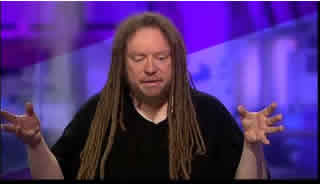
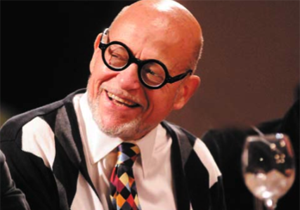
Herman Franke, Colin Channer, Migjeni, Arna Wendell Bontemps, Conrad Richter, Edwina Currie
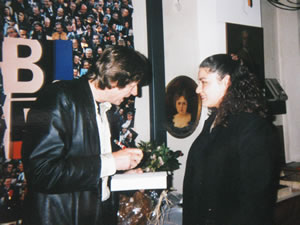
De Nederlandse schrijver Herman Franke werd geboren op 13 oktober 1948 in Groningen. Zie ook mijn blog van 13 oktober 2010 en eveneens alle tags voor Herman Franke op dit blog.
Uit: De ziel van Nederland
“Schrijvers zijn misdadigers. Mij duidt men vaak aan als schrijver en criminoloog. Daar schemeren duistere verbanden, maar het zal nog even duren voordat ik iets over Klinkhamer en consorten opmerk. Zoals het een wetenschapper betaamt, begin ik gewoon met een inleiding en eindig, des schrijvers eigen, en als God het wil, met een verhaaltje. Het is de bedoeling dat daartussenin Jean Genet, Raskolnikov, Moll Flanders, Andreas Burnier, Charles Dickens, Oscar Wilde, Václav Havel en Breyten Breytenbach nog ter sprake komen, maar je weet het maar nooit. Toen Dostojevski voor het vuurpeloton op de kogel stond te wachten, duidde niets erop dat hij een van de grootste schrijvers van de wereld zou worden.
Door de titel van deze beschouwing zit ik vast aan een januskop. Die moet er dan eerst maar af, met bekentenissen en al.
Zie-ief!
Dat hebben geguillotineerde misdadigers waarschijnlijk gehoord voordat hun hoofd in het mandje rolde. Maar zeker kun je dat nooit weten. Daar kun je geen research naar doen. Research. Zo heet dat. Wetenschappers in dit land verrichten gewoon onderzoek, maar Nederlandse schrijvers doen aan research. Zij doelen met research heel gewichtig op de werkzaamheden die voorafgaan aan het schrijven van hun romans, zoals gericht om zich heen kijken, wat non-fictieboeken uit de bibliotheek halen, reizen maken op kosten van het Fonds voor de Letteren, een vraaggesprekje voeren met deze of gene en participerend observeren tot hoereren en vreemdgaan toe. Voor de roman waaraan ik nu werk, heb ik ook research gedaan. Ik heb mij onder meer een tijdje verdiept in de fascinerende en verbijsterende subcultuur van de plastische chirurgie. Ik las over een jonge vrouw die na haar gezichtsoperatie in onmin raakte met haar familie, omdat ze niet meer het karakteristieke paardenbekje had van haar oma, moeder, ooms, tantes, neefjes, nichtjes, zusters en broers. Haar gezicht was ook hun gezicht, vonden ze, daar had ze niet zomaar zonder hun toestemming aan mogen sleutelen. Haar zusje vond het heel erg dat ze nu niet meer op haar zusje leek. Ze werd van familieverraad beschuldigd en leidde sindsdien het treurige bestaan van een verstotene. O, had zij haar paardenbekje nog maar.”
Herman Franke (13 oktober 1946 – 14 augustus 2010)
De Jamaicaanse schrijver Colin Channer werd geboren op 13 oktober 1963 in Kingston. Zie ook mijn blog van 13 oktober 2010 en eveneens alle tags voor Colin Channer op dit blog.
Uit: Satisfy My Soul
“Ride all over me,” she whispered. “Find water.”
Chadwick leans toward me.
“On my final night on earth I would experiment with pork.”
“You would cook it in a whole new way?”
“More than that. I’ve never had it. My father was a member of the Nation of Islam. My mother is a Jew.”
“So you’re mixed,” he says appraisingly. His voice is engaged but impersonal, as if I were a piece of art. “I would not have known.”
“And now you do. What does that mean?”
“Well . . . nothing.”
“So why did you ask? What does it mean in terms of reparations? Do I get less for being a diluted brother or do I get a little extra for the Holocaust?”
“And what would be your book?” he asks me after we have sailed a mile in silence.
“I would read the Book of Psalms. I’d listen to “Redemption Song” and some fish and bread with my closest friend Kwabena Small, the best playwright I know.”
“And what would be the other choice? The woman?”
I burrow through the crates that line the basement of my mind and mount a retrospective of my lovers. It’s an exhibit of ambitious scope. The catalog is thicker than a phone book. I can’t decide. But I know that I have loved them all . . . at some time . . . in some way . . . with some degree of faithfulness and truth.
We argue politics until we disembark at Rafter’s Rest, a restaurant and bar that occupies what used to be a rambling house: white walls, soft arches, slim columns.”
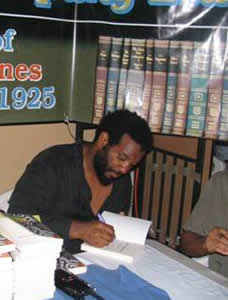
Colin Channer (Kingston, 13 oktober 1963)
De Albanese dichter Migjeni (eigen. Millosh Gjergj Nikolla) werd geboren op 13 oktober 1911 in Shkodra. Zie ook mijn blog van 13 oktober 2010 en eveneens alle tags voor Migjeni op dit blog.
Scandalous Song
A pale-faced nun who with the sins of this world
Bears my sins, too, upon her weary shoulders,
Those shoulders, wan as wax, which some deity has kissed,
Roams the streets like a fleeting angel.
A pale-faced nun, cold as a marble tomb,
With greyish eyes like the ashes of spent desires,
With thin red-ribbon lips, tightly pressed to smother her sighs,
A chilling image of her has lingered in my memory.
From pious prayers she comes and to her prayers she returns.
In downcast eyes, in lips, in folded hands her prayers repose.
Without her prayers what fate would be the world's?
Yet they cannot stop another day from dawning.
Oh, nun so pale, making love to the saints,
Consumed in ecstasy before them like an altar candle,
Revealing herself to them..., oh, how I envy the saints,
Pray not for me, for I am hell-bent with desire.
You and I, nun, are two ends of a rope,
On which two teams tug one against the other -
The struggle is stern and who knows how it will end,
So, tug the rope, let the teams contend.
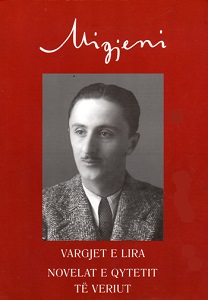
Migjeni (13 oktober 1911 – 26 augustus 1938)
Cover
De Amerikaanse dichter en schrijver Arna Wendell Bontemps werd geboren op 13 oktober 1902 in Alexandria in Louisiana. Zie ook mijn blog van 13 oktober 2010 en eveneens alle tags voor Arna Wendell Bontemps op dit blog.
Uit: God Sends Sunday
“As a child, on the Red River plantation where he was born, Little Augie was not required to chop cotton or work in the rice swamp like the other boys of his age. He was considered too frail for hard labor. Instead it became his duty to mind the cows when they grazed in the clover fields and to lead the horses to the watering-place.
Augie lived with his grown sister, Leah, in the same quarters in which he had been born shortly after the 'Mancipation and in which his old dead mammy had been a slave. He was a thin, undersized boy, smaller for his years than any other child on the place, and he had round pop-eyes. But he enjoyed a certain prestige among the black youngsters, and older folks as well, because of the legend that he was lucky, a legend that had attended him since birth, due to a mysterious veil with which he had entered the world.
Set apart from his mates by these circumstances, Little Augie soon grew to be miserable. In his heart he felt inferior to the strong, healthy children who worked alongside the grown-ups in the fields. He became timid in the presence of unfamiliar people and fell into the habit of stuttering when he tried to talk.
Sometimes, to amuse himself, Augie would follow the men out to plow the fields and then ride the horses home for them in the evening. It pleased him to sit on the back of the old lead mare and watch the other animals string along behind. It made him feel good to be directing the procession, shouting at the tired critters and giving the orders to start and stop. So, as he grew older, Augie spent more and more time with the animals. He became a competent rider. Curiously, he did not feel timid when he was riding ormanaging a fine horse; he felt big. And he loved horses for that reason.
Augie had also one other diversion. He liked to watch the river boats that came puffing around the bend and past the plantation now and again. Especially was he fascinated by the P. T. Blain that came on alternate Wednesdays, because it was the one that stopped at the tiny wooden landing in sight of the quarters.”
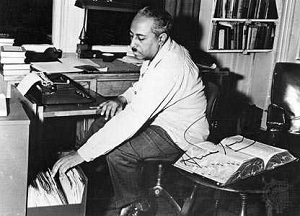
Arna Wendell Bontemps (13 oktober 1902 – 4 juni 1973)
De Amerikaanse schrijver Conrad Richter werd geboren op 13 oktober 1890 in Pine Grove, Pennsylvania. Zie ook mijn blog van 13 oktober 2010 en eveneens alle tags voor Conrad Richter op dit blog.
Uit: The Town
“The moving part she put off till the very last. The truth was she hated to leave the cabin. Most of her life had she lived here. Now she would have to give it up for a place where it looked like she was putting on airs, thinking herself better than ordinary folks. The last day she kept looking about the cabin. How many times had she stood at the fire with her long-handed pan, or gone down on her knees of a morning to puff at the coals. This ladder and those steps, how often had she climbed them when one of the young ones lay abed ailing. Why, forty years of her life had she spent between these log walls. And now she had to go and leave them."
(…)
"But the most alien thing was Rosa's mother sitting here with him, her tangled hair falling over the soiled shoulders of her once fine dress with tassels. She was reading a book in the darkest corner as if she had owl's or cat's eyes. Right in the middle of all this dirt and disorder she sat at her ease, and in the middle of the day when women still had most of their work to do."
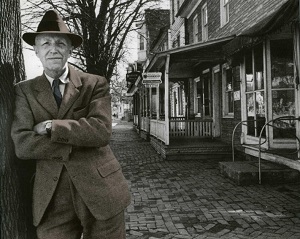
Conrad Richter (13 oktober 1890 – 30 oktober 1968)
De Britse romanschrijfster en gewezen politica Edwina Currie werd geboren in Liverpool op 13 oktober 1946.Zie ook alle tags voor Edwina Currie op dit blog en ook mijn blog van 13 oktober 2010.
Uit: Diaries
“Clapham, Thursday, March 13, 10.08pm
John joined me and some other MPs in the tearoom on Tuesday. We were talking about clubs, and how even the Carlton club in London won’t have women as full members.
‘I think that sort of attitude is terrible,’ said the PM, between mouthfuls of buttered teacake. We all blinked at him, then I said testily, ‘Well, we could have done something about it. Removed the clubs’ rights to ignore the law on discrimination. You’d have got it through with a big majority.’
The PM looked surprised. It was clear the idea had never occurred to him. I was so disgusted that I rose to leave, in case I said something very sharp.
As for the planned facelift: I’ve now seen Dr C. He has a house next to Harrods with a grand piano in the waiting-room, which had a rapid succession of anxious blonde Sloanes, mainly in their 30s.
Breast implants, at a guess. They were all too willowy to need liposuction — nowt to suck!”
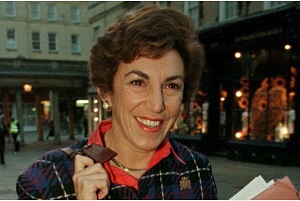
Edwina Currie (Liverpool, 13 oktober 1946)