Naar de inhoud

Romenu

Over literatuur, gedichten, kunst en cultuur
seniorennet.beseniorennet.be

Berichten van 28 mei 2011

Leo Pleysier, Frank Schätzing, Maeve Binchy, K. Satchidanandan, Thomas Moore
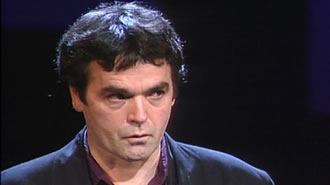
De Belgische schrijver Leo Pleysier werd geboren in Rijkevorsel op 28 mei 1945. Zie ook mijn blog van 28 mei 2007 en ook mijn blog van 28 mei 2008 en ook mijn blog van 28 mei 2009 en ook mijn blog van 28 mei 2010


Uit: Dieperik


“En terwijl hij zit te smullen, strooit hij er geregeld nog een paar lepels witte suiker over uit. (Bruine suiker is voor op mijn boterham met plattekaas. Of anders voor op een bord koude rijstebrij, vaders lievelingsdessert.)
‘Er zit al suiker in hoor!’
‘Wat?’
‘Dat er al suiker in zit!’
En dus nog een lepel witte suiker. En nog een.
En nog een.

(…)


Razend kwaad en helemaal over zijn toeren was nonkel Wies. En dat bleef hij toen nog geruime tijd ja. Al stak hij me op het einde, en anders dan gewoonlijk, bij het afdrogen en terug aankleden een handje toe.
‘Gaat het?’
Ik knikte en snikte van ja. Waarop hij met zijn eigen zakdoek mijn tranen bette en mijn neus en mond nog eens afdroogde.”


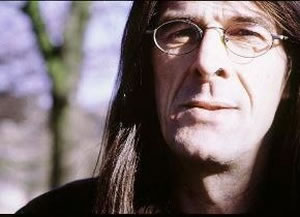
921911-9966ecaa665ae301c9e91b4e0598fb21.jpg
Leo Pleysier (Rijkevorsel, 28 mei 1945)


De Duitse schrijver Frank Schätzing werd geboren in Keulen op 28 mei 1957. Zie ook mijn blog van 28 mei 2007 en ook mijn blog van 28 mei 2008 en ook mijn blog van 28 mei 2009 en ook mijn blog van 28 mei 2010


Uit: Der Schwarm


„Für die Menschen in Stavanger gab es nicht die geringste Überlebenschance. Wer versuchte, vor der Wasserwand davonzulaufen, die plötzlich in den Himmel ragte, rannte vergeblich. Die überwiegende Anzahl der Opfer wurde erschlagen. Das Wasser war wie Beton. Man spürte nichts. Kaum anders erging es denen, die wie durch ein Wunder den Aufprall überlebten, um dann gegen Häuser geschmettert oder zwischen Trümmerteilen zermalmt zu werden. Paradoxerweise ertrank so gut wie niemand, sah man von jenen ab, die in den zulaufenden Kellern gefangen waren. Selbst dort wurden die meisten schon durch die Wucht der hereinströmenden Wassermassen getötet oder erstickten im zusätzlich eindringenden Schlamm. Wer schließlich ertrank, starb einen schrecklichen, aber wenigstens schnellen Tod. Kaum einer von ihnen registrierte. Was mit ihm geschah. Von jeder Sauerstoffzufuhr abgeschnitten, trieben die Körper der Eingeschlossenen im lichtlosen, wenige Grad kalten Wasser. Das Herz begann unregelmäßig zu schlagen, transportierte weniger Blut und kam schließlich zum Stillstand, während sich der Metabolismus extrem verlangsamte. Dadurch lebte das Gehirn noch eine Weile weiter. Erst zehn bis zwanzig Minuten später erlosch die letzte elektrische Aktivität, und der endgültige Tod trat ein.

Nach weiteren zwei Minuten hatte die Gischt die Vororte Stavangers erreicht. Je großräumiger sie sich verteilte, desto flacher wurde die brodelnde Flut. Immer noch nahm ihre Geschwindigkeit ab. Das Wasser tobte und spritzte durch die Straßen, und wer hineingeriet, war hoffnungslos verloren, aber dafür hielten die meisten Häuser dem Drück fürs Erste stand. Wer sich deswegen in Sicherheit wähnte, freute sich dennoch zu früh. Denn der Tsunami verbreitet seinen Schrecken nicht nur bei der Ankunft. Fast noch schlimmer war es, wenn er ging.“
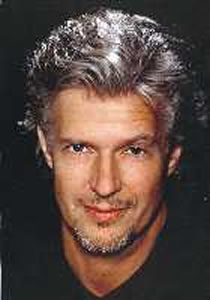


 921911-6c6b271e05669faf56c4f0febdde4191.jpg

Frank Schätzing (Keulen, 28 mei 1957)


De Ierse schrijfster en columniste
Maeve Binchy werd geboren op 28 mei 1940 in Dalkey.
Zie ook mijn blog van 28 mei 2007 en ook mijn blog van 28 mei 2008 en ook mijn blog van 28 mei 2009 en ook mijn blog van 28 mei 2010
 

Uit: Heart and Soul


“Mountainview, despite its pleasant name, was one of the tough areas of Dublin. Some of the big estates were home to drug dealers and it wasn't a place to walk alone at night. The school had its ups and downs, but it was lucky enough to have a headmaster, Tony O'Brien, who could deal with toughness head-on.Some of the older teachers found the change difficult. Things used to be different. The place had been shabby but they'd had respect. The children came from homes where money was short, but they were all keen to make something of themselves. Today they only cared about money, and if someone's big brother was driving a smart car and wearing an expensive leather jacket, it was hard to get interested in having a job in a bank or an office where you might never make enough to have your own house or car and a leather jacket was just a dream. No wonder so many of them joined gangs. And as for respect?Aidan Dunne told his wife, Nora, all about it.Big fellows would push past you in the corridor and sort of nudge the books out of your hand. Then they would laugh and say that sir must be losing his grip. Aidan remembered when they would rush to pick up the books. Not now. Now they called him Baldy, or asked him if he remembered the First World War.It was the same with the women teachers. If they weren't married, some of the really rough fellows would ask them were they frigid or lesbian. If they were married, they would ask them how many times a night did they do it.“And what do you say?” Nora wondered.“I try to ignore them. I tell myself that they're only insecure kids like always—it's just they have a different way of expressing it. Still, it doesn't make the day's work any easier.”“And how do the women cope?”“


 921911-ffc2db321e978ad94826acefc34ef4bc.jpg

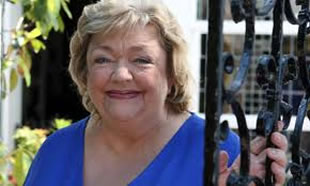
Maeve Binchy (Dalkey, 28 mei 1940)


De Indiaase dichter, vertaler en literatuurwetenschapper K. Satchidanandan werd geboren op 28 mei 1946 in centraal Kerala. Zie ook mijn blog van 28 mei 2009 en ook mijn blog van 28 mei 2010


Who said?


Who said

that waiting is a

railway station in North Malabar?

That a dawn in uniform

will arrive there in a coffin?


Who said

that memory is a fragrant window

opening on ripe cornfields?

That our bodies grow cold

as light grows dim there?


Who said

that trees have ceased to follow

wind’s language?

That we must conceal

from lilies and rabbits

the news of the death of love?


Who said

that now noons will be

heavy like a drunkard’s head?

That evenings will have sick hearts

like a lover’s whispered songs?


Who said that we are running barefoot

over red hot iron

with a fistful of childhood rain?

That we will, at the end,

hand over our keys

to the same rain?


Who said that men once dead grow younger

and then they enter another Time?

That all the birds that vanished

at sunrise will return

when the world ends?


Who said

that we would understand everything

with no one saying anything,

but will still not share

anything with anyone?


 921911-87d4bb7a556af098e022ff8711818f2b.jpg

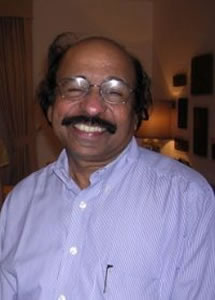
K. Satchidanandan (Kerala, 28 mei 1946)


De Ierse dichter en songwriter Thomas Moore werd geboren op 28 mei 1779 in Dublin. Zie ook mijn blog van 28 mei 2010 en eveneens alle tags voor Thomas Moore op dit blog.


The Minstrel Boy


The Minstrel-Boy to the war is gone,

In the ranks of death you'll find him;

His father's sword he has girded on,

And his wild harp slung behind him.

"Land of song!" said the warrior-bard,

"Though all the world betrays thee,

One sword, at least, thy rights shall guard,

One faithful harp shall praise thee!"


The Minstrel fell! -- but the foeman's chain

Could not bring his proud soul under;

The harp he loved ne'er spoke again,

For he tore its chords asunder;

And said, "No chains shall sully thee,

Thou soul of love and bravery!

Thy songs were made for the pure and free,

They shall never sound in slavery."


921911-7315c2792a6a428c1aee389afc8a3fcf.jpg
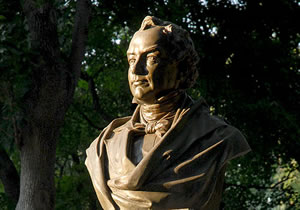
Thomas Moore (28 mei 1779 – 25 februari 1852)

Borstbeeld in Central Park, New York


Zie voor nog meer schrijvers van de 28e mei ook mijn vorige blog van vandaag en eveneens mijn eerste blog van vandaag.
Geschreven door Romenu om 19:00 Reageer op dit bericht

Ian Fleming, Walker Percy, Patrick White, Sjoerd Leiker, Fritz Hochwälder

De Britse schrijver Ian Fleming werd geboren op 28 mei 1908 in Londen. Zie ook mijn blog van 28 mei 2007 en ook mijn blog van 28 mei 2009 en ook mijn blog van 28 mei 2010


Uit: Diamonds Are Forever


„With its two fighting claws held forward like a wrestler's arms the big pandinus scorpion emerged with a dry rustle from the finger-sized hole under the rock.

There was a small patch of hard, flat earth outside the hole and the scorpion stood in the centre of this on the tips of its four pairs of legs, its nerves and muscles braced for a quick retreat and its senses questing for the minute vibrations which would decide its next move.

The moonlight, glittering down through the great thorn bush, threw sapphire highlights off the hard, black polish of the six-inch body and glinted palely on the moist white sting which protruded from the last segment of the tail, now curved over parallel with the scorpion's flat back. Slowly the sting slid home into its sheath and the nerves in the poison sac at its base relaxed. The scorpion had decided. Greed had won over fear.

Twelve inches away, at the bottom of a sharp slope of sand, the small beetle was concerned only with trudging on towards better pastures than he had found under the thorn bush, and the swift rush of the scorpion down the slope gave him no time to open his wings. The beetle's legs waved in protest as the sharp claw snapped round his body, and then the sting lanced into him from over the scorpion's head and immediately he was dead.

After it had killed the beetle the scorpion stood motionless for nearly five minutes. During this time it identified the nature of its prey and again tested the ground and the air for hostile vibrations. Reassured, its fighting claw withdrew from the half-severed beetle and its two small feeding pincers reached out and into the beetle's flesh. Then for an hour, and with extreme fastidiousness, the scorpion ate its victim.“


 921908-9464becd6a4095a376a233f98e4661f6.jpg

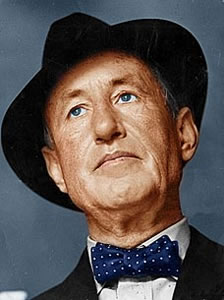
Ian Fleming (28 mei 1908 – 12 augustus 1964)


De Amerikaanse schrijver Walker Percy werd geboren op 28 mei 1916 in Birmingham, Alabama. Zie ook mijn blog van 28 mei 2009 en ook mijn blog van 28 mei 2010


Uit: The Moviegoer


„My aunt is convinced I have a ``flair for research.'' This is not true. If I had a flair for research, I would be doing research. Actually, I'm not very smart. My grades were average. My mother and my aunt think I am smart because I am quiet and absent-minded-- and because my father and grandfather were smart. They think I was meant to do research because I am not fit to do anything else-- I am a genius whom ordinary professions can't satisfy. I tried research one summer. I got interested in the role of the acid-base balance in the formation of renal calculi; really, it's quite and intersting problem. I had a hunch you might get pigs to form oxalate stones by manipulating the pH of the blood, and maybe even dissolve them. A friend of mine, a boy from Pittsburg named Harry Stern, and I read up the literature and presented the problem to [Dr.] Minor. He was enthusiastic, gave us everything we wanted and turned us loose for the summer. But then a peculiar thing happened. I became extraordinarily affected by the summer afternoons in the laboratory. The August sunlight came streaming across the room. The old building ticked and creaked in the heat. Outside we could hear the cries of summer students playing touch football. In the course of an afternoon the yellow sunlight moved across old group pictures of the biology faculty. I became bewitched by the presence of the building; for minutes at a stretch I sat on the floor and watched motes rise and fall in the sunlight. I called Harry's attention to the presence but he shrugged and went on with his work. He was absolutely unaffected by the singularities of time and place. His abode was anywhere. It was all the same to him whether he catheterized a pig at four o'clock in the afternoon in New Orleans or at midnight in Transylvania.“


921908-42efdb77cf488a5a34167d731c9e6847.jpg
Walker Percy (28 mei 1916 – 10 mei 1990)


De Australische schrijver Patrick White werd geboren in Londen op 28 mei 1912. Zie ook mijn blog van 28 mei 2009 en ook mijn blog van 28 mei 2010


Uit: The Aunt’s Story


"….You will be leaving soon, Theodora. I wonder if you have thought about the future,' Miss Spofforth asked.

Theodora had gone into Miss Spofforth's dark room, the Study it was called, to take the book for which Miss Spofforth had sent. She had not bargained for this. Now she was caught in the wide spaces between the bookcase and the fire, becalmed in her own silence and uncertainty. Fire fell from the logs into the winter afternoon, but did not warm. A cold laurel pressed against the window out of the winter wind.

'Have you thought how you can live most profitably?' Miss Spofforth asked.

And the dark square of her face struggled to open. She very much wanted to communicate.

'No,' said Theodora. 'I shall go home, for the present. I shall live - well, as I have always lived.'

Because living was something that happened in spite of yourself. She did not really believe, as apparently Miss Spofforth did, that you could turn living to profit.

'There is a great deal that happens,' she said.

'I am sure,' Miss Spofforth agreed.

She watched Theodora's hands move as if they were about to reach out and touch something.

'And provided one is happy, it does not matter where,' Miss Spofforth said.

Miss Spofforth had made her own happiness, solid and unmoved as mahogany, and Miss Spofforth was unpleased. She listened to the rooms of the house around her, which was her solidly founded, profitable happiness, but the rooms did not communicate. And outside, the leaf of the cold laurel was stroking space. But this is ridiculous, Miss Spofforth said.


 921908-3f8739a1c3d11ba0cb1079704e79ef0f.jpg

Patrick White (28 mei 1912 - 30 september 1990)


De Nederlandse schrijver en dichter Sjoerd Leiker werd geboren in Drachten op 28 mei 1914. Zie ook mijn blog van 28 mei 2009 en ook mijn blog van 28 mei 2010


Uit: Piet Calis. De vrienden van weleer. Schrijvers en tijdschriften tussen 1945 en 1948


„In mei 1944 kwam Koos Schuur op uitnodiging van Sjoerd Leiker, die hem dus al uit het Groningse kende, bij hem op bezoek. Leiker vertelde hem bij die gelegenheid over De Bezige Bij en probeerde hem over te halen een bundel verzen af te staan aan de uitgeverij.

Op 24 mei berichtte Leiker hierover aan Geert Lubberhuizen: ‘Van Koos Schuur kreeg ik een toezegging van copie voor De Bezige Bij. Ik heb Zondag, na je bezoek, meteen geschreven naar zijn ouders in Veendam. Hij was vanmorgen al hier. Helaas had hij een aantal tijdverzen, “de zeven vloeken” [,] juist verkocht. Die komen eerstdaags uit in een oplage van 110 ex. - Hij had echter nog meer werk klaar en zou daaruit een bundel samenstellen voor jou. Over een of twee weken zou hij die aan mij toesturen.’

Leiker schreef verder: ‘Ik heb hem niet ingewijd in “het bezige plan” - alleen maar gezegd, dat “de bezige bij” na den oorlog zal blijven bestaan.’

Anderhalve maand later - de invasie had intussen plaatsgevonden en de tijd leek te dringen - hadden de plannen voor Voorpost al een meer concrete vorm aangenomen: er was zelfs iets als een soort redactievergadering gehouden.

Op 12 juli nodigde Sjoerd Leiker - onder zijn illegale naam Menno van Haarsma - Charles van Blommestein uit voor een bijeenkomst die enkele weken later bij hem thuis aan de Rijnstraat gehouden zou worden: ‘29 Juli a.s. spreekt bij ons Koos Schuur over “Het dichterschap en over zijn eigen werk”. Ik heb zelf erg veel verwachting van deze inleiding, omdat Koos Schuur na den oorlog zeer waarschijnlijk één van de belangrijkste jongeren zal blijken te zijn en omdat ik met Schuur, Elburg, Ferd. Langen, Evenhuis, Visser, Van Wagenvoorde enz. tot dezelfde constellatie behoor. Ik zou het dan ook erg op prijs stellen als jij deze bijeenkomst kunt bijwonen. - Geert zal je wel het een en ander hebben verteld van het tijdschrift. De eerste redactievergadering is m.i. zeer verhelderend geweest. Als ik me niet vergis krijgen we na den oorlog een groep activisten (Jacobijnen), 2 een groep, die vooroorlogsche tradities zal voortzetten en 3 een groep jongeren (bovengenoemd). Aangaande de laatste durf ik nog geen voorspellingen te wagen. Wat hun vormgevoel betreft zijn enkelen van hen min of meer neo-classisisten.“


 921908-e3ed22801de60ec8772b122601c7b584.jpg

Sjoerd Leiker (28 mei 1914 - 15 december 1988)


De Oostenrijkse schrijver Fritz Hochwälder werd geboren op 28 mei 1911 in Wenen. Zie ook mijn blog van 28 mei 2009 en ook mijn blog van 28 mei 2010


Uit: Der verschwundene Mond (Bespreking van Dramatisch Werk, deel 4 door Lutz Hagestedt)


„Im Anfang war das Ereignis, und so holt Gustave noch in der ersten Szene des ersten Aktes den Mond vom Himmel und verkauft ihn für eine Million. Die schöne Blanche hat ihn verführt und ihm das schnelle Glück versprochen. Aber der Clochard hat nicht bedacht, daß es ohne Mond keine Dichtung mehr geben kann und ohne Dichtung keine Liebe und kein Leben. Als er Blanche nach der Tat wiedersieht, hat sie sich in eine warzenübersäte Hure verwandelt - ein entsetzlicher Anblick, wie von Félicien Rops gemalt. Gustave setzt nun alles daran, den Mond zurückzukaufen, doch nur das Blumenmädchen könnte ihn noch retten. Sie verkörpert das stille, einfache Glück, unerreichbar für Gustave, solange er Geld in den Händen hält. Am Ende sinkt der Clochard tot auf einer Parkbank nieder, und am Himmel steht – als sei er nie fortgewesen – groß und silbern der Mond.

Es ist auffallend, daß Gustaves freie Rede immer wieder von Gedichten unterbrochen wird, die Jakob Haringer geschrieben hat. Aber Gustav zitiert Haringer nicht, er ist Haringer, die Gedichte spiegeln seine eigenen Bewußtseinsvorgänge wider. Monologisch offenbart er sein Seelenleben, er spricht wie für sich, doch der Rezipient, das Publikum im Theater, müßte schon an der poetischen Intensität seiner Rede erkennen daß der tragische Held sich hier selber charakterisiert. Indes kann erst die Realisierung de Stücks auf der Bühne zeigen, ob der Wechsel von freier und gebundener Rede, ob das Gedicht als Mittel der Figuren-Charakterisierung nicht störend wirkt.“


 921908-668217f6ee304bf99b5fdd644548ec45.jpg

Fritz Hochwälder (28 mei 1911 – 20 oktober 1986)

Geschreven door Romenu om 18:53 Reageer op dit bericht

Henri-Pierre Roché, Maximilian Voloshin, Xin Qiji, J. D. Wyss, Maria Müller-Gögler, B. S. Ingemann, C. H. von Ayrenhoff

De Franse schrijver, journalist en verzamelaar Henri-Pierre Roché werd op 28 mei 1879 geboren te Parijs. Zie ook mijn blog van 28 mei 2009 en ook mijn blog van 28 mei 2010


Uit: Victor


„Patricia - Cette chambre m'amuse. Ça manque de sièges ici. Foutons-nous sur votre lit comme divan, c'est-à-dire vous dedans et moi dessus. C'est sans danger puisque nous l'aimons tous les deux. Et parlons de lui.

Elle sauta sur son lit. Ils s'installèrent comme elle avait dit, à distance.

Pierre - Aimez-vous Victor ?

Patricia - Oui.

Pierre - D'amitié ou d'amour ?

Patricia - Des deux. D'amour surtout.

Pierre - D'amour chaste ?

Patricia - Hélas ! Moi d'amour en plein et sans espoir. Je ne sais quel nom donner à ça. Tout le monde l'aime. Il est à tous et à personne. Il a raison sans doute. J'ai tort de le vouloir pour moi. Mais je ne veux que lui. Victor pourrait choisir parmi des héritières. Pas question. Pourrait avoir un gros contrat pour ses tableaux. Pas question. Il les donne presque tous à ses amis. Il donne aussi des leçons de français, fameuses et drôles, à deux dollars l'heure. Il s'amuse tout le temps. Son sourire est aimable, mais c'est un dictateur. il fait que ce qu'il veut, au moment où il veut. Où qu'il arrive, il devient le centre, il est le chef. il a une fantaisie à jet continu. Il a sûrement des aventures, avec des femmes faites, pas avec des jeunes filles. Il est discret, on ne sait rien.”


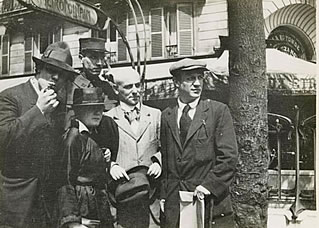
 921903-be794f841576138ccd35b791091bb0c4.jpg

Henri-Pierre Roché (28 mei 1879 – 9 april 1959)

Manuel Ortiz de Zarate, Henri-Pierre Roché [in uniform], Marie Vassilieff, Max Jacob and Picasso, Blvd. Montparnasse, Parijs, 12 Aug. 1916 - door Jean Cocteau


De Russische dichter, schrijver en schilder Maximilian Voloshin werd geboren op 28 mei 1877 in Kiev. Zie ook mijn blog van 28 mei 2009 en ook mijn blog van 28 mei 2010


Wormwood


My bonfire on the shore was burning down.
I heard the rustling sound of streaming glass.
The acrid soul of wistful wormwood wound
Through languid darkness, swayed, and flowed past.


The granite crags resemble fractured wings.
The weight of hills bends down a spinal cord.
The no-man's land is stiff and suffering.
The mouth of Earth has been denied the word!


A child of the inquisitive dark nights,
I am your eyes, wide-open to invite
The gaze of ancient stars, those lonesome lights
Whose prying rays reach out into the night.


I am your mouth of stone, your voiceless lyre!
By silence fettered, I have grown as mute
As extinct suns. I am the frozen fire
Of words. I am the sightless, wingless you.


O captive mother! How at night I bend
To feel your bosom - only you can see
The bitter smoke, the wormwood's bitter scent,
The bitterness of waves - will stay in me.


Vertaald door Constantine Rusanov


 921903-9d034676859836f94582548c041f926e.jpg

Maximilian Voloshin (28 mei 1877 – 11 augustus 1932)


De Chinese dichter Xin Qiji werd geboren op 28 mei 1140 in Jinan, in de provicie Shandong. Zie ook mijn blog van 28 mei 2009 en ook mijn blog van 28 mei 2010


Precious hairpin


Precious hairpin, broken, halved
At the Peach-Leaf Ferry where
We parted; darkening mist and willow shround the place.
I dread to climb the tower-top stair;
Nine days out of ten wind raves, rain torrents race:
It breaks my heart to see the scarlet petals scatter one by one.
All this with nobody to care
Above it - who is there
Will bid the oriole's singing cease?


From mirrored flowers that frame my face
I pluck the petals, try to foretell your return,
Counting and re-counting them a thousand ways.
By silken curtains dimly lit
Words born of dreams fight in my throat for release.
It was he, the Spring, who brought on me this agony of grief;
Who knows where Spring now strays?
He did not guess he should have gone
Taking my grief in his embrace.


Vertaald door A. Ayling en D. Mackintosh


 921903-d7bf5378016b8198646598ba0550afb5.jpg

Xin Qiji (28 mei 1140 – 1207)


De Zwitserse schrijver Johann David Wyss werd geboren op 28 mei 1743 in Bern. Zie ook mijn blog van 28 mei 2009 en ook mijn blog van 28 mei 2010


Uit: The Swiss Family Robinson


“These few words had an immediate effect on the spirits of my children, who at once regarded our problematical chance of escaping as a happy certainty, and began to enjoy the relief from the violent pitching and rolling of the vessel.
My wife, however, perceived my distress and anxiety in spite of my forced composure, and I made her comprehend our real situation, greatly fearing the effect of the intelligence on her nerves. Not for a moment did her courage and trust in Providence forsake her, and on seeing this my fortitude revived.
“We must find some food, and take a good supper,” said she, “it will never do to grow faint by fasting too long. We shall require our utmost strength tomorrow.”
Night drew on apace, the storm was as fierce as ever, and at intervals we were startled by crashes announcing further damage to our unfortunate ship.
“God will help us soon now, won’t He, father?” said my youngest child.
“You silly little thing,” said Fritz, my eldest son, sharply, “don’t you know that we must not settle what God is to do for us? We must have patience and wait His time.”
“Very well said, had it been said kindly, Fritz, my boy. You too often speak harshly to your brothers, although you may not mean to do so.”
A good meal being now ready, my youngsters ate heartily, and retiring to rest were speedily fast asleep. Fritz, who was of an age to be aware of the real danger we were in, kept watch with us. After a long silence, “Father,” said he, “don’t you think we might contrive swimming belts for mother and the boys? With those we might all escape to land, for you and I can swim.”
“Your idea is so good,” answered I, “that I shall arrange something at once, in case of an accident during the night.”


 921903-efcd7559ae2a2a0099865a1a8a52b805.jpg

Johann David Wyss (28 mei 1743 – 11 januari 1818)

Scene uit de film uit 1960 met o.a. John Mills en Dorothy McGuire


Zie voor onderstaande schrijvers ook mijn blog van 28 mei 2010


De Duitse dichteres en schrijfster Maria Müller-Gögler werd geboren op 28 mei 1900 in Leutkirch im Allgäu. Zie ook mijn blog van 28 mei 2009.


De Deense dichter en schrijver Bernhard Severin Ingemann werd geboren op 28 mei 1789 in Thorkildstrup op het eiland Falster. Zie ook mijn blog van 28 mei 2009.


De Oostenrijkse schrijver Cornelius Hermann von Ayrenhoff werd geboren op 28 mei 1733 in Wenen. Zie ook mijn blog van 28 mei 2009.

Geschreven door Romenu om 18:48 Reageer op dit bericht

Adriaan Bontebal

De Nederlandse dichter en schrijver Adriaan Bontebal werd als Aad van Rijn op 28 mei 1952 in Leidschendam geboren. Bontebal debuteerde officieel in 1988 met de verhalenbundel „Een goot met uitzicht“. Daarvoor had hij al „De vuilnisman komt in elke straat. Gedichten van de waanzin“ (1983), „Vijf voor vierentachtig. Verhalen“ (1984), „Alleen in bad, gedichten“ (1984) en „Hannah : een tragisch gedicht in een bedrijf of vijf“ (1986) uitgebracht. Na zijn debuut volgden de prozawerken „De ark“ (1990) en „Charmante jongen, sportief tiep“ (1995), de dichtbundel „Overleven met het oorsmeer in de ketting“ (1996), het prozawerk „Katten vlooien“ (2005) en „Adrenaline“ (2010). Gedichten van Adriaan Bontebal zijn te vinden in Komrij's „Nederlandse poëzie van de 19de t/m de 21ste eeuw in 2000 en enige gedichten“ en in „25 Jaar Nederlandstalige poëzie 1980-2005 in 666 en een stuk of wat gedichten“.


Uit: De Ark


‘Het is Oosters toneel uit de tweede helft van de derde eeuw voor Christus, Indiaas, Pakistaans of Mongools, daar wil ik van af zijn. Gek hè? De culturele belangstelling van mensen gaat in golven, net als de economie. We beleven nu voor het eerst sinds Herman Hesse, Sidharta weet je wel, weer een opleving in de belangstelling voor alles dat ten oosten van de Bosporus komt.
Ik moet, terwijl ik de monoloog uitspreek, de Dans van de Zes Sluiers uitvoeren. Met de laatste zin moet de laatste sluier vallen.’
‘Het is toch de Dans van de Zéven sluiers?’
‘Oorspronkelijk wel. Maar dit is een ideetje van onze regisseur, een oude geile bok. Het is een variant voor vrouwen die niet zo zwaar geschapen zijn.’
‘Neem me niet kwalijk,’ flapte ik eruit. ‘Jij hebt niets te klagen, dacht ik zo. Jij hebt voldoende vlees onder de tepel om topveertig-zangeres te zijn.’
‘Hè hè. Dit is juist de grap. Die ene sluier minder maakt het volgens hem in de uitvoering van een vrouw met een figuur als ik een stuk sexy-er. De regisseur komt daar op klaar.’


1092636-abf34a572dd0b4dcf681d421daec6a75.jpg
Adriaan Bontebal (Leidschendam, 28 mei 1952)

Geschreven door Romenu om 00:00 Reageer op dit bericht

Meer van Romenu

↑ Terug naar de berichten