Naar de inhoud

Romenu

Over literatuur, gedichten, kunst en cultuur
seniorennet.beseniorennet.be

Berichten van 5 juni 2017

Pfingstbestellung (Joachim Ringelnatz)


Prettige Pinksterdagen!


 2043604-8d771095392ad1917e0b91f4fa2a38f0.jpg
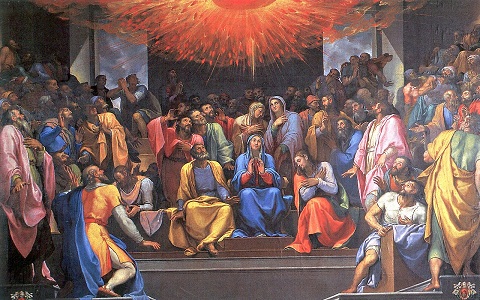
Pinksteren door Girolamo Muziano, ca. 1577


Pfingstbestellung

Ein Pfingstgedichtchen will heraus
Ins Freie, ins Kühne.
So treibt es mich aus meinem Haus
Ins Neue, ins Grüne.

Wenn sich der Himmel grau bezieht,
Mich stört`s nicht im geringsten.
Wer meine weiße Hose sieht,
Der merkt doch: Es ist Pfingsten.

Nun hab ich ein Gedicht gedrückt,
Wie Hühner Eier legen,
Und gehe festlich und geschmückt —
Pfingstochse meinetwegen —
Dem Honorar entgegen.


2043604-3d86349c21981bf4f96b2f848a83d5bd.jpg
Joachim Ringelnatz (1883-1934)
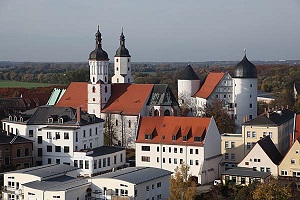
Wurzen. Joachim Ringelnatz werd geboren in Wurzen


Zie voor de schrijvers van de 5e juni ook mijn twee vorige blogs van vandaag.

Geschreven door Romenu om 09:17 Reageer op dit bericht

Federico García Lorca, Adriaan Morriën, Ken Follett, Margo Lanagan, Carel Peeters, Robert Franquinet, Margaret Drabble, Kristin Gore

De Spaanse dichter en toneelschrijver Federico Garcia Lorca werd geboren op 5 juni 1898 in Fuente Vaqueros, Granada. Zie ook alle tags voor Federico Garcia Lorca op dit blog.


Of the Dark Doves
For Claudio Guillén

In the branches of the laurel tree
I saw two dark doves
One was the sun
and one the moon
Little neighbors I said
where is my grave — 
In my tail said the sun
On my throat said the moon
And I who was walking
with the land around my waist
saw two snow eagles
and a naked girl
One was the other
and the girl was none
Little eagles I said
where is my grave —
In my tail said the sun
On my throat said the moon
In the branches of the laurel tree
I saw two naked doves
One was the other
and both were none.


Vertaald door Sarah Arvio


Sonnet of the Wreath of Roses

The wreath, quick, I am dying!
Weave it quick now! Sing, and moan, sing!
Now the shadow is darkening my throat,
and January’s light returns, a thousand and one times.

Between what needs me, and my needing you,
starry air, and a trembling tree.
A thickness of windflowers lifts
a whole year, with hidden groaning.

Take joy from the fresh landscape of my wound,
break out the reeds, and the delicate streams,
and taste the blood, spilt, on thighs of sweetness.

But quick! So that joined together, and one,
time will find us ruined,
with bitten souls, and mouths bruised with love.


Paso (The Images of the Passion)

Virgin in a crinoline,
Virgin of Solitude,
spreading immensely
like a tulip-flower.
In your boat of light,
go -
through the high seas
of the city.
through turbulent singing,
through crystalline stars.
Virgin in a crinoline
through the roadway’s river
you go,
down to the sea!


Vertaald door A. S. Kline


 2043600-2854e8ad4eedbed29d2db52d775f7039.jpg
Federico García Lorca (5 juni 1898 – 19 augustus 1936)
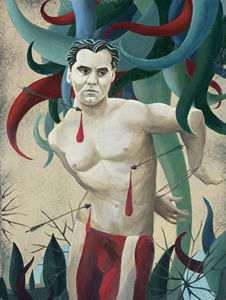
“Federico García Lorca” door Alice Wellinger, 2011


De Nederlandse dichter en schrijver Adriaan Morriën werd geboren op 5 juni 1912 in Amsterdam. Zie ook alle tags voor Adriaan Morriën op dit blog.

Uit: Herinneringen aan Hans Lodeizen

“Hij zat vol invallen en plannen. Hij verlangde naar Amerika waar hij biologie had gestudeerd, vrienden had gemaakt en voor het eerst echt vrij was geweest. Hij leek op een Amerikaanse student, maar met de nerveuse gevoeligheid van het oude Europa bij de hand. Hij had reeds velerlei mensen ontmoet: filmspelers, regisseurs, zakenlieden, schrijvers, geleerden, miljonnairs, oude verwende vrouwen, jonge onberekenbare meisjes: een lift vol mensen die langzaam van boven naar beneden gaat, vol levens, vol herinneringen, een zware lift vol ellende en plezier, zoals het ergens in zijn gedichten staat. Hij hield van dieren en planten en wist er alles van. Hij had iets ontdekt in de samenleving van de mieren waarover hij een verslag had geschreven en waarvoor hij, als knaap nog, lid van een Brits biologisch genootschap was geworden. Hij leek zelf een beetje op een hond, een wijze fijngevoelige hond die nooit voor een kar is gespannen, maar veel in kamers heeft gezeten, door tuinen is gewandeld, mee op reis genomen, die muziek van Strawinsky heeft aangehoord en heeft gezien hoe mensen plezier vinden in boeken, wijn, mooie toiletten, gesprekken en in het willoze stilzitten. Een hond met meer wijsheid dan zijn meester en met een groter gemak om er afstand van te doen wanneer dat onder andere honden nodig is.
Ik heb hem slechts kort gekend, van het voorjaar 1949 tot aan zijn dood, de afgelopen zomer. Maar het laatste half jaar zag ik hem nauwelijks. Hij overleed in Zwitserland en enkele weken voor zijn dood zond hij mij een ansicht van een Zwitserse boer die op een manslange hoorn de midzomer inblaast; of uitblaast. Over zijn ziekte geen woord. Het was een grap die ik na zijn dood als een terechtwijzing heb opgevat omdat ik hem nog altijd niet geschreven had. Zo gaan al mijn verre vrienden dood, zonder een brief van mij. Op deze wijze, dacht ik, zou ik zelf een vriend willen terechtwijzen en als een goed speler willen scheiden.
Hij herinnerde mij door allerlei reacties aan mijn eigen manier van doen toen ik zo oud was als hij en ik nog de tijd had omdat ik werkeloos was. Ook hij was werkeloos maar op een andere manier. Hij had zijn studie afgebroken en verzette zich tegen een maatschappelijke bezigheid die hij toch als iets onafwendbaars op zich zag afkomen. Hij had de tijd, al was het slechts voor een achtermiddag.”

 2043600-83b02285700b243b2aa74538fbead1e8.jpg
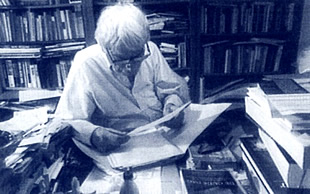
Adriaan Morriën (5 juni 1912 – 7 juni 2002) 


De Engelse schrijver Ken Follett werd geboren op 5 juni 1949 in Cardiff, Wales. Zie ook alle tags voor Ken Follett op dit blog.

Uit:Edge Of Eternity

“In the staff room she checked the emergency timetable on the notice board. Most of her classes were doubled today, two groups of pupils crammed into one room. Her subject was Russian, but she also had to teach an English class. She did not speak English, though she had picked up a smattering from her British grandmother, Maud, still feisty at seventy.
This was the second time Rebecca had been asked to teach an English class, and she began to think about a text. The first time, she had used a leaflet handed out to American soldiers, telling them how to get on with Germans: the pupils had found it hilarious, and they had learned a lot too. Today perhaps she would write on the blackboard the words of a song they knew, such as “The Twist” — played all the time on American Forces Network radio — and get them to translate it into German. It would not be a conventional lesson, but it was the best she could do.
The school was desperately short of teachers because half the staff had emigrated to West Germany, where salaries were three hundred marks a month higher and people were free. The story was the same in most schools in East Germany. And it was not just teachers. Doctors could double their earnings by moving west. Rebecca’s mother, Carla, was head of nursing at a large East Berlin hospital, and she was tearing her hair out at the scarcity of both nurses and doctors. The story was the same in industry and even the armed forces. It was a national crisis.
As Rebecca was scribbling the lyrics of “The Twist” in a notebook, trying to remember the line about “my little sis”, the deputy head came into the staff room. Bernd Held was probably Rebecca’s best friend outside her family. He was a slim, dark-haired man of forty, with a livid scar across his forehead where a shard of flying shrapnel had struck him while defending the Seelow Heights in the last days of the war. He taught physics, but he shared Rebecca’s interest in Russian literature, and they ate their lunchtime sandwiches together a couple of times a week. “Listen, everybody,” Bernd said. “Bad news, I’m afraid. Anselm has left us.”

 2043600-e65a6d14f32156ceec8dc1cf3fda9e5e.jpg
Ken Follett (Cardiff, 5 juni 1949)
Cover


De Australische schrijfster Margo Lanagan werd geboren op 5 juni 1960 in Waratah, New South Wales. Zie ook alle tags voor Margo Lanagan op dit blog.

Uit:Singing My Sister Down

“I played well, out of the surprise of her not minding. I couldn’t’ve played better. I heard everyone else being surprised, too, at the end of those tunes, that they must’ve all known too, too well from all my practising.
I sat down, very hungry. Mumma passed me the water-cup and a damp-roll.
I’m stuck now, said Ik, and it was true—the tar had her by the feet, closed in a gleaming line like that pair of zipper-slippers I saw once in the shoe-master’s vitrina.
Oh yeah, well and truly stuck, said Mumma. But then, you knew when you picked up that axe-handle you were sticking yourself.
I know.
No coming unstuck from this one. You could’ve let that handle lie. That was some serious teasing.
No, I couldn’t, Mumma, and you know.
I do, baby chicken. I always knew you’d be too angry, once the wedding-glitter rubbed off your skin. It was a good party, though, wasn’t it? And they laughed at each other, Mumma having to steady Ikky or her ankles would’ve snapped over. And when their laughter started going strange Mumma said, Well, this party’s going to be almost as good, ’cause it’s got children. And look what else! And she reached for the next ice-basket.
And so the whole long day went, in treats and songs, in ice and stink and joke-stories and gossip and party-pieces. On the banks, people came and went, and the chief sat in his chair and was fanned and fed, and the family of Ikky’s husband sat around the chief, being served too, all in purple-cloth with flashing edging, very prideful.“


 2043600-c582962e274693927aaae90a5265bf62.jpg
Margo Lanagan (Waratah, 5 juni 1960)


De Nederlandse literair criticus Carel Peeters werd geboren in Nijmegen op 5 juni 1944. Zie ook alle tags voor Carel Peeters op dit blog.

Uit: Kan het licht aanblijven? (Over Frans Kellendonk)

“Aangezien Kellendonk niet in God gelooft is het onduidelijk welke metafysische ideeën hij aanhangt; maar in de discussie naar aanleiding van de opmerkingen van kardinaal Simonis over de tegennatuurlijkheid van homoseksualiteit mag hij de kardinaal graag in bescherming nemen, ook al vindt hij de uitspraken van de kardinaal met een curieuze kwalificatie ‘overbodig’. De charme van die uitspraken schijnt te schuilen in hun theologische schoonheid: ‘De katholieke visie op het geslachtsleven is een wonder van theoretische schoonheid, die echter nog maar weinig in praktijk gebracht wordt. De seksuele revolutie heeft daar geen samenhangende visie tegenover kunnen stellen. Vrijheid blijheid, is steeds de leus geweest.’
Kennelijk is er iets mis met de leus ‘vrijheid, blijheid’. Daar kan volgens mij nooit iets mee mis zijn, omdat de logica wil dat waar vrijheid is ook de vrijheid bestaat zichzelf beperkingen op te leggen. Dat dit niet altijd gedaan wordt, en dat men dan op de koffie komt, doet niets af aan de waarde van het principe. Wie nooit zijn hoofd gestoten heeft weet niet hoe hard het is. Kellendonk is echter van mening dat die vrijheid op een of andere manier ‘metafysisch’ beperkt moet worden. Het is wel uiterst wrang dat hij als bewijs daarvoor aids aanvoert en zelfs schrijft dat aids ‘het zoveelste echec van de Verlichting’ laat zien. Is er dan verband tussen aids en de Verlichting?
Dat verband is er in zoverre dat de Verlichting er (in een langdurig proces) mede voor heeft gezorgd dat een grote seksuele vrijheid ontstond. Van seksuele vrijheden gebruikmaken is echter niet een exclusief voorrecht van de twintigste eeuw. Degenen die zich in dit opzicht in de negentiende eeuw weinig beperkingen oplegden konden gemakkelijk syfilis oplopen, dat risico was eraan verbonden. Het verschil tussen syfilis en aids is gradueel: aids doet zich op grotere schaal voor.
Wie zulke grote, maar even dunne verbanden legt tussen aids en de Verlichting als Kellendonk is met een kruistocht bezig, zo omvangrijk dat het niet anders kan dan dat de versimpelmachine aan het werk is.”


 2043600-376e8bfb94443ec4c0a6ce4b7ce53c08.jpg
Carel Peeters (Nijmegen, 5 juni 1944) 


De Nederlandse dichter, schrijver en schilder Robert Marie Philmain Joseph Franquinet werd geboren in Amby (bij Maastricht) op 5 juni 1915. zie ook alle tags voor Robert Franquinet op dit blog.

Uit: Drijfzand

“Beelden tuimelen door me heen. Het rugbeeld van Carla. Wat is herinnering? Waar houdt de werkelijkheid van Carla op en waar begint de onwerkelijkheid van de nostalgie? Welke dokter kan haar meten?
Ik ben vannacht over het staketsel geklommen, de fles die in mijn polsader steekt achter me aan slepend. Ze hebben me met handen en voeten aan het verchroomde bed vastgesnoerd. De ochtendverpleegster treft me zo aan. Ik herinner me in de nevelige zone het watergrijs van haar blik. Haar gelaat komt af en toe opdoemen. Ik herinner me nu ook haar stem. Vóór de laatste operatie zei ze: ‘ze doet geen pijn, ze is alleen maar vermoeiend.’
In de gevangenis van de geheime politie, waar we werden afgetuigd op allerlei manieren, zei ik tot mezelf: ‘pijn is een begrensd iets, wanneer ze zo hevig is dat je ze niet meer verdraagt verlies je het bewustzijn.’
Ik tast naar mijn kaalgeschoren schedel. De luiken zijn weer dicht. Verdwenen onder de schedelhuid. Carla is niet gekomen. Ze komt nooit meer. Ik heb haar eens gezegd dat ik voor één nacht met haar een jaar politiegevangenis wil overdoen. En nu nog wil ik voor een teder woord heel dit proces van lichamelijke uitmergeling, gebrokenheid, vernedering opnieuw ondergaan. Waanzin. Maar zonder die waanzin is het leven als een ketting van leeggelopen dagen.
Hoe ben ik hier op de operatietafel terecht gekomen? Ik weet er niets meer van. Prof Guylot heeft gezegd: ‘indien ik hem niet opereer heeft hij nog twee jaar.’
Wanneer ik chemisch ben ontleed begint de meetkunde in de ruimte. Elektroniek. Radar en ultrasone straal. Minizender. Radiografische maten. Komputer. Ik hoor rekenen in frakties van millimeters en in mikrons die de afstanden van de kernen onder elkaar, van de cellen in het grijze merg aangeven. Atomen. Zelfs de punt van een operatienaald is te grof voor deze precisie.”

 2043600-0d55d733ec6a29b05910754ea36020ad.jpg
Robert Franquinet (5 juni 1915 - 30 mei 1979)
Amby


De Engelse schrijfster Margaret Drabble werd geboren op 5 juni 1939 in Sheffield, Yorkshire. Zie ook alle tags voor Margaret Drabble op dit blog.

Uit: The Dark Flood Rises

“She has often suspected that her last words to herself and in this world will prove to be 'You bloody old fool' or, perhaps, depending on the mood of the day or the time of the night, 'you fucking idiot'. As the speeding car hits the tree, or the unserviced boiler explodes, or the smoke and flames fill the hallway, or the grip on the high guttering gives way, those will be her last words. She isn't to know for sure that it will be so, but she suspects it. In her latter years, she's become deeply interested in the phrase 'Call no man happy until he is dead.' Or no woman, come to that. 'Call no woman happy until she is dead.' Fair enough, and the ancient world had known women as well as men who had met unfortunate ends: Clytemnestra, Dido, Hecuba, Antigone. Though of course Antigone, one must remember, had rejoiced to die young, and in a good (if to us pointless) cause, thereby avoiding all the inconveniences of old age.
Fran herself is already too old to die young, and too old to avoid bunions and arthritis, moles and blebs, weakening wrists, incipient but not yet treatable cataracts, and encroaching weariness. She can see that in time (and perhaps in not a very long time) all these annoyances will become so annoying that she will be willing to embark on one of those acts of reckless folly that will bring the whole thing to a rapid, perhaps a sensational ending. But would the rapid ending cancel out and negate the intermittent happiness of the earlier years, the long struggle towards some kind of maturity, the modest successes, the hard work? What would the balance sheet look like, at the last reckoning?”


2043600-514b9a15f8b6ab5cc8b196720b8dbac6.jpg
Margaret Drabble (Sheffield, 5 juni 1939)


De Amerikaanse schrijfster Kristin Carlson Gore werd geboren op 5 juni 1977 in Carthage, Tennessee Zie ook alle tags voor Kristin Gore op dit blog.

Uit:Sammy's House

“Had we been as eager to whine to the press, we might have garnered comparable support, but we weren't the same breed of tattletales. And even taking pride in that was immature. The whole embarrassing rivalry gave me flashbacks to junior high.
Which, frankly, didn't seem all that long ago. I was twenty-eight now and working as a health care advisor to the White House, but I still often felt as awkward and unsure of myself as I had during those halcyon days of orthodontic headgear and New Kids on the Block fan clubs. Though I'd spent a few fascinating years as a Capitol Hill staffer to then Senator Robert Gary (RG to his staff), the White House was an entirely different universe. The stakes, the pressure, the perpetual potential for both extraordinary progress and crippling failure-everything was ratcheted up to a spectacular intensity now that I worked for the president and vice president of the United States. More than ever before, I felt like I needed to constantly prove myself in a new world full of gossip and cliques and all sorts of social politics. So in some ways, the junior high flashbacks were apropos. Though perhaps I had slightly more of a shot at a date with New Kid heartthrob Jordan Knight now. Slightly.
Amid the fear and anxiety, I also felt a certain wide-eyed wonder at everything I was witnessing. At the inauguration of Wye and RG, I'd been awed by the sight of democracy in action. After a hard-fought, nasty election cycle, it had been thrilling and refreshing to observe the peaceful transfer of power. I'd watched everything from the sidelines, humbled by the remarkable nature of such an event, and grateful to be on the happier end of it. Granted, a week later I'd felt considerably less idealistic about the whole thing when I'd had to wear a surgical mask at my desk to filter the rancid fumes of decomposing mice. And now those same clever saboteurs had disrupted our year-and-a-half-late victory cruise by paying a woman to take her clothes off. They were classy, classy folks.”


 2043600-e1e6457eede6bf484150a1b6c3c1a7f9.jpg
Kristin Gore (Carthage, 5 juni 1977)


Zie voor nog meer schrijvers van de 5e juni ook mijn vorige blog van vandaag.

Geschreven door Romenu om 09:15 Reageer op dit bericht

Thomas Kling, Hélène Cixous, Spalding Gray, Christy Brown, David Hare, Alifa Rifaat, Otto F. Walter, Ivy Compton-Burnett

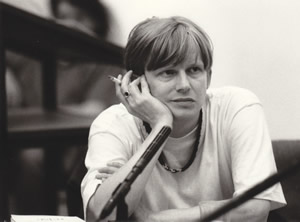
De Duitse dichter en schrijver Thomas Kling werd geboren op 5 juni 1957 in Bingen. Zie ook alle tags voor Thomas Kling op dit blog.


Bildprogramme

2
MITSCHNITT CALVENSCHLACHT

inzwischn: 1499. luftbilder, -spiegel,
spiegelungn ausm engadinerkrieg. ein
sommerlicher brückenkopp (gesprengt) so
nimmt das wasser andre farbe an.
                                                         
  di gute
geschoßverschraubte luft! im luftzug
NAPALMHEIDE / das in den fluß
zischt, nähte zwischen leib und panzern
zieht (»da ist ja keine landschaft mehr«,
TONLOS / »hättns sollen fahren
lassn«). darüber geht di kamera, ho-
lpernd; kamerafahrt heiser, angekro-
chenes aug. vorm ortler. vor schi-
mmerndn 3000ern: demolirte sand-
sackberge (...)

                und sorgnfaltn, kummer-
volles redaktörsgesic’t: ICH HÖRE EBEN!,
ICH RUFE WILLIBALD PIRKHEIMER
(sonst in Nürnberg stationiert)!, am sattel, AM HU-
MANISTISCHEN SATTELLITTNTELEPHON:

PIRKHEIMER: ja, hier pirkheimer. humanitär-
sanitäre verhältnisse ... mit grawenvollen bildern
zu tun ... habn hohe-luste zu zeichnen ... di
geiselerschießung von meran ... (FADING),
obwohl bevölkerun’ dagegn ... (RAUSCH-
RAUSCH), im -iegesrausch, durchrau-
schende flüchtlinge ... strom weg, alles weg ...
KAISER MAXIMILIAN SOLL GEWEINT
HABN ALS / FADING /DI KINDER ESSENZ /
BROTKLEE VON DEN WIESN da br-
                                                                         icht
di leitun’ zamm, damundherrn, in weißm rau-
schn, klappt zusamm das bilderwelt in riesen OH-
NELÖSCHLÖSCH. romanisch di bandnwerbun’
Gottes, tonlos di engel vorm himml. jerusalem, wei-
ße bänder spruchbänder in händn. ohne text.
 

 2043593-60d50c5c844c054a3d1fb6d8368f415a.jpg
Thomas Kling (5 juni 1957 - 1 april 2005)


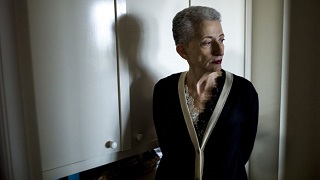
De Franse feministische schrijfster, dichteres, professor, filosoof, literair criticus en historica Hélène Cixous werd geboren in Oran, Algerije, op 5 juni 1937. Zie ook alle tags voor Hélène Cixous op dit blog.

Uit: Gare d'Osnabrück à Jérusalem

« Quand j’étais à Osnabrück je n’ai pas demandé où était la maison-à-Juifs, ça ne m’est pas venu à l’esprit, je suivais la rue je cherchais l’immeuble de la famille Jonas, je remontais la Schwedenstrasse, je passai devant le monumental immeuble Macdonald, je vis que le Macdo avait avalé le magasin Jonas, je n’y ai pas pensé, je ne sais pas combien de personnes elle pouvait contenir, donc six fois plus si on entasse, parmi lesquelles je ne sais pas pendant combien de temps Andreas et Else Jonas attendirent la suite, je ne sais pas ce qu’ils pensaient enfermés serrés dans la maison-à-Juifs, je ne sais pas s’ils pensaient je ne sais pas si penser pensait ou fuyait et se jetait dans le hurlement muet, selon ma mère on ne pense pas, on se répète un mot, on le halète, on le mâche, sans arrêt pour ne pas crier pour ne pas être seul avec le silence, quel mot ? dis-je, tu penses à dieu ? dis-je, non, non bien sûr que non, non, chacun le sien, le premier qui vient, qui passe, un mot qui répond, qui dit oui, je suis là, je te donne la main, on ne pense pas, je connais quelqu’un qui se récitait un poème de Baudelaire, un tas de motsau lieu de pense, sent, et que sent-on entassé dans la boîte-à-Juifs, on sent des distances des distances, inconnues, vertigineuses, des distances surnaturelles entre ici et hier, des sortes de siècles de murs aplatis d’océans d’eaux noires gonflées de rochers, entre ici et la maison où j’étais je et c’était moi et tout d’un coup il n’y a plus de près, des loins monstrueux environnent l’esprit et quelques dizaines de mètres-hier signifient plus-jamais-maman-ne-reviendra-plus-jamais. »
 

 2043593-38cea88bd4e7236a0a049251adf3799a.jpg
Hélène Cixous (Oran, 5 juni 1937)


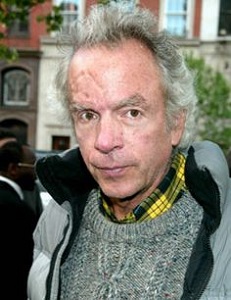
De Amerikaanse schrijver en acteur Spalding Gray werd geboren op 5 juni 1941 in Barrington, Rhode Island. Zie ook alle tags voor Spalding Gray op dit blog.

Uit: Life Interrupted

“What did we talk about — we talked about the art critic Robert Hughes's car accident that he'd had in Australia, and how difficult that would be, to have a car accident in a foreign country like that. Then there was this discussion about who would drive home. We'd all been drinking, not a lot, but Kathie had only had one glass of wine so she was the designated driver. So we're off and she says, "Buckle up," and no one in the back seat pays any attention to her. Tara Newman says, "Yes, Mom," very condescendingly, and I — God, I didn't hear her; Kathie says it's because I don't listen. I just didn't buckle up. I think I was taking a pee in the bushes, a last-minute pee, and I got in and so we're off on a backcountry road. I didn't think anything could possibly happen on a backcountry road. We'd come on a main highway and the speeding was terrific, but on the country road I thought it would be...
Just about one mile from the mansion — and they say these things happen within a mile of your destination, that's why my friend Donald says that he drives like crazy to get out of that radius — I look up and I see in Kathie's window what looks like a cartoon of a van. It looks like a video game. I can't take it in. We had stopped to turn right, we were still, and the road was a narrow country road, there were no lanes, just a road, and coming at me, at us, was this yellow van. It must have been coming very fast, because all I got was one glimpse of it, its headlights. It was dusk, it was ten-fifteen, and there was this enormous crash that I remember as the most violent moment of my life. It was equal to an earthquake that I'd gone through in California, which had sounded like a bomb.
Our car spun around three times, that's how hard he hit, and he drove the engine right into the front seat of the car, where Kathie burned her arm. Somehow she got out. I thought Kim, who was next to her, was dead. His forehead was down on the dashboard. Tara Newman was yelling, "The car's going to explode. Everyone get out!" I don't remember getting out, but the next I knew I was lying in the road next to Kathie, and she's saying, "I'm dying! I'm dying!" and I'm saying, solipsist that I am, "But I can't straighten out my leg!" And I couldn't.”
 

 2043593-c07dfced23d8d723051db38a0637556a.jpg
Spalding Gray (5 juni 1941 – 10 januari 2004)


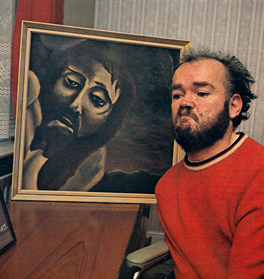
De Ierse dichter, schrijver en schilder Christy Brown werd geboren op 5 juni 1932 in Dublin. Zie ook alle tags voor Christy Brown op dit blog.

Uit: My Left Foot

« That was a momentous decision as far as my future life was concerned. It meant that I would always have my mother on my side to help me fight all the battles that were to come, and to inspire me with new strength when I was almost beaten. But it wasn't easy for her because now the relatives and friends had decided otherwise. They contended that I should be taken kindly, sympathetically, but not seriously. That would be a mistake. "For your own sake," they told her, "don't look to this boy as you would to the others; it would only break your heart in the end." Luckily for me, Mother and Father held out against the lot of them. But Mother wasn't content just to say that I was not an idiot: she set out to prove it, not because of any rigid sense of duty, but out of love. That is why she was so successful.
At this time she had the five other children to look after besides the "difficult one," though as yet it was not by any means a full house. They were my brothers, Jim, Tony, and Paddy, and my two sisters, Lily and Mona, all of them very young, just a year or so between each of them, so that they were almost exactly like steps of stairs.
Four years rolled by and I was now five, and still as helpless as a newly born baby. While my father was out at bricklaying, earning our bread and butter for us, Mother was slowly, patiently pulling down the wall, brick by brick, that seemed to thrust itself between me and the other children, slowly, patiently penetrating beyond the thick curtain that hung over my mind, separating it from theirs. It was hard, heartbreaking work, for often all she got from me in return was a vague smile and perhaps a faint gurgle. I could not speak or even mumble, nor could I sit up without support on my own, let alone take steps. But I wasn't inert or motionless. I seemed, indeed, to be convulsed with movement, wild, stiff, snakelike movement that never left me, except in sleep. My fingers twisted and twitched continually, my arms twined backwards and would often shoot out suddenly this way and that, and my head lolled and sagged sideways. I was a queer, crooked little fellow.”
 

 2043593-ee4f9ad1a3a02e259515b95934cebe2f.jpg
Christy Brown (5 juni 1932 – 6 september 1981)
Hier bij een van zijn eigen schilderijen


De Britse schrijver, dramaturg en regisseur David Hare werd geboren op 5 juni 1947 in Sussex. Zie ook alle tags voor David Hare op dit blog.

Uit:Wall: A Monologue

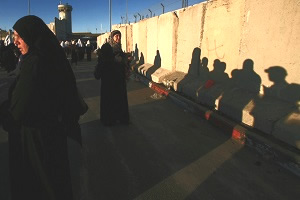
“From the start the exact route has been controversial. The most obvious path for it to have followed would have been along the international border, established in 1949 between Israel and Jordan, and known to all parties as the Green Line. But in fact, 85 percent of its intended route is inside the West Bank. The fence snakes and coils, departing eastward from the Green Line in places by just two hundred meters, but in other places by as much as twenty-two kilometers where it goes inland to collect up and protect Israeli settlements established far inside the occupied territory. Sometimes it takes in fertile Palestinian agricultural land and water wells, leaving Palestinian farmers without access to their own fields. Some 140,200 Israeli settlers will be living between the fence and the Green Line. 93,000 Palestinians will be caught on the wrong side of the wall.
For that reason the fence is seen by its opponents not as what it claims to be—a security measure—but more as a land grab, the delineation of a de facto claim, an attempt, like the steady expansion of the Israeli-controlled parts of Jerusalem, to do what is known as “change the facts on the ground.” At the outset of the campaign, supporters of Fence for Life insisted that the wall should be a barrier, not a border. It was not to be used as a bargaining tactic in any future negotiation for a final status agreement. But even Israelis have found this intention hard to credit. Before he left office, Israeli Prime Minister Ehud Olmert admitted that had he survived in the job he would have sought to set Israeli permanent borders by 2010—and that the border “would run along or close to the barrier.”
 

 2043593-a52f5f33a789d350e4278c5705650d54.jpg
David Hare (Sussex, 5 juni 1947)
Palestijnen bij een checkpoint op weg naar Jeruzalem


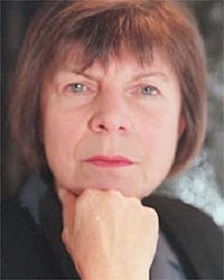
De Egyptische schrijfster Alifa Rifaat werd op 5 juni 1930 in Caïro geboren. Zie voor onderstaande schrijfster ook alle tags voor Ailfa Rifaat op dit blog.

Uit: Another Evening at the Club

'You're a lucky girl,' her mother had told her. 'He's a real find. Any girl would he happy to have him. He's an Inspector of Irrigation though he's not yet forty. He earns a big salary and gets a fully furnished government house wherever he's posted, which will save us the expense of setting up a house - and I don't have to tell you what our situation is - and that's besides the house he owns in Alexandria where you'll be spending your holidays.' Samia had wondered to herself how such a splendid suitor had found his way to her door. Who had told him that Mr Mahmoud Barakat, a mere clerk at the Court of Appeal, had a beautiful daughter of good reputation? The days were then taken up with going the rounds of Cairo's shops and choosing clothes for the new grand life she would be living. This was made possible by her father borrowing on the security of his government pension. Abboud Bey, on his part, never visited her without bringing a present. For her birthday, just before they were married, he bought her an emerald ring that came in a plush box hearing the name of a well-known jeweller in Kasr el-Nil Street. On her wedding night, as he put a diamond bracelet round her wrist, he had reminded her that she was marrying someone with a brilliant career in front of him and that one of the most important things in life was the opinion of others, particularly one's equals and seniors. Though she was still only a young girl she must try to act with suitable dignity. `Tell people you're from the well-known Barakat family and that your father was a judge,' and he went up to her and gently patted her cheeks in a fatherly, reassuring gesture that he was often to repeat during their times together. Then, yesterday evening, she had returned from the club somewhat light-headed from the bottle of beer she had been required to drink on the occasion of someone's birthday. Her husband, noting the state she was in, hurriedly took her back home. She had undressed and put on her nightgown, leaving her jewellery on the dressing-table, and was fast asleep seconds after getting into bed. The following morning, fully recovered, she slept late, then rang the bell as usual and had breakfast brought to her. It was only as she was putting her jewellery away in the wooden and mother-of-pearl box that she realized her emerald ring was missing.”
 

 2043593-cc093466e63c11526e5edd22774f91f9.jpg
Alifa Rifaat (5 juni 1930 - 4 januari 1996)


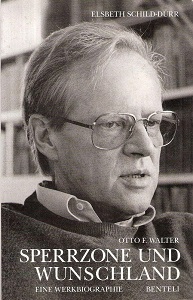
De Zwitserse schrijver en uitgever Otto Friedrich Walter werd geboren op 5 juni 1928 in Rickenbach. Zie ook alle tags voor Otto. F. Walter op dit blog.

Uit: Herr Tourel

“Ich möchte für den Augenblick darauf näher nicht eingehen, auf jeden Fall bin ich in bestem Einvernehmen und auf eigenen Wunsch aus der Firma Zoller ausgetreten.
Das war ziemlich genau vor einem Jahr. Am 5. Juni des letzten Jahres. Vier Tage vor meinem Geburtstag. Ich hatte die Absicht, mich für eine gewisse Zeit hier in Jammers, in der Stadt meiner frühen Kindheit, niederzulassen. Das habe ich denn auch getan. Ich habe gleich da vorn Quartier bezogen, an der Tripolisstraße, keine vierhundert Meter von hier entfernt, dem Zementwerk gegenüber im Haus von Immanuel Kupper, Südfrüchte Großhandel. Vom 6. Juni an blieb ich im Tripolisquartier, blieb da bis zum 8. November des letzten Jahres. Gewisse Vorkommnisse bewogen mich, die Stadt meiner frühen Kindheit zum zweitenmal zu verlassen. Das war vor sieben Monaten. Mein Unglück, mein Schicksal oder was immer führte mich gestern, nach einer Reise von sieben Monaten durch die ganze Juragegend, hierher zurück. Ich bin unschuldig, und ich betone hiermit, die über mich ausgestreuten Gerüchte sind mir nicht unbekannt. Ich werde an zuständiger Stelle meine Beschwerden vorbringen. Die Urheber werden zur Verantwortung gezogen werden, und ich werde nicht zögern, die Wahrheit zu sagen.“
 

 2043593-b373790f0a0643896add305a6e883c64.jpg
Otto F. Walter (5 juni 1928 – 24 september 1994)
Cover 


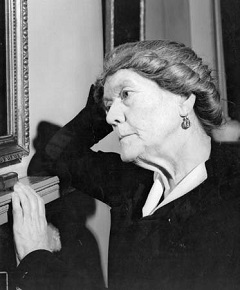
De Engelse schrijfster Ivy Compton-Burnett werd geboren op 5 juni 1884. Zie ook alle tags voor Ivy Compton-Burnett op dit blog.

Uit: The Mighty And Their Fall

"Agnes first, Hengist second, Leah third!" said Lavinia Middleton, as her sisters and brother contested the access to the cloakroom in the hall. "And don't be too long. Miss Starkie is waiting for you." "She told us to stay in the garden." "Only for half-an-hour. How long have you been?" "Only three-quarters," said Hengist, as if this was a reasonable difference. "And we are to have the dining-room luncheon. So we don't have to go upstairs." "Well, one of you should tell Miss Starkie," said their sister, leaning back on the hall bench. "I don't want to, because I am the boy," said Hengist. "It is not a real reason." "No one could want to for any reason," said Leah. "Miss Starkie may not want to wait for her luncheon," said Agnes. "She ought not to mind," said Hengist. "She should be thinking of higher things." "Nothing could be higher than food," said Leah. "Perhaps it is too high for her." They broke into mirth and continued their talk, a short, sturdy pair of eleven and ten, with broad, sallow faces, dark, deep-set eyes and an almost saturnine aspect. Something about them, when together, suggested the sympathy between them. Agnes was a mild-looking girl of fourteen, with blue eyes, narrower features and a placid but resolute expression. "What is the jest?" said their elder brother, coming up to his sister on the bench. "Miss Starkie. Something about her thinking of food." "I used to be surprised that she did. It seemed to reduce her to our level." "Or to raise her to it," said Leah. "Food is on the heights." "Well, I feel just about on a line with it at the moment," said Miss Starkie's voice. "So I have come down to pursue it, as no one came up to me. I suppose you are to have your share downstairs today." "We were just going to tell you," said Agnes. "I have had to take the will for the deed. It is already later than usual." "Were you assailed by pangs of hunger?" said Hengist. "Well, by something milder than those. But I did feel Nature's reminder."
 

 2043593-0be4b1528f50f10814e39e6efefe42d6.jpg
Ivy Compton-Burnett (5 juni 1884 - 27 augustus 1969)

Geschreven door Romenu om 09:14 Reageer op dit bericht

Paul Farley

De Britse dichter en schrijver Paul Farley werd geboren op 5 juni 1965 in Liverpool. Hij studeerde schilderkunst aan de Chelsea School of Art en woonde in Londen, Brighton en Cumbria. Voor zijn eerste poëzie bundel “The Boy from the Chemist is Here to See You” (1998) en won een Forward Poetry Prize (Best First Collection) en werd op de shortlist geplaatst voor de Whitbread Prize. Het boek bezorgde hem ook de Somerset Maugham Award en in 1999 won hij de Sunday Times Young Writer of the Year Award. Van 2000-2002 was hij de dichter-in-residence bij de Wordsworth Trust in Grasmere. Voor zijn tweede bundel “The Ice Age” (2002), ontving hij de Whitbread Poetry Award. Zijn derde bundel “Tramp in Flames” verscheen in 2006. Voor het gedicht ‘Liverpool Disappears for a Billionth of a Second’ ' kreeg hij de Forward Prize voor Best Individual Poem. In hetzelfde jaar publiceerde hij ook een studie over Terence Davies film “Distant Voices, Still Lives”. In 2007 bewerkte hij een selectie van John Clare voor de dichtersreeks van Faber “Poet to Poet”. Farley heeft ook veel geschreven voor radio en televisie, en schrijft vaak over kunst en literatuur. Hij woont momenteel in Lancashire en is hoogleraar poëzie aan de universiteit van Lancaster.


Liverpool Disappears for a Billionth of a Second

Shorter than the blink inside a blink
the National Grid will sometimes make, when you’ll
turn to a room and say: Was that just me?

People sitting down for dinner don’t feel
their chairs taken away/put back again
much faster that that trick with tablecloths.

A train entering the Olive Mount cutting
shudders, but not a single passenger
complains when it pulls in almost on time.

The birds feel it, though, and if you see
starlings in shoal, seagulls abandoning
cathedral ledges, or a mob of pigeons

lifting from a square as at gunfire,
be warned it may be happening, but then
those sensitive to bat-squeak in the backs

of necks, who claim to hear the distant roar
of comets on the turn – these may well smile
at a world restored, in one piece; though each place

where mineral Liverpool goes wouldn’t believe
what hit it: all that sandstone out to sea
or meshed into the quarters of Cologne.

I’ve felt it a few times when I’ve gone home,
if anything, more often now I’m old
and the gaps between get shorter all the time.


Dependants

How good we are for each other, walking through
a land of silence and darkness. You
open doors for me, I answer the phone for you.

I play jungle loud. You read with the light on.
Beautiful. The curve of your cheekbone,
explosive vowels, exact use of cologne.

What are you thinking? I ask in a language of touch
unique to us. You tap my palm nothing much.
At stations we compete senses, see which

comes first—light in the tunnel, whiplash down the rail.
I kick your shins when we go out for meals.
You dab my lips. I finger yours like Braille.


 2114047-745c0d58e2d267ec16d0fde51e936897.jpg
Paul Farley (Liverpool,. 5 juni 1965)

Geschreven door Romenu om 00:00 Reageer op dit bericht

Geoff Dyer

De Engelse schrijver Geoff Dyer werd op geboren 5 juni 1958 in Cheltenham als enig kind van een plaatwerker vader en een schooldiner dame moeder. Hij ging naar school in zijn geboorteplaats en kreeg een beurs om Engels te studeren aan het Corpus Christi College in Oxford. Dyer is de auteur van vier romans: “The Colour of Memory”, “The Search”, “Paris Trance”, en “Jeff in Venice, Death in Varanasi”, een kritische studie over John Berger, “Ways of Telling”; drie bundels essays “Anglo-English Attitudes”, “Working the Room” en “Otherwise Known as the Human Condition” en zes andere titels die niet direct tot een specifiek genre behoren: “But Beautiful” (over jazz), “The Missing of the Somme” (over de herdenking van WO I), “Out of Sheer Rage” (over D. H. Lawrence), “Yoga For People Who Can’t Be Bothered To Do It”, “The Ongoing Moment” (over fotografie), en Zona (over Andrei Tarkovsky’s film Stalker uit 1979). Hij is de redacteur van “John Berger: Selected Essays” en mede-redacteur, met Margaret Sartor, van “What Was True: The Photographs and Notebooks of William Gedney”. In 2014 verscheen “Another Great Day at Sea” (2014), waarin Dyer vertelt over zijn ervaringen op de USS George H.W. Bush, waarop hij twee weken meevoer als writer-in-residence. In 2005 werd Dyer Fellow van de Royal Society of Literature. In 2014 werd hij verkozen tot Honorary Fellow of Corpus Christi College, Oxford. In 2013 werd hij benoemd in het prestigieuze ambt van Bedell Distinguished Visiting Professor, verbonden aan het Nonfiction Writing Program van de Universiteit van Iowa. Hij doceert tegenwoordig aan de Universiteit van Zuid-Californië.

Uit: Jeff in Venice, Death in Varanasi

“On an afternoon in June 2003, when, for a brief moment, it looked as if the invasion of Iraq had not been such a bad idea after all, Jeffrey Atman set out from his flat to take a walk. He had to get out of the flat because now that the initial relief about the big picture had worn off - relief that Saddam had not turned his non-existent WMD on London, that the whole world had not been plunged into a conflagration - the myriad irritations and frustrations of the little picture were back with a vengeance. The morning's work had bored the crap out of him. He was supposed to be writing a twelve-hundred-word so-called 'think piece' (intended to require zero thought on the part of the reader and scarcely more from the writer but still, somehow, beyond him) that had reached such a pitch of tedium that he'd spent half an hour staring at the one-line email to the editor who'd commissioned it:
'I just can't do this shit any more. Yrs J.A.'
The screen offered a stark choice: Send or Delete. Simple as that. Click Send and it was all over with. Click Delete and he was back where he started. If taking your own life were this easy, there'd be thousands of suicides every day. Stub your toe on the way to the bathroom. Click. Get marmalade on your cuff while eating toast. Click. It starts raining as soon as you leave the house and your brolly's upstairs. What to do? Go back up and get it, leave without it and get soaked, or ... Click. Even as he stared at the message, as he sat there on the very brink of sending it, he knew that he would not. The thought of sending it was enough to deter him from doing so. So instead of sending the message or getting on with this article about a 'controversial' new art installation at the Serpentine he sat there, paralysed, doing neither.
To break the spell he clicked Delete and left the house as if fleeing the scene of some dreary, as yet uncommitted crime. Hopefully fresh air (if you could call it that) and movement would revive him, enable him to spend the evening finishing this stupid article and getting ready to fly to Venice the following afternoon. And when he got to Venice? More shit to set up and churn out. He was meant to be covering the opening of the Biennale - that was fine, that was a doddle - but then this interview with Julia Berman had come up (or at least a probable interview with Julia Berman) and now, in addition to writing about the Biennale, he was supposed to persuade her - to beg, plead and generally demean himself - to do an interview that would guarantee even more publicity for her daughter's forthcoming album and further inflate the bloated reputation of Steven Morison, the dad, the famously overrated artist.”


 2075925-0b3b91eb5e64c7e7f9c76544a06f838d.jpg
Geoff Dyer (Cheltenham, 5 juni 1958)

Geschreven door Romenu om 00:00 Reageer op dit bericht

Meer van Romenu

↑ Terug naar de berichten