Naar de inhoud

Romenu

Over literatuur, gedichten, kunst en cultuur
seniorennet.beseniorennet.be

Berichten van 25 september 2016

Niccolò Ammaniti, David Benioff, Michael Reefs, Carlos Ruiz Zafón, Andrzej Stasiuk, William Faulkner, Patricia Lasoen
De Italiaanse schrijver Niccolò Ammaniti werd geboren in Rome op 25 september 1966. Zie ook alle tags voor Niccolò Ammaniti op dit blog.

Uit: Anna (Vertaald door Etta Maris)

"Hij was drie, misschien vier jaar. Hij zat keurig op een kunstleren stoeltje, het hoofd gebogen boven een groen t-shirt met korte mouwen. De omgeslagen pijpen van de spijkerbroek op de gympen. Met een hand hield hij een houten treintje vast dat als een rozenkrans tussen zijn benen hing.
De vrouw die aan de andere kant van de kamer op het bed lag kon net zo goed dertig als veertig zijn. Haar met rode vlekken en donkere korsten bedekte arm zat vast aan een leeg infuus. Het virus had haar gereduceerd tot een hijgend skelet, bedekt met een droge, puistige huid, maar het had niet al haar schoonheid kunnen wegnemen, die nog was terug te vinden in de vorm van haar jukbeenderen en het wipneusje.
Het jongetje richtte zijn hoofd op en keek naar haar, pakte de armleuning vast, stond op uit de stoel en liep met het treintje in zijn hand naar het bed.
Zij merkte het niet. Haar ogen, diep weggezonken in twee donkere poelen, staarden naar het plafond.
De kleine begon te spelen met een knoop van het vieze kussensloop. Zijn blonde haren bedekten zijn voorhoofd en in de zon die door de witte gordijnen scheen leken ze net nylondraden.
Plotseling richtte de vrouw zich op haar ellebogen op en kromde haar rug alsof haar ziel uit haar lichaam werd weggerukt, klemde de lakens in haar vuisten en viel schokkend van het hoesten achterover. Naar adem happend strekte ze haar armen en benen uit. Toen ontspande haar gezicht, sperde ze haar mond open en stierf met open ogen.
Het jongetje pakte voorzichtig haar hand en begon aan haar wijsvinger te trekken. Met een zacht stemmetje fl uisterde hij: ‘Mama? Mama?’ Hij legde het treintje op haar borst en liet het over de plooien van het laken glijden. Even raakte hij de met opgedroogd bloed bedekte pleister aan die de naald van het infuus bedekte. Ten slotte liep hij de kamer uit.
De gang was nauwelijks verlicht. Ergens klonk het biep biep van een medisch apparaat.
Het jongetje liep langs het lijk van een dikke man die naast een brancard lag. Zijn voorhoofd tegen de vloer, een been op een onnatuurlijke manier gebogen. Tussen de azuurblauwe panden van zijn overhemd was zijn lijkbleke rug zichtbaar.”


1959546-adaec6254311ecf4dea969d70b336e6e.jpg
Niccolò Ammaniti (Rome, 25 september 1966)


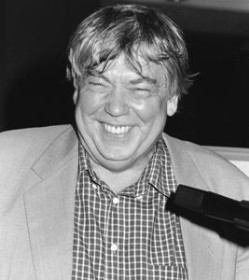
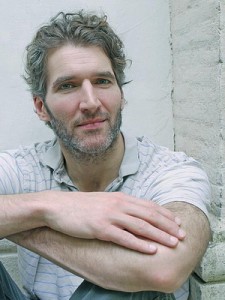
De Amerikaanse schrijver David Benioff (pseudoniem van David Friedman) werd geboren in New York City op 25 september 1970. Zie ook alle tags voor David Benioff op dit blog en ook mijn blog van 25 september 2010.

Uit: City of Thieves

"You have never been so hungry; you have never been so cold. When we slept, if we slept, we dreamed of the feasts we had carelessly eaten seven months earlier—all that buttered bread, the potato dumplings, the sausages—eaten with disregard, swallowing without tasting, leaving great crumbs on our plates, scraps of fat. In June of 1941, before the Germans came, we thought we were poor. But June seemed like paradise by winter.
At night the wind blew so loud and long it startled you when it stopped; the shutter hinges of the burnt-out café on the corner would quit creaking for a few ominous seconds, as if a predator neared and the smaller animals hushed in terror. The shutters themselves had been torn down for firewood in November. There was no more scrap wood in Leningrad. Every wood sign, the slats of the park benches, the floorboards of shattered buildings—all gone and burning in someone's stove. The pigeons were missing, too, caught and stewed in melted ice from the Neva. No one minded slaughtering pigeons. It was the dogs and cats that caused trouble. You would hear a rumor in October that someone had roasted the family mutt and split it four ways for supper; we'd laugh and shake our heads, not believing it, and also wondering if dog tasted good with enough salt— there was still plenty of salt, even when everything else ran out we had salt. By January the rumors had become plain fact. No one but the best connected could still feed a pet, so the pets fed us.
There were two theories on the fat versus the thin. Some said those who were fat before the war stood a better chance of survival: a week without food would not transform a plump man into a skeleton. Others said skinny people were more accustomed to eating little and could better handle the shock of starvation. I stood in the latter camp, purely out of self-interest. I was a runt from birth.”

1959546-45959a351bb9f9f7fecd205611847e6e.jpg
David Benioff (New York, 25 september 1970)


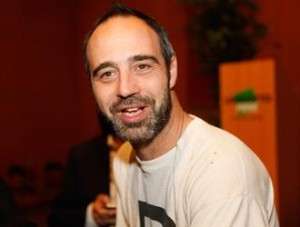
De Nederlandse schrijver Michael Reefs werd op 25 september 1986 geboren in Heerlen en groeide op in het Limburgse Vaals. Zie ook alle tags voor Michael Reefs op dit blog.

Uit: De Legende van de Hemelrijders

‘Melanie, ik geloof je! Kom alsjeblieft terug, het is allemaal mijn fout. Het spijt me.’ Er kwam niemand. De rest van het clubje was zelfs niet meer te horen. Ze waren zeker allemaal beneden op het plein en wachtten tot zij ook zou komen.
Vlak voor Luca klonk een harde klap. In een enkele seconde wist ze dat ze weg moest van deze plek, dat het hier veel te gevaarlijk was voor kinderen. Misschien zelfs te gevaarlijk voor volwassenen. Wat ze ook zeiden over die legende, het was allemaal waar. Luca twijfelde er helemaal niet meer aan. Ze wilde rennen, maar haar benen voelden zo zwaar. De ijzeren poort van het kasteel werd heel langzaam omhoog gehesen. Luca zag een zilverachtige gloed over de grond zweven, die razendsnel haar richting uitkwam. Te laat besefte ze dat dit een soort touw was, dat om haar voeten werd gebonden en haar vooruit trok. Ze schreeuwde en riep de namen van haar vrienden.
De afstand tot de poort werd steeds kleiner en Luca wist dat de tijd begon te dringen. Er schoten allerlei dingen door haar hoofd. De poort maakte opnieuw een geluid en rolde langzaam weer omlaag. Luca schoof er onderdoor en keek een laatste keer achterom. Op dat moment ging de poort voor haar neus dicht. Ze zat opgesloten in het griezelige kasteel.”



1959546-c174636da6745d485ac32fe30b122416.jpg
Michael Reefs (Heerlen, 25 september 1986)
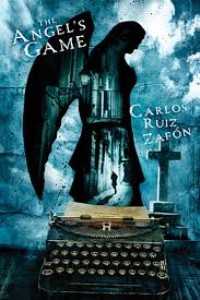
Cover


De Spaanse schrijver Carlos Ruiz Zafón werd geboren op 25 september 1964 in Barcelona. Zie ook mijn blog van 25 september 2010 en eveneens alle tags voor Carlos Ruiz Zafón op dit blog.

Uit: The Angel's Game (Vertaald door Lucia Graves)

“Invariably dressed in im¬peccable silk suits and shiny Italian moccasins, Vidal had the looks and the manner of a matinee idol: fair hair always well combed, a pencil moustache, and the easy, generous smile of someone who feels comfort¬able in his own skin and at ease with the world. He belonged to a family whose forebears had made their pile in the Americas in the sugar busi¬ness and, on their return to Barcelona, had bitten off a large chunk of the city’s electricity grid. His father, the patriarch of the clan, was one of the newspaper’s main shareholders, and Don Pedro used its offices as a play¬ground to kill the tedium of never having worked out of necessity a sin¬gle day in his life. It mattered little to him that the newspaper was losing money as quickly as the new automobiles that were beginning to circulate around Barcelona leaked oil: with its abundance of nobility, the Vidal dynasty was now busy collecting banks and plots of land the size of small principalities in the new part of town known as the Ensanche.
Pedro Vidal was the first person to whom I had dared show rough drafts of my writing when, barely a child, I carried coffee and cigarettes round the staff room. He always had time for me: he read what I had written and gave me good advice. Eventually, he made me his assistant and would allow me to type out his drafts. It was he who told me that if I wanted to bet on the Russian roulette of literature, he was willing to help me and set me on the right path. True to his word, he had now thrown me into the clutches of Don Basilio, the newspaper's Cerberus.
"Vidal is a sentimentalist who still believes in those profoundly un-Spanish myths such as meritocracy or giving opportunities to those who deserve them rather than to the current favorite. Loaded as he is, he can allow himself to go around being a free spirit. If I had one hundredth of the cash he doesn't even need I would have devoted my life to honing sonnets and little twittering nightingales would come to eat from my hand, captivated by my kindness and charm."


1959546-310fe48925fdebab39c79ce1b1b13e67.jpg
Carlos Ruiz Zafón (Barcelona, 25 september 1964)
Cover


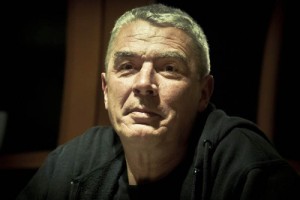
De Poolse schrijver en letterkundige Andrzej Stasiuk werd geboren op 25 september 1960 in Warschau. Zie ook mijn blog van 25 september 2010 en eveneens alle tags voor Andrzei Stasiuk op dit blog.

Uit:On The Road To Babadag: Travels In The Other Europe (Vertaald door Michael Kandel)

"Żyrardów was red, all brick. I got off with everyone else. I was shiftless here, but whatever I did was in tribute to those who had to get up before the sun, for without them the world would have been no more than a play of color or a meteorological drama. I drank strong tea in a station bar and took the train back, to go north in a day or two, or east, without apparent purpose.
One summer I was on the road seventy-two hours nonstop. I spoke with truck drivers. As they drove, their words flowed in ponderous monologue from a vast place — the result of fatigue and lack of sleep. The landscape outside the cabin window drew close, pulled away, to freeze at last, as if time had given up. Dawn at a roadside somewhere in Puck, thin clouds stretching over the gulf. Out from under the clouds slipped the bright knife edge of the rising day, and the cold smell of the sea came woven with the screech of gulls. It's entirely possible I reached the beach itself then, it's entirely possible that after a couple of hours of sleep somewhere by the road a delivery van stopped and a guy said he was driving through the country, north to south, which was far more appealing than the tedium of tide in, tide out, so I jumped on the crate and, wrapped in a blanket, dozed beneath the fluttering tarp, and my doze was visited by landscapes of the past mixed with fantasy, as if I were looking at things as an outsider. Warsaw went by as a foreign city, and I felt no tug at my heart. Grit in my teeth: the dust raised from the floorboards. I crossed the country as one crosses an unmapped continent. Between Radom and Sandomierz, terra incognita. The sky, trees, houses, earth — all could be elsewhere. I moved through a space that had no history, nothing worth preserving. I was the first man to reach the foot of the Góry Pieprzowe, Pepper Hills, and with my presence everything began. Time began. Objects and landscapes started their aging only from the moment my eye fell on them. At Tarnobrzeg I rapped on the sheet metal of the driver's cabin; impressed by the size of a sulfur outcrop, I wanted him to stop. Giant power shovels stood at the bottom of a pit. It didn't matter where they came from. From the sky, if you like, to bite into the land, to chew their way into and through the planet and let an ocean surge up the shaft to drown everything here and turn the other side to desert. The stink of inferno rose, and I could not tear my gaze from the monstrous hole that spoke of the grave, piled corpses, the chill of hell. Nothing moved, so this could have been Sunday, assuming there was a calendar in such a place."


1959546-0185002ecd8fe264fc2951082a4c161b.jpg
Andrzej Stasiuk (Warschau, 25 september 1960)


De Amerikaanse schrijver William Faulkner werd geboren op 25 september 1897 in New Albany, Mississippi. Zie ook mijn blog van 25 september 2010 en eveneens alle tags voor William Faulkner op dit blog.

Uit: As I Lay Dying

"She ought to taken those cakes anyway," Kate says.
"Well," I say, "I reckon she never had no use for them now."
"She ought to taken them," Kate says. "But those rich town ladies can change their minds. Poor folks cant."
Riches is nothing in the face of the Lord, for He can see into the heart. "Maybe I can sell them at the bazaar Saturday," I say. They turned out real well.
"You cant get two dollars a piece for them," Kate says.
"Well, it isn't like they cost me anything," I say. I saved them out and swapped a dozen of them for the sugar and flour. It isn't like the cakes cost me anything, as Mr Tull himself realises that the eggs I saved were over and beyond what we had engaged to sell, so it was like we had found the eggs or they had been given to us.
"She ought to taken those cakes when she same as gave you her word," Kate says. The Lord can see into the heart. If it is His will that some folks has different ideas of honesty from other folks, it is not my place to question His decree.
"I reckon she never had any use for them," I say. They turned out real well, too.
The quilt is drawn up to her chin, hot as it is, with only her two hands and her face outside. She is propped on the pillow, with her head raised so she can see out the window, and we can hear him every time he takes up the adze or the saw. If we were deaf we could almost watch her face and hear him, see him. Her face is wasted away so that the bones draw just under the skin in white lines. Her eyes are like two candles when you watch them gutter down into the sockets of iron candle-sticks. But the eternal and the everlasting salvation and grace is not upon her.
"They turned out real nice," I say. "But not like the cakes Addie used to bake." You can see that girl's washing and ironing in the pillow-slip, if ironed it ever was. Maybe it will reveal her blindness to her, laying there at the mercy and the ministration of four men and a tom-boy girl. "There's not a woman in this section could ever bake with Addie Bundren," I say. "First thing we know she'll be up and baking again, and then we wont have any sale for ours at all."
1959546-379e6cae362483eda701bcbe74bbf394.jpg
William Faulkner (25 september 1897 - 6 juli 1962)
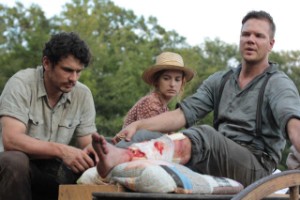
James Franco (Darl) Ahna O’Reilly (Dewey) en Jim Parrack (Cash) in de film „As I Lay Dying” uit 2013


De Belgische dichteres en schrijfster Patricia Lasoen werd geboren op 25 september 1948 in Brugge. Zie ook mijn blog van 25 september 2010 en eveneens alle tags voor Patricia Lasoen op dit blog.

Oude man met plastic tas

Met 1 plastic tas
van het warenhuis
met de rode zon
met gebogen schouders
traag te voet
langs de bleekgroene heesters
langs het dode kanaal
over het grote lege plein.
Duidelijk het javelwater *,
de melk en het brood
in het zakje.
Keert hij tevreden terug?


Stilleven met herfstvruchten

zoals altijd bij volle maan
zelfs na een afmattend orgasme
lig ik wakker en met hoofdpijn
in ons bed naar de gedaanten
van de vetplanten te staren.

merkwaardig klein voel ik me nu
vertrappeld door verwarde paardepoten
terwijl de mooie diernaam hazelworm
plots uit het donker opduikt
en mijn hoofd gekraakt wordt

als een okkernoot tussen de deurscharnieren.


1959546-e843b8b008bd19a0bfb6dd09922cf862.jpg
Patricia Lasoen (Brugge, 25 september 1948) 


Zie voor nog meer schrijvers van de 25e september ook mijn vorige blog van vandaag.
Geschreven door Romenu om 13:50 Reageer op dit bericht

Rebecca Gablé, Lu Xun, Maj Sjöwall, August Kühn, Manouchehr Atashi, William Michael Rossetti, Charles Robert Maturin, Herbert Heckmann

De Duitse schrijfster Rebecca Gablé (pseudoniem van Ingrid Krane-Müschen) werd geboren op 25 september 1964 in Wickrath / Mönchengladbach. Zie ook mijn blog van 25 september 2010 en eveneens alle tags voor Rebecca Gablé op dit blog.

Uit:Der Palast der Meere

„Das Eisen ist heiß“, sagte der Constable, und das Funkeln in den Augen verriet seine freudige Erwartung.
„Hier ist ein Mann, der seine wahre Bestimmung gefunden hat“, murmelte Isaac.
„Halt lieber die Klappe“, warnte die Marktfrau, die in der dicht gedrängten Menge neben ihm stand.
Der Constable legte die Hand um den hölzernen Griff des langen Brandeisens, das in einem Kohlebecken zu seiner Linken lag, hob es hoch und zeigte den Zuschauern das rot glühende „M“. Ein beifälliges Raunen ging durch die Menge.
Die junge Frau am Pranger fing an zu schluchzen. Sie stand in unwürdiger Haltung leicht vorgebeugt, Hals und Handgelenke steckten in den dafür vorgesehenen Löchern.
Ihr ohnehin schmuddeliges Kleid war mit Flecken übersät, wo die Dreckfladen und sonstigen Wurfgeschosse der Umstehenden sie getroffen hatten, die vornehmlich auf ihr schmales Hinterteil gezielt zu haben schienen.
Der Constable trat vor die arme Sünderin und strich ihr mit der linken Hand das Haar zurück; es wirkte geradezu zärtlich. Sie hatte die Augen zugekniffen, und so sah sie nicht, wie er das Eisen hob. Ohne jedes Zögern und zielsicher drückte er es ihr mitten auf die Stirn. Das glühende Eisen zischte auf der Haut, ein dunkler Rauchkringel stieg auf, und die Verurteilte stieß einen
langgezogenen Schrei aus.
Die Schaulustigen applaudierten und johlten – weil der Gerechtigkeit Genüge getan war oder weil sie sich gut unterhalten fühlten, Isaac wusste es nicht.
„Das war’s. Deine zwei Stunden sind um, Mädchen“, sagte der Constable und zwickte sie augenzwinkernd in die linke Brust, ehe er den Bolzen zurückzog und die schwere hölzerne Zwinge aufklappte. „Und jetzt hör schon auf zu flennen. Wir hätten dir auch ein Ohr abschneiden können.
Verdient hättest du’s allemal.“

1959538-f89cb550f6e26fa1ffd85f14abf1ce9b.jpg
Rebecca Gablé (Wickrath, 25 september 1964)


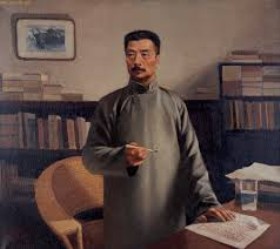
De Chinese schrijver Lu Xun werd in 1881 in Shaoxing in de provincie Zhejiang geboren als Zhou Shuren. Zie ook alle tags voor Lu Xun op dit blog en ook mijn blog van 25 september 2009 en ook mijn blog van 25 september 2010

Uit: Kong Yiji

"Since then, I spend all day at the counter, doing my specialized job where I couldn’t make any blunders. The thing that bothered me most was that the job was so monotonous and boring. The tavern keeper always glared at me with a fierce face, and the customers were not friendly either. Therefore, I couldn’t slack off even a little bit, except for a few laughs that Kong Yiji brought to us every time he came to the wine tavern. That’s why I can still remember him.
Kong Yiji was the only one who stood drinking while wearing a robe. He was big and tall, yet he had a wan face, often with bruises showing in his wrinkles, and had a bedraggled grizzly beard. Although he wore a robe, the robe, which was well worn out, seemed not to have been mended nor washed for a decade. He used many obscure words and archaic phrases when he spoke that his speech was unintelligible. Because of his surname Kong, someone picked a nonsensical phrase “Shang Da Ren Kong Yi Ji” from the children’s practice book and used this as a nickname for him, “Kong Yiji.”. Each time, the moment he stepped into the tavern, all the customers would look at him and start laughing. Someone would yell: “Kong Yiji, you got a new scar on your face!” He never answered them, he only spoke to the waiter behind the counter: ‘Two bowls of wine heated and a dish of anise beans.’ He then spread out 9 coppers. The customers then intentionally raised their voices: ”You must have stolen something again.” Kong Yiji with his eyes wide open: ”How can you accuse me, an innocent person without any basis?……” “What kind of innocent person? …I saw with my own eyes that you stole the books from the Hes’ and you were hung up and beaten.” Kong Yiji’s face turned red and the veins on his forehead protruded, while defending himself, said: “Stealing books is not a theft, stealing books…is an intellectuals’ business, it’s not a theft! ” Following that he blurted out those archaic phrases, such as “a nobleman sticks to his principles despite poverty” so on and so forth. The crowd would burst into laughter; and the wine tavern once again became lively and rowdy."


1959538-85f3f31a4be8d3c8673d0d2155e80db0.jpg
Lu Xun (25 september 1881 – 19 oktober 1936)


De Zweedse schrijfster Maj Sjöwall werd op 25 september 1935 in Stockholm geboren.Zie ook alle tags voor Maj Sjöwall op dit blog en ook mijn blog van 25 september 2010.

Uit: Roseanna (Samen met Per Wahlöö)

"But the Civil Engineering Board found that the Shipping and Navigation Administration had control over bucket dredging machines and in desperation made and appeal to the Harbor Commission in Norrkoping which immediately returned the papers to the Shipping and Navigation Administration, which remitted them to the Civil Engineering Board at which point someone picked up the telephone and dialed an engineer who knew all about bucket dredging machines. He knew that of the five existing bucket dredgers, there was only one that could pass through the locks. The vessel was called The Pig and happened just then to be lying in the fishing harbor at Gravarne. On the morning of July 5 The Pig arrived and moored at Borenshult as the neighborhood children and a Vietnamese tourist looked on.One hour later a representative of the Canal Company went on board to discuss the project. That took the whole afternoon. The next day was Saturday and vessel remained by the breakwater while the men went home for the weekend. The crew consisted of a dredging foreman, who was also the officer in command wit the authority to take the vessel to sea, an excavating engineer, and a deck man. The latter two men were from Gothenburg and took the night train from Motala. The skipper lived in Nacka and his wife came go get him in their car. At seven o'clock on Monday morning all three were pm board again and one hour later they began to dredge. By eleven o'clock the hold was full later they began to dredge. By eleven o'clcock the hold was full and the dredger went out into the lake to dump. On the way back they had to lay off and wait while a white steamboat approached the Boren locks in a westerly direction. Foreign tourists crowded along the vessel's railing and waved excitedly at the working crew on the dredger.
The passenger boat was elevated slowly up the locks toward Motala and lake Vottern and by lunch time its top pennant had disappeared in back of the uppermost sluice gat. At one-thirty the men began to dredge again.The situation was this: the weather was warm and beautiful with mild temperature winds and idly moving summer clouds. There were some people on the breakwater and on the edge of the canal. Most of them were sunning themselves, a few were fishing, and two or three were watching the dredging activity. The dredger's bucket had just gobbled up out of the water. The excavating engineer was operating the familiar handgrips in his cabin. The dredging foreman was having a cup of coffee in the galley, and the deck man stood with his having elbows on the railing and spit in the water."


1959538-d8a7c71da5d5acaa5dd3a5ba16d3e4f2.jpg
Maj Sjöwall (Stockholm, 25 september 1935)


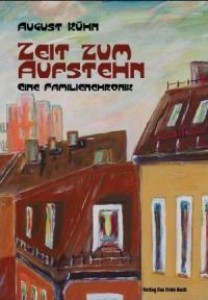
De Duitse schrijver August Kühn (alias Helmut Munch), werd geboren op 25 sep 1936 in München. Zie ook alle tags voor August Kühn op dit blog en ook mijn blog van 25 september 2010

Uit: Zeit zum Aufstehn

"Die Sozialdemokratie wird auch dort sein, wie im vergangenen Jahre. – Ist euch schon aufgefallen, dass sich diese Maifeier, abgesehen von den Ansprachen der Referenten, in nichts von einem Familienausflug eines Kegelvereins unterscheidet?« Löffler wartete gar nicht erst ab, was die anderen dazu sagten. Er hatte seine Idee, die sollten sie gut finden, dann verging ihnen das Gerede vom Streik. »Erst wird doch gesoffen und dann gesungen, was sag ich, geplärrt, dass es eine Schande ist.«
»Arbeiterlieder!«, wagte Anderl Warz einzuwenden.
»Ja, Arbeiterlieder, doch warum werden die nicht schön gesungen, kunstvoll?« Nun bekam er keine Gegenrede mehr und konnte losziehen.
»Wenn jemand, der nicht zu uns gehört, vorbeikommt und sich das anhört, muss er uns für eine Räuberbande halten. Herwegh, Freiligrath, das waren Künstler. Ihre Lieder kann man nicht einfach so herausgrölen.«
»Mir reicht es schon, wenn alle den Text können«, rutschte es Gustl Kühn heraus und löste damit ein Gelächter aus, das Löffler mit bestimmter Handbewegung schnell wegwischte.
»Richtig singen kann man lernen! Schaut euch die Gesangvereine an.«
»Am Brunnen vor dem Tore...«, alberte Fritz und bekam dafür einen zornigen Blick des Postschaffners.
»Warum nicht? Sollen wir vielleicht auf alles verzichten, was es sonst an Liedern gibt? – Aber wenn ihr nicht wollt, ich hätte was gewusst...« – So muss man es machen, nun waren alle ganz Ohr, keine Einwände mehr. »Natürlich kann keiner erwarten, dass diese bürgerlichen Liedertafeln jetzt anfangen, unsere Lieder zu singen, nicht einmal aufnehmen würde uns so ein Verein. Gründen wir doch einen eigenen! Arbeitergesangverein München West, wie wäre das?«


1959538-3553d0ce72aed3841be6a53e8c4aba3b.jpg
August Kühn (25 sep 1936 – 9 februari 1996)
Cover


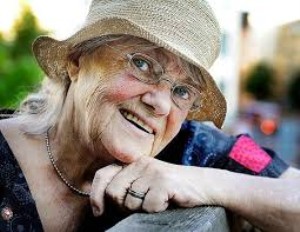
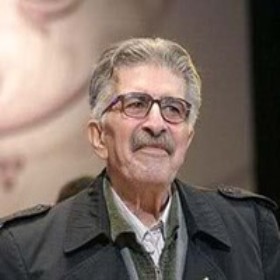
De Iraanse dichter, schrijver en journalist Manouchehr Atashi werd geboren op 25 september 1931 in Dashtestan, in de provincie Bushehr. Zie ook alle tags voor Manouchehr Atashi op dit blog en ook mijn blog van 25 september 2010.

The Moon and the Poet

I hung myself to the moon like water,
I hung myself to the moon.

With the moon I mix through water,
And the fishes of my eyes from every direction,
And the fishes of my eyes I let swim from every direction towards him,
And twist
The green nets of my gaze around it,
(I seek the moon,
I mix with the moon from sleep
And with the rope of my sigh
I reduce its height);
But
The moon
Passes over my body,
From water I sleep at the mountain feet,
From my slumbering childhood and youth;
From moments and hours,
From days, nights and years
(From years which have passed away in darkness and frightful
Without laying any bright mark
from myself
- In their sandy plain.


1959538-41714cafe50c532c7b26dd8997ea8f85.jpg
Manouchehr Atashi (25 september 1931 - 20 november 2005)


De Engelse schrijver en criticus William Michael Rossetti werd geboren in Londen op 25 september 1829. Zie ook alle tags voor William Michael Rossetti op dit blog en ook mijn blog van 25 september 2009 en ook mijn blog van 25 september 2010

Jesus Wept

Mary rose up, as one in sleep might rise,
And went to meet her brother's Friend: and they
Who tarried with her said: 'she goes to pray
And weep where her dead brother's body lies.'
So, with their wringing of hands and with sighs,
They stood before Him in the public way.
'Had'st Thou been with him, Lord, upon that day,
He had not died,' she said, drooping her eyes.
Mary and Martha with bowed faces kept
Holding His garments, one on each side.--'Where
Have ye laid him?' He asked. 'Lord, come and see.'
The sound of grieving voices heavily
And universally was round Him there,
A sound that smote His spirit. Jesus wept.

1959538-926072a305894ea99502887097366e21.jpg
William Michael Rossetti (25 september 1829 - 5 februari 1919)
Portret door Herbert Harlakenden Gilchrist, 1899


De Ierse schrijver Charles Robert Maturin werd geboren in Dublin op 25 september 1782. Zie ook alle tags voor Charles Robert Maturin op dit blog mijn blog van 25 september 2010

Uit: Melmoth the Wanderer

"Then his college life, passed in an attic in the second square, uncheered by an invitation to the country; the gloomy summer wasted in walking up and down the deserted streets, as his uncle would not defray the expences of his journey;–the only intimation of his existence, received in quarterly epistles, containing, with the scanty but punctual remittance, complaints of the expences of his education, cautions against extravagance, and lamentations for the failure of tenants and the fall of the value of lands. All these recollections came over him, and along with them the remembrance of that last scene, where his dependence on his uncle was impressed on him by the dying lips of his father.
'John, I must leave you, my poor boy; it has pleased God to take your father from you before he could do for you what would have made this hour less painful to him. You must look up, John, to your uncle for every thing. He has oddities and infirmities, but you must learn to bear with them, and with many other things too, as you will learn too soon. And now, my poor boy, may He who is the father of the fatherless look on your desolate state, and give you favour in the eyes of your uncle.' As this scene rose to John's memory, his eyes filled fast with tears, which he hastened to wipe away as the carriage stopt to let him out at his uncle's gate.
He alighted, and with a change of linen in a handkerchief, (his only travelling equipment), he approached his uncle's gate. The lodge was in ruins, and a barefooted boy from an adjacent cabin ran to lift on its single hinge what had once been a gate, but was now a few planks so villainously put together, that they clattered like a sign in a high wind. The stubborn post of the gate, yielding at last to the united strength of John and his barefooted assistant, grated heavily through the mud and gravel stones, in which it left a deep and sloughy furrow, and the entrance lay open."

1959538-653f170eee4171f35215ddc984a875d5.jpg
Charles Robert Maturin (25 september 1782 – 30 oktober 1824)
Dublin castle


De Duitse dichter, schrijver en literatuurwetenschapper Herbert Heckmann werd geboren op 25 september 1930 in Frankfurt am Main. Zie ook alle tags voor Herbert Heckmann op dit blog en ook mijn blog van 25 september 2009 en ook mijn blog van 25 september 2010

Uit: Die Trauer meines Großvaters

"Der Garten meiner Großmutter, der sich hinter dem Haus treppenartig bis zur Mauer an der Weidenbornstra-Re erstreckte, wurde vom Sommer bis zum Herbst vom unbeschreiblichen Blau des Rittersporns beherrscht. Onkel Peter nahm die Paraden der Stauden ab, and es kam schon einmal vor, dass er, den Blick in das Blau gerichtet, über die Einfassung eines Beetes stolperte und zwischen die Blumen sturzte. Fur die Romantiker ist die Wirklichkeit stets eine tackische Wildnis. Onkel Peter war ein unverbesserlicher Romantiker und überließ seine Gedanken einer besseren Zukunft. Vater lebte fur den Augenblick. Wenn wir zur Blutezeit des Rittersporns bei meiner Großmutter in der Oberhainer Straße zu Besuch waren, schnitt er, kurz bevor wir wieder aufbrachen, einige Rispen ab und band sie zu einem Strauß Schon in der StraßSenbahn begann der Herbst, und die Blumen rieselten zu Boden. Am nachsten Morgen war die Vase auf unserem Wohnzimmertisch von verblassten Ritterspornbluten umsaumt, und die nackten Rispen drohten wie Finger. Onkel Peter nannte meinen Vater einen Blumenmorder, was dieser Oberhaupt nicht gerne hörte. Er wehrte sich mit der Behauptung, alle Schonheit sei vergänglich und man musse sie genießen, wenn sie sich gerade frisch entfalte. ich versuchte mir vorzustellen, wie alles, was ich liebe, verging und verschwand. Es wurde mir schwindelig bei dem Gedanken."

1959538-5ebabcbbf0a2504fb798cdd95b75ccb0.jpg
Herbert Heckmann (25 september 1930 – 18 oktober 1999)


Geschreven door Romenu om 13:32 Reageer op dit bericht

Meer van Romenu

↑ Terug naar de berichten