Naar de inhoud

Romenu

Over literatuur, gedichten, kunst en cultuur
seniorennet.beseniorennet.be

Berichten van 13 juni 2011

Pinksteren (Muus Jacobse), Gonzalo Torrente Ballester, Fernando Pessoa, Willem Brakman, Marcel Theroux


Prettige Pinksterdagen!


 931887-d7da0ad5160d312cd173ec2b32c9d46e.jpg

Pfingsten, Jozseph Ignaz Mildorfer (1719 –1775), rond 1750


Pinksteren

Gij hebt dit graf gebroken nu
En wij kunnen niet blijven staan
Nu Gij daaruit zijt opgestaan,
Maar toch, hoe was het vol van U.

Het hart dat gij geschapen hebt
Werd ledig van Uw hemelvaart,
En 't oog heeft blind omhoog gestaard
Omdat Gij het verlaten hebt.

Het is zo vreemd geworden nu,
Want wij, uw kindren, zijn verweesd
En wachten ledig op Uw Geest,
En toch, wij zijn niet zonder U.

Ach, dat wij op dezelfde tijd
Verweesde zijn en deelgenoot,
Horen aan leven en aan dood,
Verlossing en verlorenheid.


931887-7e5893d28d5df54c6342469356170e64.jpg
Muus Jacobse (13 september 1909 – 21 november 1972)


De Spaans-Galicische schrijver Gonzalo Torrente Ballester werd geboren op 13 juni 1910 in Serantes, Ferrol, Galicië. Zie ook mijn blog van 13 juni 2010.


Uit: Santiago de Compostela (Vertaald door Victor Andrés Ferretti en Karina Gómez-Montero)


„Auch das Wort hat seinen Anteil an der Entstehung Compostelas, auch das Wort wirkte mit am unermesslichen Werk. Zuerst das Wort Gottes, dann das Wort der Menschen. Die Steine sind wunderschön, ja, und anzunehmen, sie hätten ihren Ursprung im Zusammenspiel von Nebel und wohlklingender Bronze, ist eine hübsche poetische Vorstellung; doch jeder Stein hat einen Namen, und die Namen von Compostela sind so schön wie die Steine selbst. Namen von Straßen, Plätzen und Winkeln, von Türmen, Kirchen und Palästen. Von Gassen wie der Rúa de Raíña, von Türmen wie der Torre Berenguela.

Wie gerne würden wir uns vorstellen, dass sich ein Mönch in seinen Träumen Namen um Namen ausgedacht hat – in derselben Weise, wie etwa Erzbischof Gelmírez einst sein großes Bauwerk ersann. Der Mönch ruhte nicht eher, bis die ganze Stadt mit ihrer Geschichte in eine Liste aus Wörtern von hehrer lateinischer Provenienz eingeschlossen war, die sich eines nach dem anderen vortragen ließen und zusammen ein vollkommenes Gedicht in elegischen Distichen bildeten. Aber nein, so war es nicht! Es war ganz anders.

Es war das Werk der Zeit, die an der Sprache arbeitet, wie sie an den Steinen arbeitet, und die die gewöhnlichen Ausdrücke verschönert, wie sie mit ihrer Patina die Farbe einer Fassade verschönert. Einen Ort, den man »Preconitorium« nannte, ließ die Zeit zu »Preguntoiro« werden. Wenn euer

neugieriges Gemüt nach einer wissenschaftlichen Erklärung verlangt, haltet euch an die Philologen; wer sich jedoch einzig und allein auf wissenschaftliche Erklärungen verlässt, wird nur sehr wenig über Compostela erfahren.“


 931887-4b3f3d5d9aff78882dcc4a634d39ce03.jpg

Gonzalo Torrente Ballester (13 juni 1910 – 27 januari 1999)

Beeld in  Café Novelty, Salamanca


De Portugese dichter en schrijver
Fernando António Nogueira Pessoa werd geboren in Lissabon op 13 juni 1888. Zie ook mijn blog van 13 juni 2007 en ook mijn blog van 13 juni 2008 en ook mijn blog van 13 juni 2009 en ook mijn blog van 13 juni 2010.


Autopsychografie


De dichter wendt slechts voor.
Hij veinst zo door en door
Dat hij zelfs voorwendt pijn te zijn
Zijn werkelijk gevoelde pijn.

En zij die lezen wat hij schreef,
Voelen in de gelezen pijn
Niet de twee die hij geleden heeft
Maar een die de hunne niet kan zijn.

En zo rijdt op zijn rails in 't rond,
Tot vermaak van onze rede,
Die opwindtrein, in dichtermond
ook wel "het hart" geheten.


Abdicatie


Neem mij in uw armen, o eeuwige nacht,
En noem mij – koning die ik ben – uw zoon.
Vrijwillig deed ik afstand van mijn troon
Van dromen, die mij slechts vermoeidheid bracht

Mijn zwaard, mijn armen zijn ontkracht,
een kalme, mannelijke hand heeft het genomen;
Mijn scepter heb ik neergelegd, mijn kroon,
Versplinterde symbolen vroeger macht.

Mijn maliënkolder, nu zo nutteloos,
Mijn sporen, rinkelend en waardeloos,
Heb ik achtergelaten op de koude trap.

’k Ontdeed mij, ziel en lichaam, van mijn koningschap
En keerde terug tot de aloude en kalme nacht
Gelijk het landschap bij het sterven van de dag.


Vertaald door August Willemsen


I don’t know how many souls I have


I don’t know how many souls I have.

I’ve changed at every moment.

I always feel like a stranger.

I’ve never seen or found myself.

From being so much, I have only soul.

A man who has soul has no calm.

A man who sees is just what he sees.

A man who feels is not who he is.


Attentive to what I am and see,

I become them and stop being I.

Each of my dreams and each desire

Belongs to whoever had it, not me.

I am my own landscape,

I watch myself journey -

Various, mobile, and alone.

Here where I am I can’t feel myself.


That’s why I read, as a stranger,

My being as if it were pages.

Not knowing what will come

And forgetting what has passed,

I note in the margin of my reading

What I thought I felt.

Rereading, I wonder: “Was that me?”

God knows, because he wrote it.


Vertaald door Richard Zenith


 931887-cb5669ca0e4b385fffc57dacf13cc6a4.jpg

Fernando Pessoa (13 juni 1888 – 30 november 1935)

Buste in Durban, Zuid-Afrika


De Nederlandse schrijver Willem Brakman werd geboren op 13 juni 1922 in Den Haag. Zie ook mijn blog van 13 juni 2010 en eveneens alle tags voor Willem Brakman op dit blog.


Uit: Engel (Zes subtiele verhalen)


„Nog een paar kostbare jaren en dan kwam hij in de veilige, gezwelloze regionen van geleidelijke mummificatie en uitdroging, maar daar namen de kansen weer snel toe om, na een volle vuist in de borst plotseling over gazon en daken weg te zweven op een zomerwindje, terwijl het lijf achterbleef voor de huishoudelijke dienst: hand op het hart, oog gedoofd, gezicht van rubber. Zorg, zorg. Voorlopig echter moest dat lijf nog worden voortgeduwd, gevoed, ontlast, gewassen, te slapen gelegd en van mineralen voorzien.

Bij toeval keek hij omhoog en zag zichzelf opeens staan in een bolle spiegel, daar aangebracht opdat de geronten niet zouden wegsluipen met chocolade of pepermunt in jasje of tasje. Wel parkeerden en rangeerden in de flats alleen gegoede bejaarden, maar kleptomanie neemt snel toe met het klimmen der jaren.

Uitgerekt stond hij daar in den hoge, achter een gebogen karretje, geflankeerd door een heel reclamepakket van zoutloze soepen, lecitinehoudende sojabonen en galdrijvende tarwekiemen. Een groot kegelvormig Bertrand-Russellhoofd zag hij, lange dunne knokkelhanden en hele elegante voetjes in de diepte. Een tragische gestalte, zo plotseling betrapt en bijgebogen, maar zoals Lou Barenswaard zijn Bataks en pygmeeën, zo had ook hij zijn dichters, zijn troostende en bezwerende

poëten. Bijna altijd beschikte hij wel over het woord en er waren momenten dat hij vast geloofde dat hem dat had behoed voor een gierende huilbui of op zijn minst voor chaos of verwarring.


The tree has entered my hands

The sap has ascended my arms

The tree has grown into my breast

Downward

The branches grow out of me like arms.


Zijn inwendig orgaan, zijn innerlijke stem bezat een somber en gedragen pathos dat regelrecht uit het hart kwam en al wat daar lag verzameld. Er school niets in van dat dappere oudje of de naar nobele voleinding toe rijpende stoïcijn.“


931887-3c26180df4b7862510ed68dda03c6228.jpg 

Willem Brakman (13 juni 1922 – 8 mei 2008)


De Britse schrijver en presentator Marcel Theroux werd geboren op 13 juni 1968 in Kampala, Oeganda. Zie ook mijn blog van 13 juni 2010.


Uit: Far North


„The old meetinghouse where we worshipped still stands on the far side of the town. We used to sit there in silence, listening to the spit and crackle of the logs.

The last time I went in there was five years ago. I hadn’t been inside for years and when I was a child I’d hated every stubborn minute I’d been made to sit there.

It still smelled like it used to: well-seasoned timber, whitewash, pine needles. But the settles had all been broken up to be burned and the windows were smashed. And in the corner of the room, I felt something go squish under the toe of my boot.It turned out to be someone’s fingers. There was no trace of the rest of him. I live in the house I grew up in, with the well in the courtyard and my father’s workshop much as it was in my childhood, still taking up the low building next to the side gate.

In the best room of the house, which was kept special for Sundays, and visitors, and Christmas, stands my mother’s pianola,and on it a metronome, and their wedding photograph, and a big gilded wooden M that my father made when I was born.

As my parents’ first child, I bore the brunt of their new religious enthusiasm, hence the name, Makepeace. Charlo was born two years later, and Anna the year after that.

Makepeace. Can you imagine the teasing I put up with at school? And my parents’ displeasure when I used my fists to defend myself?

But that’s how I learned to love fighting.

I still run the pianola now and again, there’s a box of rolls that still work, but the tuning’s mostly gone. I haven’t got a good enough ear to fix it, or a bad enough one not to care that I can’t.“


 931887-c694b934e7a51984f6b80eeec75476b3.jpg

Marcel Theroux (Kampala, 13 juni 1968)


Zie voor nog meer schrijvers van de 13e juni ook mijn vorige blog van vandaag
en eveneens mijn eerste blog van vandaag.

Geschreven door Romenu om 12:10 Reageer op dit bericht

Hector de Saint-Denys Garneau, William Butler Yeats, Bruno Frank, Leopoldo Lugones

De Frans-Canadese dichter en schilder Hector de Saint-Denys Garneau werd geboren op 13 juni 1912 in Montréal. Zie ook mijn blog van 13 juni 2007. en ook mijn blog van 13 juni 2008  en ook mijn blog van 13 juni 2009 en ook mijn blog van 13 juni 2010.


J'avais son bras


J'avais son bras d'eau fraîche autour de mon cou
Et la brûlure de son ventre sous mon épaule
Et ma tête était portée sur le spasme misérable
de son corps
Roulée sur cette suffocation misérable
Sur cette respiration malade
Et dans mes yeux qu'on ne peut fermer
L'horreur d'un plafond bas et blanc
Et cependant autour de mon cou
Son bras incroyable restait d'eau fraîche


 931884-e194a2fd0dd42c77ba3ea427cd213bda.jpg

Les pommiers


On dirait que sa voix


On dirait que sa voix est fêlée
Déjà?
Il rejoint parfois l'éclat du rire
Mais quand il est fatigué
Le son n'emplit pas la forme
C'est comme une voix dans une chaudière
Cela s'arrête au milieu
Comme s'il ravalait le bout déjà dehors
Cela casse et ne s'étend pas dans l'air
Cela s'arrête
et c'est comme si ça n'aurait pas dû commencer
C'est comme si rien n'était vrai

Moi qui croyais que tout est vrai à ce moment
Déjà?
Alors, qu'est-ce qui lui prend de vivre
Et pourquoi ne s'être pas en allé?


 931884-2c7a6310c90a3b7d695a6f8d6206261f.jpg

Hector de Saint-Denys Garneau (13 juni 1912 – 24 oktober 1943)


De Ierse dichter, toneelschrijver en mysticus
William Butler Yeats werd geboren in Sandymount bij Dublin op 13 juni 1865. Zie ook mijn blog van 13 juni 2010 en eveneens alle tags voor William Butler Yeats  op dit blog.


To Some I Have Talked With By The Fire


While I wrought out these fitful Danaan rhymes,

My heart would brim with dreams about the times

When we bent down above the fading coals

And talked of the dark folk who live in souls

Of passionate men, like bats in the dead trees;

And of the wayward twilight companies

Who sigh with mingled sorrow and content,

Because their blossoming dreams have never bent

Under the fruit of evil and of good:

And of the embattled flaming multitude

Who rise, wing above wing, flame above flame,

And, like a storm, cry the Ineffable Name,

And with the clashing of their sword-blades make

A rapturous music, till the morning break

And the white hush end all but the loud beat

Of their long wings, the flash of their white feet.


The White Birds


I WOULD that we were, my beloved, white birds on the foam of the sea!

We tire of the flame of the meteor, before it can fade and flee;

And the flame of the blue star of twilight, hung low on the rim of the sky,

Has awakened in our hearts, my beloved, a sadness that may not die.


A weariness comes from those dreamers, dew-dabbled, the lily and rose;

Ah, dream not of them, my beloved, the flame of the meteor that goes,

Or the flame of the blue star that lingers hung low in the fall of the dew:

For I would we were changed to white birds on the wandering foam: I and you!


I am haunted by numberless islands, and many a Danaan shore,

Where Time would surely forget us, and Sorrow come near us no more;

Soon far from the rose and the lily, and fret of the flames would we be,

Were we only white birds, my beloved, buoyed out on the foam of the sea!


Men Improve With The Years


I AM worn out with dreams;

A weather-worn, marble triton

Among the streams;
And all day long I look

Upon this lady's beauty

As though I had found in a book

A pictured beauty,

Pleased to have filled the eyes

Or the discerning ears,

Delighted to be but wise,

For men improve with the years;

And yet, and yet,

Is this my dream, or the truth?

O would that we had met

When I had my burning youth!

But I grow old among dreams,

A weather-worn, marble triton

Among the streams.


 931884-6e7ac8e13ac8d9bdbeb1f510b741e13f.jpg

William Butler Yeats (13 juni 1865 –  28 januari 1939)

Standbeeld in Sligo, County Sligo


De Duitse schrijver Bruno Frank werd geboren in Stuttgart op 13 juni 1887. Zie ook mijn blog van 13 juni 2010.


Uit: Der Bürger als Künstler (Biografie door Sascha Kirchner)


»Bist alsobald und fort und fort gediehen, / Nach dem Gesetz wonach du angetreten«, heißt es kategorisch im ersten von Goethes Urworten. Das »Gesetz«, dem Bruno Frank unterstand und das ihn leitete, war das des deutsch-jüdischen Bürgertums an der Schwelle zum 20. Jahrhundert. Vor allem die großbürgerliche Herkunft prägte den angehenden Schriftsteller ; sie bestimmte ihn zeit seines Lebens – alles in allem mehr als die Tatsache, daß er in einer assimilierten jüdischen Familie aufwuchs. Bruno Sebald Frank kam am 13. Juni 1887 in Stuttgart als erster Sohn des Bankiers Sigismund Frank zur Welt. Der Vater, im Revolutionsjahr 1848 in Krefeld geboren, hatte am 3. September 1886 die gerade volljährig gewordene Lina Rothschild geheiratet, Tochter des Frucht- und Kohlenhändlers Salomon Rothschild und seiner Frau Jeannette aus Hanau. Die Großmutter war nach dem frühen Tod ihres Mannes 1870 nach Frankfurt gezogen, wo auch die Eheschließung der Eltern Bruno Franks stattfand. Sigismund Frank führte zu dieser Zeit schon eine aufstrebende Stuttgarter Privatbank. Dem Ehepaar wurden in großen Abständen drei weitere Kinder geboren : die Söhne Helmuth und Lothar 1892 und 1900, schließlich 1908 die Tochter Ruth.

Der jüdische Anteil am Wirtschaftsleben Württembergs war seit den Zeiten des Hoffaktors Joseph Süß Oppenheimer beständig gewachsen. Als Mitte des 19. Jahrhunderts das »goldene Zeitalter« der Privatbanken anbrach und zahlreiche Bankgeschäfte gegründet wurden, hatten die Württemberger Juden auch daran einen beträchtlichen Anteil. Die württembergischen Privatbanken erlangten indes nicht die Bedeutung der Häuser Rothschild in Frankfurt am Main oder Oppenheim in Köln.3 Im Jahr 1864, das den Juden durch den württembergischen König Karl die bürgerliche Gleichberechtigung brachte, existierte in Stuttgart bereits eine starke jüdische Gemeinde. Die Brüder Götz und Wilhelm Rosenfeld gründeten dort 1866 eine offene Handelsgesellschaft zum Betrieb eines Bank- und Wechselgeschäfts. Beide besaßen ein weiteres selbständiges Geschäft in Frankfurt am Main. Nach dem Austritt seines Bruders aus der kurz zuvor gegründeten Stuttgarter Firma Gebrüder Rosenfeld zum Jahresende 1871 übergab Wilhelm Rosenfeld das Geschäft fünf Jahre später, im Juli 1876, an Abraham Einstein und Sigismund Frank, die beide Prokura für das Unternehmen besaßen.


 931884-ea2e353952e235b1cb4c7b2f87ca852b.jpg

Bruno Frank (13 juni 1887 - 20 juni 1945)


De Argentijnse schrijver en journalist Leopoldo Lugones Argüello werd geboren op 13 juni 1874 in Villa María del Río Seco, een stad Córdoba, in het hart van Argentinië. Zie ook mijn blog van 13 juni 2010.


Uit: Strange Forces: The Fantastic Tales of Leopoldo Lugones (Vertaald door Gilbert Alter-Gilbert)


„Ah...nothing, not the cataclysm with its horrors, nor the clamor of the moribund city was so horrific as this lament of the beasts atop the ruins. Those roars had contained evidence of speech. They cried with who knows what unconscious and deserted sorrows, to some obscure divinity. In the succinct souls of the beasts the fear of the incomprehensible was added to the terrors of death. If everything else remained the same, the daily sun, the eternal sky, the familiar desert, why was everything burning up and why was there no water...? And lacking any idea whatever of the relationship of these phenomena, their horror was blind, which is to say, even more frightful. The conveyance of their pain was elevated by a certain vague notion of forethought, before that sky from which the infernal rain had been falling; and their plaintive roars unmistakably asked what tremendous thing had been the cause of their affliction. Ah...those roars, the only aspect of grandeur kept by these diminished brutes: what a comment on the secret horror of the catastrophe; what an interpretation of the irremediable pain of eternal solitude, eternal silence, eternal thirst...“


 931884-80d29855703d5d517181e59120edea81.jpg

Leopoldo Lugones (13 juni 1874 – 18 februari 1938)

In 1922 

Geschreven door Romenu om 12:09 Reageer op dit bericht

Lode Zielens, Dorothy L. Sayers, Fanny Burney, Heinrich Hoffmann

De Vlaamse schrijver Lode Zielens werd geboren in Antwerpen op 13 juni 1901. Zie ook mijn blog van 13 juni 2007 en ook mijn blog van 13 juni 2009 ook mijn blog van 13 juni 2010.


Uit: Forebon


“De meneer, die dezen Zaterdag namiddag even voor drie uur in de Antwerpsche tram zit - lijn 12, naar het Gerechtshof - is inderdaad de griffier Forebon. Of wilt ge hem Bonfore noemen? Hij leest, hij leest zelfs zeer aandachtig, wat inderdaad zeldzaam is bij een griffier, veeleer gewoon dossiers vluchtig door te nemen. De griffier is dus geheel in zijn lectuur verdiept. Hij merkt de halten niet op; klein zit hij, in schraalheid gedoken; dit zelf opgelegd bewuste, dit eigenhandig aangekweekte besef van zelfwaardigheid zijn totaal weg. Het is of de griffier op zijn beurt met iemand wordt geconfronteerd en deze confrontatie hem niet gunstig uitvalt. Met een zekere gejaagdheid, bijna drift te noemen, slaat hij de bladzijden van het boek om.

Achter, op het balcon houdt zich de onderzoeksrechter Ange op. Zoo aanstonds zullen zij als zijde aan zijde zitten, in éénzelfde kabinet, den zooveelsten dag van het zooveelste jaar. Ange zal zwijgend spreken en de griffier zwijgend luisteren. Beiden zullen verdwijnen in het duister van dit rommelige vertrek, zoo goed als opgelost in de vuile lucht daarvan en in het grijze stof, er zal niets anders wezen als de blik van Ange. Die blik: een bliksemend rapier. Wie hem ondergaat is getroffen vóór hij het zich bewust kan zijn. Even klein van gestalte als de griffier is de onderzoeksrechter. Gemeten is zijn stap, de handen houdt hij altijd ergens verdoken, opdat geen trilling zou verraden wat het brein doorwoelt en besluit. Even onaanzienlijk is het fletse gelaat, zoo goed als onopmerkelijk, vuns en bleek.“


 931880-87ca90e660da6adfe109c9240724481f.jpg

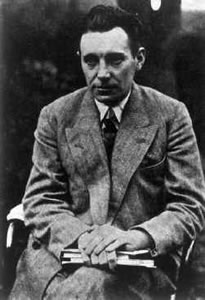
Lode Zielens  (13 juni 1901 - 28 november 1944)


De Engelse schrijfster, dichteres en vertaalster Dorothy Leigh Sayers werd geboren op 13 juni 1893 in Oxford. Zie ook mijn blog van 13 juni 2007 en ook mijn blog van 13 juni 2009 en ook mijn blog van 13 juni 2010.


Uit: Thrones, Dominations


“I do not,” said Monsieur Théophile Daumier, “understand the English.”

“Nor does anybody,” replied Mr. Paul Delagardie, “themselves least of all.”

“I see them pass to and fro, I observe them, I talk to them—for I find it is not true that they are silent and unfriendly—but I remain ignorant of their interior life. They are occupied without ceasing, but I do not know the motives for the things they so energetically do. It is not their reserve which defeats me, for often they are surprisingly communicative; it is that I do not know where their communicativeness ends and their reserve begins. They are said to be rigidly conventional, yet they can behave with an insouciance without parallel; and when you question them, they appear to possess no definable theory of life.”

“You are quite right,” said Mr. Delagardie. “The English are averse to theories. Yet we are, for that reason, comparatively easy to live with. Our conventions are external, and easily acquired; but our philosophies are all individual, and we do not concern ourselves to correct those of others. That is why we permit in our public parks the open expression of every variety of seditious opinion—with the sole proviso that nobody shall so far forget himself as to tear up the railings or trample on the flowers.”

“I beg your pardon; I had for the moment forgotten that you also were English. You have so much the outlook, as well as the accent of a Frenchman.”

“Thank you,” replied Mr. Delagardie. “I am actually only one-eighth French by blood. The other seven-eighths is English, and the proof is that I take what you have said as a compliment. Unlike the Jews, the Irish and the Germans, the English are pleased to be thought even more mongrel and exotic than they are. It appeals to the streak of romantic sensibility in the English temperament. Tell an Englishman that he is pure-bred Anglo-Saxon or a hundred per cent Aryan, and he will laugh in your face; tell him that his remote ancestry contains a blend of French, Russian, Chinese or even Arab or Hindu, and he will listen with polite gratification. The remoter, of course, the better; it is more picturesque, and less socially ambiguous.”


 931880-963b0d3c39f89493c0ddf7a2299028d7.jpg

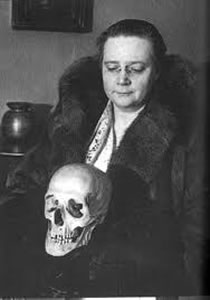
Dorothy L. Sayers (13 juni 1893 – 17 december 1957)


De Engelse schrijfster Frances „Fanny“ Burney werd geboren op 13 juni 1752 in King's Lynn, Norfolk. Zie ook mijn blog van 13 juni 2007 en ook mijn blog van 13 juni 2009 ook mijn blog van 13 juni 2010.


Uit: Camilla Or A Picture Of Youth


“REPOSE is not more welcome to the worn and to the aged, to the sick and to the unhappy, than danger, difficulty, and toil to the young and adventurous. Danger they encounter but as the forerunner of success; difficulty, as the spur of ingenuity; and toil, as the herald of honour. The experience which teaches the lesson of truth, and the blessings of tranquillity, comes not in the shape of warning nor of wisdom; from such they turn aside, defying or disbelieving. 'Tis in the bitterness of personal proof alone, in suffering and in feeling, in erring and in repenting, that experience comes home with conviction, or impresses to any use.

In the bosom of her respectable family resided Camilla. Nature, with a bounty the most profuse, had been lavish to her of attractions; Fortune, with a moderation yet kinder, had placed her between luxury and indigence. Her abode was in the parsonage-house of Etherington, beautifully situated in the unequal county of Hampshire, and in the vicinity of the varied landscapes of the New Forest. Her father, the rector, was the younger son of the house of Tyrold. The living, though not considerable, enabled its incumbent to attain every rational object of his modest and circumscribed wishes; to bestow upon a deserving wife whatever her own forbearance declined not; and to educate a lovely race of one son and three daughters, with that expansive propriety, which unites improvement for the future with present enjoyment.

In goodness of heart, and in principles of piety, this exemplary couple was bound to each other by the most perfect unison of character, though in their tempers there was a contrast which had scarce the gradation of a single shade to smooth off its abrupt dissimilitude. Mr. Tyrold, gentle with wisdom, and benign in virtue, saw with compassion all imperfections but his own, and there doubled the severity which to others he spared. Yet the mildness that urged him to pity blinded him not to approve; his equity was unerring, though his judgment was indulgent.”


 931880-86a6f7d443b80f11e13309ead2ddc005.jpg

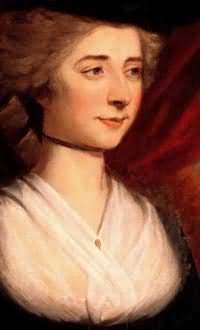
Fanny Burney (13 juni 1752 – 6 januari 1840)


De Duitse schrijver en psychiater Heinrich Hoffmann werd geboren op 13 juni 1809 in Frankfurt am Main. Zie ook mijn blog van 13 juni 2010.


Die Geschichte vom fliegenden Robert


Wenn der Regen niederbraust,
Wenn der Sturm das Feld durchsaust,
Bleiben Mädchen oder Buben
Hübsch daheim in ihren Stuben. -
Robert aber dachte: Nein!
Das muß draußen herrlich sein! -
Und im Felde patschet er
Mit dem Regenschirm umher.
Hui, wie pfeift der Sturm und keucht,
Daß der Baum sich niederbeugt!


Seht! den Schirm erfaßt der Wind,
Und der Robert fliegt geschwind
Durch die Luft so hoch, so weit;
Niemand hört ihn, wenn er schreit.
An die Wolken stößt er schon,
Und der Hut fliegt auch davon.
Schirm und Robert fliegen dort
Durch die Wolken immerfort.
Und der Hut fliegt weit voran,
Stößt zuletzt am Himmel an.

Wo der Wind sie hingetragen,
Ja! das weiß kein Mensch zu sagen.


931880-9582edf8f0b881ac661f4c7314f9f77b.jpg
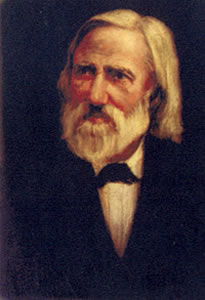
Heinrich Hoffmann (13 juni 1809 – 20 september 1894)

Geschreven door Romenu om 12:09 Reageer op dit bericht

Tristane Banon

De Franse journaliste en schrijfster Tristane Banon werd geboren op 13 juni 1979 in Neuilly-sur-Seine. Banon behaalde een diploma van de Ecole Superieure de Journalisme de Paris, en had aanvankelijk gelegenheidsbanen als journaliste, als anchorwoman in een tv-show over nieuwe informatie-en communicatietechnologieën, en als sportjournaliste. Ze was werkzaam in de politiek-afdeling, en later de culturele afdeling van het Franse weekblad Paris-Match, vervolgens werkzaam bij het ​​dagblad Le Figaro. Haar eerste boek, een lang essay getiteld “Erreurs avouées… (au masculin)” over de grootste fouten in het leven van politieke figuren, werd gepubliceerd in november 2003 door Anne Carrière. Een korte roman “Noir delire”, geïnspireerd door de tragische dood van de Franse actrice Marie Trintignant, verscheen in hetzelfde jaar in het literaire blad Bordel. Haar eerste roman “J'ai oublié de la tuer” werd in september 2004 gepubliceerd door éditions Anne Carrière. Op 5 februari 2007, tijdens een televisie-chat-show, beweerde Banon dat Dominique Strauss-Kahn haar in 2002 tijdens een interview seksueel had lastig gevallen, terwijl ze onderzoek deed voor “Erreurs avouées…”.


Uit: “Erreurs avouées…”.


“Je n'ai rien vu venir, je l'ai harcelé, même; je le voulais, ce rendez-vous. Après quatre appels sur son portable en trois jours, il a cédé. La date est fixée - le 5 février, dans son bureau de l'Assemblée nationale. Dominique Strauss-Kahn est un multirécidiviste de la responsabilité publique: député du Val d'Oise, membre de la commission des Affaires étrangères des groupes d'amitié avec l'Allemagne, l'Arménie, la Chine, les Etats-Unis, Israël, le Maroc et le Viêt-nam, et professeur d'université.  

Après avoir vu Séguéla, je voulais que mon entreprise de dissection de l'objet d'étude "Erreur" s'arrête sur un politique, je n'aurais peut-être pas dû. 

L'animal politique est une bête traquée. La peur du mot de trop, de la parole en l'air que retiendra un canard à scandales (pour rester dans le registre animal), le pousse a des réactions étonnantes (j'y reviendrai).  

Avez-vous déjà observé un agent immobilier? Terminé le discours pesant sur la bonne orientation et "cette merveilleuse hauteur sous plafond", il se tait. On passe souvent du moulin à paroles au voeu de silence. L'homme est toujours rassuré par les sujets qu'il maîtrise. Dominique Strauss-Kahn, c'est un peu pareil. Sorti du discours politique galvaudé, la peur de la récupération médiatique le handicape.”  


946043-b0c2ed450b417c1df93210e1f041936a.jpg
Tristane
Banon (Neuilly-sur-Seine,13 juni 1979)

Geschreven door Romenu om 00:00 Reageer op dit bericht

Meer van Romenu

↑ Terug naar de berichten