Naar de inhoud

Romenu

Over literatuur, gedichten, kunst en cultuur
seniorennet.beseniorennet.be

Berichten van 29 november 2011

Mario Petrucci, Carlo Levi, Jean-Philippe Toussaint, C.S. Lewis
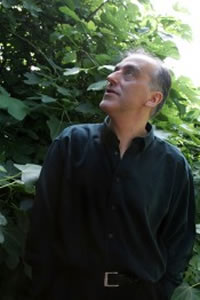
De Engelse dichter en schrijver Mario Petrucci werd geboren op 29 november 1958 in Londen. Zie ook mijn blog van 29 november 2008 en ook mijn blog van 29 november 2009 en ook mijn blog van 29 november 2010.


LIGHT


It puffed up our brains -

a bicycle-pump pressure down rubbery cords.

One hundred and eighty-six thousand

miles per second.


Dolphin has no such constancy,

hears like soup.   Its grey-blue steel

jerks into air, makes children gasp.

Dolphin hoops the water - each leap

equal to its aether.


On the west coast I dug

for potatoes.   Light there took its time

to gather, took time to roll in

its hard-earned pillows of dark.


Our Enlightenment boys

ply the radioactive, black-goggled

in the bomb-burst.   They squint past embers

at the rim of the universe, urgent

for the one dark thing.


Already they catch it, condense it,

flourish it across the benchtop

like a royal flush.   Bounce it off the cheek

of the moon.   Make it check itself -

snitch on the slightest anomaly.   Back

and forth, the caged exactitude.


It's the one constant, they said.

Let us build all space, all time, all

knowledge around it.


But the dolphin.   The filed

white teeth, its white life.

It has missed the tide.

The fish-mammal is beached, flesh

desiccating in iridescent decay.

Its shrill scrimshaws to the marrow.


The children think it is smiling.


everyone begins as fish &


ends so – spiralling after
egg (that other half of our
chains) & setting gills


in gristled knot that buds
legs as tadpoles do & blow-
hole ears halfway down


the back & low-set eye
alien as featherless chick –
ah we have peered into


that shared ovum whose
blasto-flesh runs its gauntlet
of fowl & fish so fused at


the tail nothing can be told
apart – is this why when i am
late i find in upstairs dark


you – on placenta duvet &
hunched round self as wom-
bed ones are? – as though


i had just returned from
all eternity to catch you
naked   out   sleepwalking


space without even
navel-twisted purpled
rope to hold you


 1042052-4383f705b251d1dbd4e3b91732ddc522.jpg

Mario Petrucci (Londen, 29 november 1958)


De Italiaanse schrijver, schilder, arts en politicus Carlo Levi werd geboren op 29 november 1902 in Turijn. Zie ook mijn blog van 29 november 2008 en ook mijn blog van 29 november 2009 en ook mijn blog van 29 november 2010.


Uit: Christus kwam niet verder dan Eboli (Vertaald door Margriet Agricola)


„Ik weet niet of zij dit gewend was uit de tijd dat zij hier voor de priester werkte of dat het een antieke traditie was uit homerische tijden, toen de vrouwen de krijgers wasten en met olie masseerden, maar in ieder geval kwam ik er vanaf dat moment niet meer onderuit dat mijn rug werd ingezeept en geboend door twee stevige ruwe handen. De heks was ook zeer verbaasd dat ik haar niet vroeg met mij te slapen. ‘Je bent goed geschapen,’ zei ze, ‘er mankeert niks aan je.’ Maar ze drong niet aan en zei er niets meer over, gewend als zij was aan haar eigen vanzelfsprekende passiviteit. Ik had er vast en zeker mijn eigen mysterieuze redenen voor en zij respecteerde mijn koelheid. Hooguit maakte zij af en toe een lovende opmerking over mijn schoonheden: ‘Wat zie je er goed uit,’ zei ze dan, ‘wat ben je lekker dik.’ Dik zijn is hier het belangrijkste aspect van schoonheid, net als in het Oosten, misschien omdat je hier een machtige heer moet zijn om dik te kunnen worden, een ideaal dat voor de ondervoede boeren onbereikbaar is.

Giulia was dus tot alle diensten bereid; en toch, als ik haar vroeg om te poseren zodat ik een portret van haar kon maken, dan bleek dat onmogelijk. Uiteindelijk concludeerde ik dat haar weigering een magische reden moest hebben, en zijzelf bevestigde dat. Een portret onttrekt iets aan de persoon die geportretteerd wordt, namelijk een beeltenis, en daarmee verkrijgt de schilder absolute macht over degene die voor hem geposeerd heeft.“


 1042052-d538ba377adad46cd4d748aa94033524.jpg

Carlo Levi (29 november 1902 – 4 januari 1975)

Hier met Pier Paolo Pasolini (links) 


De Belgische schrijver Jean-Philippe Toussaint werd op 29 november 1957 geboren in Brussel. Zie ook alle tags voor Jean-Philippe Toussaint op dit blog.


Uit: Autoportrait à l'étranger


„On arrive à Tokyo comme à Bastia, par le ciel, l'avion amorce un long virage au­dessus de la baie et prend l'axe de la piste pour atterrir. Vu de haut, à quatre mille pieds d'altitude, il n'y a pas beaucoup de différence entre le Pacifique et la Méditerranée.

Christian Pietrantoni, d'ailleurs, un ami corse de Madeleine — j'appellerai Madeleine Madeleine dans ces pages, pour m'y retrouver —, ne s'est pas fait attendre pour se manifester afin de me fixer un rendez-vous dans un café de Tokyo pour me donner les dernières nouvelles du village. Dès le lendemain du jour de mon arrivée au Japon, me laissant à peine le temps de défaire mes valises, il m'a téléphoné dans ma chambre d'hôtel, tandis que, en chemise blanche et petit gilet bleu d'instituteur à la retraite (le cadeau de nouvel an de mes parents), j'étais en train de feuilleter un magazine sportif en chaussettes sur mon lit, attendant la visite imminente d'un journaliste qui devait m'interviewer. A peine plus loin dans la chambre d'hôtel, assis à la table ronde, se tenait M. Hirotani, de la maison d'édition Shueisha, qui me servait depuis le début de mon séjour, en relais avec Mme Funabiki, d'accompagnateur et de confident, de guide et de garde du corps, et que j'apercevais du coin de l'oeil dans mon champ de vision, en parfait costume cravate, le visage grave et appliqué, occupé à disposer dans un vase un bouquet de fleurs que l'on m'avait offert. Il était aux prises avec cinq fleurs mauves et blanches (les couleurs d'Anderlecht, je ne sais pas si c'était voulu), dont il modifiait sans cesse la position pour composer un bouquet harmonieux, reprenant régulièrement le tout à zéro, avec patience et méthode, modifiant ici la position d'une fleur, là, la position d'une autre, davantage, me semblait-il, comme un truand dans un film de Godard que comme un adepte de l'arrangement floral japonais.“


 1042052-1193d957d375d0bcdb409da30237dccb.jpg

Jean-Philippe Toussaint (Brussel, 29 november 1957)


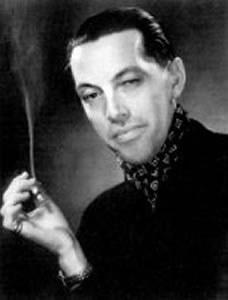
De Ierse schrijver C.S. Lewis werd geboren op 29 november 1898 in Belfast. Zie ook alle tags voor C. S. Lewis op dit blog.


Uit: The Four Loves


„To love at all is to be vulnerable. Love anything, and your heart will certainly be wrung and possibly be broken. If you want to make sure of keeping it intact, you must give your heart to no one, not even to an animal. Wrap it carefully round with hobbies and little luxuries; avoid all entanglements; lock it up safe in the casket or coffin of your selfishness. But in that casket-safe, dark, motionless, airless-it will change. It will not be broken; it will become unbreakable, impenetrable, irredeemable. The alternative to tragedy, or at least to the risk of tragedy, is damnation. The only place outside Heaven where you can be perfectly safe from all the dangers and perturbations of love is Hell.

I believe that the most lawless and inordinate loves are less contrary to God’s will than a self-invited and self-protective lovelessness. It is like hiding the talent in a napkin and for much the same reason “I knew thee that thou wert a hard man.” Christ did not teach and suffer that we might become, even in the natural loves, more careful of our own happiness. If a man is not uncalculating toward the earthly beloveds whom he has seen, he is none the more likely to be so towards God whom he has not. We shall draw nearer to God, not by trying to avoid the sufferings inherit in all loves, but by accepting them and offering them to Him; throwing away all defensive armor. If our hearts need to be broken, and if He chooses this as the way in which they should break, so be it.“


 1042052-1c814dbd825a84604de1e04478cfc660.jpg

C.S. Lewis (29 november 1898 – 22 november 1963)


Zie voor nog meer schrijvers van de 29e november ook mijn vorige blog van vandaag en eveneens mijn eerste blog van vandaag.
Geschreven door Romenu om 19:41 Reageer op dit bericht

Louisa May Alcott, Wilhelm Hauff, Franz Stelzhamer

De Amerikaanse schrijfster Louisa May Alcott werd geboren op 29 november 1832 in Germantown, Pennylvania. Zie ook alle tags voor  Louisa May Alcott op dit blog.


Fairy Song


The moonlight fades from flower and tree,

And the stars dim one by one;

The tale is told, the song is sung,

And the Fairy feast is done.

The night-wind rocks the sleeping flowers,

And sings to them, soft and low.

The early birds erelong will wake:

'Tis time for the Elves to go.


O'er the sleeping earth we silently pass,

Unseen by mortal eye,

And send sweet dreams, as we lightly float

Through the quiet moonlit sky;--

For the stars' soft eyes alone may see,

And the flowers alone may know,

The feasts we hold, the tales we tell:

So 'tis time for the Elves to go.


From bird, and blossom, and bee,

We learn the lessons they teach;

And seek, by kindly deeds, to win

A loving friend in each.

And though unseen on earth we dwell,

Sweet voices whisper low,

And gentle hearts most joyously greet

The Elves where'er they go.


When next we meet in the Fairy dell,

May the silver moon's soft light

Shine then on faces gay as now,

And Elfin hearts as light.

Now spread each wing, for the eastern sky

With sunlight soon will glow.

The morning star shall light us home:

Farewell! for the Elves must go.


 1042047-7a5ed908e3a762d07fb890082f58cc7d.jpg

Louisa May Alcott (29 november 1832 – 6 maart 1888)


De Duitse dichter en schrijver Wilhelm Hauff werd geboren in Stuttgart op 29 november 1802. Zie ook alle tags voor Wilhelm Hauff op dit blog.


Morgenrot


Morgenrot,

Leuchtest mir zum frühen Tod?

Bald wird die Trompete blasen.

Dann muß ich mein Leben lassen,

Ich und mancher Kamerad!


Kaum gedacht,

War der Lust ein End´gemacht,

Gestern noch auf stolzen Rossen,

Heute durch die Brust geschossen,

Morgen in das kühle Grab!


Trost


Die Mißgunst lauscht auf allen Wegen,

Daß sie der Liebe Glück verrät,

Doch treue, zarte Liebe geht

Auf tausend unbewachten Stegen;

Ein Druck der Hand, ein flücht’ger Blick

Sagt mir der Liebe süßes Glück.


Und zog ich auch in weite Ferne,

Es zog mit mir mein stilles Glück,

Denn schau ich nicht der Liebe Blick,

So blick ich auf zum Abendsterne;

Wie ihres Auges stille Glut

Strahlt er ins Herz getrosten Mut.


Und wallen meine Tage trüber

Und dringt kein Trost von ihr zu mir,

Und dringt mein Sehnen nicht zu ihr,

Kein Wort von ihr zu mir herüber;

Mein stilles Glück ist nicht getrübt,

Ich weiß ja doch, daß sie mich liebt.


Drum klag ich nicht in weiter Ferne,

Weil Neid der Liebe Weg belauscht,

Wenn auch nicht Wort mit Wort sich tauscht,

Mir strahlt ein Trost im Abendsterne;

Aus seinen milden Strahlen quillt

Mir meiner Liebe trautes Bild.


1042047-5d732a504c28c558563f3870b6599318.jpg 

Wilhelm Hauff  (29 november 1802 - 18 november 1827)


De Oostenrijkse dichter en schrijver Franz Stelzhamer werd geboren in Großpiesenham op 29 november 1802. Zie ook mijn blog van 29 november 2008 en ook mijn blog van 29 november 2009.


Jugend


Ich bin der Erde gleich

Im Frühlingsauferwachen;

Ich bin dem Himmel gleich

Im ersten Morgenlachen.


Ich bin der Sonne gleich,

Die alles glühend herzet;

Ich bin dem Lüftchen gleich,

Das mit den Blumen scherzet.


Ich bin der Quelle gleich,

Geschwellt vom Frühlingshauche;

Ich bin dem Vöglein gleich,

Das singend baut im Strauche.


Ich bin den Hügeln gleich,

Die tiefbeschaulich weilen;

Ich bin den Schäfchen gleich,

Die durch das Blaue eilen.


Ich bin den Bergen gleich,

Die Erz in den Adern rollen;

Ich bin den Wolken gleich,

Den Blitz und Donner vollen.


Ich bin dem Veilchen gleich,

Das still im Duft sich freuet;

Ich bin dem Baume gleich,

Der breiten Schatten streuet.


So  all und jedem gleich

In Wesen oder Weise,

Steh’ ich im weiten Reich

Wie im Familienkreise.


Es zieht mich her und hin,

Es drängt mich weit und weiter,

Der jugendfrohe Sinn

Ist Führer und Begleiter


Und sich allüberall,

Auf Flur und Feld und Heide,

Im Wald , am wilden Fall

Ist Lust und Augenweide


O Lenz, o Jugendlust,

O jubelvolle Erde,

Was hätt’ ich denn gewußt,

Wenn Gott nicht sprach sein: "Werde!"


Nun hebt der Vögel Chor

Im Haine an zu psalmen

Und neigt der Wiesenflor

Die Häupter an den Halmen:


Da beug’ auch ich das Knie

Zu Preis und Dank und flehe,

Daß Lieb’ und Glauben nie

Mir ganz verlorengehe!


1042047-79c9fd308d0025de316917e9a1c00c4c.jpg
Franz Stelzhamer (29 november 1802 – 14 juni 1874)

Standbeeld in Linz, Volksgarten

Geschreven door Romenu om 19:30 Reageer op dit bericht

Antanas Škėma, Madeleine L’Engle, Ludwig Anzengruber, Andrés Bello, Maurice Genevoix, Silvio Rodríguez

De Litouwse dichter en schrijver Antanas Škėma werd op 29 november 1910 geboren in Lodz in Polen. Zie ook mijn blog van 29 november 2008 en ook mijn blog van 29 november 2009 en ook mijn blog van 29 november 2010.


Uit: Steps And Stairs (Vertaald door Kęstutis Girnius)


„Our apartment house does not have a full-time janitor, so the garbage no longer fits into the cans. Wax paper, egg shells, a cracked cup, milk cartons He on the side walk. Across the street—a boy's school. During recess four boys run to the area between two doors and play cards. Coins flash on the linoleum. The kids swear like old troopers sitting on bar stools in taverns. A carriage with an infant rests in the sun. He is dozing, the milk bottle and its slimy nipple slip out of his toothless mouth. His mother, a corpulent Ukrainian, is talking with a neighbor on the other side of the street. About money earned, about money saved, about money which floats above New York in thousands but settles as single dollar bills on Driggs Avenue.

I climb to the fourth floor. My steps splatter sound which sticks to the dusty walls. My steps rumple the high notes of an Italian song (a radio is playing on the second floor). Piles of accurately carved out steps accumulate on the stairs. I climb to the fourth floor, to the fourth, to the fourth, to the fourth. My steps are a mechanical saw slicing off the ends of planks. I climb among invisible plank ends flying in an enclosed space, surrounded by greenness I ascend toward the sun. On the top floor, not unlike an artist's atelier, a skylight in the roof, the sun's rays drill their yellow screws toward which the blind man thrusts out the viscous whites of his eyes.

Our neighbor is the corpulent Ukrainian and her large family. Husband, son, the son's wife, the son's son (the infant in the carriage), a sister, and the half-blind old man who now stands, head bent back, grasping the handrail, who thrusts out his eyes toward the sun's yellow screws. He grasps the rails as a ship's captain the spokes of the wheel when a thick fog is all around and murky white icebergs are ahead. He stands like this for whole hours, straight and immovable, an old and experienced wolf in this ocean of shimmering light.

Evening comes. The constant boring kindles the yellow screws, they redden, and the glowing light exhales a remembrance of a fire-site; and when the mechanic stops the saw, the screws revolve no longer, but cool and disappear in the approaching night. Below the ceiling a little electric lamp lights up. Covered with spider webs, the remnants of last year's flies, the lamp announces that you have changed course, experienced captain.“


 1042041-c9afd943f0a404834525642cc440ff1d.jpg

Antanas Škėma (29 november 1910 – 11 augustus 1961)


De Amerikaanse schrijfster Madeleine L'Engle werd geboren in New York op 29 november 1918. Zie ook mijn blog van 29 november 2008 en ook mijn blog van 29 november 2009 en ook mijn blog van 29 november 2010.
 

 Uit: A Wrinkle In TIme


„In the kitchen a light was already on, and Charles Walace was sitting at the table driking milk and eating bread and jam. He looked very small and vulnerable sitting there alone in the big old-fashioned kitchen, a blond little boy in faded blue Dr. Dentons, his feet swinging a good six inches above the floor.

“Hi,” he said cheerfully. “I’ve been waiting for you.”

From under the table where he was lying at Charles Wallace’s feet, hoping for a crumb or two, Fortinbras raised his slender dark head in greeting to Meg and his tail thumped against the floor. Fortinbras had arrived on their doorstep, a half-grown puppy, scrawny and abandoned, one winter night. He was, Meg’s father had decided, part Llewellyn setter and part greyhound, and he had a slender, dark beauty that was all his own.

“Why didn’t you come up to the attic?” Meg asked her brother, speaking as though he were at least her own age. “I’ve been scared stiff.”

“Too windy up in that attic of yours,” the little boy said. “I knew you’d be down. I put some milk on the stove for you. It ought to be hot by now.”

How did Charles Wallace always know about her? How could he always tell? He never knew – or seemed to care – what Dennys or Sandy were thinking. It was his mother’s mind, and Meg’s, that he probed with a frightening accuracy.

Was it because people were a little afraid of him that they whispered about the Murry’s youngest child, who was rumored to be not quite bright? “I’ve heard that clever people often have subnormal children,” Meg had once overheard. “The two boys seem to be nice, regular children, but that unattractive girl and the baby boy certainly aren’t all there.”


 1042041-1b2c01eb8d9040594d52f6fe8499f5ec.jpg

Madeleine L’Engle (29 november 1918 – 6 september 2007)


De Oostenrijkse schrijver Ludwig Anzengruber werd geboren op 29 november 1839 in Wenen. Zie ook alle tags voor Ludwig Anzengruber op dit blog.


Bauersleut im Künstlerhaus.


Es soan zwa alte Bauersleut'

In d'Weanstadt einikämma,

A Vetta thut s' voll Freundlikeit,

Wo's z' schaun gibt, mit hinnähma.


Der Schlankel oba der hat's a

Gar faustdick hinter 'n Uhren

Und hat sich amal mit dö zwa

Ins Künstlerhaus verluren.


Sö tappen da von Saal zu Saal,

Doch soan s' no kaum im zweiten,

So fangt dö Bäu'rin mit amal

Zun winken an und deuten.


»Ui jegerl, Monna, schaugt's af d'Seit!

Des nehmts an d'Seel'n sunst Schoden!

Do hängen g'molne Weiberleut',

Dö trog'n am Leib koan' Foden!


»I bin doch selber a a Wei'

Und woaß mi net zun fossen

Und woaß nit, wo mer da dabei

Söllt' seine Augen lossen!«


Der Bauer stolpert neben ihr

Hinein ins nachste Zimmer,

Er halt't 'n Huat vor d'Augen für,

Denn d'Sach wird allwal schlimmer.


»Mei,« sagt er »'s is a Sünd' und Schond',

Dös siecht jo wohl a jeda,

Doch kimmt 'leicht 's Molen ohne G'wond

Halt billiger; net, Vetta?«


Da wird die Bäu'rin wild und schreit:

»No dös möcht' Gott verhüten!

Dös war dö rechte Sporsomkeit,

Dö söllt' mer doch vabieten!


Und bin i hitzten a gleich olt,

I ließ' mi so nit molen

Und nit in Güten, nit in G'wolt!

Mer dürft' mi dafür zohlen!


»Daß i vor oa'm söllt' so hinstehn,

Dös war' a Untafanga!« –

»Na,« sagt der Baua, »loß nur gehn!

's wird's koana si valanga!«


1042041-3e400a8bfaf1432b1b88cbfa3f2f60fd.jpg
Ludwig Anzengruber (29 november 1839 – 10 december 1889)


Zie voor onderstaande schrijvers ook mijn blog van 29 november 2010.


De Cubaanse dichter en singer-songwriter Silvio Rodríguez Domínguez werd geboren in San Antonio de Los Baños op 29 november 1946. Zie ook mijn blog van 29 november 2008 en ook mijn blog van 29 november 2009.


De Franse schrijver Maurice Genevoix werd geboren op 29 november 1890 in Decize (Nièvre). Zie ook mijn blog van 29 november 2008 en ook mijn blog van 29 november 2009.


De Chileens-Venezolaanse dichter, wetgever, filosoof, politicus, diplomaat, wetenschapper, humanist en taalkundige Andrés Bello werd geboren in Caracas, Venezuela,  op 29 november 1781. Zie ook mijn blog van 29 november 2008 en ook mijn blog van 29 november 2009.

Geschreven door Romenu om 19:25 Reageer op dit bericht

Constantijn Huygens-prijs 2011 voor A. F. Th. van der Heijden


Constantijn Huygens-prijs 2011 voor
A. F. Th. van der Heijden


De Nederlandse schrijver A.F.Th. van der Heijden heeftde Constantijn Huygens-prijs 2011 gewonnen. Dat heeft de Jan Campert Stichting gisteren bekendgemaakt. De Huygens-prijs is een oeuvreprijs die sinds 1947 jaarlijks wordt uitgereikt. Volgens de jury is Van der Heijden "er in 33 jaar schrijverschap als geen ander in geslaagd om de wereld met een literaire blik te bezien. In zijn romans kan alles literatuur worden." Aan de prijs, die eind januari wordt uitgereikt, is een bedrag van 10.000 euro verbonden. A. F. Th. van der Heijden werd geboren in Geldrop op 15 oktober. Zie ook alle tags voor A. F. Th. van der Heijden op dit blog.

Uit: Tonio. Een requiemroman


„Soms wil ik hem heel dicht tegen me aan houden. De gedachte doet zich meestal voor als ik in bed lig te lezen, en zomaar opeens mijn boek ter zijde leg. Kom maar, zeg ik dan geluidloos. Kom maar, Tonio, onder het dek. Ik zal je warm houden.
Zijn lichaam is willoos, slap, maar niet koud. Het is de Tonio die na de aanrijding op het plaveisel heeft gelegen, een half etmaal voor zijn dood. De inzittenden van de rode Suzuki Swift staan buiten de auto, en durven niet naar het verderop neergekwakte lijf te kijken. De sirenes van politie en ambulance zijn nog niet hoorbaar. Het blauwe geflakker van de zwaailichten moet nog komen. Het is dan dat ik hem opraap en naar mijn bed draag, waarvan ik het dek opensla.
Kom maar. Dicht tegen me aan. Dat zal je warm houden. Ze komen zo om je beter te maken.“


 1041731-c1ee7b4116ab4146e5ed6fc04f27d954.jpg

A. F.Th. van der Heijden (Geldrop, 15 oktober 1951)
Geschreven door Romenu om 11:48 Reageer op dit bericht

F. Bordewijk-prijs en Jan Campert-prijs 2011


F. Bordewijk-prijs 2011 voor Gustaaf Peek


Aan aan de Nederlandse schrijver Gustaaf  Peek is de F. Bordewijk-prijs voor verhalend proza toegekend, voor zijn roman 'Ik was Amerika'. Gustaaf Peek werd geboren in Haarlem in 1975. Zie ook mijn blog van 16 oktober 2011.


Uit: Dover


„We hebben het niet gehaald. […] We droomden dat we trouwden en kinderen kregen, zoveel als we wilden. Om het nog een keer te proberen. Aankomen. Nooit meer weggaan. Een laatste droom. De witte wereld. Liefde. Er zijn velen zoals wij hier.

(...’) 


Bernard hield een hand op de wond. Zijn vingers weekten in de warmte, hij durfde niet te kijken. Ze hadden hem achter het stuur gelaten, de deuren waren op slot. Bomen hadden de wagen ingesloten, het moest een parkeerplaats in een bos zijn. Het was nacht. Er zouden geen families meer langskomen voor een mooie wandeling. Hij had het koud.“


 1041726-d0397d3d380bbb6723c0b84bc9746330.jpg

Gustaaf Peek (Haarlem, 1975)


De Jan Campert-prijs 2011 voor Erik Spinoy


De Jan Campert-prijs, voor de beste dichtbundel, gaat naar Erik Spinoy voor zijn bundel 'Dode Kamer'. De Vlaamse dichter en schrijver Erik Spinoy werd geboren op 22 mei 1960 in Sint-Niklaas. Zie ook alle tags voor Erik Spinoy op dit blog.


De wind, de eindeloze wind


De wind, de eindeloze wind
waait waar hij wil

danst op een esdoornblad
smijt schepen heen en weer
vermaakt zich met een zwaluw
legt zich doodmoe neer
opeens.

Wat hij, zijn waaien
te betekenen heeft?
Verkeerd, aan dit adres!


1041726-ccf6c50bc7be02c669d76936d85527db.jpg
Erik Spinoy (Sint-Niklaas, 22 mei 1960)

Geschreven door Romenu om 11:39 Reageer op dit bericht

Meer van Romenu

↑ Terug naar de berichten