

 Edmund White, Jay McInerney, Daniel Kehlmann, Lorrie Moore, Jurgis Kunčinas, Clark Ashton Smith
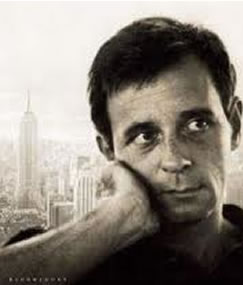
De Amerikaanse schrijver en essayist Edmund White werd geboren op 13 januari 1940 in Cincinnati. Zie ook mijn blog van 13 januari 2007 en ook mijn blog van 13 januari 2008 en ook mijn blog van 13 januari 2009 en ook mijn blog van 13 januari 2010.
Uit: The Farewell Symphony
„I'm beginning this book on All Saints' Day in Paris, six months after Brice's death. This morning I went with Brice's brother and his brother's lover to the Père Lachaise cemetery to leave some flowers before the white marble plaque that marks the niche where Brice's ashes are stored in an urn. At first there wasn't a receptacle for the flowers and we'd just leave them on the cold floor, where they'd quickly wilt. But then someone-the Spanish woman who cleaned for us once a week, perhaps-attached a little brass vase to the plaque, and that's where we put the flowers now. Today I left yellow freesias. Someone had Scotchtaped the photo of a young man to Brice's plaque and I wondered if it was a secret admirer who'd left his own portrait; retrospectively I was jealous. Maybe it was a photo of one of the other dead young men that had been taped to our plaque by mistake.
The ashes are in the columbarium, a fancy word for "dovecote." We wanted to be buried together, but since technically I'm not a Parisian, there was no way I could buy a plot or a niche at Père Lachaise, which is reserved for citizens of the capital. Brice thought of everything in his methodical way; he bought the niche for his urn but in my name. Now, legally, I can't be refused entrance when I die.
I've never liked to feel things in the appropriate way at the right moment. I know that Brice's brother is slightly puzzled that I don't visit the long, subterranean corridors of the columbarium more often. Even today I was dry-eyed, bored, more curious about the new plaques than anguished about Brice's. The day Brice was interred, there were only four other niches occupied along this whole wall. Now it's filling up quickly-at least two hundred newcomers have arrived in the last six months. Some are Vietnamese and their inscriptions are in both French and in Chinese characters. A few are young men in their twenties-I imagine they died of AIDS, too. There are Jews and Protestants as well as Catholics; Poles and Italians as well as French. There's even an American writer shelved just above Brice; he's had inscribed the words "Writer-Ecrivain" just below his name.
It's not that Brice's brother Laurent doubts my grief. He saw me six months ago, sitting on the curb just outside the funeral home, sobbing. We'd just made all the arrangements for the cremation and now I was crying like a Sicilian widow.“
Edmund White (Cincinnati, 13 januari 1940)
De Duitse schrijver Daniel Kehlmann werd op 13 januari 1975 in München geboren. Zie ook mijn blog van 13 januari 2008 en ook mijn blog van 13 januari 2009 en ook mijn blog van 13 januari 2010.
Uit: Unter der Sonne
„Markus Mehring war vier- oder fünfunddreißig Jahre alt, oft wußte er das selbst nicht genau. Er lebte in einer Zweizimmerwohnung mit einer Kochecke und einem kleinen Balkon. Von seinen Nachbarn unterschied ihn, daß er keinen Fernseher hatte. Statt dessen las er Abenteuerromane. Am liebsten
Moby Dick – viermal schon –, und sehr gerne auch Joseph Conrad und Graham Greene. Er arbeitete in einem Amtsgebäude ; dort hatte er einen Schreibtisch und Stempel und viele Kugelschreiber, Telefon brauchte er keines. Er mußte Formulare durchsehen, ausgefüllt von Leuten, die Wichtigeres zu tun hatten, und darin nach Formfehlern suchen. Fand er welche, mußte er das Blatt an eine bestimmte Abteilung weiterleiten ; wenn nicht, an eine andere Abteilung. Einmal hatte er einen Mann kennengelernt, der auf einem Großbauernhof die Schweine massieren mußte, und wann immer er in seine Toilette sah, dachte er mit Schaudern an die Kanalräumer, die sich in tiefen Höhlen durch die Exkremente der Stadt wühlten. Also gab es Berufe, die noch schlimmer waren.
Einmal im Jahr bestieg er einen Zug und fuhr in eine Ferienpension in einer grünen und welligen Landschaft, wo er zwei Wochen verbrachte. Weihnachten feierte er mit seinem tauben Großonkel, einem ehemaligen Lokomotivführer. Einmal im Monat besuchte er seine Schwester und ihren Mann und brachte den Kindern Schokolade mit. Als Staatsangestellter war er unkündbar, als Mitglied des Buchklubs bekam er vierteljährlich den neuen Katalog. Einmal, mit neunzehn, hatte er ein Gedicht geschrieben ; er bewahrte es in einer Schublade auf und las es sich zuweilen laut vor. Im Lotto gewann er nie, und er hatte keine Zeitung abonniert.“
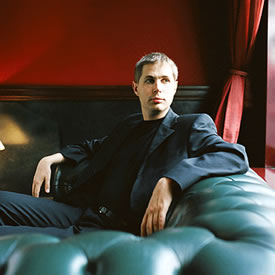
Daniel Kehlmann (München, 13 januari 1975)
De Amerikaanse schrijver Jay McInerney werd geboren op 13 januari 1955 in Hartford, Connecticut. Zie ook mijn blog van 13 januari 2007 en ook mijn blog van 13 januari 2008 en ook mijn blog van 13 januari 2009 en ook mijn blog van 13 januari 2010.
Uit: Model Behavior
„The name of the party is the Party You Have Been to Six Hundred Times Already. Everybody is here. "All your friends," Philomena states in what can only be described as a citric tone. It seems to me that they are her friends, that she is the reason we grace this fabulous gala, which takes place in the Waiting Room of Grand Central, presumably evicting dozens of homeless people for the night. We're supposedly on hand for the benefit of a disease, but we were comped, as was everyone else we know. "I'm sick of all this pointless glamour," my glamorous girlfriend says. "I want the simple life." This has become a theme. Weariness with metropolitan life in all its colonoscopic intricacy. I wonder if this ennui is somehow related to that other unstated domestic theme: sex, infrequency thereof.
We are accosted by Belinda, the popular transvestite, whom I am nearly certain is a friend of my girlfriend's, as opposed to one of my very own. I can't exactly remember if I know him from the gossip columns or if I know him personally, from events like these. Belinda is with an actual, ageless woman with striking dark eyebrows and buzzcut white hair, a woman who is always here at the party and whom I always sort of recognize. One of those women with three names: Hi Howareyou Goodtoseeyou. All the women lately have either three names or just one. Even the impersonators.
"Oh God, hide me," says the woman whose name I always forget, "there's Tommy Kroger, I had a bad date with him about five thousand years ago."
"Did you sleep with him?" Philomena asks, raising one of her perfectly defined eyebrows, which looks like a crow in flight in the far distance of a painting by van Gogh.
"God, who can remember?"
"If you can't, then you did," says Belinda. "That's the rule."
Ah, so that's the rule.
"Hello, darlings." Who could it be but Delia McFaggen, the famous designer, streaking toward Belinda, blowing kisses all over everyone. I retreat, slaloming through the thick crowd to find beverages, the first of many trips.“
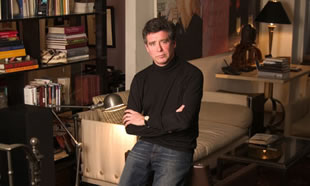
Jay McInerney (Hartford, 13 januari 1955)
De Amerikaanse schrijfster Lorrie Moore werd geboren op 13 januari 1957 in Glens Falls, New York. Zie ook mijn blog van 13 januari 2009 en ook mijn blog van 13 januari 2010.
Uit: A Gate at the Stairs
„The cold came late that fall and the songbirds were caught off guard. By the time the snow and wind began in earnest, too many had been suckered into staying, and instead of flying south, instead of already having flown south, they were huddled in people's yards, their feathers puffed for some modicum of warmth. I was looking for a job. I was a student and needed babysitting work, and so I would walk from interview to interview in these attractive but wintry neighborhoods, the eerie multitudes of robins pecking at the frozen ground, dun-gray and stricken — though what bird in the best of circumstances does not look a little stricken — until at last, late in my search, at the end of a week, startlingly, the birds had disappeared. I did not want to think about what had happened to them. Or rather, that is an expression — of politeness, a false promise of delicacy — for in fact I wondered about them all the time: imagining them dead, in stunning heaps, in some killing cornfield outside of town, or dropped from the sky in twos and threes, for miles down along the Illinois state line.
I was looking in December for work that would begin at the start of the January term. I'd finished my exams and was answering ads from the student job board, ones for "childcare provider." I liked children — I did! — or rather, I liked them OK. They were sometimes interesting. I admired their stamina and candor. And I was good with them in that I could make funny faces at the babies and with the older children teach them card tricks and speak in the theatrically sarcastic tones that disarmed and enthralled them. But I was not especially skilled at minding children for long spells; I grew bored, perhaps like my own mother. After too much time playing their games, my mind grew peckish and longed to lose itself in some book I had in my backpack.“

Lorrie Moore (Glens Falls, 13 januari 1957)
De Litouwse schrijver en vertaler Jurgis Kunčinas werd geboren op 13 januari 1947 in Alytus. Zie ook mijn blog van 13 januari 2009 en ook mijn blog van 13 januari 2010.
Uit: Tula (Vertaald door Elizabeth Novickas)
„Speak to me, Tūla, whisper to me; when the illuminated high wall of the Bernardine, as red as it already is, glows redder still; when the Vilnelė boils like lava under all of its little bridges, and most furiously of all right here, next to the Bernardine; when the sparse passersby, spotting the heavy rain cloud, hasten their steps and, looking around fearfully, scurry off to their urban burrows; when the cloud hangs now right nearby–above Bekešas and Panonietis Hill, above the dark red folds of the escarpment–speak and tell me: who now will remind us of the love that clung to us like a infectious disease, never, as it was, bellowed out in the midwinter courtyards, and so never splattered with the city’s dirt–so belated and so useless it was to anyone, useless even to this street prepared for a downpour, to the old clump of trees on the shore, even to the glow lighting up the Bernardine, or that ever approaching cloud, which has stopped now above the drab Bekešas tower–who, come on, say it, who?
Tell me, Tūla, tell me, because only you can answer these questions hanging like those clouds–only you, because nature in the city is always a bit unreal–too grand or what?–and mute. Not quite a decoration; not a model; not window-dressing; but not nature, either. I told you. Watch, Tūla, I’m coming to your humble abode over the uncovered Vilnelė bridge, under which the blackish-green water with its barely lighter foam eternally boils, I’m coming to your windows, to your eyes, which reflect nothing but the low sky and the Bernardine’s towers, I’m coming to your tissues, to the clarity of your bones, to your primeval nerves, which, when touched, tremble and sound: of the murmur of the wind, the tinkling of water, the rustling of grass; and, bumped a bit harder, they stiffen, and the sounds strengthen–I hear the squeal of a small, unexpectedly frightened animal; the stubbornly explaining voice of a nocturnal bird; I hear the fluttering of wings above my head and I see eyes–the mysterious eyes of a bird of twilight in your face as white as a sheet; your eyes, Tūla, the eyes of a bird and the eyes of a cloud; I come in the moonlight, throwing a heavy shadow on the day that has passed, on the day to come and the night of ours to come, on this city, which has sucked us into its dark womb and spat us out together with the silt, the clay, all sorts of shards and old tools, and old money, too, which has no power in either this world or the next–did we really ever live there? And I throw a broken, twisted shadow on the hill of Bekešas and his warrior Vadušas Panonietis, where that menacing cloud full of storm dust goes on hanging...“
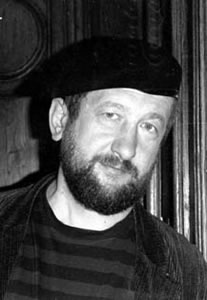
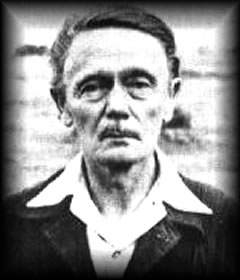
Jurgis Kunčinas (13 januari 1947 – 13 december 2002)
De Amerikaanse dichter, schrijver en beeldhouwer Clark Ashton Smith werd geboren in Long Valley (Californië) op 13 januari 1893. Zie ook mijn blog van 13 januari 2009 en ook mijn blog van 13 januari 2010.
Desolation
It seems to me that I have lived alone—
Alone, as one that liveth in a dream:
As light on coldest marble, or the gleam
Of moons eternal on a land of stone,
The days have been to me. I have but known
The silence of Thulean lands extreme—
A silence all-attending and supreme
As is the sea's enormous monotone.
Upon the waste no palmed mirages are,
But strange chimeras roam the steely light,
And cold parhelia hang on hilt and scaur
Where flowers of frost alone have bloomed. . . . I crave
The friendly clasp of finite arms, to save
My spirit from the ravening Infinite.
The Dream-Bridge
All drear and barren seemed the hours,
That passed rain-swept and tempest-blown.
The dead leaves fell like brownish notes
Within the rain's grey monotone.
There came a lapse between the showers:
The clouds grew rich with sunset gleams;
Then o'er the sky a rainbow sprang-
A bridge unto the Land of Dreams.
Zie voor nog meer schrijvers van de 13e januari ook mijn vorige blog van vandaag.


