

Naar de inhoud

Romenu

Over literatuur, gedichten, kunst en cultuur
seniorennet.beseniorennet.be

Berichten van 3 augustus 2014

Dolce far niente, Anna Enquist, Rupert Brooke
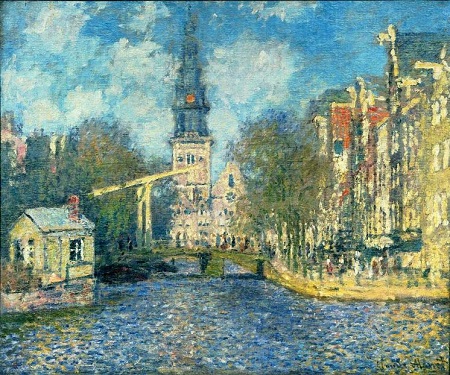
 

Dolce far niente


 1633787-b98a2d57f81680f86e4598de3f999662.jpg
Zuiderkerk in Amsterdam door Claude Monet, ca. 1874


De stad herboren

Liggend ontwerpt hij het stadsdak, prent
het patroon van bladloze takken tegen fel


blauw in zijn brein, dat bloemkooltje, leeg


nog en klein. Waakzaam ontvangt hij licht
en lawaai, zonder oordeel. Honden, motoren,
een boor. Ik duw zijn wagen en merk hoe hij

schift, niet meer schrikt, scheidt wat hem boeit

en wat niet. Hij verovert de woorden, hij groeit


en zit voor op mijn fiets. Hij vult zijn stad in


met herrie en troep, wil stil bij de vuilnis,

de veegwagen, roept de lantaarns aan,


verstomt bij de rijzende brug, wacht verheugd.


In anderhalf jaar ben ik om, heb ik hekel

en haat laten gaan, is er dankzij zijn geestdrift


een heldere lusthof ontstaan. In het park


gaan wij liggen op doodmoe gras, in de verte

murmelt de stad. We kijken tevreden omhoog,

hij en ik, door de takken van de plataan.


 1633787-49eda4a359f79a136acd39e5df616c5f.jpg
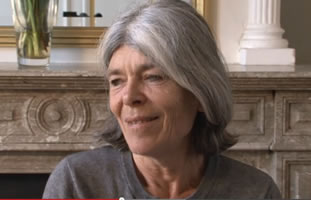
Anna Enquist (Amsterdam, 19 juli 1945)
Anna Enquist is sinds februari stadsdichter van Amsterdam


De Britse dichter Rupert Brooke werd geboren in Rugby, Engeland, op 3 augustus 1887. Zie ook mijn blog van 3 augustus 2010 en eveneens alle tags voor Rupert Brooke op dit blog.


The Beginning

Some day I shall rise and leave my friends
And seek you again through the world's far ends,
You whom I found so fair
(Touch of your hands and smell of your hair!),
My only god in the days that were.
My eager feet shall find you again,
Though the sullen years and the mark of pain
Have changed you wholly; for I shall know
(How could I forget having loved you so?),
In the sad half-light of evening,
The face that was all my sunrising.
So then at the ends of the earth I'll stand
And hold you fiercely by either hand,
And seeing your age and ashen hair
I'll curse the thing that once you were,
Because it is changed and pale and old
(Lips that were scarlet, hair that was gold!),
And I loved you before you were old and wise,
When the flame of youth was strong in your eyes,
-- And my heart is sick with memories.


Victory

All night the ways of Heaven were desolate,
Long roads across a gleaming empty sky.
Outcast and doomed and driven, you and I,
Alone, serene beyond all love or hate,
Terror or triumph, were content to wait,
We, silent and all-knowing. Suddenly
Swept through the heaven low-crouching from on high,
One horseman, downward to the earth's low gate.

Oh, perfect from the ultimate height of living,
Lightly we turned, through wet woods blossom-hung,
Into the open. Down the supernal roads,
With plumes a-tossing, purple flags far flung,
Rank upon rank, unbridled, unforgiving,
Thundered the black battalions of the Gods.


Oh! Death Will Find Me, Long Before I Tire

Oh! Death will find me, long before I tire
Of watching you; and swing me suddenly
Into the shade and loneliness and mire
Of the last land! There, waiting patiently,

One day, I think, I'll feel a cool wind blowing,
See a slow light across the Stygian tide,
And hear the Dead about me stir, unknowing,
And tremble. And I shall know that you have died,

And watch you, a broad-browed and smiling dream,
Pass, light as ever, through the lightless host,
Quietly ponder, start, and sway, and gleam --
Most individual and bewildering ghost! --

And turn, and toss your brown delightful head
Amusedly, among the ancient Dead.


 1633787-e411cea18aae8322f99dd150621dbbde.jpg
Rupert Brooke (3 augustus 1887 – 23 april 1915)
Standbeeld in Grantchester


Zie voor nog meer schrijvers van de 3e augustus ook mijn blog van 3 augustus 2013 en ook mijn blog van 3 augustus 2012 en eveneens mijn blog van 3 augustus 2011 deel 2.
Geschreven door Romenu om 21:10 Reageer op dit bericht

P. D. James

De Engelse schrijfster P. D. James (eig. Phyllis Dorothy James) werd geboren op 3 August 1920 in Oxford. James groeide op in Cambridge, waar zij tot 1937 de Cambridge Girls High School bezocht. Tijdens WO II werkte zij als verpleegster. In 1941 trouwde ze met de arts Connor Bantry White, die na de oorlog ziek werd en verpleegd moest worden, zodat zij tot aan zijn dood voor beider inkomen moest zorgen. Zij werkte lang in de administratie van het staatsziekenhuis voordat zij in 1968 overstapte naar het ministerie van Binnenlandse Zaken, waar ze tot haar pensionering in 1979 bleef. In de vroege jaren 1960 begon zij naast haar werk met het schrijven van een thriller met als rechercheur een zwijgzame weduwnaar met een poëtische ader, genaamd Adam Dalgliesh. In 1972 introduceerde PD James als een van de eerste schrijvers een vrouwelijke privé-detective, Cordelia Gray, in een roman met de veelzeggende titel “An Unsuitable Job for a Woman”. Voor haar literaire werk ontving zij heel wat onderscheidingen, zoals in 1974 de Macavity Award van de Amerikaanse Mystery Readers International voor Beste Non-Fictie voor haar boek “Talking About Detective Fiction”. In 1983 werd ze door de Koningin opgenomen in de Order of the British Empire, in 1991 werd zij benoemd tot life peer als barones James of Holland Park, in het graafschap Suffolk Southwold en daardoor lid van het Britse Hogerhuis.

Uit: The Lighthouse

“Commander Adam Dalgliesh was not unused to being urgently summoned to non-scheduled meetings with unspecified people at inconvenient times, but usually with one purpose in common: he could be confident that somewhere there lay a dead body awaiting his attention. There were other urgent calls, other meetings, sometimes at the highest level. Dalgliesh, as a permanent ADC to the Commissioner, had a number of functions which, as they grew in number and importance, had become so ill-defined that most of his colleagues had given up trying to define them. But this meeting, called in Assistant Commissioner Harkness's office on the seventh floor of New Scotland Yard at ten-fifty-five on the morning of Saturday, 23 October, had, from his first entry into the room, the unmistakable presaging of murder. This had nothing to do with a certain serious tension on the faces turned towards him; a departmental debacle would have caused greater concern. It was rather that unnatural death always provoked a peculiar unease, an uncomfortable realisation that there were still some things that might not be susceptible to bureaucratic control.
There were only three men awaiting him and Dalgliesh was surprised to see Alexander Conistone of the Foreign and Commonwealth Office.
He liked Conistone, who was one of the few eccentrics remaining in an increasingly conformist and politicised service. Conistone had acquired a reputation for crisis management. This was partly founded on his belief that there was no emergency that was not amenable to precedent or departmental regulations, but when these orthodoxies failed, he could reveal a dangerous capacity for imaginative initiatives which, by any bureaucratic logic, deserved to end in disaster but never did. Dalgliesh, for whom few of the labyrinths of Westminster bureaucracy were wholly unfamiliar, had earlier decided that this dichotomy of character was inherited. Generations of Conistones had been soldiers. The foreign fields of Britain's imperialis- tic past were enriched by the bodies of unmemorialised victims of previous Conistones' crises management. Even Conistone's eccentric appearance reflected a personal ambiguity. Alone among his colleagues, he dressed with the careful pinstriped conformity of a civil servant of the Thirties while, with his strong bony face, mottled cheeks and hair with the resilient waywardness of straw, he looked like a farmer. »


 1686064-275052004edfc597d3a1942764316da4.png
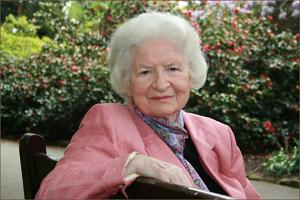
P. D. James (Oxford, 3 augustus 1920)

Geschreven door Romenu om 00:00 Reageer op dit bericht

Meer van Romenu

↑ Terug naar de berichten