Naar de inhoud

Romenu

Over literatuur, gedichten, kunst en cultuur
seniorennet.beseniorennet.be

Berichten van 9 december 2011

Gioconda Belli, Michael Krüger, Wolfgang Hildesheimer, Anna Gavalda

De Nicaraguaanse schrijfster, dichteres en ex-politica Gioconda Belli werd geboren op 9 december 1948 in Managua. Zie ook alle tags voor Gioconda Belli op dit blog.


Zandkastelen


Waarom zei je me niet dat je bezig was
dat zandkasteel te bouwen?


Het zou zo heerlijk geweest zijn
om dat kleine poortje binnen te treden,
door zijn zoute gangen te lopen
je op te wachten in kamers van schelpen,
je toe te spreken vanaf het balkon
mijn mond vol wit schuim en even transparant
als mijn woorden,
die vederlichte woorden die ik tot je sprak,
die niet zwaarder zijn dan de lucht
tussen mijn tanden


Het is zo heerlijk naar zee te kijken


En de zee zou zo mooi geweest zijn
vanaf ons zandkasteel,
de tijd likkend
met de intense en diepe tederheid
van het water,
ronddwalen d in de verhalen die men ons vertelde
toen wij, kinderen, een en al oor waren
voor de natuur


Het wassende water heeft je zandkasteel
nu meegenomen.
Heeft alles weggeveegd, de torens
en de grachten
het poortje waarlangs wij bij laagtij
zouden binnengetreden zijn,
als de werkelijkheid veraf was
en er op het strand
zandkastelen zijn...


Vertaald door Germain Droogenbroodt


BRIEF LESSONS IN EROTICISM

I
To sail the entire length of a body is to circle the world
To navigate the rose of the winds without a compass
Islands gulfs peninsulas breakwaters against crashing waves
It isn't easy, though it is enjoyable
Don't think you can do it in one day or night of consoling the sheets
There are enough secrets in the pores to fill many moons
II
The body is an astral chart in a coded language
Find a star and perhaps you’ll begin
To change course when suddenly a hurricane or piercing scream
Makes you tremble in fear
A dip in the hand you didn't expect
III
Go over the entire length many times
Find the lake with the white water lilies
Caress the lily's center with your anchor
Plunge deep drown yourself stretch your limbs
Don't deny yourself the smell the salt the sugar
The heavy winds cumulonimbus-lungs
The brain's dense fog
Earthquake of legs
Sleeping tidal wave of kisses


Vertaald door Steven F. White


1049358-2977cb51a7c12f2d304d2deb85441363.jpg
Gioconda Belli (Managua, 9 december 1948)

Rubin Dario, Gioconda Belli en Ernesto Cardina, portret door Erin Currier


De Duitse dichter, schrijver en vertaler Michael Krüger werd geboren op 9 december 1943 in Wittgendorf. Zie ook mijn blog van 9 december 2008 en ook mijn blog van 9 december 2009 en ook mijn blog van 9 december 2010.


Auf dem See


I

Die Zeit schwimmt achtlos

an uns vorbei,

gegen die Wellen, die sich

hinter dem Boot wieder treffen,

ohne nachtragend zu sein,

während wir in diesem Boot

sitzen und rudern,

auf einen Punkt zu am Ufer,

der kleiner wird

bei kürzer werdendem Abstand.


II

Über uns schludrige Wolken,

von einem närrischen Föhn

über den Himmel gejagt.

Erregt und streitsüchtig das Wasser,

und späte Vögel,

die über die Wellen flitzen.

Menschen lagen am Ufer

wie träge Sommerfliegen,

als wir abstießen vom Steg

lange vor dem Gewitter.




III

Wie Gras sieht das Wasser aus,

graues Gras, an der Wurzel gepackt.


1049358-8f23e6b7020b58b04236d08d0d04d3d5.jpg
Michael Krüger (Wittgendorf, 9 december 1943)


De Duitse schrijver en schilder Wolfgang Hildesheimer werd geboren op 9 december 1916 in Hamburg. Zie ook mijn blog van 9 december 2008 en ook mijn blog van 9 december 2009 en ook mijn blog van 9 december 2010.
 

Uit: Tynset


“Ich liege im Bett, in meinem Winterbett. Es ist Schlafenszeit. Aber wann wäre es das nicht? Es ist still, beinah still. Nachts weht hier meist ein Wind, und es krähen ein oder zwei Hähne. Aber jetzt weht kein Wind, und es kräht kein Hahn, noch nicht. Dafür knackt es hin und wieder im Holz der Täfelung meiner Wände, irgendwo spaltet sich eine Füllung, wirft sich und löst sich schrumpfend aus dem Rahmen, uralter Leim bröckelt in Perlen ab oder rieselt als Mehl, oder ein Riss huscht entlang einem Balken der Zimmerdecke, von einer Ecke bis tief in die andere, und darüber hinaus, durch die hölzerne Wand, weiter dem Balken entlang, in das nächste Zimmer, das leere Zimmer, wo er versickert und verklingt.”

(…)


Ja, ich bin im wahren Sinne des Wortes ein Nachtwandler. Nur schlafe ich beim Wandeln nicht, ich bin ein wacher Wandler, hellhörig, wie man es nur im Dunkeln ist. So gehe ich denn durch das Haus, klopfe auf die Scheiben der Barometer, hinter denen es aber ewig veränderlich bleibt, besehe mir in Schränken und Fächern und Regalen stumme Portraits oder beredte Reliquien, entdecke im Staub eine Haarlocke – aber von wem? –, in einem Gefäß den Schlüssel einer Uhr – aber von welcher Uhr? Wann ist sie stehen geblieben? – ich prüfe eine Landschaft an der Wand, und plötzlich bannt sie mich ...”


1049358-296d7e9fb22891e1e8efd61d266e42ad.jpg
Wolfgang Hildesheimer (9 december 1916 – 21 augustus 1991)


De Franse schrijfster Anna Gavalda werd geboren op 9 december 1970 in Boulogne-Billancourt. Zie ook mijn blog van 9 december 2008 en ook mijn blog van 9 december 2009 en ook mijn blog van 9 december 2010.
 

Uit: Anna Gavalda, Happy Meal


„Cette fille, je l’aime. J’ai envie de lui faire plaisir. J’ai envie de l’inviter à déjeuner.

Une grande brasserie avec des miroirs et des nappes en tissu. M’asseoir près d’elle, regarder son profil, regarder les gens tout autour et tout laisser refroidir. Je l’aime.

« D’accord, me dit-elle, mais on va au McDonald. » Elle n’attend pas que je bougonne (brummen). « Cela fait si longtemps…ajoute-t-elle en posant 5 son livre près d’elle, si longtemps… »

Elle exagère, ça fait moins de deux mois. Je sais compter. Mais bon. Cette jeune personne aime les nuggets et la sauce barbecue, qu’y puisje ?

Si on reste ensemble assez longtemps, je lui apprendrai autre chose. Je lui apprendrai la sauce gribiche (würzige Kräutersauce) et les crêpes Suzette par exemple. Si on reste ensemble assez longtemps, je lui apprendrai que les garçons des grandes brasseries n’ont pas le droit de toucher nos serviettes, qu’ils les font glisser en soulevant la première assiette. Elle sera bien étonnée.

Il y a tellement de choses que je voudrais lui montrer… Tellement de choses. Mais je ne dis rien. Je prends mon pardessus en silence. Je sais comment sont les filles avec l’avenir : juste prometteuses. Je préfère l’emmener dans ce putain de McDo et la rendre heureuse un jour après l’autre.

Dans la rue, je la complimente sur ses chaussures. Elle s’en offusque : « Ne me dis pas que tu ne les avais jamais vues, je les ai depuis Noël ! » Je pique du nez, elle me sourit, alors je la complimente sur ses chaussettes. Elle me dit que je suis bête. Tu penses si je le savais. C’est la plus jolie fille de la rue.“


1049358-86cd9dfe2d40d5b311b741de763789ee.jpg
Anna Gavalda (Boulogne-Billancourt, 9 december 1970)


Zie voor nog meer schrijvers van de 9e december ook mijn vorige blog van vandaag.
Geschreven door Romenu om 19:55 Reageer op dit bericht

Ödön von Horváth, John Milton, Jan Křesadlo, Maksim Bahdanovič, Dalton Trumbo

De Hongaars-Duitse schrijver Ödön von Horváth werd geboren op 9 december 1901 in Fiume. Zie ook alle tags voor Ödön von Horváth op dit blog.


Uit: Jugend ohne Gott


“Draussen scheint noch die Sonne, fein muss es sein im Park! Doch Beruf ist Pflicht, ich korrigiere die Hefte und schreibe in mein Büchlein hinein, wer etwas taugt oder nicht. Das von der Aufsichtsbehörde vorgeschriebene Thema der Aufsätze lautet: »Warum müssen wir Kolonien haben?

« Ja, warum? Nun, lasset uns hören!

Der erste Schüler beginnt mit einem B: er heisst Bauer, mit dem Vornamen Franz. In dieser Klasse gibts keinen, der mit A beginnt, dafür haben wir aber gleich fünf mit B. Eine Seltenheit, so viele B's bei insgesamt sechsundzwanzig Schülern! Aber zwei B's sind Zwillinge, daher das Ungewöhnliche.

Automatisch überfliege ich die Namensliste in meinem Büchlein und stelle fest, dass B nur von S fast erreicht wird – stimmt, vier beginnen mit S, drei mit M, je zwei mit E, G, L und R, je einer mit F, H, N, T, W, Z, während keiner der Buben mit A, C, D, I, O, P, Q, U, V, X, Y beginnt.

Nun, Franz Bauer, warum brauchen wir Kolonien?

»Wir brauchen die Kolonien«, schreibt er, »weil wir zahlreiche Rohstoffe benötigen, denn ohne Rohstoffe könnten wir unsere hochstehende Industrie nicht ihrem innersten Wesen und Werte nach beschäftigen, was zur unleidlichen Folge hätte, dass der heimische Arbeitsmann wieder arbeitslos werden würde.« Sehr richtig, lieber Bauer! »Es dreht sich zwar nicht um die Arbeiter« – sondern, Bauer? –, »es dreht sich vielmehr um das Volksganze, denn auch der Arbeiter gehört letzten Endes zum Volk.«

Das ist ohne Zweifel letzten Endes eine grossartige Entdeckung, geht es mir durch den Sinn und plötzlich fällt es mir wieder auf, wie häufig in unserer Zeit uralte Weisheiten als erstmalig formulierte Schlagworte serviert werden. Oder war das immer schon so?

Ich weiss es nicht.

Jetzt weiss ich nur, dass ich wiedermal sechsundzwanzig Aufsätze durchlesen muss, Aufsätze, die mit schiefen Voraussetzungen falsche Schlussfolgerungen ziehen. Wie schön wärs, wenn sich »schief« und »falsch« aufheben würden, aber sie tuns nicht. Sie wandeln Arm in Arm daher und singen hohle Phrasen.

Ich werde mich hüten als städtischer Beamter, an diesem lieblichen Gesange auch nur die leiseste Kritik zu üben! Wenns auch weh tut, was vermag der Einzelne gegen Alle? Er kann sich nur heimlich ärgern. Und ich will mich nicht mehr ärgern!

Korrigier rasch, Du willst noch ins Kino!“


1049352-bb12d10a7f4af4e6ae53d2dacbad33f1.jpg
Ödön von Horváth (9 december 1901 – 1 juni 1938)


De Engelse dichter en schrijver
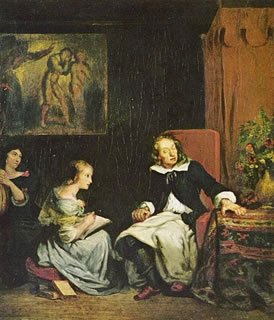
John Milton werd geboren op 9 december 1608 in Londen. Zie ook alle tags voor John Milton op dit blog.


Uit: Paradise Lost (Book I)


„Say first, for Heav'n hides nothing from thy view

Nor the deep Tract of Hell, say first what cause

Mov'd our Grand Parents in that happy State,

Favour'd of Heav'n so highly, to fall off

From thir Creator, and transgress his Will

For one restraint, Lords of the World besides?

Who first seduc'd them to that foul revolt?

Th' infernal Serpent; he it was, whose guile

Stird up with Envy and Revenge, deceiv'd

The Mother of Mankind, what time his Pride

Had cast him out from Heav'n, with all his Host

Of Rebel Angels, by whose aid aspiring

To set himself in Glory above his Peers,

He trusted to have equal'd the most High,

If he oppos'd; and with ambitious aim

Against the Throne and Monarchy of God

Rais'd impious War in Heav'n and Battel proud

With vain attempt. Him the Almighty Power

Hurld headlong flaming from th' Ethereal Skie

With hideous ruine and combustion down

To bottomless perdition, there to dwell

In Adamantine Chains and penal Fire,

Who durst defie th' Omnipotent to Arms.

Nine times the Space that measures Day and Night

To mortal men, he with his horrid crew

Lay vanquisht, rowling in the fiery Gulfe

Confounded though immortal: But his doom

Reserv'd him to more wrath; for now the thought

Both of lost happiness and lasting pain

Torments him; round he throws his baleful eyes

That witness'd huge affliction and dismay

Mixt with obdurate pride and stedfast hate:

At once as far as Angels kenn he views

The dismal Situation waste and wilde,

A Dungeon horrible, on all sides round

As one great Furnace flam'd, yet from those flames

No light, but rather darkness visible

Serv'd onely to discover sights of woe,

Regions of sorrow, doleful shades, where peace

And rest can never dwell, hope never comes

That comes to all; but torture without end

Still urges, and a fiery Deluge, fed

With ever-burning Sulphur unconsum'd:

Such place Eternal Justice had prepar'd

For those rebellious, here thir Prison ordain'd

In utter darkness, and thir portion set

As far remov'd from God and light of Heav'n

As from the Center thrice to th' utmost Pole.

O how unlike the place from whence they fell!

There the companions of his fall, o'rewhelm'd

With Floods and Whirlwinds of tempestuous fire,

He soon discerns, and weltring by his side

One next himself in power, and next in crime,

Long after known in Palestine, and nam'd

Beelzebub. To whom th' Arch-Enemy,

And thence in Heav'n call'd Satan, with bold words

Breaking the horrid silence thus began.“


1049352-5e9a5aeb86301a55393e14b5978f63d8.jpg
John Milton (9 december 1608 – 8 november 1674)

Milton dicteert zijn dochters „Paradise Lost“, Eugène Delacroix, ca 1826


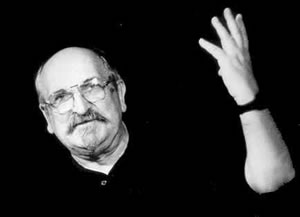
De Tsjechische psycholoog, schrijver en dichter Jan Křesadlo (pseudoniem van Václav Jaroslav Karel Pinkava) werd geboren op 9 december 1926 in Praag. Zie ook mijn blog van 9 december 2006 en ook mijn blog van 9 december 2008 en ook mijn blog van 9 december 2010.


Uit: GraveLarks (Vertaald door Václav Pinkava)


“It is about ten o’clock in the morning on a Friday. A red squirrel and a black one are chasing each another through the cemetary trees, a small blood-red mite runs around the stony labyrinths of the gravestones, houseleeks are starting to bud, bees are buzzing from flower to flower and so on.

The graveyard is pulsating with the joy of life and at this moment Zderad is engaged in his cover occupation.

A widow in mourning leans on her son’s arm, crying, the priest sprinkles the grave with holy water and the gravediggers have already put the straps around their shoulders.

The white handkerchiefs contrast aesthetically with the black clothing.

The last farewells are underway and the quartet intones the favourite song of the deceased:

“O’er the lake of Stachov,
Ruffled by the breeze,
O’er the lake they’re flying,:
Flocks of wild grey geese..”

In his choice of song the dead shoemaker displays unusually good taste of a clearly archetypally superindividualistic origin.

Kukula has piously arranged the beautiful, simple, mildly melancholy melody, without forgetting to make use of the “waldhornquinten” harmonies, to which the melody lends itself. The main harmonic tricks occur in the second tenor and Zderad is performing them with gusto.

It is not Lake Stachov, which he doesn’t know, that emerges in his mind’s eye, but the wide and glistening surface of Lake Posel. He contemplates the fact that he not only has enough money to take up his detective work, but also to drop in on Sylva’s birthplace, to surprise both wife and son and possibly even to establish a friendly relationship with the old ram. After all he might have conceded by now that it’s no use by his own standards, since he recognises neither illegitimate children nor divorces.“


 1049352-9c257fa5a4521c6d3f7fe5cfb8e0a7b5.jpg

Jan Křesadlo (9 december 1926 - 13 augustus 1995)


De Wit-Russische (Belarussische) dichter, journalist en criticus Maksim Bahdanovič werd geboren op 9 december 1891 in Minsk. Zie ook mijn blog van 9 december 2006 en ook mijn blog van 9 december 2008 en ook mijn blog van 9 december 2010.


Uit: In The Village


Once upon a working day in summer-time
I passed through a village. In a dreary line
On both sides of the winding narrow lane, the houses
Stood there, grey, decayed, like old rags, dull and frowsty;
In the walls their windows staring blindly back,
And even the thatch itself was rotted black.
All was ruins, grown old; here death had come crawling.
Only here and there was something still adorning
The village dreariness. The poppy still unfurled
Bright flowers like butterflies, where many colours swirled,
Beside the path, and with them made the soul grow carefree.
Then, too, one might notice here and there a pear-tree,
Crooked, gnarled with age. . . and that, indeed, was all —
But no one to be seen, no people, none at all —
All in the fields. No trace of bright skirt for a moment,
No new bride passed with pails to bear the water homeward.
No white caps of peasants to be seen, nowhere,
No sounds of colts’ neighing echoes in the air,
No sad song was heard, floating, ringing, flying.
Then, how strange! There came the sound of infant crying.
Hearing this, I started and looked round. Alas!
I’d scared a little boy. He crawled upon the grass
Beside the path, on hands and knees, poor little baby,
Towards his nursemaid — she a girl of eight years, maybe —
And now he’d reached her, and into her lap straightway
He hid his little head, voice fearful with dismay,
And, as the tip of a small birch nods in the breezes,
The girl bent to the little boy to calm and ease him.
And wiped his tears, and started murmuring to him,
Exactly, as a mother would. And thus, within
One living form, the two mingled and merged together,
The stature of a girl, the manner of a mother.
At that moment she, childlike in form, and thin,
Seemed sudden to appear filled to the very brim
With some far-spreading native loveliness within her,
And, I recall, my soul grew finer for an instant,
But maybe in the girl it was not loveliness —
In that thin, grubby, puny lit tle girl expressed —
But something higher which great Raphael endeavoured
To show through the features of Our Lord’s own Mother.


Vertaald door Vera Rich


 1049352-8de181ac03aba96059fe99cb6ad924ee.jpg

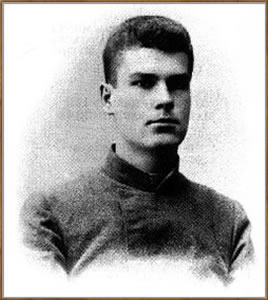
Maksim Bahdanovič (9 december 1891 – 25 mei 1917)


De Amerikaanse schrijver en sceenwriter James Dalton Trumbo werd geboren op 9 december 1905 in het plaatsje Montrose in Colorado. Zie ook mijn blog van 9 december 2008 en ook mijn blog van 9 december 2010.


Uit: Johnny Got His Gun


„He froze all over stiff and rigid like a dead cat. There was something wrong about this pricking and pulling and friction heat. He could feel the things they were doing to his arm and yet he couldn't rightly feel his arm at all. It was like he felt inside his arm. It was like he felt through the end of his arm. The nearest thing he could think of to the end of his arm was the heel of his hand. But the heel of his hand the end of his arm was high high high as his shoulder.

Jesus Christ they'd cut his left arm off.

They'd cut it right off at the shoulder he could feel it plain now.

Oh my god why did they do a thing like that to him?

They couldn't do it the dirty bastards they couldn't do it. They had to have a paper signed or something. It was the law. You can't just go out and cut a man's arm off without asking him without getting permission because a man's arm is his own and he needs it. Oh Jesus I have to work with that arm why did you cut it off? Why did you cut my arm off answer me why did you cut my arm off? Why did you why did you why did you?

He went down into the water again and fought and fought and then came up with his belly jumping and his throat aching. And all the time that he was under the water fighting with only one arm to get back he was having conversation with himself about how this thing couldn't possibly happen to him only it hadSo they cut myarm off. How am I going to work now? They don't think of that. They don't think of anything but doing it their own way. Just another guy with a hole in his arm let's cut it off what do you say boys? Sure cut the guy's arm off. It takes a lot of work and a lot of money to fix up a guy's arm. This is a war and war is hell and what the hell and so to hell with it. Come on boys watch this. Pretty slick hey? He's down in bed and can't say anything and it's his tough luck and we're tired and this is a stinking war anyhow so let's cut the damn thing off and be done with it.“


 1049352-6fdf60b983447bbd547474d1575b8cf8.jpg

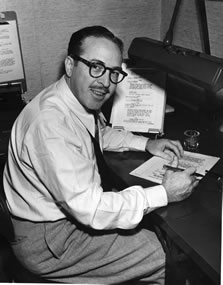
Dalton Trumbo (9 december 1905 – 10 september 1976)

Geschreven door Romenu om 19:51 Reageer op dit bericht

Meer van Romenu

↑ Terug naar de berichten