

Naar de inhoud

Romenu

Over literatuur, gedichten, kunst en cultuur
seniorennet.beseniorennet.be

Berichten van 21 februari 2011

Herman de Coninck, Chuck Palahniuk, Hans Andreus, Wystan Hugh Auden, Laure Limongi, David Foster Wallace
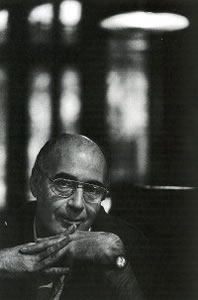
De Vlaamse dichter, essayist, journalist en tijdschriftuitgever Herman de Coninck werd geboren in Mechelen op 21 februari 1944. Zie ook mijn blog van 21 februari 2007 en ook mijn blog van 21 februari 2008 en ook mijn blog van 21 februari 2009 en ook mijn blog van 21 februari 2010.


Middenin de vlakte van juli


Middenin de vlakte van juli
kwam ik je tegen. Ik woon hier, zei je.
Ik keek naar de bloemen. Ja, dat zie ik,
zei ik, en waar leerde je de kunst
om niet lang te duren? Ook hier, zei je.


Je was lenig; en je woorden waren zo
doorschijnend, ik kon je er helemaal
door zien.
En daar lag ik al in het gras
en wat hield ik in mijn hand?
Een oortje, waarin het lange woord
'lieveling' uitgoot, zonder morsen.


Foto


Weemoed is een foto van voor twintig jaar.
Familie, nog samen, nog gezond.
Is toen. Met een lijst van nu errond.
Het nu houdt het verleden bij elkaar.


En omgekeerd. Want nu is maar even.
Is opschrikken en vragen:
waar waren we gebleven?
Bij jou. In Die Dagen.


Alles is ver. En de liefste dingen nog verder.
Maar door het verleden wordt het bij elkaar
gehouden, als schapen door een herder.


De spoorbaan ligt mijlen verder daarbuiten


De spoorbaan ligt mijlen verder daarbuiten.
De kamer is vol vrolijk gepraat.
En toch hoor ik die ene trein die er slechts staat
minstens tien keer per dag fluiten.


De hele nacht komt er geen trein voorbij.
De hele nacht is stil van slapen en van kreunen.
En toch zie ik de rode gensters uit zijn schouw
en hoor ik zijn machines steunen.


Mijn hart is vol van vrienden en van jou.
Beter gezelschap vind ik nooit meer in dit leven.
En toch is er geen trein die ik niet nemen zou,
waarheen is mij om het even.


857891-8cea6335c97fd635be03b9d669ca5018.jpg
Herman de Coninck (21 februari 1944 - 22 mei 1997)


De Amerikaanse schrijver en journalist Chuck Palahniuk werd geboren op 21 februari 1962 in Pasco, Washington. Zie ook mijn blog van 21 februari 2009 en ook mijn blog van 21 februari 2010.


Uit: Survivor


“The way I live, it's hard enough to bread a veal cutlet. Some nights it's different; it's fish or chicken. But the minute my one hand is covered in raw egg and the other's holding the meat someone is going to call me in trouble.

This is almost every night of my life now.

Tonight, a girl calls me from inside a pounding dance club. Her only words I can make out are "behind."

She says, "asshole."

She says what could be "muffin" or "nothing." The fact of the matter is you can't begin to fill in the blanks so I'm in the kitchen, alone and yelling to be heard over the dance mix wherever. She sounds young and worn out, so I ask if she'll trust me. Is she tired of hurting? I ask if there's only one way to end her pain, will she do it?

My goldfish is swimming around all excited inside the fishbowl on the fridge so I reach up and drop a Valium in its water.

I'm yelling at this girl: has she had enough?

I'm yelling: I'm not going to stand here and listen to her complain.

To stand here and try to fix her life is just a big waste of time. People don't want their lives fixed. Nobody wants their problems solved. Their dramas. Their distractions. Their stories resolved. Their messes cleaned up. Because what would they have left? Just the big scary unknown.

Most people who call me already know what they want. Some want to die but are just looking for my permission. Some want to die and just need a little encouragement. A little push. Someone bent on suicide won't have much sense of humor left. One wrong word, and they're an obituary the next week. Most of the calls I get, I'm only half listening anyway. Most of the people, I decide who lives and who dies just by the tone of their voice.”


 857891-bb44c0d506ec9de15ea167ca86f8e9cb.jpg

Chuck Palahniuk (Pasco, 21 februari 1962)


De Nederlandse dichter en prozaschrijver
Hans Andreus werd geboren in Amsterdam op 21 februari 1926. Zie ook
mijn blog van 21 februari 2007 en ook mijn blog van 21 februari 2008 en ook mijn blog van 21 februari 2009 en ook mijn blog van 21 februari 2010.


In het twee en dertigste jaar


Ik ben nog nooit zo geweest:

na een en dertig jaar zo klein als een schelp

en zo moe als een oud huis,

waarin spoken tekeer gaan, onvermoeibaar,


Géén schelp, geen huis. Wel het vluchtend omhulsel

van het sidderende dier, levensgroot verschrikt,

dat mijn naam draagt. Maar de naam liefde?

Zo dikwijls die naam en zo zelden die stilte.


Ik heb nu meer dan een en dertig jaar

niet veel rust gehad, de simpele, die van mensen:

ergens naar kijken of luisteren, niet meer denken,

slapen als een kind.


Lieveling zeg niets. Ik ben een vinger,

die alles verkeerd doet zodat hij kan schrijven.

Schrijven en weer schijven. Ik wilde mijn ogen

wel sluiten en slapen als een schip aan je huid.


Mijn redenen ken ik niet. Heb ik mij gekozen

toen ik nog licht was, een vergeetachtig soort

latere engel? Woorden zijn vals,

woorden zijn katten die krols zijn van wijsheid.


Ik wilde wel slapen als een kind op het strand,

als het kind dat ik niet geweest ben, de man

die niet uit het kind kon groeien, de mens

die nu dan hardloopt in mij, gekke sprinter.


Lieveling, zeg niet. Ik heb zo lang,

eigenlijk zò lang geleefd, het is belachelijk.

Maak als je kunt dat mijn ogen gaan rusten

en dat àchter mijn ogen: de schreeuwende leegte,


waarachter mijn god die dwaas van de liefde.


Liggen in de zon


Ik hoor het licht het zonlicht pizzicato

de warmte spreekt weer tegen mijn gezicht

ik lig weer dat gaat zo maar niet dat gaat zo

ik lig weer monomaan weer monodwaas van licht.


Ik lig languit lig in mijn huid te zingen

lig zacht te zingen antwoord op het licht

lig dwaas zo dwaas niet buiten mensen dingen

te zingen van het licht dat om en op mij ligt


Ik lig hier duidelijk zeer zuidelijk lig zonder

te weten hoe of wat ik lig alleen maar stil

ik weet alleen het licht van wonder boven wonder

er ik weet alleen maar alles wat ik weten wil.


857891-8530dd432857b18fdda359fa17bc7a99.jpg
Hans Andreus (21 februari 1926 – 9 juni 1977)


De Engelse dichter, essayist en criticus Wystan Hugh Auden werd geboren in York op 21 februari 1907. Zie ook mijn blog van 21 februari 2007 en ook mijn blog van 21 februari 2008 en ook mijn blog van 21 februari 2009 en ook mijn blog van 21 februari 2010.


Two Songs For Hedli Anderson


I

Stop all the clocks, cut off the telephone,

Prevent the dog from barking with a juicy bone,

Silence the pianos and with muffled drum

Bring out the coffin, let the mourners come.


Let aeroplanes circle moaning overhead

Scribbling on the sky the message He Is Dead,

Put crêpe bows round the white necks of the public

    doves,

Let the traffic policemen wear black cotton gloves.


He was my North, my South, my East and West,

My working week and my Sunday rest,

My noon, my midnight, my talk, my song;

I thought that love would last for ever: I was wrong.


The stars are not wanted now: put out every one;

Pack up the moon and dismantle the sun;

Pour away the ocean and sweep up the wood.

For nothing now can ever come to any good.


II

O the valley in the summer where I and my John

Beside the deep river would walk on and on

While the flowers at our feet and the birds up above

Argued so sweetly on reciprocal love,

And I leaned on his shoulder; 'O Johnny, let's play':

But he frowned like thunder and he went away.


O that Friday near Christmas as I well recall

When we went to the Charity Matinee Ball,

The floor was so smooth and the band was so loud

And Johnny so handsome I felt so proud;

'Squeeze me tighter, dear Johnny, let's dance till it's day':

But he frowned like thunder and he went away.


Shall I ever forget at the Grand Opera

When music poured out of each wonderful star?

Diamonds and pearls they hung dazzling down

Over each silver and golden silk gown;

'O John I'm in heaven,' I whispered to say:

But he frowned like thunder and he went away.


O but he was fair as a garden in flower,

As slender and tall as the great Eiffel Tower,

When the waltz throbbed out on the long promenade

O his eyes and his smile they went straight to my heart;

'O marry me, Johnny, I'll love and obey':

But he frowned like thunder and he went away.


O last night I dreamed of you, Johnny, my lover,

You'd the sun on one arm and the moon on the other,

The sea it was blue and the grass it was green,

Every star rattled a round tambourine;

Ten thousand miles deep in a pit there I lay:

But you frowned like thunder and you went away.


 857891-6f56bf20cd63d6106239e0301929f817.jpg

W. H. Auden (21 februari 1907 – 29 september 1973)


De Franse schrijfster Laure Limongi werd geboren op 21 februari 1976 in Bastia (Corsica). Zie ook mijn blog van 21 februari 2009 en ook mijn blog van 21 februari 2010.


Uit: Orchidées & salami


« ... Et puis il y a ce garçon du lycée. Il est un peu style rocker mais avec des yeux gentils. De longs cils. Cuir et jean et coton. Sand porte des socquettes blanches dans ses chaussures vernies car l’établissement l’impose mais c’est encore pire. L’effet, l’écart. Pretty dirty. Il pourrait s’appeler Bob ou Fred et ses parents à elle ne seraient pas contents. Trop jeune, trop tôt. La fille rentre tard. Elle rêve toujours. L’abandon substitut oh trace d’amour. Socquette sale ou bien ? Culotte en coton (c’est encore pire). Elle découvre que ses hanches qui percent la peau (pas trop), c’est absolument sexy. Râle, râle, râle jusqu’au profond profond. Lui, il est bien content de son arcade sourcilière romantique car ça bouillonne à l’intérieur. Il faut trouver un écho, des. Il lui dit « je t’aime oh bébé tu es belle j’ai envie de toi » mais sa pensée volage. Elle n’englue pas son souvenir. Elle, ni son visage ni son regard. Ni aucune. Sa pensée à lui est pire qu’un papillon, pire pute encore. Il pourrait sans doute même se gourrer de prénom. Le bon dieu sans confession et la moue ravageuse, c’est la caution rock&roll et la moto en prime. Au moins le blouson. Sand. Elle le regarde et le dévore et se laisse prendre. Un substitut aux affiches toujours un peu froides, toujours un peu lointaines, mal punaisées. Et composées. Ça se décolle et la béance. Fan, fan, femme. Oh mon Bobby/Freddy, t’accaparer seulement. T’accaparer. Puis rentrer dans le pavillon familial d’un sourire d’il y a quelques années d’innocence (ou presque). OU bien la révolte. Cris, coups, scandale, portes claquées.


857891-027d3afbed7b214577f79f420f785e00.jpg
Laure Limongi (Bastia 21, februari 1976)


De Amerikaanse schrijver David Foster Wallace werd geboren op 21 februari 1962 in New York. Zie ook mijn blog van 21 februari 2009 en ook mijn blog van 21 februari 2010.


Uit: All That


„Once when I was a little boy I received as a gift a toy cement mixer. It was made of wood except for its wheels—axles—which, as I remember, were thin metal rods. I’m ninety per cent sure it was a Christmas gift. I liked it the same way a boy that age likes toy dump trucks, ambulances, tractor-trailers, and whatnot. There are little boys who like trains and little boys who like vehicles—I liked the latter.

It was (“it” meaning the cement mixer) the same overlarge miniature as many other toy vehicles—about the size of a breadbox. It weighed three or four pounds. It was a simple toy—no batteries. It had a colored rope, with a yellow handle, and you held the handle and walked pulling the cement mixer behind you—rather like a wagon, although it was nowhere near the size of a wagon. For Christmas, I’m positive it was. It was when I was the age where you can, as they say, “hear voices” without worrying that something is wrong with you. I “heard voices” all the time as a small child. I was either five or six, I believe. (I’m not very good with numbers.)

I liked the cement mixer and played with it as much as or more than I played with the other toy vehicles I owned. At some point, several weeks or months after Christmas, however, my biological parents led me to believe that it was a magic and/or highly unusual cement mixer. Probably my mother told me this in a moment of adult boredom or whimsy, and then my father came home from work and joined in, also in a whimsical way. The magic—which my mother likely reported to me from her vantage on our living room’s sofa, while watching me pull the cement mixer around the room by its rope, idly asking me if I was aware that it had magical properties, no doubt making sport of me in the bored half-cruel way that adults sometimes do with small children, playfully telling them things that they pass off to themselves as “tall tales” or “childlike inventions,” unaware of the impact those tales may have (since magic is a serious reality for small children), though, conversely, if my parents believed that the cement mixer’s magic was real, I do not understand why they waited weeks or months before telling me of it.


 857891-a06d75448e0ab91da525c30ea357940a.jpg

David Foster Wallace (21 februari 1962 – 12 september 2008)


Zie voor nog meer schrijvers van de 21e februari ook mijn vorige blog van vandaag.
Geschreven door Romenu om 19:54 Reageer op dit bericht

Ha Jin, Anaïs Nin, Raymond Queneau, Ingomar von Kieseritzky, Ishigaki Rin, José Zorrilla y Moral, Justus van Effen

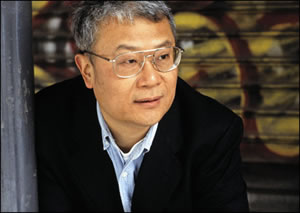
De Chinees-Amerikaanse schrijver Ha Jin werd geboren op 21 februari 1956 in Jinzhou, China. Zie ook mijn blog van 21 februari 2009 en ook mijn blog van 21 februari 2010.


Uit: A Good Fall


„The Bane of the Internet

My sister Yuchin and I used to write each other letters. It took more than ten days for the mail to reach Sichuan, and usually I wrote her once a month. After Yuchin married, she was often in trouble, but I no longer thought about her every day. Five years ago her marriage began falling apart. Her husband started an affair with his female boss and sometimes came home reeling drunk. One night he beat and kicked Yuchin so hard she miscarried. At my suggestion, she filed for divorce. Afterward she lived alone and seemed content. I urged her to find another man, because she was only twenty-six, but she said she was done with men for this life. Capable and with a degree in graphic design, she has been doing well and even bought her own apartment four years ago. I sent her two thousand dollars to help her with the down payment.

Last fall she began e-mailing me. At first it was exciting to chat with her every night. We stopped writing letters. I even stopped writing to my parents, because she lives near them and can report to them. Recently she said she wanted to buy a car. I had misgivings about that, though she had already paid off her mortgage. Our hometown is small. You can cross by bicycle in half an hour; a car was not a necessity for her. It’s too expensive to keep an automobile there—the gas, the insurance, the registration, the maintenance, the toll fees cost a fortune. I told her I didn’t have a car even though I had to commute to work from Brooklyn to Flushing. But she got it into her head that she must have a car because most of her friends had cars. She wrote: “I want to let that man see how well I’m doing.” She was referring to her ex-husband. I urged her to wipe him out of her mind as if he had never existed. Indifference is the strongest contempt. For a few weeks she didn’t raise the topic again.

Then she told me that she had just passed the road test, bribing the officer with five hundred yuan in addition to the three thousand paid as the application and test fees. She e-mailed: “Sister, I must have a car. Yesterday Minmin, our little niece, came to town driving a brand-new Volkswagen. At the sight of that gorgeous machine, I felt as if a dozen awls were stabbing my heart. Everybody is doing better than me, and I don’t want to live anymore!”


857880-7768ab2395f62de512d58b7f47e4ed74.jpg
Ha Jin (Jinzhou, 21 februari 1956)


De Franse schrijfster Anaïs Nin werd geboren op 21 februari 1903 in Neuilly. Zie ook mijn blog van 21 februari 2007  en ook mijn blog van 21 februari 2008 en ook mijn blog van 21 februari 2009 en ook mijn blog van 21 februari 2010.


Uit: Journal 1931 ~ 1934


„Je revins, après l'avoir accompagnée à la gare, étourdie, épuisée, euphorique, heureuse, malheureuse.

Nous nous retrouvâmes le lendemain à l'American Express. Elle portait son costume tailleur parce que j'avais dit qu'il me plaisait (...) J'étais heureuse et June exultait. Nous parlions simultanément. "J'ai voulu vous téléphoner hier soir." June déclara : "Je voulais vous dire combien j'étais malheureuse" (...) Nous avions la même crainte de nous déplaire l'une à l'autre, de nous décevoir. Elle était allée au café retrouver Henry. " Je me sentais comme droguée. Vous occupiez toutes mes pensées. Des bruits de voix m'arrivaient de loin. J'étais euphorique. Je n'ai pas fermé l'œil de la nuit. Qu'est-ce que vous m'avez fait ?".

Elle ajouta : " J'ai toujours su garder mon sang-froid, j'ai toujours bien su parler. Jamais personne ne m'a fait perdre la tête.

Lorsque je compris ce qu'elle me révélait, je fus transportée de joie. Moi lui faire perdre la tête à elle ? C'est donc qu'elle m'aimait ? June ! Elle s'assit à côté de moi au restaurant, petite, timide, effacée, apeurée et j'étais émue, je pouvais à peine supporter mon émotion.

Lorsque nous avons poursuivi notre promenade, serrées l'une contre l'autre, bras dessus, bras dessous, la main dans la main, j'étais dans une telle extase que je ne pouvais parler. La ville disparut, les gens également. La joie si vive de notre promenade ensemble à travers les rues grises de Paris restera toujours pour moi inoubliable, et jamais je ne pourrai la décrire. Nous marchions au-dessus du monde, au-dessus de la réalité, dans la pure, pure extase."


 857880-b4127a61cd4bf40f1892c3a78d012f66.jpg

Anaïs Nin (21 februari 1903 – 14 januari 1977)


De Franse schrijver
Raymond Queneau werd geboren op 21 februari 1903 in Le Havre. Zie ook mijn blog van 21 februari 2007 en ook mijn blog van 21 februari 2008 en ook mijn blog van 21 februari 2009 en ook mijn blog van 21 februari 2010.


Uit: Exercices de style


„Rêve


Il me semblait que tout füt brumeux et nacré autour de moi, avec des présences multiples et indistinctes, parmi lesquelles cependant se dessinait assez nettement la seule figure d'un homme jeune dont le cou trop long semblait annoncer déjà par lui-même le caractère à la fois lâche et rouspéteur du personnage. Le ruban de son chapeau était remplacé par une ficelle tressée. Il se disputait ensuite avec un individu que je ne voyais pas, puis, comme pris de peur, il se jetait dans l'ombre d'un couloir.


Une autre partie du rêve me le montre marchant en plein soleil devant la gare Saint-Lazare. Il est avec un compagnon qui lui dit : «tu devrais faire ajouter un bouton à ton pardessus.»

Là-dessus, je m'éveillai.


Synchyses


Ridicule jeune homme, que je me trouvai un jour sur un autobus de la ligne S bondé par traction peut-être cou allongé, au chapeau la cordelière, je remarquai un. Arrogant et larmoyant d'un ton, qui se trouve à côté de lui, contre ce monsieur, proteste-t-il. Car il le pousserait, fois chaque que des gens il descend. Libre il s'assoit et se précipite vers une place, ceci dit. Rome (Cour de) je le rencontre plus tard deux heures à son pardessus un bouton d'ajouter un ami lui conseille.“


857880-e24618c6717d04b87bd31631eb3ba35d.jpg
Raymond Queneau (21 februari 1903 – 25 oktober 1976)


De Duitse schrijver Ingomar von Kieseritzky werd geboren op 21 februari 1944 in Dresden. Zie ook mijn blog van 21 februari 2009 en ook mijn blog van 21 februari 2010.


Uit: Da kann man nichts machen


„Sein Gedicht über den Orientexpreß und die berühmte Riesenlokomotive Buddicom war erst in einem zarten Anfangsstadium, und über die erste Zeile kam er einfach nicht hinaus -

O, Buddicom der CIWL, umgürtet von
Schwarzen Lenden aus Stahl! Illuminiert 
von feurigen Funken, beben deine Lenden. 

Zwei farbenprächtige Bücher lagen auf einem Kulturbeutel, die Vicovic mit großem Interesse in die Hand nahm. Das eine Buch hieß Herzen in Flammen von einer gewissen Vanessa Wolf. Auf dem Umschlag sah man eine nackte, junge Dame mit milchweißen Brüsten, die auf einem schwarzen Hengst saß. 
Das zweite Buch war von einer Joyce Palmer - hier schmiegte sich eine junge Dame mit Dekolleté an einen Riesen, der lange Bodybuilding getrieben hatte; der Titel: Prinzessin des Wahnsinns. 
Der romantische Leser Vicovic legte die beiden Schätze vorsichtig auf den abschüssigen Schoß des bleichen Gastes; zu späterem Gebrauch. Herr Randolf v. K. starrte gleichmütig ins Nichts, während Vicovic den Kulturbeutel untersuchte. Einmal, vor Jahren, hatte er in einem verwaisten Necessaire kostbare Lotionen, Parfum-Flacons und herrlich duftende Seifen gefunden und für seine Frau eine exklusive Crème gegen Damenbärte. Neben belanglosen Toilettenartikeln fand sich ein hübsches Arsenal von Medikamenten, mit denen er seine Taschen polsterte; Medikamente aus dem Westen waren teuer und gut, und er dachte vage an seine ewigen Magenschmerzen, seinen Gichtzeh, auch Podagra genannt, und einen dunklen Schmerz unterhalb des Herzens, der ihn überfiel, wenn er ein schönes Gedicht las. Der Rest des Tascheninhaltes war leider unbrauchbar; es handelte sich um einen Aktenordner mit genealogischen Tafeln, einen Haufen von Stadtplänen, und in der untersten Schicht fand sich ein broschiertes Bändchen, auf dem eine schwarze Rose in einem weißen Feld blühte: Meine Reinkarnationen von E. Landau. Ein hochinteressanter Reisender, der da vor ihm saß, Knie an Knie, aber die Ausbeute war leider nicht so ergiebig, wie Vicovic gehofft hatte. 
Das Buch über die Reinkarnationen steckte er ein. 
In einer Tasche fand sich ein ordentlich an der Seite gelochtes Manuskript, voll von wilden Flecken und Tintenklecksen, in einer kleinen, runden Handschrift. Ein Teil war auf einer uralten Schreibmaschine mit fehlenden Buchstaben getippt. 
Vielleicht ein Roman?“ 


857880-1cc521819dfbb6d9fb8a3a716d58499a.jpg
Ingomar von Kieseritzky (Dresden, 21 februari 1944)


De Japanse dichteres Ishigaki Rin werd geboren op 21 februari 1920 in Tokio. Zie ook mijn blog van 21 februari 2009 en ook mijn blog van 21 februari 2010.


Words


A line of a poem floats into my mind

Vividly

Then suddenly deserts me.

Like the fish that got away

Sometimes it never comes back

There are times days and months later

When it appears right before my eyes.

In June last year

I met by chance in an underwater viewing platform in Okinawa

A fish as big as a parrot-fish.

Staring at me full in face from behind the glass

It departed, completely unruffled.

Appeared again and departed once more.

What was it?

The eye that stared at me?

As far as that fish is concerned

Who can say that I am not words?


Vertaald door Leith Morton


 857880-d3ee8f01beaffe6fadc1e433056001ef.jpg

Ishigaki Rin (21 februari 1920 – 26 december 2004)

Tokyo 


De Spaanse dichter en schrijver José Zorrilla y Moral werd geboren op 21 februari 1817 in Valladolid. Zie ook mijn blog van 21 februari 2009 en ook mijn blog van 21 februari 2010.


Uit: Don Juan Tenorio


„DON JUAN:   (Cosing the letter)

I've signed and sealed it.

Ciutti?

CIUTTI:  Sir?

DON JUAN: This message, yield it

to her now, let it appear

in the hands of doña Inés,

inside her book of prayers.

CIUTTI:  Should I wait for an answer?


DON JUAN: From that devil that guards her,

that attends her, her dueña,

who knows my every intention,

you will pick up a key, she'll mention

a time and a signal,

and swift as the wind

you be back here again.

CIUTTI: Fine. (He leaves.)


SCENE II.

Doña Ines, Don Juan , Buttarelli

DON JUAN:Cristófano, vieni quá. ( In

BUTTARELLI: Eccellenenza!

DON JUAN: Senti.

BUTTARELLI: Sento.

Ma ho imparato il castigliano,

se è più facile al signor

la sua lingua...

DON JUAN: (Spanish)Sí, es mejor:

lascia dunque il tuo toscano,

And tell me, has Don Luis Mejía.

been here today?“


 857880-d7fa32ebe388e3b2d3c956971fa1dca7.jpg

José Zorrilla y Moral (21 februari 1817 – 23 januari 1893)

Portret door Antonio Maria Esquivel


De Nederlandse schrijver Justus van Effen werd geboren in Utrecht op 21 februari 1684. Zie ook mijn blog van 21 februari 2007 en ook mijn blog van 21 februari 2009 en ook mijn blog van 21 februari 2010.


Uit: No. 1. Den 20. Augusty 1731. De Hollandsche Spectator.


„HEt Engelsch Werk, 't welk ik voorgenoomen heb in myn moedertaal, niet over te zetten, maar na te bootzen, is zyn eerste oorspronk aan een edelmoedige vrindschap verschuldigd. De Heer Steele bevond zig, zoo door zyn eygen los gedrag, als door de verkwisting van een onbezonne Huysvrouw, in een zeer groote verleegenheid, waar uit hy door een gerînge bystand onmooglyk konde verlost worden. De vermaarde Heer Addison deszelfs boezemvrind, voorzien van zoo veel deugden als gaaven des verstands, was al te teeder en inschikkende om den man in 't ongeluk, waar in hy zig ten deele door zyn eygen schuld gestort had, te laaten kwynen en vergaan; zyn liefde voor den ongelukkige scherpte zyn vernust op, en deed hem een middel uitvinden om zyn Vrind een genoegzaam, en gedurig onderstand te verschaffen. Wat versind hy? Hy maakt enige andere fraye Geesten op, boezemd den zelven in het meedelyden, 't geen hy voor den verstandige Steele gevoeld, overreed haar tot het voorneemen van hem kragtdaadiglyk te ondersteunen, niet door haar beurs, 't welk, volgens 't gemeene noodlot der Geleerden, weinig zoude geholpen hebben, maar door de aardige voorbrengzelen van haar verstand. Om zulks werkstellig te maaken, vergaderde deze Heeren dagelyks gezaamentlyk met het voorwerp van hun medelyden.“


857880-d834c9228bc1edaddadc382dee6ed84f.jpg
Justus van Effen (21 februari 1684 - 18 september 1735)

Geschreven door Romenu om 19:47 Reageer op dit bericht

Meer van Romenu

↑ Terug naar de berichten