Christoph Meckel, Wolfgang Herrndorf, Anne Frank, Renan Demirkan, Djuna Barnes, Johanna Spyri

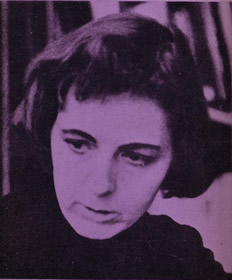
De Duitse dichter, schrijver en graficus Christoph Meckel werd geboren op 12 juni 1935 in Berlijn. Zie ook alle tags voor Christopher Meckel op dit blog.
Dieser Tag
Alle Guten Geister für diesen Tag!
Der Wind strömt stark und warm.
Das Grosse Licht baut den Tag auf.
Bienen und Kraniche über der Brandung.
Als hätte die Schöpfung nocheinmal begonnen.
Kein vorletzter Tag, kein letzter
und das Meer bewegt lebendige Finsternis.
Das Haus, im Schwirren der Vogelflüge
fliegt auf in die Pinien.
Freude, das Wort aufersteht
nicht geraubt, nicht gesäubert.
Wir hängen die Schuhe hinaus in den Wind
und er füllt sie mit Schmetterling
und Samen der Steine.
Ein paar Sätze, die ich dir zurufen wollte
für heute, für morgen,
für sieben Leben, kein Ende —
Die Märchen, die Wunder sind alt...
– Gott hat dem Menschen wahrlich
sehr wenige Märchen gegeben –
(Mihály Babits)
Die Märchen, die Wunder sind alt
Und ausgeweidet wie Schlachtvieh.
Neue sind nicht erschienen. Der Gott ist fort,
ihm gehört das Wunder, Nichts zu sein
in den Räumen draussen.
Die Glocke ist ein Gefäss für Laut und Klang
Und dem Wunder am nächsten, und ist kein Wunder.
Die Kerze hält Licht und Feuer fest,
dem Wunder am nächsten, und ist kein Wunder.
Der Vogel ist von allem das Gegenteil
und dem Märchen am nächsten, und ist kein Märchen.
Am Morgen schrie der Sperber im Sprühnebel draussen.
Christoph Meckel (Berlijn, 12 juni 1935)
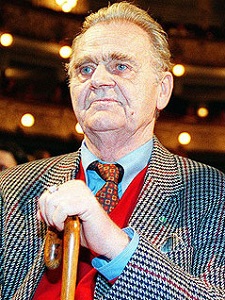
De Duitse schrijver, schilder en illustrator Wolfgang Herrndorf werd geboren op 12 juni 1965 in Hamburg. Zie ook alle tags voor Wolfgang Herrndorf op dit blog.
Uit: Sand
„Polidorio hatte einen IQ von 102, errechnet nach einem Fragebogen für französische Schulkinder im Alter von zwölf bis dreizehn Jahren. Den Fragebogen hatten sie im Kommissariat als Packpapier für in Marseille gedruckte Formulare gefunden und nacheinander mit Bleistift ausgefüllt, in der vorgeschriebenen Zeit. Polidorio war schwer betrunken gewesen. Canisades auch. Es war die lange Nacht der Akten.
Zweimal im Jahr wurden auf den Fluren Berge aus Papier aufgetürmt, flüchtig durchgesehen und im Hof verbrannt, eine lästige Pflicht, die oft bis zum Morgengrauen dauerte und traditionell an den Dienstjüngsten hängenblieb. Warum manche Akten weggeworfen und andere aufbewahrt wurden, konnte niemand erklären. Man hatte die Verwaltung von den Franzosen übernommen, wie man eine Höflichkeitsformel übernimmt, und der bürokratische Aufwand stand in keinem Verhältnis zum Nutzen. Die wenigsten Angeklagten konnten lesen und schreiben, Gerichtsverfahren waren kurz.
Mitten in der Nacht hatte es im Kommissariat einen Stromausfall gegeben, Polidorio und Canisades waren stundenlang damit beschäftigt gewesen, jemanden aufzutreiben, der einen Vierkantschlüssel für den Sicherungskasten besaß. Eine Weile hatten sie bei Kerzenschein weitergearbeitet, und unter dem Einfluss von Kif und Alkohol war ihre Ermüdung in Euphorie umgeschlagen. Sie veranstalteten im Hof Schneeballschlachten mit zerknülltem Papier und auf den Gängen eine Verfolgungsjagd mit rollenden Aktenschränken. Canisades erklärte sich zu Emerson Fittipaldi, Polidorio setzte mit einer Zigarette einen Abfallhaufen in Brand, dann fiel aus einer umgestürzten Hängeregistratur ein Packen Spezialausweise aus der Kolonialzeit. Sie spannten die Ausweise in die Schreibmaschine, trugen Phantasienamen ein und stolperten damit im Licht des hereinbrechenden Tages gemeinsam ins Bordell («Sonderermittler des Tugendkomitees, Bédeux mein Name»)
Und davor eben der verhängnisvolle IQ-Test. An die meisten Erlebnisse dieser fatalen Nacht konnte Polidorio sich hinterher nur noch undeutlich erinnern. Aber das Testergebnis blieb hängen. Einhundertzwei.
«Alkohol, Stress, Stromausfall!», rief Canisades, eine kleinbusige Schwarze auf jedem Knie. «Ist das eine Entschuldigung? Runden wir einfach auf hundert ab.»

Wolfgang Herrndorf (12 juni 1965 – 26 augustus 2013)
De Nederlandse schrijfster Anne Frank werd geboren in Frankfurt am Main op 12 juni 1929. Zie ook alle tags voor Anne Frank op dit blog.
Uit:The Diary of a Young Girl (Vertaald door B. M. Mooyart-Doubleday)
“SATURDAY, JULY 11, 1942
Dearest Kitty,
Father, Mother and Margot still can't get used to the chiming of the Westertoren clock, which tells us the time every quarter of an hour. Not me, I liked it from the start; it sounds so reassuring, especially at night. You no doubt want to hear what I think of being in hiding. Well, all I can say is that I don't really know yet. I don't think I'll ever feel at home in this house, but that doesn't mean I hate it. It's more like being on vacation in some strange pension. Kind of an odd way to look at life in hiding, but that's how things are. The Annex is an ideal place to hide in. It may be damp and lopsided, but there's probably not a more comfortable hiding place in all of Amsterdam. No, in all of Holland.
Up to now our bedroom, with its blank walls, was very bare. Thanks to Father -who brought my entire postcard and movie-star collection here beforehand -- and to a brush and a pot of glue, I was able to plaster the walls with pictures. It looks much more cheerful. When the van Daans arrive, we'll be able to build cupboards and other odds and ends out of the wood piled in the attic.
Margot and Mother have recovered somewhat. Yesterday Mother felt well enough to cook split-pea soup for the first time, but then she was downstairs talking and forgot all about it. The beans were scorched black, and no amount of scraping could get them out of the pan.
(…)
Yours,
Anne”

Anne Frank (12 juni 1929 – maart 1945)
Vader Otto Frank voor een foto van zijn dochter
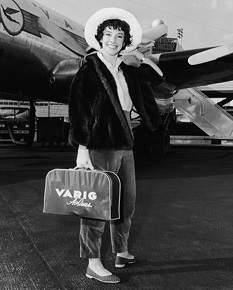
De Turks-Duitse schrijfster en actrice Renan Demirkan werd geboren op 12 juni 1955 in Ankara. Zie ook alle tags voor Renan Demirkan op dit blog
Uit: Septembertee oder Das geliehene Leben
„Es war mir immer unverständlich, wie sich Menschen festlegen können. Festlegen auf einen Beruf zum Beispiel, oder auf einen Mann fürs Leben oder aber auch auf eine »Leitkultur« für alle. Wie soll das denn gehen?, frage ich. Kein Mensch besteht aus nur einer Erfahrung. Oder aus nur einer Begegnung. Keine Kultur aus nur einer Geschichte. Das Leben ist weder monothematisch noch monokausal.
Ich selbst kann mich an keinen Tag erinnern, an dem ich von morgens bis abends immer derselbe Mensch gewesen wäre: Ich war abwechselnd und zuweilen auch gleichzeitig Tochter und Schülerin, Schwester und Freundin, Geliebte und Mutter, Türkin und Deutsche, Nachbarin, Angestellte und Kollegin. Dabei ist keines dieser Ichs eine Solistin, denn iede Erfahrung mit einem neuen Gegenüber geht »nahtlos und ohne unausgefüllte Zwischenräume« in die Erfahrung mit dem Nächsten über und »bewahrt gleichzeitig ihre Identität«, wie der Philosoph john Dewey in »Kunst als Erfahrung« schreibt.
Das heißt, man hat nie nur ein Leben, sondern besteht aus verschiedenen Paralleluniversen. Wir sind gemacht aus dem Genpool unserer Ahnen und unseren eigenen Erfahrungen. Deshalb, so Dewey, »existiert kein Mensch ausschließlich innerhalb des Bereichs seiner eigenen Haut«. Wir sind vielmehr ein Echo all der Leben, die uns abverlangt werden, und versuchen im täglichen Dazwischen mühsam, ein selbstbestimmtes und einmaliges Ich zu kreieren. Und werden dabei nur zu einem neuen Echo, nämlich dem unserer eigenen
Je mehr ich versuchte, irgendeine Art kontinuierliche Identität in mir zu finden, je Öfter ich fragte: Wer bin ich mit welchem Gegenüber? Und wie verhalte ich mich in dem jeweiligen Kontext?, desto mehr Erfahrungswelten fächerten sich in mir auf.“

Renan Demirkan (Ankara, 12 juni 1955)
De Amerikaanse schrijfster Djuna Barnes werd geboren in Cornwall-on-Hudson, Orange County in de staat New York op 12 juni 1892. Zie ook alle tags voor Djuna Barnes op dit blog.
Uit: Nightwood
“In his search for the particular Comedie humaine Felix had come upon the odd. Conversant with edicts and laws, folk story and heresy, taster of rare wines, thumber of rarer books and old wives' tales - tales of men who became holy and of beasts that became damned - read in all plans for fortifications and bridges, given pause by all graveyards on all roads, a pedant of many churches and castles, his mind dimly and reverently reverberated to Madame de Sevigne, Goethe, Loyola and Brantome. But Loyola sounded the deepest note, he was alone, apart and single. A race that has fled its generations from city to city has not found the necessary time for the accumulation of that toughness which produces ribaldry, nor, after the crucifixion of its ideas, enough forgetfulness in twenty centuries to create legend. It takes a Christian, standing eternally in the Jew's salvation, to blame himself and to bring up from that depth charming and fantastic superstitions through which the slowly and tirelessly milling Jew once more becomes the "collector" of his own past. His undoing is never profitable until some goy has put it back into such shape that it can again be offered as a "sign." A Jew's undoing is never his own, it is God's; his rehabilitation is never his own, it is a Christian's. The Christian traffic in retribution has made the Jew's history a commodity; it is the medium through which he receives, at the necessary moment, the serum of his own past that he may offer it again as his blood. In this manner the Jew participates in the two conditions; and in like manner Felix took the breast of this wet nurse whose milk was his being but which could never be his birthright.
Early in life Felix had insinuated himself into the pageantry of the circus and the theatre. In some way they linked his emotions to the higher and unattainable pageantry of Kings and Queens.”

Djuna Barnes (12 juni 1892 – 18 juni 1982)
Cover
De Italiaanse dichter en schrijver Sandro Penna werd geboren op 12 juni 1906 in Perugia. Zie ook alle tags voor Sandro Penna op dit blog.
Lady on a Streetcar
You’d like to kiss your boy who doesn’t want to:
He’d like instead to look at life outside.
You’re disappointed then, but still you smile:
At least it doesn't ache like jealousy,
Even though he already looks just like
The other who “to look at life outside”
Left you like this.
Vertaald door A.Z. Foreman
Uit: Confuso sogno
Like the April wind, my boy—
clear, light,
and a bit variable.
But in my fields
the grass is warm.
Futile to expect
a more constant caress.
*
If my boy appears
at the tavern,
the men smile at him,
surprised by the light.
But the deal changes
after that.
My boy in their rough hands,
alone, unsure of himself.
Vertaald door George Scrivani
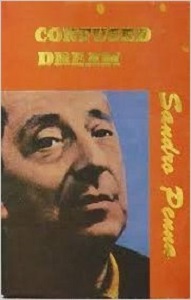
Sandro Penna (12 juni 1906 – 21 januari 1977)
Cover
De Zwitserse schrijfster Johanna Spyri werd geboren in Hirzel op 12 juni 1827. Zie ook alle tags voor Johanna Spyri op dit blog.
Uit: Heidi kann brauchen, was es gelernt hat
„Der Herr Doktor zuckte die Achseln. »Wenig«, sagte er halblaut. »Aber komm, denk einmal einen Augenblick an mich, lieber Freund! Hast du nicht ein liebes Kind, das nach dir verlangt und sich auf deine Heimkehr freut, wenn du weg bist? Nie mußt du in ein verödetes Haus zurückkehren und dich allein an deinen Tisch hinsetzen. Und dein Kind hat's auch gut daheim. Muß es auch vieles entbehren, was andere genießen können, so ist es in manch anderem auch vor vielen bevorzugt. Nein, Sesemann, ihr seid nicht so sehr zu beklagen, ihr habt es doch recht gut, so zusammenzusein; denk an mein einsames Haus!«
Herr Sesemann war aufgestanden und ging nun mit großen Schritten im Zimmer auf und ab, wie er immer zu tun pflegte, wenn ihn irgendeine Sache stark beschäftigte. Auf einmal stand er vor seinem Freunde still und klopfte ihm auf die Schulter.
»Doktor, ich habe einen Gedanken: Ich kann dich nicht so sehen, du bist ja gar nicht mehr der alte. Du mußt ein wenig aus dir heraus, und weißt du, wie? Du sollst die Reise unternehmen und das Kind Heidi auf seiner Alp besuchen in unser aller Namen.«
Der Herr Doktor war sehr überrascht von dem Vorschlage und wollte sich dagegen wehren, aber Herr Sesemann ließ ihm keine Zeit. Er war so erfreut und erfüllt von seiner neuen Idee, daß er den Freund unter den Arm faßte und nach dem Zimmer seines Töchterchens hinüberzog. Der gute Herr Doktor war für die kranke Klara immer eine erfreuliche Erscheinung, denn er hatte sie von jeher mit einer großen Freundlichkeit behandelt und ihr jedesmal, wenn er kam, etwas Lustiges und Erheiterndes zu erzählen gewußt. Warum er das jetzt nicht mehr konnte, wußte sie wohl und hätte so gern ihn wieder froh gemacht. Sie streckte ihm gleich die Hand entgegen, und er setzte sich zu ihr hin. Herr Sesemann rückte seinen Stuhl auch heran, und indem er Klara bei der Hand faßte, fing er an von der Schweizerreise zu reden und wie er sich selbst darauf gefreut hatte.“

Johanna Spyri (12 juni 1827 - 7 juli 1901)
Heidi en Klara. Illustratie door Clara M. Burd, 1924
Zie voor nog meer schrijvers van de 12e juni ook mijn vorige blog van vandaag.