Naar de inhoud

Romenu

Over literatuur, gedichten, kunst en cultuur
seniorennet.beseniorennet.be

Berichten van 24 november 2013

Einar Kárason, Ahmadou Kourouma, Wen Yiduo, Jules Deelder, Laurence Sterne

De IJslandse schrijver Einar Kárason werd op 24 november 1955 geboren in Reykjavík. Zie ook alle tags voor Einar Kárason op dit blog.

Uit: Devil’s Island (Vertaald door David MacDuff en Magnus Magnusson)

“Tommi had come to the view that it was merely from envy that grown-ups always got so scandalised about young people who were able to take life lightly. Tommi himself – well, half a century earlier he had been just like Baddi, that was how history repeated itself. People often said that they were very alike, the grandfather and son, and Tommi would be touched but somewhat embarrassed and would change the subject. Although it was hard to understand, Tommi himself knew there was a grain of truth in it, for he could often see himself in Baddi: both of them were inordinately sensitive to cold, for instance, and before Baddi went abroad he always went around in long johns under his trousers and woollen stockings which came far up his legs – that fifteen-year-old ladies' darling. And if there was no tobacco, the boys would just take a pinch of snuff like any other healthy young Icelanders.
Then again, Tommi did not forget how good the boy had become at football. It was too bad he had given up training. It happened just after the trip to the Faroes and Norway – that was when Grjóni and Lúddi and most of the old hard-core players had also dropped it, and a new generation had taken over, led by Danni and other young brats. It was an unforgettable day when Baddi came to training for the last time and said he couldn't be bothered with all that kids' stuff. Then off he stalked in his rubber shoes, lighting a cigarette stub with practised hands as he went and throwing the matchstick up in the air and back-heeling it as it fell.
That was the end of his football training.
Baddi was nearly sixteen when he set off into the world in the big aeroplane - the dear granny's boy, she remembered it so well, the day he said goodbye to them at the airport, quiet but determined.”

 1500498-59257f3a92dcefe729196e8cb062f830.jpg
Einar Kárason (Reykjavík, 24 november 1955)


De Ivoriaanse schrijver Ahmadou Kourouma werd geboren op 24 november 1927 in Togobala. Zie ook alle tags voor Ahmadou Kourouma op dit blog.

Uit:Allah Is Not Obliged (Vertaald door Frank Wynne)

“Don't go thinking that I'm some cute kid, 'cos I'm not. I'm cursed because I did bad things to my maman. According to Black Nigger African Native customs, if your mother is angry with you and she dies with all that anger in her heart, then she curses you and you're cursed. And afterwards nothing ever goes right for you or anyone who knows you.I'm not some cute kid on account of how I'm hunted by the gnamas of lots of people. (Gnamas is a complicated Black Nigger African Native word that I need to explain so French people can understand. According to the Glossary,a gnama is the shadow of a person that remains after death.The shadow becomes an immanent malevolent force which stalks anyone who has killed an innocent victim.) And I killed lots of innocent victims over in Liberia and Sierra Leone where I was a child doing tribal warfare, and where I got fucked-up on lots of hard drugs.The gnamas of the innocent people I killed are stalking me, so my whole life and everything round me is fucked. Gnamokode!So that's me - six points, no more no less, with my cheeky foul-mouthed attitude thrown in for good treasure. (Actually, you don't say 'for good treasure',you say 'for good measure'. I need to explain 'for good measure' for Black Nigger African Natives who don't know nothing about anything. According to Larousse, it means extra, on top of everything else.)So that's me, and it's not an edifying spectacle. Anyway, now that I've introduced myself, I'm really, truly going to tell you the life story of my cursed, fucked-up life.Sit down and listen. And write everything down. Allah is not obliged to be fair about everything he does. Faforo!Before I got to Liberia, I was a fearless, blameless kid. I slept anywhere I wanted and stole all kinds of stuff to eat. My grandmother used to spend days and days looking for me: that's because I was what they call a street kid. “

 1500498-1d8bc9ce8974fba6ab8638e81e8677bb.jpg
Ahmadou Kourouma (24 november 1927 – 11 december 2003)
Cover


De Chinese dichter en schrijver Wen Yiduo werd geboren op 24 november 1899 in Xishui, Hubei. Zie ook alle tags voor Wen Yiduo op dit blog.


Song of the Seven Sons

5.GuangZhou Bay

The East Sea and GuangZhou are my keys
I am the unbreakable lock on the last stand
Why did you loan me to this thief?
Mother, you should have never abandoned me
Mother, have me back at your knees
I will hold your ankles as tight
Mother! I want to come home, Mother!

6.Kowloon

My cousin HongKong is telling his suffering
Mother, do you remember the young daughter Kowloon
Since you married me to the monster of the sea
My tears never stopped droping
Mother, I longed for the day to come home
I am terrified if the wish were in vain
Mother! I want to come home, Mother!

7.Lv Shun, Da Lian

We are Lv Shun, Da Lian, the identical twins
But how are going to compare our fates?
The two savage neighbors had us trampling
We are the two muddy under their feet
Mother, the time has come, claim us back
You  never knew how much we miss you
Mother! I want to come home, Mother!

1500498-9c3100a8a219ec5693fdfa5599485633.JPG
Wen Yiduo (24 november 1899 – 15 juli 1946)


De Nederlandse dichter en schrijver Jules Deelder werd geboren op 24 november 1944 te Rotterdam, in de wijk Overschie. Zie ook alle tags voor Jules Deelder op dit blog.

The Monk

Wie zoals ik ooit Monk
op een concert dik drie
kwartier geen noot zag
spelen maar al die tijd
in trance gelijk een me-
dicijnman rond de Stein-
way dansen en onder toe-
nemend gemor van een op-
eengepakt gehoor plots
als een speer op het i-
voor af duiken en na nog
één tel wachten met één
accoord die hele drie
kwartier goedmaken
doet
er verstandig aan van 't
leven - althans op muzi-
kaal gebied - niet al te
veel meer te verlangen
en op z'n blote knieën
god te danken dat hij
The Monk bij die gele-
genheid heel hartelijk
heeft horen lachen


Alfabetisch

Alfabetisch gezien
staat alles voor niets
Adam voor Eva en
auto voor fiets

Hel komt voor hemel
Duivel voor god
Haat staat voor liefde
Sleutel voor slot

Dood komt voor leven
Donker voor licht
Zes staat voor zeven
Maan komt voor zon

Dicht staat voor open
Ledig voor vol
Beneden voor boven
en tegen voor voor


 1500498-037f89c75f13af661c1c7111cd628c18.jpg
Jules Deelder (Rotterdam, 24 november 1944)


De Engels-Ierse schrijver Laurence Sterne werd geboren op 24 november 1713 in Clonmel, Tipperary, Ierland. Zie ook alle tags voor Laurence Sterne op dit blog.

Uit: The Life and Opinions of Tristram Shandy, Gentleman

“On the fifth day of November, 1718, which to the aera fixed on, was as near nine kalendar months as any husband could in reason have expected,—was I Tristram Shandy, Gentleman, brought forth into this scurvy and disastrous world of ours.—I wish I had been born in the Moon, or in any of the planets, (except Jupiter or Saturn, because I never could bear cold weather) for it could not well have fared worse with me in any of them (though I will not answer for Venus) than it has in this vile, dirty planet of ours,—which, o' my conscience, with reverence be it spoken, I take to be made up of the shreds and clippings of the rest;—not but the planet is well enough, provided a man could be born in it to a great title or to a great estate; or could any how contrive to be called up to public charges, and employments of dignity or power;—but that is not my case;—and therefore every man will speak of the fair as his own market has gone in it;—for which cause I affirm it over again to be one of the vilest worlds that ever was made;—for I can truly say, that from the first hour I drew my breath in it, to this, that I can now scarce draw it at all, for an asthma I got in scating against the wind in Flanders;—I have been the continual sport of what the world calls Fortune; and though I will not wrong her by saying, She has ever made me feel the weight of any great or signal evil;—yet with all the good temper in the world I affirm it of her, that in every stage of my life, and at every turn and corner where she could get fairly at me, the ungracious duchess has pelted me with a set of as pitiful misadventures and cross accidents as ever small Hero sustained.”

 1500498-dfbf3611e1c495e2d876f5d43f35ae63.jpg
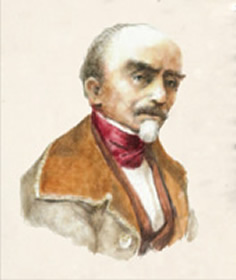
Laurence Sterne (24 november 1713 – 18 maart 1768)
Portret door Louis Carrogis Carmontelle, rond 1762

Zie voor nog meer schrijvers van de 24e november ook mijn vorige blog van vandaag.
Geschreven door Romenu om 13:28 Reageer op dit bericht

Cissy van Marxveldt, Arundhati Roy, Thomas Kohnstamm, Carlo Collodi, Ludwig Bechstein, Gerhard Bengsch

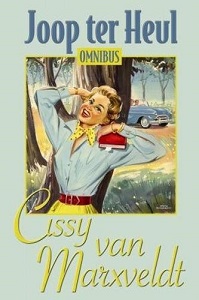
De Nederlandse schrijfster Cissy van Marxveldt werd geboren in Oranjewoud op 24 november 1889. Zie ook alle tags voor Cissy van Marxveldt op dit blog.

Uit: Joop ter Heul

“Gisteravond heb ik Julies haar geschuierd, omdat haar arm zo moe was van het tennissen. Ze draagt de knoedel krullen niet meer, omdat Jog ze niet mooi vond. En ze heeft eigenlijk veel te leuk haar, om er zo'n herrie van te maken. Ze doet het nu maar gewoon met een vlecht om haar hoofd en ik zei, toen ik als een razende aan het schuieren was: "Je ziet er veel leuker uit dan vroeger met dat poedelhaar."
"Jog vindt het zo aardig,"zei Julie. "Hij zegt, het staat zo lief."
"Gek,"zei ik, ik had al die dingen nooit bij Jog gezocht. "Julie staarde toen ze zei: "Wie vind je aardiger om te zien. Jog of Herman de Wilde?"
"O, Jog!"zei ik vol vuur. "H. de Wilde heeft helemaal geen gezicht."
"En Lotte zegt, dat het zo mannelijk is,"proestte Julie.
"Phuu,"zei ik, "moet je alleen zijn schouders maar eens zien."
"Lotte is altijd zo mal overdreven,"zei Julie. "Au zeg, je rukt me de haren uit."
"Ja hoor eens,"zei ik, "jij gaat bij Lotte op fuiven en partijtjes, en als ze hier is, dan gaan jullie uit, en je zoent mekaar en al die nonsens, en dan moet je, nu ze aan de Rivièra zit met een blindedarm, niet over haar gaan mieren tegen mij. Da's niet eerlijk."

 1500479-2d6c926bc938f16a3d7f66fff32ae669.jpg
Cissy van Marxveldt (24 november 1889 – 31 oktober 1948)
Cover


De Indiase schrijfster Arundhati Roy werd geboren op 24 november 1961 in Shillong. Zie ook alle tags voor Arundhati Roy op dit blog.

Uit: Come September

“Living as I do, as millions of us do, in the shadow of the nuclear holocaust that the governments of India and Pakistan keep promising their brain-washed citizenry, and in the global neighborhood of the War Against Terror (what President Bush rather biblically calls "The Task That Never Ends"), I find myself thinking a great deal about the relationship between Citizens and the State.  In India, those of us who have expressed views on Nuclear Bombs, Big Dams, Corporate Globalization and the rising threat of communal Hindu fascism - views that are at variance with the Indian Government's - are branded 'anti- national.' While this accusation doesn't fill me with indignation, it's not an accurate description of what I do or how I think. Because an 'anti-national' is a person who is against his or her own nation and, by inference, is pro some other one. But it isn't necessary to be 'anti-national' to be deeply suspicious of all nationalism, to be anti-nationalism. Nationalism of one kind or another was the cause of most of the genocide of the twentieth century. Flags are bits of colored cloth that governments use first to shrink-wrap people's brains and then as ceremonial shrouds to bury the dead. [Applause] When independent- thinking people (and here I do not include the corporate media) begin to rally under flags, when writers, painters, musicians, film makers suspend their judgment and blindly yoke their art to the service of the "Nation," it's time for all of us to sit up and worry.”

 1500486-f569afa5ca94563db2b87f9179edc97c.jpg
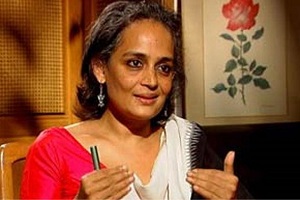
Arundhati Roy (Shillong, 24 november 1961)


De Amerikaanse schrijver Thomas Kohnstamm werd geboren in Seattle, Washington op 24 november 1975. Zie ook alle tags voor Thomas Kohnstamm op dit blog.

Uit: Do Travel Writers Go to Hell?

“Once--maybe when I was first out of school--this opportunity would have been a dream job. It is still seductive, but more along the lines of a cheap one-night-stand. My life is fulfilling in other ways now. I have a steady job, a decent income, a beautiful girlfriend, and an apartment in Manhattan. I finally have everything that I am supposed to have. Besides, between 9/11, SARS, Iraq, Bali, and Madrid, it can't possibly be a good time to dive headfirst into travel writing. But I won't I lie: I have always been a sucker for a cheap one-night-stand.
God knows, I can already feel myself coming up too fast.
For most people, November 24 is not a special day. Sure, it hosts Thanksgiving every few years, but I could care less about that. In Seattle, where few things out-of-the-ordinary ever happen and where people strive, often pathologically, to maintain a facade of tranquility, the day has a different significance.
On November 24, 1971, a balding, middle-aged man boarded a flight from Portland to Seattle. He used the name Dan Cooper. He dressed in a black suit, a black overcoat, black sunglasses, and a narrow black tie with a pearl stick pin. Cooper hijacked the Boeing 727 with a briefcase full of wires and bright red cylinders. The hostages were exchanged for four parachutes and two hundred thousand dollars at Sea-Tac Airport (to put that in perspective, the average cost of a new home in the U.S. in 1971 was $28,000).
DB Cooper, as the press mistakenly dubbed him, demanded to be flown to Mexico. He parachuted out of the plane somewhere over southern Washington State and disappeared. Maybe DB died in the jump. Maybe he got away with the money.
Nobody knows. But legend has it that DB was a man so disenchanted with his life that he gambled it all on a way out. The point isn't whether he made it or not. The point is that this little bald man didn't spend one more day pumping gas in Tallahassee or adjusting claims in Denver. He didn't waste one more day wondering, "What if?"
I nominate Cooper as the patron saint of disillusioned men, particularly those who, like me, were born in Seattle on November 24.”

 1500479-1e09630e2e903008a2f2d61c5ceeb59a.jpg
Thomas Kohnstamm (Seattle, 24 november 1975)


De Italiaanse schrijver Carlo Collodi werd als Carlo Lorenzi op 24 november 1826 in Florence geboren. Zie ook alle tags voor Carlo Corrodi op dit blog.

Uit: Pinocchio (Vertaald door Carol Della Chiesa)

“Centuries ago there lived--
"A king!" my little readers will say immediately.
No, children, you are mistaken. Once upon a time there was a piece of wood. It was not an expensive piece of wood. Far from it. Just a common block of firewood, one of those thick, solid logs that are put on the fire in winter to make cold rooms cozy and warm.
I do not know how this really happened, yet the fact remains that one fine day this piece of wood found itself in the shop of an old carpenter. His real name was Mastro Antonio, but everyone called him Mastro Cherry, for the tip of his nose was so round and red and shiny that it looked like a ripe cherry.
As soon as he saw that piece of wood, Mastro Cherry was filled with joy. Rubbing his hands together happily, he mumbled half to himself:
"This has come in the nick of time. I shall use it to make the leg of a table."
He grasped the hatchet quickly to peel off the bark and shape the wood. But as he was about to give it the first blow, he stood still with arm uplifted, for he had heard a wee, little voice say in a beseeching tone: "Please be careful! Do not hit me so hard!"
What a look of surprise shone on Mastro Cherry's face! His funny face became still funnier.
He turned frightened eyes about the room to find out where that wee, little voice had come from and he saw no one! He looked under the bench--no one! He peeped inside the closet--no one! He searched among the shavings-- no one! He opened the door to look up and down the street--and still no one!
"Oh, I see!" he then said, laughing and scratching his Wig. "It can easily be seen that I only thought I heard the tiny voice say the words! Well, well--to work once more."
He struck a most solemn blow upon the piece of wood.
"Oh, oh! You hurt!" cried the same far-away little voice.” 

 1500479-c49cfd3f7a682c2023a6d480a6ddf2c1.jpg
Carlo Collodi (24 november 1826 – 26 oktober 1890)


De Duitse schrijver Gerhard Bengsch werd geboren op 24 november 1928 in Berlijn. Zie ook alle tags voor Gerhard Bengsch op dit blog.

Uit: Der Colonel von Cattenberg

„In der nächsten Viertelstunde unterhielten wir uns über den Rinderwahnsinn, das Waldsterben und die Unfälle auf der Autobahn. Hätte sie mitzureden, sagte Jutta, würde sie den Lastwagenfahrern das Überholen auf der Autobahn verbieten. Sie schwärmte von ihrem japanischen Sportwagen, der vierzig Pferdestärken weniger habe als Brunos Sechszylinder-Peugeot und trotzdem fast genauso schnell sei.
"Oder nicht, Bruno?"
Bruno bestätigte es und tätschelte ihren Arm.
Und dann knirschte der Kies auf der Zufahrt, ein dumpf dröhnender Motor wurde abgestellt, eine Autotür klappte. "Hasselbach", rief Bruno aus. Er verließ die Terrasse, um seinen Kompagnon zu begrüßen.
Die Partnerschaft mit Hasselbach sei für Bruno ein Glücksfall gewesen, sagte Jutta. "Wir hatten doch im Osten zuerst alle keine Ahnung, wie das so läuft, wenn man sich um alles selber kümmern muss. Wie wird eine Gesellschaft mit beschränkter Haftung gegründet, wie kommt man ins Handelsregister, welche Sicherheiten braucht die Bank für einen Kredit, wie muss ein Antrag auf Fördermittel aussehen - hättet ihr das gewusst?"
"Natürlich nicht", gab Annabella zu. "Unter dieser Bildungslücke leide ich entsetzlich." 

1500479-cfe4bc830ea3c1bfcf4988a38b1f74e4.jpg
Gerhard Bengsch (24 november 1928 – 11 maart 2004)


De Duitse dichter, schrijver, bibliothecaris en archibaris Ludwig Bechstein werd geboren op 24 november 1801 in Weimar. Zie ook alle tags voor Ludwig Bechstein op dit blog.

Uit: Rheinsagen (Vom deutschen Rheinstrom)

 „Heilige Wasser rinnen von Himmelsbergen – singt die Edda, das uralte Götterlied. So auch der Rhein, des deutschen Vaterlandes heiliger Strom, rinnt vom Gottesberge (St. Gotthard), aus dem Schoße der Alpen, nieder als Strom des Segens. Durch Hohenrhätiens Alpentalschluchten stürzt er sich mit jugendlichem Ungestüm, frei und ungebunden, umwohnt von einem freien Bergvolke, das in Vorzeittagen hartlastende, schwerdrückende Fesseln brach.
Einst zwang ein Kastellan auf der Bärenburg die Bauern, mit den Schweinen aus einem Troge zu essen; ein anderer in Fardün trieb ihnen weidende Herden in die Saat; andere übten noch andere Frevel. Da traten Hohenrhätiens Männer zusammen, Alte mit grauen Bärten, und hielten Rat im Nachtgrauen unter den grauen Alpen. Auf einer felsenumwallten Wiese ohnfern Tavanasa will man noch Nägel in den Felsenritzen erblicken, an welche die Grauen, die Dorfältesten, ihre Brotsäcke hingen. Und dann tagten sie in Bruns vor der St. Annenkapelle unter freiem Himmel, nach der Väter Sitte, und beschwuren den Bund, der dem alten Lande den neuen Namen gab, den Namen Graubünden, und daß der Bund bestehen solle, solange Grund und Grat steht. Davon gehen im Bündnerlande noch alte Lieder.” 

1500479-8af35d92a8d7ef19b566b2a136b019b5.jpg
Ludwig Bechstein (24 november 1801 – 14 mei 1860)

Geschreven door Romenu om 12:50 Reageer op dit bericht

Yahya Hassan

Onafhankelijk van geboortedata

De Deense dichter van Palestijnse afkomst Yahya Hassan werd geboren 19 mei 1995 in Aarhus. Zijn debuutbundel trok veel aandacht rond de tijd van de release op 17 oktober 2013 .Hassan groeide op in een van de voorsteden vol problemen, met een hoog percentage immigranten, in een gebroken gezin. Hij stal, rookte joints, en stond terecht voor diefstal. Maar toen in een van de instellingen waarin hij geplaatst was, een leraar zijn schrijftalent opmerkte, nam zijn leven een ​​wending. De leraar dacht eerst dat hij het essay overgeschreven had. Hassan werd boos en schreef een nieuw essay.
Op advies van de leerkracht begon Yahya te lezen. Dostojevski maakte indruk op hem en de niets ontziende zelf-biografie van de Noor Karl Ove Knausgaard. Hij kwam op de "«Forfatterskolen» , een schrijversschool voor Deense aspiranten en begon met lezingen in een kleine cirkel. Een paar maanden later werd hij bekend in heel Denemarken en buitenlandse uitgevers bieden op de rechten van zijn werk. Het tijdschrift “Politiken” bracht een groot interview op 5 oktober 2013, dat veel aandacht trok en een groot debat veroorzaakte over politiek en culturele integratie. In de media uitte Hassan kritiek op delen van zijn culturele achtergrond. Hij beschuldigde zijn ouders ervan zich vast te klampen aan de Koran, terwijl zij tegelijkertijd uitkeringsfraude plegen. Aan islamitische zijde was er scepsis of woede vanwege de kritiek op zijn ouders, de allochtone gemeenschap en de islam.Hassan ontving verscheidene doodsbedreigingen en de Deense politie is bezorgd om zijn veiligheid. De debuutbundel had een eerste oplage van 800 exemplaren, die snel was uitverkocht . In oktober werd de oplage verhoogd tot 11.000 en in november 2013 tot 42.000. Op 8 november 2013 ontving Hassan de debuutprijs op de Deense boekenbeurs BogForum.


CHILDHOOD

Five children lined up and a father with a club
Weeping and a pool of piss
In turn we stretch out our hands
For the sake of predictability
The sound when blows rain down
Sister jumping so quickly
From one foot to the other
The piss is a waterfall down her legs
First one hand forward then another
Are we not quick enough the blows will be indiscriminate
A blow a scream a number 30 or 40 sometimes 50
And finally a kick in the ass as we exit the door
He grabs brother at the shoulders stands him up
Goes on beating and counting
I lower my gaze and wait for my turn
Mother smashing plates in the staircase
While al-Jazeera transmits
Hyperactive bulldozers and resentful body parts
Gaza Strip in sunshine
Flags burned
If a Zionist will not recognize our existence
If we exist at all
When we hiccup our fear and pain
When we gasp for breath or meaning
In school we must not speak Arabic
At home we must not speak Danish
A blow a scream a number 


LANGDIGT (LANG GEDICHT)

Je wilt geen varkensvlees eten,
Moge Allah je belonen voor je eetgewoonten,
Je wilt het vrijdagsgebed tot het volgende vrijdagsgebed,
Je wilt Ramadan tot de volgende Ramadan,
Je wilt een mes in je zak hebben,
Je wilt mensen vragen of ze een probleem hebben,
Hoewel jij het enige probleem bent.”


 1500466-095b715ea4044d1f32cc00310277cae5.jpg
Yahya Hassan (Aarhus,19 mei 1995)
 

Geschreven door Romenu om 12:09 Reageer op dit bericht

Meer van Romenu

↑ Terug naar de berichten