Naar de inhoud

Romenu

Over literatuur, gedichten, kunst en cultuur
seniorennet.beseniorennet.be

Berichten van 26 november 2016

Luisa Valenzuela, Eugène Ionesco, Marilynne Robinson, Louis Verbeeck, Mihály Babits
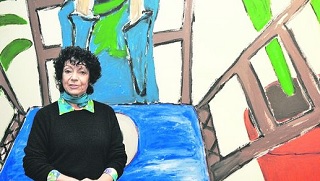
De Argentijnse schrijfster Luisa Valenzuela werd geboren op 26 november 1938 in Buenos Aires. Zie ook alle tags voor Luisa Valenzuela op dit blog.

Uit: Strange things happen here (Vertaald door Helen lane)

“In the cafe on the corner-every self-respecting cafe is on a corner, every meeting place is a crossing of two paths (two lives)-Mario and Pedro each order a cup of black coffee and put lots of sogar in it because sogar is free and provides nourishment. Mario and Pedro have been flat broke for some time-not that they're complaining, but it's time they got lucky for a change-and suddenly they see the abandoned briefcase, and just by looking at each other they tell themselves that maybe the moment has come. Right here, boys, in the cafe on the corner, no diflerent from a hundred others. The briefcase is there all by itself on a chair leaning against the table, and nobody has come back to look for it. The neighborhood boys come and go, they exchange remarks that Mario and Pedro don't listen to. There are more of them every day and they have a funny accent, they're from the interior. I wonder what they‘re doing here, why they‘ve come. Mario and Pedro wonder if someone is going to sit down at the table in the back, move the chair, and find the briefcase that they almost love, almost caress and srnell and lick and kiss. A man finally comes and sits down at the table alone (and to think that the briefcase is probably full of money, and that guy‘s going to latch onto it for the modest price of a vermonth with lernon, which is what he finally asks for after taking a little while to make up his mind). They bring him the vermouth, along with a whole bunch of appetizers. Which olive, which little piece of cheese will he be raising to his month when he spots the briefcase on the chair next to his? Pedro and Mario don't even want to think about it and yet it‘s all they can think about. When all is said and done the guy has as much or as little right to the briefcase as they do. When all is said and done it's only a question of chance, a table more carfully chosen‚ and that's it. The guy sips his drink indiffetentiy, swallowing one appetizer or another; the two of them can't even order another coffee because they're out of dough as might happen to you or to me, move perhaps to me than to you, but that‘s beside the point now that Pedro and Mario are being tyrannired by a guy who's picking bits of salami out of his teeth with his fingernail as he finishes his drink, not seeing a thing and not listening to what the boys are saying. You see them on street corners.”


 1980731-a0ab2a4aaad18e4ad601f45726287f10.jpg
Luisa Valenzuela (Buenos Aires, 26 november 1938)


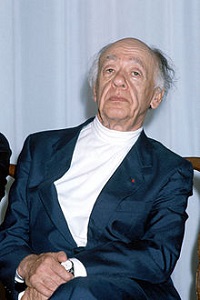
De Frans-Roemeense schrijver Eugène Ionesco werd geboren op 26 november 1912 in Slatina, Roemenië. Zie ook alle tags voor Eugène Ionesco op dit blog.

Uit: Fragments of a Journal

“Ever since I was fifteen, that is to say from that moment when I lost all that was left me of my childhood, from the moment when I ceased to be aware of the present and knew only the past hurrying into the future, that is to say into the abyss, ever since I became fully conscious of time I have felt old and I have wanted to live. I have run after life as though to catch time, and I have tried to live. I have run after life so much that it has always escaped me, I have run, I have never been late and never too early, and yet I have never caught up with it: it is as though I have run alongside of it.
What is life, I may be asked. For me, life is not Time; it is not this state of existence, for ever escaping us, slipping between our fingers and vanishing like a ghost as soon as you try to grasp it. For me it is, it must be, the present, presentness, plenitude. I have run after life so much that I have lost it.”
(…)

“I read a page of Plato's great work. I can no longer understand anything, because behind the words on the page, which have their own heavenly brightness, to be sure, there shines an even brighter, an enormous, dazzling -why- that blots out everything, cancels out, destroys all meaning. All individual intelligence. When one has understood, one stops, satisfied with what one has understood. I do not understand. Understanding is far too little. To have understood is to be fixed, immobilized. It is as though one wanted to stop on one step in the middle of a staircase, or with one foot in the void and the other on the endless stair. But a mere why, a new why can set one off again, can unpetrify what was petrified and everything starts flowing afresh. How can one understand? One cannot.”
 

 1980731-5690a77ebf008e980141ba03ecb8e43f.jpg
Eugène Ionesco (26 november 1912 – 28 maart 1994)


De Amerikaanse schrijfster Marilynne Robinson werd geboren in Sandpoint, Idaho op 26 november 1943. Zie ook alle tags voor Marilynne Robonson op dit blog.

Uit:Gilead

„In his old age my grandfather lived with us here in Gilead. Then he ran off to Kansas, where he died. When he left us we all felt his absence bitterly, though he did make things difficult. It was an innocence in him. He lacked patience for anything but the plainest interpretations of the starkest commandments, “To him who asks, give,” in particular. He never kept anything that was worth giving away, or let us keep it, either. He would take laundry right off the line. My mother said he was worse than any thief, worse than a house fire. She said she could probably go to any town in the Middle West and see some pair of pants she’d patched walking by in the street. And we were not the only ones he plundered. My mother said you could tell where a Congregationalist lived by the padlock on the shed door. I believe he was a saint of some kind, in his old age. When someone remarked in his hearing that he had lost an eye in the Civil War, he said, “I prefer to remember that I have kept one.” My mother said it was good to know there was anything he could keep.
I describe my grandfather as if he were simply an eccentric, and as if we tolerated him and were respectful of him and loved him, and he loved us. And that is true. But I believe we knew also that his eccentricities were thwarted passion, that he was full of anger, at us not least, and that the tremors of his old age were in some part the tremors of pent grief. He had lived so many years in a rage and an ecstasy of hope, intent on freeing the captive, proclaiming liberty. He told me once about a vision he had when he was still a boy in Maine, sometime in the eighteen-thirties. He had fallen asleep by the fire, worn out from a day helping his father pull stumps. Someone touched him on the shoulder, and when he looked up, there was the Lord, holding out His arms to him, which were bound in chains. My grandfather said, “Those irons had rankled right down to His bones.” He told me that as the saddest fact, and eyed me with the one seraph eye he had, the old grief fresh in it. He was not yet sixteen, but he said he knew then that he had to come to Kansas and make himself useful to the cause of abolition. (To be useful was the best thing the old men ever hoped for themselves, and to be aimless was their worst fear. I have a lot of respect for that view.) When I spoke to my father about the vision he had described to me, my father just nodded and said, “It was the times.” He himself never claimed any such experience, and he seemed to want to assure me I need not fear that the Lord would come to me with His sorrows. And I took comfort in the assurance. That is a remarkable thing to consider."
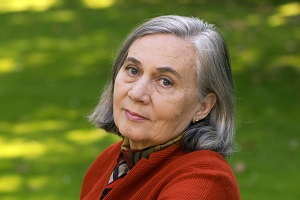
 

 1980731-f0d0f99f41f158cd5c51007df42cbf73.jpg
Marilynne Robinson (Sandpoint, 26 november 1943)


De Vlaamse dichter en schrijver Louis Verbeeck werd geboren in Tessenderlo op 26 november 1932. Zie ook alle tags voor Louis Verbeeck op dit blog.


Zaterdag

't Is goed je eigen hemd te strijken,
nog even voor het slapengaan,
en dan zorgvuldig na te kijken:
staan al mijn knoopjes er nog aan?

En staan ze, ook aan de manchetten,
zo vast als 't past voor je fatsoen,
dan kan niets meer je nog beletten
gerust je ogen toe te doen.


Toch wat lente

Je krijgt de mooiste zonsopgang
Die je maar kunt verzinnen
Je moet me dan wel levenslang
Heel intensief beminnen.

Een melkweg krijg je ook cadeau
- daar moet ik nog voor sparen -
Maar tegen kerst, nieuwjaar of zo
Zal ik die klus wel klaren.
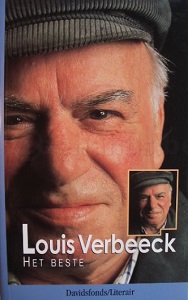
 

 1980731-141fa0373350004d6c7c1640b87eb41e.jpg
Louis Verbeeck (Tessenderlo, 26 november 1932)
Cover 


De Hongaarse dichter, schrijver en vertaler Mihály Babits werd geboren op 26 november 1883 in Szekszárd. Zie ook alle tags voor Mihály Babits op dit blog.


Zigeuner Im Armsünderhaus

Einst formte ich das Gedicht mit den Fingern
meiner Hand,
wie der Herr vielleicht einen glänzend
beflügelten, gepanzerten Gliederkäfer
erfand.

Später formten es meine Lippen,
wie der Soldaten
durstige, schrundige Lippen
den Trompetenton,
den Trompetenton gefunden hatten.

Doch heute tauchen die Verse so zaghaft
auf,
so verschwommen,
wie aus den eingefallenen Augen
verschämt und zögernd
Tränen kommen.

Ich wein nicht um mich, ich hab Millionen
Brüder.
Arm sind sie, so arm! Nicht einmal in ihren
Träumen
spiegelt sich irgendwo Gutes wider.

Sie hätten gern eine Hütte im Wald, doch
das Holz
ist gesperrt. Sie sind schon auf ein
Kästchen in einem
großen, düsteren städtischen Kasten stolz.

Und sie freun sich, daß sie - wenn ihnen
alles mißglückt -
sich aus des Stockwerks Fenster stürzen
können
und ihre gute Mutter, die Erde, sie an sich
drückt.

Eine traurige Welt! Und so zaghaft singt
das Gedicht
wie der Zigeuner im Armsünderhaus.
- Husch, husch -
all ihr zuckenden, summenden,
glänzenden Käfer fort
aus dem Licht!

Was ist der Trompetenstoß wert, wenn er
nicht Wunder tut,
nicht Tote erweckt? Nur die Träne, die
Träne fällt,
und sie fragt nicht, wozu ist sie gut.
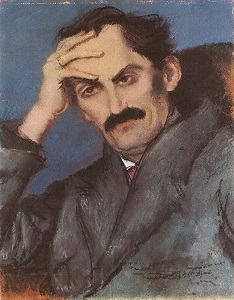


 1980731-b0a94e62bebb7c6d3f96569b0008d172.jpg
Mihály Babits (26 november 1883 - 4 augustus 1941)
Portret door József Rippl-Rónai, 1923


Zie voor nog meer schrijvers van de 26e november ook mijn vorige blog van vandaag.
Geschreven door Romenu om 11:02 Reageer op dit bericht

William Cowper, Theophilus Cibber, Alyosha Brell, Mohamed Al-Harthy, René Becher

De Engelse dichter William Cowper werd geboren op 26 november 1731 in Berkhamstead, Herford. Zie ook alle tags voor William Cowper op dit blog.


Abuse Of The Gospel

Too many, Lord, abuse Thy grace
In this licentious day,
And while they boast they see Thy face,
They turn their own away.

Thy book displays a gracious light
That can the blind restore;
But these are dazzled by the sight,
And blinded still the more.

The pardon such presume upon,
They do not beg but steal;
And when they plead it at Thy throne,
Oh! where's the Spirit's seal?

Was it for this, ye lawless tribe,
The dear Redeemer bled?
Is this the grace the saints imbibe
From Christ the living head?

Ah, Lord, we know Thy chosen few
Are fed with heavenly fare;
But these, -- the wretched husks they chew,
Proclaim them what they are.

The liberty our hearts implore
Is not to live in sin;
But still to wait at Wisdom's door,
Till Mercy calls us in.


 1980727-80b089659ed94e6eed1983506e844301.jpg
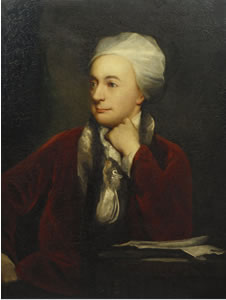
William Cowper (26 november 1731 – 25 april 1800)
Portret door William Henry Jackson, 1873


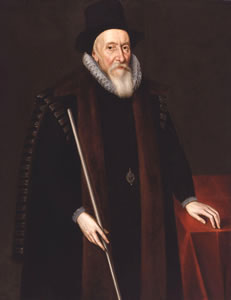
De Engelse schrijver en acteur Theophilus Cibber werd geboren op 26 november 1703 in Londen. Zie ook alle tags voor Theophilus Cibber op dit blog.

Uit: The Lives of the Poets of Great Britain and Ireland (Thomas Sackville, Earl of Dorset)

“Thomas Sackville, Earl of Dorset was son of Richard Sackville and Winifrede, daughter of Sir John Bruges, Lord of London. He was born at Buckhurst in the parish of Withiam in Suffex, and from his childhood was distinguished for wit and manly behaviour: He was first of the University of Oxford, but taking no degree there, he went to Cambridge, and commenced master of arts; he afterwards studied the law in the Inner-Temple, and became a barrister; but his genius being too lively to be confined to a dull plodding study, he chose rather to dedicate his hours to poetry and pleasure; he was the first that wrote scenes in verse, the Tragedy of Ferrex and Perrex, sons to Gorboduc King of Britain, being performed in the presence of Queen Elizabeth, long before Shakespear appeared on the stage, by the Gentlemen of the Inner-Temple, at Whitehall the 18th of January, 1561, which Sir Philip Sidney thus characterises: "It is full of stately speeches, and well founding phrases, climbing to the height of Seneca's stile, and as full of notable morality, which it doth most delightfully teach, and so obtain the very end of poetry." In the course of his studies, he was most delighted with the history of his own country, and being likewise well acquainted with antient history, he formed a design of writing the lives of several great personages in verse, of which we have a specimen in a book published 1610, called the Mirror of Magistrates, being a true Chronicle History of the untimely falls of such unfortunate princes and men of note, as have happened since the first entrance of Brute into this Island until his own time. It appears by a preface of Richard Nicolls, that the original plan of the Mirror of Magistrates was principally owing to him, a work of great labour, use and beauty.”


 1980727-97b35971a53400bdca6637eea7439b6b.jpg
Theophilus Cibber (26 november 1703 - oktober 1758)
Portret van Thomas Sackville door John De Critz the Elder, voor 1647


Onafhankelijk van geboortedata

De Duitse schrijver Alyosha Brell werd geboren in 1980 in Wesel. Zie ook alle tags voor Alyosha Brell op dit blog.

Uit: Kress

„Sehr geehrter Herr Ullstein,
mit beträchtlichem Befremden habe ich Ihre Absicht zur Kenntnis genommen, dieser Tage ein Buch mit dem Titel „Kress“ zur Veröffentlichung zu bringen. Nicht nur heißt dieses Buch so wie ich. Aufgrund der Informationen, die im sogenannten „World Wide Web“ darüber verfügbar sind, muss ich davon ausgehen, selbst sein Protagonist zu sein. Durch die Veröffentlichung Ihres Buchs sehe ich meine eigenen Persönlichkeitsrechte und darüber hinaus die eines mir bekannten Tauberichs empfindlich gestört.
Nun spricht vom Grundsatz her nichts gegen ein Buch über meine Person. Tatsächlich begrüße ich Ihr Unterfangen ausdrücklich, halte es für nicht weniger als angemessen, dass man sich in schriftlicher Form mit meiner Person auseinandersetzt – wenngleich ich eine gewisse Verwunderung über den Zeitpunkt der Veröffentlichung nicht verbergen möchte. Immerhin haben meine Beiträge zur Goetheforschung, die unzweifelhaft Anlass Ihres Buches sind, ihren Weg in die Fachöffentlichkeit bislang nicht gefunden. Entschieden wehren muss ich mich allerdings dagegen, dass dieses Buch nicht von mir selbst, sondern von Ihrem Autor, Herrn Aljoscha Brell, verfasst wurde. Ich habe Erkundigungen über Herrn Brell eingezogen. Es handelt sich bei ihm, verzeihen Sie mir die deutlichen Worte, um einen Nichtskönner höchsten Grades, dessen größte Errungenschaft darin besteht, als Siebzehnjähriger im Schultheater einige Sätze fehlerfrei aufgesagt zu haben. Es ist mir vollkommen schleierhaft, wie Sie dazu kommen, einer solchen Maximalpflaume wie Herrn Brell ausgerechnet meine Biografie anzuvertrauen.“


 1980727-b5ca244a3976c7d863610fb4ac22e94a.jpg
Alyosha Brell (Wesel, 1980)


De Omaanse dichter Mohamed Al-Harthy werd geboren in al-Mudhayrib, Oman, in 1962. Zie ook alle tags voor Mohamed Al-Harthy op dit blog.


CHINESE MAGIC

Before my morning exercise
I took to stealing a glance
at the wise man sitting cross-legged
(in his painting done in Chinese ink)
near the door of the room.
 
When I return, exhausted, an hour later
I take three or four cookies out of the package
and prepare a cup of tea with milk,
which I drink in peace
with the first—and last—
cigarette of the morning.
 
The wise man of the painting,
which bears one of the Chinese Emperor’s red seals,
is not content with stealing glances,
and stares right at me through the smoke
with his two piercing eyes.
I’m so embarrassed that I don’t see his hand
as it reaches, stealthily, from the painting
to open the shutters:
a small bird from the neighbor’s garden
lands on the table
and steals some crumbs
as soon as I leave to water my plants.
 
The neighbors’ bird and I are thieves no longer.
We’re friends now, so steeped
in this wisdom
that one of us, this morning,
is writing a poem
while the other flaps its wings
in front of the painting on the wall—
in twin gratitude to our master,
the wise man of the painting. 


Vertaald door Kareem James Abu-Zeid


 1980727-8d078bef56051b3e4855595820be8492.jpg
Mohamed Al-Harthy (al-Mudhayrib, 1962)


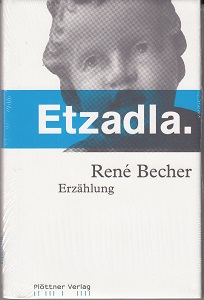
De Duitse schrijver René Becher werd geboren in 1977 in Bayreuth. Zie ook alle tags voor René Becher op dit blog.

Uit: Etzadla.

„Und ich stelle mir vor, wie ich um den Maibaum tanze, mit einem \Veibsbild, das ich nicht kenne, nicht mag,hineingeworfen in eine Situation, die mir wieder nicht recht ist, so stehe ich dann da, wie sonst immer nur zwischen den beiden Pfosten in der Schule, und die Bälle knallen nur so an einem vorbei und so weiter.
„Du musst schon auch mal an dich ranlassen.“ Hat selbst Vater öfter gesagt. Und ich. Ich habe nicht an mich rangelassen.
Die Mutter lacht. Ich höre sie doch laut und deutlich lachen. Steht da an der Theke, die Arme vor dem Bauch verschränkt, schickt ihren Jüngsten, Christian, weg, amüsiert sich ganz prächtig. Ihr senffarbenes, zuhause vor dem Spiegel schön geklopftes Sommerkleidchen.
Eine Brosche am Busen, eine dunkle Brille im Haar. Der Schwankwirt stülpt einen unsauberen Krug über den Spülboy, flllp! Die Mutter wiehert. Sie wiehert wie ein junges Fohlen, das auf der Koppel auslaufen darf. Arme, schöne, junge Frau, so sagen sie doch. Hat es auch nicht gerade leicht. ]a gerade jetzt. Zwei Kinder am Hals, und der Vater ist ihnen allen abhanden gekommen.
Adler begibt sich unter den Limonadenschirm. Einer von uns. Spendet ein paar warme Worte. Ein Prediger vor dem Herrn, so heißt es wohl. Er steht unter dem Limonadenschirm, das Thesenpapier in der Hand, ein Mikrofon: „Was für ein schöner Tag“, und streicht sich die wenigen grauen Haare aus dem Gesicht: „Frühlingsgefühle, und später Supertombola!“


 1980727-13b45b3b6f5a0412c27d138e7d2df222.jpg
René Becher (Bayreuth, 1977)
Cover

Geschreven door Romenu om 11:01 Reageer op dit bericht

Herman Gorter

De Nederlandse dichter Herman Gorter werd geboren in Wormerveer op 26 november 1864. Hij studeerde klassieke talen aan de universiteit van Amsterdam en werd leraar aan een gymnasium in Amersfoort. In 1890 trouwde hij met de vermogende patriciërsdochter Wies Cnoop Koopmans. Na het huwelijk wijdde hij zich enkele jaren geheel aan de literatuur en filosofie. Hij vertaalde Spinoza’s “Ethica” en kwam steeds meer onder invloed van socialistische denkbeelden zoals die beleden werden door Duitsers als Kautsky en Mehring. In 1897 werd hij lid van de SDAP, een jaar later redacteur van De Nieuwe Tijd, het blad dat hij ook financieel ondersteunde. Gorter en zijn vrouw leefden zeer sober in hun huis in Bussum. Zijn brochure “Het historisch materialisme. Voor arbeiders verklaard” (1908) trok de aandacht en werd in veel landen vertaald. Gorters houding en levenswijze stonden haaks op die van de arbeidersbeweging, hoe toegedaan hij het lot van de werknemers ook was. Zelf was hij sjiek gekleed en beoefende hij elitaire sporten als cricket, tennis en zeilen. Gorter had regelmatig last van depressies. Men vermoedt dat zijn toenemende nervositeit ook te maken had met zijn gecompliceerde liefdesleven. Naast zijn vrouw (het echtpaar bleef kinderloos) had Gorter relaties met Ada Prins en Jenne Clinge Doorenbos. Beide vrouwen waren niet van elkaars bestaan op de hoogte. Aan het eind van WO I en in de revolutionaire jaren die volgden was Gorter politiek zeer actief. Hij is lid geworden van de kleine SDP, die na de Russische revolutie de CPN (Communistische Partij Nederland) wordt. Later nam Gorter afstand van de ‘opportunistische’ leiding van die partij. Gorter ziag zijn idealen steeds minder bereikbaar worden. Hij raakte steeds meer vervreemd van vrienden en was regelmatig ziek en depressief. Gorter debuteerde met sonnetten en een episch-lyrisch fragment, “Lucifer”. Aan “Mei”, het gedicht dat hem onsterfelijk zou maken, werkte hij tussen 1886-1889. De eerste zang verscheen in De Nieuwe Gids in 1886. “Mei” geldt als het hoogtepunt van de Tachtigers poëzie: persoonlijk van ritme, een opvallende beeldspraak en een samengaan van natuurliefde, melancholie en erotiek. In 1890 verscheen de sensitivistische bundel “Verzen”, een weerslag van extatische en mystieke ervaringen. In enkele essays in De Nieuwe Gids nam Gorter steeds meer afstand van de Tachtigers. Hij wou voortaan de dichtkunst voeden met de grootheid van de socialistische opvattingen. “Pan” (1912), zijn tweede epische gedicht was veel ruimer van opzet en heeft de bevrijding van de mens als onderwerp. In 1916 verscheen Gorters lyrische poëzie in twee delen onder de titel “Verzen”. In de periode daarna schreef hij behalve tientallen artikelen ook veel “Liedjes”. Hij bestudeerde het verband tussen maatschappij en dichterschap bij onder anderen Dante, Shakespeare en Goethe. Na zijn dood verschenen die essays in 1935 in “De groote dichters”. Postuum verschenen “Liedjes” (drie delen, 1930) en “Sonnetten” (1934).

Uit: Mei

Een nieuwe lente en een nieuw geluid:
Ik wil dat dit lied klinkt als het gefluit,
Dat ik vaak hoorde voor een zomernacht,
In een oud stadje, langs de watergracht --
In huis was 't donker, maar de stille straat
Vergaarde schemer, aan de lucht blonk laat
Nog licht, er viel een gouden blanke schijn
Over de gevels van mijn raamkozijn.
Dan blies een jongen als een orgelpijp,
De klanken schudden in de lucht zoo rijp
Als jonge kersen, wen een lentewind
In 't boschje opgaat en zijn reis begint.
Hij dwaald' over de bruggn, op den wal
Van 't water, langzaam gaande, overal
Als 'n jonge vogel fluitend, onbewust
Van eigen blijheid om de avondrust.
En menig moe man, die zijn avondmaal
Nam, luisterde, als naar een oud verhaal,
Glimlachend, en een hand die 't venster sloot,
Talmde een pooze wijl de jongen floot.

Zóó wil ik dat dit lied klinkt, er is één
Die ik wèl wenschte dat mijn stem bescheen
Met meer dan lachen van haar zachte oog...
Heil, heil, ik voel hier handen en den weeken boog
Van haren arm. Een koepel van blind licht,
Mild nevelend, omgeeft mijn aangezicht,
Mijn stem brandt in mij als de geele vlam
Van gas in glazen kooi, een eikenstam
Breekt uit in twijgen en jong loover spruit
Naar buiten: Hoort, er gaat een nieuw geluid:
Een jonge veldheer staat, in 't blauw en goud
Roept aan de holle poort een luid heraut.

Blauw dreef de zee, het water van de zon
Vloot pas en frisscher uit de gouden bron,
Op woll'ge golven, die zich lieten wasschen
En zalven met zijn licht, uit open plassen
Stonden golven als witte rammen op,
Met trossen schuim en horens op den kop.


 2031884-fb4644194f38b3d946e1f2069aea54ab.jpg
Herman Gorter (26 november 1864 - 15 september 1927)

Geschreven door Romenu om 00:00 Reageer op dit bericht

Meer van Romenu

↑ Terug naar de berichten