E. E. Cummings, Péter Nádas, Katha Pollitt, Daniël Rovers
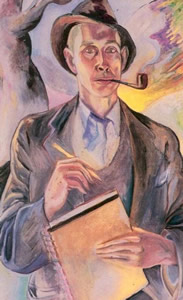
De Amerikaanse dichter en schrijver Edward Estlin Cummings werd geboren in Cambridge, Massachusetts op 14 oktober 1894. Zie ook mijn blog van 14 oktober 2010 en eveneens alle tags voor E. E. Cummings op dit blog.
if you like my poems let them
if you like my poems let them
walk in the evening,a little behind you
then people will say
"Along this road i saw a princess pass
on her way to meet her lover(it was
toward nightfall)with tall and ignorant servants."
my father moved through dooms of love
my father moved through dooms of love
through sames of am through haves of give,
singing each morning out of each night
my father moved through depths of height
this motionless forgetful where
turned at his glance to shining here;
that if(so timid air is firm)
under his eyes would stir and squirm
newly as from unburied which
floats the first who,his april touch
drove sleeping selves to swarm their fates
woke dreamers to their ghostly roots
and should some why completely weep
my father's fingers brought her sleep:
vainly no smallest voice might cry
for he could feel the mountains grow.
Lifting the valleys of the sea
my father moved through griefs of joy;
praising a forehead called the moon
singing desire into begin
joy was his song and joy so pure
a heart of star by him could steer
and pure so now and now so yes
the wrists of twilight would rejoice
keen as midsummer's keen beyond
conceiving mind of sun will stand,
so strictly(over utmost him
so hugely) stood my father's dream
his flesh was flesh his blood was blood:
no hungry man but wished him food;
no cripple wouldn't creep one mile
uphill to only see him smile.
Scorning the Pomp of must and shall
my father moved through dooms of feel;
his anger was as right as rain
his pity was as green as grain
septembering arms of year extend
yes humbly wealth to foe and friend
than he to foolish and to wise
offered immeasurable is
proudly and(by octobering flame
beckoned)as earth will downward climb,
so naked for immortal work
his shoulders marched against the dark
his sorrow was as true as bread:
no liar looked him in the head;
if every friend became his foe
he'd laugh and build a world with snow.
My father moved through theys of we,
singing each new leaf out of each tree
(and every child was sure that spring
danced when she heard my father sing)
then let men kill which cannot share,
let blood and flesh be mud and mire,
scheming imagine,passion willed,
freedom a drug that's bought and sold
giving to steal and cruel kind,
a heart to fear,to doubt a mind,
to differ a disease of same,
conform the pinnacle of am
though dull were all we taste as bright,
bitter all utterly things sweet,
maggoty minus and dumb death
all we inherit,all bequeath
and nothing quite so least as truth
--i say though hate were why men breathe--
because my Father lived his soul
love is the whole and more than all
E. E. Cummings (14 oktober 1894 - 3 september 1962)
Self-portrait with sketchpad, 1939
De Hongaarse schrijver Péter Nádas werd geboren op 14 oktober 1942 in Boedapest. Zie ook mijn blog van 14 oktober 2010 en eveneens alle tags voor Péter Nádas op dit blog.
Uit: Parallel Stories (Vertaald door Imre Goldstein)
“No one could have said that Klára Vay, with her towering coiffure and enormous eyes, her rounded lips thickly coated in lipstick, her mink coat and, even more, her gesture as she tossed it carelessly off her shoulder, her revealing décolletage and glaring white skin, her skin-tight dress so short it scared off whoever looked at it, in her inordinately high-heeled and pointed shoes, was not an apparition to attract the eye. There were her shapely calves, her figure which on the whole made a girlish impression, her strong hips, powerful thighs: the contradictions or disharmony of her anatomy. As soon as they entered Kristóf sensed the discomfort of the challenge her appearance represented and was mindful of being seen by strangers with such an ostentatious apparition. His skin itched with the awareness that Klára’s beauty and impermissible elegance rendered him ridiculous.
He turned into a little shit.
And, pathetically, he was supposed to be proud, too.
For a little shit to have such a woman. As though he had been her page boy, her escort, her secret lover for years. Or indeed, had any chance of ever being her lover.
It was wrong to let Klára see that he was overawed the first time they went out together. He had to put on the most neutral face and looks possible, to prevent those others reading from his face just how desperate he was, the ultimate failure and disaster that he had so successfully evaded up till now.
They both managed to hit the right note, too.
They were not scandalous enough to attract those eyes for very long, the gazes peeled off, one by one. For themselves they remained scandalous and intolerable. The visible age gap had also lost its weight as a possible factor in an apparent drama of broken love. The only thing that must have been intolerable was the awareness that these two will not manage without each other and they were clearly unable to account for this awareness to themselves. They held their champagne flutes in their free hand and as though these glasses were stopping them from touching each other, their coats hung limply off the high bar stools. Bodily silence, or the total lack of the wish to talk had cut them off from other people. There was little you could subtract from what had gone before, and nothing from their presence.”

Péter Nádas (Boedapest,14 oktober 1942)
De Amerikaanse dichteres, essayiste, critica en feministe Katha Pollitt werd geboren op 14 oktober 1949 in New York. Zie ook mijn blog van 14 oktober 2010 en eveneens alle tags voor Katha Pollit op dit blog.
Night Subway
The nurse coming off her shift at the psychiatric ward
nodding over the Post, her surprisingly delicate legs
shining darkly through the white hospital stockings,
and the Puerto Rican teens, nuzzling, excited
after heavy dates in Times Square, the girl with green hair,
the Hasid from the camera store, who mumbles
over his prayerbook the nameless name of God,
sitting separate, careful no woman should touch him,
even her coat, even by accident,
the boy who squirms on his seat to look out the window
where signal lights wink and flash like the eyes of dragons
while his mother smokes, each short, furious drag
meaning Mens no good they tell you anything –
How not think of Xerxes, how he reviewed his troops
and wept to think that of all those thousands of men
in their brilliant armour, their spearpoints bright in the sun,
not one would be alive in a hundred years?
O sleepers above us, river
rejoicing in the moon, and the clouds passing over the moon.
Lunaria
Now that I am
all done with spring
rampant in purple
and ragged leaves
and summer too
its great green moons
rising through
the breathless air
pale dusted like
the Luna's wings
I'd like to meet
October's chill
like the silver moonplant
Honesty
that bears toward winter
its dark seeds
a paper lantern
lit within
and shining in
the fallen leaves.
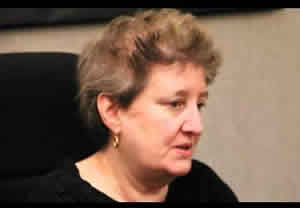
Katha Pollitt (New York,14 oktober 1949)
De Nederlandse schrijver Daniël Rovers werd geboren in Zelhem op 14 oktober 1975. Zie ook mijn blog van 14 oktober 2010 en eveneens alle tags voot Daniël Rovers op dit blog.
Uit: In de walvis
„Het geluid van de elektromotor zwelt aan, zittingen zuigen aan bezwete ruggen, het perron schiet weg achter de met geslepen schroevendraaiers bewerkte ruiten; je staart naar buiten en ziet niets dan beroete buizen, leidingen en je eigen gezicht; tegenover je neemt een reclameblond jongetje plaats, zijn benen reiken niet eens tot aan de grond, zijn handen zoeken steun op de zitting. Een kleine dikke vrouw snelt op de open deuren toe, twee volle plastic supermarkttassen in haar handen, het vertreksignaal klinkt, houdt lang aan, de metrobestuurder moet de vrouw hebben opgemerkt, en ze bereikt ook op tijd de deuren, haar hoofd vooruitgestoken als bij een foto-finish, maar precies op dat moment houdt ze in, bang om de drempel te nemen, en het signaal klinkt nog een keer, dit keer langer en dreigender, waarna de deuren alsnog in beweging komen en dichtslaan. Geschreeuw. Twee dames die bij de deuren staan sjorren aan de stalen hendels, en het duurt een volle seconde tot de deuren weer opengaan – om meteen daarna weer dicht te klappen. De vrouw staat nog altijd op het perron, een van haar boodschappentassen is gevallen, ze wrijft met de palm van haar rechterhand over haar hoofd, en omdat de andere plastic zak nog in de winkelhaak van rechterwijsvinger en duim hangt slaat dat zakje nu tegen haar gezicht en schouders; de vrouw grijnst en blijft ondertussen met haar hand over haar hoofd wrijven, alsof zo de pijn uit haar schedel zal verdwijnen. De stuurse blik, die vertraagde manier van bewegen: de metropassagiers kijken naar buiten en zwijgen, delen de schaamte over wat de meeste van hen gezien moeten hebben: er staat een hulpeloos kind van vijftig jaar oud op het perron.“
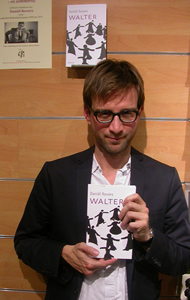
Daniël Rovers (Zelhem, 14 oktober 1975)
Zie voor nog meer schrijvers van de 14e oktober ook mijn vorige blog van vandaag.