

Naar de inhoud

Romenu

Over literatuur, gedichten, kunst en cultuur
seniorennet.beseniorennet.be

Berichten van 27 april 2011

Edwin Morgan, Cecil Day Lewis, August Wilson, Fethullah Gülen, Martin Gray
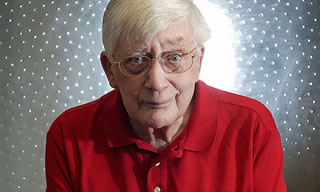
De Schotse dichter en vertaler Edwin Morgan werd geboren in Glasgow op 27 april 1920. Zie ook mijn blog van 27 april 2007 en ook mijn blog van 27 april 2008 en ook mijn blog van 27 april 2009 en ook mijn blog van 27 april 2010.  Edwin Morgan overleed op 19 augustus van het afgelopen jaar op 90-jarige leeftijd..


The Demon Sings


O to be an angel

Do whatever you're told

Preen each other's wingtips
Grin your set of gold


I'd rather be a demon

Ploughing through the glaur

Whistling to my fellows

What against is for


Against is not for nothing

Against is drive a nail

Against is draw a crown down

Fill a quaich with hail


So hail to all high water

The maelstrom and the pit

You'll never hear a harpstring

If we can smuggle it


Away from the high heavens

And tease it out to bind

Every gasping evangelist

Right out of his mind


For we are merry dancers

Through curtains of the dark
Feel us hear us fear us

When the dark begins to spark!


The Macaw


A singing macaw called Novello

Kept calling his blue feathers yellow.

'No, I'm not colour-blind,

For it's all in the mind,

Like the deep green voice of my cello.'


 901914-6a957a3deb196ebfaef67abbd73662e9.jpg

Edwin Morgan (27 april 1920 - 19 augustus 2010)


De Brits-Ierse dichter Cecil Day Lewis werd geboren in Ballintogher, Ierland, op 27 april 1904. Zie ook mijn blog van 27 april 2007 en ook mijn blog van 27 april 2008 en ook mijn blog van 27 april 2009 en ook mijn blog van 27 april 2010. 


At Lemmons


Above my table three magnolia flowers

Utter their silent requiems.

Through the window I see your elms

In labour with the racking storm

Giving it shape in April’s shifty airs.


Up there sky boils from a brew of cloud

To blue gleam, sunblast, then darkens again.

No respite is allowed

The watching eye, the natural agony.


Below is the calm a loved house breeds

Where four have come together to dwell

-           Two write, one paints, the fourth invents -  

Each pursuing a natural bent

But less through nature’s formative travail

Than each in his own humour finding the self he needs.


Round me all is amenity, a bloom of

Magnolia uttering its requiems,

A climate of acceptance.  Very well

I accept my weakness with my friends’

Good natures sweetening each day my sick room.


The Ecstatic


Lark, skylark, spilling your rubbed and round

Pebbles of sounds in air’s still lake,

Whose widening circles fill the noon; yet none

Is known so small beside the sun:


Be strong your fervent soaring, your skyward air!

Tremble there, a nerve of song!

Float up there where voice and wing are one,

A singing star, a note of light!


Buoyed, embayed in heaven’s noon-wide]reaches-

For soon Light’s tide will turn – Oh Stay!

Cease not till day streams to the west, then down

That estuary drop down to peace.


901914-d69607cb8135bdd6d40b6ec14e55e671.jpg
Cecil Day Lewis
(27 april 1904 – 22 mei 1972)

Foto van Irving Penn voor Vogue in 1951


De Amerikaanse toneelschrijver August Wilson (eig. Frederick August Kittel) werd geboren op 27 april 1945 in Pittsbugh. Zie ook mijn blog van 27 april 2008 en ook mijn blog van 27 april 2009 en ook mijn blog van 27 april 2010. 
 

Uit: Fences (Introduction)


„Near the turn of the century, the destitute of Europe sprang on the city with tenacious claws and an

honest and solid dream. The city devoured them. They swelled its belly until it burst into a thousand

furnaces and sewing machines, a thousand butcher shops and bakers’ ovens, a thousand churches and hospitals and funeral parlors and moneylenders. The city grew. It nourished itself and offered each man a partnership limited only by his talent, his guile, and his willingness and capacity for hard work. For the immigrants of Europe, a dream dared and won true.

The descendants of African slaves were offered no such welcome or participation. They came from

places called the Carolinas and the Virginias, Georgia, Alabama, Mississippi, and Tennessee. They came strong, eager, searching. The city rejected them, and they fled and settled along the riverbanks and under bridges in shallow, ramshackle houses made of sticks and tar-paper. They collected rags and wood. They sold the use of their muscles and their bodies. They cleaned houses and washed clothes, they shined shoes, and in quiet desperation and vengeful pride, they stole and lived in

pursuit of their own dream: That they could breathe free, finally, and stand to meet life with the force of dignity and whatever eloquence the heart could call upon.

By 1957, the hard-won victories of the European immigrants had solidified the industrial might of America. War had been confronted and won with new energies that used loyalty and patriotism as its fuel. Life was rich, full, and flourishing. The Milwaukee Braves won the World Series, and the hot winds of change that would make the sixties a turbulent, racing, dangerous, and provocative

decade had not yet begun to blow full.“


 901914-f8aa6cf71721055c90032644ae54a1ec.jpg

August Wilson (27 april 1945 – 2 oktober 2005)


De Turkse prediker, schrijver en dichter Fethullah Gülen werd geboren in Korucuk, Erzurum, op 27 april 1941. Zie ook mijn blog van 27 april 2008 en ook mijn blog van 27 april 2009 en ook mijn blog van 27 april 2010. 


Music of Rain


Drops of rain, as if smiles from the worlds beyond,

Travel here and there seeking the seas they parted from.


They fall with the sound of plucked lute-strings:

And hearing it, the earth begins to breathe.


Drops of rain float down with the grace of butterflies,

As if arranging some meaning in most rhythmic verse.


They resonate in the ear like a sweet melody,

And skies seem to weep for the grass on earth.


Each drop has said farewell to its heavenly life,

And returns to its origin, which is a roaring ocean.


Everything on earth holds still to listen to rain;

Each drop descends to the ground like an angel.


Eyes seeing the rain fall in such thrilling harmony

See worlds beyond this world come into view.


The skies rejoice with smiles observed everywhere;

Everyone is enchanted by the heavenly rhapsody.


Vapor rises in masses as great as mountains,

Then it seeks the green, blue and orange on earth.


Rain always brings down a peculiar contentment,

And carries fragrance of Paradise and exhilaration.


That fragrance pervades everywhere, deep into the soul,

Earth awakens to life and flowers burst open.


The whole of creation finds peace and serenity,

The window open to the realms beyond becomes visible.


 901914-15f0ef666c4f0c359731c748e77569bc.jpg

Fethullah Gülen (Korucuk, 27 april 1941)


De Poolse schrijver Martin Gray werd geboren als Mietek Grayewski in Warschauop 27 april 1922. Zie ook mijn blog van 27 april 2009 en ook mijn blog van 27 april 2010.


Uit: Le Livre De La Vie


„Il y a toujours plusieurs chemins pour le fleuve qui va vers la mer. Mais il faut que le fleuve aille vers la mer et ne se perde pas dans les sables. Il faut qu'un couple soit ouvert aux autres sinon il se perd. Il faut qu'un couple crée : des enfants ou des oeuvres ou le bonheur pour les autres. Il faut qu'un couple donne son amour. Car l'amour qui s'enferme se dessèche et meurt, comme une plante sans lumière. Les enfants, les oeuvres, les autres, le monde : voilà le soleil et l'eau qui font vivre l'amour.

(...)


Le passé d'un homme peut être semblable à l'herbe folle dans un champ ou à la plante grimpante sur un mur. Il peut étouffer les jeunes pousses, il peut desceller les pierres les plus lourdes. Le passé peut être un mal pour l'homme. L'homme ne peut nier ou effacer le passé. Il le porte toujours en lui, gravé. C'est son histoire personnelle, unique. Mais il doit s'y adosser. Prendre appui sur cette expérience pour s'en éloigner sans trahir et sans oublier. Parce que la vie c'est la marche vers l'avenir. Et il faut faire confiance à ce qui viendra.“


 901914-5d486af0042d7263d68dcc284ccf47e3.jpg

Martin Gray (Warschau, 27 april 1922)


Zie voor nog meer schrijvers van de 27e april ook mijn vorige blog van vandaag.
Geschreven door Romenu om 18:57 Reageer op dit bericht

Astrid Roemer, Hovhannes Shiraz, August Becker, Jules Lemaître, Mary Wollstonecraft, Hans Bemmann

De Surinaamse dichteres en schrijfster Astrid Roemer werd in Paramaribo geboren op 27 april 1947. Zie ook mijn blog van 27 april 2007 en ook mijn blog van 27 april 2008 en ook mijn blog van 27 april 2009 en ook mijn blog van 27 april 2010.


Mei-mijmering


Vaak was het een vogel
en soms een citroen
ook hele seizoenen van sneeuw tot
viooltjes in het groen. Ze zei vastberaden:
zo ontruim ik mijn tuin. En stukje bij stukje
verdween al haar puin.


Ook ik ben aanwezig in verzamelde
momenten. Ik lijk op de wereld van de oude
dame en haar prenten. Een engel. Een mens. Een beest.
Een bloem. Net als het heelal stroom
ik langs: ssst-pats-boem!
Precies als haar vergezichten bekoor ik het oog:
een geordende inval van blauw, groen en rood
van wit en van geel van licht en van donker
van vuur en van as
van zout en van zuur van goud
en van zilver van platina, lood:
zolang jij mij aankijkt ben ik nog niet dood...


Scheurend en plakkend duidt M. ons bestaan - hoewel
haar vingers verstijven - loepzuiver aan.


Septemberbries


Hier heeft ze geleefd.
Hier is ze gestorven.
Achter het hek is het allemaal gebeurd.
Nu wonen er mensen die mij niet kennen.
Geblinddoekt kan ik door hun kamers rennen.
De rozen. Kijk rozen: ik herken nog haar geur!


Een moeder blijft altijd. Dat wil je als kind. Want vader
die gaat en die komt als een vrind. Moeder is ziek
terwijl narcissen bloeien. Terwijl in de tuin paps
het gras loopt te snoeien. Kijk, daar lag een speel
veld. En daar stond mijn strandwagen. Beschilderd
met bloemen door mams mooie handen.


En hoe was het afscheid had ik van jou willen weten.
En of je haar ook een slotbrief hebt geschreven.


 901909-82995fed7fc60abfe94bf351a6c91397.jpg

Astrid Roemer (Paramaribo, 27 april 1947)


De Armeense dichter Hovhannes Shiraz werd geboren op 27 april 1915 in Alexandropol in het toenmalige Russische rijk (tegenwoordig Gyumri). Zie ook mijn blog van 27 april 2009 en ook mijn blog van 27 april 2010.


Poem


In my dreams my door was knocked at, "Who is it?" I asked from inside. Some elderly lady from the outside Answered and said, "I'd sacrifice myself for you."


"I've come to ask for a piece of bread as charity I'm a poor orphan woman with no one to support me." At this point I opened my door immediately, Only to find a miracle; it was my deceased mother indeed!


I was shocked but fell into her arms; And my mother said, "It's me, it's me, I've come to try you and to check on you. I hope life hasn't changed your spirit and also you?!"


I came in the form of a beggar So that the whole world can be a witness To see if your conscience, my dear son, If your conscience also died along with me?!"


Vertaald door Daniel Janoyan


 901909-de5463ab82de2b312b6dc032b8379a13.jpg

Hovhannes Shiraz (27 april 1915 – 14 maart 1984)

Standbeeld in Malatia-Sebastia


De Duitse schrijver August Becker werd geboren op 27 april 1828 in Klingenmünster. Zie ook mijn blog van 27 april 2009 en ook mijn blog van 27 april 2010.


Uit: Die Nonnensusel


„Weniger bekannt als das goldene Weinland an der Haardt ist dessen südliche Fortsetzung gegen das Elsaß hin, die Landschaft an der Grenze von Landau bis Weißenburg. In den Chroniken des späten Mittelalters wird sie als »Niederer Wasgau« bezeichnet: Den Pfälzern gilt sie als das Oberland, die »Alte Welt«, wo sich noch viel ursprüngliches Volkstum bewahrt hat. Aus der Rheinebene zwischen Queich und Lauter zum Wasgenwald hinansteigend, schloß die Landschaft das frühere Gebiet der am Fuß der Vogesen vom fränkisch-austrasischen König Dagobert gestifteten Abteien Klingenmünster und Weißenburg ein.

Es ist eine schöne Landschaft, reich gesegnet vom Rheinstrom bis zum Saum des Gebirges, dessen vorderer Kamm die tiefen Forsten der Weißenburger Mundat und des Abtswaldes von Klingenmünster trägt.

Von Kastanienbäumen umrauscht, von Reben umsponnen, rückt der alte Vogesus etwas weiter in die Rheinebene vor. Hohe angebaute Hügelwellen bilden von klaren Bächen bewässerte Gründe, die ihren Talcharakter bis in die Nähe des Stromes bewahren. Hier ist jedes Dorf in der grünen Bergwiege eine kleine idyllische Welt für sich; die üppigen Weinlauben, die mächtigen Kronen der Walnußbäume und Edelkastanien geben ihr einen fast südlichen Charakter.

Am anmutigsten entfaltet sich die Mitte dieser Landschaft, das Klingbachtal, durch das von der Hauptbahn aus ein Postomnibus bis in meinen Geburtsort führt. Wer aber eine besondere Fußwanderung antreten will, steige in Bergzabern aus dem Zuge der hier endenden Zweigbahn, und wandere hügelauf, hügelab nordwärts nach dem von den Ruinen Landeck, Madenburg und Neukastel überragten Flecken Klingenmünster. Es ist nur eine Stunde Weges durch Weinberge, kastanienumschattete Hohlwege, Fruchtfelder und Wiesengründe.“


 901909-32ea710fcd2291b138ba43064de8467c.jpg

August Becker (27 april 1828 – 23 maart 1891)

Monument in Klingenmünster


De Franse schrijver en dichter Jules Lemaître werd geboren op 27 april 1853 in Vennecy, Loiret. Zie ook mijn blog van 27 februari 2007 en ook mijn blog van 27 april 2009 en ook mijn blog van 27 april 2010.


Uit: Impressions de théâtre


„Il est donc évident qu'on pouvait tirer de Germinie un drame fort émouvant. Seulement il fallait, pour cela, «repenser» tout le livre en vue du théâtre. M. de Goncourt n'en a pas eu le courage. Il paraît qu'il a prétendu faire une révolution, nous apporter d'un coup, et dans toute sa pureté, la forme nouvelle que cherche le théâtre (notez qu'il la cherche depuis Thespis). Du moins, c'est ce que M. de Goncourt a laissé dire. Il aurait donc péché par présomption. Mais je crois qu'il a surtout péché par paresse. Ce qu'il nous a donné n'est ni un roman ni un drame; ce sont des images découpées dans un roman, et découpées au hasard. En sorte que la pièce est restée peu intelligible pour ceux qui n'avaient pas lu le roman ou qui ne l'avaient pas très présent à la mémoire; et que, d'autre part, les bonnes gens qui avaient été choqués déjà par les brutalités tristes du roman, l'ont été encore plus par celles de la pièce; car, toute la partie d'analyse psychologique en ayant été retranchée ou ne s'y retrouvant que par lambeaux maladroitement cousus, ces brutalités y demeuraient presque seules; et alors il semblait qu'on les les y étalât pour elles-mêmes, dans leur insolence facile et monotone…“


 901909-52ce2c34aa5082a0a0b4ff2786dac4ed.jpg

Jules Lemaître (27 april 1853 – 5 augustus 1914)


De Engelse schrijfster en feministe Mary Wollstonecraft werd geboren in Hoxton (nu Londen) op 27 april 1759. Zie ook mijn blog van 27 april 2009 en ook mijn blog van 27 april 2010.
 

Uit: Letters Written in Sweden, Norway, and Denmark


“In writing these desultory letters, I found I could not avoid being continually the first person – 'the little hero of each tale.' I tried to correct this fault, if it be one, for they were designed for publication; but in proportion as I arranged my thoughts, my letter, I found, became stiff and affected: I, therefore, determined to let my remarks and reflections flow unrestrained, as I perceived that I could not give a just description of what I saw, but by relating the effect different objects had produced on my mind and feelings, whilst the impression was still fresh.”

(…)


“Reaching the cascade, or rather cataract, the roaring of which had a long time announced its vicinity, my soul was hurried by the falls into a new train of reflections. The impetuous dashing of the rebounding torrent from the dark cavities which mocked the exploring eye, produced an equal activity in my mind: my thoughts darted from earth to heaven, and I asked myself why I was chained to life and its misery? Still the tumultuous emotions this sublime object excited, were pleasurable; and, viewing it, my soul rose, with renewed dignity, above its cares – grasping at immortality – it seemed as impossible to stop the current of my thoughts, as of the always varying, still the same, torrent before me – I stretched out my hand to eternity, bounding over the dark speck of life to come.”


 901909-689d6dbd1a2fba8f1e4dde8db4c17abf.jpg

Mary Wollstonecraft (27 april 1759 – 10 september 1797)


De Oostenrijkse schrijver Hans Bemmann werd geboren op 27 april 1922 in Groitzsch nabij Leipzig. Zie ook mijn blog van 27 april 2009.


Uit: Stein und Flöte


„Ich glaube, du kommst dir nur so vor, weil du deinen Blick zu sehr auf das Äußere der Dinge richtest. Du kannst über die Wirklichkeit nichts aussagen, wenn du nur die sichtbare Oberfläche der Dinge beschreibst, die jedermann vor Augen hat. Die Wirklichkeit steckt hinter denDingen, und man kann nur in Bildern von ihr sprechen. Du kannst sie nicht packen, wie du eine Katze beim Schwanz packst. Wenn dir eine solche Rede geheimnisvoll vorkommt, hast du noch nicht viel von der Wirklichkeit begriffen.

(...)


„Zeit ist etwas, das man um so weniger begreift, je mehr man davon erfährt. Man kann ihrer nie sicher sein. Achtet man auf die Zeit, so schleicht sie dahin wie eine Schnecke, aber sobald man sich von etwas anderem ablenken läßt, springt sie davon wie ein Wiesel. Sie ist immer da, aber wenn du sie packen willst, greifst du ins Leere, denn sie ist schon wieder vergangen.“


 901909-7a79b7caaa4f4c89021389c8a59ac8e1.jpg

Hans Bemmann (27 april 1922 – 1 april 2003)

Geschreven door Romenu om 18:49 Reageer op dit bericht

Meer van Romenu

↑ Terug naar de berichten