Naar de inhoud

Romenu

Over literatuur, gedichten, kunst en cultuur
seniorennet.beseniorennet.be

Berichten van 4 augustus 2011

Rutger Kopland, Witold Gombrowicz, Tom Bresemann, Tim Winton
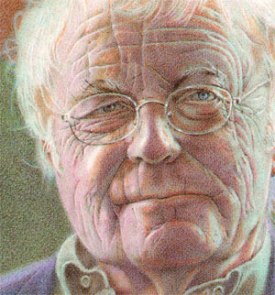
De Nederlandse dichter en schrijver Rutger Kopland (eig. Rutger Hendrik van den Hoofdakker) werd geboren in Goor op 4 augustus 1934. Zie ook mijn blog van 4 augustus 2007 en ook mijn blog van 4 augustus 2008 en ook mijn blog van 4 augustus 2009 en ook blog van 4 augustus 2010.


De vraag wie ze is

Intussen huist ze al zo lang in mijn hoofd
en al zo bijna overal - maar wie ze is

een zinloze vraag, je zoekt in je herinneringen
naar iets onvoorstelbaars, ik weet het, maar
ook zinloze vragen vragen een antwoord

eigenlijk is ze nog steeds die jonge vrouw
die ik ooit voevallig ergens tegenkwam
- maar wie ze is - in mijn hoofd
vind ik haar niet terug

er zijn momenten dat ik ineens weer weet
dat de mens eenzaam is, ook ik

en dat ik naar haar kijk en denk: zij daar
dat is ze, zo zichtbaar, zo sterfelijk


en merel

Er is iets in de zang van een merel
het is voorjaar, je wordt wakker

je ligt te denken in de nacht
het raam staat open - er is iets

waarvan de vogel zingt
en je denkt aan wat je moet opgeven

er is iets in je dat leeg is en het stroomt vol
met het zingen van die merel


De rode beuk

Hier staat de rode beuk
met het eindeloos grote
geduld van een boom.

Hier staat de rode beuk
hij ziet en hij hoort ons
en is ons vergeten.

Hier staat de rode beuk
voor hem is het altijd altijd
en hier is het nergens


 966018-789e3222dd4313008713a94b76c41300.jpg

Rutger Kopland (Goor, 4 augustus 1934)

Portret door Trudy Kramer 2002


De Poolse schrijver
Witold Gombrowicz werd geboren in Małoszyce op 4 augustus 1904. Zie ook mijn blog van 4 augustus 2007 en ook mijn blog van 4 augustus 2008 en ook mijn blog van 4 augustus 2009.en ook blog van 4 augustus 2010.


Uit Pornografia (Vertaald door Danuta Borchardt)


“The carriage moved on. Karol sat on the driver’s seat, next to the coachman. She, in the front—and where her little head ended, there he began above her as if placed on an upper story, his back toward us, a slim contour, visible yet featureless—while his shirt billowed in the wind—and the combination of her face with the absence of his face, the complement of her seeing face with his unseeing back struck me with a dark, hot duality. . . . They were not unusually good-looking—neither he nor she—only as much as is appropriate for their age—but they were a beauty in their closed circle, in their mutual desire and rapture—something in which practically no one else had any right to take part. They were unto them-selves—it was strictly between them. And especially because they were so (young). So I was not allowed to watch, I tried not to see it, but, with Fryderyk in front of me and sitting next to her on the small seat, I was again persistently asking myself: Had he seen this? Did he know anything? And I was lying in wait to see a single glance of his, one of those supposedly indifferent ones yet sliding by surreptitiously, greedily”.


966018-8a2f9919f6534f32351ae9c99e022e68.jpg 

Witold Gombrowicz (4 augustus 1904 - 24 juli 1969)

Foto van Bohdan Paczowski


De Duitse dichter Tom Bresemann werd geboren in Berlijn op 4 augustus 1978. Zie ook mijn blog van 8 juni 2009  en ook blog van 4 augustus 2010.


in die pilze

osterinselurlaubsaufenthalte: studien
im lendenschurz. gefühlte freiheit
in der nahaufnahme: dann
streikt die robocam.

die sanft abhängenden hügel, truly
great monuments, riesige maulwürfe. grau-
schwarz die balken am revers.

glasmurmeln
im gepäck. augäpfelschmerzen.
die erste erwähnung der glückseligen inseln
in den magazinen der pornoindustrie:

das wegschwemmen
der vernunft unterm kolonialen blick
des nachrichtensprechers:
ausflüsse wahren lebens – so was haben sie
noch nicht gesehen, da gehen ihnen die augen über:

angesichts dieser fröhlich wuchernden kulturen
steigt die unruhe des weißen mannes:
schon sieht man die liquidatoren
und Jean Jaques, hin- und herlaufend,
saving the planet.


966018-7c659078d700ecd9e2dd3d2174945c22.jpg
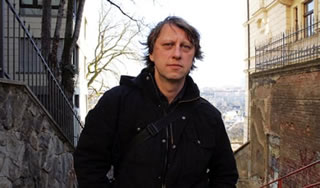
Tom Bresemann (Berlijn, 1978)


De Australische schrijver Timothy John Winton werd geboren op 4 augustus 1960 in Perth. Zie ook mijn blog van 4 augustus 2009.en ook blog van 4 augustus 2010.


Uit: Dirty Music


“Georgie got up and padded across to the kitchen which was separated from the living space by the glossy rampart of benches and domestic appliances. From the freezer she pulled out a bottle and poured herself a serious application of vodka. She stood a while staring back at the great merging space of the livingroom. It was big enough not to seem crowded, despite the fact that it held an eight-seater dining table, the computer station and the three sofas corralled around the TV at the other end. The whole seaward wall of this top floor was glass and all the curtains were thrown back. Between the house and the lagoon a hundred metres away there was only the front lawn and a few scrubby dunes. Georgie slugged the vodka down at a gulp. It was all sensation and no taste, exactly how a sister once described her. She smiled and put the glass down too loudly on the draining board. A little way along the hall Jim was asleep. The boys were downstairs.

She pulled back the sliding door and stepped out onto the terrace where the air was cool and thick with the smells of stewing seagrass, of brine and limey sand, of thawing bait and the savoury tang of saltbush. The outdoor furniture was beaded with dew. There wasn't breeze enough yet to stir the scalloped hems of the Perrier brolly, but dew this time of year was a sign of wind on the way. White Point sat in the teeth of the Roaring Forties. Here on the midwest coast the wind might not be your friend but it was sure as hell your constant neighbour.”


966018-21fb53e45781b05272f8cc96034eac51.jpg
Tim Winton (Perth, 4 augustus 1960)


Zie voor nog meer schrijvers van de 4e augustus ook mijn vorige blog van vandaag en eveneens mijn eerste blog van vandaag.
Geschreven door Romenu om 19:09 Reageer op dit bericht

Jáchym Topol, Allison Hedge Coke

De Tsjechische schrijver Jáchym Topol werd geboren op 4 augustus inPraag. Zie ook mijn blog van 4 augustus 2009 en ook mijn blog van 4 augustus 2009 en ook blog van 4 augustus 2010.


Uit: Transcript


“Ondra found the bottles and emptied them into the sink, she would take a few gulps and forget about them. The sink smelled of wine, he rinsed it with water from the tap.
Anyway, said Pinkie, when they were lying in bed.
What? asked Ondra.
Why does Mama sit in there all day staring at that photo of Eluzína?
It's not a photo. It's a drawing.
What's better? To be a boy, or a girl?
A boy, said Ondra.
So why is she always staring at Eluzína?
Go to sleep.
It was better when they both drank, said Pinkie.
Sure was, said Ondra.
On one of those distant summer afternoons, when they were all still together, Papa had made them watermills out of wood. They spent their days in a beer garden near their new house.
Before that, Papa had gone to work every morning in a suit and white shirt. Now he had a different job, in a factory. They had moved to a working class neighborhood on the outskirts of Prague.
But they always had fun in the beer garden. It was the only one around.
Would you just smell those chestnut trees! They smell of... of pure longing!
And did you know, young lady, that it was under that very same sort of chestnut tree that the Communist Party of Czechoslovakia was founded? Hm?
Often they would be joined, on those long afternoons, by Papa's new colleagues. Usually his immediate superiors, Foreman Detmar and Sergeant Dudek. The Sergeant couldn't take his eyes off Mama”.


966011-099257c38657ccfdf707d0d62acc1684.jpg
Jáchym Topol (Praag, 4 augustus 1962)


De Amerikaans-Canadese dichteres Allison Hedge Coke werd geboren op 4 augustus 1958 in Texas. Zie ook mijn blog van 4 augustus 2009 en ook blog van 4 augustus 2010.


When the Animals Leave This Place


Underneath ice caps, glacial peaks

deer, elk, vixen begin to ascend.

Wild creatures camouflaged as

waves and waves receding


from plains pulling


upward slopes and snow dusted mountains.

On spotted and clear cut hills robbed of fir,

high above wheat tapestried valleys, flood plains

up where head waters reside.


Droplets pound, listen.


Hoofed and pawed mammals

pawing and hoofing themselves up, up.

Along rivers dammed by chocolate beavers,

trailed by salamanders-mud puppies.


Plunging through currents,

above concrete and steel man-made barriers


these populations of forests flee

in such frenzy, popping splash dance,

pillaging cattail zones, lashing lily pads-

the breath of life in muddy ponds and still lakes.


Liquid beads slide on windshield glass


along cracked and shattered pane,

spider-like with webs and prisms.

Look, there, the rainbow

touched the ground both ends down.


Full arch, seven colors showered, heed

what the indigenous know,

why long ago they said people didn’t belong here,

that this land was meant to be wet with waters

not fertile to crops and domestic grazing.


The old ones said,


When the animals leave this place

the waters will come again.

This power is beyond the strength of man.

The river will return with its greatest force


No one can stop her.

She was meant to be this way.


The rainbow tied with red and green like

that on petal rose, though only momentarily.

Colors disappear like print photograph fading.

They mix with dark grey surrounding.


A flurry of fowl follow


like strands, maidenhair falls,

from blackened clouds above

swarming inward

covering the basin and raising sky.


Darkness hangs over


the hills appear as black water crests,

blackness varying shades.

The sun is somewhere farther than the farthest ridge.

Main gravel crossroads and back back roads


slicken to mud, clay.

Turtles creep along rising banks, snapping jowls.


Frogs chug throaty songs.

The frogs only part of immense choir

heralding the downpour, the falling oceans.

Over the train trestle and suspension bridge with


current so slick everything slides off in sheets.


Among rotten stumps in dark bass ponds,

catfish reel in fins and crawl,

walking whiskers to higher waters.

Waters above and below


the choir calling it forth.


Brightly plumed jays and dull brown-headed cowbirds

fly as if hung in one place like pinwheels.

They dance toward the rain crest,

the approaching storm


beckoning, inviting, summoning.


A single sparrow sings the stroke of rain

past the strength of sunlight.

The frog chorus sings refrain,

melody drumming thunder,


evoked by beasts and water creatures wanting their homes.

Wanting to return to clearings and streams where

white birch woods rise and tower over

and quaking aspen stand against

dark, dark veils-sheeting rains crossing


pasture, meadow, mountain.

Sounds erupt.

Gathering clouds converge, push,

pull, push, pull forcing lightning


back and forth shaping

windy, sculptured swans, mallard ducks, and giants

from stratocumulus media.

As if they are a living cloud chamber,

As if they exist only in the heavens.


Air swells with dampness.

It has begun.


966011-3357d156513b4c954f98b3085fa624ca.jpg
A
llison Hedge Coke (Texas, 4 augustus 1958)

Geschreven door Romenu om 19:09 Reageer op dit bericht

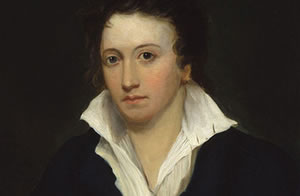
Percy Bysshe Shelley, Knut Hamsun, Michaël Slory, René Schickele, Munkepunke, Georges Maurice de Guérin, Erich Weinert, Otto Steiger

De Engelse dichter Percy Bysshe Shelley werd op 4 augustus 1792 geboren in Field Place, Sussex. Zie ook mijn blog van 21 april 2006 en mijn blog van 4 augustus 2006 en ook mijn blog van 4 augustus 2007 en ook mijn blog van 4 augustus 2008 en ook mijn blog van 4 augustus 2009.


TO A SKYLARK


AIL to thee, blithe Spirit!

Bird thou never wert,

That from Heaven, or near it,

Pourest thy full heart

In profuse strains of unpremeditated art.


Higher still and higher

From the earth thou springest

Like a cloud of fire;

The blue deep thou wingest,

And singing still dost soar, and soaring ever singest.


In the golden lightning

Of the sunken sun,

O'er which clouds are bright'ning,

Thou dost float and run;

Like an unbodied joy whose race is just begun.


The pale purple even

Melts around thy flight;

Like a star of Heaven,

In the broad daylight

Thou art unseen, but yet I hear thy shrill delight,


Keen as are the arrows

Of that silver sphere

Whose intense lamp narrows

In the white dawn clear

Until we hardly see -- we feel, that it is there.


All the earth and air

With thy voice is loud,

As, when night is bare,

From one lonely cloud

The moon rains out her beams, and Heaven is overflowed.


What thou art we know not;

What is most like thee?

From rainbow clouds there flow not

Drops so bright to see

As from thy presence showers a rain of melody.


Like a poet hidden

In the light of thought,

Singing hymns unbidden,

Till the world is wrought

To sympathy with hopes and fears it heeded not:


Like a high-born maiden

In a palace tower,

Soothing her love-laden

Soul in secret hour

With music sweet as love, which overflows her bower:


Like a glow-worm golden

In a dell of dew,

Scattering unbeholden

Its aërial hue

Among the flowers and grass, which screen it from the view:


Like a rose embowered

In its own green leaves,

By warm winds deflowered,

Till the scent it gives

Makes faint with too much sweet these heavy-wingèd thieves.


Sound of vernal showers

On the twinkling grass,

Rain-awakened flowers,

All that ever was,

Joyous, and clear, and fresh, thy music doth surpass:


Teach us, Sprite or Bird,

What sweet thoughts are thine:

I have never heard

Praise of love or wine

That panted forth a flood of rapture so divine.


Chorus Hymeneal,

Or triumphal chant,

Matched with thine would be all

But an empty vaunt,

A thing wherein we feel there is some hidden want.


What objects are the fountains

Of thy happy strain?

What fields, or waves, or mountains?

What shapes of sky or plain?

What love of thine own kind? what ignorance of pain?


With thy clear keen joyance,

Languor cannot be:

Shadow of annoyance

Never came near thee:

Thou lovest -- but ne'er knew love's sad satiety.


Waking or asleep,

Thou of death must deem

Things more true and deep

Than we mortals dream,

Or how could thy notes flow in such a crystal stream?


We look before and after,

And pine for what is not:

Our sincerest laughter

With some pain is fraught;

Our sweetest songs are those that tell of saddest thought.


Yet, if we could scorn

Hate, and pride, and fear;

If we were things born

Not to shed a tear,

I know not how thy joy we ever should come near.


Better than all measures

Of delightful sound,

Better than all treasures

That in books are found,

Thy skill to poet were, thou scorner of the ground!


Teach me half the gladness

That thy brain must know,

Such harmonious madness

From my lips would flow

The world should listen then -- as I am listening now.


966000-1b943324e316f81607a4e4d199820983.jpg
Percy Bysshe Shelley (4 augustus 1792 – 8 juli 1822) 


Zie voor onderstaande schrijvers ook mijn blog van 4 augustus 2010.


De Noorse schrijver Knut Hamsun (eig. Knut Pedersen) werd geboren in Lom, Fylke Oppland op 4 augustus 1859. Zie ook mijn blog van 4 augustus 2007  en ook mijn blog van 4 augustus 2008 en ook mijn blog van 4 augustus 2009.


De Surinaamse dichter Michaël Arnoldus Slory werd geboren in Totness, district Coronie in Suriname, op 4 augustus 1935. Zie ook mijn blog van 4 augustus 2007 en ook mijn blog van 4 augustus 2009.


De Duits-Fanse dichter, schrijver, essayist en vertaler René Schickele werd geboren op 4 augustus 1883 in Oberehnheim in de Elzas. Zie ook mijn blog van 4 augustus 2009.


De Duitse dichter, schrijver, vertaler en uitgever Munkepunke (pseudoniem voor Alfred Richard Meyer) werd geboren op 4 augustus 1882 in Schwerin. Zie ook mijn blog van 4 augustus 2009.


De Franse dichter en schrijver Georges Maurice de Guérin du Cayla werd geboren op 4 augustus 1810 in het familiekasteel Le Cayla nabij Andillac in de Languedoc. Zie ook mijn blog van 4 augustus 2007 en ook mijn blog van 4 augustus 2009.


De (Oost)Duitse dichter en schrijver Erich Weinert werd geboren in Magdeburg op 4 augustus 1890. Zie ook mijn blog van 4 augustus 2007 en ook mijn blog van 4 augustus 2008 en ook mijn blog van 4 augustus 2009.


Zie voor onderstaande schrijver ook mijn blog van 4 augustus 2009.


De Zwitserse schrijver Otto Steiger werd geboren op 4 augustus 1909 in Uetendorf bij Thun.


Geschreven door Romenu om 18:01 Reageer op dit bericht

Rudi van Dantzig

De Nederlandse choreograaf, balletdanser en schrijver Rudi van Dantzig werd geboren in Amsterdam op 4 augustus 1933. Van Dantzig begon zijn balletcarrière als danser. In 1950 begon hij op de relatief late leeftijd van 16 jaar met balletlessen en in 1952 engageerde Sonia Gaskell Van Dantzig bij haar gezelschap Ballet Recital. In 1955 maakte zijn eerste choreografie, Nachteiland, voor Het Nederlands Ballet, waar van Dantzig de huischoreograaf werd en met ingang van 1965 één van de drie artistiek leiders. In 1971 bleef hij nog als enige over en tot 1991 was hij de enige artistiek leider van het gezelschap. Gedurende zijn carrière creëerde hij meer dan vijftig balletten, die over de hele wereld werden uitgevoerd en nog altijd bij binnen- en buitenlandse gezelschappen op het repertoire staan. Voor de legendarische Russische danser Rudolf Noerejev maakte hij, op diens verzoek, drie balletten. Tot Van Dantzigs bekendste choreografieën behoren Vier letzte Lieder, Monument voor een gestorven jongen, Onder mijne voeten en zijn versies van de avondvullende klassieke balletten Romeo en Julia en Het Zwanenmeer. In 1986 schreef hij de roman Voor een Verloren Soldaat. Dit werd een groot succes: het kreeg verscheidene prijzen en werd verfilmd, ook onder de titel Voor een Verloren Soldaat.


Uit: Remembering Nureyev: The Trail of a Comet (Vertaald door Katie de Haan)


It was amazing how amiable and open he was in those hours, seeming to understand my creative dilemmas, how I was wrestling with the music, the large number of dancers, the laborious arrangements at the Opera which caused me to suffer from a constant lack of time, and he even seemed to understand my displeasure at his own early-morning whims.

(...)


“You have to adapt,” he preached to me, “that is number one. Always work everywhere, no matter how. Number two is that you must make yourself indispensable, make sure you’re always everywhere. Without even noticing, the audience must become addicted to you, first they can’t get rid of you, but later they can’t do without you.”


1075606-6808070417114d08832d3cd3a707b7b4.jpg
Rudi van Dantzig
(Amsterdam, 4 augustus 1933)

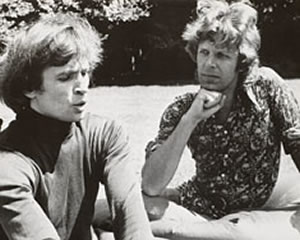
Rudolf Noerejev en Rudi van Dantzig


Geschreven door Romenu om 00:00 Reageer op dit bericht

Meer van Romenu

↑ Terug naar de berichten