Naar de inhoud

Romenu

Over literatuur, gedichten, kunst en cultuur
seniorennet.beseniorennet.be

Berichten van 13 maart 2012

Mahmoud Darwish, Yuri Andrukhovych, Vladimir Makanin, Didier Decoin
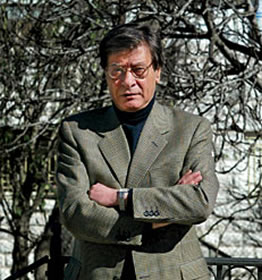
De Palestijnse dichter Mahmoud Darwish werd geboren in Al-Birwa, Palestina, op 13 maart 1941. Zie ook alle tags voor Mahmoud Darwish op dit blog.


The pigeons fly


The pigeons fly,
the pigeons come down...
***

Prepare a place for me to rest.
I love you unto weariness,
your morning is fruit for songs
and this evening is precious gold
the shadows are strong as marble.
When I see myself,
it is hanging upon a neck that embraces only the clouds,
you are the air that undresses in front of me like tears of the grape,
you are the beginning of the family of waves held by the shore.
I love you, you are the beginning of my soul, and you are the end...
the pigeons fly
the pigeons come down...
***

I am for my lover I am. And my lover is for his wandering star
Sleep my love
on you my hair braids, peace be with you...
the pigeons fly
the pigeons come down...
***

Oh, my love, where are you taking me away from my parents,
from my trees, small bed and from my weariness,
from my visions, from my light, from my memories and pleasant evenings,
from my dress and my shyness,
where are you taking me my love, where?
You take me, set me on fire, and then leave me
in the vain path of the air
that is a sin ... that is a sin...
the pigeons fly
the pigeons come down...
***

My love, I fear the silence of your hands.
Scratch my blood so the horse can sleep.
My love, female birds fly to you
take me as a wife and breathe.
My love I will stay and breasts will grow for you
The guards take me out of your way
my love, I will cry upon you, upon you, upon you.
because you are die surface of my sky.
My body is the land,
the place for you...
the pigeons fly
the pigeons come down...


 1114034-7e4aeb3f266fc7d5a6f42bff3ed50d4d.jpg

Mahmoud Darwish (13 maart 1941 - 9 augustus 2008)


De Oekraïense dichter en schrijver
Yuri Andrukhovych werd geboren op 13 maart 1960 in Iwano-Frankiwsk. Zie ook alle tags voor Yuri Andrukhovych op dit blog.


From "India"

I

India begins with dreams about setting out
on an eastbound journey. These dreams have plots, they are
like a film through which one wanders like a gallant hero.
You simply hear the trumpet or the gong, or the ringing of water,
or a voice that whispers, "Get up and go!" — but you
are not sure if you heard it with your ear or your heart.

India is not exactly a peninsula. It is a continent
that borders Nothingness. Neither atlas nor dictionary
takes into account the world's being surrounded by the Nile,
or the stars in the sky being but a performance
in God's theater. And it looks like the time hasn't come yet:
it's easier for us to consider the plane a sphere. A body.

We consider a sphere that which rests like a flatbread.
But you, having heard the harsh commanding "march!"
procure a sword and set out eastward — to die.
You put together a squadron of merry and mean cutthroats;
along the way they sing somewhat like
the angels in their nighttime cherubic concerts.

The plane's made of deserts and kingdoms, mountain ranges and cities
above which is but the thick atmosphere that's
seven heavens high--and what discord or manna can come out of them!
Only having lost the horses, the friends, all the carts with supplies,
through persistence like that of the twisted and battered grapevine
you'll make your way to the place where one hears the word "rahmanna."


 1114034-a872c64f3e094f1c5066aafe2a446ae7.jpg

Yuri Andrukhovych (Iwano-Frankiwsk, 13 maart 1960)


De Russische schrijver
Vladimir Makanin werd geboren op 13 maart 1937 in Orsk. Zie
en ook mijn blog van 13 maart 2010 en ook mijn blog van 13 maart 2011.


Uit: Benzinkönig (Vertaald door Annelore Nitschke)


„Auf den geräumten Gleisen. Im nun wieder offenen Gelände drängen nur sie sich, die frisch gebackenen Soldaten. Niemand sonst. Sie sehen sich plötzlich selbst. Ha, das sind wir! Wir sind

viele! Der Zug (bescheiden, ganze zwei Waggons), mit dem sie eingetroffen sind, ist sofort wieder davongerattert und verschwunden … Krieg!

Den Zug haben sie satt, diese ewige Fahrerei. Heiße, versiffte Waggons, wie ein endloser schlechter Traum. Dafür berauscht jetzt die Luft, diese Luft hier! Und nun verbrüdern sie sich unter dem kaukasischen Himmel. Hurra! Hurra! Fallen sich in die Arme. Der erste Zug und der zweite … Hauptsache, die Waffen sind noch da. (Trotz des Besäufnisses. Oder dank seiner!) Schau

forscher, Soldat! Die Visagen glühen rot. An den Backen, ha-ha, könnte man sich die Zigarette anzünden.

Warum zwei Züge, noch dazu unvollständig? Und warum bei so vielen Soldaten nur ein Offizier? Aber auch der ist außer Gefecht gesetzt – er wurde auf einem Bahnhof vor Rostow herausgeholt,

mit heftigen Schmerzen wegen eines eingeklemmten Bruchs. Wie? Was? Gibt es in Russland keine

Offiziere mehr ohne Bruch? Wo sind sie, die Bruch- und Blinddarmlosen?

Auch zum Empfang ist kein Offizier auf dem staubigen Bahnsteig erschienen. Aber wenn man es recht bedenkt, würde er uns doch nur stören! Egal. Ist eben keiner da.Dafür ist so ein Scheißordner

mit entzündeten Augen da. Und mit einer roten Armbinde. Der treibt den angekommenen Soldatenhaufen wie üblich an – dalli, dalli! Jagt sie vom Bahnsteig. Er möchte die besoffenen Jungs mit den Kalaschnikows möglichst schnell loswerden. Diese grölende, gefechtsunerfahrene Horde. Und den Krieg überhaupt, verdammte Scheiße!“


 1114034-c907f4930b70310fbedbdceaf0c6373c.jpg

Vladimir Makanin (Orsk, 13 maart 1937)


De Franse schrijver Didier Decoin werd geboren op 13 maart 1945 in Boulogne-Billancourt (Seine). Zie ook alle tags voor Didier Decoin op dit blog.


Uit: Avec vue sur la mer


“Le soir du Goncourt, dans l'odeur de sucre chaud d'une crêperie où j'attendais l'heure de me rendre à une émission de radio, Chantai et moi levâmes nos bols de cidre pour célébrer le prix qui, entre autres conséquences heureuses, allait nous permettre l'achat de la petite maison pas très belle dans la Hague magnifique.
Restait à la trouver, mais nous étions confiants : dans une région qui avait la réputation d'être la poubelle nucléaire de la France, les maisons à vendre devaient pulluler, et leurs propriétaires seraient trop contents que nous les en débarrassions.
Nous envisagions d'ailleurs l'acquisition d'un compteur Geiger, pensant que le nombre certainement spectaculaire de becquerels imprégnant nos futurs murs pourrait nous donner quelque avantage lors des négociations - idée vite abandonnée parce que nous n'avions pas la moindre idée du genre de magasin susceptible de vendre un Geiger.”


1114034-882175fb73633a344900c7ecc61f7b19.jpg
Didier Decoin (Boulogne-Billancourt 13 maart 1945)


Zie voor nog meer schrijvers van de 13e maart ook
mijn vorige blog van vandaag
Geschreven door Romenu om 19:25 Reageer op dit bericht

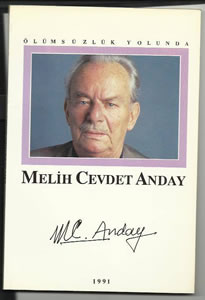
Melih Cevdet Anday, Yeghishe Charents, Oskar Loerke, Hermine de Graaf

De Turkse dichter Melih Cevdet (eig. Melih Cevdet Anday) werd geboren op 13 maart 1915 in Istanboel. Zie ook alle tags voor Melih Cevdet op dit blog. 


A Poem in the Manner of Karacaoglan


VI

No one celebrates the Elbistan meadow.

It opens its arms to the wind like dawn, a refined gazelle.

Summer brings the balmy weather of the time I knew,

Like a nightingale singing in fresh, hanging grapes.

Hesitant morning sets the purple hyacinth free.

Delight I've never known extracts lies from my heart

And it enjoys, for a time, the quince in the branches.

A crane flaps its wings, sapling of dawn.

I know well Ismail Bey's high plateau with its cold running waters,

The rose's branch, as tall as four men, that winds around the cypress,

High up and coiled in the fog, with an aroma like wine.

There you can see the heavy-headed pool quake

Like purple clouds that deceive the birds.

It's time for the ant that never knew childhood to grow up,

The sun droning like a cicada, an idol like a man,

The shouting flower of my freedom, respected.

The weeds whisper into the ear of the stream,

The heart's flower comes down to earth from the heights.

One can see a falcon's nest in the Koja Binboğa,

Its morning flowers dazzle the eye,

They pulse in the heart of wind like the chiming of a bell.
In the moonlight dragons descend with their eyes full of stars

To the valley where thousands of flowers play . . .

Tonight, tonight let's sleep in the Binboğa, my horse.


Vertaald door Sidney Wade en Efe Murad


1114031-88a9611e2ffb58a694b2d3ca43d875a3.jpg
Melih Cevdet Anday (13 maart 1915 – 28 november 2002)


De Armeense dichter
Yeghishe Charents werd geboren op 13 maart 1897 in Kars (toen Rusland, nu Turkije). Zie ook alle tags voor Yeghishe Charents op dit blog.


Toward The Future


My infinite soul is already full

With confusing songs and also noises;
My electric heart is already full

With inflamed currents.

My soul has become a radio station

For the entire world and all of mankind;

And it is so high, my soul's station,

Like Massis so high, and also so firm -

Mighty, terrible!


In these fervent days, wind-driven, confused -

The song of million hearts distant or near

It is now my fate to sing it today;

My multimillion, ten thousands of friends'

Joy of today and their great flight as well -

Today it's my song's turn to cast the fate

Of the coming days.


Therefore this is why

As a gigantic, as an Eiffelian

Enormous tower,

At past and coming centuries' threshold

Mighty, high above,

I am now standing with my entire height

And I am singing.

And my soul is now a radio station,

It is now sending its fiery red song

Far and far away; -

To all of the hearts, who live and exist

In all directions.


My soul is singing, sounding fervently.

I know in front of my song of today -

Facing the red sparks of my soul as well -

Each single soul is a radio station,

Wherever it is!

Every soul which lives, each soul which exists,

And is carrying upon its own wings

The same great concept, the immense concept

Of these fervent days, -

The radiant concept of these fervent days.

Every single soul,

Which is today with its wings of iron

Ringing and rustling -

And is searching for new rest and lulling

In the uproar of million rebel wings...


Do you know, that now

Here -

In my ruined country of Nayiri

And far - far away -

Inside red Moscow,

At yellow Tibet,

At San Francisco, enormous London

And at Singapore -

In all locations, in all directions

The world is pregnant with a novel song?


Far away- and near

Inside the mine pits,

At the factories,

In the wide steppes and in the forests -

In all locations, in all directions,

My brothers, thousands, who're lulled with the song

Of iron and of bronze, of the soil and mines!

Who possesses our will of fire today,

Our blood-red power

Our fervent fortune

So universal?


Who has them today...?

It's us who are new, we're tens of thousands!


Like an enormous disc made of iron

The brave will of our thousands of brothers,

So universal -

We have already thrown with immense force

Toward all the winds of the coming days,

Toward - the Future...


 1114031-7f8bca84af2fb515e4127edcf0a583e6.jpg

Yeghishe Charents (13 maart 1897 – 29 november 1937)


De Duitse dichter Oskar Loerke werd geboren op 13 maart 1884 in Jungen. Zie ook alle tags voor Oskar Loerke op dit blog.


Sommernachts über Land


Von Rüstern schauert die hängende

Ernte der Traurigkeit;

Schon steigt aus Wurzeln die drängende.

die untere Ewigkeit.


Aus Brunnen krümmt sich der tastende

Verwesende Nebel und klimmt.

Aus Löchern kommt das fastende

Grauen und nimmt und nimmt.


Hat der Horizont seine klagenden

Harfen zum Klagen gebracht?

Die Erde hat ach die tragenden

Schollen zu Wolken gemacht.


Die Nähe voll bitter steigender

Schluchzer wird ungewiß.

Der Himmel steht wie ein schweigender

Berg der Kümmernis.


Der Kümmernisberg steht gläsern still,

Vor alle Ziele gestellt.

Und wer in süßere Meilen nun will,

Dem steht er vor der Welt.


 1114031-9a1acca4b2c469d51c53009fe751fb5b.jpg

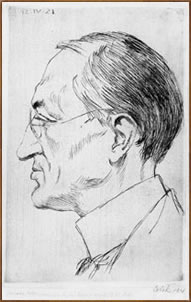
Oskar Loerke (13 maart 1884 – 24 februari 1941)

Portret door Emil Orlik, 1921


De Nederlands schrijfster
Hermine de Graaf werd geboren in Winschoten op 13 maart 1951.
Zie ook alle tags voor Hermine de Graaf op dit blog.


Uit: Een menukaart is de maaltijd niet (Bespreking van De Graafs werk door Daan Cartens)


„Haar hoofdpersonen heten Klaar(tje), Katja, Daphne of Stella, maar de personages in het werk van Hermine de Graaf gedragen zich allerminst op een stereotiep meisjesachtige manier, zoals hun wat oubollige namen misschien zouden doen vermoeden. De tieners van De Graaf zijn doorgaans slim, onhandelbaar, destructief; ze doorzien vaak op een verrassend heldere manier de volwassen wereld, maar weigeren zich te schikken naar de regels van de ouderen; ze kunnen niet op een rationeel-analytische manier greep op de wereld of de werkelijkheid krijgen, maar vaak wel op een associatieve of intuïtieve wijze. De bezweringsmogelijkheden die de taal biedt, spelen daarbij een voorname rol. Zo samengevat worden vooral de psychologische elementen benadrukt en dat gebeurde ook steevast in de meestal positieve kritieken die Hermine de Graaf ten deel vielen na de verschijning van Een kaart, niet het gebied (1984), De zeevlam (1985) en Aanklacht tegen onbekend (1987), alledrie verhalenbundels.

Vreemd of merkwaardig is dat accent nu ook weer niet, want vooral in haar debuut beschreef de in 1951 geboren De Graaf een gedrag dat tot dan toe in de Nederlandse literatuur behoorlijk was verwaarloosd. Het aantrekkelijke van Een kaart, niet het gebied was dat de lezer eerst werd geconfronteerd met de nogal afwijkende omgang met alles en iedereen van pubermeisjes in het algemeen en hoofdpersoon Klaar in het bijzonder, voordat de auteur in het laatste verhaal ‘Snoepjesjacht’ op een programmatische manier haar werkwijze en thematiek expliciteerde, een thematiek die De Graaf ook in de novelle De regels van het huis (1988) en de roman Stella Klein (1990) getrouw bleef, hoe gelaagder die boeken misschien op het eerste gezicht wel leken.“


 1114031-914dafe70bccf4324f5f70ed86ad1968.jpg

Hermine de Graaf (Winschoten, 13 maart 1951)


Zie voor nog meer schrijvers van de 13e maart ook mijn blog van 13 maart 2011 deel 2 en eveneens deel 3.

Geschreven door Romenu om 19:24 Reageer op dit bericht

Meer van Romenu

↑ Terug naar de berichten