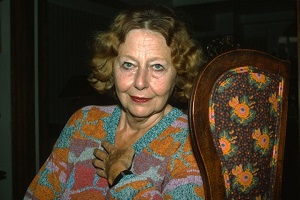
Michael Longley, Marijke Höweler, Theodore Dreiser, Hilde Domin, Julien Gracq, Hilaire Belloc, Vladimir Korolenko, Eimear McBride, Graeme C. Simsion
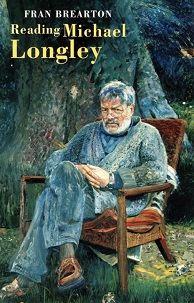
De Ierse dichter Michael Longley werd geboren op 27 juli 1939 in Belfast. Zie ook alle tags voor Michael Longley op dit blog en ook mijn blog van 27 juli 2010.
Saint Francis To The Birds
And, summing up, I think of when
With cloud and cloudburst you confer,
By God's sheer genius lifted there,
Lighthearted starling, nervous wren.
It is perfection you rehearse -
God placed the limpet on a rock,
He dressed the primrose in its frock
upside down with its leg showing
And closed the chestnut in its purse:
Creating one more precedent,
With no less forethought, no less care
He gave you feathers and the air
To migrate to his best intent.
To useful angles well aligned,
At proper heights compelled to tilt,
Across kind landscapes yearly spilt -
Birds, you are always on his mind.
Quick emblems of his long estate,
It's good to have you overhead
Who understand when all is said,
When all is done, and it is late.
May my sermon, like your customs,
Reach suddenly beyond dispute -
Oh, birds entire and absolute,
Last birds above our broken homes.
Cloudberries
You give me cloudberry jam from Lapland,
Bog amber, snow-line titbits, scrumptious
Cloudberries sweetened slowly by the cold,
And costly enough for cloudberry wars
(Diplomatic wars, my dear).
Imagine us
Among the harvesters, keeping our distance
In sphagnum fields on the longest day
When dawn and dusk like frustrated lovers
Can kiss, legend has it, once a year. Ah,
Kisses at our age, cloudberry kisses.
Michael Longley (Belfast, 27 juli 1939)
Cover
De Nederlandse schrijfster en psychologe Marijke Höweler werd geboren in Koog aan de Zaan op 27 juli 1938. Zie ook alle tags voor Marijke Höweler op dit blog en ook mijn blog van 27 juli 2010.
Uit: Zum Wohl, Zum Glück!
“Het was een avontuurlijke nacht geweest. Eenzaam, dat wel, maar het kan toch niet gewoon genoemd worden dat men zichzelf in het aardedonker duwend tegen een wildvreemde kamerwand aantreft? Een muur die van geen wijken weet op de plaats waar zich de deur naar het toilet behoort te bevinden. Terwijl men panisch trappelend voortwoelt, één hand om het geslacht, de andere verliezend in een baaierd van gordijnen op de plaats waar de linnenkast behoort te staan. Het is toch niet gewoon te noemen dat een volwassene zich tenslotte genoodzaakt ziet om zich van anderhalve liter vloeistof te ontdoen tegen een slaapkamermuur van schoon metselwerk terwijl hij het beddekleedje onder de voeten langzaam doorweekt voelt worden en ietsje warmer dan voordien? Tenminste, zo stond Jasper daar de volgende morgen tegenover terwijl hij het zachtblauwe matje beschaamd in de vuilnisbak propte. En dat vond Jasper eens te meer toen hij een half uur later onwennig afdalend langs de houten spiltrap de garage in kwam en na een tijdje begreep dat het drup-drup-drup op het dak van zijn glanzende Citroen...
Enfin, dit soort confrontaties waren in staat om hem een hele dag een rusteloos gevoel van onbehagen en onzekerheid te verschaffen. Gelukkig maar dat hij vakantie had. Hoewel, als hij gewoon in z'n eigen flat had geslapen dan zou het hele vernederende incident achterwege zijn gebleven. Zo piekerde Jasper voort, terwijl hij zijn autodak afsponsde en merkte dat dat weinig zin had zolang de bron niet was opgedroogd. Hij leek waarachtig wel een olifant geweest te zijn of een paard. Bovendien strookte de plaats van de lekkage niet met de plek waarop hij zich een verdieping hoger zo vreemd gedragen had die nacht. Dus tòch, dacht Jasper. Dus toch een dubbele houten vloer en dat stemde weer enigszins tot tevredenheid. Teder spreidde hij een dweiltje op het dak van de auto uit en even later klonk een gestaag gedruppel in het plastic afwasteiltje dat voor het grijpen had gestaan. Het schuifdak had tenslotte ook nog open kunnen staan.”

Marijke Höweler (27 juli 1938 - 5 mei 2006)
De Amerikaanse schrijver Theodore Herman Albert Dreiser werd geboren op 27 juli 1871 in Sullivan, Indiana. Zie ook alle tags voor Theodore Dreiser op dit blog en ook mijn blog van 27 juli 2010.
Uit: The Titan
“When Frank Algernon Cowperwood emerged from the Eastern District Penitentiary in Philadelphia he realized that the old life he had lived in that city since boyhood was ended. His youth was gone, and with it had been lost the great business prospects of his earlier manhood. He must begin again.
It would be useless to repeat how a second panic following upon a tremendous failure--that of Jay Cooke & Co.--had placed a second fortune in his hands. This restored wealth softened him in some degree. Fate seemed to have his personal welfare in charge. He was sick of the stock-exchange, anyhow, as a means of livelihood, and now decided that he would leave it once and for all. He would get in something else--street-railways, land deals, some of the boundless opportunities of the far West. Philadelphia was no longer pleasing to him. Though now free and rich, he was still a scandal to the pretenders, and the financial and social world was not prepared to accept him. He must go his way alone, unaided, or only secretly so, while his quondam friends watched his career from afar. So, thinking of this, he took the train one day, his charming mistress, now only twenty-six, coming to the station to see him off. He looked at her quite tenderly, for she was the quintessence of a certain type of feminine beauty.
"By-by, dearie," he smiled, as the train-bell signaled the approaching departure. "You and I will get out of this shortly. Don't grieve. I'll be back in two or three weeks, or I'll send for you. I'd take you now, only I don't know how that country is out there. We'll fix on some place, and then you watch me settle this fortune question. We'll not live under a cloud always. I'll get a divorce, and we'll marry, and things will come right with a bang. Money will do that."
He looked at her with his large, cool, penetrating eyes, and she clasped his cheeks between her hands”.

Theodore Dreiser (27 juli 1871 – 28 december 1945)
Cover
De Duitse schrijfster, dichteres en vertaalster Hilde Domin werd geboren in Keulen als Hilde Löwenstein op 27 juli 1909. Zie ook mijn blog van 27 juli 2010 en eveneens alle tags voor Hilde Domin op dit blog.
Harte fremde Hände
Harte fremde Hände
sollen über mich fahren
wie Pflüge
und deine Wurzeln zerreißen.
Ich will meinen Körper einreiben
mit fremdem Schweiß
wie mit einer beizenden Salbe
daß alle Poren vergessen
wie du riechst.
Haare ohne Namen
sollen auf meiner Haut liegen
wie Tannennadeln auf dem Waldboden,
andere Lippen die Augen küssen
die für dich weinen.
Und meine Seele, die dich sucht
so natürlich
wie abends ein Vogel über das Meer fliegt,
verliert die Richtung
und kommt
nie wieder an Land.
Magere Kost
Ich lege mich hin,
ich esse nicht und ich schlafe nicht,
ich gebe meinen Blumen
kein Wasser.
Es lohnt nicht den Finger zu heben.
Ich erwarte nichts.
Deine Stimme, die mich umarmt hat,
es ist viele Tage her,
ich habe jeden Tag
ein kleines Stück von ihr gegessen,
ich habe viele Tage
von ihr gelebt.
Bescheiden wie die Tiere der Armen
die am Wegrand
die schütteren Halme zupfen
und denen nichts gestreut wird.
So wenig, so viel
wie die Stimme,
die mich in den Arm nimmt,
musst du mir lassen.
Ich atme nicht
ohne die Stimme.

Hilde Domin (27 juli 1909 - 22 februari 2006)
De Franse schrijver Julien Gracq werd geboren op 27 juli 1910 als Louis Poirier in Saint-Florent-le-Vieil bij Angers. Zie ook alle tags voor Julien Gracq op dit blog en ook mijn blog van 27 juli 2010.
Uit: Lettrines 2
« Fin octobre. Il n’a pas plu depuis quatre mois. Au jardin, les feuilles des arbustes pendent toutes droites et languissent après la pluie ; tous les massifs sont en fleur comme au plein de l’été. Depuis la mi-septembre, l’automne a été un une magnifique succession de journées chaudes ou tièdes, transparentes, gorgées, infusées de soleil jaune.
Avant-hier, revenant de Paris en voiture, je déjeunais dans un petit « relais » en plein champ, proche d’Ouzouer-le-Marché : devant moi, par la fenêtre, je voyais se déployer jusqu’à l’horizon un vaste pas de Beauce verte et jaune, sans un arbre, sans une haie. A deux kilomètres, la lisière d’un village, sans doute un de ces hameaux beaucerons murés, revêches, désertés, plus sinistres encore quand on les traverse sous le soleil, mais qui, battu directement qu’il était par l’écume verte et fleurie, me paraissait dans le lointain de l’étendue plein de charme. Plus loin encore, à cinq ou six kilomètres, une lisière de forêt. Rien ne bougeait, que le grésillement doré de la légère brume ; l’œil se nourrissait de la seule succulence de la lumières ; il semblait qu’on entendait le soleil se déplacer.
De telles saisons, de pareilles journées, si tardivement aventurées et menacées, ensorcelantes et pourtant sereines, évoquent le climat éperdu et condamné de l’amour et donnent l’envie d’inverser le vers de Baudelaire : ô femme dangereuse, ô séduisants climats ! La terre apparaît touchée au front de quelque signe de majesté : ce sont bien les royaumes de la terre, tout poudroyants de la couleur de l’or, et l’homme les visite, les dénombre et les engrange, inépuisablement. »

Julien Gracq (27 juli 1910 – 22 december 2007)
De Britse dichter en schrijver Hilaire Belloc werd geboren te St-Cloud op 27 juli 1870. Zie ook alle tags voor Hilaire Belloc op dit blog en ook mijn blog van 27 juli 2010.
November
November is that historied Emperor,
Conquered in age, but foot to foot with fate,
Who from his refuge high has heard the roar
Of squadrons in pursuit, and now, too late,
Stirrups the storm and calls the winds to war,
And arms the garrison of his last heirloom,
And shakes the sky to its extremest shore
With battle against irrevocable doom.
Till, driven and hurled from his strong citadels,
He flies in hurrying cloud and spurs him on,
Empty of lingerings, empty of farewells
And final benedictions, and is gone.
But in my garden all the trees have shed
Their legacies of the light, and all the flowers are dead.
December
Hoar Time about the house betakes him slow,
Seeking an entry for his weariness.
And in that dreadful company distress
And the sad night with silent footsteps go.
On my poor fire the brands are scarce aglow,
And in the woods without what memories press
Where, waning in the trees from less to less,
Mysterious bangs the hom6d moon and low.
For now December, full of aged care,
Comes in upon the yea and weakly grieves;
Mumbling his lost desires and his despair; .
And with mad trembling hand still interweaves,
The dank sear flower-stalks tangled in his hair,
While round about him whirl the rotten leaves.

Hilaire Belloc (27 juli 1870. – 16 juli 1953)
Conversation Piece (G.K. Chesterton; Maurice Baring; Hilaire Belloc) door Sir Herbert James Gunn, 1932
De Russische schrijver Vladimir Korolenko werd geboren op 27 juli 1853 in Zjitomir (Volynië). Zie ook alle tags voor Vladimir Korolenko op dit blog en ook mijn blog van 27 juli 2010.
Uit: De Laatste Straal. Herinnering uit Siberië (Vertaald door Annie de Graaff)
“Op een kleinen akker bij den oever der Lena ligt het gehuchtje Njoeskjoe. Enkele schamele hutten klampen zich tegen de steile rotsen, als terugdeinzend voor den woestbruisenden stroom. Op dit gedeelte is de Lena smal, maar donderend bulderen de golven. Het water klotst tegen de bergen van den tegenovergestelden oever, en - zoo ergens - dan verdient de Lena hier den naam van ‘Gevloekte spleet.’
Inderdaad stroomt ze hier als door een reusachtige rotskloof, waar het donkere water loeit en bruist tusschen hemelhooge rotsen, klippen en spleten. Langen tijd blijven nevels hier hangen; altijd heerschen hier vochtige koude en eeuwige schemering. De bewoners van deze streek der Lena kenmerken zich door traagheid, moeheid, en een hopelooze berusting. Het droeve suizen der laryx-boomen, die op den bergrug groeien, is de eeuwige begeleiding van hun eentonig voortbestaan...
Dit gehucht bereikte ik, moe en verkleumd, tegen den nacht; hier begaf ik me te rusten; den volgenden morgen werd ik heel vroeg wakker.
Stilte heerschte alom. Ik keek door het raam; buiten was het noch licht, noch donker - een wazige schemering hing overal. De wind joeg door de ‘gevloekte spleet’ als door een schoorsteen, de nachtelijke schaduwen voor zich uitdrijvend. Als ik omhoog zag, ontwaarde ik een kleine lichte wolk aan den hemel. Dit was een teeken dat de overige wereld door een heldere morgenzon beschenen werd. Maar boven het gehucht bleef een koude nevel hangen... Hier was het mistig, stil, koud en somber.”

Vladimir Korolenko (27 juli 1853 – 25 december 1921)
Borstbeeld in Poltava
Onafhankelijk van geboortedata
De Iers-Britse schrijfster Eimear McBride werd geboren in 1976 in Liverpool en groeide op in Tubbercurry, County Sligo en in Castlebar, County Mayo. Zie ook alle tags voor Eimear McBride op dit blog.
Uit: The Lesser Bohemians
“River run running to a northern sea. Thames. Needle skin brisk and the eyefuls of concrete. Lead by the. Strip for the. National Theatre. Go on. Get a ticket. Go in.
Here the vault and not Hawk’s Well. Smacks of the hell-less or at least of the sensible. I’d be. What I’d be. Is this the Olivier? Yeah, on upstairs for you. Through and oh to its canyon. I never saw so many chairs. On beyond uncurtained stage – You may take and have me, please. But Saturday matinee. Sole in my row. Where is everyone else?
In the dark comes spiders out of art and first I’m sleuthed away. Measuring up the vying worlds. Meandering into the emphasised words but under neat speeches are oceanous platitudes and so I slide and slide. Up. Don’t sleep. Don’t. You do not. Settle my head back on my neck but the veining of boring expands and contracts until I’m left to myself. And soon I’m judging a hupped toupee. Then predicting a spit trajectory. Right down, I’d say, to that redhead asleep. Too far from here though. Over there would be Over there ov is it? With black specs on? Really? such a dead cert knit, and for London. Him. Of course it is.
And the air makes whistles.
And my brain makes hay.
Guts to gorge. Look at him. Be sure? It is. oh god. But if I sit still. Live for the stage. Focus on the actors and glorious fake and. Look again is he looking at me? Read at the programme.
Then he definitely isn’t.
Then it’s the interval. Look again. He gets up pray for poise. More as he excuses himself across. Yet more at my aisle. Please poise at my step. Hello, I thought it was you, he says and I remember and I remember and make some word like Hi. Enjoying it? Yes I. Really? he says I thought I saw you nodding off? I wasn’t it’s just my first time I mean you know I was looking around. He solemn nods but somewhere smiles So how have you been? I scaldcheek Fine and you? Fine, he says Coming out for a smoke? an unlit in his fingers. No, I No thanks, and go at reading biogs. like War and Peace. He loiters further but I am shame sealed. Well, I’ll leave you to it, he says Nice to see you again. You too, I say and don’t look up. Do not watch him climb the steps. Nor think at all Why were you rude? Only Bladder, why have you forsaken me now? Just wait til he’s gone, then go.”

Eimear McBride (Liverpool, 1976)
De Nieuw-Zeelandse schrijver Graeme C. Simsion werd geboren in in Auckland, Australië, in 1956. Zie ook alle tags voor Graeme C. Simsion op dit blog.
Uit: The Rosie Project
“This was almost certainly an unsound generalisation, based on limited experience, and perhaps I should have recognised it as a warning sign. But it provided me with an opportunity for a creative suggestion.
‘We could get an ice-cream across the road.’
‘Great idea. As long as they’ve got apricot.’
I assessed that I was progressing well at this point, and did not think the apricot preference would be a problem. I was wrong. The ice-cream parlour had a vast selection of flavours, but they had exhausted their supply of apricot. I ordered a chocolate chilli and liquorice double cone for myself and asked Elizabeth to nominate her second preference.
‘If they haven’t got apricot, I’ll pass.’
I couldn’t believe it. All ice-cream tastes essentially the same, due to chilling of the tastebuds. This is especially true of fruit flavours. I suggested mango.
‘No thanks, I’m fine.’
I explained the physiology of tastebud chilling in some detail. I predicted that if I purchased a mango and a peach ice-cream she would be incapable of differentiating. And, by extension, either would be equivalent to apricot.
‘They’re completely different,’ she said. ‘If you can’t tell mango from peach, that’s your problem.’
Now we had a simple objective disagreement that could
readily be resolved experimentally. I ordered a minimum-size ice-cream in each of the two flavours. But by the time the serving person had prepared them, and I turned to ask Elizabeth to close her eyes for the experiment, she had gone. So much for ‘evidence-based’. And for computer ‘scientist’.

Graeme C. Simsion (Auckland in 1956)
Zie voor nog meer schrijvers van de 27e juli ook mijn blog van 27 juli 2011 deel 2.