Naar de inhoud

Romenu

Over literatuur, gedichten, kunst en cultuur
seniorennet.beseniorennet.be

Berichten van 4 maart 2018

De tempelreiniging (Nicolaas Beets)


Bij de derde zondag van de vasten


 2125632-2ff0c72f0d6566bb31da80ca77c2bf5a.jpg
Jezus verdrijft de geldwisselaars uit de tempel door El Greco, circa 1570


De tempelreiniging
Joh. II. v. 13-17.

Ontsteekt ook soms de liefde in toren?
O! Wat ook Ware liefde doet,
En wat gij uit haar mond moogt hooren,
Zij meent het goed.

Zie Jezus tempelwaarts getogen;
Een eedle gramschap geeft hem spoed,
En heilige ijver aan zijn oogen
Een dubblen gloed.

Hij houdt, met forsche hand geheven
Een geesel van gestrengeld touw,
En komt den Tempel binnenstreven,
Zijn plicht getrouw.

Hij immers komt het kwaad bestrijden,
Waar 't aan zijn oogen zich vertoont;
En zouden wie Gods huis ontwijden
Dan zijn verschoond.

Zie, in den heilgen Voorhof brengen
De wislaars hun onheilgen stoel,
Wijl rund en schaap hun stemmen mengen
Aan 't drok gewoel.

Zie, in den Voorhof wordt vergeten
Dat hier Gods altaar prijken mag,
Men durft zich woekerwinst vermeten,
En vuil bejag.

Maar Jezus voelt zijn toorn ontwaken,
Verteerd door d' ijver voor Gods Huis,
En doet den boozen handel staken
En 't woest gedruisch.

O Laat ons 't Heilge nooit ontwijden,
Door wat der wereld toebehoort,
Maar alles in ons hart bestrijden,
Wat d'eerbied stoort!

Laat, als wij voor Gods oog verschijnen,
Het aardsch belang en 't aardsch gedruisch
Voor 't heiligend gevoel verdwijnen:
Hier is Gods Huis.


 2125632-0f09170bbfab79bddaf64195a4a214c6.jpg
Nicolaas Beets (13 september 1814 – 13 maart 1903)
Het Adema-orgel in de Sint Bavo kathedraal in Haarlem, de geboortestad van Nicolaas Beets


Zie voor de schrijvers van de 4e maart ook mijn vorige twee blogs van vandaag.


Geschreven door Romenu om 09:48 Reageer op dit bericht

Robert Kleindienst, Khaled Hosseini, Kristof Magnusson, Irina Ratushinskaya, Alan Sillitoe, Ryszard Kapuściński, Jean-Joseph Rabearivelo, Annette Seemann

De Oostenrijkse dichter en schrijver Robert Kleindienst werd geboren op 4 maart 1975 in Salzburg. Zie ook alle tags voor Robert Kleindienst op dit blog.


Wiedergänger

niemand hat gemerkt, dass die Zeit
so rasch zurückgedreht wurde, will es
jeder bemerkt haben später. jeder
wusste danach längst davon, ließ es
sich nicht nehmen, auf die Straße
zu gehen. plötzlich ging auch der Mund
über vor Licht und Erleuchtung,
formten sich Worte wie Widerstand

jetzt, bis ans Ende
des Tages


Lichtraum

eben noch stand ich an der Tür und lauschte
wie du. eben noch hielt ich die Hand
an die Klinke, es war ein Zauber
dahinter, der ging

dieses Mal sehe ich meine Hand, wie sie
die Krippe auf den Baum hängt, den Docht
anzündet später. dieses Mal sehe ich
mich in deinen Augen, die glänzen.
dieses Mal, wirst du sagen
im Schlaf, ist unser Frieden,
der bleibt


Vergessen

anfänglich wunde Arme
vielleicht brannten auch die
Fingerspitzen in den Brennnesseln
später als die Puppe zu
wiehern begann warfen sich
vereinzelt Laute über
das Feld hinter dem Wald
an den Müllhalden nur nicht
mehr als die Schaukel
stehenblieb

der Vater zieht die Plane
vors Dach


 2125629-b711232e21b1e4e62a2e514911bf581e.jpg
Robert Kleindienst (Salzburg, 4 maart 1975)


De Afghaanse schrijver Khaled Hosseini werd geboren op 4 maart 1965 in Kabul. Zie ook alle tags voor Khaled Hosseini op dit blog.

Uit: And the Mountains Echoed

“Back home, in Shadbagh, Pari kept underneath her pillow an old tin tea box Abdullah had given her. It had a rusty latch, and on the lid was a bearded Indian man, wearing a turban and a long red tunic, holding up a steaming cup of tea with both hands. Inside the box were all of the feathers that Pari collected. They were her most cherished belongings. Deep green and dense burgundy rooster feathers; a white tail feather from a dove; a sparrow feather, dust brown, dotted with dark blotches; and the one of which Pari was proudest, an iridescent green peacock feather with a beautiful large eye at the tip.
This last was a gift Abdullah had given her two months earlier. He had heard of a boy from another village whose family owned a peacock. One day when Father was away digging ditches in a town south of Shadbagh, Abdullah walked to this other village, found the boy, and asked him for a feather from the bird. Negotiation ensued, at the end of which Abdullah agreed to trade his shoes for the feather. By the time he returned to Shadbagh, peacock feather tucked in the waist of his trousers beneath his shirt, his heels had split open and left bloody smudges on the ground. Thorns and splinters had burrowed into the skin of his soles. Every step sent barbs of pain shooting through his feet.
When he arrived home, he found his stepmother, Parwana, outside the hut, hunched before the tandoor, making the daily naan. He quickly ducked behind the giant oak tree near their home and waited for her to finish. Peeking around the trunk, he watched her work, a thick-shouldered woman with long arms, rough-skinned hands, and stubby fingers; a woman with a puffed, rounded face who possessed none of the grace of the butterfly she'd been named after.
Abdullah wished he could love her as he had his own mother. Mother, who had bled to death giving birth to Pari three and a half years earlier when Abdullah was seven.
Mother, whose face was all but lost to him now. Mother, who cupped his head in both palms and held it to her chest and stroked his cheek every night before sleep and sang him a lullaby:

I found a sad little fairy
Beneath the shade of a paper tree.
I know a sad little fairy
Who was blown away by the wind one night.

He wished he could love his new mother in the same way. And perhaps Parwana, he thought, secretly wished the same, that she could love him.“


 2125629-4804ced710399b6e8d2de70ead46f5b4.jpg
Khaled Hosseini (Kabul, 4 maart 1965)


De Duitse schrijver Kristof Magnusson werd geboren op 4 maart 1976 in Hamburg. Zie ook alle tags voor Kristof Magnusson op dit blog.

Uit: Gebrauchsanweisung für Island

„Vor zwanzig Millionen Jahren sah die Welt bereits so aus, wie wir sie heute kennen. Die Kontinente hatten sich zurechtgeschüttelt, die Ozeane hatten ebenso ihren Platz eingenommen wie die Gebirge – nur dort, wo heute Island ist, war nichts als Meer. Dann brachen einige Tausend Meter unter diesem Meer ein paar Vulkane aus und beruhigten sich erst wieder, als die Lava sich bis über die Wasseroberfläche aufgetürmt hatte. Gleich einer feuerspuckenden Operndiva betrat ein neues Land die Bühne der eigentlich schon fertigen Welt: Island.
Bis heute können die Geologen nicht mit Sicherheit sagen, wie es in diesem erdgeschichtlich späten Stadium zu einer derartig riesigen Eruption kommen konnte – eigentlich ist Island ein Ding der Unmöglichkeit.
Nicht weniger verwundert es, dass auf dieser Insel seit fast 1200 Jahren Menschen leben. Den Anfang machten einige norwegische Siedler, die sich in offenen Booten auf den Atlantik wagten, zu dieser obskuren Insel segelten und dort Kälte, Dunkelheit und Vulkanausbrüchen trotzten, nur weil sie fern ihrer norwegischen Feudalherren in Freiheit leben wollten. Oder, unpathetischer gesagt, weil sie in Norwegen so viele obrigkeitstreue Bauern erschlagen hatten, dass König Harald Schönhaar ihnen nach dem Leben trachtete. Die daheimgebliebenen Norweger werden diesem Unterfangen jedenfalls keine großen Chancen eingeräumt haben. Diejenigen Siedler, die nicht gleich an Island vorbeisegelten und irgendwo untergingen, hatten nur einen kurzen Sommer Zeit, um Weiden für ihr Vieh zu finden, Häuser zu bauen und Vorräte anzulegen, dann galt es, einen langen Winter zu überleben. Es gab nicht einmal Bäume, die groß genug waren, um Planken zu zimmern und damit die Schiffe zu reparieren, die im Winter verwittert waren. Die Isländer waren im Frühling regelmäßig von der Außenwelt abgeschlossen und mussten darauf hoffen, dass die norwegischen Verwandten sie nicht vergessen hatten und sich mit den dringend benötigten Waren auf den Weg zu ihnen machten. Im Laufe der Jahrhunderte brachte jede Missernte, jede Pestepidemie oder Viehseuche die Bevölkerung an den Rand der Auslöschung – vor zweihundert Jahren schien es endgültig so weit zu sein: Die Lakagígar-Spalte platzte auf 25 Kilometern Länge auf, über 130 Vulkane spuckten Lava, giftige Asche legte sich über das ganze Land. Mehr als die Hälfte des Viehs und ein Fünftel der isländischen Bevölkerung (die gerade erst eine Pockenepidemie überstanden hatte) starben, der Rest wurde so bitterarm, dass die dänischen Kolonialherren noch Jahre später überlegten, das Land komplett nach Westjütland zu evakuieren. Die von manchen Isländern vertretene Theorie, dieser Ausbruch habe Missernten in Europa und damit die Französische Revolution ausgelöst, sagt wiederum einiges über das Selbstbewusstsein der Isländer, doch davon später mehr.“


 2125629-4e402d34a41778a8d5455ee7792ec249.jpg
Kristof Magnusson (Hamburg, 4 maart 1976)
Cover


De Russische dichteres en dissidente Irina Ratushinskaya werd geboren op 4 maart 1954 in Odessa. Zie ook alle tags voor Irina Ratushinskaya op dit blog.


My hateful motherland

My hateful motherland!
There is nothing more shameful than your nights!
How lucky you were
With your holy fools,
Your serfs and executioners!
How good you were at spawning loyal subjects,
How zealously you destroyed
All those who could not be bought
or sold
But who were condemned to love you!
If your frightened ones are innocent,
Why are your nightingales silent?
Why on the profaned crucifixes
Do your tears
freeze?
How I dream of your crucified ones!
How quickly in their footsteps I must follow
You —
akin,
accursed —
And go to a similar death!
By the most terrible road you possess —
The brink of hatred
and love —
Dishonoured, wretched,
Mother — and — stepmother,
bless me.


Vertaald door David McDuff


 2125629-51de33c6f1f10d1a5bff8876e56256ee.jpg
Irina Ratushinskaya (Odessa, 4 maart 1954)
Cover


De Engelse dichter en schrijver Alan Sillitoe werd geboren op 4 maart 1928 in Nottingham. Zie ook alle tags voor Alan Sillitoe op dit blog.

Uit: The Rats

How did they begin? What oracular sound
Reached us from platforms underground?
What nuzzle moved against the humid clay?
What well-clawed feet scratched into ocular day?

They waited at first, sleek-bellied rats
Whose memories (kept dry in old tin-hats)
Were parchment-read and spread--then lit
As torches to illumine for these rats
The runnels and the tunnels of each pit.

Why did they not die, not die
Not suffer from inhuman thunder-rain
From neanderthal misery and cold
In those ravines where lamp-posts close the eye--
And turn such evolution, like a friend,
Back from the high wall of some dark dead-end?

They would not and will not be claimed
For trial by the martyred, dead or maimed.
Revenge was not the fashion: those who shoved
Were put no fatal question, a balanced glove
Ignored upon their shoulders, while in the mines
Unchallenged diggers sent out signs
Of geologic stairways built on bones:
A noise of rodents nosing through the stones.


 2125629-21d20d4d8a88303b1c1addeaa29a25b0.jpg
Alan Sillitoe (4 maart 1928 - 25 april 2010)


De Poolse schrijver dichter en journalist Ryszard Kapuściński werd geboren in Pinsk, Polen (thans Wit-Rusland), op 4 maart 1932. Zie ook alle tags voor Ryszard Kapuściński op dit blog.

Uit:Travels with Herodotus (Vertaald door Klara Glowczewska)

“The benches were long, meant for several students, but they were still too few and so we sat crowded together. To my left was Z.--a taciturn peasant from a village near Radomsko, the kind of place where, as he once told me, a household would keep a piece of dried kielbasa as medicine: if an infant fell ill, it would be given the kielbasa to suck. "Did that help?" I asked, skeptically. "Of course," he replied with conviction and fell into gloomy silence again. To my right sat skinny W., with his emaciated, pockmarked face. He moaned with pain whenever the weather changed; he said he had taken a bullet in the knee during a forest battle. But who was fighting against whom, and exactly who shot him, this he would not say. There were also several students from better families among us. They were neatly attired, had nicer clothes, and the girls wore high heels. Yet they were striking exceptions, rare occurrences--the poor, uncouth countryside predominated: wrinkled coats from army surplus, patched sweaters, percale dresses.
The professor showed us photographs of antique sculptures and of Greek figures painted on brown vases--beautiful, statuesque bodies, noble, elongated faces with fine features. They belonged to some unknown, mythic universe, a world of sun and silver, warm and full of light, populated by slender heroes and dancing nymphs. We didn't know what to make of it. Looking at the photographs, Z. was morosely silent and W. contorted himself to massage his aching knee. Others looked on, attentive yet indifferent. Before those future prophets proclaiming the clash of civilizations, the collision was taking place long ago, twice a week, in the lecture hall where I learned that there once lived a Greek named Herodotus.
I knew nothing as yet of his life, or about the fact that he left us a famous book. We would in any event have been unable to read The Histories, because at that moment its Polish translation was locked away in a closet. In the mid-1940s The Histories had been translated by Professor Seweryn Hammer, who deposited his manuscript in the Czytelnik publishing house. I was unable to ascertain the details because all the documentation disappeared, but it happens that Hammer's text was sent by the publisher to the typesetter in the fall of 1951. Barring any complications, the book should have appeared in 1952, in time to find its way into our hands while we were still studying ancient history. But that's not what happened, because the printing was suddenly halted. Who gave the order? Probably the censor, but it's impossible to know for certain. Suffice it to say that the book finally did not go to press until three years later, at the end of 1954, arriving in the bookstores in 1955.”


 2125629-c792c5ea48b2aa77f6086282ea738c8d.jpg
Ryszard Kapuściński (4 maart 1932 - 23 januari 2007)
Cover


De Madagassische dichter en schrijver Jean-Joseph Rabearivelo werd geboren op 4 maart 1901 in Antananarivo. Zie ook alle tags voor Jean-Joseph Rabearivelo op dit blog.


You there

You there
standing naked!
You are mud and remember it—
actually you’re the child of this parturient dark
who feeds on the milkstuff of the moon,
then slowly grows into a trunk
above this low wall the dreams of flowers crawl over
and the smell of summer at a lull.

To feel, believe, that roots push from your feet
and slide and turn like thirsty snakes
down to an underground spring
or clutch the sand,
and marry you to it so soon—you, alive
tree, unknown, unidentified tree
swelling with fruit you’ll have to pick yourself.

Your crown
with its windy hair
hides a nest of immaterial birds
and when you come to lie in my bed
and I see it’s you, O my rootless brother,
your touch, your breathing, the smell of your skin
will rouse the sound of unfathomable wings
as far as the borders of sleep.


Vertaald door Kelli Boyles


 2125629-64547804dc83e43ffc2527342be4afe2.jpg
Jean-Joseph Rabearivelo (4 maart 1901 – 22 juni 1937)
Antananarivo


De Duitse schrijfster en vertaalster Annette Seemann werd geboren op 4 maart 1959 in Frankfurt am Main. Zie ook alle tags voor Annette Seemann op dit blog.

Uit: Weimar. Eine Kulturgeschichte

„Im Herbst 1848 verlegte Franz Liszt seinen Wohnsitz nach Weimar. Sein bald bezogenes Quartier jenseits der Ilm, die Altenburg, wurde zu einem Treffpunkt europäischer Künstlerkreise. Es war, als habe sich der «zweite Hof», den das Goethehaus zu Lebzeiten des Dichters darstellte, neu inkarniert. Doch ebenso wie die «ménage» des Dichters mit Christiane Vulpius den Weimarer Bürgern ein Dorn im Auge gewesen war, erregte jetzt die illegitime Beziehung Liszts zu der noch verheirateten Carolyne zu Sayn-Wittgenstein Ärgernis. Die vornehmen Besucher der Altenburg waren als Bohemiens verschrien, denn die bodenständige, neuen Lebens- und Kunstformen abgeneigte Provinzialität der Alt-Weimarer stand im Widerspruch zu der avantgardistisch orientierten Weltläufigkeit der europäischen Besucher der Stadt:
Auf der Altenburg verkehrten Hans von Bülow, Peter Cornelius, Hector Berlioz und Friedrich Smetana, der junge Geiger Joseph Joachim sowie Maler, Bildhauer, Schauspieler und Dichter, Gustav Freytag ebenso wie Franz Grillparzer, Bettina von Arnim, Moritz von Schwind und August Heinrich Hoffmann von Fallersleben. Letzterer, prominenter Wortführer des Vormärz und Dichter des Deutschlandlieds, in Breslau als Professor relegiert und steckbrieflich gesucht, gründete mit Liszt den – nur Männern vorbehaltenen – Neu-Weimar-Verein.Dieser markierte die Abspaltung vom «Alten Weimar» der Spießbürger. Hier war der dem Hof verbundene Gustav Adolf Schöll ein Wortführer.
Freilich war Liszts künstlerische Position aus Weimarer Perspektive widersprüchlich, da er einerseits die Goethe-Erbschaft für sich beanspruchte, sich damit also als Traditionalist definierte, andererseits Richard Wagner und viele andere höchst moderne Künstler nach Weimar brachte, was ihn, neben seiner eigenen Musiksprache, als Avantgardisten auswies.“

 2125629-39d205c8d3dc5bdd16e7f7a8e9bf7aed.jpg
Annette Seemann (Frankfurt am Main, 4 maart 1959)
Die Altenburg in Weimar


Zie voor nog meer schrijvers van de 4e maart ook mijn vorige blog van vandaag.

Zie voor bovenstaande schrijvers ook mijn blog van 4 maart 2007 en ook mijn blog van 4 maart 2008 en eveneens mijn blog van 4 maart 2009.


Geschreven door Romenu om 09:46 Reageer op dit bericht

F. W. Bernstein, Giorgio Bassani, Bernardo Ashetu, Léon-Paul Fargue, Kito Lorenc, Jacques Dupin, Thomas S. Stribling

De Duitse dichter, graficus, karikaturist en satiricus F. W. Bernstein (eig. Fritz Weigle) werd geboren op 4 maart 1938 in Göppingen. Zie ook alle tags voor F. W. Bernstein en ook voor Bernstein op dit blog


Morgenstund

Wolkenballen, tonnenschwer,
schweben himmelhoch.
Nebelkrähen schreien heiser.
Solln se doch.
Nur bitte, wenn's recht ist, etwas leiser.


Vor dem Frühstück

Ein Sonntag nass und grau.
Zauberopernklänge!
Braunkohltagebau.
Schlussverkaufsgedränge ...
Das muss nicht sein.

Es ist, als ob der Regen
den Sonntag nass gemacht.
Wir wollen uns jetzt regen
nach einer guten Nacht.

Du musst noch Zähne putzen,
die Äuglein ausgewischt,
die Fingernäglein stutzen —
das Frühstück aufgetischt.
So kann der Tag beginnen.


Wunder der Natur
Eine Litanei

Das Gras, die Wolke, Pinguin,
Klippschliefer, Grünkohl, Dachs und Geier,
Feld, Wiese, Wald, darin
die Rehe, Hasen und in freier
Wildbahn der wilde Majoran.

Dann Faultier, Sittich, Eiderente,
Panda, Panther, Pelikan,
Grünkohl — War schon? Riesterrente
Giltet nicht? Dann die Frisur.
So viel zu Wundern der Natur.
Alles klar?
Wunderbar.


 2125627-ca9668361e183cb0887400b5c2e99936.jpg
F. W. Bernstein (Göppingen, 4 maart 1938)


De Italiaanse schrijver Giorgio Bassani werd geboren op 4 maart 1916 in Bologna. Zie ook alle tags voor Giorgio Bassani op dit blog.

Uit:The Garden of the Finzi-Continis (Vertaald door Jamie McKendrick)

“We entered the most important tomb, the one that had belonged to the most noble Matuta family: a low underground room, that contains about twenty funeral beds set inside as many niches in the tufa walls, and heavily decorated with polychrome stucco figures of the dead, trusted objects of everyday life: hoes ropes, hatchets, scissors, spades, knives, bows, arrows, even hunting dogs and marsh fowl. And meanwhile, gladly dismissing any lingering notions of scrupulous philology, I tried to imagine what tangible significance, for the later Etruscans of Cerveteri, the Etruscans after the Roman conquest, there could be in the constant visiting of the cemetery at the edge of their city.
They came from the nearby village probably on foot – I let my imagination range – in family groups, packs of young people similar to those we had just encountered on the road, pairs of lovers or friends, or else alone; just as today, in provincial Italian villages, the cemetery gate is still the inevitable terminal point of every evening stroll. They moved among the cone-shaped tombs, solid and massive as the bunkers that the German soldiers scattered over Europe in vain during the last war (gradually, through the centuries, the hearses' iron wheels had hollowed two deep parallel furrows in the paved street that ran from one end of the cemetery to the other): tombs that certainly resembled, also in their interior form, the fortified dwellings of the living. The world changed, of course – they must have said to themselves – it was no longer what it had once been, when Etruria, with its confederation of free, aristocratic city-states, had dominated almost the whole Italian peninsula. New civilizations, more crude and popular, but also stronger and more inured, now reigned. But what did it matter?
Having entered the cemetery, where each of them possessed a second home, and within its resting place, all prepared, where soon he would lie beside his fathers, he must have considered eternity no longer an illusion, a fable, a promise of the priests. The future might cause all the upheavals it liked in the world. But still, there, in the brief enclosure sacred to the familiar dead, in the heart of those tombs where, along with the dead, they arranged to carry down everything that made life beautiful and desirable, in that defended, sheltered corner of the world: there at least (and their thought, their madness still hovered, after twenty-five centuries, around the conical mounds, covering with wild grasses), there at least nothing would ever change.”

 2125627-6da391d7da29e039ec9cab6cf65c80a9.jpg
Giorgio Bassani (4 maart 1916 – 13 april 2000)
Cover


De Surinaamse dichter Bernardo Ashetu (Eig. Hendrik George van Ommeren) werd geboren in Kasabaholo op 4 maart 1929. Zie ook alle tags voor Bernardo Ashetu op dit blog.


De rattenkoning

Ze noemden hem de rattenkoning.
Hij is wel afschuw'lijk.
's Nachts plast hij overal tegen
de muren.
Z'n zweren bedekt hij nauw'lijks.
Hij praat als een gek over
kleine vrouwen.
Hij praat over een lange straal
van de maan die een vuile prop
werd in z'n lelijk hoofd.
Hij is wel afschuw'lijk, de rattenkoning.


Pias

Juist toen
jij
voorbij moest
was 't rijverkeer gestremd.
Vanwege
een rossige demonstratie
waarbij als pias
ik bont stond opgesteld.

Verschrikt
keek een agent
naar 't bittere teken
op je auto die keerde
en stuivend wegreed.


 2125627-98eabef6ad6e92b0109fbf409eaebe69.jpg
Bernardo Ashetu (4 maart 1929 - 3 augustus 1982)


De Franse dichter en essayist Léon-Paul Fargue werd geboren op 4 maart 1876 in Parijs. Zie ook alle tags voor Léon-Paul Fargue op dit blog.


Dimanches

Des champs comme la mer, l'odeur rauque des

herbes,
Un vent de cloches sur les fleurs après l'averse,
Des voix claires d'enfant dans le parc bleu de pluie,

Un soleil morne ouvert aux tristes, tout cela
Vogue sur la langueur de cet après-midi...
L'heure chante. Il fait doux. Ceux qui m'aiment
sont là...

J'entends des mots d'enfant, calmes comme le jour.
La table est mise simple et gaie avec des choses
Pures comme un silence de cierges présents...

Le ciel donne sa fièvre hélas comme un bienfait...
Un grand jour de village enchante les fenêtres...
Des gens tiennent des lampes c'est fête et des
fleurs...

Au loin un orgue tourne son sanglot de miel...
Oh je voudrais te dire...


Rêves

Un enfant court
Autour des marbres...
Une voix sourd
Des hauts parages...

Les yeux si graves
De ceux qui t’aiment
Songent et passent
Entre les arbres...

Aux grandes orgues
De quelque gare
Grande la vague
Des vieux départs...

 Dans un vieux rêve
Au pays vague
Des choses brèves
Qui meurent sages...


 2125627-b12e10d5da3e3402768f5704ae9d3cb2.jpg
Léon-Paul Fargue (4 maart 1876 – 24 november 1947)


De Duits-sorbische dichter, schrijver en vertaler Kito Lorenc werd geboren op 4 maart 1938 in Schleife (Oost-Sachsen). Zie ook alle tags voor Kito Lorenc op dit blog.


Ginge ich nach haus
wäre das Haus noch da
Ginge ich in das Haus
wären die Eltern darin
Spräche ich zu den Eltern
wäre ich ein Kind
und Vater müsste in den Krieg
So hätte ich die Mutter allein
könnte ihr meine Schularbeiten zeigen
die ersten Buchstaben
die Wetterschatten der Bäume
die Schneeschlangen auf den Ästen

Über die Löwenzahnwiese im Mai
unter den Ebereschendolden im Herbst
käme ich, von den Erdbeeren
oder Wasserrüben
Die Mutter hebt den Schürzenwinkel
und trocknet sich die Hände ab
Sie lächelt
schöner als die Sonne
und sagt etwas
nur für mich


 2125627-154f743ae7fdfd252c7f6619d74b2ba7.jpg
Kito Lorenc (Schleife, 4 maart 1938)


De Franse dichter Jacques Dupin werd geboren in Privas, Ardèche, op 4 maart 1927. Zie ook alle tags voor Jacques Dupin op dit blog.


Ce Tison la Distance

Et le paysage s'ordonne autour d'un mot lancé à la légère et qui reviendra chargé d'ombre.

Au rebours des laves, notre encre s'aère, s'irise, prend conscience, devient translucide et brûlante, à mesure qu'elle gravit la pente du volcan.

Celui qui simule est agile, est inerte. Le cœur n'a qu une pointe et tourné vers la terre. S'il ressasse son en, il se change en cactus.

L'irruption de la nudité, visible par grand vent, ne supporte que le vide et sa ponctuation meurtrière.

Dévore tes enfants avant qu'ils ne creusent ta fosse, c'est-à-dire sans perdre une nuit.

Des grands oiseaux blessés dans le soir insipide, l'inscription, la douleur s'effacent. Le ciel s'agrandit comme une rumeur, et se laisse franchir.

Hors de la tempête, je dors mal. Ce n'est pas moi, c'est la terre qui dramatise. Un couple se détruit, la lumière est en marche.

Il n'y a qu'une femme qui me suive, et elle ne me suit pas. Pendant que ses habits brûlent, immense est la rosée.


Fidélité

Nos armes et nos liens ont jailli de la môme souche, à présent calcinée, éparpillée dans le ciel froid.

D'autres (leurs ont failli me perdre, d'autres talons d'argent me piétiner. J'ai repoussé cette aube anticipée du jour qui ne doit qu'à la nuit son accompagnement de
flûtes et de nuées, son trouble, sa félicité...

Tellement j'ai tremblé que tu ne trembles plus, ma flamme à la proue, très bas, éclairant les filets.

Les astres sont anciens mais la nuit est nouvelle. 0 sa tyrannie d'enfant d'autrefois, son joug de rosée!


 2125627-77540eeddb609c9768e310f666239fba.jpg
Jacques Dupin (4 maart 1927 – 27 oktober 2012)
Cover


De Amerikaanse schrijver Thomas S. Stribling werd geboren op 4 maart 1881 in Clifton, Tennessee. Zie ook alle tags voor Thomas S. Stribling op dit blog.

Uit: The Green Splotches

“Senor Ignacio Ramada, prefect of the department of Ayacucho, tapped his red lips under his mustache to discourage an overpowering yawn. It was mid siesta, high noon. He had been routed out of profound slumber by his cholo—boy—and presented with a long, impressive document with a red seal. Now he stood in the Salle des Armes of the governor's mansion, holding in his hand the letter of introduction from the presidente of the Lima Sociedad de Geográfico, very much impressed even amid his sleepiness by the red seal of the Sociedad and by the creaking new equipment of his callers.
“How, señores, can I assist in such a glorious undertaking?” he inquired in Spanish.
“We need guides,” explained Prof. Demetriovich, who was the linguist of the party.
“Where does your journey carry you, cabelleros?” inquired the official, crackling the parchment in his hand.
“To the region beyond the Mantaro, called the Valley of the Rio Infiernillo.”
Señor Ramada came out of his sleepiness with a sort of start.
“No!”
“Yes.”
The prefect looked at his guests.
“Señores, no one goes there.”
Pethwick, the engineer, smiled.
“If the region were quite well known, Señor Ramada, it would hold little attraction for a geographical exploration party.”
“Well, that's true,” agreed the prefect after a moment's thought, “but it will be quite difficult to get a guide for that place; in fact—” here he swept his visitors with a charming smile—“the better a man knows that region, the farther he keeps away from it. Seriously, gentlemen, why not explore more hospitable locality, where one can find a comfortable inn at night and procure relays of llamas whenever necessary, for your baggage?”
Pethwick smiled friendlily.”


 2125627-5eec9ee28e334426593095dc30bd63a9.jpg
Thomas S. Stribling (4 maart 1881 – 8 juli 1965)
Cover: Amazing Stories van maart 1927 bevatte een herdruk van Stribling's "The Green Splotches"


Zie voor bovenstaande schrijvers ook mijn blog van 4 maart 2007 en ook mijn blog van 4 maart 2008 en eveneens mijn blog van 4 maart 2009.

Geschreven door Romenu om 09:45 Reageer op dit bericht

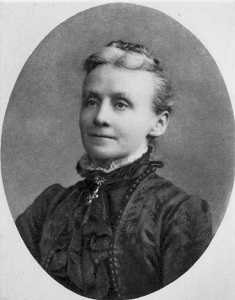
Matilda Betham-Edwards

De Engelse dichteres en schrijfster Matilda Betham-Edwards werd geboren op 4 maart 1836, Westerfield, Ipswich als vierde dochter van een boer, Edward Edwards en zijn vrouw Barbara. Zij volgde een opleiding in Ipswich en als gouvernante-leerlinge op een school in Londen. Haar eerste roman, “The White House by the Sea” (1857), was een onmiddellijk succes, werd meerdere malen herdrukt, geplagieerd in de Verenigde Staten en bleef gedurende veertig jaar in druk verschijnen. Matilda studeerde Frans en Duits in het buitenland en vestigde zich vervolgens met haar zuster in Suffolk om de boerderij te runnen die haar vader had toebehoord. Omdat ze meer wilde zijn dan alleen maar boerin, droeg ze van tijd tot tijd bij aan Household Words. Daarbij had zij het voordeel dat zij ondertussen bevriend was geraakt met Charles Dickens en al vroeg omgang had met Charles en Mary Lamb, vrienden van haar moeder. Na de dood van haar zus verhuisde ze naar Londen en schreef een aantal romans over het Franse leven op basis van haar frequente bezoeken aan Frankrijk en haar grondige kennis van provinciale Franse huizen, maar ook kinderboeken en non-fictieboeken over Frankrijk. Zij verbleef in Algerije met de feministische pedagoog Barbara Bodichon en bezocht met haar Frankrijk en Spanje. Wegens haar hugenootse afkomst beschouwde ze Frankrijk als haar tweede geboorteland en maakte het tot haar missie om een ​​beter begrip en sympathie tot stand te brengen tussen de twee landen. Op deze manier heeft ze veel gedaan om een ​​beter begrip tussen Engelsen en Fransen te bevorderen. Betham-Edwards wordt vaak genoemd in bloemlezingen van lesbische poëzie, maar er is geen sterk bewijs dat ze lesbische neigingen had.

Uit: The White House by the Sea

“IT was dismal enough ; dreary within, dusky without—with the gathering shadows of autumn twilight—and the gloom and the silence weighed upon my spirits. There was too much appearance of day to have candles, and though cold. and cheerless too early in the season for economical people to have fires ; so there was nothing for me to do but to look out of the window and listen to the eternal surging of the sea. I never grew tired of that, but I wearied of being alone. My father dozed uncomfortably in his chair, and only spoke now and then, to ask what o'clock it was, or to complain about something or other in the way that nervously affected people always do, and I could hear Ellice's voice in cheerful conversation to the cat in the kitchen. Oh, if my father would but talk so cheerfully to me I
"Chatty ? "
" Yes, papa."
" Did you say it was a quarter to six, or a quarter past six, when you looked at the clock just now ? "
" To six."
" Are you sure ? "
" Yes, quite, father dear."
He gave a muttered ejaculation of discontent, and said no more. I thought ho had fallen asleep, but in less than five minutes he exclaimed querulously—" You must have made a mistake, Chatty, or it would have struck six by now; go and look, there's a dear." I lingered in the kitchen as long as I could, feeling loath to tell him that I was right, and when I returned he had dropped into a light but sound slumber. I took my old place by the window, and went on thinking. I ought rather to say imagining, for in the monotony of my daily life I had very little to think about, and if it had not been for the enthusiasm and extreme impetuosity of my temperament, I should have been dull indeed. As it was, I could not help wishing at times for some good fairy's wand to make real and living the bright pictures and dreams that my mind so revelled in. But to-day my thoughts were not entirely of a visionary nature. It was a very slight thing ; a gossamer thread—a spider's chain were stronger even, and yet it had bound down my fancy to a substantial and tangible existence. Pleasure parties in skiffs, painted boats and light flying yachts innumerable had passed and repassed all the summer long by our dark rock, and I, perhaps, just raised my eyes for one glance, and thought of them no more. Autumn has come now ; the south wind blew soft and warm still at mid-day, but there was a treacherous look in the sun's bright rising, and every evening came with an uneasy war of the waves and a falling of rain : therefore summer visitors and gay holiday makers deserted us, and I could no longer sit on the sandy heath and be idle. But hardly four hours ago. in suite of the misty cloud and air, I had seen a boat dance by, swift and joyous as though on wings, and it had come near, very near to the little rugged stone on which I stood. So near that I could distinctly see the faces of those who were in it, and hear the gay echo and laugh of their merry voices. And somehow they dwelt on my memory.”


 2183211-306cffca870d8a31ea821e737f9f27a6.jpg
Matilda Betham-Edwards (4 maart 1836 - 4 januari 1919)

Geschreven door Romenu om 00:00 Reageer op dit bericht

Meer van Romenu

↑ Terug naar de berichten