

Naar de inhoud

Romenu

Over literatuur, gedichten, kunst en cultuur
seniorennet.beseniorennet.be

Berichten van 21 oktober 2011

Doeschka Meijsing, Martin Bril, Tariq Ali, Mehdi Charef
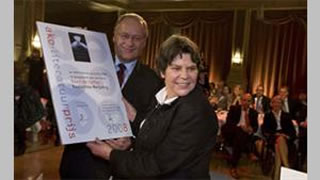
De Nederlandse schrijfster Doeschka Meijsing werd geboren in Eindhoven op 21 oktober 1947. Zie ook mijn blog van 21 oktober 2010 en eveneens alle tags voor Doeschka Meijsing op dit blog.


Uit: Der Weg nach Caviano (Vertaald door Rosemarie Still)


„Die sieben Geschworenen sind fort. Vielleicht war die Jury zu klein, um zu einem einstimmigen Urteil zu gelangen, vielleicht ist ein Urteil auch gar nicht nötig. Das Zuschlagen der Autotüren dröhnt noch in meinen Ohren. Ihre Gerüche hängen noch in den Räumen, und Joeps Wassernapf, an den alle ständig gestoßen sind, ist verschwunden. Die alte Frau hatte schulterzuckend genickt, als ich sie fragte, ob ich sofort einziehen könne. Aber selbstverständlich, sie würde weiterhin jede Woche zum Saubermachen kommen. Sie bot mir Pfirsiche an und ließ mich in dem großen, leeren Haus allein. Ich fing an auszurechnen, wieviel ich ihr schuldig war, und hörte gelangweilt wieder damit auf. Schließlich hatte ich hier etwas anderes zu tun.Dieses Land, das ich von 1955 bis 1969 jeden Sommer in allen Einzelheiten erforscht hatte, von den geheimnisvollen Steinen in der Kinderzeit bis zu den erotischen Verwicklungen späterer Jahre - dieses Land empfing mich die letzten beiden Male, mehr als ein Vierteljahrhundert nachdem ich von ihm Abschied genommen hatte, nicht mit offenen Armen. Es zeigte sich auf eine Weise gefährlich und feindlich, gegen die mir die Fallgruben in meiner Kindheit wie flache Gräben vorkamen.Als Kind hatte ich einen wichtigen Entschluß gefaßt: Ich wollte jeden Augenblick festhalten und bewahren, mit der einen Einschränkung: jeden glücklichen Augenblick.Das Glück entdeckte ich im Alter von zehn Jahren. Ich saß auf der Schaukel auf dem Dachboden meines Elternhauses. Knaben schaukeln in dem Alter nur, wenn niemand in der Nähe ist. Vielleicht waren unten unangenehme Dinge vorgefallen, vielleicht waren sich meine Cousins und Cousinen, die bei uns wohnten, in die Haare geraten und auf die Straße geschickt worden, oder meine Mutter lag mit Migräne auf dem Sofa, was von seiten der Familie absolute Ruhe erforderlich machte. Oder vielleicht war die ganze Familie ins Auto gesprungen, um einen lautstarken, pädagogisch wertvollen Ausflug nach Hoorn, Enkhuizen und dem Afsluitdijk zu unternehmen. Jedenfalls war ich allein auf dem Dachboden. Links von mir die fast einen Meter lange knallrote Dampflokomotive auf Rädern, die aufeinandergestapelten Baukästen, der Puppenwagen aus Korbgeflecht von meiner Cousine und so weiter und so weiter. Rechts der große Schrank mit den Kleidersäcken für die Wintermäntel und den Sonntagsanzügen und -kostümen meiner Eltern. Hinter mir der dunkle Raum, in dem das Geheimnis des früheren Lebens meiner Eltern aufbewahrt war. Man riecht das Geheimnis, aber es schlummert noch unter der Oberfläche und lädt noch nicht zu genauerer Erforschung ein.“


1016052-d0a85a3c56aa56b75be0fed1cc132927.jpg
Doeschka Meijsing (Eindhoven, 21 oktober 1947)

Bij de ontvangst van de AKO Literatuurprijs 2009 


De Nederlandse dichter, columnist en schrijver Martin Bril werd geboren in Utrecht op 21 oktober 1959. Zie ook mijn blog van 21 oktober 2010 en eveneens alle tags voor Martin Bril op dit blog.


Kanker (2)


De zuster duwt het bed door lange
Stille gangen naar de OK, haar kleppers
Piepen op de vloer, patiënt
Ligt in een blauwe schort

Patiënt ben ik, en aan 't plafond
Zoeven tl-buizen voorbij, de weg

Gaat naar het licht, om niet
Te zeggen dat ik steeds dichter
Bij de waarheid kom,

Grote duisternis


Kunst


Wat we willen
Momenten
Van helderheid

Of beter nog: van grote
Klaarheid

Schaars zijn die momenten
En ook nog goed verborgen

Zoeken heeft dus
Nauwelijks zin, maar
Vinden wel

De kunst is zo te leven
Dat het je overkomt
Die klaarheid, af en toe


1016052-94cfff466ecaa300b014fe608be14f86.jpg
Martin Bril (Utrecht, 21 oktober 1959 - 22 april 2009)


De Pakistaanse auteur, journalist en filmmaker Tariq Ali werd geboren in Lahore op 21 oktober 1943. . Zie ook mijn blog van 21 oktober 2008 en ook mijn blog van 21 oktober 2009 en ook mijn blog van 21 oktober 2010


Uit: The Duel


„Books have a destiny. This is my third study of Pakistan. The first, Pakistan: Military Rule or People's Power?, was written in 1969 and predicted the breakup of the state. It was banned in Pakistan. Critics of every persuasion, even those who liked the book, thought it was going too far in suggesting that the state could disintegrate, but a few years later that is exactly what happened. Just over a decade later I wrote Can Pakistan Survive? The question mark was not unimportant but nonetheless struck a raw nerve in General Zia's Pakistan, where to even pose the question was unacceptable. The general himself was extremely angry about its publication, as were sections of the bureaucracy, willing instruments of every despotism. Zia attacked both me and the book at a press conference in India, which was helpful and much appreciated by the publisher's sales department. That book too was banned, but to my delight was shamelessly pirated in many editions in Pakistan. They don't ban books anymore, or at least not recently, which is a relief and a small step forward.
When I left in 1963, the country consisted of West and East Pakistan. Eight years later the East defected and became Bangladesh. The population of the Western wing was then 40-45 million. It has grown phenomenally ever since and is now approaching the 200 million mark. The under-thirties constitute a majority.

This book centers on the long duel between a U.S.-backed politico-military elite and the citizens of the country. In earlier years the State Department would provide the seconds for the duel, but with U.S. troops now in neighboring Afghanistan and U.S. bombs falling on homes inside Pakistan, the conflict is assuming a more direct form. Were it to proceed further, as some have been arguing in Washington, there is a distinct possibility that serious cracks would threaten the much-vaunted unity of the Pakistan military high command. The relationship with Washington, always controversial in the country, now threatens the Pakistan army“

.


 1016052-35182088b7802981f7e1fb95e57fa534.jpg

Tariq Ali (Lahore,  21 oktober 1943)


De Frans-Algerijnse schrijver en regisseur Mehdi Charef werd geboren op 21 oktober 1952 in Maghnia in Algerije. Zie ook mijn blog van 21 oktober 2008 en ook mijn blog van 21 oktober 2009 en ook mijn blog van 21 oktober 2010


Uit: A bras le coeur


„Elle lève les yeux, fixe ce malandrin de Mbami, regarde les deux mères et conclut, affolée :
    – On dirait que je... que je l'aime !
    Elle se frappe le visage ; sa mère l'arrête. Farida se jette sur sa compagne, la serre dans ses bras.
    – Ce n'est pas notre faute ! On a été ensorcelées !
   Elles s'étreignent. Les mères sanglotent. Le marabout, qui en a vu et entendu d'autres, a l'œil qui brille. L'une des mères, bien que bouleversée par le drame, paraît moins niaise que l'autre. Méfiante, elle demande :
    – Si l'on ne vous avait pas surprises toutes les deux nues, le visage enfoui dans les cuisses l'une de l'autre, et possédées par le démon, vous vous seriez dénoncées ?
    – Sûr, maman, et comment ! Mais nous n'osions pas, notre malheur était trop grand, nous ne voulions pas vous éclabousser de honte !
    – Nous sommes soulagées d'avoir été découvertes reprend Farida, finaude.
    Pour ne pas se trahir, elle se garde bien d'ôter ses mains tremblantes de son visage...
    Le malandrin souffle sur ses deux kanouns et jure :
     – Je m'en vais vous l'évacuer comme il faut, ce djinn d'enfer qui vous ronge l'âme, pervertit votre esprit et enflamme vos corps purs! Parole de Si Mbami Youssef Ould Hadjzahir!
    L'épaisse fumée bleue s'élève en volutes. Il flotte une odeur âcre et un goût de cendre imprègne le palais. Le marabout se redresse. Il pose ses mains sur la tête des filles en pleurs, et leur met de la braise sous le nez. Elles grimacent et clignent des yeux. Il les a recouvertes d'un long voile sombre et épais, qui empêche la fumée de s'échapper. Le marabout a l'oeil perçant. Il est sûr de son coup et jubile ; il joint les mains et récite quelques formules dans sa barbe..


1016052-9a660783b227721d8f6f64c78878a85a.jpg
Mehdi Charef (Maghnia, 21 oktober 1952)


Zie voor nog meer schrijvers van de 21e oktober ook mijn vorige blog van vandaag en eveneens mijn eerste blog van vandaag.
Geschreven door Romenu om 17:56 Reageer op dit bericht

Allen Hoey, Patrick Kavanagh, Nikos Engonopoulos

De Amerikaanse dichter, schrijver en criticus Allen Hoey werd geboren op 21 oktober 1952 in Kingston, New York. Zie ook mijn blog van 21 oktober 2008 en ook mijn blog van 21 oktober 2009 en ook mijn blog van 21 oktober 2010


Uit: Provençal Light, a long poem


After the Orchard: "Souvenir de Mauve" (fragment)


At last! These are the days, filled with such light
a Dutchman could never dream, even steeped in absinthe,
I came seeking. If I thought my palette inadequate to the sky
damped with clouds, the fields and orchards sunk beneath
two feet of snow, how paler it seems with the sun finally streaming,
not mere atmospherics, but light, pure and intense--greens
beyond any in Holland or the chestnuts of a Paris arcade,
and cobalts and ultramarines--abandon your greys! Not pale but
chrome yellows, reds deep as the wine-colored Seine at dusk.
And you, down from Denmark, can your eyes be any less
dazzled than mine, reared under Dutch skies, soot-smudged
the year round, the close--some call them "cozy"--homes,
low-ceilinged and dark all day. No wonder Dutch painting is so murky,
all chiaroscuro and the varnished sheen applied after--nothing else
but the finish could glow. But here--the sun might burn
the eyes right out of the heads of cold-blooded painters like us,
schooled on shadow, our palettes tricked out with greys and bistre.
Earth tones? Here, the earth is tinged violet, the sky
carries the green of blossoming pears to cast heaven
azure, topaz--the chromatic scale at a sitting!
The whole day
spent in the orchard--and see this peach tree, the way the earth
seems by centering strokes to rise into the tree,
the violets and pinks of the soil, the slightest trace of shadow,
mirrored--no, itself come to bloom in the blossoms that grace
each limb, pink runners of flame to the thinnest twig,
and the clouds, released blossoms riding the wind, a meringue
whipped of plain air. The whole canvas wrenched from the mistral,
wind beating the canvas like sails, the easel pegged down, dust
driven into the pigment. See how the brusque strokes convey
color seized from the turmoil of growth, the traces--here and here--
where the canvas shows through. Enough of technique.


 1016049-b061039f2a469024c406d9f744cbe678.jpg

Allen Hoey (21 oktober 1952 – 16 juni 2010)


De Ierse dichter Patrick Kavanagh werd geboren op 21 oktober 1904 in County Monaghan. Zie ook mijn blog van 21 oktober 2010 en eveneens alle tags voor Patrick Kavanagh op dit blog.


On An Apple-Ripe September Morning


On an apple-ripe September morning
Through the mist-chill fields I went

With a pitch-fork on my shoulder

Less for use than for devilment.


The threshing mill was set-up, I knew,

In Cassidy's haggard last night,

And we owed them a day at the threshing

Since last year. O it was delight


To be paying bills of laughter

And chaffy gossip in kind

With work thrown in to ballast

The fantasy-soaring mind.


As I crossed the wooden bridge I wondered

As I looked into the drain

If ever a summer morning should find me

Shovelling up eels again.


And I thought of the wasps' nest in the bank

And how I got chased one day

Leaving the drag and the scraw-knife behind,

How I covered my face with hay.


The wet leaves of the cocksfoot

Polished my boots as I

Went round by the glistening bog-holes

Lost in unthinking joy.


I'll be carrying bags to-day, I mused,

The best job at the mill

With plenty of time to talk of our loves

As we wait for the bags to fill.


Maybe Mary might call round...

And then I came to the haggard gate,

And I knew as I entered that I had come

Through fields that were part of no earthly estate.


 1016049-914f023124b91761b9621e4090fee94d.jpg

Patrick Kavanagh (21 oktober 1904 – 30 november 1967)

Portret door Patrick Swift, 1960


De Griekse dichter en schilder Nikos Engonopoulos werd geboren op 21 oktober 1907 in Athene. Zie ook mijn blog van 21 oktober 2008 en ook mijn blog van 21 oktober 2009 en ook mijn blog van 21 oktober 2010


BOLIVÁR   (Fragment)

A Greek Poem


Bolivár! You were reality, and you are, even now, you are
    no dream.
When the wild hunters nail the wild eagles, and the other wild
    birds and animals,
Over their wooden doors in the wild forests,
You live again, and shout, and grieve,
And you are yourself the hammer, nail and eagle.


If on the isles of coral, winds blow and the empty fishing boats
    overturn,
And the parrots are a riot of voices when the day ends and
    the gardens grow quiet drowned in humidity,
And in the tall trees the crows perch,
Consider, beside the waves, the iron tables of the cafeneion,
How the damp eats at them in the gloom, and far off the light
    that flashes on, off, on again, turning back and forth.
And day breaks – what frightful anguish – after a night without
    sleep,
And the water reveals nothing of its secrets. Such is life.
And the sun comes, and the houses on the wharf, with their
    island-style arches,
Painted pink, and green, with white sills (Naxos, Chios),
How they live! How they shine like translucent fairies! Such is
    Bolivár!


Bolivár! I cry out your name, reclining on the peak of
    Mount Ere,
The highest peak on the isle of Hydra.
From here the view, enchanting, extends as far as the Saronic
    isles, Thebes,
Beyond Monemvasia, far below, to august Egypt,
And as far as Panama, Guatemala, Nicaragua, Honduras, Haiti,
    San Domingo, Bolivia, Colombia, Peru, Venezuela,
    Chile, Argentina, Brazil, Uraguay, Paraguay, Ecuador,
As far even as Mexico.
With hard stone I carve your name in rock, that afterwards men
    may come in pilgrimage.
As I carve sparks fly – such, they say, was Bolivár – and I
    watch my hand as it writes, gleaming in the sun.


Vertaald door David Connolly


1016049-c9f9afc57af148bab09e3cd85f82fcb2.jpg
Nikos Engonopoulos (21 oktober 1907 – 31 oktober 1985)


Geschreven door Romenu om 17:49 Reageer op dit bericht

Alphonse de Lamartine, Samuel T. Coleridge, Martin Roda Becher

De Franse dichter en schrijver Alphonse de Lamartine werd geboren op 21 oktober 1790 in Mâcon. Zie ook mijn blog van 21 oktober 2010 en eveneens alle tags voor Alphonse de Lamartine op dit blog.


Souvenir


En vain le jour succède au jour,
Ils glissent sans laisser de trace ;
Dans mon âme rien ne t'efface,
Ô dernier songe de l'amour !

Je vois mes rapides années
S'accumuler derrière moi,
Comme le chêne autour de soi
Voit tomber ses feuilles fanées.

Mon front est blanchi par le temps ;
Mon sang refroidi coule à peine,
Semblable à cette onde qu'enchaîne
Le souffle glacé des autans.

Mais ta jeune et brillante image,
Que le regret vient embellir,
Dans mon sein ne saurait vieillir
Comme l'âme, elle n'a point d'âge.

Non, tu n'as pas quitté mes yeux;
Et quand mon regard solitaire
Cessa de te voir sur la terre,
Soudain je te vis dans les cieux.

Là, tu m'apparais telle encore
Que tu fus à ce dernier jour,
Quand vers ton céleste séjour
Tu t'envolas avec l'aurore.

Ta pure et touchante beauté
Dans les cieux même t'a suivie ;
Tes yeux, où s'éteignait la vie,
Rayonnent d'immortalité !

Du zéphyr l'amoureuse haleine
Soulève encor tes longs cheveux ;
Sur ton sein leurs flots onduleux
Retombent en tresses d'ébène,

L'ombre de ce voile incertain
Adoucit encor ton image,
Comme l'aube qui se dégage
Des derniers voiles du matin.

Du soleil la céleste flamme
Avec les jours revient et fuit ;
Mais mon amour n'a pas de nuit,
Et tu luis toujours sur mon âme.

C'est toi que j'entends, que je vois,
Dans le désert, dans le nuage;
L'onde réfléchit ton image;
Le zéphyr m'apporte ta voix.

Tandis que la terre sommeille,
Si j'entends le vent soupirer,
Je crois t'entendre murmurer
Des mots sacrés à mon oreille.

Si j'admire ces feux épars
Qui des nuits parsèment le voile,
Je crois te voir dans chaque étoile
Qui plaît le plus à mes regards.

Et si le souffle du zéphyr
M'enivre du parfum des fleurs.
Dans ses plus suaves odeurs
C'est ton souffle que je respire.

C'est ta main qui sèche mes pleurs,
Quand je vais, triste et solitaire,
Répandre en secret ma prière
Près des autels consolateurs.

Quand je dors, tu veilles dans l'ombre ;
Tes ailes reposent sur moi ;
Tous mes songes viennent de toi,
Doux comme le regard d'une ombre.

Pendant mon sommeil, si ta main
De mes jours déliait la trame,
Céleste moitié de mon âme,
J'irais m'éveiller dans ton sein !

Comme deux rayons de l'aurore,
Comme deux soupirs confondus,
Nos deux âmes ne forment plus
Qu'une âme, et je soupire encore !


 1016043-4d05bcbc3e20d3a04732ae1cbe817ce3.jpg

Alphonse de Lamartine (21 oktober 1790 – 28 februari 1869)

Gravure door F. Holl naar P. Gérard. 1845.


De Engels dichter en criticus Samuel Taylor Coleridge werd geboren op 21 oktober 1772 in Ottery St. Mary, Devonshire. Zie ook mijn blog van 21 oktober 2010 en eveneens alle tags voor Samuel T. Coleridge op dit blog.


A Day Dream


My eyes make pictures when they're shut:--

I see a fountain large and fair,

A Willow and a ruined Hut,

And thee, and me, and Mary there.

O Mary! make thy gentle lap our pillow!

Bend o'er us, like a bower, my beautiful green Willow!


A wild-rose roofs the ruined shed,

And that and summer well agree

And lo! where Mary leans her head,

Two dear names carved upon the tree!

And Mary's tears, they are not tears of sorrow:

Our sister and our friend will both be here to-morrow.


'Twas Day! But now few, large, and bright

The stars are round the crescent moon!

And now it is a dark warm Night,

The balmiest of the month of June!

A glow-worm fallen, and on the marge remounting

Shines, and its shadow shines, fit stars for our sweet fountain.


O ever -- ever be thou blest!

For dearly, Asra! love I thee!

This brooding warmth across my breast,

This depth of tranquil bliss -- ah me!

Fount, Tree, and Shed are gone, I know not whither,

But in one quiet room we three are still together.


The shadows dance upon the wall,

By the still dancing fire-flames made;

And now they slumber, moveless all!

And now they melt to one deep shade!

But not from me shall this mild darkness steal thee:

I dream thee with mine eyes, and at my heart I feel thee!


Thine eyelash on my cheek doth play--

'Tis Mary's hand upon my brow!

But let me check this tender lay,

Which none may hear but she and thou!

Like the still hive at quiet midnight humming,

Murmur it to yourselves, ye two beloved women!


 1016043-5b385ad0ff838ba57a0656ebc1d2c3fc.jpg

Samuel T. Coleridge (21 oktober 1772 – 25 juli 1834)

Portret door Peter Vandyke, 1795


De Duitse schrijver en criticus Martin Roda Becher werd geboren in New York op 21 oktober 1944. Zie ook mijn blog van 21 oktober 2008 en ook mijn blog van 21 oktober 2010


Uit: An den Grenzen des Staunens


„Go und Mühle sind Einkreisungs-, Einmauerungsspiele, demgegenüber ist Schach eine offene Feldschlacht, obwohl es gerade im Schach zu Anfang versteckte Winkel gibt, in denen Frieden herrscht. Halma spiegelt den Kampf ums Terrain, jeder Platz muß erkämpft sein, was ja auch im Schach für den fortgeschrittenen Spieler entscheidend wird. Go und Mühle sind heimtückische, hinterhältige Spiele, in denen die physische Vernichtung des Gegners als Zielsetzung viel krasser zutage tritt als beim  Schach.  Man kann über weite Strecken ohne böse Absichten Schach spielen, man möchte sich beispielsweise entwicklen. Der Konflikt ist freilich unvermeidlich, vorprogrammiert, und er löst erst das zerstörerische Kalkül aus; es wird dann unumgänglich, einen Plan zu entwerfen. [..] Schach ist ein Kampfspiel auf Raten, oder man könnte auch mit Deleuze und Guattari sagen, auf dem Schachbrett vollzieht sich die Einverleibung der nomadischen Kriegsmaschine in den Staatsapparat. Gegen Ende des Mittelspiels gibt es kaum mehr einen friedlichen Punkt auf dem Schachbrett, die Schicksale der einzelnen Figuren haben sich dicht vernetzt. Das macht das Endspiel so düster und eintönig, wie Go und Mühle es von Anfang sind. Da können die Figuren nichts anderes mehr als töten oder getötet werden.“


1016043-13b45b3b6f5a0412c27d138e7d2df222.jpg
Martin Roda Becher (New York, 21 oktober 1944)

Geschreven door Romenu om 17:45 Reageer op dit bericht

Meer van Romenu

↑ Terug naar de berichten