Naar de inhoud

Romenu

Over literatuur, gedichten, kunst en cultuur
seniorennet.beseniorennet.be

Berichten van 23 maart 2013

Cri Stellweg, Gary Whitehead, Yōko Tawada, Mitch Cullin, Steven Saylor, Nils-Aslak Valkeapää

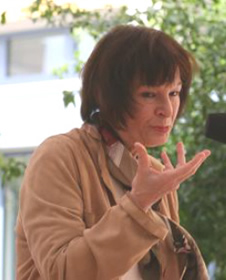
De Nederlandse schrijfster en columniste Margaretha Hendrika (Cri) Stellweg (alias Saartje Burgerhart) werd geboren in Nijmegen op 23 maart 1922. Zie ook mijn blog van 27 november 2006.


Uit: Ontbijten in je eentje


“Vanuit het bed en over het theekopje biedt de kleerkast daar recht tegenover een breed overzicht aan beschikbaar textiel. Kleurige stapeltjes truien, blouses, t-shirts, ze vouwt ze in drieën, alles volgens hetzelfde principe, twee flanken over het middenveld, armen eroverheen, vervolgens dubbelgevouwen. Daaronder hangen de rokken, de broeken, languit in de ruststand, alleen de benen ontbreken nog. Ze geeft er meer aan uit dan vroeger. Op de verpakking komt het nu meer aan dan ooit. Waarin zullen we vandaag nu weer eens het versleten lichaam verbergen. Hoofd, steunend op een arm, slokjes thee slurpend, stelt ze het omhulsel samen voor deze dag, de circa 29.460ste in dit leven dat ooit begon in wafelluiers, flanellen hemdjes, omgezoomd met kruissteekjes van rood haakgaren en sajetten truitjes.
Vier hoofden bungelden van een balk op de zolder. Vier bolle krijtwitte hoofden, elk aan z'n eigen spijker. Wanneer bij een straffe wind uit zee de ramen van dakkapel en steekraam tegen elkaar openstonden deinden ze zacht in een macaber witte-hoofdendansje. Ze was er niet bang voor, ook 's avonds niet als de zolder enkel door een zwak peertje werd verlicht. Als angst al eens dreigde, dan was ze die gauw de baas door met geweld van overtuiging te zeggen: het zijn slopen! Gewoon kussenslopen, gevuld met houdbaar voedsel, witte bonen, bruine bonen en twee met rijst. Op een dag had zij ze met houtskool gezichten gegeven, ogen, neusgaten en een mond. Eén hoofd keek zuinig, met klein geknepen mondje, de ander benauwd alsof er gedrukt moest worden op een grote scheet, en de rijsthoofden lachten, hartelijk de een, schaterend met wijdopen mond met zwarte tanden erin de ander.”


1360454-462f28b1b63a713e5c19948551601123.jpg 

Cri Stellweg (23 maart 1922 - 26 november 2006)


De Amerikaanse dichter Gary Joseph Whitehead werd geboren op 23 maart 1965 in Pawtucket, Rhode Island. Zie alle tags voor Gary Whitehead op dit blog.


A Used Book


When I open its pages my dog stirs
from his repose on the couch beside me
to sniff at the spine and trim. His gray ears
lift to listen, and I hear what he hears:
traffic horns, a teapot's whistle, the purrs
of the reader's cats on her old settee.

What was she doing reading such heady
stuff so early on a Saturday—sun
not yet risen, her lover still asleep?
The book, I guess, her company to keep,
and the cats, while the light kept its steady
course across her floor. Paris or London,

I imagine, though it was probably
San Francisco, a streetcar passing by
and fog rinsing the morning air. A gray
day then, much like any other. It may
be that she, too, drawn irresistibly
to its place on a shelf in a nearby

shop, blew the dust and bought it second-hand.
And perhaps her cats roused when she opened
its cover, catching the vague scent of dog,
and she got no further than the prologue
before she was off to some other land
where a man held a page against the wind.


1360454-4424d7d5d47d801fe1bdb5a2404d6b7c.jpg  

Gary Whitehead (Pawtucket, 23 maart 1965)

Pawtucket, Rhode Island


De Japanse schrijfster Yōko Tawada werd geboren op 23 maart 1960 in Tokyo. Zie alle tags voor Yōko Tawada op dit blog.


Uit: The Naked Eye (Vertaald door Susan Bernofsky)


“A year had passed without my ever having spent time alone with Jean. Perhaps Ai Van made a point of never leaving us alone. I, too, avoided being alone with him whenever possible. When I was home, Ai Van stayed home as well. When Ai Van left the house, I made sure I went out as well, usually to the movies, since I didn’t know where else to go. In the movie theaters there were sometimes men who spoke to me. I would say a word that didn’t exist in any language and walk away. This one word was meant to signify: “I am unable to speak.” It was a noun in the singular signifying “speechless subject”; or else it was a verb that could be used only in the first person singular and meant the opposite of “to speak.”

(…)


“And so I could use the passport of a Japanese woman that Heron would be glad to sell me to leave France without a visa and travel to Thailand. There I could marry Tuong Linh and return to France as his wife with my own passport. Tuong Linh was satisfied with this plan. “What does such a passport cost?” I asked. “Don’t worry. Your entire life depends on it, so how could it possibly be too expensive?”


1360454-fbd67d76f2a02c7cbdea0f695bf6224b.jpg 

Yōko Tawada (Tokyo, 23 maart 1960)


De Amerikaanse schrijver
Mitch Cullin werd geboren op 23 maart 1968 in Santa Fe, New Mexico. Zie alle tags voor Mitch Cullin op dit blog.


Uit: A Slight Trick of the Mind


“Of course, when stung by a bee on the throat, he knew it was best to drink salt and water to prevent serious consequences. Naturally, the stinger should be pulled from the skin beforehand, preferably seconds after the poison's instantaneous release. In his forty-four years of beekeeping on the southern slope of the Sussex Downs–living between Seaford and Eastbourne, the closest village being the tiny Cuckmere Haven–he had received exactly 7,816 stings from worker bees (almost always on the hands or face, occasionally on the earlobes or the neck or the throat: the cause and subsequent effects of every single prick dutifully contemplated, and later recorded into one of the many notebook journals he kept in his attic study). These mildly painful experiences, over time, had led him to a variety of remedies, each depending on which parts of his body had been stung and the ultimate depth to which the stinger had gone: salt with cold water, soft soap mixed with salt, then half of a raw onion applied to the irritation; when in extreme discomfort, wet mud or clay sometimes did the trick, as long as it was reapplied hourly, until the swelling was no longer apparent; however, to cure the smart, and also prevent inflammation, dampened tobacco rubbed immediately into the skin seemed the most effective solution.”


1360454-531183d421886ca31b570d6e25e8b5a5.jpg 

Mitch Cullin (Santa Fe, 23 maart 1968)


De Amerikaanse schrijver Steven Saylor werd geboren op 23 maart 1956 in Port Lavaca Texas. Zie alle tags voor Steven Saylor op dit blog..


Uit: House of the Vestals


"Eco," I said, "do you mean to tell me that you have never seen a play?"

He looked up at me with his big brown eyes and shook his head.

"Never laughed at the bumbling slaves who have a falling- out? Never swooned to see the young heroine abducted by pirates? Never thrilled at the discovery that our hero is the secret heir to a vast fortune?"

Ecos eyes grew even larger, and he shook his head more vigorously.

"Then there must be a remedy, this very day!" I said.

It was the Ides of September, and a more beautiful autumn day the gods had never fashioned. The sun shone warmly on the narrow streets and gurgling fountains of Rome; a light breeze swept up from the Tiber, cooling the seven hills; the sky above was a bowl of purest azure, without a single cloud. It was the twelfth day of the sixteen days set aside each year for the Roman Festival, the citys oldest public holiday. Perhaps Jupiter himself had decreed that the weather should be so perfect; the holiday was in his honor.

For Eco, the festival had been an endless orgy of discoveries. He had seen his first chariot race in the Circus Maximus, had watched wrestlers and boxers in the public squares, had eaten his first calfs-brain-and-almond sausage from a street vendor. The race had thrilled him, mostly because he thought the horses so beautiful; the pugilists had bored him, since he had seen plenty of brawling in public before; the sausage had not agreed with him (or perhaps his problem was the spiced green apples on which he gorged himself afterward).

It was four months since I had rescued Eco in an alley in the Subura, from a gang of boys pursuing him with sticks and cruel jeers. I knew a little of his history, having met him briefly in my investigations for Cicero that spring. Apparently his widowed mother had chosen to abandon little Eco in her desperation, leaving him to fend for himself. What else could I do but take him home with me?


1360454-54e0cb26c265b5884a1a9a18a4af508b.jpg 

Steven Saylor (Port Lavaca, 23 maart 1956)


De Samische dichter, schilder, musicus en fotograaf Nils-Aslak Valkeapääwerd geboren op 23 maart 1943 in Palonjoensuu nabij Enontekiö. Zie alle tags voor Nils-Aslak Valkeapää op dit blog.


Uit: The Sun, my Father (Fragment)


   as if

   I myself

   inscribe


   but often

   I fly to the other side

   and no longer

   know


   life

   turns

   pushes

   into action

   as if I

   myself


   was doing it


   and I draw


   sometimes I believe

   that this is me

   these images

   and

   however I change

   the images, images of me,

   or I myself

   so many shapes of me, aspects, I could have been

   so many, or almost anything

   in another condition


   I find


   readiness in me

   to do everything that people do, and even more

   simply wipe away a speck of dust, unfold an open human, naked

   and when I draw myself, I suppose I draw others too

   or is it just me, is it in me that people reveal themselves, modesty

     and greed

   again I leave

   fly away

   to see

   how I am


   I feel fire

   billowing


   the mind's night

   impure

   the shame of deeds


Vertaald door Harald Gaski, Lars Nordström en Ralph Salisbury


1360454-3b3282937f01b39f56c1ce5ac11374b5.jpg
Nils-Aslak Valkeapää (23 maart 1943 – 26 november 2001)


Zie voor nog meer schrijvers van de 23e maart ook mijn vorige blog van vandaag.
Geschreven door Romenu om 19:08 Reageer op dit bericht

Madison Cawein, Federica de Cesco, Roger Martin du Gard, Hamvas Béla, Daniel Biga, Ceija Stojka

De Amerikaanse dichter Madison Julius Cawein werd geboren in Louisville, Kentucky, op 23 maart 1865. Zie ook alle tags voor Madison Cawein op dit blog..


A Boy’s Heart


It's out and away at break of day,
To frolic and run in the sun-sweet hay:
It's up and out with a laugh and shout
Let the old world know that a boy's about.

It's ho for the creek that the minnows streak,
That the sunbeams dapple, the cattle seek;
For a fishing-pole and a swimming-hole,
Where a boy can loaf and chat with his soul.

It's oh to lie and look at the sky
Through the roof of the leaves that's built so high:
Where all day long the birds make song,
And everything 's right and nothing is wrong.

It's hey to win where the breeze blows thin,
And watch the twinkle of feather and fin:
To lie all day and dream away
The long, long hours as a boy's heart may.

It's oh to talk with the trees and walk
With the winds that whisper to flower and stalk:
And it's oh to look in the open book
Of your own boy-dreams in some leafy nook.

Away from the noise of the town, and toys,
To dream the dreams that are dreamed by boys:
To run in the heat, with sun-tanned feet,
To the music of youth in your heart's young beat.

To splash and wade in the light and shade
Of the league-long ripples the sunbeams braid:
In boyhood's wise to see with eyes
Of fancy hued as the butterflies.

To walk for hours and learn the flowers,
And things that haunt the woods and bowers:
To climb to a nest on a tree's top crest,
Where a bird, like your heart, is singing its best.

To feel the rain on your face again,
Like the thirsty throats that the flowers strain:
To hear the call of the waterfall,
Like the voice of youth, a wonder-thrall.

And it's oh for me at last to see
The rainbow's end by the hillside tree:
On the wet hillside where the wild ferns hide,
Like a boy's bright soul to see it glide.

Then to laugh and run through shower and sun
In the irised hues that are arched and spun:
And, the rainbow's friend, to find and spend
The bag of gold at the rainbow's end.


1360451-b382cb3e74a10701271f7ff56657146c.jpg 

Madison Cawein (23 maart 1865 – 8 december 1914)

Rond 1893


De Zwitserse schrijfster Federica de Cesco werd geboren op 23 maart 1938 in Pordenone, Zie alle tags voor Federica de Cesco op dit blog.


Uit: Die Augen des Schmetterlings


“Mein Verstand sagt mir, dass etwas, das nicht mehr da ist, auch nicht mehr zurückkommen sollte; aber ganz sicher werde ich nie sein. Ich bin eine Frau, die auf Vorzeichen achtet, die in Mondnächten mit griffbereitem Messer durchs Haus geht. Alle schlafen in diesem Haus, warm und ruhig und im Vertrauen. Ich trete leise auf, ganz leise. Die Schlafenden sollen nicht gestört werden. Es liegt etwas Beruhigendes in dem sicheren Gefühl des Messers in meiner Hand, in dem Funkeln der kurzen, scharfen Klinge. Behutsam ziehe ich die Schiebetür auf, beobachte die Bewegung der Blätter, den Nebelflor, das zarte Gespinst. Unter dem Mondlicht wandeln sich die Dinge, verändern ihr Gesicht. Ich blicke nach allen Seiten, nach drei, vier Seiten, nach allen Seiten, nach drei, vier Seiten. Immer wieder und wieder. Kurz vor der Morgendämmerung kommt Wind auf, ein salziger Wind, der vom Meer her weht. Trägt er den Blumenduft des Todes heran, schließen sich meine Finger fester um den Griff. Mein Gesicht, meine Hände glänzen hell. Ich stehe ja nicht im Schatten, ich will gesehen werden. Ein leichtes Zittern geht über meine Haut, aber Furcht empfinde ich keine. Ich bin eine Sonnentochter; der Geist, der in der Dunkelheit schwebt, entstammt dem bleichen Mondgeschlecht. Ich sage: »Weg mit dir! Was glaubst du, wer ich bin?« Bewegen sich Blätter, knistern Zweige, zieht meine Klinge einen blitzenden Kreis. Aufrecht stehe ich vor der Schiebetür, spreche halblaut die richtigen Worte. Die Menschen, die ich liebe, sind in Sicherheit. Weil Enzo nicht mehr da ist, bin ich es von nun an, die Wache hält.

Ich betrachte mich oft im Spiegel, nicht aus Eitelkeit, sondern aus Neugierde. Meine Vorfahren waren Samen, jenes Volk im Hohen Norden, das noch vor hundert Jahren in »Lavvo« – in Stangenzelten – lebte. Ich trage ihr Erbe in mir; es prägt meine äußere Erscheinung. In meinem Gesicht erkenne ich Lailas Augen, die ohne zu blinzeln das Sonnenlicht ertragen; ich sehe Reidars harte Wangen, sein starkes Kinn. Und auch Henriks dunkles Haar, die etwas stumpfe Nase, den sinnlichen Mund. Ich beschreibe mich wie die Bilder, die ich oft auf den Zeitschriftenseiten sah: grüne Augen, fein geformte Züge, über die das Licht rinnt wie Wasser, eine auffallend gewölbte Stirn. Doch womöglich trägt mein Gesicht noch andere, geheimnisvollere Spuren? Ich weiß es, ich habe sie gesehen.”


1360451-cacb175eca8af8de65434673d8f504f1.jpg 

Federica de Cesco (Pordenone, 23 maart 1938)


De Franse schrijver Roger Martin du Gard werd geboren op 23 maart 1881 in Neuilly. Zie alle tags voor Roger Martin du Gard op dit blog.


Uit: Les Thibault, I, Le pénitencier


“Arthur attendait dans la  cour. Jacques  eût voulu prendre  congé du directeur; mais M.Faîsme lui tournait le dos: il pous-sait lui-même, ainsi que chaque soir, les verrous du portail. Au milieu des aboiements du chien, Jacques entendit la voix d’Arthur:

–«Eh bien, vous venez?»

Il le suivit.

Il retrouva sa cellule avec une impression de soulagement. La chaise d’Antoine était là, près de la table. L’affection du frère aîné l’enveloppait encore. Il endossa ses vêtements de travail. Le corps était las, mais le cerveau alerte; il y avait en lui, outre le Jacques de tous les jours, un autre être,immatériel, né d’aujourd’hui, qui regardait agir le premier, qui le dominait.

Il ne put demeurer assis, et se mit à tourner en rond dans la chambre. Un sentiment neuf et puissant le tenait debout: la conscience d’uneforce. Il s’était approché de la porte, et il res-

tait là, le front au carreau, l’œil fixé sur la lampe du couloir désert. L’atmosphère suffocante ducalorifère augmentait sa fatigue. Il dormait presque. Tout à coup, de l’autre côté de la vitre, une ombre se dressa. La porte, fermée à double tour, s’ouvrit:

Arthur apportait le dîner.

–«Allons, dépêche, petite crapule!»

Avant d’entamer les lentilles, Jacques retira du plateau le morceau de gruyère et le gobelet d’eau rougie.

–«Pour moi?» dit le garçon. Il sourit, prit le bout de fromage et s’en fut le manger près de l’armoire, afin de n’être pas vu de la porte. C’était l’heure où, avant son dîner, M.Faîsme venait, en pantoufles, faire un tour dans le couloir; et le plus souvent on ne s’apercevait de sa visite qu’après son passage, à

l’odeur écœurante du cigare qui pénétrait par le treillage de l’imposte.”


1360451-2c5ab1fa4e1d1ba6db773b09774fc748.jpg 

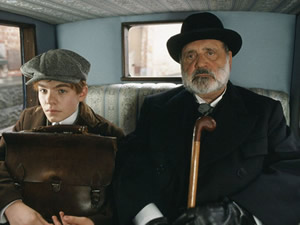
Roger Martin du Gard (23 maart 1881 – 22 augustus 1958)

Scene uit de film “Les Thibaut” van Jean-Daniel Verhaeghe, 2003


De Hongaarse schrijver Hamvas Béla werd geboren op 23 maart 1897 in Eperjes (tegenwoordig Prešov). Zie alle tags voor Hamvas Béla op dit blog.


Uit: Preface to Crime and Punishment (Vertaald door Bors Hulesch)


“Theodor Dreiser, over half a century after Dostoevsky, wrote An American Tragedy. This novel poses exactly the same question: is it permissible to kill in order to get ahead? Dreiser’s conclusion is that, as a result of an unjust social structure, it is not man who is responsible for murder, but society itself. This stereotypical cliché helped to diminish the poignancy of the matter at the time, and it should sound all the more familiar to the contemporary ear because has is also become part of our school curriculum.

Before the murder, Rodion Raskolnikov was undoubtedly a Stendhalian hero in the likeness of Julien Sorel, or perhaps one of Balzac’s characters; a contemporary careerist who, in the name of his accomplishment, was ready to commit Napoleon-like misdeeds. After committing the murder though, this picture changes. Raskolnikov would now shrug his shoulders at Dreiser’s theorem and tell us that he was also going to save himself from his predicament by some similar reasoning; but that all of this remained on a theoretical level and was left behind when he actually struck the old woman down. As to what becomes of him? He is now like a dog about to attack, baring his teeth to growl the words: Dear Mr. Society, please do step closer – not to worry – and have a look at these. What are these, sir? (Shows his hands.) Do you know what these are? I will tell you sir, they are hands. They are my two hands. I killed her with this pair of hands. These hands you shall not remove from me, sir. You suggest that social structure is wrong, sir, and that consequently, I was forced to murder this usurer. That society is to blame. That the unjust distribution of wealth is… - blah-blah, we know all the rest. Look, sir, if I could only undo what I have done, I would chop these two hands right off. But I cannot. I have indeed killed her, and all I can do now is accept the responsibility and go do my time in Siberia. Twenty years? Let it be twenty years. But I forbid you to spread any rumors about me wanting to divert the blame onto the inequalities of social structure. Injustice exists independently of my affair, and although it may have a bearing, however remote and slight, on the events; this can only be theoretical.”


1360451-f91dd44af17dfead54b563708f64a26b.jpg 

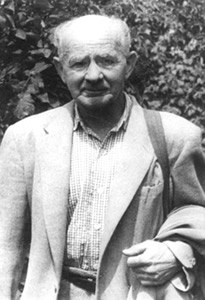
Hamvas Béla (23 maart 1897 – 7 november 1968)


De Franse dichter en schrijver Daniel Biga werd geboren op 23 maart 1940 in Nice. Zie alle tags voor Daniel Biga op dit blog.


FOUILLES

Ma direction est le poids du silence
épousant le vacarme du temps

révèle le signe dans l'insignifiant

creuse dans le tronc la souche la racine
vise précisément
puis le travail accompli lève-toi
et d'un seul regard embrasse
la vastitude

ceci est le mouvement juste


Les Salopards


"Sois un
Soleil!"


mais comment ne pas être parfois cet astre noir qui


les carboniserait ceux-là tous ceux-là parvenus traîtres collabos

notables profiteurs affairistes...


ils ont démoli
Pauliani!


le cinéma le patronage les jardins la ruelle le passage


et l'école après avoir embétonné dans la cité le cours du
Paillon ils ont démoli
Pauliani comme le reste : je découvre cette nouvelle plaie errant ce

matin dans le quartier où depuis si longtemps je n'étais


revenu et d'immenses panneaux annoncent que vont s'édifier


là les luxueuses résidences d'Acropolis


les salopards!


1360451-005b1d5ef9cef649a8dc48c1127b59db.jpg 

Daniel Biga (Nice, 23 maart 1940)

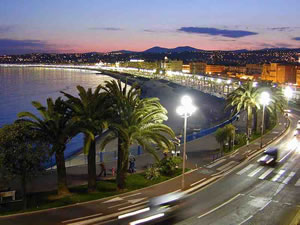
Nice,  Promenade des Anglais


De Oostenrijkse schrijfster Ceija Stojka werd op 23 maart 1933 geboren in Kraubarth. Zie alle tags voor Ceija Stojka op dit blog.


Uit: Träume ich, dass ich lebe?


“Das haben wir ausgenutzt. Wir sind ins Haus, haben uns gewaschen und geputzt, haben die Kleider gewechselt, haben die Post genommen und sind halt einmal zu Hause gewesen. Aber bald mussten wir wieder weg. Die Mama hat immer gesagt, lieber einen Tag länger auf eurem Platz, bevor sie uns finden! Wenn der Park sauber gemacht wurde, mussten wir uns woanders verstecken, unter der Brücke, oder wir haben uns aufgeteilt.

Aber wir haben auch gelacht, der Karli und die Kathi, die Mitzi und der Mongo, die haben oft kleine Vorstellungen gegeben. Der Karli hat gespielt, er ist der gestiefelte Kater

Er hat hinten auf seine Schuhe diese Tortenschneider befestigt, die hatten einen Stiel und ein Radl mit

kleinen Zacken. Er war der gestiefelte Kater und er war so schön, sein Gesicht hat gebrannt wie Feuer. Wir haben furchtbar gelacht. Aber wenn wir in den Laubhaufen gekrochen sind, durften wir nicht lachen.

Meine Mutter hat immer auf die Schritte der Leute draußen gehorcht, sie hatte schon die Unterschiede herausgefunden. Die Spaziergänger hat man schon von weitem langsam kommen gehört, sie haben

gesagt, na bald kommt der Frühling. Dann hast du gewusst, es ist ein Liebespärchen. Aber die Nazis sind immer gerannt und haben geschimpft.

Wir haben nur gespürt, dass sie ganz schlimme Menschen sind. Ich hab einige Male auf der Straße erlebt, dass sie Kinder getreten haben. Da wird man dann lautlos. Und nachdem ich miterlebt hatte, wie sie meinen Vater holten, war schon klar, dass das nicht okay sein kann.”


1360451-ef8bb0379e880c83b16b5ab9b98c96fe.jpg 

Ceija Stojka (Steiermark, 23 maart 1933)

Geschreven door Romenu om 19:04 Reageer op dit bericht

Meer van Romenu

↑ Terug naar de berichten